Vue normale

Il y a de nouveaux articles disponibles, cliquez pour rafraîchir la page.
Aujourd’hui — 26 août 2026Microsoft

OpenAI's Sam Altman just admitted he was "wrong" about AI — laments that he made the tech seem "scary"

The big AI era isn't going as some might've hoped.

OpenAI and other big companies are losing billions chasing artificial intelligence technology, and it's only clever accounting and circular investments keeping the entire industry afloat. OpenAI specifically is in hot water, with spending commitments through to 2030 coming scarily close to $1 trillion dollars, and is operating purely on the basis of handouts from the likes of SoftBank, NVIDIA, Oracle, and Microsoft. OpenAI is looking to spend $50 billion in compute alone in 2026 on roughly $25~ billion in revenue, revenue which is also made up at least in part with IOUs.

DEAL: Get Surfshark VPN 86% OFF with Windows Central 🦈

Despite the scary numbers, OpenAI is trucking along on faith and fumes alone, as companies' belief in the tech keeps the firm alive, for now.

Yet, even Sam Altman is having doubts about the impact of large language models. In a new podcast, Altman lamented "economic inertia" for the lack of adoption, and also called out the AI industry for making the tech seem "scary."

"A lot of the people building AI have been off saying there's a 25% chance we're going to destroy the world ..."

Altman effectively blamed those pesky humans for not adopting ChatGPT and other AI products, lamenting that "people keep using their tools in the same way" they had previously been using them.

"I thought when we got to [ChatGPT]-4, which was back in 2023, I thought very quickly after that there'd be much more disruption, with the software business up for grabs right away. I was wrong about a few things, one of them, in terms of the speed ... the economy just has so much inertia. People keep doing the same things they're doing, they keep buying from the same company, they keep wanting to use their tools in the same way ..."

Altman implied that the "slow" pace of change would make the "transition" to AI "smoother." Elsewhere in the podcast, Sam Altman remarked that AI leaders had "not done a very good job" explaining AI tech, referring to the broad backlash to the technology.

"I also think a lot of the people building AI have been off saying there's a 25% chance we're going to destroy the world ... and yeah, we're going to race ahead and do it because otherwise those bad guys will do it first. Or it's like, 'man, this thing is going to be really terrible, and 50% of the jobs are going to go away in the next year, and we hope you are all okay,' but it seems really scary.

We have not, as a field, done a very good job of explaining to people what the benefits are and how the downsides can be mitigated. We certainly have not done a good job ... even if people have had answers like, 'well, there's going to be universal basic income, or work will be optional', or whatever. There's been very little discussion from people about how and why it's important that people have more power and freedom in the world, not less."

My take: Altman just doesn't get it

Open AI CEO Sam Altman speaks during a talk session with SoftBank Group.

(Image credit: Getty Images | Tomohiro Ohsumi, Stringer)

I think the key issue with this AI tech is that most people just don't find it very useful. I work in an industry that, at least on paper, should benefit from some kind of automagical writing tool. The problem is that it loses so much nuance and accuracy that, even if I wanted to use it for work, I literally can't.

I think a lot of these very technical, mathematically-inclined dudebros pushing this format have little knowledge or understanding about how and where this technology should be applied. Spotify, YouTube, Instagram, gaming platforms, and other services are actively trying to filter out AI content, as it is repeatedly proven to decrease engagement — users actively hate it. Companies that are using tokens to try to boost productivity are finding that they're actually just boosting costs, and that they're simply finding a new bottleneck in the finite amount of addressable customers.

LLMs undoubtedly have uses, but when 90% of the compute is being spent on utterly unproductive use cases, the economics simply seem primed to implode. If you're spending tokens for the sake of spending tokens, and it doesn't lead to any discernible increase in sales — what is the point? You could use AI to make hundreds of slop video games, but people already have more than enough to play built by an ironically more affordable human workforce.

RELATED: Ed Zitron talks to us about Microsoft, OpenAI, and the future

In the future, I think we'll find AI probably ends up as a tool of governments in things like law enforcement and medical fields. Specific industries will benefit from tools that can parse and summarize large, complex data sets, albeit with the unfortunate knowledge of LLMs' penchant for hallucinations and outright lies. Just yesterday I asked Copilot to find some links to some old Windows Central articles I did. It just straight up lied and gave me some completely made-up links instead. Extrapolate these simple mistakes to medical fields or military applications, where lives are literally at stake ... is it worth the risk?

Perhaps the issue is that AI's inaccuracy renders it only viable in low-stakes businesses ... and those low-stakes businesses simply won't see a real return over doing things the "old way," which Altman describes as economic "inertia."

Perhaps it's not inertia. Perhaps the AI business model is just not the disruptor it was cracked up to be.

Click to join us on r/WindowsCentral

Join us on Reddit at r/WindowsCentral to share your insights and discuss our latest news, reviews, and more.

Sam Altman on David Senra's podcast

Altman laments.

ChatGPT Can Now Create Custom Sticker Packs for Your Chats

Par : Nisha
25 août 2026 à 11:37
ChatGPT is getting a fun new way to personalize everyday conversations: custom sticker packs. OpenAI is rolling out a feature that lets users create their own stickers directly in the ChatGPT mobile app and export them for use in messaging apps. Instead of relying on pre-made sticker collections, you can start with a photo, describe […]

À partir d’avant-hierMicrosoft

GPT Image 2.5 Leak? OpenAI’s “Luna-Lisa” Checkpoint Could Hint at a Next-Gen Image Model

Par : Nisha
24 août 2026 à 04:35
OpenAI may already be testing its next-generation image generation model, and this time there appears to be an actual checkpoint leak pointing toward something new. An unexpected checkpoint called “luna-lisa-alpha” has reportedly appeared in OpenAI’s Arena testing environment, catching the attention of early testers. More importantly, it seems to follow an earlier “mona-lisa-1” checkpoint associated […]

OpenAI Adds Transparent Backgrounds to GPT-Image-2 API Image Generation

Par : Nisha
21 août 2026 à 08:45
OpenAI is making its image-generation tools a little more useful for developers and designers. The company has enabled transparent background generation for GPT-Image-2 through its APIs, giving developers the ability to create images without the usual solid-color background. This may sound like a small addition, but it can make a big difference for apps that […]

OpenAI’s Next Big Release: GPT Astra Rumors Point to a September Launch

Par : Nisha
21 août 2026 à 07:30
OpenAI appears to be taking a deliberate, safety-first approach with its upcoming model release, codenamed GPT Astra. Rumors and internal leaks suggest that the AI research giant is prioritizing thorough alignment and safety testing over a rushed deployment timeline. Key Takeaways from the Recent Leaks Targeted Release Window: OpenAI is currently aiming to launch GPT […]

GPT-6 Leak: What Should We Actually Believe?

Par : Nisha
20 août 2026 à 10:30
The GPT-6 rumors are getting harder to ignore—but separating real signals from internet speculation is becoming more important than ever. Over the past few weeks, OpenAI has dropped several hints about where its frontier-model development is heading. The company has revealed Astra as its next major frontier model, while an unreleased OpenAI model reportedly demonstrated […]

GPT-6 Astra Leaks: OpenAI’s Next Big Model Could Arrive This Week

Par : Nisha
17 août 2026 à 17:24
OpenAI may be getting ready for its next major AI model, and the latest clues are pointing toward an imminent launch of Astra. According to reports and posts circulating among AI researchers and leakers, Astra could arrive as soon as this week, although a launch next week remains possible. The model is also rumored to […]

ChatGPT Can Now Remember What You Do Across Apps and Websites on Your Computer

Par : Nisha
14 août 2026 à 08:01
ChatGPT is becoming more personalized with a new Computer History feature that can remember activity across the apps and websites you use on your computer. The idea is simple: instead of having to repeatedly explain what you were working on, ChatGPT can use relevant history from your computer to provide more contextual answers in future […]

ChatGPT adds Windows 11's most hated feature to Mac — Will the backlash be the same this time around, or has OpenAI taken the right approach?

I have several PCs in my office that are capable of running Copilot+ tools in Windows 11, but there's one feature I've stayed away from: Windows Recall.

Why? I don't particularly like the idea of AI snapshotting what I do on my PC and making it searchable, even if it promises to never let the data leave my local system. I'm sure it's handy for some users, but I've yet to come across a scenario where I wish I had it enabled.

If you're of the opposite opinion and happen to use macOS, I have good news. OpenAI today announced "ChatGPT Computer History" for its macOS app.

What is ChatGPT Computer History?

Today we're releasing Computer History in ChatGPT.It lets ChatGPT learn from everything you do on your computer, so it can better understand how you work, finish tasks that you're in the middle of, and suggest skills and automations based on how you use your computer. pic.twitter.com/xnTq7hWH8OAugust 13, 2026

It's tough not to immediately begin comparing Computer History to Windows 11's Copilot+ Recall feature.

Here's a blurb from the ChatGPT press release about how it works:

Computer History turns your activity across apps and websites into memories and a timeline that ChatGPT and Codex can reference. You can ask natural questions about recent work, pick up where you left off, understand patterns in how you work, and turn repeated workflows into skills or automations.

OpenAI

Yeah, that sounds like the same thing. But let me explain ChatGPT's version a bit more.

Computer History, according to ChatGPT's website, is completely optional and turned off by default for Pro, Business, and Enterprise subscribers.

Rather than collecting screenshots every so often to keep track of your doings, Computer History "records interaction events and does not capture your screen or audio." It's basically its own little keylogger, keeping tabs on clicks, typing, app switching, shortcuts, and more.

The data it records is searchable, and you can interact with Computer History the same way you interact with any AI, asking it regular language questions.

The data that Computer History gathers is saved locally on your Mac, but it does get sent to OpenAI's cloud servers in order to turn it into memories. These memories are then sent back to your Mac for local storage.

OpenAI says it does not keep this data on its servers unless required by law, and it does not use the data for training.

Is Computer History different enough from Recall to avoid similar backlash?

Windows Recall

A look at the Recall feature's pause option in the Windows 11 taskbar. (Image credit: Windows Central)

The reaction to ChatGPT's Computer History announcement is surely mixed. It seems like there are just as many people worrying about massive privacy and surveillance issues as there are people wondering if they should go out and buy a Mac.

Windows Recall faced the same adversity when it was announced as a default feature, with no opt-in available. The pushback was so bad that Microsoft delayed its launch by almost a year in order to address security issues. It officially released in April 2025 as an opt-in feature, but I know that many Windows users are still wary of its abilities.

The fact that ChatGPT is making its Computer History opt-in from the start tells me it learned from Microsoft's mistakes. There's also the fact that it doesn't take screenshots, making it feel less like routine spying.

Meme work rules comic showing ChatGPT being treated nicely for the same thing that Microsoft is treated harshly.

The memes coming out of the ChatGPT Computer History announcement are gold. (Image credit: @trashpandaemoji (X.com))

That doesn't mean there aren't inherent risks to using something like Recall on Windows or Computer History on macOS.

It's clearly noted in OpenAI's Computer History documentation that the feature does not encrypt your information, and that it can be accessible to other apps running on macOS.

Like Recall, there are also serious prompt injection risks. Because these AI-powered features can essentially see what you're doing, they can be tricked with text. You might visit a seemingly innocuous website, only to realize later that it contained hidden instructions aimed at AI that made it do something unsavory.

Windows Central's take

Recall symbol highlighted on Taskbar with prompt confirming Recall is activated

Some of us here at Windows Central use Windows Recall on our PCs, but I stay away from it. (Image credit: Zac Bowden / Windows Central)

Some of us here at Windows Central use Windows 11's Recall feature. Others don't. I'm in the latter camp, but one day that might change.

Why? It feels like there's a definite push going on with AI assistants that can remember everything you do, and it's not just ChatGPT and Microsoft. I've spent time with Lenovo's Qira cross-device ambient assistant, and I've written about HP IQ.

Although I shudder at the privacy implications of these tools gone wrong, they definitely seem like one strong fork in the future of computing. It will be interesting to see how this all plays out, and ultimately to see how macOS users react to something that made Windows users go ballistic.

What do you think about ChatGPT's Computer History? Is it Recall with a different name? Is ChatGPT approaching the tool properly with opt-in-only settings and no screenshotting? Is it something you'd use on Windows 11? Let me know in the comments section below!

Click to join us on r/WindowsCentral

Join us on Reddit at r/WindowsCentral to share your insights and discuss our latest news, reviews, and more.

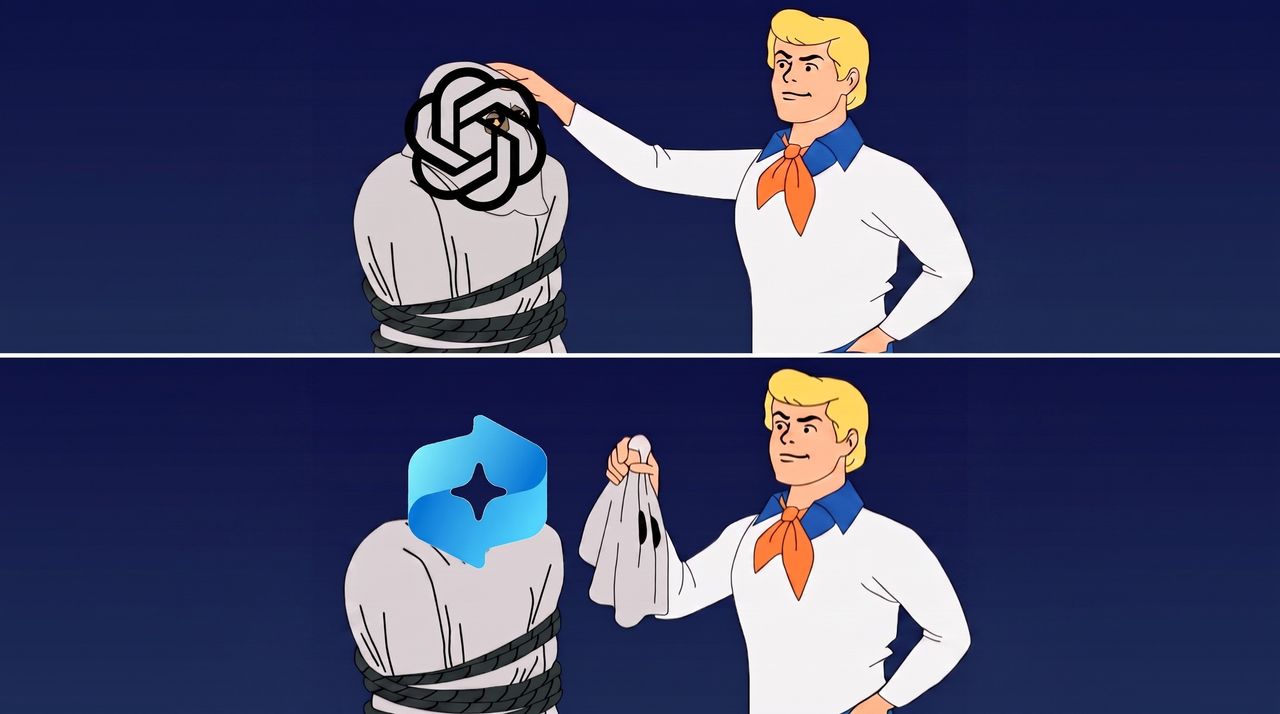
Scooby Doo meme of Fred pulling the mask off of ChatGPT only to reveal Windows Recall beneath.

Scooby Doo meme of Fred pulling the mask off of ChatGPT only to reveal Windows Recall beneath.

GPT-5.6 Zinc Leak Suggests OpenAI’s Next AI Upgrade Could Arrive Before GPT-6

Par : Nisha
3 août 2026 à 04:15
OpenAI may be preparing another major AI update before the arrival of GPT-6. Two previously unseen model codenames—Zinc and Magnesium—have reportedly appeared inside DesignArena, suggesting the company is actively testing the next evolution of its GPT-5.6 lineup. Neither model is currently available for public use, but their appearance has sparked speculation that OpenAI is polishing […]

GLM-5.5 Leak Suggests a Powerful Open-Weight AI Model Ready to Challenge GPT-6

Par : Nisha
2 août 2026 à 12:18
The race to build the next generation of frontier AI models is heating up, and a new leak suggests GLM-5.5 could become one of the biggest competitors yet. According to the latest rumors, the upcoming model is expected to arrive later this August with a major focus on coding, reasoning, and autonomous AI agents. If […]

New OpenAI “Astra” Model Family Leaked: Could This Be GPT-6 Built for Autonomous AI Teams?

Par : Nisha
1 août 2026 à 13:58
A new OpenAI model family, reportedly codenamed Astra, has surfaced in fresh leaks, suggesting the company is preparing a major leap beyond today’s chatbot experiences. According to the information shared online, OpenAI recently demonstrated Astra to US policymakers, showcasing a next-generation AI system designed for long-running tasks, autonomous AI agents, and advanced reasoning. While OpenAI […]

GPT-5.7 leak suggests OpenAI is preparing a major AI upgrade ahead of GPT-6

Par : Nisha
30 juillet 2026 à 12:27
A fresh leak claims OpenAI is preparing to launch GPT-5.7 as an interim flagship model before the arrival of the long-awaited GPT-6. According to the rumor, GPT-6 has reportedly been pushed back to September, prompting OpenAI to release a significantly upgraded GPT-5.7 as early as August. If the information proves accurate, GPT-5.7 won’t simply be […]

GPT-5.6 Sol Now Lasts Longer: OpenAI Improves Usage Efficiency by 18% and Restores Limits

Par : Nayan
29 juillet 2026 à 12:07
OpenAI has announced an important update for GPT-5.6 Sol, addressing one of the biggest concerns raised by ChatGPT Work and Codex users since the model’s launch. After investigating reports that Sol was consuming usage limits much faster than expected, the company has introduced several backend optimizations that should make users’ quotas last around 18% longer […]

GPT-Live in ChatGPT Voice Rolls Out to ChatGPT Edu, Business, and Enterprise Users Worldwide

Par : Nisha
28 juillet 2026 à 05:15
OpenAI is expanding access to one of ChatGPT’s most advanced voice features. GPT-Live in ChatGPT Voice is now rolling out to ChatGPT Edu, Business, and Enterprise subscribers worldwide, giving organizations and educational institutions access to more natural, real-time AI conversations. The global rollout marks another step in OpenAI’s effort to bring advanced voice AI capabilities […]

Microsoft Brings GPT-5.6 to Copilot in PowerPoint: Faster AI, Better Slide Designs, and Smarter Presentations

Par : Nisha
10 juillet 2026 à 14:18
Microsoft has begun rolling out GPT-5.6 to Copilot in PowerPoint, giving users access to OpenAI’s latest and most capable AI model directly inside Microsoft’s presentation software. The upgrade promises faster content generation, more visually appealing slide designs, and presentations that better follow an organization’s branding and templates. The rollout is aimed at making PowerPoint even […]

The AI Limit Wars: Anthropic and OpenAI Clash with Massive Rate Limit Resets Post GPT-5.6 Sol Launch

Par : Nayan
10 juillet 2026 à 11:04
The AI arms race just hit a boiling point, and everyday developers are the ultimate winners. In a perfectly synchronized sequence of tech-industry chess, OpenAI and Anthropic have launched a dual-front assault on user limits. What started as a massive product drop quickly devolved into a strategic quota war, with Anthropic firing the first retaliatory […]

OpenAI Teases ChatGPT and Codex Merger: Official Teaser Points to New AI “SuperApp”

Par : Nayan
9 juillet 2026 à 17:09
OpenAI appears to be laying the groundwork for its biggest software transformation yet. Recent teasers from OpenAI insiders and developers point toward a major architectural shift: the consolidation of the ChatGPT desktop application and the Codex development ecosystem into a single, unified AI workspace. If these hints are any indication, the boundary between a standard […]

GPT-6 Could Launch Sooner Than Expected as AI Race Between OpenAI, Anthropic, and DeepSeek Intensifies

Par : Nisha
9 juillet 2026 à 11:53
The artificial intelligence race may be about to enter another major phase. According to recent industry rumors and insider reports, OpenAI is preparing to launch GPT-6 significantly earlier than previously expected, potentially within weeks. If accurate, GPT-6 would succeed the upcoming GPT-5.6 and introduce an entirely new pretraining foundation rather than continuing with the existing […]

❌
❌