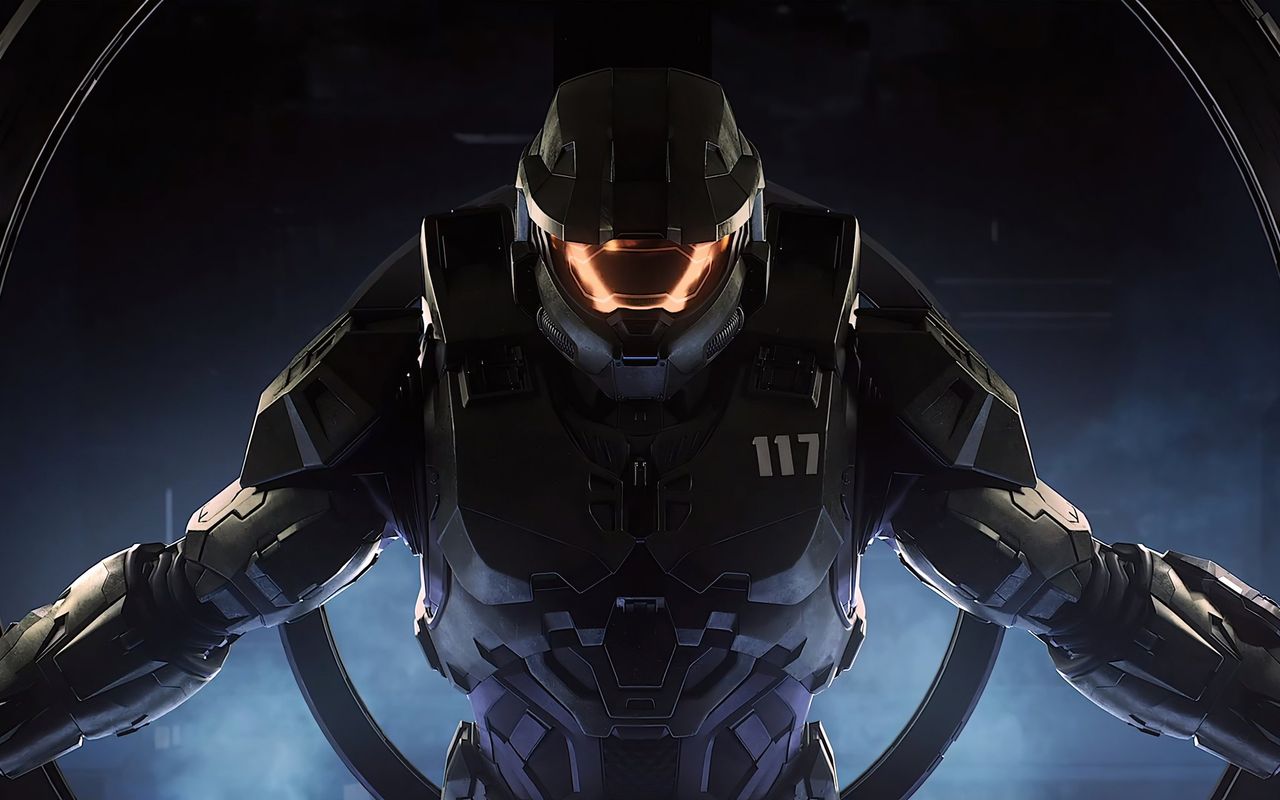
Vue normale

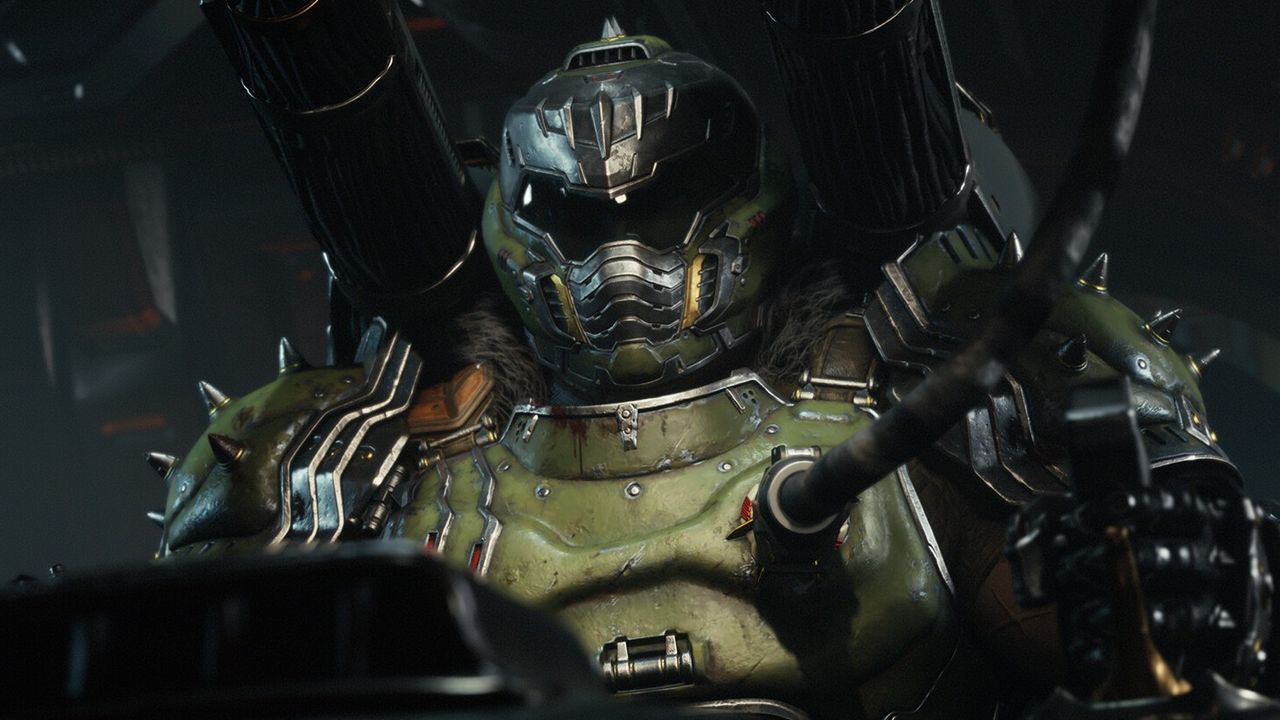
What's going on with Xbox's id Software? Here's why rumors of the DOOM studio's impending demise are completely premature.

Xbox's cuts over the past week have been brutal; let's not mince words here.

Four studios divested with a possible fifth in progress, over a thousand jobs removed already, with a further 2000 planned. The atmosphere within Xbox right now is dire — a total 180 following the wave of optimism from new CEO Asha Sharma's appointment in spring.

As a result, there are tons of stories coming out about what the fate of Xbox's remaining studios might be. A lot of the discourse has fallen on id Software right now, the beloved maker of DOOM. The studio is an industry staple, and arguably one of the most important and influential brands in the modern gaming canon.

Cuts at id Software have been heavy and painful. Some have claimed the studio's lauded id Tech engine is effectively on ice, and that id is no longer large enough to produce its own games.

What's the truth here? I've been investigating Microsoft's plans for id. Despite the callousness of Microsoft's bean counters, I'm confident the studio will endure.

Microsoft has no plans to shelve id Tech

OG DOOM gameplay screenshot

id's OG engineers popularized the first-person genre, which now generates billions of dollars.

DOOM and other id Software games have long been powered by the id Tech engine. The engine was designed originally for Quake back in the 90s, and has since powered a huge variety of titles, including open-world games like RAGE, horror games like The Evil Within, Wolfenstein shooters, and, of course, the modern DOOM games. More recently, Machine Games' Indiana Jones and DOOM: The Dark Ages were built on the latest versions of id Tech.

It has a very different feel to Unreal Engine, particularly for first-person games. It's been lauded for its optimization on lower-end hardware stacks, as well as its general versatility.

The cuts to id Software have hit the teams that develop id Tech hard, with decades of expertise wiped out over night. But rumors that there's now virtually nobody working on the engine are false. Sources tell me that there remains a solid stack of expertise for id Tech across id Software itself, and Machine Games. I'm told Microsoft also has no plans to shift either studio forcibly to Unreal Engine, which seems to have become the default for Microsoft and many other core game makers.

Microsoft provided us this statement on the topic: "There are dozens of people working on id Tech across multiple locations. Reports that there’s only one person left in Texas are inaccurate."

In my view, Microsoft would have to be miserably short-sighted to deprecate id Tech. Handing even more power to Unreal Engine opens them up to monopolistic price increases down the line, which would be fiscally irresponsible. Xbox CEO Asha Sharma herself said in her memo to staff that she wants Microsoft to rely less on vendors for things like this. As such, I would argue that Microsoft should invest more in id Tech, not less.

But hey, quarterly thinking is Microsoft's M.O. these days. And it is true that generational talent and knowledge has been carelessly cast aside.

id Software's headcount is now similar to what it was for DOOM (2016)

DOOM 2016

DOOM (2016) is, in my view, id Software's best ever game.

The other rumor flying around is that id Software has shrunk to a headcount that is untenable for future self-made products, relegating them to "support studio" status. This too, is false.

While the cuts have been alarmingly callous, my understanding is that the remaining id Software core team is roughly the same as it was when DOOM (2016) shipped. DOOM (2016) is arguably the studio's best-ever game in my view, despite the comparatively smaller headcount that produced it. That's not too suggest in any capacity that we should expect the same quality bar without proof ... Microsoft removed mountains of incredible talent from the pool.

Still, I'm not sure exactly what id Software could be making next. There have been reports that id Software had a variety of pitches in the pipeline, including a Perfect Dark reboot and a Western-styled shooter dubbed Ironwood. It's unclear if any of these will be greenlit.

id Software just shipped DOOM: The Dark Ages Revelations, a sizeable story expansion for last year's DOOM prequel. What the studio builds next remains to be seen, but Xbox CEO Asha Sharma specifically called out DOOM and Quake as franchises to invest in.

Microsoft wants to grow its most staple and recognizable IP, which at least in the near term, likely excludes "new" franchise ideas. I'd still like to see what a modern Hexen would look like ... perhaps we'll learn more at Quakecon, which is still going ahead.

It's still been a needlessly brutal exercise

A warrior in a battle-scarred helmet and green armor lies on a gritty surface, covered in blood. His expression is defiant, with a futuristic and intense atmosphere.

DOOM will outlive Microsoft's bean counters. (Image credit: Bethesda Softworks)

While rumors of id Software's demise have been greatly exaggerated, the layoffs have still been callous and brutal. Staffers with decades of expertise and tenure were let go, despite the success of the modern DOOM trilogy.

Microsoft's gaming aspirations have been heavily reduced over the past week, in what CEO Asha Sharma has been describing as a "reset." This has led to sizeable reductions in teams working on a variety of projects, from The Elder Scrolls to Xbox's social media delivery and platform features. Other studios, like Blizzard, seem to have emerged largely unscathed so far. And Xbox's hardware team building Helix has also been left intact.

Xbox has worked hard to save studios like Undead Labs from outright closure. But, it hasn't prevented Microsoft from expunging hundreds of jobs in other areas, inside Xbox and beyond. Microsoft's huge bets on artificial intelligence haven't really delivered meaningful returns, and the vast capital expenditure on data center buildouts is spooking investors.

At Xbox, the layoffs reflect a challenging time in traditional gaming. Core gaming has seen a contraction owing to increased costs and lack of investment in younger cohorts, which dropped consoles in favor of Roblox on mobile devices, alongside non-gaming activities. Microsoft's lack of investment in Xbox's platform and social features have prevented it from finding new users out of the Gen-X and Gen-Y cohorts, many of whom are starting to age out.

Where Xbox goes from here wholly remains to be seen, but one thing is for sure: DOOM is eternal, and it will outlive Microsoft's bad decision-making.

Click to join us on r/WindowsCentral

Join us on Reddit at r/WindowsCentral to share your insights and discuss our latest news, reviews, and more.

DOOM: The Dark Ages

DOOM is forever.
"It's the kayfabe of a tech industry that really has run out of ideas.": Zitron says Microsoft’s trillion‑dollar AI push is a bubble built on hype, hidden losses, and demand that doesn’t exist

Microsoft's share price has slid 22% in the past year, as investors increasingly cast doubt on the firm's long-term AI strategy.

Artificial intelligence has been billed as the next coming by Big Tech, with everyone from Amazon to Google trying to figure out how to leverage the expensive technology to generate profits. The problem is, nobody is even close to having an answer.

Generative AI is incredibly costly to run, and the return on investment is unclear at best. Many companies are starting to discover that, in fact, it's cheaper and more effective to simply use human labor. Companies that previously laid off engineers in favor of AI models later found themselves crawling back to those fired, and others have put large restrictions on token expenditure as returns remain elusive.

I saw a clip on CNBC from Ed Zitron, creator of the Where's Your Ed At newsletter and host of the Better Offline podcast recently. It summarized Microsoft's AI conundrum in pro wrestling terminology — which appealed to my simple brain. His full analysis is anything but simplistic, though. It speaks to the hard reality companies like Microsoft are facing: Is any of this actually worth it?

Zitron describes the challenges of companies like OpenAI and Anthropic joining SpaceX in going public, describing how the company's financial realities betray the almost demented hype around them.

"They'd be the first to be this bad, other than WeWork, and this is so much worse than that. OpenAI burned $20.9 billion dollars in 2025. The problem with these companies is ... their margins are getting worse. Their costs increase linearly with their revenues. There's no proof they can improve their margins. No amount of specialist silicon will bring these costs down.

"We're at a point where OpenAI is pushing their IPO to 2027 because they couldn't get a trillion-dollar valuation. People are wising up to the problem of generative AI: there's not really a business there."

Zitron posits that none of the hyperscalers and companies like OpenAI and Anthropic "encourage waste," while potentially stealing ideas generated by companies using their models, citing Claude Design and Figma. Indeed, the only public company that seems to be flying on its AI hype right now is Google. I would argue that's less to do with innovating, and more because they've found a way to steal revenue from human creators via Gemini's Google Search summary box — instantaneously creating infinite, dynamic (albeit hallucinating) ad-scaling opportunities.

This wholesale content theft is not as readily available to OpenAI, Anthropic, or Microsoft. Google Search remains the dominant tool for browsing the web, and thanks to Chrome and Android, Google owns the entire stack here.

Microsoft Fairwater Datacentre

Microsoft's data centers have come under increasing scrutiny for pollution, noise, electricity bill inflation, and water depletion. (Image credit: Microsoft)

Microsoft very much does not own the entire stack. It barely owns a stack at all here.

Microsoft's partnership with OpenAI is on the verge of collapse, pending contractual obligations that will expire over the next few years. It's already ditching OpenAI's pricey models in favor of supposedly more-efficient MAI home-grown models in some products. Microsoft Copilot is already barely used, despite being baked into Windows. It languishes at lower than 10% of the market, according to estimates, far behind the likes of Claude, Gemini, and ChatGPT.

CEO Satya Nadella's decision to give up on Windows Phone and internal Android projects has precluded Microsoft from any form of mobile play here. Mobile is where all new consumer tech will thrive, whether or not it's AI or something else. The historical open nature of Windows prevents it from reaching consumers with any of its products. Nobody uses Bing, Edge, or Copilot, and it's a result of Microsoft's wholesale lack of foresight.

Microsoft bet that it could provide the underlying infrastructure instead, and has spent monstrous amounts of CapEx on data centers in the past few years. But Zitron posited in a large report from May that it might be exaggerating, or perhaps even outright lying, about its data center expansion plans. Indeed, there's little evidence that Microsoft has actually expanded its capacity since 2024. Zitron tracked a variety of Microsoft-announced data center projects and found them in various states of incompletion.

Is this a signal that there's no real demand? Is Microsoft intentionally stalling and dragging out construction because it knows there's no actual ROI incoming from these projects?

Satya Nadella with Sam Altman at a conference

Microsoft's OpenAI bet was called the smartest investment it had ever made a few years ago. On paper it still is. Imaginary, fantastical paper, at least.

AI-adjacent stocks, including SpaceX, Oracle, and Microsoft, have all been in near free-fall decline recently, as investors seem to bet that there's gross over-extension going on. Meta is also reportedly spinning up a cloud company to try and offload excess compute it had previously invested in AI specifically, despite not having any actual demand.

"The only reason Big Tech is investing in this is that they've run out of hypergrowth ideas," Zitron said, on the general AI industry. "They don't have a next iPhone, they don't have a new Google Search. They've put over a trillion, with trillions more to come, into a kind of dead-end industry. When that ends, they'll have to admit that they don't have anything else."

"In the future, I see [AI] as a boring hardware-based business, kind of the Oracle licensing hardware model. I think this is a $10 to $30 billion TAM [total addressable market] industry, pretending to be a $1 trillion industry."

"Everyone is just kind of pretending. It's the kayfabe of a tech industry that really has run out of ideas."

Click to join us on r/WindowsCentral

Join us on Reddit at r/WindowsCentral to share your insights and discuss our latest news, reviews, and more.

Microsoft Copilot on a red background

Maybe AI actually isn't the future?

Report: Microsoft will make even more of its games exclusive to Xbox — as multiplatform strategy totally fails. What's going on?

A new report suggested that Xbox plans to double down on exclusive games, as Microsoft explores paths to grow its ecosystem.

This week, Microsoft begun processes to eliminate 3,200 roles from its Xbox gaming division, with hundreds already laid off or leaving in divested studios. In a report in Bloomberg outlying what went wrong at Xbox, we potentially caught a glimpse at how Microsoft's thoughts are evolving around its gaming ecosystem.

At the Xbox Showcase, CEO Asha Sharma outlined plans to make Gears of War: E-Day and Clockwork Revolution fully exclusive to Xbox consoles. Bloomberg suggests Microsoft is looking to add even more exclusive games to its lineup potentially, which echoes comments execs made to me at Summer Game Fest in LA last June.

Much like Xbox's "it's only four games" statement about going multiplatform previously, the "it's only two games" mantra applies here in reverse. Microsoft is looking at making even tentpole single player games, historically multiplatform, exclusive to Xbox hardware (at least on console.) Could this mean we eventually see the next mainline Fallout and Elder Scrolls go exclusive to console on Xbox?

Bloomberg: "While big multiplayer games will still be available on all major platforms, [Xbox] will make more of its best titles exclusive to Xbox so gamers have a reason to buy its console."https://t.co/uzaantseAn pic.twitter.com/ohiK6zUlTGJuly 7, 2026

Reaching the biggest possible audiences has been the best margin play Xbox has had in recent years. Microsoft was previously driving Xbox to chase a 30% profit margin, and an easy way to do that is sell software wherever you can. However, Asha Sharma is not operating under that mandate. Instead, Sharma is operating under an ecosystem growth mandate.

Sharma has spoken at length about how her initial focus will be on Xbox's core: the console gamer. Console gamers in the Xbox ecosystem represent 4 times higher lifetime spending than other types of users across Microsoft's vast gaming ecosystem. On PC, they compete with Steam for margins. On mobile, they compete with well-established and dominant Eastern titles, while handing away millions to Apple and Google for the privilege.

Despite Xbox's retreat from PlayStation in the recent term, there remains tens of millions of active users in the Xbox ecosystem. These users are disproportionately passionate and spendy. Indeed, I would posit that anyone left in the Xbox ecosystem after all the disappointments represent the least "casually-invested" consumers in all of gaming potentially. Sharma wants to grow that base.

Minecraft Hero

Xbox could see more integrations and activations with Minecraft, which Phil Spencer's Xbox was strangely hands-off with. (Image credit: Mojang Studios)

It's more true than ever that Xbox represents discretionary spending, and console gaming in general. Next-gen (and even current-gen) consoles are going to be expensive, owing to the memory availability crisis, tariffs, and the rest of it.

Arguably, creating desire through exclusive content is more crucial than ever to maintain an ecosystem in this universe.

One way I've heard Microsoft is exploring achieving this is direct integrations between Xbox and Minecraft. Xbox CEO Asha Sharma restructured Minecraft to answer directly to her for the first time. Integrating Minecraft's features at a platform level into Xbox consoles will be one avenue of exploration her team will look into here. What that looks like remains to be seen. I don't think Microsoft will do anything to degrade the Minecraft experience on other platforms (especially PC and mobile), but there might be exclusive (albeit basic, but fun) integrations for Minecraft on Xbox consoles. I can see Microsoft leveraging Minecraft to sell Xbox Helix as well in some ways, with more aggressive co-marketing activations and bundles.

Longer term, Microsoft may explore doing this with Activision-Blizzard properties too, but there are currently regulatory restrictions preventing Xbox from leveraging things like Call of Duty in the same way.

Fallout 76

Microsoft has been oddly reluctant to associate some of its acquisitions with Xbox. (Image credit: Bethesda Game Studios)

PlayStation recently landed a massive (multi-million dollar) marketing deal for Grand Theft Auto 6. The marketing deal is so vast, that Rockstar can't even mention the fact there's an Xbox version. PlayStation rebranded its apps to match Grand Theft Auto branding, and you can expect billboards, ads, and other campaigns to follow — excluding Xbox from the conversation.

Under previous leadership, Xbox was strangely reluctant, even seemingly embarrassed, to associate some of its acquisitions with the Xbox ecosystem. Games like DOOM, Fallout, and indeed Minecraft, barely had any co-marketing with Xbox console hardware. And it has been to the console ecosystem's detriment.

The new leadership is taking the opposite view, and it might have no choice. If consoles are to be more expensive than ever, there needs to be more reasons than ever to buy one. If I'm going to drop $1000 on a PS6 or Xbox Helix, why would I buy the box that gets less content?

Asha Sharma hopes by leveraging some of Xbox's biggest franchises in co-marketing, co-integrations, transmedia content, and exclusivity regimes, she might be able to convert more gamers into core Xbox users.

Phil Spencer was transparent in thinking this wouldn't be possible, suggesting in a previous interview that even if Starfield was a mega-banger, making it exclusive wouldn't move the needle for Xbox hardware. Sharma is betting that maybe a steady stream of said bangers might do the trick.

It will take years to find out if she's right — but will Microsoft corporate give her years to implement this strategy? That's arguably an even bigger question.

Click to join us on r/WindowsCentral

Join us on Reddit at r/WindowsCentral to share your insights and discuss our latest news, reviews, and more.

Halo Infinite

Halo Infinite

❌