Vue normale

No, Xbox isn't quitting Steam — but it IS doubling down on PC gaming. Here's how.

Something I said on our Xbox Two Podcast this weekend was taken a little bit out of context by some news aggregates, and it led to rumors that Microsoft was exploring quitting Steam. They are absolutely not exploring that (right now), but there is good reason to think Microsoft is evaluating how it engages with Windows gaming all up.

Someone superchatted in during the live show and asked if there was a scenario where Xbox would ever quit Steam. Microsoft has been re-engaging with exclusive content as of late, with Gears of War: E-Day being the tip of that spear. It'll be exclusively on Xbox Series X|S on console, removing PlayStation from the equation. It is, however, still launching on Steam on PC, in addition to Xbox PC.

DEAL: Get Surfshark VPN 86% OFF with Windows Central 🦈

PC gaming seems to be core to Xbox's future. Xbox Helix is going to be a gaming PC in essence, and component prices are making the Xbox Series X|S a non-starter for many. At least for the duration of the memory crisis, Microsoft likely isn't expecting to sell a ton of its own hardware. So, targeting users where they already are, without completely exiting the hardware landscape, is likely the play for now.

So, given that Microsoft literally owns Windows, how are they hoping to corner a bigger piece of the lucrative PC gaming market, even if it doesn't mean undermining Steam directly?

Xbox will continue to support Steam, but it's planning to expand its PC business too

Google on Steam Deck: Library.

Is Microsoft starting to see SteamOS as a legitimate threat? (Image credit: Rebecca Spear / Windows Central)

Xbox Game Pass remains core to how Microsoft plans to show up on PC. Game Pass is designed to capture a separate audience from Steam, targeting users who are perhaps more inclined to otherwise stick to free-to-play titles or seek savings in as many ways as possible.

Xbox is still investing a ton in improving the Xbox PC app, which now sports Xbox Mode on Xbox handhelds and Windows 11 PCs, turning your desktop environment into a more optimized, controller-focused interface. The Windows 11 team wrote just last week about how it intends to further boost the OS for gaming and optimization in general. We live in a world where Linux and SteamOS seem to offer significant gaming performance gains by simple virtue of not being Windows — Microsoft absolutely wants to solve that gap.

But furthermore, I've received information from multiple trusted sources that Microsoft and Blizzard have been planning to open Battle.net up to third-party developers. It's unclear if that's still the plan under new Xbox CEO Asha Sharma, but so far, I'm not yet seeing evidence that the plans here were canceled.

Battle.net on Windows

With Xbox PC, the Minecraft Launcher, and Battle.net combined, Microsoft already has a sizeable presence on PC. (Image credit: Windows Central)

Battle.net boasts enormous monthly active users in its own right, and technically has its own "exclusives" in the form of World of Warcraft, Heroes of the Storm, and some other Blizzard classics.

Microsoft already tested launching some Xbox games through Battle.net, including Avowed, The Outer Worlds 2, and DOOM: The Dark Ages. It seems Battle.net is being redesigned to offer more third-party content beyond the Microsoft ecosystem in the future, while still acting as the primary delivery platform for Blizzard games like Diablo IV and Overwatch.

Battle.net and the Xbox PC app already form a "bridge" of sorts via Xbox PC's plugins section. Microsoft is also working with publishers like Ubisoft and EA to integrate their own PC stores to give publishers the opportunity to deliver their content directly while integrating Xbox Series X|S, Xbox Cloud, and Xbox PC ecosystems and features. Ubisoft announced last week that owners of some Xbox Series X|S console games will receive their Xbox PC versions for free, for example, and it's likely the program there will expand over time.

Fortnite PC

Xbox PC has improved a ton in recent years. Dare I say it, it's actually a truly viable alternative for basic PC gaming now. (Image credit: Windows Central | Jez Corden)

There's a lot of unknowns here, of course. There are some gaps and pitfalls when it comes to third-party titles on the Xbox PC store. Diablo IV, for example, doesn't support Xbox Play Anywhere, meaning users have to buy DLC multiple times for multiple platforms. Ubisoft games on PC don't support Xbox achievements either, even though you can sync your progress on some games to Xbox Series X|S devices.

Just how seamless the synchronicity between platforms will be remains to be seen, but the core of it is pretty simple: it's about giving developers more options for selling games, and putting more games in front of users where they already are on PC. The PC market is pretty fragmented given its open nature, with different launchers, stores, and platforms competing for attention. Xbox is trying to make it more seamless for PC players who want the integrations using its plug-in systems, while also leveraging the platforms it already has to create more opportunities for developers in general.

Blizzard games are generally seasonal in delivery, so it's a potential win for Xbox if, during typical patch cycles, Blizzard gamers pick up another game inside the ecosystem rather than leave for something external on the Riot Client, Epic Games Store, HoYoverse launcher, or wherever else.

Positron and Xbox emulation on PC

Xbox announces back compat for PC, with Blinx, Fusion Frenzy, Crimson Skies, and Conker leading the charge.

This is just the start. (Image credit: Microsoft)

Microsoft is also known to be creating a bridge between console and PC with its Positron platform.

Xbox "Positron" is a system designed to help gamers convert disc-based games into digital licenses. If those games support Xbox Play Anywhere (and up to 50% of new releases currently do these days), then you will also get the PC version of any Xbox Series X|S disc-based game you connect to your Microsoft Account.

Sources suggest to me that Positron is expected to be revealed some time in August as Microsoft works out some of the finer details. It won't support every single game on Xbox 360, Series X|S, and Xbox One, but it will support a significant amount of titles pending licensing hurdles and agreements with publishers.

Another tool Microsoft is using to grow its presence on PC is the unassuming backwards compatibility emulator we saw ship a few weeks ago.

Xbox Ally X handheld on a table

Finding users where they are has become core to Xbox's recent strategy, although it clearly doesn't want to sacrifice its own ecosystem in the process. (Image credit: Windows Central | Jez Corden)

Xbox has arguably been a leader in the digital preservation space, ensuring games from decades ago still function on modern systems. In some cases, the only way to play certain old school games has been on Xbox consoles via backward compatibility. But Microsoft is planning to expand that even further to include PC gamers in the mix as well.

For now, the Xbox backward compatibility emulator on PC includes four OG Xbox games, including Conker, Blinx, and Crimson Skies. Future plans also include Xbox 360 games, which could light up some major classics that have, in some cases, up to now, been completely locked to consoles.

It would help Microsoft close some big gaps in its PC ecosystem, which came in pretty late and is sadly still missing out on mountains of classic games. It would also help Xbox gain access to a wealth of new content that would potentially perform better on lower-end handheld devices, such as the Xbox Ally S, in a universe where hardware prices have become truly insane.

Lots of potential, but polish is paramount

Xbox Cloud Gaming on an Xbox Ally X handheld

Xbox PC, Xbox handhelds, Xbox cloud gaming, Xbox Series X|S — Xbox's sprawling network is battling to find new users more seriously than ever. (Image credit: Windows Central | Jez Corden)

Xbox's history with PC gaming has been checkered, to say the least. PC gamers of a certain age still call back to the dark days of Games for Windows Live. Even those who might've dabbled more recently lament Xbox PC's feature and app gaps when compared to Steam.

On lower-end devices especially, the Xbox PC store is still not as performant as it probably should be, especially on that initial load. The Xbox PC store search functionality isn't particularly great either, and curation is a mixed bag. It's hard to find new games at times, and many games to this day still skip the platform, even though Xbox PC offers a far more generous cut than Steam does.

The Xbox PC store has improved by a huge amount, and now probably represents roughly 50% of my play time. I'm currently bouncing between Xbox Series X|S and Xbox Ally X while playing Hell is Us, for example, and many upcoming major AAA titles like Blood of the Dawnwalker and Onimusha from Capcom do support Xbox Play Anywhere.

Indie developers still aren't huge fans of the Xbox PC platform either, sadly, with long certification times and difficult policies making shipping on Xbox PC needlessly complex. Without some form of Game Pass deal, it seems many indie developers simply don't think it's worth the effort.

It'll be interesting to see what Xbox does to continue improving adoption on their end, and particularly how Battle.net handles some of this stuff in the future (if plans don't change under new CEO Asha Sharma). None of it means Xbox will walk away from Steam; there's simply too much money to be left on the table. PC has long been a place of platform plurality, and Xbox is seemingly embracing that aspect of Windows gaming in a big way.

RELATED: Xbox Helix and Steam — does it still make sense?

If it works, could Microsoft look to a future where it focuses on its own platforms rather than Steam or Epic Games? It's perhaps a window at best, but not likely in the medium or even long term. But given how Microsoft is pressuring Xbox to deliver bigger margins at all costs, I suspect today's incarnation of Xbox would be less philosophically inclined towards supporting Steam if it felt it didn't have to. But that's just my (potentially cynical) opinion.

As far as I know, Xbox has no plans whatsoever to quit Steam, even as it doubles up on Xbox PC and potentially Battle.net as store destinations for its developer ecosystem.

All of this is before we learn more about Xbox Helix, and how Microsoft plans to bridge the console and PC ecosystems with its own hardware ... More competition should be good for consumers, at least in theory. Ideally, whether you're on Steam or not, Microsoft's boosted attention towards Windows should improve PC gaming in general.

Click to join us on r/WindowsCentral

Join us on Reddit at r/WindowsCentral to share your insights and discuss our latest news, reviews, and more.

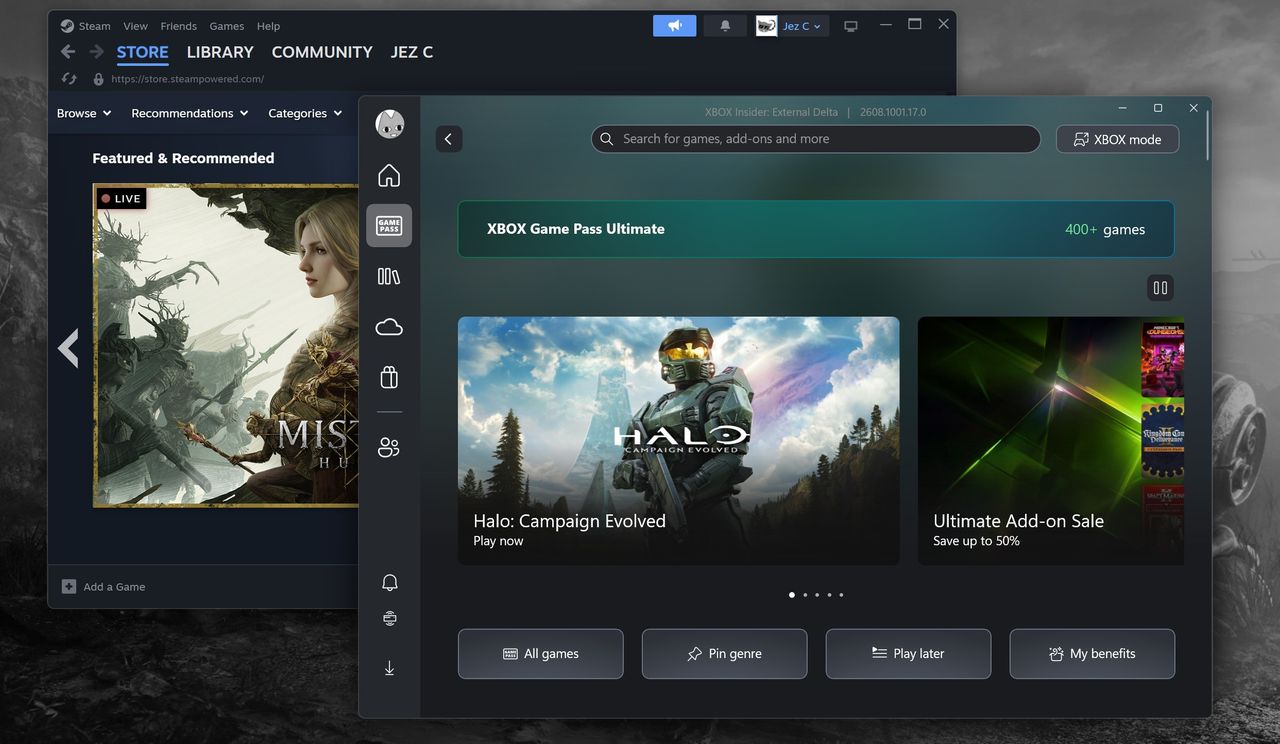
Xbox PC app and Steam on a Windows desktop

Xbox is getting serious about PC gaming.
Microsoft's most-underrated gaming feature is steadily gaining traction, but big gaps remain — Xbox Play Anywhere report card

I have become one of the world's only Xbox Ally-first gamers, and as you might expect, I'm a big fan of Xbox Play Anywhere.

For those who don't know, Xbox Play Anywhere is a truly remarkable program by which Xbox Series X|S and Xbox PC players get both the PC and console version of a game on a single purchase. In an era where digital rights and preservation have become central, the fact a huge chunk of my Xbox console library is playable on any Windows PC is something that is probably critically overlooked.

It's a great service in particular for the Xbox Ally handheld range, but it's true that many, many games simply don't support the feature. Support has been generally inconsistent, despite some big wins throughout the past couple of years.

New data shows that Xbox Play Anywhere support is still improving, but there's still a ton of work to be done here.

Chart showing a steady increase in the amount of games with Xbox Play Anywhere

The ratio of games supporting Xbox Play Anywhere continues to increase, but Microsoft needs to do more to land some of the "bigger" titles (via KoreaXboxNews). (Image credit: KoreaXboxNews @ X (Twitter))

Korean Xbox resource @KoreaXboxNews has been manually tracking the ratio of games that support Xbox Play Anywhere throughout 2026, and the general trend has been pretty impressive.

Microsoft lists new games on the Xbox Store page and lets you filter games by the features they support. KoreaXboxNews' data shows that Microsoft is steadily approaching a ~50% ratio for new games launching that allow users to buy once and then play anywhere.

Microsoft indeed landed some big AAA wins in this regard recently. IO Interactive's 007: First Light was particularly notable. Typically, Microsoft requests that Xbox Game Pass partners deliver titles with Xbox Play Anywhere in exchange for the funding deal. 007: First Light was notable for the fact it was a rare AAA game that opted for Xbox Play Anywhere without any form of discernible incentive.

007: First Light review screenshots from Xbox Series X

007: First Light brought its considerable assets to Xbox Play Anywhere this year, and ran really great on Xbox Ally devices. (Image credit: Windows Central)

Other major Xbox Play Anywhere wins recently include Hell is Us, Palworld 1.0, Subnautica 2, Arc Raiders, Cronos: The New Dawn, STALKER 2, Persona 4 Revival, Final Fantasy Resonance, Valor Mortis, Control Resonant, Onimusha: Way of the Sword, Blood of the Dawnwalker, Beast of Reincarnation, and many more. Although there have been some downsides too.

Ubisoft continues to be a particular frustration in this area. Ubisoft+ Classics is an Xbox Game Pass benefit, but the PC versions come with no achievements, inconsistent cloud save support, and a Ubisoft Connect PC app requirement that offers no discernible benefits to the player. Some games that were formerly Xbox Play Anywhere, including Resident Evil 7, and Mortal Shell, have irritatingly dropped Xbox Play Anywhere for their sequels. Although sometimes support has arrived post-launch or post-announcement. Aliens Fireteam Elite 2 was certified for Xbox Play Anywhere recently, despite not initially including it.

There's also no real benefit for developers to offer Xbox Play Anywhere on older games. We have seen older games arrive on Xbox Play Anywhere with a Game Pass deal, such as Resident Evil Village, but there are so many classics and new games alike that may likely never arrive. Even many of Microsoft's own back catalog have never been ported to Xbox Play Anywhere, and if Xbox itself doesn't think it's worth it — why should third-party developers?

Crimson Desert on Xbox PC store listing

Many AAA hits are adopting Xbox PC, but many many others are not. Indie developers in particular seem to have a tough time justifying the work involved to bring their games to Xbox on PC. (Image credit: Windows Central | Jez Corden)

Xbox Play Anywhere is one of the best features of the Xbox ecosystem in my view, and it's great to see more upcoming titles adopt it out of the box.

RELATED: Best Xbox Ally accessories

Clearly more work needs to be done to convince third-party developers that it's worthwhile. Games sold on Xbox PC deliver more revenue to developers than Steam does, and longer term, building up a credible PC store alternative to Steam would benefit creators in the industry in the long run. I'd argue Microsoft should continue to invest in shouldering some of the burden to support developers willing to support Xbox PC, but Xbox already has its work cut out with a variety of other problems.

It's unclear if hoping developers will "organically" support Xbox Play Anywhere and Xbox PC in general will be enough in the long term.

Do you use Xbox Play Anywhere? What games are missing from the platform? What could Microsoft do to improve adoption? Let us know your thoughts in the comments!

Click to join us on r/WindowsCentral

Join us on Reddit at r/WindowsCentral to share your insights and discuss our latest news, reviews, and more.

Xbox Play Anywhere logo on an Xbox Ally handheld

Xbox Play Anywhere is awesome, but not a lot of devs want to support it.

Halo Campaign Evolved performed well on Xbox, but PS5 gamers give it a collective shrug — just 1% of PS5 gamers tried it, hurting Xbox's brand identity for no real return

Nobody could've seen this one coming!

Much has been said about Xbox's previous approach to its gaming portfolio. In a sprint to boost margin mandates seeded by Microsoft CFO Amy Hood, Xbox leadership put together a haphazard plan to publish icons like Gears of War, Halo, and Forza onto PlayStation. Forza has been an utterly resounding success, but ... the other two not so much.

It's arguably been particularly damaging with regards to Halo. Halo is to Xbox what Mario is to Nintendo, and for Xbox to put Halo on its arch-rival could be interpreted as a very visible signal that Microsoft isn't in it for the long haul.

Every hardware ecosystem tends to have some form of exclusive content, whether it's creative software on Apple products or native Google services on Android. Microsoft decided it wanted Xbox to be the only closed platform in history without any form of exclusive content. Was the juice worth the squeeze?

Well, the data very much says "not," I think.

According to Circana's Player Engagement Tracker, on July 28th Halo: Campaign Evolved ranked 4th in US DAU on Xbox platforms (8% of total Xbox players on that date launched the game), while placing 14th on Steam (2% of actives) and 29th on PlayStation (1% of actives).

— @matpiscatella.bsky.social (@matpiscatella.bsky.social.bsky.social) 2026-08-01T08:44:24.344Z

Despite some clear sales success, Halo: Campaign Evolved has hardly lit the PlayStation world on fire. Halo: Campaign Evolved defeated some service game staples on Xbox during its launch week, claiming the 4th highest daily active users across Xbox Series X|S consoles. It managed to rank a lowly 14th on Steam, and an even worse 29th on PlayStation, claiming just 1% of PlayStation's install base.

I would argue that the immeasurable brand damage putting Halo on PlayStation has wrought on Xbox is hardly worth this paltry figure. Circana senior director Mat Piscatella noted that the data shows "the massive challenge for new games in an environment dominated by the live service behemoths."

For Xbox, I would argue that Halo Campaign Evolved's performance represents a larger problem.

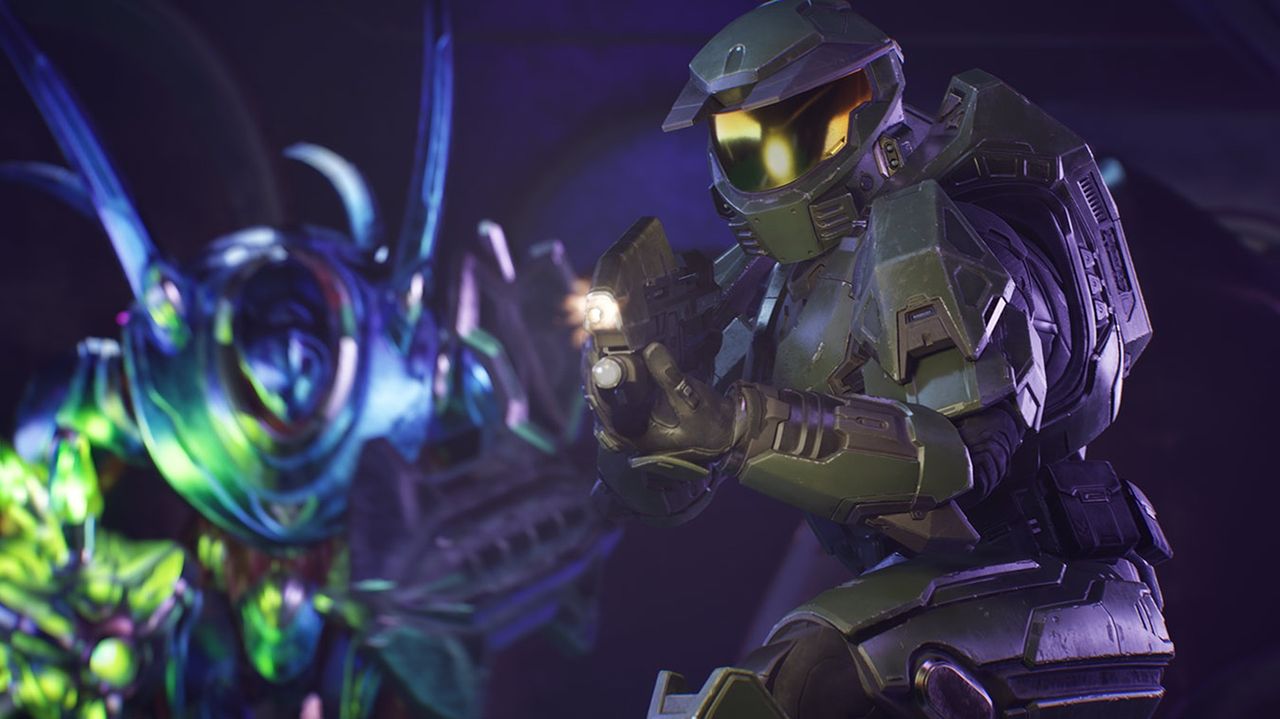
Master Chief wearing green tactical armor and a gold visor, holding a futuristic assault rifle inside a glowing blue geometric corridor structure.

Halo Campaign Evolved is a decent throwback to the classic that kickstarted Xbox, but ... the franchise's future is still befuddled. (Image credit: Xbox Game Studios)

Halo Campaign Evolved has been generally controversial for its lack of multiplayer, perceived (or unperceived) "liberties" taken with the art direction and detailing, while accentuating a lack of visible roadmap for the future of the franchise. Sources familiar tell us that Halo Studios recently canceled a multiplayer-focused Halo game titled Project "Ekur," formerly "Tatanka," a short while ago, leaving the franchise somewhat adrift.

Microsoft's handling of Halo in general has been legendarily poor. The franchise was formerly a staple of the industry landscape and a cornerstone of Xbox's identity. In 2026, it feels like a shadow of its former glory, with a weak TV adaptation doing its own damage to the brand, and repeated "soft reboots" leaving the central narrative in a confused state.

The PS5 version doing poorly is a reflection on how much lustre Halo has lost in the wider gamer consciousness. Xbox fans have been jumping in for the nostalgia, but the fact nobody else cares is an indictment of how the franchise has been handled in general.

Putting Halo on PlayStation 5 did a ton of brand damage to Xbox in general, and I seriously doubt any future Halo will launch on PS5 given Xbox's shift back towards exclusive games. Gears of War: E-Day will be permanently Xbox exclusive, for example, and the E-Day previews have come in extremely positively recently.

Making Halo exclusive to Xbox again is low-hanging fruit ... delivering a Halo that can reclaim the franchise's lost glory is going to be much, much harder, as faith in Halo Studios seems to be in short supply, to put it politely.

As incoming Xbox CEO Asha Sharma seeks to reset the brand and double down on Microsoft's core IP library ... I think of all Xbox's problems, repairing Halo's prestige is by far the biggest challenge facing Xbox. What do you think?

Click to join us on r/WindowsCentral

Join us on Reddit at r/WindowsCentral to share your insights and discuss our latest news, reviews, and more.

Master Chief in green armor holds a pistol with a flashlight in a dark environment, facing a glowing blue and green alien creature in the background.

If you're a PlayStation gamer, chances are high you didn't care about Halo Campaign Evolved.

Xbox CEO Asha Sharma and Microsoft CEO Satya Nadella promise Xbox will "return to growth" by the end of FY27 — What went wrong last fiscal?

Yesterday, Microsoft unveiled its fiscal performance for the past year, and most segments were up, save for Windows and Xbox.

Microsoft's consumer-oriented segments saw material declines, albeit coming in slightly ahead of expected guidance. The memory crisis has weighed on PC shipments as we all know, and Xbox has seen an immense amount of disruption in various ways.

Microsoft was up overall, buoyed by demand for its Azure AI service delivery. Where does that leave Xbox in a world where shareholders are demanding more of Microsoft than ever? Here's what Xbox CEO Asha Sharma and Microsoft CEO Satya Nadella had to say on the matter.

Microsoft's c-suite promises Xbox will return to growth by the end of FY27

In FY26, over 200 million new players came to XBOX and our games, but our business did not grow with our audience. We need to close that gap by investing in what players value. That will take time, but we expect to return to growth by the end of FY27.July 29, 2026

In comments on X (Twitter), Xbox CEO Asha Sharma remarked upon Xbox's journey, noting that it now had "200 million" active players, although it's hard to quantify exactly what that means in real terms. Xbox's platform is incredibly confusing and fragmented; does 200 million include players on PlayStation 5? Does it only include players on Xbox Series X|S, One, and Xbox PC? Does it include Candy Crush Saga players on Android? Who knows.

Either way, 200 million is nothing to scoff at, but she hinted at a core issue: Xbox isn't monetizing those players as well as they perhaps could or should be.

"Regarding Xbox, we are making the necessary decisions in our portfolio, platform, and operations to restructure the business and ensure sustainable long-term growth," Microsoft CEO Satya Nadella told investors. "We have the best titles in the industry along with highly talented studios around the world. We trust in our ability to unite these assets and leverage them, and we expect Xbox to return to the path of growth during fiscal year 2027."

I've seen some try to pin blame on last year's Game Pass u-turn for Xbox's decline this year, but the timeline doesn't really add up. Game Pass did lose a ton of subscribers in the short-lived price hike, but it would've also monetized remaining users more heavily. In fact, subscription services remain a bright spot in an otherwise pressured industry.

"US non-mobile subscription video game spending grew 16% in the first half of 2026 when compared to the same time a year ago, to $3.6 billion," Circana Senior Director Mat Piscatella told us. "Total video game content spending across, PC, console, mobile, VR and cloud was flat, at $24.3 billion. Non-mobile subscription spending includes everything subscription, from service like Xbox Game Pass, Switch Online, etc. to the MMOs and everything in between."

What's the real culprit for Xbox's decline here?

Call of Duty

Call of Duty's stray from its core audience in attempts to compete with Fortnite has seen it become the subject of ridicule in some corners of the net. (Image credit: Activision)

Xbox insiders point to Call of Duty: Black Ops 7 as the primary driver of this past year's decline, although the lack of major tentpole AAA titles is also worth pointing the finger at as well. The previous fiscal year saw a pretty huge amount of content hit Xbox's coffers, and Call of Duty: Black Ops 6 was touted as the biggest in franchise history. Exceeding that expectation simply didn't come to bear.

Call of Duty had some unprecedented competition last year from a resurgent Battlefield 6 and incumbents like Arc Raiders. And debates around Call of Duty's cartoony skins impacted perceptions around the game in general.

There are also other major titles at Xbox seeing pressure right now. Minecraft saw a huge explosion on the back of the 2025 movie in the previous fiscal, and hasn't really had a comparable boost in 2026. Roblox is likely doing more damage to Minecraft than Microsoft is willing to publicly admit right now, as Asha Sharma brings Mojang in-house as a direct report to her.

Candy Crush Saga is an absolutely monstrously huge franchise that core gamers often ignore, and even that has seen immense pressure on mobile from similar casual games, like Monopoly Go.

Xbox Game Pass has seen disruption from its ill-advised price hike last year, and Xbox hardware is under strain from the memory rout. But they're a drop in the bucket compared to the mega franchises Xbox now governs.

The challenge facing Xbox is tough, but is NOWHERE near insumountable

Xbox logo at the Xbox Showcase 2026

Xbox enters its 25th year.

Despite challenges, there are already green shoots of recovery worth pointing towards. Call of Duty Black Ops 1+2's unexpected bare-bones (i.e. very cheap) ports to PlayStation 5 has seen it inexplicably claim the top spot on PS5, beating out Fortnite itself. It could open up a very big opportunity for Call of Duty "Classic" ports that nostalgic millennial cohorts are eager to re-experience, without the ridiculous skins and pop-culture bloat the modern games often tout.

Xbox is also returning to exclusive games to try and boost its hardware visibility. The memory crisis will likely prevent real growth in this area for at least a year or more, but Xbox Helix is around the corner — there's an opportunity for Xbox to innovate on the traditional console business model here.

Microsoft insiders have reiterated to me that Microsoft CEO Satya Nadella and CFO Amy Hood are giving Asha Sharma some breathing space on accountability margin expectations, in order to let the new strategy play out. The price of this has been absolutely massive layoffs, the biggest in Xbox history, as the brand resets various studios to staffing levels seen pre-Covid.

Fallout 4 power armor

Microsoft acquired mountains of franchises from Minecraft, to Warcraft to Fallout, and has in some cases struggled to capitalize on the opportunities they present. (Image credit: Bethesda Softworks)

Xbox has become an enormous and unwieldy operation, though. Ensuring each part of the business is delivering on the opportunities ahead of it represents a massive and complex undertaking that Xbox arguably has struggled with. Since it acquired Minecraft, Activision, Blizzard, ZeniMax, and others over the past twelve years, Xbox has solidified itself as arguably the biggest content house on Earth this side of Disney. Maximizing the opportunities therein will take real investment, innovation, and risk-taking that I'm not sure Microsoft (or its shareholders) have the stomach for.

It should be clear how much potential there is here. The Fallout TV show, the Minecraft movie, and other big wins have proven beyond all doubt that Xbox can create a cohesive content portfolio that spans mediums and devices. But can it achieve this without sacrificing the core of what Xbox is?

It'll be interesting to see how Asha Sharma navigates all of these challenges in the coming years ahead. Asha Sharma arguably has the biggest business challenge in all of gaming right now.

Click to join us on r/WindowsCentral

Join us on Reddit at r/WindowsCentral to share your insights and discuss our latest news, reviews, and more.

Asha Sharma photo op

Asha Sharma has her work cut out!

Microsoft stock price rips on earnings, jumping a 'record breaking' 18% in a week — Wall Street *really* liked Microsoft's earnings

Microsoft's stock price has seen a huge spike upwards as a result of its FY26 earnings report, which outstripped expectations by a considerable margin.

While Xbox and Windows were down 4% overall, with Xbox specifically down 11%. But these consumer-facing businesses are not what moves Microsoft's stock price in 2026. The core of Microsoft's operation, essentially Azure and AI, is vastly beating expectations.

Microsoft's stock has seen declines over the past year as investors worried the company was over-extending on its AI build out. Google has seen some volatility as its cash flows flipped negative — a historic first for the firm, as it continues to race to build out its AI stack.

Microsoft has also seen similar fears, but the FY26 report showed its Azure AI delivery is actually accelerating growth — and not just capital expenditure.

CEO Satya Nadella is positioning Microsoft's AI as a more "efficient" option over competitors, as cost increasingly drives conversations around the tech. OpenAI and Anthropic's assistants win out in benchmarks, but are orders of magnitude more expensive than Microsoft's home-grown models, as well as Chinese incumbents. Nadella stated to investors that Microsoft's home-grown chips and models are driving up to "40%" efficiency gains, beating out its previous reliance on OpenAI's ChatGPT.

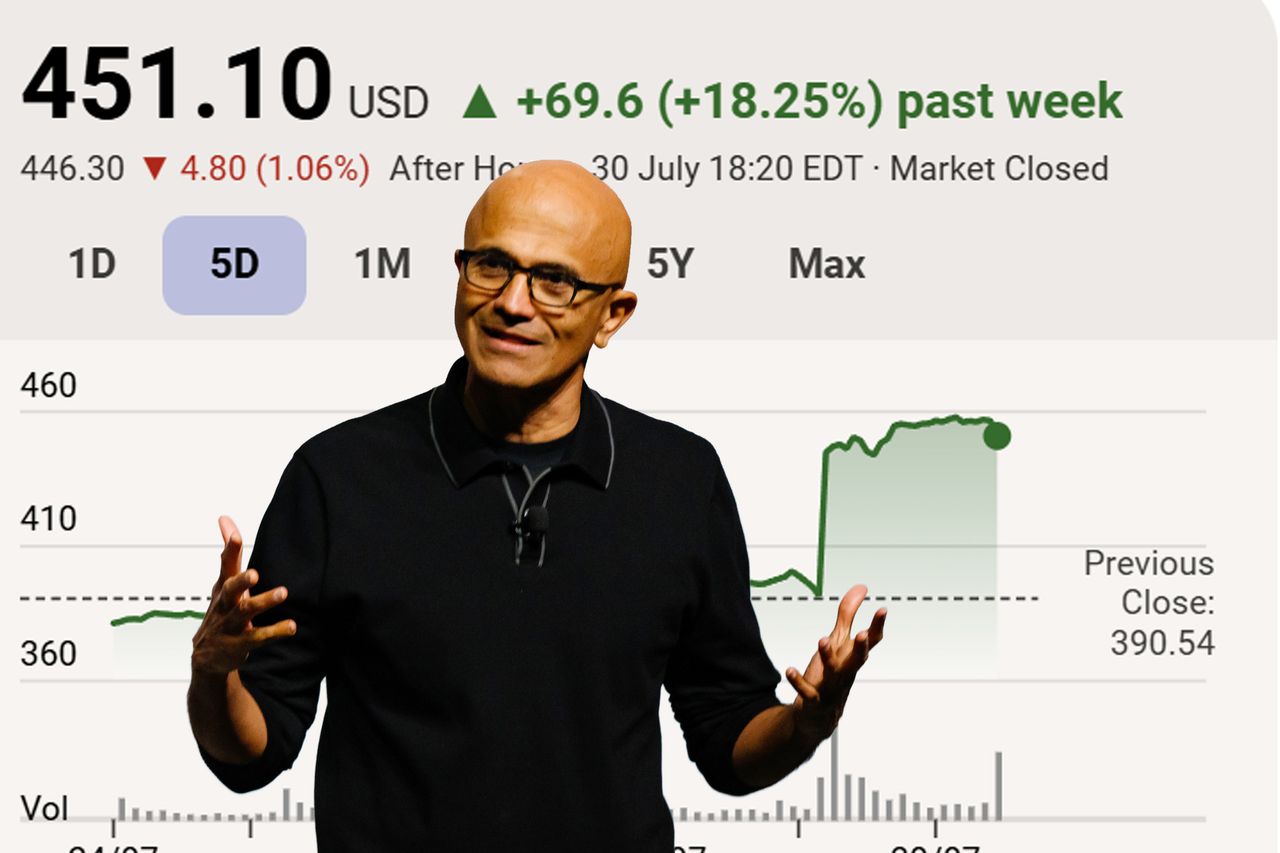
Microsoft stock price jumps 18% in a single week, setting a record

Microsoft's market cap jumped $450 billion in a single day, setting a new world record. (Image credit: MSN Money)

Microsoft's overall revenue increased 18% YoY, to an insane $90 billion, its operating income hit $40.6 billion, up 18%, and Azure saw growth hit 45%, beating expectations by 5%. Microsoft 365 Copilot hit 30 million paid seats, up 20 million since the Spring. Microsoft also reported a pretty staggering 84% YoY increase in contracted AI revenue, which now represents an eye-watering $678 billion demand backlog.

Despite committing almost $116 billion in capital expenditure the past year, Microsoft still managed to keep operating cash flows positive to the tune of $55 billion, a 30% jump. Its free cash flow was down YoY to $19.64 billion, but still beat out expectations.

It's the type of fiscal discipline Wall Street really likes, and they rewarded Microsoft with a record-breaking stock rip. Microsoft's market capitalization increased by $450 billion in a single day, beating out a previous world record set by NVIDIA.

Increasingly it seems like the AI business is coalescing around a small handful of companies, namely Microsoft and Google. Meta has seen its stock price take a beating this past year, as investors fear it has fallen too far behind to keep up.

Great stock gains in the short term ... but questions remain

Microsoft Azure is being displayed on a smartphone with a Windows blue screen visible in the background

Azure is making investors very happy, but how happy will they be if AI literally destroys society? (Image credit: Getty Images | NurPhoto)

Perhaps philosophically, there's still a pretty large question mark hanging over the AI build out. Socially, data centers have become increasingly unpopular, owing to their vast negative impact on local communities, in terms of both noise and electricity prices. Indeed, AI data centers are also massive carbon emitters, and the benefit to society in general remains fairly unclear. Many of the lofty promises from the likes of OpenAI's Sam Altman have failed to materialize in real terms, and there's still a big discrepancy over how it could impact the global economy, and the social contract in general.

If AI puts millions, or billions even out of work, that'll simply create a consumption and productivity bottle neck that no amount of AI data centers could feasibly close. Microsoft itself has laid off thousands of workers this year, and will likely lay off many thousands more next year too. Microsoft and other big tech companies seemingly have no answer for this.

In the short term, investors stand to make a lot of money. But ... umm, will the AI build out actually be good for humanity in the long term? Does anyone actually care? I guess that's not something that tech billionaires worry themselves thinking about too much, eh?

Click to join us on r/WindowsCentral

Join us on Reddit at r/WindowsCentral to share your insights and discuss our latest news, reviews, and more.

Microsoft CEO Satya Nadella with a stock price rally background

Microsoft stock jumps an enormous 18% in a single week on earnings, beating expectations.

PREVIEW: Gears of War: E-Day's 'Horde Siege' is the most fun I've ever had in the entire history of the Gears franchise

I always liked me some Gears of War Horde mode, but nothing prepared me for how ambitious the new Siege mode turned out to be.

Gears of War: E-Day is slated for launch on October 6, exclusively on Xbox Series X|S and PC, marking Xbox's official return to exclusive console games for the first time in a couple of years. There's potentially a lot riding on Gears in that context, but we're not here to talk about that aspect of the launch today.

Last week, I had the opportunity to go hands-on with Gears of War: E-Day's new Horde Siege mode, which extends the old-school PvE offering with bigger, sharper teeth.

Gears of War: E-Day is set in the early days of humanity's fight against the subterranean Locust swarm. The humans of Sera just ended their own bloody civil war, and all hope for peace is shattered under the reptilian fist of this horrific new threat.

Horde mode has long been a staple of the Gears franchise, pitting small groups of players against endless waves of Locust monsters in a shooter-meets-tower-defence hybrid game mode. But Siege mode is a bold reimagining of the formula, now pitting 12 players in huge maps with dynamic objectives and defensible locations, complete with raid boss style events and biting extraction climaxes.

Gears of War: E-Day's Horde Siege is the most fun I've ever had with Gears multiplayer, and I think it could be a big deal.

The sheer chaos of 12-player Horde is sublime

Gears of War: E-Day Horde Siege mode gameplay screenshots, showcasing locust combat and PvE third-person gameplay

Gears of War's Horde Siege will be immediately familiar for players of the OG Horde modes, albeit with an even more chaotic twist. (Image credit: Windows Central | Jez Corden)

Gears of War's Horde mode was a key innovation from the franchise's early days, and spawned a variety of copycats over the years. The key premise is pretty simple: teams of friends bunker in, collect energy from fallen monsters, build turrets and other traps, and defend points from an increasingly difficult assault of Gears of War monsters.

Siege mode evolves the formula, taking inspiration from some of the biggest PvE games of the current era. It'll now rock up to 12 players, split into squads of 4 soldiers, complete with soft class roles to enhance tactical play and reward cohesion.

12 players means a bigger play space. The area for the demo was absolutely huge, and was once again represented a new bar for visual fidelity for Unreal Engine — a tradition that The Coalition and the Gears of War franchise seems to have on some form of uncanny lockdown.

Gears of War: E-Day Horde Siege mode gameplay screenshots, showcasing locust combat and PvE third-person gameplay

Waves upon waves of Locust beg to be slaughtered in horrific ways in Gears of War: E-Day. They also want nothing more than to slaughter you in return. (Image credit: Windows Central | Jez Corden)

I didn't get a ton of breathing space to admire the apocalyptic locales, though. Gears of War: E-Day is utterly chaotic and frantic in the best possible ways. The game drives your squad from objective to objective in a near-constant fight for survival as you move through the rubble of Jacinto's cities.

Siege Mode brings in classes from previous Horde versions, promoting unit cohesion and tactical play. I picked up a basic Assault class for my sessions, giving me access to a stimpack healing ability on a beefy cooldown. Great in a pinch, but not particularly helpful for other squad mates. Other classes got boosts to energy collection, used for building defensive facilities, while others got improvements to healing and squad support. It's easy to imagine how The Coalition could extend Horde Siege mode with post-launch class additions, similar to what we've seen in games like Warhammer 40K: Space Marine 2 and the like.

The classes aren't as deep as some other games, though. The emphasis is entirely on combat in keeping with the typical Gears tradition. And the combat is as brutal, cinematic, and spectacular as you'd hope.

Evolving objectives, insane weapons, and raid bosses?!

Gears of War: E-Day Horde Siege mode gameplay screenshots, showcasing locust combat and PvE third-person gameplay

Bigger play areas give The Coalition more room to build locations specifically for certain monsters and set piece moments. (Image credit: Windows Central | Jez Corden)

Emergence Day is a particularly brutal and violent time in Gears' long, bloody canon. Humanity was caught completely unawares and unprepared for the Locust, and that disarray is reflected well in the barrage of objectives Horde Siege mode throws at you.

As you move around the map, event recommendations pop-up spawning a variety of objectives, including defending a point, taking down a bigger enemy, a certain amount of smaller enemies, and so on. You can pick from a variety of difficulty settings (higher was way more fun and brutal), and also match lengths. You can jump in for a quick 15-minute session, up to 45-minute gauntlets of increasingly difficult and increasingly epic challenges.

The bigger play areas designed to accommodate more players are also perfectly suited for creating set piece events that feel a bit more sensical than Horde has occasionally felt in previous games. For example, the central area of the map is a huge circular courtyard, with a raised monument in the middle for taking cover. The outer area is perfectly sized to accommodate some of Gears of War's largest and most iconic threats, such as the spider-like Corpsers or T-Rex-like Brumaks.

The Brumaks now have a truly obscene amount of health in Siege mode's higher difficulty settings, really forcing all three squads to come together to take it down effectively. The battle feels far more spectacular and cinematic as a result, seeing 12 COG soldiers desperately unload their clips while getting swarmed by smaller minions on the flank. The threat level felt far more in-line with battles depicted in Gears' books and cinematics — reflecting Gears' true scale and horrors for the first time.

Gears of War: E-Day Horde Siege mode gameplay screenshots, showcasing locust combat and PvE third-person gameplay

A menagerie of malicious gadgets await Horde players. (Image credit: Windows Central | Jez Corden)

One thing I was hoping to see more of in the game revolves around progression layers and Siege mode gadgets. We didn't get a ton of toys to play with in the beta, which is fine — more surprises for later. But I didn't get a good sense of what to expect from the energy collection gameplay.

In typical Horde fashion, players can pick up energy from downed enemies, and then spend that energy at specific vendors for ammo and other gadgets. The only ones available in the beta were explosive decoys, spike traps which slow enemies down, and smoke grenades. I suspect the full game will offer a lot more in this area, but it would've been nice to catch a glimpse at what those might look like.

One thing I can say for sure — Gears of War: E-Day Horde Siege mode is a metric fuckton of frantic, frenzied fun

The game did give access to some of the new weapons. The early Locust Horde have incredibly primitive and inelegantly brutal weapons. The heavy boomshot was particularly effective, firing out a cluster of explosions that can gib large contingents of enemies in chokepoints.

The biggest question mark I'm left with pertains to server performance, though. Playing from Europe at present, the game was very laggy, although I doubt I was in there with many other content creators from the EU. I imagine I was connecting to U.S. servers here, it's hard to know for sure.

Hopefully, when populated properly, the latency won't impede the fun for you as it did me. You'll get the chance to try for yourself on August 6 when the Early Access beta goes live for those who have pre-ordered Gears of War: E-Day.

A potentially powerful canvas for post-launch support

Gears of War: E-Day Horde Siege mode gameplay screenshots, showcasing locust combat and PvE third-person gameplay

It'll be interesting to see how well supported Gears of War: E-Day i (Image credit: Windows Central | Jez Corden)

It's a strange time for the game industry. PlayStation has killed Destiny, which at one point seemed like it would be an utterly invincible industry staple. Fortnite was just dethroned on PS5 by a bare bones Call of Duty: Black Ops 2 port of all things. More games are launching than ever, but there are also more layoffs than ever.

I'm curious what kind of unique pressure that puts on Gears of War: E-Day and The Coalition, who are launching Xbox CEO Asha Sharma's well-publicized return to Xbox console exclusive games. Can E-Day sustain itself without PlayStation's mega audience? Does it even need to? Is it enough for Gears of War: E-Day to be an amazing, albeit transitory experience? Or does Microsoft hope for it to have a lengthy post-launch content regime?

Gears of War: E-Day Horde Siege mode gameplay screenshots, showcasing locust combat and PvE third-person gameplay

Gears of War: E-Day "Horde Siege" mode represents the most fun and most frantic experience I've ever had with Gears. (Image credit: Windows Central | Jez Corden)

I'm not sure what the future will hold for Gears of War: E-Day overall, but one thing I can say for sure is that Gears of War: E-Day Horde Siege mode is a metric fuckton of frantic, frenzied fun, wrapped in some of the best visuals the franchise has ever produced. I can see myself playing this for a really long time across Xbox Series X|S and particularly the Xbox Ally X.

If both Versus mode and Campaign mode land anywhere near as hard as Siege Horde, it could end up being remembered as the best Gears of War ever.

Pre-ordering Gears of War: E-Day will give you access to the multiplayer beta on August 6, ahead of the game's full launch on October 6th.

Buy/Wishlist at: Xbox | SteamView Deal

Click to join us on r/WindowsCentral

Join us on Reddit at r/WindowsCentral to share your insights and discuss our latest news, reviews, and more.

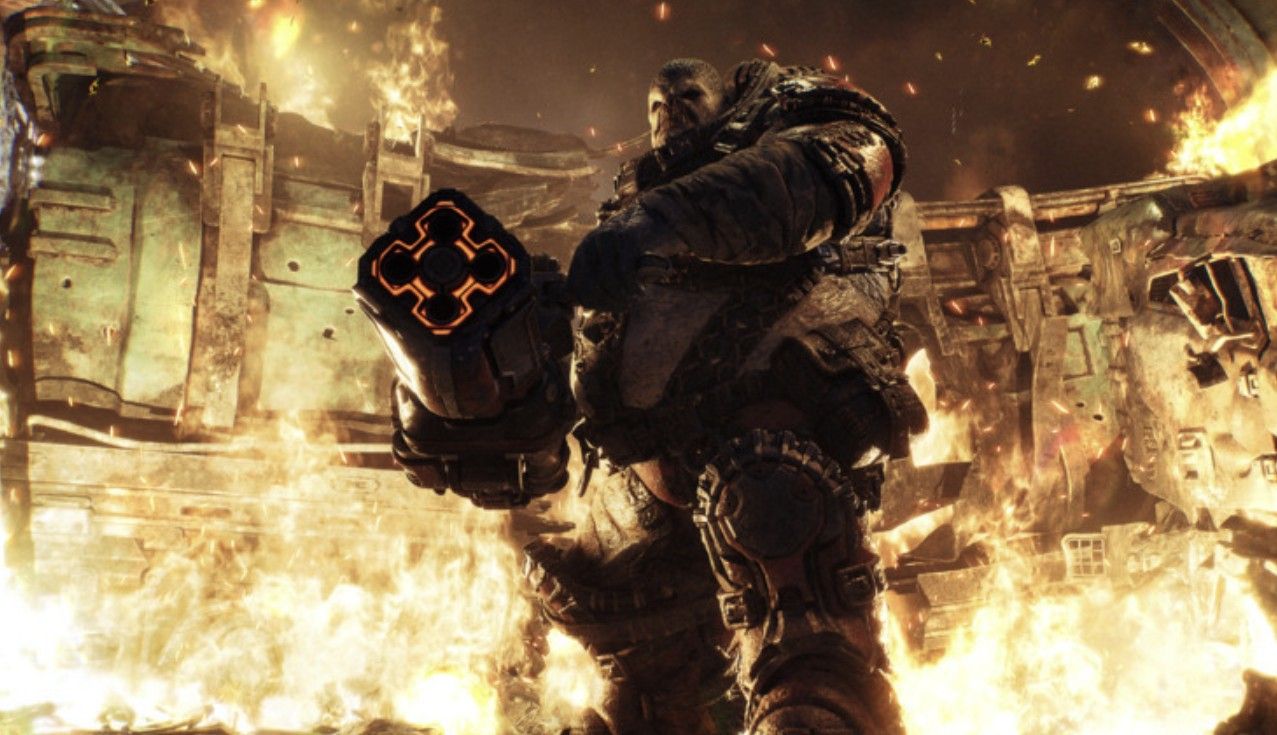
Gears of War: E-Day Boomer

Chaotic, cinematic, and bloody violent.

Discussion: What are the top 5 upcoming games you're most excited for? Hard mode: No GTA 6.

There's a ton of games on the horizon, in what looks to be another outstanding year for new content.

The big Xbox headliner is without a doubt Grand Theft Auto 6, but it comes against a backdrop of industry turmoil. The memory crisis has vastly constrained console supplies across Nintendo, Xbox, and PlayStation alike, and competition from non-gaming "hobbies" like YouTube Shorts and TikTok continues to compete for attention.

That's not stopping the monstrously talented games industry from putting out endless bangers, though. Inspired by a conversation I was having IRL, I thought I'd put the question to you guys too: what are your top 5 most anticipated games for the rest of the year, and maybe some that are also flying under the radar?

Here are some of my picks.

Star Wars: Zero Company (August 27, 2026)

I absolutely adore XCOM, and I've been endlessly irritated that Take-Two has put the franchise on ice. Thankfully, various members of the OG Firaxis XCOM team formed a new studio, Bit Reactor, and they've teamed up with EA for a next-gen XCOM-like set in the Star Wars universe. Do not sleep on this one, tactics fans.

Beast of Reincarnation (August 4, 2026)

Beast of Reincarnation is from the publisher of Pokemon of all things, proving that they can deliver modernized visuals and combat in a wholly original IP.

Beast of Reincarnation draws upon the likes of Sekiro, Nier Automata, and Final Fantasy 7 Remake's hybrid tactics-action combat, and it looks fantastic.

Gears of War: E-Day (October 6, 2026)

Gears of War: E-Day is the first fully forever Xbox console exclusive in years, and it looks to be something special. E-Day is a prequel showcasing the initial attack on humanity, as the Locust horde springs forth from the ground and begins carving humanity into dust. More horrific and brutal than ever, Gears: E-Day might end up being the best entry in the franchise's history.

Onimusha: Way of the Sword (September 4, 2026)

Capcom is arguably having one of its best years in history, with Resident Evil 9 and Pragmata selling millions of copies at the start of the year. It looks set to make it a hat trick with Onimusha: Way of the Sword, which modernizes the classic horror-hack-n-slash for a new era.

Guns of Eschaton (TBC)

Guns of Eschaton is the final game from legendary artist Viktor Antonov, known for shaping the worlds of Dishonored and Half-Life. Antonov sadly passed away in 2025, but not before leaving his mark on Guns of Eschaton, a mind-warping horror Western FPS with soulslike traditions baked in.

Over to you! What games are you most excited for?

There are tons of games I could also mention on top of this list. I'm excited for Final Fantasy Resonance, Mortal Shell 2, Minecraft Dungeons 2, Fable, Clockwork Revolution, Blood of the Dawnwalker, Castlevania Belmont's Curse, and of course, GTA 6. There's also tons of DLCs I'm interested in playing too, such as STALKER 2's Cost of Hope expansion, and Dragon's Dogma 2's on top.

There are probably dozens I'm forgetting as well, which is why I'm handing it over to you.

Hit the comments and let us know what your most anticipated upcoming games are, and there are bonus points for highlighting games flying under the radar right now.

The industry is in turmoil in some ways, but the creativity on display despite all the pressures is inspiring in its own right.

Click to join us on r/WindowsCentral

Join us on Reddit at r/WindowsCentral to share your insights and discuss our latest news, reviews, and more.

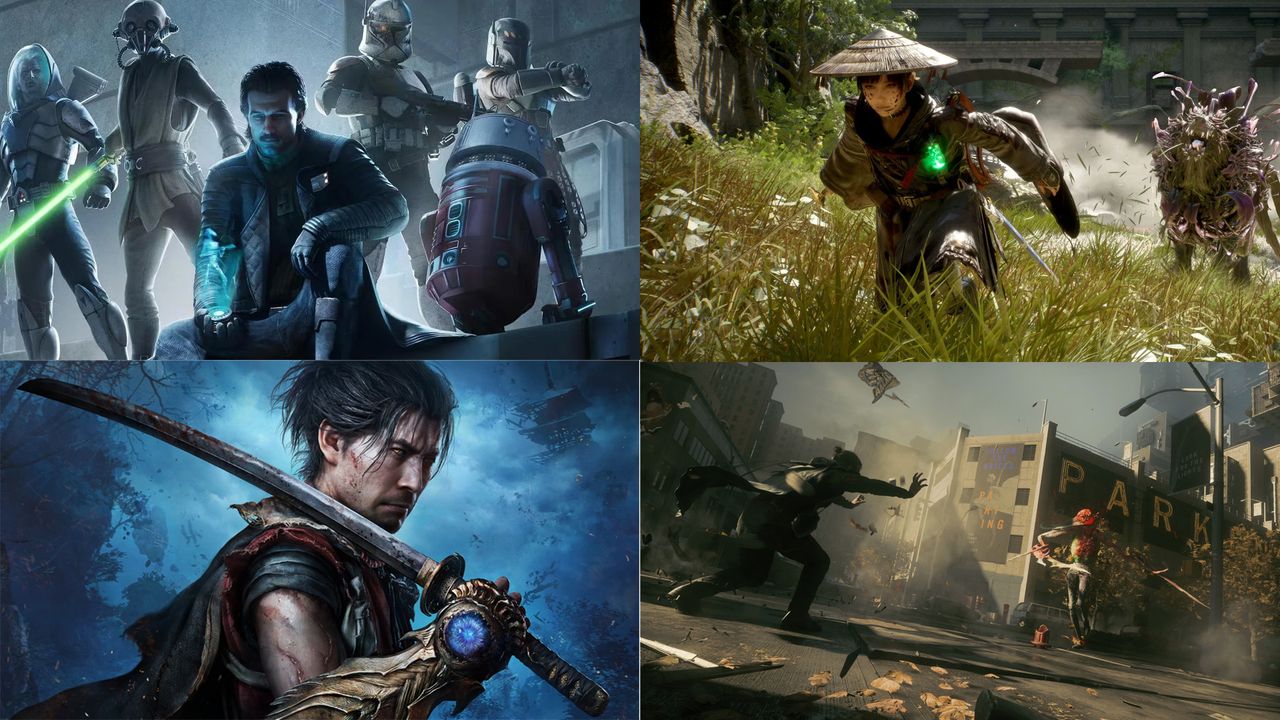
Upcoming Xbox and PC games for August 2026 and beyond: Onimusha, Star Wars Zero Company, Beast of Reincarnation, Control Resonant

Star Wars Zero Company, Beast of Reincarnation, Onimusha, Control Resonant, and many more are hyping me up for the rest of the year.

Xbox Helix and Steam — and why it no longer makes sense

One thing I've been thinking about a fair bit recently is Microsoft's original pitch for Xbox Helix.

Former CEO Phil Spencer was teasing for years before Project Helix was revealed that it would run PC games. He talked about platforms like the Epic Games Store on Xbox Helix, for example, opening up the platform to new business models and aligning more closely with traditional PC gaming — albeit designed for the living room.

In 2026, we're in a very different universe, though. The memory crisis has made consumer tech less affordable than ever. The console market has traditionally been the "affordable, simple" alternative to PC gaming. Several price increases later, it increasingly looks less like the "affordable" option and more like the "nerfed" version of PC gaming.

As an "open" PC, Xbox Helix could end up being absurdly expensive

Xbox Series X Motherboard

Closed systems are subsidized by software sales, open systems are not. (Image credit: Microsoft)

As an open device, Xbox Helix would likely be far too expensive to justify purchase for the vast majority of traditional console gamers, and parents raising the next generation of potential console gamers as well.

Users are already stretched on affordability, and gravitating towards cheaper experiences. Free-to-play titles are eating into legacy core gaming paradigms, and parents are putting their kids on Roblox and old iPads instead of considering increasingly expensive consoles. Roblox is bigger than Steam and PlayStation combined right now ... driven in large part by Gen Alpha and younger Gen Z audiences.

By making Xbox Helix an "open" device, that traditional software sales subsidy goes out of the window. Microsoft would have to price Helix as a high-end PC, profiting on the hardware, rather than the software, if it couldn't guarantee users would remain in its ecosystem. This is one reason why the Steam Machine ended up being so expensive. If you can install Windows on it and ignore Steam, why would Valve ssell the hardware at a loss? It simply isn't viable.

So ... if Xbox Helix is to come in at a reasonable console-like price point, doesn't that mean it has to be a closed box, subsidized by software sales rather than hardware profitability? These are the questions Xbox CEO Asha Sharma and Xbox CSO Matthew Ball are likely grappling with right now.

PlayStation has pulled out of PC, eliminating one potential major advantage

Three vertical panels display logos: Steam on gradient blue, PlayStation on solid blue, and Xbox on green, symbolizing major gaming platforms.

In an era where Xbox had given up on exclusives, the idea of getting PlayStation games via Steam was pretty compelling. (Image credit: Valve | PlayStation | Xbox)

Under former CEO Phil Spencer, Xbox began putting their games on rival platforms, including PlayStation. This did a huge amount of brand damage to Xbox, leading customers current and potential to think that Xbox was preparing to exit its ecosystem all together.

I've written extensively on why Xbox ditching all forms of exclusive content seemed like a terrible idea, but the crux is ultimately why would you choose an Xbox when you can choose a PlayStation which will ultimately have both Xbox and PlayStation's games?

New CEO Asha Sharma is pulling Xbox games off PlayStation in the future, though, bringing Xbox in line with other major industry players again. But where does that leave Xbox Helix?

PlayStation announced internally a short while ago that it was planning to drop Steam and PC ports for its single player titles entirely. It experimented putting some PlayStation classics like God of War and The Last of Us on PC. But Sony clearly feels (rightly, in my view) that they're simply training users to ignore PS5, and maybe consoles in general.

God Of War World Serpent

I have God of War on PC, eliminating the need to buy a PS5 to play it. Sony decided that's probably not great for them long term. (Image credit: PlayStation)

Obviously, in a world where Xbox wasn't going to have any form of console-exclusive content, Xbox rocking up with Steam and Epic Games Store would incidentally impose the same limitation on PlayStation.

Even if Sony wasn't going to offer Xbox users its games, at least you could open up Steam and play Sony's back catalog there instead. I doubt Sony considers Xbox Helix to be a big threat to PlayStation, but the idea of an "Xbox branded" device having carte blanche access to Sony "exclusive" games probably felt at least a little uncomfortable to them.

Now PlayStation has pretty much officially jumped ship, and Xbox is also doubling down on its own exclusives, it disrupts at least one long-term major selling point of Xbox Helix's previously planned model.

But the truth is, PlayStation games on PC have hardly moved the needle. PC has reams of Windows-exclusive titles that haven't ever come to console, and in some cases likely never will. Factor in mods, big-hit indie titles, and other PC franchises that aren't even on Steam like World of Warcraft ... well, perhaps PlayStation ditching PC isn't even a big deal in the Helix model.

... But, what about money?

The memory crisis breaks the economics: open consoles would be priced like high-end PCs

RAM sinking into the ocean

The RAMpocalypse has done immense damage to consumer tech industries. (Image credit: Windows Central | Jez Corden)

The current-gen consoles are now the most expensive video game consoles in decades thanks to the RAMpocalypse. Demand for AI infrastructure has pushed prices of memory chips to historically high levels, decimating consumer electronics across the board. PC shipments are down, smartphones are getting ever more expensive, and lower-volume systems are also getting hard hit.

Nintendo Switch, PS5, and Xbox Series X|S consoles are far more expensive than they were at launch, marking a historic first. Typically prices come down over the course of a generation, but no longer.

For Xbox Helix and the PlayStation 6, this presents a huge dilemma. Next-gen consoles are usually expected to be more powerful than their predecessors, not less powerful. Price increases have historically been expected, but nobody expected, much less wanted, a $1000+ video game console.

The Steam Machine represents a scary vision of what next-gen could look like for Xbox Helix. This is a "console" that behaves like a PC, is fully open, and thus not subsidized by closed-ecosystem software sales. Because of that, it costs over $1000 for the base model, while simultaneously being less powerful than a much cheaper PS5 or Xbox Series X.

Steam Machine for 2026

Valve's Steam Machine is less powerful than the Xbox Series X and PS5, while also costing over $1000 dollars for the base model. (Image credit: Valve)

If Xbox Helix is indeed an "open" PC, Xbox would have no choice but to price it like an "open" PC. The Xbox Ally also costs $999.99 because ASUS cannot make their money back on the software sales, given that they have no real distribution platform of their own.

Thanks to the RAMpocalypse, those wafer thin margins get even trickier. I've been told Xbox is losing around $150~ per Xbox Series X|S sold recently due to memory price increases, and will continue to lose money per device even after the planned August 2026 price hike. Now imagine 50% or more of those Xbox Series X|S users bypassed the Xbox ecosystem and went straight to Steam to buy games. The margins would be even worse, without any form of software sales subsidy. Xbox wouldn't have a business at all.

Indeed, internal Xbox documents from around last winter received and verified by Windows Central offer some insights into how Microsoft's Xbox Ally gaming PC is going on that front.

Around 75% of Xbox Ally owners also own Xbox Game Pass Ultimate or PC Game Pass, which is an impressive figure. But the purchasing behavior of non-subscription holders offers a bleak picture for the Xbox PC store attach rate — an insight into how Xbox Helix could go if it were "open."

Around 75% of Xbox Ally owners also own Xbox Game Pass Ultimate or PC Game Pass, which is an impressive figure. But the purchasing behavior of non-subscription holders offers a bleak picture for the Xbox PC store attach rate — an insight into how Xbox Helix could go if it were "open."

Of non-subscribing users: If an Xbox Ally user was also an Xbox console owner, around a quarter of those users also made purchases on the Xbox PC ecosystem. However, if the Xbox Ally owner was not an Xbox console owner, that figure dropped to a measly 2%. Suggesting that almost 100% of non-Xbox owning, new Xbox Ally owners simply went straight to Steam.

If Xbox Helix simply became a defacto "Steambox" for new users, the profitability would have to come out of the upfront hardware cost, otherwise Microsoft stands to potentially lose millions on the hardware ecosystem in general. With the RAMpocalypse and user behavior data from the Xbox Ally experiment, Microsoft might be reconsidering this aspect of the box. Otherwise, it stands to just accelerate another generation of users to free-to-play games, Steam, and mobile slop.

But ... Asha Sharma has professed that Xbox Helix WILL support PC games ...?

A photograph of Asha Sharma from her recent interview with Bloomberg Technology.

CEO Asha Sharma is tasked with reviving the Xbox brand. (Image credit: Bloomberg Technology)

But ... the contracts for AMD's Xbox "Magnus" PC-console hybrid chips are already in place. The silicon is already being pressed, the whole platform has been costed up and approved.

Indeed, Xbox CEO Asha Sharma reiterated fairly recently that Xbox Helix will "play your PC games." Although, Xbox CSO Matthew Ball did say that "aspects" of Xbox Helix were being re-evaluated.

In light of the constraints outlined above, how might this end up going down?

  • Option 1: Some kind of paywall or subscription to open up to third-party stores?

This one seems fairly unlikely to me frankly, but I've seen some suggest that Xbox could set up some kind of paywall to trigger access to Steam and other storefronts.

If we assume that Microsoft doesn't want to make a box that is straight up unaffordable, one way it could ensure it still has a software subsidy and make the margins work on the other side is by having users pay for a "Pro" version that actually is open.

Perhaps they could do two separate versions, similar to Windows RT or "S Mode" which was locked to the Microsoft Store, and offer a premium version that is fully like a PC, but comes with PC-style price tag.

I suspect that would be difficult to market and explain, particularly given how Asha has suggested that Xbox Helix will play "your PC games," ... but they've never explicitly said Steam would be on it.

  • Option 2: Semi-open, revenue sharing model with Epic Games' on PC or other strategic partners.

One thing that struck me as odd is, when Phil Spencer talked about the next-gen Xbox having other stores, he actually never did mention Steam. He mentioned things like GOG, and the Epic Game Store, but he never actually did say Steam itself would be on the box to my knowledge.

Indeed, maybe Microsoft's plan has been to work with partners directly in a more curated fashion. On the Xbox PC store for example, we see platforms with extensions plug-in to Xbox PC, such as Battle.net and Ubisoft Connect.

Perhaps it was never really about Steam, but more about giving platforms the option to work directly with Microsoft on some sort of revenue-sharing model, which would keep the hardware subsidized but give platform holders more control, and a bigger cut of the profits.

Xbox PC sales do pay out at 90% to developers, rather than the console-oriented 70%. But ... we get into hardware subsidy problems again when we talk about some of this stuff.

  • Option 3: Fully open, absurd price point and all?

The third and final option ... perhaps it will simply sport a PC-style price tag. Perhaps the plan is for Xbox Series X|S to have an unnaturally long life span, and for Xbox Cloud Gaming to do some heavy lifting for those who can't afford the Unaffordable-Console-Future.

I find it hard to imagine an Xbox console with a >$1000 price tag. I'm not sure how Xbox can achieve a

If Xbox has to make a profit on the hardware, and is effectively making a Steam Machine in all but name, nobody will buy it. But Asha has promised access to PC games on Xbox Helix ... but then, surely that does mean it'll have Steam, right? Could it be a half-way house with direct partnerships with Epic Games and other platform holders? Or will it have some kind of paywall "Pro" option to remove an artificial, arbitrary block, like Windows "S Mode"?

I'm sure these discussions are happening at a high level at Xbox right now ... what do you think should happen? Hit the comments, lets discuss it.

Click to join us on r/WindowsCentral

Join us on Reddit at r/WindowsCentral to share your insights and discuss our latest news, reviews, and more.

Xbox Helix logos

Project Helix is still coming, but what will it look like under Xbox CEO Asha Sharma? Will it radically change?

❌