Vue normale

I tested 5 major changes and improvements coming to Windows 11 this year: Microsoft is clearly serious about fixing Windows, and it's doing things right this time

Earlier this year, Microsoft announced that it was moving to address Windows 11's biggest issues and criticisms from users in an effort to win back trust from customers and reposition Windows once more as a viable alternative to macOS and Linux, something people actually want to use over the competition.

It was nice to see Microsoft outline its roadmap and plan for Windows 11, but I wasn't prepared for just how fast the company would start delivering on the promises it was making. Since March, Microsoft has previewed and even shipped many improvements to Windows 11 that are the direct result of its Windows K2 initiative, all designed to fix Windows 11.

I've been testing these new Windows 11 builds over the last few months, and there are 5 big changes and improvements that stand out as super exciting. Some of these improvements are already shipping, whereas others are still in preview.

A new and improved Windows Update

Windows Update is now much smarter and doesn't get in the way anymore

Windows Update is now much smarter and doesn't get in the way anymore (Image credit: Zac Bowden / Windows Central)

Updates on Windows have always been frustrating, so much so Microsoft made it a point of focus for its Windows K2 effort. In the last few months, Microsoft has shipped multiple changes and improvements to Windows Update which are designed to make it more reliable, and more importantly, less annoying.

The first big change is ensuring driver, framework, and security updates are now all timed to install at the same time. Previously, any update could require the user to restart at any time. Now, Windows Update will only ask you to restart once a month, as the update system now installs those driver and framework updates alongside security patches.

That's in addition to being able to pause updates indefinitely now, so even when the one time a month that Windows asks you to restart finally rolls around, users have the option to say no and postpone the restart for as long as they need. Even when an update is pending restart, the option to shut down or restart without installing said update is now present.

Microsoft has even made it so users can skip installing updates when setting up a PC for the first time, meaning it now takes just a few minutes to get right into using your new PC instead of the 20+ minutes it used to take when installing the latest update was a requirement before reaching the desktop.

All of these Windows Update improvements are already shipping to all Windows 11 users, which is a crazy quick turn around.

Less ads and AI across the OS

Widgets on Windows 11

Widgets no longer includes MSN ads and sponsored content. (Image credit: Zac Bowden / Windows Central)

People didn't believe they'd do it, but they actually have reduced the ads and AI buttons that are present across the OS. The Widgets board has been updated to replace the MSN feed with the local widgets feature by default, meaning you won't ever see any MSN stories or sponsored content unless you manually go into that section of the OS.

Microsoft is also removing Bing and MSN ads from Windows Search, in preview now. The search pane itself is now a long list or recent search queries and items, with nonsense like the Bing wallpaper of the day and other sponsored content no longer appearing at all. Even search results that reach out to the web no longer include sponsored content.

The Start menu now also has more granular controls over the kind of content that appears in there. The "Recommended" feed has been renamed to the "Recents" feed and no longer shows recommended apps and websites that came across as more advertising. Users even have the option to remove the Recents feed entirely now, which is great.

Copilot used to plague every inbox app and UI surface you could think of on Windows 11, but today it only appears in a few very specific areas. It still exists as a standalone app on Windows 11, but the Copilot button no longer exists in apps like Photos and Notepad. Microsoft has even removed the "Ask Copilot" option in File Explorer.

Better performance and reliability

Windows 11 task manager

Windows 11 is now faster and more reliable, with a focus on reducing memory usage. (Image credit: Zac Bowden / Windows Central)

One big area of focus for Microsoft is the overall performance and reliability of Windows 11, which many agree has slipped over the last few years. The good news is Microsoft has already delivered several improvements on this front, with more to come in the following weeks.

The first big change is the new "Low Latency Profile" feature that shipped just a few weeks ago. It's an invisible change that makes opening apps, context menus, and flyouts from the Taskbar much more responsive by silently increasing CPU frequency when these common actions take place.

This is something other OS platforms do which allows them to remain feeling snappy, even under heavy load, and now Windows 11 has the same behavior. This has outright fixed the issue users sometimes have where things like the Start menu don't always appear immediately when clicked. That's a thing of the past now.

Microsoft is also improving the performance of WinUI interfaces across the system via a new System Compositor which reduces latency and memory overhead across the OS so that these modern interfaces are consistently responsive. There's even a new Run dialog built with WinUI that is faster than the old Win32 version.

Opening and navigating through file trees in File Explorer is faster too, and searching for files and apps on Windows 11 is now more consistent. Two character search is already shipping, which makes finding content a little bit easier.

Customizable Taskbar and Start menu

Windows 11 Start menu options in Settings

There are many new customization options coming to Start (Image credit: Zac Bowden / Windows Central)

One of the biggest issues people have with Windows 11 is how it took away customizable options for areas of the system like the Start menu or Taskbar. Microsoft has heard that feedback, and is already publicly testing a new Taskbar and Start menu that can be user customized.

The Taskbar can now be repositioned just like on Windows 10, allowing the user to move it to the left, right and top of the display if that's where they want it. There's also a new resize option letting users make it smaller like the Windows 10 one could.

The Start menu is also getting more customization options. Users can hide entire segments of Start, such as the Recents feed, Pinned apps, or All Apps area. They can toggle on or off the Phone Link companion, and disable Start entirely if they don't ever use it.

And there's more to come

Windows 11 context menu

Context menus are getting a redesign and better customizability. (Image credit: Zac Bowden / Windows Central)

Above are all the new improvements that I've tested and are either shipping or in public testing via the Windows Insider Program. These are the real changes and features that can be tried and tested as we speak, not just empty promises or ideas. It's all available to download and try out right now.

There's still more to come too, stuff that isn't yet in public preview testing. Microsoft has confirmed it's working to move more parts of the OS to WinUI for faster performance, such as the Start menu and areas of File Explorer. There's an effort to reduce the footprint of the OS in the works too, which should make the OS less resource intensive at idle.

Other improvements in the works are a redesigned context menu system that is faster and more customizable, more integration across the OS with your smartphone, and dark mode in even more places.

For the features that are yet to ship outside of preview, I understand that Microsoft is aiming to get the bulk of these improvements out of the door before the end of 2026, with some expected in 2027.

SI'm so very impressed with how quickly Microsoft has turned Windows 11 around so far. I haven't felt this positive about the features and changes being actively made to Windows in a really long time, to the point where it feels weird to not have anything to really complain about. All of my biggest issues with Windows 11 have either already been addressed, or are in the process of being addressed.

It's a great time to be a Windows user again.

Click to join us on r/WindowsCentral

Join us on Reddit at r/WindowsCentral to share your insights and discuss our latest news, reviews, and more.

Windows 11 Start button

Windows 11 Start button

The Windows Central Podcast sits down with Microsoft CVP Marcus Ash to discuss all things Windows 11

In this episode of the Windows Central Podcast, Daniel Rubino and Zac Bowden sit down with Marcus Ash, Corporate Vice President of Design and Research for Windows at Microsoft. The discussion centers on the user experience vision for Windows 11, balancing modernization with legacy app compatibility, and optimizing system efficiency across diverse hardware configurations.

This episode of the Windows Central Podcast is sponsored by Surfshark VPN. Unlimited devices, access your content from anywhere, and auto-block malware on Windows, Edge, and other platforms from $2.50/mo, with 4 months extra FREE. Sign up today!

  • Design Philosophy in Windows 11: Marcus Ash discusses how design decisions are shaped by user feedback, telemetry, and modern workflow requirements.
  • Optimizing Performance for Low-RAM Devices (8GB): A deep dive into full-stack optimizations—ranging from kernel memory scheduling to UI process management—to ensure smooth performance on 8GB RAM hardware.
  • Modernizing Legacy Tools vs. Backward Compatibility: Discussion on how Microsoft approaches updating older OS utilities (e.g., Control Panel, Registry Editor) while protecting enterprise compatibility and muscle memory.
  • Web Tech, WebView2, and Modern UI: Exploring the role of web-based interface components in Windows 11, including trade-offs between agility, feature delivery, and resource utilization.

Have a question you want us to answer on the podcast? Send it to us at [email protected]

Hosts:

Subscribe to the Windows Central Podcast

If you like the show, please let us know by give us a rating on your podcast platform of choice. It really helps us!

LIVE Video Podcast

You can watch the live, uncut version of the Windows Central Podcast on our YouTube channel!

Click to join us on r/WindowsCentral

Join us on Reddit at r/WindowsCentral to share your insights and discuss our latest news, reviews, and more.

Daniel, Marcus, and Zac in a video call

Windows design and Insider lead Marcus Ash chats with the Windows Central Podcast about the current state of Windows 11

"Control Panel gets tricky" Microsoft CVP explains why killing Windows legacy code takes so long, and how it's evolving its tools to make modernizing apps like File Explorer and Registry Editor faster

Windows Central

Microsoft's CVP of Design and Research for Windows and Devices, Marcus Ash sat down with the Windows Central Podcast to discuss ongoing work around Windows 11's UI, and how the company is moving to finally eradicate the OS of legacy cruft while maintaining backward compatibility where possible.

We started with Control Panel, which is everyone's go-to as a measurement for the progress the company has made to modernize Windows. Microsoft first began modernizing the Control Panel with Windows 8 over 13 years ago, and the work still isn't complete over a decade later.

Unsurprisingly, Ash says that the reason this has taken so long is that Microsoft prides itself on compatibility with legacy tooling and workflows, so it can't just rush in and modernize everything without first ensuring the modern replacements maintain functionality with what came before.

"That's why things like Control Panel get tricky, because if a customer has a driver or has something that depends on that legacy functionality, we just have to be careful about not breaking that compatibility promise," Ash said. "When we finally get things in Settings, we will then deprecate places say in Control Panel where we don't need that function anymore, we can carry it forward."

Control Panel on Windows 11

Control Panel still exists in Windows 11 today. (Image credit: Screenshot: Windows Central / Laptop: Edited with Gemini)

Ash highlights that modernizing legacy interfaces is as much about designing and building the new interface as it is about developing the tooling and UI frameworks to support the functionality required to build that modern interface, all while carrying forward the same capabilities, featureset, and performance.

"It also requires us to do work in WinUI 3 and some of these frameworks so that we can move things over at a rate that we think, one, customers can adopt and not break promises, but also just make sure we can test and we have the framework that supports all the things that our customers need. So we are pushing really hard to try to modernize, but we're also proud of the progress."

Ash says that legacy support in Windows is a strength of the platform, not a weakness. With that said, the company is exploring ways it can modernize legacy apps and interfaces while maintaining that legacy support. "There will be cases where, because of a customer that wants something that's important to them, we'll have some legacy UI, but even there we're trying to look and see: are there ways that through tooling and through better approaches we can just reduce that over time?"

In case you've ever wondered how Microsoft goes about choosing which legacy interfaces to modernize, Ash breaks down the process, confirming that "it's based on usage, telemetry, feedback. It's based on: where do we think the tooling is ready to move that surface forward? ... we just keep going through that and trying to make sure that over time, the amount of legacy UI that a customer would see in their day-to-day experience just gets smaller and smaller."

Modernized File Properties delete window

Microsoft is slowly but surely modernizing apps like File Explorer with WinUI. (Image credit: Phantomofearth on BlueSky)

"We look at user journeys. Like if you were to look at File Explorer and you were to think about all the functions that happen in File Explorer, we then look left-to-right and say, okay, for this particular dialogue, where did the user start and where does the user end? So it's not just pick one dialogue, it's pick the full user journey of the things that the customer is trying to do."

Ash even teases that the company is looking at how it can evolve its tooling that that one day it can tackle modernizing apps like the Registry Editor. "I would say the common things that we look at are the top things that users/customers want: File Explorer and some of the big apps. But even things like Regedit and some of the tooling, we're already starting to take a look at and figure out: how would we attack this problem so that we keep a compatibility promise AND we can modernize these frameworks."

It's clear that Microsoft is eager to move Windows forward with modern designs that are consistent with its current design language, but that the company must ensure that these modernizations don't interrupt workflows or break compatibility. That's ultimately why it's taken so long for Microsoft to modernize legacy UIs across Windows, because the UI frameworks and tooling required to do it need to be built-out to ensure legacy support first.

Our interview dives into more topics, including optimizing the OS for 8GB RAM devices and why Microsoft sometimes chooses WebView2 over WinUI in certain apps and interfaces. Be sure to watch the whole interview on our YouTube!

The Windows Central Podcast is sponsored by Surfshark VPN. Unlimited devices, access your content from anywhere, and auto-block malware on Windows, Edge, and other platforms from $2.50/mo, with 4 months extra FREE. Register today!

Click to join us on r/WindowsCentral

Join us on Reddit at r/WindowsCentral to share your insights and discuss our latest news, reviews, and more.

Windows 11 Hero Surfaces on a white table

Windows 11 Hero Surfaces on a white table

Microsoft CVP on optimizing Windows 11 for 8GB RAM: "We're relentless at reducing the memory footprint", breaks down how Microsoft is minimizing performance bloat across the OS

Windows Central

Microsoft's Corporate Vice President of Design and Research on Windows, Marcus Ash, has commented on the company's ongoing effort to modernize and reduce the memory footprint of Windows 11 for devices with low amounts of RAM.

Last week, Windows chief Pavan Davuluri confirmed the motion to optimize performance on Windows 11 for devices with 8GB RAM, and Marcus Ash has now broken down just how the company is planning to go about doing that.

Ash confirms that Microsoft is taking its work to optimize the OS seriously. It's looking at all aspects of Windows from top to bottom to ensure performance is optimized at every step.

"This is something we've learned especially over the last few months with the effort we've done on quality. We have to look at these as full-stack challenges, from the design of the pixels all the way down to the kernel scheduler and drivers," Ash told us in an interview on the Windows Central Podcast. "We know that given the expectations customers are going to have, we have a chance to do better. We have a chance to do things that get ahead of where we know customers are going to go in terms of their expectations on the apps they run, and the responsiveness of those apps."

A screenshot showing high RAM usage.

Apps often eat up a lot of RAM these days, which is a problem for PCs with just 8GB. (Image credit: Windows Central)

The process is a group effort, one that incorporates all the teams building software and experiences inside and on top of Windows 11. "We get teams together across Microsoft, we get our own team together, we instrument the various customer jobs that people want to run, and then we're relentless at: how do we reduce the memory footprint?"

Ash continues: "How do we think about preload, and how long something should stay preloaded so that we can release things when you're not using the app as much, when we really need to reduce more system memory? We think about the design and just making sure that when people get under stressful memory conditions, how do we make it very easy for them to decide what they don't want to run anymore so that we can relieve some of that pressure?"

It's clear that Microsoft views the ongoing memory pricing crisis and competition from the MacBook Neo as driving forces for optimizing Windows 11 for devices with 8GB RAM. The company has confirmed that it's looking to begin shipping these memory and performance optimizations before the end of the year.

Our interview with Marcus Ash touches on more topics, including modernizing legacy UIs, how WebView2 fits in, and more on the Windows Central Podcast. So give the episode a watch on our YouTube today at 2PM ET if you want to hear more from Marcus Ash.

The Windows Central Podcast is sponsored by Surfshark VPN. Unlimited devices, access your content from anywhere, and auto-block malware on Windows, Edge, and other platforms from $2.50/mo, with 4 months extra FREE. Register today!

Click to join us on r/WindowsCentral

Join us on Reddit at r/WindowsCentral to share your insights and discuss our latest news, reviews, and more.

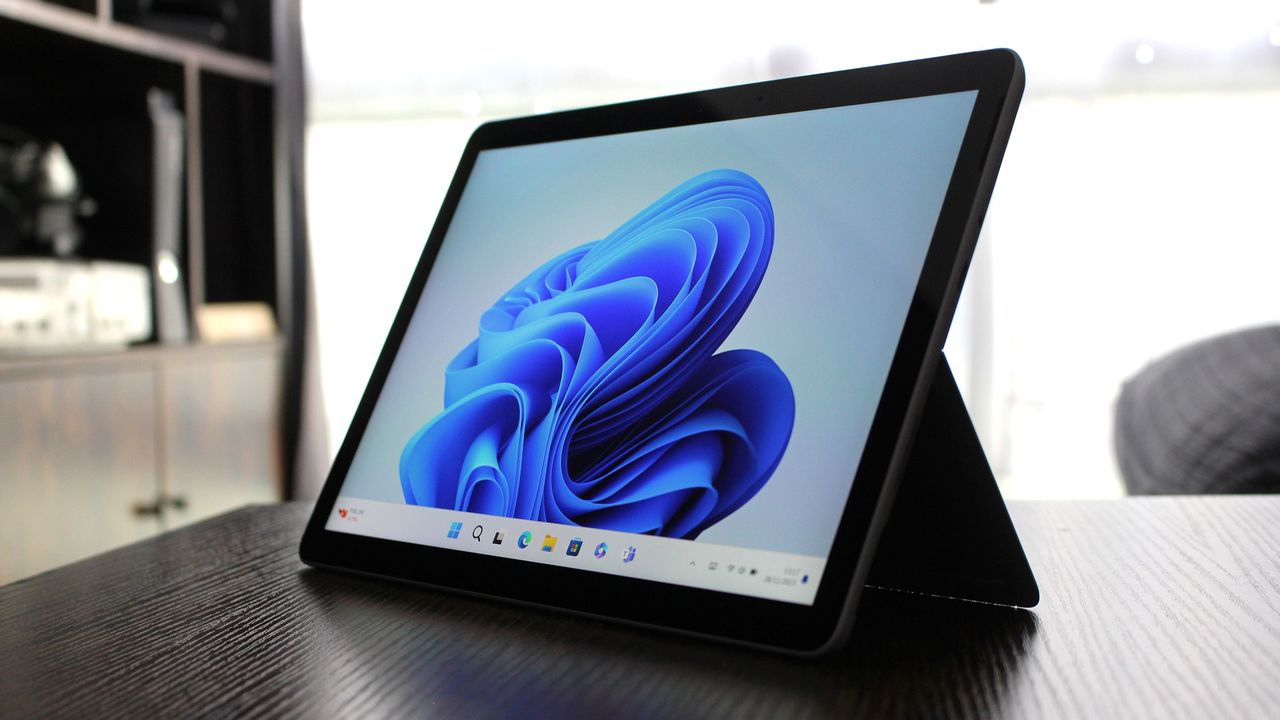
Surface Go 4 with Windows 11

(Left) Daniel Rubino, Editor-in-Chief, Windows Central; (Right) Marcus Ash, CVP Design and Research for Windows, on the Windows Central Podcast #400.

❌