Microsoft has announced that the next version of Windows will be the first to ship with PowerShell 7 as an in-box feature, replacing PowerShell 5.1 that ships on Windows 11 today. Version 26H2 will be the last version of Windows to ship with PowerShell 5.1 by default.Jason Helmick, a senior product manager at Microsoft has explained the transition and what it means for PowerShell users:"For years, PowerShell has lived in two places. Windows PowerShell 5.1 is the
Microsoft has announced that the next version of Windows will be the first to ship with PowerShell 7 as an in-box feature, replacing PowerShell 5.1 that ships on Windows 11 today. Version 26H2 will be the last version of Windows to ship with PowerShell 5.1 by default.
Jason Helmick, a senior product manager at Microsoft has explained the transition and what it means for PowerShell users:
"For years, PowerShell has lived in two places. Windows PowerShell 5.1 is the one in the box, and it has carried a great deal of the world’s automation: the scheduled tasks, services, and admin scripts that have run quietly for years. PowerShell 7 is the modern PowerShell: the one we develop in the open, across platforms, and where new features go."
PowerShell 7 is able to work side by side with PowerShell 5.1, meaning there isn't anything that will immediately break once PowerShell 7 begins shipping in Windows, at least for now. PowerShell 5.1 will still be included in the next version of Windows, but an undisclosed "future" version of the OS will eventually remove it, though it will still be installable as an optional feature on demand.
The company does recommend that PowerShell 5.1 users begin looking at transitioning to PowerShell 7, ensuring scripts, tasks, installers, and more are compatible with the new version. Some existing scripts will not be compatible with PowerShell 7, and so those will need to be updated or users will need to ensure PowerShell 5.1 is installed on future systems.
"Including PowerShell 7 in Windows is a milestone we’ve been working toward since PowerShell went cross-platform," Helmick says. "Many scripts run in PowerShell 7 without changes. Some need changes before they work, and some may need to keep running in Windows PowerShell 5.1. That’s because Windows PowerShell 5.1 and PowerShell 7 differ in some places."
PowerShell 7 is delivered as an MSIX, and will be updatable via the Microsoft Store, streamlining the update process for users. Currently, the next version of Windows where PowerShell 7 will replace 5.1 as the default experience is scheduled for the end of 2027, so around about a year from now.
Alongside this news, Microsoft has announced that PowerShell 5.1 is now deprecated, meaning it's no longer in active development. It will still be supported with security updates for the foreseeable future, but it will no longer get new features or quality enhancements.
Join us on Reddit at r/WindowsCentral to share your insights and discuss our latest news, reviews, and more.
Acer is taking on the MacBook Neo with its own $699 Windows laptop, dubbed the Swift Air 14. It's a compact 14-inch thin and light with a premium chassis, 1080p screen, chiclet keyboard and large trackpad.Acer isn't the only Windows OEM taking on the MacBook Air, both ASUS and Dell have launched their own $699 Windows laptops in the last few months, all designed to dethrone the MacBook Neo for best value for money. Both of those laptops are great for $699, so can
Acer is taking on the MacBook Neo with its own $699 Windows laptop, dubbed the Swift Air 14. It's a compact 14-inch thin and light with a premium chassis, 1080p screen, chiclet keyboard and large trackpad.
Acer isn't the only Windows OEM taking on the MacBook Air, both ASUS and Dell have launched their own $699 Windows laptops in the last few months, all designed to dethrone the MacBook Neo for best value for money. Both of those laptops are great for $699, so can Acer keep pace with the rest of the competition?
I've been using the Acer Swift Air 14 over the last handful of weeks, and this is my full review.
This review was made possible thanks to a review unit supplied by Acer. The company had no editorial input and did not see the contents of this review prior to publication.
Price & Specs
(Image credit: Windows Central / Zac Bowden)
The Acer Swift Air 14 is available directly from Acer's online store third-party retailers like Best Buy for $699, which nets you 8GB RAM, 512GB SSD storage, and an Intel Core 5 320 processor. This also includes a 14-inch 1080p LCD display at 120Hz, which is a refresh rate that is always nice to see on a laptop this affordable.
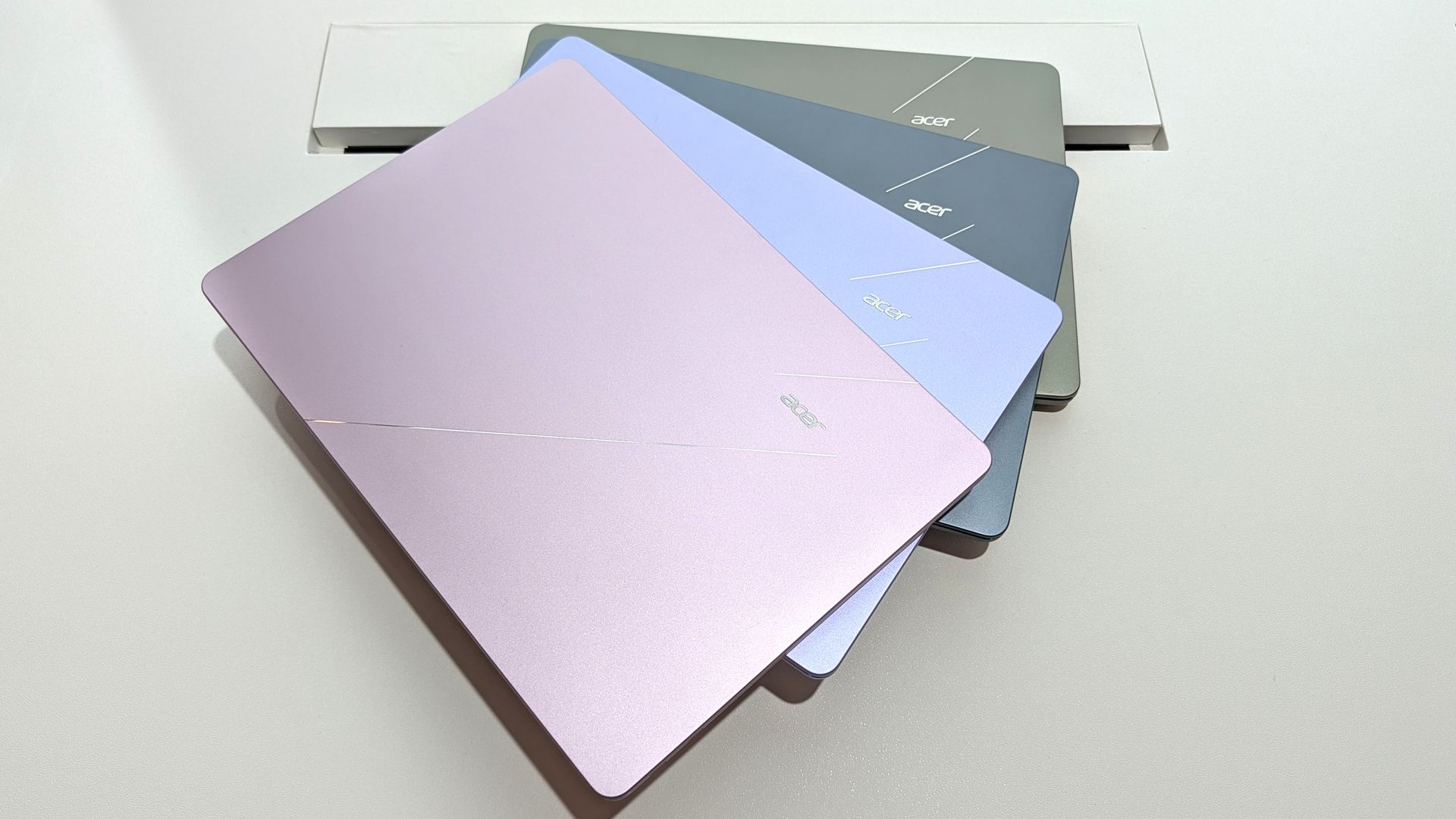
There are no other configurations of the Swift Air 14 available, so these are the only specs that are on offer. You can get it in an array of colors however, which brighten things up compared to the grey model we have here for review.
Specification
Details
Model
Acer Swift Air 14 (SFA14-I31-58V8)
Operating System
Windows 11 Home (64-bit)
Processor
Intel® Core™ 5 Series 3 320 (Hexa-core, 1.50 GHz base / 4.60 GHz turbo)
Featuring a gorgeous minimalist design, 120Hz display, and incredible battery life, the Acer Swift Air 14 is the company's attempt at competing with the MacBook Neo with a $699 Windows laptop that almost nails the fundamentals.
What's good
(Image credit: Zac Bowden / Windows Central)
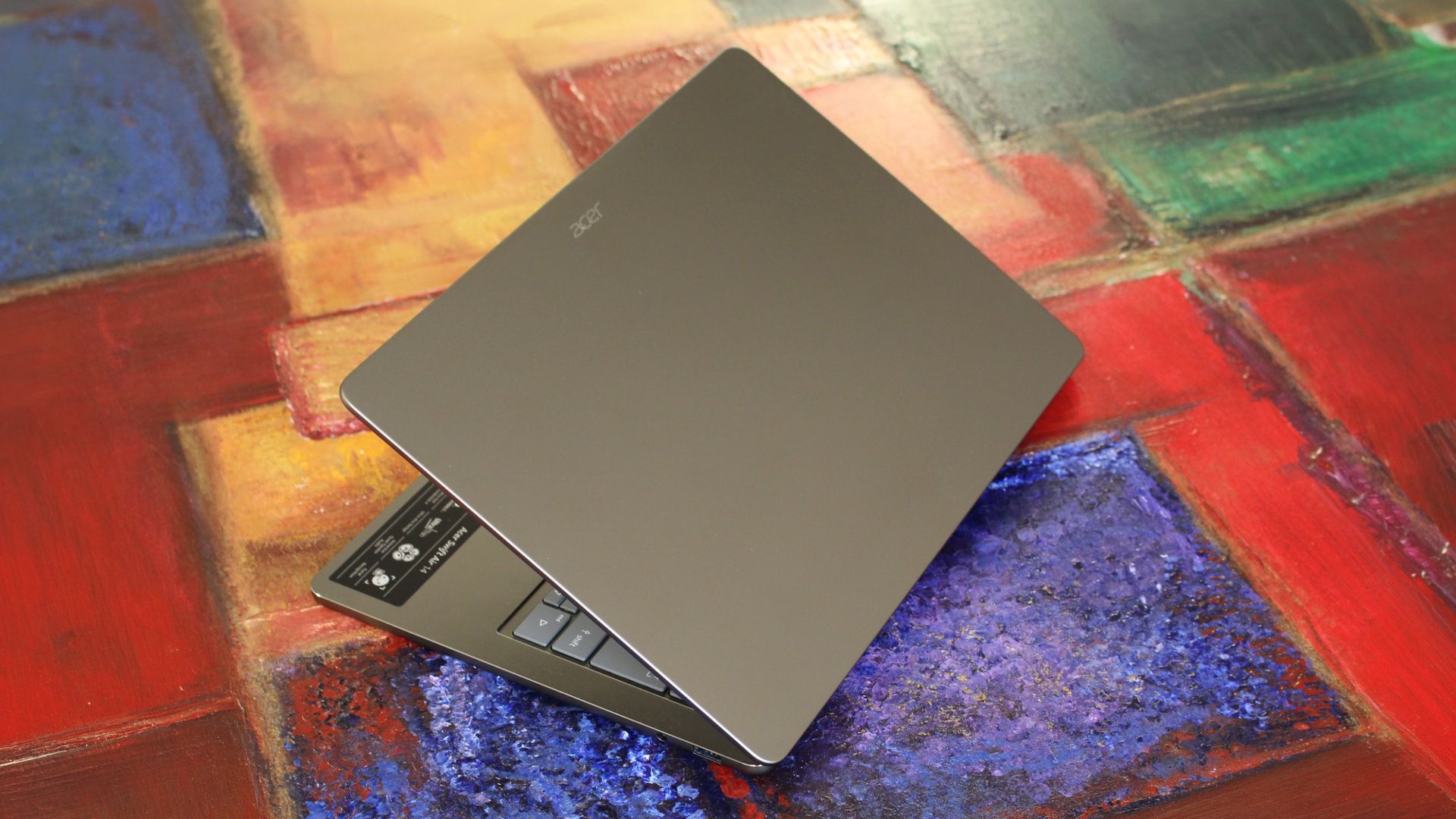
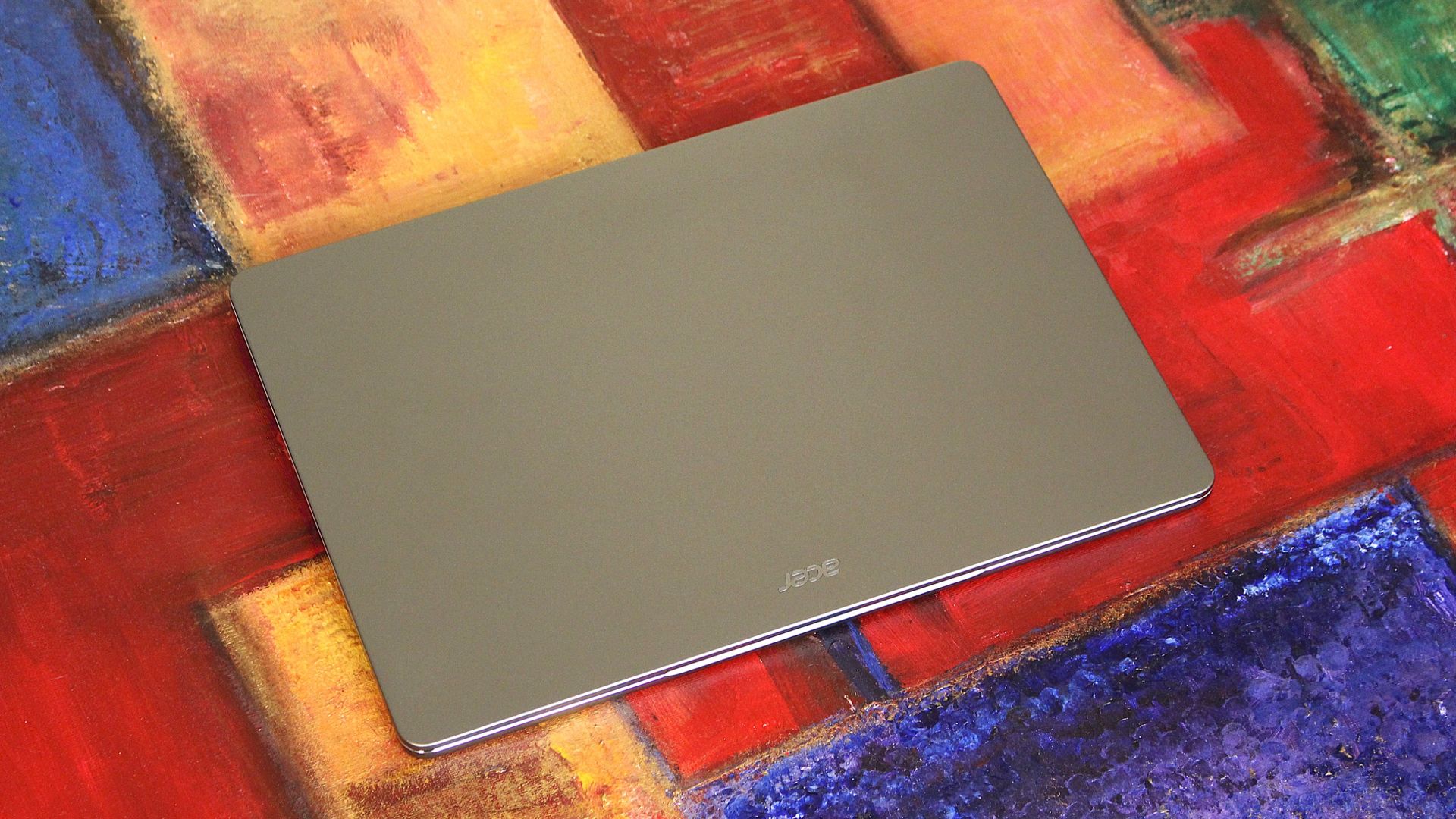
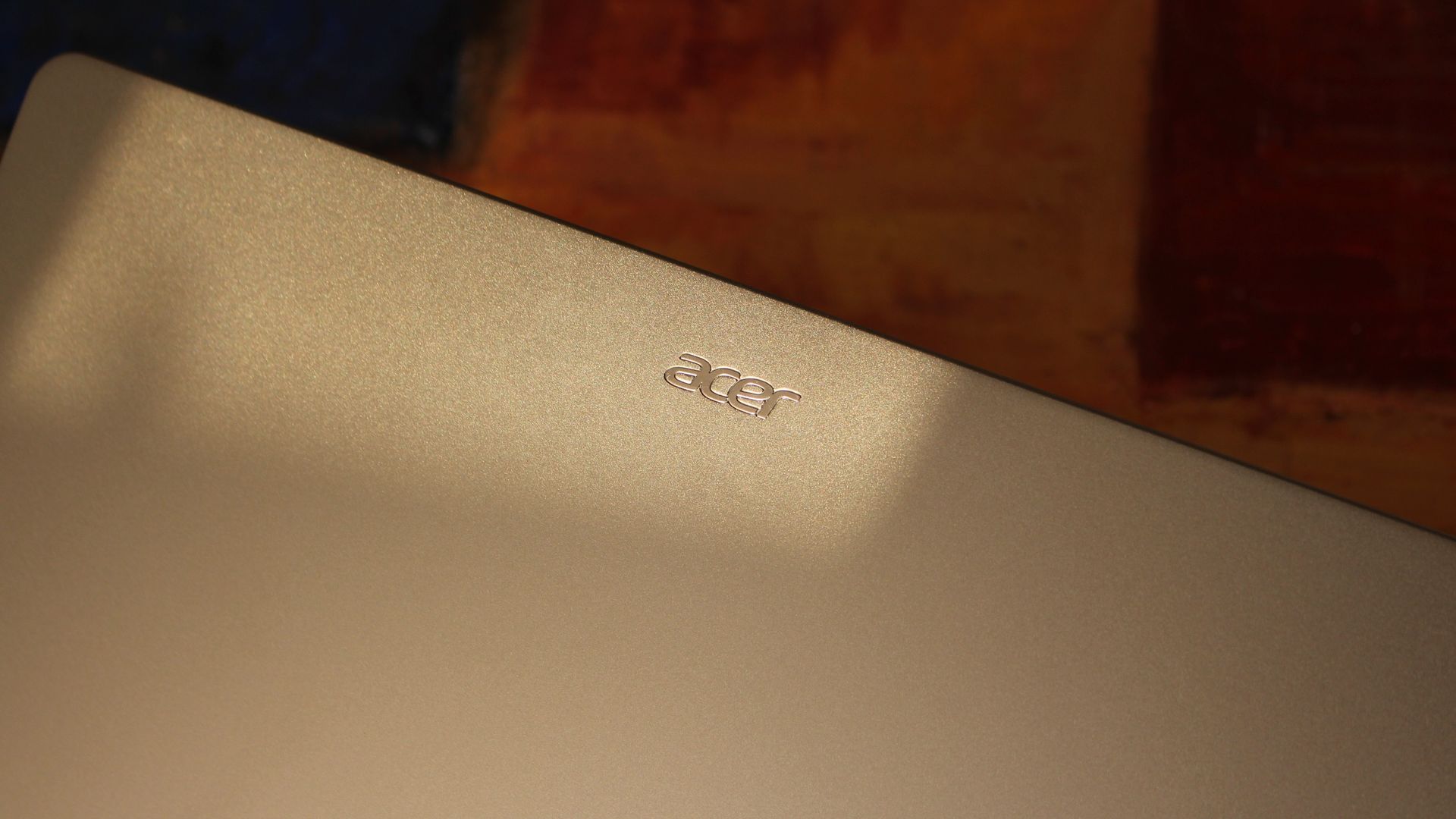
Kicking things off with what I really like about the Acer Swift Air 14, I want to start with its design. I really like how this laptop looks. It's minimalist, clean, and simple, with a dark grey colorway that is tasteful and understated. The entire exterior chassis looks great, and feels great too thanks to its all-metal enclosure that is cold to the touch.
It looks very MacBook Air like actually, with seams and panels that align perfectly. It's quite thin, coming in at Xxmm which beats the MacBook Neo at xxmm. Its thinnest paired with its rounded chassis design makes it easy to carry around and feels great in the hand.
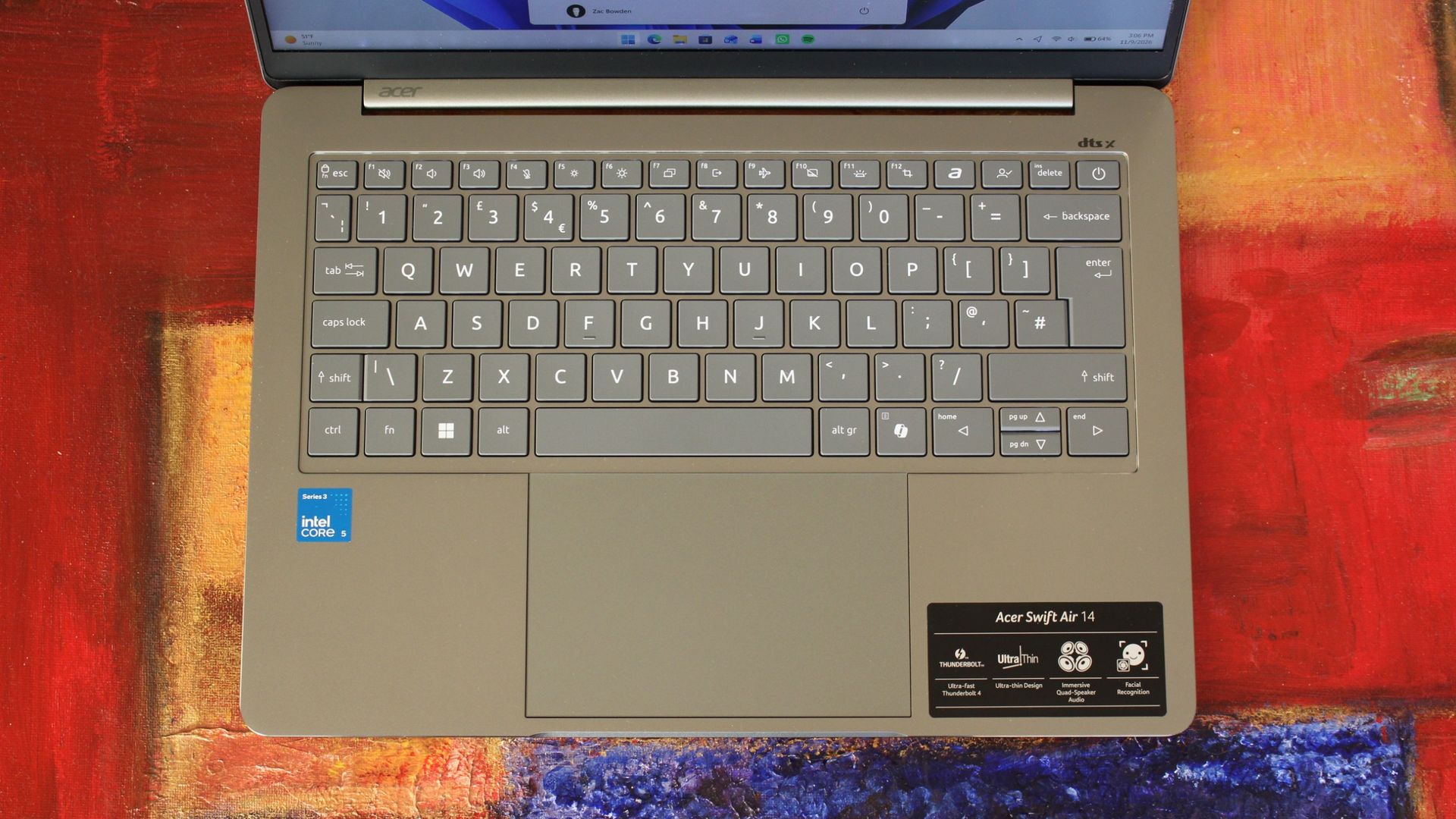
Opening the laptop up, we're greeted with a chiclet style keyboard and a large trackpad placed in the center, which both look great. The keyboard feels great to type on, with quiet operation that is also tactile. It also has a backlight, which cannot be said for the MacBook Neo.
(Image credit: Zac Bowden / Windows Central)
The display above it is a 1080p 14-inch LCD panel, which is not the best display I've seen on a $699 laptop this year. Both the Dell XPS 13 and MacBook Neo have better displays at $699, that is unless you prioritize a higher refresh rate. The Swift Air 14 has a 120Hz panel, which makes animations and scrolling in apps smooth as butter.
It's just a shame that the display is only 1080p, as that means it's not very sharp at this screen size. Not the end of the world, but something to keep in mind. It also doesn't get particularly bright, unlike both the Dell and MacBook.
(Image credit: Zac Bowden / Windows Central)
On the bright side, the lower resolution panel does result in some pretty stellar battery life. The Acer Swift Air 14 is rated for X battery, but we found ourselves getting around 19 hours on a single charge which is very impressive. In fact, that makes it one of the longest lasting Windows laptops we've tested this year, and easily beats the MacBook Neo.
What's also great is that this laptop has Windows Hello face unlock, which beats the MacBook Neo which has no biometric login options at $699. Face unlock on Windows is great, and Windows Hello facial recognition is usually saved for higher-end laptops, so it's great to see here and operates nice and fast.
(Image credit: Zac Bowden / Windows Central)
Performance is also very good for the money. You're getting the same level of performance as found on other $699 Windows laptops in this price range, all powered by the Intel Core 5 320 which is well equipped for day to day tasks that focus on productivity, such as web browsing, email, Office, Teams, Slack, and a bit of photoshop every now and then.
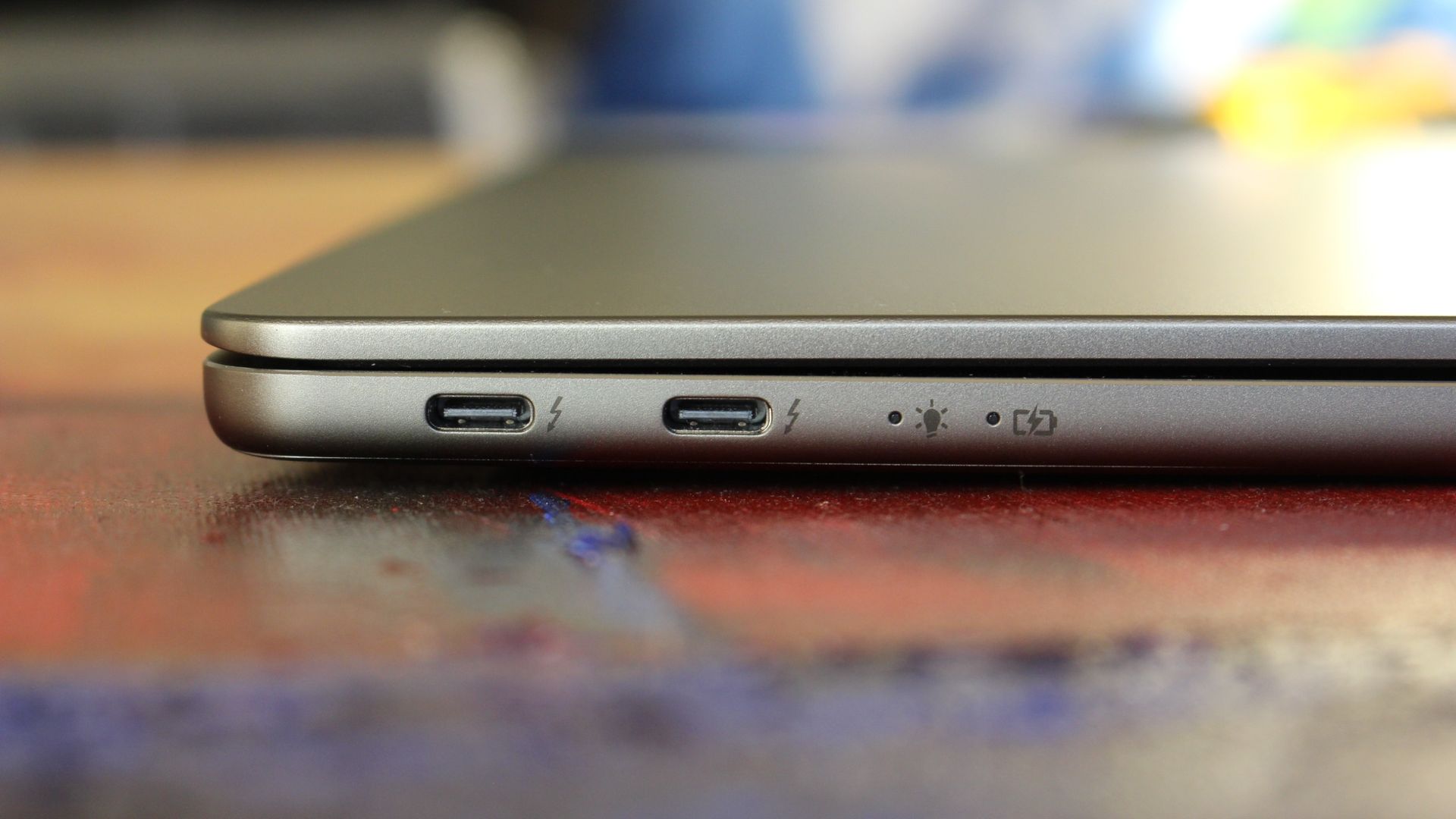
The laptop does only have 8GB RAM, so multitasking capabilities are limited. But it should be more than fine for switching between a few apps like your web browser, email client, and Slack/Teams without a hitch. Regarding ports, you've got everything you'd reasonably want and need on a laptop of this calibre. Two USB-C ports on the left, and a USB-A port and 3.5mm audio jack on the right.
What's bad
While there's a lot to like about the Swift Air 14, there's also a fair bit to not like. Let's start with the trackpad, which is... just bad. While it's nice and large, the actual tracking and clicking experience is dreadful. I don't know why this trackpad feels so bad to use, but it just isn't a nice experience.
I found that for quite a lot of the time, the trackpad wouldn't detect my clicks. And sometimes, it would detect too many clicks. In fact, if I hold the laptop at by the corner while open, the trackpad begins clicking itself, which is hilarious but highlights just how bad the trackpad is.
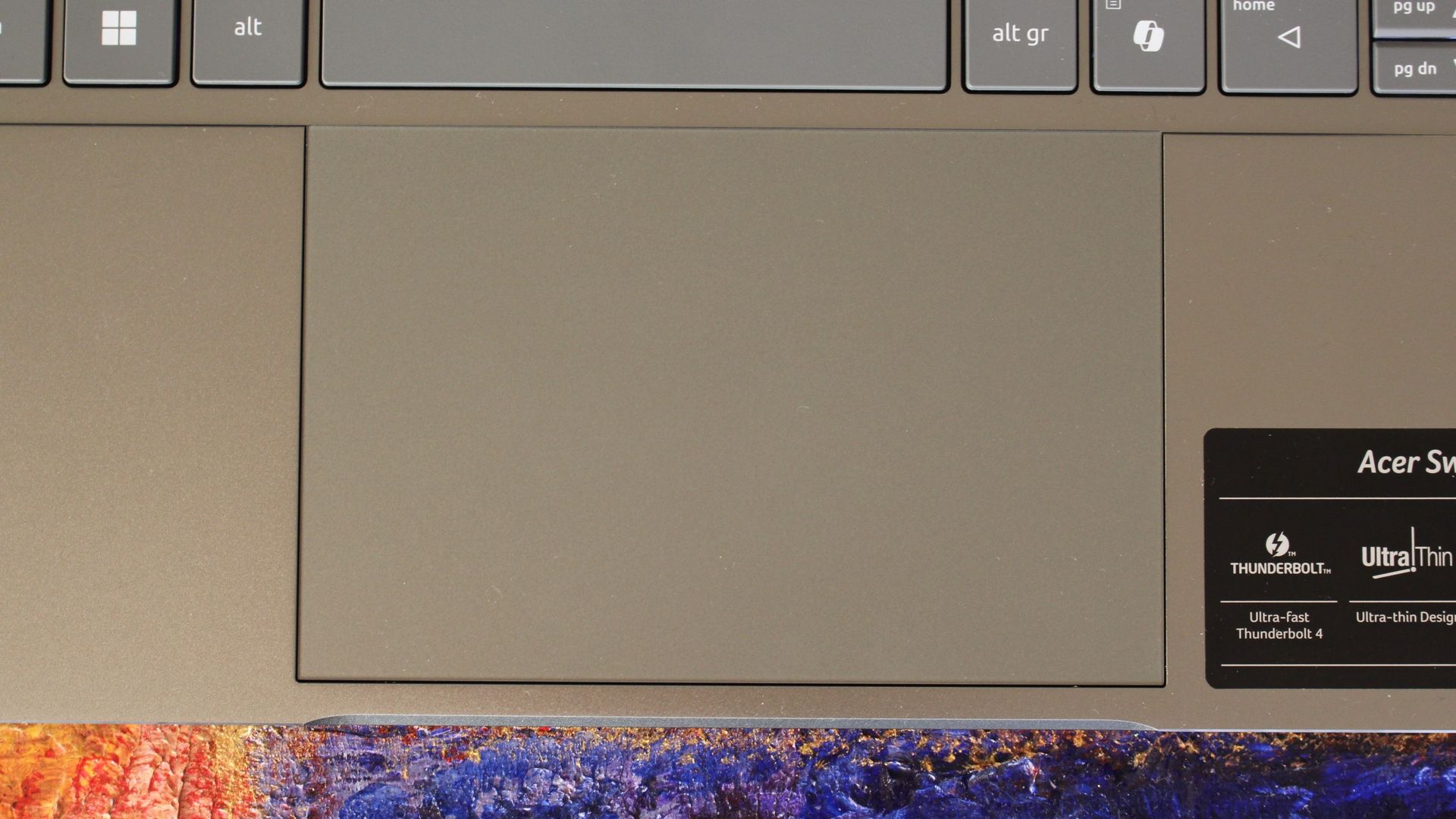
I also noticed that the trackpad itself isn't correctly aligned in the chassis. It's higher on one side, and you can see in the picture below what I mean. Overall, the trackpad is not a great experience on this laptop, in fact I'd probably call it the worst trackpad I've tried on this new wave of $699 laptops this year.
(Image credit: Zac Bowden / Windows Central)
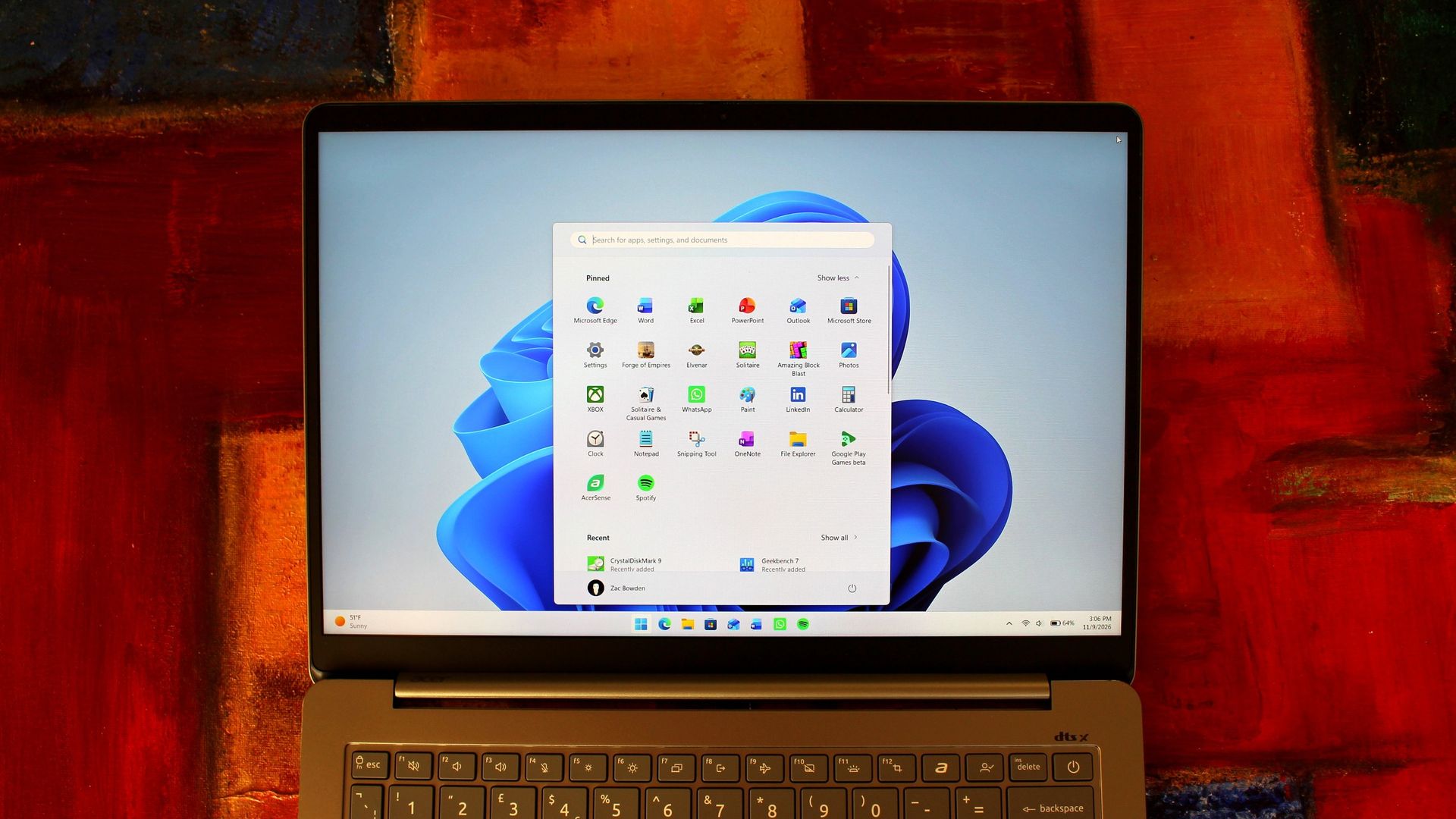
I also want to talk about the version of Windows that ships on this laptop. It's Windows 11, but with the most bloatware I've ever seen. I couldn't believe my eyes when I opened the Start menu and saw all of the unnecessary extra apps and bloatware that was pre-installed on this machine. If you buy this laptop, the first thing I'd do is install a clean fresh copy of Windows.
The webcam is also a sorry state of affairs, generate noise in pretty much all lighting enviroments and being overall quite low resolution. The microphone is fine however, so calls with colleagues or friends should work fine. The built in speaker however are not fine, with pretty much no bass whatsoever resulting in a really tinny sound.
Nitpicking now, but I hate that Acer puts these ugly stickers on the keyboard chassis. I get that it's helpful to tell the customer what powering things, but really, this is just unnecessary. Put it on the box like everyone else.
Conclusion
(Image credit: Zac Bowden / Windows Central)
The Acer Swift Air 14 is another great attempt at a good $699 Windows laptop. Unfortunately for Acer, it's not the best $699 Windows laptop you can find on the market right now. In fact, I'd call it the worst one so far.
That sounds harsh, but it's important to remember that this is definitely Acer's best $699 laptop yet. It looks and feels great, with all the right ports and amazing battery life. But the display and trackpad really bring it down to below the competition, which is a real shame.
✅ You should buy this if...
You want a thin and light Windows laptop
You need a device that lasts all day
You don't mind a 1080p screen at 14-inches
You like 120Hz displays
❌ You should not buy this if...
You need an accurate trackpad
You need powerful specs
You want to multitask with lots of apps
You need good speakers or webcam
Acer
Swift Air 14
Featuring a gorgeous minimalist design, 120Hz display, and incredible battery life, the Acer Swift Air 14 is the company's attempt at competing with the MacBook Neo with a $699 Windows laptop that almost nails the fundamentals.
In Episode 411 of the Windows Central Podcast, Daniel Rubino and Zac Bowden dissect a turbulent week in the tech industry headlined by Microsoft’s nearly 24-hour global service outage. They trace how a network capacity upgrade knocked Outlook, Exchange, Teams, OneDrive, and Copilot offline across enterprises, schools, and the UK's NHS, while examining why cloud-only AI assistants leave users stranded without local offline fallbacks.We also unpack the shocking res
In Episode 411 of the Windows Central Podcast, Daniel Rubino and Zac Bowden dissect a turbulent week in the tech industry headlined by Microsoft’s nearly 24-hour global service outage. They trace how a network capacity upgrade knocked Outlook, Exchange, Teams, OneDrive, and Copilot offline across enterprises, schools, and the UK's NHS, while examining why cloud-only AI assistants leave users stranded without local offline fallbacks.
We also unpack the shocking resignation of longtime Nvidia CEO Jensen Huang following allegations of multiple affairs and export-control espionage involving shell companies shipping restricted GPUs to China, debating what leadership succession means for PC gaming and AI hardware.
On the product front, Zac reviews the latest Windows 11 Release Preview builds bringing the new floating Windows Search bar and Run dialog refresh, while Daniel celebrates Xbox's 25th anniversary with the "Xbox Playback" retrospective, Windows backward compatibility achievements, and his hands-on review of Razer's $999 haptic, speaker-equipped Razer Soma Pro gaming chair.
[01:47] – Episode begins: Daniel and Zac introduce the show's lineup: Microsoft's massive outage, Nvidia leadership fallout, Windows 11 Insider updates, Xbox's 25th anniversary, and the Razer Soma Pro chair.
[04:19] – Microsoft’s 24-Hour Global Outage: Timeline and root cause of the network capacity upgrade failure that took down Outlook, Teams, OneDrive, and Copilot worldwide.
[10:34] – Cloud Dependency vs. Local AI Models: Why Copilot going offline highlights the need for hybrid on-device AI fallbacks, alongside rising AI-driven cybersecurity threats.
[16:51] – Nvidia CEO Jensen Huang Resigns: Breaking down the espionage allegations, workplace affairs, and illicit GPU export shell companies behind Huang's sudden exit after 33 years.
[24:19] – Nvidia Succession & PC Gaming Impact: Analyzing market reactions, potential replacements (including Tim Cook rumors), and whether Nvidia will drift further away from consumer GeForce GPUs.
[34:47] – Windows 11 Insider & Release Preview Builds: Refreshed Run dialog visuals, remote device lock, and the rapid promotion of the bouncy, floating Windows Search bar to Release Preview.
[42:33] – Start Menu Search & WinUI Wishlist: The disconnect between taskbar search and Start menu search, plus hopes for desktop widgets in the upcoming WinUI Start menu overhaul.
[46:07] – Xbox 25th Anniversary & Leadership Turnaround: Assessing Asha Sharma's early tenure, hardware supply constraints, and the lack of mid-gen console revisions this cycle.
[54:11] – Xbox Playback & Windows Backward Compatibility: Exploring the Spotify Wrapped-style Xbox history recap, original Xbox titles gaining Windows achievements, and movable Xbox OS guides.
[01:05:29] – Razer Soma Pro Haptic Gaming Chair Review: Daniel’s hands-on verdict on Razer’s $999 chair featuring six haptic engines, built-in THX surround speakers, and audio-to-haptics conversion.
[01:16:15] – Post-Show Chat: Thoughts on Grand Theft Auto VI simulation tech, cozy sim games, and revisiting Mass Effect: Legendary Edition on handhelds.
Have a question you want us to answer on the podcast? Send it to us at [email protected]

 Connexion