
Vue normale

Il y a de nouveaux articles disponibles, cliquez pour rafraîchir la page.
À partir d’avant-hierYanko Design

James Bond-inspired Scubacraft SC3 turns your underwater adventure fantasy into reality

Par : Gaurav Sood
8 mai 2026 à 22:30

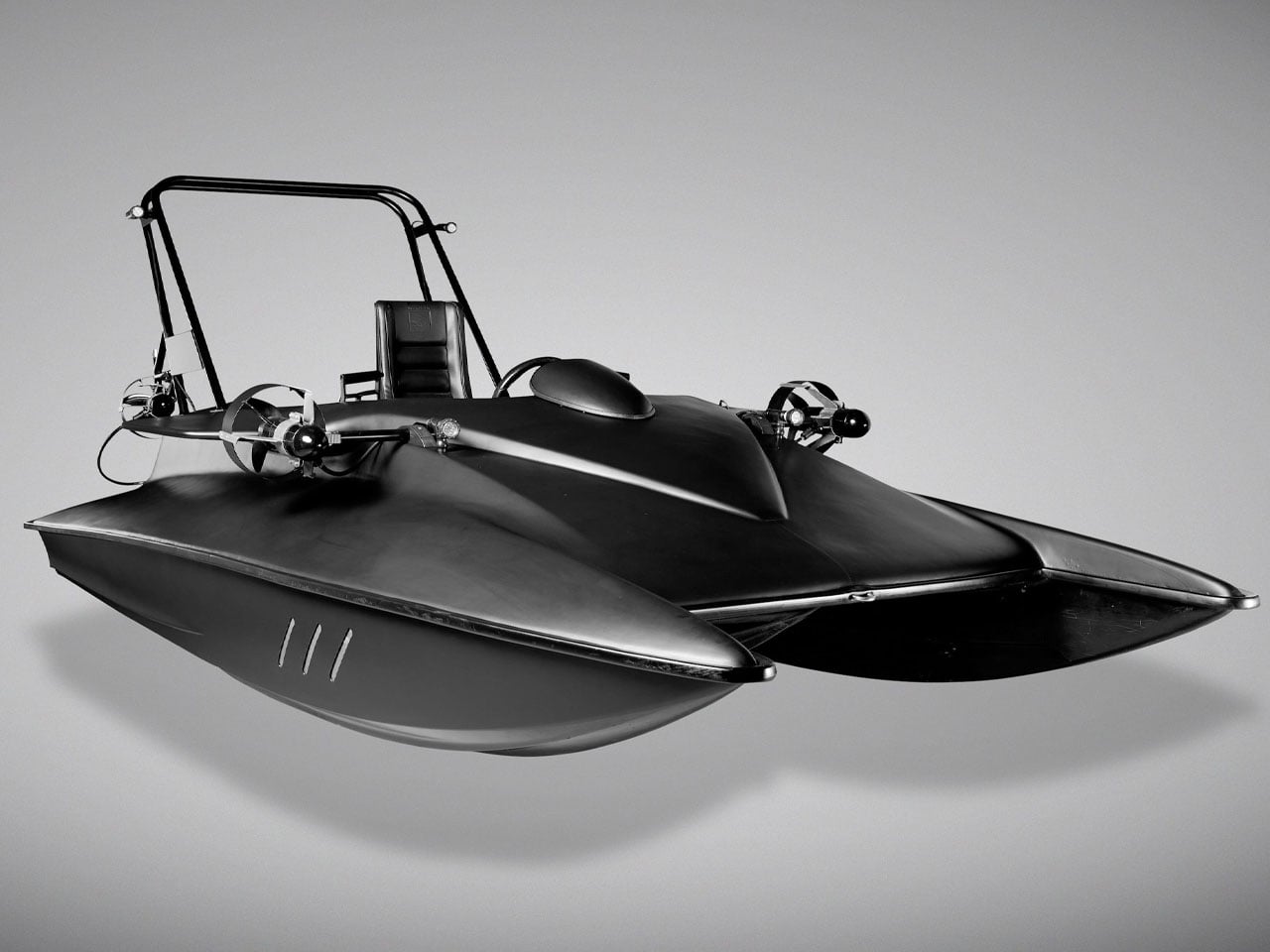
What you actually see here is a one-off submersible that is equally capable above the surface as it is underwater. For anyone who remembers the futuristic watercraft showcased in the James Bond film Spectre, there is now a rare opportunity to own one of the strangest and most ambitious vehicles ever built. Called the Scubacraft SC3, the experimental vessel was developed during the late 2000s as a functioning prototype that blurred the line between speedboat and personal submarine.

Unlike many fictional gadgets seen in Bond movies, the SC3 was not a movie prop designed solely for visual appeal. It was engineered as a real-world concept capable of operating both on the water’s surface and beneath it. The project reportedly attracted interest from the UK Special Boat Service and even DARPA because of its unconventional capabilities and military-style versatility before eventually making its way into the Bond universe. In Spectre, the matte-black machine appeared in Q’s workshop alongside the iconic Aston Martin DB10, instantly becoming one of the more memorable background vehicles in the film.

Designer: Bonhams

Now heading to auction through Bonhams, the SC3 remains the only prototype ever produced, making it less of a practical recreational craft and more of a collectible piece of engineering history. Its rarity is amplified by the fact that no production version ever followed, despite the concept demonstrating genuine functionality both above and below the waterline.

On the surface, the SC3 behaves much like a high-performance jet boat. It is powered by a Kawasaki 1,498cc inline four-cylinder engine connected to a jet-drive propulsion system, allowing it to skim across the water at impressive speeds. The real transformation begins once the craft enters deeper waters. With the underwater mode activated, electrically powered thrusters take over while hydrodynamic control surfaces guide the vessel beneath the surface at speeds of around three knots.

Unlike traditional submarines, however, the SC3 does not feature a sealed or pressurized cabin. Occupants are exposed directly to the surrounding water and must wear full diving gear before submersion. This open-water diving approach significantly reduces complexity and weight while creating an experience closer to underwater flight than conventional submarine travel. The setup accommodates three people, including the driver and two passengers, all seated in exposed racing-style seats integrated into the craft’s lightweight body.

Visually, the SC3 still looks every bit like a futuristic Bond vehicle. The original composite plastic bodywork remains intact, paired with carbon-fiber construction elements and upholstered leather racing seats that reinforce its cinematic personality. Its aggressive low-slung silhouette, combined with stealth-inspired matte-black paintwork, gives it an appearance that still feels ahead of its time more than a decade after it was built.

Vehicles attempting to combine marine and underwater transportation are exceptionally rare because of the engineering compromises involved. The SC3 stands out precisely because it became a fully operational prototype rather than a concept sketch or film mock-up. That achievement alone makes it one of the most unusual experimental watercraft ever created and an undeniably fascinating piece of Bond-related automotive history.

The post James Bond-inspired Scubacraft SC3 turns your underwater adventure fantasy into reality first appeared on Yanko Design.
100-Meter A100 concept yacht redefines luxury sailing with massive interior volume

Par : Gaurav Sood
7 avril 2026 à 19:15

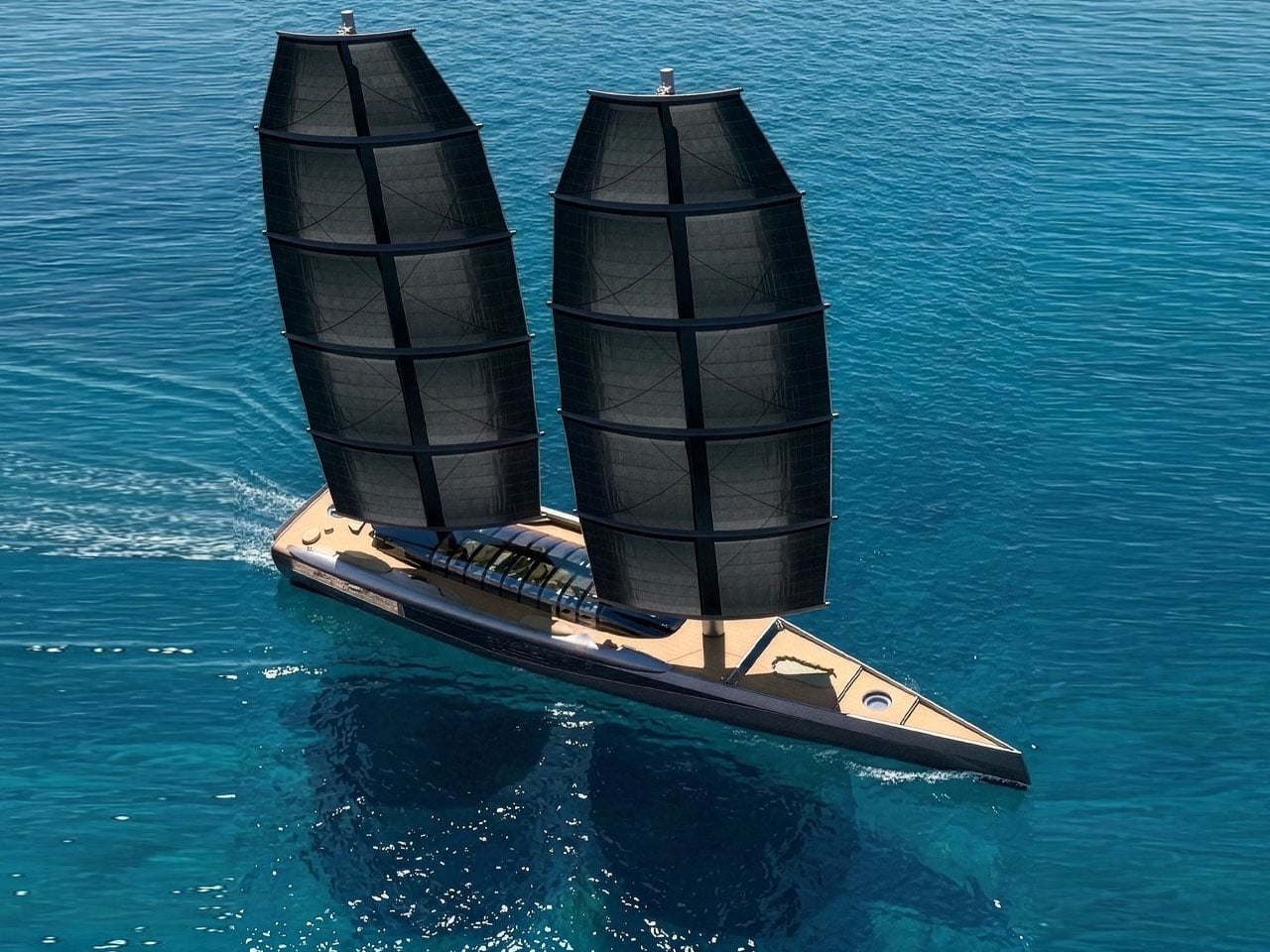
Modern sailing superyachts often struggle to balance two competing priorities: the elegance and efficiency of wind-powered travel and the expansive living spaces typically associated with large motor yachts. The A100 sailing yacht concept approaches this challenge with a bold rethink of traditional yacht architecture. Developed through a collaboration between Van Geest Design and Rob Doyle Design, the 100-meter vessel proposes a layout that delivers the interior volume of a motor yacht while maintaining the identity and performance of a sailing superyacht.

At the core of the concept is a design strategy that maximizes usable space. Traditional sailing yachts require wide side decks for crew movement and sail handling, which limits interior width. The A100 concept reduces the width of these side decks, allowing the main deck to stretch nearly the full beam of the yacht. This architectural shift creates significantly larger interior spaces than typically found on sailing yachts of comparable size.

Designer: Van Geest Design and Rob Doyle Design

The main deck is designed as the primary social and living area. Here, the owner’s suite occupies a substantial portion of the deck, offering a level of space rarely seen on sailing yachts. Adjacent to the suite is a central lounge and formal dining area intended for gatherings and entertaining. An additional space can function as a library or a private cinema, adding flexibility to the interior layout. Large sections of glass surround these living areas, filling the interior with natural light and offering uninterrupted views of the ocean.

Below deck, the yacht accommodates guest cabins along with a variety of leisure-focused facilities. This level also houses a dedicated diving room and storage for water toys such as jet skis and e-foils, allowing guests to transition between onboard relaxation and water activities easily. The layout is designed to maintain a strong visual connection with the surrounding seascape while ensuring privacy and comfort for those on board.

Outdoor areas play an equally important role in this larger-than-life superyacht design. The upper deck includes the navigation and steering stations, along with flexible lounge spaces for relaxation or wellness activities. At the stern, a large beach club spans the full width of the yacht, creating a welcoming space for guests to gather close to the water. Toward the bow, storage areas accommodate tenders and recreational equipment without disrupting the clean lines of the deck.

The sailing system is based on two free-standing DynaRig masts, a modern configuration used on some of the world’s largest sailing yachts. The system employs curved yards that support multiple sails, all of which can be deployed and adjusted electronically at the push of a button. The rotating masts simplify sail handling while maintaining efficient propulsion for a vessel of this scale.

Beyond its layout and sailing system, the A100 concept also reflects growing interest in more sustainable superyacht designs. By relying heavily on wind propulsion supported by advanced onboard energy systems, the concept explores ways to reduce reliance on conventional engine power. If brought to life, the A100 would stand among the largest sailing yachts ever built!

The post 100-Meter A100 concept yacht redefines luxury sailing with massive interior volume first appeared on Yanko Design.

❌
❌