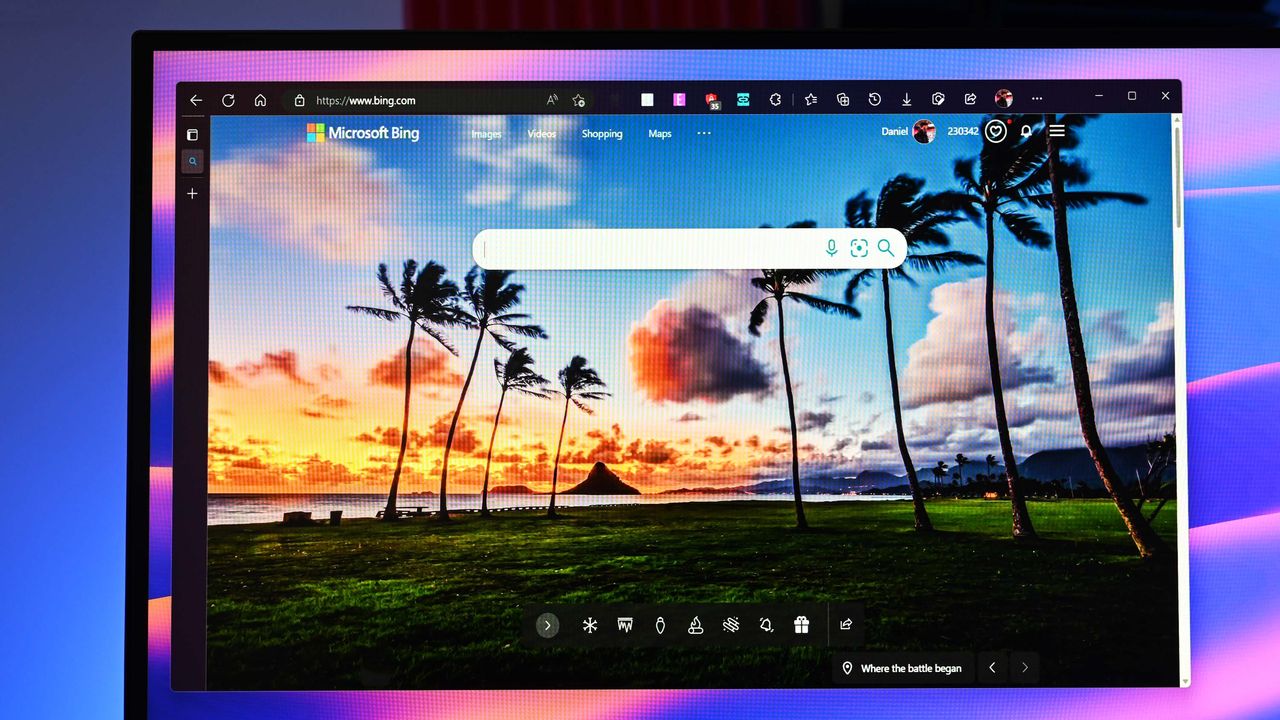
Microsoft Edge for Android has some new image themes in testing. The latest Edge Canary build has some snazzy backgrounds, but to set them you have to make Edge your default browser.It's a strange requirement that may ruffle some feathers, but there's always a chance it will change. The requirement to set Edge as your default browser to use the themes only appears in Edge Canary. That rule may not roll out to general availability.The change was spotted by Leo Var
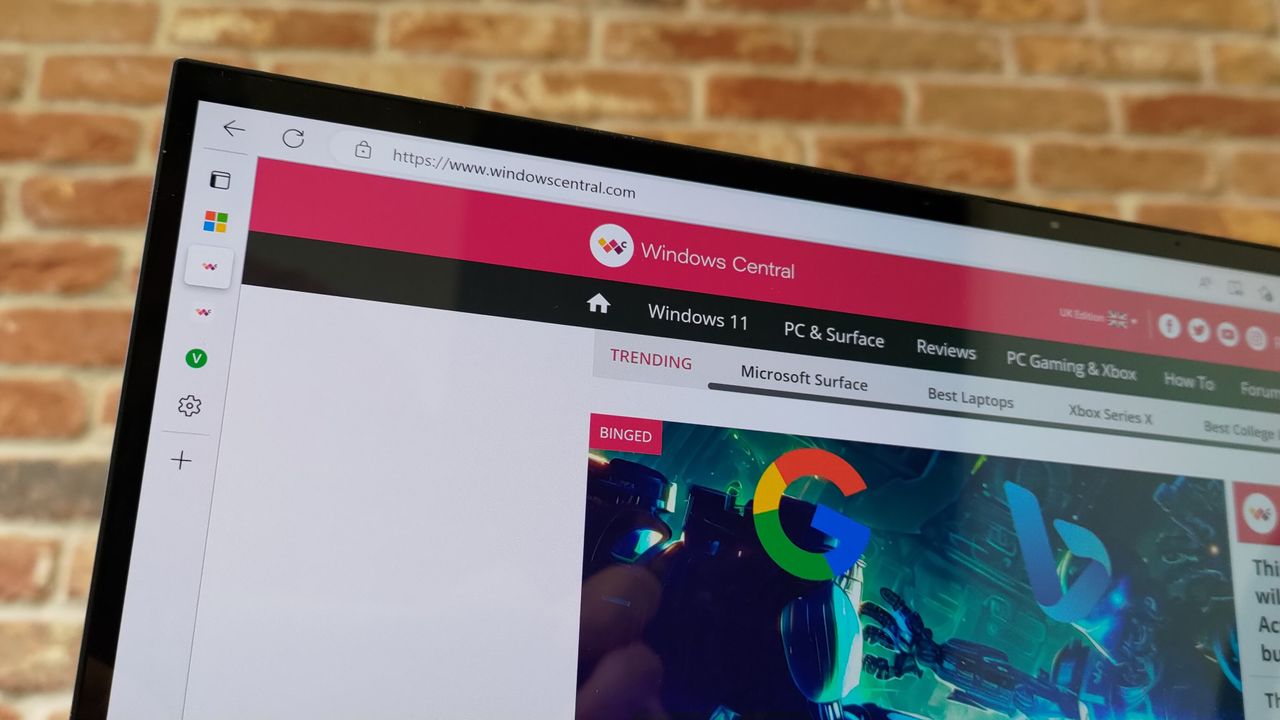
Microsoft Edge for Android has some new image themes in testing. The latest Edge Canary build has some snazzy backgrounds, but to set them you have to make Edge your default browser.
It's a strange requirement that may ruffle some feathers, but there's always a chance it will change. The requirement to set Edge as your default browser to use the themes only appears in Edge Canary. That rule may not roll out to general availability.
The change was spotted by Leo Varela, who tracks updates and changes to Edge and other browsers.
Microsoft has added new image themes in Edge Canary for Android, but to use them as your NTP background, you have to set Edge as your default browser. All browsers use tactics to motivate you to make them your default, and Edge is no exception 🤷 https://t.co/sK1xv7W0RCpic.twitter.com/VVIPywivm2August 21, 2026
Microsoft has a long history of trying to convince people to use Edge. Some efforts, such as adding unique features are viewed as fair play. Other tactics, such as Windows 11 making it more difficult to switch your default browser, have been met with criticism.
A recent survey commissioned by the Browser Choice Alliance suggests that switching away from Edge is too difficult. But that survey relates to PC users. Microsoft has a different battle on Android.
Instead of having hundreds of millions of users with PCs that already have Edge installed, Microsoft needs to convince people to download Edge for Android. Then, the tech giant needs to get people to set Edge as their default browser, which is no easy task.
I imagine the amount of people who have installed Edge on their phones but have not set the browser as their default is small. Considering how niche Edge is on Android, anyone who goes out of their way to install it probably plans to use Edge.
Some Samsung phones come with Edge preinstalled, so perhaps the new picture themes in Edge are designed to sway those users.
Of course, Microsoft is not alone in using aggressive methods to push a browser. Google and Apple have also pushed Chrome and Safari, respectively.
I'm curious to see how effective locking picture themes behind a default setting requirment will be for Edge.
Join us on Reddit at r/WindowsCentral to share your insights and discuss our latest news, reviews, and more.
In this photo illustration a Microsoft Edge logo of a web browser developed by Microsoft is seen on a smartphone and a pc screen.
In this photo illustration a Microsoft Edge logo of a web browser developed by Microsoft is seen on a smartphone and a pc screen.
PowerToys is one of my favorite Windows apps and a must-have for people who want to get the most out of Windows 11. We often highlight new and upcoming features for PowerToys, but we rarely get to hear about the most exciting features in the eyes of Niels Laute.Next week, PowerToys will receive several improvements, including a compact option for Command Palette and a ripple effect for Mouse Highlighter. Laute, who is the project manager of PowerToys and WinUI,
PowerToys is one of my favorite Windows apps and a must-have for people who want to get the most out of Windows 11. We often highlight new and upcoming features for PowerToys, but we rarely get to hear about the most exciting features in the eyes of Niels Laute.
Next week, PowerToys will receive several improvements, including a compact option for Command Palette and a ripple effect for Mouse Highlighter. Laute, who is the project manager of PowerToys and WinUI, shared the features and changes he's looking forward to.
As PM of PowerToys, Laute oversees the development of one of the best free Windows apps. But the app is worked on by several people. Over 300 pull requests contributed to next week's update, and Laute thanked the team for their efforts.
Next week's PowerToys release is looking good 👀!The team and our amazing community have merged almost 300 PRs, packed with quality-of-life improvements, stability fixes, and polish across the suite :)!Here's some of my favorite (small) improvements coming 🧵:August 18, 2026
We've known about some of these changes because of the PowerToys preview. For example, on-device Phi Silica support has been in testing over the last two weeks. But next week the changes will ship to everyone using PowerToys.
Command Palette is similar to Spotlight on macOS. Another way to look at it is as what Windows Search should be. The utility can launch apps, open settings, and trigger actions quickly.
Command Palette is a powerful tool, but it can take up quite a bit of space on your screen. Next week's update to PowerToys brings the option to use a compact view for Command Palette.
Mouse Highlighter is a handy tool that lets you find your mouse cursor. It can save you some time if you use multiple monitors or an ultrawide display. But it can feel a bit heavy-handed since it grays out your screen to highlight the cursor. The upcoming ripple effect is more subtle.
Phi Silica is a small language model (SLM). It's perhaps best known for being the model that powers Copilot+ PC features such as Click to Do and on-device rewriting in Word and Outlook.
@khmyznikov added Phi Silica support for Advanced Paste 🚀! So you will be able to take advantage of your NPU for AP on a Copilot+ PC! pic.twitter.com/sR60TT51W1August 18, 2026
Phi Silica and other features have been in preview testing for a bit. The next update to PowerToys will make it easier to get preview updates.
Change logs for PowerToys are famously long and detailed, so you can expect the "gazillion" fixes Laute mentions to be listed next week.
And so much more! Shortcut Guide is much smoother now and has built-in search, a gazillion CmdPal bugfixes (thanks @AkaWizardPrime!) and perf and stability fixes across the board. Oh, and a brand new utility to look forward too :)!Stay tuned!August 18, 2026
I'll update this piece when the new version of PowerToys rolls out and add the complete change log.
This collection of utilities includes a large library of features to enhance the Windows experience. PowerToys is designed with power users in mind, but it has handy features for people who just use their PC for everyday computing too.
Join us on Reddit at r/WindowsCentral to share your insights and discuss our latest news, reviews, and more.
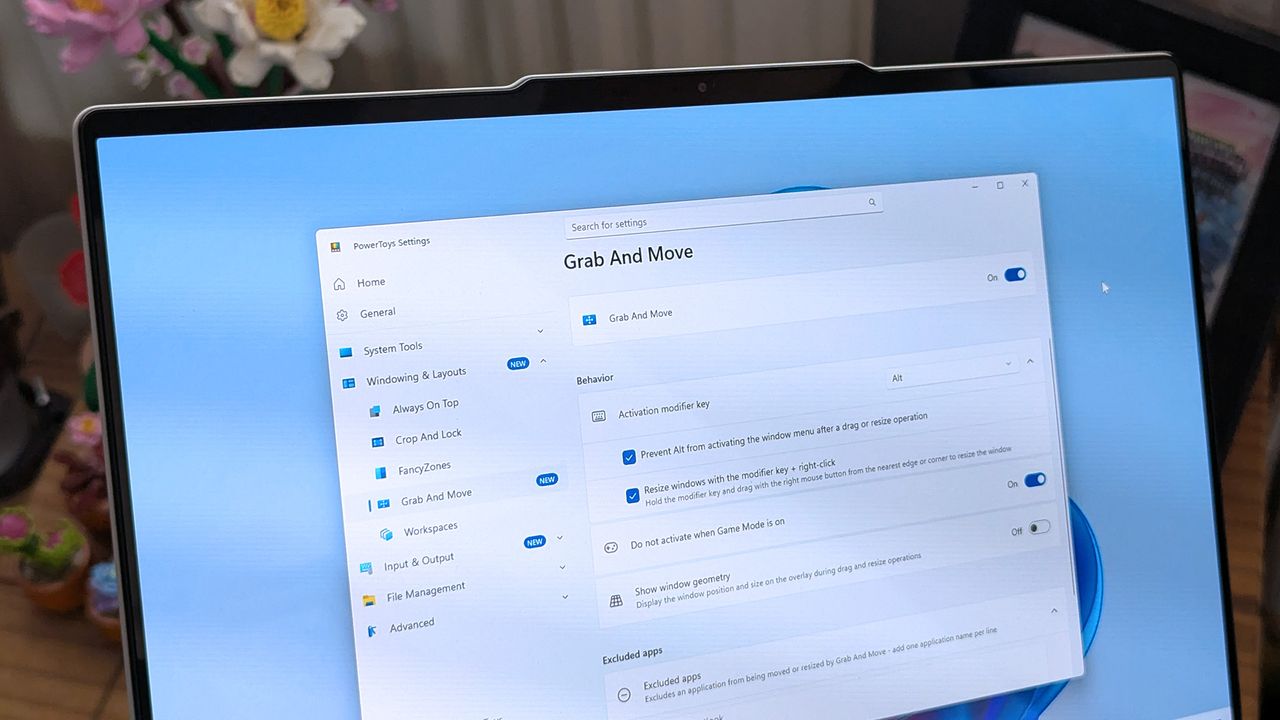
A laptop screen displaying Windows 11, featuring the "Grab And Move" settings window of PowerToys. The desktop background is colorful and vibrant.
A laptop screen displaying Windows 11, featuring the "Grab And Move" settings window of PowerToys. The desktop background is colorful and vibrant.
I've always been a fan of physical media, be it movies, music, or games. I'm also old enough that I grew up in a time when it's all we had; there was no Spotify or Netflix. Slowly I'm working through it all to create digital copies for both archival purposes and convenience since there are plenty of situations where it's not practical to put a disc in a machine and consume its content. Right now I'm working through a vast stack of CDs acquired from the days when
I've always been a fan of physical media, be it movies, music, or games. I'm also old enough that I grew up in a time when it's all we had; there was no Spotify or Netflix.
Slowly I'm working through it all to create digital copies for both archival purposes and convenience since there are plenty of situations where it's not practical to put a disc in a machine and consume its content.
Right now I'm working through a vast stack of CDs acquired from the days when cars had CD players, not just screens connected to your phone or directly to streaming services. But I quickly found that the app I've used for this process in the past, the stock Windows 11 Media Player, nowadays isn't up to scratch.
It will still rip CDs, but it's no good for the metadata anymore. Microsoft turned off the online tool that you could use to grab it, but even then, I figured I could just enter it manually, right?
Seems that doesn't work all the time, either. Even on the few CDs I have that actually have the metadata on them already. It took ripping a few discs for me to realize that information wasn't being applied to some or all tracks, and the artwork wasn't sticking, either. So I needed a replacement, and frankly, I should have just gone for this out of the gate.
Enter Exact Audio Copy (EAC). A free app that is absurdly powerful and does the job right the first time.
Without online metadata the process takes too long anyway
If the feature doesn't work anymore why is it still there? (Image credit: Windows Central)
Admittedly, it's been a while since I last digitized a stack of CDs, and it had completely passed me by that Microsoft had turned off the service to get the information online. It's a pretty poor experience for a stock app, even if it's a feature that's increasingly used by fewer people.
A better solution would have been to update the app, allowing its users to find an alternative source of this information. There are options out there, such as MusicBrainz, a free and open-source database of metadata. Maybe I'm asking too much; after all, Microsoft didn't even update the app to remove the option to check for metadata.
It's still there; it just gives you an error if you try and use it. I actually quite like the stock Media Player app, and still use it to play music. It's simple and mostly nice to use. If it's not going to work properly, though, just remove it altogether.
Exact Audio Copy is the perfect solution
It looks a bit old school, but boy does it work. (Image credit: Windows Central)
Fortunately there is always an alternative, and in this case, it's called Exact Audio Copy (EAC). There will be folks out there that have known of this app for years and are screaming at my incompetence for not going straight to it.
But I didn't know it existed. I'm glad I do now.
This isn't a full tutorial on how to use the app, mostly because I'm doing one specific thing, but it is really powerful. There are plenty of better tutorials out there, such as this one.
All I want is an accurate rip in FLAC, a standardized filename structure, metadata, and album artwork applied. The good news is that if you just want the same thing every time, EAC will run you through a setup wizard when you first use it. From there, you shouldn't need to touch your settings again.
The only thing I did need to change was the metadata provider. The default option is only free for 10 rips, but you can change it within the app to MusicBrainz, which is completely free.
You don't want the default metadata provider, but you can change it to something else. (Image credit: Windows Central)
I now know I should have used this all along. AccurateRip will check your CD against a database of other exact rips to ensure yours is as perfect as it can possibly be. It can deal with scratched discs (of which I sadly own several), and it communicates directly with the hardware.
I may be underselling it, but I'm as far from an expert as there is on this stuff. There are plenty of more knowledgeable folks out there, like this post on Flemming's blog that is an excellent resource for getting set up properly.
EAC isn't the only alternative to using Media Player, but it's the one I tried first, and I'm happy. I may try and get in the weeds at some point, but for now it's doing what I need. Archiving my CDs accurately, with good quality, and all the necessary metadata.
If you've any tips or tricks to share on this process, or even an alternative worth trying, be sure to drop them in the comments below.
Join us on Reddit at r/WindowsCentral to share your insights and discuss our latest news, reviews, and more.
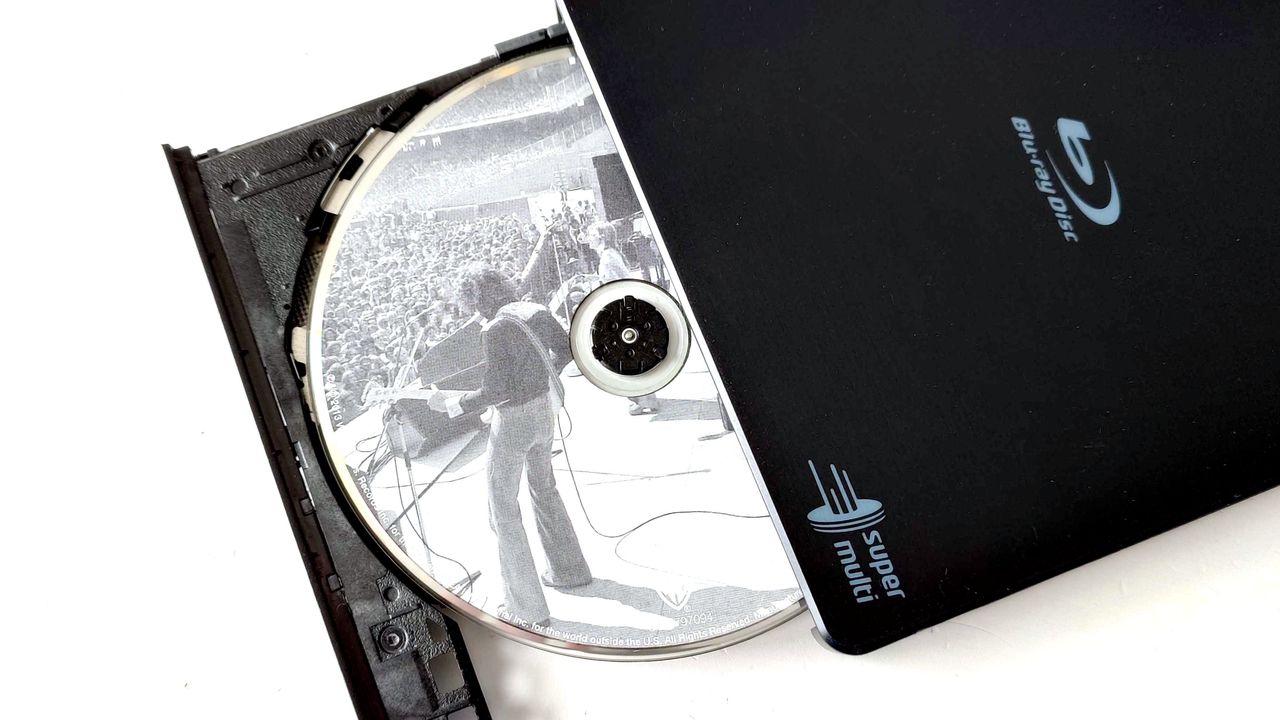
An LG USB Blu-ray drive open showing a Fleetwood Mac CD inside
A slight change of plan, but the great CD digitizing project continues.
Built as an alternative to the standard File Explorer in Windows 11, Files is an open-source project that always seems to stay one step ahead of Microsoft. Its latest update to Files v4.2.7 is a perfect example, as it focuses on improving the speed and overall responsiveness of the right-click menu before the official context menu upgrade comes to Windows.The optimization trend extends to multitasking in Files, as v4.2.7 also improves its memory cleanup habits wh
Built as an alternative to the standard File Explorer in Windows 11, Files is an open-source project that always seems to stay one step ahead of Microsoft. Its latest update to Files v4.2.7 is a perfect example, as it focuses on improving the speed and overall responsiveness of the right-click menu before the official context menu upgrade comes to Windows.
The optimization trend extends to multitasking in Files, as v4.2.7 also improves its memory cleanup habits when any tabs are closed. Efficient tabs are a headline feature of the app, even if the experience feels quite similar to File Explorer — including its support for keyboard shortcuts — but Windows PC enthusiasts will undoubtedly appreciate any efforts to lower memory usage.
I'm not going to praise Microsoft for doing what they should have done a few years ago, but I'm glad I can finally see a decent context menu coming.
@bogdan.p, YouTube Viewer
I first started using the Files App on my primary laptop shortly after v4.0 launched, when it added more flexibility for the right-click context menu. It isn't installed on all of my PCs, but on my travels I find it quite useful alongside my portable mainstays like PowerToys Run. Anything that lowers my RAM usage is a winner in my eyes, whether it comes from Microsoft or elsewhere.
You can try Files — and even make it your default file manager in Windows 11 without uninstalling File Explorer or damaging your OS in any way — to see if you prefer the experience over Microsoft's default implementation. If you don't, it's no big deal; you can revert to the standard experience by uninstalling it, as you would with any other app. Give it a shot.
View the full changelog ↴
Files v4.2.7 changelog
What’s New in Files v4.2.7
Improved context menu performance
Opening the right-click context menu is now noticeably faster and more responsive.
Open a new tab by middle-clicking the tab strip
You can now open a new tab by middle-clicking an empty area of the tab strip, giving you a quick way to add tabs without reaching for the new tab button.
Select items opened from other apps
When you open a file’s location from another application, Files now selects that item in the folder automatically.
Reduced memory usage after closing tabs
Files now frees up more memory when tabs are closed, helping keep the app lightweight during long sessions.
Fixes
Fixed issue with the filter text box being cleared.
"Purchasing Files through the Microsoft Store helps support the developers and allows us to continue updating the app with new features and improvements."View Deal
Join us on Reddit at r/WindowsCentral to share your insights and discuss our latest news, reviews, and more.
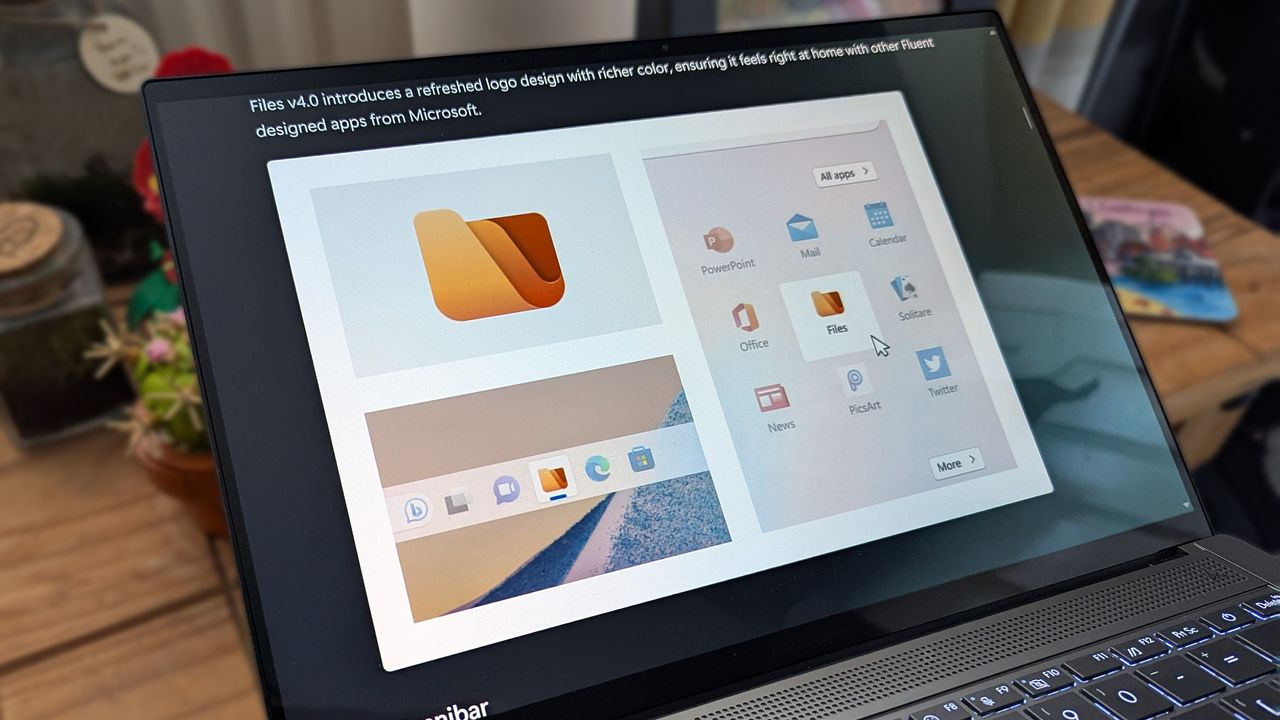
Files 4.0 app promotional images on an ASUS Zenbook laptop screen.
Files v4.2.7 speeds up Windows 11's sluggish context menu and improves memory use, ahead of Microsoft's own planned File Explorer optimizations.
GitHub is down for thousands of users, potentially costing millions of dollars in lost productivity. Outages started around 9:40 AM ET and affect API requests, pull requests, and webhooks.The issues also affect Copilot. A massive number of developers and companies rely on GitHub and Copilot to get work done, so even a few hours of serious issues can be costly.The official GitHub status page states:"We are experiencing high error rates around 20% for web experienc
GitHub is down for thousands of users, potentially costing millions of dollars in lost productivity. Outages started around 9:40 AM ET and affect API requests, pull requests, and webhooks.
The issues also affect Copilot. A massive number of developers and companies rely on GitHub and Copilot to get work done, so even a few hours of serious issues can be costly.
"We are experiencing high error rates around 20% for web experiences and api traffic. Archive downloads and raw repository content downloads are experiencing an approximate 50% error rate. SAML and OIDC authentication, SCIM, and Team Sync are also impacted. We are still working to identify the root cause and will continue to post updates as we learn more and perform mitigation."
The cause of the outage is unknown at this time.
"We identified the problematic component and have taken corrective actions. There are strong signs of recovery but we are still working to completely restore service, with error rates still remaining slightly elevated. We will post further updates as recovery continues."
This is a developing story. We will update this piece as more information becomes available.
CANADA - 2025/07/20: In this photo illustration, the GitHub (Git Hub) logo is seen displayed on a smartphone screen. (Photo Illustration by Thomas Fuller/SOPA Images/LightRocket via Getty Images)
CANADA - 2025/07/20: In this photo illustration, the GitHub (Git Hub) logo is seen displayed on a smartphone screen. (Photo Illustration by Thomas Fuller/SOPA Images/LightRocket via Getty Images)
A former Microsoft engineer is working on a way to make Live Tiles relevant in 2026. Jeff Fritz, who worked at Microsoft until last month, has been showcasing an app called DayFrame on several of his recent live streams.DayFrame is what happens when Windows Phone and Outlook have a baby. The app features a persistent hub with shortcuts to your email, calendar, contacts, and other tools. The layout is inspired by Windows Phone and would look natural on a Lumia sma
A former Microsoft engineer is working on a way to make Live Tiles relevant in 2026. Jeff Fritz, who worked at Microsoft until last month, has been showcasing an app called DayFrame on several of his recent live streams.
DayFrame is what happens when Windows Phone and Outlook have a baby. The app features a persistent hub with shortcuts to your email, calendar, contacts, and other tools. The layout is inspired by Windows Phone and would look natural on a Lumia smartphone.
Fans of retro Windows design will appreciate the Live -Tile-inspired interface, icons, and text. Though the app is built with classic Windows UI elements in mind, the experience won't be exclusive to PC. DayFrame will be available on both Windows and Mac when it ships.
"Instead of juggling separate apps, DayFrame gives every part of your personal world a home behind a single shell," reads the DayFrame website. "A persistent tile rail on the left keeps your modules one tap away — bold, square, unmistakably blue — while the main pane shows whatever you're focused on right now."
DayFrame has several modules aimed to make it easier to juggle tasks. (Image credit: Jeff Fritz)
Sadly, the app is not available yet and is simply listed as "Coming soon." But Fritz mentioned on X that a private preview for the app should be available in the next week or so.
Fritz notes that the screenshots shown on the DayFrame website are of "real, running code," so they're more than just design mockups.
DayFrame is designed to be expanded over time. Each module is built independently and tested separately, which allows Fritz to add new modules without affecting preexisting ones.
The concept behind DayFrame is intriguing. A lot of apps feel like cookie-cutter tools made with templates. While DayFrame is inspired by Windows Phone, it takes the familiar layout and builds on it.
I'd love to see DayFrame be embraced by a community of developers after it comes out. Maybe we'll see some unique modules added to the app.
Join us on Reddit at r/WindowsCentral to share your insights and discuss our latest news, reviews, and more.
A smartphone with a colorful app tile interface lies on grass surrounded by autumn leaves. The bright screen contrasts with the earthy background.
A smartphone with a colorful app tile interface lies on grass surrounded by autumn leaves. The bright screen contrasts with the earthy background.
A dramatic saga is unfolding on X, and VLC and Microsoft Defender are at the center of it. Things kicked off when video game designer Jonathan Blow criticized the open source community due to an issue he had with VLC.A curious issue causes MP3 files to take a while to open in VLC. In some cases, opening a file can take over 30 seconds."Finally switched *away* from VLC *to* Microsoft Media Player, because VLC now takes 33 seconds to start playing an mp3 after clic
A dramatic saga is unfolding on X, and VLC and Microsoft Defender are at the center of it. Things kicked off when video game designer Jonathan Blow criticized the open source community due to an issue he had with VLC.
A curious issue causes MP3 files to take a while to open in VLC. In some cases, opening a file can take over 30 seconds.
"Finally switched *away* from VLC *to* Microsoft Media Player, because VLC now takes 33 seconds to start playing an mp3 after clicking on it," said Blow. He added, "A large sector of open source software is in a truly embarrassing place now..."
Blow's post now shows a community note because the bug is due to Microsoft Defender, not VLC. Or at least, that's the claim of several people on X.
"This is because of a « bug » from Microsoft Defender in one update of Windows 11, who magically made VLC plugins cache quarantined by Windows. Reinstalling VLC or regeneration of the plugin cache will fix this. Calling open source software embarrassing when it is a Windows update that broke it is quite disrespectful."
In response, Blow claimed that he had to fix an issue that was caused by a faulty graphics driver sent out by AMD. His post suggests that VLC should fix the issue even if the problem is caused by Microsoft Defender.
What's actually happening?
My wife would say that this is all a "storm in a teacup." I don't see the need to be as aggressive about this topic as people have been on X.
Over on Reddit, cooler heads prevailed. A discussion on the topic happened in the r/pcmasterrace subreddit. There, people focused on what's causing the issue and how to fix it.
At least some of the issue is related to Microsoft Defender. That's clear because adding VLC's folder as an exception to Defender fixes the problem, as highlighted by user "nicktheone."
If it were exclusively an issue with VLC, creating the exception within Microsoft Defender would not solve it.
You completely do not understand my tweet and thus would fail at professional software development.BTW I already pay Microsoft for Media Player and it works to an okay degree. I would happily pay someone for something better. VLC was that something better many years ago, but it…August 12, 2026
Of course, you could still debate whose responsibility it is to fix the issue. Even a bug related to Microsoft Defender could potentially be fixed by the VideoLAN team. That's certainly what Blow did while spending much of his Wednesday afternoon arguing with people on X.
How to create an exception for VLC in Microsoft Defender
You shouldn't have to create an exception for VLC in Microsoft Defender to open an MP3 in less than 30 seconds, but... here we are. Luckily, the steps to do so are simple:
Open Windows Security
Select Virus & threat protection
Select Manage settings
Select Add or remove exclusions (it's at the bottom of the page)
Click Add an exclusion
Select Folder
Navigate to C:\Program Files\VideoLAN
Click Select Folder
Before making an exclusion, VLC took about five seconds to open an MP3 on my computer. After creating an exclusion, opening the same file took under one second.
Join us on Reddit at r/WindowsCentral to share your insights and discuss our latest news, reviews, and more.
Microsoft is too pushy with its Edge browser, according to a recent survey shared by the Browser Choice Alliance. Polling 2,000 adults in the United States provided some insight regarding how easy it is to switch browsers on Windows 11 and if the operating system respects user choice.Microsoft has been criticized for years for pushing Edge. Windows 11 introduced settings that make changing the default browser more complicated, such as a person electing to change
Microsoft is too pushy with its Edge browser, according to a recent survey shared by the Browser Choice Alliance. Polling 2,000 adults in the United States provided some insight regarding how easy it is to switch browsers on Windows 11 and if the operating system respects user choice.
Microsoft has been criticized for years for pushing Edge. Windows 11 introduced settings that make changing the default browser more complicated, such as a person electing to change their default only affected certain file types. The situation has improved a bit over the years, but it's still surprisingly difficult to just tell Windows 11 to never use Edge.
It's important to note that the Browser Choice Alliance includes several members that compete directly with Microsoft Edge. Chrome, Vivaldi, and Opera are all part of the alliance. That does not discount the experience of the people surveyed, but it provides some context.
Many members of the Browser Choice Alliance would benefit from more freedom about browser choice and simpler default settings. I would argue that those would also be good things for everyday users as well.
With that in mind, here are some of the highlights of what the Browser Choice Alliance found through its survey:
86 percent of those surveyed believe they should have primary control over their default browser and 80 percent want "one-click browser default."
26 percent of participants have Edge as their default browser compared to only 19 percent who say they would choose Edge as their default browser.
72 percent of participants who tried to change their default browser within the last two years ran into challenges, such as Edge being recommended and applications or links opening in Edge despite that browser not being set as default.
29 percent of those surveyed claim Windows system updates "contributed to their browser preference being changed or reset."
Older adults often struggle with setting their default browser.
44 percent of those surveyed ages 65 or older claimed changing their default browser was complex. Only 15 percent of people ages 18 to 44 said the same.
61 percent of participants 65 or older said they were not confident setting their default browser.
The survey results are not surprising, except perhaps that 14 percent of participants do not think they should be able to pick their default browser.
Microsoft is so eager to push people to use its Edge browser that when forced to give users more choices by the EU, Microsoft only shipped those changes within the EU. The company could have used that as an opportunity to just give people greater control over their PCs, but it didn't.
The fact that MSEdgeRedirect and EdgeDeflector ever existed is a stain on Microsoft's reputation. Those tools, which forced links to open with your default browser either don't work or are limited now.
Microsoft claimed having widgets or other system components open in Edge regardless of if Edge is the default helps ensure the best end-to-end experience. Many, including myself, question the validity of that claim.
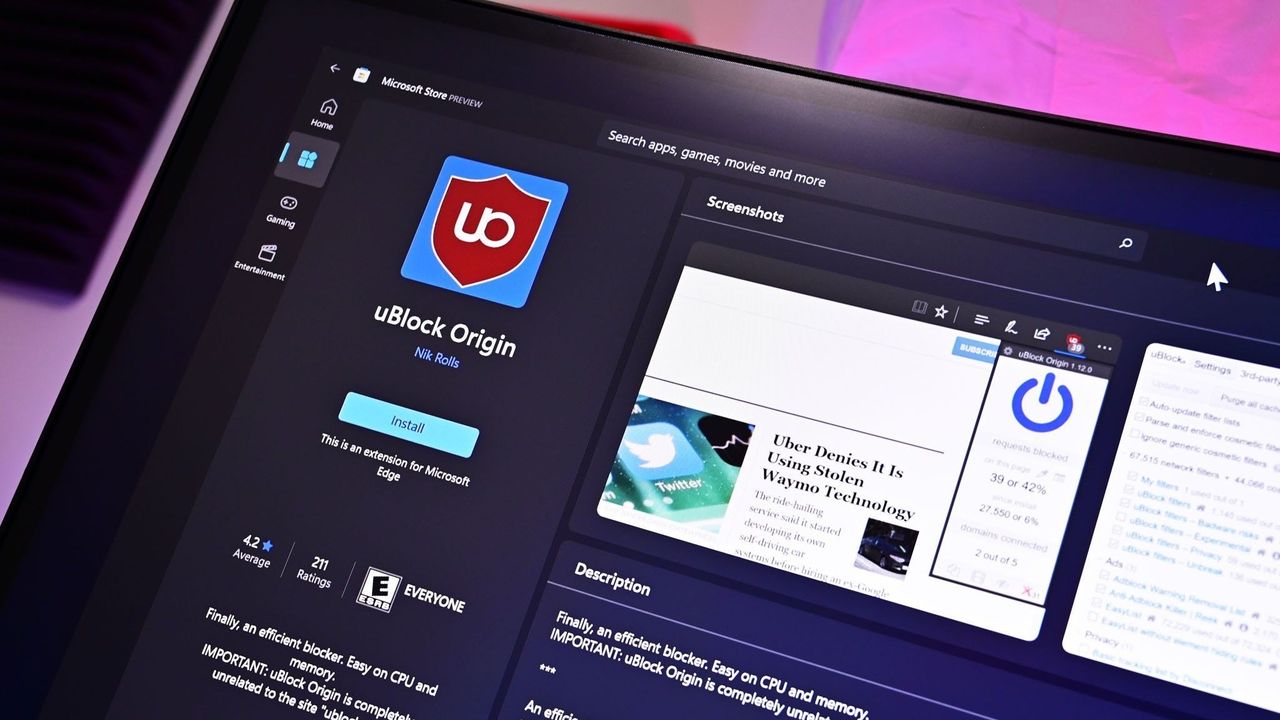
With Microsoft following in the footsteps of Google by discontinuing support for MV2 extensions, uBlock Origin will no longer work in Edge. That extension is a must-have for some users, so they may be on the lookout for a new browser. But based on the recent survey performed by the Browser Choice Alliance, changing to a different default browser may be more challenging than it should be.
Join us on Reddit at r/WindowsCentral to share your insights and discuss our latest news, reviews, and more.
Microsoft Edge will soon drop support for Manifest Version 2 (MV2), which means uBlock Origin will stop working in the browser. But Windows 11 users still have some browsing options that will support uBlock Origin and other MV2 extensions.The Firefox account on X shared a simple message in response to an article about Edge ending support for certain extensions: "Firefox support for uBlock Origin is not going anywhere."Brave shared a longer message, which emphasiz
Microsoft Edge will soon drop support for Manifest Version 2 (MV2), which means uBlock Origin will stop working in the browser. But Windows 11 users still have some browsing options that will support uBlock Origin and other MV2 extensions.
The Firefox account on X shared a simple message in response to an article about Edge ending support for certain extensions: "Firefox support for uBlock Origin is not going anywhere."
Brave shared a longer message, which emphasized that "Brave will keep supporting uBlock Origin" and that Brave hosts uBlock Origin and other MV2 extensions on its own servers. To enable MV2 extensions in Brave, you need to go to Settings > Extensions > Manifest v2 extensions.
Brave also has a built-in ad blocker that's unaffected by the MV2 changes.
Firefox runs on the Quantum browser engine, which is built specifically for that browser and is separate from Chromium. Brave is a Chromium browser. With both Chromium and non-Chromium options, people have a variety of ways to continue to use uBlock Origin.
Why are some browsers stopping uBlock Origin from working?
MV2 is an extension platform that developers can build upon. That older platform is being replaced by Manifest Version 3 (MV3), which is more secure and provides better performance than MV2.
The transition from MV2 to MV3 brings improvements, but it also removes support for the WebRequest API, which lets ad blockers dynamically intercept and block requests before they load.
The side effect of the transition is that uBlock Origin no longer works.
Since uBlock Origin Lite is an MV3 extension, it does not dynamically intercept content before it loads.
It's about more than blocking ads
uBlock Origin no longer works on Google Chrome and will soon stop working on Microsoft Edge. (Image credit: Kevin Okemwa | Windows Central)
In our recent poll about ad blockers, over 70% of respondents said they use uBlock Origin. Since that poll appeared in a piece about Edge ending support for uBlock Origin, the results are a bit self-selective, but still interesting. Even among those already interested in uBlock Origin news, 12% said they use uBlock Origin Lite.
While uBlock Origin Lite blocks many ads, it does not process ads in the same way as uBlock Origin. The full version of uBlock Origin intercepts the ads entirely, which reduces bandwidth usage and improves browser performance.
If you've ever loaded a web page and noticed that ads appear to be slowing things down, uBlock Origin would help in that situation but uBlock Origin Lite would not.
Join us on Reddit at r/WindowsCentral to share your insights and discuss our latest news, reviews, and more.
Microsoft Edge may soon let you sign in with an Apple account. The latest Canary build of Edge includes flags that, if enabled, let you sign into the browser with your Apple account.Using your Apple account within Edge will make it easier to keep your bookmarks, history, and other content synced across your phone and your PC. Many people, including myself, use a computer running Windows 11 and an iPhone.The change was spotted by Leo Varela, who often leaks or hig
Microsoft Edge may soon let you sign in with an Apple account. The latest Canary build of Edge includes flags that, if enabled, let you sign into the browser with your Apple account.
Using your Apple account within Edge will make it easier to keep your bookmarks, history, and other content synced across your phone and your PC. Many people, including myself, use a computer running Windows 11 and an iPhone.
The change was spotted by Leo Varela, who often leaks or highlights features in Edge and other browsers.
In Edge Canary for desktop there are a couple of new flags to enable support for signing in with an Apple account. Microsoft added support for Google accounts some time ago and has now added support for Apple accounts: https://t.co/34BBm0b3Wipic.twitter.com/BNMrpB8pkOAugust 10, 2026
Microsoft did not initially plan to support non-Microsoft accounts within Edge. Google account support rolled out recently and now support for Apple accounts appears to be on the way.
Of course, you could use Edge without any account at all. The browser works without requiring signing in. But syncing data and some other features require using some sort of account to sign in.
Windows Central take
Microsoft once pushed its apps aggressively on iOS and Android. Since 2015, the company has shut down several apps and left others in maintenance mode. (Image credit: Windows Central)
It's interesting to see how Microsoft's cross-platform app strategy has shifted over the years. Some apps have been available on other platforms for over a decade, but Microsoft increased its efforts to have a presence on iOS and Android after shutting down Windows Phone.
With no phone operating system of its own, Microsoft aimed to provide a premier experience for its services on Android and iOS to meet people where they are. Microsoft bought up popular apps like Wunderlist and SwiftKey to make a Microsoft experience on mobile platforms made by Google and Apple.
These days, several Microsoft apps feel like abandonware and others lag behind the competition. The glory days of the "iPhone Pro" are over.
I do appreciate flexibility when it comes to signing in to Edge, but I can't help but wonder if adding support for Google and Apple accounts is an admission that Microsoft can't even get people to use a Microsoft account in Microsoft Edge.
Rather than trying to force users into the Microsoft umbrella, the company seems to be accepting its mobile reality. It is finally conceding that to keep PC users on Edge, it has to let them live inside Google and Apple's account ecosystems instead.
Join us on Reddit at r/WindowsCentral to share your insights and discuss our latest news, reviews, and more.
Microsoft PowerToys will soon add on-device support for Phi Silica. Microsoft called that small language model (SLM) "small but mighty" when announcing it in 2024. Now, that model is available for Advanced Paste in the latest PowerToys preview.Advanced Paste is a utility in PowerToys that formats content from your clipboard. It supports several formats, including plain text, markdown, and JSON. You can also use it to extract text from images using OCR and transco
Microsoft PowerToys will soon add on-device support for Phi Silica. Microsoft called that small language model (SLM) "small but mighty" when announcing it in 2024. Now, that model is available for Advanced Paste in the latest PowerToys preview.
Advanced Paste is a utility in PowerToys that formats content from your clipboard. It supports several formats, including plain text, markdown, and JSON. You can also use it to extract text from images using OCR and transcode audio and video files.
When first launched, Advanced Paste required an OpenAI API key, but PowerToys later added support for other models. Azure OpenAI, OpenAI, Gemini, and Mistral are cloud services that work with Advanced Paste. Foundry Local and Ollama both work with the feature locally.
Phi Silica is now available as an option for local AI processing in the latest preview.
While you may not have heard of Phi Silica, you've likely heard of tools it powers if you have a Copilot+ PC. Click to Do and on-device rewriting in Word and Outlook are powered by Phi Silica.
Phi Silica uses the NPU of a device, which helps with efficiency.
The GitHub page for PowerToys lists all the changes in the latest preview. Here are the highlights from the same page:
View the changelog ↴
PowerToys v0.101.2211.0 Highlights
Advanced Paste: Added an on-device Phi Silica provider and more per-action AI customization options.
Command Palette: Improved dialog handling, icon loading, memory cleanup, theme behavior, and dock performance monitoring.
Window management: Improved shutdown behavior across FancyZones, Grab And Move, and Always On Top, and made Always On Top borders render solidly at full opacity.
Keyboard Manager: Fixed the elevated Run Program browse flow in the new editor.
Mouse Jump: Moved Mouse Jump to the newer WinUI app architecture and packaged its new binaries into signed release builds.
Settings: Added an update channel selector and a guided Bug Report flow with progress and a GitHub shortcut.
Quick Accent: Made press-and-hold activation cancel cleanly so the picker appears only when intended.
Preview releases: Added dedicated preview-release versioning and update-channel support so preview builds can be published and tested independently from stable releases.
PowerToys has a growing library of utilities, so there's a lot to look at in the latest preview even if you do not care about AI. Command Palette will perform better and Window management has been improved across FancyZones, Grab And Move, and Always On Top.
This collection of utilities includes a large library of features to enhance the Windows experience. PowerToys is designed with power users in mind, but it has handy features for people who just use their PC for everyday computing too.
Join us on Reddit at r/WindowsCentral to share your insights and discuss our latest news, reviews, and more.
PowerToys logo appearing over PowerToys on Windows 11
PowerToys logo appearing over PowerToys on Windows 11
Like millions of other people, I have a Windows 11 PC and an iPhone. I'm envious of some of the ways Macs and iPhones connect, but I still rely on Windows 11 for everyday work and my hobbies.AirDrop is one of the features I want the most when looking over the digital fence at my friends who are fully in the Apple ecosystem. While you cannot use AirDrop on a PC, there are some great alternatives."Does anyone actually have a good way to transfer files between an iP
Like millions of other people, I have a Windows 11 PC and an iPhone. I'm envious of some of the ways Macs and iPhones connect, but I still rely on Windows 11 for everyday work and my hobbies.
AirDrop is one of the features I want the most when looking over the digital fence at my friends who are fully in the Apple ecosystem. While you cannot use AirDrop on a PC, there are some great alternatives.
"Does anyone actually have a good way to transfer files between an iPhone and a Windows PC?" asked Reddit user Palunath in the r/Windows11 subreddit. Users responded with several options, but two stood out: Blip and LocalSend.
Reddit delivered with both those recommendations. I downloaded both and have used them over the last week. I'm hardly the first person to highlight these apps, but if people are asking for AirDrop alternatives on Windows 11, they likely haven't heard of Blip and LocalSend.
Top pick: Blip
Transferring files is quicker and easier if both of your devices are on the same network, but Blip works when on different networks as well.
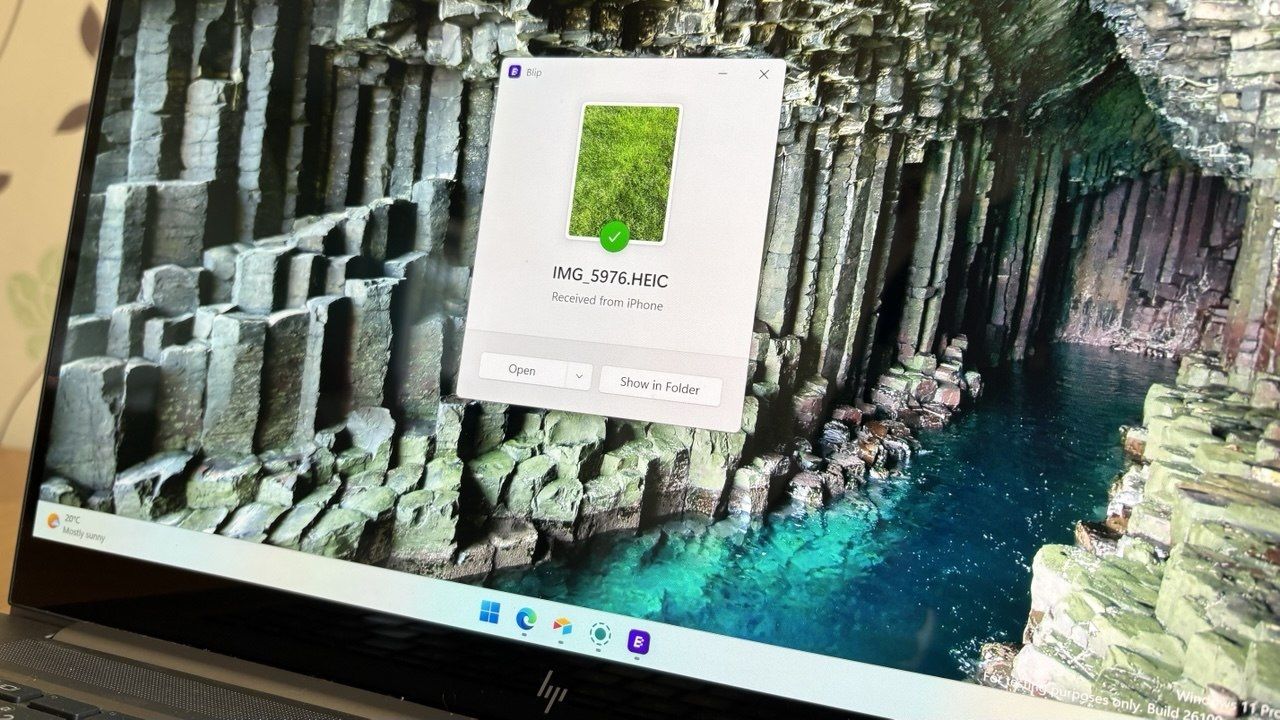
Blip is my top pick. It's easy to use, has an interface that feels familiar, and it's extremely fast. It's similar to AirDrop but without the Apple exclusivity.
Blip supports sending files and folders without any size limits (Blip's website says "99TB? Game on").
Not having to zip folders is a big plus, as is being able to send large photo files.
Blip is free for non-commercial use. If you're a business user or want priority speed, you can subscribe for $25 per user per month.
Signing up for Blip is easy and just requires entering your email and confirming the code you're sent.
Connecting an iPhone and a PC can be awkward unless you have the right apps. (Image credit: Future)
LocalSend works very well, but its structure has some pros and cons. Because it works through your network, it works without the internet. It's also incredibly fast, assuming your Wi-Fi network has quick speeds.
LocalSend doesn't require an account or logging in. Your devices from the network just appear within the app. You can mark devices as favorites to streamline sharing as well.
You can send files to a single recipient or multiple recipients as well, which makes LocalSend feel a bit more like AirDrop.
LocalSend is open-source, fully offline, and peer-to-peer, so it's a great choice for people who value privacy.
The obvious drawback is that LocalSend is for sending files locally. If you just need to send files at home or work when devices are on the same network, LocalSend provides a seamless experience.
OneDrive and iCloud
Blip and LocalSend are made for sharing files on demand. If you want to sync entire folders or all of your files, you can use apps like OneDrive or iCloud.
In my experience, these apps are much slower at syncing and sending files, but they're a great way to back up content.
Join us on Reddit at r/WindowsCentral to share your insights and discuss our latest news, reviews, and more.
A laptop screen displaying a Windows 11 desktop with a Blip file transfer pop-up window confirming a photo was received from an iPhone.
Blip feels natural and makes it easy to send and receive files between an iPhone and a PC.
Microsoft accidentally shipped the new OneDrive Photos app to millions of PCs recently. Microsoft EVP of Apps and Agents Jeff Teper explained that the app was shipped earlier than intended.We now have more details about the OneDrive Photos app, courtesy of the Microsoft 365 Roadmap. While the app was rolled out to PCs accidentally, Microsoft plans to release it in the future. When the app does ship (on purpose), there will be options to manage it or uninstall it.
Microsoft accidentally shipped the new OneDrive Photos app to millions of PCs recently. Microsoft EVP of Apps and Agents Jeff Teper explained that the app was shipped earlier than intended.
We now have more details about the OneDrive Photos app, courtesy of the Microsoft 365 Roadmap. While the app was rolled out to PCs accidentally, Microsoft plans to release it in the future. When the app does ship (on purpose), there will be options to manage it or uninstall it.
"OneDrive is adding administrative controls for the Photos experience on Windows. Organizations can manage whether users sign in with personal Microsoft accounts. These controls help IT teams align OneDrive Photos with their access, data governance, and device-management requirements."
That feature should start rolling out this month. Considering that the OneDrive Photos app was accidentally installed on some managed PCs that were unable to use the app, these administrative controls should be a welcome addition.
"OneDrive is giving people more control over their Windows experience by allowing them to uninstall the OneDrive Photos experience independently. Removing the Photos experience does not uninstall the OneDrive app, interrupt file sync, or delete photos and files. This provides a clear removal option for people who prefer to manage their photos with another app."
That feature is expected to roll out next month. As always, roadmap dates are estimates and subject to shift.
Those entries, which were first spotted by Neowin, were only added to the Microsoft 365 Roadmap after the accidental rollout and following backlash. We may see more details on the roadmap about OneDrive Photos soon.
The main question surrounding the OneDrive Photos app is why it needs to exist at all. Microsoft's Photos app for Windows already integrates with OneDrive. The OneDrive Photos app is a web-based experience that is less native and seemingly against the current goals Microsoft has set to improve its first-party apps.
Join us on Reddit at r/WindowsCentral to share your insights and discuss our latest news, reviews, and more.
Microsoft OneDrive logo with clouds and artificial intelligence imagery
Microsoft OneDrive logo with clouds and artificial intelligence imagery
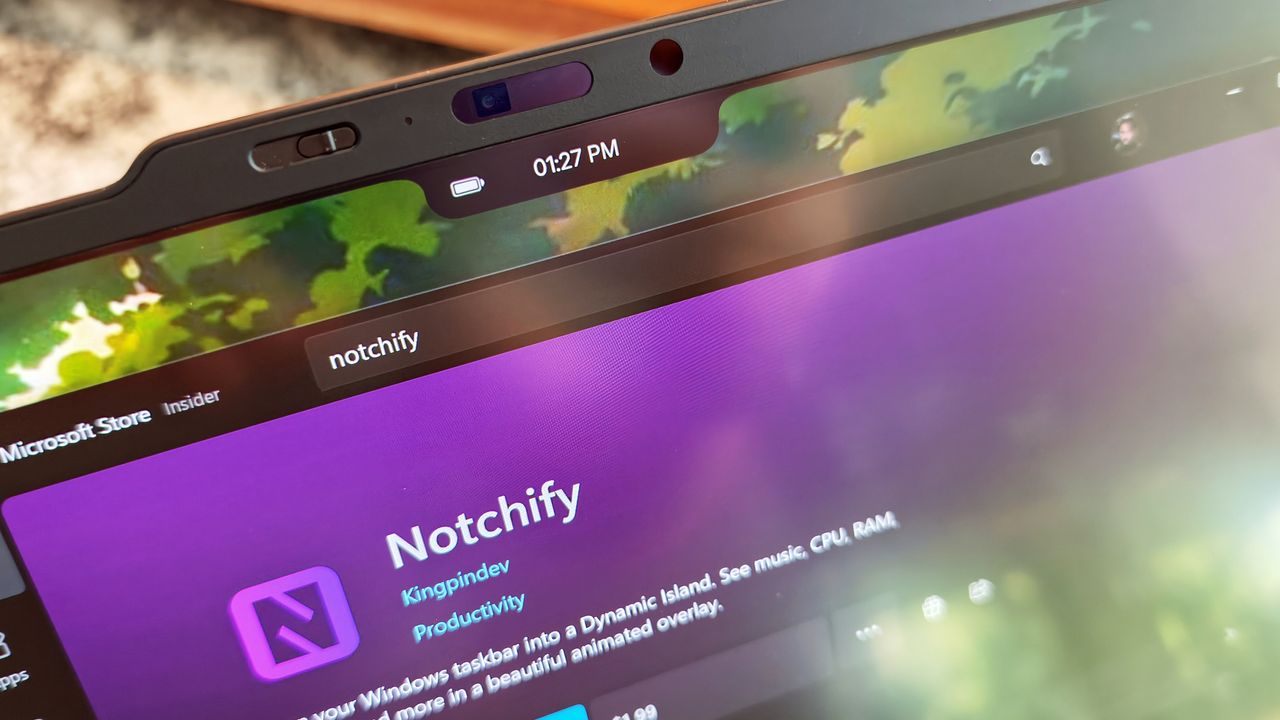
I’ll be honest: I’ve never liked Apple’s notch design. I find it intrusive, and the whole “Dynamic Island” thing always felt like a marketing trick to justify a hardware compromise. So when I saw Notchify pop up on Reddit, my first thought was, why would anyone want that on Windows?But curiosity won. I downloaded it from the Microsoft Store, tried the free trial, and within minutes I realized something—this indie app actually makes the concept work in a way that
I’ll be honest: I’ve never liked Apple’s notch design. I find it intrusive, and the whole “Dynamic Island” thing always felt like a marketing trick to justify a hardware compromise.
So when I saw Notchify pop up on Reddit, my first thought was, why would anyone want that on Windows?
That said, if you're a bit horrified at the idea, I mean, I totally get it. But hear me out.
What Notchify does
At its core, Notchify is pretty simple. The app creates a “fake” notch or “island” at the top of your screen. And yes, its functionality is what actually saves it. You can use it to display notifications, media playback controls, weather, battery, timers, microphone indicators, and more.
There's even a built-in clipboard for copied content and quick access.
You can see some of it in action in the above embedded video.
The settings are straightforward. You can toggle between Island (disconnected) and Notch (connected) modes, pick which monitor it appears on, and decide if it should launch at startup.
The Appearance tab lets you adjust the theme, blur, and popup behavior for volume or brightness changes. The Widgets section is where the fun begins, as you can mix and match small widgets like battery display, time, and microphone indicators, or go big with calendar, weather, and media playback.
The notch lives on your PC as "always on top," and when you mouse over it, it expands with whatever info you chose it to display. The animations are a bit janky, but it works.
It’s clean, modern, and surprisingly polished for an indie project. The dark theme looks great.
Why I ended up liking it (mostly)
Some of the settings and options for Notchify. (Image credit: Daniel Rubino)
I use a massive 52-inch Dell Ultrasharp monitor, and one of the downsides of that much screen real estate is that my eyes are constantly darting around for notifications, time, or playback controls.
Notchify fixes that by putting everything in one place.
I still don’t love the idea of a notch (it’s not my aesthetic), but I can’t deny how practical it is. Having a small, centralized hub for quick info saves me from scanning the corners of my display. It’s one of those things that quietly improves workflow without demanding attention.
And if you've listened to me on our podcast, you know my big beef with Windows 11 is how I can't adjust where notifications appear from, which seems dumb in 2026.
For anyone switching from macOS to Windows 11, Notchify might even make the transition easier. It brings a familiar visual cue while adding more flexibility than Apple’s version ever offered, and that's kinda cool.
Probably the most obvious issue is that Windows 11 doesn't "wrap" around the app, so when running apps full screen (like your web browser), you may end up blocking access to some features. And no, you can't move it around, which was a bit surprising.
The best part of this story isn’t just the app; it’s the community that helped shape it. On Reddit, user GuppyFarmer posted a detailed breakdown of Notchify’s CPU usage, pointing out that it was higher than expected. Instead of brushing it off, the developer responded, thanked them, and used the data to fix the issue.
That kind of interaction is what makes indie development fun. Constructive feedback, not just complaints, helps these projects grow. GuppyFarmer’s analysis gave the dev exactly what they needed to optimize performance, and the result is a smoother, more efficient app for everyone.
Too often, feedback online turns into negativity. Here, it turned into progress.
My takeaway
More options for theme and design in Notchify. (Image credit: Daniel Rubino)
The app costs $1.99 after the free trial, which feels completely fair for what it offers. It’s not bloated, it’s not subscription-based, and it’s updated based on real user input. That’s the kind of indie pricing model I’ll always support.
I still don’t want a notch on my laptop or desktop, but Notchify convinced me that the idea can be useful when done right. It’s a small, clever utility that adds genuine functionality to Windows, and maybe it'll inspire some other creations to solve some problems.
And hey, it proves what many of us already know: good ideas don’t have to come from big companies. Sometimes, a single developer with a Reddit post can create something that feels fresh and helpful.
If you’re curious, give the free trial a spin. You might find yourself liking it more than you expect.
Join us on Reddit at r/WindowsCentral to share your insights and discuss our latest news, reviews, and more.
Close-up of a laptop screen showing a black notch overlay with a battery icon and time display above the Microsoft Store page for the Notchify app.
My reverse notch on the Lenovo X1 Carbon, counter-matched by Notchify, is truly diabolic.
If you use uBlock Origin on Microsoft Edge, it's time to start looking at alternatives. Microsoft has shared a timeline for the transition away from Manifest Version 2 (MV2) extensions. That transition will end support for uBlock Origin on Edge, alongside a small group of other extensions.Microsoft aims to fully transition consumers away from MV2 extensions by the end of 2026. Some users will start seeing notices about the change this month (August 2026). Microso
If you use uBlock Origin on Microsoft Edge, it's time to start looking at alternatives. Microsoft has shared a timeline for the transition away from Manifest Version 2 (MV2) extensions. That transition will end support for uBlock Origin on Edge, alongside a small group of other extensions.
Microsoft aims to fully transition consumers away from MV2 extensions by the end of 2026. Some users will start seeing notices about the change this month (August 2026). Microsoft will then gradually turn off MV2 extensions by default over the coming months.
Enterprise users will be transitioned away from MV2 extensions in 2027.
It's not a surprise that MV2 support is being discontinued. In fact, the surprise is that we finally have a confirmed date for the end of support. Microsoft has had MV2 support on the chopping block for ages but had not committed to a firm cutoff date.
MV2 and its replacement Manifest Version 3 (MV3) are extension platforms that developers can build upon. There are technical differences between the two, the most notable is that MV3 limits the WebRequest API, which allows ad blockers to dynamically intercept and block network requests before they load.
Since Edge is built on Chromium, which is Google's open-source engine, Google pushing MV3 affects Microsoft Edge.
This shift to MV3 is not arbitrary; there are practical benefits to the switch. MV3 is more secure and provides better performance than MV2. Some believe the transition to MV3 is being pushed to give Google more control over ads on the web, though that is up for debate.
The end of MV2 support will affect several extensions, but the biggest one is uBlock Origin. I suspect few would care about the end of MV2 support if uBlock Origin were unaffected.
Microsoft states that 95% of the top MV2 extensions in the Edge Add-ons store have been moved to MV3. There are only 58 MV2-based extensions in the Edge Add-on Store at all. Only three of those MV2-based extensions do not have MV3-based equivalents available.
There is a version of uBlock Origin that works with MV3, though it's uBlock Origin Lite. That extension lacks some of the granular controls of the full version. It also works differently in the background, hiding most content rather than preventing items from loading.
Many people could replace uBlock Origin with uBlock Origin Lite without issue, but power users could struggle with the change. Some people plan to switch browsers before changing ad blockers.
Microsoft Outlook has a handful of changes in the works that will make it easier to stay on top of emails and events. Some of the upgrades, such as drag and drop support for rescheduling events, will change how you interact with Outlook, while others are smaller upgrades.All of the improvements are detailed on the Microsoft 365 Roadmap. I've taken five of the most exciting entries from that roadmap and gathered them in the chart below.FeatureDescriptionRollout St
Microsoft Outlook has a handful of changes in the works that will make it easier to stay on top of emails and events. Some of the upgrades, such as drag and drop support for rescheduling events, will change how you interact with Outlook, while others are smaller upgrades.
All of the improvements are detailed on the Microsoft 365 Roadmap. I've taken five of the most exciting entries from that roadmap and gathered them in the chart below.
Feature
Description
Rollout Start
Platform
Filter messages by events
You can now filter your messages for calendar invitations. Simply go to the filter and select Events from the drop down.
August 2026
Android and iOS
Copilot Chat pop-out for Outlook for Mac and iPad
Copilot Chat remains accessible within an Outlook app window but now can also be popped out to float over the main Outlook app window. Popping out Copilot Chat allows people to switch contexts or have more space for what they are working on in Outlook and control the space and form that Copilot Chat takes on screen. When you open Copilot chat and click the pop-out button, Copilot will open separately over the main Outlook window.
August 2026
iPad and Mac
Drag and drop
You can now reschedule events by dragging them to a new time slot in your calendar. This feature is available in day and multi day views.
August 2026
Android and iOS
Insert signature image from OneDrive
Users can now insert images into their email signature directly from OneDrive, in addition to the device photo library.
August 2026
Android and iOS
All day events to show up more clearly in the Mail module calendar preview
We're making it easier to tell when receiving meeting invites that conflict with scheduled Out of Office time or Busy All Day events, on Outlook Web and Outlook for Windows.
August 2026
Desktop and web
Being able to filter messages to only show those with calendar invitations will save me a lot of time. I get a lot of calendar invites from my wife to coordinate our schedules, but I also get a lot of emails from my wife about other things.
After finding those events, I'll be able to move them around in Outlook by dragging and dropping them. Since we have a young child, we often need to move things to different times of the day to align with naptime. I wish drag and drop support was on the way to the web version of Outlook as well, but the roadmap entry only mentions iOS and Android.
Which features would you like to see added to Outlook? Are there any improvements on the way that you're especially excited about? Let us know in the comments!
Join us on Reddit at r/WindowsCentral to share your insights and discuss our latest news, reviews, and more.
In most modern homes, people rarely depend on a single shared computer anymore. Instead, most families use a combination of Windows 11 laptops, macOS devices, Android phones, iPhones, tablets, smart TVs, and cloud services, all connected through the same home network. The problem is that one weak device can compromise the entire network.As digital life spreads across more devices and services, security gaps become easier to overlook. Attackers increasingly target
In most modern homes, people rarely depend on a single shared computer anymore. Instead, most families use a combination of Windows 11 laptops, macOS devices, Android phones, iPhones, tablets, smart TVs, and cloud services, all connected through the same home network. The problem is that one weak device can compromise the entire network.
As digital life spreads across more devices and services, security gaps become easier to overlook. Attackers increasingly target the weakest link, often a device without proper protection, outdated software, or a misconfigured app.
TL;DR
The risk: Users today rely on multiple devices, accounts, and platforms.
The solution: All-in-one protection makes digital safety easy by eliminating coverage gaps between different operating systems.
Bitdefender Total Security: Provides a seamless multi-device coverage starting point for Windows 11, macOS, iOS, and Android.
Bitdefender Premium Security: Includes integrated privacy tools, such as an unlimited VPN, to remove data caps and protect public connections.
Bitdefender Ultimate Security: Offers identity-first digital protection with identity theft insurance and real-time monitoring.
Fragmented security increases household risk because attackers exploit the weakest device
Using different security solutions across devices creates an unbalanced level of protection. A Windows 11 laptop might have an antivirus installed, while a child's Android tablet might not, and this inconsistency can create openings that malicious individuals can exploit.
Can one vulnerable device really compromise the whole home?
Yes. Modern cyberattacks often use lateral movement, meaning malware on one device can scan the network for others. If one device (laptop, tablet, or phone) is compromised, it can expose other devices in the network.
According to the 2025 Verizon Data Breach Investigations Report, around 60 percent of breaches involve the human element, including non‑malicious actions such as mistakes, misconfigurations, or falling for phishing scams.
When each device in the home uses a different security solution, the chances of mistakes increase.
Why all‑in‑one protection solves this problem
A single security solution reduces that configuration friction. Instead of juggling different apps, settings, and alerts, every device follows the same protection solution. This reduces the number of decisions families must make, and fewer decisions mean fewer gaps.
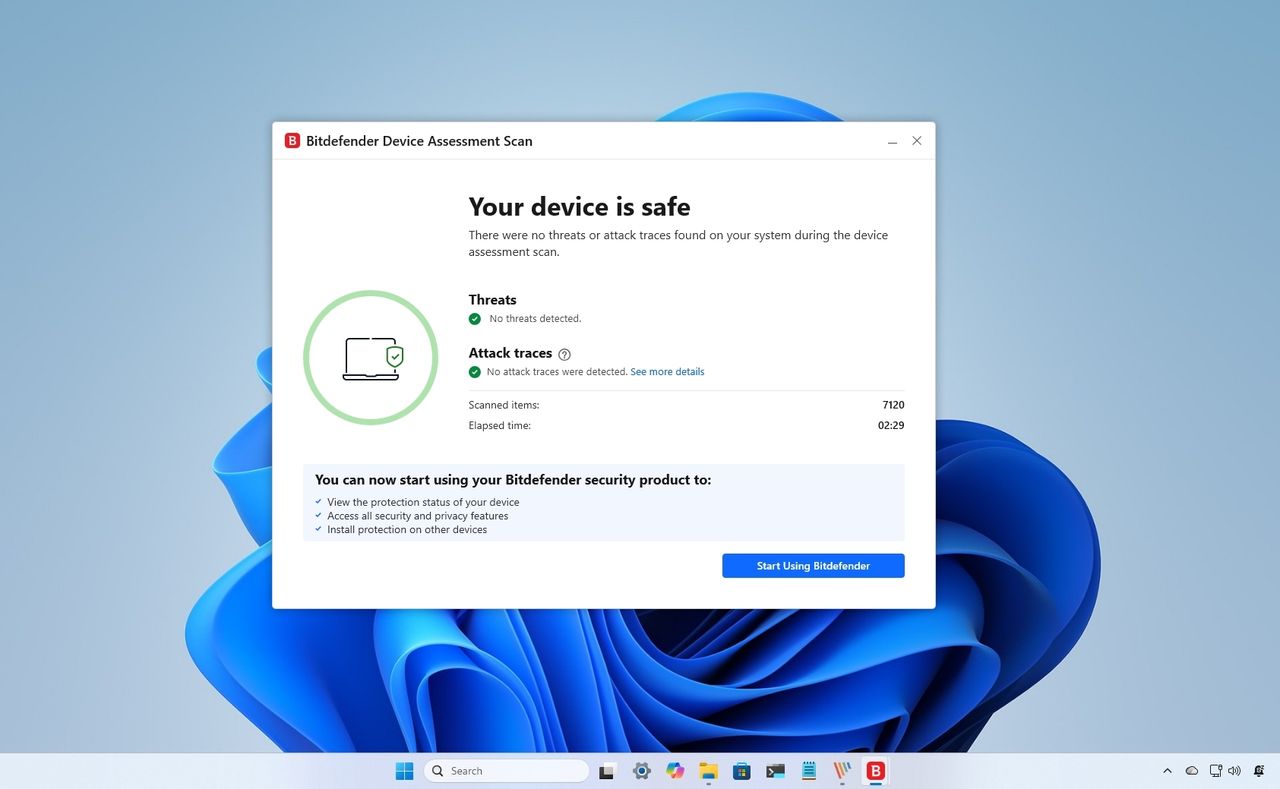
(Image credit: Bitdefender )
Why is an all-in-one suite better than several specialized apps?
Because it removes configuration friction, using a unified protection means all your devices use the same security system, so you don't have to worry about differences between Android and Windows 11. Everything is built on a single platform, helping eliminate potential weak points that attackers could exploit.
Bitdefender Total Security provides seamless multi‑device coverage
A single defense system is the appropriate solution for busy homes because it stops the manual labor required to stay safe. Bitdefender Total Security is designed as a single protection layer for mixed devices in the home. It brings Windows 11, macOS, iOS, and Android under one unified dashboard.
(Image credit: Future)
Key features of the Total Security tier:
Central dashboard: It monitors the security status of every family device from a single location.
Real‑time protection: Uses advanced threat detection to block malware, ransomware, and zero‑day threats.
Integrated privacy tools: It includes webcam and microphone protection to alert you when apps attempt unauthorized access.
Bitdefender consistently ranks at the top of independent laboratory tests. In the latest AV‑Comparatives Real‑World Protection Test, Bitdefender achieved a 99.5 percent protection rate with one of the lowest false‑positive scores.
Users can start with Antivirus Plus for essential protection on a single device before moving to full-suite plans.
Bitdefender Premium Security removes common limitations like VPN data caps
While the standard "Total Security" suite is robust, the jump to Premium Security is where all-in-one protection is the more practical choice because it removes common limitations, such as VPN data caps, that often lead users to avoid certain security features altogether.
(Image credit: Future)
Is upgrading to Bitdefender Premium Security worth it?
Yes, for most homes, upgrading to Bitdefender Premium Security is worth it, especially if you regularly use public Wi-Fi, travel often, or work remotely. An unlimited VPN adds a layer of protection by encrypting your internet traffic without the hassle of data limits.
Why is an integrated password manager helpful?
Integration creates an easier-to-manage experience. Bitdefender's Password Manager is great for shared households because it helps family members generate strong, unique passwords, as well as sync them across devices and reduce password reuse, a major cause of account compromise.
Bitdefender Ultimate Security adds identity‑first protection for modern home
Device protection still matters, but these days your personal data is just as exposed. Families share devices, accounts, and the same wireless network, which creates more chances for information to slip through the cracks. Bitdefender Ultimate Security focuses on that risk, adding tools aimed at protecting financial and personal data, not just the devices themselves.
It offers up to $2 million in identity theft insurance.
Access to restoration specialists.
What happens if your identity is stolen?
Bitdefender's specialists help guide you through restoring your identity, credit, and accounts, a process that can otherwise take a long time.
Bitdefender plan comparison
Feature
Total Security
Premium Security
Ultimate Security
Device Protection
Up to 5 devices
Up to 5 devices
Up to 5 devices
Unlimited VPN
No (200MB/day)
Yes
Yes
Password Manager
Yes
Yes
Yes
Identity Monitoring
No
No
Yes
ID Theft Insurance
No
No
Up to $2M
FAQs about common household security questions
Do I need an antivirus solution on every device?
Yes. Even devices that don't traditionally get viruses can be used as entry points for attackers.
Can an infected device compromise other devices on my network?
Yes. Some malware is capable of scanning your home network and attempting to access other devices.
Is an all‑in‑one suite better than using separate apps?
Yes, for most homes, the unified protection reduces the chances of misconfigurations and improves management.
Is the VPN upgrade worth it?
If you usually connect to public Wi‑Fi or travel, an unlimited Bitdefender Premium VPN is a worthy upgrade.
Bottom line
A security setup is only as good as how well it’s maintained across your devices. When protection is split between different apps and services, it's easy for something to get missed. An all-in-one approach reduces that complexity by bringing device security, account protection, and privacy tools into one place.
Bitdefender brings device protection, privacy tools, and identity monitoring under one system, reducing the complexity that usually causes security gaps at home.
For larger households managing multiple users and devices, Family Plans provide centralized protection and easier subscription management across the entire home network.
Microsoft Edge has a lot of built-in features that go unnoticed. Read Aloud has been part of Edge for a long time, and I use it all the time to review articles and listen to content. But after weeks of testing, I understand how Edge's Read Aloud feature stacks up against a dedicated tool for text-to-speech.Speechify launched a Windows app earlier this year that adds real-time text-to-speech and voice typing to PCs. There was already a Speechify web extension, whi
Microsoft Edge has a lot of built-in features that go unnoticed. Read Aloud has been part of Edge for a long time, and I use it all the time to review articles and listen to content. But after weeks of testing, I understand how Edge's Read Aloud feature stacks up against a dedicated tool for text-to-speech.
Speechify launched a Windows app earlier this year that adds real-time text-to-speech and voice typing to PCs. There was already a Speechify web extension, which is what I used for testing here. Speechify shared Premium access with me to help me assess their app and extension, so I've had several months to get used to them and compare them to alternatives.
Interestingly, Speechify and Read Aloud in Edge excelled in different areas.
Accuracy and cadence
Speechify (left) offers smoother natural voices and page navigation, but Edge's built-in Read Aloud toolbar (right) handles basic text-to-speech for free. (Image credit: Future)
Read Aloud supports a large library of voices. These are fun to play around with since there are quite a few English options sporting different accents.
All of the voices marked as "Natural" in Read Aloud sound fluid and are easy to understand. Occasionally, the feature will pause for a moment as it decides where to jump to next on a page (more on that below).
Read Aloud finds text well and presents pages using voice, allowing you to multitask or absorb content through both reading and listening.
While Edge's voices sound fluid, Speechify's voices sound more natural. They sound as if a voice actor is in a booth reading to you. There's a bit more bass in each voice and more depth than what's in Edge.
Speechify has several celebrity voices, which to be honest I'm not too fussed about. I don't need robot Gwyneth Paltrow to read me the latest Xbox news, but it's an option if you'd like her to.
Voices in Speechify are labeled based on their key characteristic, such as "Velvety" or "Easygoing." The "Resonant" Dominic voice would be a great choice to read the next Sarah J. Maas novel, but I don't think he's the best option for tech news.
Because Speechify's voices are clear and natural-sounding, you can play them at faster speeds before they sound ridiculous. I'm able to play Speechify voices at over 2.2x speed and still understand them. Edge's Read Aloud voices max out at around 2x speed before they're difficult to understand.
Dealing with the modern web
The modern web is full of inserts, page breaks, ads, and other components. When you read an article online, you rarely see a large block of uninterrupted text. In fact, my editor would tell me off if I published a piece of just text.
In order for articles to be visually engaging, publishers place block quotes, embedded posts, videos, and other items. When you read an article, you scan over certain content without thinking. If you spend a lot of time on the web, you've learned what should be read as part of an article, such as a block quote, and what is separate, like a list of related pieces.
Microsoft Edge's Read Aloud feature has not learned the same lessons. It will jarringly jump between the main text of a piece and a "You May Like" section.
In contrast, Speechify sticks with the main text of an article and hops over inserts that are off-topic. In my testing, Speechify correctly identifies the content I'd like read, such as block quotes, but bypasses things I'd want to circle back to later and click.
Both Read Aloud in Edge and Speechify hopped past ads in my experience, which is nice.
This app adds voice typing and text-to-speech to Windows. It can read PDFs, web pages, or documents and can be used to convert spoken words to text with correct punctuation.
A subscription also gets you more features within the web extension.
Note that the free version of the Speechify app is limited to slower listening speeds, fewer voices, and text-to-speech (voice typing requires Premium). Voice typing is free within the extension.View Deal
Is Edge Read Aloud better than Speechify?
Speechify works well and sounds natural, but it's difficult to justify its cost when Edge can do much of the same for free. (Image credit: Speechify | Edited with Gemini)
Edge's Read Aloud feature is surprisingly solid for a free tool that's built into Microsoft's browser. If you only care about listening to the web, it's the better choice for most people.
Speechify is not worth its subscription cost if you only plan to use it to listen to articles out loud. A large portion of Speechify's value comes from its dictation features.
Don't get me wrong, Speechify is very good at reading websites and documents out loud. I prefer how it handles ads, text blocks inserted into pieces, and other website components. I also prefer the voices in Speechify.
But Edge's built-in Read Aloud feature works well and is free. Paying $29 per month is a large investment to listen to articles.
If you need to dictate text and listen to articles, I'd suggest trying Speechify.
Join us on Reddit at r/WindowsCentral to share your insights and discuss our latest news, reviews, and more.
Microsoft Edge Vertical Tabs
Microsoft Edge has a built in Read Aloud feature that can read articles.
Windows power users, PC builders, and admins have a new tool at their disposal that makes it easy to restore a PC after reinstalling Windows or setting up a new PC. The app, called Endstate, streamlines the process of reinstalling applications and can also restore your settings and preferences within supported apps.Endstate is a free app designed for Windows, though Linux and macOS support are on the way. You can grab Endstate through GitHub.I spoke with the deve
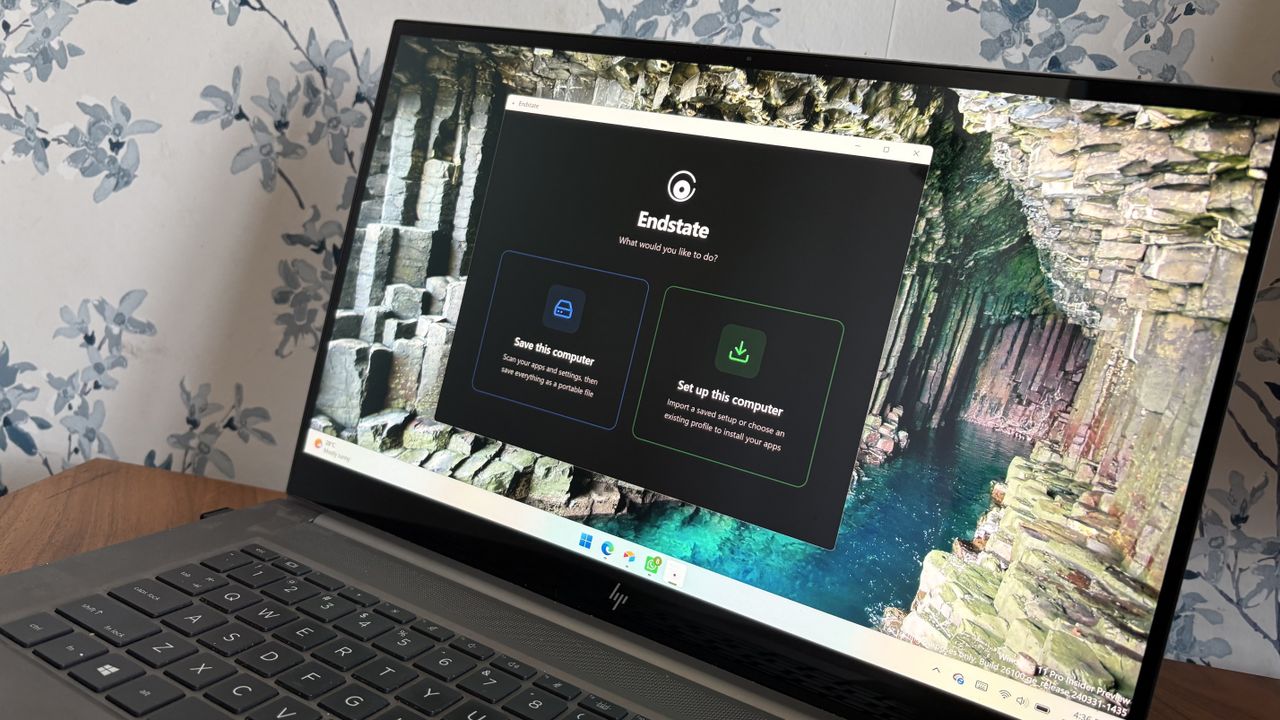
Windows power users, PC builders, and admins have a new tool at their disposal that makes it easy to restore a PC after reinstalling Windows or setting up a new PC. The app, called Endstate, streamlines the process of reinstalling applications and can also restore your settings and preferences within supported apps.
Endstate is a free app designed for Windows, though Linux and macOS support are on the way. You can grab Endstate through GitHub.
I spoke with the developer of Endstate to better understand where the app is now and where it could evolve in the future.
Endstate uses WinGet and Chocolatey, which allow it to install a massive library of applications available across those package managers. But the real standout feature is that Endstate can capture the settings of your app into a zip file to make restoration simple.
When you reinstall Windows or set up a new PC, you have to install your required apps as well. A package manager like Chocolatey or WinGet can streamline that process, but the restored applications will be set to their factory defaults. All the toggles and settings you spent time customizing are reset to their base state.
Endstate supports settings restoration on 357 apps right now. Among those supported are some big-name apps such as MSI Afterburner, Adobe Lightroom Classic, VS Code, Windows Terminal, PowerToys, Git, Obsidian, OBS Studio, Notepad++ and ShareX.
Settings restoration is separate from app restoration. If an app is available through Chocolatey or WinGet but does not support settings restore, Endstate can still install the app.
Restoring settings is also done on a per-app basis.
You can use Endstate without an account and the app works offline.
Windows vs iOS and Android
Despite any Apple marketing campaigns about how many apps there are on iOS, Windows trounces all other operating systems when it comes to app selection. That is in part because everything from ancient programs to modern web apps works on Windows 11.
Because of the legacy support on Windows 11, we don't get all the benefits of modern applications on PCs. For example, any iOS or Android user may have read this article and been confused because saving and restoring app settings is commonplace on smartphones.
But on Windows 11, Endstate fills a notable gap. With only 357 apps that support settings restoration, Endstate has a ways to go before matching the native experience on iOS and Android, but it's still nice to see. I hope more app developers embrace Endstate and make it possible to save and restore settings.
Join us on Reddit at r/WindowsCentral to share your insights and discuss our latest news, reviews, and more.
An HP laptop displaying the Endstate app on Windows 11 with options to "Save this computer" or "Set up this computer."
An HP laptop displaying the Endstate app on Windows 11 with options to "Save this computer" or "Set up this computer."
A new clipboard manager for Windows 11 is here, and it's better than Microsoft's in a few key ways. "Edge Drop" is still in its early stages of development, but the current preview build is very promising.Edge Drop is a clipboard manager that can also be used for some light file management. It stays tucked away on the left side of your screen until you swipe your mouse over it or use a keyboard shortcut (Alt + C).The app supports text, images, and several file ty
A new clipboard manager for Windows 11 is here, and it's better than Microsoft's in a few key ways. "Edge Drop" is still in its early stages of development, but the current preview build is very promising.
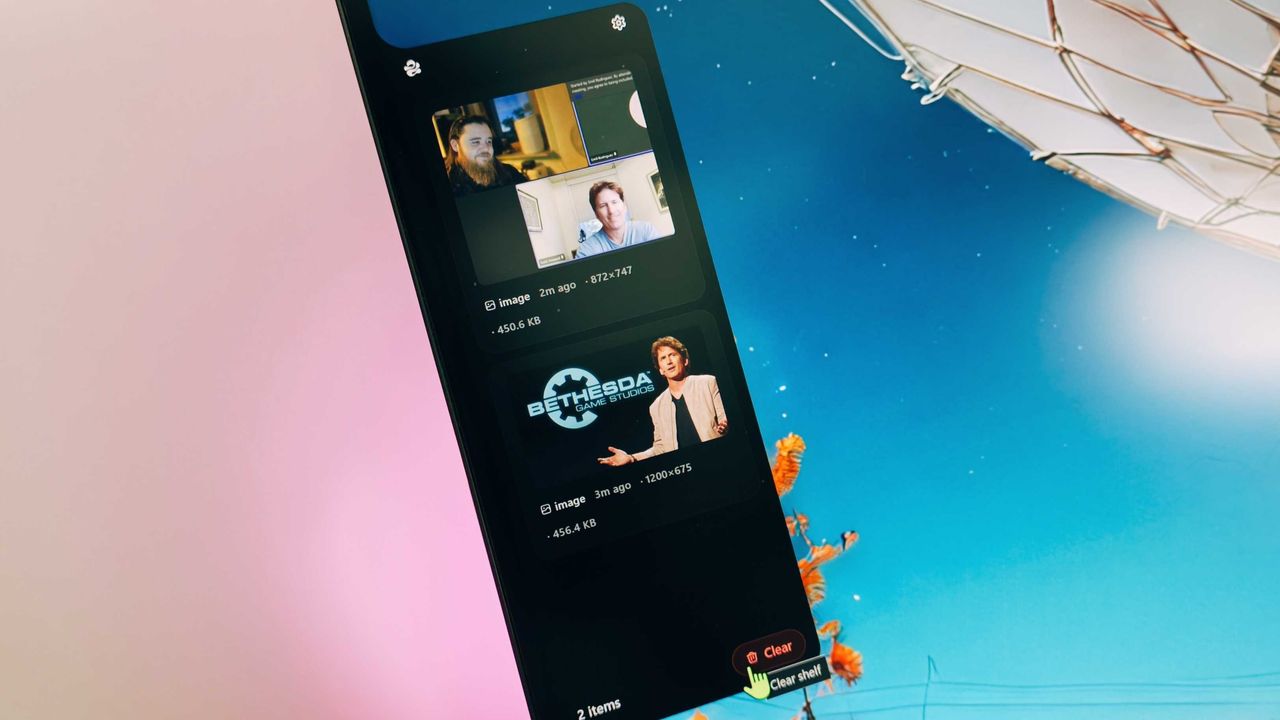
Edge Drop is a clipboard manager that can also be used for some light file management. It stays tucked away on the left side of your screen until you swipe your mouse over it or use a keyboard shortcut (Alt + C).
The app supports text, images, and several file types. Any item you copy on Windows 11 is added to Edge Drop by default. You can also drag items into Edge Drop.
Drag and drop functionality makes it easy to grab a few files, place them in Edge Drop, and then paste them somewhere else.
Edge Drop supports stacking content together, which I find useful for organizing projects. I'd love to see stacks work with different content types, such as text and images.
As a quick note, I wouldn't get used to the name of the app. Microsoft already has a feature named "Edge Drop." Even though that browser feature is being retired, I suspect Microsoft will want to protect the name.
Windows 11 Clipboard vs Edge Drop
Windows 11's Clipboard can be summoned with a shortcut and supports pinning items. (Image credit: Mauro Huculak)
Windows 11 already has a robust, built-in clipboard history that you can summon with Win + V. It supports pinning items, syncing across devices, and has been an integral part of my workflow for years. Even with Edge Drop installed, I'm not abandoning it.
Where Windows 11's clipboard is heavily keyboard-driven, Edge Drop is more built for the mouse. If you're working on a creative project, dragging and dropping items into organized stacks feels completely natural.
It reminds me of when I reviewed the HyperSpace TrackPad Pro (which, sadly, was canceled). Using that trackpad shifted my workflow; editing video with it felt entirely different than navigating a webpage. It didn't replace my mouse, but it became a perfect companion tool.
I feel the same way about Edge Drop. It’s a convenient, mouse-oriented clipboard manager that’s always just a gesture away, and it has earned a permanent spot right alongside Windows 11's default clipboard.
Join us on Reddit at r/WindowsCentral to share your insights and discuss our latest news, reviews, and more.
The Edge Drop app interface displayed on a monitor, showing a list of shared images and a cursor hovering over the "Clear" button.
Edge Drop is a third-party clipboard manager for Windows 11 that tucks away on the side of your screen.

 Connexion