Windows chief Pavan Davuluri has posted an article on X today that outlines the journey Microsoft has taken so far to fix and improve Windows 11. Since March, the company has been laser focused on addressing Windows 11's biggest issues, delivering many new features and changes that are designed to improve the reputation and experiences around Windows.While that work is still ongoing, Davuluri has now outlined four new areas of focus that Microsoft will be working
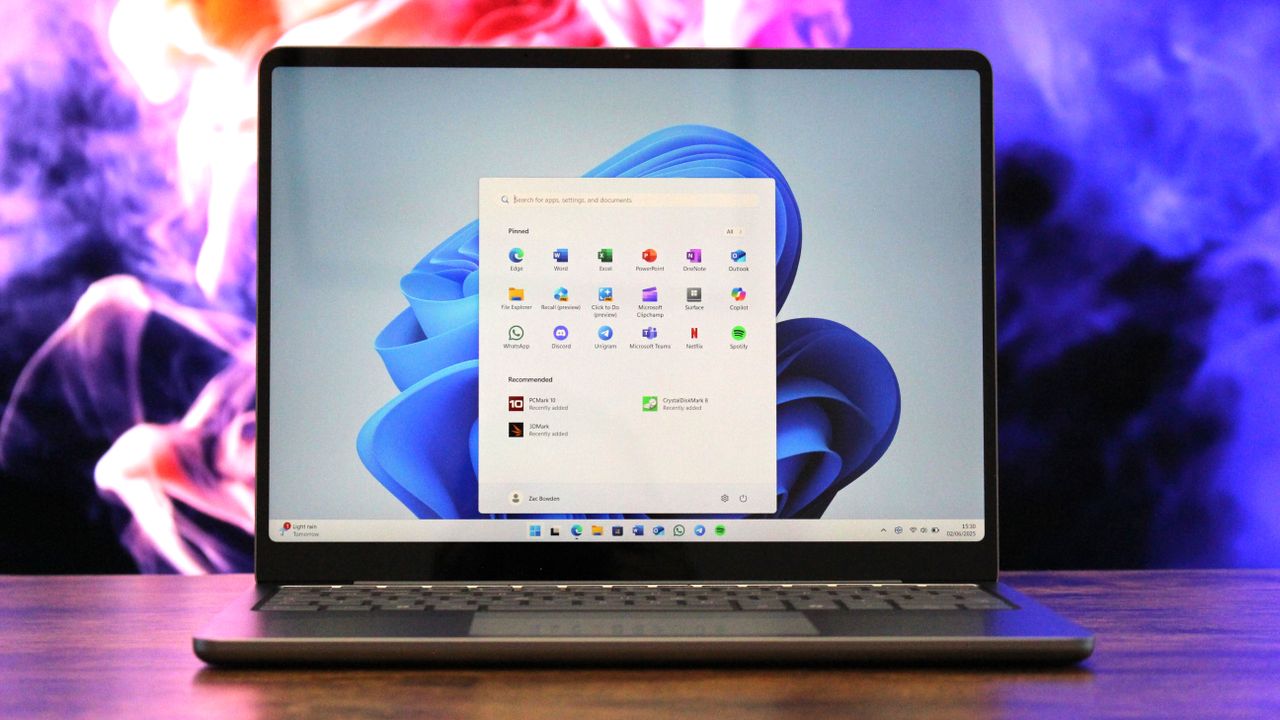
Windows chief Pavan Davuluri has posted an article on X today that outlines the journey Microsoft has taken so far to fix and improve Windows 11. Since March, the company has been laser focused on addressing Windows 11's biggest issues, delivering many new features and changes that are designed to improve the reputation and experiences around Windows.
While that work is still ongoing, Davuluri has now outlined four new areas of focus that Microsoft will be working on for Windows 11 between now and the end of the year:
Onboarding and setup. Delivering a faster and more efficient out-of-box experience.
Memory optimization for 8GB and above. Reducing Windows memory footprint to deliver a fast and responsive Windows experience across the PCs customers use every day.
Family. Providing a faster set up and making it easier for families to access useful parental controls.
Voice. Making voice more natural and fluid to interact across the apps you use every day.
Microsoft has confirmed that it's planning to improve Windows 11 so that it runs better on PCs with just 8GB of RAM. MacBook Neo took the world by storm earlier this year, and while Windows OEMs have since stepped up to offer better value for money, Windows itself is still quite heavy on these limited memory devices.
The company is now working to reduce Windows 11's memory footprint, ensuring that the OS feels fast and responsive even on 8GB RAM. It's yet to dive into how it's planning to make these changes, but it's likely related to how the company is moving more areas of the Windows UI to WinUI, which is lighter than WebView.
"We're going to take everything we've learned since March and keep listening and closing the loop on your feedback. The signal from you is clear: keep going. We intend to," says Davuluri.
Additionally, Microsoft has confirmed that it's rethinking the Windows out of box experience, with a new faster and more efficient set up experience in the works that will make booting up a new PC for the first time seamless and straight forward.
The other two areas of focus are Family and Voice. The company says it's working to deliver new Family Safety features across the OS, including enhanced parental control setup and more.
Voice is the final area of focus. Microsoft is on record as stating the future of computing will be one that is multi-modal, with voice acting as a primary input method alongside the keyboard and mouse. The company intends to make voice input more natural and fluid across the OS and apps you use.
Microsoft is clearly very proud of the work it has done so far this year to fix Windows 11. Compared to late last year, Windows 11 is in a very different spot. The company has delivered genuinely meaningful improvements and changes that are already impacting the OS for the better, and it sounds like there's more to come soon.
Join us on Reddit at r/WindowsCentral to share your insights and discuss our latest news, reviews, and more.
Microsoft is working on a major overhaul to the context menu system on Windows 11 that is designed to fix performance and reliability issues by allowing users to customize what appears within the right-click menu across the system. The company is also working on a new compact menu design that will be faster to open and interact with.One of Windows 11's more frustrating problems currently is how cluttered the modern context menus have become. Since Windows 11's de
Microsoft is working on a major overhaul to the context menu system on Windows 11 that is designed to fix performance and reliability issues by allowing users to customize what appears within the right-click menu across the system. The company is also working on a new compact menu design that will be faster to open and interact with.
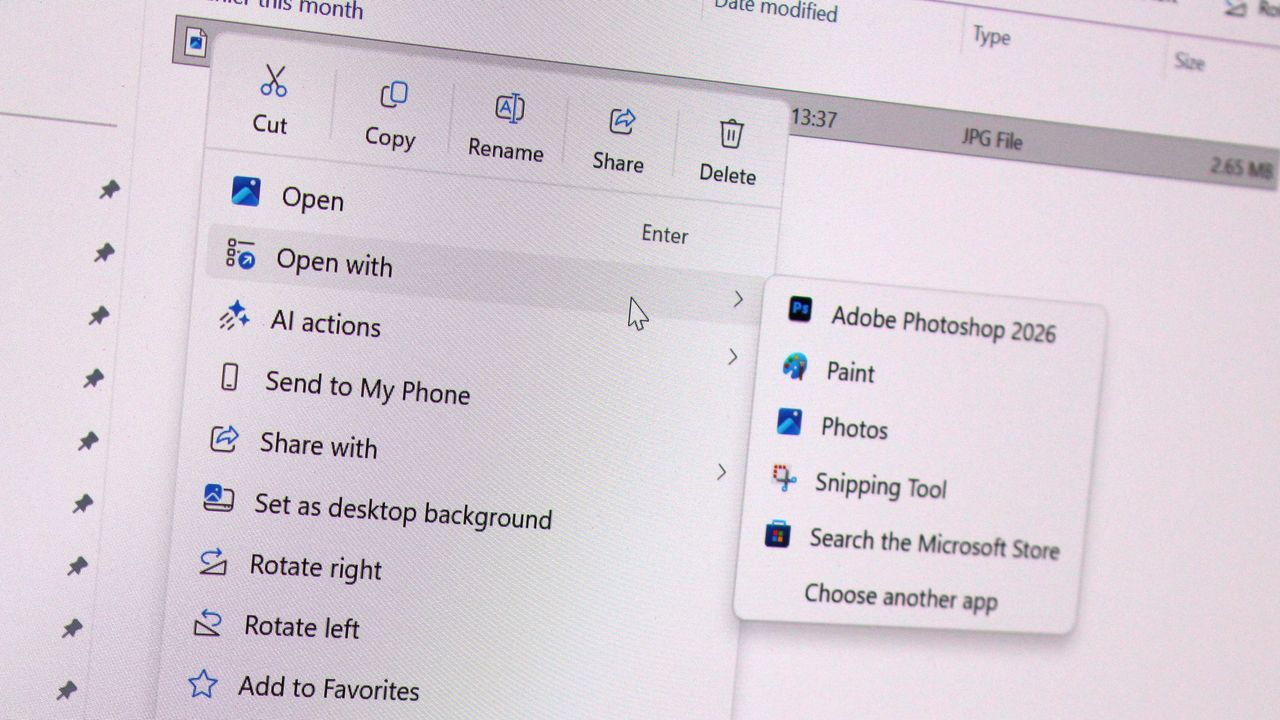
One of Windows 11's more frustrating problems currently is how cluttered the modern context menus have become. Since Windows 11's debut, context menus have become bloated and overburdened by apps and actions from both Microsoft and third-party developers, which can add themselves into the context menu without user input.
This has resulted in the context menu being very slow to initiate, often taking a second or two to appear when the user right-clicks in File Explorer on a system with many apps installed and actions available. According to sources familiar with Microsoft's plans, the company is working on a new compact context menu design to fix this, that prioritizes the most common actions above everything else.
This new compact menu will be much faster and more reliable, as it foregoes needing to load in all the third-party actions that slow it down currently. Additionally, at the Windows Insider Meetup in London, Microsoft showed me a new context menu customization feature coming soon that will let users configure what apps and actions appear in the right-click menu.
The option to customize the context menu will be added. (mockup) (Image credit: Windows Central)
Users will be able to show and hide actions and apps, as well as change the order in which these actions and apps show within the right-click menu. The menu will include a new "customize" option at the very bottom which can be accessed at any point to begin changing the menu options.
These changes are part of Microsoft's larger effort to fix Windows 11's biggest problems and issues under the Windows K2 initiative, which has been ongoing since last year. The company has confirmed plans to move more areas of the Windows system over to WinUI for consistency and performance reasons, with areas like File Explorer file properties and the Start menu getting the WinUI treatment soon.
Context menus are already powered by WinUI, and these new improvements that are currently in the works are designed to speed up the menus so that they are instantly responsive whenever you right-click within File Explorer, the desktop, or other native Windows UI interfaces.
It's unclear when these context menu updates are set to be announced, but the demo I saw a few weeks back was real working code and relatively polished, so I suspect we'll see an official announcement about these changes in the near future. I expect Microsoft is hoping to get these improvements out the door before the end of the year.
Join us on Reddit at r/WindowsCentral to share your insights and discuss our latest news, reviews, and more.
Windows 11 context menu
Cluttered context menus will soon be a thing of the past.
Ever since Microsoft threw in the towel with Surface Duo, I've been what I call "smartphone homeless." Well, technically that era of my life began with the death of Windows Phone in 2017, flip flopping between different iPhone's and Android's until I found my new forever home with the Surface Duo in 2020.That new forever home was very short lived. Between 2020 and 2023, I daily drove both the Surface Duo and Surface Duo 2 for the lifetime of those devices. I was
Ever since Microsoft threw in the towel with Surface Duo, I've been what I call "smartphone homeless." Well, technically that era of my life began with the death of Windows Phone in 2017, flip flopping between different iPhone's and Android's until I found my new forever home with the Surface Duo in 2020.
That new forever home was very short lived. Between 2020 and 2023, I daily drove both the Surface Duo and Surface Duo 2 for the lifetime of those devices. I was happy, content, and excited for where this form factor could lead should Microsoft continue developing it.
Of course, Microsoft didn't feel the same way, and the Surface Duo was put to rest not long after the Surface Duo 2 shipped. I loved the Surface Duo for a myriad of reasons, but the main one was its shape and size. I loved how squat and wide the device was, when being used in single-screen and dual-screen mode.
It was unique and different that it turned heads in public. To this day, I have never had more strangers come up to me in public to ask what phone model I was using. The Surface Duo was a conversation starter, but it wasn't just the novelty that I loved. It was genuinely useful, being easier to type on in single-screen mode compared to slab phone, and better for multitasking when in dual-screen.
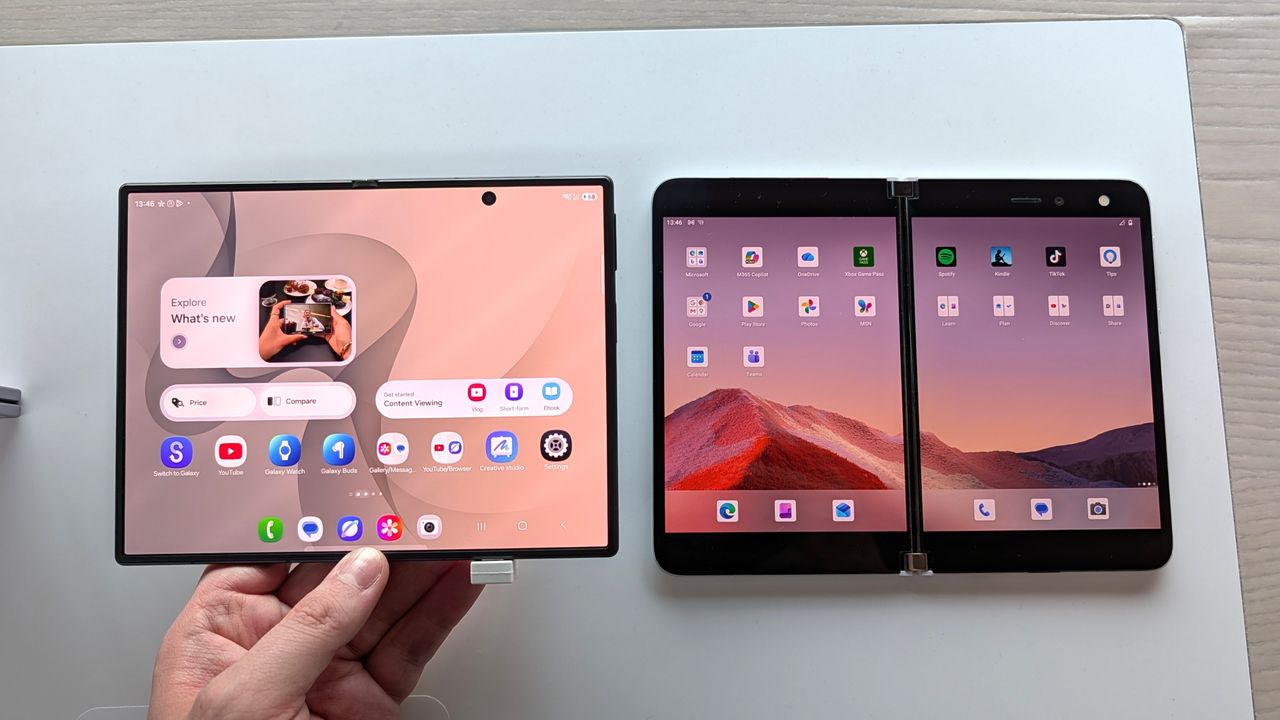
Both screens are similar, but the Galaxy Z Fold 8's is a tiny bit narrower and taller. (Image credit: Zac Bowden / Windows Central)
So, when Samsung unveiled the Galaxy Z Fold 8 last week, I was instantly intrigued based on its shape and size alone. It's the first westerly available short but wide smartphone since the Surface Duo, and although it's not dual-screen device with a 360-degree hinge, this is the closest thing to a Surface Duo 3 we're ever going to get.
Taking a look at their specs, it's immediately evident that both share similarities in their sizing. While the Galaxy Z Fold 8 is technically smaller, it's only smaller because the Surface Duo's bezels are so large. If you just compare screen sizes, they are very similar. The Surface Duo's display is 5.6-inches, and the Galaxy Z Fold 8 is 5.5 inches.
Both are similar in width when in folded position, which means typing on both feels identical when in use as a smartphone. It also means apps have more room to spread out, with text and images displaying more content across a single line. When opened up, the Surface Duo's dual-displays are overall bigger, but the Galaxy Z Fold 8's aspect ratio is preferred.
Spec
Microsoft Surface Duo
Samsung Galaxy Z Fold 8
Form Factor
Dual dual-screen displays joined by a 360° physical hinge
Flexible single inner screen with an external cover screen
Unfolded Dimensions
145.2 × 186.9 × 4.8 mm
123.9 × 161.4 × 4.5 mm
Folded Dimensions
145.2 × 93.3 × 9.9 mm
123.9 × 81.9 × 9.7 mm
Weight
250 g
201 g
Main / Inner Display
8.1" dual display (3:2 total ratio, 2700 × 1800) split by a physical hinge seam
Although I could see the similarities on paper, I had to get my hands on a Galaxy Z Fold 8 just to make sure. Luckily for me, I have a Samsung store nearby, so I popped in and checked it out. To say I didn't immediately fall in love would be lying. It felt like home. The short but wide aspect ratio, the almost creaseless folding screen on the inside, and thin bezels all around, it just all comes together so perfectly.
Side by side, it makes the Surface Duo look like a prototype with its thick bezels and gap between the screens. I've always said the Surface Duo is beautiful in its own special way, but I think the Galaxy Z Fold 8 finally dethrones it from a pure aesthetics perspective.
But I could immediately tell that the aspect ratio and size of the Galaxy Z Fold 8 was right. It feels just like a Surface Duo in both folded and unfolded postures, and typing on both doesn't give my thumbs the cramps after a few minutes. Apps feel like they have more room to breath across both, and the entire OS experience is just nicer when the screens are this wide.
The typing experience feels very roomy across both. (Image credit: Zac Bowden / Windows Central)
The one area that the Galaxy Z Fold 8 still fails to beat the Surface Duo on however is multitasking. Yes, the Galaxy Z Fold 8 can multitask and when set up by the user, it's very powerful. However, the Surface Duo was special because it made multitasking automatic.
You never think about multitasking on Surface Duo. It just happens. The device dynamically adjusts and places apps and popups on either screen where it makes the most sense. I never multitask on normal foldables, but I was running two apps side by side all the time on Surface Duo, because it was automatic.
The Galaxy Z Fold 8 still requires you to manually initiate multitasking, which means I rarely if ever do it. On the Surface Duo, if you tap a link in a group chat in one app, it'll open your browser on the other half so that you can still see the group chat in the app you were just using. Galaxy Z Fold 8 doesn't do that.
The Duo is only bigger because of its bezels. (Image credit: Zac Bowden / Windows Central)
It would be awesome if Samsung could add an option in OneUI that forces the OS to act more like Surface Duo, where multitasking is automated by the device. Unfortunately, that's not a thing at current, and so multitasking is still something I'm probably not going to do much of on the Galaxy Z Fold 8.
Outside of that minor disappointment, I think the Galaxy Z Fold 8 is a near perfect replacement for my Surface Duo needs. It has better cameras, and it's SO much lighter than the Duo. And although it doesn't support pen, I wasn't much a pen user on the Surface Duo either and so that's not a problem for me.
I will miss the novelty of a 360-degree hinge, and being able to close the Duo so that neither screen is visible was a really nice unique capability that the Galaxy Z Fold 8 obviously doesn't have. But we know at this point that Surface Duo 3 was going to pivot to a single-screen folding design like the one on the Galaxy Z Fold 8 anyway, which is why I think Microsoft was wrong to give up so soon.
With that said, I'm still very excited for the Fold 8, and I hope its the start of a long running trend of short but wide phones. Thank you Microsoft for showing the world that the short but wide aspect ratio works for smartphones. It may have taken a little longer for everyone else to catch on, but the good news is people are finally waking up.
Samsung
Galaxy Z Fold 8
The Samsung Galaxy Z Fold 8 is a spiritual successor to the Surface Duo, featuring a short but wide aspect ratio cover and foldable screen that makes typing and multitasking so much easier than your traditional smartphone slabs.
Join us on Reddit at r/WindowsCentral to share your insights and discuss our latest news, reviews, and more.
I've never really had much interest in "business" laptops, because most of the time they are boring as hell. Featuring plastic exteriors with subpar displays and creaky hinges, I've always said they actually bring down the overall reputation of the Windows laptop ecosystem. For years and years, business laptops were boring, but ASUS' new ExpertBook Ultra is the first business-class laptop I've used that has given me second thought. It's a beautiful machine, made
I've never really had much interest in "business" laptops, because most of the time they are boring as hell. Featuring plastic exteriors with subpar displays and creaky hinges, I've always said they actually bring down the overall reputation of the Windows laptop ecosystem.
For years and years, business laptops were boring, but ASUS' new ExpertBook Ultra is the first business-class laptop I've used that has given me second thought. It's a beautiful machine, made out of premium materials and with a thin and light design that you might find on a high-end consumer focused flagship laptop.
It's the first business laptop I've used that made me want to keep using it. I was excited to unbox and set up this machine, even though it's designed for office workers and business professionals. I can't say I've ever felt this way about Dell's or HP's business focused laptops.
I've been using the ASUS ExpertBook Ultra for the last month, and this is my full review.
Specs & Price
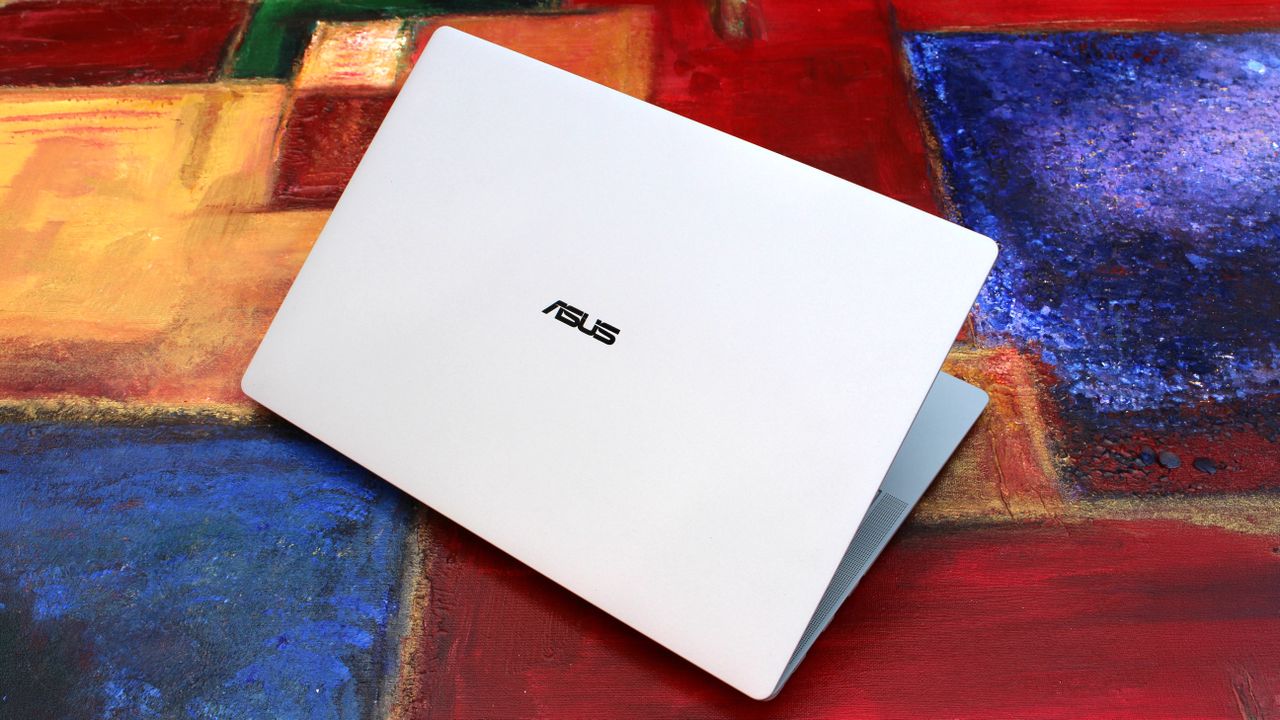
It looks great when closed (Image credit: Zac Bowden / Windows Central)
The ASUS ExpertBook Ultra is available now from ASUS for an eyewatering $3,599.99. This will net you the same spec reviewed here, with an Intel Core Ultra X7 358H, 32GB RAM, and an Intel B390 GPU. That also includes the Tandem OLED 3K display. Of course, that is ludicrously expensive, so my advice is to wait for sales or try your luck at a third-party retailers like Best Buy.
It's available in both black and light-gray colorways, and in this review we spent time with the light-gray model which I think looks best.
ASUS
ExpertBook Ultra (2026)
The HP OmniBook Ultra is a premium thin-and-light laptop engineered for elite performance, all day battery life, and immersive visual experiences.
Category
Specification
Dimensions & Weight
10.9 mm thin | 0.99 kg (2.18 lbs)
Chassis Build
Aviation-inspired Magnesium-Aluminum Alloy with Nano Ceramic Technology (9H Durability)
Processor
Up to Intel® Core™ Ultra X9 Series 3 (Intel vPro® support)
AI Performance (NPU)
50 TOPS NPU (Up to 180 total-platform TOPS)
Graphics
Up to Intel® Arc™ Pro Graphics
RAM
Up to 64 GB LPDDR5x
Display
14-inch 3K Tandem OLED Touchscreen
Display Features
Up to 1400 nits HDR peak brightness, 30–120 Hz variable refresh rate, 100% DCI-P3 / sRGB color gamut
Screen Glass & Coating
Corning® Gorilla® Glass Victus® with Gorilla® Matte Anti-Reflective Coating
Cooling System
ASUS ExpertCool Pro (Up to 50W TDP performance in Turbo mode; under 28 dB in Balanced mode)
Audio
6-speaker system (2 dual-magnetic woofers + 2 tweeters) with AI noise cancellation
Webcam & Biometrics
High-resolution camera with Windows Hello IR face recognition & Match-On-Chip fingerprint sensor in power button
Up to 26 hours battery life; Fast charging (50% in 30 minutes via USB PD 3.0)
I/O Ports
2 x Thunderbolt™ 4 Type-C (Power Delivery & DisplayPort) 1 x USB 3.2 Gen 2 Type-A 1 x HDMI 2.1 TMDS 1 x 3.5 mm Audio Combo Jack
Wireless Connectivity
WiFi 7 (802.11be) with Laser Direct Structuring (LDS) antenna
Security
ASUS ExpertGuardian (NIST SP 800-193 compliant), Discrete TPM 2.0, Microsoft Pluton, Secured-core PC
What I love
The display is best-in-class (Image credit: Zac Bowden / Windows Central)
Kicking things off, let's talk about design. In a word, I love the design of the ExpertBook. It's proof that business laptops need not be boring and corporate. The ExpertBook is anything but, featuring ultra-thin bezels and a unique finish on the chassis that ASUS calls Nano Ceramic Technology.
This Nano Ceramic feels amazing. It provides a distinct, silky matte texture to the whole device, which makes it easy to grip and does a fantastic job at hiding fingerprints and scratches. The device itself is also shockingly light and thin, coming in at just 0.99 kg and measuring a razor-thin 10.9 mm in profile. It's an almost impossibly light device, easily maneuverable with one hand and disappears when placed into any backpack, making it an excellent travel companion.
Simply put, the laptop strikes a great balance between executive minimalism and futuristic flair. That futuristic flair is best showcased when opening the laptop. Every time you open it, a lightbar that exists below the display will light up to let you know that the laptop is booting or waking up from sleep. ASUS calls this bar the "ExpertLumi" lighting system, and it provides an ambient glow whenever the device is booting or restarting.
The ExpertBook Logo hides lights underneath (Image credit: Zac Bowden / Windows Central)
You can turn off the ExpertLumi bar if you don't like it, but honestly, why would you. It's something unique about the device which I love, and it's not used often enough for it to be annoying. It's there when you boot up, or power off, and that's about it.
Above the ExpertLumi bar is the incredible 3K Tandem OLED 14-inch display. It's arguably the best thing about this laptop, offering great color contrast, colors that pop, and a high 120Hz refresh rate that makes scrolling and animations super smooth.
Attribute
Specification
Panel Type
3K Tandem OLED Touchscreen
Peak Brightness
1400 nits HDR
Refresh Rate
30 - 120 Hz Variable
Color Accuracy
100% DCI-P3 / 100% sRGB
Glass Protection
Corning Gorilla Glass Victus with Matte Finish
The display also features Corning Gorilla Glass Victus, complete with a matte finish that's designed to remove reflections and make the screen easy to see outdoors. It works wonders, with this laptop being one of the best when it comes to viewing it outdoors on a sunny day.
With that said, the matte finish does mean text and image clarity is slightly reduced. It's not the end of the world, and the display is still plenty sharp, but if you're used to high-resolution glossy displays like myself, the matte finish on this display will make text seem a little fuzzier around the edges.
The keyboard and trackpad are faultless (Image credit: Zac Bowden / Windows Central)
In regards to the keyboard and trackpad, I have no notes. Both are perfect and feel incredibly satisfying to use. The trackpad is a haptic one, which is tuned perfectly so that it feels natural to use. Its design is also quite unique, as the trackpad itself runs all the way to the very edge of the device.
That means the trackpad hangs over the edge of the device, which doubles as a convenient place to place your finger when prying the lid open. On that subject, the lid is openable with one-hand, for those who care about that sort of thing. The keyboard is excellent to type on, with a quiet yet tactile feel that makes typing easy.
Coming onto the ports selection, I'm happy. There's plenty of ports on this device, all of which are well spec'd. We have two Thunerbolt 4 Type-C ports, supporting up to 40Gbps of data, as well as one USB-A 3.2 Gen2 port 1x full-sized HDMI 2.1 port, and a 3.5mm audio jack. The only port I'd say it's missing that I wish it had is an ethernet jack, but I'm content without one.
The webcam, microphone, and speakers are also great, which you'd hope would be the case on a business-focused laptop. Image quality is crisp and clear in well lit environments, with the picture only getting a little noisy in low-light environments. Perfectly acceptable for video calls at work.
What's not good
I just looks so good (Image credit: Zac Bowden / Windows Central)
The ASUS ExpertBook Ultra is mostly great, which means I have very little to talk about that I'd class as "not good" about the ExpertBook. One issue that plagued my review unit it the laptop's hinge, which was very loose out of the box, so much so that the device wouldn't stay at a usable angle when typing.
This is a pretty big issue, but ASUS was quick to assure me that this was simply a pre-production issue and would not be the case on final units, which are now shipping. I can confirm that retail units that I have tested do not have this problem, though it's worth keeping an eye out just in case. If your laptop's hinge is super loose to the point where it won't stay upright when typing, make sure you get it exchanged.
The only other "issue" which isn't really an issue is the matte finish on the display. It really does come down to personal preference here, and I just prefer glossy screens over matte finishes. The matte finish on this display takes away from the color contrast you usually get on OLED displays, colors are a little more washed out and text and images are a little less sharp around the edges.
I wish ASUS offered the ExpertBook Ultra with multiple display configurations so I could choose one without the matte finish.
I think the real big problem with this laptop is its price. It's $3,599, which is an absurd price which, even when a laptop is this good, isn't worth it. The ongoing component shortage is the reason why pricing is this high, but as a result this is a super hard recommend to anyone that isn't buying these in bulk for a fleet of executives and managers.
Performance & Battery
Plenty of ports (Image credit: Zac Bowden / Windows Central)
Powering things under the hood, we have an Intel Core Ultra X7 358H paired with 32GB RAM and an Intel Arc B390 GPU. This is a very well equipped PC with plenty of power under the hood for day to day productivity tasks, multitasking, and even video and photo editing and rendering.
In fact the Intel B390 GPU in here is more than just your typical integrated graphics. It balances efficiency with power, resulting in an integrated graphics chip that is surprisingly capable at gaming when settings are lowered to 1080p medium. With that in mind, this is not a gaming laptop and should not be judged as one.
Although the device is super thin, the ExpertBook is still plenty capable. It keeps that Intel Core Ultra cool, allowing the CPU to boost up to 50W TDP in Turbo Mode without thermal throttling issues. In day-to-day productivity tasks involving handling dozens of browser tabs, streaming 4K video, compiling code, and running local AI tasks via its 50 TOPS NPU, the machine stays remarkably quiet (under 28 dB in Balanced mode) and snappy.
In regards to battery life, this laptop will last you all day on a single charge with no sweat for your usual day to day productivity task workflows. Obviously, that number will be less if you're doing high-intensity tasks, but for the most part you should be able to leave your charger at home for an office-based productivity workday.
Metric
Real-World Expectation
Battery Life (Light Usage)
Up to 18–20 hours
Battery Life (Heavy Workday)
12–14 hours comfortably
Fast Charging
0 to 50% in ~30 minutes via USB-C PD
Conclusion
It's the best business laptop yet. (Image credit: Zac Bowden / Windows Central)
You should buy this PC if...
✅ You want a lightweight flagship Windows laptop
✅ You need a PC with an anti-reflective screen and Tandem OLED
✅ You need lots of ports on your laptop
You should not buy this PC if...
❌ You prefer glossy displays
❌ You don't want to spend over $3,000 on a laptop
❌ You're a hardcore gamer who wants to game
Ultimately, the ASUS ExpertBook Ultra is an incredible laptop, but at $3,599, it's not something I can recommend most people go out and buy. It's just too expensive for what it is, even if it is an almost perfect thin and light laptop.
If we ignore that stupidly high price tag, I have very little to complain about here. The Nano Ceramic material that coats the chassis is unique and looks and feels amazing. Its lightweighted-ness is also otherworldly, and the Tandem OLED display is to die for, even with its matte finish which I'm not a huge fan of.
If you can find the ExpertBook Ultra on sale for less than $2,500, this gets a recommendation from me. Anything more than that, and I think you should probably look elsewhere as there are many other laptops that cost lest that do a great job at matching the ExpertBook Ultra in design and performance.
ASUS
ExpertBook Ultra (2026)
The HP OmniBook Ultra is a premium thin-and-light laptop engineered for elite performance, all day battery life, and immersive visual experiences.

 Connexion