
Vue normale

  • ✇Yanko Design
  • A Designer turned Xiaomi’s Logo into a Multi-Utility Vehicle Concept
    You know that little rounded square Xiaomi uses as its logo? The one a Japanese design legend spent actual months tuning with a math equation just to get the curve right? Lucas Angelo looked at that shape and thought, sure, why not build a car out of it. The result is the Xiaomi Horizon, and I mean that almost literally. The tailgate is one giant glowing squircle. The wheels are squircles. The whole rear end reads like someone blew up an app icon to the size of a minivan. It sounds like a gimmi
     

A Designer turned Xiaomi’s Logo into a Multi-Utility Vehicle Concept

13 septembre 2026 à 18:30

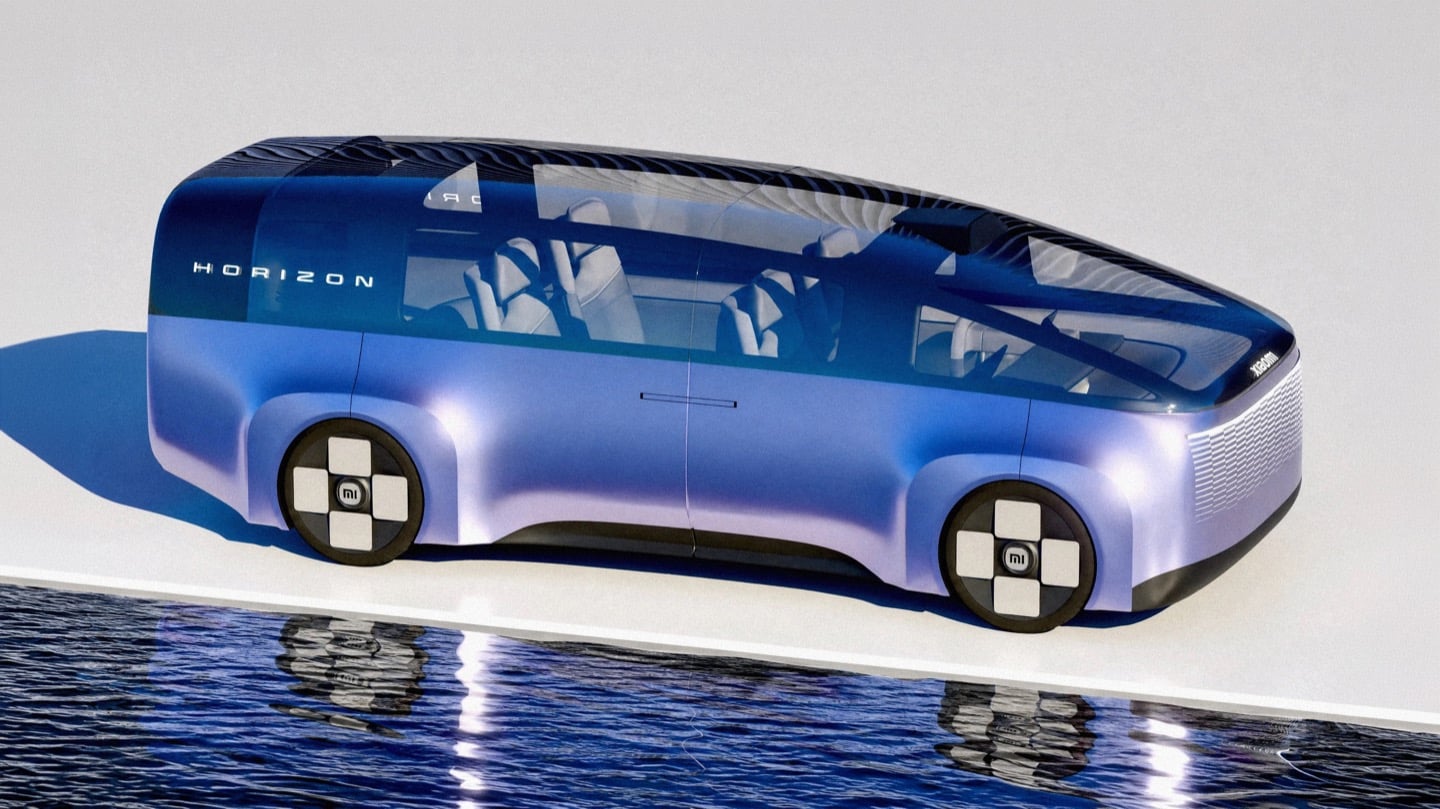
Side profile of the Xiaomi Horizon concept MPV in blue-to-lavender paint, parked on a white platform above still water.

You know that little rounded square Xiaomi uses as its logo? The one a Japanese design legend spent actual months tuning with a math equation just to get the curve right? Lucas Angelo looked at that shape and thought, sure, why not build a car out of it. The result is the Xiaomi Horizon, and I mean that almost literally. The tailgate is one giant glowing squircle. The wheels are squircles. The whole rear end reads like someone blew up an app icon to the size of a minivan.

It sounds like a gimmick until you remember Xiaomi’s entire EV strategy is basically “make our products feel like they all came from the same brain,” and a car shaped logo is honestly not the dumbest way to pull that off. Whether it should be a Multi Purpose Vehicle or something else entirely is a separate question, and we will get to it. But credit where it is due, this thing has more brand DNA baked into its sheet metal than most concepts manage with an entire mood board of heritage references.

Designer: Lucas Angelo

Front three-quarter view of the Horizon against a tall black louvered wall, with mountains visible in the background.

Rear three-quarter view of the Horizon at dusk, showing its illuminated red squircle taillight and the Xiaomi wordmark.

That squircle obsession is not Angelo inventing a bit for fun. Back in 2021, Xiaomi hired Kenya Hara, the design legend behind MUJI’s whole visual identity, to redraw its logo. He landed on a superellipse formula, dialed to a value called n equals 3, which is the mathematically precise sweet spot between a perfect square and a perfect circle. People online mocked it as three hundred grand for rounded corners. Angelo apparently took it a lot more seriously than the internet did, because Horizon’s entire rear fascia is basically that formula rendered at automotive scale, ringed in individually lit LEDs so it glows like a screensaver whenever the car is parked.

Front three-quarter view of the Horizon showing its illuminated Cascade Grille and squircle wheel hubs.

Straight-on rear view of the Horizon on a salt-flat-like surface, with its glowing red squircle taillight centered.

The front end plays a similar game with something Xiaomi calls the Cascade Grille, a full width lattice of tiny illuminated squares that fade in a stepped pattern across the nose. It is not a functional intake so much as a light show, which tracks for a brand that made its name on phones and smart speakers before it ever touched a chassis. Xiaomi’s actual head of automotive design, Li Tianyuan, cut his teeth on the BMW iX and the i Vision Circular, a concept that turned BMW’s kidney grille into a digital display. Angelo landing in almost the same conceptual neighborhood, independently, says his instincts are pointed in a direction the real design team already validated once.

Side view of the Horizon parked in front of a spiked black wall, taillight lit, with snowy peaks behind it.

Here is where things get spicy. China’s premium electric MPV segment has a body count, and the most famous casualty is the Li Auto Mega, a smooth, curvy one box people mover that the internet immediately nicknamed the hearse. One owner slapped high speed train decals on his because the jokes wrote themselves, and Li Auto’s own design chief was still publicly defending the car more than two years later. A big blank slab of a rear end on an MPV is basically an invitation for the internet to decide what it looks like for you, and it is never flattering.

The Horizon driving down a city street past a billboard

This is exactly the trap Horizon’s illuminated tailgate sidesteps. Instead of a flat dark void back there, you get a glowing signature the size of a barn door, something to actually look at instead of squint at. Whether Xiaomi ever builds anything like this is unlikely, especially now that the real Xiaomi has already picked its answer to the family hauler question with the SkyNomad, an EREV SUV with a fridge and a bed mode rather than a sliding door MPV. But Horizon is a fun reminder that sometimes the best way to honor a brand is to take its smallest, most mocked design decision and blow it up until everyone has to take it seriously.

The post A Designer turned Xiaomi’s Logo into a Multi-Utility Vehicle Concept first appeared on Yanko Design.
  • ✇Yanko Design
  • This Supercharged Grand Tourer Was Built Using a 90-Year-Old Metal-Shaping Tool
    There is a tool called an English wheel that has been shaping aluminum car panels since roughly the 1930s. It is a big metal hoop with a roller in the middle, and you push sheet metal through it by hand until it curves the way you want. It sounds like something you would find in a blacksmith’s shed, not in the workshop of a car aiming for 1,200 horsepower. Yet that is exactly the tool Coventry Metalcraft used to hand-form the body of the new Jensen Interceptor GTX, alongside laptops running com
     

This Supercharged Grand Tourer Was Built Using a 90-Year-Old Metal-Shaping Tool

13 septembre 2026 à 13:20

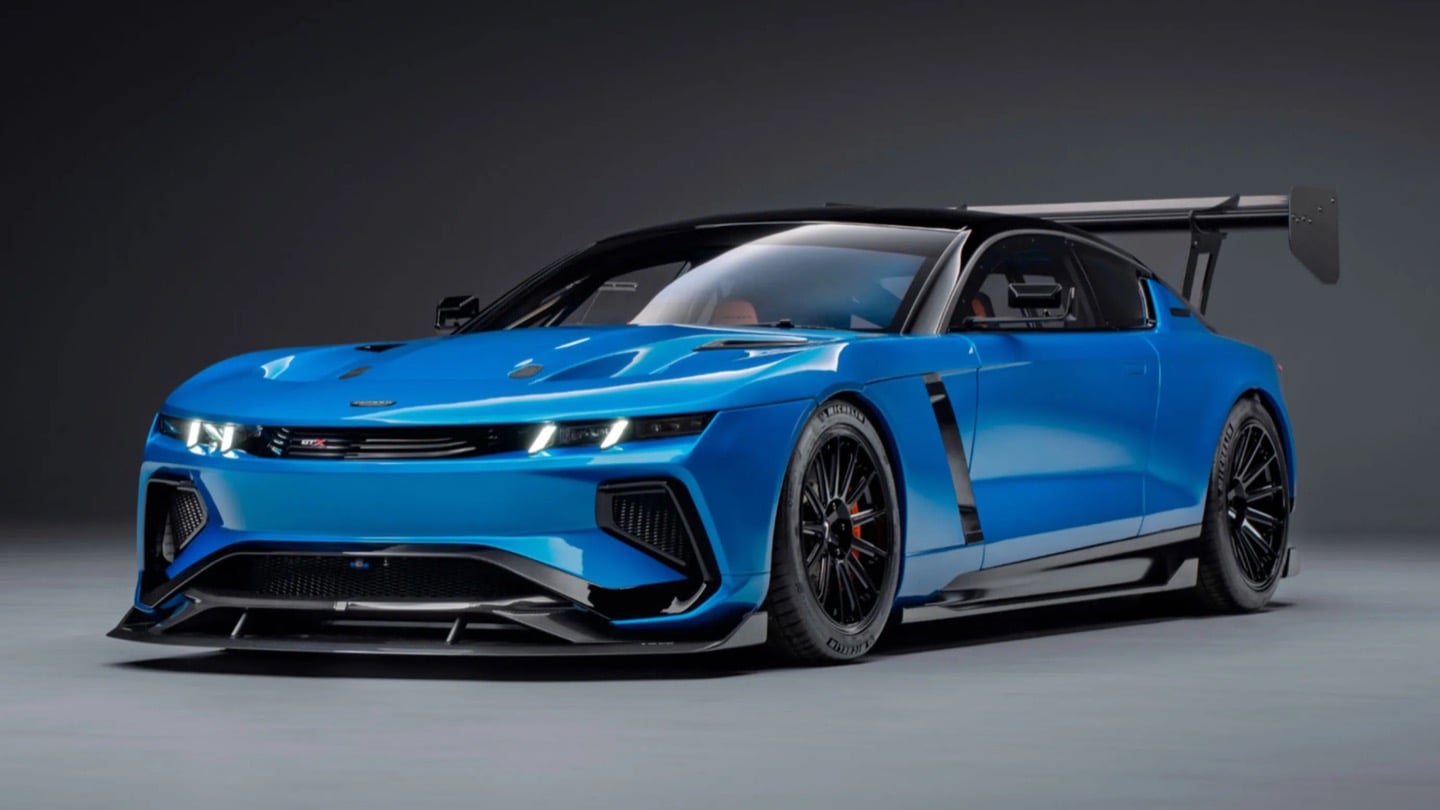
The GTX in Riviera blue, all splitter, vents, and a rear wing that towers over the roofline.

There is a tool called an English wheel that has been shaping aluminum car panels since roughly the 1930s. It is a big metal hoop with a roller in the middle, and you push sheet metal through it by hand until it curves the way you want. It sounds like something you would find in a blacksmith’s shed, not in the workshop of a car aiming for 1,200 horsepower. Yet that is exactly the tool Coventry Metalcraft used to hand-form the body of the new Jensen Interceptor GTX, alongside laptops running computational fluid dynamics software. Old-world muscle meets new-world math, and somehow both sides showed up to the same car without arguing.

Jensen International Automotive unveiled the GTX in early September, and it is a strange beast by design. It is Jensen’s first ever clean-sheet car, built to preview a whole new Interceptor lineup, and it gets there using ten English wheels worked by more than 30 artisans, alongside digital design data from studio Avant Design and mixed-reality checks nobody in 1966 could have dreamed of. The result is a 960 bhp supercharged V8 grand tourer wearing hand-beaten aluminum panels shaped partly by algorithms. Britain’s oldest car-forming trick just got a very modern wingman.

Designer: Avant Design

Under the hood: a 6.8-liter supercharged V8 from Late Model Engines, wrapped in carbon and gold foil.

Long bonnet, fastback roofline, and a wing that ruins the original Interceptor's silhouette on purpose.

Avant Design, based out of Royal Leamington Spa, is the studio responsible for translating the original 1966 Interceptor’s proportions into something that reads as contemporary rather than costume. The long bonnet survives, the tightly drawn greenhouse survives, and the wraparound rear glass that made the original such a distinctive shape is still there, even if a towering rear wing now partially blocks the view of it. What is new is the front end, with slim horizontal LED lighting and enormous carbon intakes replacing the old car’s chrome-heavy face. Interestingly, this is not Avant’s first crack at reimagining this exact silhouette. Back in 2023, the studio quietly published a concept called the E-Ceptor, an electric take on the Interceptor with reworked rear glazing and a fresh grille graphic. The GTX effectively took that speculative sketch and gave it a supercharged V8 instead of a battery pack.

Diffuser, quad exhausts, and a wing built for lap times.

A full-width taillight and a wing pulled straight from GT3 territory.

The aluminum decision, both for the chassis and the body, was not driven by sentiment. David Duerden, Jensen International’s managing director, put it plainly when explaining why the GTX skipped carbon fiber entirely. He does not want the car riding like “a skateboard,” which is a fair concern given how punishing a stiff carbon tub can feel on a road built for a Sixties grand tourer, not a modern track special. Aluminum chassis structures are also considerably cheaper to produce in small batches, since they avoid the expensive tooling that carbon fiber demands before a single panel gets made. For a car expected to sell in the dozens rather than the thousands, that economic math matters more than bragging rights about carbon weave.

No screen, just a MoTeC dash, roll cage, and switchgear built for business.

That economic logic is exactly why the English wheel earns its keep here. Hand-forming panels sidesteps the tooling costs that would sink a low-volume carbon fiber program before it ever reached a customer. Coventry Metalcraft’s artisans still shape every piece the old-fashioned way, but they are working from digital surfaces that Avant Design refined using CFD modeling, chasing the 350 kilograms of downforce the GTX needs to behave itself at speed. It is a genuinely odd combination of a seventy-year-old forming technique and simulation software that did not exist when the original Interceptor left the Kelvin Way factory. Jensen is betting its entire comeback on that combination holding together, and so far, from what we have seen, it seems to be working rather beautifully.

The post This Supercharged Grand Tourer Was Built Using a 90-Year-Old Metal-Shaping Tool first appeared on Yanko Design.

❌