Microsoft's plans for AI PCs include everything from laptops with only 8GB of RAM to supercomputers with over 128GB of RAM. The company's roadmap was outlined in slides shared on X by user "HXL."One slide, labeled "Windows is the home for hybrid intelligence" shows four tiers of PCs. The lowest one, Tier 0, is Windows PCs with 8GB of RAM that are powered by Intel Core Series 3 or 4, AMD Ryzen 100 or 200, and Snapdragon X or X Plus.Tier 1 covers Copilot+ PCs with
Microsoft's plans for AI PCs include everything from laptops with only 8GB of RAM to supercomputers with over 128GB of RAM. The company's roadmap was outlined in slides shared on X by user "HXL."
One slide, labeled "Windows is the home for hybrid intelligence" shows four tiers of PCs. The lowest one, Tier 0, is Windows PCs with 8GB of RAM that are powered by Intel Core Series 3 or 4, AMD Ryzen 100 or 200, and Snapdragon X or X Plus.
Tier 1 covers Copilot+ PCs with 16GB to 64GB of RAM. That tier spans a broad range of specs, from consumer-focused processors like the Snapdragon X2 Plus to the much more powerful AMD Ryzen AI MAX+ 400.
Tier 2 is builder PCs for building and running AI models locally. The hardware in that tier overlaps with the high end of Tier 1. It includes PCs powered by Intel Core Ultra Next, NVIDIA RTX Spark, and AMD Ryzen AI MAX+ 400.
The highest tier is for supercomputers designed to run frontier models locally. Those devices run on processors you'd never see in a consumer PC, such as Intel Crescent Island, NVIDIA GB300 DGX Station, and AMD Next chips.
Microsoft's roadmap is built around hybrid intelligence, with AI workloads split between local hardware and the cloud depending on the demands of each task. (Image credit: Microsoft (via user "HXL" on X))
What stands out most about the roadmap isn't the hardware itself but Microsoft's continued emphasis on hybrid intelligence. Rather than viewing local and cloud computing as competing approaches, Microsoft intends to use both.
We already knew that Copilot+ PCs required at least 16GB of RAM and that Microsoft had plans for workstations and supercomputers with top-end specs. NVIDIA's RTX Spark launched recently and powers several tier 2 PCs, such as the Surface Laptop Ultra.
Sam Altman may not be thrilled that Microsoft's AI roadmap includes PCs with more than 128GB of RAM. (Image credit: Getty Images | NurPhoto / Edit: Windows Central )
Microsoft's dream for AI computing is more like a nightmare for OpenAI CEO Sam Altman. He recently claimed that it's "actually quite terrible" for people to have RAM on their own computers. One theory is that OpenAI and other tech giants would prefer AI workloads to rely on centralized compute resources that can then be sold as a service.
Altman did not mention that specifically, but his comments suggest he views compute power as a resource AI companies have more of a right to than people do.
Microsoft has very different plans for AI in the form of hybrid intelligence. Rather than relying solely on cloud computing or local processing, people using hybrid intelligence will use a mixture of both.
We're still in the early days of hybrid intelligence, but a likely scenario is one in which users utilize the local compute power they have and then summon the cloud to complete tasks as needed. That setup would allow PCs across the entire roadmap to access AI.
Tier 0 and Tier 1 devices could perform less demanding tasks depending on their exact specs and lean more heavily on the cloud for compute-heavy workloads. Tier 2 and Tier 3 PCs would mostly stick to local processing but have the cloud as an option for exceptionally demanding projects.
Join us on Reddit at r/WindowsCentral to share your insights and discuss our latest news, reviews, and more.
When Microsoft rolled out Windows 11, it brought a sweeping visual overhaul to the desktop ecosystem—centering the Start menu, smoothing window corners, and streamlining system workflows. However, one of the most contentious regressions from Windows 10 was immediately apparent to power users: the loss of the ability to drag and drop the taskbar freely to […]
When Microsoft rolled out Windows 11, it brought a sweeping visual overhaul to the desktop ecosystem—centering the Start menu, smoothing window corners, and streamlining system workflows. However, one of the most contentious regressions from Windows 10 was immediately apparent to power users: the loss of the ability to drag and drop the taskbar freely to […]
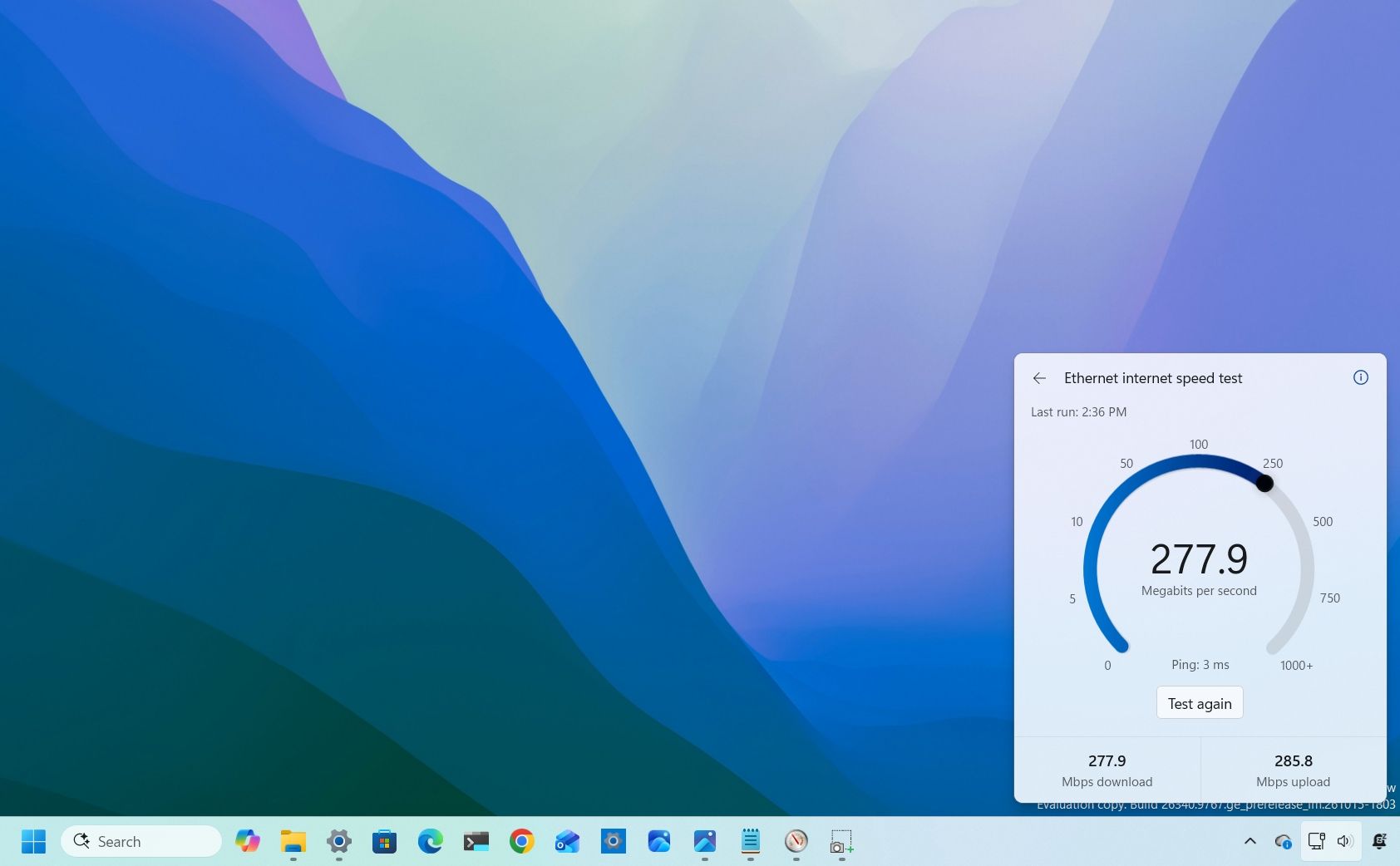
Windows 11 has a new speed test feature in the works that will allow you to check your PC's connectivity without having to open a browser or a separate app. The feature is already in testing with Windows Insiders and looks promising so far.Windows 11 already has a shortcut for testing internet speed, but it's simply a button that opens Bing's speed test in a web browser. The new speed test feature is built-in, making it feel like part of Windows 11 rather than a
Windows 11 has a new speed test feature in the works that will allow you to check your PC's connectivity without having to open a browser or a separate app. The feature is already in testing with Windows Insiders and looks promising so far.
Windows 11 already has a shortcut for testing internet speed, but it's simply a button that opens Bing's speed test in a web browser. The new speed test feature is built-in, making it feel like part of Windows 11 rather than a tacked-on browser shortcut.
The addition has been well-received and sparked positive discussions online. Our Mauro Huculak said, "Windows 11 needs more features like this," and his wish may come true.
Marcus Ash, lead of Design and Research across Windows & Devices, discussed the new speed test feature and how the tool was created. According to Ash, the new speed test feature is the result of an agentic AI workflow guided by a real person.
"This is where I see a lot of potential in AI," said Ash. "Using agentic workflows and WinUI 3 to build more integrated Windows experiences. Getting from idea to customer value faster. Without AI slop. That is the way."
AI is under heavy scrutiny for a variety of reasons. Many criticize "vibe coding," which often results in low-quality projects. But there is a place for AI in certain workflows.
After looking at Ash's comment, it's easy to see why Microsoft chose to attach the term "Copilot" to many of its AI products. The company's leaders view AI as a tool that works alongside people to streamline workflows while still leaning on the guidance of human expertise.
Considering the positive reception of the new speed test tool, it seems likely that other parts of Windows 11 will be built with a similar workflow. I'm curious to see if they will all be well-received or if some people will push back solely due to the use of AI.
What do you think about Microsoft using AI as part of its development process? Let us know in the comments!
Join us on Reddit at r/WindowsCentral to share your insights and discuss our latest news, reviews, and more.
I recently highlighted an app that allows you to click and drag the taskbar to reposition it on Windows 11. In my piece, I said that "changing [the taskbar's] position still requires digging through Settings." That phrase and other parts of my piece led to a discussion online about the nature of coverage and being positive or negative when discussing apps and features.Microsoft's Vice President of Design Diego Baca, said the phrasing in my piece was "unnecessaril
I recently highlighted an app that allows you to click and drag the taskbar to reposition it on Windows 11. In my piece, I said that "changing [the taskbar's] position still requires digging through Settings." That phrase and other parts of my piece led to a discussion online about the nature of coverage and being positive or negative when discussing apps and features.
What stuck with me wasn't whether my wording was too harsh. It was the question of how we should respond when companies explain why a feature isn't necessary, especially when history shows those same features often arrive later.
Biggest News of the Week
I want to be clear about the nature of this piece. Baca's response to my article sparked this discussion, but it's not meant to call him out or criticize him. Every interaction I've had with Baca has been positive and I appreciate how much he interacts with the community on X and other platforms.
Baca was promoted to Vice President of Design at Microsoft in August. I've noticed a distinct increase in user engagement since then from both Baca and other members of Microsoft's design team.
I would also be a hypocrite if I criticized Microsoft for not looking at feedback and then ignored feedback myself. I echo Baca's sentiment that listening to feedback is important even if someone ultimately decides to go in another direction than what's suggested. Understanding how other people think can shape how we view things in the future.
For the record, the headline of the article is and always has been "This free app makes moving the Windows 11 taskbar so much easier"I have changed the wording within the article where the quote you mentioned appears, which, again, was not the headline. But I should say that I don't agree with your take. This was not meant in a negative tone.Windows 10 users that might have heard about Windows 11's new movable Taskbar may not know that its implementation is different. "You still need" meaning that while it can be moved now, you'll still need an app to restore the same draggable behaviors that you had on Windows 10. That's just us being clear about the experience.However, I do appreciate you explaining more about how you designed the movable experience on Windows 11! I like the W11 implementation a lot. Again, I want to be clear: "You still need" never once showed up in the headline. This was only ever present beneath the header as part of the article on the page.October 31, 2026
Explaining why your product lacks a feature that's available anywhere is easy. Defending why your product does not have a popular feature seen in other products is difficult. Justifying adding a feature after arguing against its value for years is almost impossible.
We've seen this with Apple and its touchscreen MacBook. Steve Jobs famously mocked the concept of a touchscreen laptop over a decade ago. In a similar manner, Tim Cook compared devices like the Surface Pro to combining a toaster and a refrigerator only for Apple to later release the iPad Pro, which is clearly similar to the Surface Pro in design.
Years after Steve Jobs argues vertical touch surfaces were "ergonomically terrible," Apple announced a touchscreen MacBook. (Image credit: Lance Ulanoff / Future)
Relating this back to Microsoft, the company tried to justify why the taskbar was immovable when Windows 11 shipped. Back in 2022, Tali Roth, head of product of Windows Core Experiences at Microsoft, explained why that was the case:
"When it comes to something like actually being able to move the taskbar to different locations on the screen, there's a number of challenges with that. When you think about having the taskbar on the right or the left, all of a sudden the reflow and the work that all of the apps have to do to be able to understand the environment is just huge...
And when you look at the data, while we know there is a set of people that love it that way and, like, really appreciate it, we also recognize that this set of users is really small compared to the set of other folks that are asking for other features. So, at the moment, we are continuing to focus on things that I hear more pain around."
In Roth's defense, she did not claim a movable taskbar was a broken concept. But she did say the effort to make it work was huge and that only a small set of users were passionate about the feature.
I doubt the amount of effort required changed dramatically. The number of users interested in the feature has likely remained relatively consistent as well, so why was a movable taskbar a top priority in Windows K2?
That's why I'm hesitant to treat explanations for missing features as the final word. Microsoft's reasons for not prioritizing taskbar positioning in 2022 did not make users wrong for wanting the feature, and they did not make criticism of that decision invalid. If anything, the feature later becoming a Priority 0 item proves that those complaints were worth making in the first place.
High expectations, not hostility
One of my first editions of Windows Wrap focused on holding a mirror up to Microsoft. (Image credit: Future | Edited with Gemini)
I love that Microsoft is improving Windows 11. I think the Windows K2 initiative is one of the most important consumer-focused initiatives the company has had in years. I also think it's okay to be critical while also noting improvements.
I am often critical of Microsoft and its products, but it's not for kicks or clicks. It comes from a genuine hope for the OS to improve. As I said back in January:
"My frustration with Windows 11 and Microsoft doesn't come from a place of "hate" — it comes from a place of high expectations. Whether Microsoft chooses to listen to its core enthusiasts or continues its current path toward an AI-bloated future remains to be seen. In the meantime, it's worth facing a mirror toward Redmond."
I've argued since March that Windows 11 isn't doomed and that Microsoft is fixing the operating system. But much of that change was inspired by passionate, and often negative, feedback — the squeaky wheel gets the grease and all that.
So, I may think twice about being overly negative about Microsoft in the future, but after doing so I'm still likely to press "Publish" on an article calling for change.
Join us on Reddit at r/WindowsCentral to share your insights and discuss our latest news, reviews, and more.
In this episode of the Windows Central Podcast, Daniel Rubino and Zac Bowden break down the latest wave of Windows 11 Insider preview builds and major industry hardware shifts.The episode begins with an overview of incoming Windows 11 quality-of-life updates, including File Explorer context menu overhauls, controller-friendly Xbox Quick Settings for gaming handhelds, deeper Phone Link integration in the taskbar, native speed tests, and rich, actionable search res
In this episode of the Windows Central Podcast, Daniel Rubino and Zac Bowden break down the latest wave of Windows 11 Insider preview builds and major industry hardware shifts.
The episode begins with an overview of incoming Windows 11 quality-of-life updates, including File Explorer context menu overhauls, controller-friendly Xbox Quick Settings for gaming handhelds, deeper Phone Link integration in the taskbar, native speed tests, and rich, actionable search results. Zac also details controversial security adjustments to Windows Hello that force screen-brightening in low-light environments.
From there, we dissect Apple’s sudden embrace of touchscreen technology and OLED displays on the M5 MacBook Pro, comparing Apple’s historical messaging to current market demands. We follow up on the ongoing display debates surrounding the Surface Laptop Ultra's Mini-LED implementation (addressing local dimming claims and ghosting fixes), before examining Big Tech’s massive AI capital expenditure trends, market adjustments, and live audience Q&A questions.
This episode of the Windows Central Podcast is sponsored by Surfshark VPN. Unlimited devices, access your content from anywhere, and auto-block malware on Windows, Edge, and other platforms from $2.50/mo, with 3 months extra FREE. Sign up today!
TIMESTAMPS:
00:00 Pre-show Setup & Tech Checks
02:13 Welcome to Episode 409 & Agenda Overview
03:51 Testing $699–$799 Budget Windows Laptops
06:24 File Explorer Context Menu Overhaul & Quick Turnaround
Microsoft Edge now launches up to 15% faster on eligible Windows 11 PCs, with greater gains under heavy workloads. Here's when the improvement applies.
The post Microsoft Says Edge Opens 15% Faster on Windows 11 — Here’s When You’ll Notice It appeared first on TechRepublic.
Microsoft Edge now launches up to 15% faster on eligible Windows 11 PCs, with greater gains under heavy workloads. Here's when the improvement applies.
Transitioning to a new computer has traditionally been a rite of passage plagued by external hard drives, network cables, and tedious manual copy-pasting. For Windows users, a glimmer of hope arrived when Microsoft introduced a streamlined PC-to-PC migration framework. However, in typical Redmond fashion, convenience has taken a back seat to cloud monetization. Microsoft has […]
Transitioning to a new computer has traditionally been a rite of passage plagued by external hard drives, network cables, and tedious manual copy-pasting. For Windows users, a glimmer of hope arrived when Microsoft introduced a streamlined PC-to-PC migration framework. However, in typical Redmond fashion, convenience has taken a back seat to cloud monetization. Microsoft has […]
Microsoft spent October testing a surprisingly useful collection of Windows 11 features, and after digging through the latest preview builds, I found several changes that could make a noticeable difference in how you use your PC.Some address long-standing frustrations. Microsoft is finally experimenting with a customizable right-click menu, while the Start menu is getting more controls over its size and contents. Windows 11 can also run an internet speed test wit
Microsoft spent October testing a surprisingly useful collection of Windows 11 features, and after digging through the latest preview builds, I found several changes that could make a noticeable difference in how you use your PC.
Some address long-standing frustrations. Microsoft is finally experimenting with a customizable right-click menu, while the Start menu is getting more controls over its size and contents. Windows 11 can also run an internet speed test without kicking you into a browser, and traditional desktop apps are gaining more granular privacy controls.
There are smaller improvements worth knowing about, too, including phone controls in Quick Settings, smarter Windows Hello behavior in low light, accessibility improvements, and changes aimed at handheld gaming.
Microsoft tested these features across eight Windows 11 preview builds during the second half of October. I've gone through the changes and pulled out the ones I think actually matter.
Biggest improvements from the Windows Insider Program in October 2026
Let's dive into the most noteworthy changes since my last roundup.
Windows 11 finally lets you customize the context menu
Windows 11 build 26220.9757 introduces a redesigned context menu with new customization options that let you simplify the interface and control which commands appear when right-clicking files and folders.
The updated menu reduces clutter by moving additional app commands into a new "App extensions" submenu. This keeps the main menu focused on frequently used actions while providing access to extensions added by installed applications.
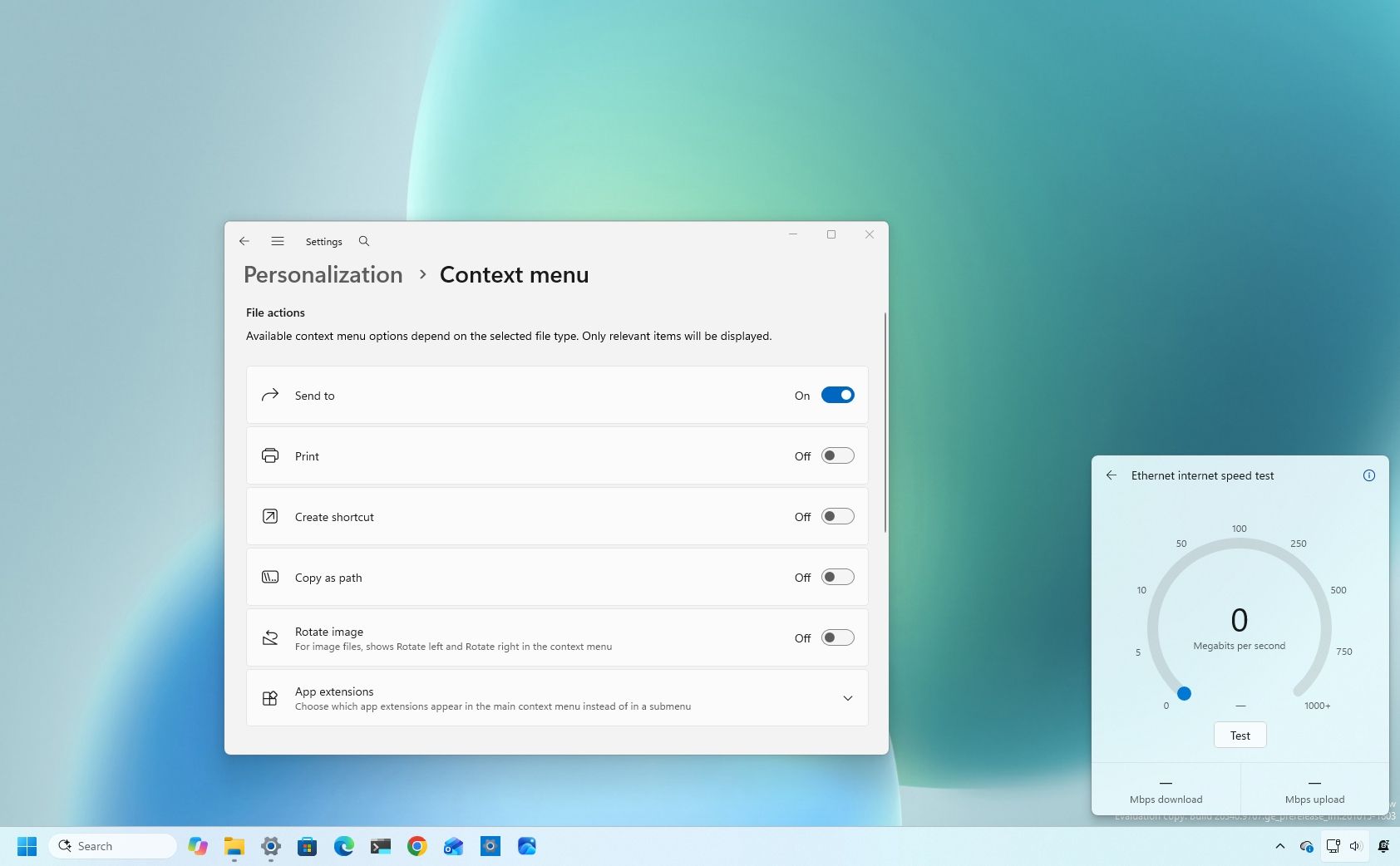
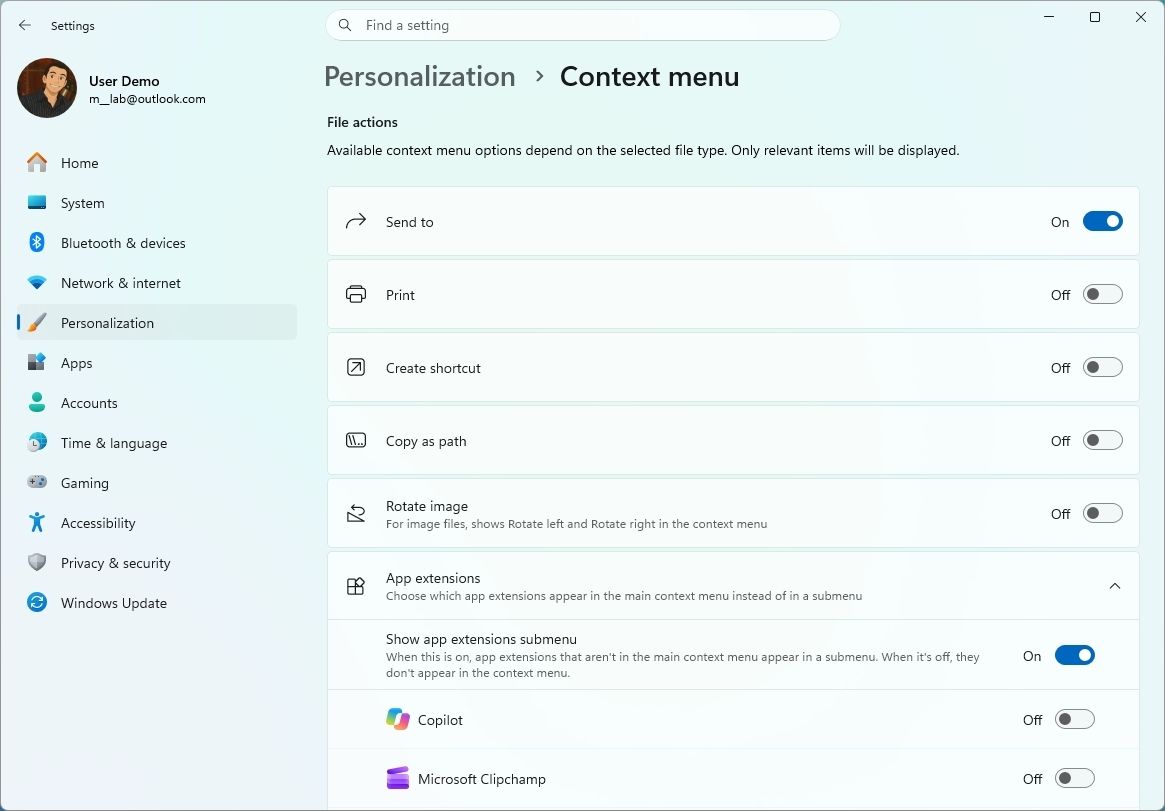
The new "Customize menu" option opens a dedicated page under Settings > Personalization, where you can control the menu's layout and available commands.
(Image credit: Mauro Huculak)
Under "File actions," you can choose which options appear directly in the main menu, including "Send to," "Print," "Create shortcut," "Copy as path," and "Rotate image." "Send to" and "Print" are also new additions to the modern context menu design.
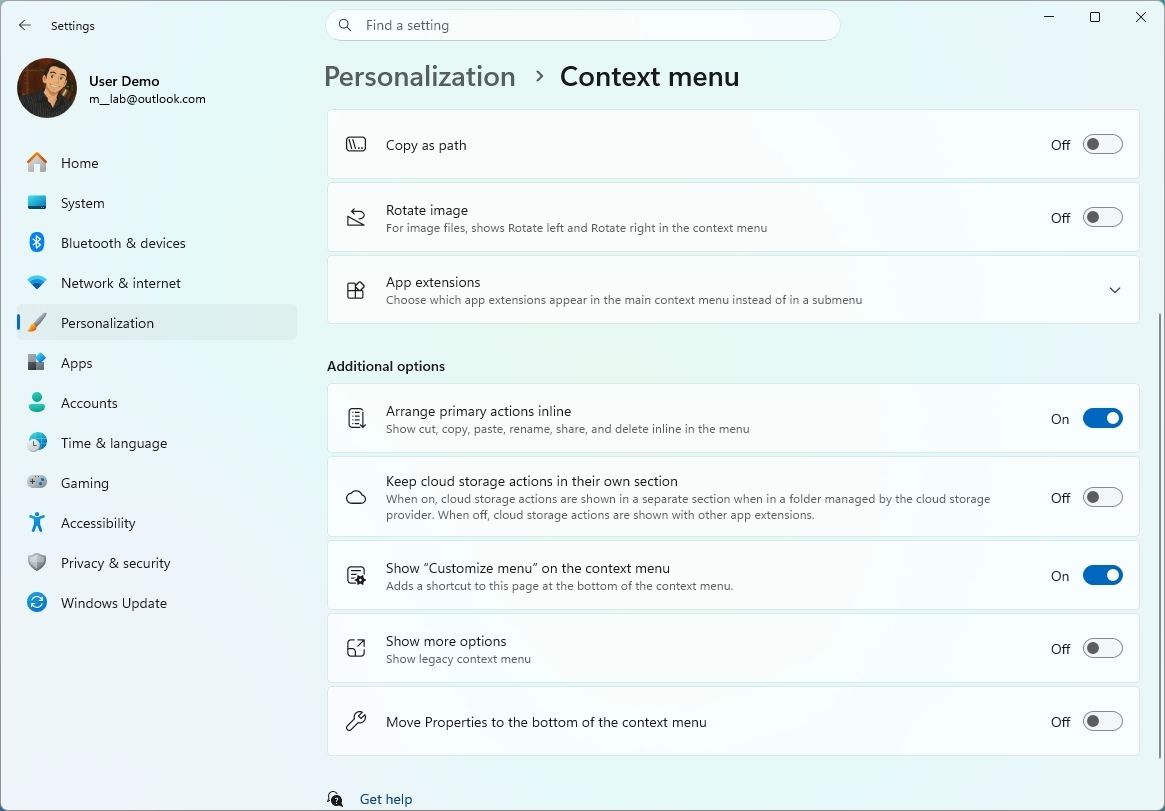
The customization options extend to application integrations. You can choose whether the "App extensions" submenu appears in the main menu and select which application extensions remain directly accessible.
The new settings let you arrange primary commands, such as Cut and Paste, vertically instead of using the horizontal layout introduced with the modern design. You can also move "Properties" to the bottom of the menu to restore its familiar placement.
(Image credit: Mauro Huculak)
For those who prefer the classic experience, Windows 11 now lets you bring back the "Show more options" entry. You can also continue opening the traditional context menu by holding Shift while right-clicking a file or folder.
Internet speed test without a browser
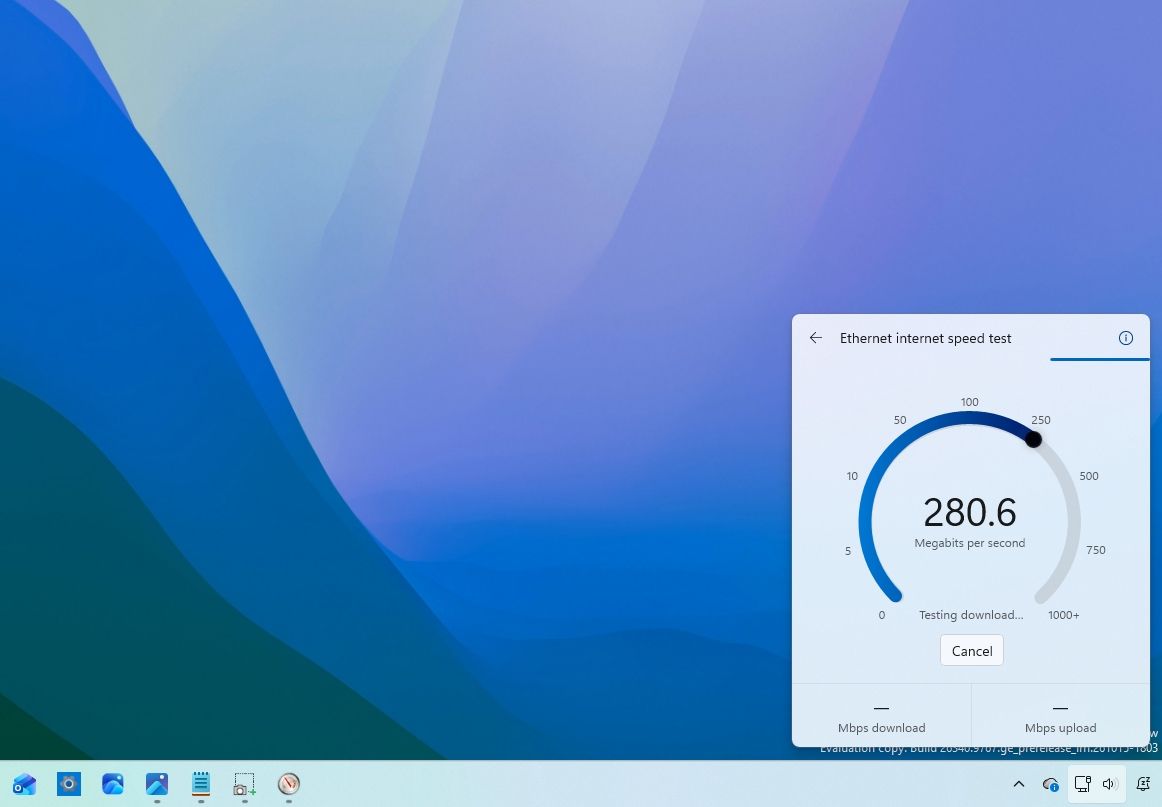
Starting with build 26340.9767 in the Experimental channel for version 26H2, the Windows team is refreshing the "Speed test" feature with a native interface in the Quick Settings that allows you to test your internet connection without leaving the desktop.
(Image credit: Mauro Huculak)
If you recall, the feature isn't new, but the previous version was an option that opened Bing in the Microsoft Edge browser to perform a speed test with the online tool.
In the new design, the feature is still using the same Speed Test service in the backend, but the tests happen within the desktop experience.
You can also access the feature from the Wi-Fi or Cellular flyout, or by right-clicking the network icon and choosing the "Test internet speed" option.
The Start menu is finally getting more customization
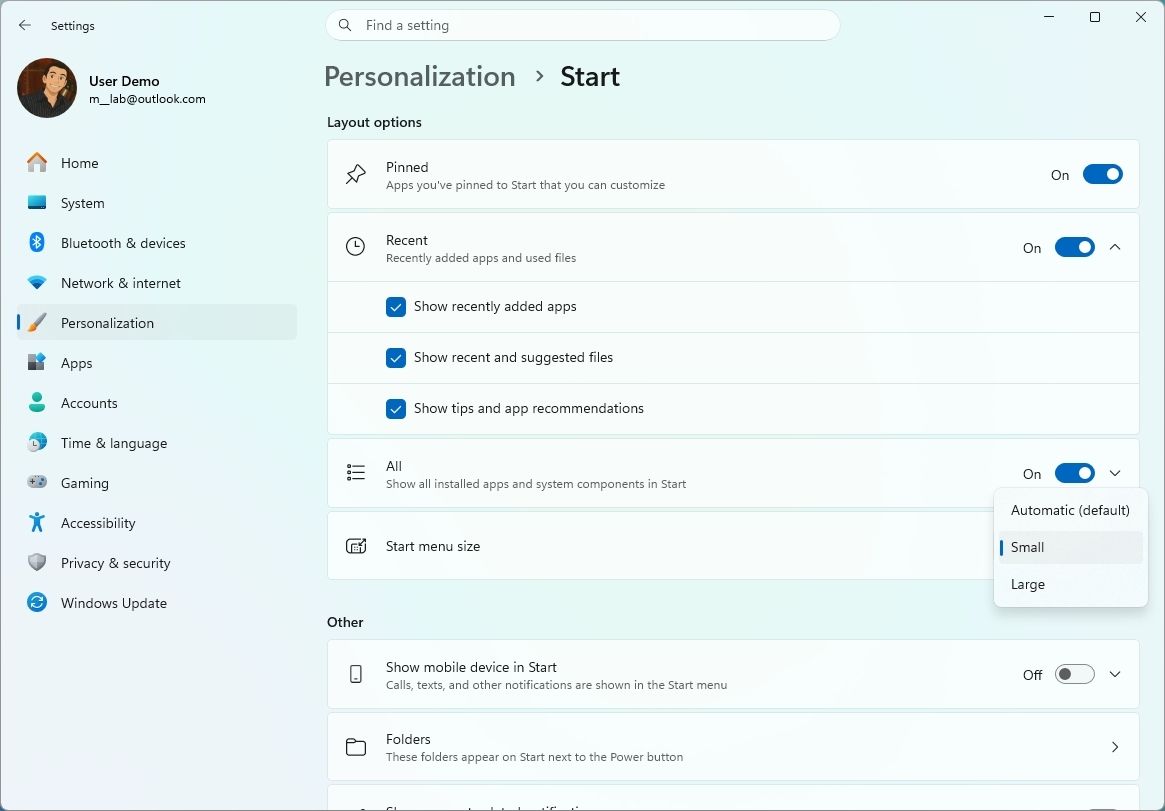
As part of version 26H1, build 26220.9739 introduces new Start menu customization options, including the ability to choose a "Small," "Large," or "Automatic" layout under Settings > Personalization > Start, using the "Start menu size" option.
(Image credit: Mauro Huculak)
Microsoft also renames the "Recommended" section to "Recent" in both the Start menu and its Settings page.
In addition, users can now hide their name and profile picture from Start and independently show or hide the "Pinned," "Recent," and "All" sections using the redesigned Start settings page.
Windows 11 is giving you more control over desktop app permissions
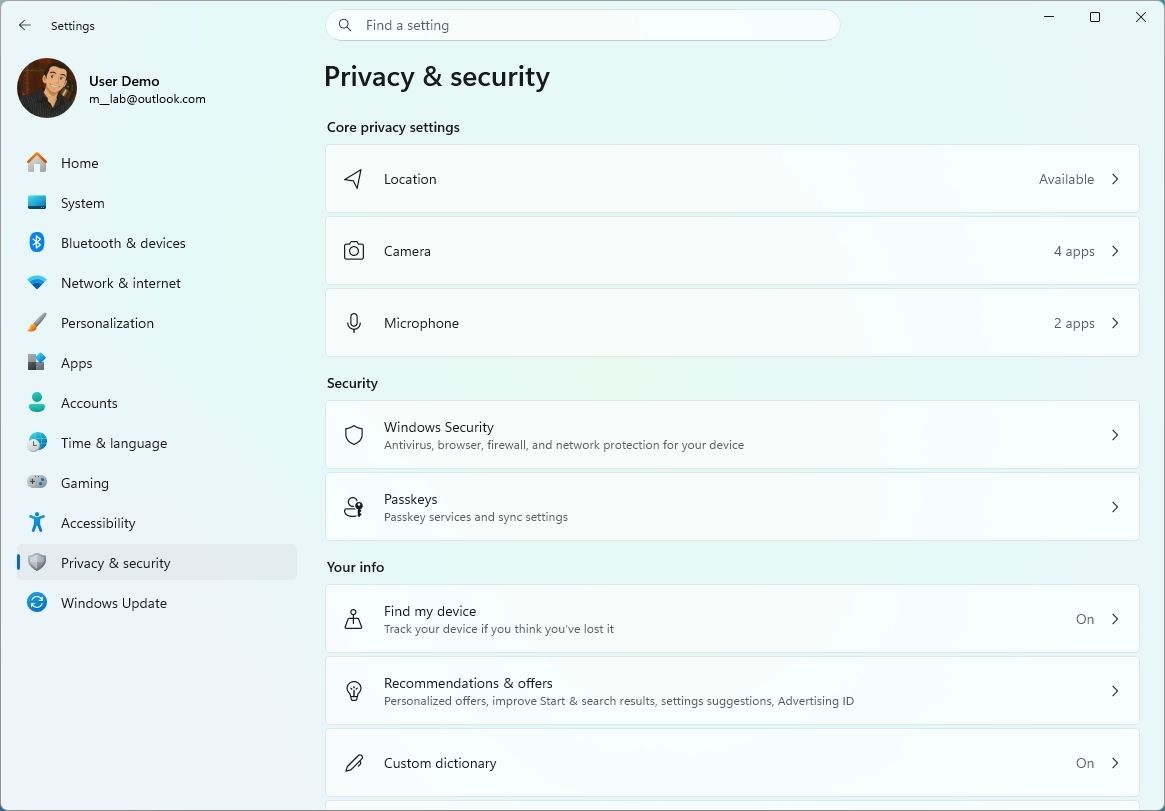
In the "Privacy & security" section of the Settings app, the Windows team introduced per-app permissions for camera, microphone, and location access, giving users more control over the sensitive resources traditional desktop apps can use.
(Image credit: Mauro Huculak)
Now, inside the Camera, Microphone, or Location settings, users can view and allow or deny access for individual apps. Apps that have not previously accessed a resource will prompt for permission when they first request access.
The update preserves existing permissions, so previously allowed apps retain access and denied apps remain blocked. No action is required, and existing settings are not reset.
Enterprise policies continue to work as designed, although Microsoft is exploring additional management capabilities.
Also, most desktop apps appear with clear names, but some that rely on shared system components or browser-hosted experiences may appear under unexpected names.
Finally, apps with unverified publishers may appear as "Unsigned," so users should grant permissions only to applications they recognize and trust.
These changes for privacy are available with the release of build 26220.9739.
Finally, in build 28020.3262, the "Privacy & security" page gets an update that improves the organization of specific settings, including Camera, Microphone, and Location privacy controls.
Your phone controls are moving into Quick Settings
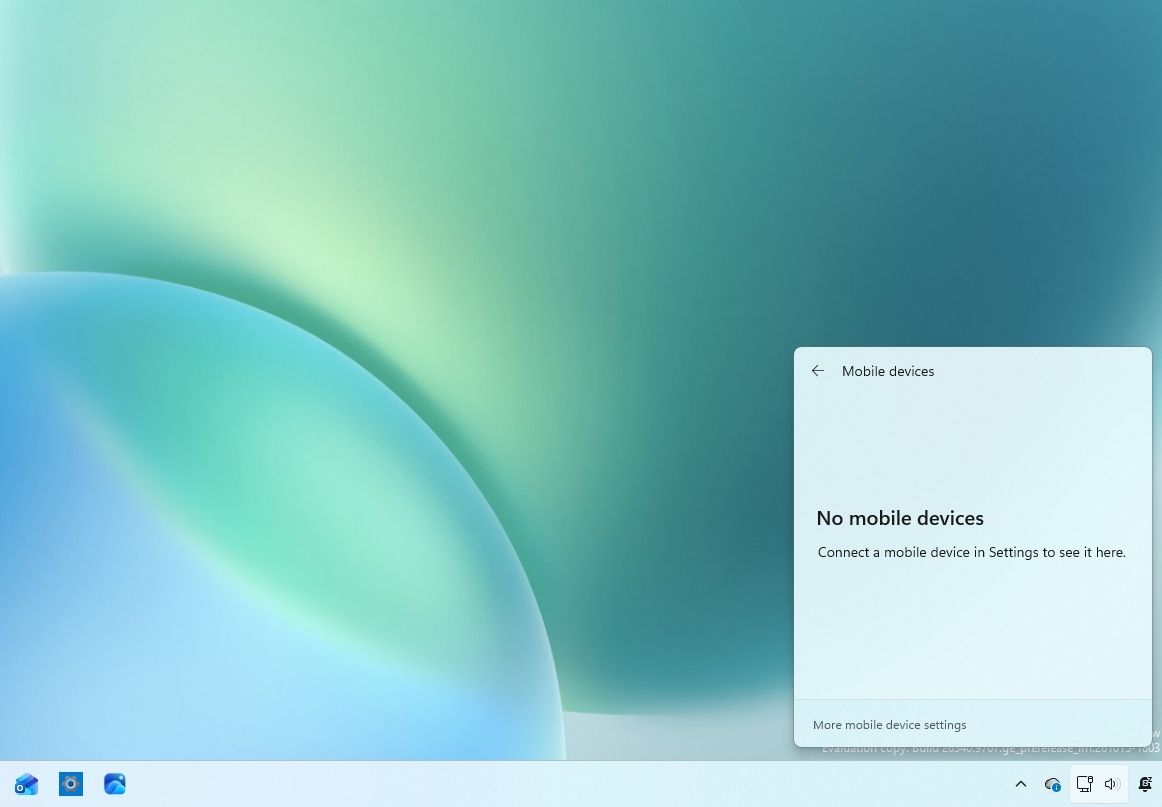
In Quick Settings, you'll also find a new "Mobile devices" flyout that lets you control your phone without interrupting your workflow.
(Image credit: Mauro Huculak)
If you're connecting a supported Android phone, you can check its battery, change the ringer, remotely play sound to find your phone, and enable Do Not Disturb.
This new interface is available starting with build 26340.9767 in the Experimental channel.
XBOX mode new Task View
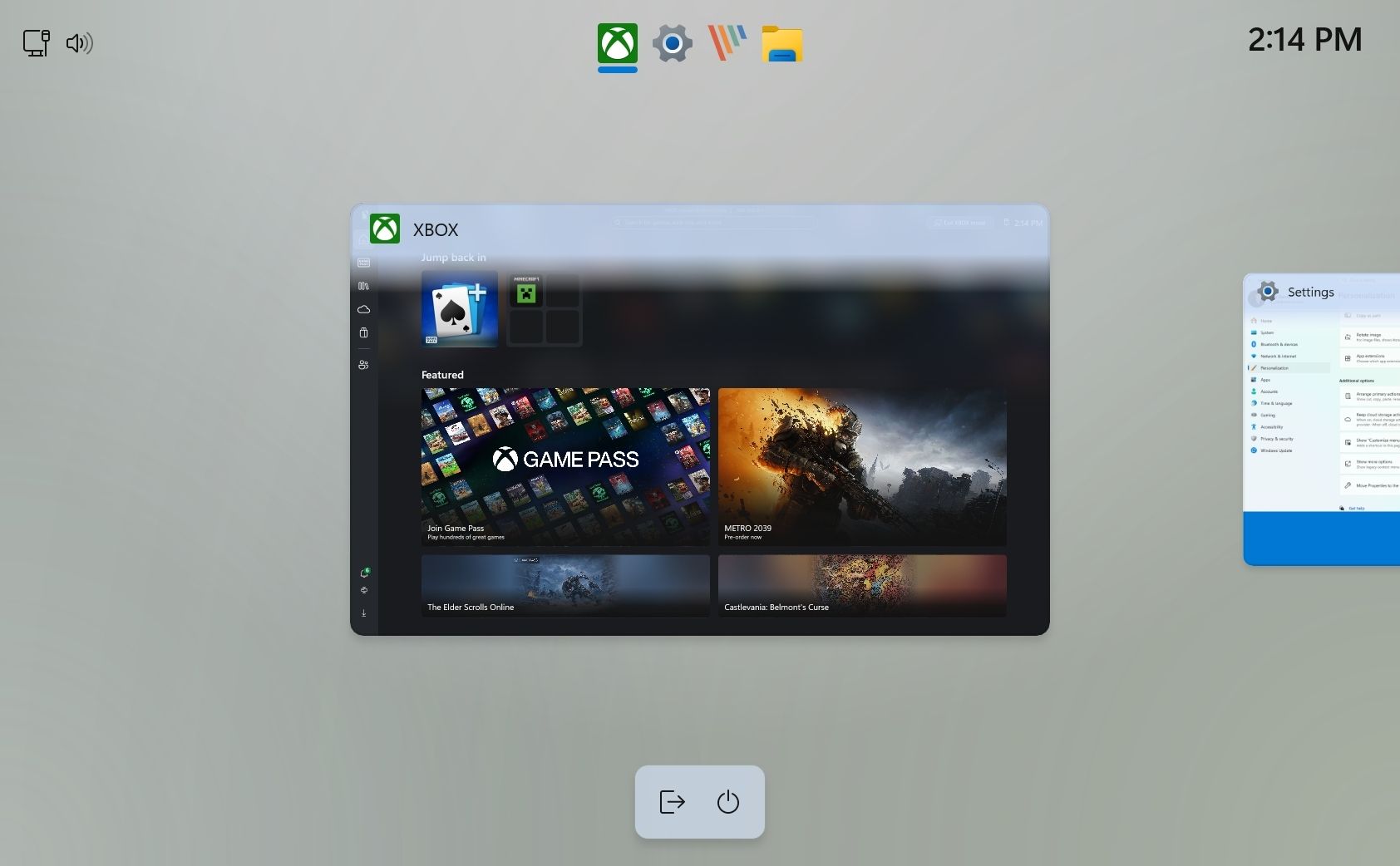
Starting with builds 26340.9750 and 26220.9739, Windows 11 introduces an updated Task View interface when XBOX mode is enabled.
(Image credit: Mauro Huculak)
The new interface adds a navigation bar that gives quick access to "Exit to Desktop" and "Power Options" while using the gaming controller.
Feature flags are getting easier to manage
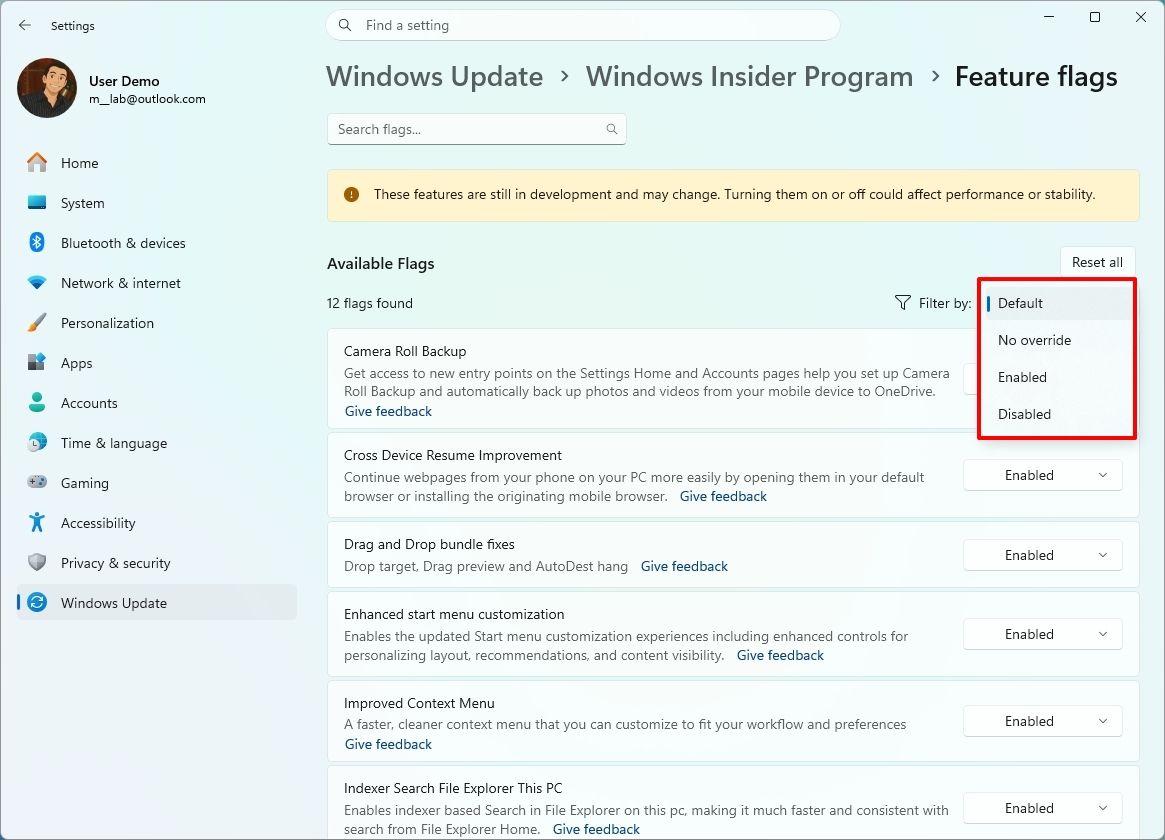
On the Feature flags page, you won't see major changes, but a new "Filter by" option lets you find and review components you can turn on or off in the installation.
(Image credit: Mauro Huculak)
Windows Hello can brighten your screen when it can't see you
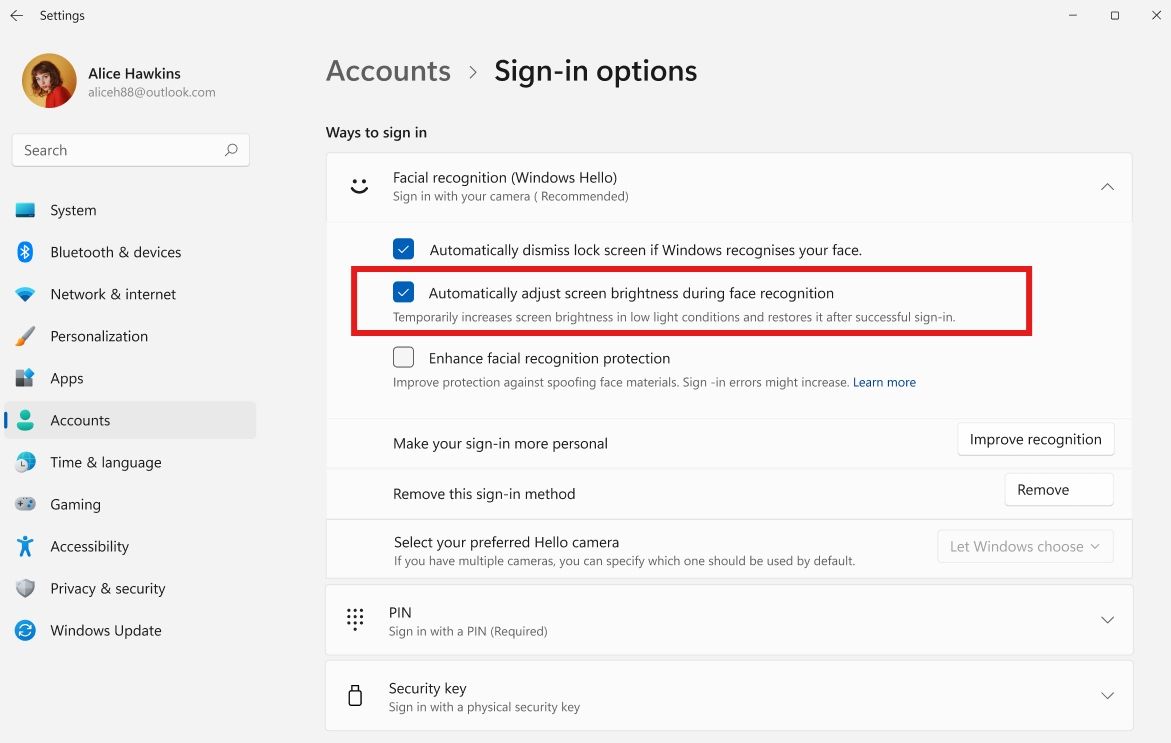
Another worthy improvement can be found in Windows Hello. Starting with build 26340.9750, a new option lets the system automatically adjust screen brightness to provide more light and improve the authentication experience when using Windows Hello Facial recognition.
The feature is called "Automatically adjust screen brightness during face recognition" and is available in Settings > Accounts > Sign-in options > Facial recognition (Windows Hello).
(Image credit: Microsoft)
Magnifier improvements
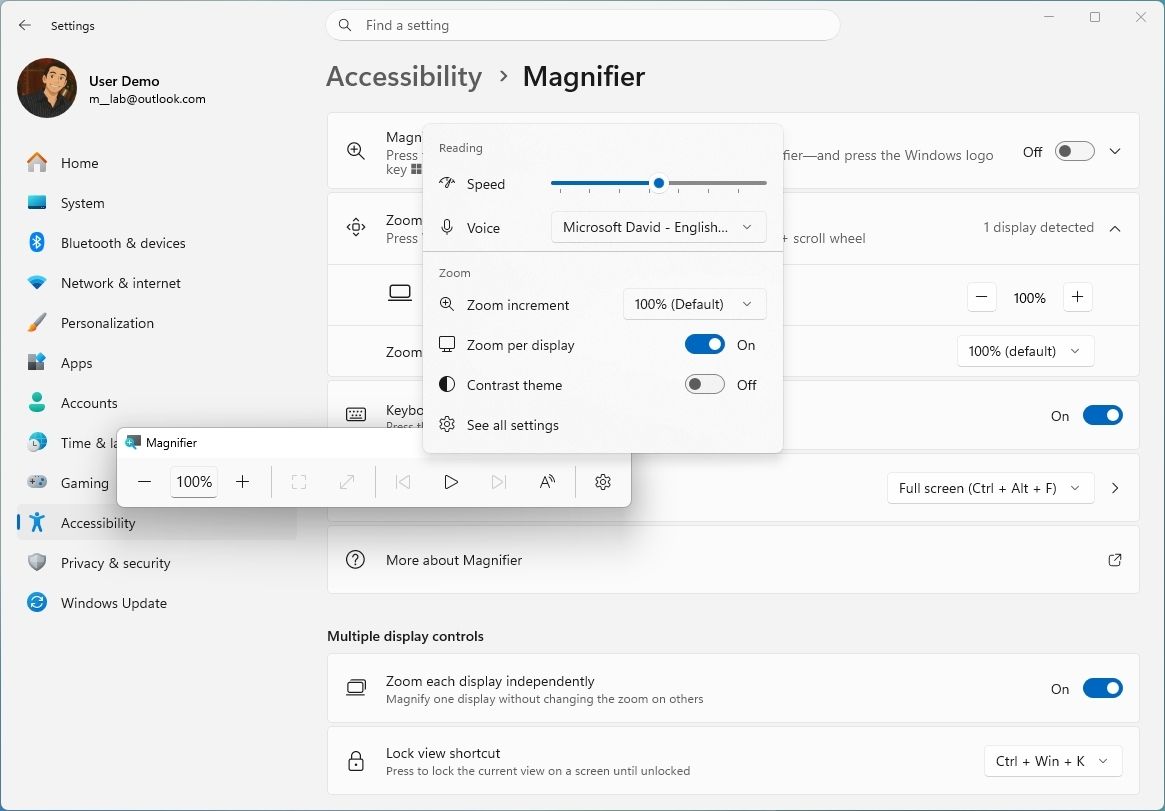
In build 26220.9739, the development team released an updated version of the Magnifier experience to support independent zoom levels for each monitor in "Extend" mode (Settings > System > Display), preventing the magnified view from spilling across screens.
Users can set different zoom percentages for each display using the "Windows key + Plus (+)," "Windows key + Minus (-)," or "Ctrl + Alt + mouse wheel," adjust the percentages in Settings > Accessibility > Magnifier, or move the Magnifier toolbar to the screen they want to adjust.
(Image credit: Mauro Huculak)
Per-monitor zoom is enabled by default, but users can turn it off from the Magnifier toolbar or Settings to restore the traditional behavior of a single magnified view spanning all displays.
The update also introduces viewport locking, which keeps a monitor's magnified view in place while users move their pointer to another screen. This lets users reference content on one display while working on another without losing sight of the information.
The locked screen stays live and interactive, letting users click, read, or copy content while its view stays fixed. A notification indicates when a screen is locked. Users can lock or unlock an individual display by pointing to it and using the "Ctrl + Windows key + K" shortcut, customize the shortcut to "Ctrl + Alt + P" under Settings > Accessibility > Magnifier, or use the "Windows key + Esc" shortcut to release all locks.
In build 28120.3302, Microsoft adds a new contrast theme toggle to Magnifier to help reduce screen glare without changing the original colors of photos, videos, and charts. Users can enable a contrast theme directly from the Magnifier toolbar, with the dark theme applied by default. The preferred contrast theme can be selected under Settings > Accessibility > Magnifier.
Unlike color inversion, which changes colors across the screen, the new option adjusts the appearance while preserving the original colors of visual content. One last thing to note is that color inversion remains available as a separate feature.
Home Device Info card
In addition, build 26220.9739 added the Device Info Card on the Settings Home page to more markets.
The new card offers a quick overview of the device's key specifications and usage for users logged in with a Microsoft account. Clicking the link will open the "About" settings page.
Recovery improvements
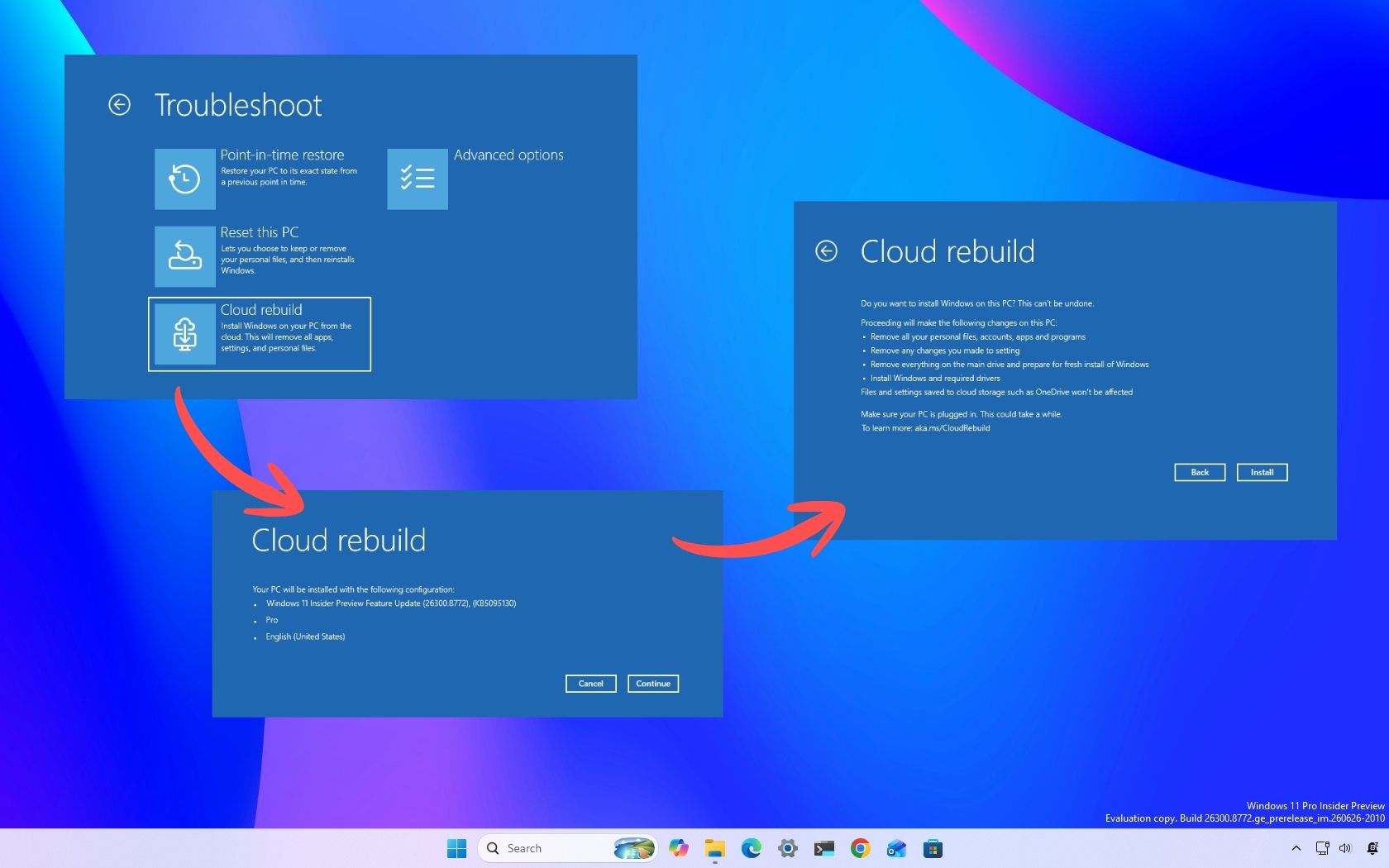
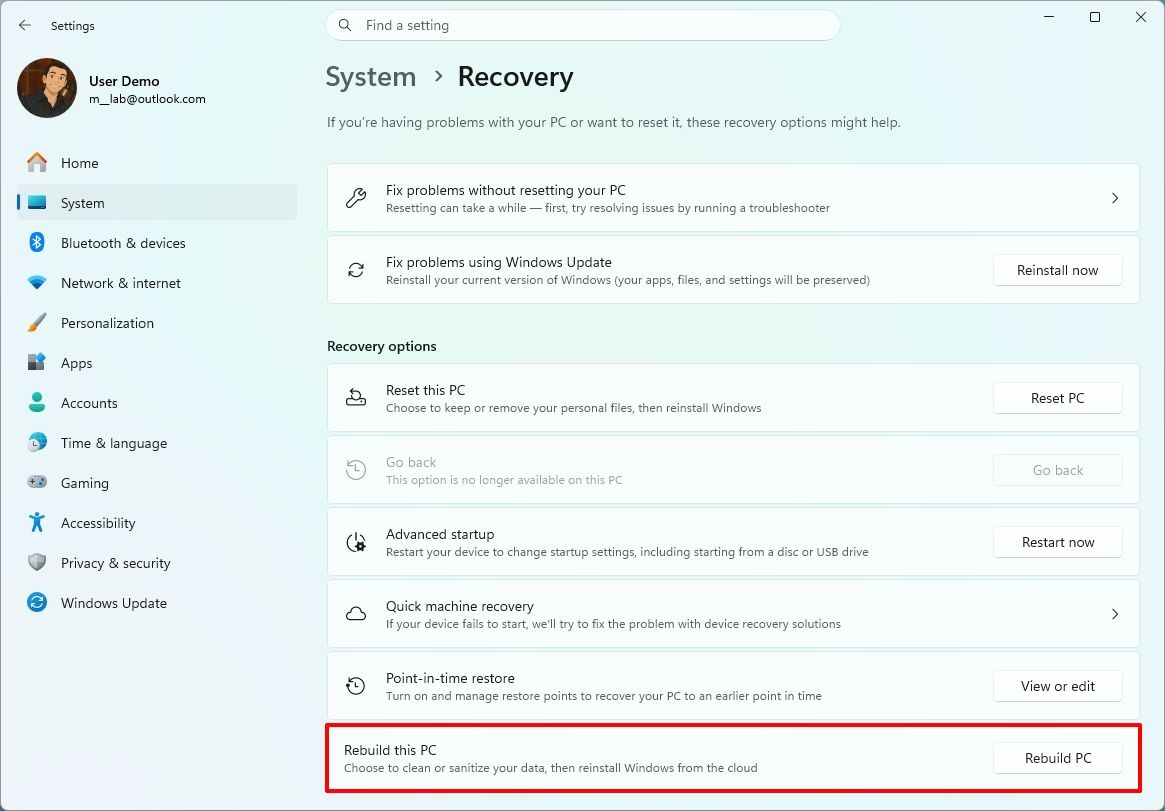
Build 26220.9739 for version 26H1 also adds a new "Rebuild this PC" entry point for Cloud Rebuild under Settings > System > Recovery, making the feature easier to find and access directly from the Settings app.
(Image credit: Mauro Huculak)
Search experience declutter
The Windows team has also simplified the Search home interface to reduce visual clutter and make recent searches easier to access.
Search results now show clearer source indicators, helping users distinguish between apps, settings, files, web results, and Microsoft Store suggestions before opening them.
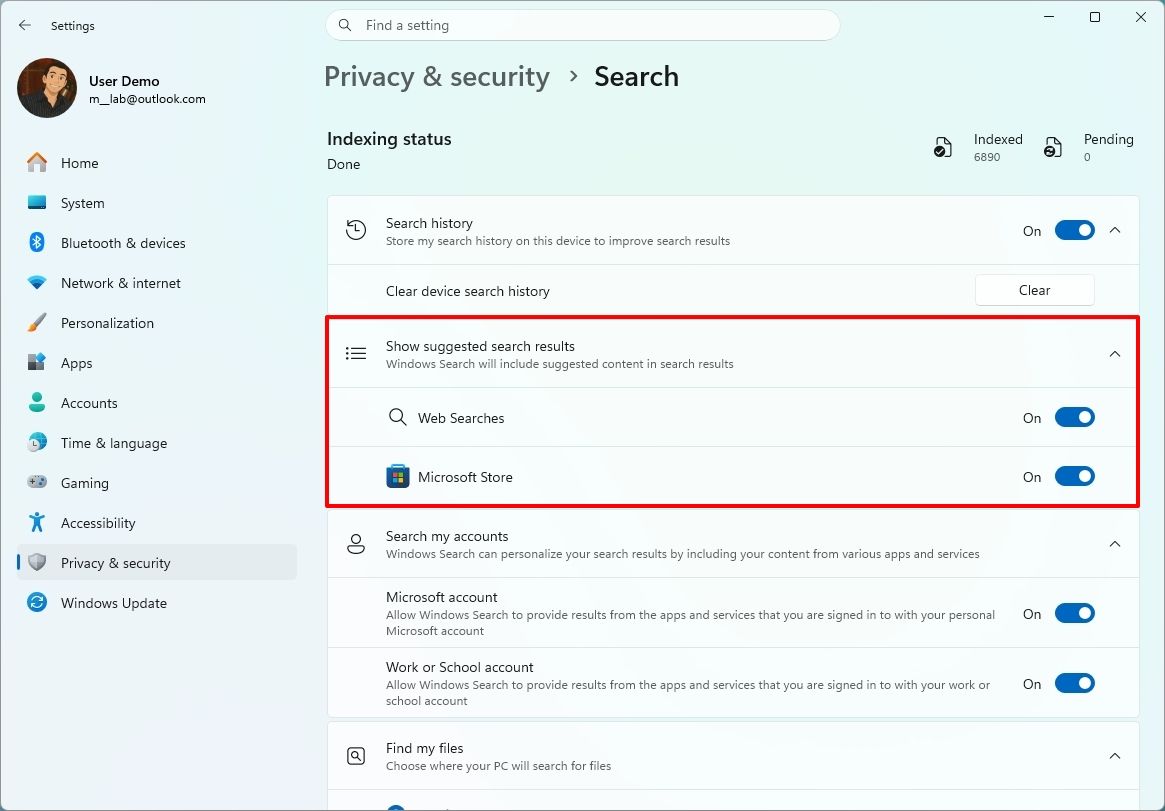
Finally, and perhaps more importantly, a new option under Settings > Privacy & security > Search also lets users choose whether web and Microsoft Store suggestions appear alongside local search results.
(Image credit: Mauro Huculak)
Although these improvements have been available in other builds, they became available for version 26H1 with the release of build 28020.3262.
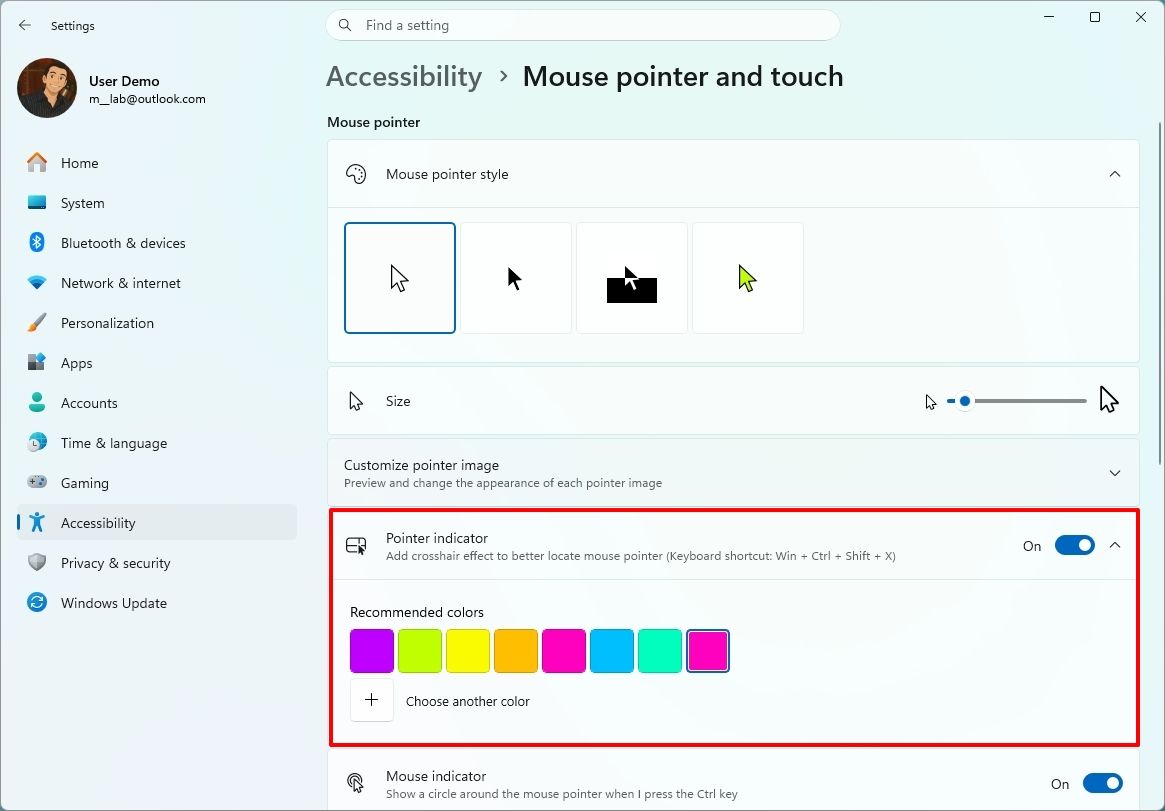
Pointer Indicator accessibility feature
As part of the accessibility features in build 28020.3262, Microsoft introduced the Pointer Indicator to help users with low vision locate their mouse cursor more easily.
(Image credit: Mauro Huculak)
You can enable the feature under Settings > Accessibility > Mouse pointer and touch. Once enabled, users can toggle "Pointer Indicator" on or off using the "Windows key + Ctrl + Shift + X" keyboard shortcut.
Live Captions improvements
In build 28020.3262, the Windows team also added a new "Include Screen Reader audio" setting for Live Captions.
The option is turned off by default, preventing Live Captions from transcribing audio from screen readers such as Narrator, JAWS, and NVDA.
This keeps captions focused on microphone and system audio unless you choose to include screen reader audio.
Microsoft 365 billing interface built in
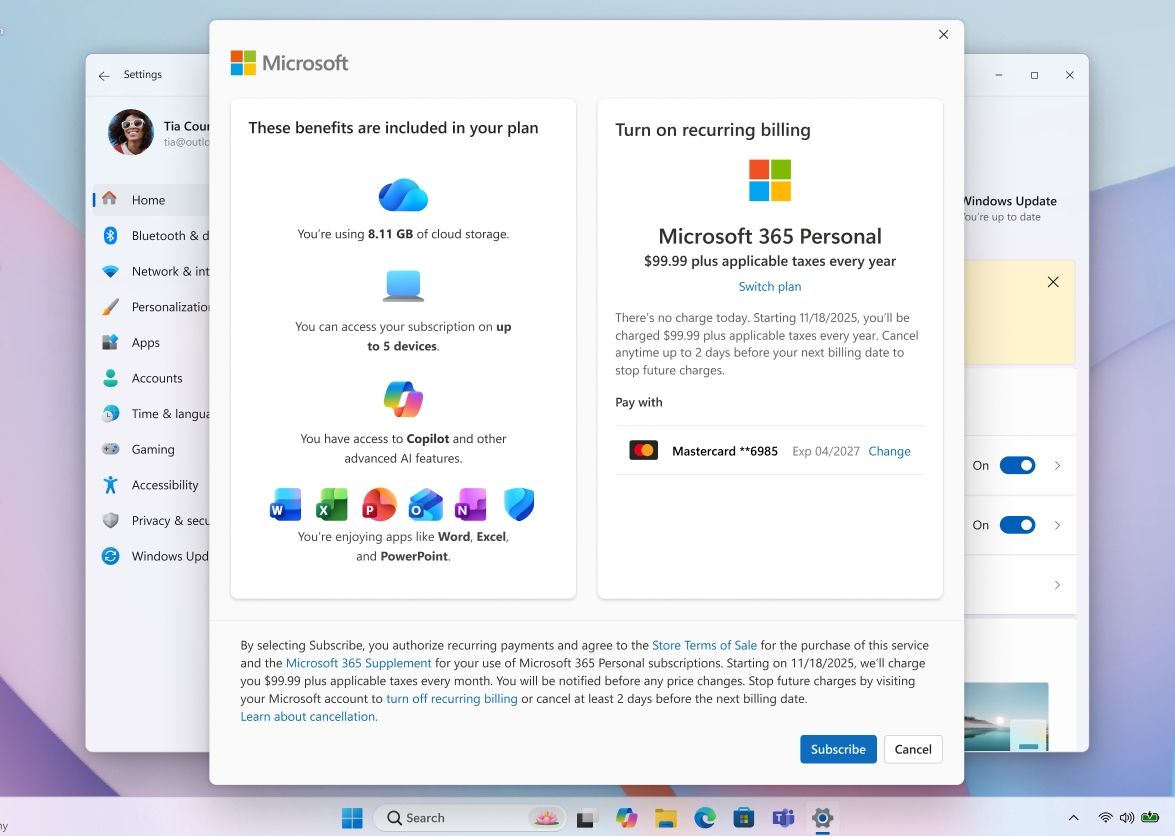
In a continued effort to make it easier to take your money, Microsoft is building a new native interface that allows Microsoft 365 subscribers to turn on recurring billing without having to open their account details in a web browser.
(Image credit: Microsoft)
Microsoft is testing this interface in build 26340.9767 through the Experimental channel.
Windows Central's Take
Microsoft is making some genuinely good decisions here. I'm particularly interested in the redesigned context menu, because giving users control over what appears when they right-click could finally address one of the most frustrating changes Microsoft introduced with Windows 11.
The new Start menu controls follow the same theme. Being able to resize Start, hide sections you don't use, and remove your profile information gives users more say over an interface Microsoft has kept surprisingly rigid. Per-app privacy permissions for traditional desktop applications are another meaningful improvement that Windows should arguably have offered much sooner.
Even the smaller additions make sense. I would rather run an internet speed test directly from Quick Settings than have Windows launch a browser, and automatically increasing screen brightness when Windows Hello needs help recognizing you is exactly the kind of subtle feature that can make Windows feel smarter without getting in the way.
I'm much less enthusiastic about Microsoft building a native interface for turning Microsoft 365 recurring billing back on. Windows 11 already spends plenty of time encouraging users to sign in, subscribe, or enable Microsoft services. I'd rather see Microsoft devote that attention to the unfinished and inconsistent parts of Windows itself.
Taken together, though, this is a promising batch of changes. The features I'm most excited about aren't flashy. They give users more control, remove unnecessary steps, and make familiar parts of Windows less frustrating to use. I want to see more of that.
Which of these Windows 11 changes would make the biggest difference on your PC? Let me know in the comments.
More resources
Explore more in-depth how-to guides, troubleshooting advice, and essential tips to get the most out of Windows 11 and 10. Start browsing here:
Microsoft has explained why you cannot drag the new movable Taskbar on Windows 11, a feature that was present on Windows 10 but failed to make the move to Windows 11 when it gained the ability to move the Taskbar earlier this year.Vice President of Design at Microsoft, Diego Baca, explains that the inability to drag the Taskbar to move it is a "deliberate design decision," confirming that such behavior will not be coming to Windows 11 any time soon. "From our res
Microsoft has explained why you cannot drag the new movable Taskbar on Windows 11, a feature that was present on Windows 10 but failed to make the move to Windows 11 when it gained the ability to move the Taskbar earlier this year.
Vice President of Design at Microsoft, Diego Baca, explains that the inability to drag the Taskbar to move it is a "deliberate design decision," confirming that such behavior will not be coming to Windows 11 any time soon.
"From our research, dragging the taskbar to reposition it can lead to accidental movements, which is one of the reasons “Lock the taskbar” existed in previous versions of Windows," Baca said. "We also found that changing the taskbar position isn’t something people do frequently."
Baca continues: "We felt that providing a discoverable setting, just one right-click away, was a more intentional and predictable experience. It’s a deliberate design decision, not a missing capability."
The options for repositioning the Taskbar on Windows 11. (Image credit: Zac Bowden / Windows Central)
Microsoft is making it clear that the ability to drag and drop the Taskbar to move and resize it isn't coming to Windows 11, which I'm sure some long-time Windows users will be sad to hear. Baca says that most people don't move the Taskbar once they have placed it where they like, and so the ability to drag it to move it on the fly doesn't make much sense.
On Windows 10, moving the Taskbar was as simple as right-clicking it, unchecking "Lock the taskbar" and then dragging the Taskbar to your desired location. On Windows 11, it requires right-clicking the Taskbar, opening Windows Settings, then selecting your desired location within an app.
While not as straight forward as before, I agree that this method is tidier and reduces accidental movement that could sometimes occur when users unlocked the Taskbar on Windows 10 and forgot about it. You could also resize Windows 10's Taskbar by dragging the top of it, another feature that hasn't made the jump to Windows 11, likely for the same reasons.
It's good to see Microsoft being more open about why certain features aren't available on Windows 11. The company has made strides to be more transparent with fans and Insiders about design decisions and processes, and we love to see it.
Join us on Reddit at r/WindowsCentral to share your insights and discuss our latest news, reviews, and more.
Windows 11 and wallpapers go together like peanut butter and jelly. Many of our laptop reviews are met with comments asking about our wallpapers. Microsoft deals with the same fervor for images. I spent weeks trying to find the wallpaper shown off during the RTX Spark event.Unfortunately, like the Jedi Archives, Microsoft's publicly shared collection of wallpapers is incomplete. The company has not shared that wallpaper from the RTX Spark event, but it has shared
Windows 11 and wallpapers go together like peanut butter and jelly. Many of our laptop reviews are met with comments asking about our wallpapers. Microsoft deals with the same fervor for images. I spent weeks trying to find the wallpaper shown off during the RTX Spark event.
Unfortunately, like the Jedi Archives, Microsoft's publicly shared collection of wallpapers is incomplete. The company has not shared that wallpaper from the RTX Spark event, but it has shared several images inspired by the Surface Laptop Ultra.
The official Microsoft Surface account shared a thread with a bunch of wallpapers. The collection includes an image that looks like an x-ray of the Surface Laptop Ultra, a rendering of the engineering to make that laptop, and some more abstract artwork inspired by the PC.
But one image immediately caught my eye. In the X post stating "It's all about the details," Microsoft shared an image of a grid of screws used in the Surface Laptop Ultra's construction.
As much as I love a good torque screw (side-eye at proprietary screws), that's not what drew my attention. What piqued my interest was that I first thought the image was the Galactic Senate from Star Wars. All it needs is a floating podium and an emergency powers vote.
Tell me I’m not the only one who saw the galactic senate at first.October 30, 2026
It turns out I'm not the only person whose brain jumped straight to Coruscant. My X post has drawn several replies and messages from people who saw the same thing.
I was tempted to make the headline of this piece something along the lines of "So this is how liberty dies, with glorious wallpapers," but I figured some people would not know the meme and assume I'm being negative.
For those who don't know, a famous scene from Star Wars Episode III sees Padmé Amidala watch the Senate cheer the rise of the Galactic Empire, prompting her famous line, "So this is how liberty dies... with thunderous applause."
In that scene, you'll see the senate chambers that Microsoft's new wallpaper resembles.
Star Wars jokes aside, the best way to download any of these wallpapers is to use the "Load in 4K" option on X. To do this, press and hold the image to bring up the share menu, then select "Load in 4K." This worked for me on iOS and I believe it's available on Android. As far as I can tell it is not an option on Windows or the web, so you'll have to grab the wallpaper from your phone and send it to your PC.
I quite enjoy the wallpapers shared by Microsoft and hope the company continues to release these types of images.
If you're similarly enthusiastic about the background of your desktop, you should check out the Microsoft Design website.
Join us on Reddit at r/WindowsCentral to share your insights and discuss our latest news, reviews, and more.
We have all experienced this scenario: a game, video editor, or browser tab stops responding, locking up your screen. You instantly hit Ctrl + Shift + Esc or right-click the taskbar to call upon Task Manager—the ultimate system referee designed to terminate rogue processes. Instead of coming to the rescue, Task Manager opens as a […]
We have all experienced this scenario: a game, video editor, or browser tab stops responding, locking up your screen. You instantly hit Ctrl + Shift + Esc or right-click the taskbar to call upon Task Manager—the ultimate system referee designed to terminate rogue processes. Instead of coming to the rescue, Task Manager opens as a […]
Microsoft Edge will soon launch faster on Windows 11 by using a feature no other browser has, at least for now. Accelerated app launch is a new feature on Windows 11 that streamlines the process of launching an app.In the case of Edge, the browser sees a 15 percent launch speed improvement because of the feature. If you're multitasking heavily on your PC, the app could launch up to 33 percent faster.The version of Edge with accelerated app launch support ships wi
Microsoft Edge will soon launch faster on Windows 11 by using a feature no other browser has, at least for now. Accelerated app launch is a new feature on Windows 11 that streamlines the process of launching an app.
In the case of Edge, the browser sees a 15 percent launch speed improvement because of the feature. If you're multitasking heavily on your PC, the app could launch up to 33 percent faster.
The version of Edge with accelerated app launch support ships with the October 2026 non-security update for Windows 11. That update, known as KB5127936, is available now as an optional release. It also includes the updated context menu as well as Cloud Rebuild.
Accelerated app launch requires both the app and Windows 11 to work together. Since Edge is the built-in browser on Windows 11, it should come as no surprise that Microsoft first shipped the feature to Edge.
Without accelerated app launch, clicking a link to open Edge requires Windows to determine whether Edge is already running. Doing so requires Windows to start an intermediary process that looks around for an instance of Edge. Microsoft explains that you probably won't notice sluggishness during this process on a freshly booted PC, but that you can notice things slow down when multitasking.
Accelerated app launch sends a registration request to Windows when the browser is launched initially. Windows can then find that registration quickly the next time you launch Edge through a link.
Because of how the feature works, you'll only see those launch speed improvements after Edge has already been opened and is running in the background.
The feature works in the Start menu, Taskbar, and supported links that open in Edge by default.
Not a selling point for Microsoft Edge
Microsoft is contributing the code for accelerated app launch to Chromium, so browsers such as Brave, Vivaldi, and Chrome can implement the feature. (Image credit: Windows Central)
Support for accelerated app launch is a nice addition to Edge, but it won't be a feature that convinces people to switch browsers. Microsoft is contributing its work related to the feature to Chromium, so other Chromium-based browsers can benefit from accelerated app launches on Windows.
As far as I can tell, there's nothing stopping non-Chromium browsers from doing the same thing, it would just require more work.
Microsoft is also working on opening PDF files using the feature.
So rather than an exclusive feature for Edge, accelerated app launch will help improve the overall Windows 11 experience by reducing how long it takes to open apps.
Join us on Reddit at r/WindowsCentral to share your insights and discuss our latest news, reviews, and more.
A new feature called Cloud Rebuild allows you to perform a full system reinstall for your Windows 11 PC without USB media or a custom image. The feature can even work without relying on the integrity of the currently installed operating system.Cloud Rebuild downloads Windows and your device drivers, allowing for a seamless install.The new feature is available through the latest non-security feature update for Windows 11, which is known as KB5127936. That update i
A new feature called Cloud Rebuild allows you to perform a full system reinstall for your Windows 11 PC without USB media or a custom image. The feature can even work without relying on the integrity of the currently installed operating system.
Cloud Rebuild downloads Windows and your device drivers, allowing for a seamless install.
The new feature is available through the latest non-security feature update for Windows 11, which is known as KB5127936. That update is available as an optional release. The feature should make its way to everyone relatively soon.
Windows 11 already included a Cloud Download recovery option, but Cloud Rebuild goes further by downloading both Windows and device drivers from Windows Update and by not relying on the integrity of the existing installation. Cloud Rebuild allows you to reinstall Windows 11 on a device that is unbootable.
Since Cloud Rebuild performs a full system reinstall, you should have all of your important files backed up before using it if at all possible. You also need to have your PC connected to the internet and plugged in to a power source while Cloud Rebuild runs.
For some users, Cloud Rebuild could eliminate the need to create recovery USB drives ahead of time, since Windows can now download the operating system and required drivers directly from Microsoft's servers when disaster strikes.
Because Cloud Rebuild is part of a gradual release, you may not see it right away. Going into the Windows 11 Settings app and enabling the toggle for "Get the latest updates as soon as they're available" will help you get the feature quicker, but does not guarantee you'll receive it right away.
Here's how Microsoft describes Cloud Rebuild in its release notes. You can also read more about the feature in Microsoft documentation.
Cloud Rebuild
New! This update introduces Cloud rebuild, a new recovery option that reinstalls Windows 11 using a Windows image and device drivers downloaded from Windows Update, including when Windows is unable to start. No USB media or custom image is required. Cloud rebuild includes:
Drive sanitization: Choose to remove your files or securely erase data using the storage hardware’s erase capability before Windows is reinstalled. Sanitization is irreversible.
Remote management: IT administrators can configure and start a Cloud rebuild remotely through the Recovery CSP using either the currently installed build or a specified target build.
To start Cloud rebuild:
In Windows, go to Settings > System > Recovery, and then select Rebuild PC. The device restarts into the Windows Recovery Environment and starts Cloud rebuild.
Alternatively, if Windows can't start, the device enters the Windows Recovery Environment automatically after repeated boot failures. From the Windows Recovery Environment (WinRE), select Troubleshoot > Recovery and uninstall > Cloud rebuild.
Connect to a wired Ethernet or Wi-Fi network.
Review the target Windows build, edition, and language, and then confirm the data loss warning before the rebuild begins. You can choose whether to remove files or remove and sanitize files prior to Windows reinstalling.
Join us on Reddit at r/WindowsCentral to share your insights and discuss our latest news, reviews, and more.
Ever since Windows 11 debuted, few design decisions have drawn as much heat from power users as the redesigned right-click context menu. What was meant to be a clean, simplified visual overhaul quickly became a bottleneck—riddled with sluggish animations, hidden options, and extra clicks just to access essential tools. Microsoft is officially stepping up to […]
Ever since Windows 11 debuted, few design decisions have drawn as much heat from power users as the redesigned right-click context menu. What was meant to be a clean, simplified visual overhaul quickly became a bottleneck—riddled with sluggish animations, hidden options, and extra clicks just to access essential tools. Microsoft is officially stepping up to […]
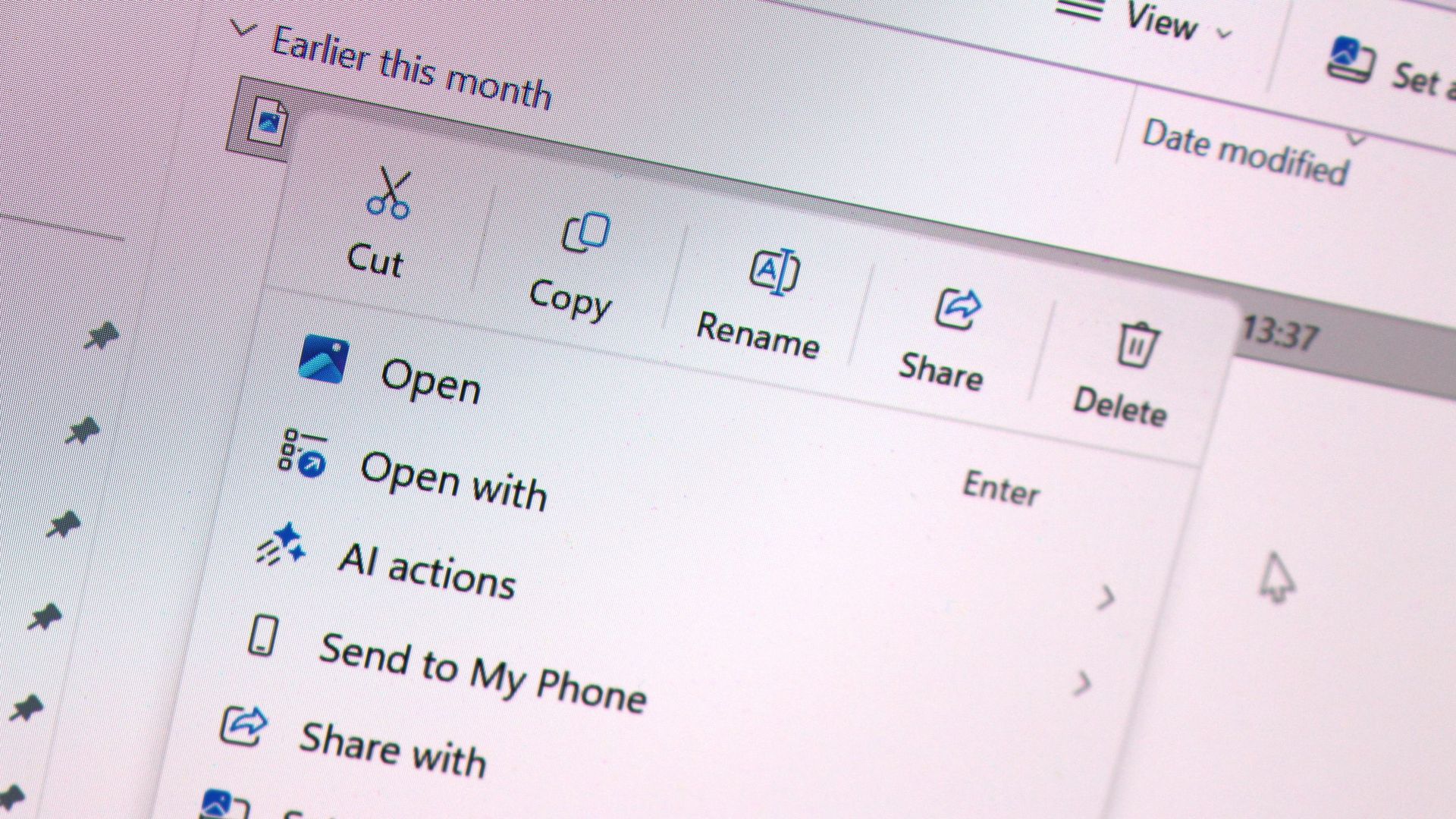
Microsoft has started rolling out its overhauled context menus for Windows 11 as part of this month's non-security feature update that was made available today. The update, known as KB5127936, is now generally available as an optional release. "This update introduces an updated context menu that is faster, simpler, and more customizable," Microsoft says. "The updated menu opens more quickly, reduces clutter, and gives you more control over the commands and app ex
Microsoft has started rolling out its overhauled context menus for Windows 11 as part of this month's non-security feature update that was made available today. The update, known as KB5127936, is now generally available as an optional release.
"This update introduces an updated context menu that is faster, simpler, and more customizable," Microsoft says. "The updated menu opens more quickly, reduces clutter, and gives you more control over the commands and app extensions that appear when you right-click."
These improvements are part of the company's ongoing "Windows K2" effort, which focuses on making core OS improvements that address complaints and issues from users. For a long time, context menus of Windows 11 have been slow, cluttered, and confusing, but today's update changes that.
Now, context menus open instantly, and they can also be customized by the user. Microsoft outlines the following customization options being added to Windows 11 with this new update:
Turn built-in Windows commands, such as Send to and Create shortcut, on or off.
Add commands such as Print to the context menu.
Choose which app extensions appear in the main menu or a submenu or hide the app extensions submenu.
Display Cut, Copy, Paste, Rename, Delete, and Share directly in the menu instead of as a row of icons.
Move Properties to the bottom of the context menu.
These new context menus also appeal to Windows 10 users, as they enable the ability to restore common actions such as cut, copy, and paste in the vertical list view instead of horizontally along the top of the menu. You can also turn off apps that might appear within the context menu.
Today's update includes more than just an overhauled context menu system, too. The new Xbox task view interface is also rolling out, along with updates to File Explorer and Windows Settings. Be sure to check out the changelog for the full list of changes.
Unfortunately, all of these new features are rolling out gradually, which means you likely won't see them right away. You need to ensure the "Get the latest updates as soon as they're available" toggle is enabled in Windows Settings to get them quicker, but you'll still have to wait before they appear.
Join us on Reddit at r/WindowsCentral to share your insights and discuss our latest news, reviews, and more.

 Connexion