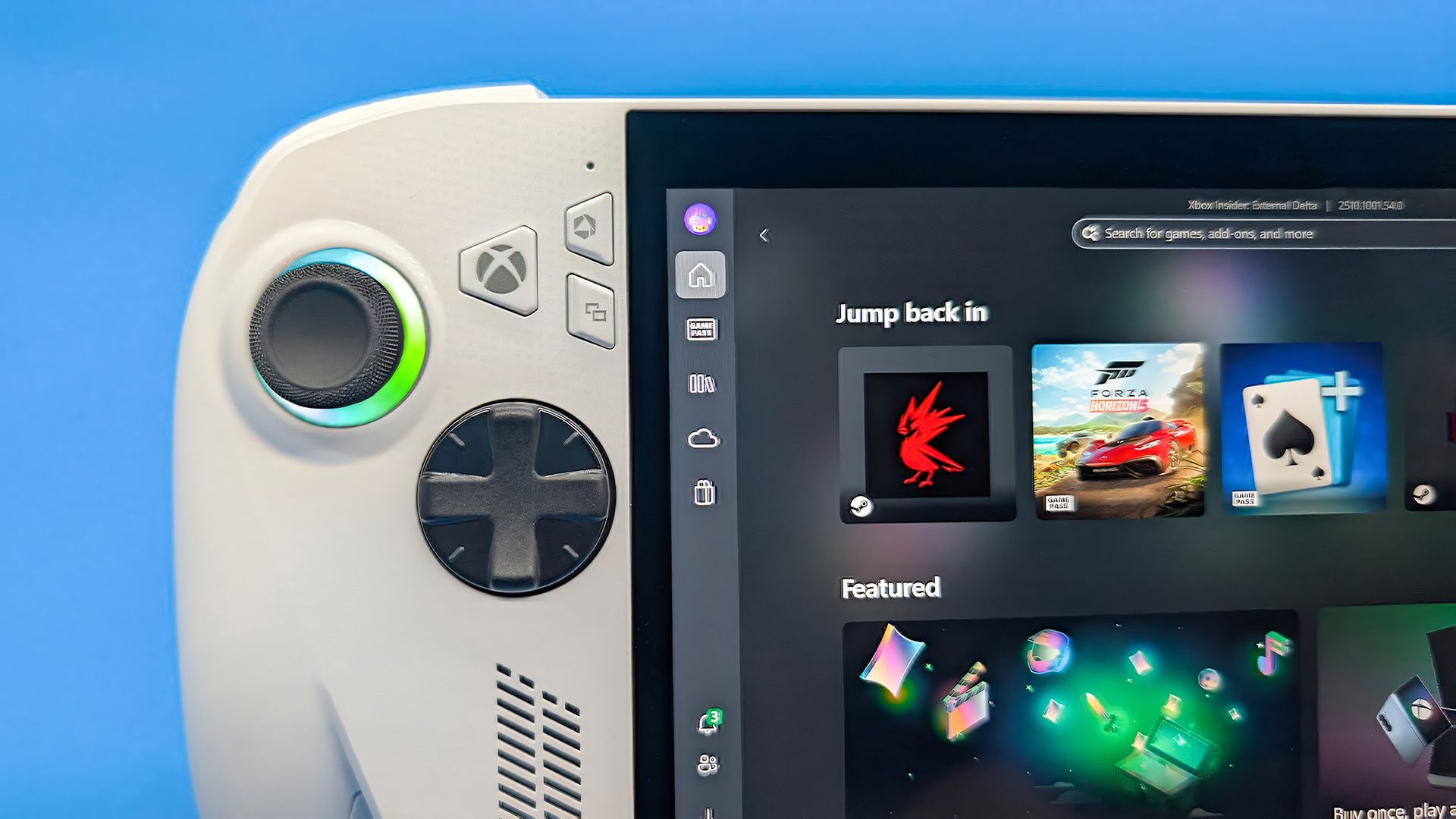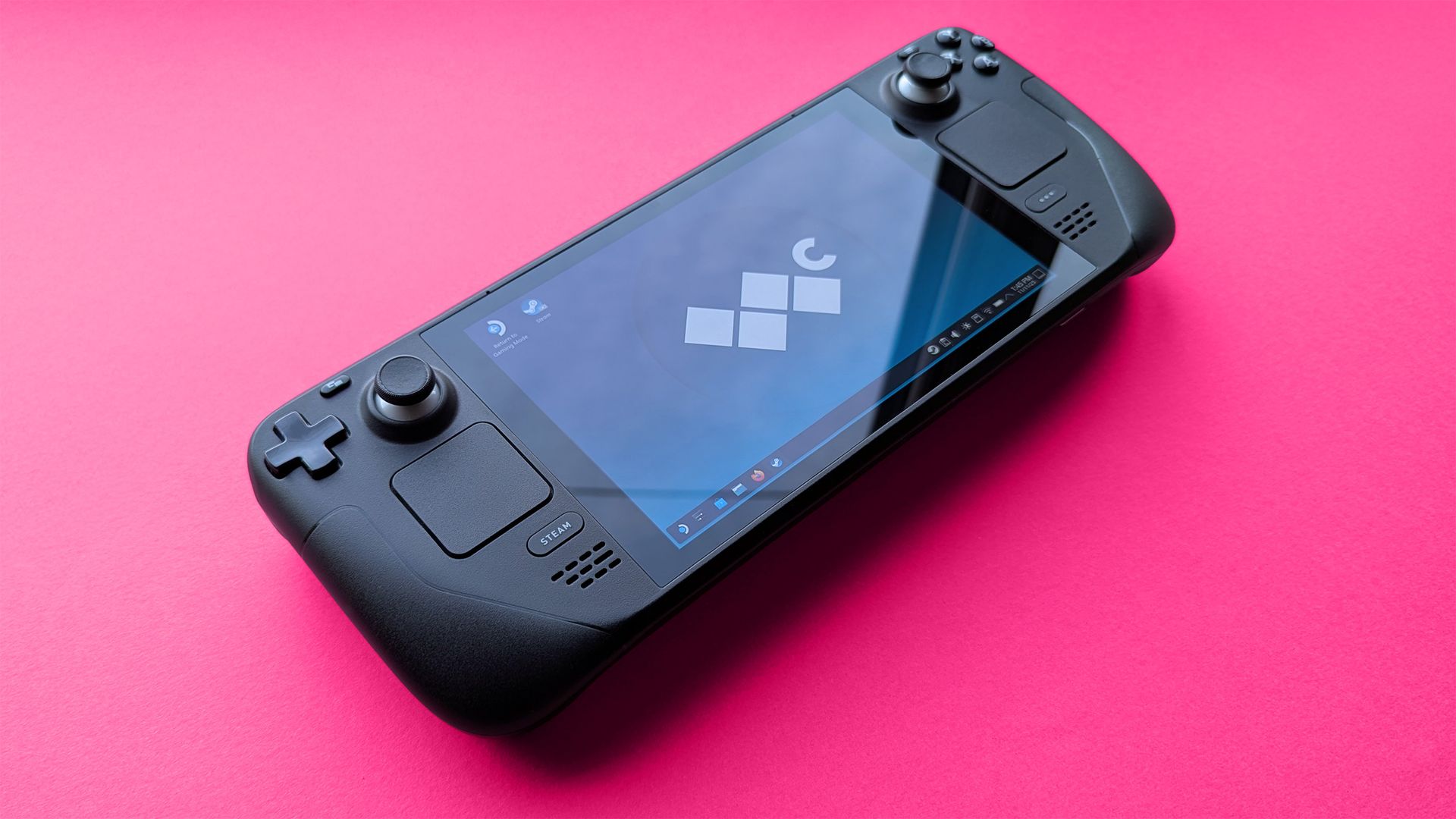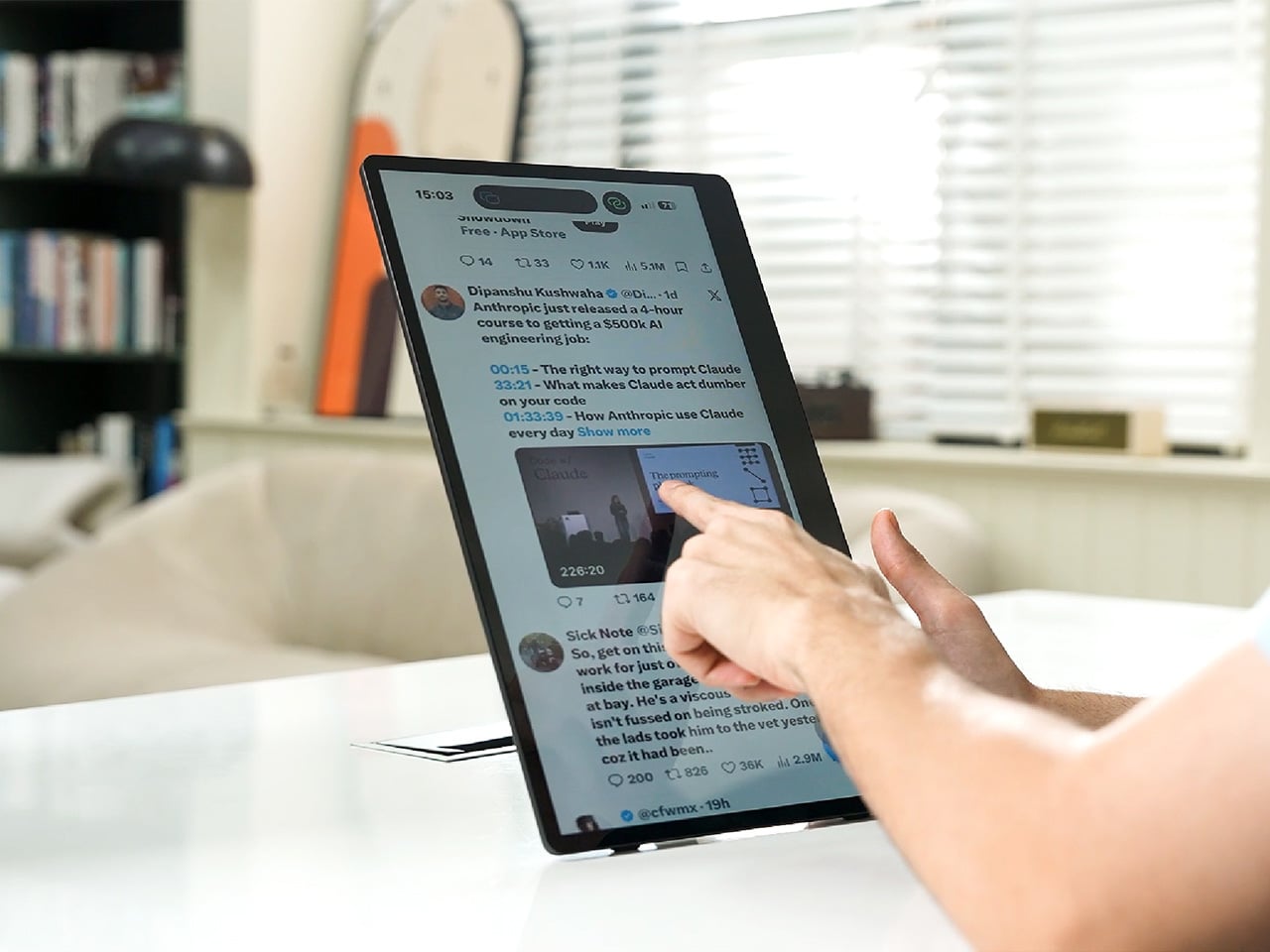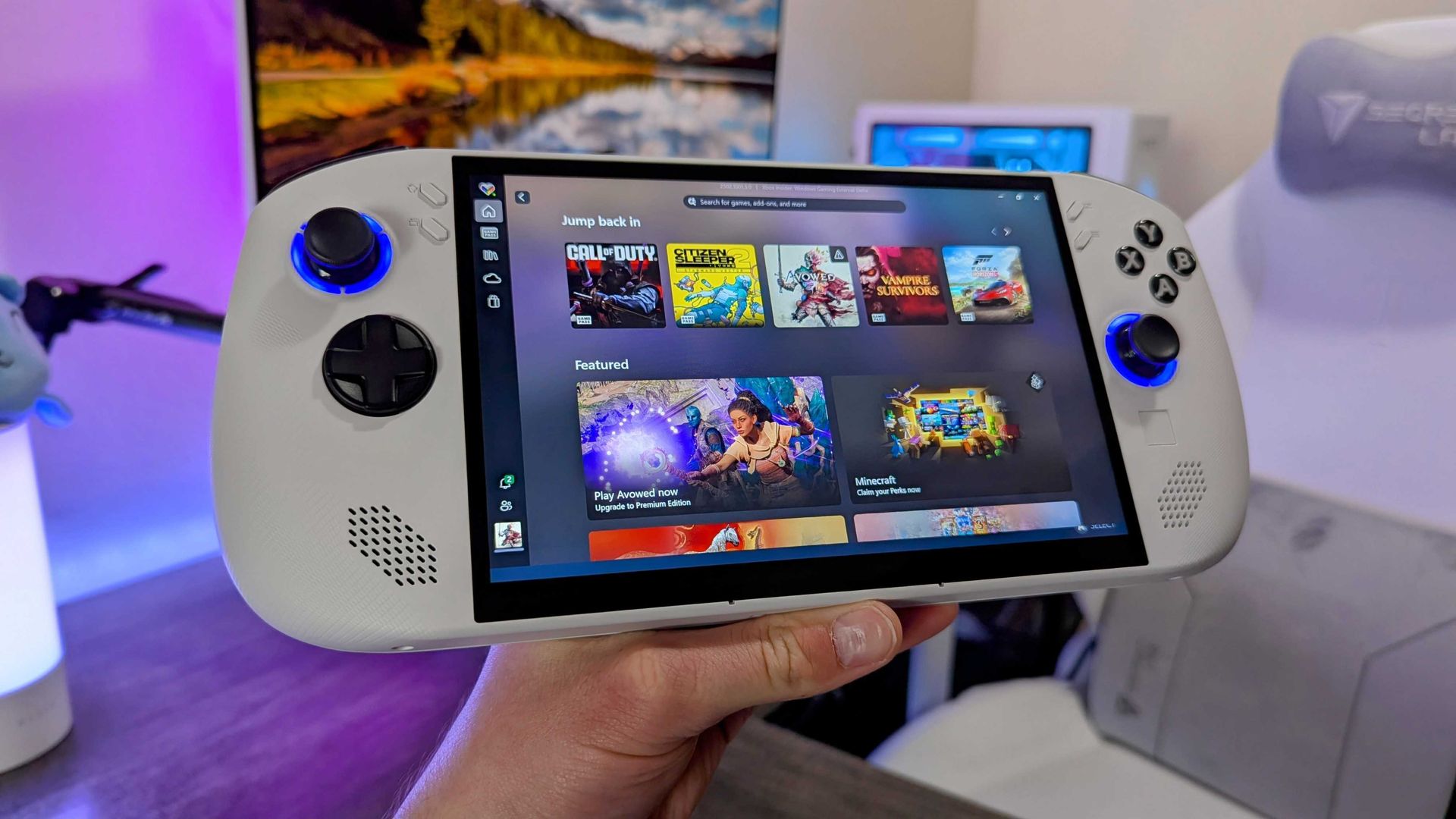
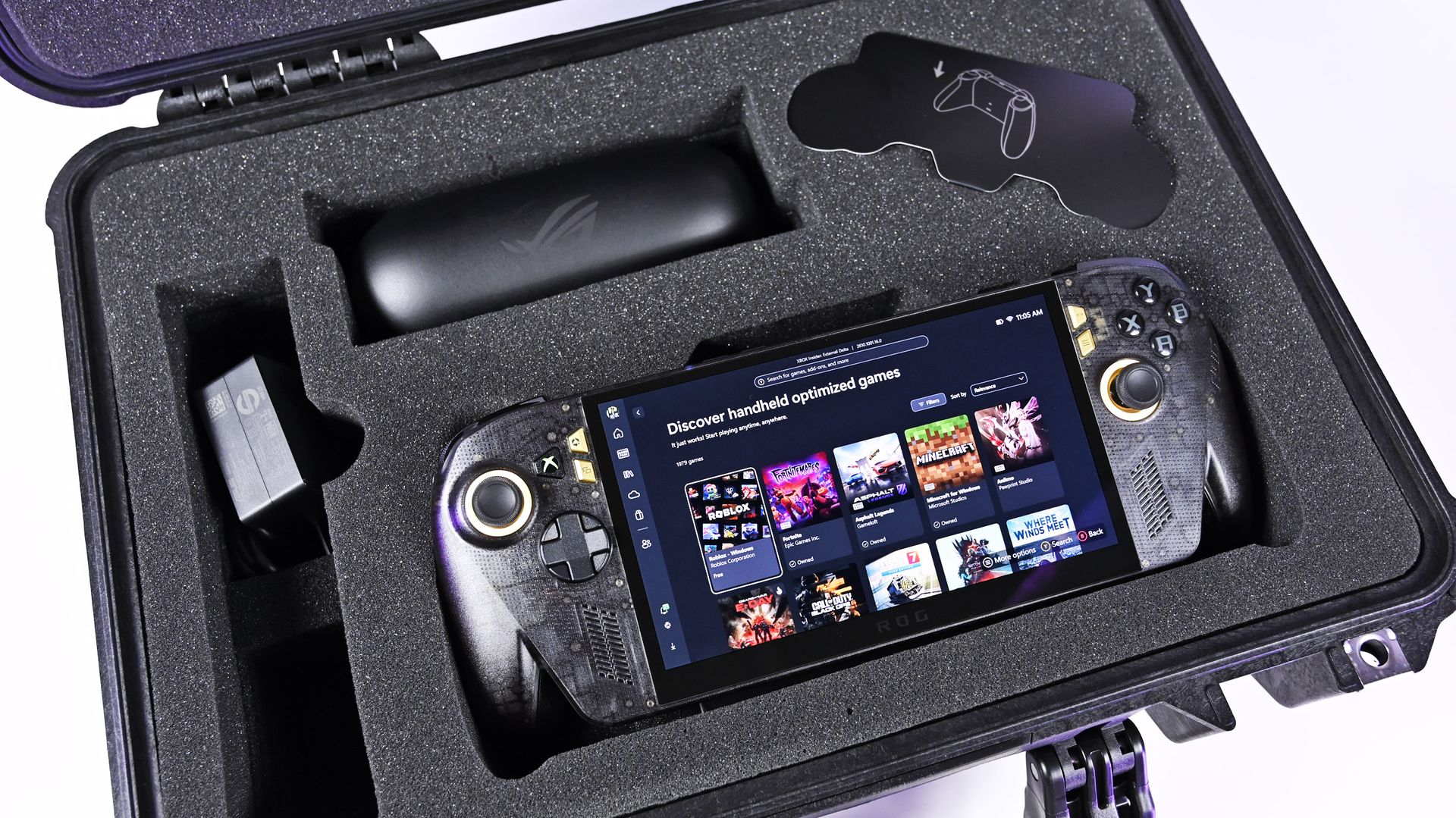
Winhanced is a launcher that essentially replaces Xbox Mode on your Windows handheld. Instead of simply fullscreening the Xbox app, Winhanced gives you a fully featured user interface that connects to your Xbox, Steam, GOG, and Epic libraries, alongside support for emulators, other apps, and much more.I've talked quite extensively about Winhanced here on Windows Central, using the launcher for quite some time on my own handhelds, and seen it in both its current,
Winhanced is a launcher that essentially replaces Xbox Mode on your Windows handheld. Instead of simply fullscreening the Xbox app, Winhanced gives you a fully featured user interface that connects to your Xbox, Steam, GOG, and Epic libraries, alongside support for emulators, other apps, and much more.
I've talked quite extensively about Winhanced here on Windows Central, using the launcher for quite some time on my own handhelds, and seen it in both its current, near-complete state and its not-so-complete state a few months back.
The launcher is nearing version 1.0, which I’m sure I’ll cover when it releases, as the sneak peek I’ve seen — and will discuss closer to release — is extremely exciting. However, version 0.9.9.9 is available today and boasts new features and improvements. These are just a few that caught my attention:
Friend cards, letting you message your friends, see what they’re doing, view their profiles, and more. (Public)
Better integration with Discord, Steam, Xbox, and PlayStation. (Public)
PC streaming through the new Winhanced Streaming Companion. (Public)
Install Windows updates without leaving Winhanced. (Public)
Improved driver detection for updating your handheld’s drivers through Winhanced. (Public)
Game theme music, including the option to choose your own tracks. (Public)
Improved Epic and GOG downloads, including resumable downloads. (Public)
Create your own collections for easier access to different groups of games. (Early Access)
A Discord server browser that can be navigated with a controller. (Early Access)
Those are just a handful of the additions, and 0.9.9.9 also includes substantial behind-the-scenes work to improve how Winhanced works in general, making it a pretty seamless experience. If you're interested, I urge you to join the Winhanced Discord and check out the full release notes because there’s simply far too much for me to reasonably cram into one overextended post without getting into the weeds.
I’ve moaned since the day I got my Xbox Ally X about just how unpolished and, frankly, disappointing the user experience was. Winhanced has genuinely changed that for me, though, and made me much more willing to pick up my Xbox Ally X and actually play games on it, which isn’t something I can say for the other launchers I’ve tried.
If you’ve tried Winhanced before and found it too buggy, I’d suggest giving it another shot now. A big part of 0.9.9.9 focused on squashing hardware-related bugs and improving consistency across supported handhelds, with the developer describing this release's device consistency as finally at a "1.0 level."
If Winhanced isn’t your thing, though, that’s okay too. Xbox Mode is improving, but I'll still use this instead. Let me know your thoughts in the comments, or just drop a vote on the poll!
Join us on Reddit at r/WindowsCentral to share your insights and discuss our latest news, reviews, and more.
- Contient des liens affiliés Amazon -
Un emplacement M.2 finalement, ce n'est rien d'autre qu'un bonne vieille connexion PCIe d'une à quatre lignes selon la machine (sauf quand il est câblé en SATA, mais ça, j'en reparle à la fin). Et en général, comme le montre la photo ci-dessous, ce qu'on y met, c'est un SSD pour avoir du stockage rapide et efficace
Emplaceme
Un emplacement M.2 finalement, ce n'est rien d'autre qu'un bonne vieille connexion PCIe d'une à quatre lignes selon la machine (sauf quand il est câblé en SATA, mais ça, j'en reparle à la fin). Et en général, comme le montre la photo ci-dessous, ce qu'on y met, c'est un SSD pour avoir du stockage rapide et efficace
Emplacement d'un M.2 sur la carte mère d'un laptop (
source
)
Mais aujourd'hui, on va s'ouvrir un petit peu l'esprit sur cet emplacement M.2, parce que OUI, rien ne vous oblige à y mettre un SSD !
Mais avant de commander quoi que ce soit, sortez le manuel de votre carte mère ou la doc de votre mini-PC et regardez le type (PCIe ou SATA) de votre connecteur M.2, le format accepté et surtout le nombre de lignes de cet emplacement.
Le nombre de lignes, c'est le nombre de voies de circulation entre la carte M.2 et le processeur. Plus il y en a, plus ça va vite, donc en général, pour une carte réseau, une ligne (x1) ou deux (x2) suffisent. Mais si vous partez sur une carte graphique, il faudra 4 lignes minimum (x4).
Par exemple, le Beelink ME Mini
, lui, dispose de 5 emplacements PCIe 3.0 x1 et un seul en x2. Et sur
une ASRock B850 Pro-A
, le 4e emplacement M2 tourne en x4... mais retombe en x2 dès qu'un disque occupe l'un des autres ports M.2 en SATA3.
Regardez aussi ce que l'emplacement partage, car sur cette même carte mère ASRock, occuper par exemple le 3ème emplacement désactive purement et simplement le slot PCIE2. Vérifiez aussi que la puce du contrôleur M.2 dispose bien d'un pilote pour votre système, et demandez-vous par où passera le câble car mis à part l'accélérateur IA que je vous présente un peu plus bas, toutes les cartes qui suivent traînent un truc derrière elles. Donc, il faudra peut-être découper votre boîtier ou laisser dépasser des trucs...
Allez, c'est parti !
Une carte réseau 5 ou 10 GbE
Pour un NAS ou un routeur maison,
la carte 5 GbE de KALEA
à 29,90 € embarque une Realtek RTL8126 qui se branche sur un emplacement à clé M ou B+M et déporte son port RJ45 sur une équerre classique de PC. Et bonne nouvelle, comme la RTL8126 est une puce PCIe 3.0 x1, une seule ligne suffit ! Elle est reconnue par
le pilote r8169 de Linux
depuis le noyau 6.9, et sous FreeBSD (donc OPNsense ou pfSense) par
le pilote officiel de Realtek
, realtek-re-kmod, qui s'installe à part.
La carte 5 GbE de KALEA, avec son port RJ45 déporté sur une équerre
Maintenant, si vous voulez du 10 GbE,
la carte de REKONG
à 98,32 € passe par une Marvell AQC113. Et si j'en crois la fiche du vendeur, elle accepte du Gen4 x1 ou du Gen3 en x4, x2 et x1. Sauf qu'une ligne Gen3, c'est 8 Gbit/s, ce qui veut dire que sur un emplacement Gen3 x1, elle plafonnera sous ses 10 Gbit/s. Donc à ce prix-là, autant prendre la 5 GbE. Par contre, en Gen3 x2 (16 Gbit/s) ou en Gen4 x1 (32 Gbit/s), elle pourra tenir les 10 Gbit/s sans problème,
Côté logiciel, Linux la gère avec son pilote atlantic, mais sous OPNsense, c'est une autre histoire. Le pilote FreeBSD d'Aquantia, lui, ne prend pas en charge l'AQC113 et il faudra
passer par un pilote communautaire
.
Un accélérateur IA pour Frigate
Si vous faites tourner
Frigate pour vos caméras
, oubliez le Google Coral, qui
n'est plus recommandé par Frigate
. Mais attention, avant d'acheter un autre accélérateur IA à la place, regardez d'abord si votre processeur ne sait pas déjà faire le boulot, car le détecteur OpenVINO de Frigate tourne sur le GPU intégré des processeurs Intel de 6e génération ou plus récents. Un N100, par exemple, analyse une image en 15 ms environ avec MobileNetV2, sans rien acheter de plus, donc vous n'en aurez peut-être même pas besoin.
Par contre, si ça ne suffit plus,
le module Hailo-8 de LUCKFOX
à 201,59 € vous amènera 26 TOPS sur une interface PCIe Gen3 à quatre lignes. Frigate le prend en charge, avec environ 7 ms par image, mais mesurées avec YOLOv6n, donc c'est loin d'être comparable aux 15 ms du N100.
Maintenant, le truc cool, c'est que vous n'avez pas besoin d'un emplacement x4. La preuve,
l'AI HAT+ 26 TOPS
de Raspberry Pi, construit autour du même Hailo-8, tourne sur le port PCIe du Pi 5, qui n'a qu'une seule ligne. Un emplacement M.2 en x1 fera donc l'affaire, même si Frigate note que les PC x86 à deux lignes font mieux que le Pi.
Le module M.2 Hailo-8, avec sa puce sous un capot métallique
Une carte graphique externe en OCuLink
Ici, c'est la seule carte de la liste qui exige un emplacement x4.
L'adaptateur OCuLink de RIITOP
à 36,95 € transformera instantanément votre port M.2 en prise OCuLink PCIe 4.0 x4 (jusqu'à 64 Gbit/s). On doit ensuite le relier au
dock Minisforum DEG1
(prix 109,00 €), sur laquelle se plug la carte graphique (à acheter séparément avec son alim) et se branche sur une alimentation ATX ou SFX. Le câble OCuLink, lui,
est livré avec le dock
.
L'adaptateur M.2 de RIITOP et sa prise OCuLink
Notez que le DEG1 de Minisforum n'est compatible qu'avec les machines qui gèrent le PCIe 4.0 x4, donc visez un emplacement Gen4 x4. Et l'OCuLink ne se branche pas à chaud, faudra éteindre le PC avant.
Le dock DEG1 de Minisforum, avec le slot qui reçoit la carte graphique
Et si vous préférez rester à l'intérieur du boîtier,
la nappe ADT-Link
à 35,45 € ressortira l'emplacement M.2 en slot PCIe x16 prévu pour une carte graphique. Alors je dis x16, mais c'est seulement au niveau du format PCIe 3.0 parce que la carte, en réalité, ne recevra que les lignes réellement disponibles de l'emplacement M.2.
La nappe R43SR d'ADT-Link, du connecteur M.2 au slot PCIe x16
Le port USB-C de façade qui ne sert à rien
Et si le port USB-C en façade de votre boîtier reste inerte faute de connecteur sur la carte mère,
l'adaptateur Type-E de CY
à 32,99 € transformera l'emplacement M.2 en connecteur interne Type-E à 20 Gbit/s. Il repose sur une ASMedia ASM3242, conçue pour quatre lignes PCIe Gen3 (sur deux, on tombe à 16 Gbit/s), et ne fait ni vidéo, ni audio, ni recharge PD.
L'adaptateur M.2 de CY, son connecteur Type-E et son dissipateur
Maintenant, si un connecteur USB 3.0 à 19 broches est encore libre,
un simple adaptateur EZDIY-FAB
à 14,99 € réveillera ce port en USB 3.2 Gen 1, sans avoir à toucher à votre emplacement M.2.
L'adaptateur en L d'EZDIY-FAB, vu sous deux angles
Six ports SATA de plus
Côté stockage,
le contrôleur SATA de Namvo
à 29,99 € vous ajoutera 6 ports SATA 6 Gbit/s grâce à
une ASMedia ASM1166
, reliée en PCIe Gen3 x2. Ça fait 16 Gbit/s à partager entre les 6 disques, et moitié moins sur un emplacement x1.
Le contrôleur SATA de Namvo
Du Wi-Fi 6E
Enfin, pour ajouter du Wi-Fi 6E à une tour qui n'en a pas, il vous faudra
un module Intel AX210
à 28,37 € et
un adaptateur Jectse
à 9,62 € qui le fera tenir dans un emplacement à clé M. Comme Intel documente son AX210 comme étant du Wi-Fi (PCIe) et BT (USB), l'adaptateur fait passer le Wi-Fi par une ligne PCIe et le Bluetooth par un petit câble USB 2.0 fourni, à relier à un connecteur interne de la carte mère. Et les antennes ne figurent ni sur la fiche du module ni dans le colisage de l'adaptateur, donc faudra les acheter à part.
Méfiez-vous par contre de la liste de compatibilité de la fiche Jectse, qui dit supporter aussi l'AX201.
Intel classe ce module
en "M.2: CNVio2", et pas en PCIe et USB. Bref, attention à bien prendre un AX210 et pas un 201
Voilà et si votre emplacement libre s'avère être câblé en SATA, bah oubliez toutes ces cartes... Toutes ces cartes parlent uniquement le PCIe. Il ne vous restera alors plus qu'à y mettre un SSD SATA... Snif.
I've been a PC gamer for as long as I can remember, pushing my earliest family desktop computers to their limits by installing a single copy of Command and Conquer to their tiny hard drives, before eventually building my own rigs with a meager part-time job wage and a bright-eyed idea of what good value components looked like.These days, I do most of my gaming on my still-loved Steam Deck, the Linux-based handheld from the same company behind the massive PC game
I've been a PC gamer for as long as I can remember, pushing my earliest family desktop computers to their limits by installing a single copy of Command and Conquer to their tiny hard drives, before eventually building my own rigs with a meager part-time job wage and a bright-eyed idea of what good value components looked like.
These days, I do most of my gaming on my still-loved Steam Deck, the Linux-based handheld from the same company behind the massive PC game storefront, Steam. It runs practically every game originally designed for Windows, and for the ones that it struggles with, I fall back on cloud gaming on services like GeForce NOW and Xbox Cloud.
Until now, I've pushed as many curious gamers as possible toward handheld gaming PCs, easing them in with budget-friendly options before watching them grow an appetite for high-end examples of excess that squeeze the capabilities of traditional gaming laptops into a compact form factor. However, one seems to have stuck closer to its MSRP, while many others become pipe dreams.
"Power of XBOX. Freedom of Windows. Craftmanship of ROG."View Deal
Somehow, the XBOX Ally is holding strong
It's a modest machine inside, but the ergonomics make the ROG Xbox Ally worth your attention. (Image credit: Jez Corden | Windows Central)
As it stands, the ROG XBOX Ally sells for $599.99 at Best Buy, which is the same price it launched at when we tested it for our XBOX Ally review. Right now, it holds an average 4.4/5 rating among at least 930 customer reviews from that listing alone, and they seem quite happy with its price-per-performance ratio.
Then again, the ROG XBOX Ally can reach a higher 120Hz refresh rate than the Steam Deck OLED's 90Hz, though you'll have to find a lightweight PC game that runs well enough to show those theoretical benefits of smoother visuals, with support for the Ally's variable refresh rate (VRR) that helps to reduce screen tearing and frame pacing inconsistencies.
"But, it runs Windows!"
Lenovo's Legion Go S arrived without too much fanfare. (Image credit: Windows Central | Zachary Boddy)
Usually snared by the inevitable cost of a Windows license for each corresponding handheld, the appeal of Valve's in-house 'SteamOS' operating system became obvious in the category's formative years. However, alternatives initially designed around that prospect, such as Lenovo's Ryzen Z2 Go-based Legion Go S, now cost around $989.99.
Of course, the repeated blame for these price hikes lands squarely on the memory crisis driven by massive-scale AI hardware infrastructure, which shows no signs of slowing down in the near future. Gamers are essentially stuck between a rock and a hard place as most components become unaffordable, which somewhat softens the OS argument on the PC side.
Because ultimately, there's nothing stopping anyone from installing SteamOS on a ROG XBOX Ally (or any other Windows-based handheld, for that matter). The experience will vary between devices, but to date, none of the major players have arbitrarily locked their products to Windows 11. If, despite all the awful odds, the Ally can maintain its price, it could become the mainstream choice.
Availability also seems fine for the white XBOX Ally, unlike ultra-high-end variants like the "mind-blowing" MSI Claw 8 EX AI+ and its $1,799 price tag, which apparently convinced flush gamers to spend, but its stock couldn't keep up. For handhelds targeting far below $1,000 — the realm of sensible spending — XBOX is surprisingly beating Valve. Will it last? I'd love to believe it.
Join us on Reddit at r/WindowsCentral to share your insights and discuss our latest news, reviews, and more.
Valve's popular Steam Deck handheld pushed handheld gaming PCs into the mainstream with its affordable, Linux-based console, and its potential successor seemingly aims to make the same impact. Speaking to IGN's Jacqueline Thomas, Valve software developer Pierre-Loup Griffais touched on the fabled 'Steam Deck 2' and whether the ongoing RAM crisis could affect its development.We want to make sure there's a very delineated performance improvement for something like
Valve's popular Steam Deck handheld pushed handheld gaming PCs into the mainstream with its affordable, Linux-based console, and its potential successor seemingly aims to make the same impact. Speaking to IGN's Jacqueline Thomas, Valve software developer Pierre-Loup Griffais touched on the fabled 'Steam Deck 2' and whether the ongoing RAM crisis could affect its development.
We want to make sure there's a very delineated performance improvement for something like a future Steam Deck.
Pierre-Loup Griffais, Valve
When asked whether ongoing hardware shortages — which have already affected pricing for its Steam Machine PC and Steam Frame VR headset — have changed how Valve thinks about a Steam Deck successor, Griffais answered, "Not really." For now, it sounds like any potential 'Steam Deck 2' will target the same balance of performance and affordability as before, but is that realistic?
Steam Deck performance was crushed years ago
MSI Claw 8 EX AI+ stands as one of the best Windows-based handhelds today. (Image credit: Daniel Rubino)
For clarity, I use my Steam Deck almost every day, and it still powers through my library of built-for-Windows PC games with relative success. However, there's no denying its age, and the custom-made Zen 2/RDNA 2 APU doesn't stand a chance in many of the AAA games released in the past few years. For those demanding titles, plenty of Windows-based handhelds are far better suited.
Unfortunately, much like the Claw [8 EX AI+], the Steam Machine is a premium engineering marvel suffering from historically terrible macroeconomic timing.
Daniel Rubino, Windows Central
In that, I'm trying to stay grounded when I hear that Valve's plans haven't changed for the Steam Deck 2 (or whatever it might be called), because that never necessarily meant it would target the same price point as its first handheld. After all, the company just launched its new Steam Frame VR headset for $1,059, which is higher than it originally planned (via PC Gamer).
So, Valve is stuck between a rock and a hard place: sourcing a follow-up (presumably also custom-made) processor and the corresponding components for a mass-produced handheld without pricing it so high that it loses mainstream appeal. It won't be easy, and I wouldn't be surprised if we don't hear anything concrete about the Steam Deck 2 for a few years.
Join us on Reddit at r/WindowsCentral to share your insights and discuss our latest news, reviews, and more.
Desks are overrated. So are the cables that come with them. The 4URPC is a 15.6-inch wireless touchscreen monitor built for people who’d rather not be chained to an outlet just to get a bigger screen. It’s slim, self-powered, and ready to mirror whatever’s on your phone, tablet, or laptop the moment you need more room to work, watch, or play.
Cutting the cord doesn’t mean cutting functionality. The monitor mirrors an iPhone or Android device through a peer-to-peer wireless connection, no home W
Desks are overrated. So are the cables that come with them. The 4URPC is a 15.6-inch wireless touchscreen monitor built for people who’d rather not be chained to an outlet just to get a bigger screen. It’s slim, self-powered, and ready to mirror whatever’s on your phone, tablet, or laptop the moment you need more room to work, watch, or play.
Cutting the cord doesn’t mean cutting functionality. The monitor mirrors an iPhone or Android device through a peer-to-peer wireless connection, no home Wi-Fi or app required. For streaming platforms like YouTube, Netflix, or Hulu, connecting to Wi-Fi and tapping the built-in TV Cast icon sends video to the screen. Either way, there’s no dongle to lose or cable to untangle before the movie starts.
The more interesting trick happens after mirroring starts. The 10-point touchscreen can send input back to the connected phone, turning the monitor into a larger, shared control surface. Flip through photos with a friend, walk a colleague through a presentation, or hand someone the reins without handing over your phone. It’s a shift that makes shared screen time less awkward.
None of this would matter much if the monitor were bulky. At half an inch thick and just over 2 pounds, it’s built to disappear into a backpack rather than dominate it. The matte, textured shell keeps fingerprints and glare to a minimum, and a fold-out kickstand on the back means setup takes seconds on a desk, a kitchen counter, or the arm of a couch.
A built-in 4,000 mAh battery backs up that portability by taking the wall outlet out of the equation. Setting up on a train, in a hotel room, or on a patio doesn’t mean scouting for the nearest plug first. That same battery can lend a charge to a connected phone, turning the monitor into a backup power bank when the moment calls for it.
Plug it into a laptop with a USB-C cable, and the 4URPC switches roles, becoming an extended display rather than a wireless mirror. Dragging a browser tab, a chat window, or a reference document onto the second screen takes a second, and the touchscreen works over the wired connection. The laptop stays focused on the main task while the extra display handles everything else.
The screen also rotates between landscape and portrait without any fuss, which sounds minor until it changes how you use it day to day. Landscape suits video calls, games, and spreadsheets, while portrait mode fits scrolling through documents, reading long articles, or checking social feeds. Switching between the two takes a twist of the stand, not a trip through a settings menu.
Compatibility runs wide enough that most people won’t need to think twice before connecting. Wireless mirroring covers iPhones, Android phones running version 10 or later, MacBooks, and most Windows laptops, while the wired USB-C or HDMI input works with game consoles, streaming boxes, and the Nintendo Switch. There’s no software to install and nothing to configure; connecting the device and turning it on is the entire setup process.
Under the glass sits a 1920×1080 matte IPS panel running at 60 Hz, built more for comfortable, glare-free sessions than eye-popping color numbers. Dual USB-C ports split power delivery and video duties, small stereo speakers cover casual audio, and a VESA mount plus a standard camera screw thread add mounting options beyond the built-in stand. It’s a practical set of choices rather than a flashy one.
There’s something telling about a monitor that assumes you won’t always be sitting at the same desk tomorrow. Work has scattered across kitchen tables, coffee shops, and airport gates for a while now, and screens are only starting to catch up. The 4URPC doesn’t try to be the sharpest or brightest display around; it just tries to be wherever you happen to land next.
Running a serious AI model at home usually means renting someone else’s cloud server and hoping your data stays private along the way. MINISFORUM built its newest pairing to remove that trade-off entirely. The AI Agent NAS N5 MAX-P495 and AI Mini Workstation MS-S1 MAX-P495 combine for up to 131 TOPS of AI compute performance, 192GB of memory at 8533 MT/s, and up to 160GB of graphics memory, enough headroom to keep the heavy lifting on a desk instead of in a data center.
The N5 MAX-P495 takes th
Running a serious AI model at home usually means renting someone else’s cloud server and hoping your data stays private along the way. MINISFORUM built its newest pairing to remove that trade-off entirely. The AI Agent NAS N5 MAX-P495 and AI Mini Workstation MS-S1 MAX-P495 combine for up to 131 TOPS of AI compute performance, 192GB of memory at 8533 MT/s, and up to 160GB of graphics memory, enough headroom to keep the heavy lifting on a desk instead of in a data center.
The N5 MAX-P495 takes the shape of a compact black cube, but what it holds inside matters more than how it looks sitting on a shelf. It combines powerful AI computing with up to 200TB of local storage, enabling users to store, manage, and process large volumes of data within a single AI platform. That capacity turns a spare corner of an office into a private archive large enough to hold years of project files, footage, or research without ever touching a third-party server.
Designer: MINISFORUM
Storage alone doesn’t make an AI system useful, so MINISFORUM built the N5 to run the AI itself. From RAG knowledge bases and AI models to embeddings, databases, and AI agents such as OpenClaw and Hermes, N5 MAX-P495 keeps data and AI workloads local, enabling continuous and private AI operations. A small business could lean on that setup to run its own customer-support agent without routing conversations through an outside company’s servers.
That local-first approach extends to how the N5 fits into a larger setup. Designed to work alongside AI computing devices, N5 MAX-P495 serves as a centralized backend for data, models, knowledge, and long-running AI workloads, bringing storage and computing together at the edge. It’s less a standalone gadget and more a quiet engine room, built to keep working in the background while something faster handles the parts people actually interact with.
That faster half of the pairing is the MS-S1 MAX-P495, a compact tower wrapped in a ventilated, diamond-textured front panel that looks more like a piece of desk sculpture than a workstation. It delivers powerful local AI computing for demanding model inference, AI development, and computationally intensive workloads, built for intensive local AI tasks, engineering, and workflows in an ultra-compact footprint. Developers get workstation-class muscle without giving up desk space to a full tower case.
Speed matters just as much as raw power for certain jobs, and MINISFORUM designed the MS-S1 with that in mind. Designed for low-latency AI workloads, MS-S1 MAX-P495 enables responsive local inference for AI agents, computer vision, generative AI, and other real-time applications. A security camera system or a live creative tool built on generative AI benefits directly from that kind of immediate response instead of waiting on a round trip to the cloud.
Connectivity rounds out the workstation’s role in a larger setup. With extensive connectivity and expansion capabilities, MS-S1 MAX-P495 serves as a powerful AI compute frontend, supporting models, applications, and connected devices across flexible edge AI environments. That flexibility means the same box can sit at the center of a home lab or plug into a small studio’s existing hardware without forcing a rebuild.
Paired together, the two devices split the work the way a good team would. The MS-S1 MAX-P495 and N5 MAX-P495 form a complete edge AI computing system, delivering high-performance AI compute at the frontend while integrating compute, massive storage, data, and AI knowledge at the backend, providing a powerful foundation for real-time inference, persistent AI workloads, and scalable local AI applications. It’s a compact answer to a question more households and small teams are starting to ask: whether AI still needs to live somewhere else at all.
Acer’s DualPlay Mini combines gaming controls with a physical keyboard, but can the 8-inch handheld replace a travel laptop for everyday work?
The post Acer DualPlay Mini: Can a Gaming Handheld Replace Your Laptop? appeared first on TechRepublic.
ASUS has officially opened pre-orders for the ROG Xbox Ally X20, confirming that the company's 20th anniversary handheld gaming PC will be available both as a premium standalone device and as part of a bundled package when it launches on October 15.In the United States, customers can now pre-order the ROG Xbox Ally X20 standalone model for $1,299.99 MSRP, while the fully loaded ROG Xbox Ally X20 Bundle is priced at $2,499.99 MSRP. Both versions will be available
ASUS has officially opened pre-orders for the ROG Xbox Ally X20, confirming that the company's 20th anniversary handheld gaming PC will be available both as a premium standalone device and as part of a bundled package when it launches on October 15.
In the United States, customers can now pre-order the ROG Xbox Ally X20 standalone model for $1,299.99 MSRP, while the fully loaded ROG Xbox Ally X20 Bundle is priced at $2,499.99 MSRP.
While ASUS originally introduced the X20 as a special anniversary edition, the more time we've spent learning about the device, the clearer it becomes that this isn't simply a commemorative refresh. The ROG Xbox Ally X20 is effectively a significant mid-generation upgrade to the existing ROG Xbox Ally X, bringing meaningful hardware, display, thermal, and control improvements that go well beyond a new paint job or limited-edition branding.
Pre-order
ASUS
ROG Xbox Ally X20
A refined celebration of ASUS’s gaming legacy, the Ally X20 Anniversary Edition pairs its upgraded Ryzen AI Z2 Extreme chip with a vibrant 7.4‑inch OLED HDR display and a boosted 80 Wh battery. It’s a sleeker, more efficient Windows gaming handheld built to mark the milestone with sharper visuals, quieter thermals, and longer play sessions.
A true upgrade, not just an anniversary model?
At first glance, the X20's translucent-inspired design and special 20th anniversary touches may suggest that this is primarily a collector's edition. Under the chassis, however, ASUS has made extensive engineering changes compared to the existing ROG Xbox Ally X that directly impact the gaming experience.
The most obvious upgrade is the display.
The ROG Xbox Ally X20 moves from the current model's 7-inch screen to a larger 7.4-inch OLED panel, while also delivering substantial improvements in brightness and HDR performance. The display now supports 600 nits SDR brightness, up to 1,400 nits peak HDR brightness, and includes Dolby Vision support alongside ASUS' ROG Nebula HDR technologies.
For handheld gaming, display quality is often one of the most noticeable aspects of the user experience, and the move to OLED alone represents one of the largest upgrades ASUS has made to the platform since launch.
Major internal redesign improves cooling and airflow
Direct front view of the translucent black ROG Xbox Ally X20 handheld gaming device displaying "20 ROG Anniversary" and "Dare to Innovate" on its screen. (Image credit: ASUS)
The display isn't the only part of the handheld receiving attention.
According to ASUS, the X20 features a completely redesigned PCB, allowing engineers to rethink the internal layout of the system. Surface-mounted USB4 ports enabled the motherboard to be repositioned, creating additional airflow opportunities within the chassis.
ASUS has also upgraded the cooling solution with revised fan and heatsink fin designs, while shifting motherboard placement by several millimeters to further improve thermal efficiency.
That may sound like a small change on paper, but thermals have become one of the defining factors of modern handheld gaming PCs. Better airflow and improved cooling can translate into lower temperatures, quieter operation, and more consistent performance during extended gaming sessions.
A better handheld for competitive gaming
A person reclining on a couch wearing ROG XREAL R1 AR glasses while holding the Ally X20 handheld, viewing a large virtual screen projection of a racing game. (Image credit: ASUS)
ASUS is also targeting enthusiasts who play fighting games, shooters, and other genres where input precision matters.
The ROG Xbox Ally X20 introduces hybrid metal dome switches for a more tactile D-pad feel, along with what ASUS calls a Transforming D-pad. The mechanism allows players to rotate the D-pad configuration to better align diagonals, providing an experience specifically designed with fighting games in mind.
The thumbsticks have also been upgraded to TMR magnetic induction sticks, offering Hall-effect-style benefits while reducing power consumption. ASUS says the sticks deliver roughly a 3% dead zone and improved precision compared with traditional alternatives.
From a visual standpoint, ASUS has doubled the RGB lighting count around the sticks, increasing from two LEDs to four LEDs per joystick.
Taken together, these changes may end up being just as important as the display improvements, especially for players who spend hundreds of hours with a handheld in their hands.
What's unchanged?
Back view of the translucent black ROG Xbox Ally X20 featuring textured hand grips, ventilation grilles, a gold diagonal stripe, and a 20th anniversary badge. (Image credit: ASUS)
Interestingly, ASUS has resisted changing several of the core specifications that already made the ROG Xbox Ally X one of the strongest Windows gaming handhelds available.
The ROG Xbox Ally X20 retains:
AMD Ryzen AI Z2 Extreme processor
24GB LPDDR5X-8000 memory
1TB PCIe Gen4 SSD storage
80Wh battery
USB4 connectivity with Thunderbolt compatibility
Wi-Fi 6E support
That's probably the right decision. The current Ally X platform already delivers excellent battery life and class-leading handheld performance, so ASUS appears to have focused on enhancing areas that users interact with directly rather than chasing specs for the sake of a marketing bullet point.
And to be fair, there is no newer AMD handheld chip on the market, so there's that!
Goodbye microSD, hello microSD Express
One notable hardware change involves expandable storage.
The traditional microSD slot has been removed and replaced with a microSD Express card reader, supporting dramatically faster storage speeds. ASUS cites support for microSD Express cards capable of approaching 1 GB/s transfer rates, bringing removable storage much closer to SSD-class performance
As game install sizes continue growing, that could become a more meaningful upgrade than many users initially realize.
Two ways to buy
Everything included in the $2,499 ROG Xbox Ally X20 bundle set. (Image credit: ASUS)
For buyers who only want the handheld itself, the new standalone version offers a straightforward path into the X20 experience.
Meanwhile, ASUS is also offering a premium bundle aimed at enthusiasts and collectors, because of course.
The ROG XREAL R1 AR glasses, which are its top-tier offering, is one of the reasons for the big price jump for the anniversay bundle package. (Image credit: ASUS)
Custom Pelican Protector Case with 20th anniversary badge
68W charger
That's a lot of stuff in that bundle, and it's cool to see dbrand officially teaming up with ASUS here for its famed Killswitch case (see our previous review). As far as that steep price, much of that comes down to the inclusion of the ROG XREAL R1 Edition glasses, which are currently sold separately, while these are, of course, matching in the 20th anniversary gold and black motif.
I've written about the current ROG XREAL R1's before, noting their crazy 240Hz micro‑OLED panels, letting you experience a portable (virtual) 171-inch screen. Along with their included dock, they cost $849.99.
ASUS now has one of the strongest handheld lineups on the market
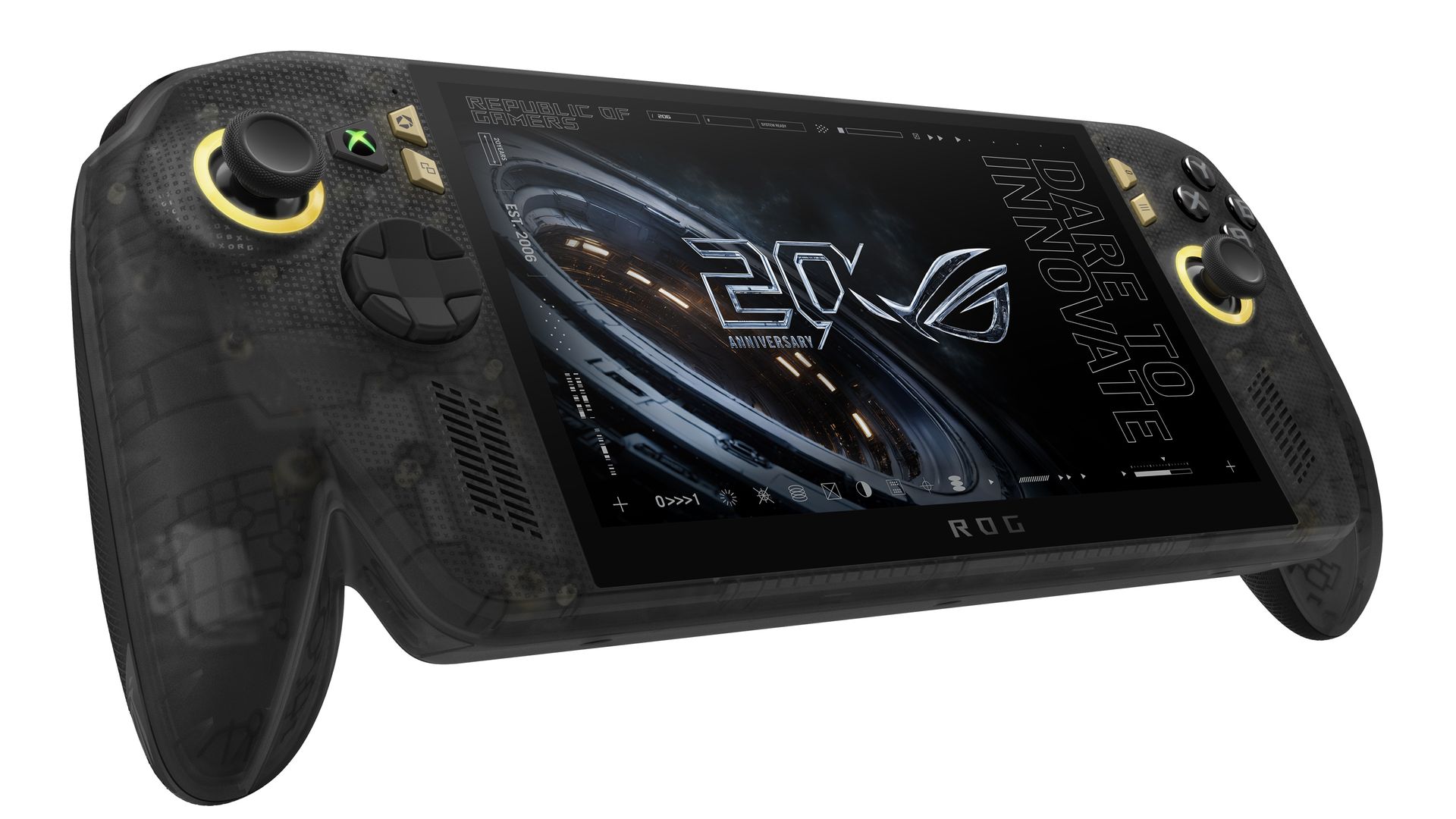
Angled front view of the translucent black ROG Xbox Ally X20 handheld console with gold joystick rings and screen displaying a 20th anniversary graphic. (Image credit: ASUS)
What's perhaps most impressive about the X20 launch is what it does to ASUS' overall handheld portfolio.
The company's lineup now spans three clear price tiers (assuming we don't see price increases):
That's a remarkably clean progression that gives buyers meaningful upgrade options at every budget level.
The X20 occupies a premium position without completely abandoning value-conscious enthusiasts. Even at $1,299.99, it remains roughly $500 below the eye-watering prices we've seen attached to some ultra-premium handhelds, including MSI's difficult-to-find Intel-powered Claw 8 EX AI+ configurations.
More importantly, the X20 differentiates itself with tangible quality-of-life improvements rather than simply adding more RAM or storage. The OLED display, revamped controls, enhanced cooling design, microSD Express support, and internal engineering changes all combine to create a device that feels genuinely evolved from the existing Ally X.
For a product marketed as an anniversary edition, that's arguably the biggest surprise of all.
The ROG Xbox Ally X20 may celebrate two decades of Republic of Gamers history, but its real significance is that it represents the most refined version of ASUS' handheld gaming platform yet—and now, for the first time, buyers can purchase it without needing to opt for the collector-focused bundle.
Pre-order
ASUS
ROG Xbox Ally X20
A refined celebration of ASUS’s gaming legacy, the Ally X20 Anniversary Edition pairs its upgraded Ryzen AI Z2 Extreme chip with a vibrant 7.4‑inch OLED HDR display and a boosted 80 Wh battery. It’s a sleeker, more efficient Windows gaming handheld built to mark the milestone with sharper visuals, quieter thermals, and longer play sessions.
Pre-order
ASUS
ROG Xbox Ally X20 Bundle
Twenty years of ROG innovation, marked by the limited ROG Edition 20 lineup in an exclusive colorway. The ROG XBOX Ally X20 Bundle carries that celebration forward, pairing the handheld with the ROG XREAL R1 Edition 20 Gaming AR glasses to create a complete gaming setup that travels with you.
Join us on Reddit at r/WindowsCentral to share your insights and discuss our latest news, reviews, and more.
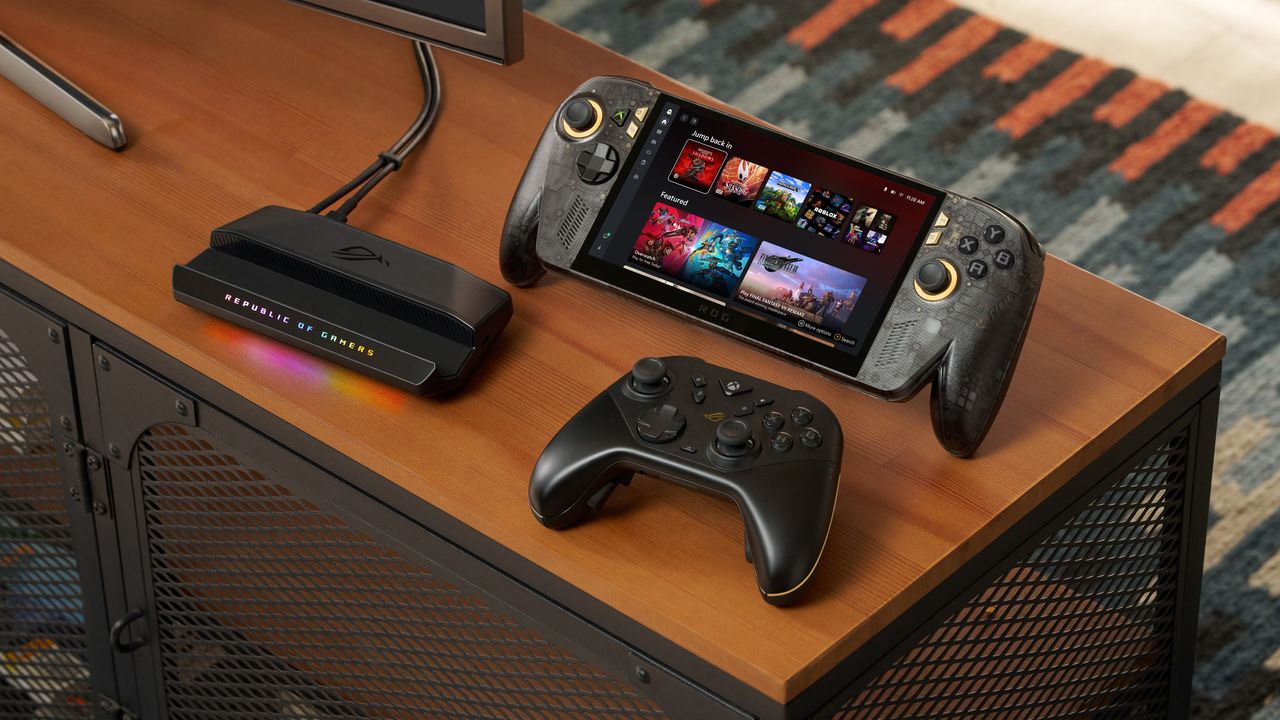
ROG Xbox Ally X20 handheld sitting upright on a desk setup alongside a black wireless controller and an RGB-lit Republic of Gamers dock station.
Le constructeur Geekom a retiré de ses anciennes pages de support un installeur de pilote réseau que plusieurs moteurs d'analyse classent comme malveillant. Le fichier s'appelle Install_PCIE_Win11_11.10.0720.2022_11222022.exe et il dormait dans l'archive LAN partagée par six mini-PC de la marque : A7, A8, AE7, AE8, AX7 Pro et AX8 Pro.
Le signalement part d'un utilisateur de r/MiniPCs sur Reddit, et du site
VideoCardz qui a vérifié lui-même
en téléchargeant l'archive directement c
Le constructeur Geekom a retiré de ses anciennes pages de support un installeur de pilote réseau que plusieurs moteurs d'analyse classent comme malveillant. Le fichier s'appelle Install_PCIE_Win11_11.10.0720.2022_11222022.exe et il dormait dans l'archive LAN partagée par six mini-PC de la marque : A7, A8, AE7, AE8, AX7 Pro et AX8 Pro.
Le signalement part d'un utilisateur de r/MiniPCs sur Reddit, et du site
VideoCardz qui a vérifié lui-même
en téléchargeant l'archive directement chez Geekom le 15 août dernier. VirusTotal, FileScan.IO, MetaDefender et YARAify réagissent tous les quatre, ce dernier en remontant même des signatures ClamAV qui nomment la famille Asruex.
Alors c'est déjà un peu chaud d'apprendre ça, surtout si vous avez un PC Geekom mais la problème c'est que ce n'est pas absolument pas une nouveauté !
En effet, le 29 décembre 2024, le propriétaire d'un AE8 explique
sur le forum ComputerBase
qu'il vient de réinstaller Windows, qu'il a pris ses pilotes sur le site du fabricant, et que Defender lui a sorti Trojan:Win32/Asruex.A au décompactage. Il dit ensuite avoir écrit à Geekom pour les prévenir.
20 mois plus tard,
Tom's Hardware décrit
sur les machines Geekom, des permissions administrateur, des frappes clavier interceptées et une connexion à un serveur de commande, et PCWorld raconte que des attaquants sont venus glisser une backdoor dans le paquet.
Ce fichier est donc bien un paquet Realtek générique, que
DriversCloud héberge et redistribue
depuis le 25 novembre 2022 et qui s'est fait vérolé ensuite en 2024. Sur l'origine de l'exemplaire qui traînait chez elle, Geekom dit dans
son communiqué du 18 août
qu'il s'agit d'une ressource obsolète oubliée sur de vieilles pages, mais jamais d'une intrusion.
Donc si vous avez téléchargé et lancé cet installeur LAN depuis une page support d'un de ces six modèles, vous êtes concerné !! Le Windows livré avec la machine n'est pas en cause, du moins d'après Geekom. Supprimez donc l'installeur, lancez un scan complet avec Windows Defender ou votre antivirus préféré, et récupèrez un pilote réseau faible chez Realtek ou directement via Windows Update.
De son côté, Geekom a invoqué la déesse de l'effet Streisand en demandant à VideoCardz de retirer son article mais VideoCardz a dit non évidemment...
Enfin !! Le
compteur du projet de décompilation
de GoldenEye 007 affiche dorénavant 208 fichiers traités sur 208, et cela pour les trois versions de la cartouche, japonaise et européenne comprises. Le dernier commit du dev KholdFuzion est d'ailleurs classe, puisqu'il porte le titre "*james bond will return. *".
Oh yeah !
Techniquement, le code
Enfin !! Le
compteur du projet de décompilation
de GoldenEye 007 affiche dorénavant 208 fichiers traités sur 208, et cela pour les trois versions de la cartouche, japonaise et européenne comprises. Le dernier commit du dev KholdFuzion est d'ailleurs classe, puisqu'il porte le titre "*james bond will return. *".
Oh yeah !
Techniquement, le code C reconstitué ressort du compilateur sous la forme d'une ROM identique à celle de 1997, octet pour octet. C'est précisément ce que veut dire le mot "matching" dans ces projets. Ce n'est donc pas un jeu équivalent qui se comporterait pareil que le jeu d'origine... Non, c'est exactement le même binaire !
Après comme vous vous en doutez, le dépôt, lui, n'embarque pas tous les assets nécessaires à la compilation, pour des questions de droits d'auteur comme d'hab. Le
README du projet
nous explique ainsi qu'il faut posséder une copie du jeu, et que les scripts iront extraire ce qui manque de votre côté.
Après c'est pas cette recompilation qui fait que GoldenEye devient soudainement "moddable". En effet, il l'est depuis longtemps, via le
GoldenEye Setup Editor
de SubDrag, Wreck et Zoinkity, capable d'importer vos propres modèles 3D dans le jeu.
Ce qui change par contre, c'est que jusqu'ici on éditait des structures dans un binaire, alors que maintenant on modifie le moteur en C et on recompile. C'est le même chemin qu'avait pris ce bon vieux
Duke Nukem Zero Hour l'an dernier
.
Et c'est d'ailleurs ce que fait KholdFuzion à côté, avec
GoldenRecomp
, qui recompile la ROM en exécutable PC natif. Avec ça, le jeu peut tourner sur un ordinateur. Apparemment, c'est plutôt stable, et le son est bon.
Mais toute l'interface multijoueur reste à faire, le ciel du barrage part en vrille parce que le moteur de rendu ne digère pas les commandes de dessin maison, et certaines armes tirent trop vite maintenant que tout tourne à 60 images par seconde. Ce n'est donc pas encore vraiment jouable.
Aucune release n'a été publiée à ce jour, ni même un tag, ce qui veut dire qu'on est encore loin d'un
portage installable comme celui de Zelda 64
. Faudra compiler vous-même, après avoir "build" une ROM depuis la branche du projet conçue pour ça.
Dans le même style, n'oubliez pas l'existence de
GoldenEye-Recomp de SunJaycy
, qui lui, est déjà jouable avec du multijoueur en ligne, mais qui n'a rien à voir avec tout ça puisqu'il recompile la version Xbox 360 qui n'est jamais sortie, et pas la N64.
Bref, si vous attendiez un exécutable à lancer ce soir, ce n'est pas ce que vous aurez mais ce qui s'annonce ensuite est très prometteur !
When I reviewed the MSI Claw 8 EX AI+ a few months back, I noted how it was a generational jump over AMD’s latest Zen 2 chips found in competing handheld gaming PCs, and when combined with Intel XeSS, it really gave gamers the ultimate handheld we’ve been yearning for.But there were two problems. One was price. Due to RAM and NAND shortages due to demand for AI compute, MSI had to jack the price by at least $500, putting it at an MSRP of $1,799, which is kind of
WhenI reviewed the MSI Claw 8 EX AI+ a few months back, I noted how it was a generational jump over AMD’s latest Zen 2 chips found in competing handheld gaming PCs, and when combined with Intel XeSS, it really gave gamers the ultimate handheld we’ve been yearning for.
But there were two problems. One was price. Due to RAM and NAND shortages due to demand for AI compute, MSI had to jack the price by at least $500, putting it at an MSRP of $1,799, which is kind of absurd.
The other was, surprisingly, extremely tight supply. Despite being sold at Best Buy, Amazon, Newegg, and B&H, it sold out everywhere within 24 hours (often due to preorders).
Since its release, that resupply still hasn’t happened. All those retailers are still listing it as out of stock as of me writing this today, and this seems to regularly happen with MSI and its Intel-based handhelds (whether it’s MSI's or Intel’s fault, I’m trying to find out).
So, out of curiosity, I checked eBay to see what that scene was like for the MSI Claw 8 EX AI+, and sure enough, some online stores are selling the hard-to-find handheld, but at an even more exorbitant $2,599 – which is an $800 surcharge over retail!
ebay | MSIebay | MSI
You may be thinking, but sure, it’s eBay, and people can list items for any price, but are people buying them? The answer appears to be yes. One retailer, seen in the above screenshot, had seven of them in stock but has already sold six, giving a real FOMO to anyone eyeing that last one.
To be fair, I did find a seller with one in stock for $2,299.99 (after coupon, plus $20 shipping), so you’re “only” paying $500 over MSRP. Another seller had nine available, with one remaining for $2,499.
Some of the many hard to find MSI Claw 8 AI EX+ handheld gaming PC auctions on eBay. (Image credit: ebay | MSI)
But you get the point. Not only is the MSI Claw 8 EX AI+ insanely expensive at retail, but its shortage is driving up its price by $500 to $800, with people buying it. It’s why I’ve always noted on our podcast that PC gaming is recession-proof. No matter how bad the economy gets, or how high prices go, there is usually someone willing to pay for it.
For whatever reason, Lenovo can’t keep it in stock, so much so that it eventually removed it from its own website despite excellent reviews and, yes, demand for it, as people were paying $650 over retail just to have one.
Interestingly, ASUS has been the king of “you want it, just buy it,” as the original ROG Ally and the newer ROG Xbox Ally and Ally X are still widely available online and at your local Best Buy. Moreover, ASUS hasn’t even raised the price, keeping them at $599 and $999, respectively.
The ROG Xbox Ally features a 7-inch 1080p, 120Hz touchscreen and includes an AMD Ryzen Z2 A processor, 16GB LPDDR5 RAM, 512GB PCIe 4.0 SSD, and a 60Wh battery. It's designed for PC gaming across various services.
The premium Xbox Ally X has a more powerful AMD Ryzen AI Z2 Extreme processor, 24GB RAM, 1TB SSD. It's a better choice for people who want to play more graphically demanding PC games.
I hope ASUS can maintain those stock and price levels, as both devices are really solid choices for those looking into handheld gaming. Sure, the Ally X pales in performance to the new MSI Claw 8 EX AI+, but it’s still a really good experience with an outstanding design (a design that will improve with the forthcoming Xbox Ally X20 anniversary edition that features a larger OLED display and many smaller fixes; I expect to be reviewing that when it releases, so stay tuned).
So where does that leave you in this silicon soap opera? Has the RAM/NAND crunch shoved your handheld plans into “maybe in 2028” territory, or are you already rationalizing a purchase with phrases like “long-term investment” and “I deserve this”?
Let me know in the comments what your breaking point is for handheld pricing — and whether $2,599 is where you draw the line, or merely where your wallet starts quietly begging for mercy.
Join us on Reddit at r/WindowsCentral to share your insights and discuss our latest news, reviews, and more.
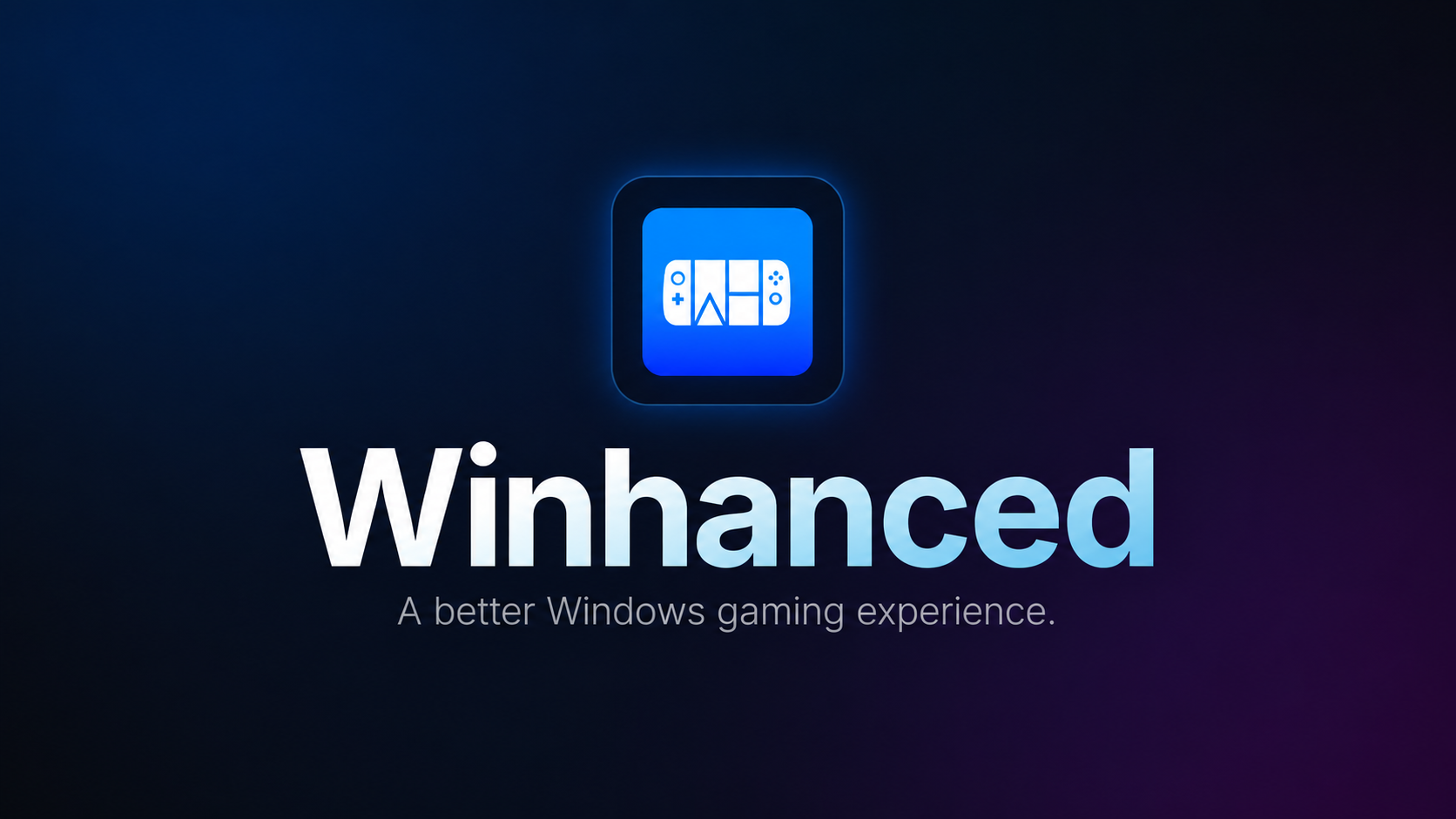
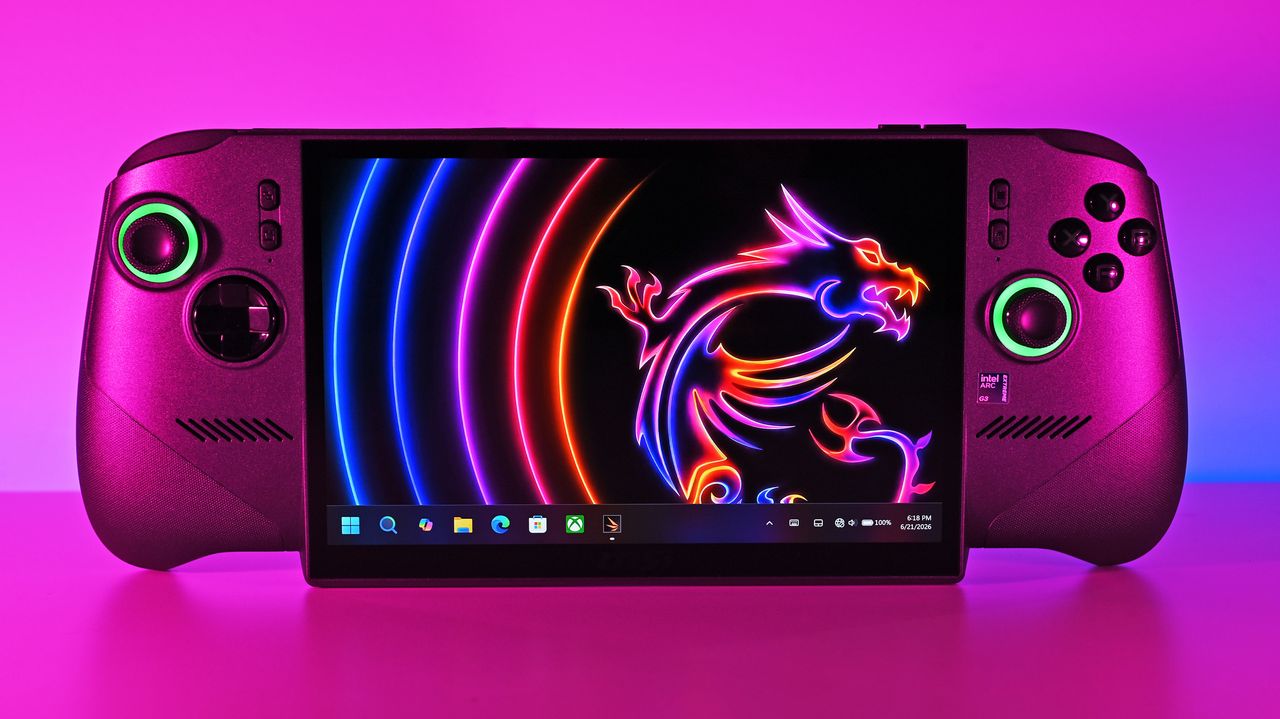
Front shot of the MSI Claw 8 EX AI+ under vibrant pink lighting, displaying the Windows 11 taskbar and a neon dragon wallpaper on its large screen.
I've spent a lot of time this summer gaming on my Steam Deck. It's hot outside, it's hot inside, and my desktop gaming PC simply creates too much heat. The only major problem I have with my Steam Deck is that it doesn't play nicely with PC Game Pass, to which I'm a subscriber. Yeah, I could stream games to my handheld, but there's now a better solution in the works. I'm talking about Xodus, an open-source project that's attempting to build a bridge between PC Gam
I've spent a lot of time this summer gaming on my Steam Deck. It's hot outside, it's hot inside, and my desktop gaming PC simply creates too much heat.
The only major problem I have with my Steam Deck is that it doesn't play nicely with PC Game Pass, to which I'm a subscriber. Yeah, I could stream games to my handheld, but there's now a better solution in the works.
I'm talking about Xodus, an open-source project that's attempting to build a bridge between PC Game Pass and Linux systems, including the Steam Deck. The project is also attempting to iron out similar issues on macOS. No Windows install needed.
Xodus comes from the developers behind the Heroic Games Launcher, a separate open-source app that brings Epic, GOG, and Amazon Prime titles to Steam Deck (it also works on Windows, macOS, and other Linux systems).
The developers are undoubtedly up against a grind with this project. Xbox PC games that come from the Xbox app rely primarily on a Microsoft Game Development Kit (GDK) runtime, which is a far cry from DirectX and Win32 layers that Valve's Proton already handles quite well.
This Microsoft GDK is really what has kept PC Game Pass from running directly on the Steam Deck (and macOS) for so long.
Is Xodus ready for public release?
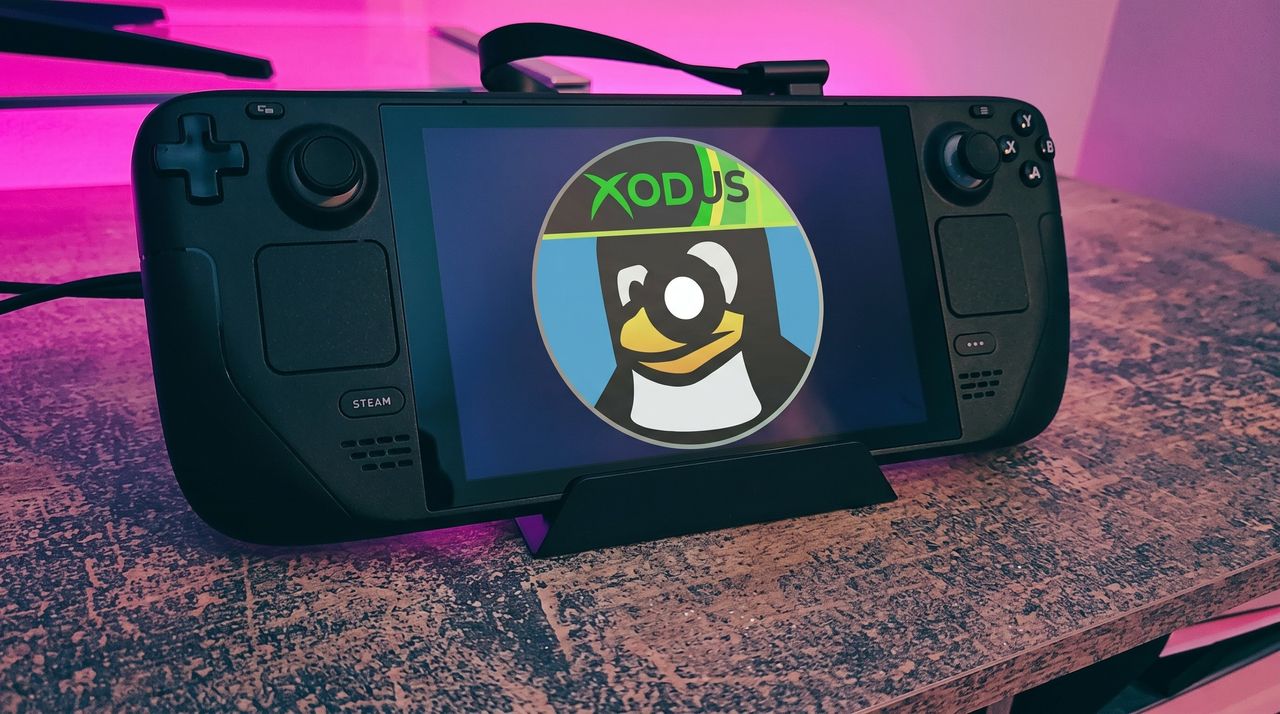
Xodus could finally bridge the gap between PC Game Pass and Steam Deck. (Image credit: Rebecca Spear / Windows Centarl)
According to updates shared on the Xodus GitHub page, the developers have cracked Xbox authorization, license checks, and MSIXVC package (the containers that PC games come in) download and decryption.
In a Reddit post, a Xodus developer noted that the team's main focus is now getting the Software Development Kit (SDK) for each title to run through Wine. It appears that Xodus has its own Wine and Proton forks for this purpose, as well as an open-source version of the xgameruntime.dll file that Game Pass games depend on.
Xodus likely won't support all Game Pass games when it launches, either. Older games that eschew GDK and MSIXVC for UWP will likely come later, if at all.
Why I'm so excited to try out Xodus on my Steam Deck
PC Game Pass on Steam would open up a whole lot of new options for gaming on the go. (Image credit: Future)
As mentioned, the biggest drawback to my Steam Deck, aside from its growing age, is its lack of native PC Game Pass support.
Sure, I could upgrade to a newer handheld that natively runs Windows, but it looks like I might not need to quite yet. That's especially exciting considering just how expensive gaming handhelds have become of late.
Then there's the Steam Machine, another Valve device running the Linux-based SteamOS. A whole bunch of gamers recently got their hands on the Steam Machine when it launched in June, and making PC Game Pass an option can only benefit Microsoft.
Here's the rub: Xodus has no affiliation with Microsoft. It's an unofficial community project created by independent developers. Does that mean Microsoft will have a problem with it? Not likely, but you never can tell.
Xodus still doesn't have an official release date, but it's something I'll be keeping my eyes on as it progresses. If you're a Linux gamer who wishes they could use PC Game Pass natively, you'll definitely want to keep watch as well.
What do you think about Xodus as a bridge between Steam Deck/Machine and PC Game Pass? Is it something you'd use regularly? Do you already have an alternative method that works better for you? Let me know in the comments section below!
Join us on Reddit at r/WindowsCentral to share your insights and discuss our latest news, reviews, and more.
A black Steam Deck handheld gaming device displaying a penguin logo with a cap that says "XODUS," set against a softly illuminated pink and purple background on a textured surface.
Microsoft isn't doing it, so someone else is trying.
Un dev prénommé Yllan vient de sortir
OS9Map
, une application qui affiche OpenStreetMap directement sur Mac OS 9. Oui, je parle bien du système d'exploitation de 1999 qui ronronnait sur nos vieux PowerPC.
Pour l'installer, c'est un bon vieux fichier .sit à décompresser (StuffIt Expander sur la machine d'époque, The Unarchiver si vous passez par un Mac moderne), et il vous faudra un PowerPC sous OS 9 avec 16 Mo de RAM (32 recommandés) et une connexion qui passe par Open Transport. Une fois lancé
Un dev prénommé Yllan vient de sortir
OS9Map
, une application qui affiche OpenStreetMap directement sur Mac OS 9. Oui, je parle bien du système d'exploitation de 1999 qui ronronnait sur nos vieux PowerPC.
Pour l'installer, c'est un bon vieux fichier .sit à décompresser (StuffIt Expander sur la machine d'époque, The Unarchiver si vous passez par un Mac moderne), et il vous faudra un PowerPC sous OS 9 avec 16 Mo de RAM (32 recommandés) et une connexion qui passe par Open Transport. Une fois lancé, vous avez alors une recherche d'adresses qui tape dans Nominatim, le moteur de géocodage d'OpenStreetMap, et vous pouvez mettre vos endroits favoris en signets pour y revenir d'un clic depuis le menu. Bref, un vrai petit client carto !
Et c'est là que je trouve ça beau puisque 16 Mo de RAM pour afficher une carte mondiale interactive, c'est très peu. Pour vous situer, un seul onglet Chrome aujourd'hui c'est plusieurs centaines de Mo, donc faut saluer l'exploit d'Yllan.
Maintenant si l'idée d'une carte minimaliste vous parle, dans le genre bien dépouillé j'avais aussi joué avec
MapSCII
qui balance le monde entier en ASCII dans un terminal. OS9Map joue dans une autre cour, mais on retrouve un peu la même philosophie.
Le truc qui rend tout ça possible, c'est évidemment OpenStreetMap qui propose toutes ses données en accès libre ! Alors rien que pour ça, merci à OpenStreetMap et ses contributeurs.
Et puis si vous n'avez plus de PowerPC qui traîne au grenier, vous pouvez quand même goûter à OS 9 dans votre navigateur via
Infinite Mac
.
OS9Map est en version 1.0.0 et se télécharge gratuitement
sur le site de yllan
.
La GameCube, on la connaît pour avoir fait tourner la meilleure version de Smash Bros et pour son look de petit cube vaguement "rectangulaire". Mais on ne la connait pas vraiment pour faire tourner un système d'exploitation de bureau du milieu des années 90.
Et pourtant, une bande de bidouilleurs emmenée par Rairii (alias Wack0), épaulé par NTx86 et stonedDiscord, s'est amusée à virer les jeux pour loger un vrai Windows NT là-dedans. Oui, le vrai NT de Microsoft.
Merveilleux non ?
Et le plus be
La GameCube, on la connaît pour avoir fait tourner la meilleure version de Smash Bros et pour son look de petit cube vaguement "rectangulaire". Mais on ne la connait pas vraiment pour faire tourner un système d'exploitation de bureau du milieu des années 90.
Et pourtant, une bande de bidouilleurs emmenée par Rairii (alias Wack0), épaulé par NTx86 et stonedDiscord, s'est amusée à virer les jeux pour loger un vrai Windows NT là-dedans. Oui, le vrai NT de Microsoft.
Merveilleux non ?
Et le plus beau, c'est que ce n'est même pas de l'émulation, c'est carrément un portage natif. Le truc que j'ignorais, c'est qu'à une époque Microsoft avait sorti une version PowerPC de Windows NT, du temps où le système supportait encore des architectures un peu exotiques. Or la GameCube tourne justement sur un processeur PowerPC, le fameux Gekko.
Les deux étaient donc faits pour se rencontrer, et il ne manquait qu'un type assez taré pour les marier. Le projet s'appelle
entii-for-workcubes
, et il ne s'arrête pas à la GameCube. Vous pouvez aussi le booter sur une Wii, sur une Wii Mini (qui réclame quand même un petit hardmod pour la carte SD), et même dans le mode vWii de la Wii U.
Petit retour en arrière quand même pour les plus jeunes... Dans les années 90, Windows NT n'était pas du tout le truc Windows-x86-only qu'on connaît aujourd'hui. Il tournait sur MIPS, sur DEC Alpha, sur PowerPC, parce que Microsoft voulait un OS portable, qui ne soit pas marié à un seul fabricant de puces. L'histoire a tranché en faveur du x86 et tout le reste est tombé dans l'oubli. Sauf que ces vieux binaires PowerPC existent toujours, et c'est ce qui rend ce hack possible 25 ans plus tard.
Pour l'installer, vous balancez une image ISO de NT 3.51 ou 4.0 sur une carte SD, vous chargez le loader via Swiss sur GameCube ou via le Homebrew Channel sur Wii, et vous vous laissez guider par l'installeur de NT comme en 1996.
C'est une version assez dégradée, mais parfaitement fonctionnelle de l'expérience poste de travail d'époque. Le seul vrai casse-tête, c'est la saisie. La GameCube n'a jamais eu de clavier digne de ce nom, donc il faut ruser avec des méthodes de saisie à la manette. À moins de mettre la main sur une de ces rarissimes manettes GameCube qui planquaient un clavier complet en plein milieu. Oui oui, ça a vraiment existé.
Maintenant, ne vous attendez pas non plus à un miracle car tout ne fonctionne pas. Pas de réseau, pas de son non plus. Et le bus EXI est lent de fou, donc ça traîne franchement sur les accès disque côté GameCube. Le pilote graphique GDI tourne également avec du code pas optimisé pour un sou, le branchement à chaud de l'USB n'est pas géré, et le système peut planter au redémarrage de temps en temps. Bref, c'est un poste de travail des années 90 sur un jouet des années 2000, avec les compromis qui vont avec.
À noter d'ailleurs que ce hack n'est pas tout frais, la dernière version date de mars 2025. C'est juste qu'il refait surface en ce moment, et je pense qu'il le mérite. La Dreamcast affichait fièrement "Compatible with Microsoft Windows CE" imprimé sur sa coque, la GameCube vient de la rattraper par la petite porte. Et détourner une console pour lui faire avaler un OS qui n'a rien à y faire, ça reste un grand classique, avec
le hack qui a fait tourner Linux sur la PS5
et tous ceux qui font tourner
Half-Life sur un Nokia de 2007
ou
un jeu Mega Drive depuis un vinyle
...
Évidemment, faire tourner Windows NT sur une GameCube ça ne sert strictement à rien, à part pour le challenge et la frime, ça présente donc peu d'intérêt, mais c'est rigolo de voir que ça reste possible. Et c'est pour ça aussi que j'adore ça !
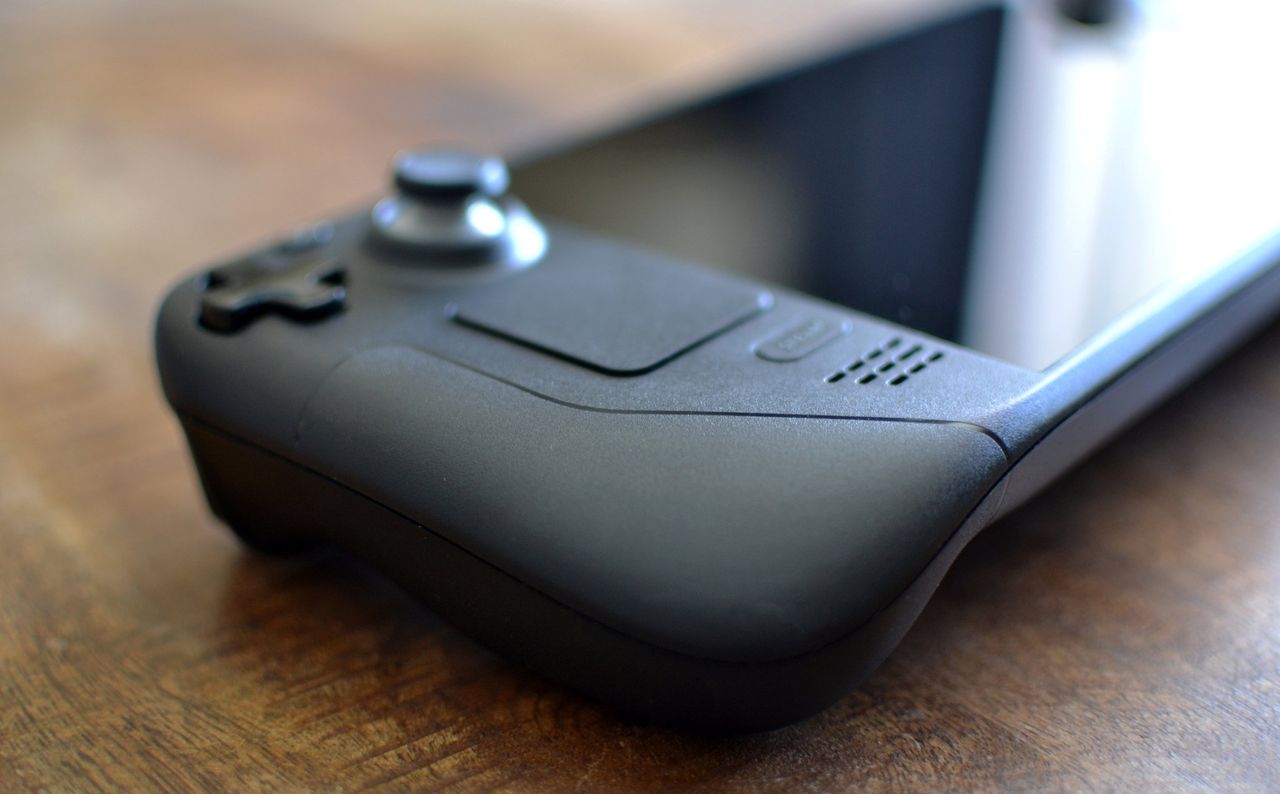
After months of being out of stock, Valve's beloved Steam Deck is available again — but its return has been accompanied by a massive price hike.Steam Deck TrackpadA close-up view of the Steam Deck. After the new price hike, it's significantly more expensive than it used to be.
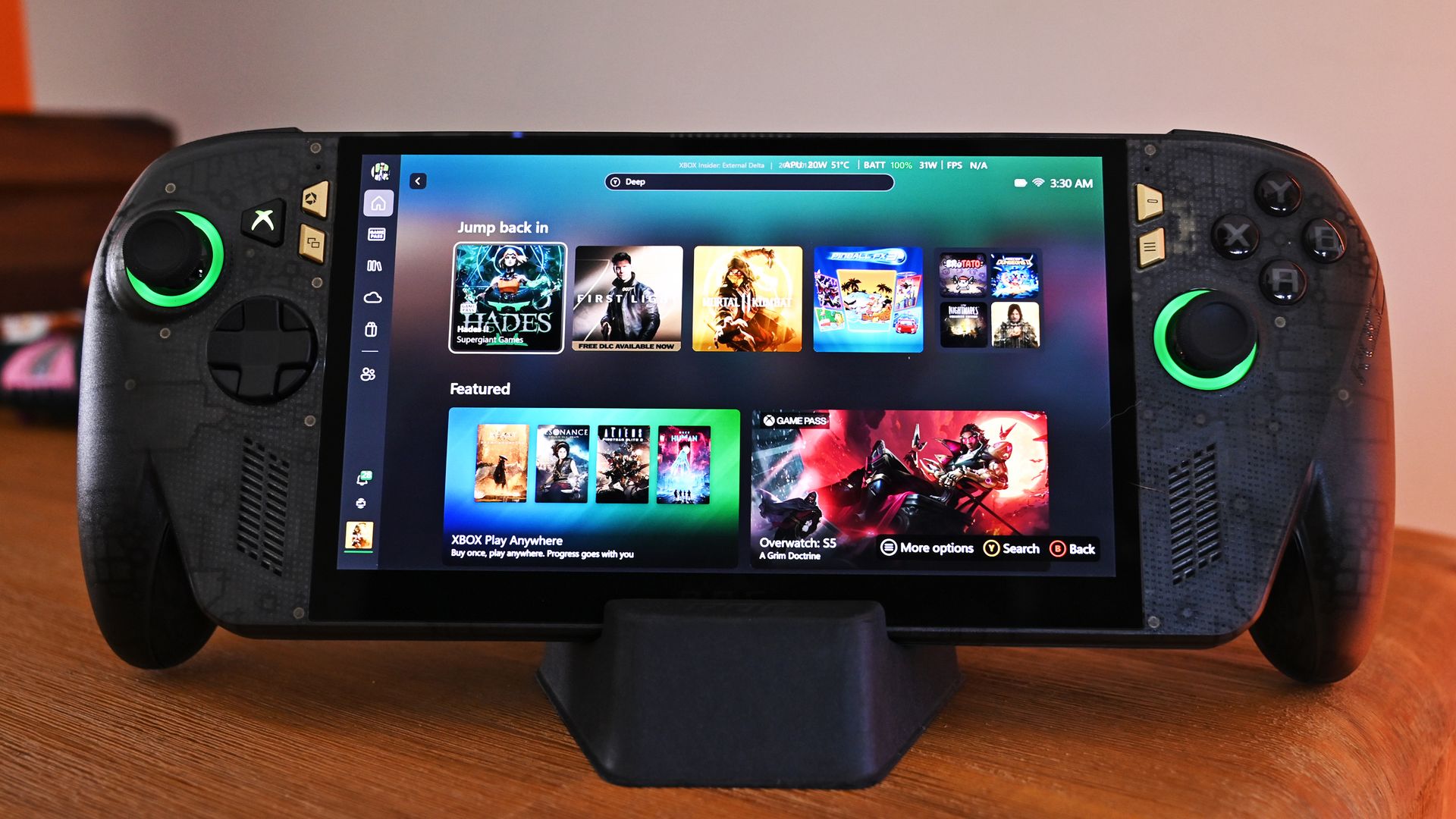
Winhanced is quickly becoming one of the most interesting alternatives to the Xbox app on PC, combining Xbox, Steam, Epic, and GOG libraries into one controller-friendly experience built for handhelds and console-style gaming.ASUS ROG Ally displaying Winhanced home screen with Steam, Game Pass, and Epic Games integration.Xbox Ally X running Winhanced
Winhanced is quickly becoming one of the most interesting alternatives to the Xbox app on PC, combining Xbox, Steam, Epic, and GOG libraries into one controller-friendly experience built for handhelds and console-style gaming.
ASUS ROG Ally displaying Winhanced home screen with Steam, Game Pass, and Epic Games integration.
The promised auto super resolution features appear on Xbox Ally X today, with other major enhancements to the Xbox Ally connected TV experience. Here's what's new.Xbox Ally XXbox Ally X
The promised auto super resolution features appear on Xbox Ally X today, with other major enhancements to the Xbox Ally connected TV experience. Here's what's new.
Steam Deck maker Valve says it's "working very hard" to bring the Steam Deck back in stock, though ongoing RAM shortages are making it difficult to do so.A Steam Deck OLED handheld gaming console on a solid purple backgroundThe Steam Deck OLED came out in late 2023, and is now the only version of the device that's ever available since the LCD version is no longer in production. OLED Steam Decks have been out of stock for months, however.
Steam Deck maker Valve says it's "working very hard" to bring the Steam Deck back in stock, though ongoing RAM shortages are making it difficult to do so.
A Steam Deck OLED handheld gaming console on a solid purple background
The Steam Deck OLED came out in late 2023, and is now the only version of the device that's ever available since the LCD version is no longer in production. OLED Steam Decks have been out of stock for months, however.
The Xbox Ally is currently one of the most affordable ways to play Xbox PC games on the go, with an above-average display and additional gameplay-enhancing features, all for 20% off.Xbox Ally and Xbox Ally XThe Xbox Ally is currently one of the most affordable ways to play Xbox PC games on the go.
The Xbox Ally is currently one of the most affordable ways to play Xbox PC games on the go, with an above-average display and additional gameplay-enhancing features, all for 20% off.
Xbox Ally and Xbox Ally X
The Xbox Ally is currently one of the most affordable ways to play Xbox PC games on the go.
The Xbox Ally is currently one of the most affordable ways to play Xbox PC games on the go, with an above-average display and additional gameplay-enhancing features, all for 17% off.AI-Generated image of the Xbox Ally visualizedThe Xbox Ally is currently one of the most affordable ways to play Xbox PC games on the go.
The Xbox Ally is currently one of the most affordable ways to play Xbox PC games on the go, with an above-average display and additional gameplay-enhancing features, all for 17% off.
AI-Generated image of the Xbox Ally visualized
The Xbox Ally is currently one of the most affordable ways to play Xbox PC games on the go.