❌

Vue normale

  • ✇Yanko Design
  • Nothing’s Ear (open) should have been a CMF product all along… Here’s proof
    I’ll say it: Nothing launched the Ear (open) under the wrong logo. The open-ear buds debuted in 2024 at $149, wrapped in Nothing’s signature transparent look, and they were good enough to win a Red Dot Product Design award. Still, every time I looked at them, my brain kept whispering “CMF.” Open-ear buds are the casual, colorful, sweat-friendly second pair you toss in a gym bag, which describes CMF’s entire personality. Even Nothing seems to have noticed, since the Ear (open) now comes in soft
     

Nothing’s Ear (open) should have been a CMF product all along… Here’s proof

19 octobre 2026 à 20:30

I’ll say it: Nothing launched the Ear (open) under the wrong logo. The open-ear buds debuted in 2024 at $149, wrapped in Nothing’s signature transparent look, and they were good enough to win a Red Dot Product Design award. Still, every time I looked at them, my brain kept whispering “CMF.” Open-ear buds are the casual, colorful, sweat-friendly second pair you toss in a gym bag, which describes CMF’s entire personality. Even Nothing seems to have noticed, since the Ear (open) now comes in soft blue for $99 in the US. That’s CMF money in a CMF color, wearing a Nothing name tag.

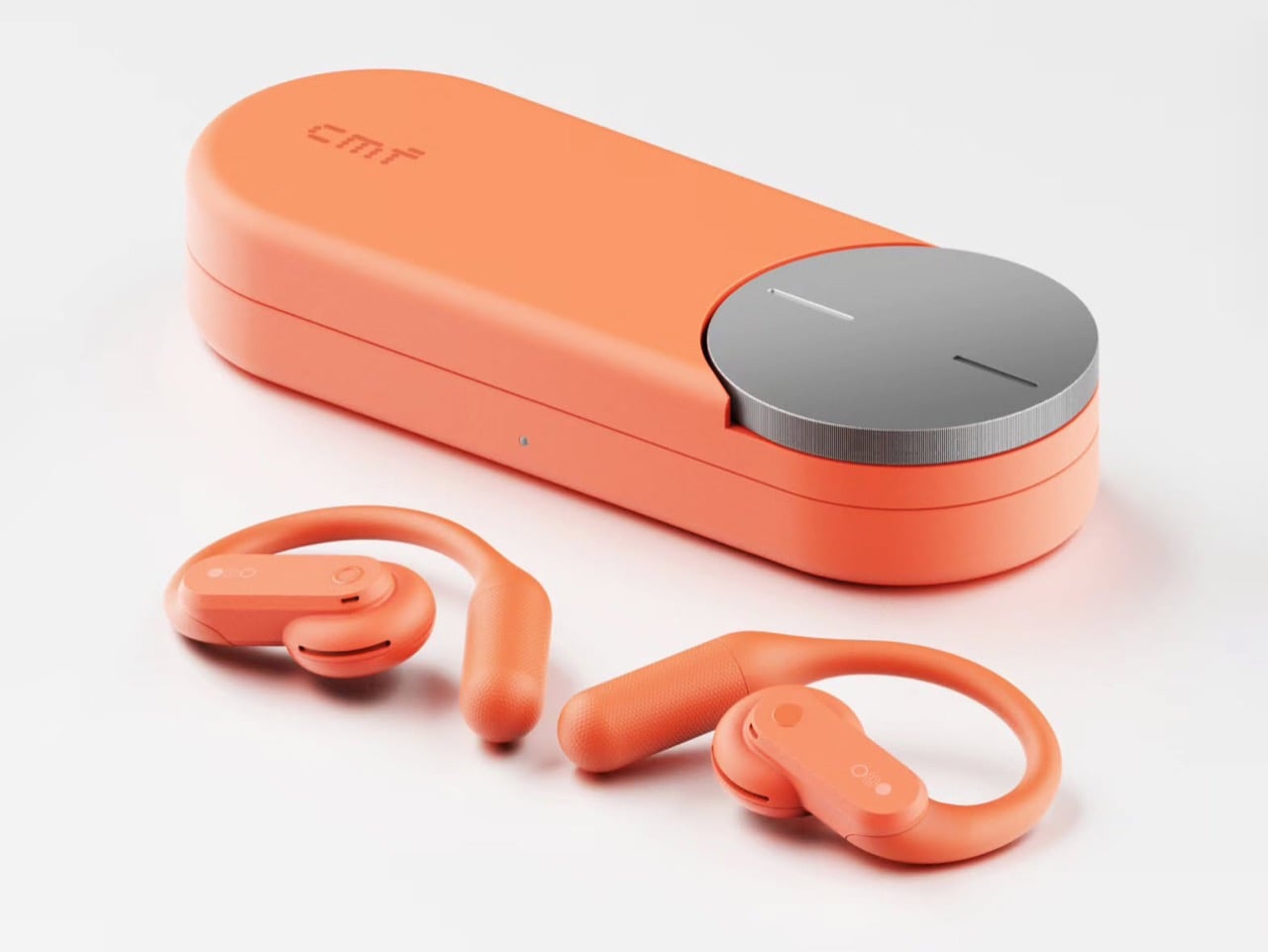
Apparently I’m not alone in this conspiracy theory. Industrial designer Shreyansh Onial, whose CMF Flip foldable concept got a reaction from Carl Pei himself, built the CMF Ear (open) that Nothing never released, and it looks like it rolled straight off CMF’s assembly line. The over-ear hook stays, but the transparent panels give way to solid Coral, Light Grey, and Dark Grey. Each bud gets a chunky physical button, and the pill-shaped case borrows the knurled Smart Dial from CMF’s $99 Clip Pro. It’s the alternate-universe launch I didn’t know I was waiting for.

Designer: Shreyansh Onial

Trading Nothing’s see-through shell for CMF’s candy-colored hooks

Coral, Light Grey, and Dark Grey carry the whole concept, and they match the Clip Pro’s palette exactly. Transparency is Nothing’s calling card, though on the Ear (open) much of the surface is a silicone ear hook anyway. Onial goes fully opaque, with a soft matte finish on the hook and a glossier coat on the round acoustic pod that sits by your ear canal. The outer face is a rounded pill panel with a single round button and a tiny glyph made of a circle, a dot grid, and a filled dot. The battery tail picks up a fine stippled texture, which gives sweaty fingers something to grip.

A real button on each bud fixes the biggest workout annoyance with the Ear (open), which relies on pinch controls that get fiddly with slippery fingers. CMF already gave the Clip Pro physical buttons for exactly this reason, so the move fits the brand’s own playbook. Flip the bud around and you’ll find a perforated metal grille shaped like a little kidney bean, plus two pogo pins on a short collar for charging. That bean grille is my favorite detail, because it gives the bud an oddly cartoonish face. It also mirrors the soft circles of the dial on the case. The whole thing feels friendly and approachable, which suits a pair built for sweat and sidewalks.

The Clip Pro’s Smart Dial case meets a hook built for runners

The case comes straight from CMF’s Clip Pro, a deep pill-shaped capsule with a knurled metal dial set into one end of the lid. On the Clip Pro, that Smart Dial adjusts volume, controls playback, answers calls, and triggers pairing. CMF put the same dial on its Buds Pro 2, and it has since become the brand’s signature move. Onial adds a dot-matrix “cmf” wordmark on the lid, a front status LED, and a USB-C port on the side. Inside, molded cradles hold the two hooks in a neat V, with a charging pocket waiting for each acoustic pod.

Over-ear hooks anchor behind the ear, which keeps them planted through runs, burpees, and sprints for the bus. The Clip Pro’s C-shaped clip hugs the ear’s outer edge instead, a format better suited to commutes and long desk days. That leaves the runner with a CMF-shaped hole in their gym bag, since CMF currently offers nothing for them (lowercase n). A dial makes even more sense here, because twisting a knob on the case beats digging through phone menus mid-stretch. Pair it with real buttons on the buds and you get a workout setup that never asks for a precise touch gesture.

Where a CMF Ear (open) would land in a crowded open-ear market

Open-ear audio got crowded fast, with Bose’s Ultra Open sitting at the top for $299 and Sony’s LinkBuds Clip, Huawei’s FreeClip, and Shokz’s hook-style buds filling out the field. The Clip Pro landed at $99 with LDAC support, a 10.8mm driver, and up to 32.5 hours of total battery. The Ear (open) counters with a bigger 14.2mm driver, 8 hours per charge, and 30 hours with its case. Each Ear (open) bud weighs 0.29 oz (8.1 grams), while each Clip Pro bud weighs 0.21 oz (5.9 grams). A CMF hook could split the difference, pairing the Ear (open)’s stable fit and big driver with the Clip Pro’s dial, buttons, and price.

The blue Ear (open) already sells for $99 in the US, the same price as the Clip Pro, so Nothing has basically priced its own product at CMF level. Moving it under the CMF badge would make that price tag look like a plan instead of a markdown. It would also free Nothing to return later with a pricier transparent sequel, flipping the usual order where the premium brand gets the good stuff first. CMF became an independent Nothing subsidiary headquartered in India last year, and a signature sport bud would give the young brand another reason to stand apart from its parent. Onial’s renders already look ready for the shelf. Sometimes the little sibling deserves the new toy first.

The post Nothing’s Ear (open) should have been a CMF product all along… Here’s proof first appeared on Yanko Design.
  • ✇Yanko Design
  • Plaud One Hands-On at IFA 2026: AI Earbuds That Transcribe Meetings, Then Draft Emails And Decks For You
    For three years, Plaud made very good tape recorders with a PhD. You pressed a button, it captured a meeting, and mere minutes later a summary showed up. The Plaud One, launched at IFA 2026 for €249.90, reverses that arrow. Its charging case now holds four beamforming mics, a speaker, an agent button and a built in eSIM, so it stays online without a phone nearby. Hold the agent button and the AI talks back, asks what you meant, then builds the deck or drafts the email while you get on with your
     

Plaud One Hands-On at IFA 2026: AI Earbuds That Transcribe Meetings, Then Draft Emails And Decks For You

3 septembre 2026 à 20:28

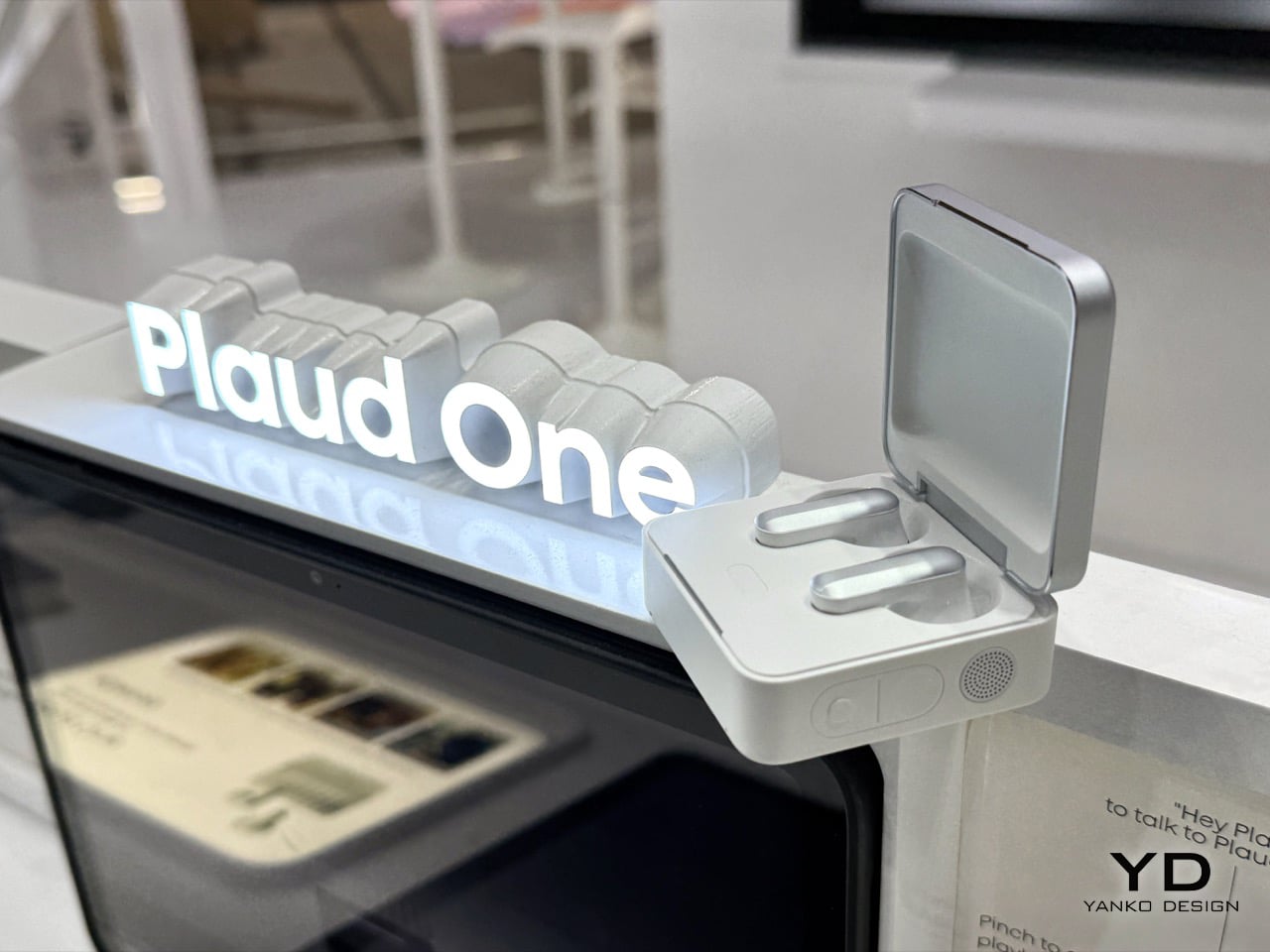
For three years, Plaud made very good tape recorders with a PhD. You pressed a button, it captured a meeting, and mere minutes later a summary showed up. The Plaud One, launched at IFA 2026 for €249.90, reverses that arrow. Its charging case now holds four beamforming mics, a speaker, an agent button and a built in eSIM, so it stays online without a phone nearby. Hold the agent button and the AI talks back, asks what you meant, then builds the deck or drafts the email while you get on with your day.

That flip from recording to doing needed hardware nobody had built yet. Not a pendant, not a pin, not another app crammed onto a phone you were already staring at. Plaud built a palm sized aluminum box with a fluted lid that looks like a Rimowa suitcase went through a shrink ray, sitting on a table, listening across a room, and talking back like a colleague who never needs coffee. The Explorer Edition opens for pre order now, capped at 2,000 units worldwide, with deliveries landing in Q4. A public version follows in 2027, once Plaud has watched two thousand early adopters put the thing through its paces.

Designer: Plaud

The original Plaud Note clipped onto a phone and did one job, listen to a meeting and hand back a transcript once it ended. The Note Pro added a screen and better mics. The NotePin S shrank the format onto a lanyard clip. Every generation stayed reactive by design, a smart recorder waiting for you to press stop before it did anything useful. That business built Plaud’s 2.5 million user base and reportedly crossed $100 million in annual software revenue by June, which is exactly the kind of runway that lets a company gamble on reinventing its own hardware category from scratch.

Vertical fluting runs down the case’s aluminum lid, the same visual trick Rimowa has stamped into cabin luggage since the 1950s, giving a 62 gram object a sense of density it has no right to carry. Flip it open and the earbuds sit half in ear, silver capped, in a tray that reads closer to a jewelry box than a charging dock. A speaker grille, a record button and a separate agent button line the case’s edge, the three controls that turn a charger into a device you actually talk to. None of it apes a phone. It reads like furniture for a desk, not gear for a pocket.

Earlier Plaud devices leaned on your phone for both processing and connectivity, so the intelligence always sat one hop away from the microphone. Plaud One’s case carries its own 4G LTE connection through a built in eSIM, closing that gap entirely. Capture, transcription and agent response now run in one box, independent of any other screen in your life. Leave your phone in a bag, walk into a cafe, and the case still records the table’s conversation, answers a question out loud through its speaker, or fires off a follow up email on command. Every pendant and pin that came before this quietly depended on a phone doing the real work behind the scenes. Plaud One is the first in the category that genuinely does not.

Plaud Agent drafts a follow up email the moment a client call ends. Feed it a meeting and it builds a slide deck while you sit through your next call, then drops the finished file straight into Notion with zero copy pasting. The platform connects to Gmail, Google Workspace, Microsoft Teams, Slack and Notion today, with more integrations promised as the software matures. Set it loose on a standing task, a monthly competitor scan for instance, and it runs quietly in the background, waiting with a finished report the next time you check. This is the actual bet Plaud is making, that an assistant worth having has to act, not just remember.

Pre orders for the Explorer Edition are open now at €249.90, with the first 2,000 units shipping in Q4. Buyers get $200 in Plaud Credits toward the heavier agent features on top of a starter transcription plan, so the price buys a running start on the software as much as the hardware. Calling this an Explorer Edition rather than a finished release is the honest move, an open beta wearing genuinely sharp industrial design. Plaud spent three years building the best possible way to listen. Plaud One is its first real attempt at building something worth talking to.

The post Plaud One Hands-On at IFA 2026: AI Earbuds That Transcribe Meetings, Then Draft Emails And Decks For You first appeared on Yanko Design.

❌