
Vue normale

Il y a de nouveaux articles disponibles, cliquez pour rafraîchir la page.
À partir d’avant-hierTechs Design

Leatherman’s Weirdest Tool Drop Yet Is Strangely Genius

Par : Ida Torres
29 juillet 2026 à 16:20

Leatherman has always been the brand you could count on to do one thing extremely well: pack an absurd number of tools into a deceptively small package. But Garage Batch #009 doesn’t follow that playbook at all, and I think that’s exactly why it’s worth talking about.

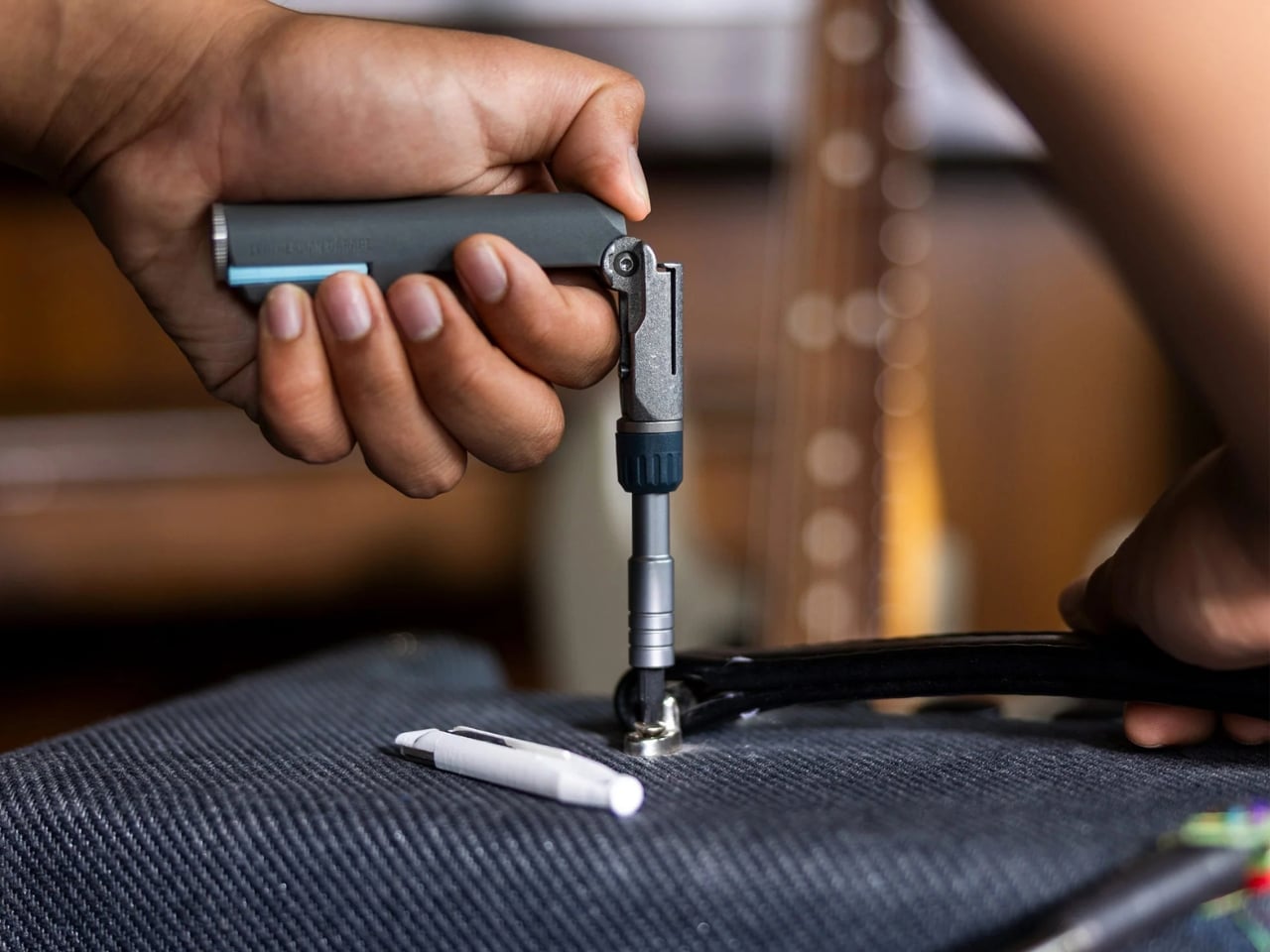
The Garage line is Leatherman’s unofficial skunkworks. It’s where the company test-markets experimental tools in limited batches, which means low quantities, no guarantees of a permanent future, and a demographic of buyers who treat a tool drop like a sneaker release. Batch #009, officially named the Adapter, is a ratcheting bit driver that looks unlike anything else in Leatherman’s catalog. Core77 put it best when they noted that if you didn’t know any better, you’d think it was someone’s industrial design school thesis project. That’s not a criticism. It’s kind of a compliment.

Designer: Leatherman

The Adapter is built from 3D printed titanium, which gives it that slightly precious, proof-of-concept feel you don’t usually associate with something you’d use to fix a cabinet hinge. It folds at a hinge joint and can be configured in three positions: fully extended for reach, bent at 90 degrees for torque leverage, and folded shut for compact carry. The ratcheting mechanism works in forward, reverse, and locked positions, so you’re not doing that annoying micro-repositioning shuffle every time you need to drive a screw. That alone is a genuinely useful upgrade over most compact bit drivers on the market.

But here’s the part that turns this from “useful niche tool” into “object I want to own”: the handle. Leatherman tucked a wood saw, a metal file, and two bits inside the handle compartment, all secured with a screw cap. They also stowed a mini ballpoint pen and an eyeglass screwdriver in there. If that sounds like the setup for a very organized person’s favorite fidget toy, you’re not wrong. The neon green accent strip on the handle doesn’t exactly scream jobsite. It says something closer to “I paid attention in design school and I have opinions about EDC.”

I want to be honest about the audience here. The Garage line isn’t really for the electrician or the contractor who needs to pull a hundred screws before lunch. It’s for the person who has a Wave on their keychain and a thing for limited-edition objects that are also actually functional. One reviewer summed it up with a note of friendly resignation: “I guess I have to accept the reality that Leatherman is like Supreme now.” That quote has been floating around the internet, and whether it’s a dig or a badge of honor probably depends on who you’re asking. I’d argue it’s both.

The drop sold out fast. High demand on a small batch is Leatherman’s way of gauging whether something deserves to graduate into a full production run, which is a smart and low-risk way to innovate. Not everything from the Garage line makes it. But the Adapter feels like a strong candidate for becoming a permanent fixture, because once you get past the art-project aesthetics, the core concept is genuinely practical.

Compact ratcheting bit drivers with smart storage have a real market. People are constantly trying to slim down their tool kits without sacrificing capability, and a folding driver that also carries your most-reached-for accessories covers a lot of ground in a small footprint. The 3D printed titanium construction keeps it light without making it feel cheap, and the three-position folding system solves an actual ergonomic problem that flat bit drivers have always had.

Whether you’re a gear collector who watches tool drops the way other people watch sneaker releases, or just someone who wants a smarter carry for weekend projects, the Adapter makes a case for itself without needing to oversell anything. Leatherman took a weird swing, and it mostly landed.

The post Leatherman’s Weirdest Tool Drop Yet Is Strangely Genius first appeared on Yanko Design.
Foshan’s Forgotten Warehouses Got a Rooftop Park Under Floating Domes

Par : Ida Torres
17 avril 2026 à 13:20

Somewhere along the Huadi River in Foshan, China, a cluster of old grain storage warehouses has been turned into one of the most quietly poetic pieces of architecture I’ve seen all year. The Yongping Warehouse Renovation, completed in 2025 by Guangzhou-based Atelier cnS, is exactly the kind of project that makes you stop scrolling and actually look.

The site sits in Dali Town, Nanhai District, a former industrial pocket of the Pearl River Delta that’s been gradually shedding its factory-town skin in favor of something more livable and publicly accessible. These particular warehouses, lined up along the riverfront, were derelict grain storage buildings with no obvious future. Not exactly glamorous source material. But Atelier cnS didn’t flinch, and the result is a project that earns its attention without asking for it loudly.

Designer: Atelier cnS

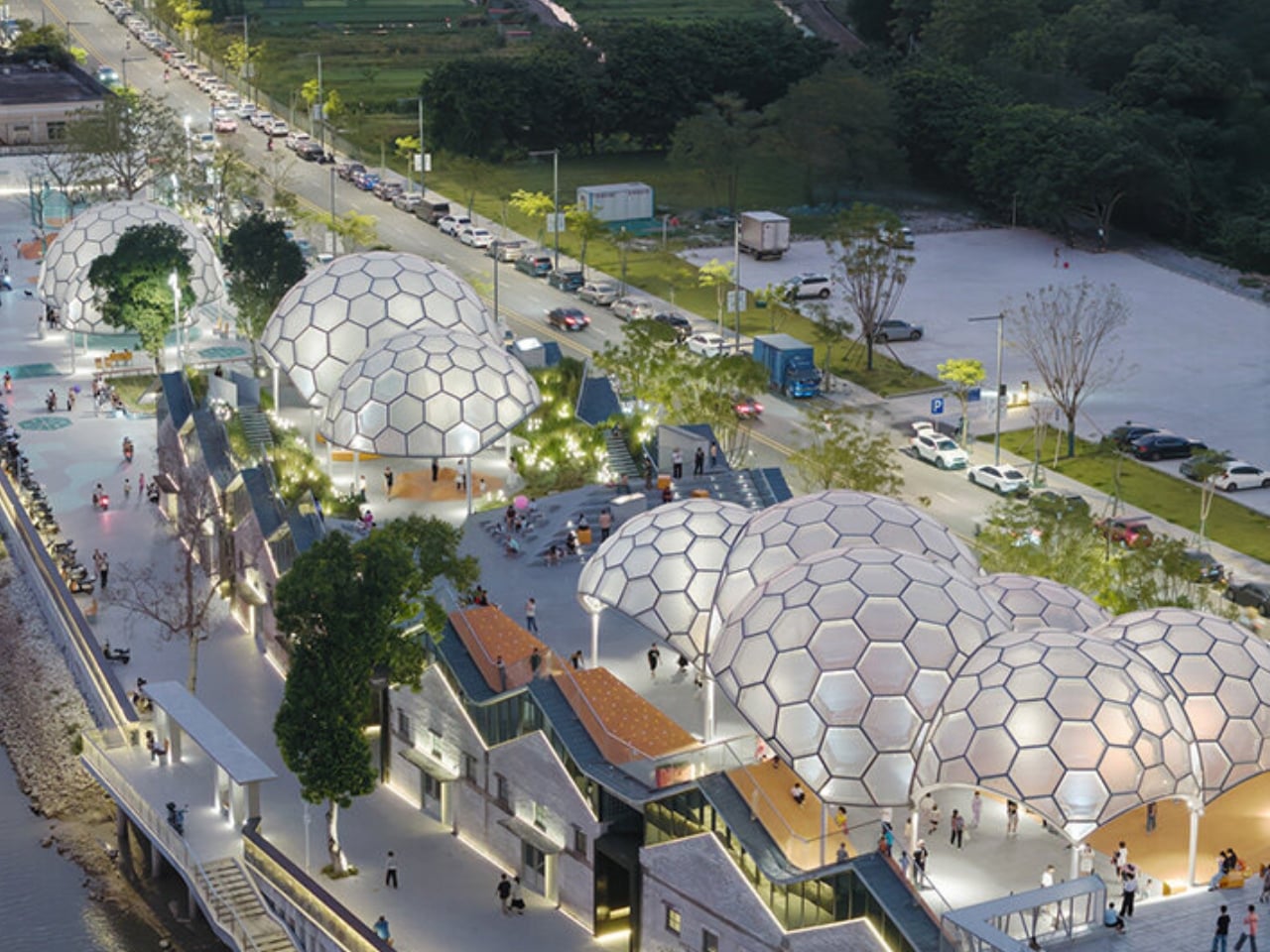
Because the site has a narrow footprint, the architects pushed the public space upward, placing a landscaped rooftop park above the commercial interiors below. Vertical programming isn’t a new idea, but what makes Yongping feel different is how thoughtfully the transition between levels was handled. The gaps between warehouse blocks weren’t sealed or filled in. Instead, they were preserved and widened into passageways, so as you move through the building, you catch glimpses of the river framed by walls before the whole view opens up at the top. It’s a slow reveal, and it’s deliberate.

And then there are the canopies. A series of translucent, domed structures built from hexagonal frames cluster across the roofline like a quiet gathering of clouds. Atelier cnS actually named the project “A Wisp of Cloud” over Huadi River, and the photos earn that name completely. The domes are light-diffusing, casting shade without blocking river views. They create zones for sitting, moving, and play without ever feeling like they’re closing the space in. They look like they arrived gently, rather than being imposed on the building below them.

The rooftop itself is shaped into slopes, steps, and play surfaces that echo the original pitched forms of the warehouse roofs. It’s one of those details that most visitors probably won’t consciously register, but it’s exactly the kind of architectural memory that makes a renovation feel grounded rather than gratuitous. The old buildings aren’t being pretended out of existence. The new design is in active conversation with what was there before.

I’m genuinely drawn to this project because it gets the balance right in a way that many adaptive reuse projects don’t quite manage. Too often, the renovations that attract the most attention are the ones where the new design overwhelms the original structure, turning the old building into nothing more than a convenient shell. Yongping avoids that trap. The warehouses are still very much present. Their bones dictate the rhythm, the circulation, and some of the visual language of the final result. You can feel the history of the place without having to read about it first.

Atelier cnS has been developing this kind of thinking for years. The studio’s earlier work on elevated public circulation, including a “roof-hopping” design approach explored in their White House Guesthouse project, signals a long-running interest in finding new life in existing structures. Yongping feels like a maturation of that sensibility. More refined, more integrated, and more tuned in to the texture of a neighborhood mid-transition.

The project spans 4,311 square meters, and it’s worth noting what it does beyond the architecture itself. Turning a commercial renovation into a publicly accessible rooftop park, in a district shifting away from its industrial past, is a real act of generosity. A park on a roof could easily read as a private amenity. Here, it reads like a gift to the neighborhood, a place to walk, rest, and look out at the river without needing a reason to be there.

Architecture doesn’t always need to announce itself to be worth paying attention to. The Yongping Warehouse Renovation is understated, purposeful, and lit from above by a cluster of translucent domes that look, from a distance, exactly like a wisp of cloud over the river.

The post Foshan’s Forgotten Warehouses Got a Rooftop Park Under Floating Domes first appeared on Yanko Design.

❌
❌