❌

Vue normale

  • ✇Yanko Design
  • Ruka Studio’s TD-1 Vertical Turntable Turns Your Vinyl Collection Into Stunning Part of Your Room
    For a very long time, the world was fixated on horizontal vinyl players that took up a premium space on a table. Just recently, the tide has started shifting in favor of vertical record players that are designed to stand out instead of blending in. The new entrant in the category already explored by designer Fatih Demirci, CoolGeek, and Dutch Hi-Fi maker Miniot, is Ruka Studio – a Los Angeles-based company that was founded in 2024. Relatively new in its existence, Ruka makes its presence felt w
     

Ruka Studio’s TD-1 Vertical Turntable Turns Your Vinyl Collection Into Stunning Part of Your Room

17 août 2026 à 11:20

For a very long time, the world was fixated on horizontal vinyl players that took up a premium space on a table. Just recently, the tide has started shifting in favor of vertical record players that are designed to stand out instead of blending in. The new entrant in the category already explored by designer Fatih Demirci, CoolGeek, and Dutch Hi-Fi maker Miniot, is Ruka Studio – a Los Angeles-based company that was founded in 2024.

Relatively new in its existence, Ruka makes its presence felt with the wealth of experience that forms the DNA of the brand. Reportedly, Ruka Studio was founded by a group of former Apple engineers and designers, so a high-end turntable with a premium finish would be a given. But that’s not where it’s stopping; the company has launched its first vertical turntable called the TD-1.

Designer: Ruka Studio

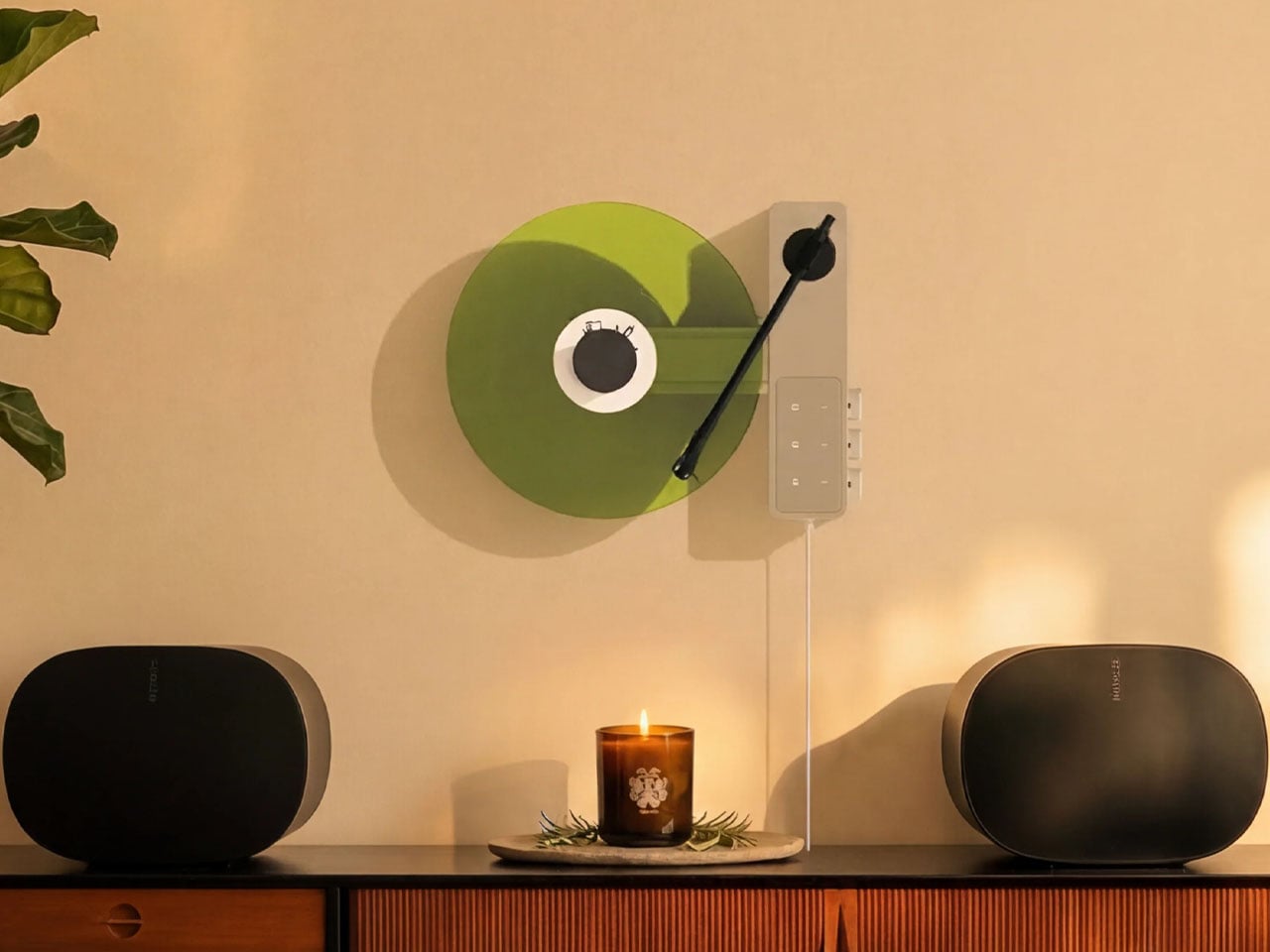
Designed as a turntable that mounts vertically on the wall, or stands upright on a floor stand, it becomes part of the room instead of taking over a table. The TD-1 can spin a vinyl record vertically, which is a treat to the eye and food for thought for your mind. The design is pretty seamless, and you’re left wondering how the giant disk is actually spinning without gravity acting upon it.

If you’re someone who holds your record collection dear and as a reflection of who you are. The TD-1 is conceived with the idea of enhancing that experience like no other has done before. Yes, there have been vertical record players we have seen in our time, but the Ruka’s model is a standout, thanks to its aluminum body and visibly enticing mechanical switches and knobs that turn and click to control playback, adjust the record’s rotational speed, and also to pair the device with a speaker system over Bluetooth. It also comes with wired output to connect with a hi-fi system.

When everyone is trying to integrate AI and convenient remote control via dedicated apps, the TD-1 remains as analog as the record playing was meant to be. The most it gets away from the analog commitment is to stream your vinyl records to a wireless Bluetooth speaker or compatible earbuds.

To make how it looks placed vertically more exciting, the TD-1 arrives with a rubber-coated magnetic plate that holds the record against the wall to appear as if it were floating in mid-air. To ensure you are not hassled with getting the placement straight, it comes with a built-in spirit level. The player features a swappable moving-magnet cartridge, which the company says should allow users to select the cartridge they want, of course for an additional cost from the device itself. The TD-1 turntable itself is belt-drive. The motor has been de-coupled from the acrylic platter to minimize vibration, ensuring smoother and quieter playback.

Ruka Studio TD-1 is available to preorder now starting at a reserve price of $100 on the company’s website. It is priced at $1,399, and preordered models are expected to ship in 2027. The $100 credit is fully refundable or will be adjusted in the final price when a device is shipped.

The post Ruka Studio’s TD-1 Vertical Turntable Turns Your Vinyl Collection Into Stunning Part of Your Room first appeared on Yanko Design.
  • ✇Yanko Design
  • Streaming Took Something From Us. The ENSA T1 Wants It Back
    Do you remember the last time music actually demanded something of you? Not just your attention while you scrolled, but your hands. The deliberate pull of a record from its sleeve. The small, mechanical click of a CD case. The unhurried ritual that came before every song, every mood shift, every late-night session on the floor with the volume just loud enough. Vladimir Dubrovin remembers. The California-based multidisciplinary designer has been quietly building a case for returning physicality
     

Streaming Took Something From Us. The ENSA T1 Wants It Back

12 août 2026 à 10:20

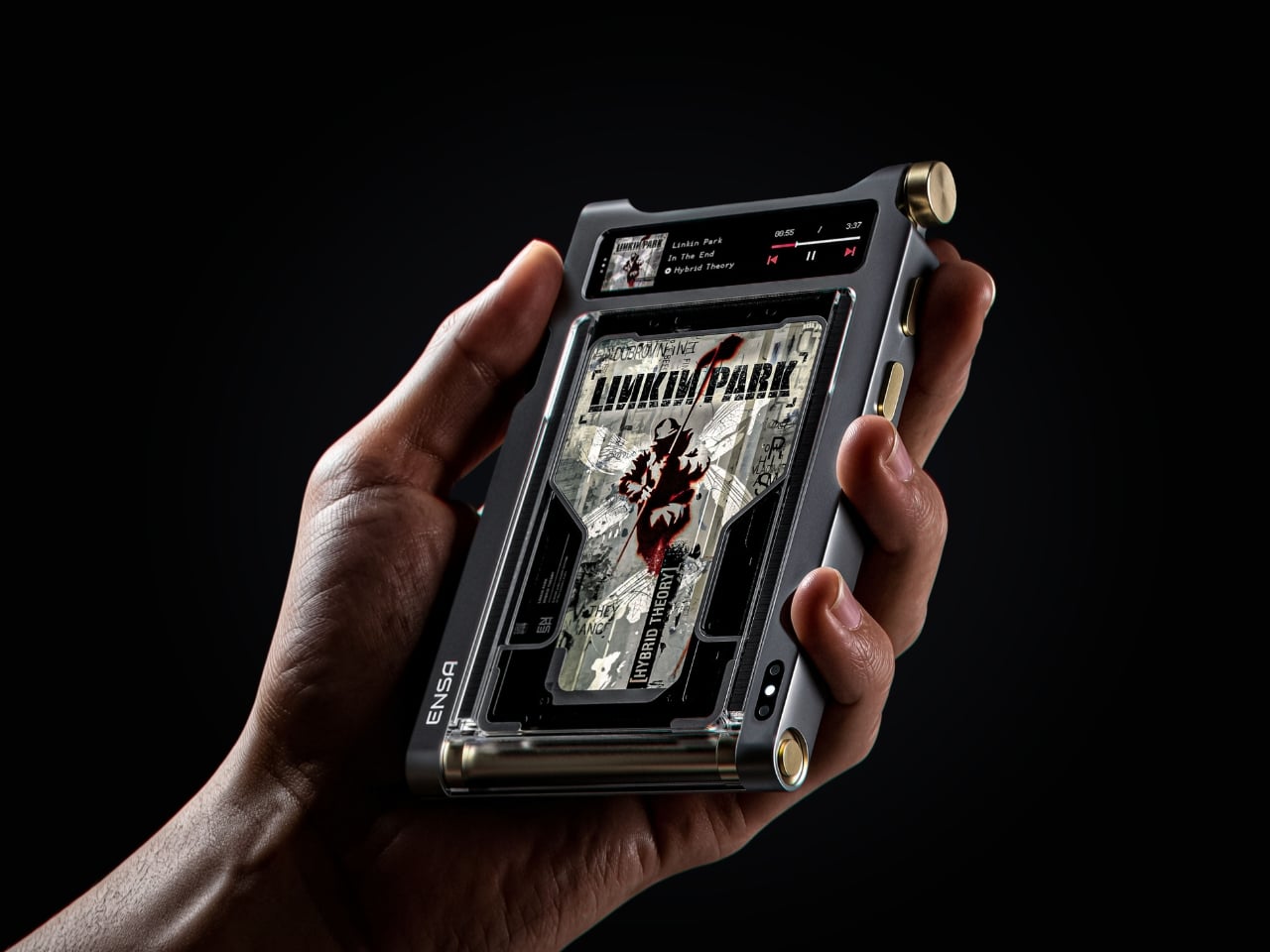
Do you remember the last time music actually demanded something of you? Not just your attention while you scrolled, but your hands. The deliberate pull of a record from its sleeve. The small, mechanical click of a CD case. The unhurried ritual that came before every song, every mood shift, every late-night session on the floor with the volume just loud enough. Vladimir Dubrovin remembers. The California-based multidisciplinary designer has been quietly building a case for returning physicality to the act of listening, and with the ENSA T1, his latest concept design, the argument gets considerably harder to dismiss.

The T1 is the newest addition to Dubrovin’s ENSA line, an evolving design series that began with the ENSA P1, a portable audio player concept that reimagined what a music device could look and feel like in the post-streaming era. The P1 introduced Dubrovin’s concept of C-NAND cartridges: small, disc-shaped, solid-state storage units where each cartridge holds one complete album. There are no moving parts, no spinning mechanisms. They’re fully digital in how they handle audio, but they exist in the physical world the way vinyl does. You pick one up, turn it over, look at it, choose it. The act of choosing your music becomes deliberate again, and that matters more than it sounds.

Designer: Vladimir Dubrovin

Where the P1 was built for portability and kept its design trim and pocketable, the T1 feels like the next chapter. Visually and conceptually, it carries the same DNA: clean, considered industrial design with an aluminum body and restrained detailing. But the T1 reads as something more anchored, a device you set somewhere permanent and return to, rather than slip into a bag. It’s a design that seems to understand the difference between music you consume and music you actually sit down for.

Aesthetically, Dubrovin’s approach has always felt less like tech product design and more like furniture-level thinking. The ENSA devices belong to the same visual conversation as early Braun electronics or a Dieter Rams concept sketch, where every detail either earns its place or gets removed entirely. The T1 continues that restraint. Its form doesn’t shout, which is precisely why it catches your eye. In a market saturated with speakers shaped like pebbles and smart displays with glowing rings, an audio device that looks like it was designed by someone who genuinely thought about what it means to own a piece of music is genuinely refreshing.

The broader question Dubrovin keeps posing with the ENSA project is one worth sitting with: what did we actually lose when music went weightless? Streaming solved convenience so completely that most of us never stopped to notice what the tradeoff cost. We gained access to everything and lost the kind of focus that comes from committing to a single album, from having music you could see, hold, or lend to a friend. The ENSA T1 is not trying to compete with Spotify. It’s asking whether the experience of music could mean something again, even if you have to build an entirely new format to get there.

It’s a concept project, not a product you can buy, and the realist in me knows that’s a significant caveat. Building out a new physical media format in 2026 is an uphill proposition at best. The infrastructure alone, manufacturing cartridges, convincing labels, and getting devices into homes, would require a level of industry commitment that’s difficult to imagine right now. But design concepts don’t have to ship to matter. The best ones articulate a desire most people feel but haven’t named yet, and the ENSA T1 does exactly that. The desire for music that has weight, that takes up space, that gives you something to do with your hands before the first note plays.

That’s why Dubrovin’s work keeps getting attention. The ENSA line isn’t nostalgic in the way that feels defensive or retrograde. It’s just honest about the fact that we traded something real for something convenient, and it’s asking, politely but persistently, if we’d like it back.

The post Streaming Took Something From Us. The ENSA T1 Wants It Back first appeared on Yanko Design.

  • ✇Korben
  • Un disque ressuscite le CD+G, ce format graphique oublié des CD audio
    Sur un disque audio classique, il restait depuis toujours quelques canaux de données inutilisés, glissés juste à côté des informations qui affichent le numéro de piste ou le temps écoulé, et c'est précisément dans ces recoins que Philips et Sony avaient logé en 1985 le CD+G, une extension capable d'afficher des images en 288 sur 192 pixels avec une maigre palette de 16 couleurs. Vous l'avez forcément croisé sans le savoir, puisque ce format a surtout servi à faire défiler les paroles synchronisé
     

Un disque ressuscite le CD+G, ce format graphique oublié des CD audio

26 juin 2026 à 04:28

Sur un disque audio classique, il restait depuis toujours quelques canaux de données inutilisés, glissés juste à côté des informations qui affichent le numéro de piste ou le temps écoulé, et c'est précisément dans ces recoins que Philips et Sony avaient logé en 1985 le CD+G, une extension capable d'afficher des images en 288 sur 192 pixels avec une maigre palette de 16 couleurs.

Vous l'avez forcément croisé sans le savoir, puisque ce format a surtout servi à faire défiler les paroles synchronisées sur les machines de karaoké pendant des décennies, avant de tomber dans l'oubli, à mesure que le CD physique déclinait.

Pour situer l'objet, le tout premier disque commercial à exploiter le CD+G remonte à 1985, avec l'album Eat or Be Eaten de la troupe américaine Firesign Theatre, et depuis, la feature n'a jamais vraiment dépassé le stade du gadget réservé aux bornes de karaoké et quelques rares appareils.

Sauf que voilà, deux artistes, Aizysse Baga et Adelaide, ont décidé de le déterrer pour de bon en pressant un mini-CD baptisé Divacore qui embarque de vraies illustrations à côté de la musique.

Et elles ne se sont pas contentées du strict minimum. Pour caser des visuels à peu près corrects dans seulement 16 couleurs, elles ont misé sur le tramage, cette vieille astuce qui mélange des points de teintes différentes pour donner l'illusion de couleurs qui n'existent pas vraiment dans la palette proposée.

Il faut dire que la marge de manœuvre était franchement limitée, avec à peine 28,8 kilobits par seconde réservés aux graphismes, de quoi peindre l'écran par petites tuiles de 6 sur 12 pixels et pas grand-chose d'autre.

Le plus intéressant dans l'histoire, c'est qu'elles ont poussé le délire jusqu'au CD+EG, une variante étendue qui grimpe à 256 couleurs tout en restant compatible avec les anciens lecteurs, un format tellement confidentiel à l'époque qu'il n'a quasiment jamais été gravé sur un disque commercial et que presque aucun appareil ne savait l'afficher.

Le tout a été fabriqué avec un encodeur maison écrit en Python, de quoi générer les deux versions des images et les glisser proprement dans les fameux sous-codes du disque.

Du coup, si vous lisez Divacore sur une Sega Saturn par exemple, ou sur les très obscurs lecteurs Victor VS-G2 et VS-G3, vous voyez les illustrations en 256 couleurs dans toute leur splendeur. Sur une simple machine de karaoké ou une Amiga CD32, vous récupérez la version en 16 couleurs, et c'est déjà pas mal

Bref, ressusciter un format que même son époque avait snobé, juste pour le plaisir de le voir tourner sur une Saturn. Inutile, et franchement cool non ?

Source : Hackaday

❌