❌

Vue normale

  • ✇Yanko Design
  • London’s Coolest Capsule Hotel Proves Budget and Beautiful Aren’t Opposites
    London has a new answer to affordable city-centre stays — and it looks nothing like the hostels that came before it. SODA, the London-based architecture studio, has transformed a former backpacker hostel near Oxford Street into Otherwander Soho, a high-density capsule hotel built around 566 sleeping pods the brand calls “nests.” The result is something closer to a boutique hotel than a budget bed, a place that takes the Japanese capsule typology and reframes it for a generation that refuses to
     

London’s Coolest Capsule Hotel Proves Budget and Beautiful Aren’t Opposites

1 octobre 2026 à 19:30

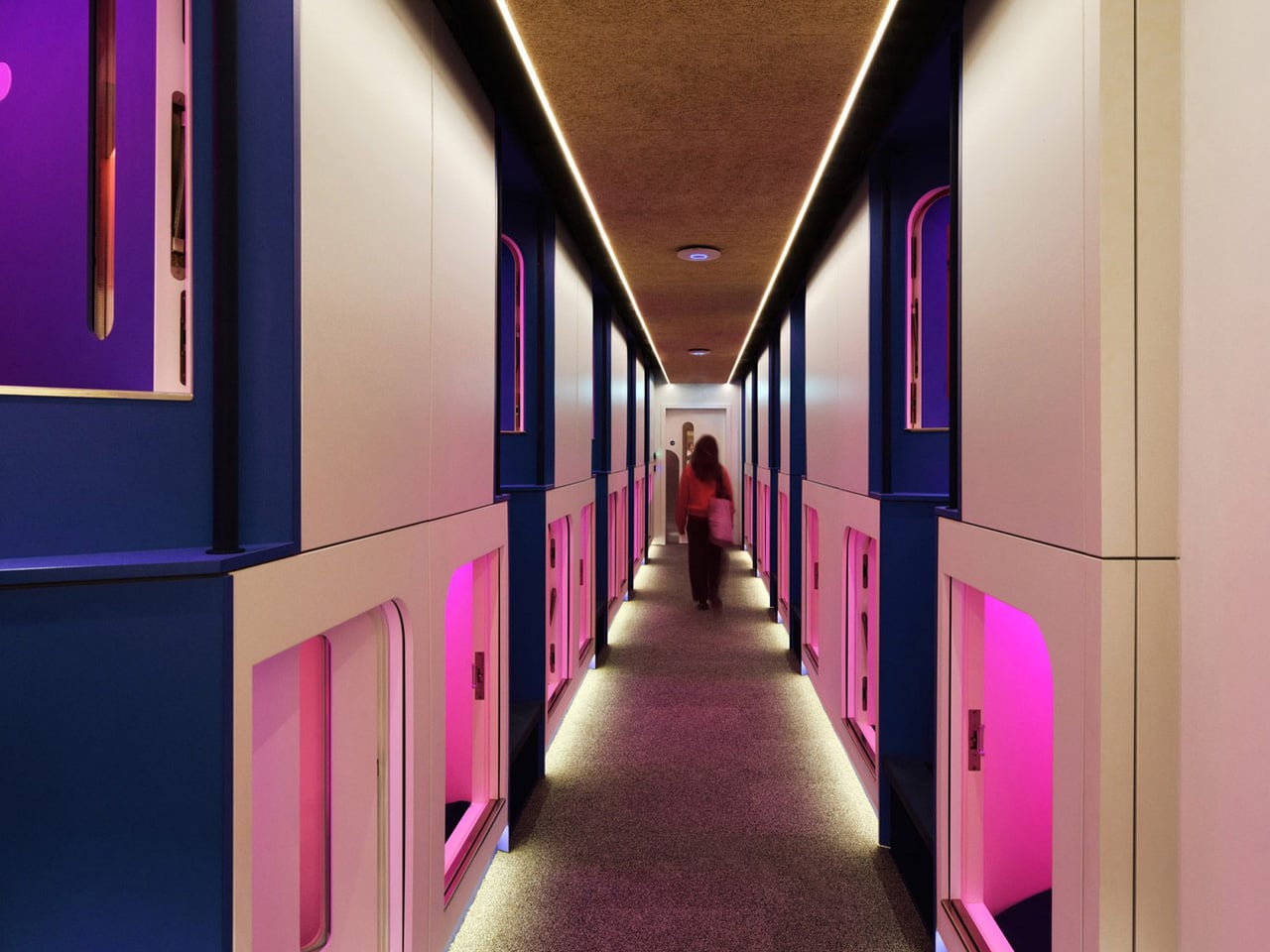
London has a new answer to affordable city-centre stays — and it looks nothing like the hostels that came before it. SODA, the London-based architecture studio, has transformed a former backpacker hostel near Oxford Street into Otherwander Soho, a high-density capsule hotel built around 566 sleeping pods the brand calls “nests.” The result is something closer to a boutique hotel than a budget bed, a place that takes the Japanese capsule typology and reframes it for a generation that refuses to choose between cost and quality.

The building itself carries history. Otherwander occupies a pair of early 20th-century structures close to Oxford Street, and SODA’s approach respects that lineage without being precious about it. The facade references the neighbourhood’s material vernacular — hand-laid arched brick details and corbelled window reveals draw from the surrounding Soho streetscape — while the interiors do not attempt to play it safe. Vibrantly coloured social spaces, curved lines, and warm strip lighting push back against the beige neutrality that defines most budget accommodation. A colourful staircase threads the floors together, giving the building a sense of vertical life.

Designer: SODA

SODA director Ryan Holland was clear about the brief from the start. “The aim was to provide affordable, high-density accommodation without compromising the guest experience,” he told Dezeen. The target guest is Gen Z and younger independent travellers — people who are design-literate, location-driven, and unwilling to trade aesthetics for a lower room rate. Each nest is private and soundproofed, with the entire guest journey — check-in, room control, checkout — managed through a phone. It’s a frictionless model designed for people who already live this way.

What SODA gets right here is the balance between compression and comfort. The pods are compact by necessity, but the shared spaces are generous in feeling — designed to do the social heavy lifting that a private nest cannot. It’s a deliberate split: retreat into the pod, expand into the communal. The vibrancy of the common areas makes the smallness of the sleeping space feel intentional rather than compromised.

Capsule hotels have existed at the fringes of Western hospitality for years, mostly as novelty or last resort. Otherwander Soho changes the conversation. Located at 92 Dean Street, it plants itself at the centre of one of London’s most culturally loaded postcodes and dares you to think of it as anything less than a destination. SODA hasn’t just renovated a hostel — they’ve made the case that density and design aren’t opposites.

The post London’s Coolest Capsule Hotel Proves Budget and Beautiful Aren’t Opposites first appeared on Yanko Design.
  • ✇Yanko Design
  • Open-Plan Offices Killed the Private Desk, and This Pod Brings It Back
    Most office furniture solves privacy by sealing someone off completely: four walls and a door that shuts out everyone else, along with any sense of connection to the room. The Seed Pod skips that tradeoff. It wraps a single desk and seat inside a radiating fan of white wooden slats, open enough to see through, dense enough to feel like a room of your own. That slat pattern isn’t just decorative. Vertical wooden ribs curve outward from a tall arched spine at the back, fanning shorter toward the
     

Open-Plan Offices Killed the Private Desk, and This Pod Brings It Back

Par : JC Torres
7 septembre 2026 à 12:20

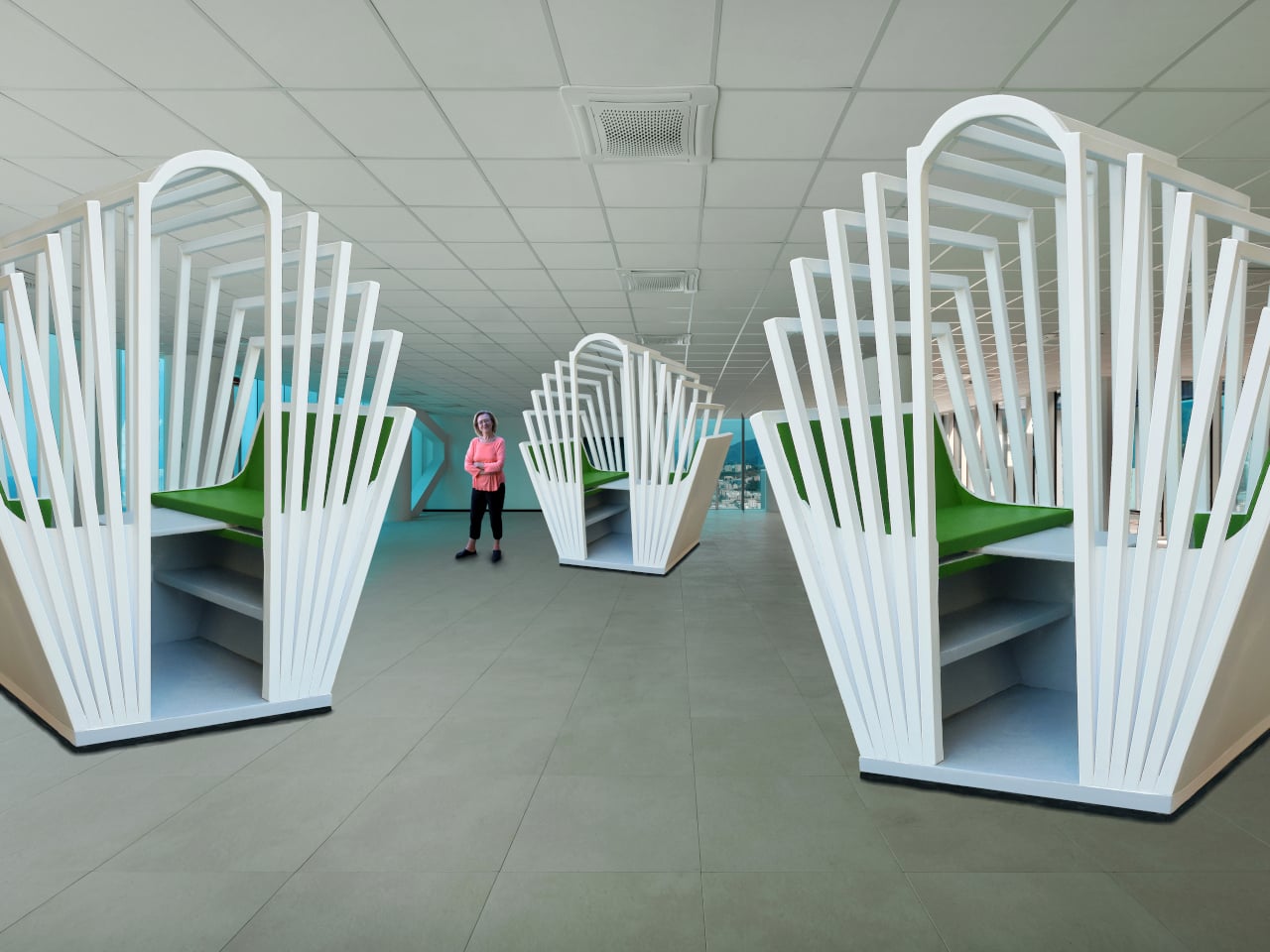
Most office furniture solves privacy by sealing someone off completely: four walls and a door that shuts out everyone else, along with any sense of connection to the room. The Seed Pod skips that tradeoff. It wraps a single desk and seat inside a radiating fan of white wooden slats, open enough to see through, dense enough to feel like a room of your own.

That slat pattern isn’t just decorative. Vertical wooden ribs curve outward from a tall arched spine at the back, fanning shorter toward the open front, so the whole structure reads like something caught mid-bloom rather than a static box. Gaps between each slat let light and sound pass through freely, creating enclosure without ever fully cutting the occupant off from whatever’s happening around them.

Designer: Michael Jantzen

Step inside and a bright green bench seat waits at the center, paired with built-in storage tucked into the lower walls on either side. Small wedge-shaped shelves hold whatever a workday requires nearby, papers, supplies, a bag, without eating into the already compact footprint. The contrast between crisp white slats outside and that saturated green interior gives the whole thing a distinct, almost botanical identity rather than reading as generic office equipment.

A sliding desktop surface handles the actual work. Sized specifically for a laptop, it can be repositioned to different spots under the main desk, adjusting to whatever posture or task someone needs at that moment rather than locking them into one fixed arrangement. Slide it back, and the same space clears out for someone to step in or out without maneuvering around a stationary tabletop.

Mobility matters just as much as the seating arrangement. The entire structure sits on wheels and plugs into any standard electrical outlet nearby, meaning it can roll into a corner of a shared office floor one week and relocate to a quiet spot at home the next. Nothing about setup requires special wiring or a dedicated room built around it.

Picture an open-plan office where video calls and side conversations blur together constantly, or a home where the only quiet corner left is also the one everyone walks through. Rolling a Seed Pod into either space carves out somewhere to actually concentrate, without requiring a renovation or a door that locks. Multiple units can sit side by side too, each occupant getting their own pocket of focus inside a shared room.

What makes the design work is restraint rather than enclosure. The slats do the job walls usually do, marking a boundary, without asking anyone to give up daylight, airflow, or the sense of still being present in the room they’re sitting in.

The post Open-Plan Offices Killed the Private Desk, and This Pod Brings It Back first appeared on Yanko Design.

❌