❌

Vue normale

  • ✇Yanko Design
  • This Electric Superbike Wears Its Battery Like a Honeycomb
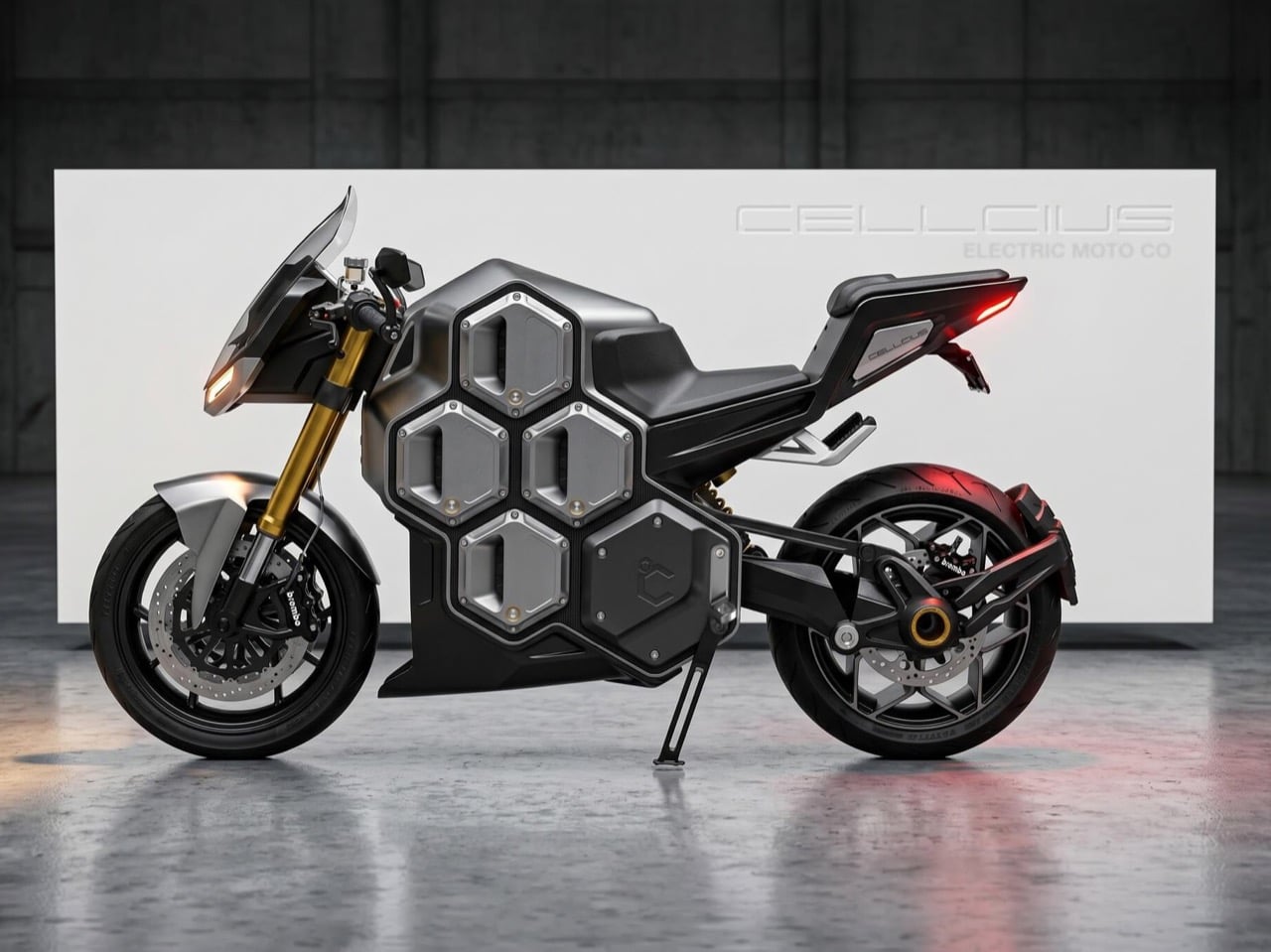
    Bees settled on the hexagon ages ago, and nobody has topped it since. The shape packs the most storage into the least material, which is why it turns up in honeycomb aircraft panels and in the way round battery cells get stacked together. Brisbane’s Clandestine Design Group took the hint and built an entire electric superbike around it. The Cellcius C-01 is a hypersport concept whose battery is split into eight hexagonal cells that you can pull out and swap. Those cells line the bike’s flanks l
     

This Electric Superbike Wears Its Battery Like a Honeycomb

20 octobre 2026 à 15:35

Bees settled on the hexagon ages ago, and nobody has topped it since. The shape packs the most storage into the least material, which is why it turns up in honeycomb aircraft panels and in the way round battery cells get stacked together. Brisbane’s Clandestine Design Group took the hint and built an entire electric superbike around it. The Cellcius C-01 is a hypersport concept whose battery is split into eight hexagonal cells that you can pull out and swap. Those cells line the bike’s flanks like honeycomb, and the result is one of the more striking EV silhouettes I’ve seen in a while.

Neil Davidson, who founded Clandestine in 2014 after 14 years as Creative Director at CMD, has loved motorcycles since he was a three-year-old farm kid on a dirt bike. That obsession shows. The C-01 won a 2026 Australian Good Design Award in the Concept Design category. It is still a concept, so there is no price tag or showroom date yet. The studio’s pitch is that electric bikes force a choice between heavy track machines and short-range commuters, and the Hex-Core battery system lets one bike be both. Load two cells for the commute or all eight for the track, and the same machine changes its personality to match.

Designer: Clandestine Design Group

Two Cells for the Commute, Eight for the Track

Each Hex-Core cell holds 3 kWh, so the bike carries anywhere from 6 kWh to 24 kWh depending on how many you load. By the studio’s numbers, the weight swings from 353 lb (160 kg) as a commuter to 485 lb (220 kg) as a track bike. Do the math and each cell works out to roughly 22 lb (10 kg), a weight you could carry up a flight of stairs. Two cells also fit Australia’s Learner Approved Motorcycle Scheme (LAMS), a rulebook that keeps new riders on tamer bikes, according to the studio. I can’t think of another superbike that can shrink for a learner permit and then bulk up for a lap day.

Kawasaki’s Ninja e-1 launched in the US at $7,599, weighs 309 lb (140 kg), and carries two removable 1.5 kWh packs that Kawasaki rates at 41 miles in Road mode. Zero’s 2026 SR/F, the usual benchmark for a serious electric streetfighter, packs 17.3 kWh into a body listed at about 500 lb (227 kg). Fully loaded, the C-01 claims 24 kWh at 485 lb, beating the Zero on both counts. That makes the Ninja and the SR/F look like the two ends of a spectrum the C-01 wants to cover with one chassis. Kawasaki’s two-pack setup proves removable batteries work for city riders, and the C-01 keeps adding packs until it hits superbike territory.

A Honeycomb You Can Carry Home

A wall-mounted smart dock charges several cells at once, so a fresh set is always waiting for a swap, a trick the studio calls “zero-minute” hot-swapping. Apartment dwellers get an ergonomic backpack that carries cells indoors for charging at a regular wall outlet. Riders who would rather skip the hauling can plug into a flush CCS port on top of the tank, which hooks into standard street-side fast chargers. Empty bays double as mounts for hex-shaped duffel bags, which keeps luggage inside the silhouette instead of hanging panniers off it. That setup goes straight at the studio’s stated target, urban apartment dwellers who have nowhere to plug in.

Pulled out of the bike, a cell turns into a portable power station with AC and USB outlets, according to the studio. That is the power tool battery logic every contractor already lives with, where one pack format runs a drill, a saw, and a work light. DeWalt and Milwaukee built huge product families on that idea, and the C-01 wants a superbike in the club. The studio also sees room for an aftermarket of Hex-Core accessories, from luggage to those power stations. A 5G app handles keyless RFID or PIN entry, over-the-air updates, and firmware tuning based on payload.

Shaft Drive, a Venturi Tail, and the Case for Swappable Superbikes

High-pressure ram intakes feed air in at speed while a low-pressure exhaust in the tail pulls it back out, a Venturi effect the studio says passively extracts motor heat without heavy fans. Power reaches the rear wheel through a fully enclosed carbon shaft drive, which the studio calls silent and maintenance-free. BMW has been putting shafts on motorcycles since the R32 in 1923, so the idea has real pedigree. Brembo brakes and fully adjustable Öhlins suspension round out a spec sheet that reads like a track-day wish list. My one wish is for the angular flyscreen to echo the hexagons a little more, since right now it reads like it came from a different bike.

Australia’s Good Design Awards date to 1958, and the Concept Design category, new since 2025, judges early-stage ideas on form, function, feasibility, and safety. A win there rewards the thinking, and the thinking here is easy to admire. My favorite part is that the battery, usually the thing EV designers hide under a tank cover, becomes the main visual feature. Electric bikes have spent years arguing over range versus weight, and the C-01 answers by letting the rider settle it each morning. Bees figured out the hexagon without a design degree, and a Brisbane studio just reminded the motorcycle world how well it stacks.

The post This Electric Superbike Wears Its Battery Like a Honeycomb first appeared on Yanko Design.
  • ✇Yanko Design
  • This pixel-covered MINI concept makes the Hyundai Ioniq 5 look subtle
    Hyundai got everybody talking about pixels in 2019, when the 45 EV Concept showed up in Frankfurt with square-cut lights, and the Ioniq 5 carried the idea to showrooms in 2021. Hyundai even named the look Parametric Pixel and spread it across the headlights, taillights, and wheels. It was a smart move, and it gave the Ioniq 5 a face you could pick out of a parking lot from across the street. Still, Hyundai used pixels like a seasoning, a sprinkle here and a dash there. Somebody was bound to dum
     

This pixel-covered MINI concept makes the Hyundai Ioniq 5 look subtle

19 octobre 2026 à 17:30

Hyundai got everybody talking about pixels in 2019, when the 45 EV Concept showed up in Frankfurt with square-cut lights, and the Ioniq 5 carried the idea to showrooms in 2021. Hyundai even named the look Parametric Pixel and spread it across the headlights, taillights, and wheels. It was a smart move, and it gave the Ioniq 5 a face you could pick out of a parking lot from across the street. Still, Hyundai used pixels like a seasoning, a sprinkle here and a dash there. Somebody was bound to dump the whole shaker.

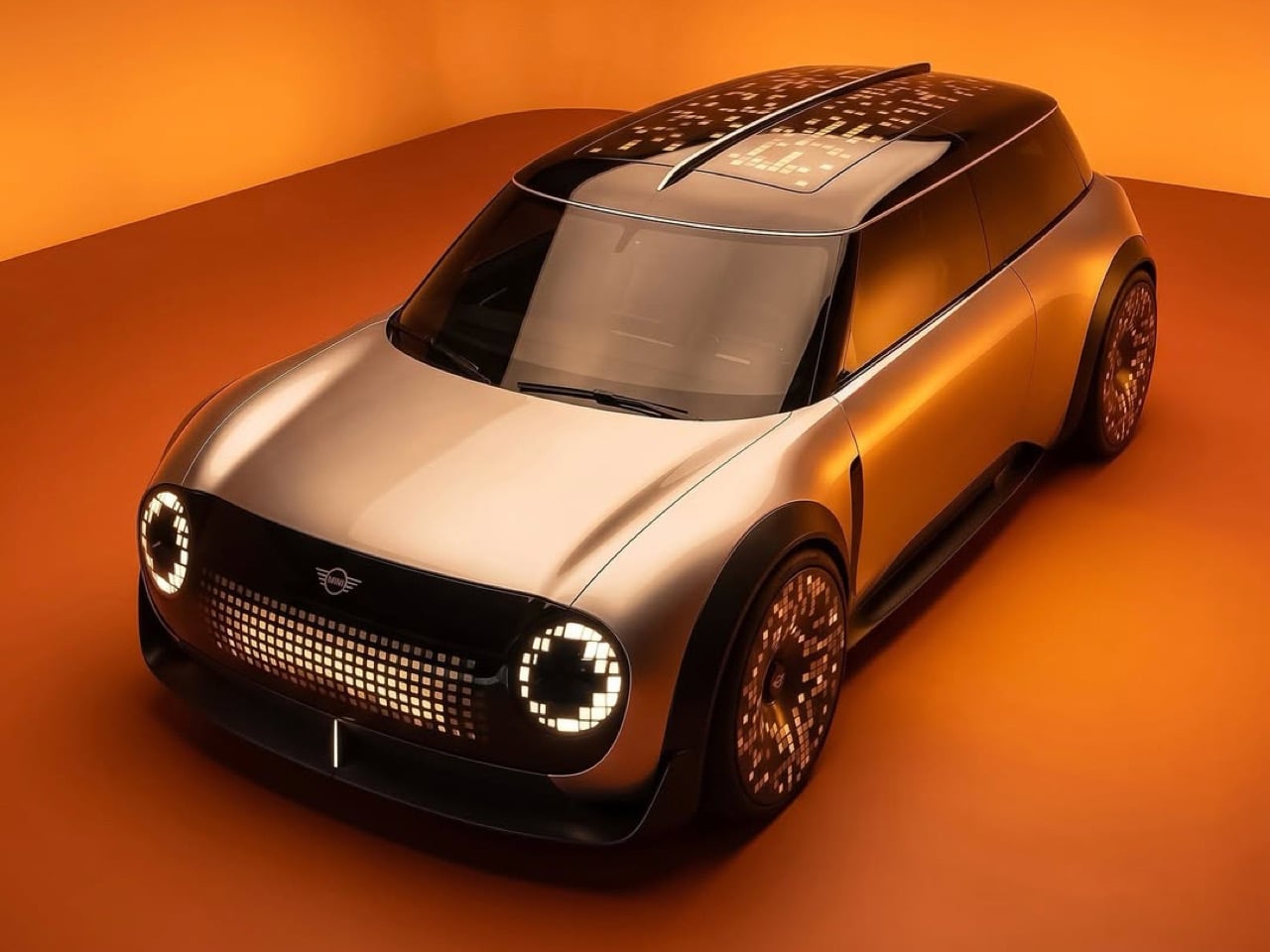
That somebody is Uygar, a Turkey-based designer who calls himself a professional daydreamer, and the shaker is a MINI. The headlights keep MINI’s round shape but fill the rings with squares, a dot-matrix grille owns the nose, and each wheel is a glowing mosaic disc. The Union Jack taillights are rebuilt out of red pixels, a nod to the flag lamps from MINI’s 2018 facelift. It’s a long-roof five-door with stubby overhangs, a dark roof, and satin champagne-silver paint, so the pixels do the talking. I tried counting the squares on one wheel and gave up when my coffee went cold.

Designer: Uygar (uygarspots)

Round headlights, square pixels, and a grille that glows

MINI’s round headlight is the closest thing the brand has to a signature, so Uygar leaves the circle alone and changes what it is made of. Each ring becomes a loop of little squares wrapped around a dark projector lens, like a digital eye with a very serious pupil. Below it, the closed grille is a dot-matrix field that glows brightest at the center and fades toward the edges. A thin vertical light bar drops from the bumper like a tiny exclamation mark. From a block away the face looks friendly, and up close you can count the grid.

Hyundai keeps its pixels inside the lamps, so the Ioniq 5 still reads as a car with a few digital accents. Here the whole nose becomes one display, so the face reads as a single graphic. That suits a brand whose cars have worn a cheeky expression since Alec Issigonis’s original Mini arrived in 1959. The production Cooper EV already lets owners pick from three light signatures, so a face that changes mood is hardly a leap. This one has far more dots to play with, and I suspect it would be a menace at red lights.

The wheels and taillights carry the pixel jewelry

The wheels are where the idea gets silly in the best way. Each one is a full disc covered in amber squares, arranged in a swirl that thins out toward the rim and bunches up around the MINI wings at the hub. Some squares glow bright while others sit nearly dark, so the whole disc looks caught mid-sparkle. Hyundai’s pixel wheels ask you to read the pattern in the metal, and these ask you to read it in light. Park one at night and you have a disco ball on each corner, minus the awkward dance lessons.

The rear is the cleanest trick in the set. A black glass band spans the tailgate and holds two Union Jack lamps built from red dots, with the MINI wings sitting between them. MINI introduced flag-style taillights in 2018, using the turn signals for the horizontal bars and the brake lights for the vertical ones. Then the 2022 Aceman concept drew a Union Jack across its grille in matrix LEDs. This render finishes the thought by building the flag from pixels, which is where a flag made of light was always headed.

MINI already flirted with pixels, and this is the follow-through

MINI did not wander into this blind. The Aceman concept appeared in July 2022 and made its first public showing at Gamescom in Cologne, which tells you exactly who the brand was flirting with. Its matrix LED headlights and grille drew Lite-Brite comparisons, a nod to the glowing peg toy Hasbro launched in 1967, and the right headlamp could even wink. The Cooper EV that followed took a calmer path, with round lamps, three light signatures, and a 9.4 inch (240mm) round OLED screen inside. The pixel face was the Aceman’s loudest idea, and production turned the volume down.

Uygar’s concept feels like the alternate timeline where nobody in the design review said “maybe a little less.” Hyundai sprinkled, MINI nibbled, and this render tips the whole shaker over the car. If I owned a MINI and somebody offered me these wheels, I would ask where to sign, then ask where the off switch is. The little British hatch has always been the brand most willing to act like a toy, and a toy with a glowing face is hard to argue with. Dump the whole shaker, I say, and let the pixels fall where they may.

The post This pixel-covered MINI concept makes the Hyundai Ioniq 5 look subtle first appeared on Yanko Design.

  • ✇Yanko Design
  • Porsche Mission S ditches the center screen for a driver-focused supercar cockpit
    Porsche has unveiled the Mission S, a vision model that previews its evolving design language and introduces plans for a new mid-engine super sports car positioned above the 911. The German automaker describes the performance machine as the foundation for a permanent addition to its lineup, combining motorsport influences with a more focused approach to driving. Revealed in Queens, New York, the Mission S also draws attention to Porsche’s history. The location recalls the 1953 appearance of the
     

Porsche Mission S ditches the center screen for a driver-focused supercar cockpit

19 octobre 2026 à 11:20

Porsche has unveiled the Mission S, a vision model that previews its evolving design language and introduces plans for a new mid-engine super sports car positioned above the 911. The German automaker describes the performance machine as the foundation for a permanent addition to its lineup, combining motorsport influences with a more focused approach to driving.

Revealed in Queens, New York, the Mission S also draws attention to Porsche’s history. The location recalls the 1953 appearance of the 550 Spyder on the same pier, a car that helped establish the company’s reputation in the United States. The new concept carries that legacy forward through proportions and details inspired by several of the marque’s historic sports cars.

Designer: Porsche

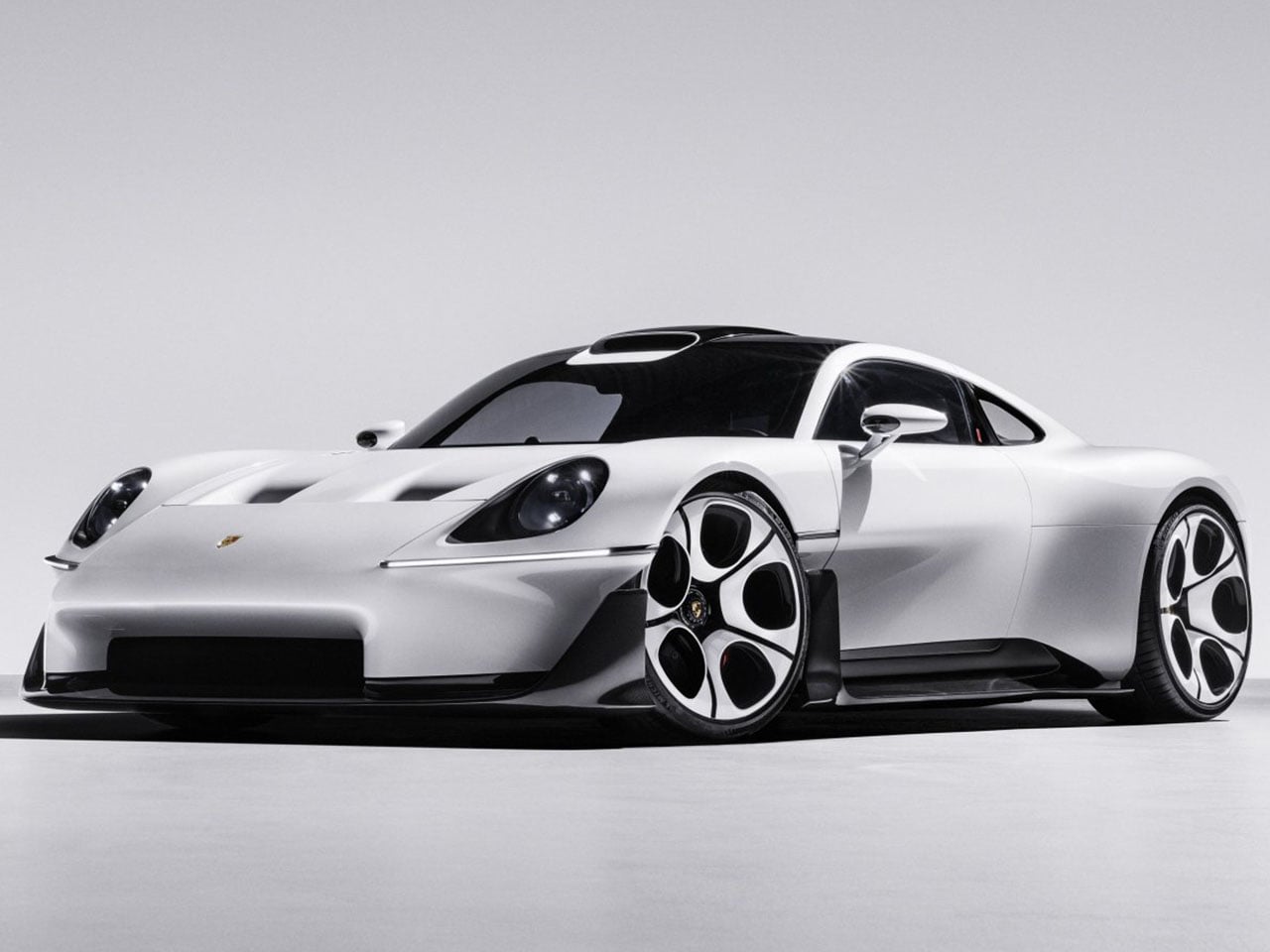
Its exterior centres on a low nose, rounded headlights and pronounced front fenders that recall the 911. The flat front end takes inspiration from the 911 GT1, while the roofline extending beneath the rear wing references the 959. At the back, a design treatment derived from the GT1 creates a layered, car-within-a-car effect. These references are integrated into a contemporary form rather than reproduced as retro styling.

A continuous line connects the front and rear light signatures, visually tying the body together. Above it, the sculpted surfaces emphasise the car’s muscular proportions; below, exposed technical elements reinforce its functional character. The centrally positioned engine makes the familiar Porsche roofline possible, while a cooling arrangement inspired by the 917’s radiator fan and an integrated active rear wing bring engineering details into the visual design. The wheels reinterpret the distinctive dial-like pattern of the 928, with an emphasis on lightweight construction.

On the inside, Porsche takes a less screen-dependent approach to the driving experience. The cabin draws on the 550 Spyder and 356, using flowing lines across the dashboard and doors to create a low, enclosed cockpit. Traditional switches and physical controls sit alongside digital displays, with the layout arranged around the driver. White, grey and red accents reference the brand’s racing colours.

The instrument cluster is a central feature. Five round instruments sit behind the steering wheel, with an analogue rev counter at the centre and a digital display behind it. Their arrangement can change with the selected driving mode, adapting the presentation to the driver’s needs. A redesigned Sport Chrono element combines analogue styling with digital functions, while push-pull controls provide direct access to selected vehicle settings.

Porsche has also left out a permanently installed central touchscreen and passenger display. Instead, a retractable smartphone holder compatible with MagSafe allows a personal device to serve as a navigation or information screen when needed. The My Porsche app provides access to vehicle functions and offers historically inspired designs for the digital instrument displays.

For now, Mission S remains a vision model, not a production car with confirmed performance figures or a launch date. Porsche has, however, announced development of a new mid-engine super sports car platform. Its eventual production models will show how much of this concept’s design and driver-focused philosophy makes it to the road.

The post Porsche Mission S ditches the center screen for a driver-focused supercar cockpit first appeared on Yanko Design.

❌