❌

Vue normale

  • ✇Yanko Design
  • Flint’s Rechargeable Paper Battery Works Without Lithium
    Paper is an unexpected starting point for a rechargeable battery, which is part of Flint’s appeal. The Singapore-based company uses cellulose, the plant-derived material in paper, to rethink what goes inside the cells powering our gadgets. Its paper battery targets two problems that rarely make it onto the packaging: the materials batteries depend on and the safety concerns that come with storing energy in everyday objects. Flint announced on January 2, 2026, that its technology had entered pro
     

Flint’s Rechargeable Paper Battery Works Without Lithium

10 novembre 2026 à 14:20

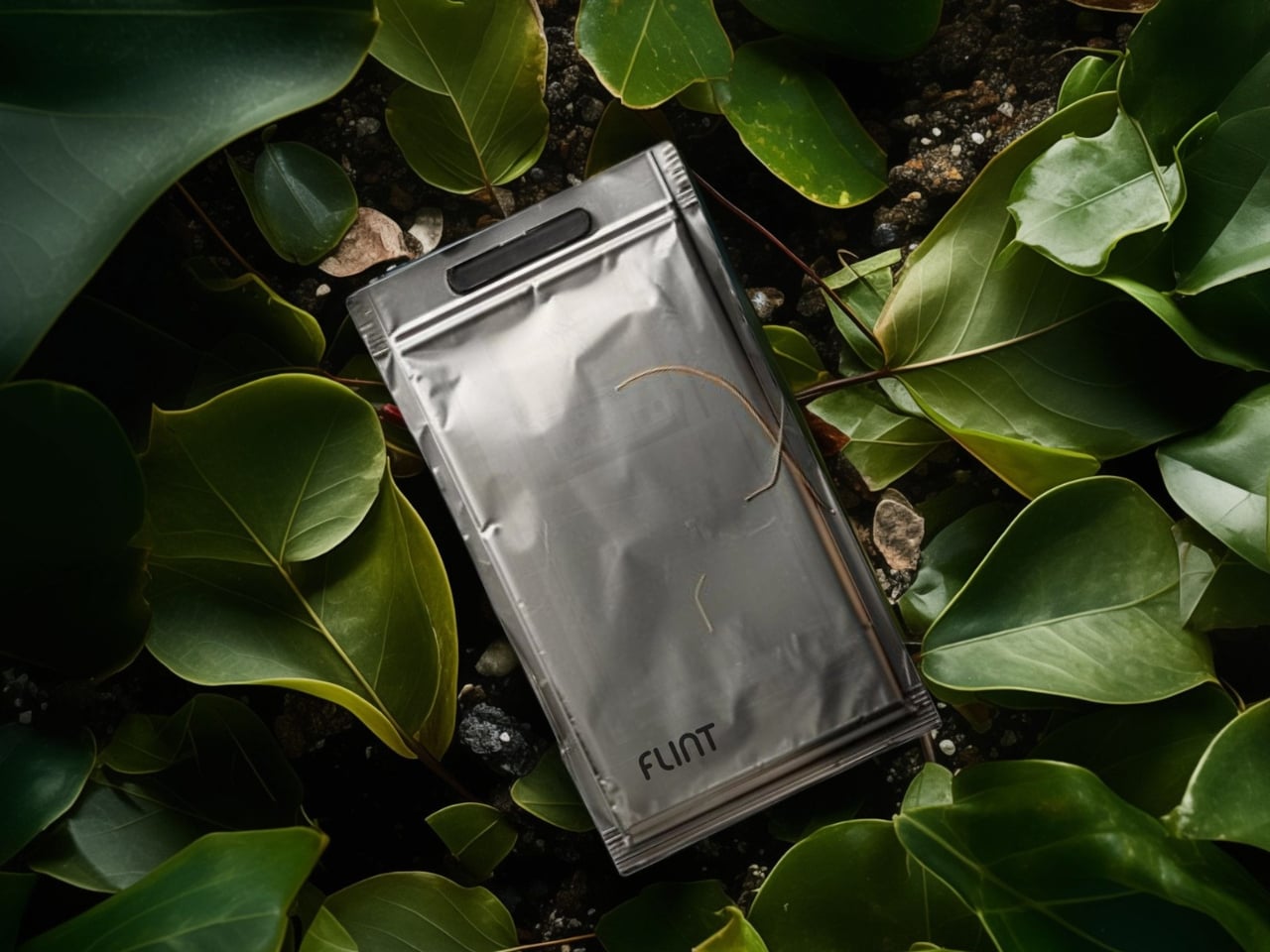
Paper is an unexpected starting point for a rechargeable battery, which is part of Flint’s appeal. The Singapore-based company uses cellulose, the plant-derived material in paper, to rethink what goes inside the cells powering our gadgets. Its paper battery targets two problems that rarely make it onto the packaging: the materials batteries depend on and the safety concerns that come with storing energy in everyday objects.

Flint announced on January 2, 2026, that its technology had entered production in Singapore, supplying cells for customer pilots and early commercial integrations. That’s an important distinction from a promising laboratory sample, although it doesn’t mean you can grab a pack at the checkout counter. The company currently focuses on businesses and manufacturers rather than direct consumer sales.

Designer: Flint Labs

The name needs a little unpacking. You aren’t charging a sheet of stationery, and paper alone isn’t supplying the electricity. Flint uses zinc and manganese alongside its cellulose-based architecture and water-based electrolyte. The battery still has the familiar internal arrangement of an anode, cathode, and separator. Flint says cellulose supports ion transfer and gives the design structural flexibility. I like that the material has an actual job here, beyond making the sustainability story sound approachable.

That flexibility gives designers options beyond a rigid cylinder or rectangular block. Flint says its chemistry can accommodate different shapes, and IEEE Spectrum’s reporter handled a thin, bendable version at CES. The technology can also take familiar AA and AAA forms. To me, that’s a more interesting design proposition than making every device thinner: giving the battery more ways to fit the object.

Safety is another major part of the pitch. Flint describes its water-based batteries as non-flammable and resistant to damage, and its website presents demonstrations involving cutting a cell and exposing one to flame. Those demonstrations are attention-grabbing, but I’d put more weight on documented testing for a particular finished product. A dramatic demonstration can make the chemistry understandable; it doesn’t establish every condition a gadget might encounter.

The applications feel most convincing when they stay close to ordinary life. Flint has been piloting its technology with Logitech, including AAA batteries, according to IEEE Spectrum’s reporting. A mouse or keyboard might not have the glamour of an electric vehicle, but that’s a useful place to prove an alternative chemistry. I’d rather see a battery earn its place in an unremarkable daily object than headline an implausibly ambitious concept.

Then comes the composting claim, which deserves more care than the word “paper” suggests. Flint says its metals can be recovered and the remaining material composted. Its explanation also involves removing the vacuum-sealed casing before degradation begins. That isn’t an invitation to toss an intact battery into the backyard. I’d want explicit disposal instructions and a practical recovery route before treating compostability as an everyday convenience.

Performance remains the other test. Flint’s founder has claimed up to 1,000 charge cycles, but IEEE Spectrum reported that the company hadn’t published a white paper detailing its proprietary design. That leaves a gap between promising specifications and evidence readers can examine. I’m interested, but I wouldn’t translate those figures into a promise about how long a future wearable or remote will last between charges.

One less flashy choice may matter just as much: manufacturing. Flint says it deliberately designed the battery to align with existing lithium-ion production processes, while its Singapore facility uses water-based manufacturing methods. Compatibility with familiar equipment could help manufacturers consider a different chemistry without rebuilding everything around it. It’s the kind of practical decision I appreciate because an alternative material has limited value if making it remains prohibitively complicated.

For me, the payoff would be reassuringly uneventful: a gadget that works as expected, with a battery chosen more thoughtfully and a clear destination when it wears out. Flint has made that prospect worth watching. The next persuasive step is letting ordinary products, and their owners, do the demonstrating.

The post Flint’s Rechargeable Paper Battery Works Without Lithium first appeared on Yanko Design.

  • ✇Yanko Design
  • Seaweed’s Hidden Beauty Takes Shape in Alien-Like Sculptures
    Julia Lohmann’s seaweed sculptures look like they’ve wandered out of a science fiction movie and agreed to pose for a museum photograph. Their skins curl around exposed ribs, with open mouths and looping bodies that suggest creatures nobody has named yet. I like that they’re a little strange. For a project concerned with our relationship to nature, making the material difficult to ignore feels like a sensible place to start. The work is Kelp Council, an installation made for More than Human at
     

Seaweed’s Hidden Beauty Takes Shape in Alien-Like Sculptures

10 novembre 2026 à 09:20

Julia Lohmann’s seaweed sculptures look like they’ve wandered out of a science fiction movie and agreed to pose for a museum photograph. Their skins curl around exposed ribs, with open mouths and looping bodies that suggest creatures nobody has named yet. I like that they’re a little strange. For a project concerned with our relationship to nature, making the material difficult to ignore feels like a sensible place to start.

The work is Kelp Council, an installation made for More than Human at London’s Design Museum, which ran from July 11 through October 5, 2025. It addresses a design problem that doesn’t get solved by swapping one material for another: how to use nature without treating it as an endless supply closet. Lohmann gives seaweed a presence beyond its usefulness to us, inviting visitors to consider the organisms behind a potential design material.

Designer: Julia Lohmann

In the museum’s installation photograph, the surfaces range from olive green to warm amber and deep reddish brown. Light catches the thin skins, while the curved framework stays visible underneath. One form folds around a large opening; another flares outward like an oversized sea creature’s collar. The exposed construction matters. You can read the relationship between skin and support rather than seeing a perfectly smooth shell that conceals how it was assembled.

That relationship has been developing for years. Lohmann’s earlier Oki Naganode, installed at the Victoria and Albert Museum in 2013, used Japanese Naga seaweed treated to remain flexible, then stretched across a modular cane and aluminum framework. That project helps explain the material thinking behind her practice: seaweed can behave like a translucent covering, with enough visual character to become the reason for an object’s form. It doesn’t need to impersonate injection-molded plastic to be worth our attention.

Lohmann began exploring seaweed in 2007 and founded the Department of Seaweed in 2013, bringing together research, experimentation, and making. The name sounds enjoyably bureaucratic for a group dealing with such unruly material. Its stated position is serious, though. Seaweed-based alternatives only make sense, the group argues, when marine ecosystems and wild algae stocks come first. A renewable material still requires decisions about where it comes from and how it is grown.

Kelp Council adds another layer through sound. The installation includes a soundscape of rising and falling tides by Ville Aslak Raasakka and Lohmann, alongside seaweed species collected in Europe and East Asia. I appreciate that choice because it connects the gallery objects to a setting beyond the gallery. The word “council” also gives the gathering a slightly theatrical premise: humans are invited into a conversation whose other participants usually have no representation.

That premise could easily become precious, but the material keeps it grounded. In a Wallpaper* interview, Lohmann warned against responding to seaweed’s potential by simply harvesting more wild stock, which would create further problems for those habitats. To me, that caution is the strongest element of the project. The sourcing remains part of the design, even after the sculpture is finished. Any enthusiasm about seaweed replacing conventional materials needs to leave room for that distinction.

Of course, an installation cannot establish that a material is ready for your next lampshade or chair. A compelling sculpture alone can’t tell us what a mass-produced version would cost, how long it would last in a home, or what its full environmental footprint would be. I’d want those answers before calling it a practical replacement. As an exhibition piece, though, it has a different job: making those questions feel worth asking.

I’m more persuaded by the visible ribs and uneven colors than I would be by a perfectly uniform sheet advertised as the next miracle biomaterial. They suggest a design process willing to work with what makes seaweed distinctive. Kelp Council leaves me wanting objects that retain more of that identity, along with better information about their origins. If the material has a story, the finished design ought to let some of it show.

The post Seaweed’s Hidden Beauty Takes Shape in Alien-Like Sculptures first appeared on Yanko Design.

  • ✇Yanko Design
  • Casio’s Tiny Ring Watch Keeps Time Without a Wrist Strap
    I’m so used to wearing a watch, whether as a health tracker or just a way to tell time without looking at my phone. But sometimes I wish I could wear something that isn’t on my wrist. There are times I’d rather wear a bracelet instead or just keep my wrist free and unencumbered. There are ring health trackers available now, but I’d still want a watch or something that resembles one. If you’re a fan of the Casio A168, you’ll be happy to know that Casio has made a version for your finger. The Cas
     

Casio’s Tiny Ring Watch Keeps Time Without a Wrist Strap

10 novembre 2026 à 06:07

I’m so used to wearing a watch, whether as a health tracker or just a way to tell time without looking at my phone. But sometimes I wish I could wear something that isn’t on my wrist. There are times I’d rather wear a bracelet instead or just keep my wrist free and unencumbered. There are ring health trackers available now, but I’d still want a watch or something that resembles one. If you’re a fan of the Casio A168, you’ll be happy to know that Casio has made a version for your finger.

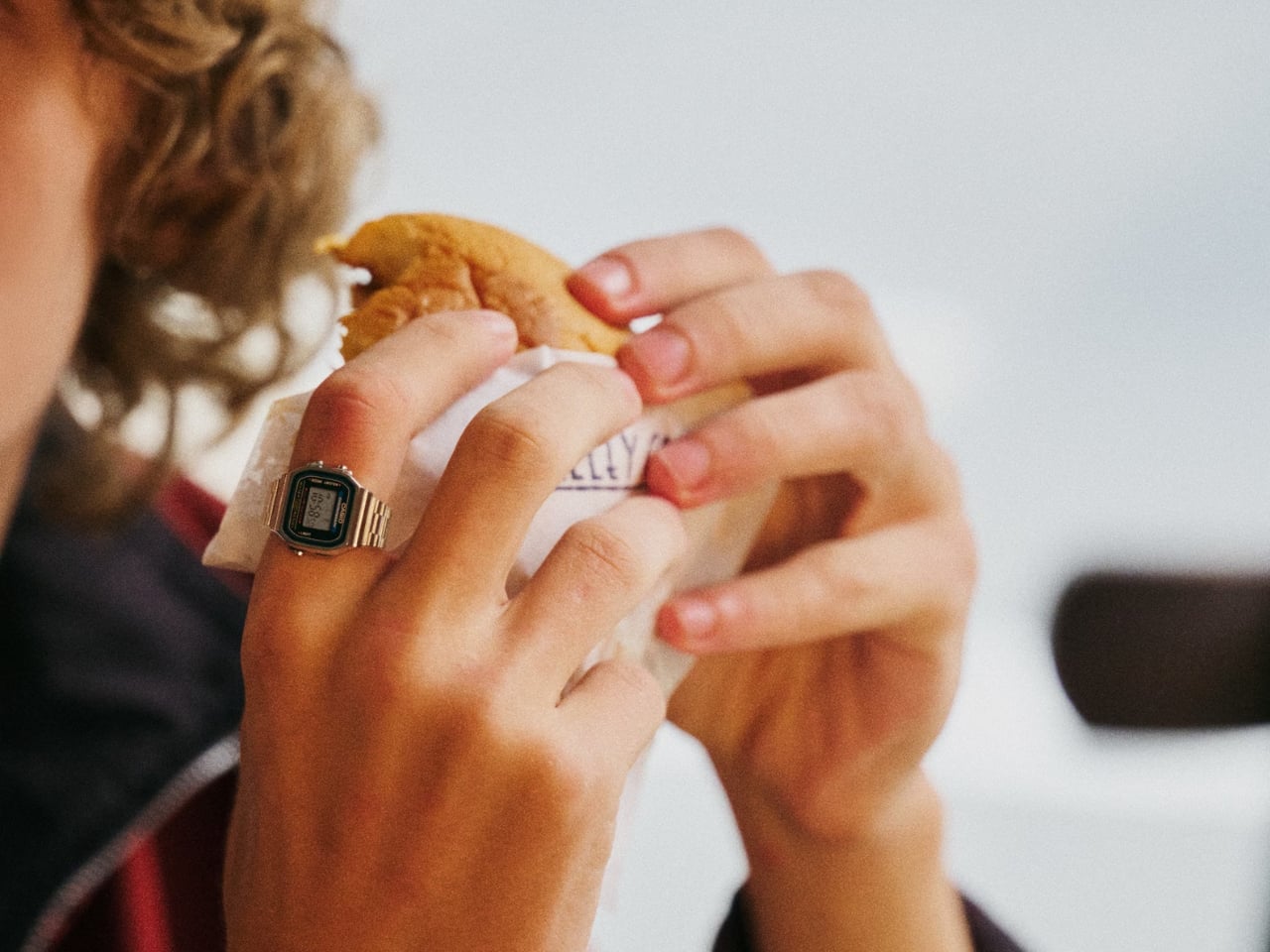
The Casio CRW-002 Ring Watch is a finger-scale version of the iconic A168, so you can wear it as a piece of jewelry while still keeping many of the original watch’s features. It’s an alternative for those who prefer something smaller but still want familiar watch functions, especially telling time.

Designer: Casio

Casio used metal injection molding, or MIM, to reproduce the intricate case and band shapes in stainless steel. The glossy case contrasts with the matte-finished band, carrying over details that make it recognizable as a tiny Casio. I like that the design keeps the look of a watch bracelet rather than turning the display into a plain metal ring.

The electronics are a separate part of that shrinking process. Casio says high-density mounting technology and a miniature battery make the module approximately one-tenth the size of a standard watch module. It’s still able to retain three buttons and a six-digit display that shows hours, minutes, and seconds. You also get dual time, an automatic calendar, a 12/24-hour format, and a 1/100-second stopwatch.

The case measures 25.2 × 18.2 × 6.2 mm, and the ring weighs 15 grams. Those numbers give you an idea of the scale, although they don’t tell us how comfortable it will be throughout the day. I’d want to know how the case feels against neighboring fingers and how easy those tiny buttons are to use.

There’s also an LED backlight and a Time Flash feature that produces a subtle pulse at a preset time or at the top of every hour. Casio describes Time Flash as entertainment rather than a dependable alert, and the light may be difficult to see in bright conditions. It’s a playful detail, but I wouldn’t rely on it for reminders.

You don’t lose water resistance entirely, but its limits matter. Casio rates it for daily-use water resistance, while the manual specifically excludes handwashing, swimming, and water-related work. You’ll need to remove it before washing your hands or using soap and detergent. That might seem like a small inconvenience for something like this, but it’s worth thinking about if you want a ring you can put on and forget about.

Fit is another thing to check before buying. The ring comes in a US size 10.5, with a 20 mm inner diameter. Two included spacers reduce that diameter to 19 mm or 18 mm. The bracelet-like detailing doesn’t mean you can adjust it like a wristwatch, so those three fit options won’t necessarily work for everyone. That’s something I’d want to try in person rather than guess from measurements.

Casio estimates approximately two years of battery life, so there’s no regular charging routine. The battery is replaceable, although the manual says replacement requires special tools and should be handled by the original retailer or an authorized Casio service center. For the US, Casio announced November 2026 availability, with the silver version priced at $135 and the gold-tone version at $155.

For me, the appeal is still being able to leave my wrist free without giving up a watch face. I’d need to get the fit right and decide whether taking it off at the sink would become annoying. But I do like the idea of choosing a bracelet for my wrist and letting a miniature Casio handle the timekeeping on my finger.

The post Casio’s Tiny Ring Watch Keeps Time Without a Wrist Strap first appeared on Yanko Design.

❌