Microsoft appears to be getting ready to roll out one of the most welcome Windows 11 interface updates in years. After months of testing with Windows Insiders, the company is moving its redesigned Windows 11 Taskbar and Start menu closer to a public release. The latest developments suggest that users could start seeing these long-requested […]
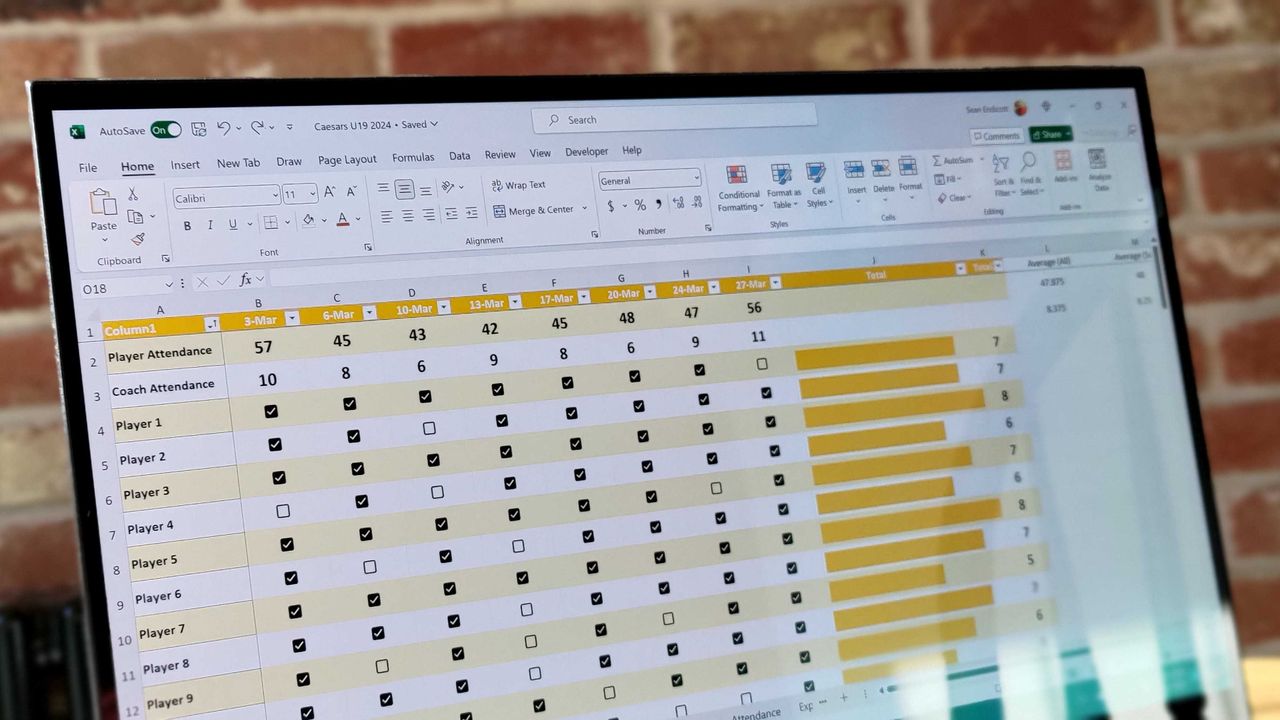
Less than one year after being launched in preview and before leaving testing, the COPILOT function in Excel is going away. The function never shipped to general availability, but it could be used by Frontier and Insider users since August 2025.
The COPILOT function allowed users to use natural language to place prompts into spreadsheets. For example, you could use it to summarize text or categorize feedback. The function could also look up information from the web.
While useful, the function had serious limits. Microsoft stated that people should not use the COPILOT function for numerical calculations, responses that require context from other parts of a workbook, or any tasks with "legal, regulatory or compliance implications."
Considering how many people use Excel for important work and calculations, those limits are quite restrictive.
Microsoft's explanation of why the feature is going away lacks details. Instead, it primarily focuses on the fact that Copilot in Excel is still available in the side pane:
"Beginning September 14, 2026, the =COPILOT function in Microsoft Excel will no longer be available. This function is currently offered as a preview feature through the Insider and Frontier programs.
Customers can continue using Copilot in Excel through the Copilot side pane, which provides many of the same AI-powered capabilities, including summarizing text, classifying data, generating content, and retrieving information from the web. This change helps streamline the Copilot experience within Excel while continuing to provide AI assistance through a supported interface."
Users will not be able to create new formulas using the COPILOT function after September 14, 2026.
Windows Central take
(Image credit: Windows Central | Jez Corden)
It appears Microsoft may be reining in Copilot a bit. The AI tool is still part of the company's plans, but in a more controlled manner.
Microsoft has a unified Copilot experience that merges Copilot and Microsoft 365 Copilot. We've also seen some Copilot features go away or be limited over the last few months.
Earlier this summer I argued that the free version of Copilot is starting to feel like a tech demo designed to push paid tiers. I still think that's the case, but if Microsoft is going to push Copilot, it's best to do so with a plan.
Since the launch of Copilot, it's felt like Microsoft threw everything at the wall to see what sticks. The Copilot brand was diluted and there were dozens of different apps with Copilot in the name. Anything even remotely related to AI was attached to Copilot in some way, making the term almost meaningless.
Whether it's because Microsoft decided that strategy was a mistake or it's just had enough time to assess what properly stuck, the next wave of Copilot feels more targeted.
Join us on Reddit at r/WindowsCentral to share your insights and discuss our latest news, reviews, and more.
Excel spreadsheet with checkboxes
The upcoming checkboxes feature in Microsoft Excel makes it easy to visualize certain data.
When does a bug become a feature? Microsoft needs to answer that question now that classic Outlook may hide the Copilot button and stop other Copilot features from working.
A bug that appears with build 20026.20182 of classic Outlook prevents access to Copilot Chat and removes Copilot entry points within the app.
"After classic Outlook for Windows updates to build 20026.20182 and higher, you no longer have Copilot Chat or Copilot entry points in Outlook," reads a Microsoft support document. "This issue happens if you have a Copilot Chat (Basic) license or a paid M365 Copilot (Premium) account."
While it's easy to joke about Copilot going missing being "addition by subtraction," the bug is likely frustrating for those that rely on Copilot within classic Outlook.
If your system is affected by the bug, the Copilot button could be missing from the top-right area above the ribbon. The Copilot icon can also go missing in the left app bar or the More Apps area.
Even if you see the Copilot icon in the Add Apps section, selecting "Open" may not do anything at all. Even if you've added Copilot through ribbon customization, the option may appear grayed out or unavailable.
Only classic Outlook is affected, meaning Copilot still appears and works as usual within the web version of Outlook and other versions. The Microsoft 365 Copilot app and web experience are also working normally, though it's worth noting Microsoft has a new unified Copilot experience rolling out.
If you need to use Copilot immediately, Microsoft suggests switching to Outlook on the web or the new Outlook app. While standard fixes like creating a new Outlook profile, clearing local cache data, re-signing into Office, or restarting Windows have been tried, Microsoft notes they don't consistently restore the missing buttons.
Join us on Reddit at r/WindowsCentral to share your insights and discuss our latest news, reviews, and more.
Microsoft CEO Satya Nadella in front of the Microsoft Copilot AI logo.
Microsoft CEO Satya Nadella in front of the Microsoft Copilot AI logo.
I have several PCs in my office that are capable of running Copilot+ tools in Windows 11, but there's one feature I've stayed away from: Windows Recall.
Why? I don't particularly like the idea of AI snapshotting what I do on my PC and making it searchable, even if it promises to never let the data leave my local system. I'm sure it's handy for some users, but I've yet to come across a scenario where I wish I had it enabled.
If you're of the opposite opinion and happen to use macOS, I have good news. OpenAI today announced "ChatGPT Computer History" for its macOS app.
What is ChatGPT Computer History?
Today we're releasing Computer History in ChatGPT.It lets ChatGPT learn from everything you do on your computer, so it can better understand how you work, finish tasks that you're in the middle of, and suggest skills and automations based on how you use your computer. pic.twitter.com/xnTq7hWH8OAugust 13, 2026
Here's a blurb from the ChatGPT press release about how it works:
Computer History turns your activity across apps and websites into memories and a timeline that ChatGPT and Codex can reference. You can ask natural questions about recent work, pick up where you left off, understand patterns in how you work, and turn repeated workflows into skills or automations.
OpenAI
Yeah, that sounds like the same thing. But let me explain ChatGPT's version a bit more.
Computer History, according to ChatGPT's website, is completely optional and turned off by default for Pro, Business, and Enterprise subscribers.
Rather than collecting screenshots every so often to keep track of your doings, Computer History "records interaction events and does not capture your screen or audio." It's basically its own little keylogger, keeping tabs on clicks, typing, app switching, shortcuts, and more.
The data it records is searchable, and you can interact with Computer History the same way you interact with any AI, asking it regular language questions.
The data that Computer History gathers is saved locally on your Mac, but it does get sent to OpenAI's cloud servers in order to turn it into memories. These memories are then sent back to your Mac for local storage.
OpenAI says it does not keep this data on its servers unless required by law, and it does not use the data for training.
Is Computer History different enough from Recall to avoid similar backlash?
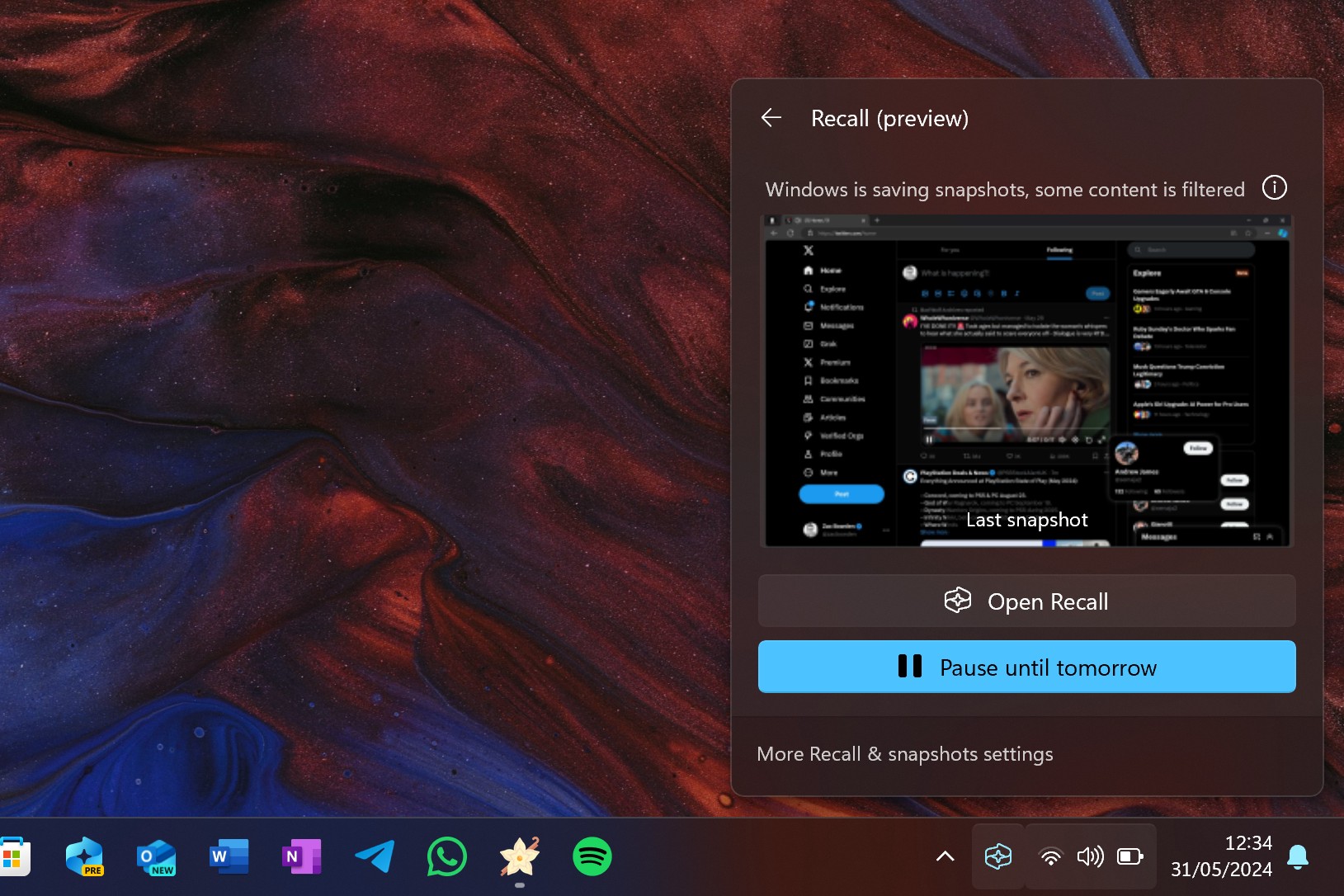
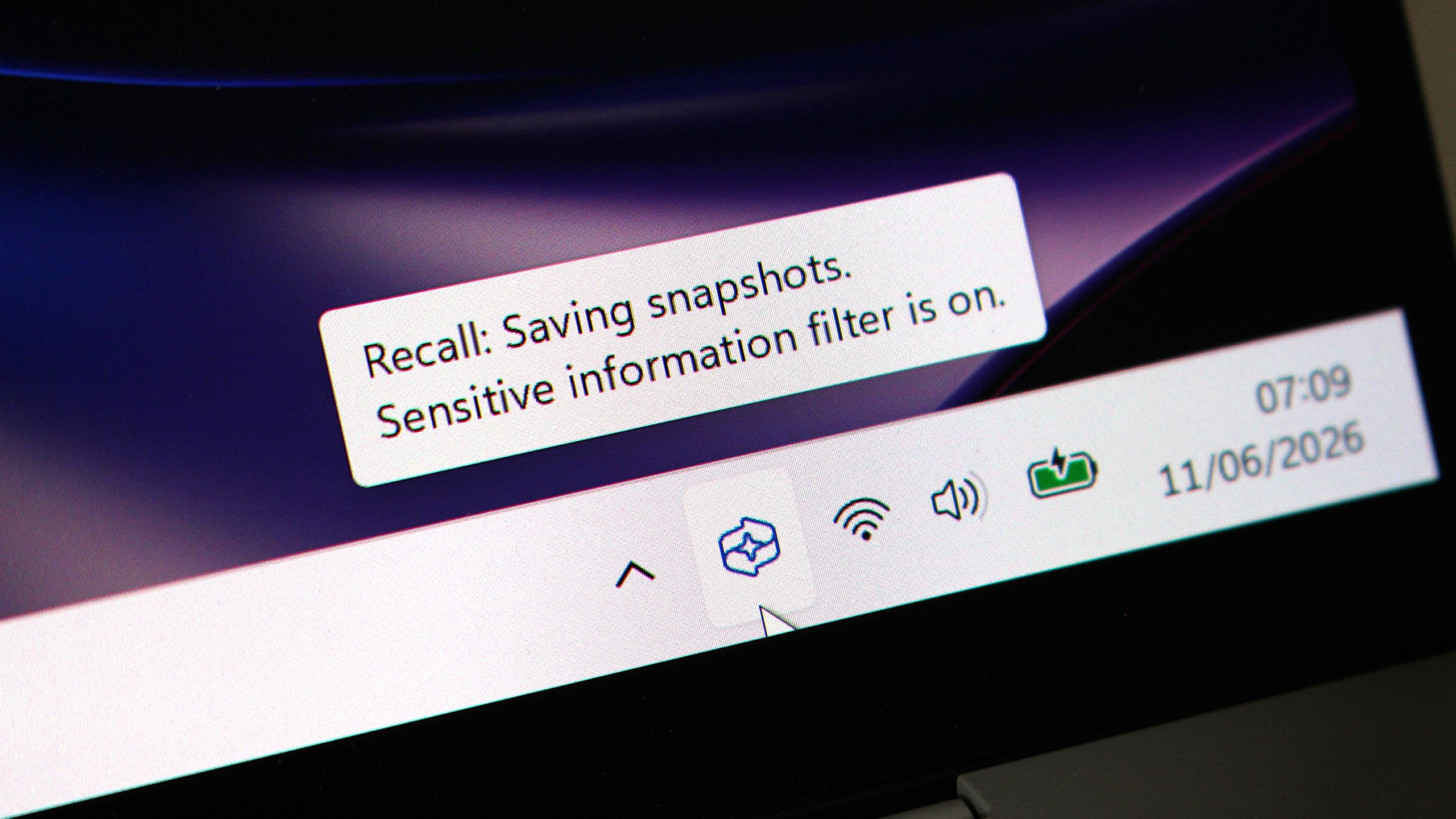
A look at the Recall feature's pause option in the Windows 11 taskbar. (Image credit: Windows Central)
The reaction to ChatGPT's Computer History announcement is surely mixed. It seems like there are just as many people worrying about massive privacy and surveillance issues as there are people wondering if they should go out and buy a Mac.
Windows Recall faced the same adversity when it was announced as a default feature, with no opt-in available. The pushback was so bad that Microsoft delayed its launch by almost a year in order to address security issues. It officially released in April 2025 as an opt-in feature, but I know that many Windows users are still wary of its abilities.
The fact that ChatGPT is making its Computer History opt-in from the start tells me it learned from Microsoft's mistakes. There's also the fact that it doesn't take screenshots, making it feel less like routine spying.
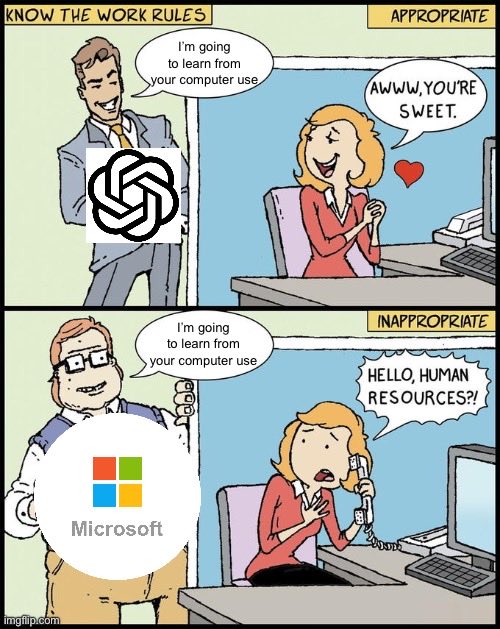
The memes coming out of the ChatGPT Computer History announcement are gold. (Image credit: @trashpandaemoji (X.com))
That doesn't mean there aren't inherent risks to using something like Recall on Windows or Computer History on macOS.
It's clearly noted in OpenAI's Computer History documentation that the feature does not encrypt your information, and that it can be accessible to other apps running on macOS.
Like Recall, there are also serious prompt injection risks. Because these AI-powered features can essentially see what you're doing, they can be tricked with text. You might visit a seemingly innocuous website, only to realize later that it contained hidden instructions aimed at AI that made it do something unsavory.
Windows Central's take
Some of us here at Windows Central use Windows Recall on our PCs, but I stay away from it. (Image credit: Zac Bowden / Windows Central)
Some of us here at Windows Central use Windows 11's Recall feature. Others don't. I'm in the latter camp, but one day that might change.
Why? It feels like there's a definite push going on with AI assistants that can remember everything you do, and it's not just ChatGPT and Microsoft. I've spent time with Lenovo's Qira cross-device ambient assistant, and I've written about HP IQ.
Although I shudder at the privacy implications of these tools gone wrong, they definitely seem like one strong fork in the future of computing. It will be interesting to see how this all plays out, and ultimately to see how macOS users react to something that made Windows users go ballistic.
What do you think about ChatGPT's Computer History? Is it Recall with a different name? Is ChatGPT approaching the tool properly with opt-in-only settings and no screenshotting? Is it something you'd use on Windows 11? Let me know in the comments section below!
Join us on Reddit at r/WindowsCentral to share your insights and discuss our latest news, reviews, and more.
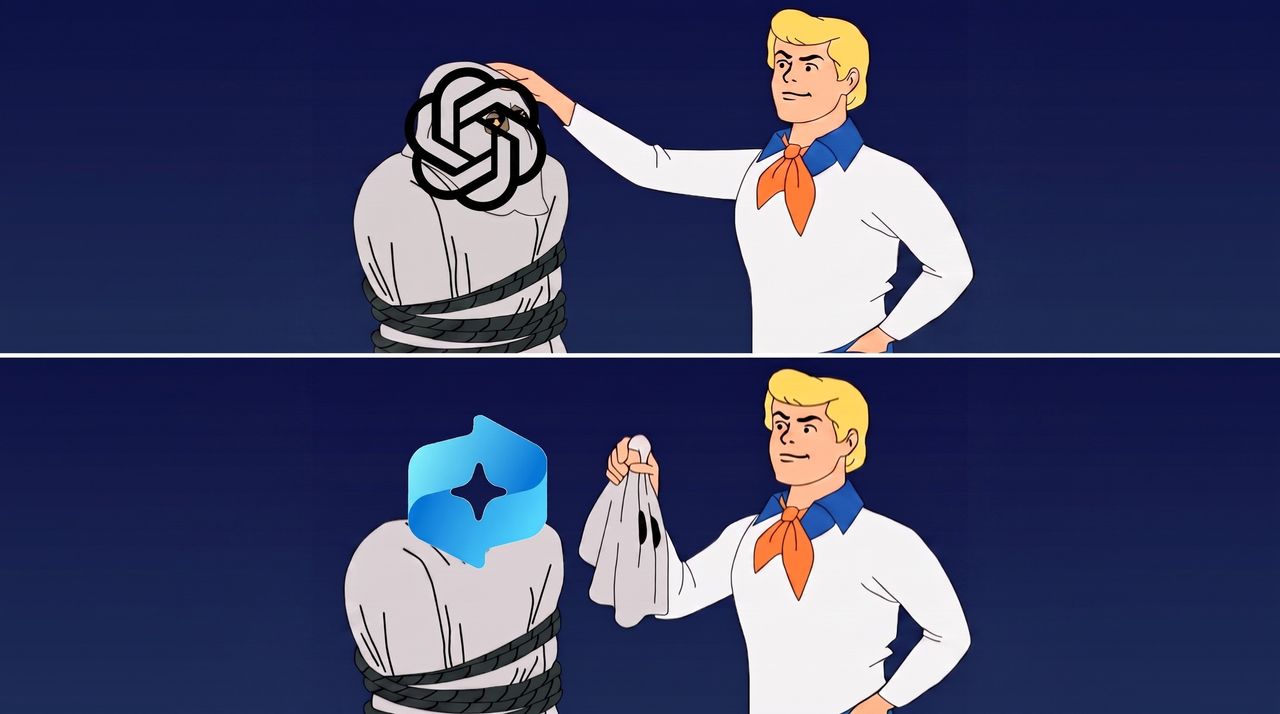
Scooby Doo meme of Fred pulling the mask off of ChatGPT only to reveal Windows Recall beneath.
Scooby Doo meme of Fred pulling the mask off of ChatGPT only to reveal Windows Recall beneath.
Back in May, Microsoft confirmed that it was working on a Copilot super app that would merge the different consumer Copilot and productivity Copilot experiences under one app. Until now, Copilot and Microsoft 365 Copilot have been targeted at different users, but starting today those apps are being merged into one.
"We're updating Copilot to create a simpler, more cohesive experience for everyone," a new Microsoft Support document says. "Depending on the account and device you use, you will see changes to the Copilot app including changes to appearance and functionality, such as navigation, feature availability, or sign-in experience."
The unified Copilot experience begins its rollout today, but not everyone will see it right away. Microsoft says the experience will land on mobile first, with the unified Copilot on Windows and macOS being an opt-in experience at first, made available over the coming weeks.
The rollout should make it easier to move between using Copilot as an AI assistant for personal matters and using Copilot for productivity based tasks. For most people, not much will change with the unified app, which will simply appear as "Copilot" now. With that said, Microsoft does say that some features are going away with the unification. Those features include:
Group Chat
All group chat threads, messages, and images will not carry forward after August 18, 2026.
Users must manually copy or download anything they want to keep.
Podcasts
The Podcasts feature is being fully retired on August 18, 2026.
Users will no longer be able to create or access podcasts in Copilot after this date.
Individual podcast files can still be downloaded before retirement.
Deep Research
Deep Research is being retired for consumer users starting August 18, 2026.
Existing Deep Research content will remain accessible, but the feature itself will no longer be available.
For those using Copilot with a work or school account, Microsoft says the unified Copilot app is also coming to those accounts too. The personal and commercial accounts will be separated within the app, meaning data from your work or school account won't be shared with your personal account, and vice versa. "Work and personal accounts remain separate. Your organization's security, privacy, compliance, and administrative controls continue to apply when you use Copilot with your work or school account."
For those using the personal consumer Copilot app, you will notice an updated UI that more similarly matches the Microsoft 365 Copilot app. Those who use the Microsoft 365 Copilot app likely won't notice much of a difference, outside of the rebranded app to just "Copilot," along with a slightly updated logo.
For those curious, this is the new Microsoft Copilot icon and branding. Can you tell the difference? No, us neither.
The new Copilot logo is very similar to the old one. (Image credit: Microsoft)
Lastly, Microsoft has confirmed that all your Copilot data (except for the features that are being taken away) will migrate automatically to the new experience, meaning users won't need to do anything to ensure their chats and data are carried forward. All of that will happen automatically when the unified app lands on your device.
The unified Copilot experience begins its rollout today, though it's happening in waves so most users won't see the changes right away. Worldwide rollout for the mobile starts today, with rollout for Windows and macOS expected to start in mid September. Here's the full rollout schedule:
Mid‑August 2026 — Worldwide rollout begins for mobile and web apps; early‑access opt‑in opens for Windows and Mac apps; copilot.cloud.microsoft URL available in Frontier for testing.
Late August 2026 — Standard rollout of the URL redirect begins.
Mid‑September 2026 — Worldwide rollout begins for Windows and Mac apps.
Late September 2026 — Deferred rollout of the URL redirect begins for the web app.
Microsoft's unification of Copilot is a long time coming, and one that is setting the company up to deliver a Copilot super app experience that can do everything across Microsoft's platforms and services. It never made sense for Microsoft to split Copilot up between consumer- and productivity-based use cases, especially since users commonly want to do both.
Join us on Reddit at r/WindowsCentral to share your insights and discuss our latest news, reviews, and more.
Microsoft CEO Satya Nadella in front of the Microsoft Copilot AI logo.
Twitch has another backlash on its hands, this time for forcibly opting-in all of its users to wanton content theft.
Twitch is a generally awful platform. The business has been a major drag on Amazon's bottom line since they acquired the brand losing billions of dollars year in, year out. Amazon has simply been unable to figure out how to adequately monetize the platform in a video streaming universe dominated by YouTube and Google ads, but its treatment of its userbase and content creators has hardly helped.
Indeed, Twitch is facing another backlash right now for forcibly opting users into "ai training." Now, when you stream on Twitch, by default your likeness, content, voice, and other interactions will be used to train Amazon's AI stuff, in a move nobody could've seen coming.
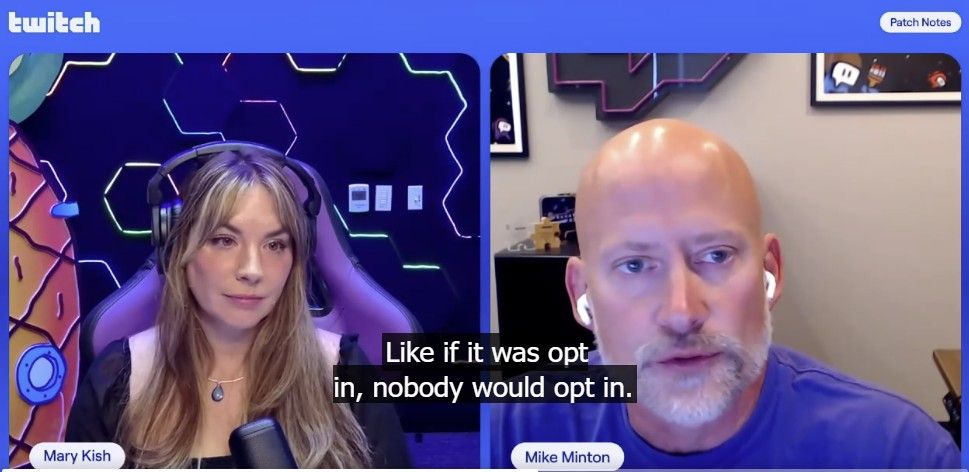
Responding to the backlash, Twitch Chief Product Officer Mike Minton admitted that they knew everyone hates it, but they don't care.
"Why is not opt-in?" Minton responded, acknowledging Twitch's very angry chat during a live stream this past week. "I get it ... let me opt-in vs. making me opt out. The honest answer, and I think most of you can probably appreciate this ... if it was opt-in, nobody would opt-in. That's honestly the answer. It's gonna' be on by default."
You can opt out of Twitch's AI content theft machine by going to settings, security and privacy, then toggling off "training for generative AI."
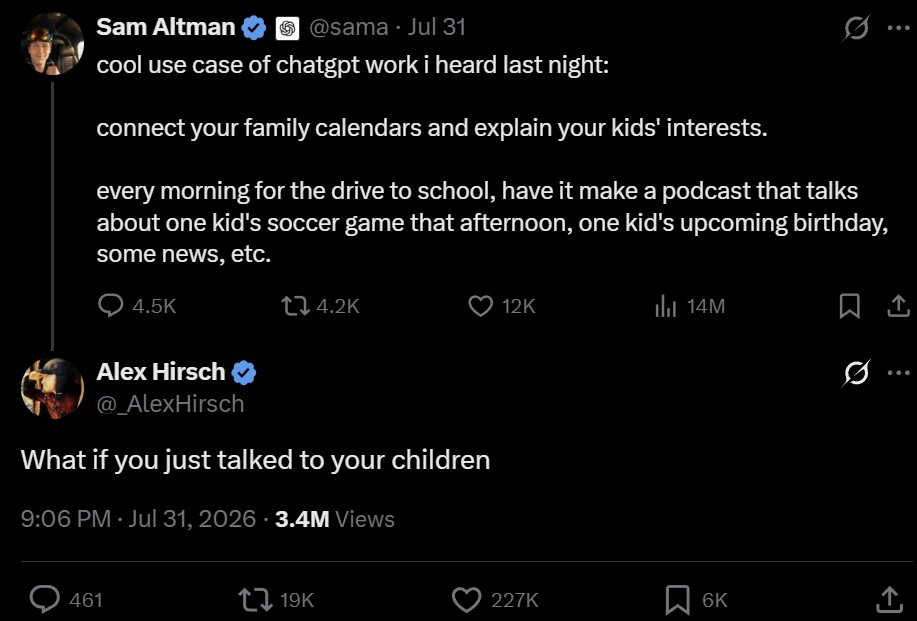
Shame AI can't teach tech bros to be normal, functional human beings. (Image credit: @_AlexHirsch on X (Twitter))
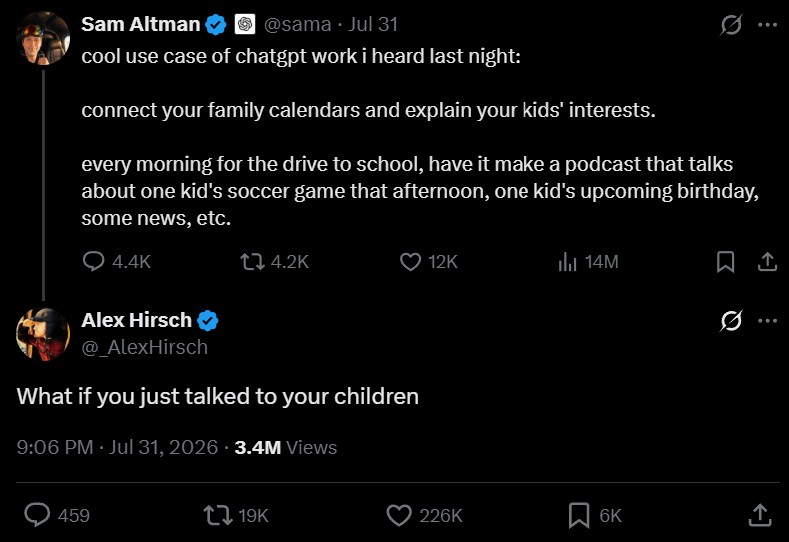
The entire tech world seems steeped in AI psychosis right now, expecting us plebians to just sit down and take generative slop and its painfully useless and forced "features" flooding into every corner of the web. AI Nutjob-In-Chief Sam Altman recently was fried alive on X (Twitter) for suggesting parents use ChatGPT to generate podcasts for their kids, rather than simply ... yanno, talk to them.
The latest Twitch backlash is just another long list in self-defeating stuff the platform has implemented over the last few years. For what it's worth, competitor YouTube does not give creators any control whatsoever over whether or not their content is used for training. Your content on YouTube is used automatically for Gemini's video training. Google only lets you opt-out of "third-party" training. At least Twitch is giving users an opt out ... which is something, I suppose.
As the tech world struggles to figure out how to make any of this AI stuff make sense, I suspect we'll see more dumb stuff emerge from the gaming universe, not less, in the near term.
Join us on Reddit at r/WindowsCentral to share your insights and discuss our latest news, reviews, and more.
Twitch CPO Mike Minton admitting that Twitch hates its users
By default, Twitch will now steal your content to train AI. You can turn it off at least, unlike Google's YouTube.
It's the year of Linux, haven't you heard? You may as well pack up your PC, study your favorite distro, and get ready to evangelize the open-source platform that will run on all systems in the future.
Joking aside, Linux has grown a bit in popularity and Microsoft continues to embrace it. While the tech giant has several apps and projects on Linux, Microsoft has not released an official Copilot app for Linux.
Sure, you could use Copilot on the web. Heck, you could even open up Microsoft Edge for Linux and install Copilot as a PWA (Progressive Web App). But where is the fun in that?
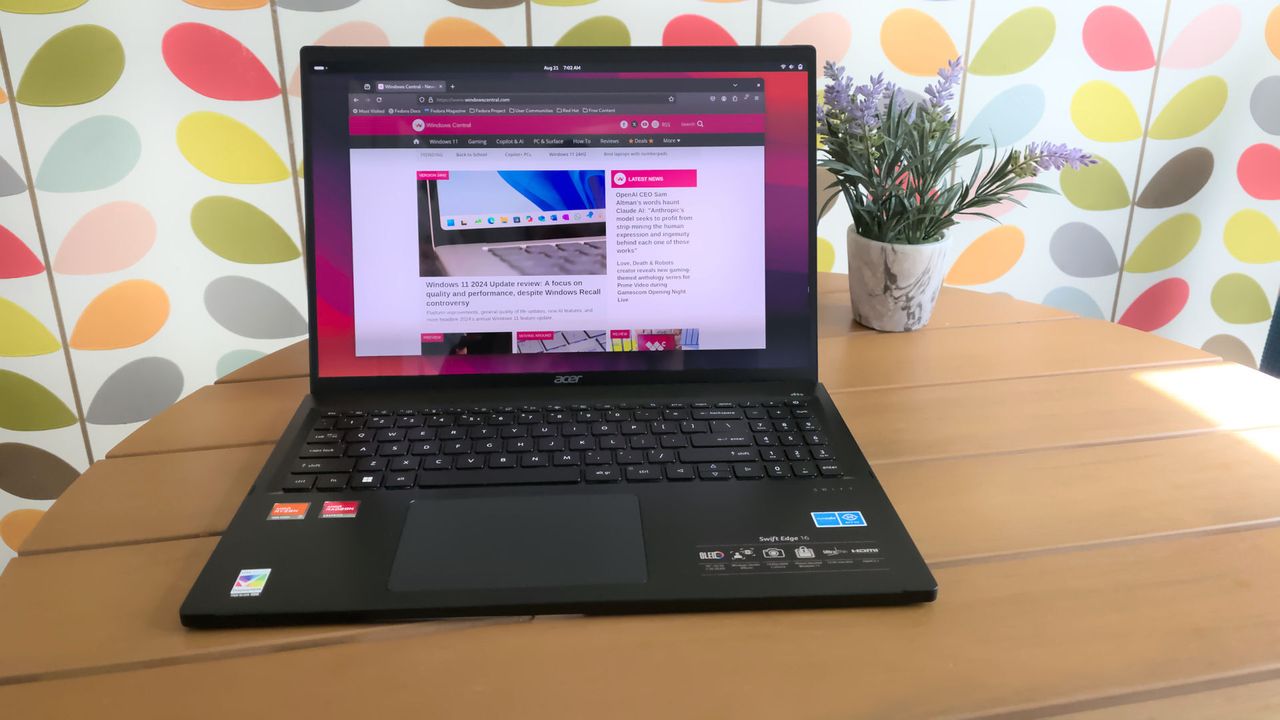
Instead, you could install the unofficial Copilot app for Linux built by Hayden Barnes. The app opens the Copilot web app in a dedicated GTK window and keeps your login session safely on disk. It also integrates with the desktop for autostart, system downloads, app launcher execution, and accessing hardware permissions like the microphone.
Barnes shared the project on X alongside a link to the app's GitHub page.
Many of the unofficial Copilot app's features overlap with using the web version of Copilot since Microsoft's AI tool is the center of the experience. But building the unofficial app as a native GTK application means its developer can deeply integrate system shortcuts, allow it to run quietly in the system tray, and trigger native OS notifications as opposed to relying on browser notifications.
Other benefits include native support for desktop accent colors and system dark themes. Overall, the app looks and feels far more natural on a Linux desktop than a standard browser window, and keeping Copilot isolated prevents it from slowing down if your main browser gets bogged down with dozens of open tabs.
The unofficial Copilot app for Linux is new, so we'll have to use it for a while to determine its long-term stability and performance. The first publicly available release of the app shipped this week.
We have a few systems running Linux spread across our team, so we'll let you know how the unofficial Copilot app performs over time.
Join us on Reddit at r/WindowsCentral to share your insights and discuss our latest news, reviews, and more.
Acer Swift Edge running Linux
You no longer have to use Microsoft Edge or any browser to run Copilot on Linux.
Microsoft's stocks rallied this past week on accelerating AI growth, but the devil is always in the details.
Over the past month, Microsoft's shares have surged almost 30% following its quarterly filings, which beat Wall Street estimates by a significant margin. Microsoft proved that its AI business is accelerating in growth, and that cash flows remain healthy despite the firm's extensive capital expenditure on new data centers. However, new information suggests that there's still an enormous caveat to this news.
Analysis from Bloomberg has poured cold water over Microsoft's AI earnings potential. Disclosures from Microsoft suggest that OpenAI accounts for around 70% of Microsoft's total AI-related income, based on projected growth and previous disclosures that relate to revenue derived from OpenAI.
Microsoft reported that Copilot has millions of paid seats in Microsoft 365, and is being gradually adopted by a wide variety of governmental, public, and private sector businesses. But when you tally it against previous disclosures, it shows that GPU and infrastructure consumption specifically from OpenAI still drives between 65 to 70% of Microsoft's total AI business. Training platforms like ChatGPT and simply serving it to customers remains the cornerstone of Microsoft's AI business. That's potentially problematic and comes with a huge amount of risk.
Azure has turned Microsoft into an absolute powerhouse, but I would argue its AI bets still threaten that. (Image credit: Getty Images | NurPhoto)
On the gaming side, Call of Duty having an off year was enough to drive Xbox's total revenue down by 11%, leading to masses of layoffs. OpenAI, by comparison, is estimated to be losing anywhere between 10 and 20 billion dollars per year, on a comparatively modest $2-5 billion in revenue. OpenAI has a mountain of investors keeping it afloat right now, and Microsoft itself remains one of OpenAI's biggest backers, investing to the tune of billions in cash, infra, compute credits, and other instruments. On the face of it, Microsoft's AI bookings simply represent OpenAI's compute bill packaged as revenue.
It's not unheard of in business. Spotify ran losses for years until eventually becoming profitable (to the tune of billions, I might add). The idea is that you burn through debt, scale rapidly, change user behavior, and create new markets. Then, you lock people in and make them dependent, and start monetizing. Microsoft and OpenAI's other creditors are betting that one day, ChatGPT will become the default — an inescapable cornerstone of computing for billions of people.
But what if that doesn't happen?
What if people end up choosing Claude or Gemini over ChatGPT? What if regulatory scrutiny or public opinion sours ever further? What if elections are won on the promise of blocking new data centers, rather than enabling them?
Public perception of AI remains incredibly negative, owing to the damage data centers cause in communities, and the theft and destruction of art and human-created content. (Image credit: Alex Hirsch on X (Twitter))
The disclosures suggest that Microsoft's AI growth is inorganic and revolves almost entirely around training ChatGPT's models. If OpenAI imploded or decelerated, Microsoft would be on the hook for billions in sunk cost and enormous amounts of excess data center capacity.
There's no suggestion of a deceleration, quite the opposite — which is why the stock price has surged. But there's also little reason to believe that this entire segment is even vaguely organic.
Microsoft is already trying to diversify by training its own "more efficient" MAI models for consumer applications while boosting external enterprise adoption. It's started to devote more attention to its legacy consumer businesses too, namely Xbox and Windows, as neglect therein becomes untenable. But none of this will save Microsoft or its shareholders if the so-called "AI bubble" well and truly does pop.
It'll be interesting to watch how CEO Satya Nadella navigates Microsoft through this somewhat unprecedented era.
Join us on Reddit at r/WindowsCentral to share your insights and discuss our latest news, reviews, and more.
Picking up your phone every time it buzzes is one of the quickest ways to lose your train of thought while working. Microsoft has been slowly fixing that problem through its Phone Link integration, and the latest batch of Windows 11 news brings a welcome quality-of-life upgrade right to your desktop. With the new update […]
Microsoft's share price has slid 22% in the past year, as investors increasingly cast doubt on the firm's long-term AI strategy.
Artificial intelligence has been billed as the next coming by Big Tech, with everyone from Amazon to Google trying to figure out how to leverage the expensive technology to generate profits. The problem is, nobody is even close to having an answer.
Generative AI is incredibly costly to run, and the return on investment is unclear at best. Many companies are starting to discover that, in fact, it's cheaper and more effective to simply use human labor. Companies that previously laid off engineers in favor of AI models later found themselves crawling back to those fired, and others have put large restrictions on token expenditure as returns remain elusive.
I saw a clip on CNBC from Ed Zitron, creator of theWhere's Your Ed At newsletter and host of the Better Offline podcast recently. It summarized Microsoft's AI conundrum in pro wrestling terminology — which appealed to my simple brain. His full analysis is anything but simplistic, though. It speaks to the hard reality companies like Microsoft are facing: Is any of this actually worth it?
Zitron describes the challenges of companies like OpenAI and Anthropic joining SpaceX in going public, describing how the company's financial realities betray the almost demented hype around them.
"They'd be the first to be this bad, other than WeWork, and this is so much worse than that. OpenAI burned $20.9 billion dollars in 2025. The problem with these companies is ... their margins are getting worse. Their costs increase linearly with their revenues. There's no proof they can improve their margins. No amount of specialist silicon will bring these costs down.
"We're at a point where OpenAI is pushing their IPO to 2027 because they couldn't get a trillion-dollar valuation. People are wising up to the problem of generative AI: there's not really a business there."
Zitron posits that none of the hyperscalers and companies like OpenAI and Anthropic "encourage waste," while potentially stealing ideas generated by companies using their models, citing Claude Design and Figma. Indeed, the only public company that seems to be flying on its AI hype right now is Google. I would argue that's less to do with innovating, and more because they've found a way to steal revenue from human creators via Gemini's Google Search summary box — instantaneously creating infinite, dynamic (albeit hallucinating) ad-scaling opportunities.
This wholesale content theft is not as readily available to OpenAI, Anthropic, or Microsoft. Google Search remains the dominant tool for browsing the web, and thanks to Chrome and Android, Google owns the entire stack here.
Microsoft's data centers have come under increasing scrutiny for pollution, noise, electricity bill inflation, and water depletion. (Image credit: Microsoft)
Microsoft very much does not own the entire stack. It barely owns a stack at all here.
Microsoft's partnership with OpenAI is on the verge of collapse, pending contractual obligations that will expire over the next few years. It's already ditching OpenAI's pricey models in favor of supposedly more-efficient MAI home-grown models in some products. Microsoft Copilot is already barely used, despite being baked into Windows. It languishes at lower than 10% of the market, according to estimates, far behind the likes of Claude, Gemini, and ChatGPT.
CEO Satya Nadella's decision to give up on Windows Phone and internal Android projects has precluded Microsoft from any form of mobile play here. Mobile is where all new consumer tech will thrive, whether or not it's AI or something else. The historical open nature of Windows prevents it from reaching consumers with any of its products. Nobody uses Bing, Edge, or Copilot, and it's a result of Microsoft's wholesale lack of foresight.
Microsoft bet that it could provide the underlying infrastructure instead, and has spent monstrous amounts of CapEx on data centers in the past few years. But Zitron posited in a large report from May that it might be exaggerating, or perhaps even outright lying, about its data center expansion plans. Indeed, there's little evidence that Microsoft has actually expanded its capacity since 2024. Zitron tracked a variety of Microsoft-announced data center projects and found them in various states of incompletion.
Is this a signal that there's no real demand? Is Microsoft intentionally stalling and dragging out construction because it knows there's no actual ROI incoming from these projects?
Microsoft's OpenAI bet was called the smartest investment it had ever made a few years ago. On paper it still is. Imaginary, fantastical paper, at least.
AI-adjacent stocks, including SpaceX, Oracle, and Microsoft, have all been in near free-fall decline recently, as investors seem to bet that there's gross over-extension going on. Meta is also reportedly spinning up a cloud company to try and offload excess compute it had previously invested in AI specifically, despite not having any actual demand.
"The only reason Big Tech is investing in this is that they've run out of hypergrowth ideas," Zitron said, on the general AI industry. "They don't have a next iPhone, they don't have a new Google Search. They've put over a trillion, with trillions more to come, into a kind of dead-end industry. When that ends, they'll have to admit that they don't have anything else."
"In the future, I see [AI] as a boring hardware-based business, kind of the Oracle licensing hardware model. I think this is a $10 to $30 billion TAM [total addressable market] industry, pretending to be a $1 trillion industry."
"Everyone is just kind of pretending. It's the kayfabe of a tech industry that really has run out of ideas."
Join us on Reddit at r/WindowsCentral to share your insights and discuss our latest news, reviews, and more.
Even Microsoft's AI CEO, Mustafa Suleyman, recently cleared up the intent of his statement that AI would eliminate white‑collar jobs in less than 18 months. The executive indicated that the statement was blown out of proportion, further clarifying that he meant AI would augment repetitive, mundane tasks — not replace humans.
Incidentally, Gates may have just identified a fourth profession that could be safe from AI replacement — athletes. During an appearance on The Tonight Show with Jimmy Fallon, he suggested that while AI might take over many human tasks, no one would want to watch computers playing baseball (via LADbible Group).
With that in mind, it’s safe to say we’ll continue to savor the moments when our favorite players like Arsenal’s right winger Bukayo Saka grace the pitch with their talent and keep us entertained, even now during the World Cup season.
Microsoft and OpenAI are no strangers in the corridors of justice, particularly when it comes to copyright infringement disputes. It is well established that advanced AI models such as Microsoft Copilot and ChatGPT rely heavily on vast amounts of online content, including material from outlets like Windows Central, for training purposes.
In court proceedings, Microsoft and OpenAI have consistently argued that copyright law does not explicitly prohibit the use of online content to train AI models. However, with Google racing ahead by embedding AI directly into search, the industry finds itself at a tipping point. As traditional outlets struggle to compete, many are shutting down, leaving thousands of experienced journalists in the lurch.
The complaint indicates that the two companies are unlawfully using their content to develop and train the AI chatbots without consent or compensation. According to the complaint:
"Defendants systematically and secretly crawled the Publishers’ websites—including content behind paywalls and other access restrictions—and copied the Publishers’ articles, stories, and other original works onto their own servers without authorization."
The publishers argue that the companies have generated billions from stealing their work and have not paid a dime for it. They are now seeking statutory damages and injunctive relief, citing copyright infringement and violations of the Digital Millennium Copyright Act.
Speaking to Bloomberg, OpenAI spokesperson Drew Pusateri indicated:
“Our models empower innovation, are trained on publicly available data, and are grounded in fair use."
“It would be inequitable if at the end of this you have a resolution that only benefits the largest players in the marketplace and not the people who are doing hard work reporting on things that frankly very few outlets still cover in America today,” former New Jersey Attorney General Matthew Platkin added.
The publishers argue that the AI revolution could be a "death knell for local journalism" if these AI firms aren't held accountable and continue to steal content without compensation.
This opens up a broader discussion about the future of AI models if Google is hell-bent on integrating AI into search, after it has practically run every publication into the ground.
The dead internet theory, in particular, comes to mind. It suggests that prolonged exposure of large language models to low-quality training data negatively impacts accuracy, comprehension, and thought process. What's worse is that the phenomenon could only be less than 3 years away if recent studies are anything to go by.
Join us on Reddit at r/WindowsCentral to share your insights and discuss our latest news, reviews, and more.
Speaking to The Wall Street Journal recently, Nadella echoed his earlier stance, stressing that leading players in the AI industry must advance the technology in ways that deliver the greatest public benefit.
There’s growing concern around AI, particularly when it comes to security, privacy, and even its impact on jobs. "You can't say, hey, all white-collar jobs are gone and this could even be a weapon, and we will use all the power to build data centers," Microsoft CEO Satya Nadella noted.
Perhaps more interestingly, the executive called out key investors in the AI landscape who see the technology primarily as a tool to cut jobs and reduce operational costs. He indicated that this would be the wrong way to look at the technology.
Instead, he recommended that AI should be viewed as a tool designed to help skilled workers better leverage their capabilities. He further painted a picture where AI tools and human capital co-exist in the same space, a phenomenon he referred to as "token capital."
While the executive claimed that it'd be a recipe for how companies can leverage both AI and workers simultaneously, he admitted that: "it's a lot of change management, it's a lot of displacement, but there is a path."
Nadella indicated that leveraging AI and humans at the same time at work can create a "continuous learning system." He indicated that companies in the future could be characterized by the "tacit knowledge that they contain from both sources."
The executive acknowledged that the idea might face public resistance but emphasized that it would be up to corporations to convince people of the economic opportunities AI could unlock in the future.
No amount of just narrative is going to do it because where we are now, we have to sort of walk the walk. We now have to do the hard work in earning the social permission.
The executive indicated that his statement was widely misconstrued. Rather than replacing humans entirely from work, he indicated that AI would be used to augment repetitive and mundane tasks.
Generative AI has made a significant impact across education, computing, medicine, entertainment, and more. However, all that progress comes with a hefty price tag. The amount of electricity these systems burn through, plus the insane amounts of water needed to keep them cool, is honestly outrageous.
Earlier this month, Microsoft shared an interesting concept that may potentially address the water concerns riddling the progression and advancement of AI. CEO Satya Nadella revealed that the tech giant uses a liquid loop in its data centers, which is filled once. As a result, the company's data centers' water consumption has reduced significantly, down to"what a single restaurant would use."
And now it looks like NVIDIA is taking a page from Microsoft’s playbook. Speaking at London Climate Week on Monday, a top executive suggested that water concerns tied to data center development could be addressed through the company's next-generation AI infrastructure.
The executive further disclosed that the company's new next-gen AI infrastructure can be fully cooled with a liquid warm enough to alleviate the need for additional chilling equipment (Axios).
According to NVIDIA's Chief Sustainability Officer, Josh Parker:
"The water consumption challenge for data centers is largely solved."
How does this liquid work? It’s basically a recirculated mix of water and propylene — think automotive antifreeze. It’s worth noting that the system can operate at temperatures up to 113 degrees Fahrenheit.
As such, this allows it to function reliably in hotter environments compared to older systems. In practical terms, data centers equipped with NVIDIA’s next-generation AI infrastructure will require significantly less water and energy for cooling, reducing both operational costs and environmental impact.
This announcement comes at a time when concerns over water and energy use are mounting, as data centers continue to expand into community corridors. Microsoft has seemingly embraced the "Community-First" AI infrastructure, which addresses some of the issues raised by communities themselves, including reducing its water consumption and promising not to increase electricity bills.
Elsewhere, Microsoft’s plan to build a $1 billion data center in Kenya came to an abrupt halt in early May after the government declined to commit to covering the annual capacity costs Microsoft had requested to run Azure in the region. President William Ruto remarked that the facility’s power demands would be so immense that it would effectively require “switching off half the country” to keep it operational.
Join us on Reddit at r/WindowsCentral to share your insights and discuss our latest news, reviews, and more.
PARIS, FRANCE - JUNE 11: Co-founder and chief executive officer of Nvidia Corp., Jensen Huang attends the 9th edition of the VivaTech trade show at the Parc des Expositions de la Porte de Versailles on June 11, 2025, in Paris. VivaTech, Europe's largest tech trade show, offers a unique digital format for four days of reconnection and recovery through innovation. The event brings together startups, CEOs, investors, technology leaders, and all the digital transformation players shaping the future of the internet. Founded in 2016 by Publicis Groupe and Groupe Les Echos, this annual technology conference, also known as VivaTech, is dedicated to promoting innovation and startups.. (Photo by Chesnot/Getty Images)
PARIS, FRANCE - JUNE 11: Co-founder and chief executive officer of Nvidia Corp., Jensen Huang attends the 9th edition of the VivaTech trade show at the Parc des Expositions de la Porte de Versailles on June 11, 2025, in Paris. VivaTech, Europe's largest tech trade show, offers a unique digital format for four days of reconnection and recovery through innovation. The event brings together startups, CEOs, investors, technology leaders, and all the digital transformation players shaping the future of the internet. Founded in 2016 by Publicis Groupe and Groupe Les Echos, this annual technology conference, also known as VivaTech, is dedicated to promoting innovation and startups.. (Photo by Chesnot/Getty Images)
Artificial intelligence is rapidly changing how software is built, but one challenge has remained consistent across AI coding tools: sharing context with teammates. A coding session may generate valuable insights, implementation plans, pull request summaries, or project documentation, but much of that information remains trapped inside chat conversations. Anthropic is aiming to solve that problem […]
Ever since Windows 11 launched, the redesigned Start menu has been a major point of contention for users. While some appreciated its modern look, millions missed the granular layout flexibility of older Windows versions. The “Recommended” section, in particular, frequently drew criticism for taking up too much screen real estate with unwanted file histories. Microsoft […]
Microsoft CEO Satya Nadella testified in the ongoing Musk v. Altman trial, indicating that the billionaire didn't raise any issues about the partnership and investments despite having his phone number.
Microsoft Chairman and Chief Executive Officer Satya Nadella (L) returns to the stage after a pre-recorded interview with Elon Musk was played following the announcement that Grok AI, by Musk's artificial intelligence start up xAI, will be available on Microsoft's Foundry Models, during the Microsoft Build conference opening keynote in Seattle, Washington on May 19, 2025. (Photo by Jason Redmond / AFP) (Photo by JASON REDMOND/AFP via Getty Images)
Microsoft CEO Satya Nadella testified in the ongoing Musk v. Altman trial.
Microsoft's partnership with OpenAI just became non-exclusive, meaning rival companies like Google can access OpenAI's models, making Copilot AI in Windows 11 less exclusive, consequently costing it its bargaining chip and competitive edge.
Broken stained glass resembles a shattered Microsoft logo alongside an OpenAI logo on a rough concrete floor.
Microsoft's partnership with OpenAI just became non-exclusive.

 Connexion