❌

Vue lecture

This Electric Superbike Wears Its Battery Like a Honeycomb
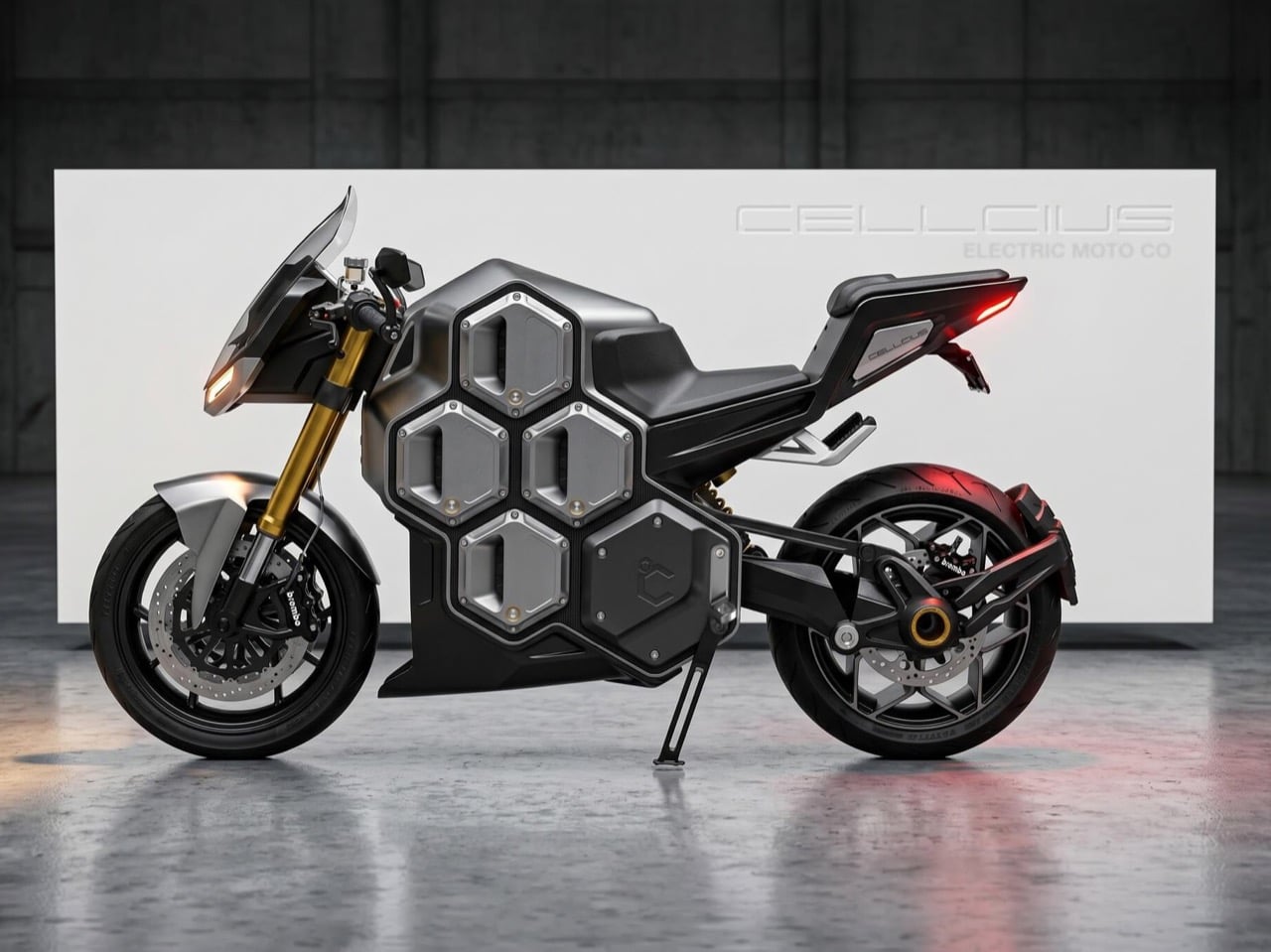
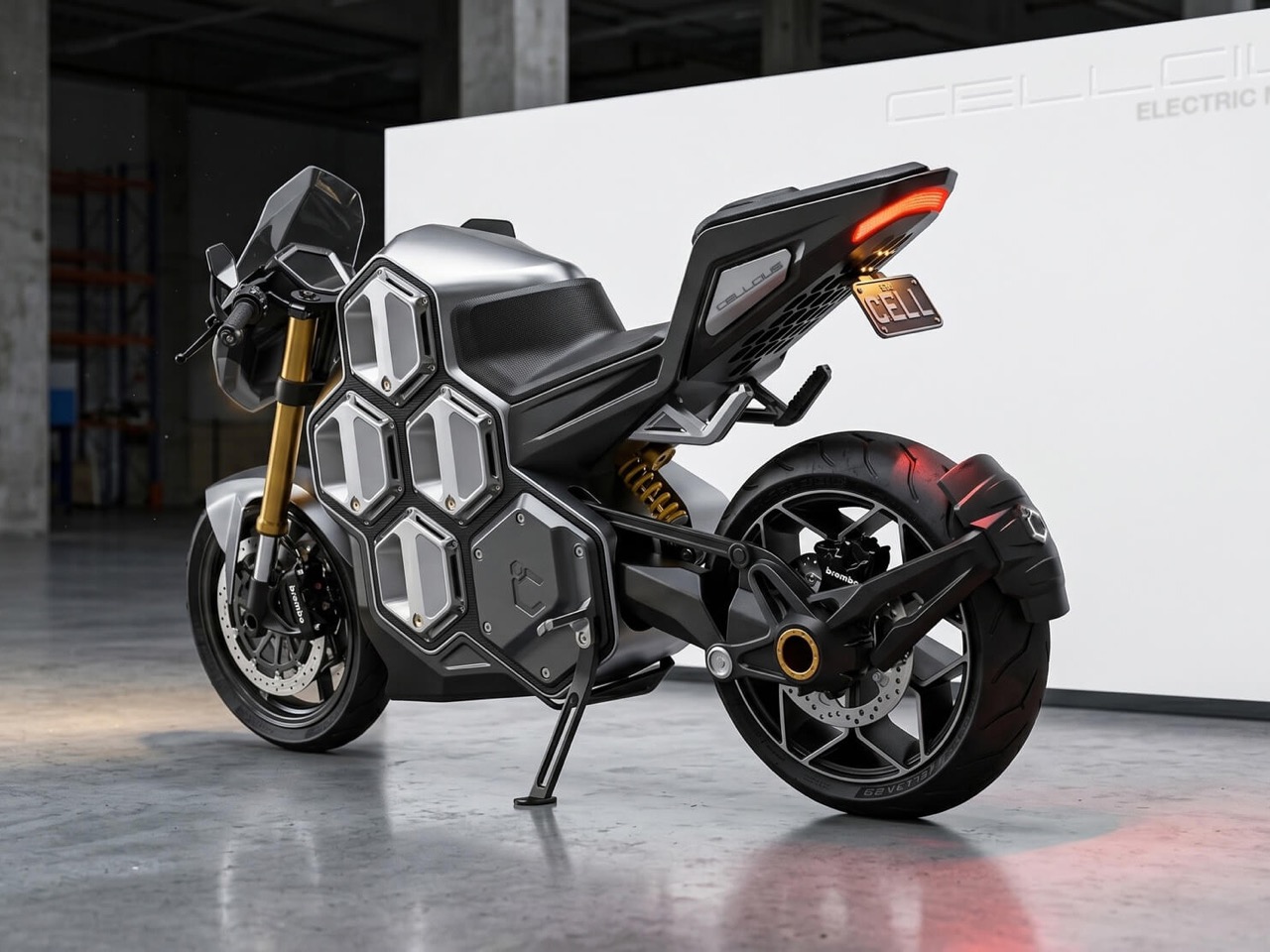
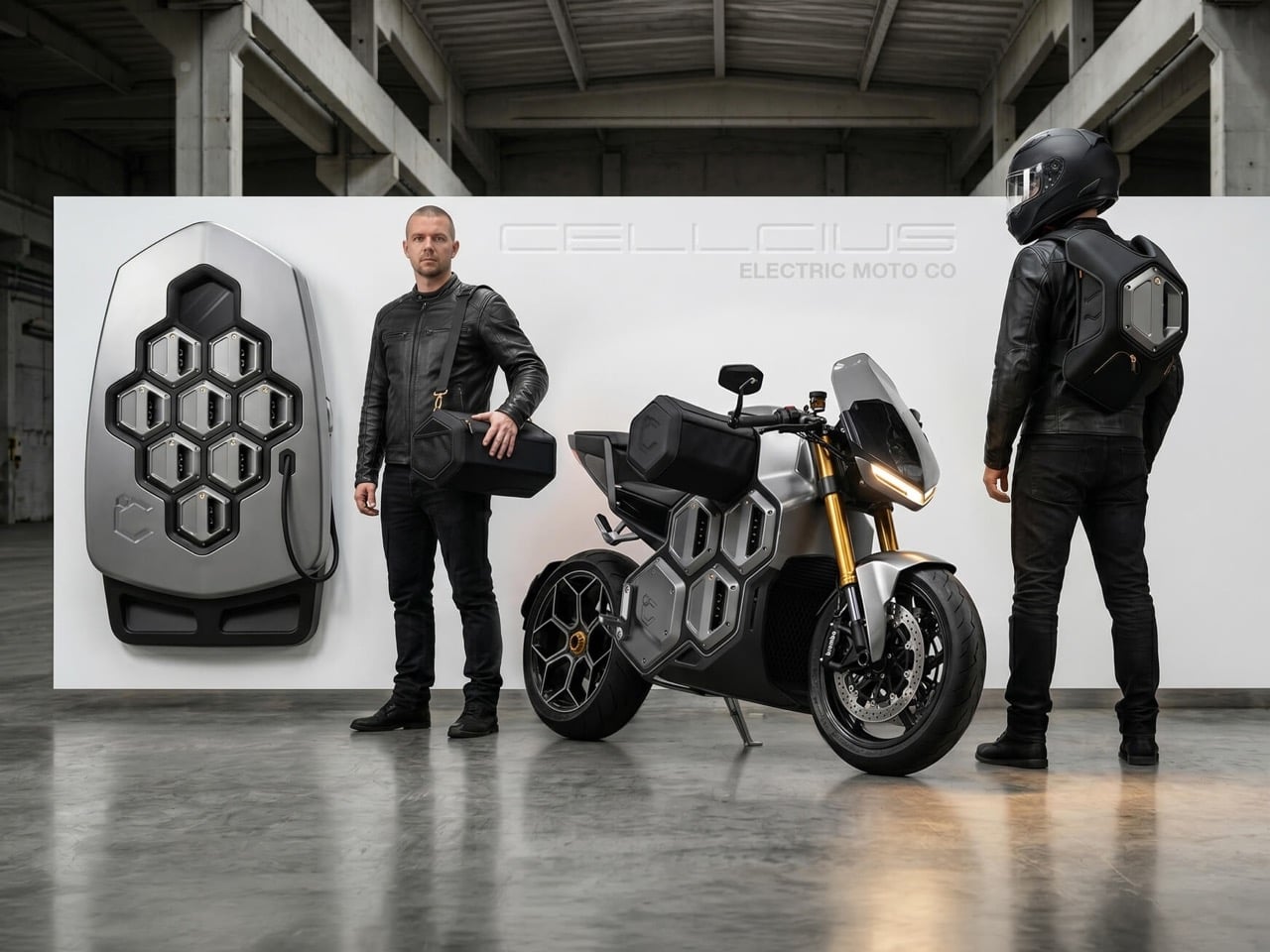
Bees settled on the hexagon ages ago, and nobody has topped it since. The shape packs the most storage into the least material, which is why it turns up in honeycomb aircraft panels and in the way round battery cells get stacked together. Brisbane’s Clandestine Design Group took the hint and built an entire electric superbike around it. The Cellcius C-01 is a hypersport concept whose battery is split into eight hexagonal cells that you can pull out and swap. Those cells line the bike’s flanks like honeycomb, and the result is one of the more striking EV silhouettes I’ve seen in a while.

Neil Davidson, who founded Clandestine in 2014 after 14 years as Creative Director at CMD, has loved motorcycles since he was a three-year-old farm kid on a dirt bike. That obsession shows. The C-01 won a 2026 Australian Good Design Award in the Concept Design category. It is still a concept, so there is no price tag or showroom date yet. The studio’s pitch is that electric bikes force a choice between heavy track machines and short-range commuters, and the Hex-Core battery system lets one bike be both. Load two cells for the commute or all eight for the track, and the same machine changes its personality to match.

Designer: Clandestine Design Group

Two Cells for the Commute, Eight for the Track
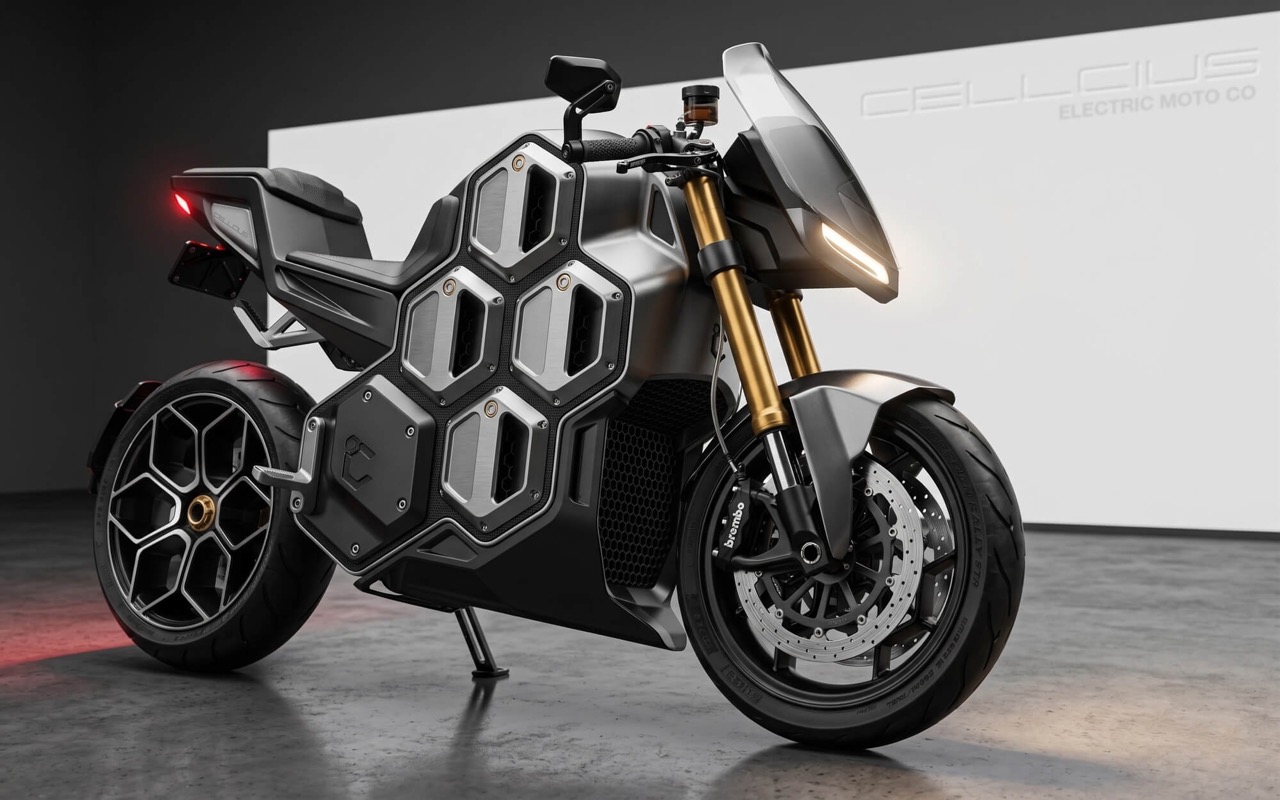
Each Hex-Core cell holds 3 kWh, so the bike carries anywhere from 6 kWh to 24 kWh depending on how many you load. By the studio’s numbers, the weight swings from 353 lb (160 kg) as a commuter to 485 lb (220 kg) as a track bike. Do the math and each cell works out to roughly 22 lb (10 kg), a weight you could carry up a flight of stairs. Two cells also fit Australia’s Learner Approved Motorcycle Scheme (LAMS), a rulebook that keeps new riders on tamer bikes, according to the studio. I can’t think of another superbike that can shrink for a learner permit and then bulk up for a lap day.

Kawasaki’s Ninja e-1 launched in the US at $7,599, weighs 309 lb (140 kg), and carries two removable 1.5 kWh packs that Kawasaki rates at 41 miles in Road mode. Zero’s 2026 SR/F, the usual benchmark for a serious electric streetfighter, packs 17.3 kWh into a body listed at about 500 lb (227 kg). Fully loaded, the C-01 claims 24 kWh at 485 lb, beating the Zero on both counts. That makes the Ninja and the SR/F look like the two ends of a spectrum the C-01 wants to cover with one chassis. Kawasaki’s two-pack setup proves removable batteries work for city riders, and the C-01 keeps adding packs until it hits superbike territory.

A Honeycomb You Can Carry Home
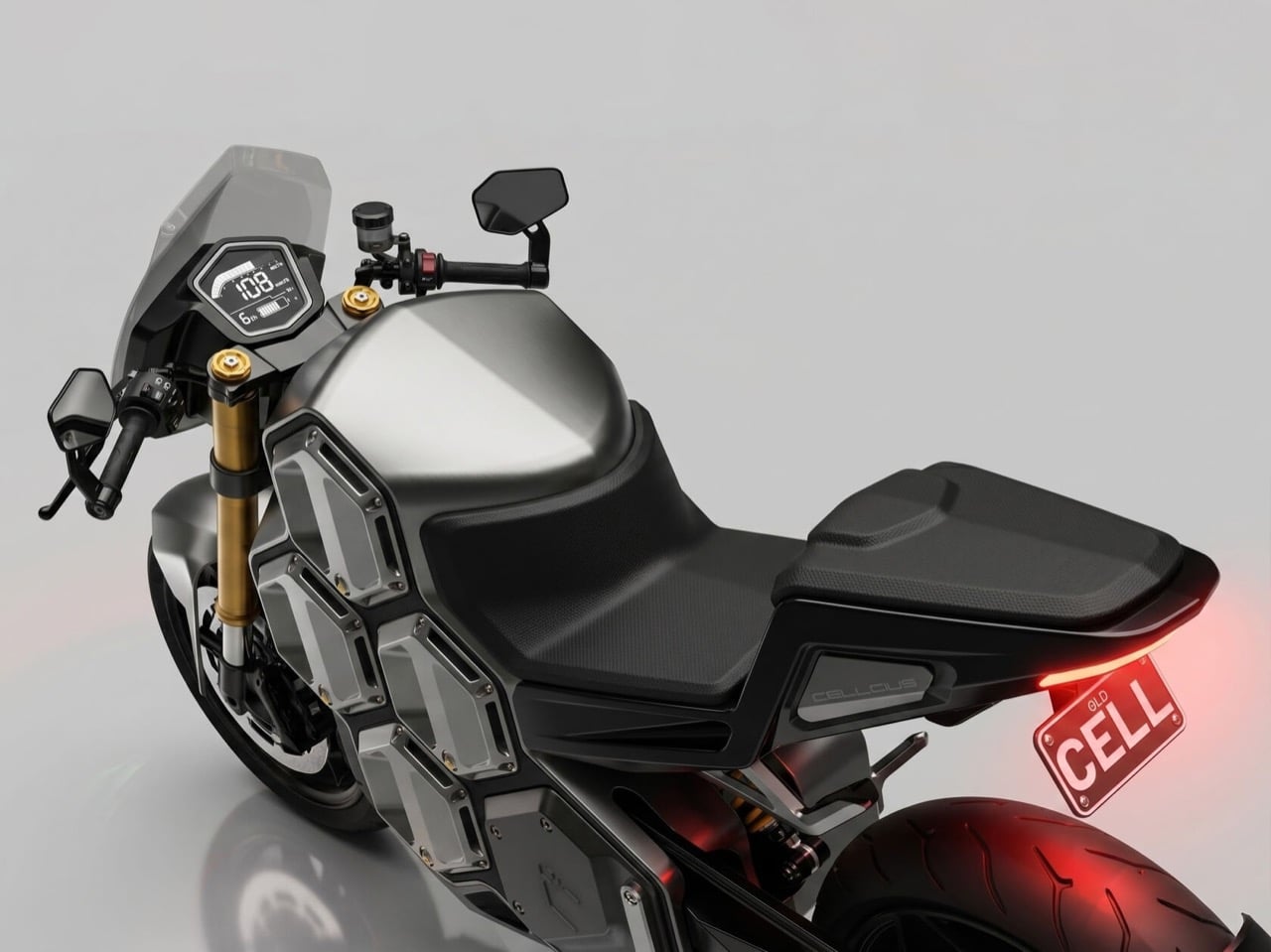
A wall-mounted smart dock charges several cells at once, so a fresh set is always waiting for a swap, a trick the studio calls “zero-minute” hot-swapping. Apartment dwellers get an ergonomic backpack that carries cells indoors for charging at a regular wall outlet. Riders who would rather skip the hauling can plug into a flush CCS port on top of the tank, which hooks into standard street-side fast chargers. Empty bays double as mounts for hex-shaped duffel bags, which keeps luggage inside the silhouette instead of hanging panniers off it. That setup goes straight at the studio’s stated target, urban apartment dwellers who have nowhere to plug in.

Pulled out of the bike, a cell turns into a portable power station with AC and USB outlets, according to the studio. That is the power tool battery logic every contractor already lives with, where one pack format runs a drill, a saw, and a work light. DeWalt and Milwaukee built huge product families on that idea, and the C-01 wants a superbike in the club. The studio also sees room for an aftermarket of Hex-Core accessories, from luggage to those power stations. A 5G app handles keyless RFID or PIN entry, over-the-air updates, and firmware tuning based on payload.

Shaft Drive, a Venturi Tail, and the Case for Swappable Superbikes

High-pressure ram intakes feed air in at speed while a low-pressure exhaust in the tail pulls it back out, a Venturi effect the studio says passively extracts motor heat without heavy fans. Power reaches the rear wheel through a fully enclosed carbon shaft drive, which the studio calls silent and maintenance-free. BMW has been putting shafts on motorcycles since the R32 in 1923, so the idea has real pedigree. Brembo brakes and fully adjustable Öhlins suspension round out a spec sheet that reads like a track-day wish list. My one wish is for the angular flyscreen to echo the hexagons a little more, since right now it reads like it came from a different bike.

Australia’s Good Design Awards date to 1958, and the Concept Design category, new since 2025, judges early-stage ideas on form, function, feasibility, and safety. A win there rewards the thinking, and the thinking here is easy to admire. My favorite part is that the battery, usually the thing EV designers hide under a tank cover, becomes the main visual feature. Electric bikes have spent years arguing over range versus weight, and the C-01 answers by letting the rider settle it each morning. Bees figured out the hexagon without a design degree, and a Brisbane studio just reminded the motorcycle world how well it stacks.

The post This Electric Superbike Wears Its Battery Like a Honeycomb first appeared on Yanko Design.

  •  

Benks’ new Kevlar iPhone 18 Pro cases look like they’re ready for a holiday cruise

Kevlar has spent most of its career in serious places, like bulletproof vests, racing tires, and the occasional helmet. Chemist Stephanie Kwolek invented it at DuPont in 1965, and I doubt anyone in that lab imagined a functional fabric like Kevlar would one day be asked to look classy. Today the fiber basically has a second life as a fashion fabric. I find that delightfully absurd, like learning your bodyguard also had a career as a swimsuit model. Benks has been leaning into that split personality for a while, and its latest drop takes it somewhere sunnier.

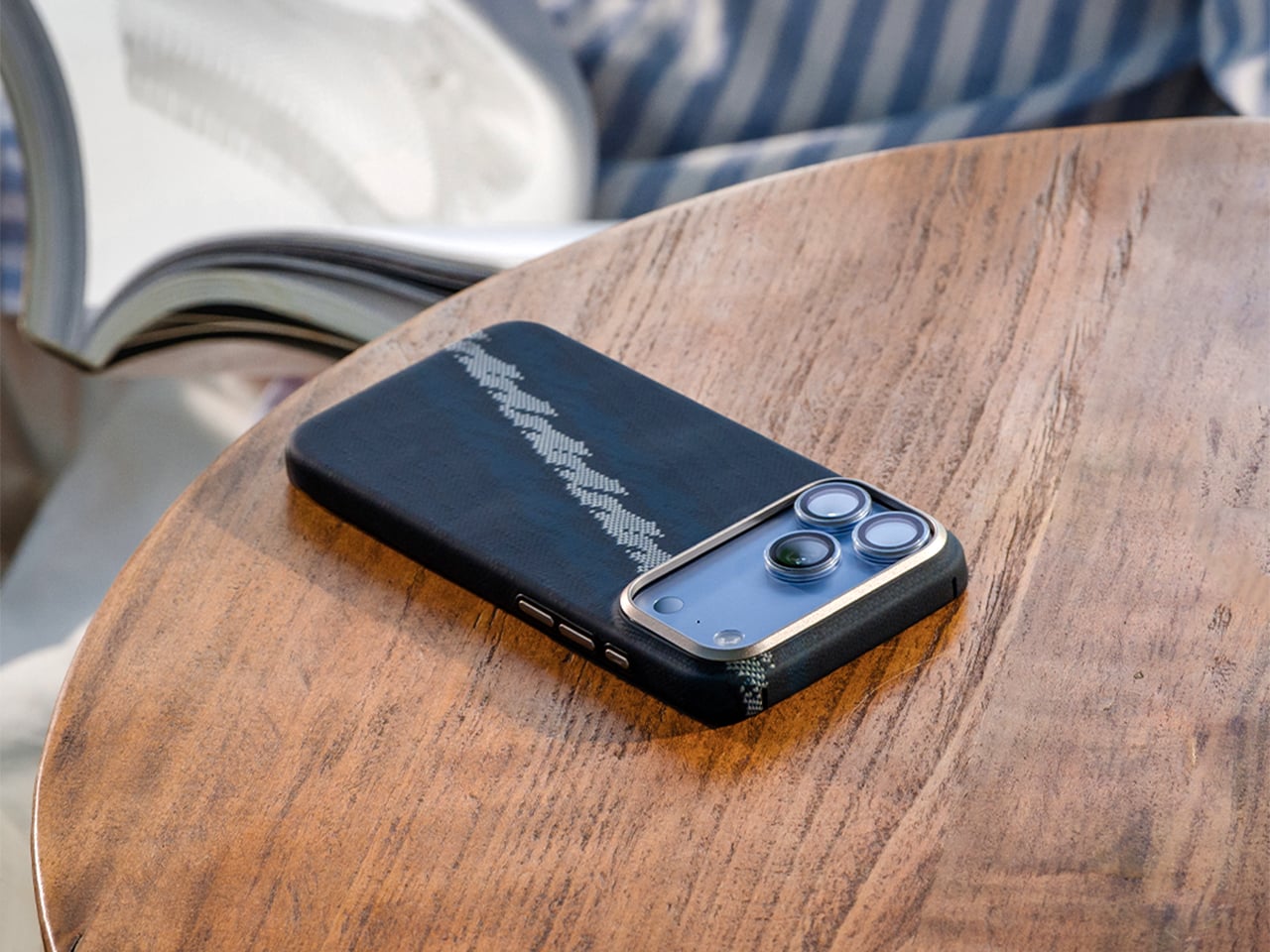
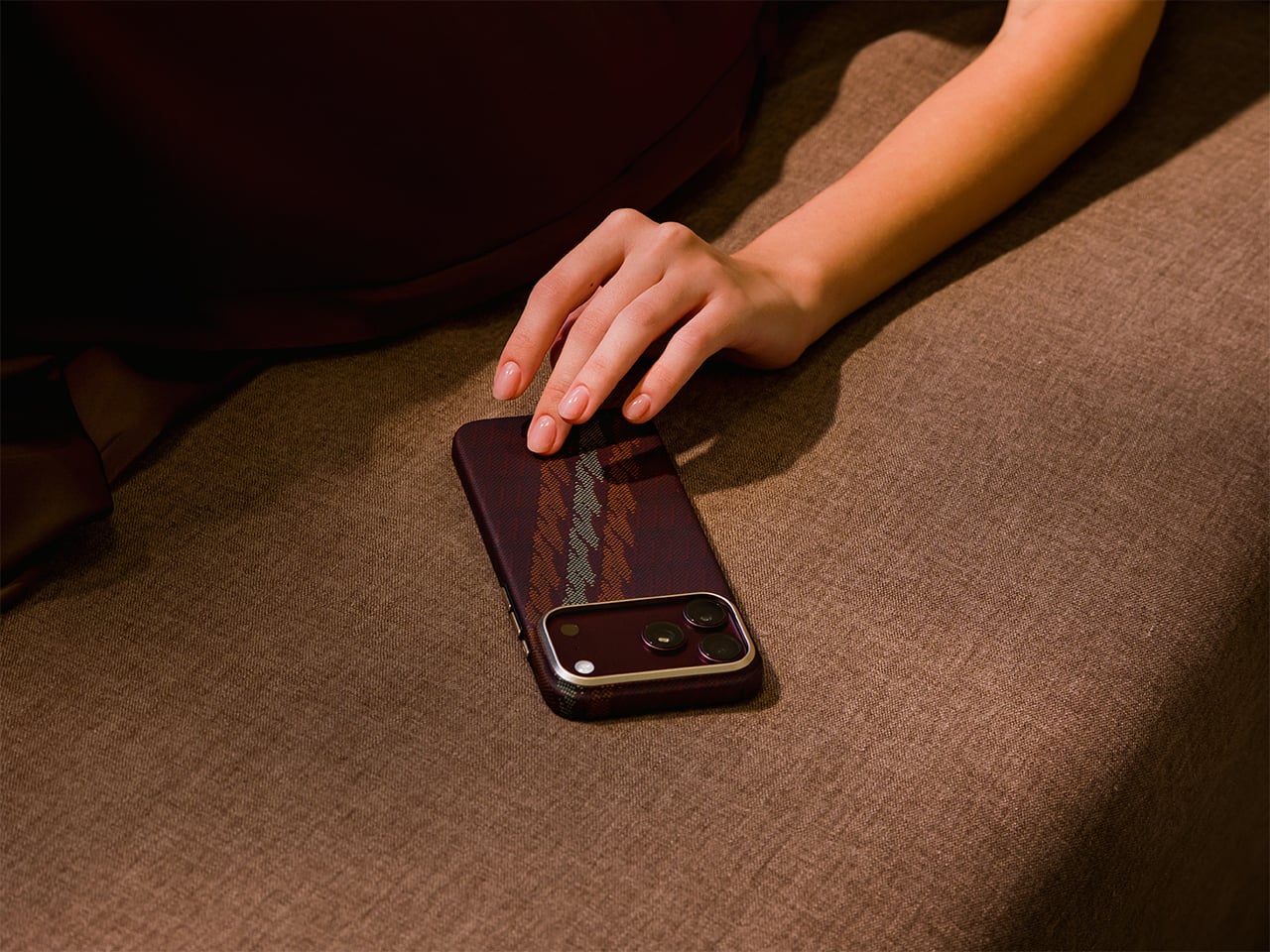
Meet Haven Azure and Haven Rouge, two Kevlar cases for the iPhone 18 Pro and Pro Max, priced at $69.99 each. Benks weaves the pattern directly into the Kevlar fiber using a 600D floating jacquard technique, rather than printing it onto the surface. That means the design is part of the weave itself, not just a layer of color that can scuff off. Azure ripples in layered blues, Rouge glows in warm reds, and both wrap the phone in a slim, full coverage shell. Building on the ArmorAir, the Haven series features a taller raised metal camera frame for enhanced lens protection, along with an upgraded ArmorKey that fully covers the Camera Control button. The result is a slim, full-coverage case that offers more comprehensive protection without compromising its refined design. Same tough stuff, just dressed for vacation.

Designer: Benks

Click Here to Buy Now: $69.99 Haven Azure | Click Here to Buy Now: Haven Rouge.

An 1800s Loom Trick, Now Running on Kevlar

Jacquard weaving builds a design into the cloth by lifting individual threads in a programmed order, a trick Joseph-Marie Jacquard automated with punched cards in the early 1800s. Silk mills near Lake Como, Benks’ stated inspiration, have long used the technique for ties. Benks applies the same logic to Kevlar, letting some threads float over others so colors and shapes appear in the weave. The 600D figure is a denier rating, which tells you how thick the yarn is. According to Benks, strands finer and more densely woven than the common 1500D give a smoother surface and a slimmer case. A loom from 1804 would recognize the idea instantly.

Getting color into Kevlar takes effort, and most of us picture the fiber as black and nothing else. Benks says the Haven colorways are woven into the fiber structure, with no laminated surface layer to peel, so the texture you feel is the weave itself. The brand has been heading here for a while, from the Knight ArmorAir with its champagne horse that reads like pixel art made from industrial fiber, to these flowing ripples. Benks bills the 600D Kevlar jacquard as an industry first, and the product shots show why it wants the credit. Big diagonal sweeps also suit a phone better than tiny repeating logos ever could.

Azure Cools Things Down, Rouge Warms Them Up

Azure sets a deep navy base and runs a diagonal band of lighter blues down the back, a bit like sunlight breaking up on lake water. Benks describes the pattern as gentle ripples in layered blue tones. Look closely at the product shots and the lighter threads read like tiny stitched pixels, which gives the band a cross-stitch charm. Rouge flips the mood with a burgundy base and a pale gold band, and Benks calls the shade Rouge Valley Red, with woven contour lines meant to recall warm valleys at dusk. Honestly, Azure feels like a lake breeze and Rouge feels like a glass of wine.

Benks shows both cases on all four iPhone 18 Pro colors, which are Black, Glacier, Burgundy, and Silver. Rouge on Burgundy looks like the obvious match, since phone and case speak the same dark red language. Azure beside Glacier makes sense too, though the blues also look sharp against Silver and Black. Each colorway has a matching ArmorPop grip and stand at $29.99 for anyone who wants the full set. The Haven tagline is “somewhere between here and away,” which also describes my mental state every Friday afternoon. Pick the mood first, then let your phone color follow.

Metal Frame, Enclosed Keys, Built-In Magnets

The iPhone 18 Pro is the first iPhone with a physical variable aperture, so its camera plateau deserves a proper guard. Haven wraps it in a raised metal frame that Benks says helps shield the lenses from scratches and bumps. Raised screen edges keep the display off flat surfaces without adding bulk. Enclosed ArmorKeys cover the side buttons, camera button included, and Benks promises crisp, responsive clicks. Cutouts line up with the ports, and the Kevlar texture wraps around the edges for a slip-resistant grip. A built-in magnetic core handles MagSafe accessories, so your charger, wallet, and grip stay where you put them.

Haven Azure and Haven Rouge are listed at $69.99 each on Benks’ site, with versions for the iPhone 18 Pro and the Pro Max (they’ll fit the 17 Pro series too). The cases boast a one year warranty, free shipping on orders of $39 or more, and a 30 day return window. Matching ArmorPop grips sit on the same product pages if you want to coordinate. Protection and personality have usually sat on separate shopping lists for phone cases, and weaving color straight into Kevlar is a neat way to merge them. Kevlar went from body armor to brunch, and I suspect it has a few more lives left.

Click Here to Buy Now: $69.99 Haven Azure | Click Here to Buy Now: Haven Rouge.

The post Benks’ new Kevlar iPhone 18 Pro cases look like they’re ready for a holiday cruise first appeared on Yanko Design.

  •  

Nothing’s Ear (open) should have been a CMF product all along… Here’s proof

I’ll say it: Nothing launched the Ear (open) under the wrong logo. The open-ear buds debuted in 2024 at $149, wrapped in Nothing’s signature transparent look, and they were good enough to win a Red Dot Product Design award. Still, every time I looked at them, my brain kept whispering “CMF.” Open-ear buds are the casual, colorful, sweat-friendly second pair you toss in a gym bag, which describes CMF’s entire personality. Even Nothing seems to have noticed, since the Ear (open) now comes in soft blue for $99 in the US. That’s CMF money in a CMF color, wearing a Nothing name tag.

Apparently I’m not alone in this conspiracy theory. Industrial designer Shreyansh Onial, whose CMF Flip foldable concept got a reaction from Carl Pei himself, built the CMF Ear (open) that Nothing never released, and it looks like it rolled straight off CMF’s assembly line. The over-ear hook stays, but the transparent panels give way to solid Coral, Light Grey, and Dark Grey. Each bud gets a chunky physical button, and the pill-shaped case borrows the knurled Smart Dial from CMF’s $99 Clip Pro. It’s the alternate-universe launch I didn’t know I was waiting for.

Designer: Shreyansh Onial

Trading Nothing’s see-through shell for CMF’s candy-colored hooks

Coral, Light Grey, and Dark Grey carry the whole concept, and they match the Clip Pro’s palette exactly. Transparency is Nothing’s calling card, though on the Ear (open) much of the surface is a silicone ear hook anyway. Onial goes fully opaque, with a soft matte finish on the hook and a glossier coat on the round acoustic pod that sits by your ear canal. The outer face is a rounded pill panel with a single round button and a tiny glyph made of a circle, a dot grid, and a filled dot. The battery tail picks up a fine stippled texture, which gives sweaty fingers something to grip.

A real button on each bud fixes the biggest workout annoyance with the Ear (open), which relies on pinch controls that get fiddly with slippery fingers. CMF already gave the Clip Pro physical buttons for exactly this reason, so the move fits the brand’s own playbook. Flip the bud around and you’ll find a perforated metal grille shaped like a little kidney bean, plus two pogo pins on a short collar for charging. That bean grille is my favorite detail, because it gives the bud an oddly cartoonish face. It also mirrors the soft circles of the dial on the case. The whole thing feels friendly and approachable, which suits a pair built for sweat and sidewalks.

The Clip Pro’s Smart Dial case meets a hook built for runners

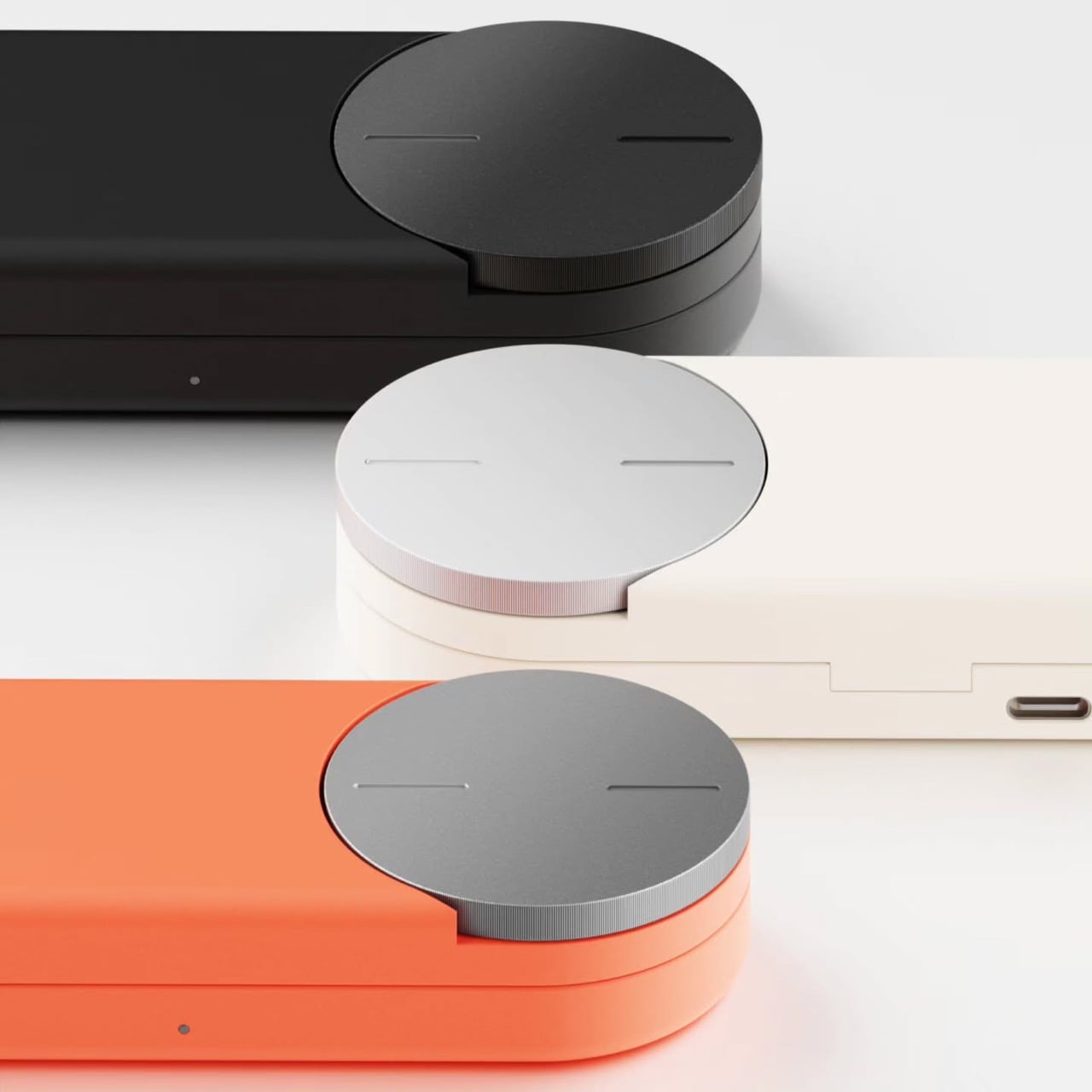
The case comes straight from CMF’s Clip Pro, a deep pill-shaped capsule with a knurled metal dial set into one end of the lid. On the Clip Pro, that Smart Dial adjusts volume, controls playback, answers calls, and triggers pairing. CMF put the same dial on its Buds Pro 2, and it has since become the brand’s signature move. Onial adds a dot-matrix “cmf” wordmark on the lid, a front status LED, and a USB-C port on the side. Inside, molded cradles hold the two hooks in a neat V, with a charging pocket waiting for each acoustic pod.

Over-ear hooks anchor behind the ear, which keeps them planted through runs, burpees, and sprints for the bus. The Clip Pro’s C-shaped clip hugs the ear’s outer edge instead, a format better suited to commutes and long desk days. That leaves the runner with a CMF-shaped hole in their gym bag, since CMF currently offers nothing for them (lowercase n). A dial makes even more sense here, because twisting a knob on the case beats digging through phone menus mid-stretch. Pair it with real buttons on the buds and you get a workout setup that never asks for a precise touch gesture.

Where a CMF Ear (open) would land in a crowded open-ear market

Open-ear audio got crowded fast, with Bose’s Ultra Open sitting at the top for $299 and Sony’s LinkBuds Clip, Huawei’s FreeClip, and Shokz’s hook-style buds filling out the field. The Clip Pro landed at $99 with LDAC support, a 10.8mm driver, and up to 32.5 hours of total battery. The Ear (open) counters with a bigger 14.2mm driver, 8 hours per charge, and 30 hours with its case. Each Ear (open) bud weighs 0.29 oz (8.1 grams), while each Clip Pro bud weighs 0.21 oz (5.9 grams). A CMF hook could split the difference, pairing the Ear (open)’s stable fit and big driver with the Clip Pro’s dial, buttons, and price.

The blue Ear (open) already sells for $99 in the US, the same price as the Clip Pro, so Nothing has basically priced its own product at CMF level. Moving it under the CMF badge would make that price tag look like a plan instead of a markdown. It would also free Nothing to return later with a pricier transparent sequel, flipping the usual order where the premium brand gets the good stuff first. CMF became an independent Nothing subsidiary headquartered in India last year, and a signature sport bud would give the young brand another reason to stand apart from its parent. Onial’s renders already look ready for the shelf. Sometimes the little sibling deserves the new toy first.

The post Nothing’s Ear (open) should have been a CMF product all along… Here’s proof first appeared on Yanko Design.

  •  

This pixel-covered MINI concept makes the Hyundai Ioniq 5 look subtle

Hyundai got everybody talking about pixels in 2019, when the 45 EV Concept showed up in Frankfurt with square-cut lights, and the Ioniq 5 carried the idea to showrooms in 2021. Hyundai even named the look Parametric Pixel and spread it across the headlights, taillights, and wheels. It was a smart move, and it gave the Ioniq 5 a face you could pick out of a parking lot from across the street. Still, Hyundai used pixels like a seasoning, a sprinkle here and a dash there. Somebody was bound to dump the whole shaker.

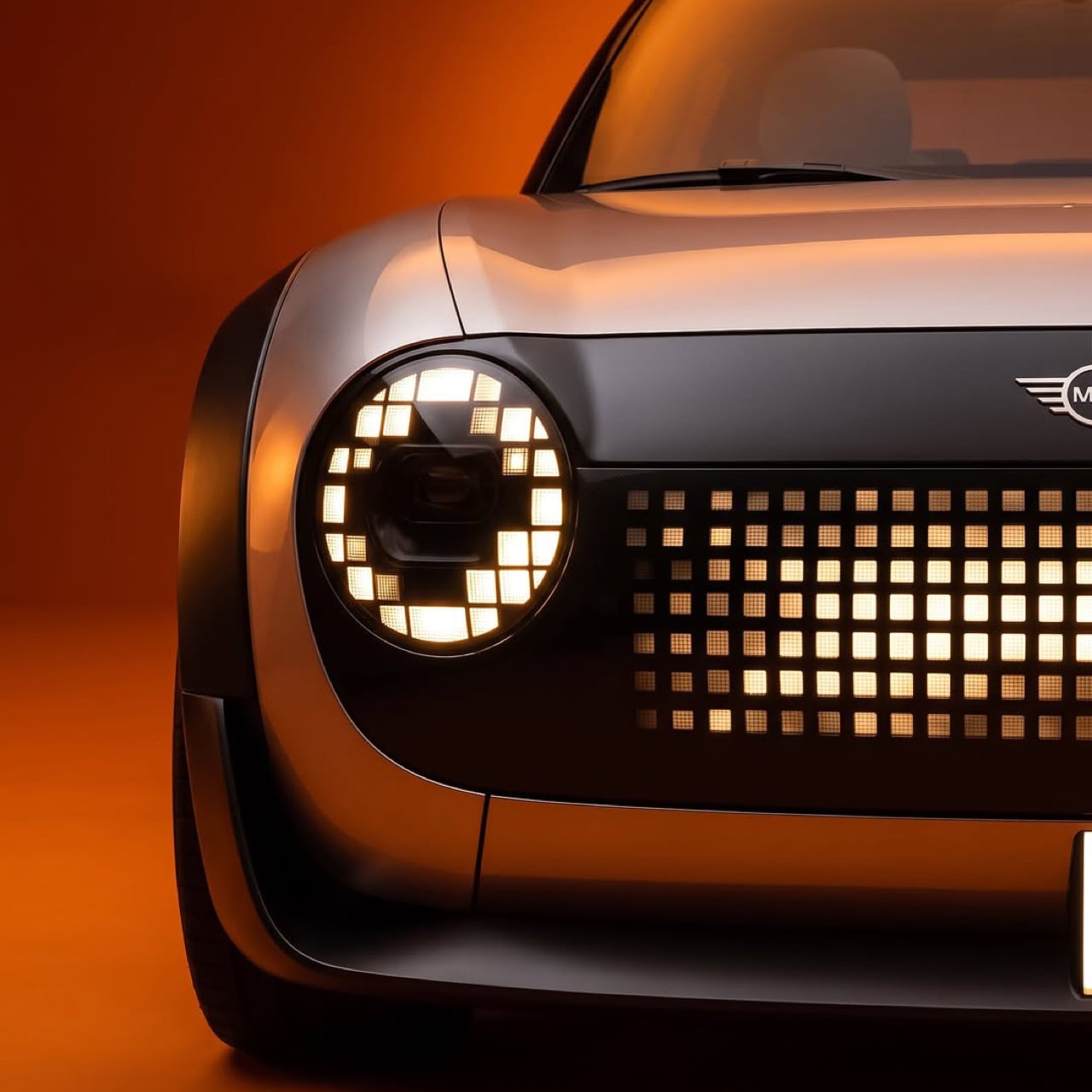
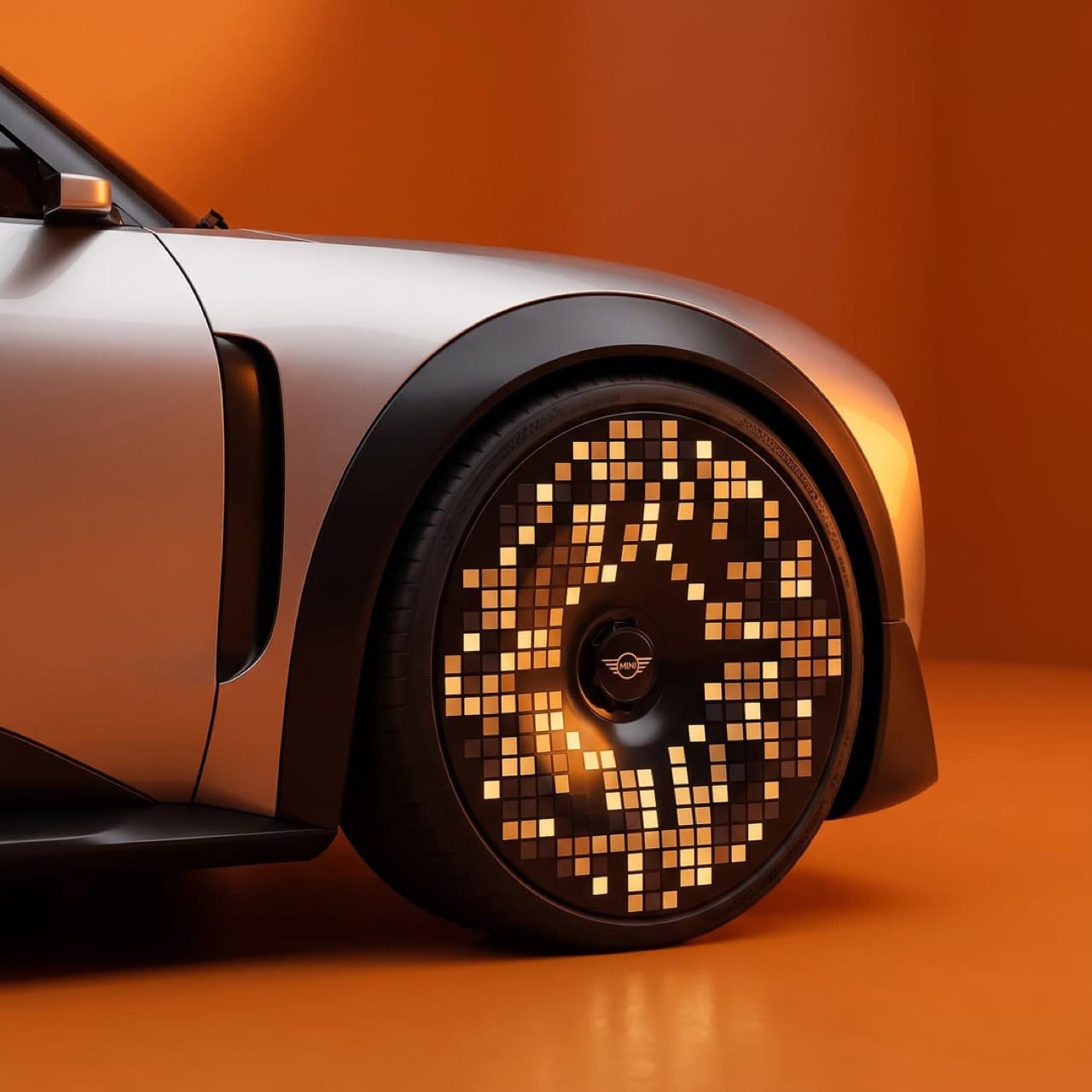
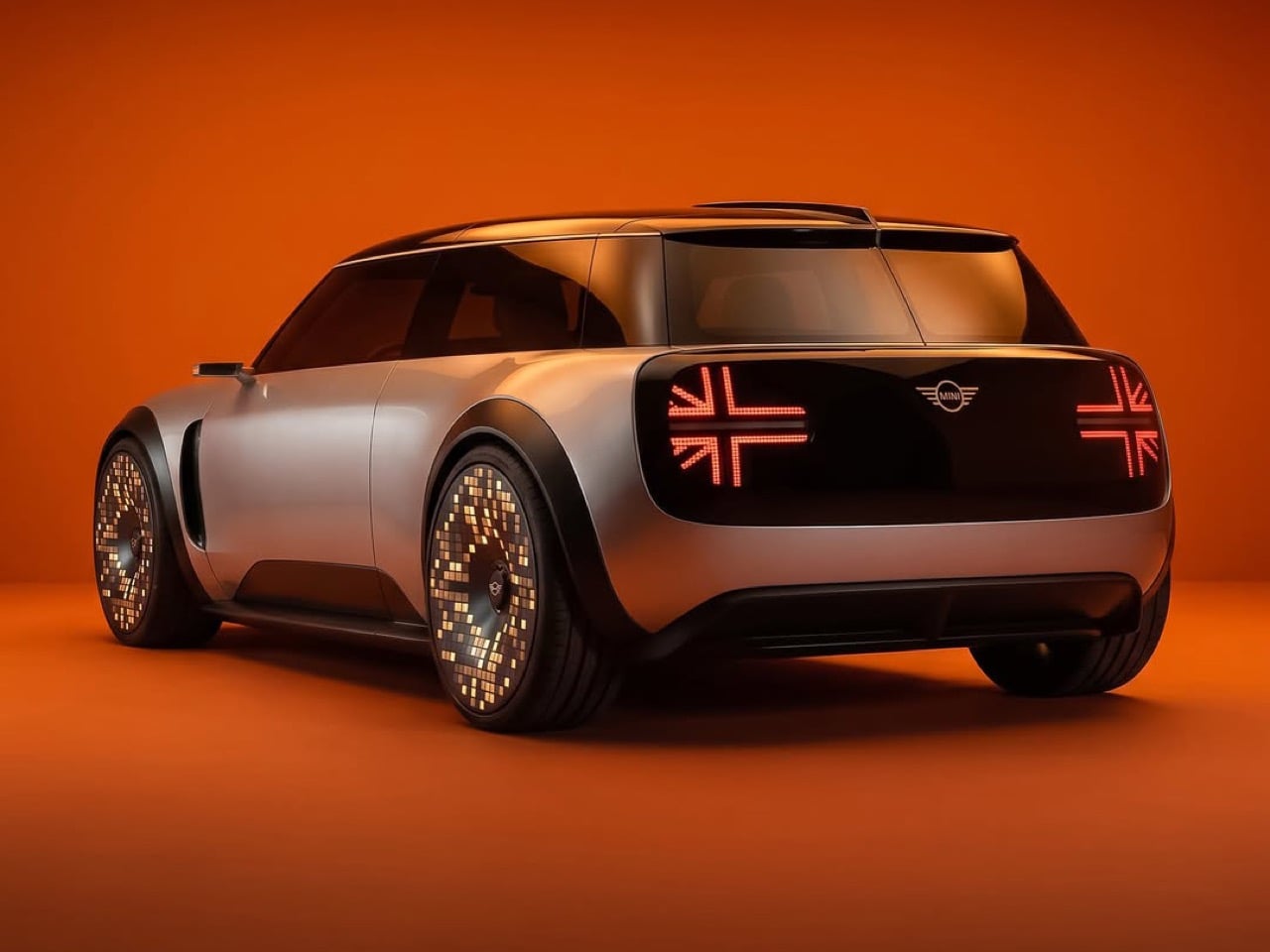
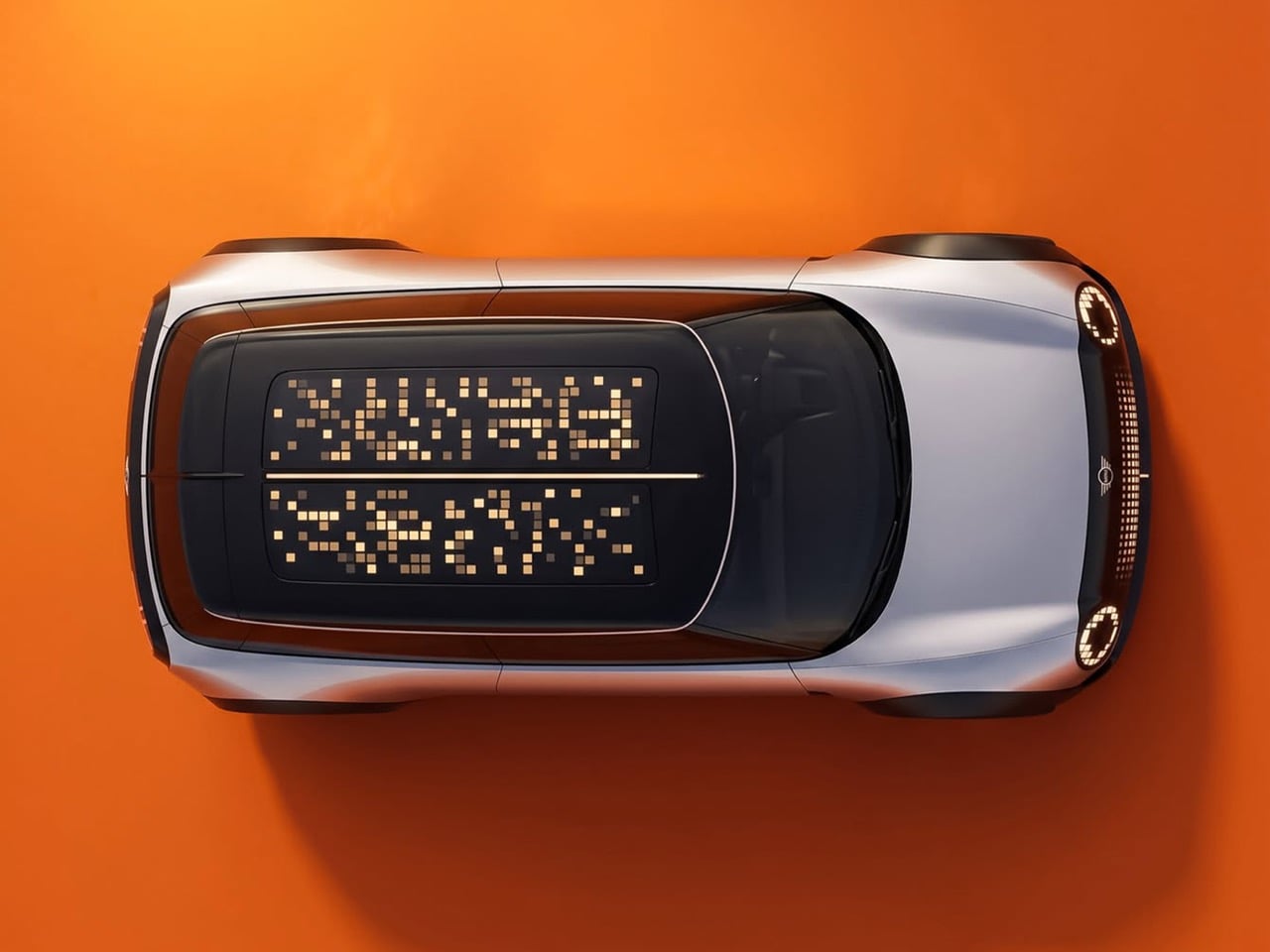
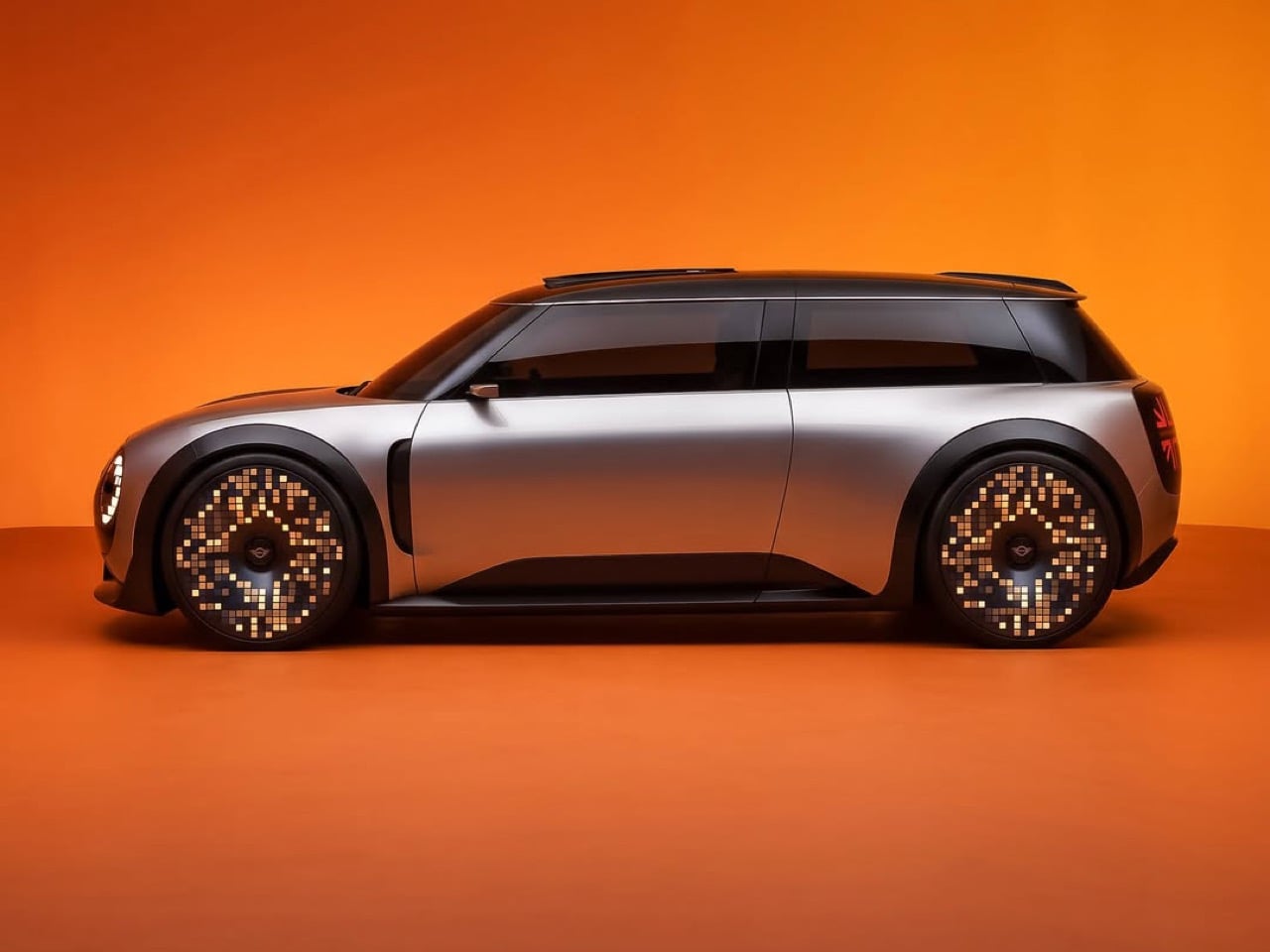
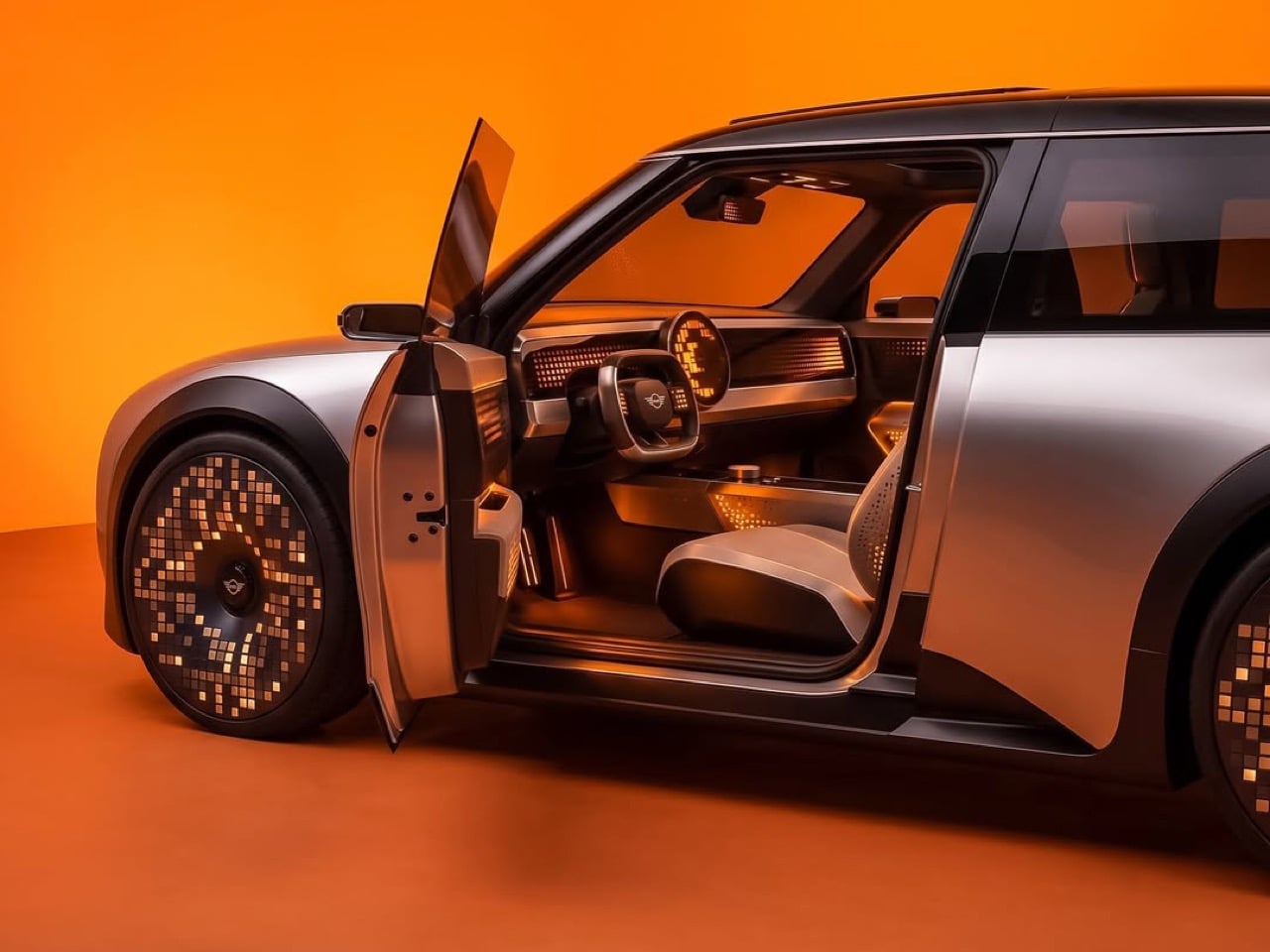
That somebody is Uygar, a Turkey-based designer who calls himself a professional daydreamer, and the shaker is a MINI. The headlights keep MINI’s round shape but fill the rings with squares, a dot-matrix grille owns the nose, and each wheel is a glowing mosaic disc. The Union Jack taillights are rebuilt out of red pixels, a nod to the flag lamps from MINI’s 2018 facelift. It’s a long-roof five-door with stubby overhangs, a dark roof, and satin champagne-silver paint, so the pixels do the talking. I tried counting the squares on one wheel and gave up when my coffee went cold.

Designer: Uygar (uygarspots)

Round headlights, square pixels, and a grille that glows

MINI’s round headlight is the closest thing the brand has to a signature, so Uygar leaves the circle alone and changes what it is made of. Each ring becomes a loop of little squares wrapped around a dark projector lens, like a digital eye with a very serious pupil. Below it, the closed grille is a dot-matrix field that glows brightest at the center and fades toward the edges. A thin vertical light bar drops from the bumper like a tiny exclamation mark. From a block away the face looks friendly, and up close you can count the grid.

Hyundai keeps its pixels inside the lamps, so the Ioniq 5 still reads as a car with a few digital accents. Here the whole nose becomes one display, so the face reads as a single graphic. That suits a brand whose cars have worn a cheeky expression since Alec Issigonis’s original Mini arrived in 1959. The production Cooper EV already lets owners pick from three light signatures, so a face that changes mood is hardly a leap. This one has far more dots to play with, and I suspect it would be a menace at red lights.

The wheels and taillights carry the pixel jewelry

The wheels are where the idea gets silly in the best way. Each one is a full disc covered in amber squares, arranged in a swirl that thins out toward the rim and bunches up around the MINI wings at the hub. Some squares glow bright while others sit nearly dark, so the whole disc looks caught mid-sparkle. Hyundai’s pixel wheels ask you to read the pattern in the metal, and these ask you to read it in light. Park one at night and you have a disco ball on each corner, minus the awkward dance lessons.

The rear is the cleanest trick in the set. A black glass band spans the tailgate and holds two Union Jack lamps built from red dots, with the MINI wings sitting between them. MINI introduced flag-style taillights in 2018, using the turn signals for the horizontal bars and the brake lights for the vertical ones. Then the 2022 Aceman concept drew a Union Jack across its grille in matrix LEDs. This render finishes the thought by building the flag from pixels, which is where a flag made of light was always headed.

MINI already flirted with pixels, and this is the follow-through

MINI did not wander into this blind. The Aceman concept appeared in July 2022 and made its first public showing at Gamescom in Cologne, which tells you exactly who the brand was flirting with. Its matrix LED headlights and grille drew Lite-Brite comparisons, a nod to the glowing peg toy Hasbro launched in 1967, and the right headlamp could even wink. The Cooper EV that followed took a calmer path, with round lamps, three light signatures, and a 9.4 inch (240mm) round OLED screen inside. The pixel face was the Aceman’s loudest idea, and production turned the volume down.

Uygar’s concept feels like the alternate timeline where nobody in the design review said “maybe a little less.” Hyundai sprinkled, MINI nibbled, and this render tips the whole shaker over the car. If I owned a MINI and somebody offered me these wheels, I would ask where to sign, then ask where the off switch is. The little British hatch has always been the brand most willing to act like a toy, and a toy with a glowing face is hard to argue with. Dump the whole shaker, I say, and let the pixels fall where they may.

The post This pixel-covered MINI concept makes the Hyundai Ioniq 5 look subtle first appeared on Yanko Design.

  •  

This porcelain Pioneer DJ setup belongs in a museum, not an Ibiza nightclub

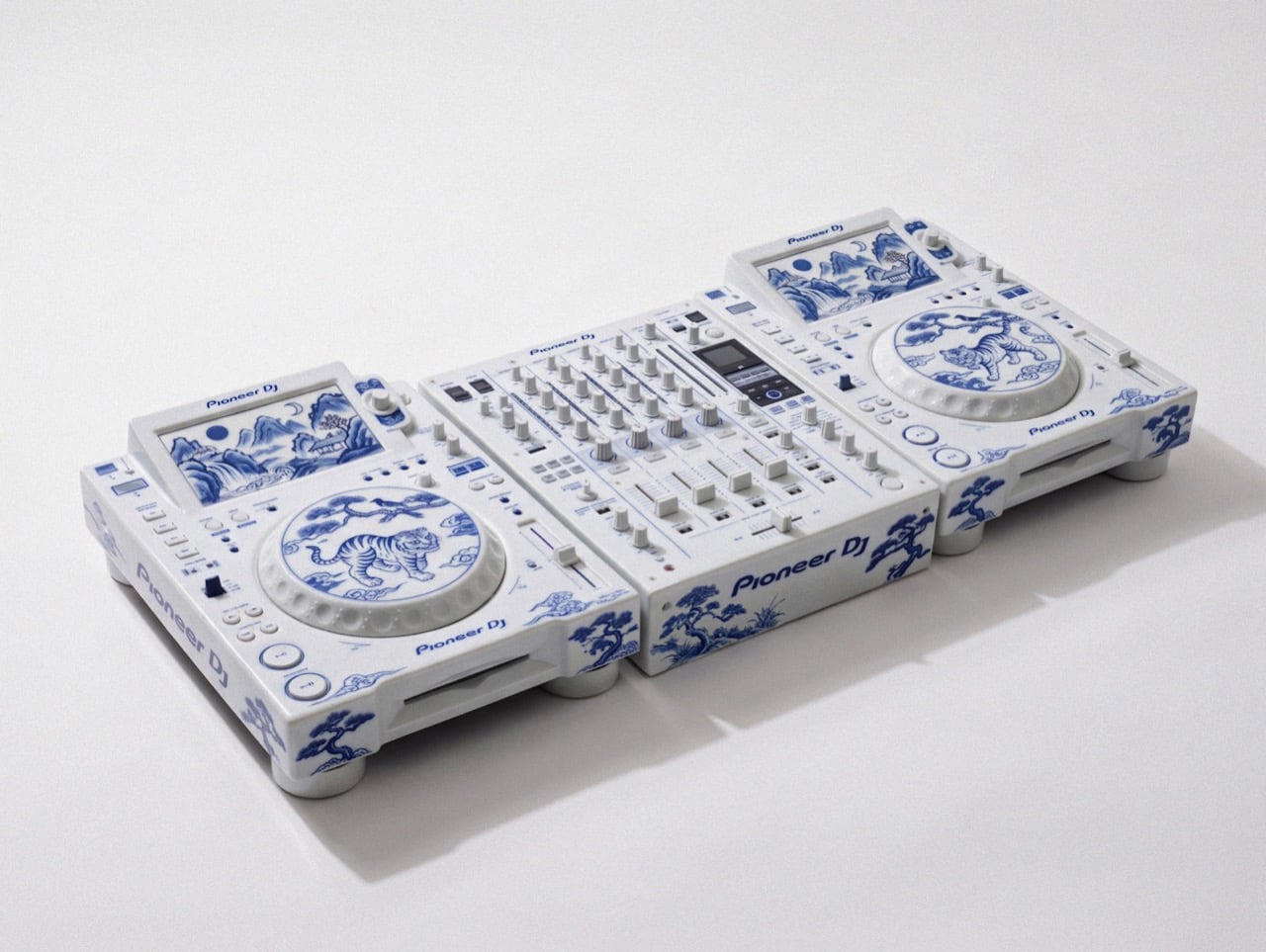
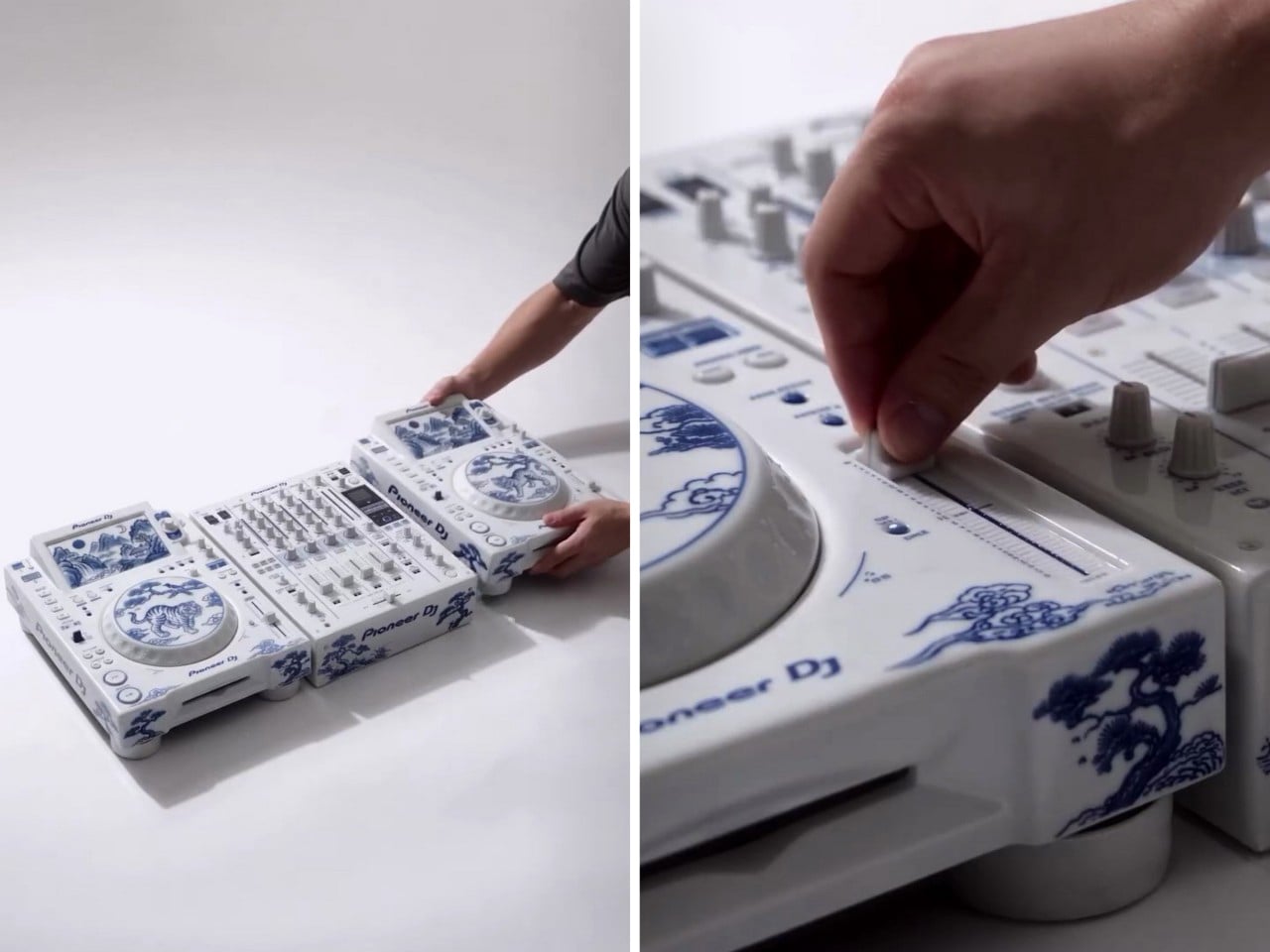
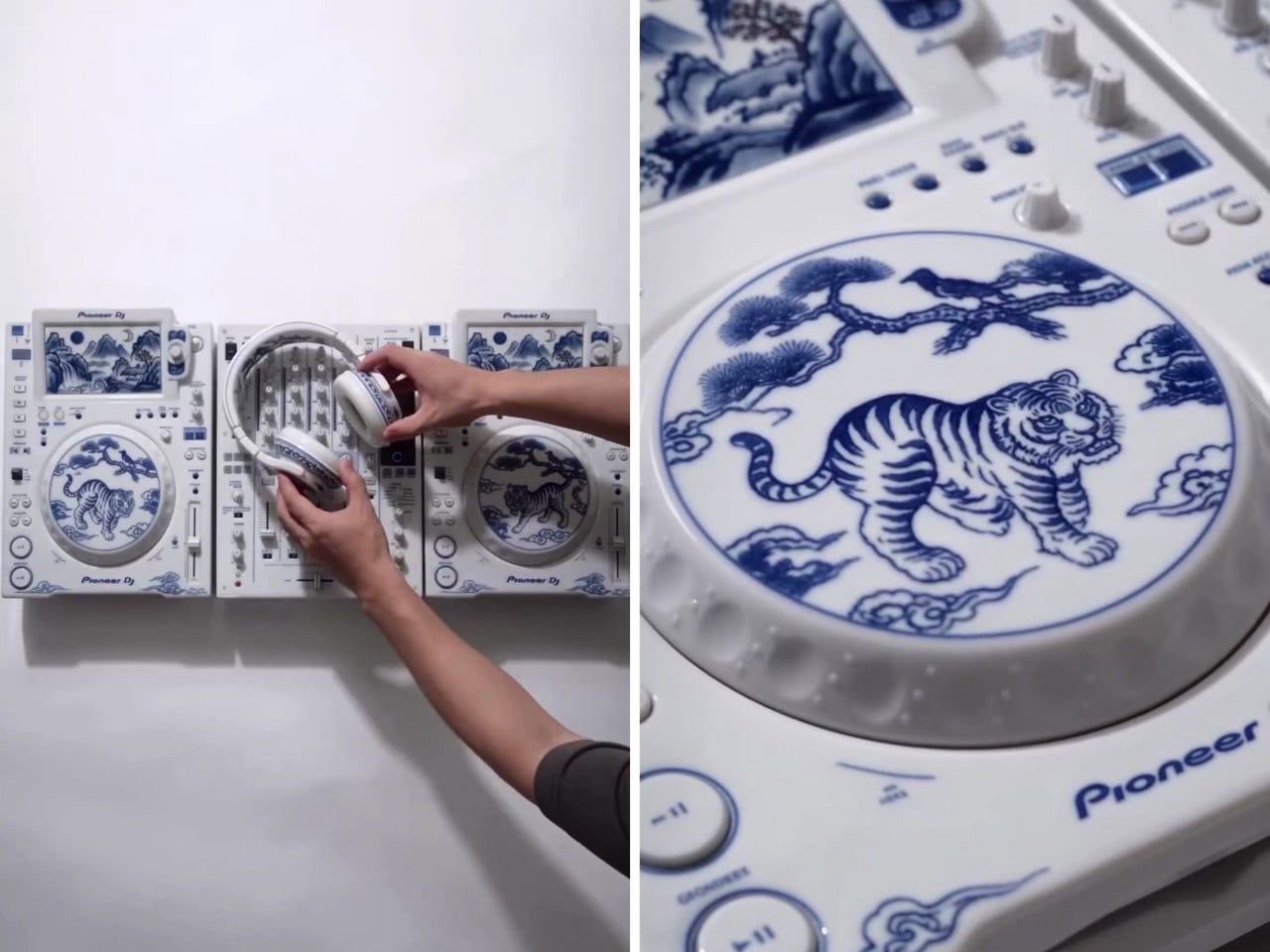
David Guetta just won DJ Mag’s Top 100 DJs poll for a record sixth time, and I have a very specific idea for his trophy shelf. Somebody on the internet has turned a Pioneer DJ setup into Korean blue-and-white porcelain, tigers and all. Two decks and a four-channel mixer, glazed bone white and hand-painted (well, AI-painted) in cobalt blue. It looks like something you’d find behind glass at the Met, right before a security guard asks you to step back. It’s also the most Guetta-coded object I’ve seen all year, because a guy who headlines weekly Ibiza residencies deserves a rig that looks as expensive as the bottle service.

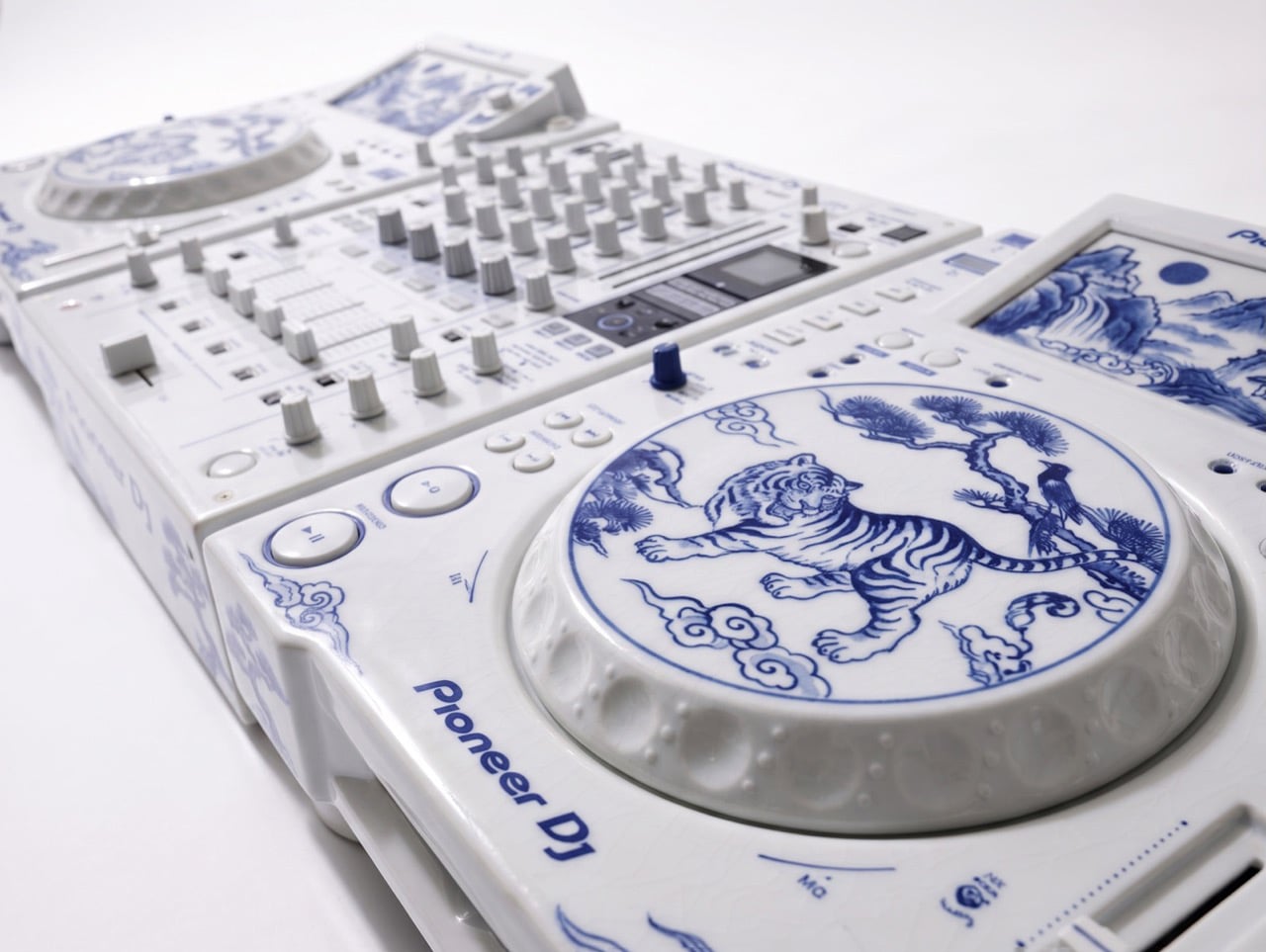
The setup comes from creators patchkims and takitani.lab, who posted it as the “Joseon Baekja Prototype,” complete with a “1 of 1, no restock” caption that reads like a sneaker drop. It’s an AI render, so nobody’s shipping it to Guetta’s villa anytime soon. The idea still lands, though. Each jog wheel carries a tiger and a magpie under a pine tree, lifted straight from Korean folk painting, and the screens swap waveforms for misty mountains and waterfalls. Suddenly your DJ gear graduates from booth equipment to living room centerpiece, which is a fun flex for anyone, let alone the world’s No. 1 DJ.

Designers: patchkims & takitani.lab

Kkachi horangi is a genre of Korean folk painting where a deliberately goofy tiger, nicknamed the idiot tiger, plays the aristocratic yangban, and a smug magpie in a pine tree speaks for the common people. Both jog wheels here carry that exact scene, with the cat prowling below and the bird looking unbothered above. The two decks get different tiger poses, so the platters work like a call and response. Joseon painters used the setup to poke fun at the ruling class, and now it sits under the palms of whoever runs the dance floor. That is either delicious irony or very on-brand for a king of the booth.

The screens trade waveforms for misty peaks, a waterfall, a pavilion, and a pair of moons, echoing Irworobongdo, the sun, moon and five peaks painting that stood behind the king’s throne in Joseon palaces. The sun and moon stood for the king and queen, so the painting doubled as a majesty backdrop. A headliner on a raised stage occupies similar real estate, so the throne comparison writes itself. The original sun burned red, and going cobalt turns it into a second moon, which suits a room that wakes up after midnight. Calling a DJ booth a throne room is a stretch, but watch a stadium crowd hang on a Guetta build-up and the royalty comparison stops feeling silly.

Joseon Korea made white its signature after the green celadon era of Goryeo, and cobalt-painted porcelain sat at the top of the pile. The pigment was rare and imported from China, so when supply dried up, court kilns improvised with iron-brown, and some banquet wares wore painted imitations of blue-and-white called gahwa, literally fake painting. A porcelain Pioneer rig conjured by AI is a 2026 gahwa, a convincing stand-in for an object nobody has actually fired in a kiln. I’m weirdly fine with that, because the Joseon court got there first. Meanwhile, Christie’s has estimated a genuine 15th-century cobalt jar at roughly $2 million to $3 million, so the real thing sets the bar high.

The real-world version of this lineup runs two AlphaTheta CDJ-3000X players at $2,999 each plus a Pioneer DJ DJM-A9 mixer at $2,899, roughly $8,900 in the US. The render looks closer to the older CDJ-2000NXS2 generation, disc slots and all. Pioneer did sell a limited white CDJ-2000NXS2-W run in 2017, so colorway flexes are old news for the brand. I imagine if such a product were to exist, it would probably cost in the hundreds of thousands. That being said, I’m sure an enthusiastic deejay with money to throw could acquire this for their den. Guetta, SHM, heck even Shaq… I’m looking at y’all.

The post This porcelain Pioneer DJ setup belongs in a museum, not an Ibiza nightclub first appeared on Yanko Design.

  •  
❌