Vue lecture

Il y a de nouveaux articles disponibles, cliquez pour rafraîchir la page.

84 000 schémas électroniques pour entraîner des IA à concevoir des circuits

Vous faites un peu de l'électronique et vous utilisez KiCad pour vos PCB ?

Et si l'avenir de la conception électronique c'était aussi l'IA ? J'en sais rien mais ce qui a l'air de se profiler à l'horizon avec ce dataset qui vient de sortir sur Hugging Face et qui devrait intéresser pas mal de monde. Ça s'appelle Open Schematics et c'est une collection de plus de 84 000 schémas électroniques au format KiCad, prêts à être utilisés pour entraîner des modèles d'IA.

Le truc c'est que jusqu'à maintenant, si vous vouliez créer une IA capable de comprendre ou de générer des schémas électroniques, y'avait pas vraiment de dataset propre et bien structuré pour ça. Bhupendra Hada (alias bshada sur Hugging Face) a donc décidé de combler ce manque en compilant tout ça à partir de projets hardware open source trouvés sur GitHub.

Chaque entrée de son dataset contient donc le fichier schéma brut au format .kicad_sch, une image PNG du rendu, la liste des composants utilisés, et des métadonnées en JSON et YAML. Du coup vous avez tout ce qu'il faut pour entraîner un modèle à faire du text-to-image, de l'image-to-text, ou de la génération de circuits à partir de specs.

Le dataset pèse 6,67 Go au format Parquet et couvre une variété de projets assez dingue. On y trouve des cartes de programmation UART, des amplificateurs à tubes, des onduleurs triphasés open source, des points d'extrémité Zigbee, des projets ESP32+RS232, et même des macropads custom. Bref, y'a de tout, du projet étudiant au truc bien avancé.

Ce qui est cool c'est que le dataset est structuré pour plusieurs cas d'usage. Vous pouvez l'utiliser pour entraîner une IA à reconnaître des composants sur un schéma, à générer de la documentation automatique depuis un circuit, à détecter des erreurs de conception, ou même à suggérer des améliorations. Y'a aussi un potentiel éducatif évident pour créer des outils d'apprentissage interactifs en électronique.

Bien sûr, la qualité et la complexité des schémas varient pas mal d'un projet à l'autre. Certains ont des métadonnées incomplètes, et les conventions de nommage des composants sont pas toujours cohérentes... C'est le souci quand on scrappe des projets open source, y'a du bon et du moins bon mais pour un dataset de cette taille, c'est déjà une base de travail solide.

Le tout est sous licence CC-BY-4.0, donc vous pouvez l'utiliser librement du moment que vous créditez la source. Que vous bossiez sur de l'IA appliquée à l'électronique ou que vous cherchiez juste une grosse base de schémas KiCad à explorer, c'est clairement une ressource à bookmarker.

Source

This Printed-Circuit Sconce Turns Exposed Electronics Into Functional Sculpture

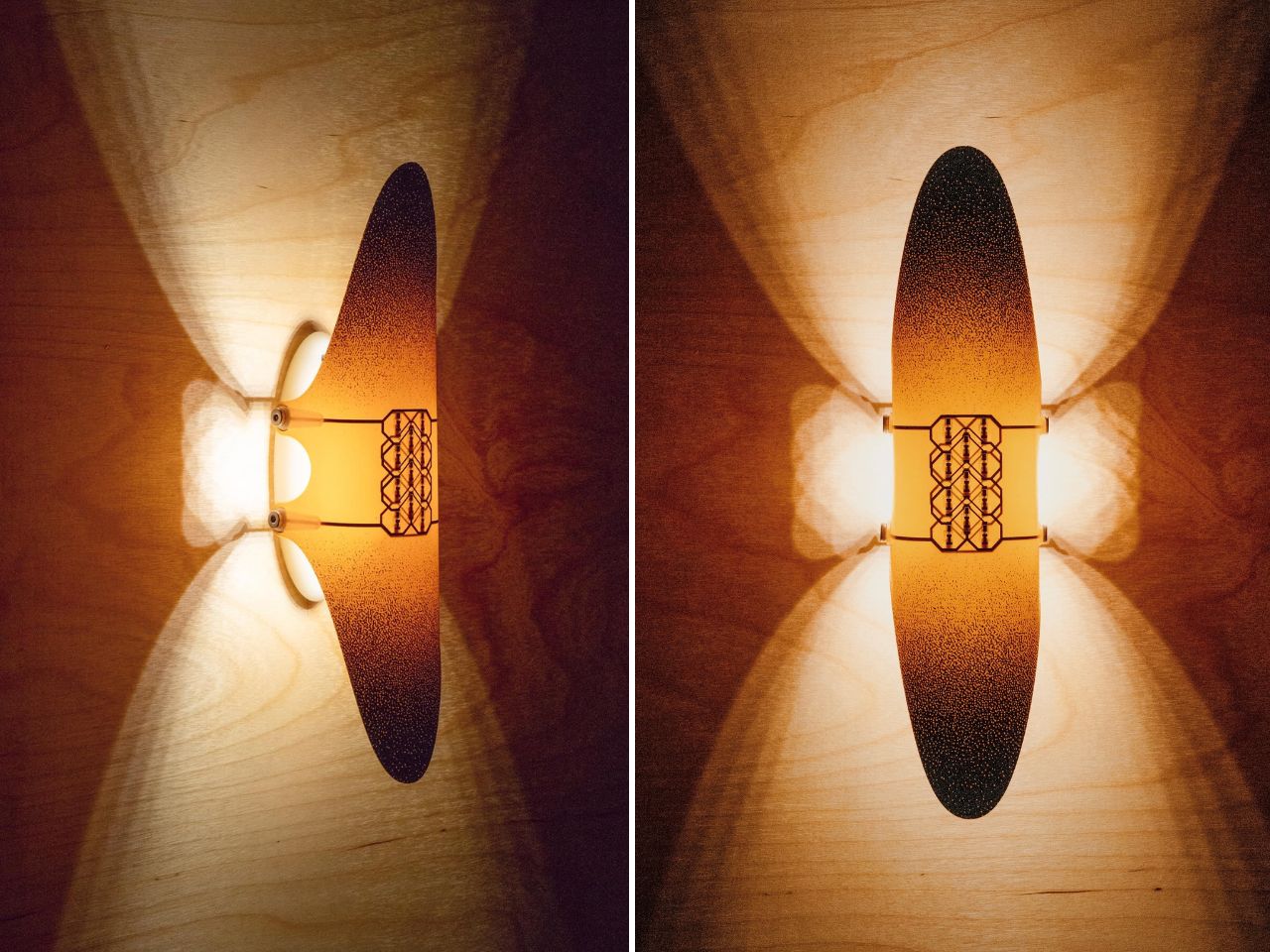
In contemporary lighting, technology is often concealed, hidden behind frosted diffusers, buried in housings, or tucked into recesses where its presence is merely utilitarian. The Printed Circuit sconce by American designer August Ostrow turns this convention inside-out. Instead of disguising the mechanics of illumination, the sconce makes electronics themselves the aesthetic centerpiece, revealing the beauty of a material more frequently associated with industrial devices than interior design.

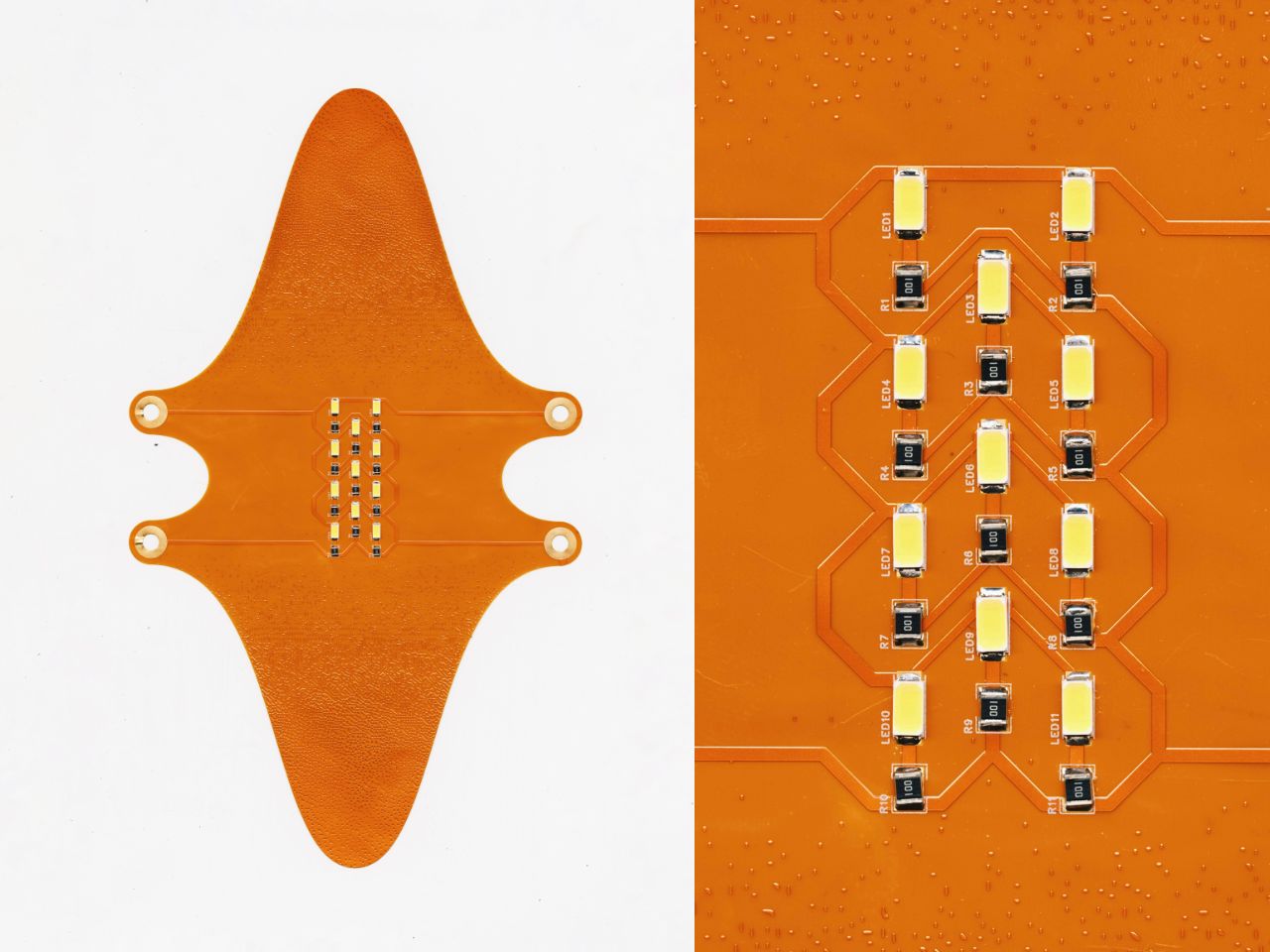
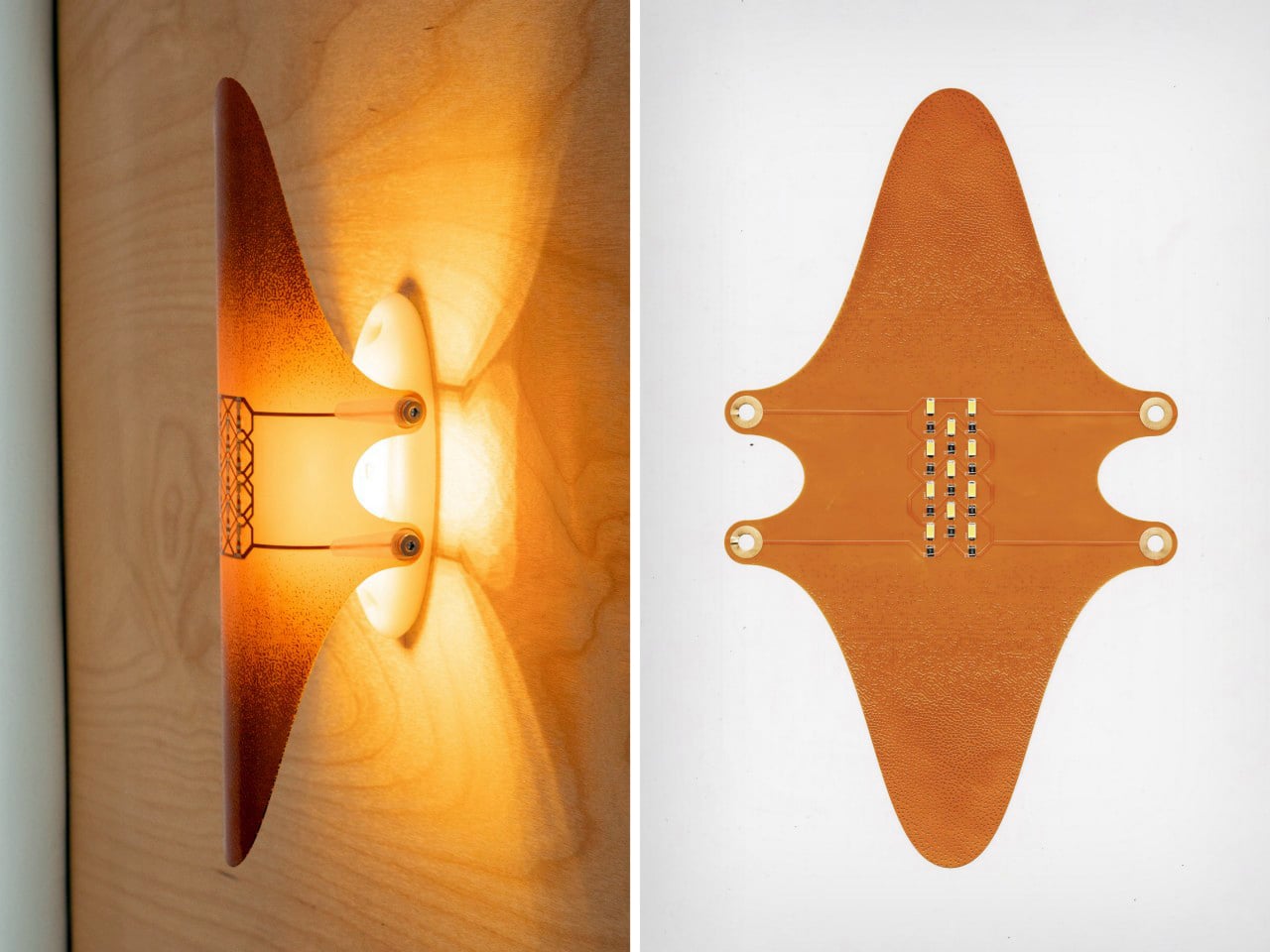
At the core of the sconce is a flexible polyimide printed circuit board, a material prized in the electronics industry for its thermal stability, durability, and ability to bend without losing structural integrity. Commonly found within consumer devices, aerospace components, and advanced industrial systems, polyimide typically remains unseen, functioning behind the scenes as a backbone for electrical pathways. Ostrow repositions this substrate as both shade and light source, allowing the circuitry to take on a sculptural presence within the room.

Designer: August Ostrow

The traces, copper routes, and tactile surface details that usually operate invisibly now become the primary graphic language of the design. When illuminated, these pathways glow softly, revealing an intricate network that is part engineering diagram, part textile-like pattern. The sconce becomes a luminous map of its own function, offering viewers a rare opportunity to see the inner logic of circuitry elevated to decorative status.

This approach aligns with Ostrow’s broader practice of material exploration, challenging expectations of what electronic components can be when removed from their typical contexts. By bending the polyimide board into a gentle arc, the designer leverages its natural flexibility, allowing it to act simultaneously as a structural element, a diffuser, and a carrier for the embedded LEDs. The armature that supports the sconce performs dual duty as well: it physically holds the piece in place while also serving as the conduit for its DC power connection. The result is a clean, integrated assembly where function and form are inseparable.

The Printed Circuit sconce also speaks to a growing movement in industrial and lighting design where designers intentionally expose mechanisms, celebrate raw materials, and reveal inner workings rather than hiding them. The aesthetic of the PCB, once considered too technical or visually chaotic for interior surfaces, is reinterpreted here as refined, graphic, and unexpectedly elegant. The glow of the light accentuates the fine geometries etched into the board, producing an effect that is both futuristic and tactile.

Beyond its visual appeal, the sconce raises interesting questions about the relationship between technology and ornamentation. What does it mean when circuitry, traditionally understood as purely functional infrastructure, becomes decorative? How do our perceptions shift when we encounter electronic materials not as hidden hardware but as expressive, crafted surfaces? The Printed Circuit sconce offers a compelling answer: electronics, when thoughtfully framed, possess a structural and aesthetic richness worthy of display. In celebrating the circuitry rather than concealing it, the design offers a refreshing perspective, one that suggests beauty does not need to be added to technology; sometimes it only needs to be revealed.

The post This Printed-Circuit Sconce Turns Exposed Electronics Into Functional Sculpture first appeared on Yanko Design.

❌