Vue lecture

Il y a de nouveaux articles disponibles, cliquez pour rafraîchir la page.

This Costa Rican Home Chooses Air, Rhythm, and Silence Over Walls
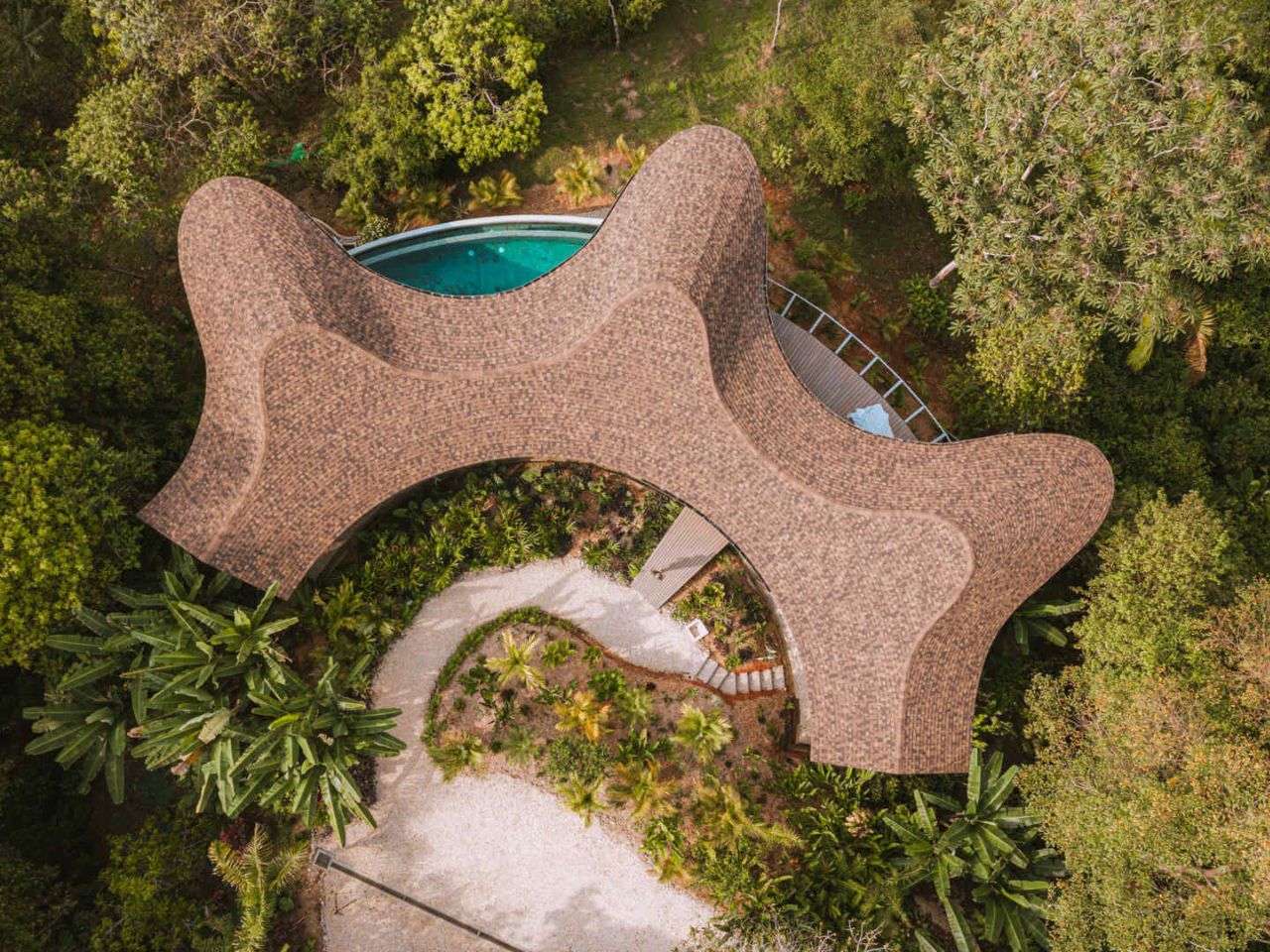
Perched high above the Pacific coastline in Bahía Ballena, Costa Rica, Ojo de Nila is a house that feels less like an object placed on land and more like a continuation of it. Designed by Studio Saxe, with interiors by Atelier Sandra Richard, the home was created for a Swiss couple seeking a slower, more elemental way of living shaped by air, light, and landscape rather than mechanical systems and rigid enclosures.

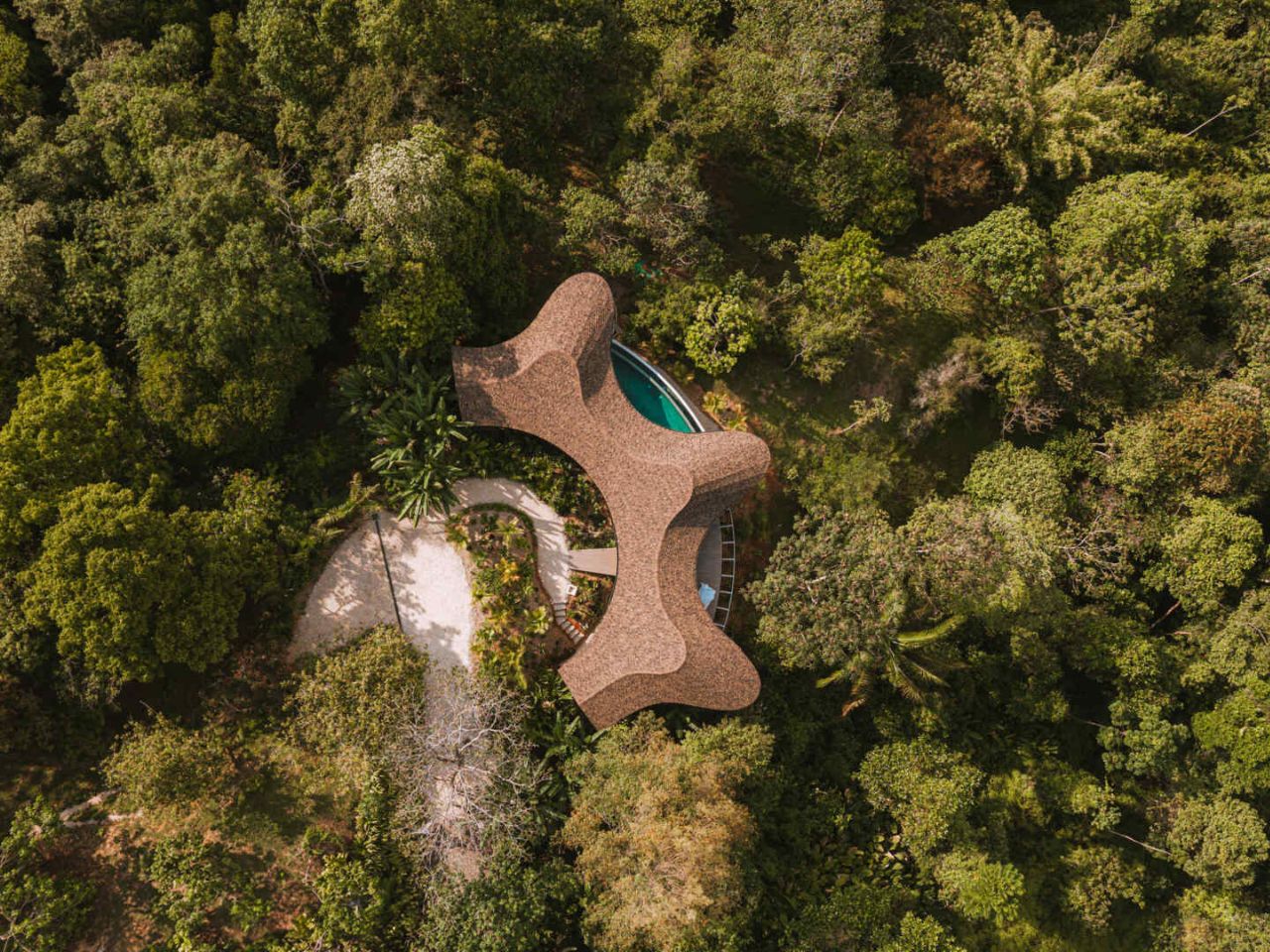
A clear modular logic guides the architecture. A repeating series of structural bays follows the natural contours of the hillside, allowing the house to hover above the forest canopy instead of cutting into it. This decision preserves vegetation and natural water flow beneath the home while giving the structure a lightness that feels respectful of its setting. The modules do not read as repetition in the conventional sense. Instead, they become the framework for movement, rhythm, and flow.

Designer: Studio Saxe and Atelier Sandra Richard
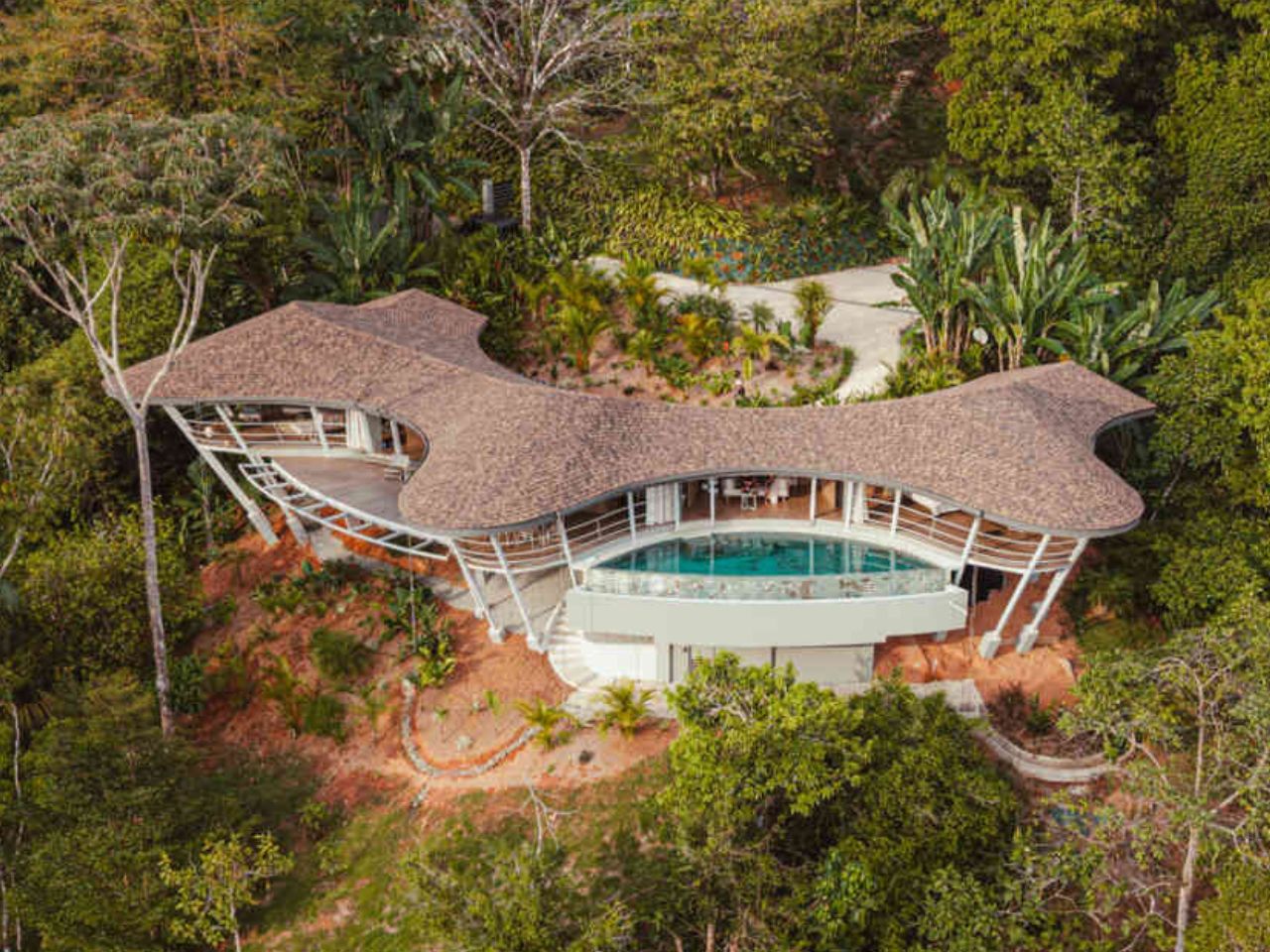
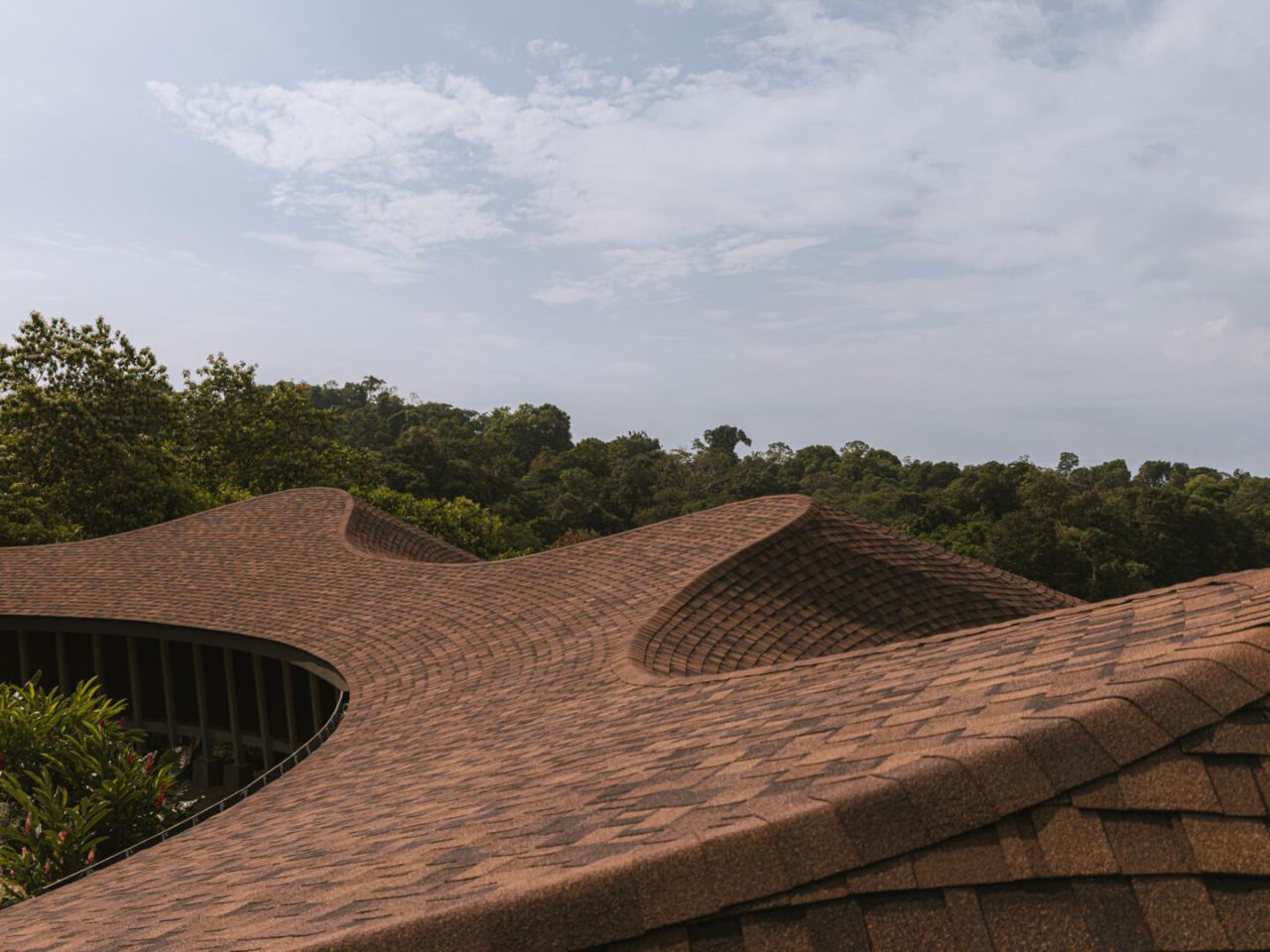
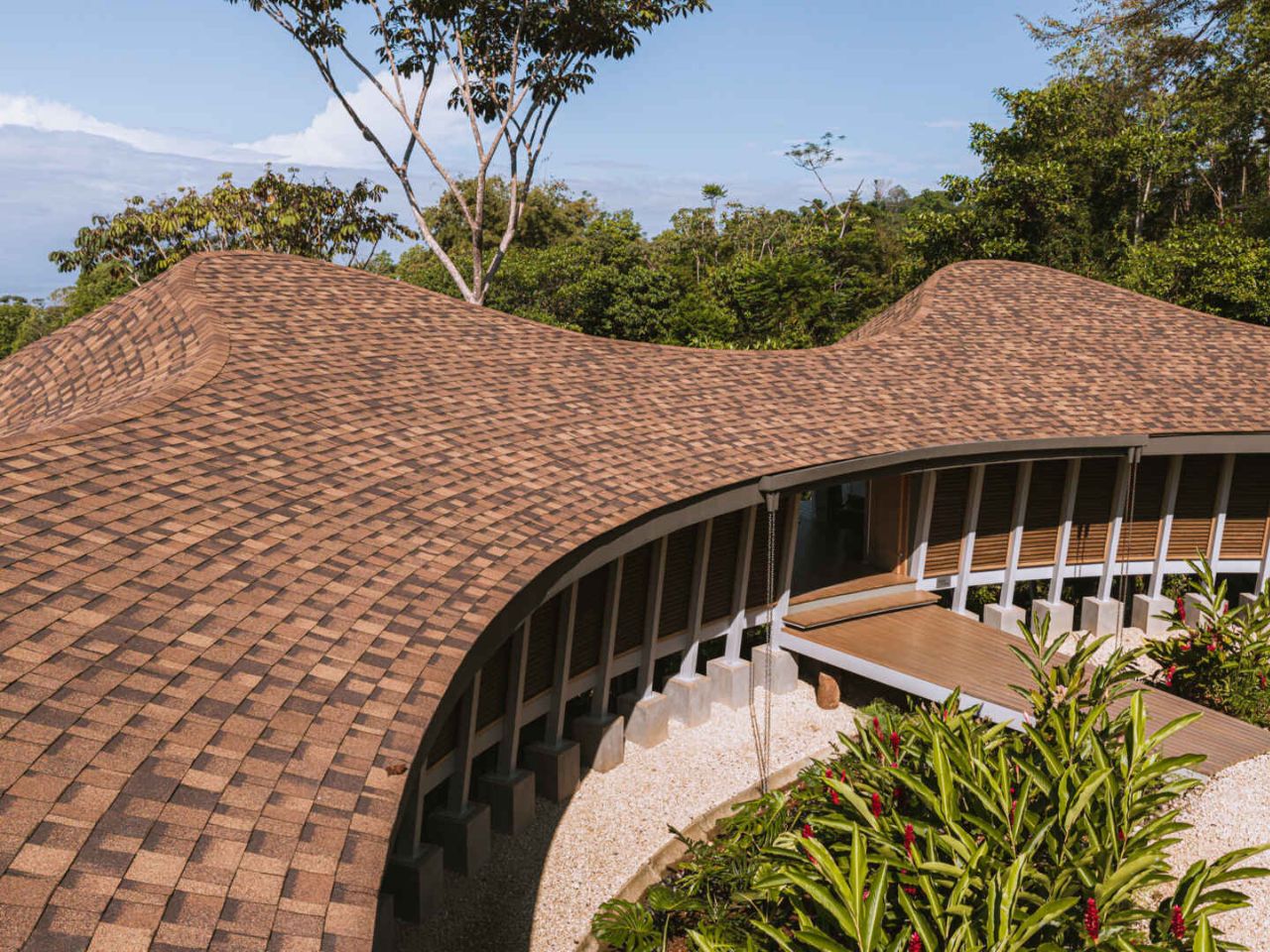
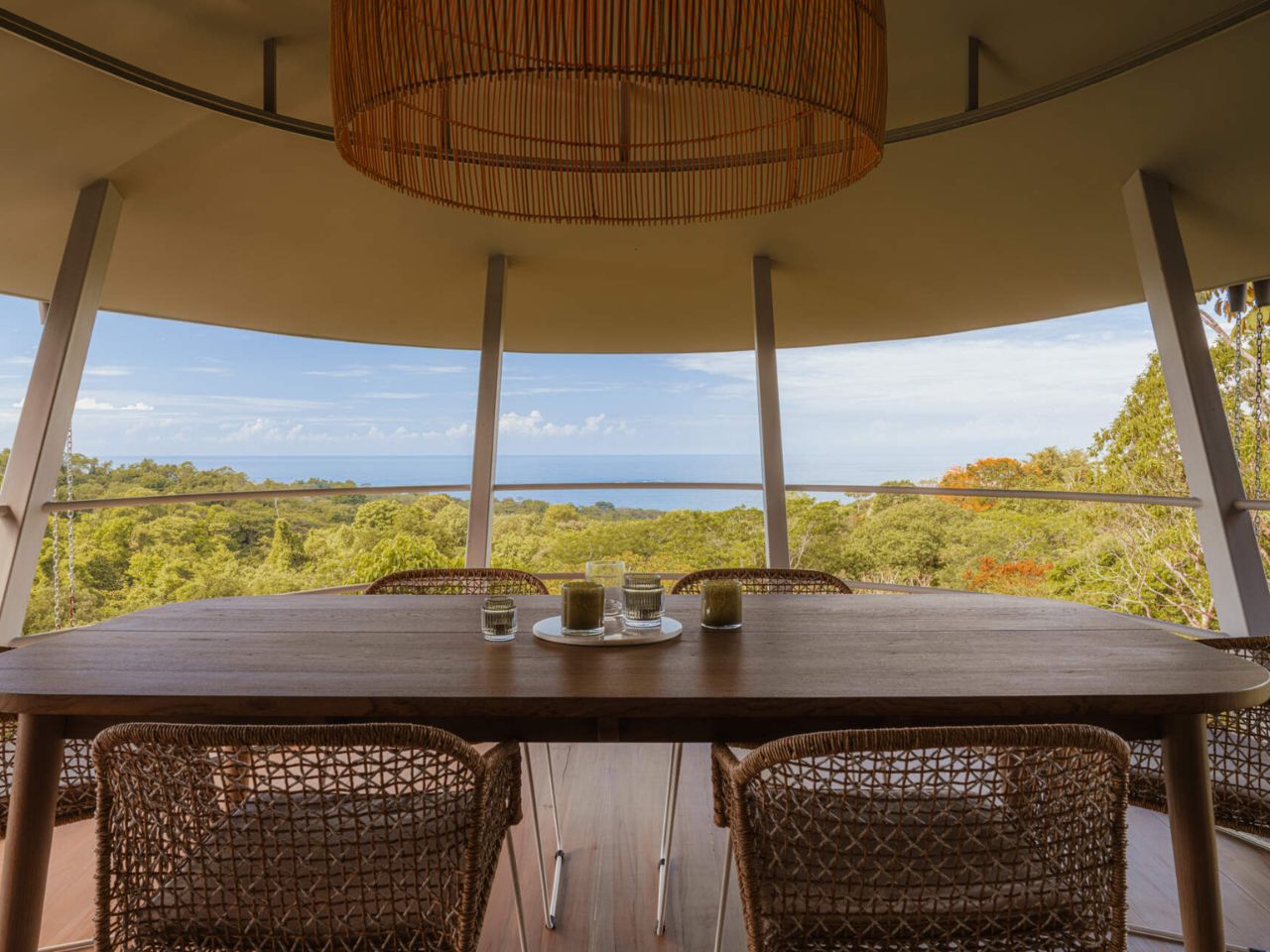
Above these modules, the roof undulates in soft waves, behaving almost like a newly formed landform. Rather than acting as a simple cover, it mirrors the rolling topography of the surrounding hills and establishes a calming visual cadence as one moves through the house. The roofline continuously frames the Pacific Ocean, ensuring that the horizon remains a constant presence, never a backdrop but always an active participant in daily life.
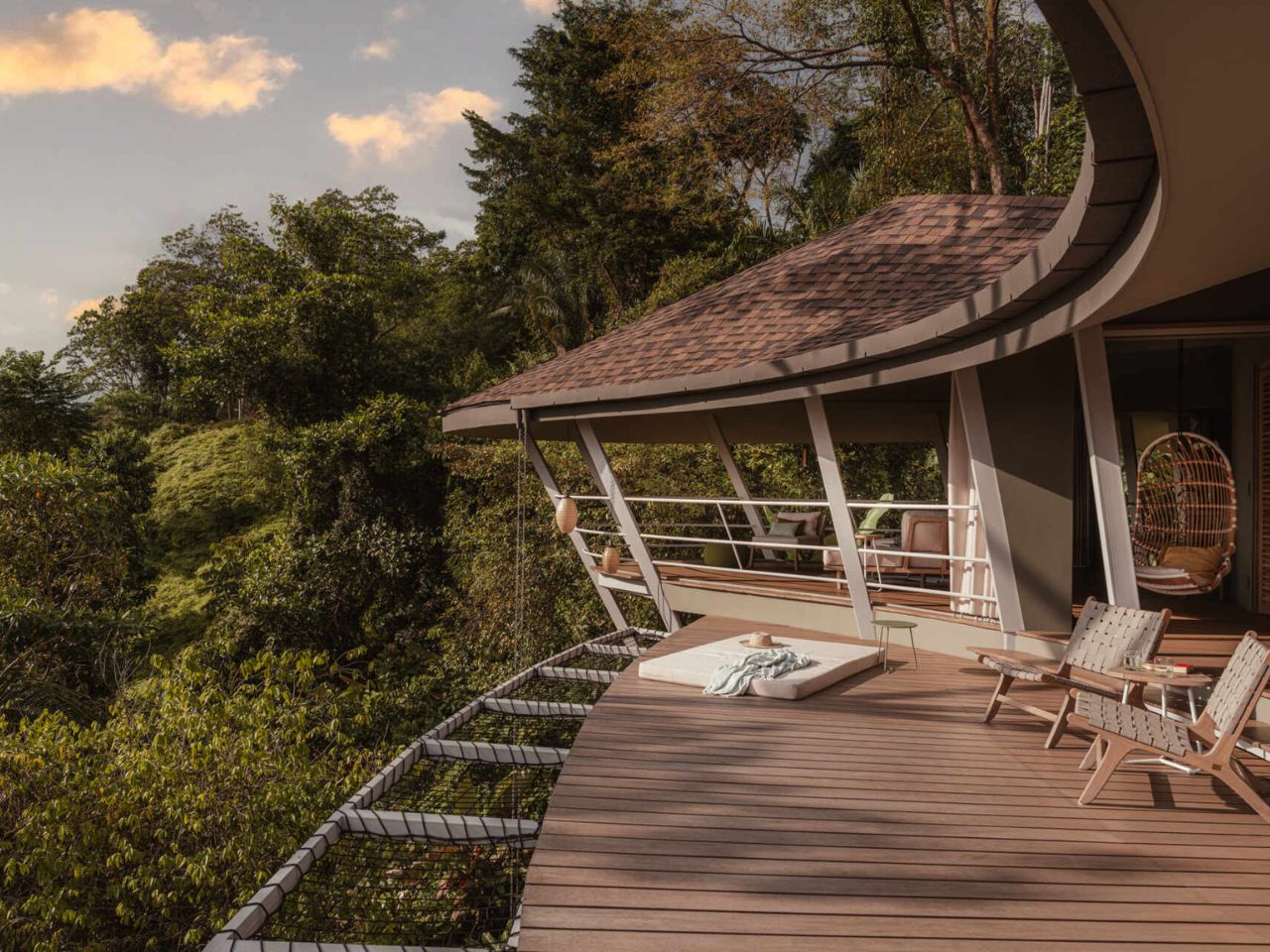
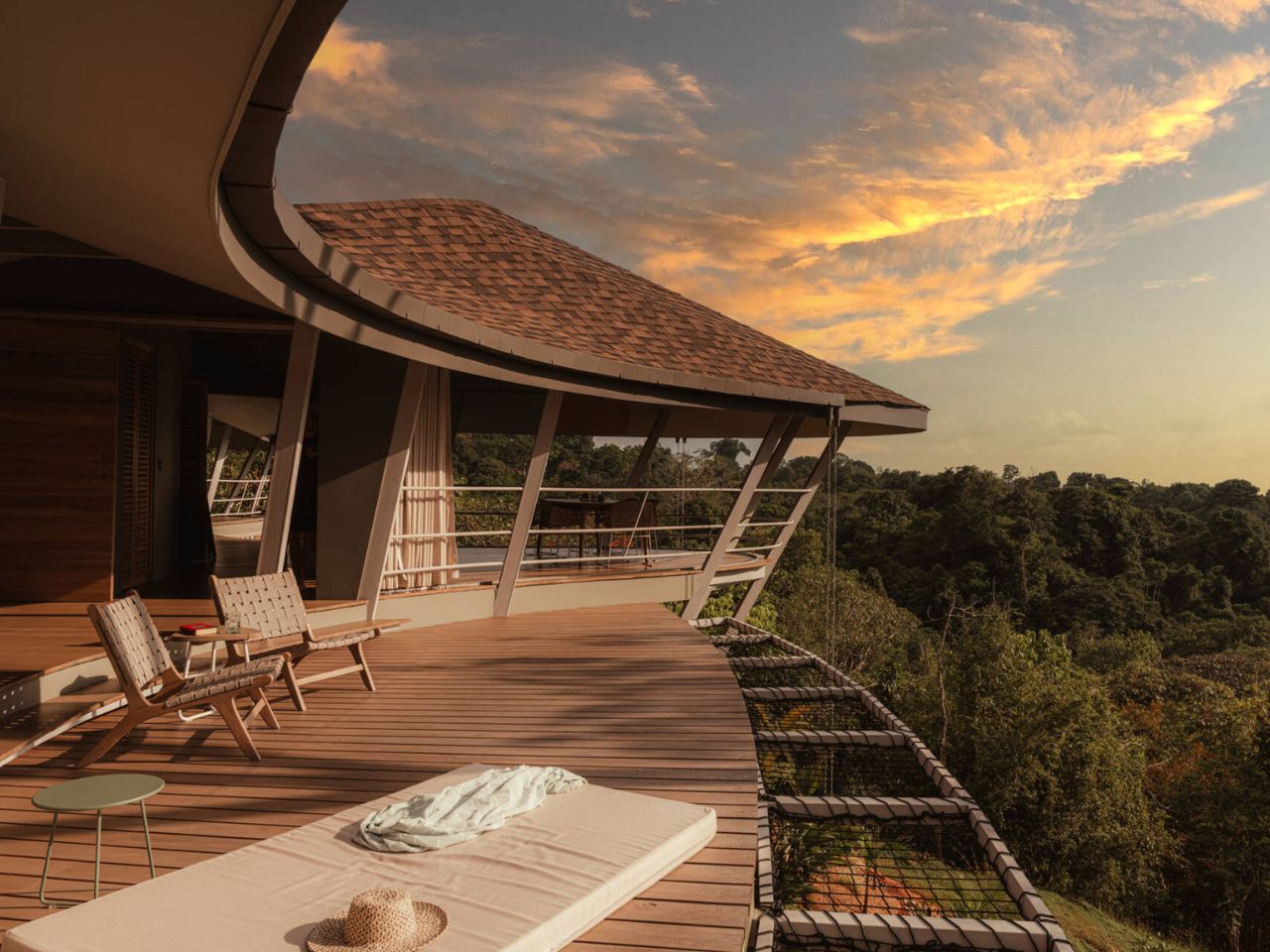
Arrival is defined by elevation and openness. As you enter, there is no dramatic reveal or enclosed threshold. Instead, the house immediately opens itself to the ocean. The absence of enclosure on the ocean-facing side dissolves any clear boundary between inside and outside. Movement through the home is accompanied by the sound of wind through the forest, shifting light, and the distant rhythm of waves below.
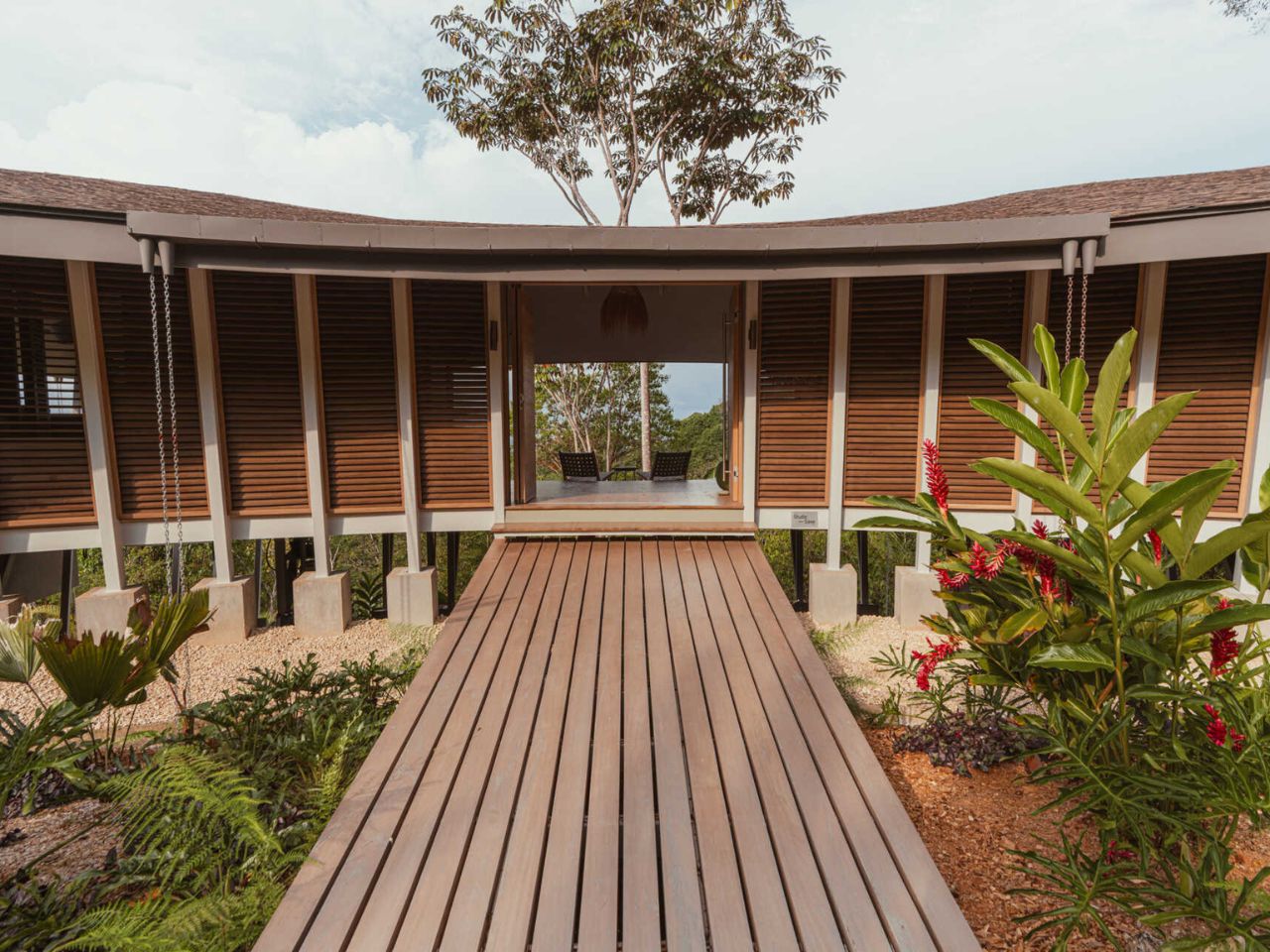
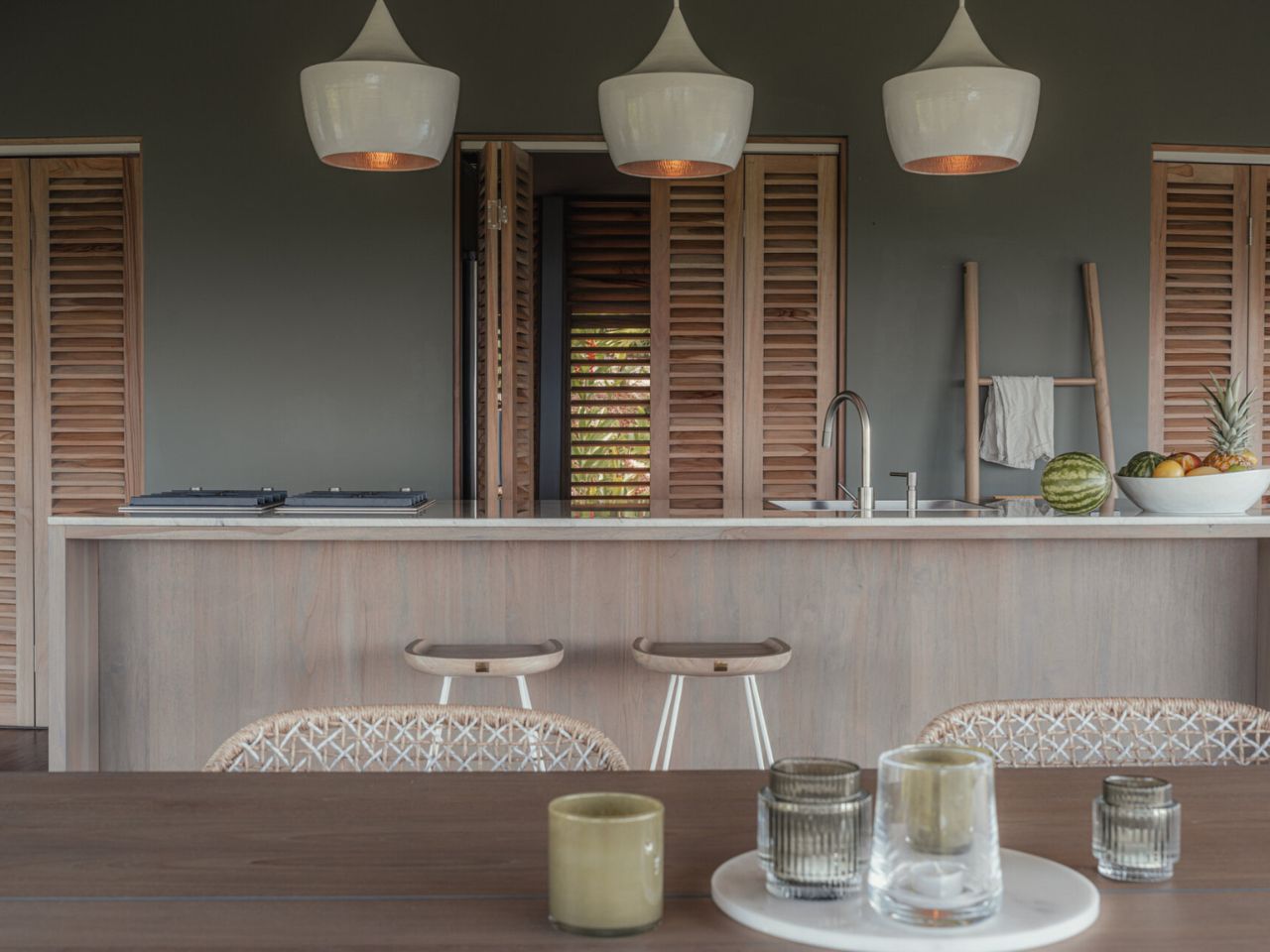
The dining area is fully open to the landscape, with no windows or doors separating it from the environment. Meals unfold in direct conversation with climate and view, reinforcing a lifestyle centered on natural comfort. Adjacent to this space, the kitchen sits within the same modular grid. A long island anchors the room, illuminated by three pendant lights, while additional storage is discreetly tucked behind folding doors to maintain visual calm.
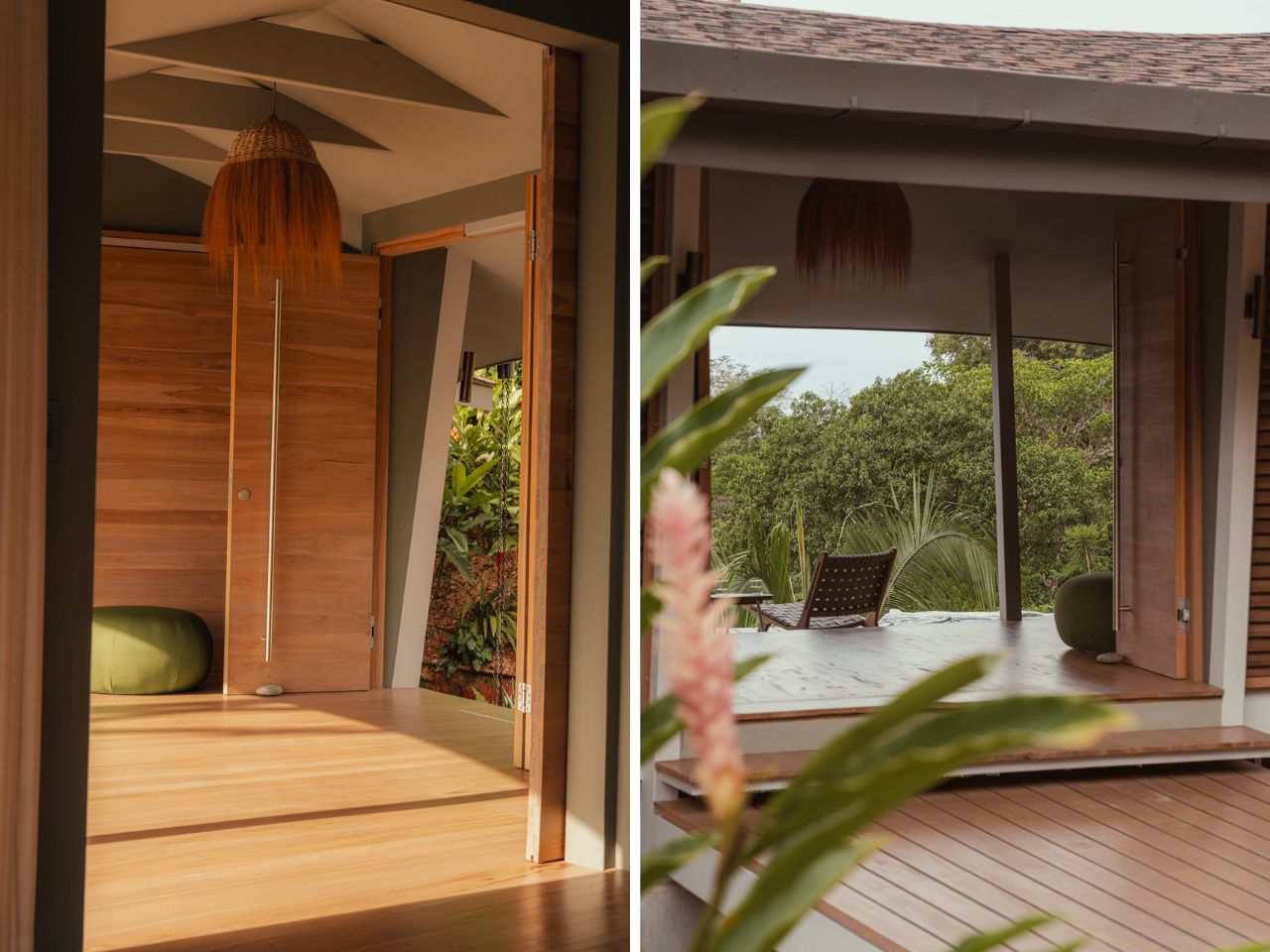
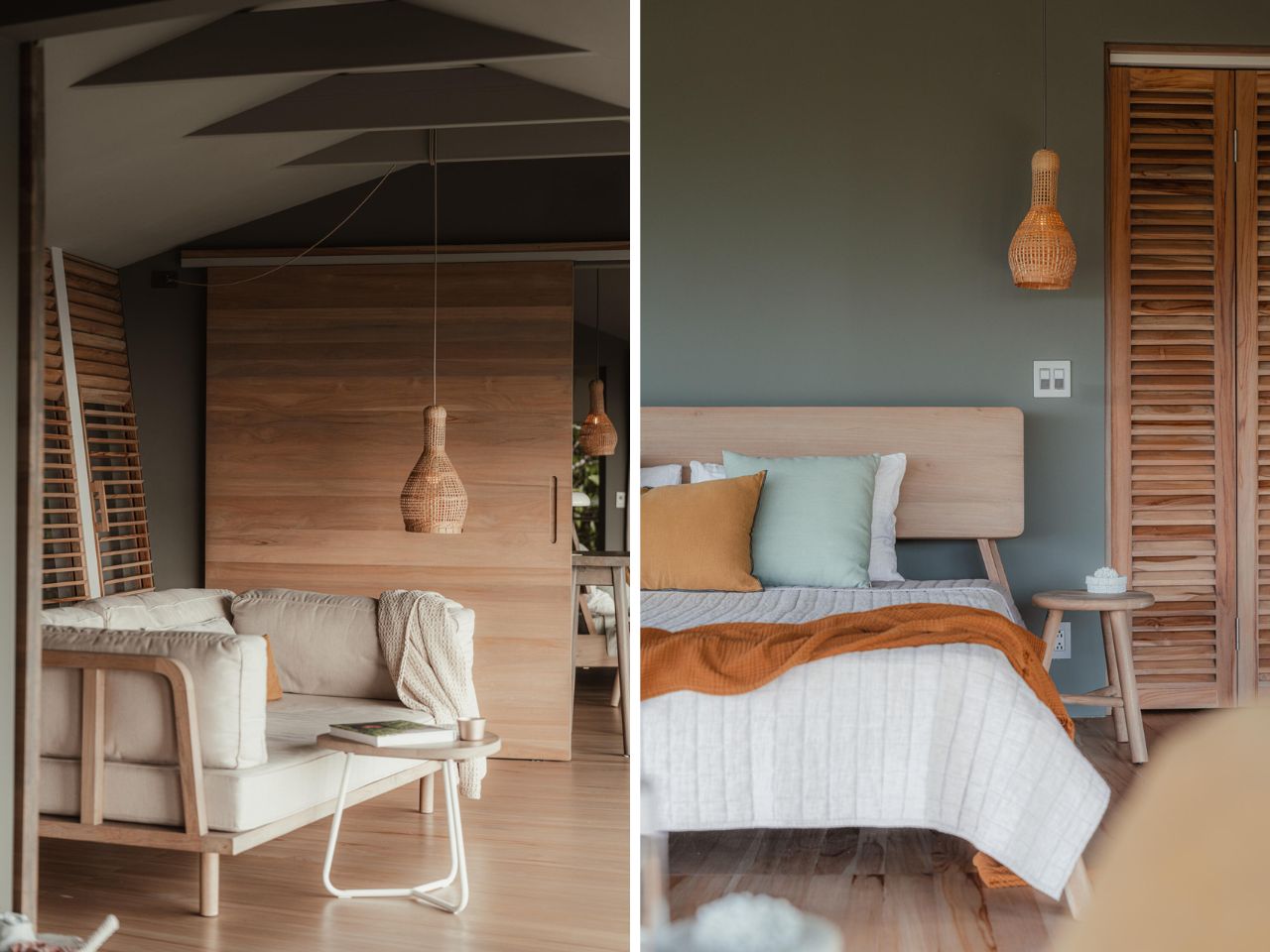
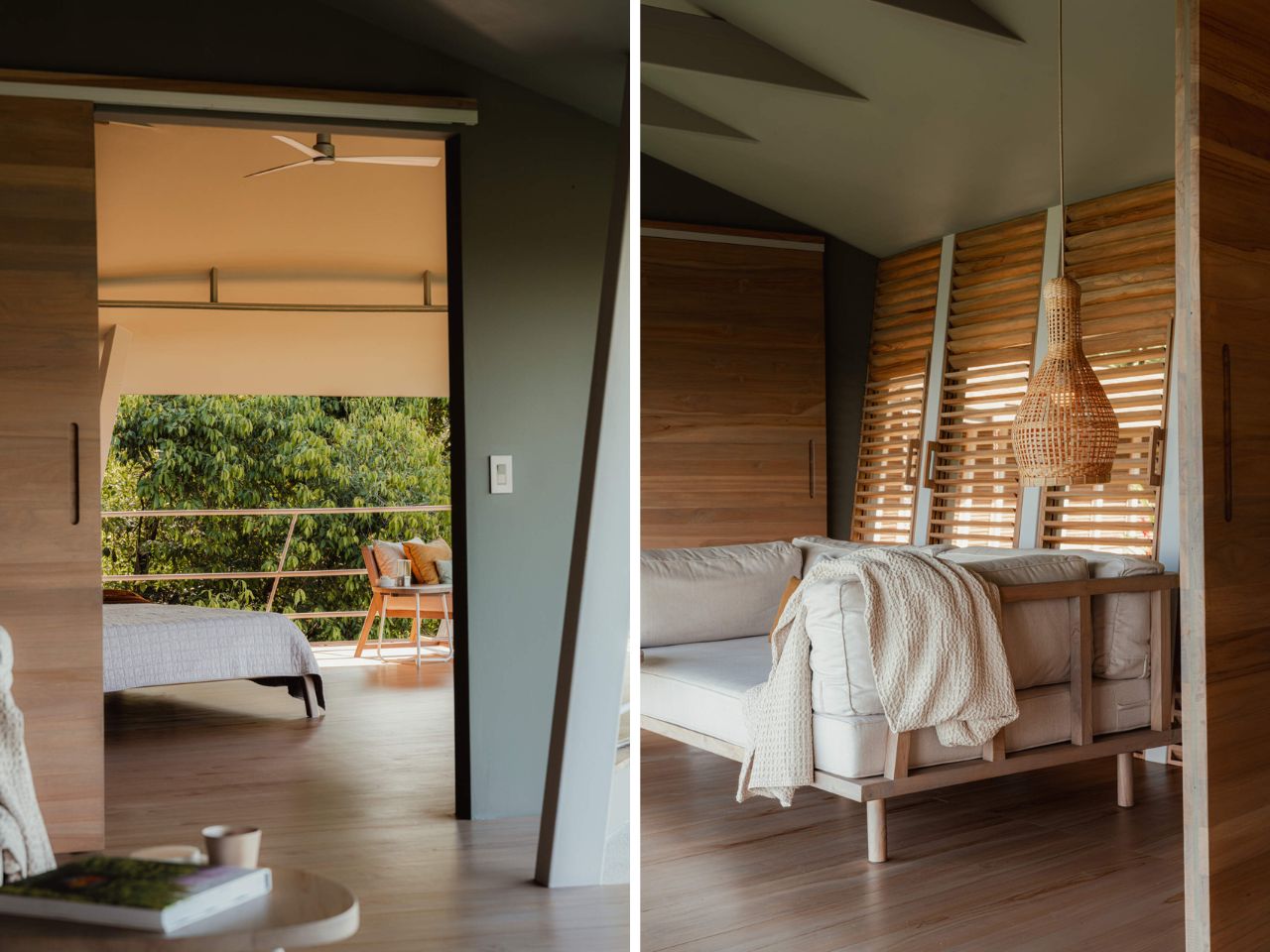
The living room balances structure and softness. A solid wood frame sofa grounds the space, layered with neutral cushions and tactile throws that invite rest. Rich timber flooring adds warmth underfoot, tying the interior palette back to the surrounding forest.
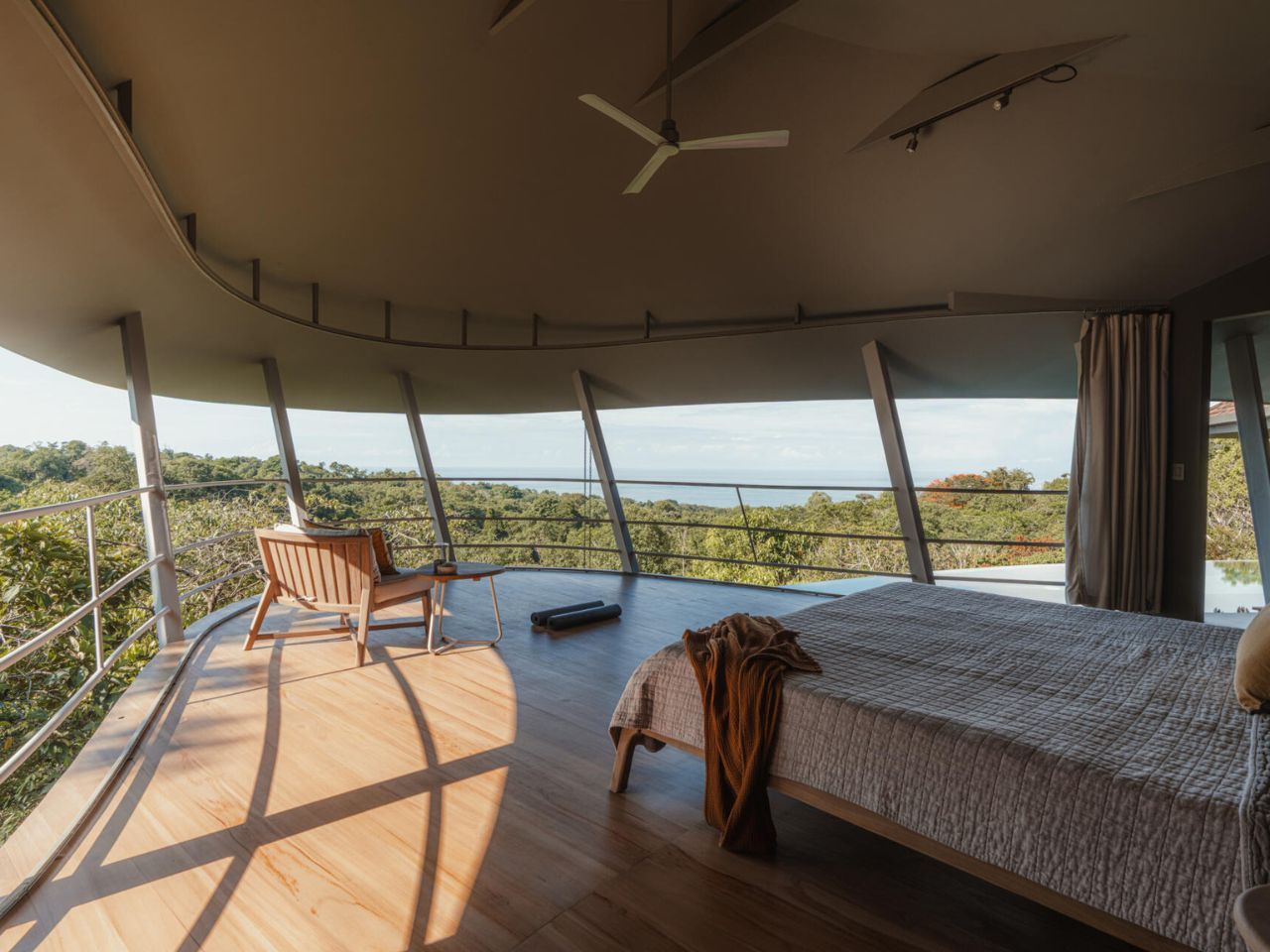
The bedroom continues this dialogue with nature through a curved open-air form. The sweeping roof and angled supports frame uninterrupted views of both forest and ocean. A low timber bed and minimal furnishings ensure that attention remains on light, air, and the ever-changing landscape beyond.
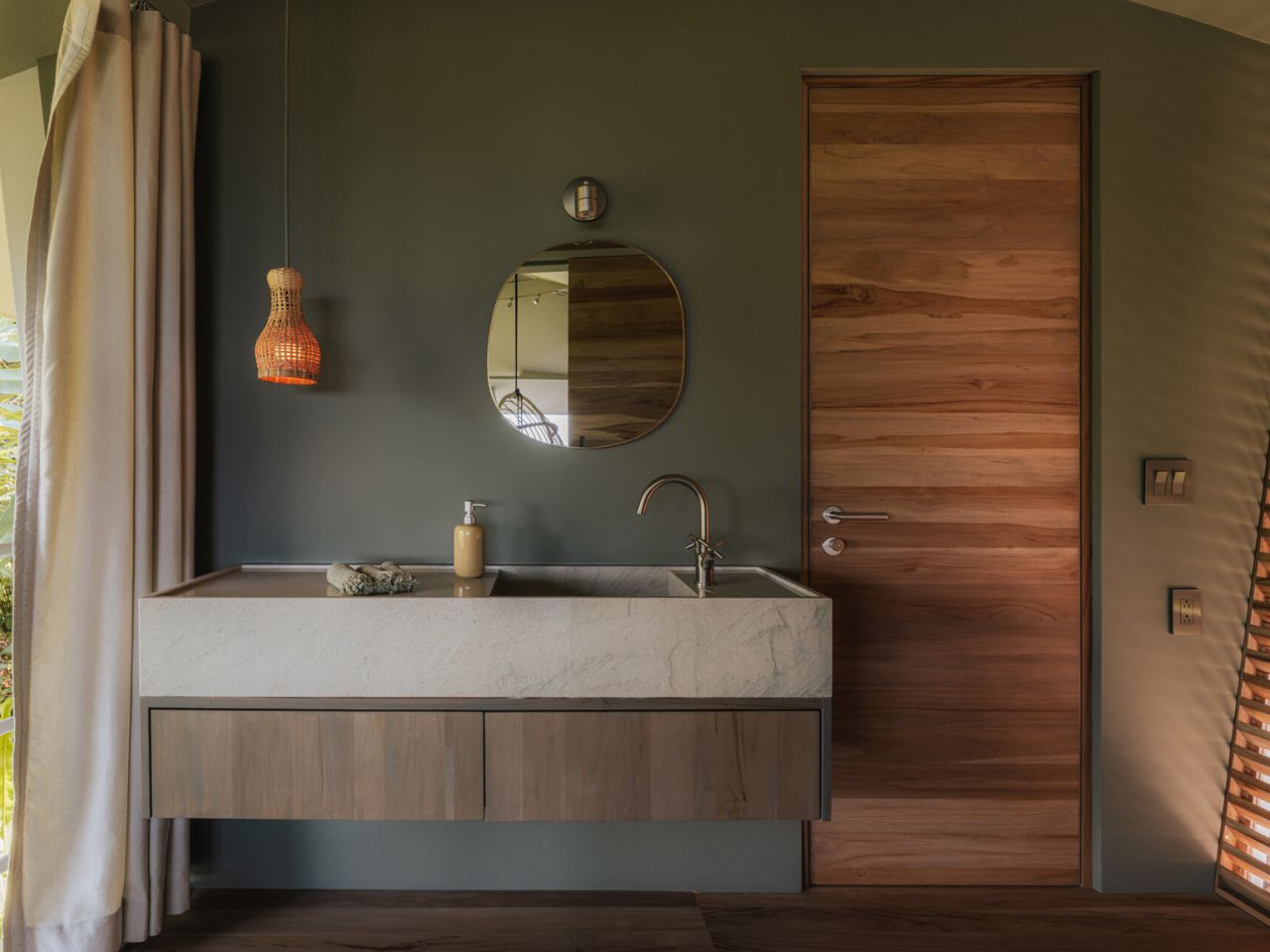
In the bathroom, restraint becomes luxury. A floating timber vanity topped with stone sits at the center of the space, while slatted wood and soft curtains filter light and create privacy without full enclosure. The result is a room that feels tactile, quiet, and gently connected to its surroundings.
Outside, the pool extends toward the horizon, visually blending with the sky and ocean. From above, its circular form reads like an eye, like a reflection, inspiring the home’s name. This gesture reinforces the idea of the house as an observer, always in dialogue with the landscape it inhabits. The deck echoes the pool’s curves, creating shaded and open zones shaped by the modular structure and flowing roof.
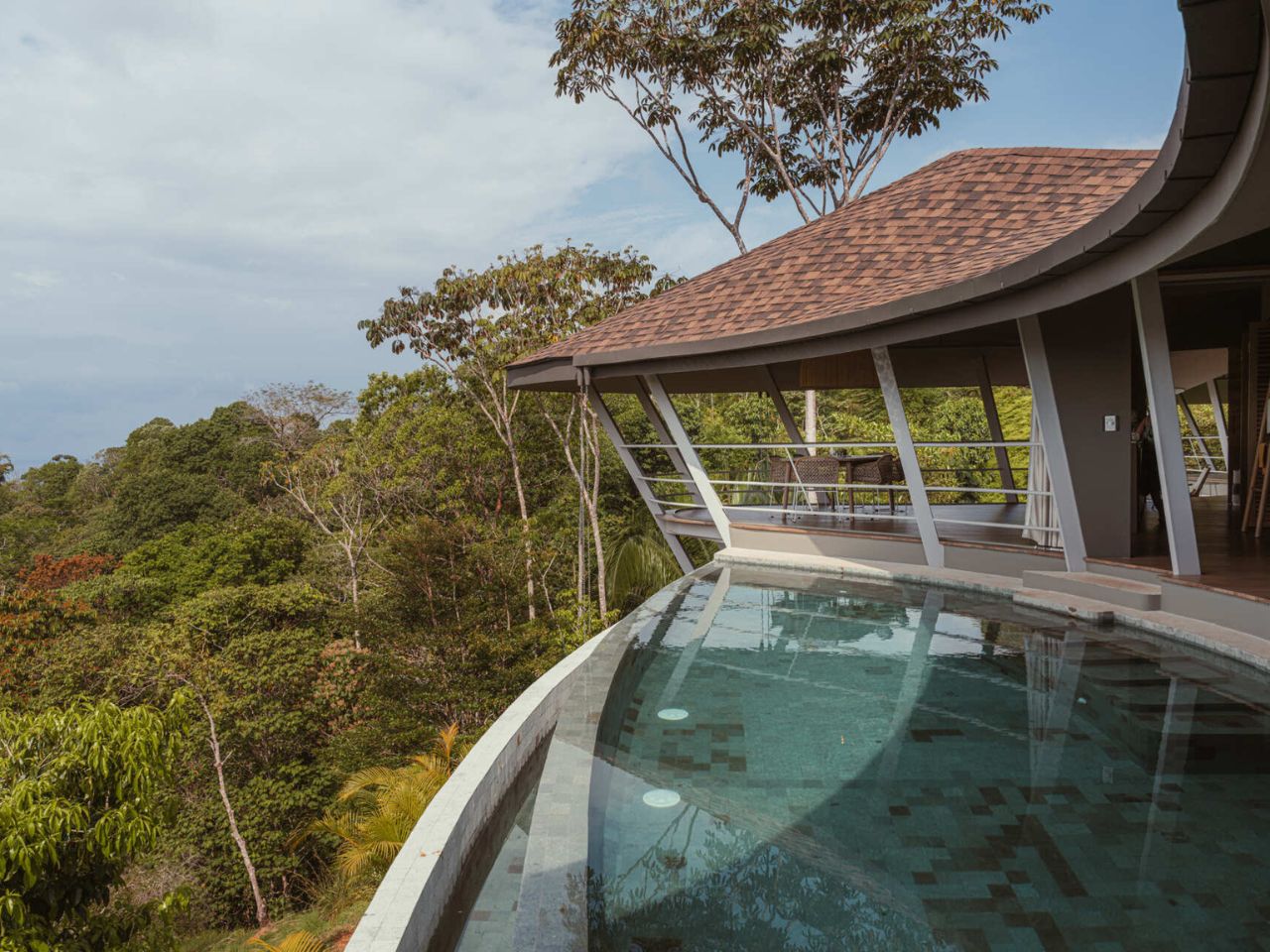
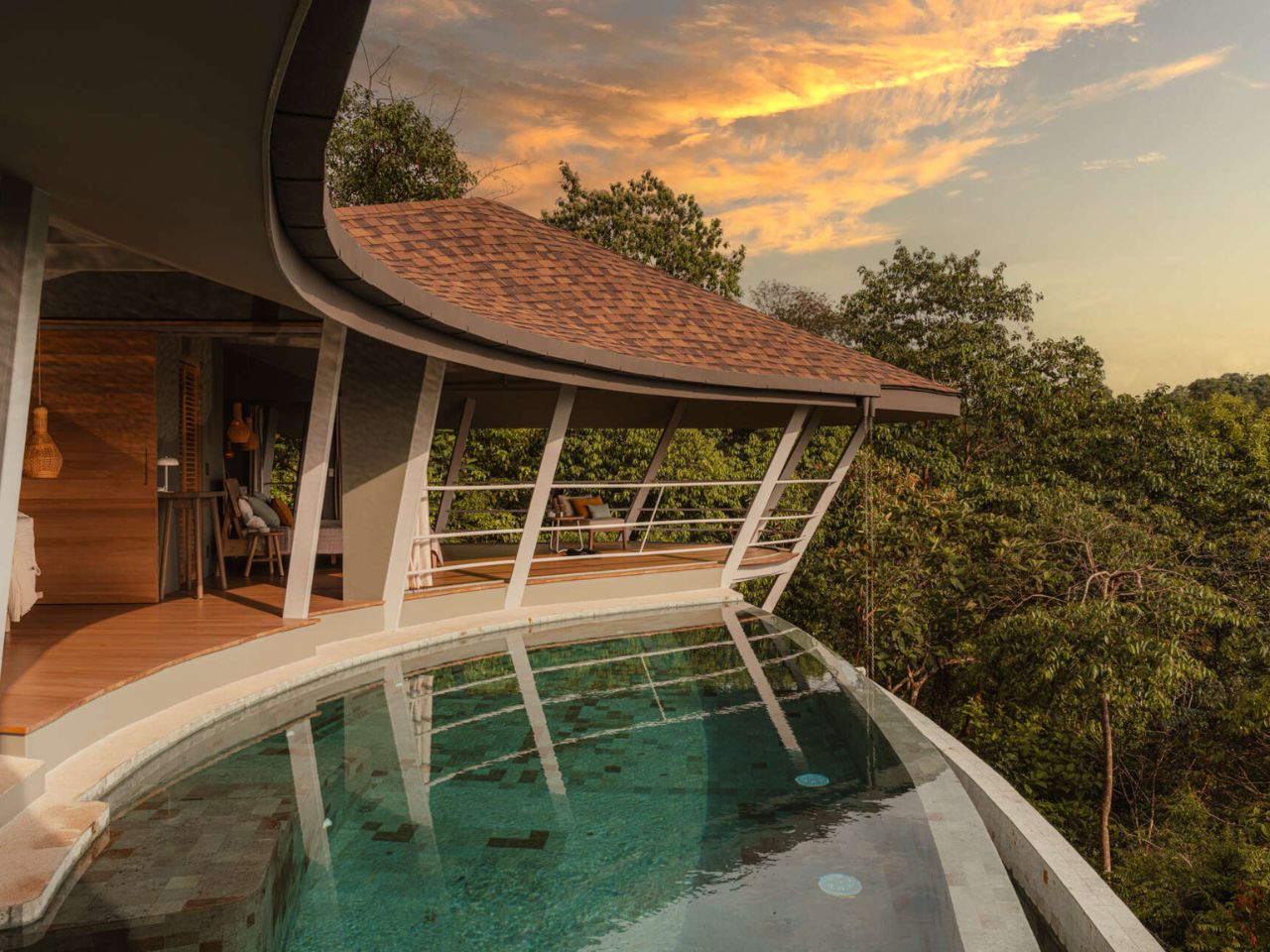
Ojo de Nila ultimately demonstrates how modular construction can enable expressive architecture without overpowering its context. Through repetition that allows curvature and structure that guides airflow, the house achieves a quiet, deeply considered balance between design and environment, inviting its inhabitants to live with nature rather than against it.
The post This Costa Rican Home Chooses Air, Rhythm, and Silence Over Walls first appeared on Yanko Design.
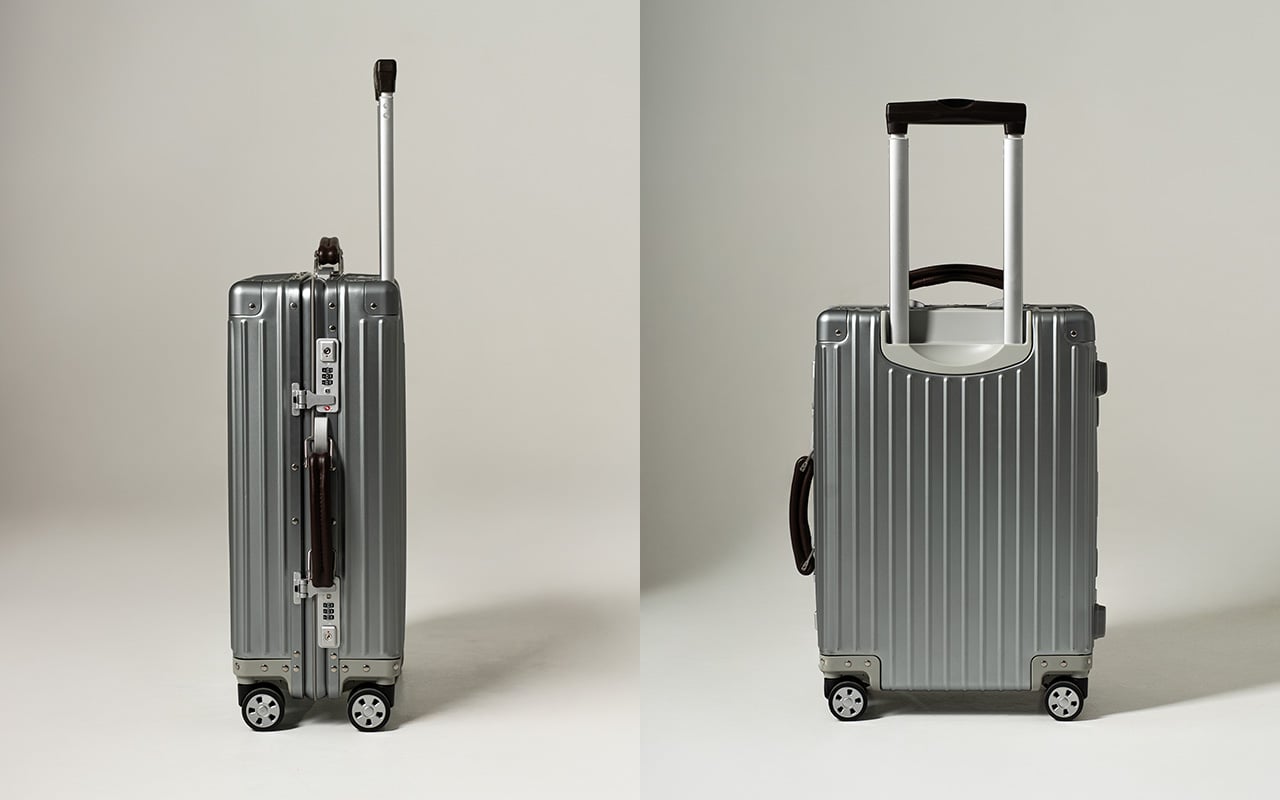
This Practically Bulletproof Titanium Travel-Case Makes Your ‘Fragile’ Luxury Luggage Look Cheap

Aluminum dents. That is the trade you accept with most “premium” luggage. The grooves look great in the lounge, then a few trips later you are quietly cataloguing every new crease and corner hit. You can baby it, you can wince every time it goes into an overhead bin, but eventually the shell starts to look tired. Premium luggage, economy behavior.

Titanium changes the terms of that deal. AERIONN Forma treats aluminum the way iPhone Pro treats the regular iPhone: same category, different league. Apple moves the Pro models to titanium because it signals intent and performance in one move. Forma does the same. It uses certified Grade 1 titanium for the shell, formed as a single continuous body, so the case flexes under impact and returns to shape instead of locking in dents. It is the “Pro” material choice for people who live in airports and prefer their luggage to age, not degrade.

Designer: AERIONN

Click Here to Buy Now: $499 $1799 (72%). Hurry, only 3/688 left! Raised over $654,000.

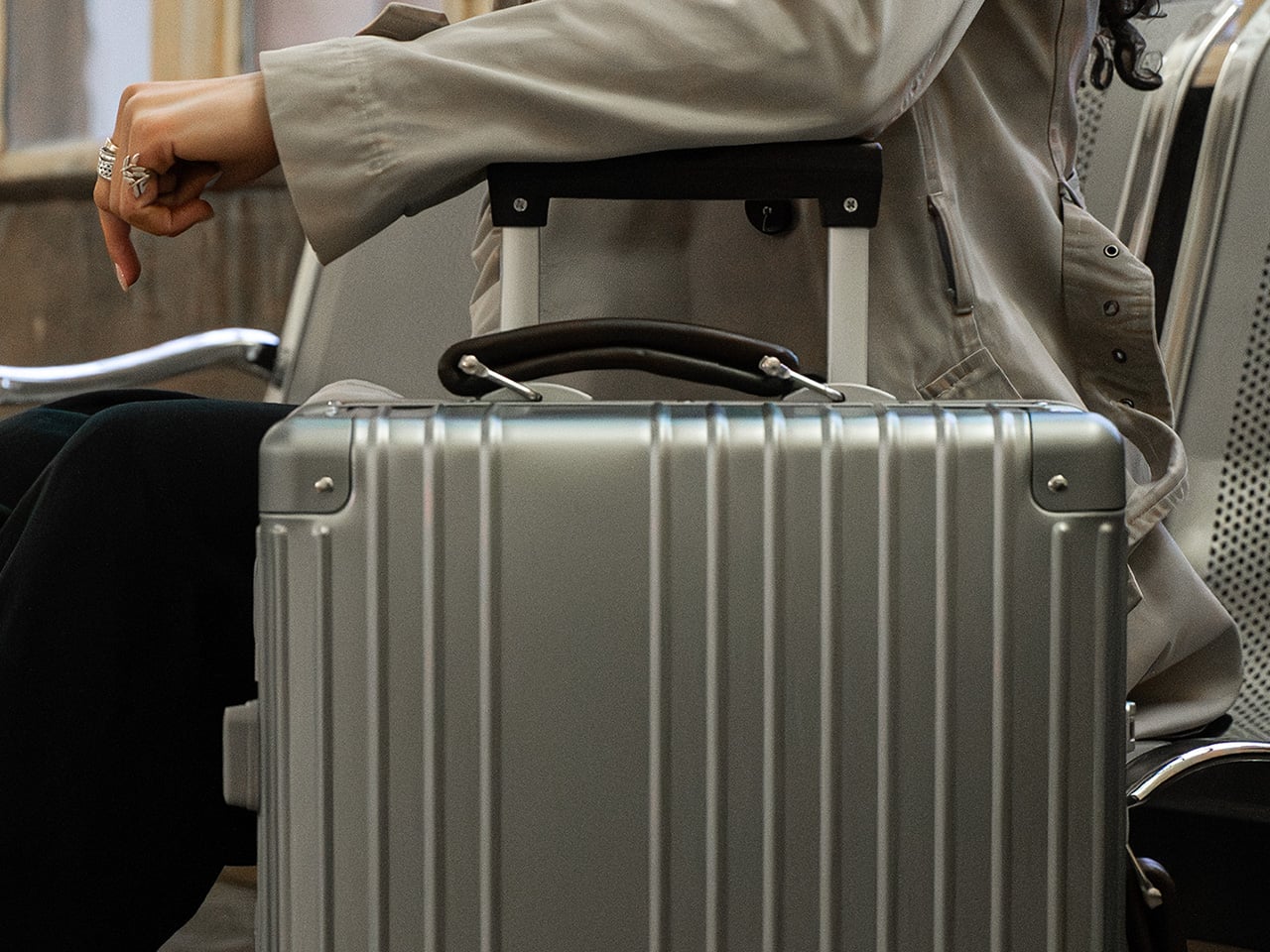
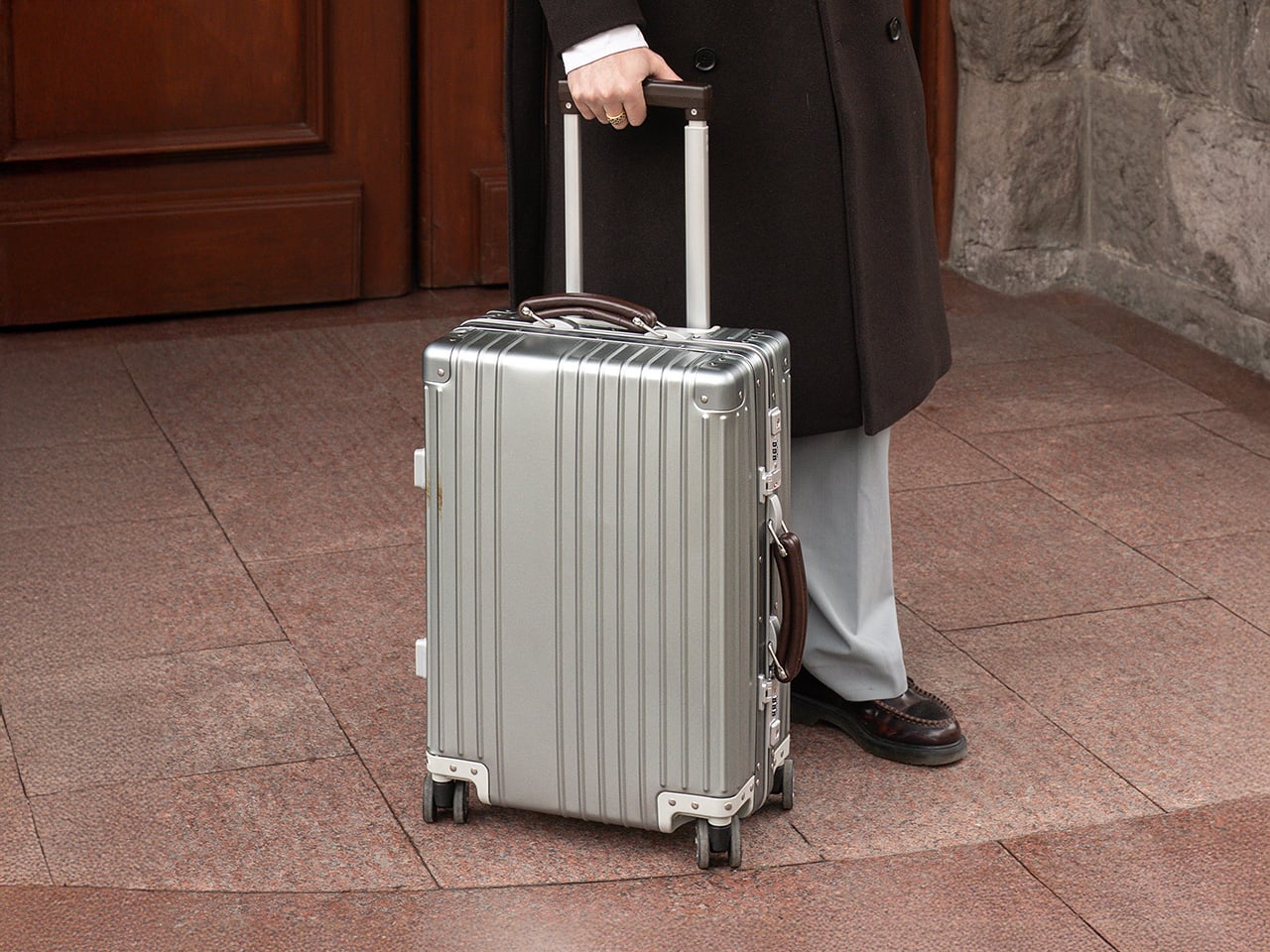
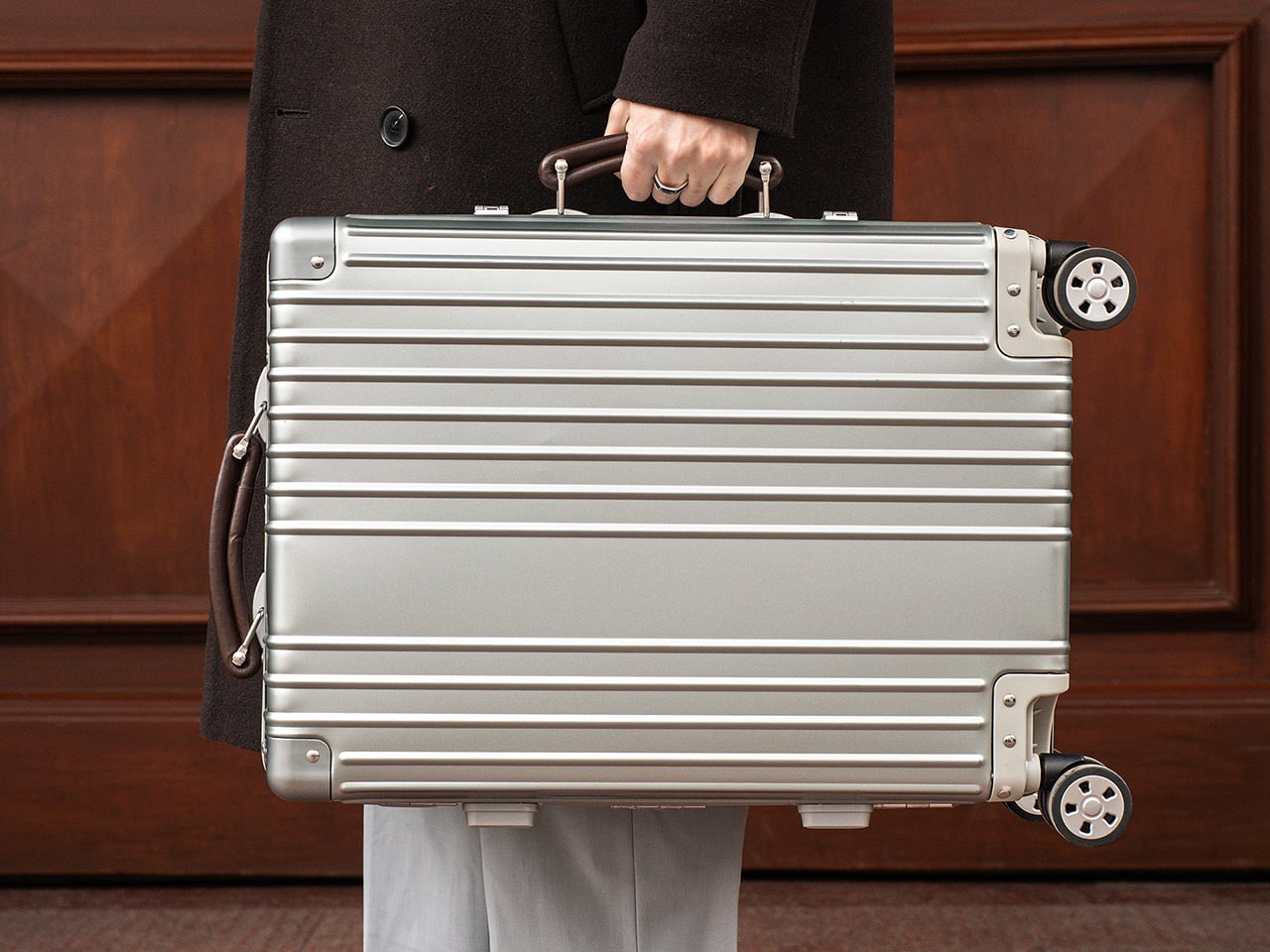
There’s a specific moment frequent travelers recognize. You’ve got lounge access, priority boarding, a seat that actually reclines, and you’re pulling luggage designed to be replaced in a few years. First class isn’t just a ticket, it’s a standard. AERIONN Forma was designed for travelers who understand that distinction. The Milanese design shows restraint where most luggage shows decoration. Clean architectural lines, a matte brushed titanium surface that resists fingerprints and develops subtle patina over time. The kind of wear that looks earned rather than abused. Leather-wrapped handles add warmth without competing for attention. This case looks like it belongs in the first-class cabin, carried by someone who travels often enough to know visible damage shouldn’t be part of the premium experience.

Apple uses aluminum for the standard iPhone. The Pro models get titanium. Same exact decision tree applies here. Titanium signals intent. It’s a more precious material than aluminum, harder to source, more expensive to work with, and significantly more durable under real-world stress. Grade 1 commercially pure titanium meets ASTM B265-15 certification standards, with tensile strength in the 290 to 310 MPa range, significantly higher than aluminum alloys used in luxury luggage. The shell has undergone thousands of repeated drop tests, bending tests, ultrasonic inspection, and dimensional verification. The testing isn’t about proving indestructibility, it’s about ensuring resilience under conditions where aluminum would show permanent damage. Titanium flexes to absorb impact, and only shows signs of wear and tear with rough use. Aluminum dents easy… and it stays dented.

The single continuous shell construction eliminates seams and structural weak points. Despite using industrial-grade material, the case weighs 4kg with weight distributed evenly across the entire structure. Lift it into an overhead bin and the weight doesn’t fight you. Roll it through a terminal and it tracks cleanly without pull or wobble. That movement comes from the AIRMOVE dual spinner wheels, engineered for low drag and quiet operation. No rattle, no vibration, just smooth motion that keeps pace instead of slowing you down. The multi-stage telescopic handle extends smoothly and locks firmly, with leather-wrapped touchpoints that feel substantial. Good luggage disappears during travel, requiring no conscious effort to manage.

Security is handled without zippers, which remain the most common failure point in luggage. A precision TSA latch system sits flush with the titanium shell, allowing inspections without damage while removing fabric, teeth, and stress points entirely. It’s invisible when closed, dependable when needed. Metal latches integrated into aerospace-grade titanium don’t have the failure modes that plague zipper-based systems. The TSA-approved combination lock integrates directly into the shell. No exposed mechanisms, no added bulk, no interruption to the clean form. This approach to security makes the case look refined while actually being more secure than conventional designs.

The matte brushed titanium surface does something interesting over time. It develops a natural patina that reflects use without looking damaged. Fingerprints don’t show. Minor contact marks blend into the finish rather than standing out. After years of travel, the surface tells a story without looking beaten up. This separates objects you keep from objects you replace. Titanium naturally resists corrosion, so the shell maintains structural integrity without protective coatings or finishes that eventually wear through. Temperature extremes don’t compromise strength. A precision-fit silicone seal keeps water out, protecting belongings from rain and splashes during transit. The case is designed to be used repeatedly and to look better for it.

The interior uses a dual-compartment layout that keeps packing organized from departure to arrival. Compression straps on one side secure clothing and minimize wrinkles. A full divider panel on the other side contains shoes, toiletries, and essentials. Integrated pockets hold smaller items so you’re not digging through layers to find what you need. The durable nylon lining wipes clean easily and holds shape after repeated use. Nothing flashy, nothing wasted. Dimensions are 55 x 36 x 23 cm, fitting standard airline carry-on requirements while offering 38L capacity. The layout supports efficient packing and easy access, which matters when you’re moving through multiple cities in compressed timeframes.

For EDC enthusiasts and design-focused travelers, durability is status. Knowing your carry-on can handle abuse that would destroy conventional luggage is the quiet flex. Soft-shell Samsonite is lighter, cheaper, and never dents because it’s designed for economy class standards. It won’t be noticed from ten feet away and it won’t give you the VIP feeling that comes with carrying something genuinely exceptional. Titanium luggage exists in a different category entirely. It’s luggage meant to last decades, not seasons. The buy-once philosophy changes the economics. A $1,500 aluminum case that needs replacement after five years costs more over time than a $1,799 titanium case that lasts twenty years. Longevity becomes luxury when the alternative is planned obsolescence.

AERIONN Forma is currently available with Super Early Bird pricing at $499, Early Bird at $699, and a two-pack bundle at $975. Standard retail pricing is $1,799. Shipping begins July 2026, with fulfillment handled globally. Aluminum carry-ons from established luxury brands typically range from $1,200 to $1,700 depending on size and features. Titanium luggage rarely appears in this segment, and when it does, pricing usually exceeds $2,000. Early pricing positions aerospace-grade materials as accessible for travelers who recognize that upfront cost matters less than total cost of ownership. This case represents a shift in how premium luggage gets engineered and priced.

Click Here to Buy Now: $499 $1799 (72%). Hurry, only 3/688 left! Raised over $654,000.

The post This Practically Bulletproof Titanium Travel-Case Makes Your ‘Fragile’ Luxury Luggage Look Cheap first appeared on Yanko Design.

❌