Vue lecture

Il y a de nouveaux articles disponibles, cliquez pour rafraîchir la page.

Meta Is Turning Its Smart Glasses Into A Mass Surveillance Tool… And You Can’t Stop It

If not Palantir, why Palantir-shaped??

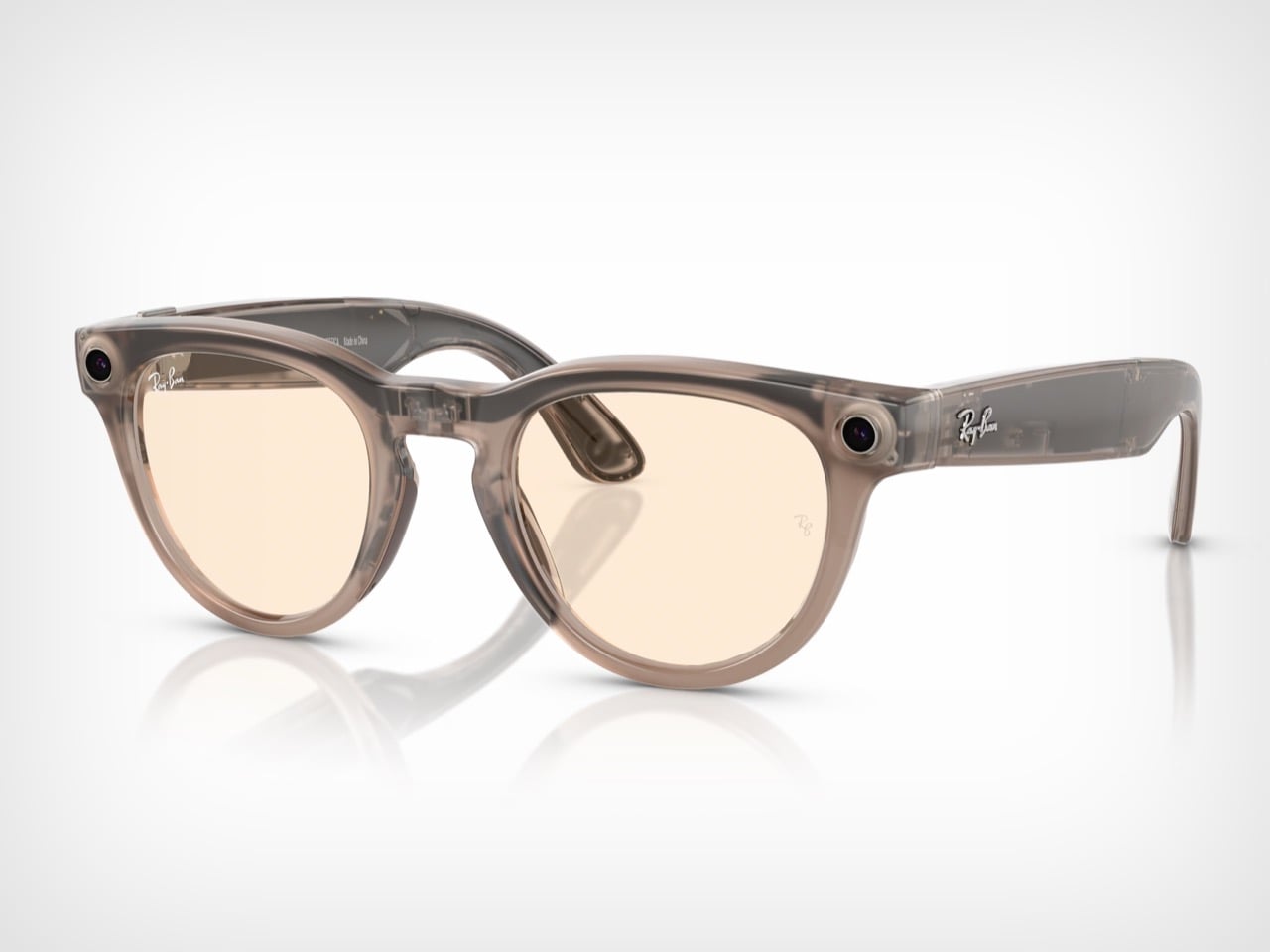
Palantir builds spy tech for the CIA, DHS, and ICE. It aggregates data, maps your life, and tells governments who to watch. Meta is building something with the same bones. It’s called Name Tag, a facial recognition feature coming to Ray-Ban smart glasses that lets a wearer look at a stranger in public and have an AI identify them in real time, pulling their name and profile directly from Facebook and Instagram. The surveillance hardware is a $300 fashion accessory, the database was built by 3 billion people tagging photos for free, and the targets are anyone, anywhere, who never agreed to any of it.

A leaked internal memo from May 2025, obtained by The New York Times, laid out the full scope: the feature is planned for every pair of Meta’s glasses, from Ray-Bans to the Oakley Meta HSTN sports line. Meta’s official response was a practiced non-denial: “we’re still thinking through options and will take a thoughtful approach if and before we roll anything out.” Companies that aren’t building something just say they’re not building it. Meta is not saying that.

The Database Was Being Built Before the Glasses Existed

Facebook turned on automatic photo tagging in 2010 with zero opt-in, and for eleven years, every time you tagged a friend’s face in a photo, you were feeding their facial recognition model. When Meta “deleted” over a billion faceprints in 2021 under lawsuit pressure, they kept the photos. They kept the social graph. They kept the engineers who built the whole thing. Name Tag isn’t a new product concept; it’s a previously mothballed capability getting a second run, this time with a camera on your face instead of a server in Menlo Park.

Anyone with a public Instagram account is immediately a potential target (it’s not like making your account private makes you any safer), which covers hundreds of millions of people who signed up to share photos, not to be enrolled in a real-world biometric identification system. Remember Portal, Meta’s smart home display with a face-tracking camera? It launched in 2018 right in the middle of the Cambridge Analytica fallout, and consumers collectively declined to put a Facebook camera in their living room. Meta discontinued it by 2022. The lesson they apparently took wasn’t “don’t build surveillance hardware.” It was “make sure the camera comes in wearing someone else’s face.”

They Know Exactly How We’ll React

“We will launch during a dynamic political environment where many civil society groups that we would expect to attack us would have their resources focused on other concerns.” That’s a sentence directly from an official internal planning document from Meta’s Reality Labs, dated May 2025, reviewed by The New York Times. The company was explicitly planning to exploit civic chaos as a launch window, timing the rollout of a mass surveillance feature to coincide with another crisis-event that occupies our mind so we’re distracted. Sleight of hand, with a dash of corporate evil. There’s no ethical framework in which that sentence represents good-faith product development.

Their original rollout plan was to debut Name Tag at a conference for the blind, wrapping a mass-surveillance tool in the language of accessibility before expanding it to the general public. That plan was eventually shelved, but the thinking behind it is the more revealing part. The accessibility framing was a softening mechanism, a way to generate human-interest coverage before the obvious misuse cases took over the conversation. Privacy advocates, abuse charities, and civil liberties groups were going to come for this feature regardless. The strategy was never to address their concerns. It was to buy a news cycle of goodwill first.

Your Face Is Being Reviewed in a Nairobi Office Park Right Now

Swedish newspapers Svenska Dagbladet and Göteborgs-Posten tracked Meta’s data pipeline from Ray-Ban glasses worn in Western homes to a company called Sama, operating out of an office park in Nairobi, Kenya. Workers there are paid to watch footage captured by glasses users and label what they see, teaching Meta’s AI to understand and interpret the visual world. The footage includes people on the toilet, naked bodies, couples in bed, bank card details accidentally filmed, and intimate conversations being had by people who had no idea they were being recorded, let alone reviewed by a contractor on another continent.

Meta’s defense was to point at a clause buried in their terms of service permitting “manual (human)” review of AI interactions, which is technically accurate and practically worthless as a justification, because no person buying a pair of fashion-forward smart glasses understands that clause to mean workers in Kenya are watching them undress. The April 2025 privacy policy update for the glasses silently expanded Meta’s right to use all captured photos, videos, and audio for AI training, with no prominent notification to existing owners. A class action lawsuit filed in San Francisco federal court in March 2026 argues this constitutes consumer fraud, given that Meta’s own marketing described the glasses as “designed for privacy, controlled by you.” The UK’s Information Commissioner’s Office wrote to Meta characterizing the situation as “concerning,” which in British regulatory language lands somewhere between “deeply troubled” and “genuinely alarmed.”
$2.1 Billion in Fines and Still Going

The fine history reads like a repeat offender’s rap sheet. Meta paid $650 million to settle an Illinois class action over collecting facial geometry without consent through Facebook’s “Tag Suggestion” feature. They paid another $68.5 million for the same BIPA violation in 2023. In 2024, Texas extracted $1.4 billion from them for capturing biometric data on millions of Texans “for commercial purposes” without informed consent, with the lawsuit specifically alleging Meta was disclosing that data for profit. That’s over $2.1 billion in biometric privacy penalties across four years, all for variations of the same violation, against the same company, building the same technology.

None of it changed the product roadmap. The Texas settlement of $1.4 billion represents roughly one percent of Meta’s $134 billion in 2023 revenue. The Electronic Privacy Information Center has filed complaints with the FTC calling Name Tag a direct facilitator of “stalking, harassment, doxxing and worse.” The EU’s AI Act classifies real-time remote biometric identification in public spaces as high-risk AI and prohibits it for most commercial applications. The fines and the regulatory pressure are clearly baked into Meta’s planning rather than functioning as deterrents. They paid $2.1 billion to establish what a decade of biometric data collection actually costs, looked at that number next to their revenue, and decided it wasn’t a fine. It was an investment.

The Glasses Are Just the Beginning

Name Tag as currently designed still requires the wearer to deliberately trigger an identification query. The next product removes even that minimal friction. Internal documents describe “super sensing” glasses with always-on cameras and microphones that record continuously for the entire duration they’re worn, feeding an unbroken stream to an AI assistant that builds a fully searchable log of the wearer’s day. The surveillance model shifts from opt-in query to permanent ambient default. Every person who passes within the glasses’ field of view gets their face processed, regardless of whether they’ve opted out, regardless of whether they even know the technology exists.

The threat model was demonstrated in 2024 by two Harvard students, AnhPhu Nguyen and Caine Ardayfio, using nothing but current, available hardware. They connected Ray-Ban Meta Gen 2 glasses to PimEyes, a commercial facial recognition engine, alongside LLM data extraction tools, FastPeopleSearch, and Cloaked.com for social security lookups. Streaming the feed to Instagram Live, they identified strangers on the Boston subway and pulled names, home addresses, phone numbers, and social security numbers in seconds. They approached a woman on the street, told her they’d met at a Cambridge Community Foundation event, and she believed them. They told a female student her Atlanta home address and her parents’ names; she confirmed they were right. Name Tag doesn’t make this possible. It already is possible. Name Tag just makes it Meta’s official product.

What “Opt-Out” Actually Means

Meta’s proposed safeguards rely on limiting identification to connected contacts or public accounts, and offering an opt-out toggle buried in Instagram settings. The connected-contacts restriction doesn’t address the most statistically common danger. Stalkers, abusers, and harassers overwhelmingly target people they already know. Limiting the feature to existing connections doesn’t reduce the risk to the most vulnerable users; it focuses it on them. Domestic abuse charities in the UK raised this point directly, noting that abusers could use Name Tag to locate survivors who have relocated, changed their appearance, or created entirely new digital identities to stay safe.

The opt-out toggle is available to Instagram’s roughly 2 billion monthly active users, almost none of whom will encounter it organically. Privacy protections that require the potential victim to proactively locate and activate a setting are not privacy protections. They are liability documentation. Abuse survivors, journalists, political dissidents, undocumented individuals, people in witness protection: these are the people with the highest stakes, and also the people with the least bandwidth to hunt through app settings on the off chance that facial recognition has been added to a device they don’t even own. The toggle protects Meta in a courtroom. It protects its users in no meaningful sense at all.

We Were Free Labor All Along

Twenty years of tagging photos, liking posts, following accounts, and uploading selfies. Every interaction trained the model. Every tagged face sharpened the database. Meta framed all of it as self-expression and social connection, and it was, but it was also free labor on the world’s largest biometric mapping project. The glasses are the hardware layer that connects that digital registry to the physical world. The data collection phase is largely complete. The deployment phase is now.

Reddit ran the same playbook with text and nobody stopped them either. In early 2024, Reddit signed a $60 million-per-year deal with Google to license user-generated content for AI training, then struck a separate deal with OpenAI estimated at $70 million annually. Two decades of forum posts, niche expertise, personal advice, and community-built knowledge that users created for each other got packaged and sold to the highest bidder. Users built the database. Reddit sold it. The users got nothing except the knowledge that their words now live inside a model they don’t control. Meta’s version is identical in structure and more intimate in substance, because the asset being extracted isn’t something you typed. It’s your face, your home, and the faces of everyone in your immediate vicinity.

While all of this unfolds on the hardware and data side, Meta is simultaneously stripping privacy from the software side. End-to-end encryption for Instagram DMs dies on May 8, 2026. Meta’s stated justification is that “very few people” were using it, which is a direct consequence of never making it the default and never promoting it. After May 8, Meta retains full technical access to message content, which means any contractor, government request, or legal process with sufficient leverage can access it too. The feature was specifically extended to users in Ukraine and Russia during the war as a safety measure for people in genuine danger. Those users are now being told to download their chats before the cutoff. The facial recognition is the front door. The unencrypted message access is the unlocked safe. At some point the question stops being “is Meta building a surveillance company?” and starts being “why are we still acting like it isn’t one?”

The post Meta Is Turning Its Smart Glasses Into A Mass Surveillance Tool… And You Can’t Stop It first appeared on Yanko Design.
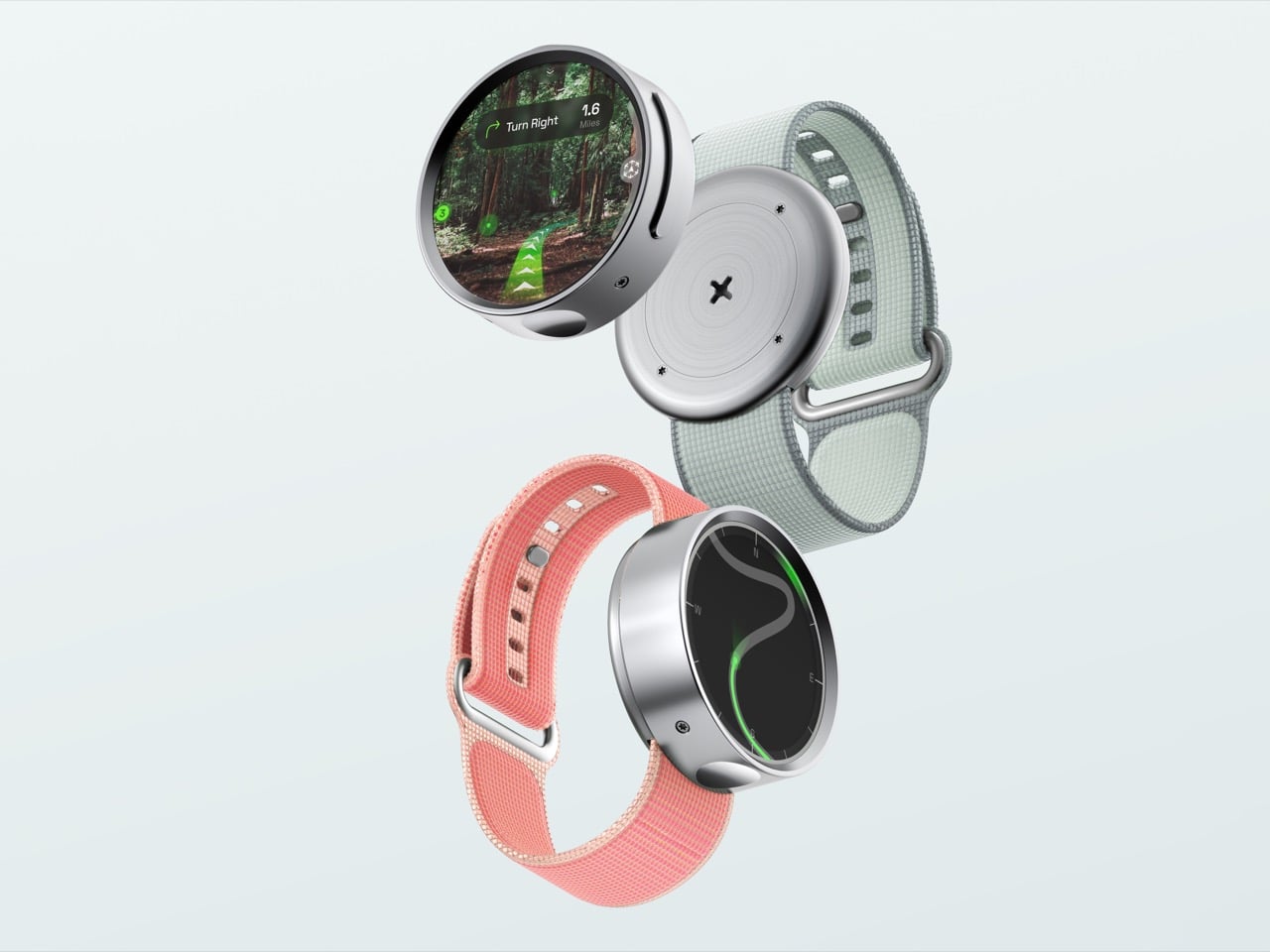
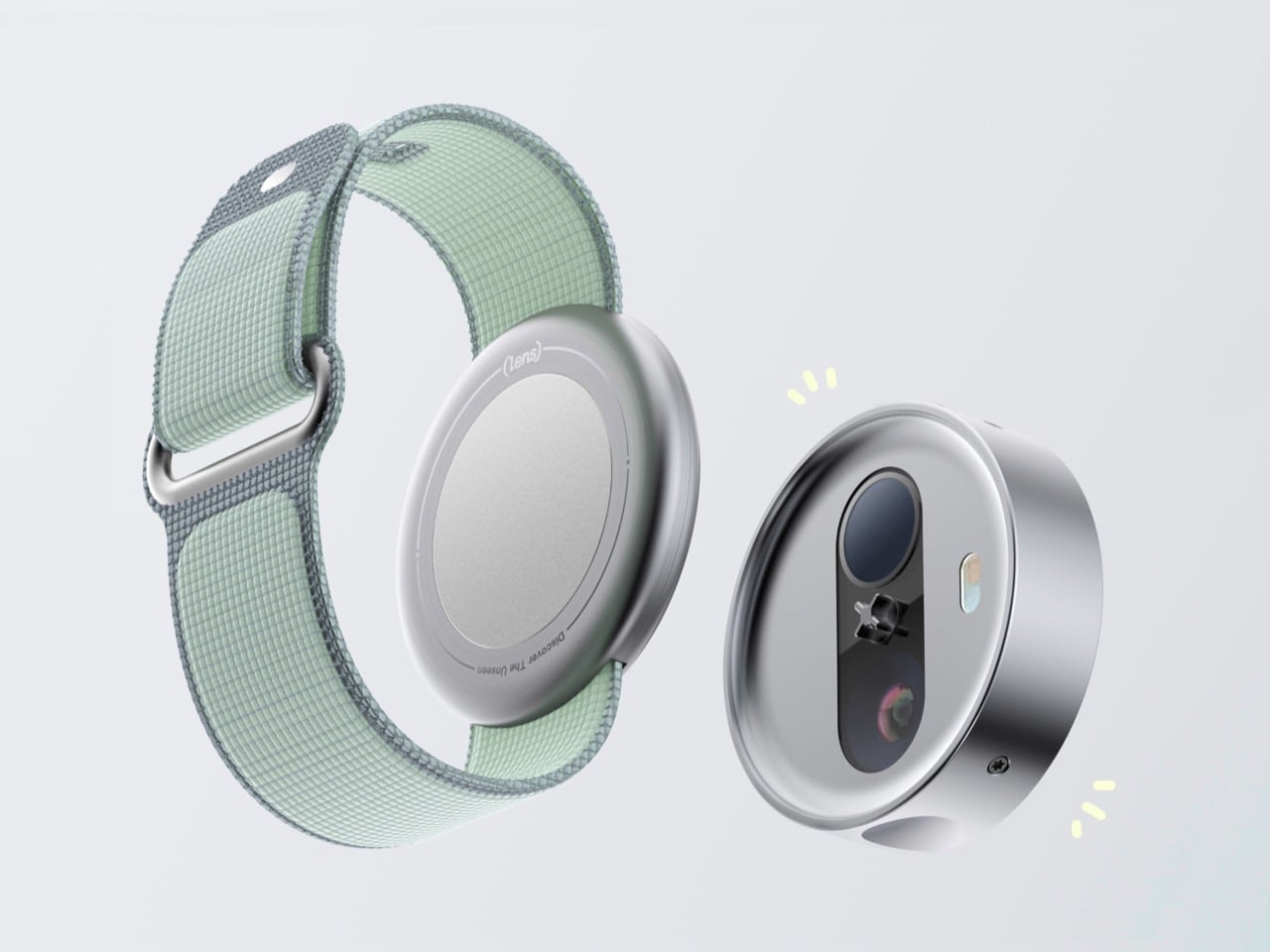
This Concept Smartwatch Detaches Into an AR Monocular, and It Solves a Problem Meta Can’t

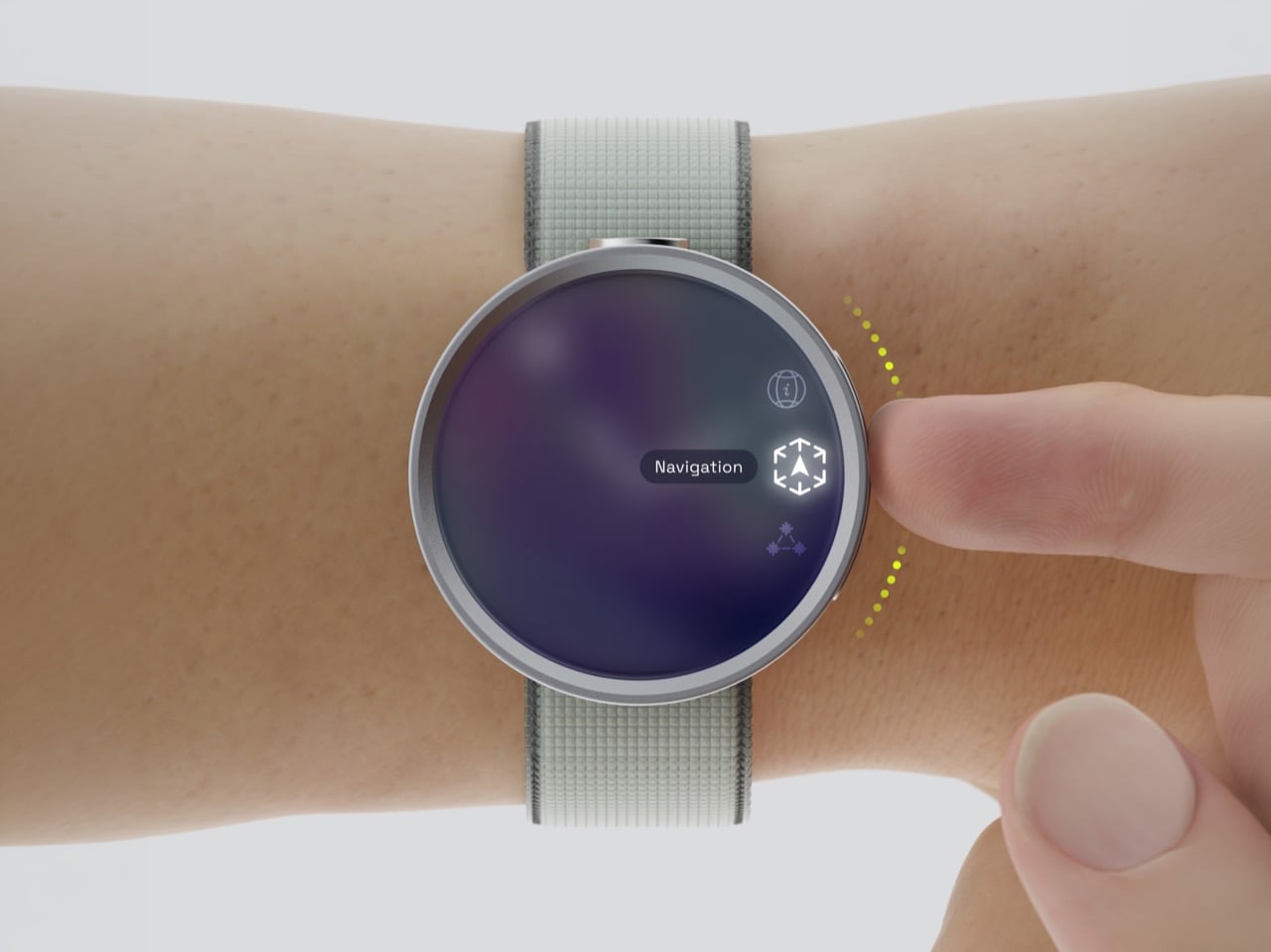
Sailors used to carry pocket telescopes. Birdwatchers still carry monoculars. Geologists carry hand lenses. What these instruments share, beyond the obvious optical function, is a deliberate relationship to information: you raise the tool when you choose to engage with it, and the world stays unmediated the rest of the time. That’s actually a pretty sophisticated UX philosophy, and it’s one the entire wearable tech industry has quietly abandoned in favor of always-on overlays, persistent notifications, and the assumption that more access to information is axiomatically better. Yuxuan Hua’s Lens concept is a Silver A’ Design Award winner that makes the counterargument in hardware form.

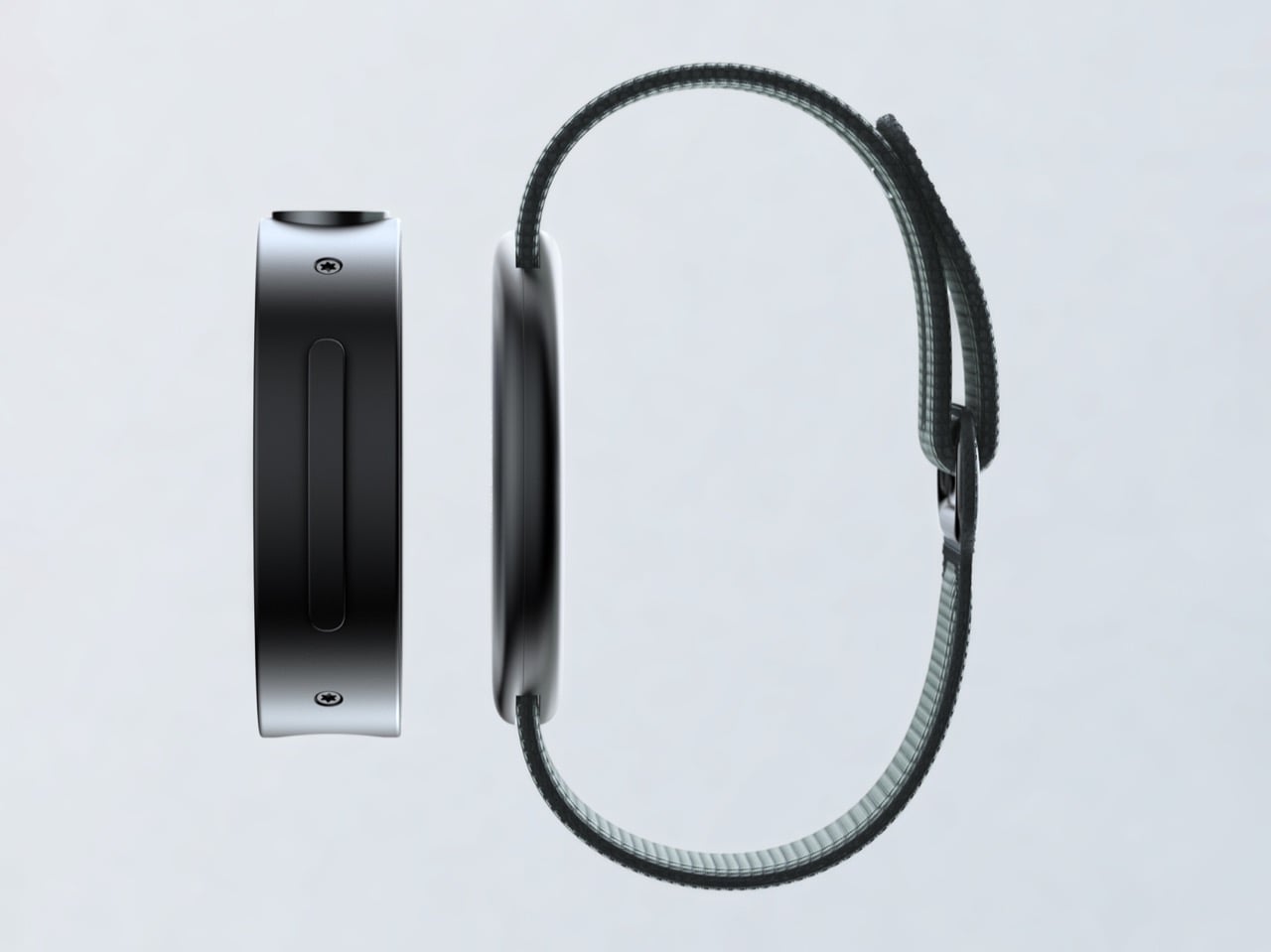
The concept is a detachable AR smartwatch that splits into two objects: a wrist-worn puck for everyday use and a handheld monocular for AR-enhanced outdoor exploration. The back face of the module houses a dual-lens optical array, a wide camera and LiDAR sensor tucked into a vertical pill recess, while the face doubles as a circular display that overlays navigation prompts, species identification, and star charts over a live feed when held up like a field scope. The band itself is Alpine-loop textile, the lug system simple enough to suggest the module can swap across band styles, and the whole thing comes in at 48mm wide and 68g. The rendering detail is strong: the detached module has the cold, machined look of a quality compass or a classic light meter, the kind of object that rewards handling.

Designer: Yuxuan Hua

Hua interviewed hikers, foragers, and stargazers and found three consistent frustrations: devices were too bulky and fragile for rugged environments, and frequent screen interactions broke the rhythm of being outside. The phone-as-field-guide pattern, pull it out, unlock, navigate to the app, wait for it to load, try to hold it steady while pointing at something, is a sequence of six interruptions where you actually wanted zero. Smart glasses solve the unlock problem but introduce the far more annoying problem of a permanent digital scrim between you and whatever you came outdoors to look at. The monocular is the thing you raise when you want to know something and lower when you don’t, which is precisely how attention works when you’re actually engaged with a landscape.

Most AR concept hardware reaches for science fiction: translucent surfaces, glowing elements, the visual grammar of a prop department. Lens reaches instead for the instrument drawer: the detached module has the proportions and material honesty of a quality compass housing or a Leica light meter, machined aluminum with visible fasteners and a lens array that looks like it belongs in an optician’s toolkit. It doesn’t look like the future. It looks like a very well-made tool, which is a significantly harder design target to hit.

Hua began developing Lens in 2021, during the pandemic, which is useful context. Lockdown-era design projects often reveal what designers actually miss about the physical world when it’s taken away, and what Lens mourns, obliquely, is uninterrupted attention. The whole concept is an argument that the best AR device for outdoor use is one that disappears when you’re not using it, one that earns its presence by staying out of the way until the moment it’s needed, then delivers exactly what the moment requires. Whether the engineering can catch up to that vision, packing AR projection, LiDAR, and a wide-FOV camera into a 68g coin of aluminum, is another question entirely. As a design proposition, it’s already done its job.

The post This Concept Smartwatch Detaches Into an AR Monocular, and It Solves a Problem Meta Can’t first appeared on Yanko Design.

This $99 Water Jet Remotely Cleans Your Car’s Backup Camera Without You Leaving Your Seat

Reverse driving accounts for just 1% of all driving time, yet it’s responsible for roughly 25% of all accidents. A dirty backup camera in winter, mud season, or on dusty country roads is not a hypothetical inconvenience but a genuine safety liability, one that most drivers have resigned themselves to either living with or solving by stepping out of the car every time. Mike Klein, a Vermont-based tinkerer with a characteristically no-nonsense approach to annoying problems, got fed up enough to build a solution in his garage. What started as a Ziploc-bag-and-zip-tie prototype strapped to his license plate has turned into the Lens Lizard, a compact, self-contained, remote-controlled backup camera washer that just hit Kickstarter and has absolutely run away with its funding goal.

The concept is beautifully blunt. Lens Lizard mounts behind your license plate, sandwiched discreetly between the plate and the bumper using your car’s existing screw holes. No drilling, no wiring, no running tubing through door gaps or under trim panels. The whole install takes under five minutes with a standard screwdriver, and once it’s on, it’s invisible. The unit itself houses a fluid reservoir, a battery pack, and a high-pressure nozzle that you aim at your camera once during setup and then never have to touch again. When your backup camera gets caked in snow/ice or road salt on a grey January morning, or buried under a slush splatter from the truck overtaking you on a Vermont highway, you press a wireless remote button from inside the car and a jet of washer fluid blasts the lens clean. Sort of like a lizard or a chameleon striking its prey with a sharp, swift flick of its tongue. Except this time, it’s a concentrated jet of soapy water. Maybe a Pokémon reference would work better but I don’t want Nintendo’s lawyers sending me a cease and desist.

Designer: Mike Klein

Click Here to Buy Now: $99 $149.99 ($50.99 off) Hurry! Only 5 days left.

The engineering philosophy here is aggressively practical. Klein explicitly designed the Lens Lizard for Vermont winters, which means sub-zero temperatures, aggressive road salting, heavy snow, and the kind of freeze-thaw cycling that destroys lesser materials. The housing is sealed and built from automotive-grade materials, and the battery and fluid reservoir are sized to last four-plus months between refills and recharges, meaning you top everything up roughly once per season.

Maintenance is a non-event: open the latch, refill with washer fluid, charge via USB-C, close it back up. Klein’s origin story is worth noting too, because it gives the product a satisfying internal logic. He tried hydrophobic lens covers (they peeled), ceramic coatings (they did essentially nothing), and eventually decided to just build a scaled-down windshield washer system for his license plate. The first prototype was, by his own admission, ridiculous. But it worked, and that was enough to tell him the idea had legs.

Lens Lizard works with any vehicle where the backup camera sits above the license plate, which covers 99% of cars on the road, pickup trucks very much included. The product ships with assorted license plate screws to handle different fastener sizes, and the adjustable nozzle lets you dial in the spray angle for your specific camera position during initial setup. After that, the unit lives its entire life tucked behind the plate, completely out of sight. The wireless remote is puck-shaped and lives wherever you keep it in the cabin, a glove box, a cupholder, the center console.

The Lens Lizard starts at just $99 for the entire kit as an early bird discount off its $149 price tag. A dual bundle costs $189 if you’ve got two cars, and all bundles include the Lens Lizard unit, a wireless remote, a battery pack, and an assortment of screws to help you install the gizmo on your car. Given its specific design (and that every nation has a different license plate), the Lens Lizard only ships to the US and Canada for now, although I’m sure a more universal version is in the works. Production is slated to begin in April 2026, with shipping to backers planned for May. For drivers in cold-weather states, high-dust regions, or anywhere that sees serious road grime, it’s a hard value proposition to argue with. Certain premium vehicles have had integrated camera washers for years, quietly tucked into the bumper plumbing. Klein has simply figured out how to give everyone else the same result for under a hundred bucks, no dealer visit required.

Click Here to Buy Now: $99 $149.99 ($50.99 off) Hurry! Only 5 days left.

The post This $99 Water Jet Remotely Cleans Your Car’s Backup Camera Without You Leaving Your Seat first appeared on Yanko Design.

Ex-BlackBerry Designer Is Calling Out Everything That’s Wrong With Modern Phones

Design Mindset is Yanko Design’s weekly podcast, powered by KeyShot, the 3D rendering and visualization software that helps designers test how products feel, not just how they look. Hosted by Radhika Seth, the show goes deep into the philosophy and process behind world-class products, sitting down with the designers and founders who actually built them. Episode 19, premiering this week, is one of the most thought-provoking conversations the series has produced yet.

Joseph Hofer is the founder of Hofer Studio, where he consults with hardware entrepreneurs on building profitable, world-class product portfolios. Before that, he spent over a decade at BlackBerry as senior industrial designer, establishing the look and feel of the iconic Bold family and shaping devices like the Q10, Z10, and the BlackBerry Passport. His work spans over sixty design and utility patents, touching products that have sold over twenty-one million units and generated upward of $3.1 billion in revenue. More recently, he’s been the design force behind the Clicks Communicator, a physical-keyboard phone that launched at CES and challenges the smartphone status quo from the ground up.

Download your Free Trial of KeyShot Here

Designing Within Human Limits and Intentional Use

Joseph opens the conversation with something that sounds almost poetic but lands with the weight of a core design principle, saying that “most of the objects we use every day quietly train us. They teach us how to hold them, how long to focus, how patient we need to be. When design ignores human limits, it drains us. When design respects them, it almost feels like care.” He critiques what he calls “sticky” experiences, the kind that benefit companies at users’ expense, arguing that the real question designers should be asking is whether a product helps people become a better version of themselves, or whether the company simply wins after ten years of draining them.

His case against the modern smartphone is pointed. Everything phones have become reactionary devices, he says, describing the experience of opening one to send an email and somehow finding yourself fifteen minutes deep in a reel, asking yourself how you got there. Big tech, in his view, has deliberately shaped products to increase screen time and sell more through ads. His philosophy runs in the opposite direction: good design should prompt intention before action, not exploit the absence of it.

Integration as Core Design Principle

One of the more revealing details Joseph shares early on is that at BlackBerry, the design team’s official title wasn’t “Industrial Design.” It was Design Integration. That framing stayed with him. “Integration is probably the word, the action that I look to do well in every project I work on,” he says, adding that a product can be really strong in one area but fall flat in others if you’re only focused on a single dimension. Great design, strong UX, and poor profit economics don’t add up to a sustainable company. Economics, manufacturing, cost, and complexity all have to be part of the thinking from the start.

His advice to technical founders reflects the same logic. Many of them start with a breakthrough innovation and then go looking for a market to push it into, which he sees as working in the wrong direction. The better path is to step back, clearly analyze the problem bubbling up from the market, shape an experience that solves it, and then let the technology marry with that. Letting one run too far ahead of the other is how good innovations end up as products nobody uses.

The Clicks Communicator: Intentional Mobile Interaction

The Clicks Communicator is the most direct physical expression of Hofer’s philosophy. It was the first phone he designed in ten years after BlackBerry, and the central idea is a complete inversion of how smartphones currently work. Rather than an app grid that presents notifications and pulls users in reactively, the Communicator prompts users to decide what they want to do first, then acts on it. Physical keys map to intentional shortcuts: pressing K calls a specific contact, pressing I opens Instagram only when the user has consciously chosen to. “It flips it from being reactionary to intentional,” Joseph says simply.

He’s also clear that the product’s appeal isn’t nostalgia. A lot of the customers aren’t even BlackBerry users, he notes; they’re younger people who simply want a different relationship with their mobile device. The Communicator sits within what he sees as a broader 2025 trend of “intentional tech,” products designed to decouple from the everything-phone model and serve one specific purpose well. Adding a 3.5mm headphone jack and a removable SD card wasn’t feature-stacking for its own sake either; those choices are signals to a specific audience that the team is listening and cares about them.

Recognizing Quiet Ideas and Process Discipline

When Radhika points out that the BlackBerry keyboard now feels like it was always inevitable, Hofer pushes back immediately. “Sometimes these quiet ideas that feel obvious or become obvious actually took a lot of effort and iteration to get there,” he says, describing the motto his team lived by: think, build, test. The keyboard’s evolution wasn’t a single stroke of insight; it was a response to real constraints. As iPhones pushed screens larger, BlackBerry faced intense pressure to shrink keypads, which meant switching from oval keys to square ones, losing the tactile separation users relied on. The innovation was subtle: raising a curved edge on each square key to preserve the feeling of the oval, essentially hiding a reference to the old shape inside the new form. Speed tests, accuracy tests, user sentiment on different options, all of that grinding iteration is what produced something that feels natural.

He applies the same thinking to simplicity broadly. Designing for a ten-year-old, he argues, is one of the most useful principles any designer or founder can adopt. If you can’t explain the product to a ten-year-old, it’s too complicated. He tested this literally the night before the recording, sitting down with his eight-year-old daughter to ask about her CD player. Her answer was that it had way too many buttons. Her ideal? Three: power, volume up, volume down. Six identical-feeling buttons with in-mold graphics that disappear in the dark told a clear story about what the designers had gotten wrong.

Restraint as Confidence and Commercial Strategy

The tension between restraint and visibility is something Hofer takes seriously. He doesn’t frame minimalism as a virtue in itself. “Clarity is actually an even stronger word,” he says, arguing that a vanilla product solving a vanilla problem will simply go unnoticed. The goal isn’t to be quiet; it’s to solve a real, specific problem so well that the product becomes the only answer for a particular group of people. A phrase he came up with captures where he’s trying to take the companies he works with: from viral products to vital ones, products that customers genuinely need in their lives because of the difference they’ve made.

That philosophy maps directly onto commercial outcomes. A product that meets the emotional and functional needs of a user, reduces cognitive load, lasts longer, and has lower return rates naturally builds a brand that draws people in without needing to be aggressively sold. “When products are just better,” he notes, “they need to be marketed and sold maybe less. That’s an effect on your bottom line.” His work at Hofer Studio is less about crafting beautiful objects and more about asking founders what commercial success actually means to them and building backwards from that.

When the rapid-fire round asks him to describe restraint in design in a single word, his answer arrives without hesitation: confidence. “What does obviousness create? It creates confidence. I know how to enter this experience. I know how to start this product. I feel more confident with it in my life.” It’s a fitting close to a conversation that consistently returned to the same idea: that the design decisions nobody notices are usually the ones that took the most care to make.


Design Mindset drops every week on Yanko Design. Catch Episode 19 in full wherever you listen to podcasts. For a free trial of KeyShot, visit keyshot.com/mindset.

Download your Free Trial of KeyShot Here

The post Ex-BlackBerry Designer Is Calling Out Everything That’s Wrong With Modern Phones first appeared on Yanko Design.

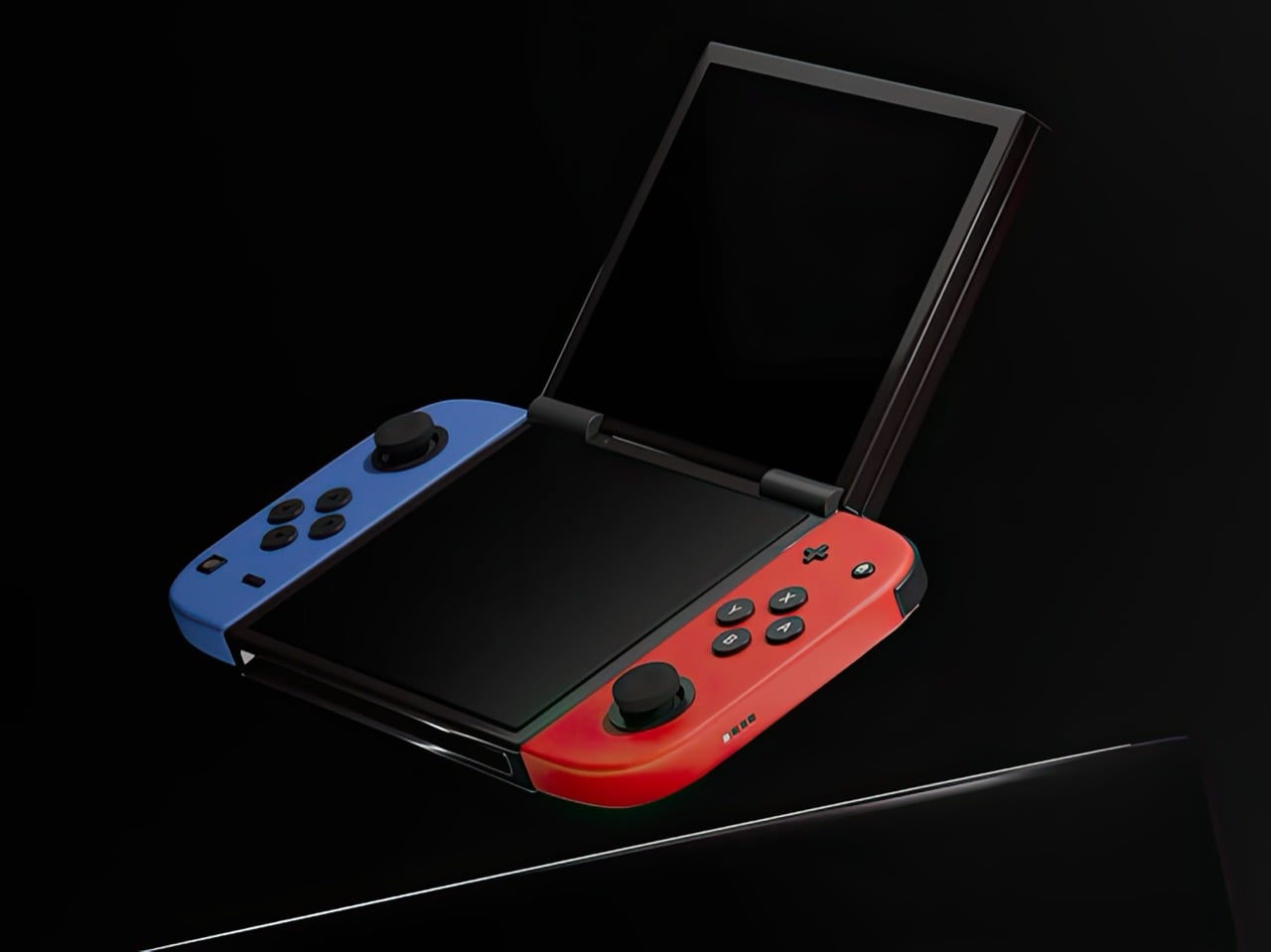
Nintendo Patented a Dual-Screen Switch and Never Made It. Here’s What It Looked Like.

Nintendo had a choice when designing the Switch 2. They could iterate on the formula that made the original a cultural phenomenon, refining the single-screen hybrid into a faster, sharper, better version of itself. Or they could reach back into their own history, pull out the design philosophy that once made the DS family the best-selling handheld hardware line of all time, and merge two eras of thinking into something genuinely new. They picked the first path. Designer Juan Manuel Guerrero just sketched out the second.

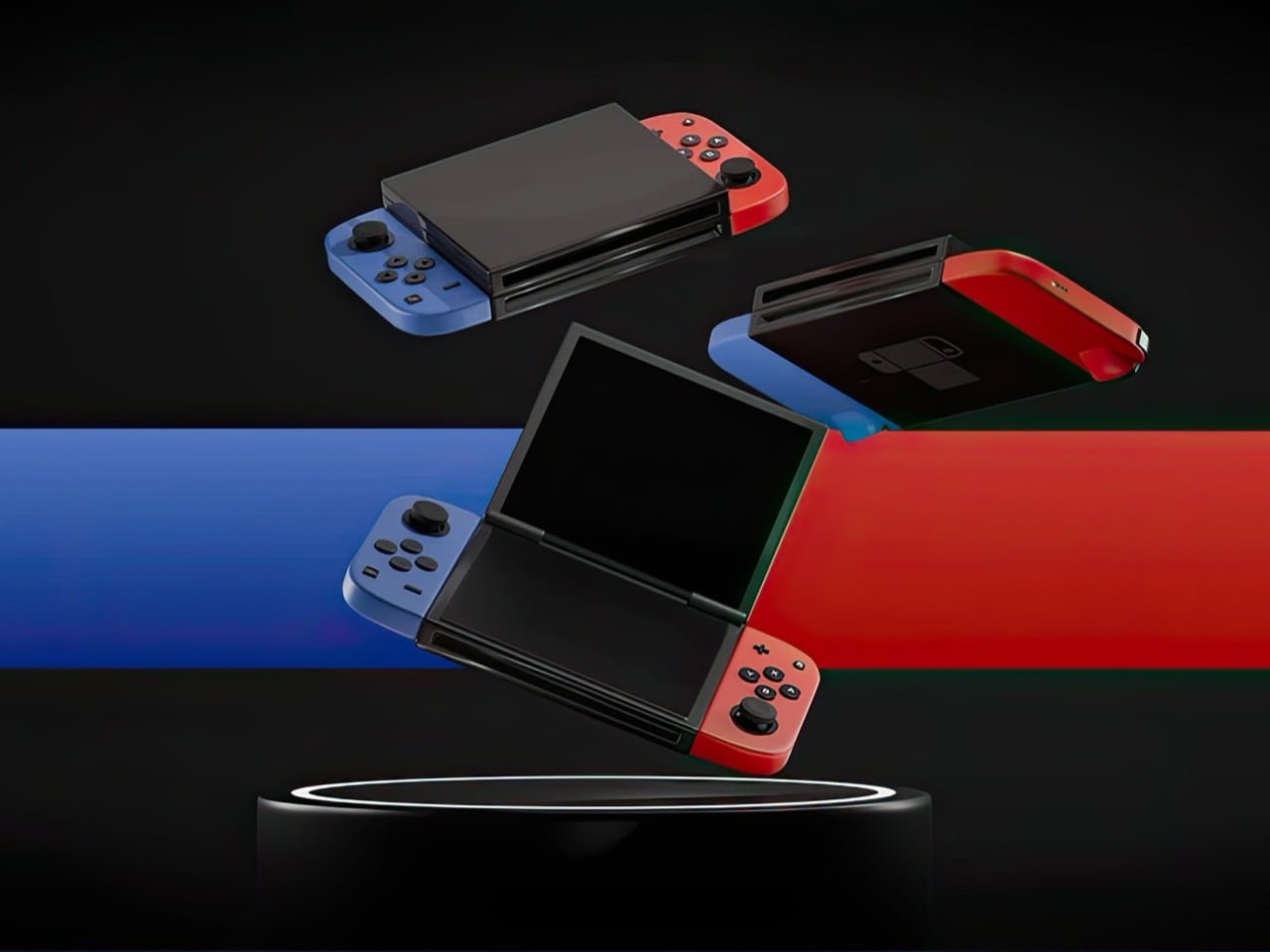
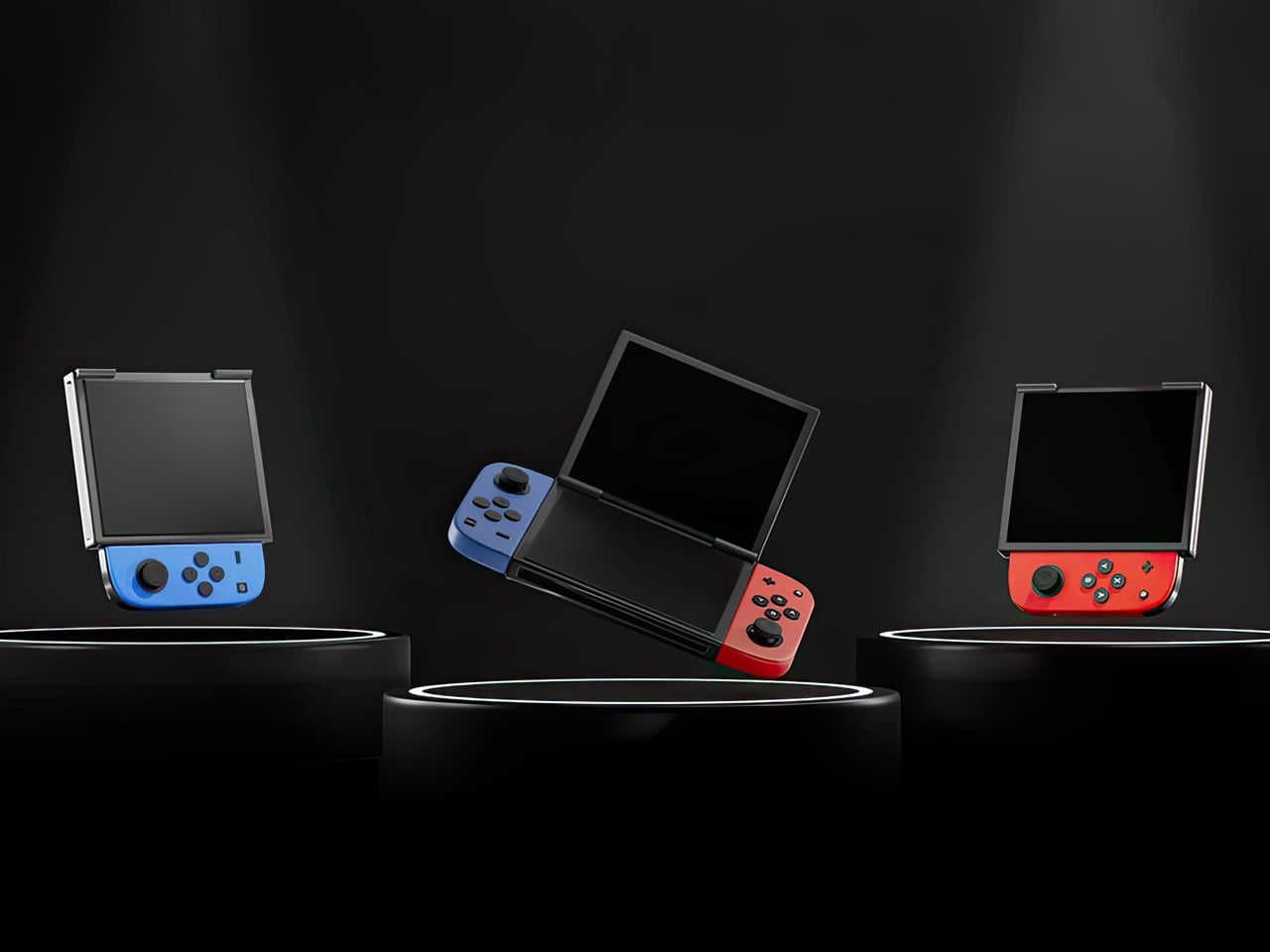
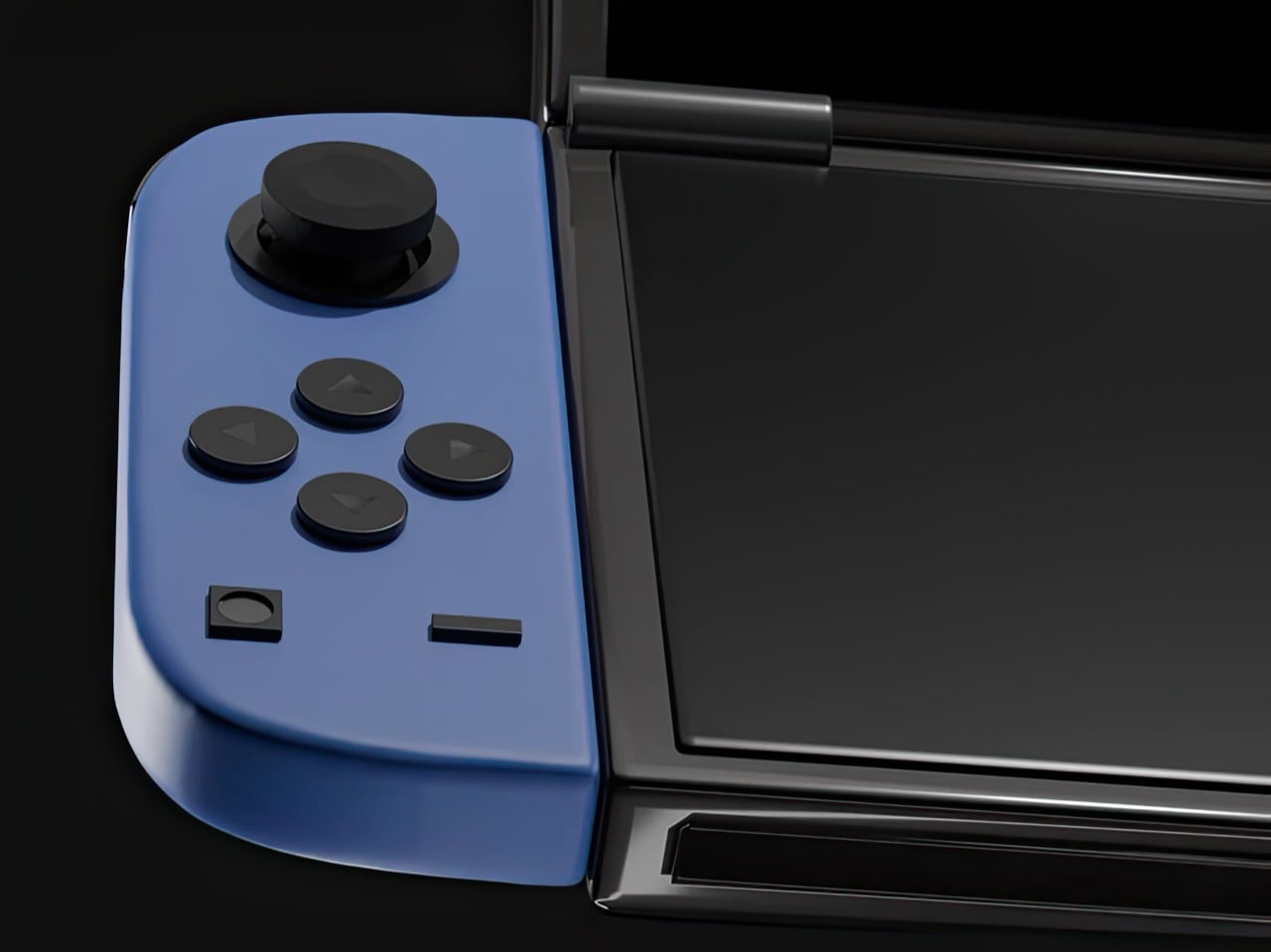
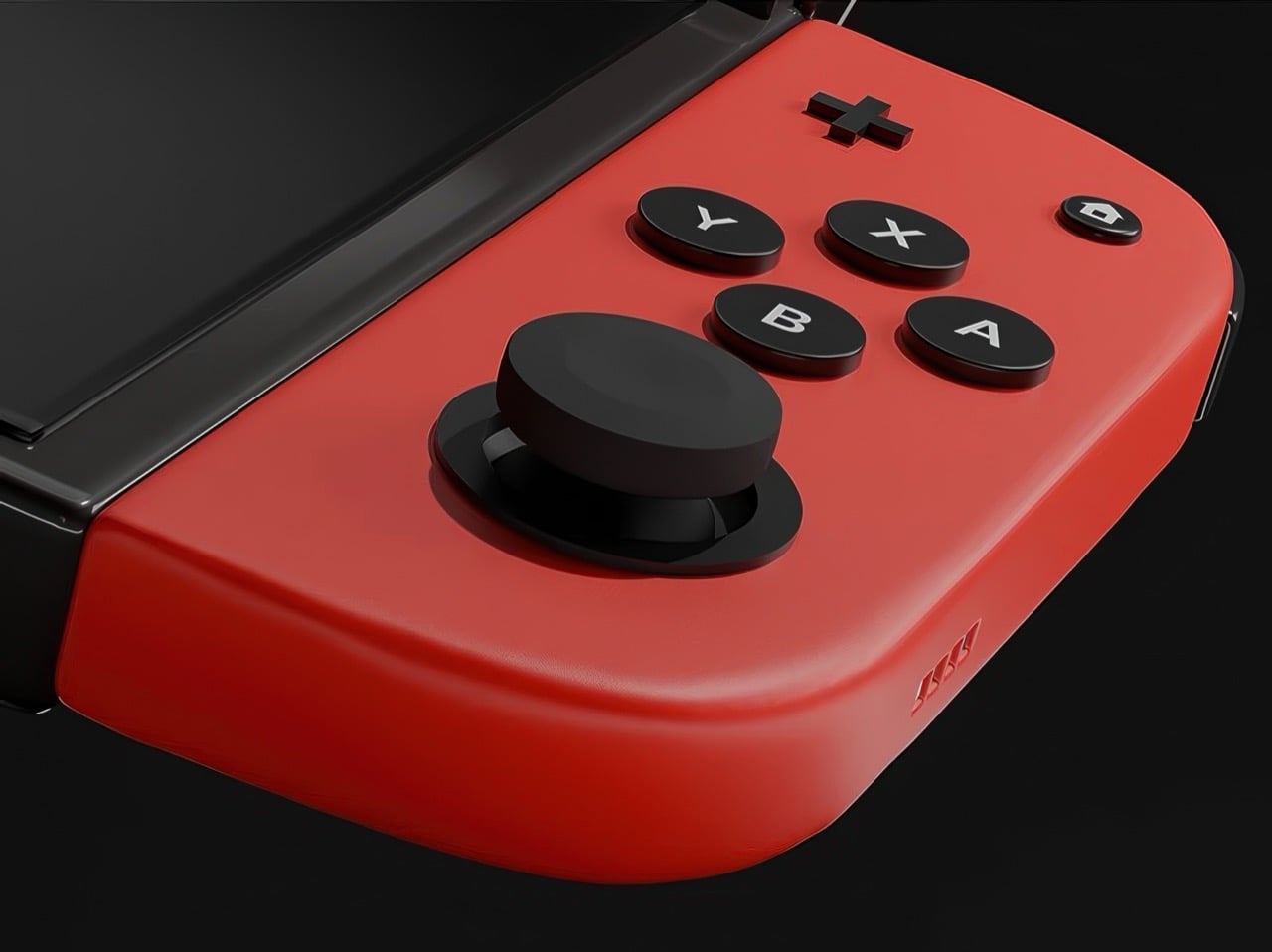
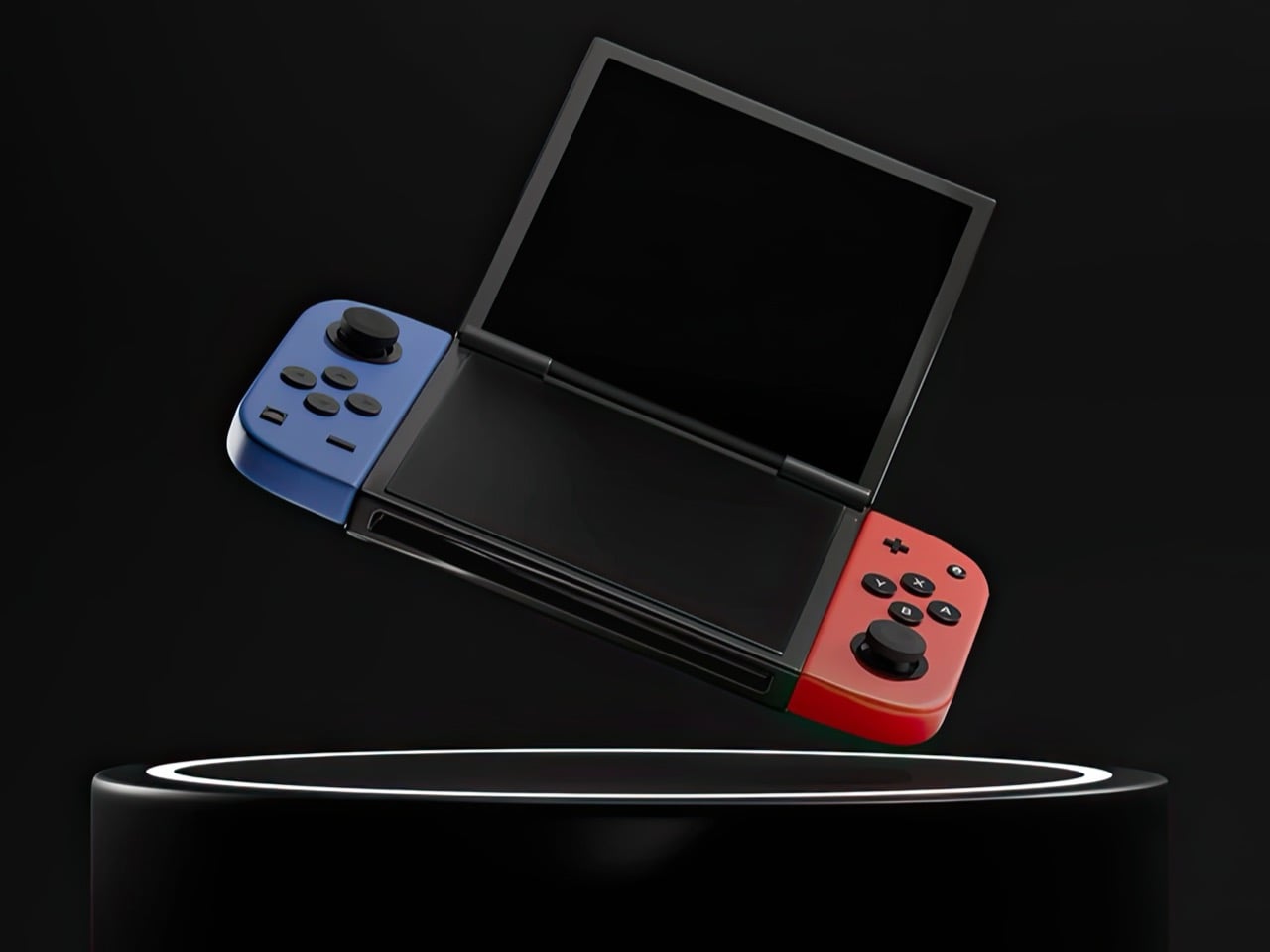
The concept arrives as a series of beautifully lit 3D renders: a folding Nintendo Switch with dual screens, a hinge running through the center of the body, and Joy-Cons in the familiar blue-red split attached to either end. The renders carry the finish of product photography, which makes it genuinely easy to forget this never shipped. Closed, it looks like a sleek, pocket-ready device with a tighter footprint than the original Switch. Open, it recalls something older and warmer, the quiet satisfaction of flipping a DS open on a long car ride, except now the screens are large, the controllers are proper, and the whole thing feels built for today. The proportions are deliberate, the design choices are considered, and the whole thing wears its Nintendo identity without apology.

Designer: Juan Manuel Guerrero

The Nintendo DS sat at 154.02 million lifetime units for years, the gold standard for Nintendo hardware, until the Switch finally crept past it in early 2026 with 155.37 million. Two hardware generations, both cultural touchstones, separated by fewer than two million units across a combined history of roughly three decades. The closeness of that race matters. The DS built those numbers on a genuine design idea, a spatial logic where two screens gave developers room for two distinct kinds of information at once, and players responded to that for fifteen years. Guerrero’s concept asks whether the Switch era ever had to leave that behind.

Phantom Hourglass let you draw on the bottom screen to annotate your own maps and solve puzzles, an idea original enough to win awards at the time. Pokemon Diamond and Pearl split the party menu from the battlefield, giving battles a spatial clarity the GBA never had room for. GTA: Chinatown Wars ran the full city map on the lower display and handed the top panel entirely to the action. These were designs built entirely around the format, dependent on the split in a way that made them fall apart on a single screen. That vocabulary has been sitting idle for the better part of a decade.

Samsung’s Galaxy Z Fold 6 runs a 7.6-inch interior display and represents the sixth generation of the company working foldable hardware into something genuinely reliable. Motorola, OnePlus, Google, and Huawei all have competitive entries in the space. Display durability and hinge reliability have been largely solved through successive product generations and real commercial pressure. A dual-screen Switch in 2025 wouldn’t be asking anyone to invent something new; the foldable category has already done the hard engineering work. Guerrero’s concept asks someone to point that already-mature technology at a gaming audience.

The DS touchscreen read as a toy gimmick in 2004. The Wii’s motion controls got laughed at before that console sold 101 million units. The Switch itself looked like a confused category play until it climbed past 155 million units and became Nintendo’s best-selling platform ever. That history of moves that look sideways before they land is the context Guerrero’s concept actually lives in. The foldable technology exists, the Joy-Con design language holds across both halves of the fold, and the IP is coherent. Someone drew it. Now it’s genuinely difficult to look at the Switch 2 without wondering what the other path could have looked like.

The post Nintendo Patented a Dual-Screen Switch and Never Made It. Here’s What It Looked Like. first appeared on Yanko Design.

Your Tactical Role-Playing Game Setup deserves a better Command Deck. Meet the ONE BOX 4.0

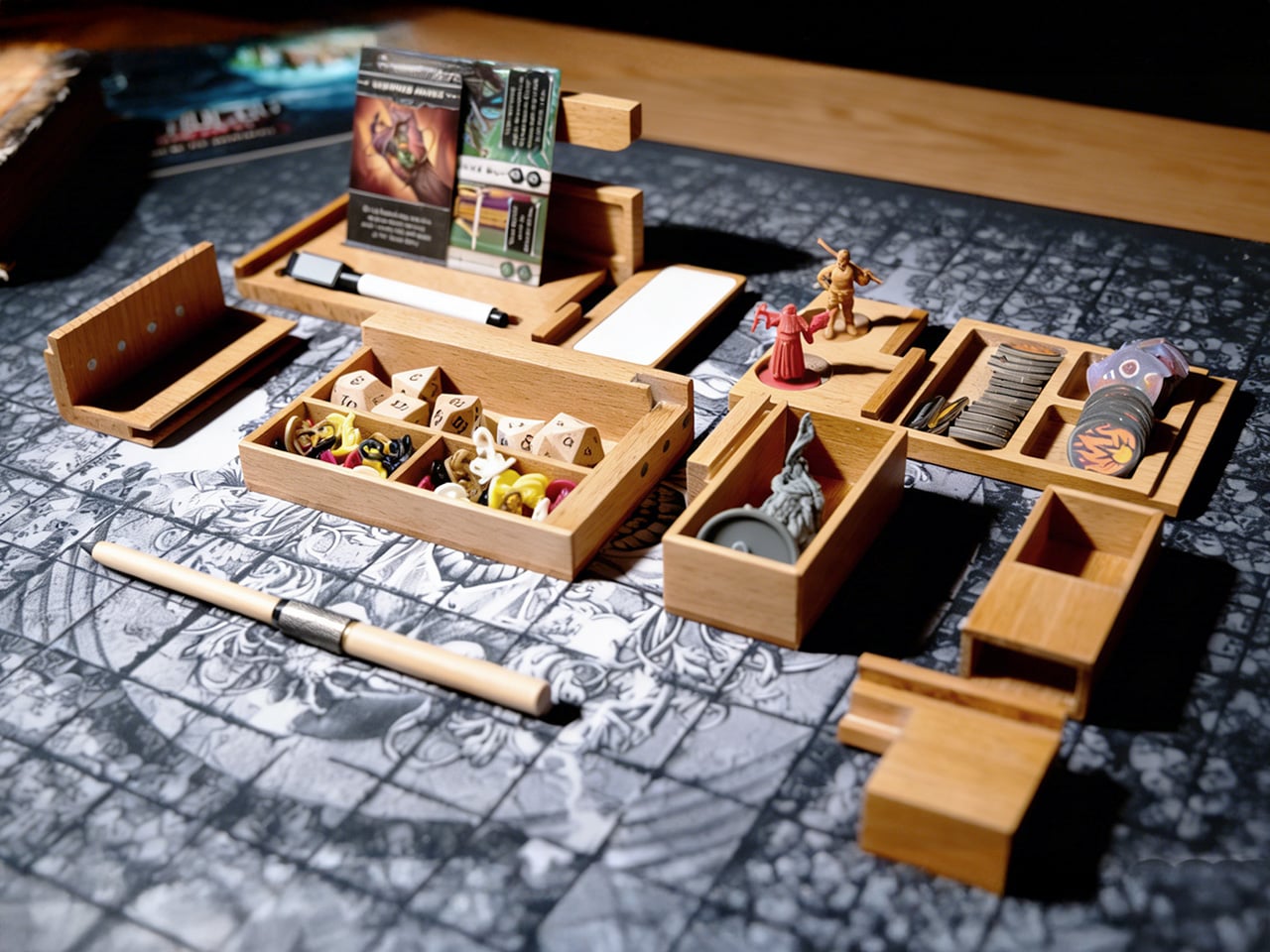
Board game nights typically end the same way: scattered tokens, bent cards sliding across the table, dice that have rolled onto the floor for the third time. The chaos becomes part of the experience, tolerated because storage solutions only address what happens after everyone goes home. ONE BOX 4.0 takes a different approach by treating organization as something that belongs inside the game itself, using modular wooden compartments that stay open and active throughout play. The whole thing behaves less like a box and more like a portable command deck that happens to collapse into something the size of a pencil case. You unfold it, and the table suddenly has lanes, stages, and zones instead of a single flat battlefield where everything fights for the same square inches.

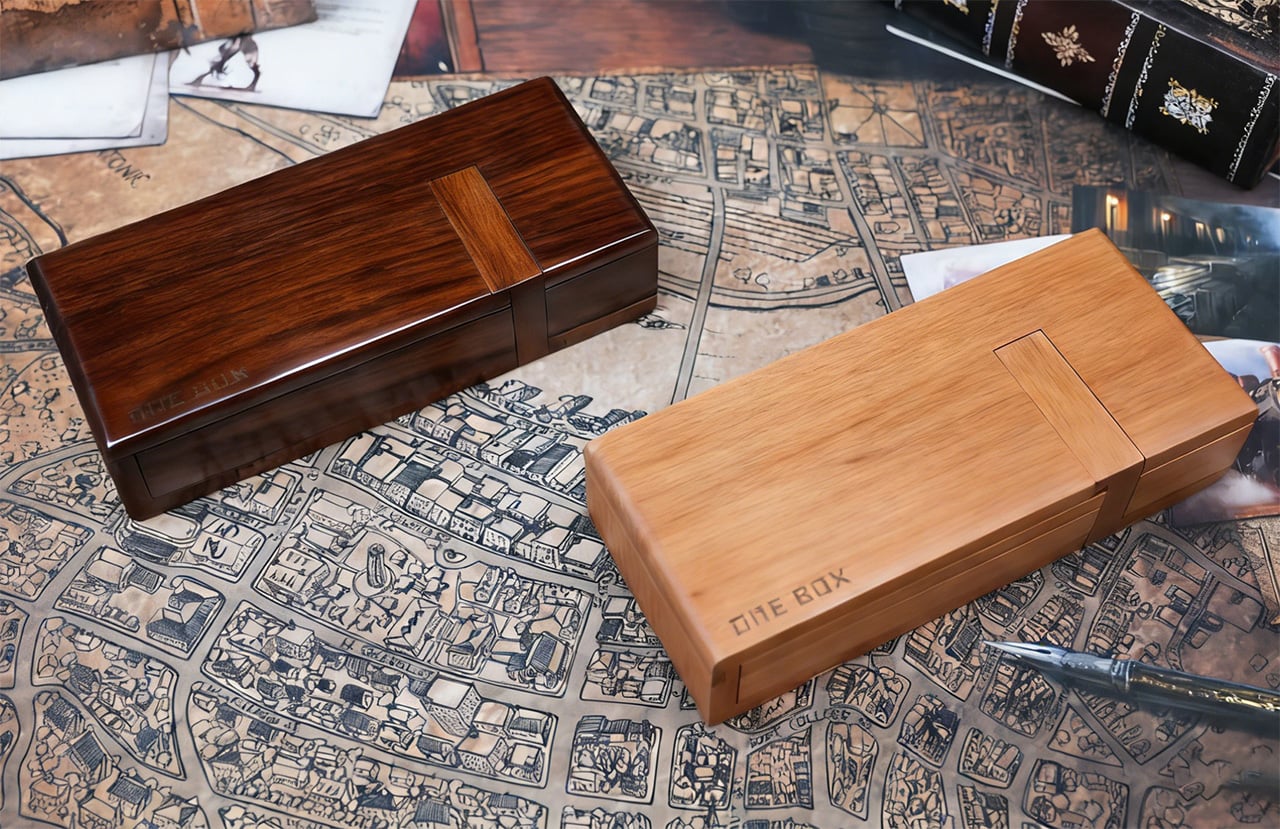
CHENGSHE.design built the system from mortise and tenon joinery, the kind of traditional woodworking that holds furniture together without screws or glue. Each unit comes in beech, teak, or black walnut, and the natural grain variations mean no two boxes look identical. The modules include card display stands, contained dice rolling areas, and phone holders that keep digital rulebooks accessible without crowding the play surface. The parts interlock into a single carryable brick, then fan out into a full tabletop system in a couple of moves. It feels like someone took the logic of a good travel tool roll, mixed it with a GM screen, and then asked an architect to make it beautiful without turning it into furniture cosplay.

Designer: ONE BOX 4.0

Click Here to Buy Now: $59 $119 (59% off). Hurry, only a few left!

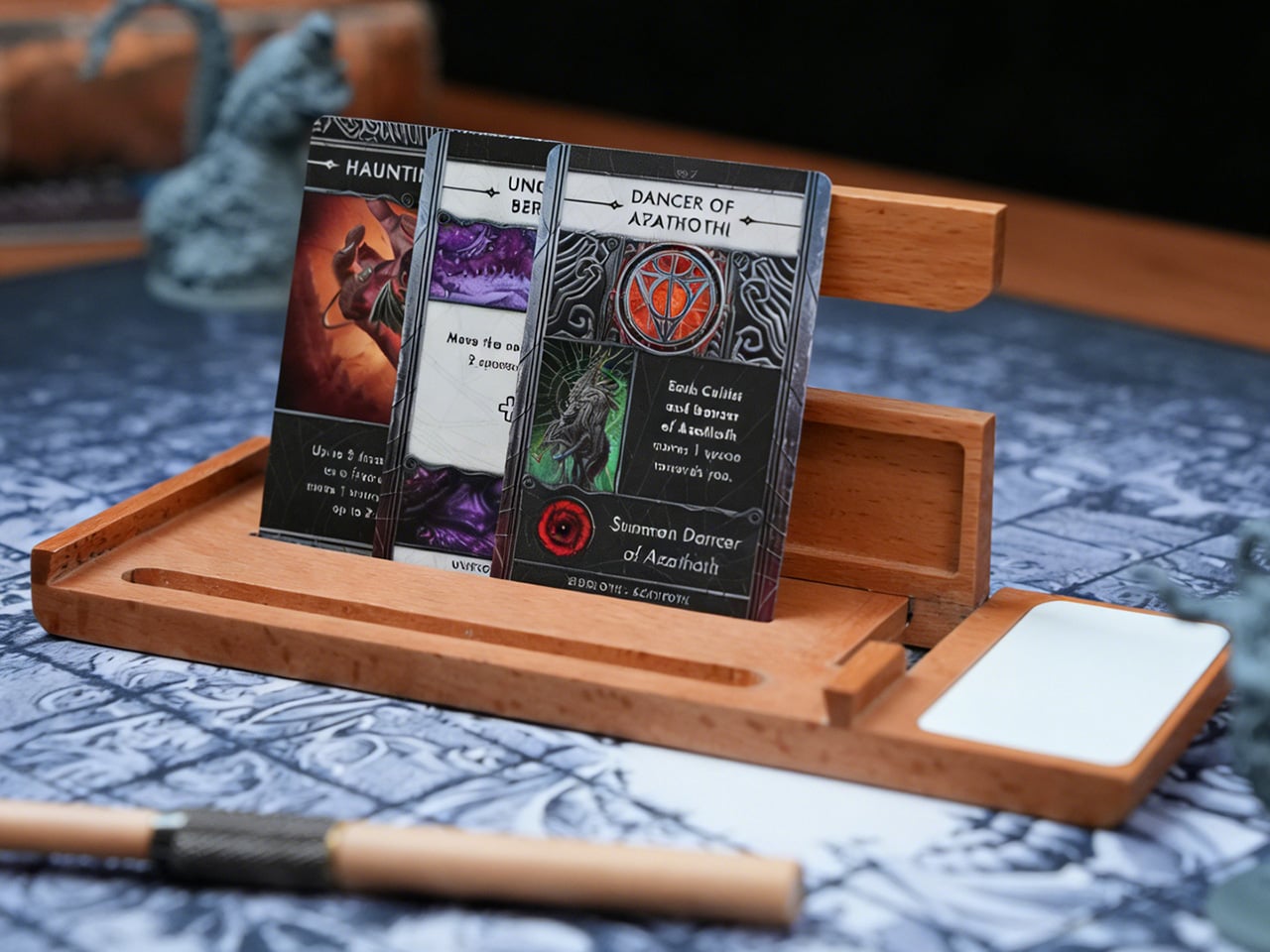
The design addresses three distinct phases of a session: setup, active play, and teardown. Before play, the modules unfold from a single case into multiple zones in a matter of seconds, with dividers and trays already proportioned for cards, dice, tokens, and reference materials. During play, cards sit upright in angled stands, which keeps information visible and reduces edge wear from constant handling. Dice move through a contained rolling lane that prevents table escapes and limits collisions with card stacks or miniatures. After the session, components return to defined compartments, which then recombine into a unified case for transport and shelf storage.

Underneath the pretty wood, the logic is very modular and very modern. One set of modules can handle a deck-heavy Euro game one night and a crunchy TRPG session the next, simply by rearranging dividers and stands. The dividers are adjustable, so you can create narrow lanes for standard 63.5 by 88 mm cards or open wider slots for tarot or oversized character sheets. A lot of “board game accessories” assume a single flagship game and then become useless when your group rotates titles. ONE BOX 4.0 behaves more like a system-level accessory, closer to a camera cage or modular tool chest that expects you to change the loadout constantly. The fact that this is the fourth generation shows in that ecosystem thinking.

The mortise and tenon construction is not a decorative flex either. That joint style is pretty resilient when you are opening and closing something hundreds of times, applying torsion in slightly different directions every session. Screws back out, cheap hinges loosen, glued butt joints fail at the worst moment. Properly cut mortise and tenon joints share load across surfaces and age with the wood rather than against it. Combined with hardwoods like teak and black walnut, you get a product that can take the mild abuse of transport and table slams without turning into a rattling box of regret.

The other design decision that lands beautifully is backward compatibility. If you bought ONE BOX 3.0, you do not have to retire it to adopt 4.0. The new modules plug into the old ecosystem, which is the kind of long horizon thinking you usually only see in camera mounts, bike standards, or pro audio racks. That matters because people build habits around their table setups. If you already have a certain arrangement for card lanes and dice trays, you can add a new TRPG-focused module or that OB Infinite Pen without rethinking everything. This is how you build a niche platform instead of a series of isolated products that age out every two years.

The OB Infinite Pen and erasable whiteboard module signal a clear orientation toward TRPG and scenario driven gameplay. By dedicating space to writing tools and a reusable surface, the system supports initiative tracking, hit points, quick maps, and ad hoc notes without adding disposable paper clutter. The pen shares the same wood material language as the box, which unifies the visual identity and reinforces the idea that note taking is an integrated part of the experience. For groups that run mixed digital and analog setups, the phone and tablet holder aligns with this approach, parking screens at the edge of the system instead of scattering them across the main play field.

Visually, this is the opposite of RGB acrylic chaos. Natural wood, clean chamfers, visible grain, and a restrained color palette of light beech, warm teak, and dark walnut. On a table, it reads more like a compact piece of joinery than a toy, which is exactly what you want if your “game table” is also your work desk or dining surface. There is a subtle psychological trick here: when the tools of play look like serious objects, people tend to treat the whole session with a bit more focus. You are less likely to fling dice across a carefully built wooden lane than across a bare laminate tabletop.

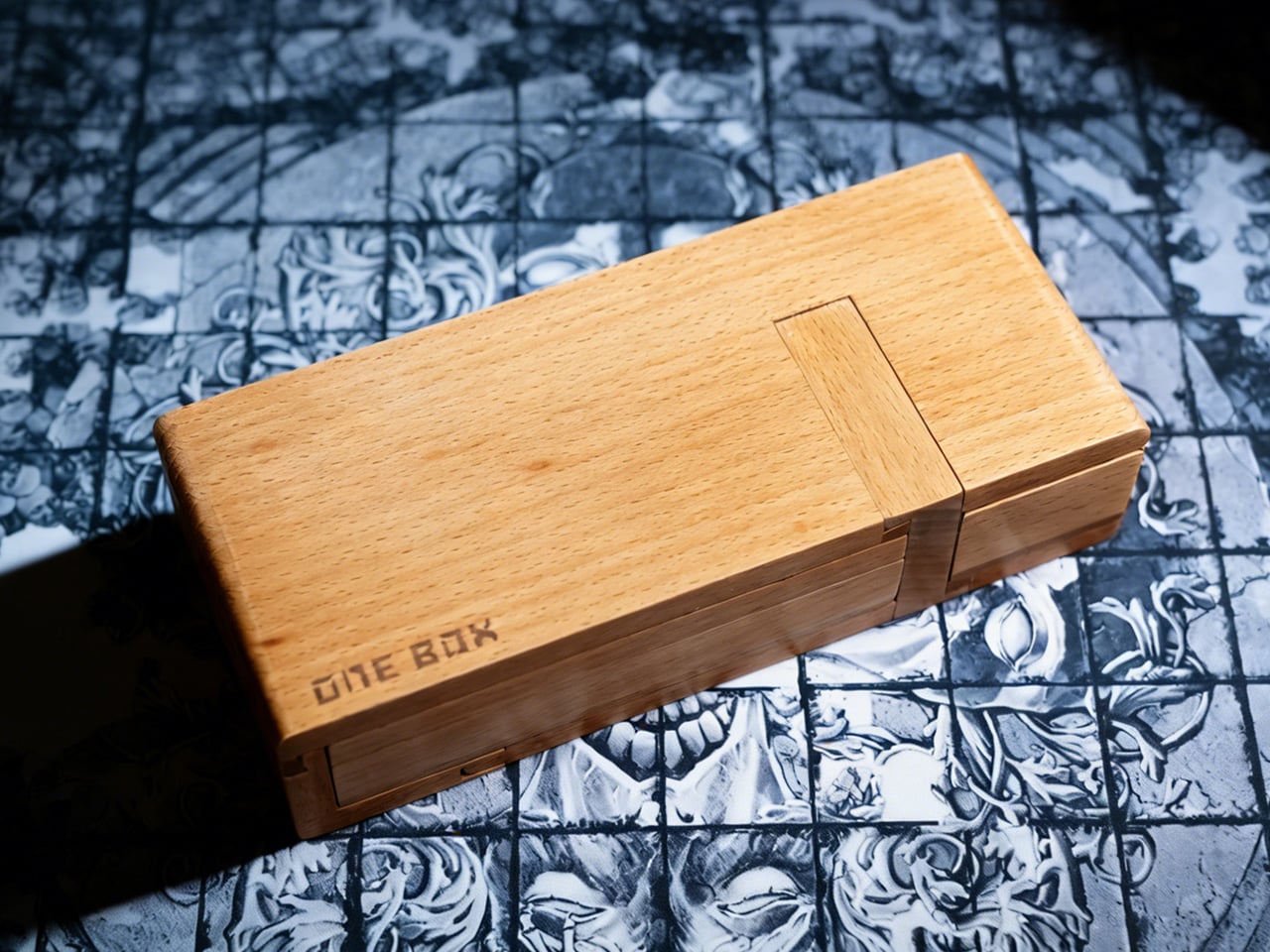
Folded shut, the core ONE BOX 4.0 package is roughly pencil box sized, which means it goes into a backpack alongside a laptop and a rulebook without much negotiation. Unfolded, it spreads to cover a player station or GM area without requiring a dedicated gaming table. That portability is what separates this from the beautiful but immovable wooden tables that dominate the aspirational side of tabletop culture. You can take this to a cafe, a friend’s apartment, or a convention hall, and your setup logic travels with you instead of being rebuilt from scratch every time.

The ONE BOX 4.0 comes in three primary wood options: beech for a pale, almost Scandinavian tone, teak for a warmer mid tone, and black walnut for a darker, more saturated look. Configurations range from a single core box setup to multi box “command station” style bundles that add dedicated dice rollers, erasable whiteboard modules, storage bags, and the OB Infinite Pen in matching wood. Up to 50 early backers can grab the beech variant for as low as $59, while the next tier for all wood versions sits at $79 (which includes the ‘recording kit’ featuring the OB Infinite Pen and erasable whiteboard modules). Throw in an extra twenty, and the $99 tier also gets you a dice roller. The ONE BOX 4.0 is open for preorder and ships globally starting May 2026.

Click Here to Buy Now: $59 $119 (59% off). Hurry, only a few left!

The post Your Tactical Role-Playing Game Setup deserves a better Command Deck. Meet the ONE BOX 4.0 first appeared on Yanko Design.

Wall-Clock inspired by a Pile Of Leaves tells time but also a Nature-inspired Visual Story

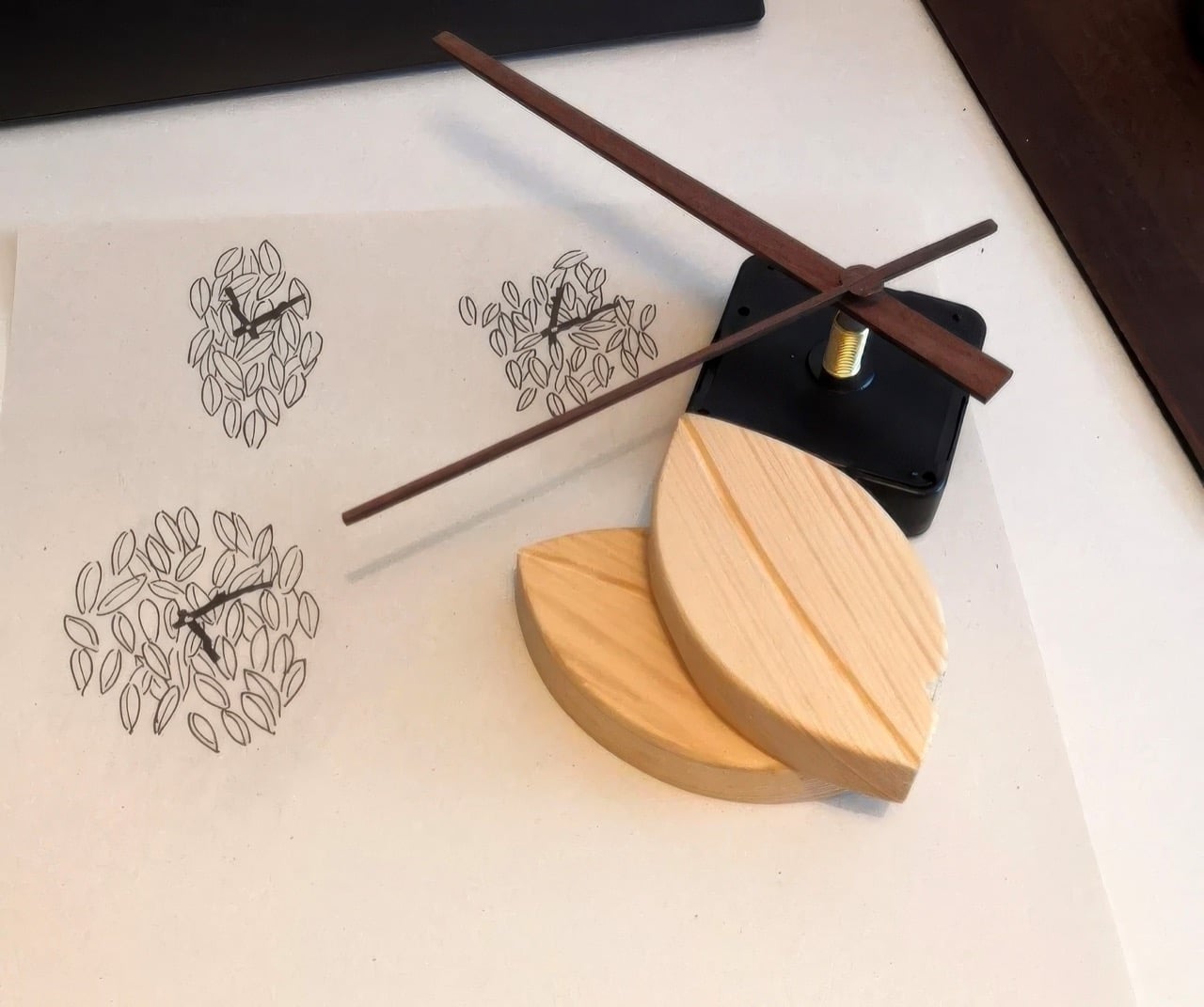
“Foglie” is the Italian word for leaves, and Tobias Sartori makes no effort to obscure the reference. His Foglie Wall Clock is built from dozens of hand-carved pine leaves, each shaped with a carved central ridge that mimics a real leaf’s midrib, arranged into a pointed, flame-like cluster that functions as the clock face. Branch-carved hands in a contrasting darker finish sweep the hours from a movement housed at the center. The result sits between decorative object and wall art, and it does so with enough material confidence to hold that ground convincingly.

Sartori first worked with leaf forms in a jewelry project, carving wooden pendants for necklaces, and the motif followed him home. A beech hedge outside and a botanical wallpaper inside reinforced the idea, together suggesting that an entire clock could operate in the same visual vocabulary. Several layout sketches followed before two strong candidates emerged. The chosen design is the one where every individual carved leaf echoes the overall silhouette of the piece, creating a quality that feels grown from the inside out.

Designer: Tobias Sartori

The final piece has a remarkable sense of depth and texture, a direct result of its meticulous construction. Because each pine leaf is an individual component, hand-carved and set at a slightly different angle and height, the clock creates a dynamic topography of light and shadow that shifts throughout the day. This layered arrangement gives the object a living quality, changing its character as the sun moves across the room.

The choice of pine, with its warm and expressive grain, gives the clock an approachable, organic feel that invites a closer look. The darker, more delicate hands provide just enough contrast to ensure legibility without overpowering the woodwork. It is a quiet object that reveals its handmade complexity gradually, rewarding careful observation with subtle details that a mass-produced item could never replicate.

Sartori’s process sketches reveal another, more traditional round variant that he ultimately set aside, a decision that proved critical to the design’s integrity. The circular concept, while pleasant, felt more like leaves applied to a conventional clock shape. The final, elongated form, however, feels like a clock that grew directly from the leaves themselves. This distinction is the core of its success. By housing a simple, reliable clock movement within a form that feels completely natural, Sartori allows the artistry of the woodwork to remain the main story. The Foglie clock successfully integrates function into a form that feels elemental and intentional, as if a gust of wind had gathered the leaves on the wall in a moment of perfect, fleeting composition.

The post Wall-Clock inspired by a Pile Of Leaves tells time but also a Nature-inspired Visual Story first appeared on Yanko Design.

Transformers-inspired Shapeshifting Machine Splits Into An Entire Road-Construction Robot Fleet

Road construction has a complexity problem. Getting a stretch of road built in a remote region, a disaster zone, or difficult terrain typically means coordinating multiple heavy machines, multiple skilled operators, and a logistical chain that can collapse at any point. Yan Zhang and Jialu Hou, two designers from Shandong University of Art and Design, spent several months in 2024 working on a concept that treats all of that complexity as a design challenge worth solving from scratch.

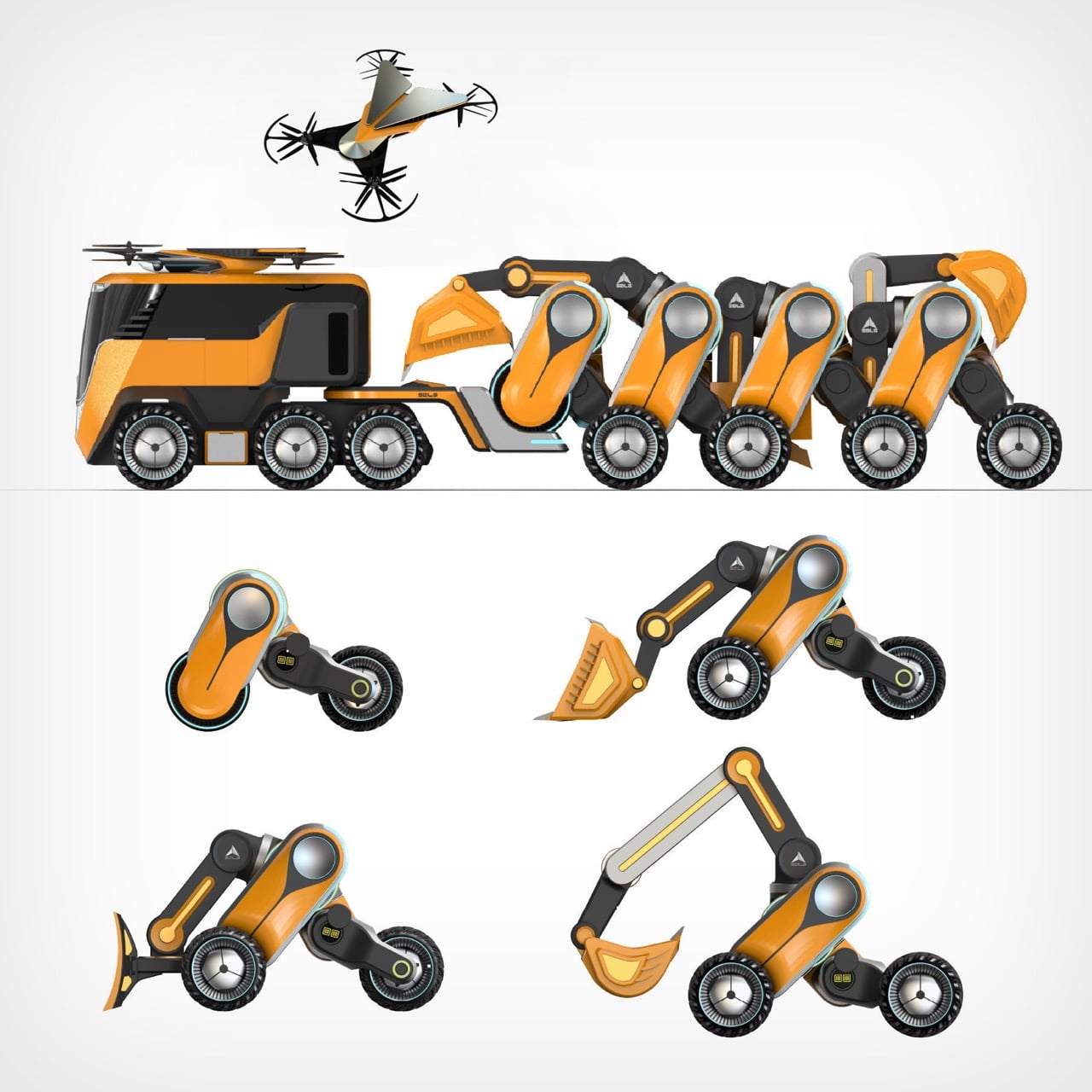
The result is PaveLink, an autonomous modular road-building system that arrives as a single articulated electric train and deploys into a coordinated fleet of AI-guided construction robots on site. One system. One delivery. A drone overhead, autonomous modules on the ground, and an intelligent command hub managing all of it in real time.

Designers: Yan Zhang and Jialu Hou

The truck head is a blocky, panoramic-windshield command center with a drone launch platform built right into the roof. When PaveLink reaches its target location, that drone lifts off first, ascending to map the terrain using aerial sensors and streaming data back to the cab in real time. The drone itself is worth a second look: shaped like a swept-back arrowhead with a multi-rotor configuration, it looks aggressive and purposeful in the air, matching the amber and gunmetal black palette of the ground units working below it.

Four distinct unit types detach from that spine: a front-loader with a wide scoop bucket, an excavator arm for breaking ground, a grader for leveling, and a heavy steel drum compactor for finishing the surface. On their own, each unit looks almost insectoid, riding on two or three fat rugged wheels with articulated limbs that flex and angle across uneven ground. Together, working in coordinated parallel, they turn what would normally require a crew of operators and days of staging into something that functions more like a synchronized performance.

All the modules stay tethered to the system via cables, which serve double duty as power lines and data channels. PaveLink runs fully electric, so there’s no diesel cloud hanging over the operation, and the continuous cable connection means the modules never need to stop and recharge independently. The drone keeps feeding updated terrain data overhead, flagging hazards and fine-tuning the AI’s workflow decisions as ground conditions change.

PaveLink is aimed squarely at the places traditional road construction struggles most: disaster-hit zones, remote regions with no skilled operators, and rugged terrain that conventional machinery can’t navigate efficiently. The modular autonomous approach answers all three problems at once. Fewer humans in harm’s way, fewer separate machines to transport in, and an AI coordination layer that adapts to whatever chaotic ground conditions it finds on arrival.

The post Transformers-inspired Shapeshifting Machine Splits Into An Entire Road-Construction Robot Fleet first appeared on Yanko Design.

Google Released a New Pixel 10a and It’s Basically the Same Phone From Last Year

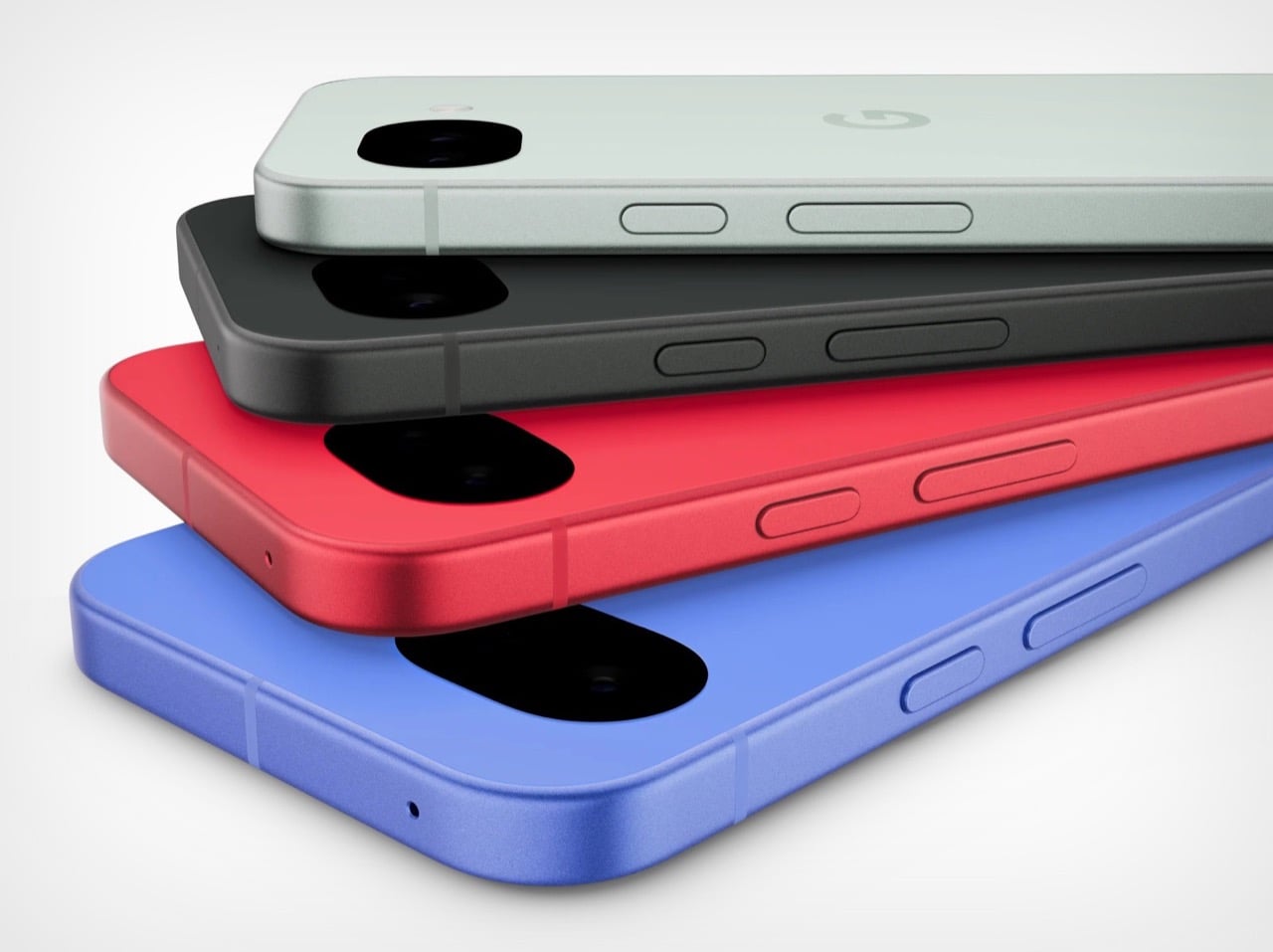
Google would like you to meet the Pixel 10A. It has a new name, new colors, and a press release that runs to several pages. It costs $499, which is exactly what the Pixel 9A cost. It weighs the same. It measures the same. It has the same cameras, the same battery, the same chip, and the same 6.3 inch display. There is a episode of The Office where Pam preoccupies Michael by presenting two identical photo printouts as a spot-the-difference puzzle. Google has essentially done that, except the printout costs five hundred dollars.

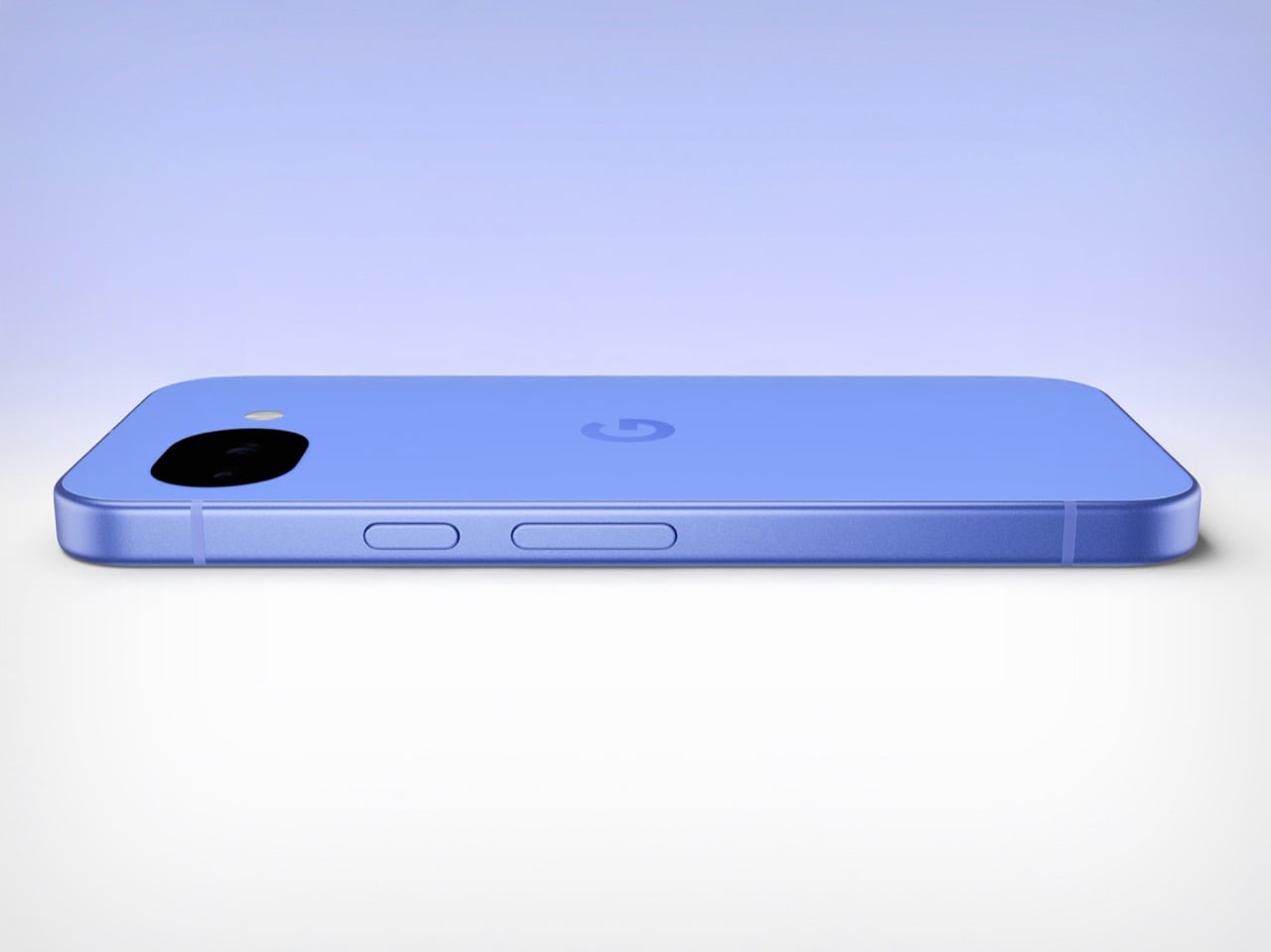
To be precise about what actually changed: the display is about 10% brighter, the glass protecting it moved from Gorilla Glass 3 to Gorilla Glass 7i, wired charging climbed from 23 watts to 30, and wireless charging went from 7.5 watts to 10. The camera bump, already barely perceptible on the 9A, is now completely flush. In some regions, satellite SOS is supported. That is the complete list. Google did not forget to send the rest of it.

Designer: Google

The Pixel 10 and Pixel 10 Pro both run on the Tensor G5. The Pixel 10A runs on the Tensor G4, the same chip from last year’s A-series, and the year before that in the Pixel 9 Pro. For years, buying the A-series meant getting the current flagship chip in a cheaper body. That was a genuinely good deal. Google has decided, apparently, that it was too good.

Best Take, Camera Coach, Call Screening, Clear Calling, Now Playing, Gemini as a built-in assistant, and seven years of updates add up to an experience that Android competitors at this price genuinely struggle to match. The Pixel ecosystem has real pull, and Google knows it. The 10A is banking on that pull being strong enough to carry a spec sheet that would embarrass a 2024 phone.

Google looked at the Pixel 9A, decided it had not been wrong about any of it, and shipped it again with brighter glass and a new colorway called Fog. In an industry that routinely invents problems to solve, there is something almost philosophical about a company that simply refuses to fix what it considers unbroken. The Pixel 10A does not have an identity crisis. It has its predecessor’s identity, and it is completely comfortable with that.

It will sell because the cameras are good, the battery lasts, the software support is unmatched at the price, and most people upgrading to it will be coming from something two or three generations older where the difference feels significant regardless of which Tensor chip is inside. Google understands its buyer perhaps better than its buyer understands the spec sheet. The Pixel 10A is a perfectly competent phone that knows exactly what it is. But also… this smartphone announcement could have been an email.

The post Google Released a New Pixel 10a and It’s Basically the Same Phone From Last Year first appeared on Yanko Design.

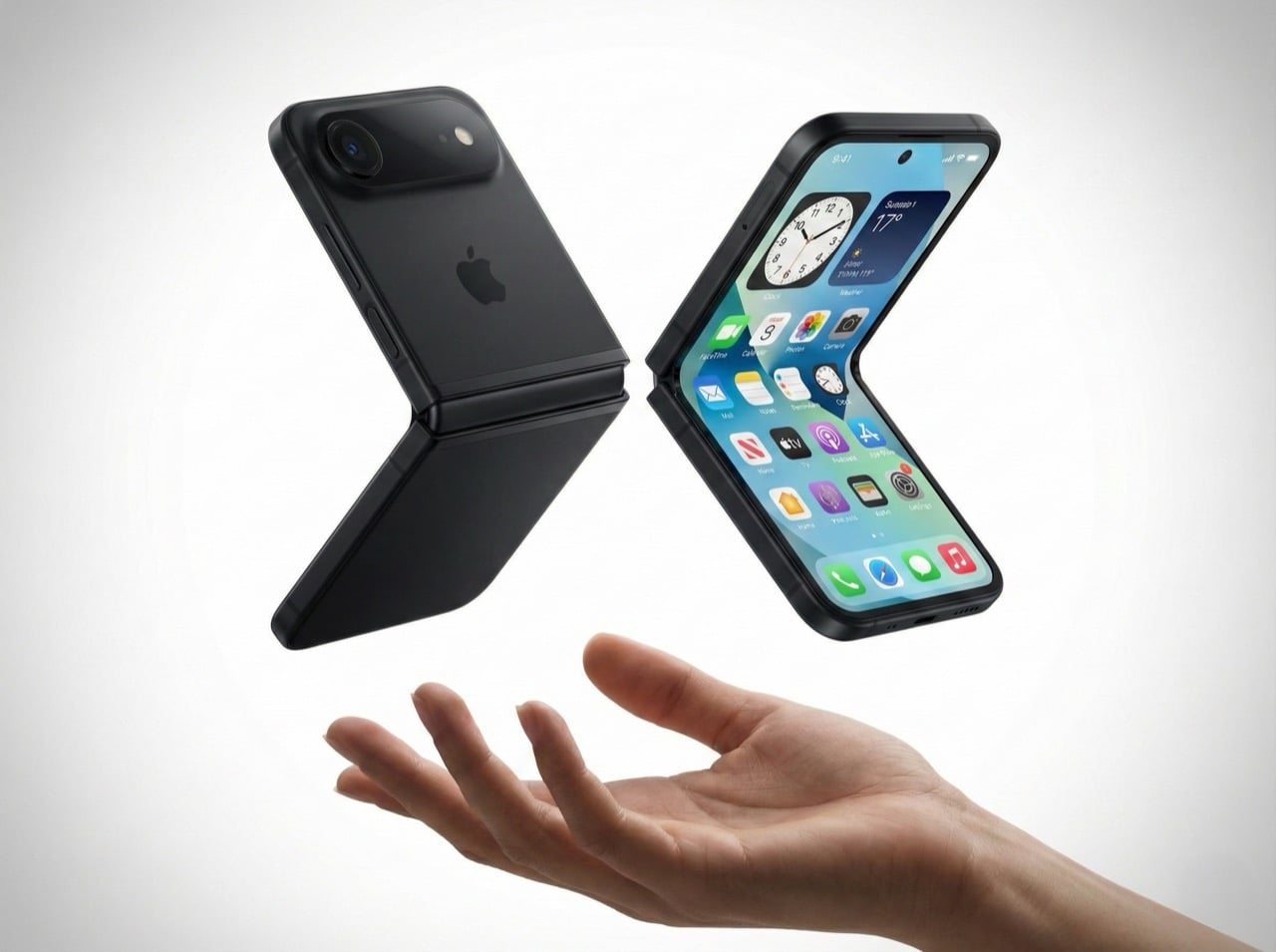
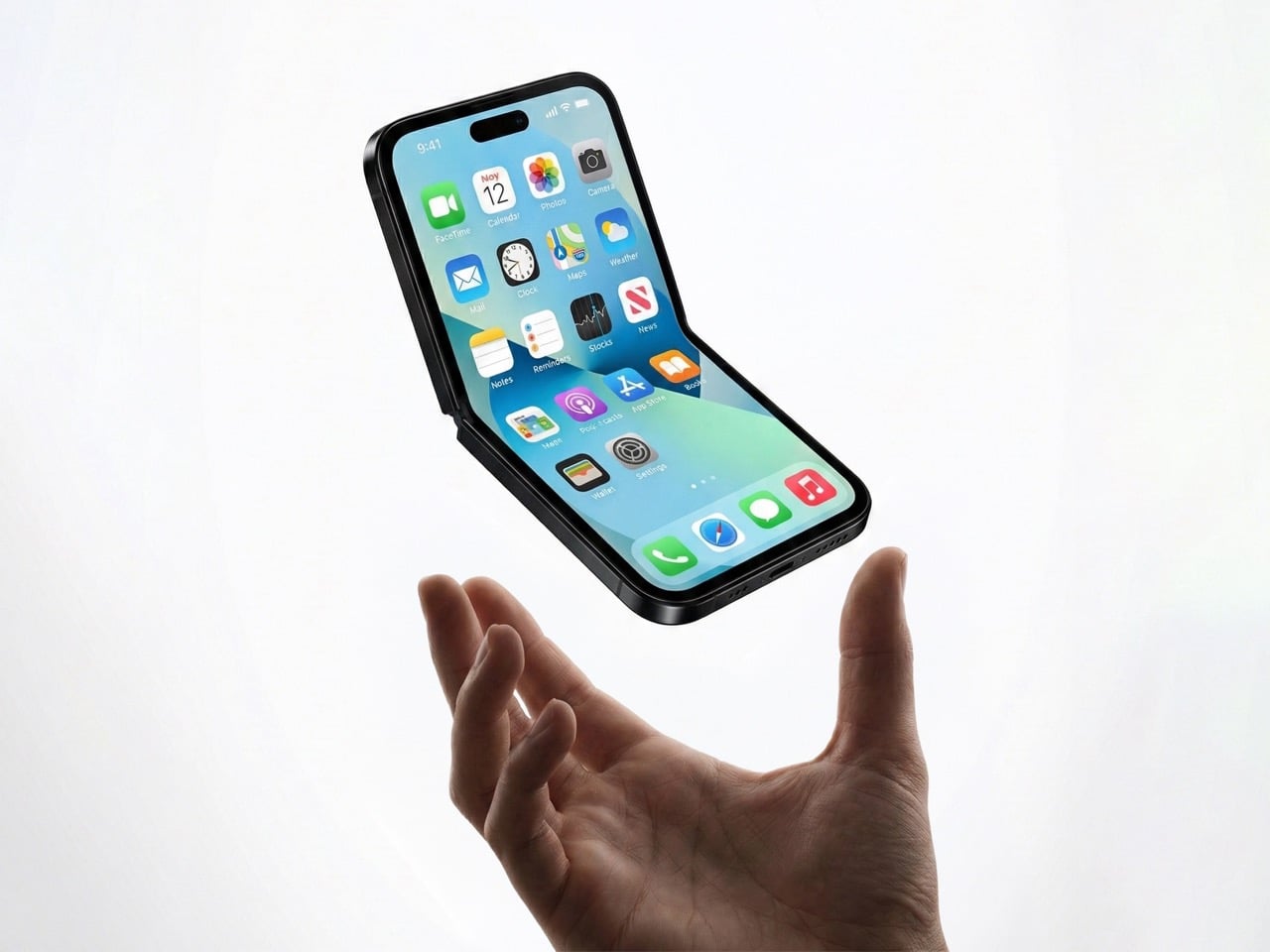
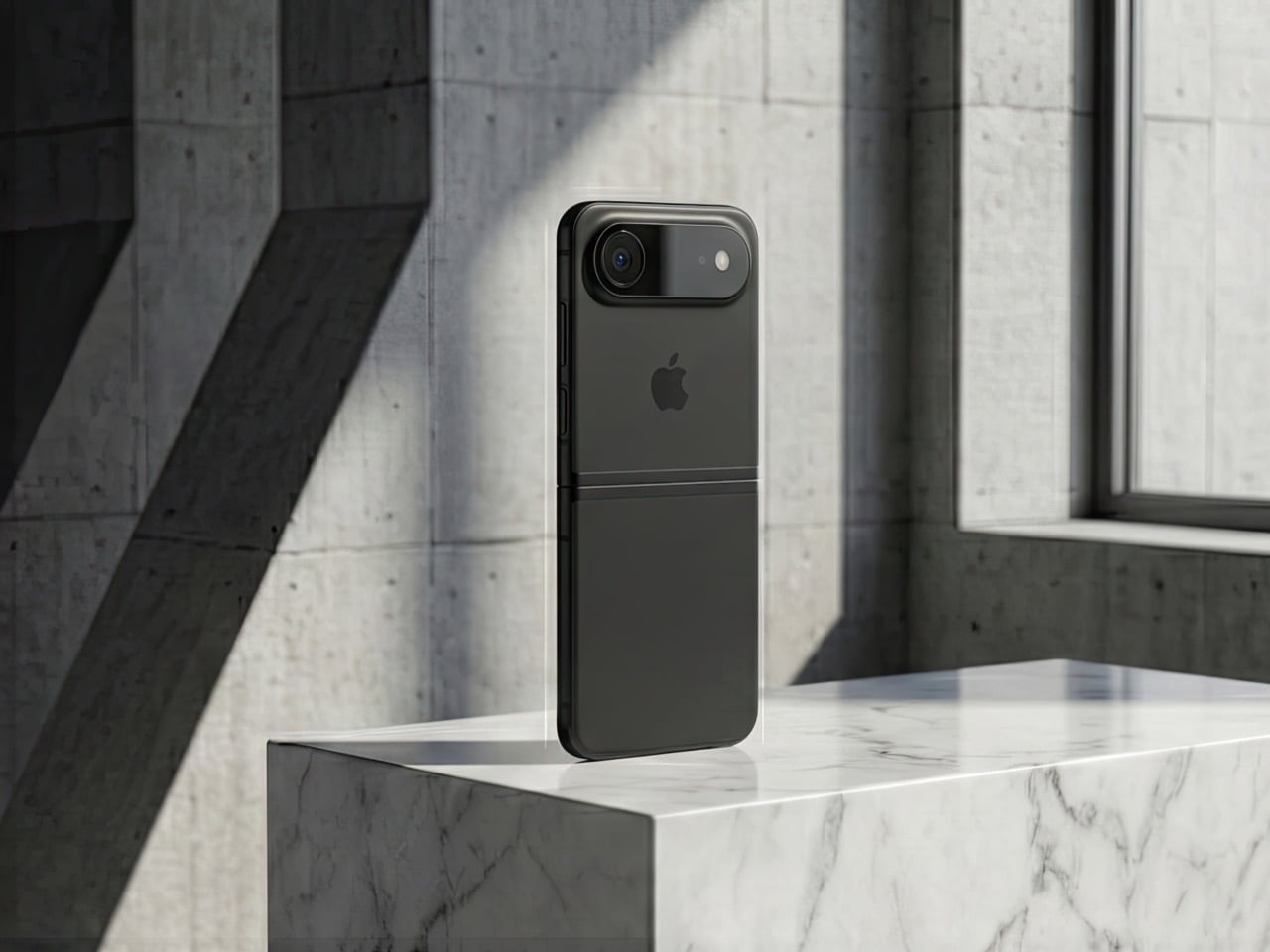
6 Reasons Why Apple Needs to Build a Clamshell iPhone Flip (And 1 Reason It Shouldn’t)

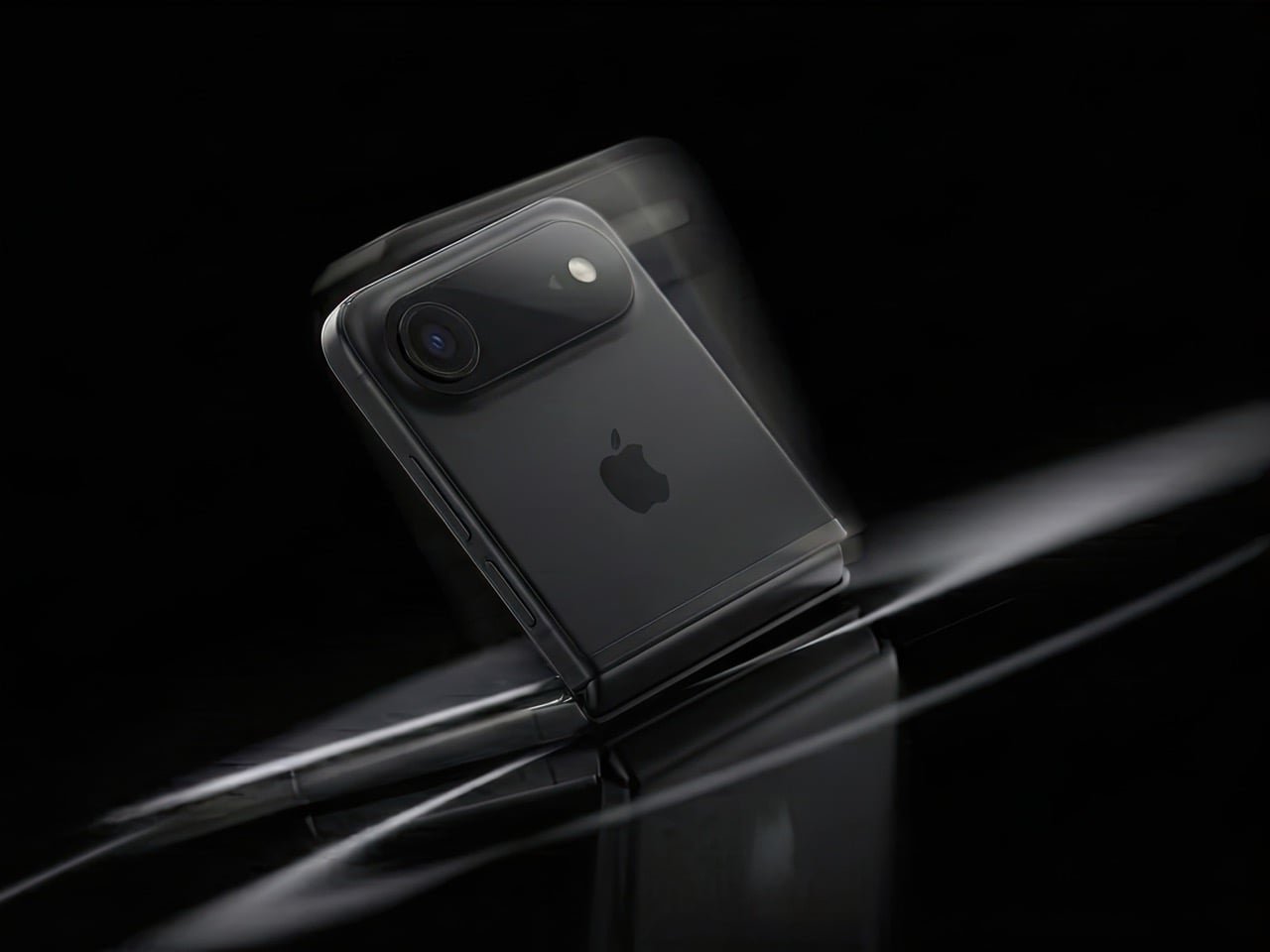
Remember when phones got smaller? The iPhone 13 Mini had a cult following, but Apple killed it because most people wanted bigger screens. Here’s the plot twist: a clamshell foldable iPhone could bring back that beloved compact size without sacrificing screen real estate. You get a full-size display when you need it, and a pocketable square when you don’t. It’s the best of both worlds, and Apple knows it.

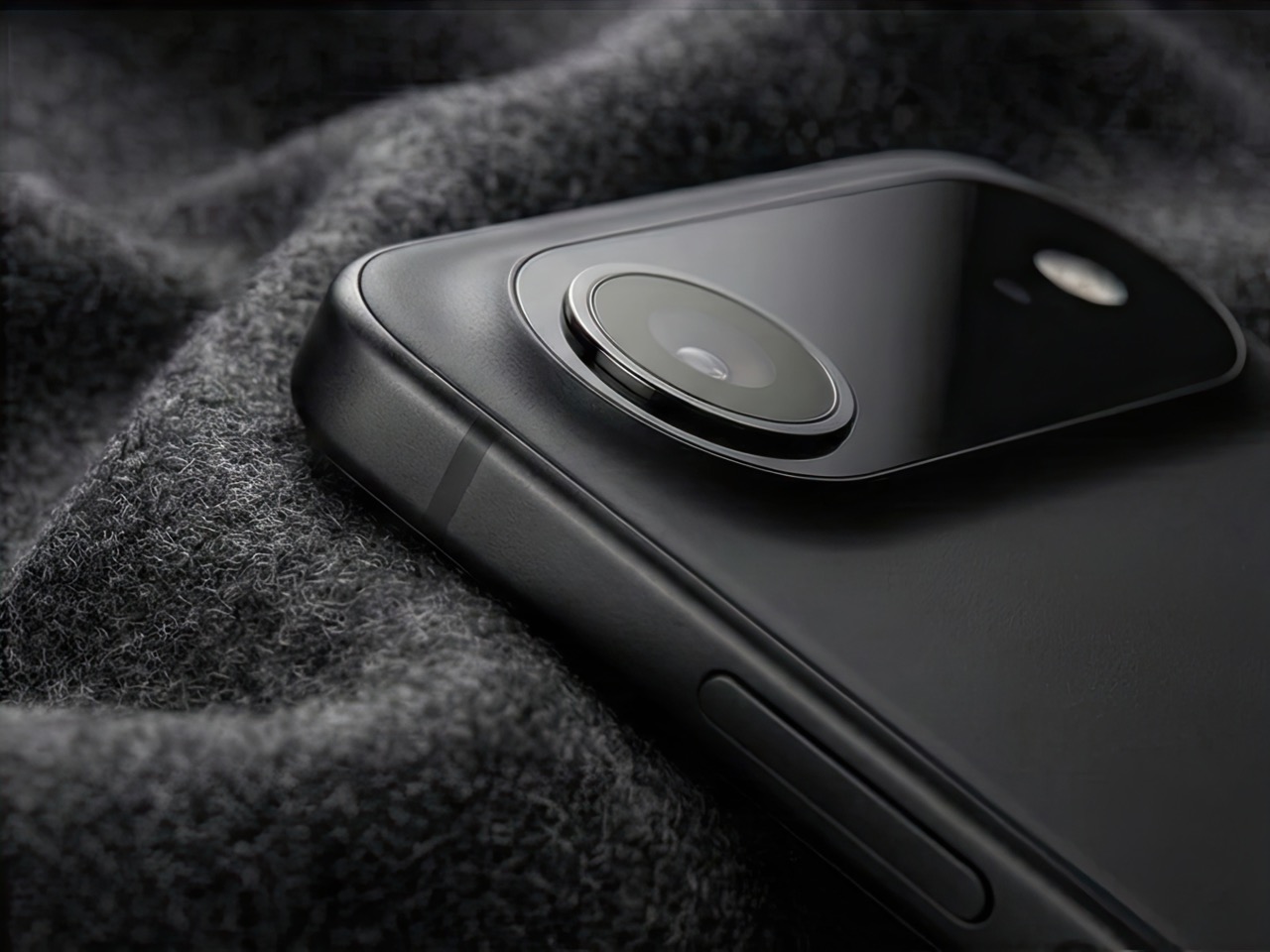
Mark Gurman’s latest report suggests Apple is seriously exploring this form factor. It wouldn’t be their first foldable (a larger model is rumored for later this year), but it might be their smartest. A clamshell iPhone makes sense for reasons that go way beyond nostalgia. It’s cheaper to build than a book-style fold, it doesn’t compete with the iPad Mini, and it opens up a market where Samsung is basically the only serious player. There are six solid reasons why Apple should do this, and one big reason why it might not work. Let’s dig in.

The iPhone Mini lives on (just folded in half)

Apple discontinued the iPhone 13 Mini because the sales numbers didn’t justify keeping it around. Turns out most people prefer bigger screens, even if it means carrying a brick in their pocket. But the Mini’s fans were passionate, and they’ve been vocal about wanting a truly compact iPhone ever since. A clamshell solves this problem in the most elegant way possible.

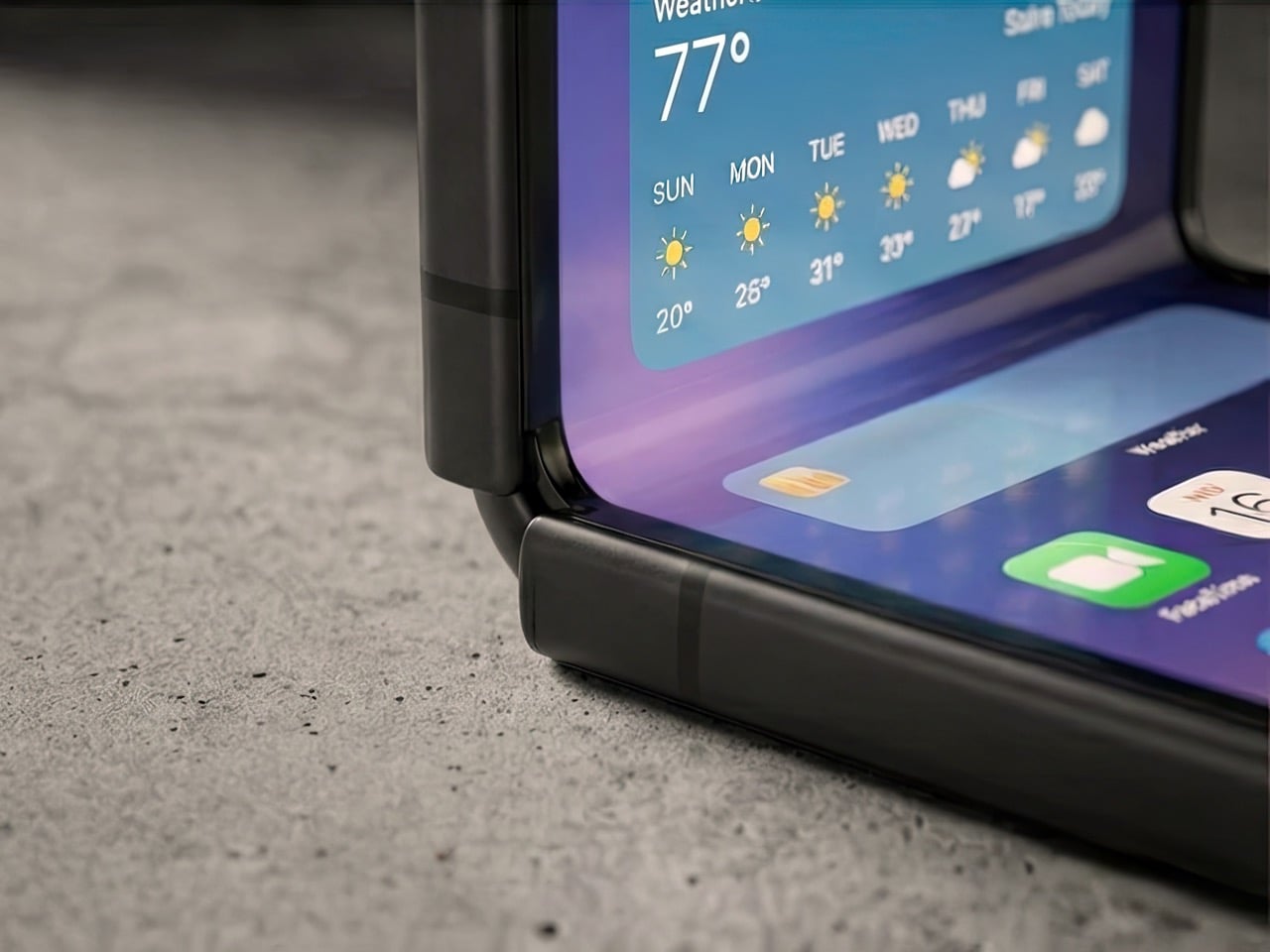
When folded, it’s roughly the size of the Mini, maybe even smaller depending on how thick the hinge is. When unfolded, you get a full 6.1-inch or 6.7-inch display, same as the regular iPhone or Pro Max. The people who loved the Mini weren’t asking for a smaller screen, they were asking for a phone that didn’t dominate their pocket or require two hands for basic tasks. A clamshell gives them that portability without forcing them to squint at a 5.4-inch display.

This isn’t just about bringing back a discontinued product. It’s about proving that compact phones can exist in 2026 without compromising on screen size. The form factor itself becomes the feature.

It doesn’t murder the iPad Mini

Here’s the uncomfortable truth about book-style foldables: they’re iPad killers. If Apple released an iPhone that unfolds into an 8-inch display, who’s buying an iPad Mini? The overlap would be brutal. You’d have a device that fits in your pocket, runs iOS, makes calls, and gives you a tablet-sized screen when you need it. The iPad Mini’s entire value proposition collapses.

A clamshell doesn’t have this problem. Even at its largest, a clamshell iPhone would max out at maybe 6.9 inches unfolded. That’s still firmly in phone territory, not tablet territory. The iPad Mini’s 8.3-inch display remains the smallest “real” iPad you can buy, and it stays relevant for people who want that in-between size for reading, note-taking, or media consumption.

Apple’s product lineup is carefully segmented, and a clamshell iPhone slots in without disrupting the hierarchy. It’s a phone that folds smaller, not a tablet that folds into a phone. That distinction matters when you’re trying to sell both devices to the same customer.

Samsung owns this space, but they’re beatable

The Galaxy Z Flip has been around since 2020, and Samsung’s refined it through multiple generations. They’re the dominant player in the clamshell category, but “dominant” doesn’t mean “unbeatable.” Motorola’s putting up a fight with the Razr, but Google hasn’t touched this form factor yet. No Pixel Flip. No Nothing Flip. No OnePlus Flip. It’s basically Samsung’s game, and that’s an opportunity for Apple.

Apple doesn’t need to be first. They need to be better. And in a market where there’s only one major competitor, “better” is achievable. Samsung’s Z Flip 6 is solid, but it’s not perfect. The cover screen still feels like an afterthought, the crease is visible, and the software experience is classic Samsung (which is to say, inconsistent). If Apple can deliver a smoother hinge, a more useful outer display, and that signature iOS polish, they could own this category within a generation.

The fact that Google isn’t competing here is huge. The Pixel is Apple’s biggest threat in terms of owning both hardware and software (plus Gemini is vastly more superior than any AI Apple’s managed to roll out), and if there’s no Pixel Flip to compete with an iPhone Flip, Apple has a clear shot at Android users who want this form factor but don’t want Samsung’s ecosystem.

Smaller hinge, lower risk

Building a book-style foldable is expensive and complicated. You’re engineering a hinge that supports a massive, fragile display. You’re solving durability issues that Samsung and others have been wrestling with for years. You’re creating an entirely new product category that might flop. The R&D costs are enormous, and if it doesn’t sell, you’ve burned a ton of money.

A clamshell is cheaper to prototype, cheaper to manufacture, and cheaper to fail with. The display is smaller, the hinge mechanism is simpler, and the overall engineering challenge is less daunting. If Apple wants to dip their toes into foldables without betting the farm, a clamshell is the way to do it.

This also means Apple can price it more competitively. A book-style iPhone Fold would probably start at $1,799 or higher. A clamshell could reasonably launch at $1,199, maybe $1,299. That’s still premium, but it’s within reach of people who’d normally buy a Pro model. The lower price point expands the potential customer base, and if it sells well, Apple can use that momentum to justify a larger foldable later.

Hands-free everything

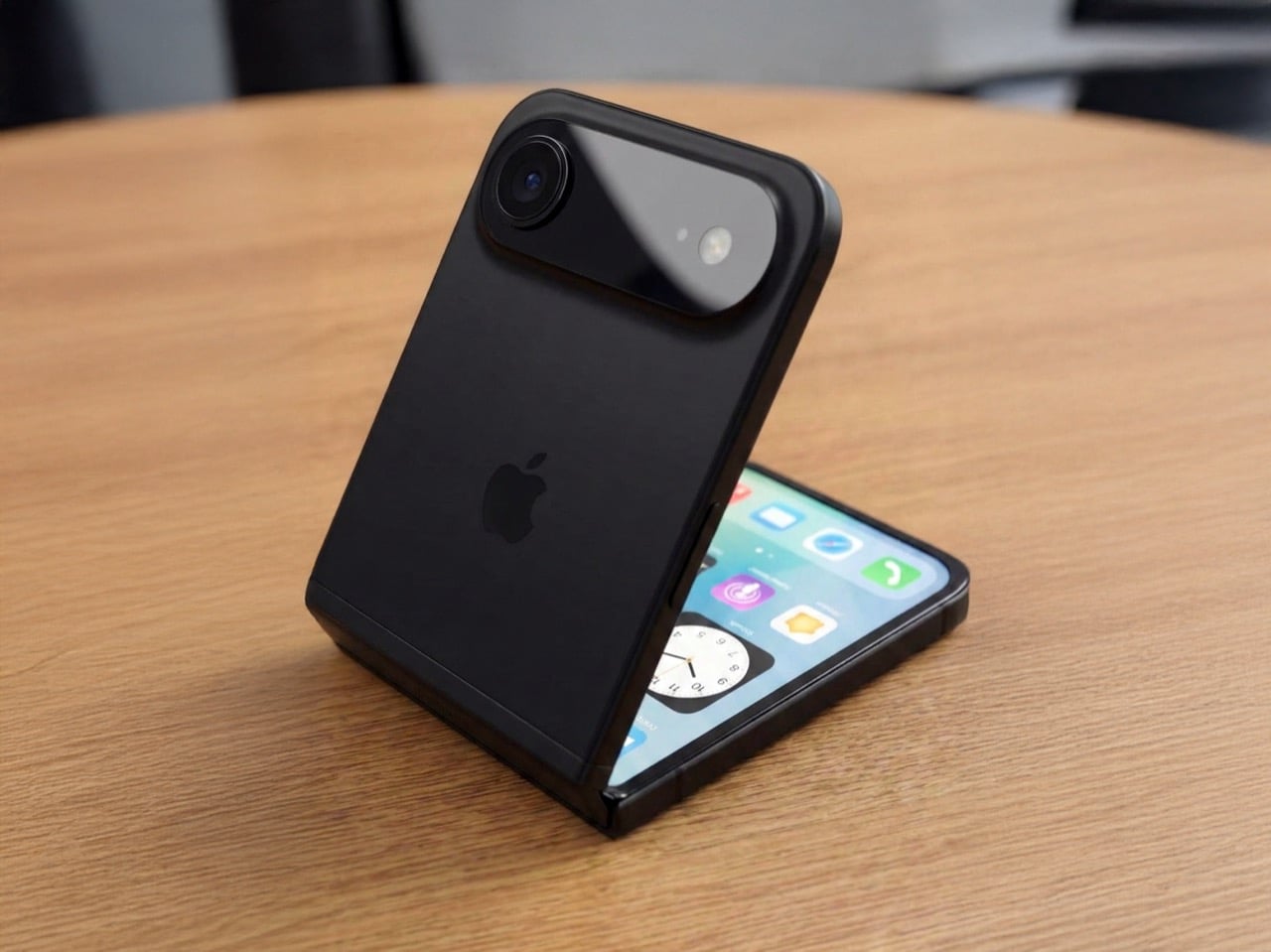
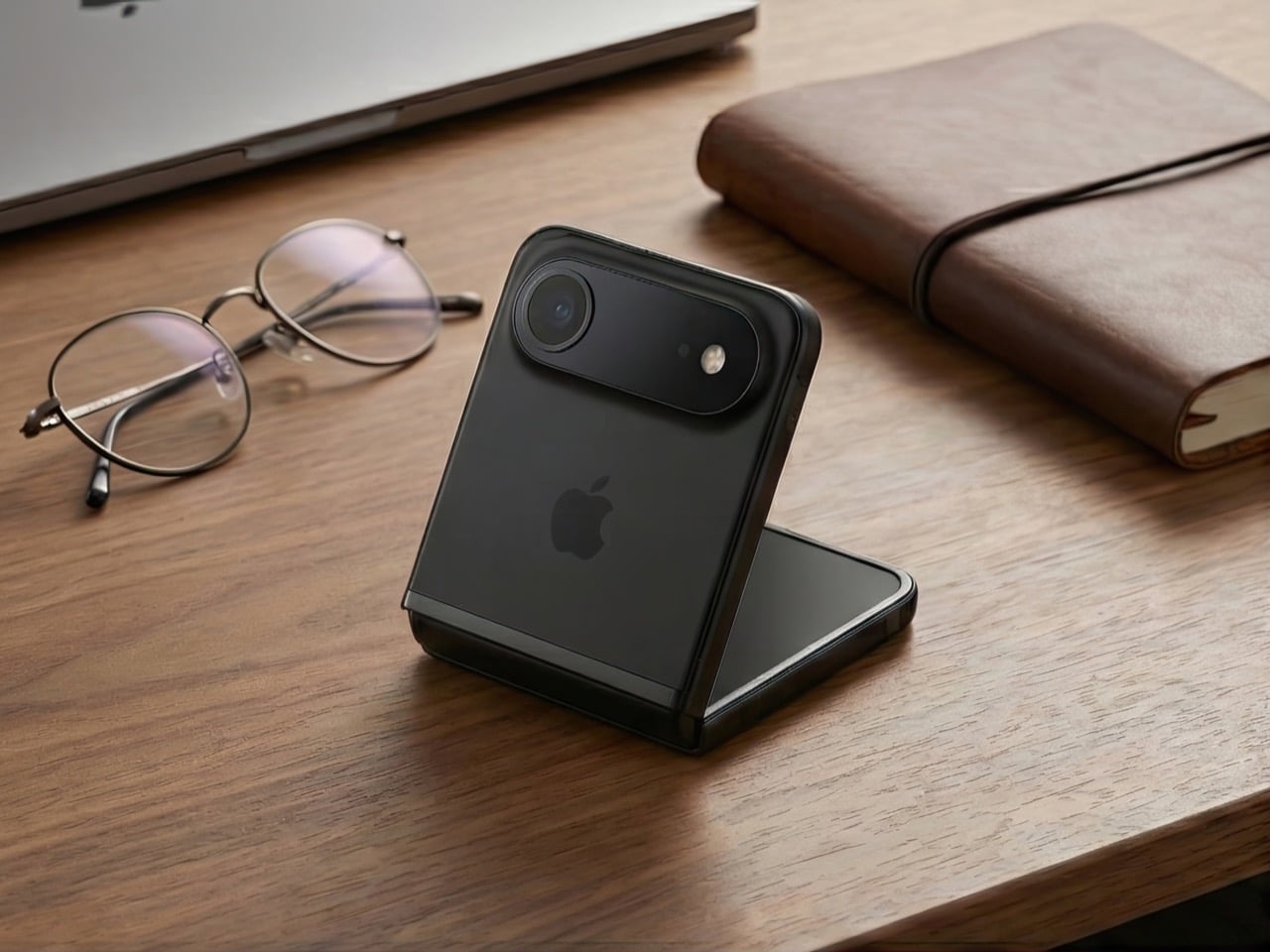
The half-folded “laptop mode” is one of the best features of clamshell foldables, and it’s criminally underrated. You can prop the phone up on a table, angle the screen however you want, and suddenly you’ve got a hands-free setup for FaceTime, vlogging, watching videos, or taking photos. No tripod required. No awkward propping it against a water bottle. It just works.

Apple’s been positioning the iPhone as a serious content creation tool for years. ProRes video, Cinematic Mode, all those camera upgrades, they’re aimed at people who make stuff. A clamshell iPhone would give those creators a built-in tripod mode that’s actually useful. Imagine shooting a cooking tutorial, a makeup video, or a product unboxing without needing extra gear. The phone holds itself at the perfect angle, and you’re free to use both hands.

This isn’t a niche use case. Every vertical video you’ve ever seen on TikTok or Instagram could’ve been easier to shoot with a clamshell. Apple knows this, and they know it’s a selling point that most mobile brands haven’t fully capitalized on yet.

Big screen, small pocket

Here’s the paradox of modern smartphones: people want huge screens, but they hate carrying huge phones. The iPhone 15 Pro Max is a phenomenal device, but it’s a slab that dominates your pocket, your bag, and your hand. A clamshell solves this in the most obvious way possible: make the screen big, then fold it in half.

When unfolded, you get all the screen real estate of a Pro or Pro Max. When folded, it’s a compact square that sits comfortably in any pocket. You’re not sacrificing display size, you’re just rearranging it. This is especially appealing for people who want big screens but don’t want to upgrade their wardrobe to accommodate a 6.7-inch rectangle.

The folded form factor also changes how you carry the phone. It’s less likely to slide out of a pocket, it doesn’t create that awkward bulge in tight jeans, and it’s easier to grip when you’re pulling it out. These are small quality-of-life improvements, but they add up. A clamshell makes the big-screen experience more portable, and that’s a real advantage.

The one problem: MagSafe doesn’t love squares

Here’s where things get tricky. Apple’s entire MagSafe ecosystem is built around vertical rectangles. Wallets, battery packs, car mounts, wireless chargers, they all assume your iPhone is shaped like, well, an iPhone. A clamshell changes that. When folded, it’s a square. When unfolded, it’s a normal phone shape. But MagSafe accessories are designed to stick to the back of a phone that’s always the same shape.

How does a MagSafe wallet work on a folded clamshell? Does it attach to the outer cover, which is probably glass or plastic? Does Apple redesign the entire accessory lineup to accommodate a square form factor? Do they create clamshell-specific MagSafe products? None of these solutions are great.

This isn’t a dealbreaker, but it’s a complication. Apple’s accessory ecosystem is a huge part of their strategy, and a clamshell iPhone disrupts that in ways a book-style fold wouldn’t. You could argue that a book-style fold, when closed, is still roughly phone-shaped, so MagSafe accessories might work. A clamshell is just different enough to break compatibility.

Apple could solve this with clever engineering. Maybe the MagSafe ring is on the outer screen side, and accessories attach there. Maybe they introduce a new “MagSafe Flip” standard with different magnets. Or maybe they just accept that clamshell buyers won’t use traditional MagSafe accessories and move on. Either way, it’s a problem that doesn’t exist with their current lineup, and it’s worth considering.

So, is this happening?

Gurman’s report is credible, but it’s not a product announcement. Apple explores lots of things that never ship. They’ve been prototyping foldables for years, and we’ve seen patents dating back to 2016. The fact that they’re actively working on a clamshell now doesn’t mean it’ll hit shelves in 2027 or even 2028.

But the logic is there. A clamshell iPhone solves more problems than it creates. It brings back the Mini’s form factor without shrinking the screen. It enters a market where Apple could actually win. It’s cheaper and less risky than a book-style fold. And it gives Apple a foothold in foldables without cannibalizing their other products.

If Apple does this right, a clamshell iPhone could be the foldable that finally makes sense for people who aren’t early adopters. It’s practical, it’s pocketable, and it’s exactly the kind of product Apple excels at making. The only question is whether they’re willing to rethink MagSafe to make it work.

(Images via AI)

The post 6 Reasons Why Apple Needs to Build a Clamshell iPhone Flip (And 1 Reason It Shouldn’t) first appeared on Yanko Design.

3D-Printed Guitar Amp Desk Organizer Brings Concert Energy to Your Boring Monday Morning

The contrast between Sunday night at a concert and Monday morning at your desk is brutal. One moment you’re lost in the music, feeling every guitar riff vibrate through your chest. The next, you’re answering emails and pretending last night’s euphoria wasn’t real. The transition back to routine work feels especially cruel when the weekend gave you a taste of something electric.

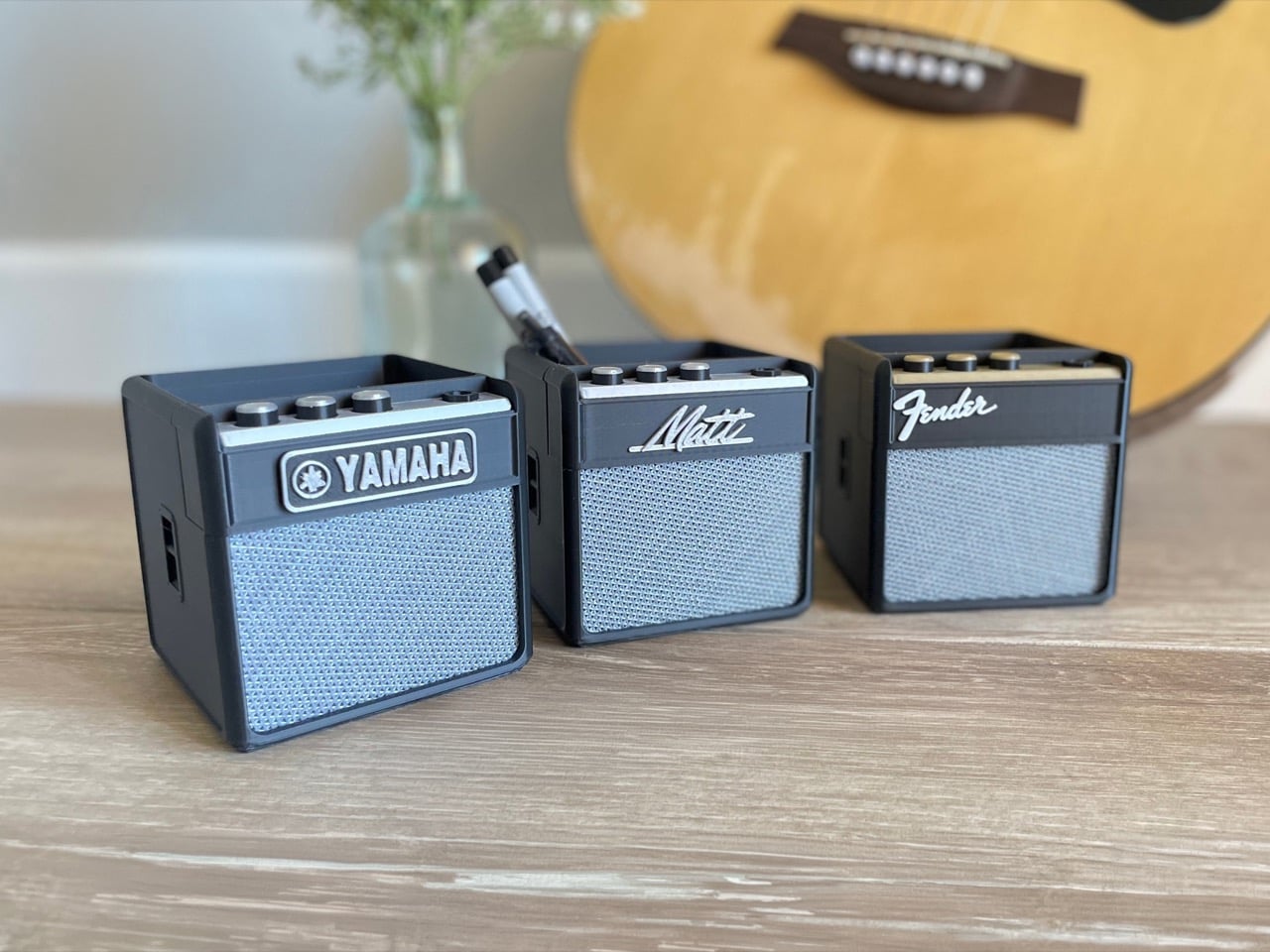
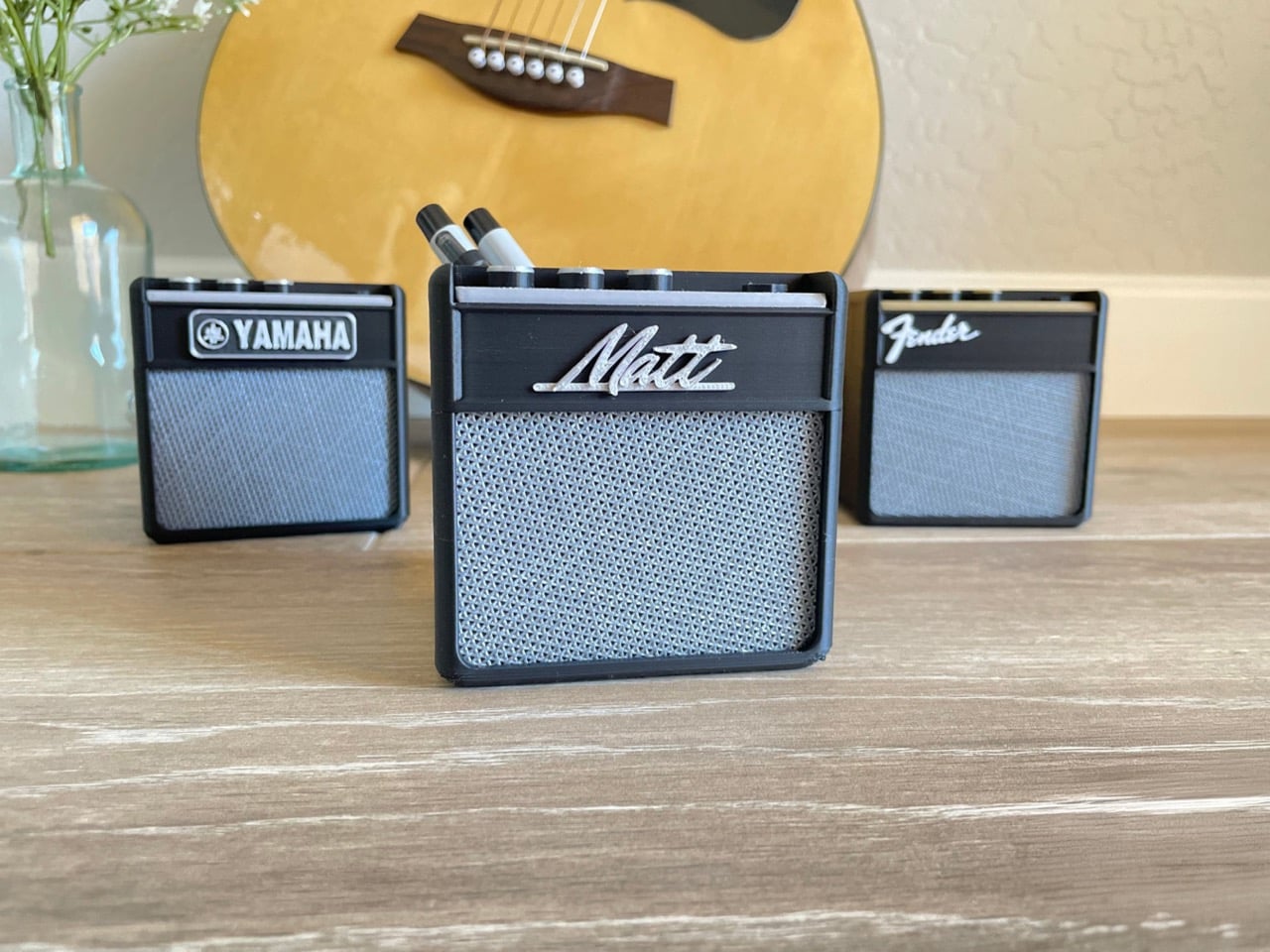
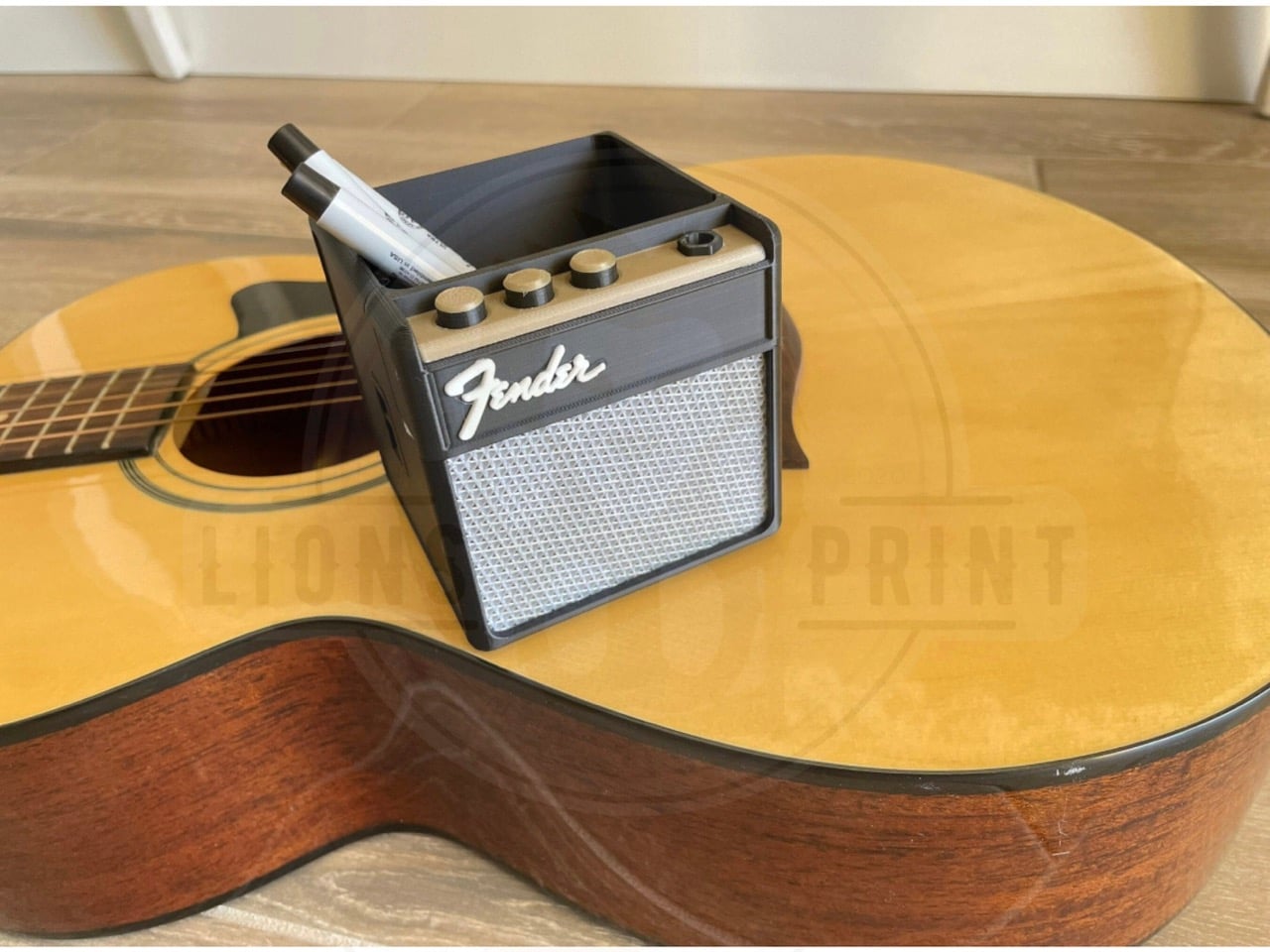
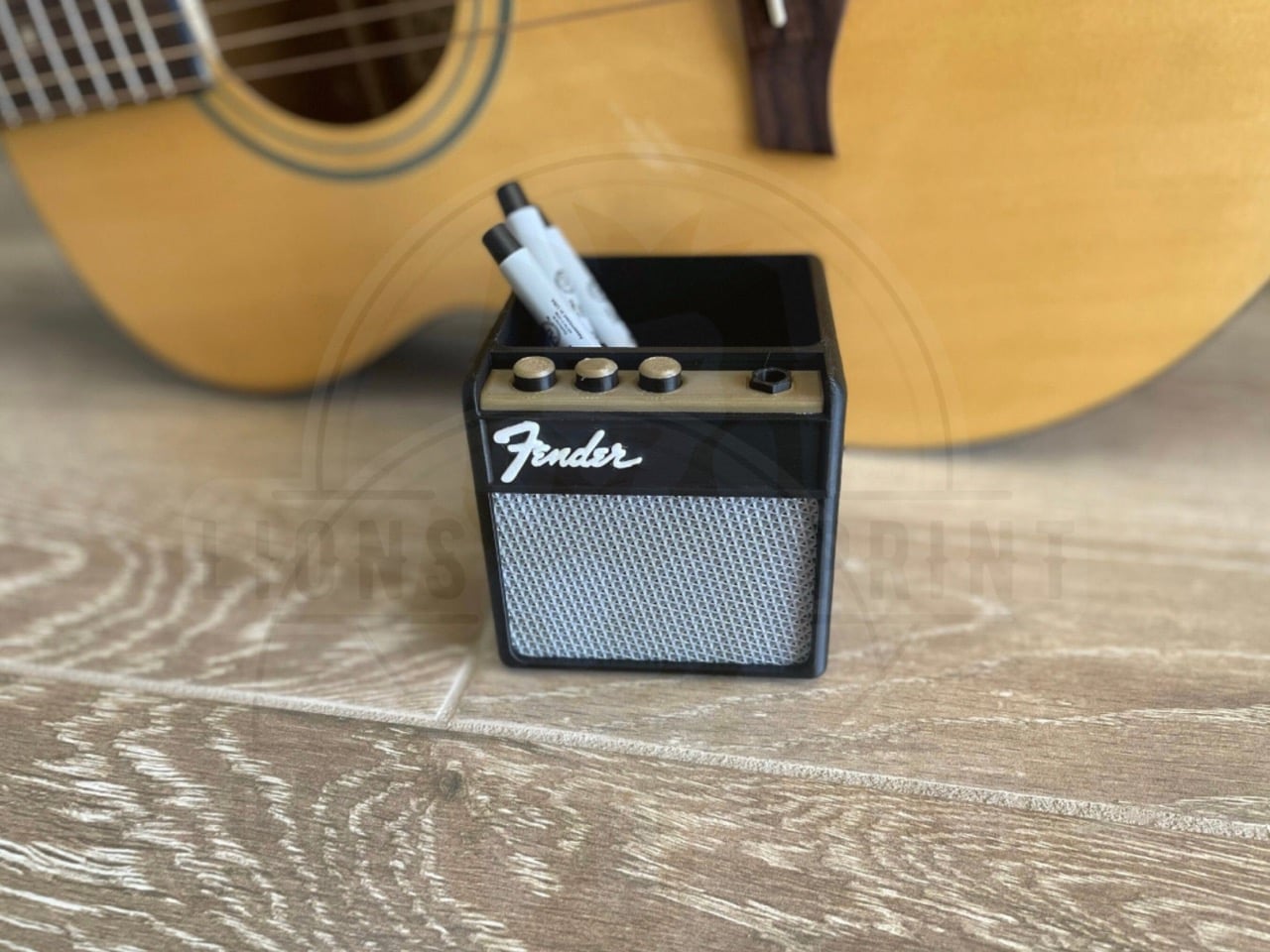
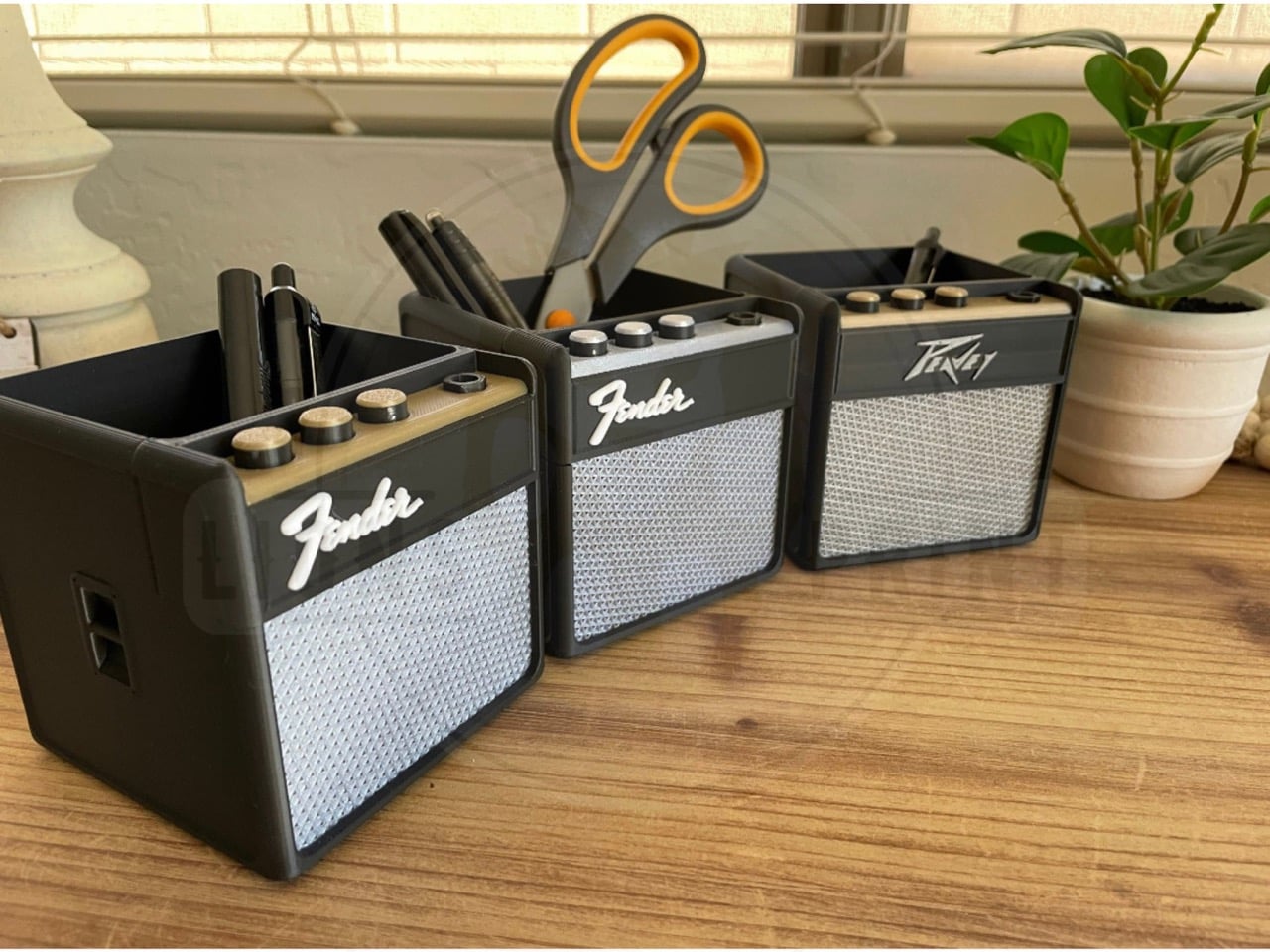
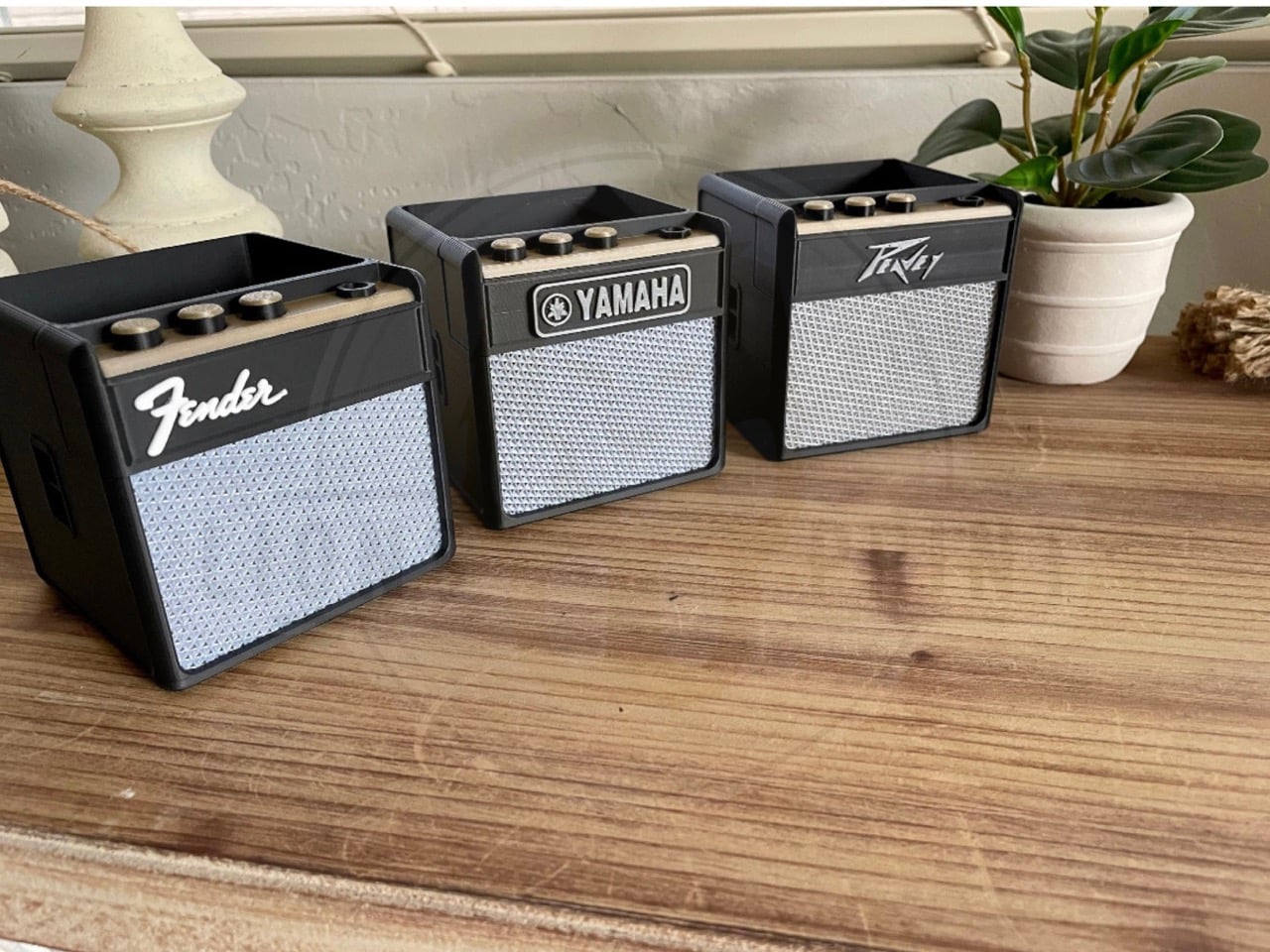
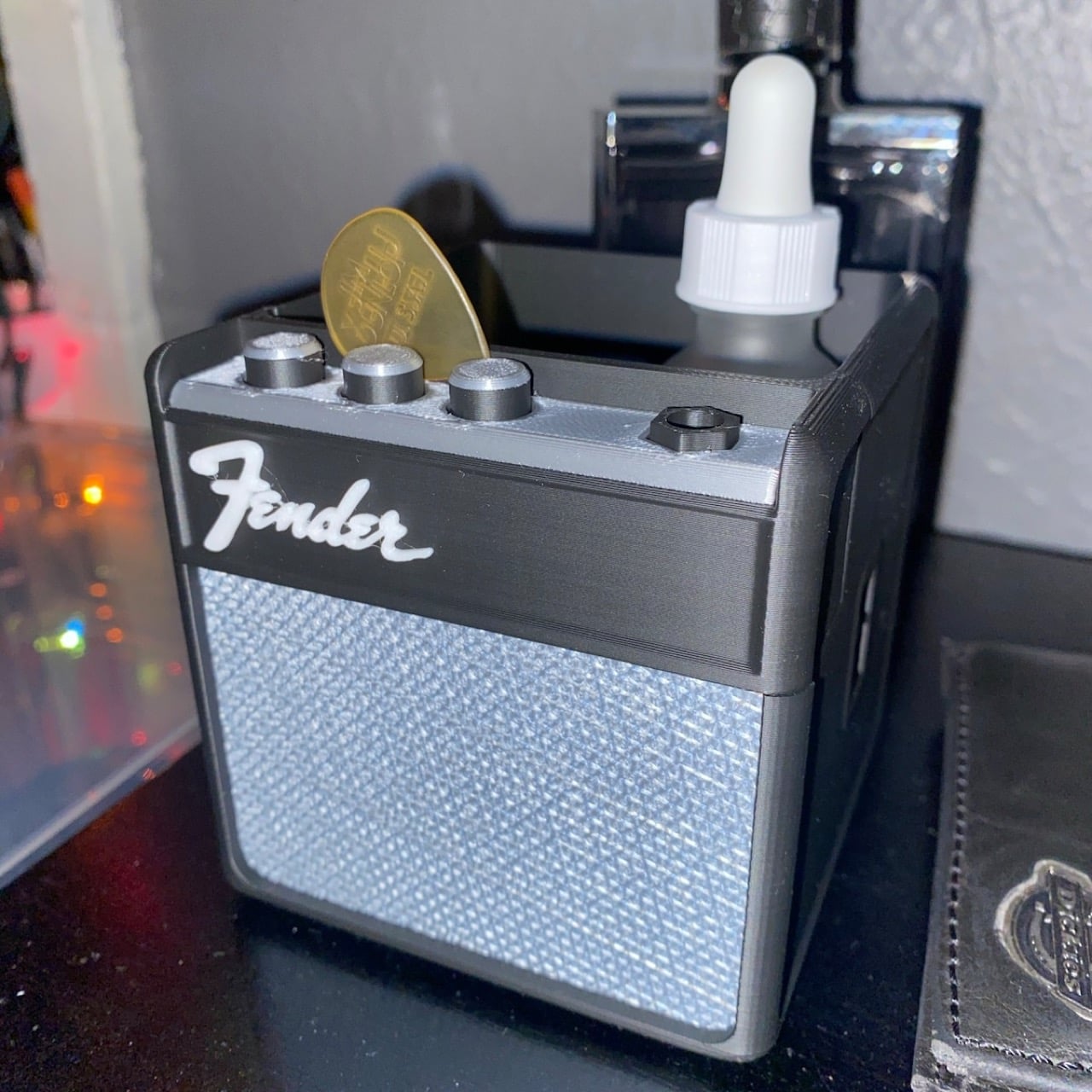
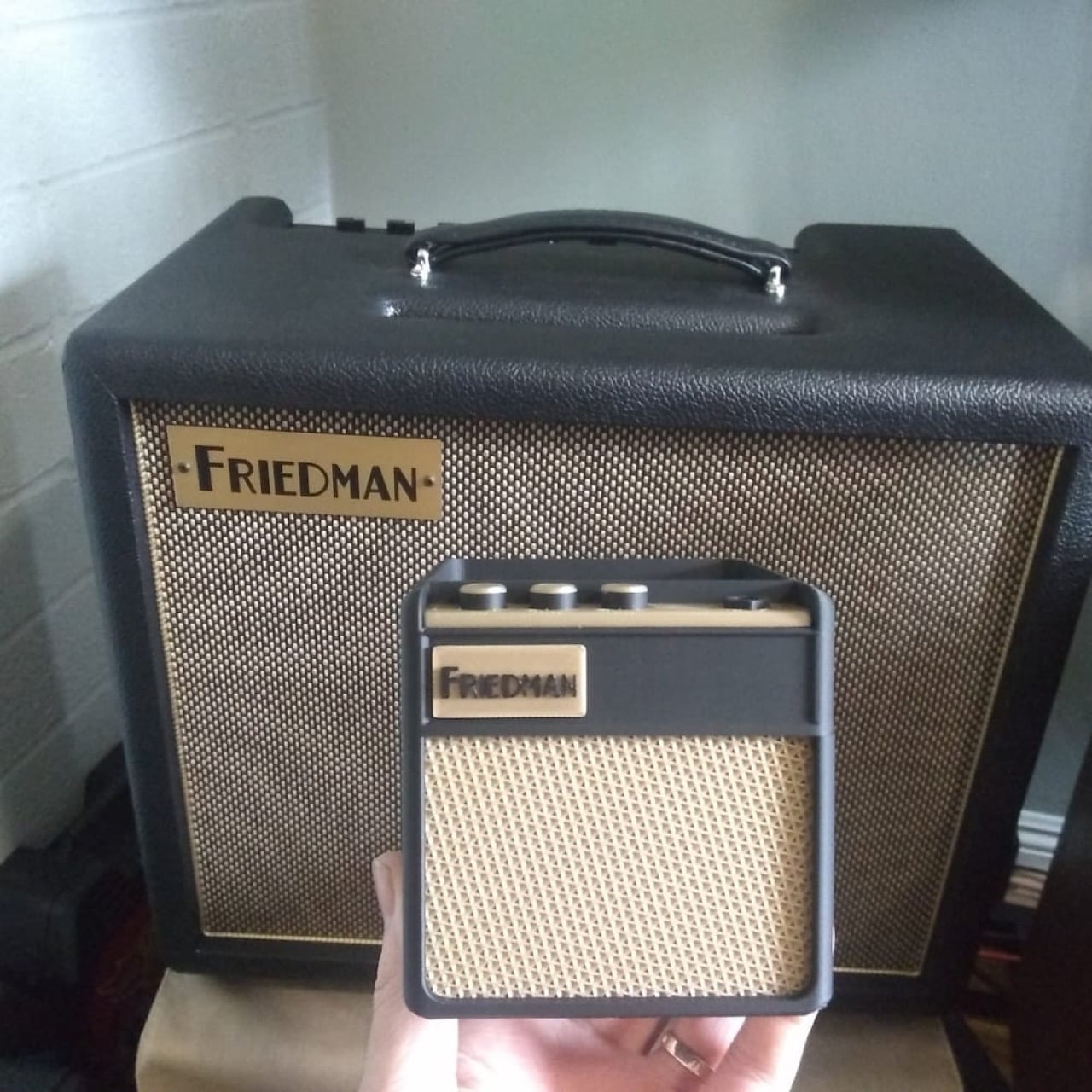
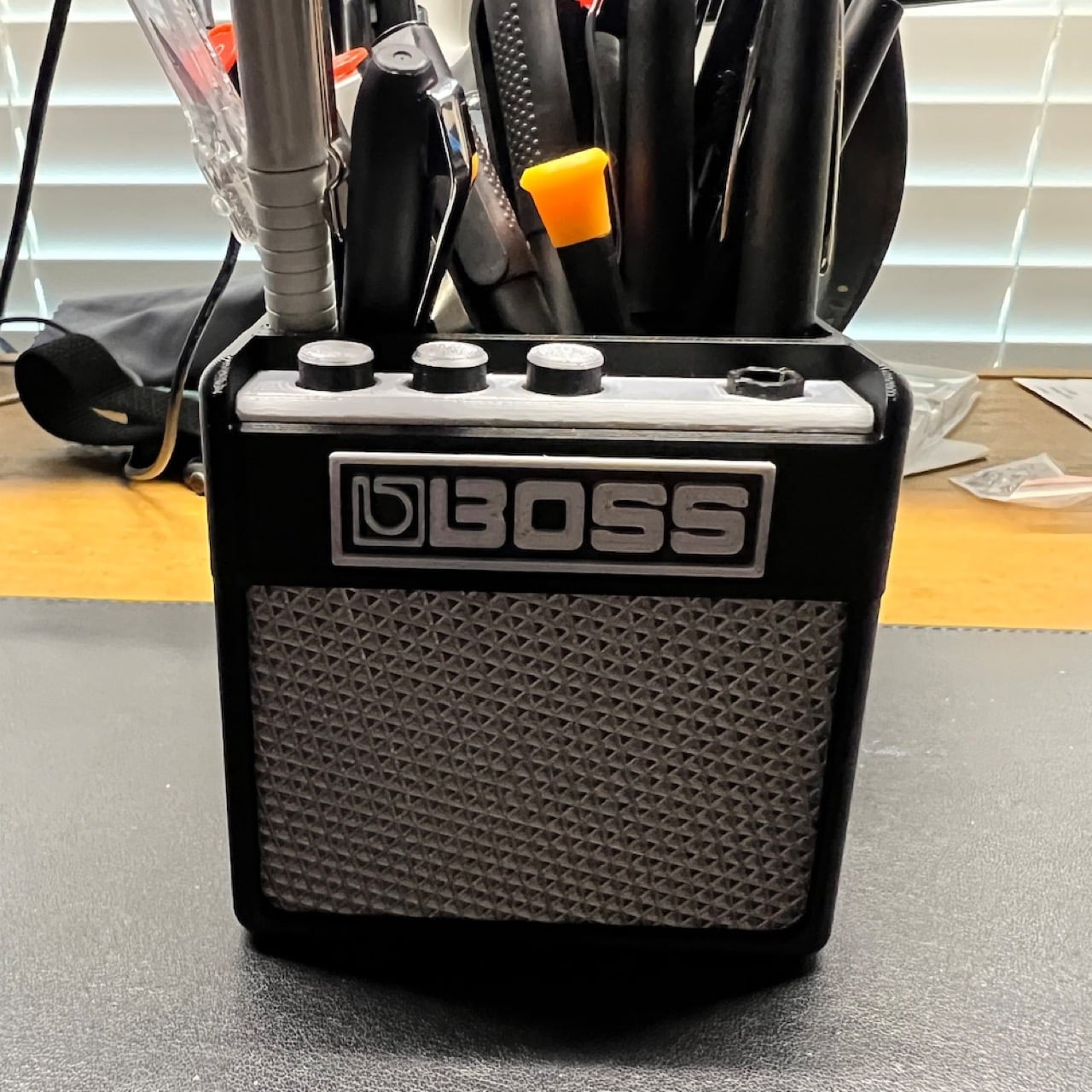
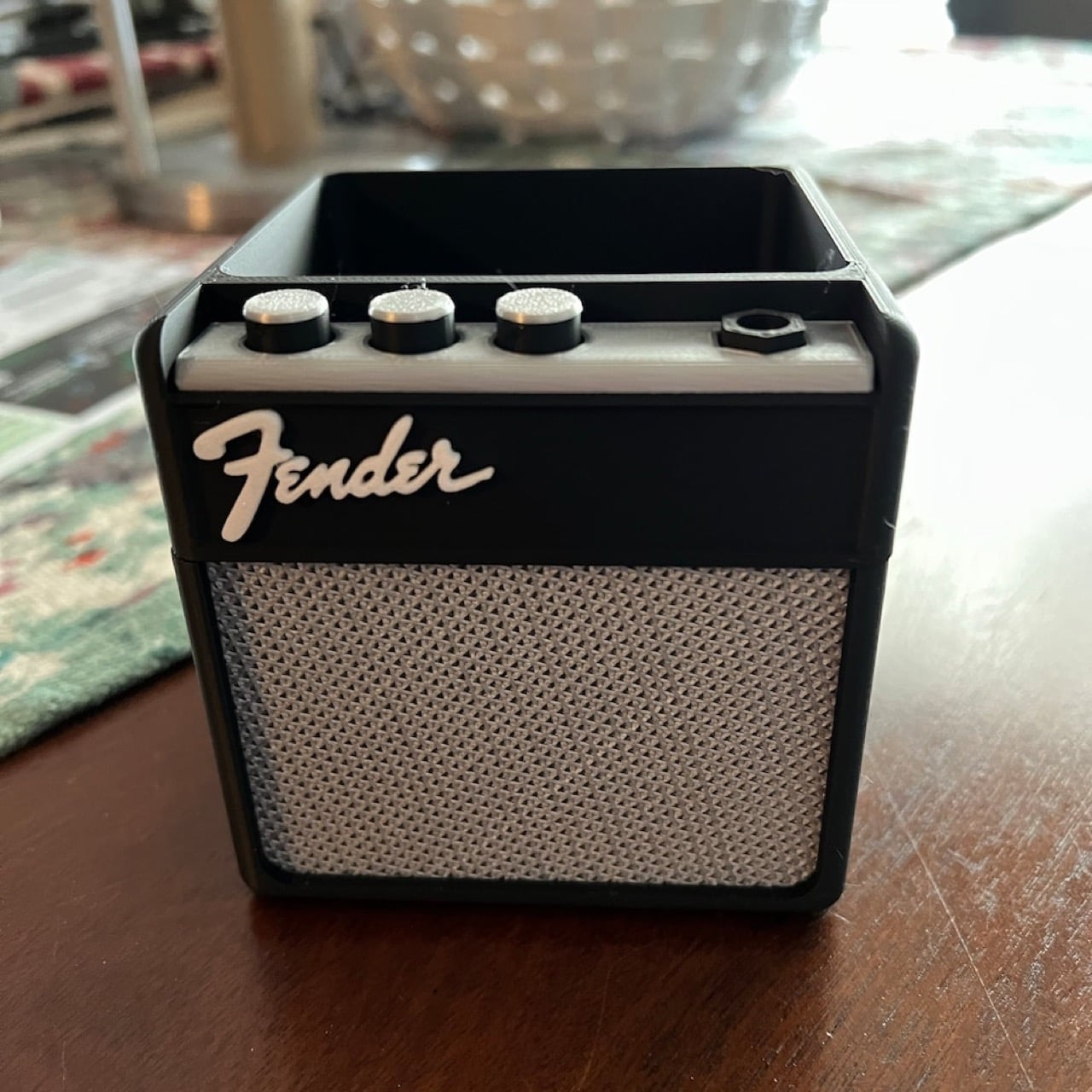
That’s where a little whimsy helps. These 3D-printed guitar amp pen holders from LionsPrint bring a fragment of that musical energy to your workspace. They’re compact at 3.5 inches per side, but the details are spot-on: authentic speaker grilles, control panels, and designs inspired by the amplifiers that power actual rock shows. You can personalize them with custom text in silver or gold. They won’t replace the thrill of live music, but they’re a small reminder that the mundane is just temporary.

Designer: LionsPrint

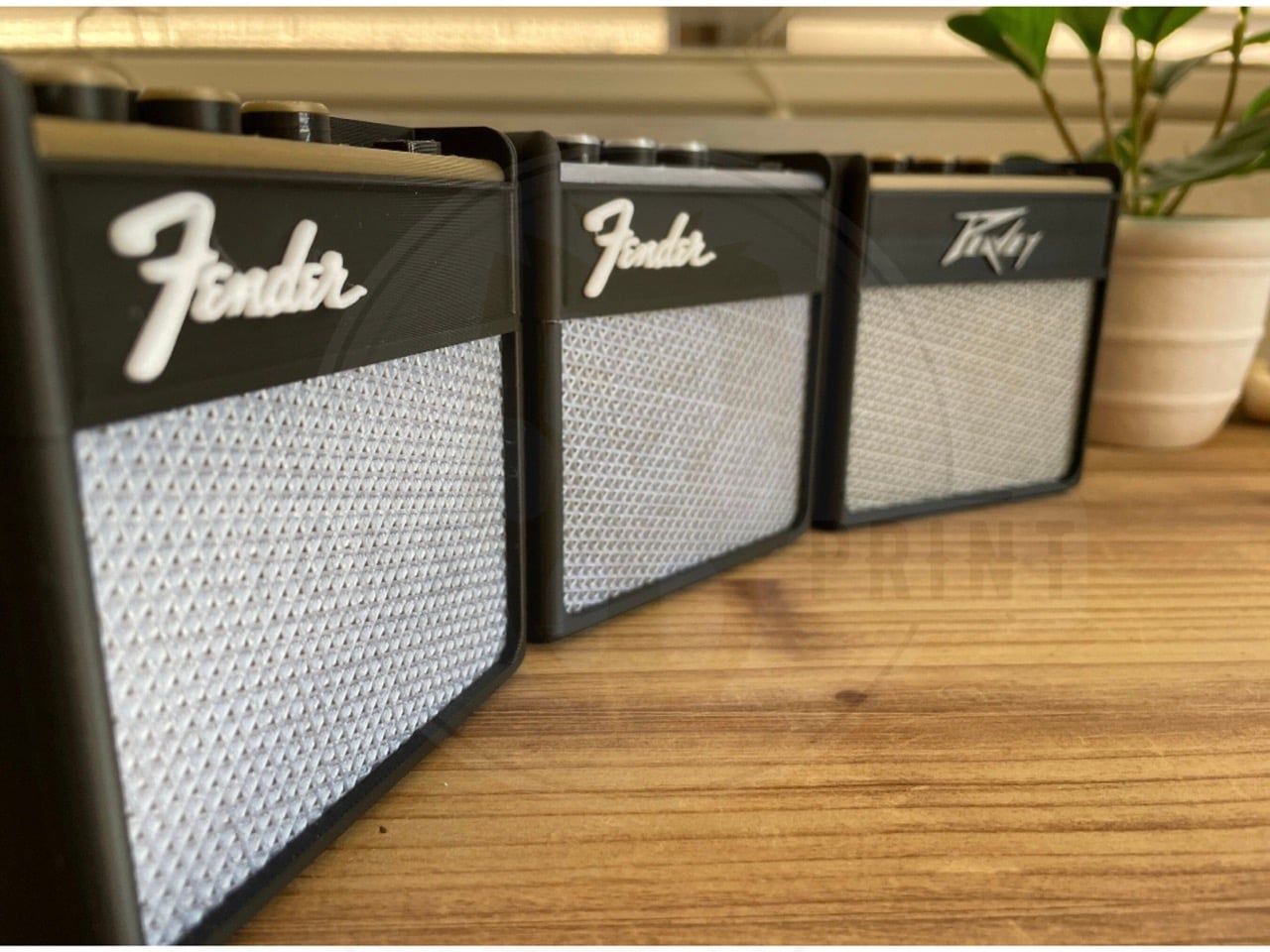
The thing about good desk accessories is they need to justify their existence beyond pure function. A pen holder is essentially a container with holes. You could use a coffee mug. But LionsPrint clearly understood that musicians and music fans have a specific relationship with amplifiers that goes beyond their utility. These aren’t random music references slapped onto office supplies. They’re recognizable silhouettes: Marshall stacks with their iconic script logo, Fender’s clean lines, Yamaha’s distinctive branding. The 3D printing allows for texture work that would be impossible with traditional manufacturing. Those speaker grilles have depth and pattern variation that catches light differently depending on angle.

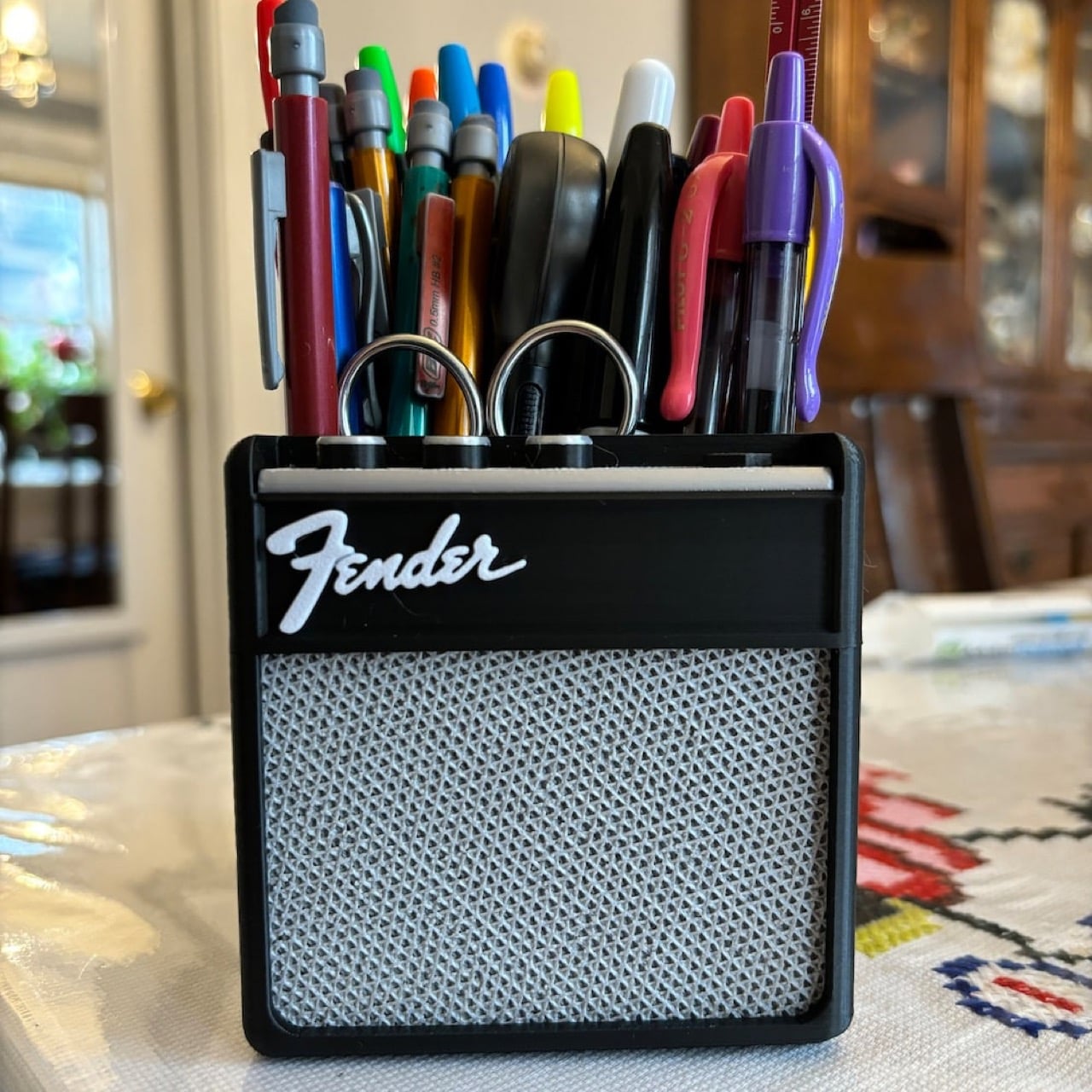
At 3.5 x 3.5 x 3.5 inches, the dimensions work perfectly for standard desk real estate. Small enough that they don’t dominate your workspace, large enough that they actually hold a functional amount of pens, scissors, and whatever other tools accumulate throughout a workday. The cube format keeps them stable. No tipping over when you’re fishing for a specific marker at 2 AM during a deadline crunch.

The customization option elevates these beyond typical musician merch. You can add text in metallic silver or gold finishes, which means your studio name, your band’s logo, or even an inside joke with your bandmates can live on your desk. Most “gifts for guitarists” feel like afterthoughts, designed by people who think all musicians are the same. This actually lets you claim ownership of the aesthetic instead of just passively receiving someone else’s idea of what music fans want.

LionsPrint sells these through Etsy starting at $19.98 USD before shipping. The price sits in that sweet spot where it’s low enough to impulse buy after a particularly soul-crushing Monday, but high enough that the 3D printing quality actually delivers on the details. You pick your amp style, add your custom text if you want it, and suddenly your desk has at least one object that doesn’t make you question your life choices. Small victories count when you’re counting down to the weekend.

The post 3D-Printed Guitar Amp Desk Organizer Brings Concert Energy to Your Boring Monday Morning first appeared on Yanko Design.

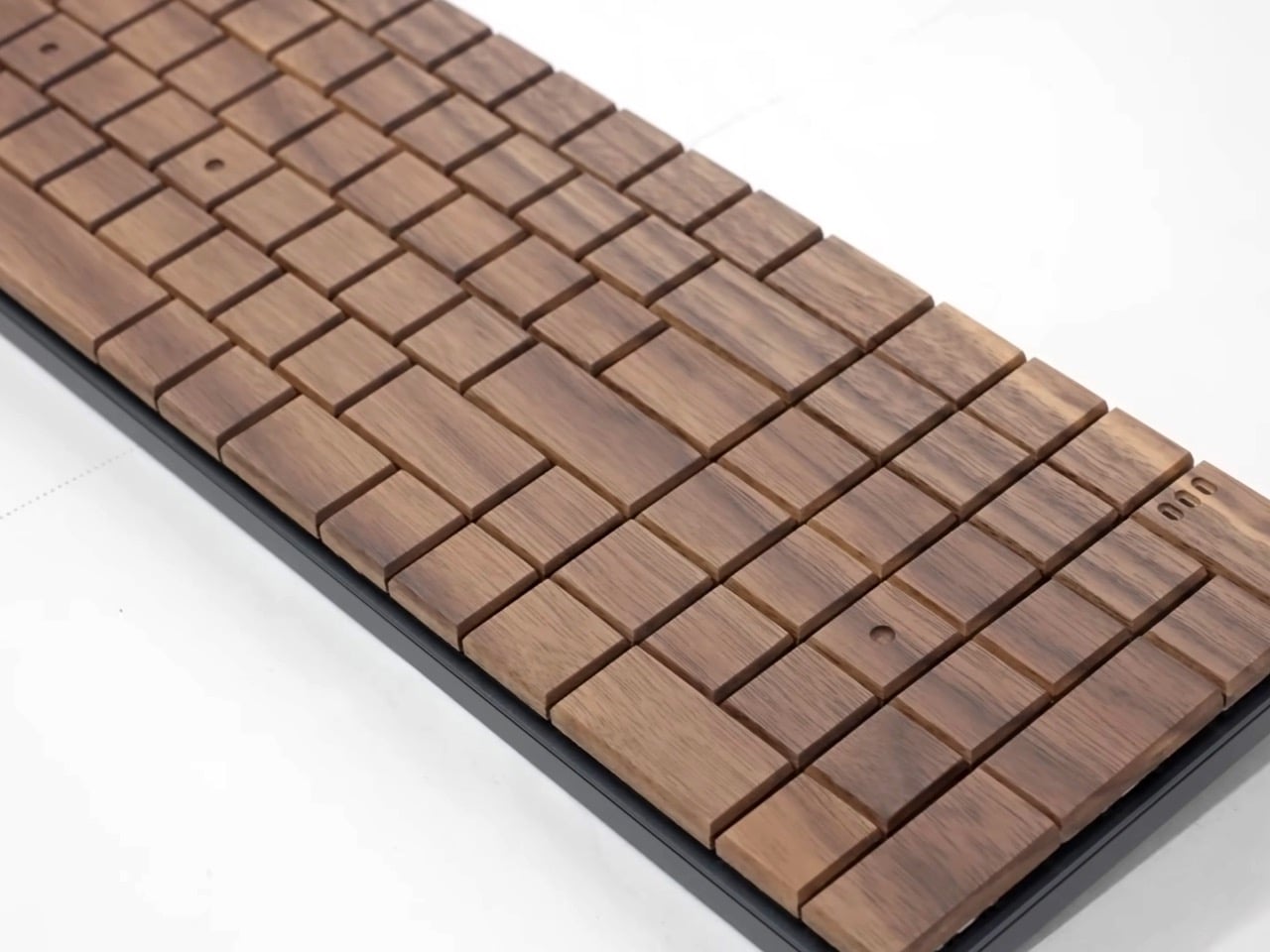
This $400 Wooden Keyboard Goes Through Over 15 Hand-Finishing Steps Before You Can Type On It

Tech moves fast, breaks things, ships updates, iterates. The entire industry is built on the assumption that this year’s product will be obsolete by next year, and that’s fine because next year’s version will be better anyway. Then you see someone in Fukui Prefecture spending twenty minutes hand-sanding a single wooden keyboard key, checking it by touch, and the whole paradigm feels suddenly optional. Hacoa has been making wooden keyboards this way for four generations now. The current craftspeople learned from their parents, who learned from theirs.

What makes this remarkable isn’t just the craftsmanship, though watching wood move from lumber to finished keys is genuinely mesmerizing. It’s the underlying assumption that contradicts everything tech culture preaches. These keyboards are built to last decades. They’re made from a material that ages visibly, that will show wear and patina and the passage of time. They’re designed for people who want their tools to have history rather than version numbers. And they’re assembled onto standard mechanical keyboard bases, so they actually work for the thing you’d use a keyboard for: typing, every day, for years.

Designer: Hacoa workshop

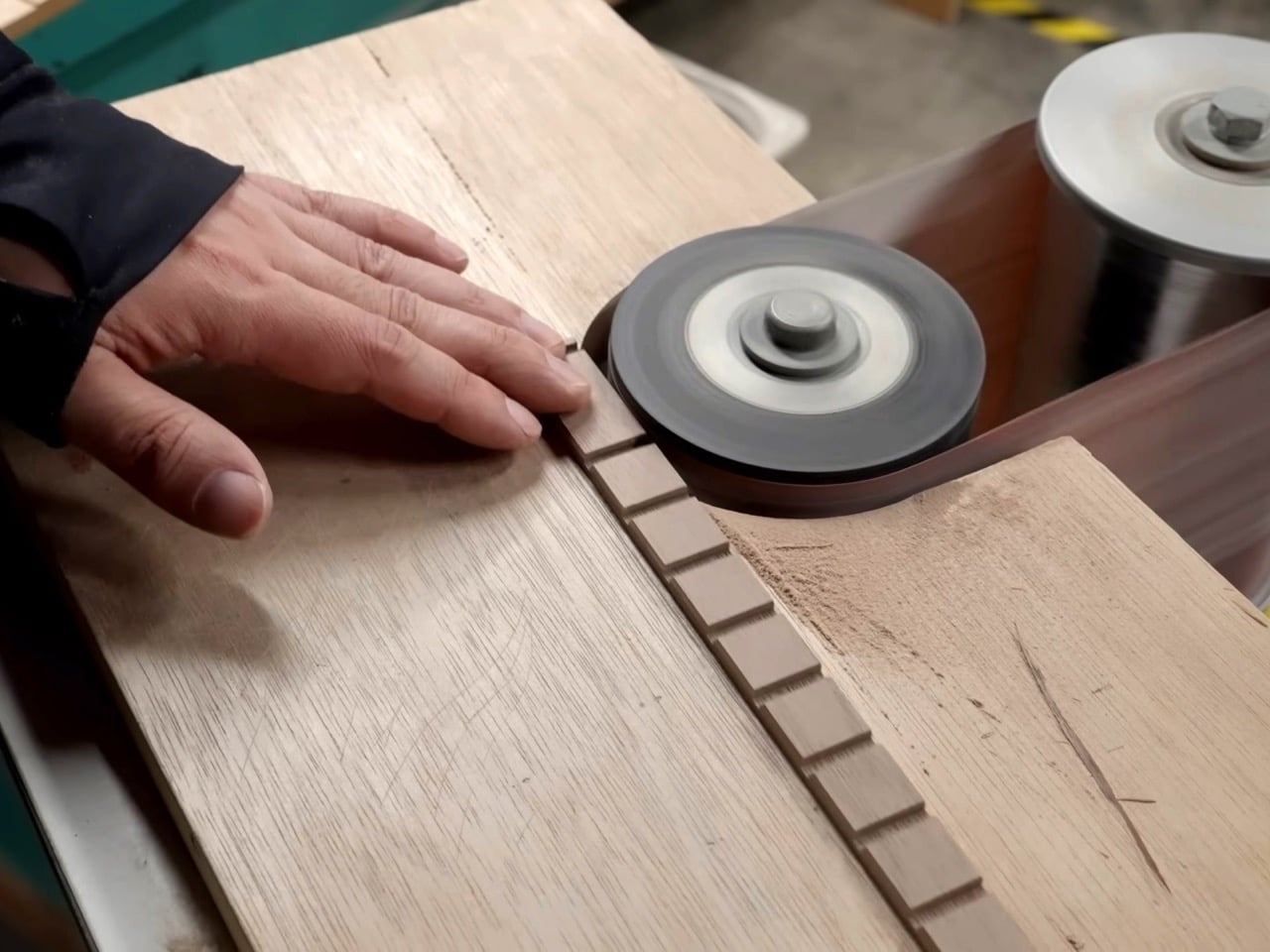
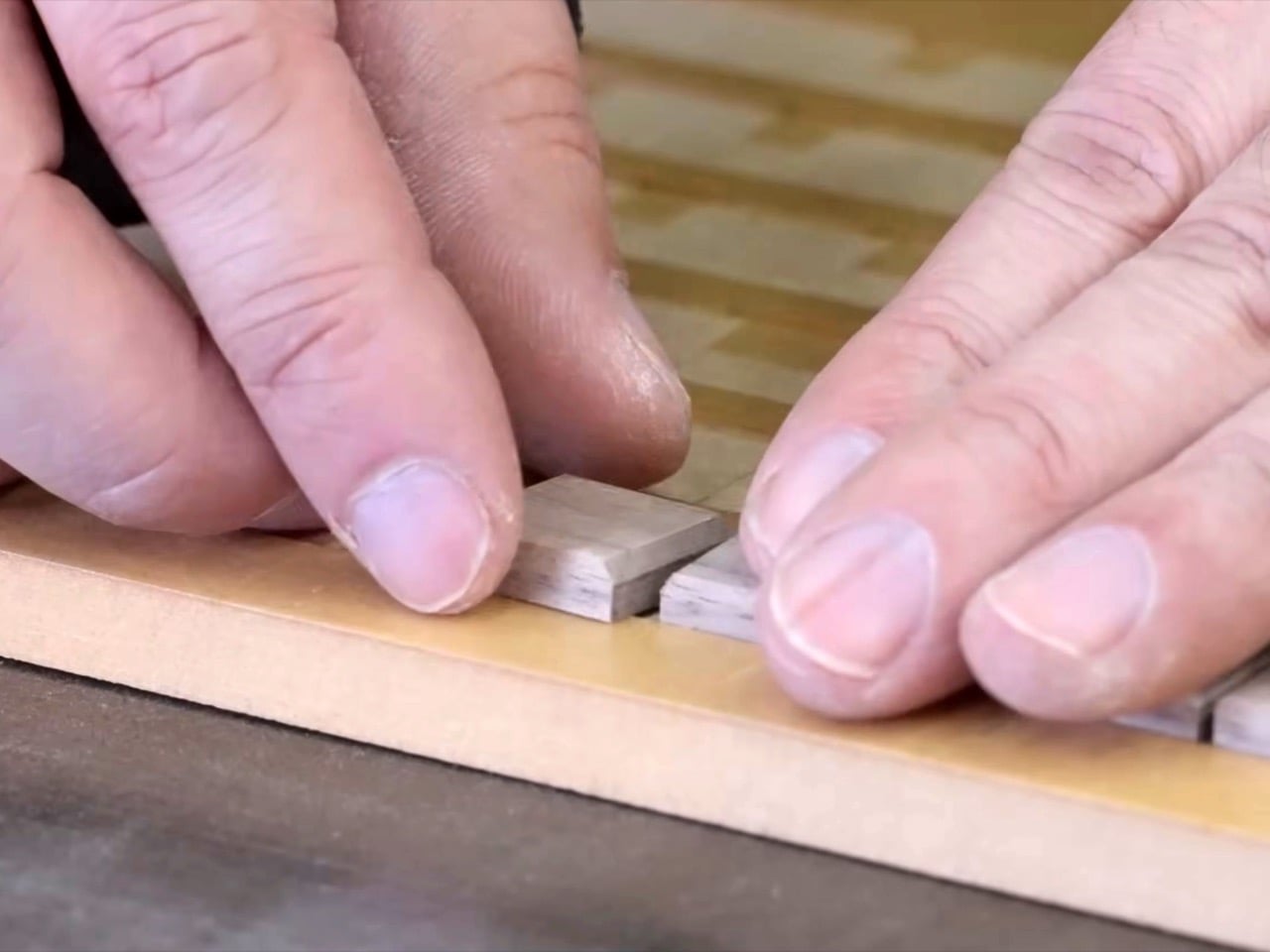
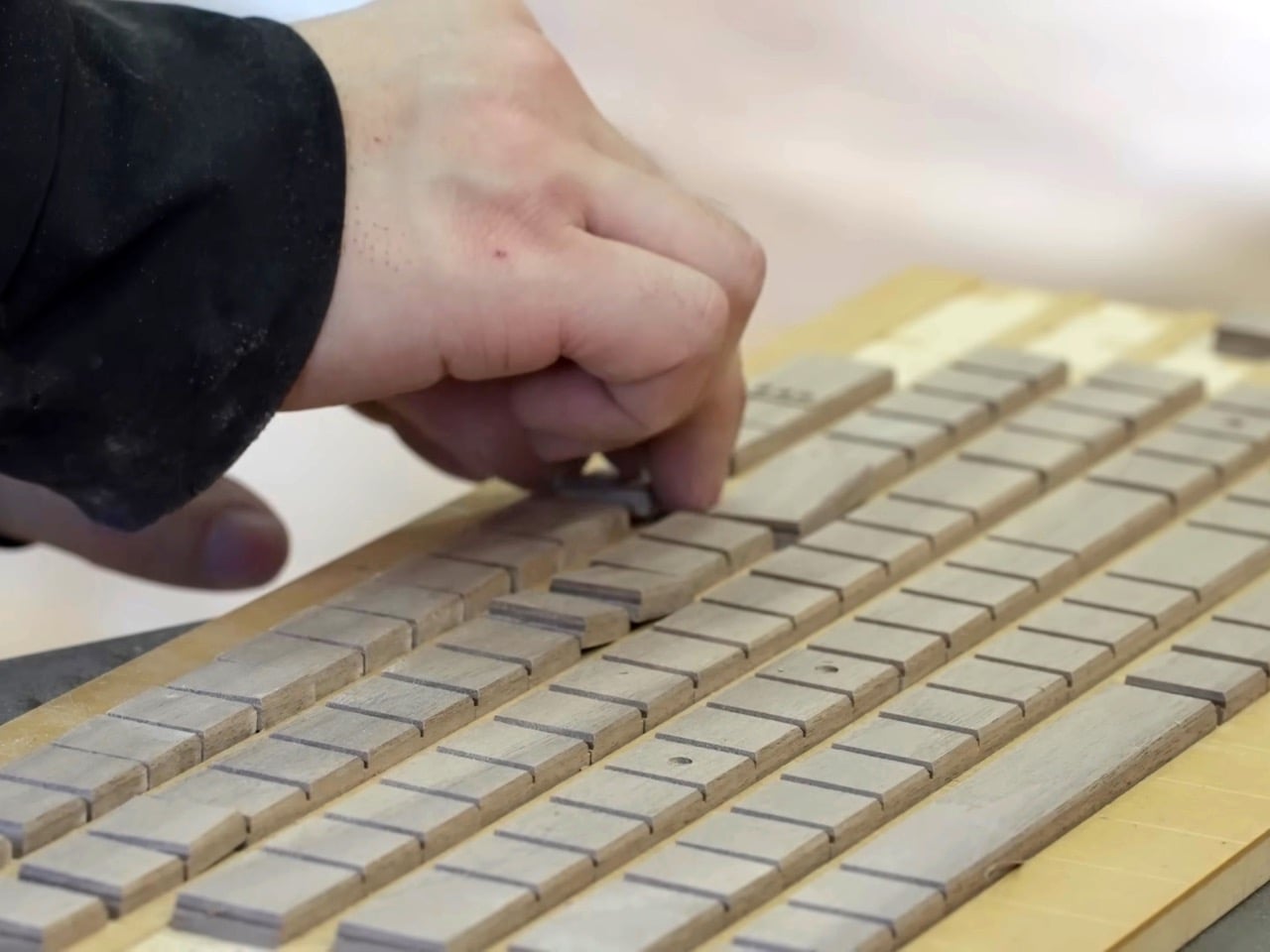
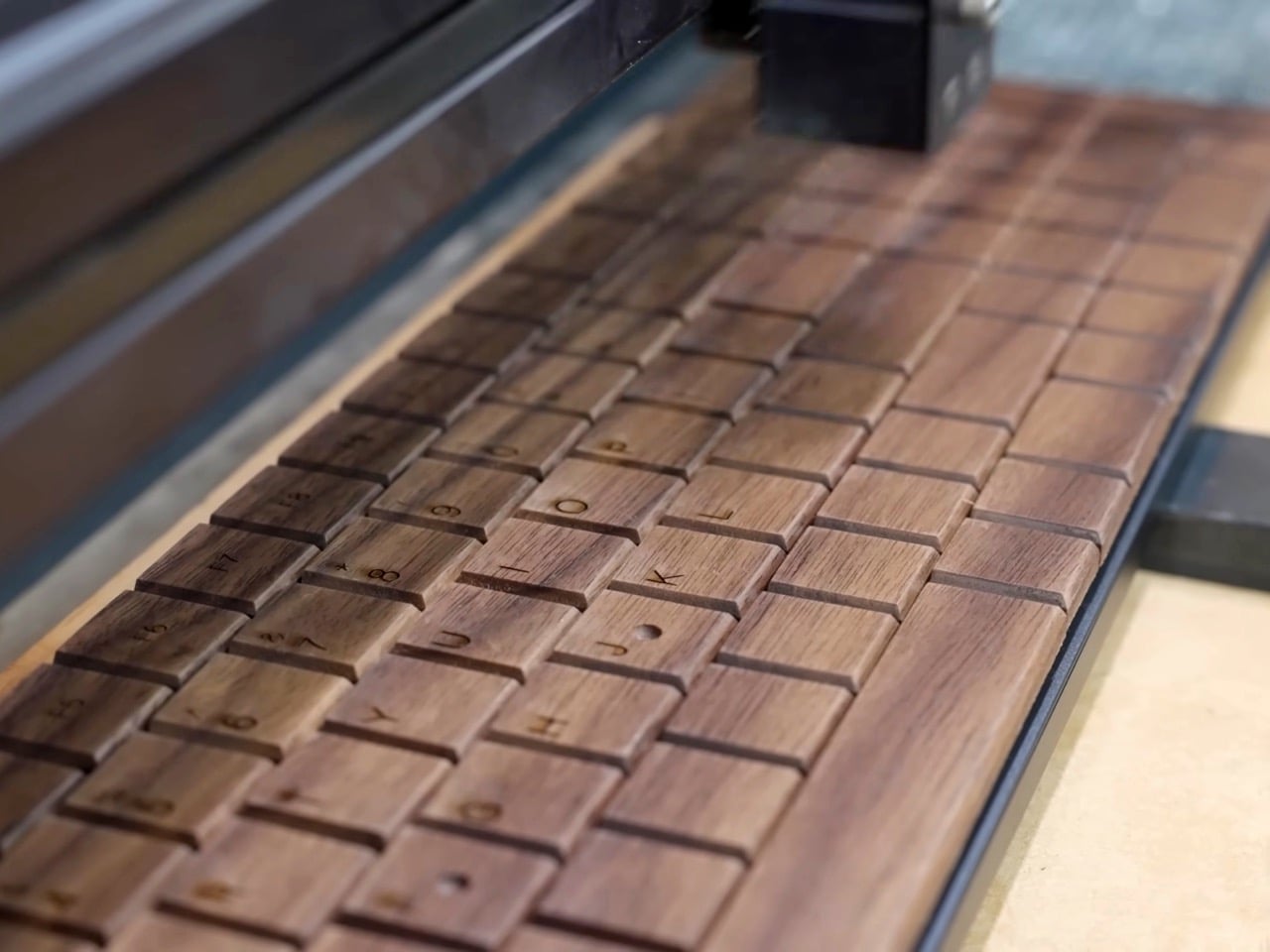
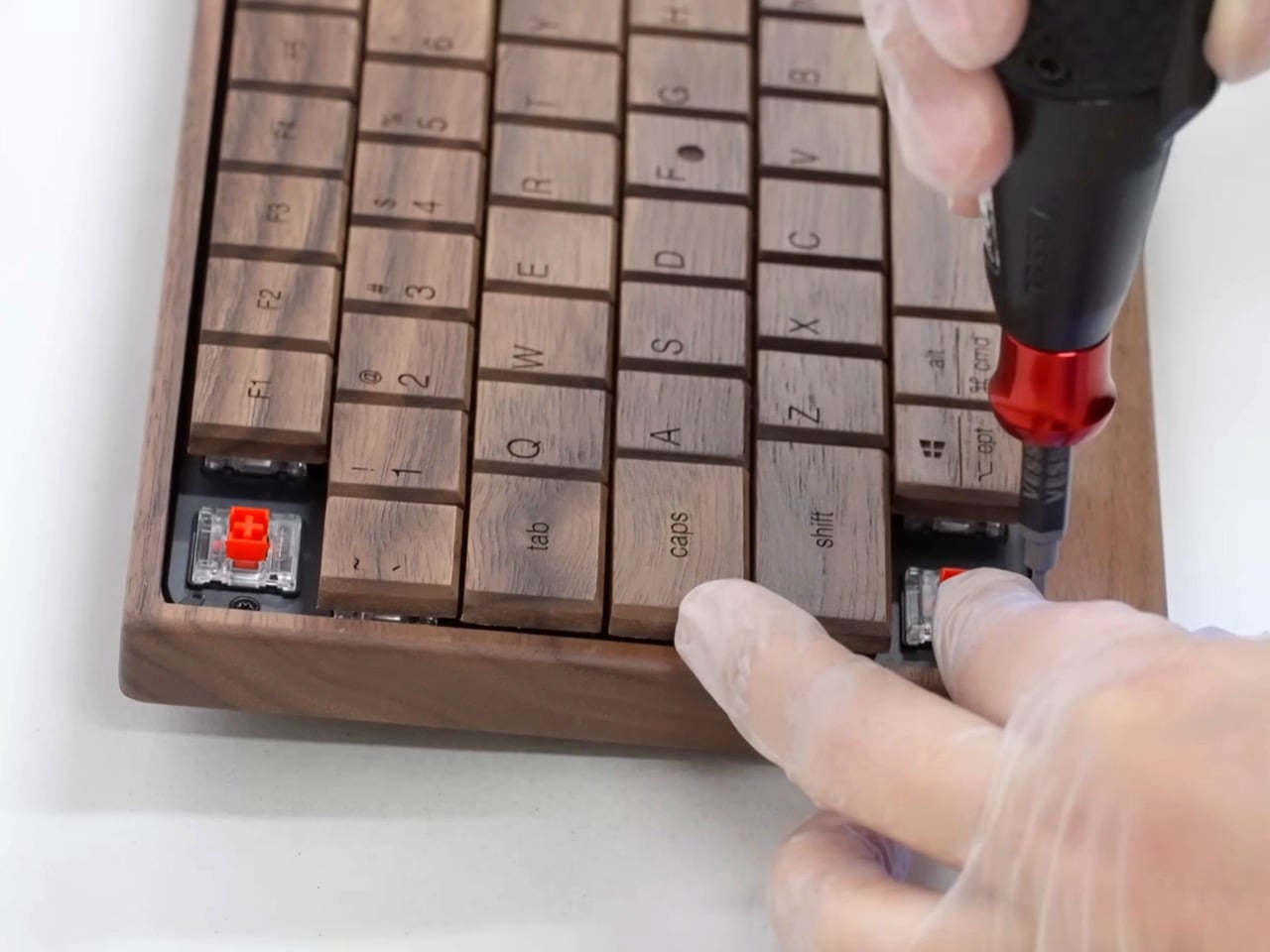
The process starts with lumber selection, which already tells you everything about how different this is from injection-molded ABS keycaps. Someone at the Hacoa workshop in Sabae City examines the grain patterns and decides which pieces are suitable for a keyboard. They measure carefully so nothing gets wasted, then plane the wood down to uniform thickness. This is furniture-grade attention being applied to something most of us buy on Amazon and forget about. The wood gets machined with multiple blade changes between operations, chamfered at the edges so the corners feel softer under your fingers, then cut into individual key blanks.

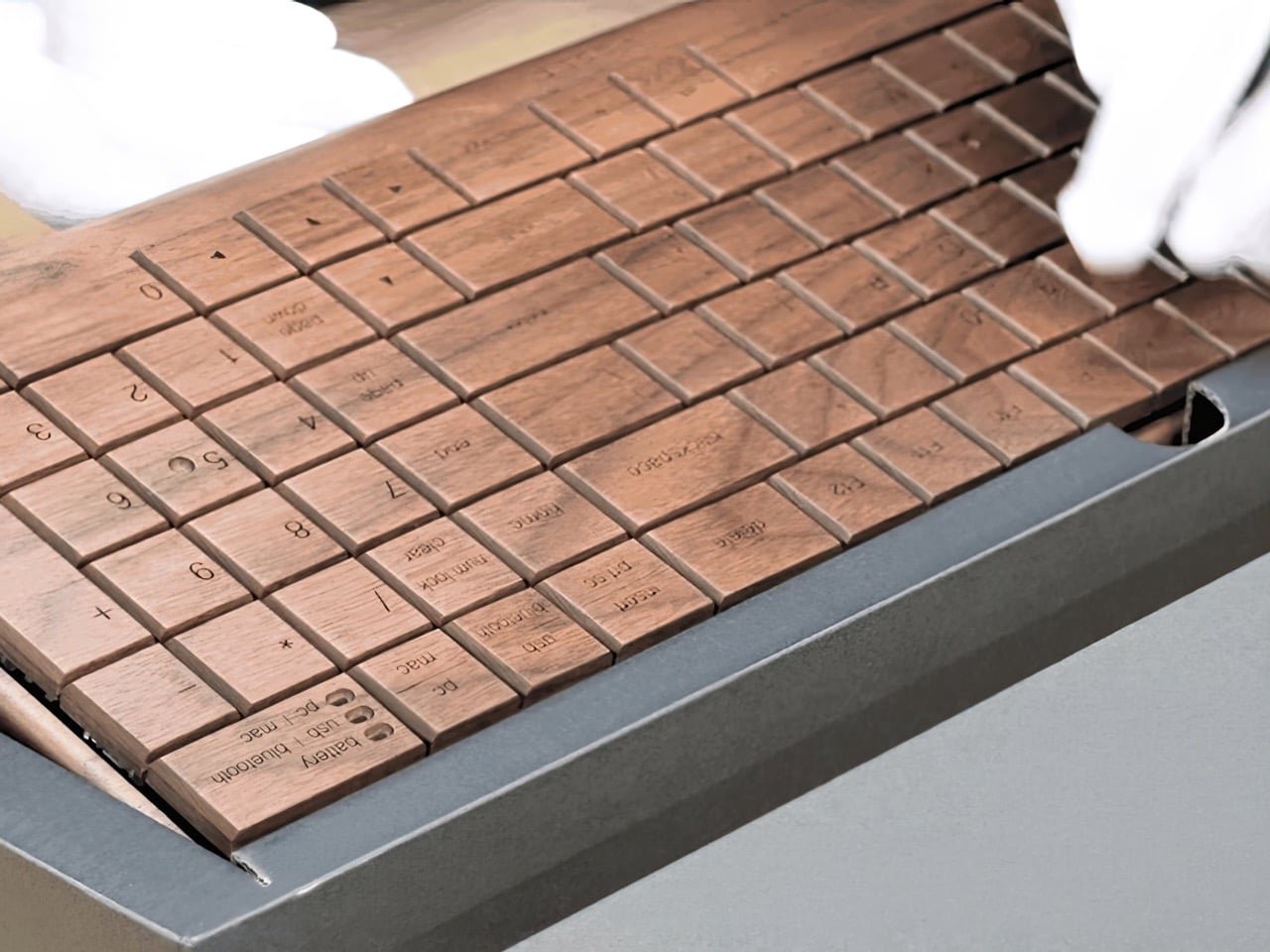
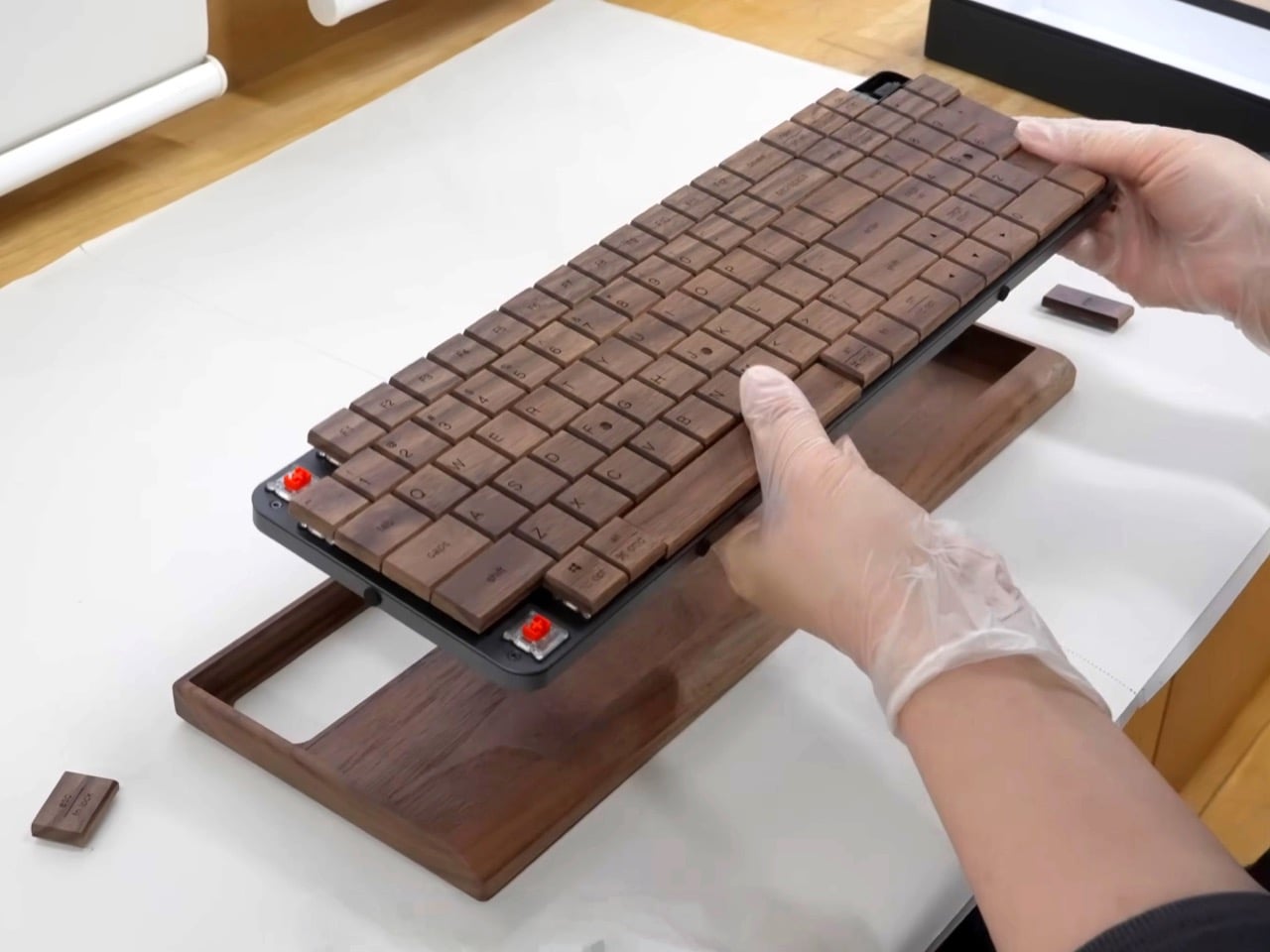
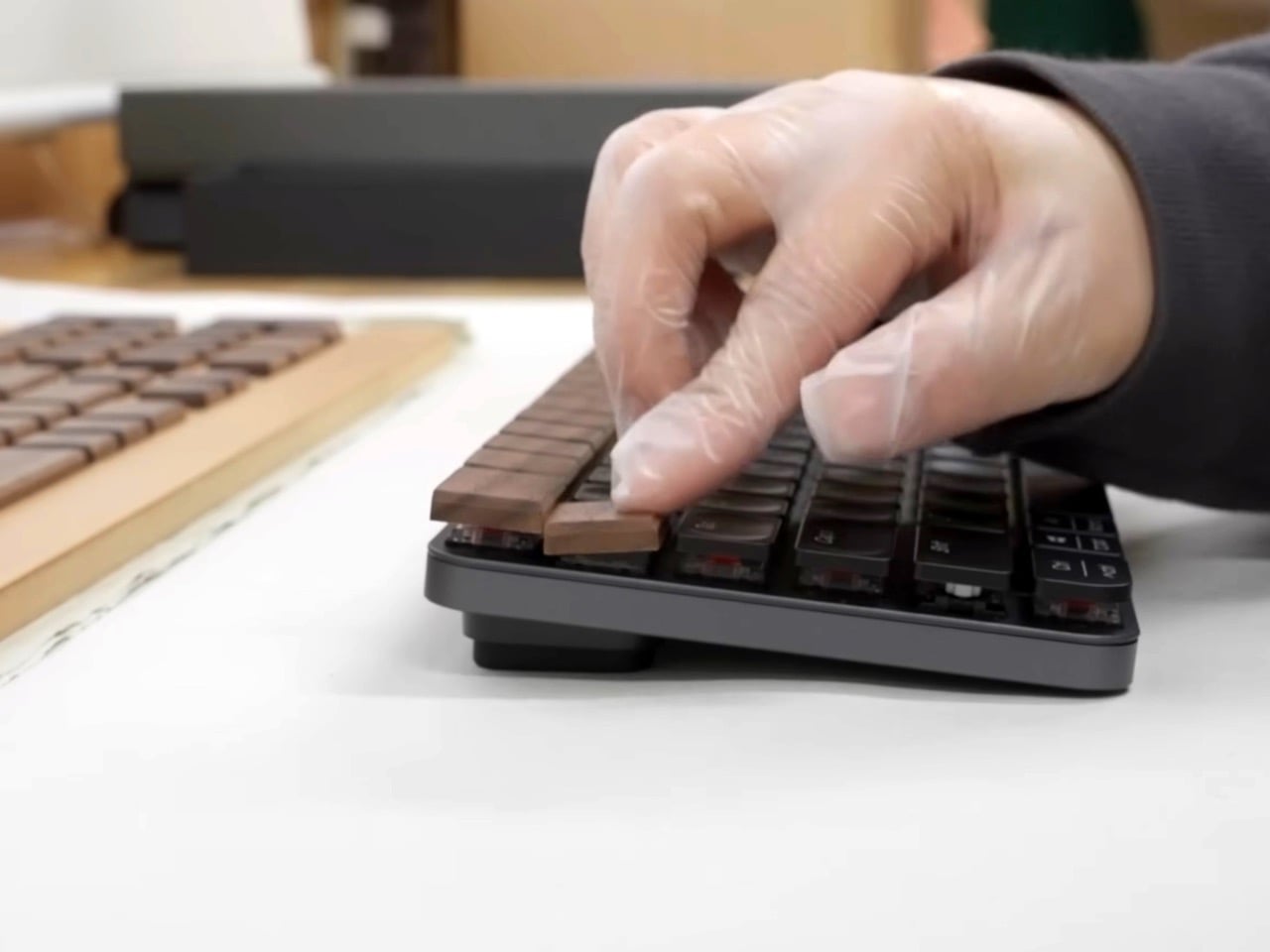
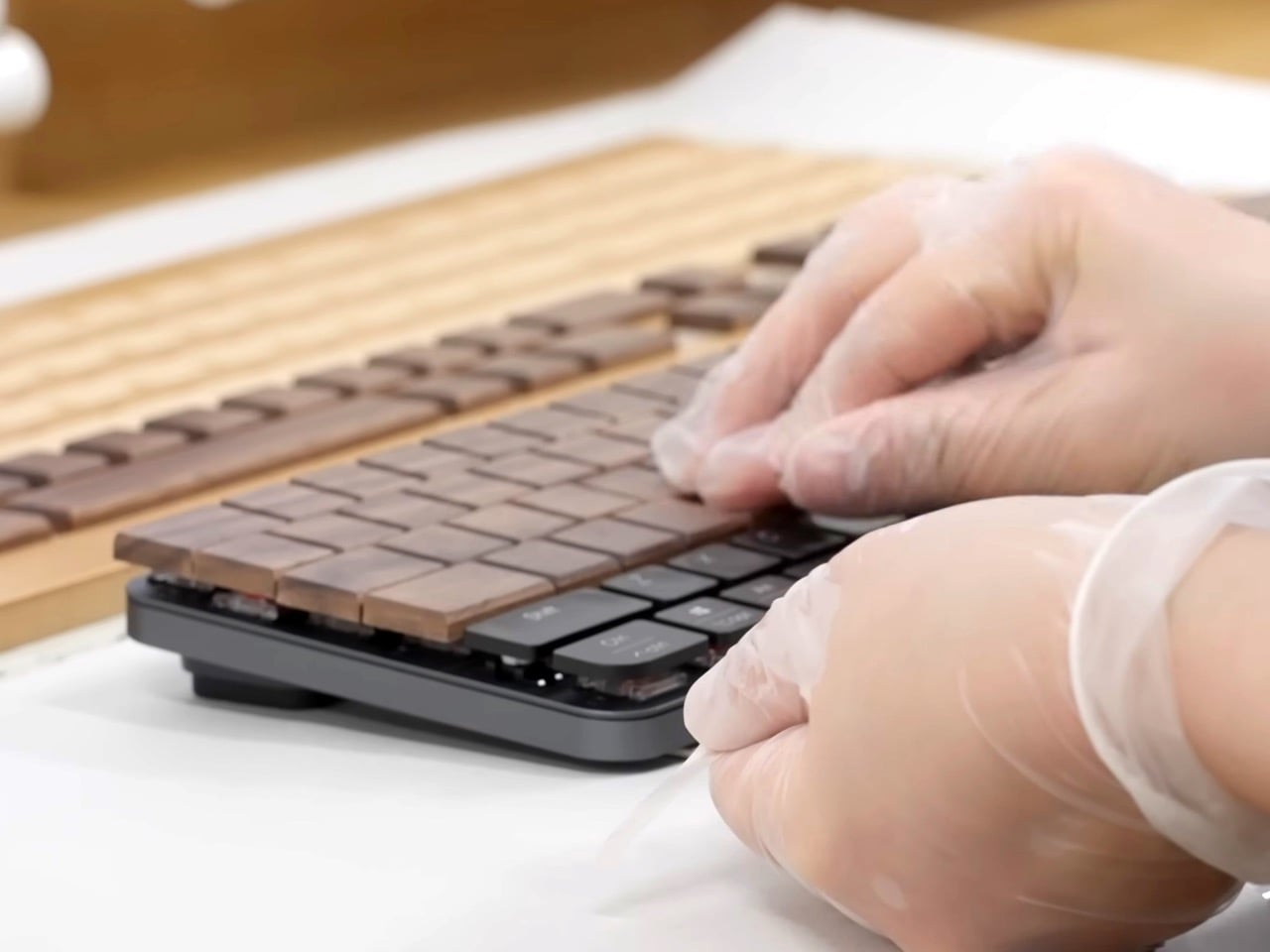
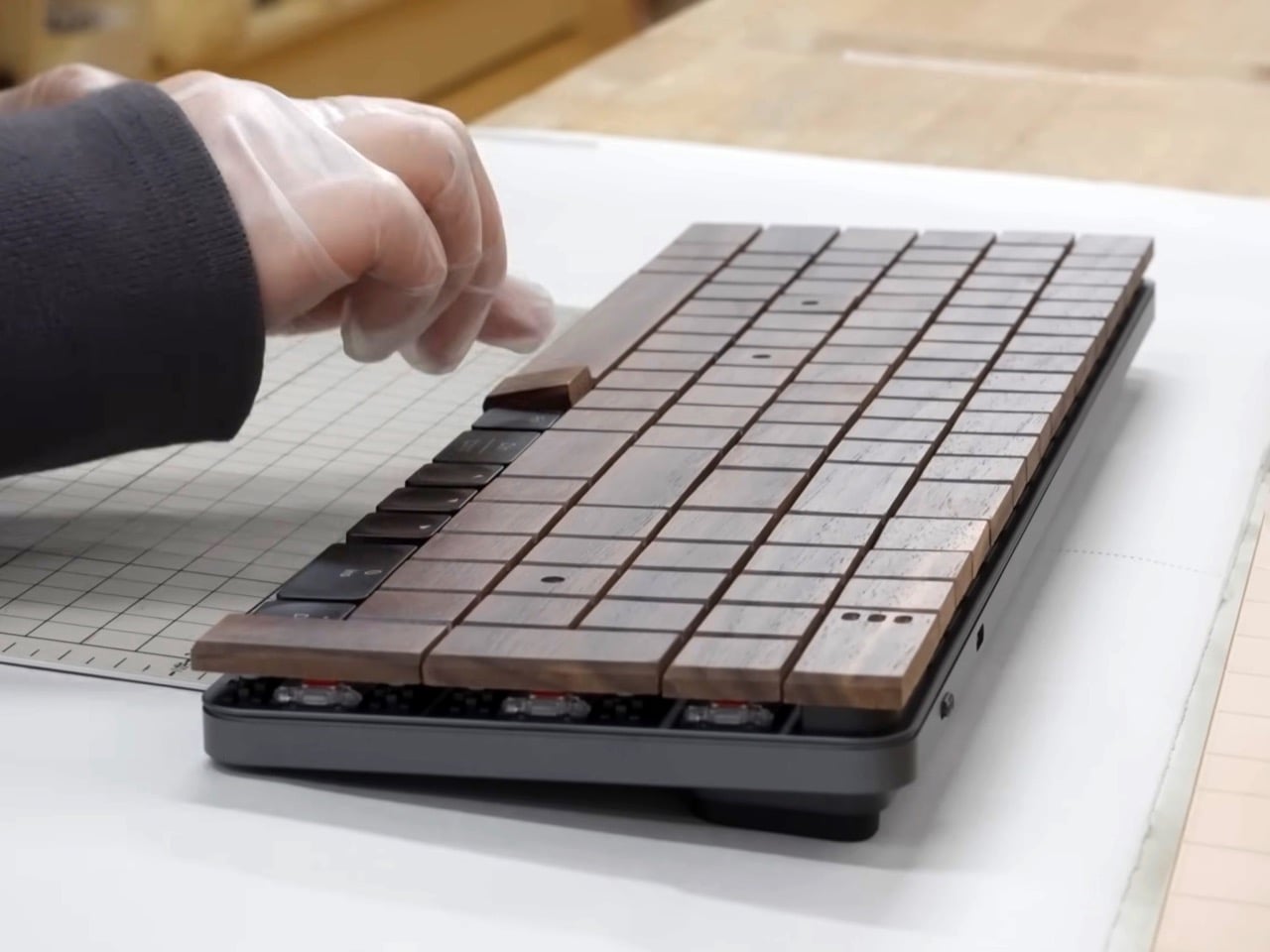
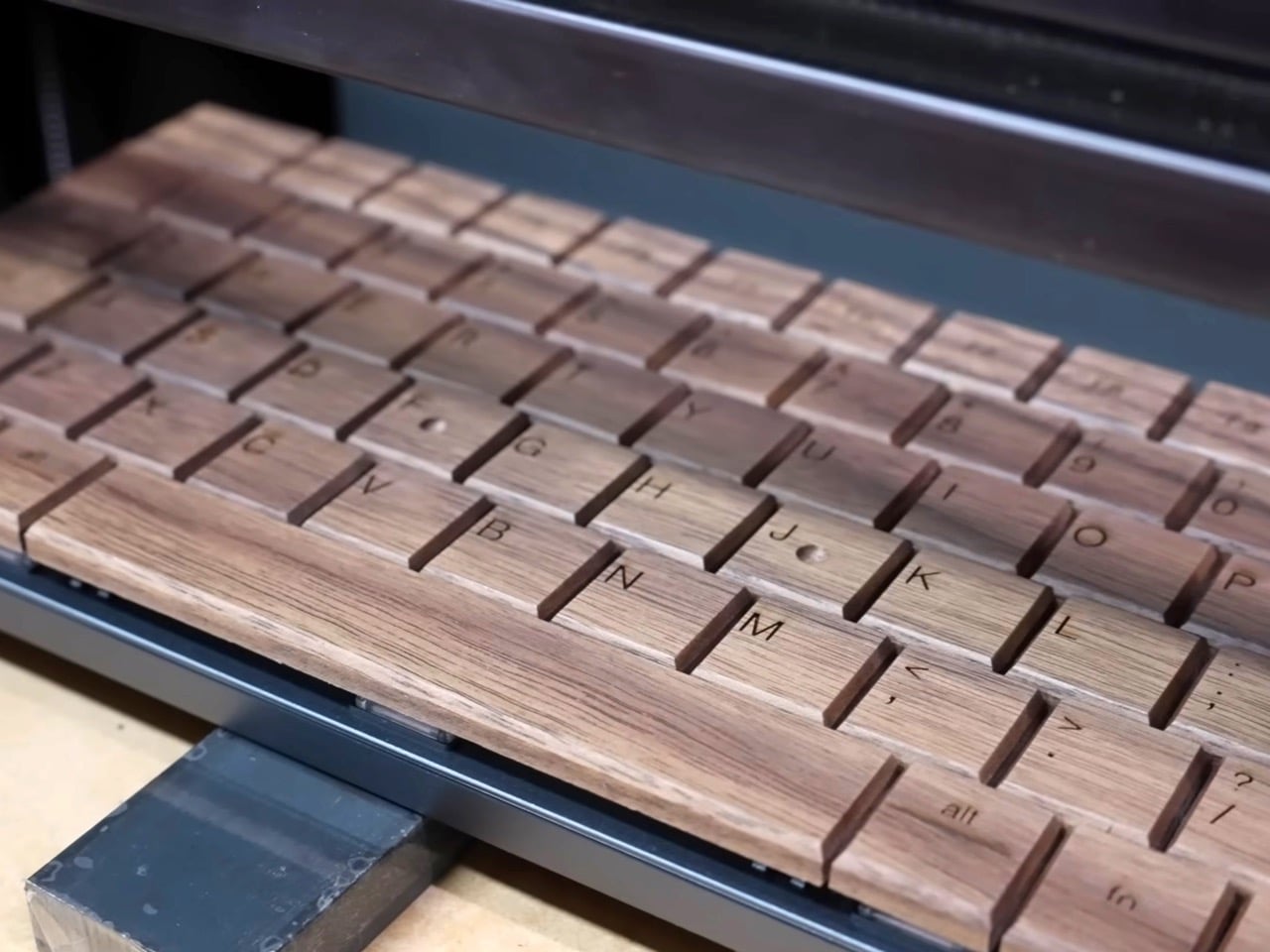
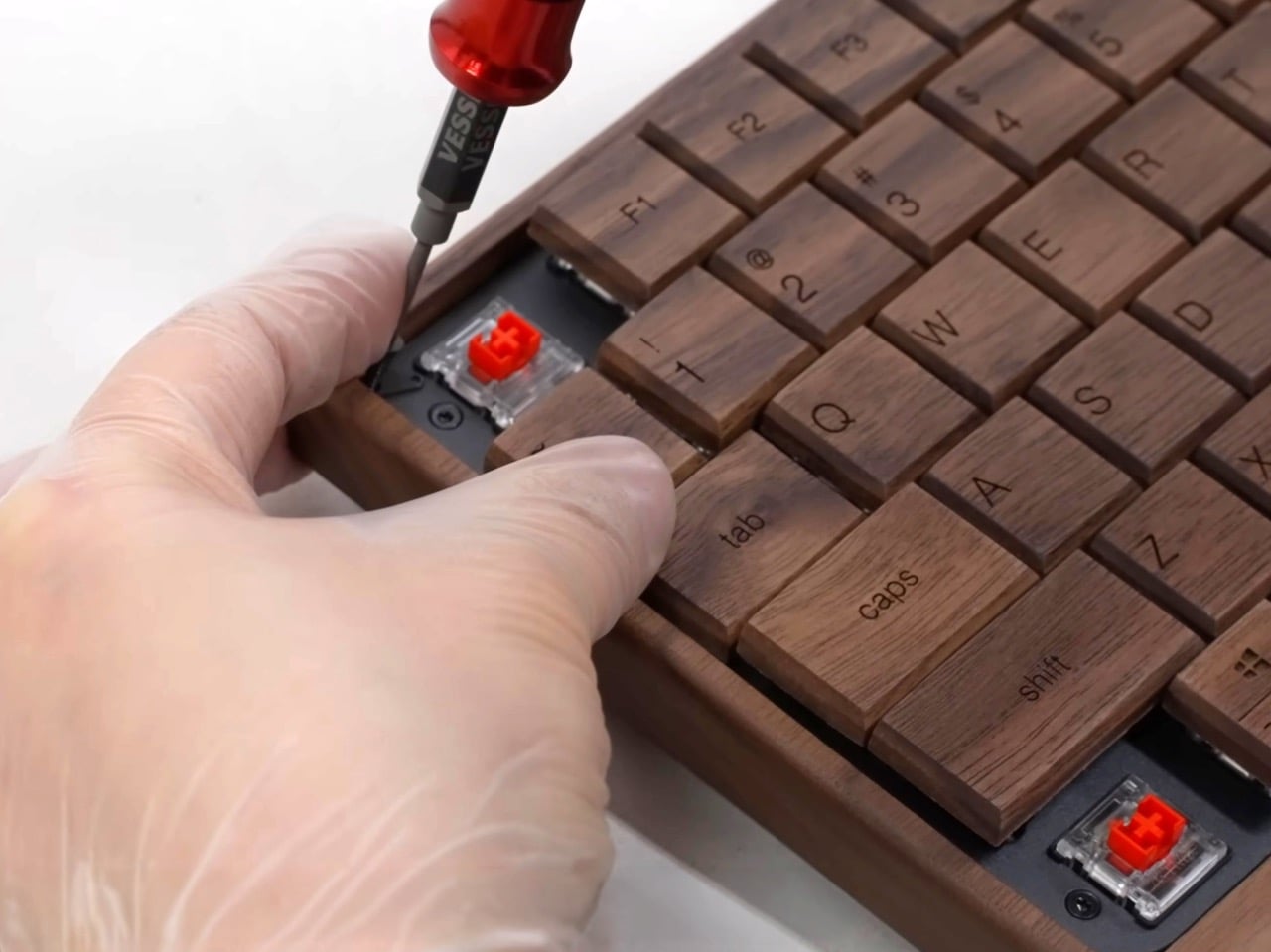
Then the hand work begins. Each key gets shaped individually, sanded on the end grain to refine the tactile experience, finished by craftspeople who use their palms as quality control instruments. They’re literally checking by feel whether each key is ready. The surface gets sanded extensively, taking as long as it takes, because rushing would defeat the entire point. Quality verification happens through touch, which is perfect given that touching these keys will be the whole experience once someone owns the keyboard. After that comes laser engraving for the legends, residue cleanup, and final assembly onto a mechanical keyboard base with standard switches.

What gets me is the very deliberate disconnect between effort and function. A $30 membrane keyboard from any big-box store does the same job in purely utilitarian terms. You press keys, letters appear on screen, your email gets written. But we spend hours every day with our hands on these things. The texture matters. The sound matters. Whether the object feels disposable or permanent matters, even if we can’t always articulate why. Hacoa seems to understand that the keyboard isn’t just an input device, it’s the primary physical interface between you and every digital thing you make.

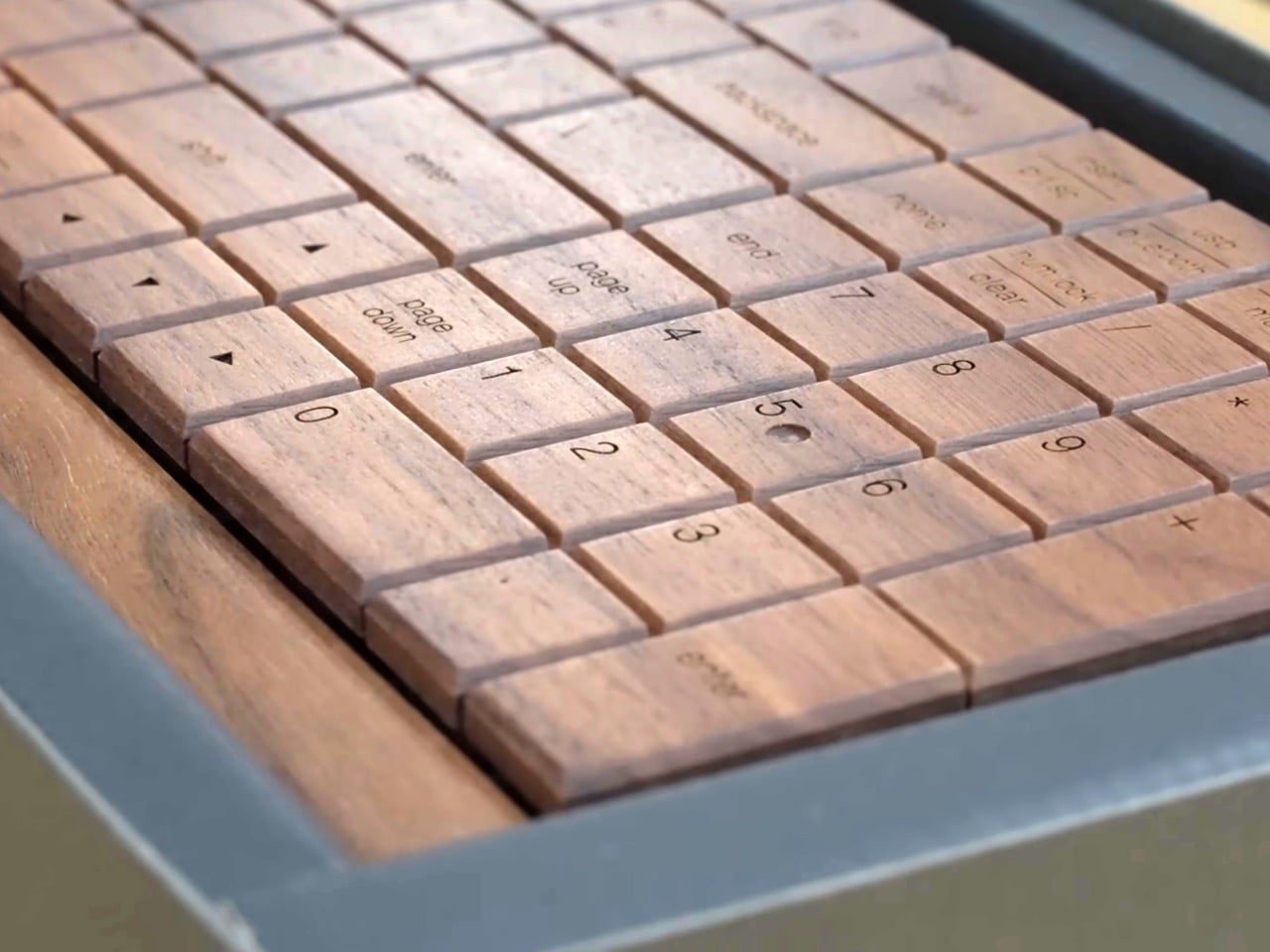
The final product shows visible wood grain variation across every key. Some are lighter, some darker, because that’s what wood does. Each keyboard carries unique patterns that came from whatever tree the lumber came from, which means no two are identical. They’re mounted on dark bases that contrast with the natural wood tones, and the whole thing works with standard mechanical switches. You can actually use this daily without treating it like a museum piece, which honestly makes it more interesting than if it were purely decorative.

Four generations of craftsmanship went into mastering the material and this product category. That timeline alone makes it weird in tech terms, where four generations might mean four years of product iterations. Here it means actual humans passing down technique and judgment through family lines, the kind of knowledge transfer that only happens when someone works beside their parent for years. The current craftspeople at Hacoa learned by watching, by doing it wrong, by developing the muscle memory that lets them know when a piece of wood is ready just by running their hand across it.

I think about planned obsolescence a lot, probably too much. The assumption baked into most consumer tech that you’ll replace it soon anyway, so why build it to last. These keyboards operate in a completely different value system where the goal is creating something worth keeping. Whether that makes financial sense for most people is debatable. Whether it’s a more sane way to think about the objects we use constantly is not.

The post This $400 Wooden Keyboard Goes Through Over 15 Hand-Finishing Steps Before You Can Type On It first appeared on Yanko Design.
This Practically Bulletproof Titanium Travel-Case Makes Your ‘Fragile’ Luxury Luggage Look Cheap

Aluminum dents. That is the trade you accept with most “premium” luggage. The grooves look great in the lounge, then a few trips later you are quietly cataloguing every new crease and corner hit. You can baby it, you can wince every time it goes into an overhead bin, but eventually the shell starts to look tired. Premium luggage, economy behavior.

Titanium changes the terms of that deal. AERIONN Forma treats aluminum the way iPhone Pro treats the regular iPhone: same category, different league. Apple moves the Pro models to titanium because it signals intent and performance in one move. Forma does the same. It uses certified Grade 1 titanium for the shell, formed as a single continuous body, so the case flexes under impact and returns to shape instead of locking in dents. It is the “Pro” material choice for people who live in airports and prefer their luggage to age, not degrade.

Designer: AERIONN

Click Here to Buy Now: $499 $1799 (72%). Hurry, only 3/688 left! Raised over $654,000.

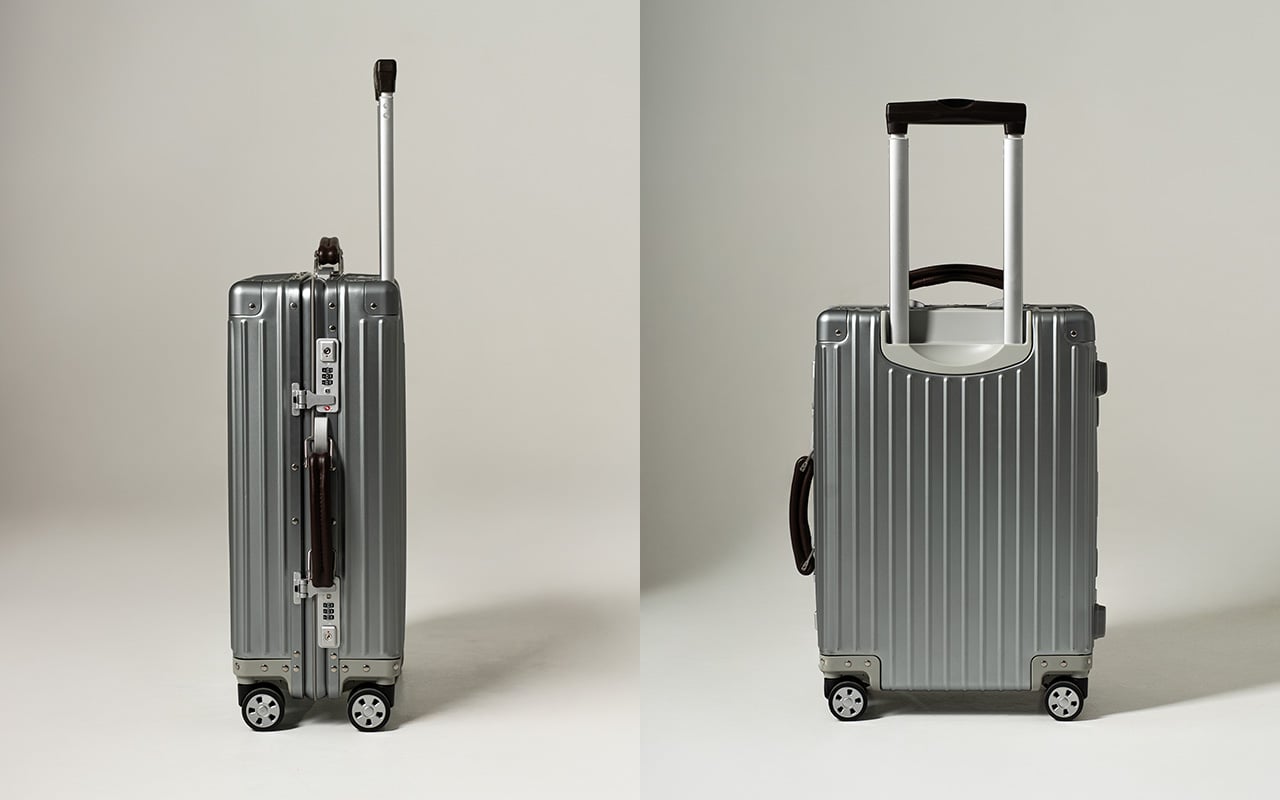
There’s a specific moment frequent travelers recognize. You’ve got lounge access, priority boarding, a seat that actually reclines, and you’re pulling luggage designed to be replaced in a few years. First class isn’t just a ticket, it’s a standard. AERIONN Forma was designed for travelers who understand that distinction. The Milanese design shows restraint where most luggage shows decoration. Clean architectural lines, a matte brushed titanium surface that resists fingerprints and develops subtle patina over time. The kind of wear that looks earned rather than abused. Leather-wrapped handles add warmth without competing for attention. This case looks like it belongs in the first-class cabin, carried by someone who travels often enough to know visible damage shouldn’t be part of the premium experience.

Apple uses aluminum for the standard iPhone. The Pro models get titanium. Same exact decision tree applies here. Titanium signals intent. It’s a more precious material than aluminum, harder to source, more expensive to work with, and significantly more durable under real-world stress. Grade 1 commercially pure titanium meets ASTM B265-15 certification standards, with tensile strength in the 290 to 310 MPa range, significantly higher than aluminum alloys used in luxury luggage. The shell has undergone thousands of repeated drop tests, bending tests, ultrasonic inspection, and dimensional verification. The testing isn’t about proving indestructibility, it’s about ensuring resilience under conditions where aluminum would show permanent damage. Titanium flexes to absorb impact, and only shows signs of wear and tear with rough use. Aluminum dents easy… and it stays dented.

The single continuous shell construction eliminates seams and structural weak points. Despite using industrial-grade material, the case weighs 4kg with weight distributed evenly across the entire structure. Lift it into an overhead bin and the weight doesn’t fight you. Roll it through a terminal and it tracks cleanly without pull or wobble. That movement comes from the AIRMOVE dual spinner wheels, engineered for low drag and quiet operation. No rattle, no vibration, just smooth motion that keeps pace instead of slowing you down. The multi-stage telescopic handle extends smoothly and locks firmly, with leather-wrapped touchpoints that feel substantial. Good luggage disappears during travel, requiring no conscious effort to manage.

Security is handled without zippers, which remain the most common failure point in luggage. A precision TSA latch system sits flush with the titanium shell, allowing inspections without damage while removing fabric, teeth, and stress points entirely. It’s invisible when closed, dependable when needed. Metal latches integrated into aerospace-grade titanium don’t have the failure modes that plague zipper-based systems. The TSA-approved combination lock integrates directly into the shell. No exposed mechanisms, no added bulk, no interruption to the clean form. This approach to security makes the case look refined while actually being more secure than conventional designs.

The matte brushed titanium surface does something interesting over time. It develops a natural patina that reflects use without looking damaged. Fingerprints don’t show. Minor contact marks blend into the finish rather than standing out. After years of travel, the surface tells a story without looking beaten up. This separates objects you keep from objects you replace. Titanium naturally resists corrosion, so the shell maintains structural integrity without protective coatings or finishes that eventually wear through. Temperature extremes don’t compromise strength. A precision-fit silicone seal keeps water out, protecting belongings from rain and splashes during transit. The case is designed to be used repeatedly and to look better for it.

The interior uses a dual-compartment layout that keeps packing organized from departure to arrival. Compression straps on one side secure clothing and minimize wrinkles. A full divider panel on the other side contains shoes, toiletries, and essentials. Integrated pockets hold smaller items so you’re not digging through layers to find what you need. The durable nylon lining wipes clean easily and holds shape after repeated use. Nothing flashy, nothing wasted. Dimensions are 55 x 36 x 23 cm, fitting standard airline carry-on requirements while offering 38L capacity. The layout supports efficient packing and easy access, which matters when you’re moving through multiple cities in compressed timeframes.

For EDC enthusiasts and design-focused travelers, durability is status. Knowing your carry-on can handle abuse that would destroy conventional luggage is the quiet flex. Soft-shell Samsonite is lighter, cheaper, and never dents because it’s designed for economy class standards. It won’t be noticed from ten feet away and it won’t give you the VIP feeling that comes with carrying something genuinely exceptional. Titanium luggage exists in a different category entirely. It’s luggage meant to last decades, not seasons. The buy-once philosophy changes the economics. A $1,500 aluminum case that needs replacement after five years costs more over time than a $1,799 titanium case that lasts twenty years. Longevity becomes luxury when the alternative is planned obsolescence.

AERIONN Forma is currently available with Super Early Bird pricing at $499, Early Bird at $699, and a two-pack bundle at $975. Standard retail pricing is $1,799. Shipping begins July 2026, with fulfillment handled globally. Aluminum carry-ons from established luxury brands typically range from $1,200 to $1,700 depending on size and features. Titanium luggage rarely appears in this segment, and when it does, pricing usually exceeds $2,000. Early pricing positions aerospace-grade materials as accessible for travelers who recognize that upfront cost matters less than total cost of ownership. This case represents a shift in how premium luggage gets engineered and priced.

Click Here to Buy Now: $499 $1799 (72%). Hurry, only 3/688 left! Raised over $654,000.

The post This Practically Bulletproof Titanium Travel-Case Makes Your ‘Fragile’ Luxury Luggage Look Cheap first appeared on Yanko Design.

Upgrade Your Victorinox 58mm Army Knife Into a Fully Modular, Snap‑On Multitool Ecosystem in 10 Seconds

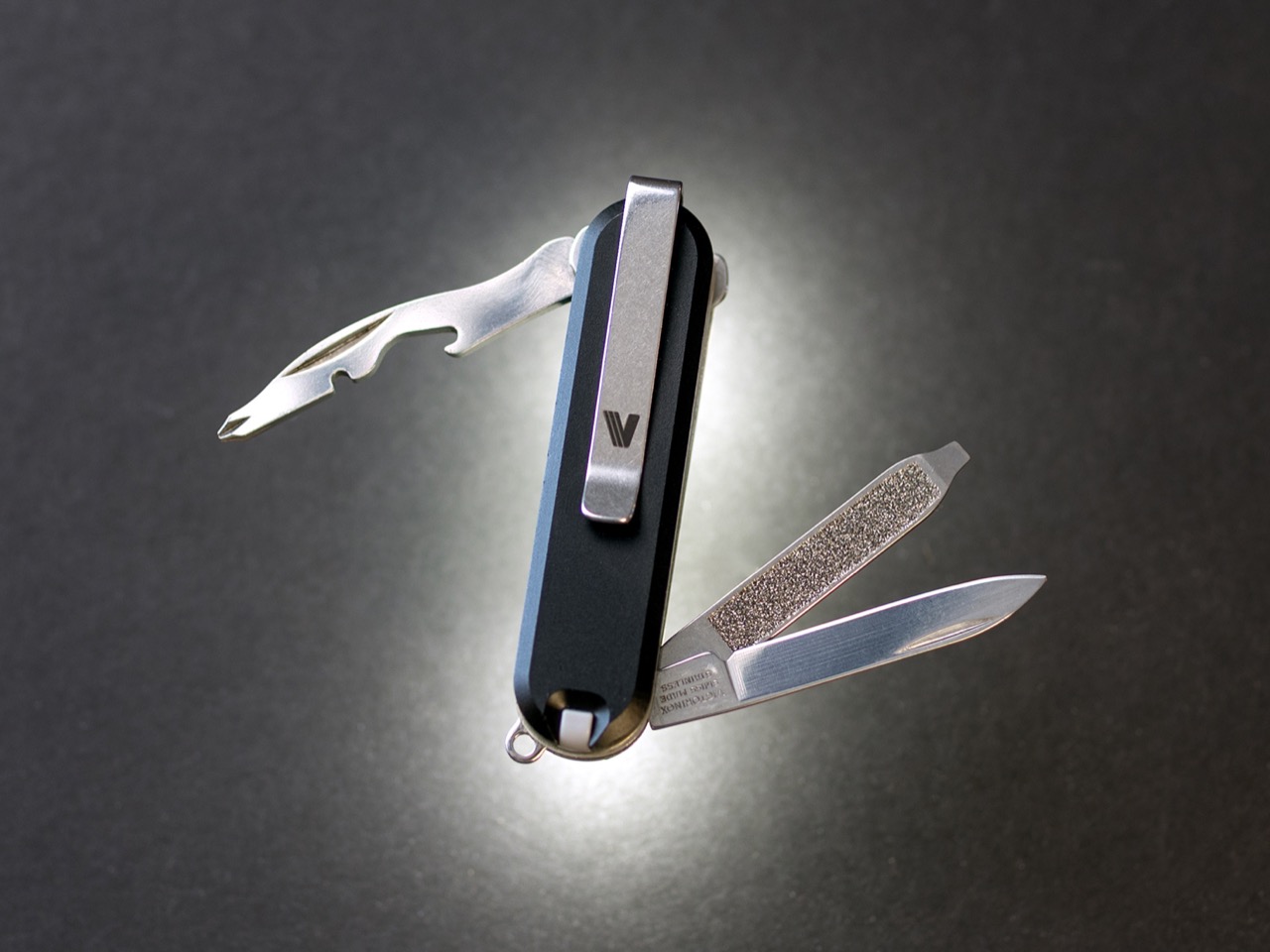
The 58mm Swiss Army Knife has occupied pockets for over a century with the same basic formula: red plastic scales, a handful of tools, and a design language that never needed to change. Victorinox perfected compact utility decades ago, and the format became so synonymous with everyday carry that entire generations never questioned whether it could evolve. But that permanence also created a constraint. Once you chose your tool configuration, you were locked in. Swapping scales meant glue, risk, or permanent modification.

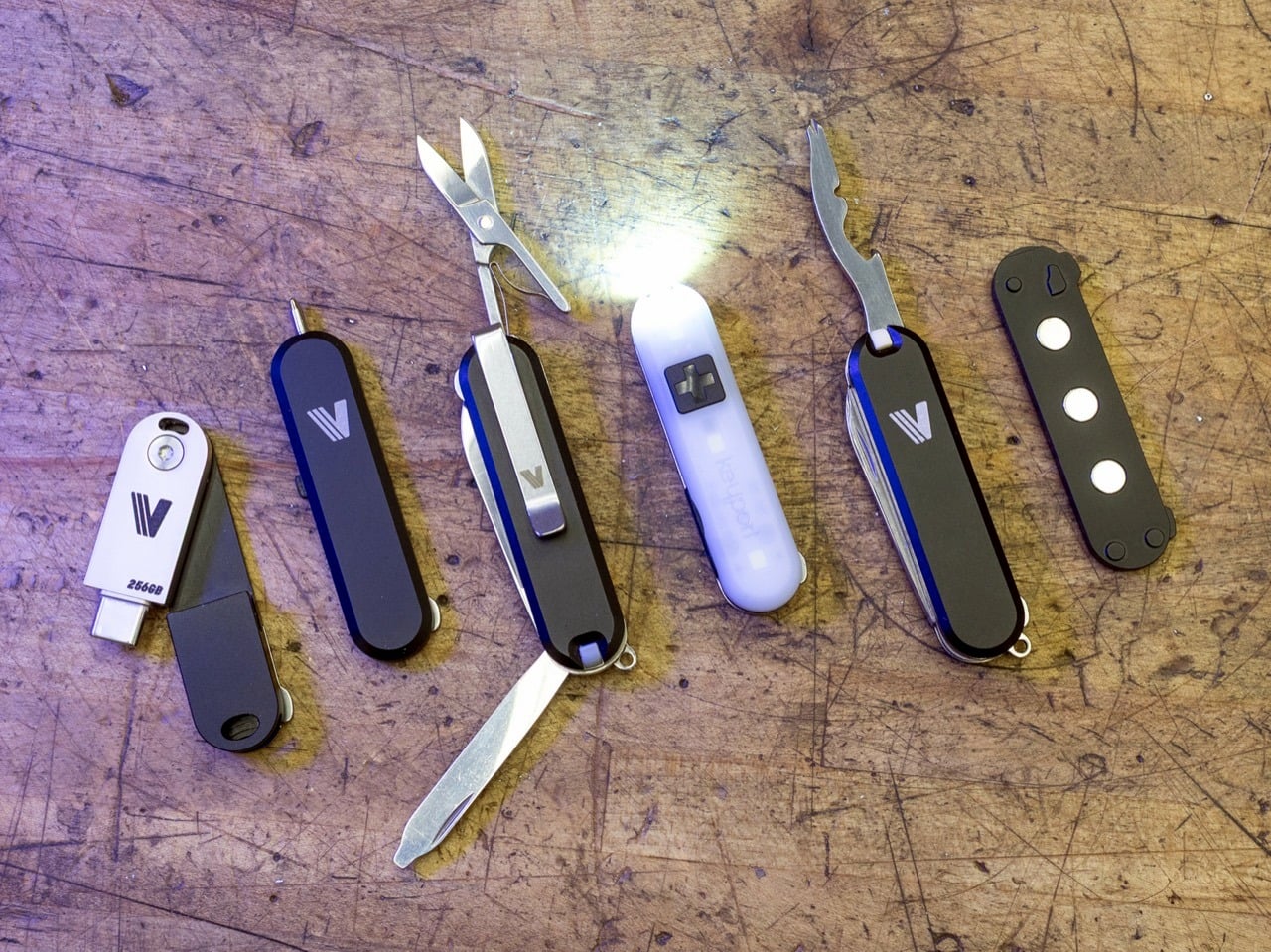
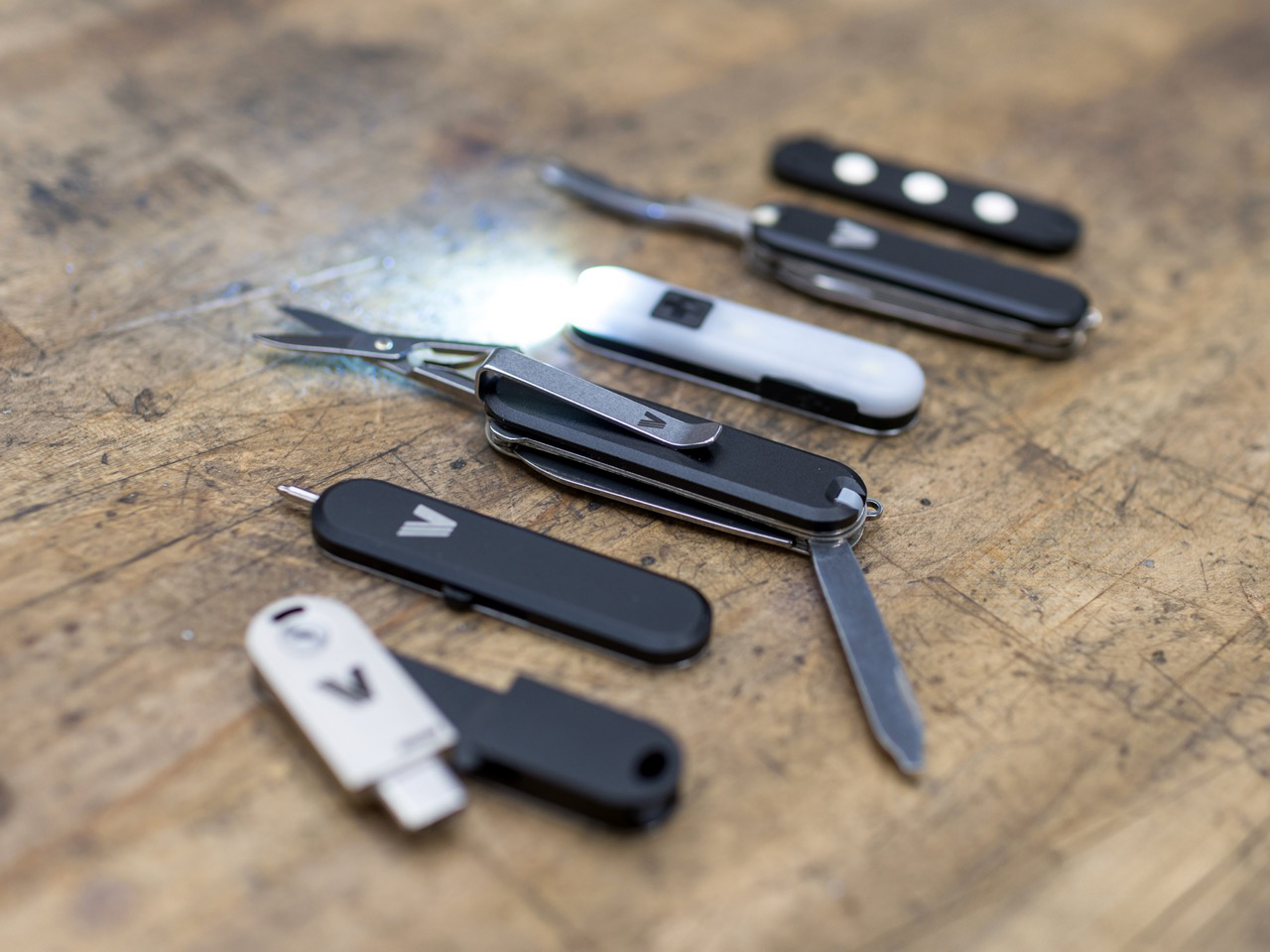
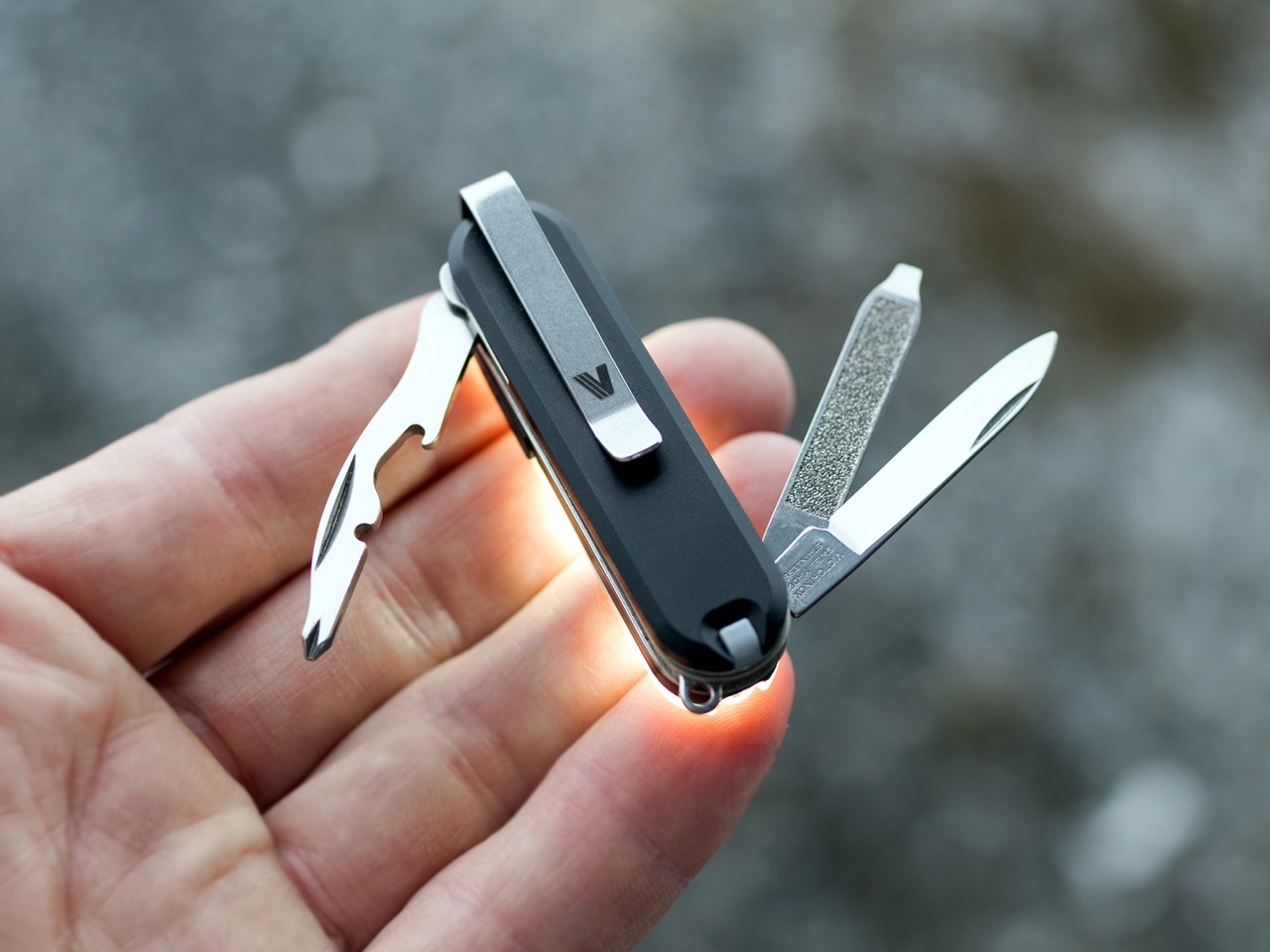
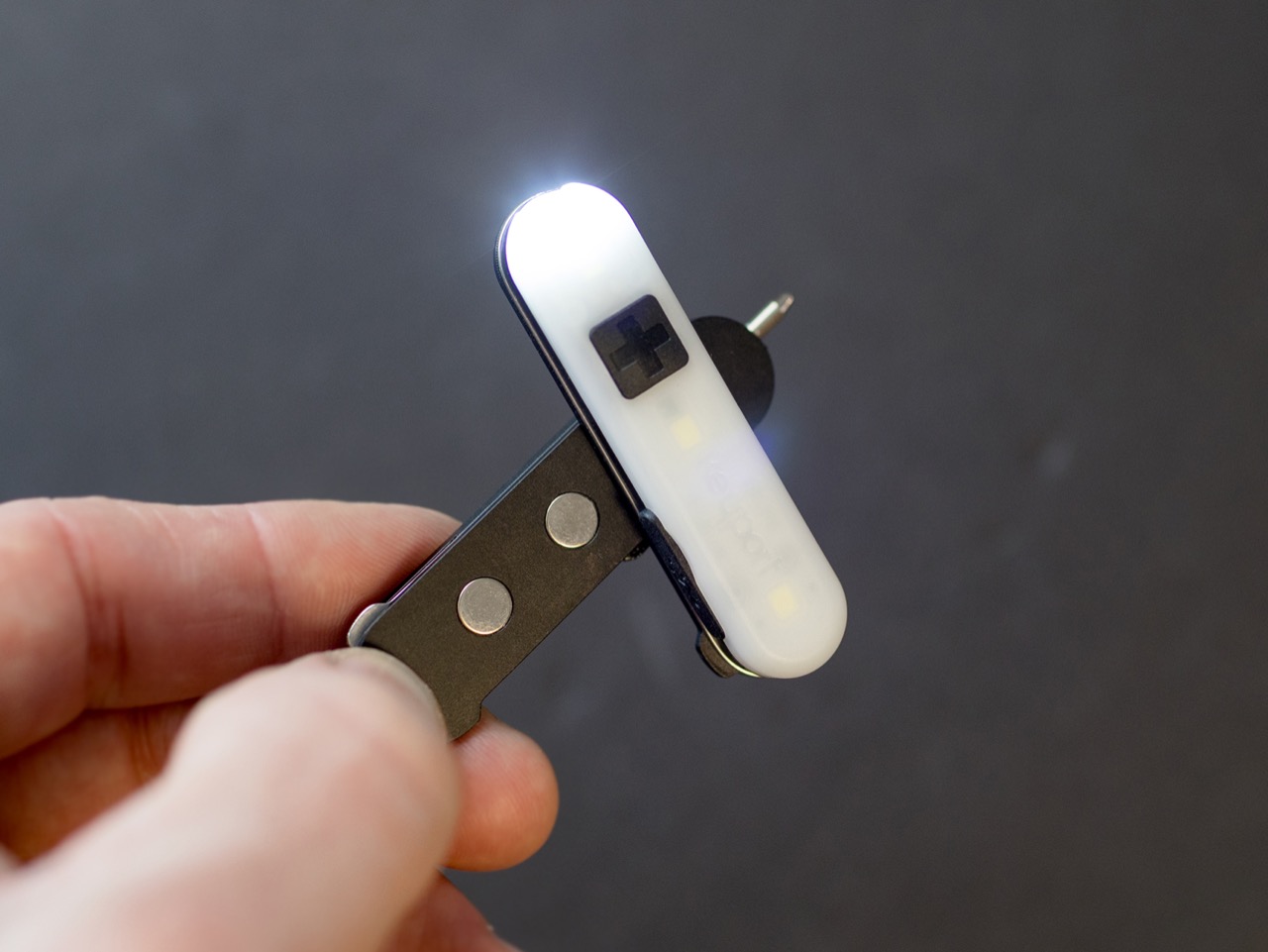
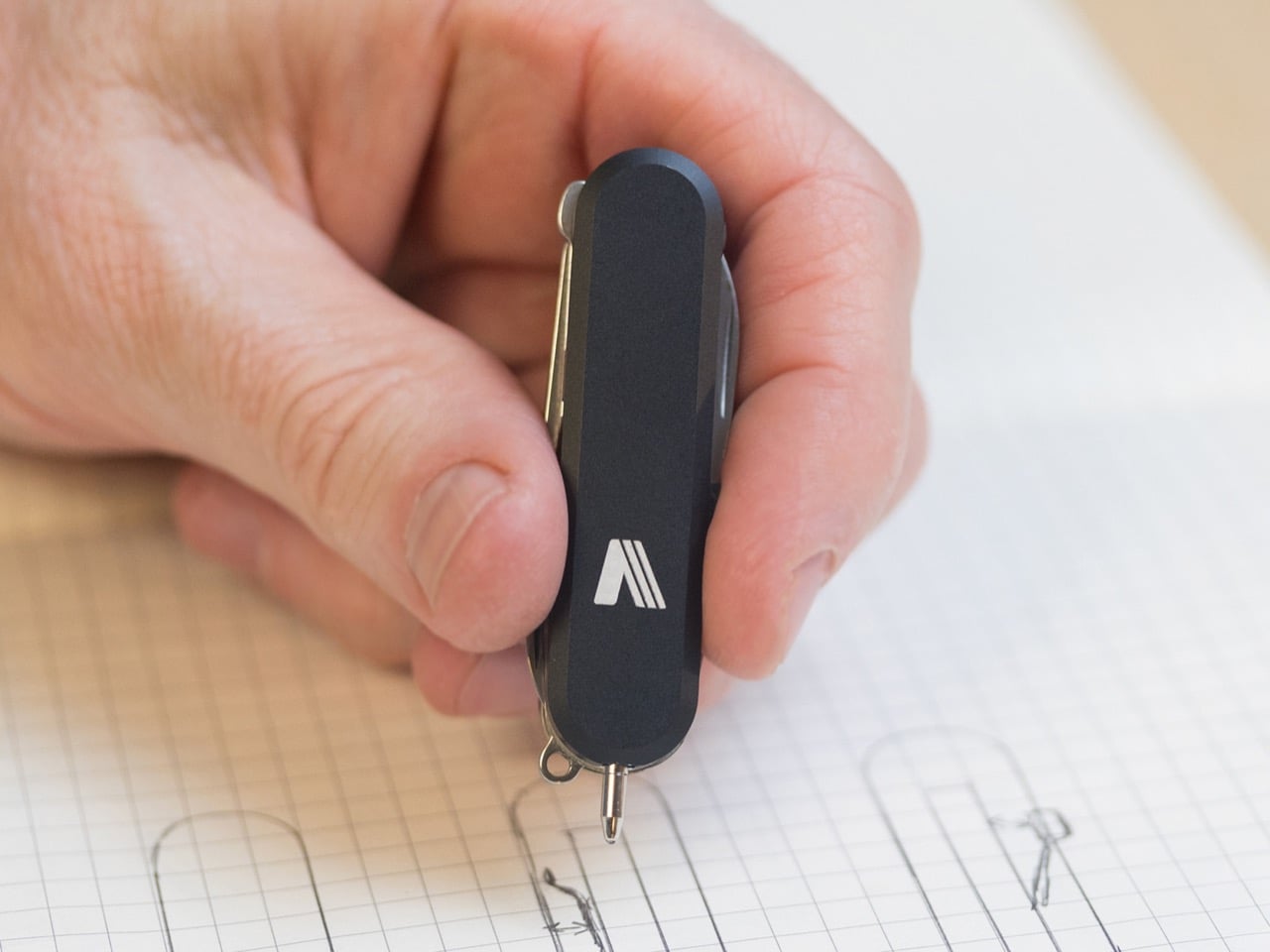
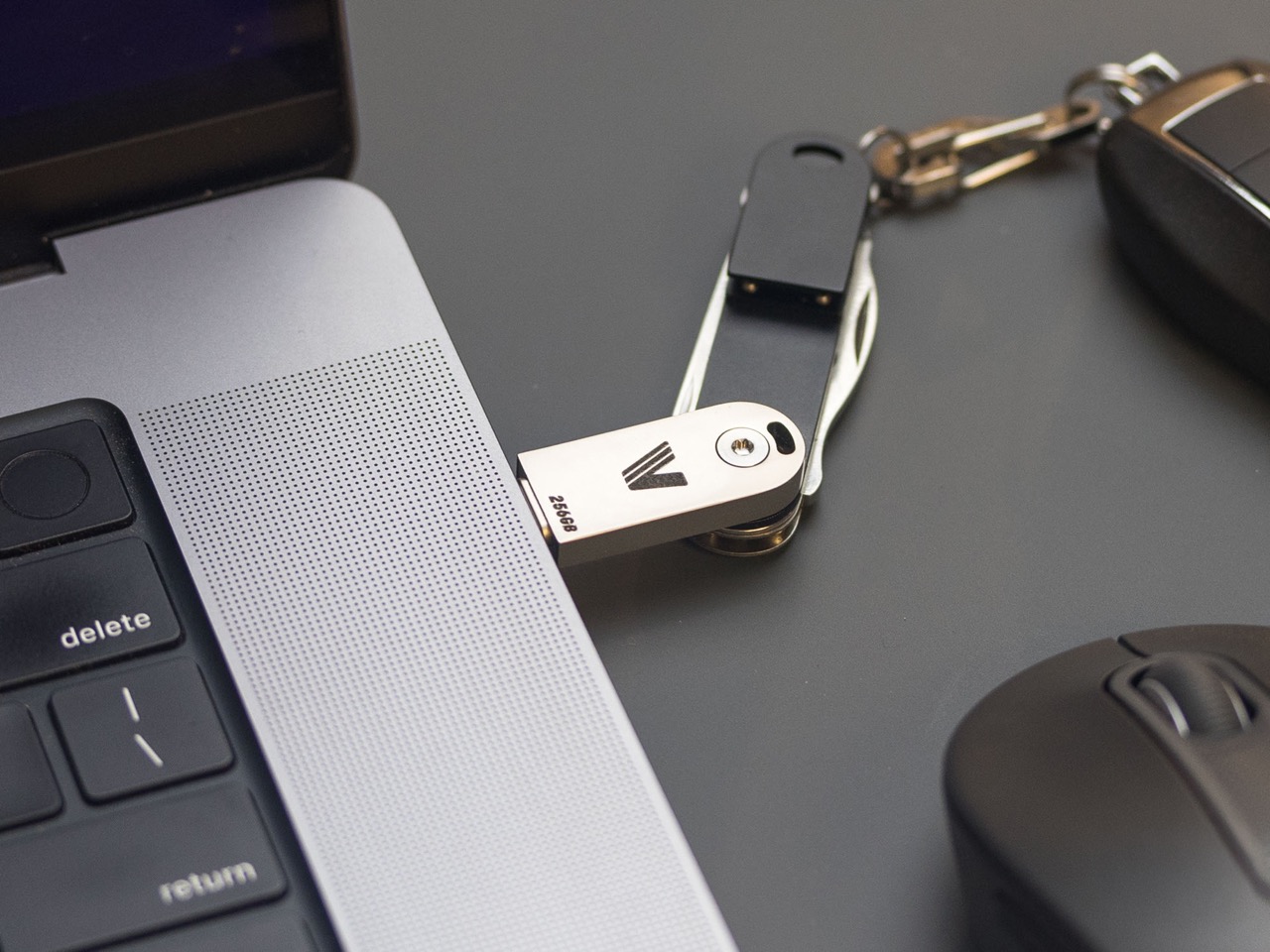
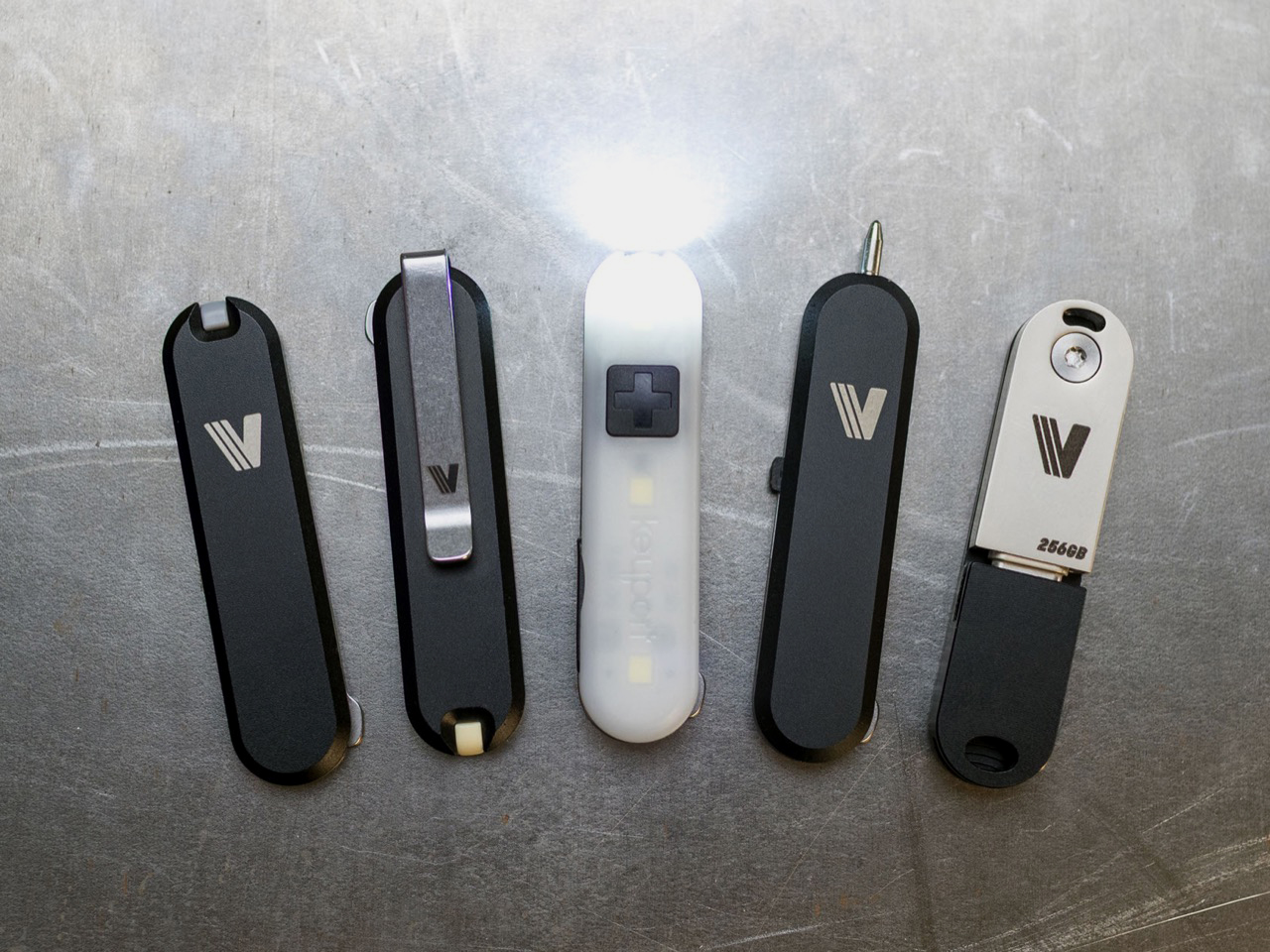
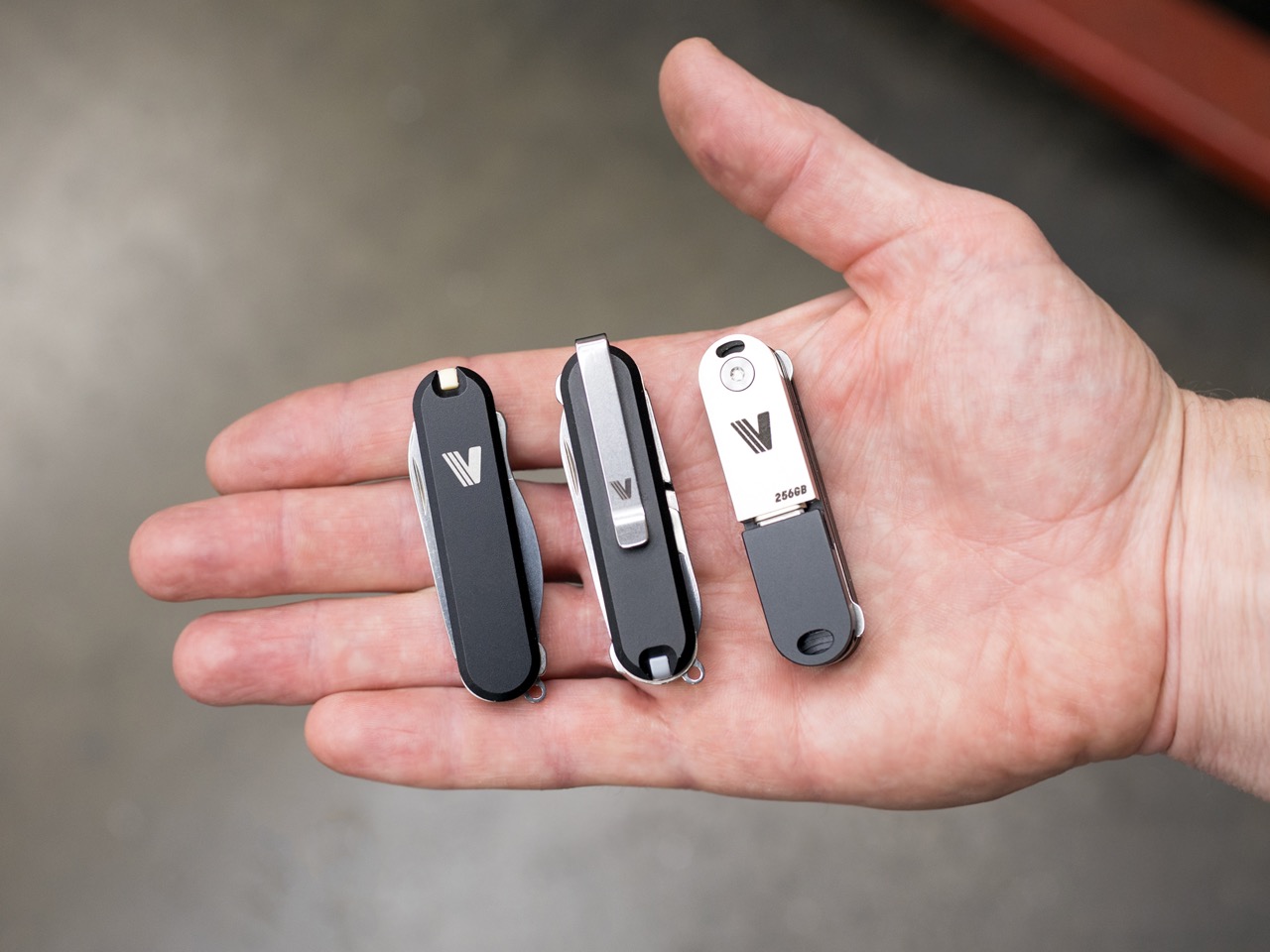
Keyport’s Versa58 system breaks that constraint without breaking the knife. The platform introduces a snap-on interface that attaches to any 58mm SAK’s existing rivets, transforming fixed scales into swappable modules. Add a rechargeable LED light, a mini pen, a USB-C flash drive, or a deep-carry pocket clip in seconds. Remove them just as fast. The knife stays intact, the heritage remains untouched, but the capabilities expand in ways the original designers never imagined. It’s modularity meeting tradition, and somehow both sides win.

Designer: Keyport, Inc.

Click Here to Buy Now: $39 $60 (35% off). Hurry! Only 2 left of 75.

The core of this entire system is a deceptively simple piece of spring steel. This patent-pending interface plate is the result of a full year of development and seven complete revisions, a process that speaks to the engineering challenge involved. The plate is engineered to flex just enough to click securely onto the mushroom-shaped rivets that hold a standard SAK together, the same ones hidden beneath the factory scales. The design had to be robust enough to handle repeated attachment cycles without loosening, yet gentle enough to avoid damaging the knife’s frame. It’s a tool-free, glue-free, and completely reversible process that takes seconds. This single component unlocks the entire platform.

Versa58 operates in two distinct universes. The first is as a direct upgrade to your existing Victorinox. You pop off the original scales and snap on the Versa58 modules you need for the day. The second universe is completely independent of the knife. Using a magnetic connector system called MagMount, any two modules can be attached to each other to create standalone tools. This dual functionality means you can either enhance the classic SAK you already own or build an entirely new, minimalist multi-tool from scratch. The system offers a level of flexibility that the 58mm format has never seen before.

The MagMount system is absolute genius, using three tuned neodymium magnets to create a crisp, satisfying connection. This allows for the quick assembly of pocketable rigs or keychain tools. You could, for instance, snap the flashlight module to the pen module for a compact, non-knife tool perfect for travel or restrictive environments. The magnetic pull is tuned for a secure hold while still allowing for smooth rotation and easy reconfiguration. It also introduces an addictive fidget factor, turning the act of customizing your carry into something tactile and engaging. It’s a smart design that expands the ecosystem beyond the knife itself.

Among the first wave of modules, the Clip Scale is likely to be the most celebrated. Machined from either 6061 aluminum or Grade 5 titanium, it finally adds a clean, low-profile pocket clip to the 58mm SAK. This has been a common request in the EDC community for years. Crucially, the clip is designed to be reversible and does not interfere with the knife’s keyring, a flaw seen in some aftermarket solutions. It’s paired with a V Scale for the front, which includes a multi-use slot designed to hold the original SAK’s toothpick or tweezers, ensuring you don’t lose core functionality.

The Pocket Flare module brings modern illumination to the platform. It’s a compact, USB-C rechargeable light with a beam tuned for close-range tasks. It offers three modes: a 3-lumen low beam with a 12-hour runtime, a 43-lumen high beam that runs for two hours, and a 45-lumen side light that acts as a lamp to brighten a small area. Because it uses the MagMount interface, you can also snap it onto any metal surface for hands-free lighting, which is incredibly useful for repairs or finding something in a dark tent.

Keyport also developed modules that bridge the analog and digital worlds. The Pen Module features a precision mini pen with a premium German Troika refill, offering a smooth writing experience without any rattle. For digital needs, there is a streamlined USB-C 3.0 flash drive module available in 64GB and 256GB capacities. This flip-out drive seamlessly integrates secure, portable storage into your pocket setup for documents, media, or backups. These additions transform the classic pocket knife into a tool that feels much more relevant to modern daily life.

Perhaps the most forward-thinking aspect of the Versa58 platform is its openness. Keyport will be selling standalone interface plates, inviting makers, modders, and machinists to design their own compatible modules. This opens the door for a community-driven ecosystem of custom tools built on the Versa58 standard. It’s a canvas for creativity, allowing anyone with an idea to contribute to the platform. This move could give the system incredible longevity and a range of options far beyond what Keyport could develop on its own.

Keyport has already outlined a roadmap for future modules, showing a long-term commitment to the system. Upcoming additions being explored include a Bluetooth locator, an NFC module for digital access or automation, a craft blade for precision cuts, and even a minimalist carrier for a Bic lighter. The plan is to build Versa58 into a comprehensive platform, not just a single product release. Backer feedback from the initial campaign will help shape which of these new tools get prioritized, making early adopters part of the development process.

The Versa58 system is available for backing on Kickstarter, with special pricing tiers for early supporters. The campaign offers several bundles, including the foundational Origin Bundle with the core scales starting at $39 and the more comprehensive Apex Bundle that adds the Pocket Flare module starting at $77. All modules and scales are available in either machined 6061 aluminum or the more premium Grade 5 titanium. The Versa58 ships globally starting August 2026.

Click Here to Buy Now: $39 $60 (35% off). Hurry! Only 2 left of 75.

The post Upgrade Your Victorinox 58mm Army Knife Into a Fully Modular, Snap‑On Multitool Ecosystem in 10 Seconds first appeared on Yanko Design.

World’s Slimmest AC Power Bank Can Run Appliances And Charge Your Laptop At Just 0.6 Inches Thick

Digital nomads, field photographers, and mobile creatives share a common frustration: needing wall outlet power in places that don’t have walls. USB power banks handle phones and tablets, but cameras, projectors, and portable monitors still demand actual AC power. The world’s slimmest AC power bank exists because someone finally asked the right question: why do portable power stations look like car batteries instead of something you’d actually pack? The Noomdot N1 brings 70W of pure sine wave AC output to a device thin enough to slip into the laptop sleeve of a standard backpack.

At 16mm thick, it’s built around portability rather than maximum runtime. The semi-solid-state battery delivers approximately 40 minutes of continuous output at full 70W load, or several hours for lower-draw devices like LED lights or camera batteries. That’s not camping-weekend capacity, it’s designed for day trips, flights, and situations where outlets exist but aren’t convenient. The unit stays flight-safe under 100Wh limits, recharges in 90 minutes, and includes both USB-C PD output and pass-through charging. It’s live on Kickstarter at early pricing before the $259 retail launch.

Designer: PB-ELE

Click Here to Buy Now: $169 $259 ($90 off) Hurry! Only 17 of 200 left.

Years ago, a company called Memobottle had a brilliant, simple idea: since our bags are full of flat things like books and laptops, why are our water bottles round? The Noomdot N1 is the Memobottle of portable power, born from that same flash of spatial intelligence. It abandons the dense, pocket-bulging brick in favor of a slim slab of milled aluminum designed to slide into the forgotten spaces of a laptop sleeve or document pouch. This design is not an aesthetic choice; it is a fundamental understanding of the modern carry ecosystem. The N1 is engineered to be a good citizen in a world of flat devices, integrating seamlessly rather than demanding you build your bag around its awkward shape.

The use of a semi-solid-state battery is what enables this form factor without compromising on safety or longevity. While not a true solid-state cell, this hybrid chemistry significantly reduces the amount of volatile liquid electrolyte, leading to better thermal stability and a much slower rate of degradation. The claim of retaining 99% capacity after 100 full charge cycles is a direct benefit of this technology. For anyone who has felt the disappointment of a lithium-ion pack that barely holds a charge after a year, this focus on durability is a welcome and practical innovation. It reframes the device as a lasting piece of essential kit.

The main event is, of course, the 70W AC outlet. Its pure sine wave inverter is the kind of detail that professionals appreciate, ensuring clean, stable power that will not harm sensitive electronics. This is what separates it from cheaper, modified sine wave alternatives that can introduce electrical noise or even damage delicate circuits in cameras and audio gear. The inclusion of a 60W USB-C PD port is a nod to modern workflows, allowing it to charge a laptop directly or be slowly recharged itself. For a quick turnaround, the dedicated DC input remains king, refueling the entire 20,000mAh capacity in a scant 90 minutes.

Packing an inverter into a 16mm-thin chassis is a thermal challenge, and the N1 addresses this with a feature I’ve never seen in a power bank: an active cooling fan. An internal 6000 RPM fan kicks in during AC output to pull heat away from the core components, ensuring the device can sustain its peak performance without overheating. It is a pragmatic, if slightly brute-force, solution. The tradeoff is acoustics. While the fan is likely tuned to be as quiet as possible, it will not be silent… but that’s honestly a tiny price to pay for running a bunch of appliances or charging gadgets off a ‘wall-less power outlet’.

The N1 is a tool for a very specific mission: bridging the gap when AC power is needed for a short, critical period. It is for the wedding photographer who needs to juice up strobe batteries between the ceremony and reception. It is for the consultant who needs to run a projector for a 30-minute pitch in a conference room with no available outlets. Its 40-minute runtime at maximum load defines its purpose clearly. This is not an off-grid power solution for a weekend in the woods; it is a mobile professional’s get-out-of-jail-free card, ensuring a dead battery never becomes a single point of failure.

An IPX4 rating means it can shrug off a sudden rain shower, and passing a 1-meter drop test suggests it can survive being fumbled out of a backpack. These are not features one typically finds on power banks, and they speak to an understanding of the chaotic nature of travel and fieldwork. Combined with its TSA-friendly sub-100Wh capacity, the N1 is one of the few AC power sources truly designed from the ground up to leave the house and see the world, legally and safely.

You get to choose between two variants – 110V and 220V (depending on the country you live in and the rated voltage its appliances operate on). The Noomdot N1 ships along with a DC adapter for charging it, at a fairly discounted price of $169 ($90 less than its MSRP of $259). The device ships globally starting May 2026.

Click Here to Buy Now: $169 $259 ($90 off) Hurry! Only 17 of 200 left.

The post World’s Slimmest AC Power Bank Can Run Appliances And Charge Your Laptop At Just 0.6 Inches Thick first appeared on Yanko Design.

The Case for Heirloom Furniture in an Era Obsessed With Biodegradable Everything

Joe Doucet has always been good at saying uncomfortable things politely. His latest provocation, delivered via Columns, a furniture collection with Bulgarian studio Oublier, is that the design industry’s obsession with biodegradable materials might be missing the point entirely. Furniture made from mycelium or algae can decompose in five years, sure, but a well-made antique armoire outlives empires because no one throws it away. Columns takes that logic seriously. Handcrafted in solid oak, natural leather, and horsehair, the pieces are built to last a thousand years, which sounds like marketing hyperbole until you look at the joinery, the hand stitching, and the material choices. This is furniture designed to be inherited, repaired, and remembered.

Oublier, a studio that typically explores forgetting as a cultural and creative act, seems like an odd partner for a project about permanence. But the contradiction makes sense once you see the work. The collection’s name refers to its columnar bases, two cylinders of oak laid horizontally and bridged by a continuous leather top. There are no fashionable details to anchor it to a specific decade, no finishes that will look dated in ten years. The form is so spare it borders on austere, which may be the entire strategy. If sustainability is about what we keep rather than what we compost, then the object has to earn its place across generations. Columns bets on clarity, craft, and a very patient understanding of time.

Designers: Joe Doucet X Oublier

Looking at the piece itself, the argument becomes tangible. The form is elemental, almost architectural, with the two solid oak drums giving it a grounded, permanent presence. The leather top is stretched over this base with a continuous curve, and the hand stitching along the perimeter is left visible. This small detail is a critical part of the story, acting as a quiet signal of human labor and future repairability. It suggests the piece can be opened, its horsehair padding refreshed, and its leather resewn a century from now. There is a thoughtful honesty in showing the construction, which reinforces the idea that this is a working object, not a sealed artifact. It feels built to withstand use, not just admiration.

The choice of materials is a direct commitment to graceful aging. The solid oak is not a uniform, characterless surface; it has grain and life that will deepen over the decades. Similarly, the natural leather is intended to absorb the evidence of its existence, developing a rich patina from sunlight, touch, and time. This philosophy is the complete opposite of designing for pristine, showroom condition. Instead, Columns proposes that wear is a form of beauty, that an object’s value increases as it accumulates a history. This approach redefines luxury away from novelty and toward endurance, suggesting that the ultimate premium is an object that improves with you.


What Doucet and Oublier have created is a subtle but firm critique of disposability. The project opines that true innovation might lie in looking backward, applying traditional techniques and durable materials to a clean, contemporary form. It challenges the prevailing notion that sustainability requires constant material invention and complex recycling systems. Instead, it offers a simpler, more profound solution: make things that last, and are simultaneously too good to throw away. Columns proposes that the most responsible act of consumption is to buy something once and keep it for a lifetime, passing it on as a functional heirloom rather than a problem for a landfill.

The post The Case for Heirloom Furniture in an Era Obsessed With Biodegradable Everything first appeared on Yanko Design.

This LEGO Furby 30th Anniversary Build Comes With Working Eyes and a Secret Agent Hidden in Its Head

The Furby didn’t just sell 40 million units in its first three years. It created genuine paranoia. Parents whispered about hidden microphones. The NSA had to issue actual statements denying that these fuzzy toys were surveillance devices. Kids would wake up to unprompted Furbish babbling at 3 AM and wonder if their electronic pet had become sentient. Twenty-eight years later, those kids are adults, and one of them just submitted a 1,700-piece LEGO version to Ideas that’s already earned a Staff Pick designation.

Rancor1138’s Furby 30th Anniversary build stands nearly 19 inches tall in classic black and white, complete with working eyelids, articulated ears, and a movable mouth. The back panel opens to reveal the interior, where two Easter eggs wait. One is a brick-built heart, representing what Furbys were supposed to be. The other is a man in black hiding in the head, recording device in hand, representing what everyone feared they actually were. Both are perfect.

Designer: Rancor1138

The build uses helmet pieces from the buildable Buzz Lightyear sets for those opening eyelids, which captures the curved geometry needed even though they’re not available in black yet. Technic ball joints handle the ear articulation, giving them the full range of motion that made Furbys so expressive. The movable mouth works without gearing or complex mechanisms, keeping the design producible. At 46.6 centimeters tall with ears extended and 22.1 centimeters wide, this thing commands shelf space the way the original commanded attention in toy aisles. The 1,700-piece count puts it in the same territory as LEGO’s typewriter or piano, the kind of weekend project that adult collectors actually want to spend time on rather than snap together in an evening.

Tiger Electronics owns the Furby trademark, but this color scheme reads as “generic Furby” in a way that could survive legal review. You see those colors and ear shapes from across a room and your brain fills in the rest without needing specific commercial variants. The decision to include both the heart and the surveillance agent creates tension that reflects how people actually experienced these toys. They were supposed to be companions. They became sources of low-grade technological anxiety. Both truths exist simultaneously, and hiding them inside the build where you have to open the back panel to see them turns the discovery into a reveal rather than a punchline.

Rancor1138’s child developed an obsession with Y2K electronic toys despite being born decades after they mattered, which prompted the designer to build a LEGO version of the toy as a gift for their kid. The build went through three or four versions before landing to what we see now, and LEGO does have a tendency to tweak MOCs (My Own Creations) further before officially launching them, but this one absolutely needs no changing.

So why make a LEGO Furby in 2026 beyond just the fact that your child loves them? Well, Furby’s 30th anniversary hits in 2028, giving LEGO a marketing angle if this clears the Ideas review process. At 1,700 pieces, the probable price point lands somewhere between $170 and $220 based on how LEGO has priced recent Ideas sets. That positions it as a serious display piece for collectors who remember the original phenomenon and want something substantial to build, not an impulse grab for casual fans.

The man in black sitting inside the Furby’s head with recording equipment directly references conspiracy theories that required actual NSA clarification in 1999. These toys couldn’t record speech despite widespread belief otherwise, which feels simultaneously ridiculous and prescient given the smart speaker landscape two decades later. The heart in the chest cavity provides counterweight, acknowledging that underneath the paranoia these were designed to be loved. Both elements work because they’re physically integrated rather than existing as external commentary. Open the back panel and there they are, permanent features that reward closer inspection.

LEGO Ideas runs on a voting system where submissions need 10,000 supporters to enter review for possible production. This Furby currently sits at 2,622 votes with 563 days left to hit the next 5,000 milestone. The platform has produced genuinely strong sets over the years, proving community-driven design can match LEGO’s internal development when the right projects get traction. Anyone wanting to see this become an actual purchasable set needs to head over to the LEGO Ideas website and vote. The Furby deserves to exist as more than a digital render and some studio photos, if only because that man in black Easter egg is too good to stay conceptual.

The post This LEGO Furby 30th Anniversary Build Comes With Working Eyes and a Secret Agent Hidden in Its Head first appeared on Yanko Design.

Realme 16: 7,000mAh battery, iPhone Air ‘inspired’ design, 3-lens camera and a rear selfie mirror

The horizontal camera bar has officially become the design language of 2025-2026, and Realme just joined the party with the Realme 16. Five months after Apple’s iPhone Air established the aesthetic last September, here comes a mid-range contender wearing the same silhouette like a fashion trend that jumped from runway to high street. The visor-style execution skews closer to Honor’s Magic8 Pro Air, complete with that clean horizontal sweep across the top of the phone. But Realme threw in a wild card: a circular selfie mirror embedded right in the camera module, encircled by a halo flash that adds theatrical flair to an otherwise familiar design.

Calling this phone “Air” anything requires some creative interpretation. The iPhone Air sits at 5.6mm thin, Honor’s version checks in at 6.1mm, and the Realme 16 lands at 8.1mm. That’s practically chunky by comparison, though the 7,000mAh battery inside explains the extra millimeters. At 183 grams, it still feels reasonable in hand despite housing enough power to outlast most flagships by a full day. The mirror feature positions itself as functional, giving you a way to frame selfies using the superior 50MP rear camera instead of the standard front sensor. Whether anyone actually uses it beyond the first Instagram story is the real test.

Designer: Realme

What’s more interesting than the mirror is the engineering required to make it all work. Squeezing a 7,000mAh battery into a body this manageable is no small feat, and it points to some clever internal packaging, what Realme calls an “Aircraft Structure layout” using high-density graphite battery tech. This is the kind of practical innovation that matters in the mid-range space, where two-day battery life is a legitimate killer feature. They even managed to secure an IP66, IP68, and IP69K rating, which means it’s protected against everything from dust to high-pressure water jets. That’s a level of durability you just don’t expect to see on a phone that isn’t a ruggedized brick.

The rest of the package is solidly mid-range. It’s running on a MediaTek Dimensity 6400 Turbo chipset, which is more than capable of keeping things running smoothly on the 6.57-inch AMOLED display. That screen, by the way, boasts a 120Hz refresh rate and an incredibly bright 4,500-nit peak brightness, so it should be perfectly visible even in direct sunlight. The camera system is led by that 50MP Sony IMX852 sensor with OIS, a very respectable piece of hardware for this segment, and it’s paired with a simple 2MP monochrome lens.

So, was the “Air” moniker really necessary? It feels like a stretch when the phone is 1.5x as thick as the devices it’s mimicking. And you have to wonder how much actual design work went into the chassis itself. The silhouette is pure iPhone Air, the camera plateau is straight from Honor’s playbook. Did Realme’s team just slap a mirror on a composite of last season’s hits and call it a day? Maybe. But for a mid-range phone with this much battery, maybe that’s all it needs to be. At its price tag, perhaps nobody minds a design that feels ‘inspired’ as long as it looks the part and lasts for two days.

The post Realme 16: 7,000mAh battery, iPhone Air ‘inspired’ design, 3-lens camera and a rear selfie mirror first appeared on Yanko Design.

This 5-Inch “Video Business Card” Wants To Replace Your Stack Of Paper Cards

Televisions used to be heavy boxes that dominated a room. Now, the latest LG and Samsung prototypes at CES 2026 look more like posters than TVs, with panels so slim they almost blend into the wall and bezels that seem to disappear when the screen lights up. These displays are no longer just appliances in the corner of a living room. They are becoming design elements that can live almost anywhere you might put a sheet of paper.

That shift makes it feel natural to ask a simple question: if screens can be this thin, why not put them where we have always relied on print? Business cards are a perfect example. They carry introductions, identity, and a first impression in a tiny rectangle. VidCard takes that same footprint and turns it into a living surface, transforming the familiar business card into a personal video introduction that plays in the palm of your hand.

Designer: Parsifal

Click Here to Buy Now: $59 $99 (40% off). Hurry, only a few left! Raised over $66,000.

VidCard is basically what it sounds like: a rigid card with a 5 inch, 1280×720 IPS LCD screen built in, playing a looping video of you introducing yourself or your brand motion graphic. The whole thing measures 120.05mm by 86.4mm, which puts it somewhere between a credit card and a small phone, and it’s under 5mm thick. That’s genuinely impressive when you remember there’s a battery, NFC chip, display controller, and 256MB of onboard storage packed inside. The card charges via contact pins, lasts about an hour of continuous playback (roughly 120 to 240 interactions per charge), and syncs content through a companion app on iOS or Android. You upload your intro video, it pushes to the card, and you’re set. The screen itself looks clean in the campaign photos and bright enough for indoor use.

The NFC feature sidesteps the whole “how do I actually save your contact info” problem. You tap the card against someone’s phone, and it pulls up your mobile optimized landing page with your video, company profile, documents, and whatever else you want to link. No app download required on their end, which makes sense because nobody wants to install something just to see your business card. Real time analytics track who viewed your profile, when they watched, how long they engaged, and if they came back for a second look. There’s a slightly dystopian charm to getting a notification at 11pm that someone just rewatched your intro for 87 seconds, but it does give you actual data to inform follow ups instead of wondering if your card got tossed in a drawer.

Here’s the thing, though. You know what else has a high resolution screen, NFC, internet connectivity, and can play video? The phone in your pocket. You could theoretically just show someone your intro video on your phone, tap for NFC sharing, and achieve most of the same result for zero additional hardware. VidCard’s counter to that is the physical artifact itself. Handing someone a glowing screen feels different than showing them your phone (besides, unlocking a phone, opening your gallery, and finding the right video can take painful minutes), and if you leave the card behind with a high value contact, it becomes a keepsake that lives on their desk instead of disappearing into a contacts list. That’s either brilliant or unnecessary depending on how much you value the showmanship in networking, although I genuinely can’t decide which camp I’m in.

The founders claim inspiration from Call of Duty: Advanced Warfare, where a character hands over a video business card inviting you to join a fictional military contractor. That’s a deeply nerdy origin story, and I respect it. VidCard works best in situations where you need to stand out in a sea of forgettable interactions: trade shows, high stakes sales meetings, investor pitches, creative industry networking where showing your work matters more than listing credentials. It’s overkill for casual meetups or industries where a LinkedIn connection does the job, but if you’re trying to leave an impression on someone who sees 50 people a day, a card that talks and moves will get you remembered. The real test is whether that memory translates to actual follow through, which the analytics dashboard is designed to help with by showing you who’s genuinely interested versus who just thought the card was neat.

VidCard is live on Kickstarter through February 5, 2026, with early bird pricing starting at $59 USD for a single unit, $162 USD for a three pack, and scaling up to $599 USD for a 10 unit business pack with bulk branding options. Estimated delivery is June 2026 for early backers, with standard shipments following through June 20. The campaign has already cleared its funding goal by a wide margin, which suggests the concept resonates with enough people that we may just end up seeing video or even holographic business cards in the not-so-distant future.

Click Here to Buy Now: $59 $99 (40% off). Hurry, only a few left! Raised over $66,000.

The post This 5-Inch “Video Business Card” Wants To Replace Your Stack Of Paper Cards first appeared on Yanko Design.

❌