Vue lecture

Il y a de nouveaux articles disponibles, cliquez pour rafraîchir la page.

Le VLIW, cette architecture de processeur "impossible" qui revient par la porte de l'IA

La chaîne YouTube Asianometry vient de publier une vidéo qui retrace l'histoire du VLIW, une architecture de processeur née dans les années 80 et longtemps considérée comme un échec. Sauf que cette technologie, enterrée avec l'Itanium d'Intel, refait surface dans les puces dédiées à l'intelligence artificielle. Et elle est peut-être déjà dans votre smartphone.

Le principe, et c'est un peu technique

Si vous ne connaissez pas Asianometry, c'est une chaîne qui décortique l'histoire des semi-conducteurs avec un vrai talent de vulgarisation, et cette vidéo sur le VLIW (pour Very Long Instruction Word) ne fait pas exception.

L'idée est assez simple sur le papier. Un processeur classique exécute ses instructions une par une, ou les réordonne à la volée avec du matériel dédié (c'est ce que font les puces modernes avec l'exécution "out-of-order").

Le VLIW fait l'inverse : c'est le compilateur, le logiciel qui transforme le code en instructions machine, qui regroupe à l'avance plusieurs opérations dans un seul "mot" très long. Du coup, le processeur n'a plus qu'à exécuter le paquet en une seule fois, sans se pose la moindre question. Le matos est de fait plus simple, moins gourmand en énergie, et plus rapide.

Le problème, c'est que tout repose sur le compilateur. S'il ne trouve pas assez d'opérations à paralléliser, le processeur tourne à vide. Et écrire un compilateur capable de faire ça correctement, c'est un casse-tête qui a occupé des chercheurs pendant des décennies.

L'Itanium, le plus gros pari raté d'Intel

Les premières tentatives commerciales datent des années 80 avec Multiflow et Cydrome, deux entreprises qui ont fait faillite. Intel a sorti le i860 en 1989, un processeur VLIW quasi impossible à programmer. Et puis il y a eu l'Itanium. Développé avec HP à partir de 1994 sous le nom IA-64, ce processeur devait remplacer le x86 et dominer les serveurs. Les analystes prédisaient la fin des architectures classiques.

Quand l'Itanium est sorti en 2001 après dix ans de développement, les performances étaient décevantes, la compatibilité avec les logiciels existants était catastrophique, et AMD avait entre-temps lancé le x86-64 qui faisait tout pareil en restant compatible avec l'ancien. L'Itanium est devenu un produit de niche avant de disparaître. La presse tech l'a rebaptisé "Itanic", en référence au Titanic.

Le retour par l'intelligence artificielle

Le VLIW n'a jamais complètement disparu. Texas Instruments l'utilise dans ses processeurs de traitement du signal depuis 1997 avec la famille TMS320C6000. Le DSP Hexagon de Qualcomm, celui qui gère l'inférence IA dans les puces Snapdragon, est lui aussi basé sur du VLIW.

Et Groq, la startup qui fait beaucoup parler d'elle pour la vitesse de ses puces d'inférence, utilise une architecture VLIW où le matériel ne prend aucune décision à l'exécution.

L'inférence de réseaux de neurones, c'est justement le type de calcul idéal pour le VLIW : des opérations régulières, prévisibles, massivement parallèles.

Pas besoin de réordonnancer quoi que ce soit, le compilateur peut tout planifier en amont. Des chercheurs travaillent d'ailleurs sur des extensions RISC-V qui intègrent des principes VLIW pour combiner le meilleur des deux mondes.

C'est quand même amusant de voir une technologie enterrée il y a vingt ans revenir grâce à l'IA. Le VLIW a échoué dans les années 2000 parce que le code des logiciels classiques est trop imprévisible pour être optimisé par un compilateur.

Mais l'inférence IA, c'est l'exact opposé : tout est prévisible et régulier. Du coup, l'architecture qui devait remplacer le x86 se retrouve à alimenter les accélérateurs IA de votre Snapdragon. Comme quoi, en informatique, rien ne meurt vraiment.

Source : Hackaday

This Titanium EDC Knife Has 3 Opening Styles and Costs Just $159

The problem with most EDC knives is that they’re either pretty to look at or actually useful, rarely both. Cheap materials make them look tacky, stiff mechanisms make them frustrating to use, and don’t even get started on how quickly they lose their edge. That hasn’t stopped manufacturers from churning out countless variations of the same disappointing formula, leaving users to choose between form and function.

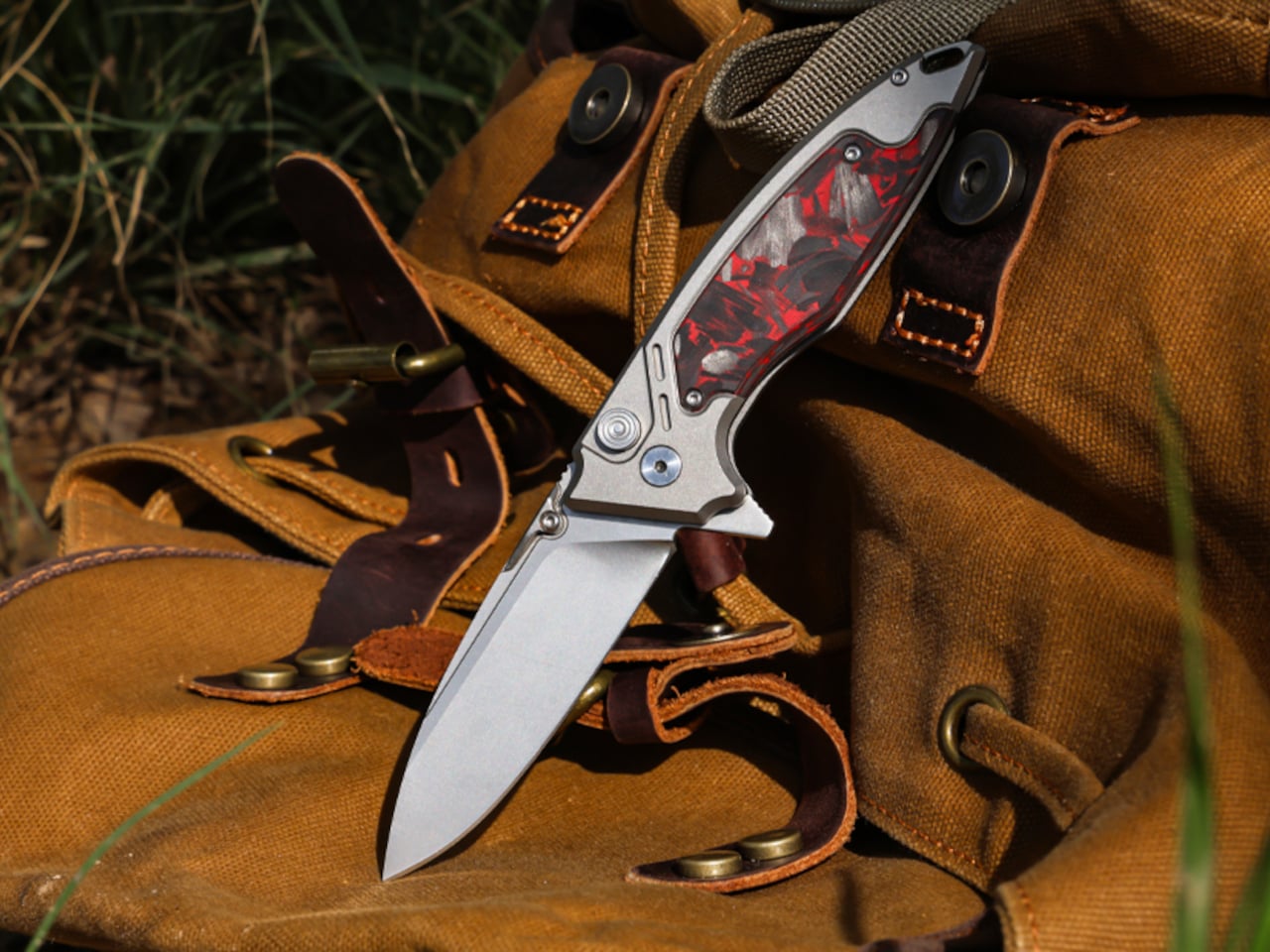
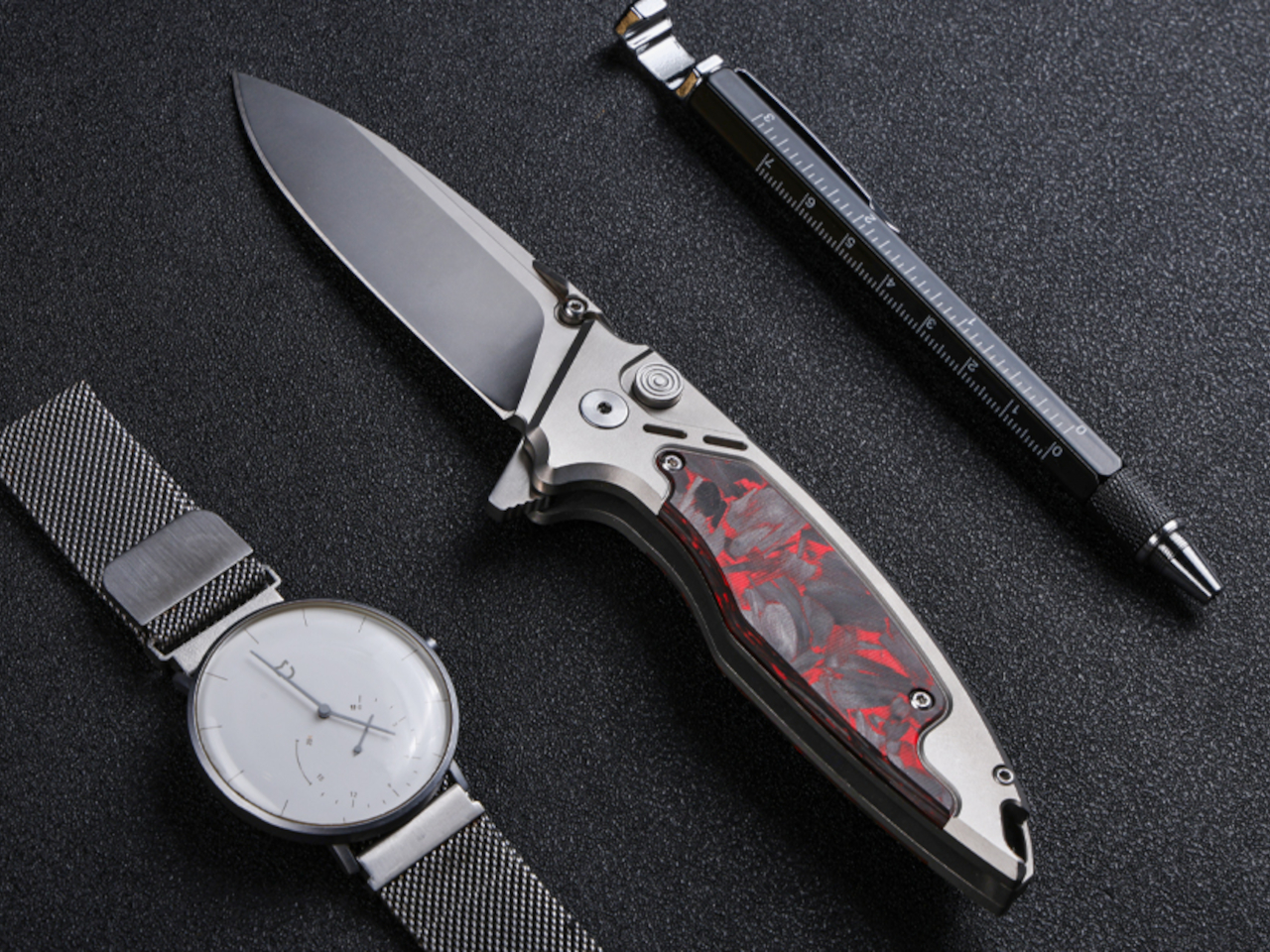
The Scarab 2.0 takes a completely different approach to solving these everyday annoyances. Instead of cutting corners, it brings together aerospace-grade titanium and carbon fiber, paired with an M390 steel blade that knife enthusiasts swear by. The result looks almost too good to use, though that would be missing the point entirely. This is a tool made for daily challenges, not display cases.

Designer: MIH

Click Here to Buy Now: $159 $237 (33% off). Hurry, only 39/60 left!

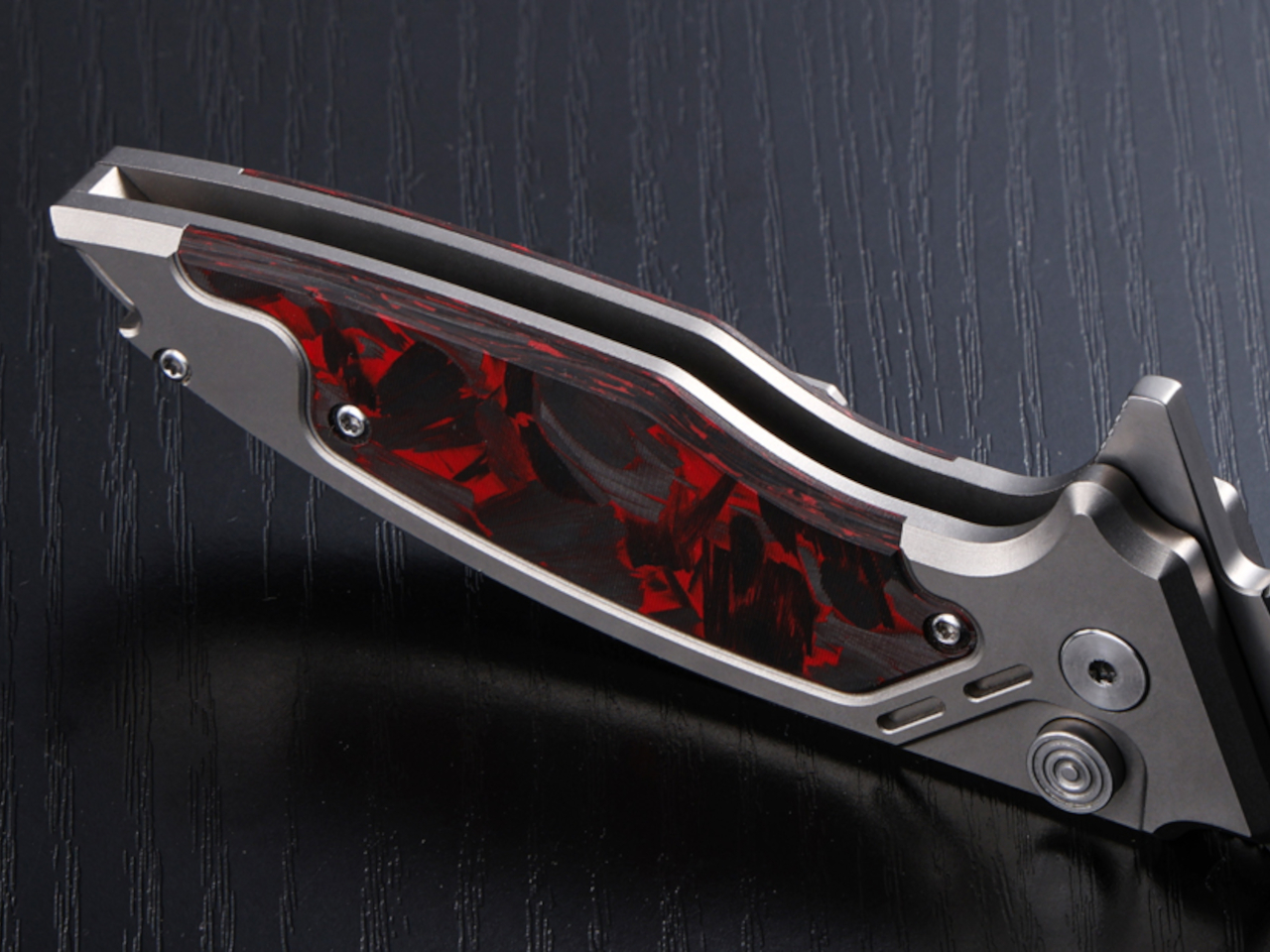
The visual appeal hits you immediately, thanks to its striking combination of materials and thoughtful design. Red or black carbon fiber inlays catch light in fascinating ways, while the machined titanium frame adds an industrial sophistication that many premium knives try to achieve but few manage to pull off. It’s definitely quite a sight, though the real magic happens when you actually pick it up.

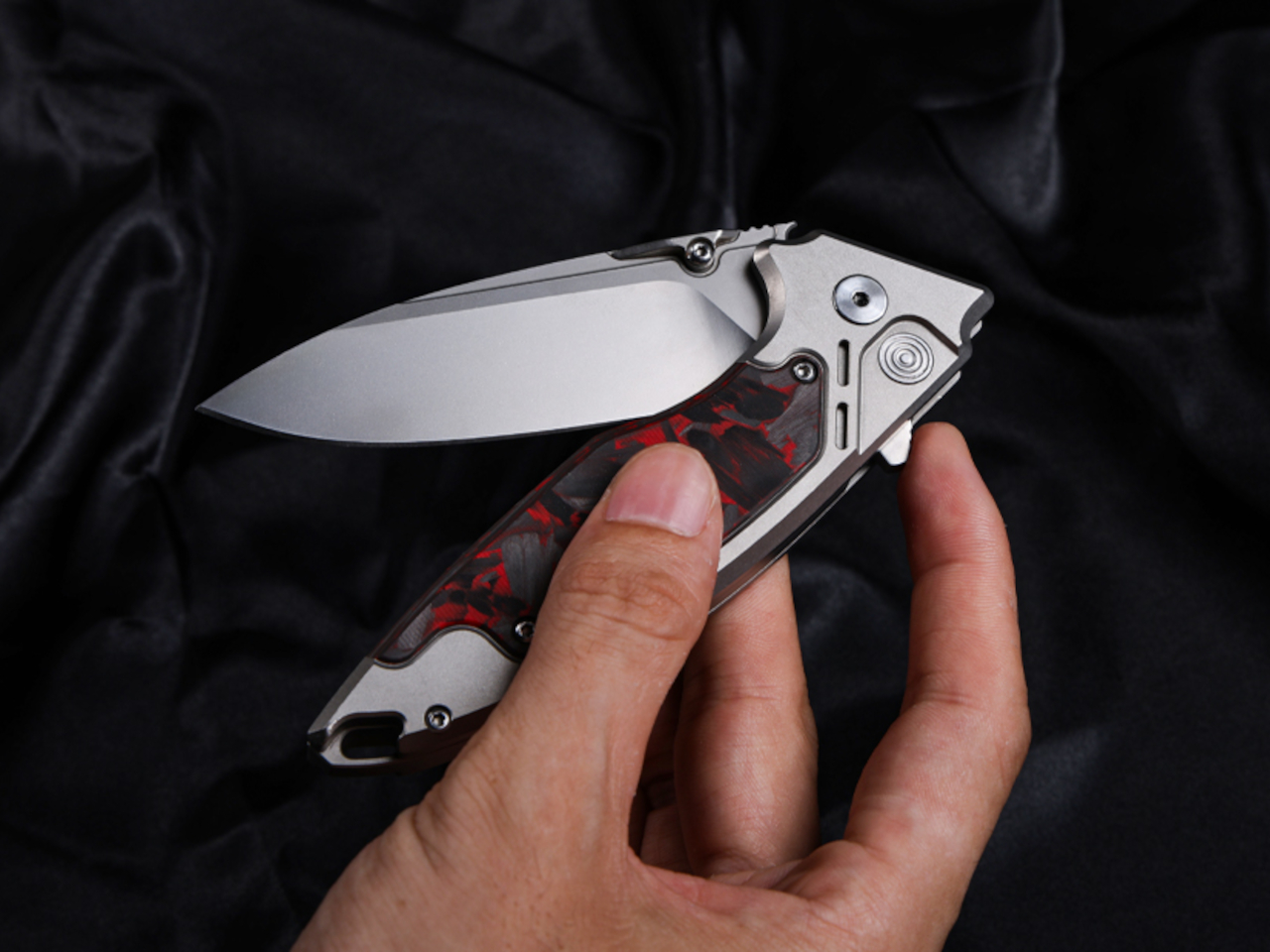
Anyone who has tried to open a knife with cold, wet, or tired hands knows how frustrating it can be. The Scarab 2.0 solves this with not one but three different opening methods. A thumb stud, button lock, and flipper opening mean you’ll never struggle to deploy the blade. The smooth roller bearing system makes each method feel natural and reliable, without the gritty, stiff action common in other knives.

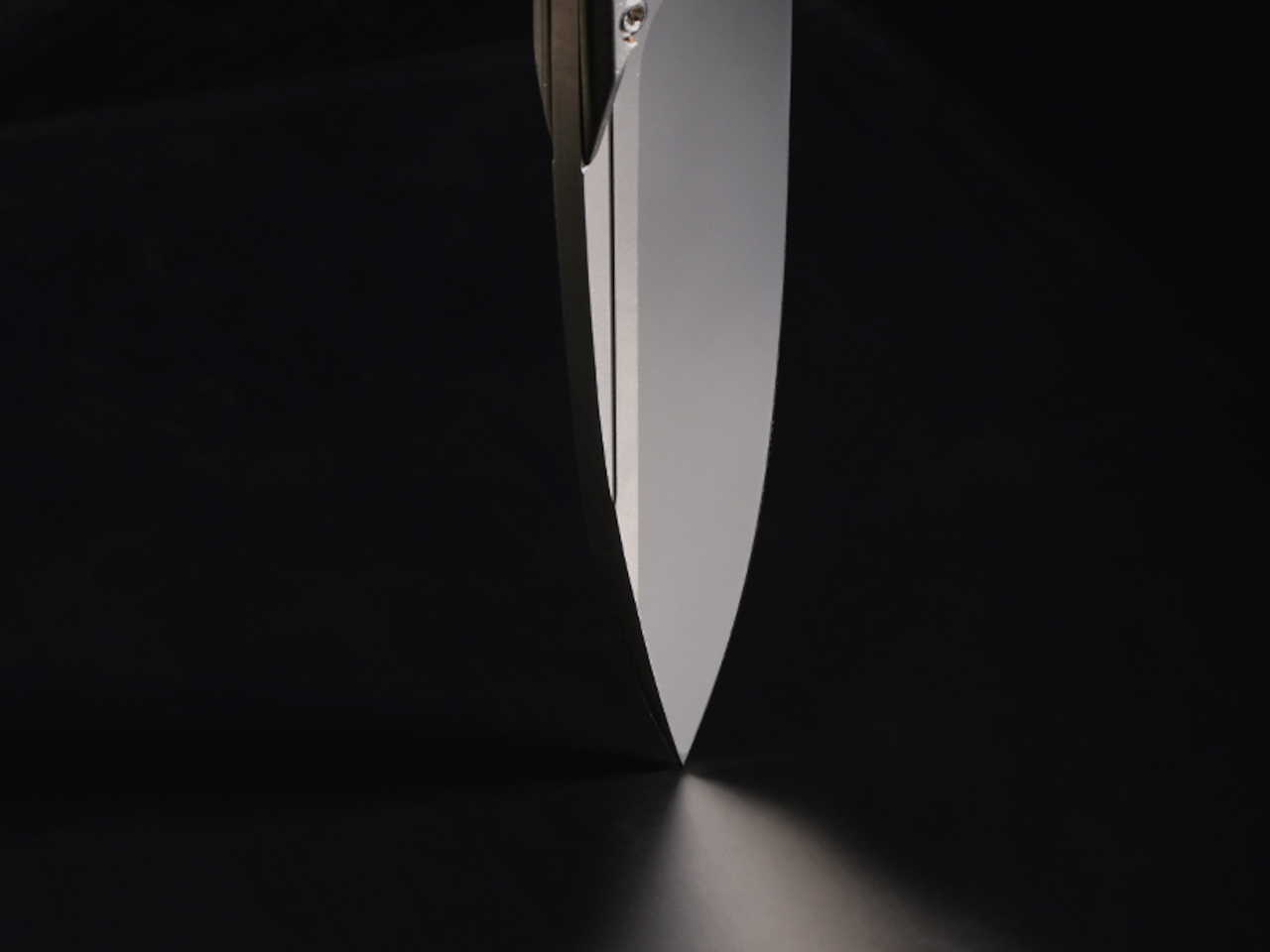
The M390 steel blade is what really sets this knife apart from the crowd. While other knives might stay sharp for a few weeks of regular use, this steel keeps its edge through months of daily tasks. No more torn packages or awkward cuts. The 15-degree edge angle makes every slice clean and precise, whether you’re breaking down boxes or preparing food outdoors.

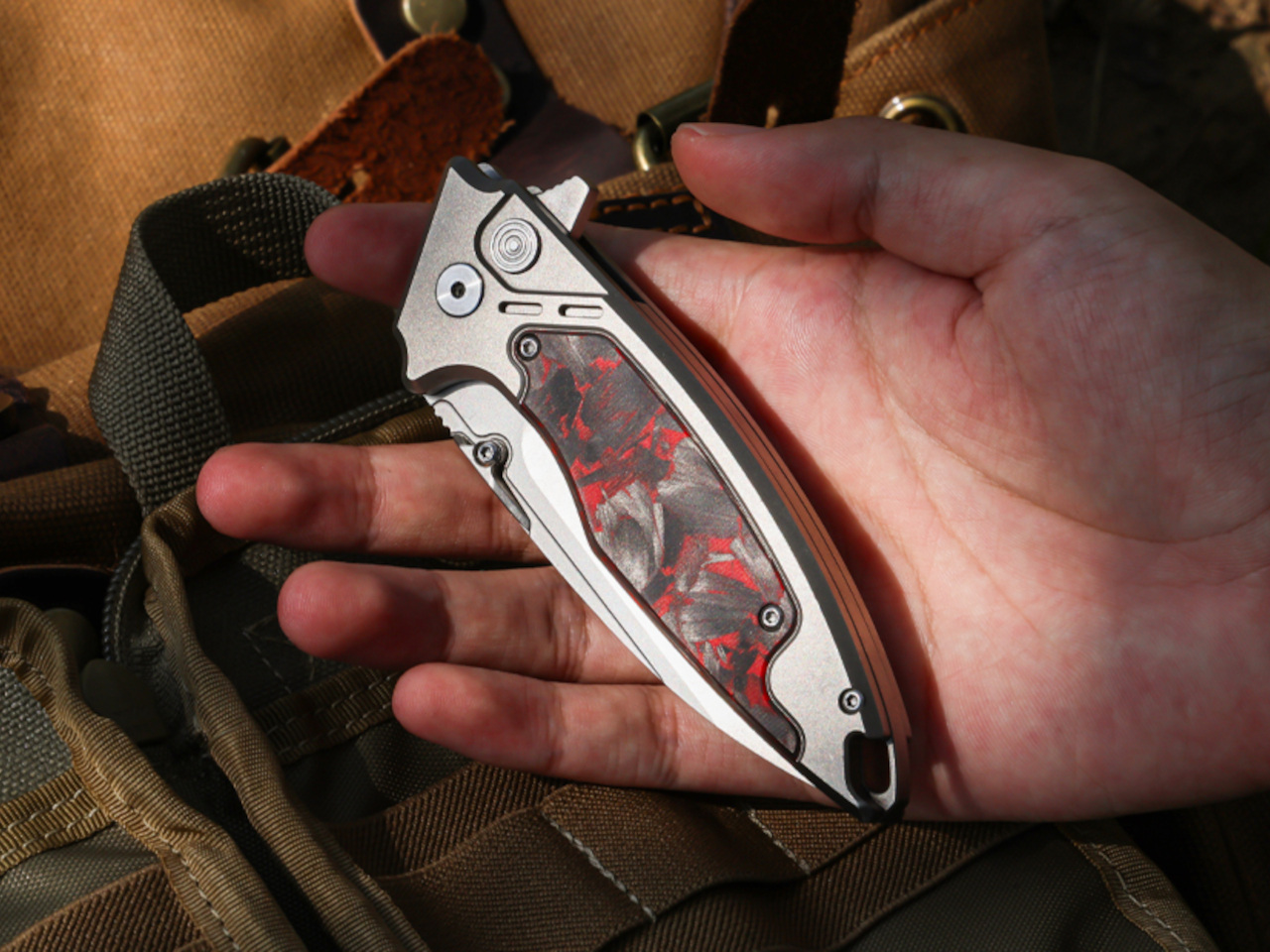
The handle isn’t just about looks. The GR5 titanium frame, the same material used in aircraft components, provides incredible strength without unnecessary weight. The textured carbon fiber offers a secure grip even with wet hands or gloves. Together, they create a knife that feels as premium as it looks, with every surface engineered for comfort and control.

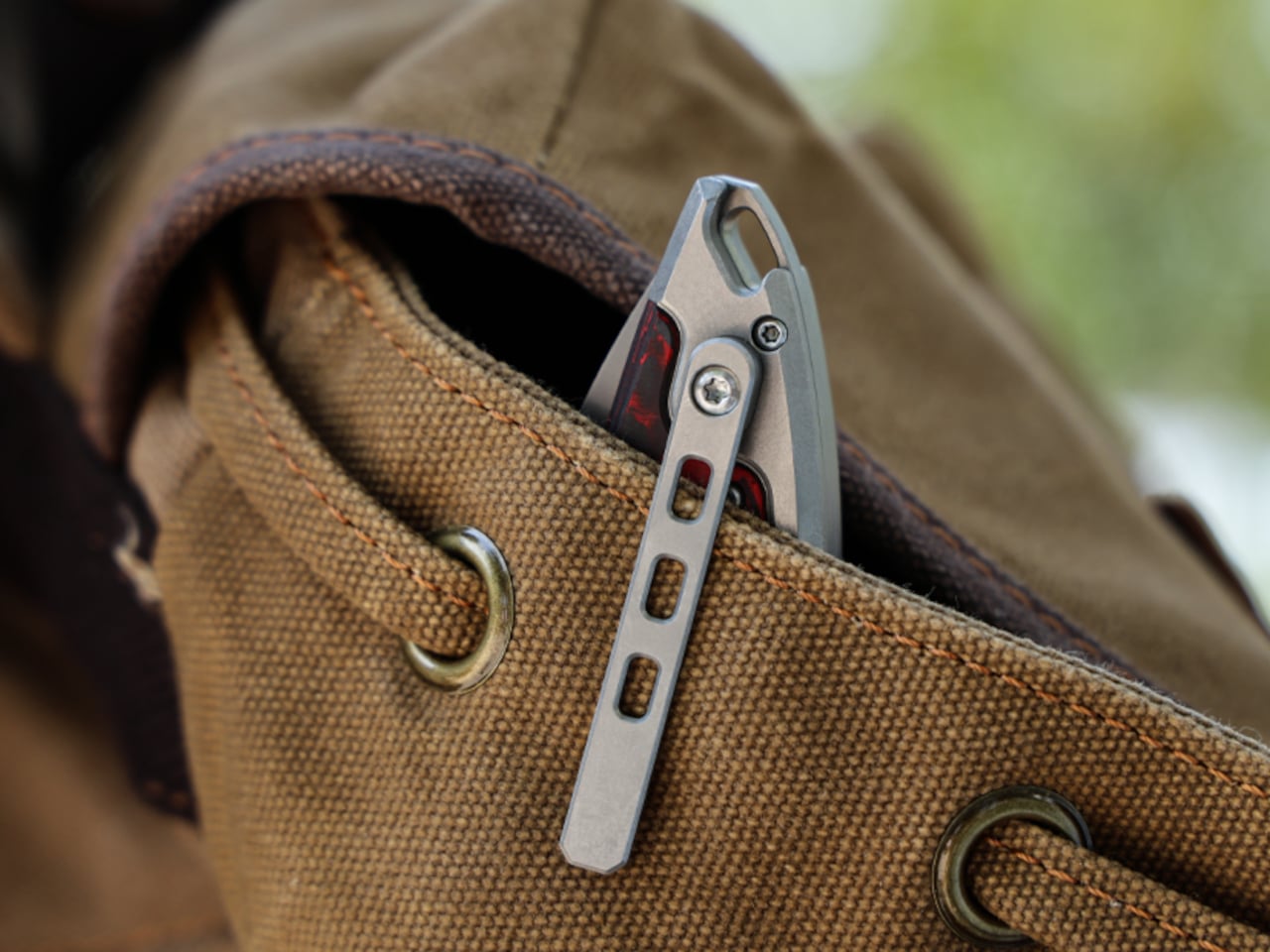
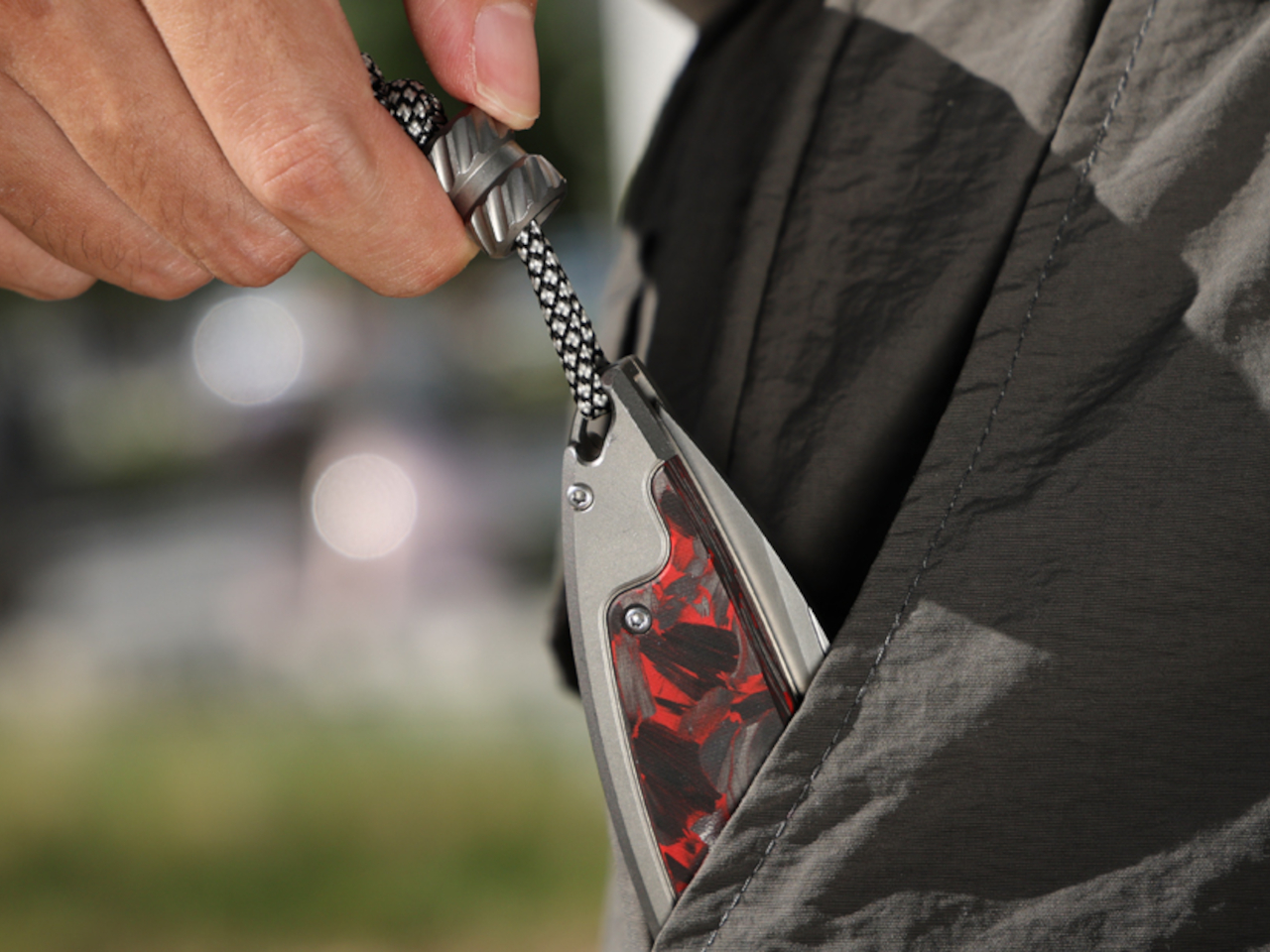
Practical features make the Scarab 2.0 genuinely useful for everyday carry. A deep carry clip keeps the knife secure and discreet in any pocket, while the lanyard hole offers alternative attachment options. Four tritium slots compatible with glow tubes ensure you can find your knife quickly in low light. At just 4.59 inches when folded, it maintains a compact profile despite its capabilities.

The knife’s durability goes beyond its premium materials. Sweat, rain, and humidity won’t affect the titanium frame or M390 blade. The carbon fiber components add rigidity while keeping the total weight at just 2.9 ounces. It’s the kind of tool that gets better with use, developing character without losing performance.

Even the manufacturing process reflects attention to sustainability. The titanium components can be recycled and reused, while the precision CNC machining minimizes material waste. Every aspect of the Scarab 2.0 is engineered for longevity, reducing its environmental impact through years of reliable service.

The Scarab 2.0 shows what happens when designers prioritize both aesthetics and functionality. It’s a knife that works as well in the office as it does on outdoor adventures, ready for whatever task comes its way. For those tired of compromising between good looks and actual performance, this knife offers something genuinely different.

Click Here to Buy Now: $159 $237 (33% off). Hurry, only 39/60 left!

The post This Titanium EDC Knife Has 3 Opening Styles and Costs Just $159 first appeared on Yanko Design.

Fidget-worthy Titanium Micro-knife is a ‘Seriously Fun’ piece of Tactical EDC

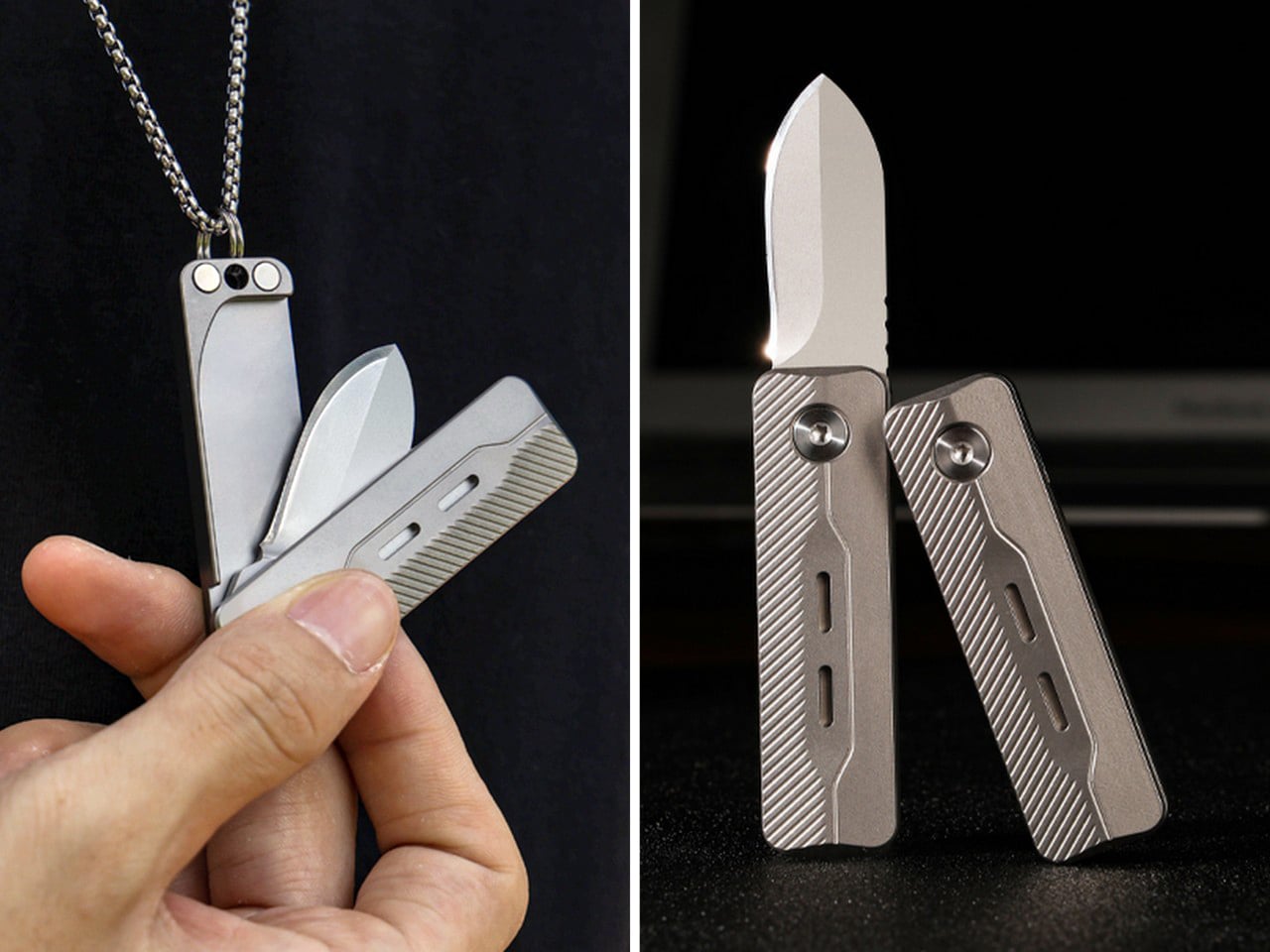
I don’t think anyone apart from Bruce Lee actually made nunchucks appear ‘seriously dangerous’. A lot of the appeal of a pair of nunchucks lie in the theater, the fanfare, the performance… but operate them well and they’re hellishly deadly. The TiNova is somewhat like that. Its magnet-enabled fidget-to-open mechanism is about as enjoyable as flicking around a butterfly knife or a pair of nunchucks, but once open, the TiNova is a tiny beast that packs a punch.

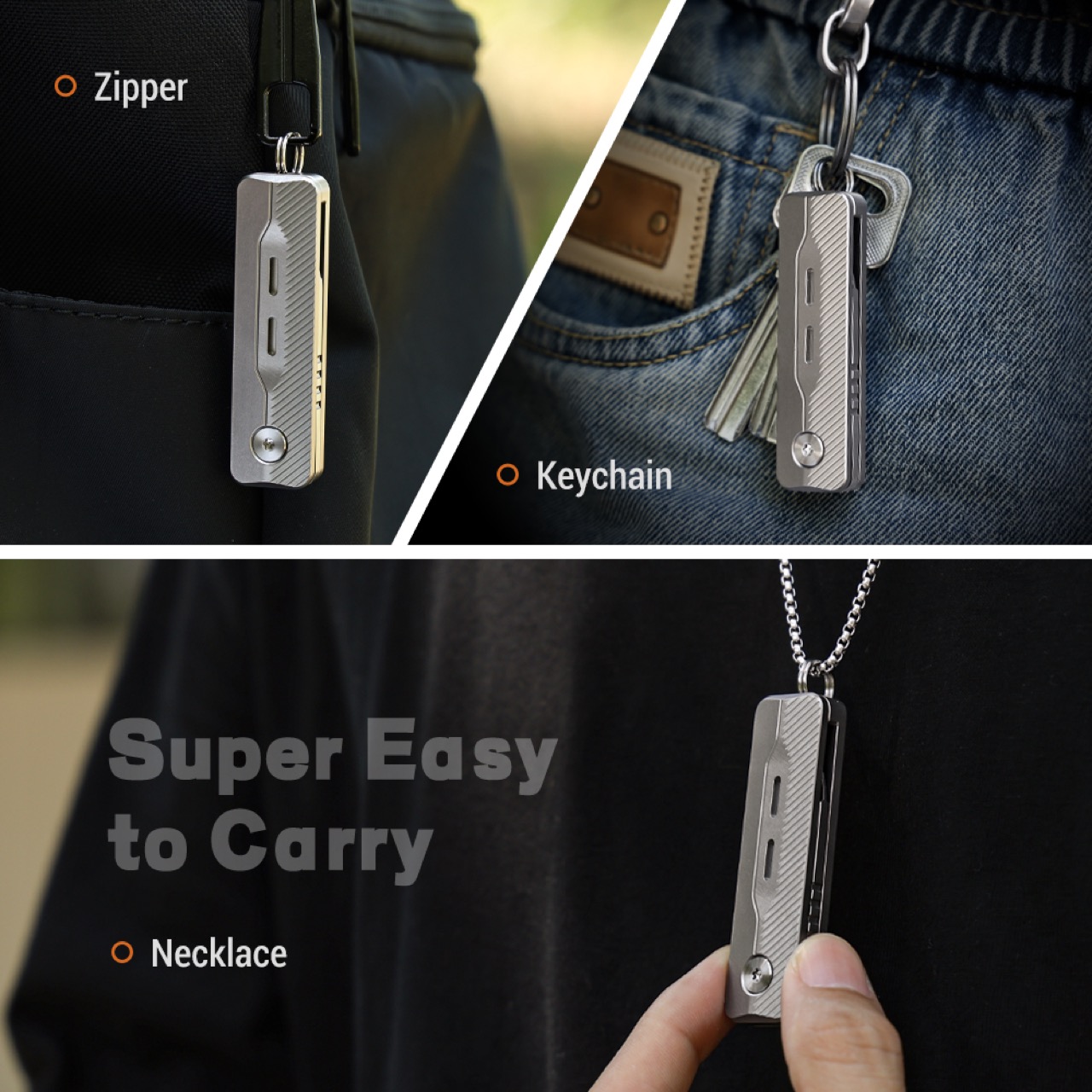
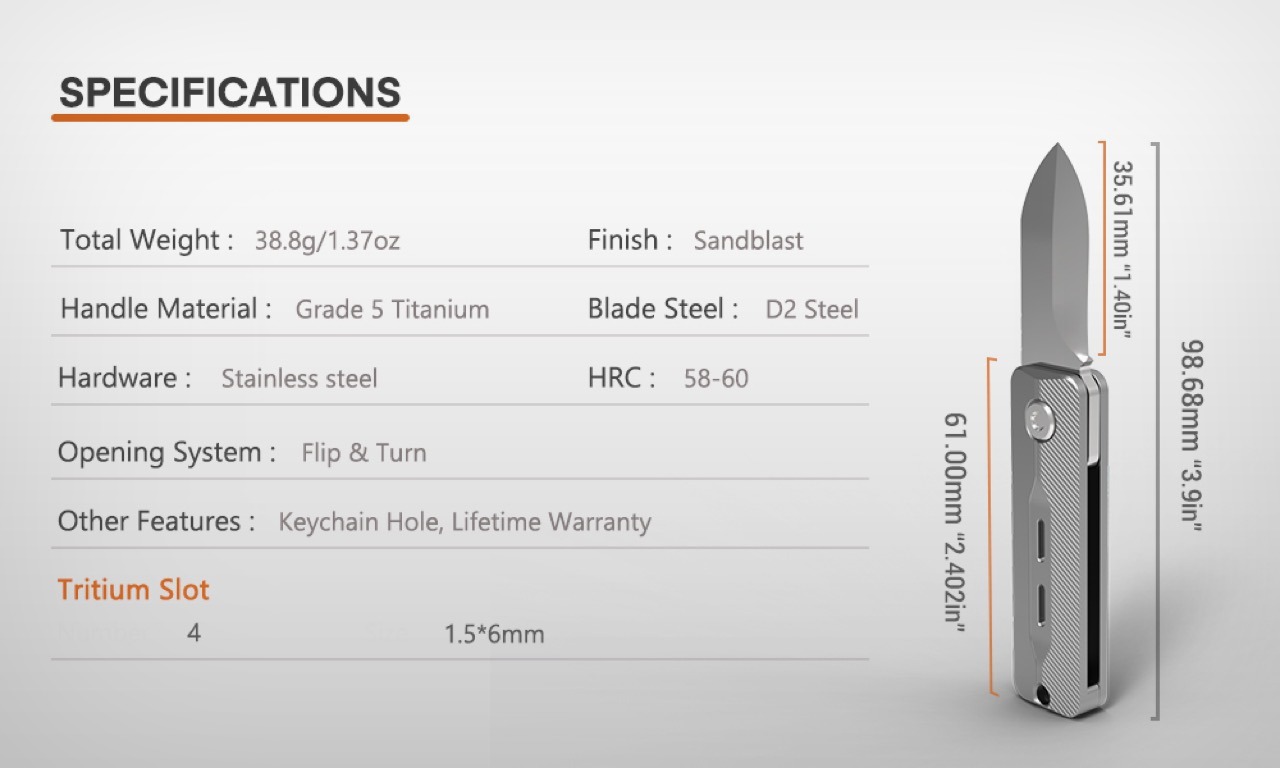
A titanium body, a machined construction, and a D2 blade make the TiNova a bite-sized brute. Nothing about the knife feels flimsy or toy-like… even though the entire thing measures just under 4 inches when open. When closed, the TiNova drops down to a mere 2.4 inches in length, and is small enough to be worn around your neck like a nifty EDC dog-tag. When you mean business, take it off, flick it open, and your pocket powerhouse is ready for serious action.

Designer: Ideaspark

Click Here to Buy Now: $45 $65 (31% off) Hurry, only 11 days left!

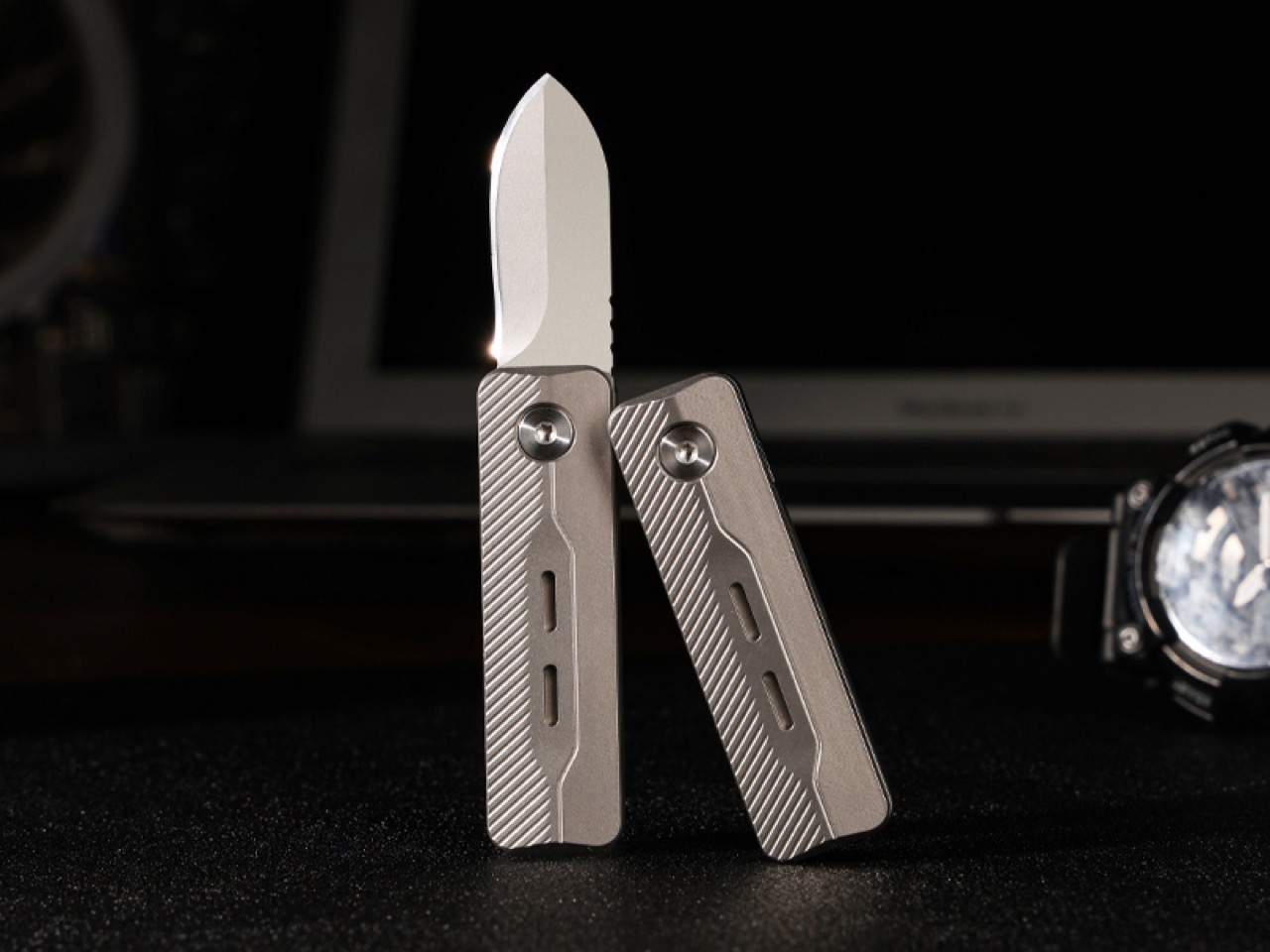
The TiNova is smaller than the average pinky finger, making it roughly the size of your standard thumb-drive. The two-part titanium handle is held together with a single pivot point, and a pair of magnets that snap the handle into its closed position. A drop-point blade sits in a gap between the two halves of the handle, concealed when not in use. To deploy the blade, simply swivel any one half of the handle around 360° and the blade travels outwards with confidence. It’s not like your regular flipper, which requires dexterity, or a switchblade or OTF, which requires being vigilant. The TiNova’s blade deployment is all about flair and performance. With enough practice, a simple flick of your wrist and a good amount of centrifugal force should have the handles rotate a full 360° to deploy the blade.

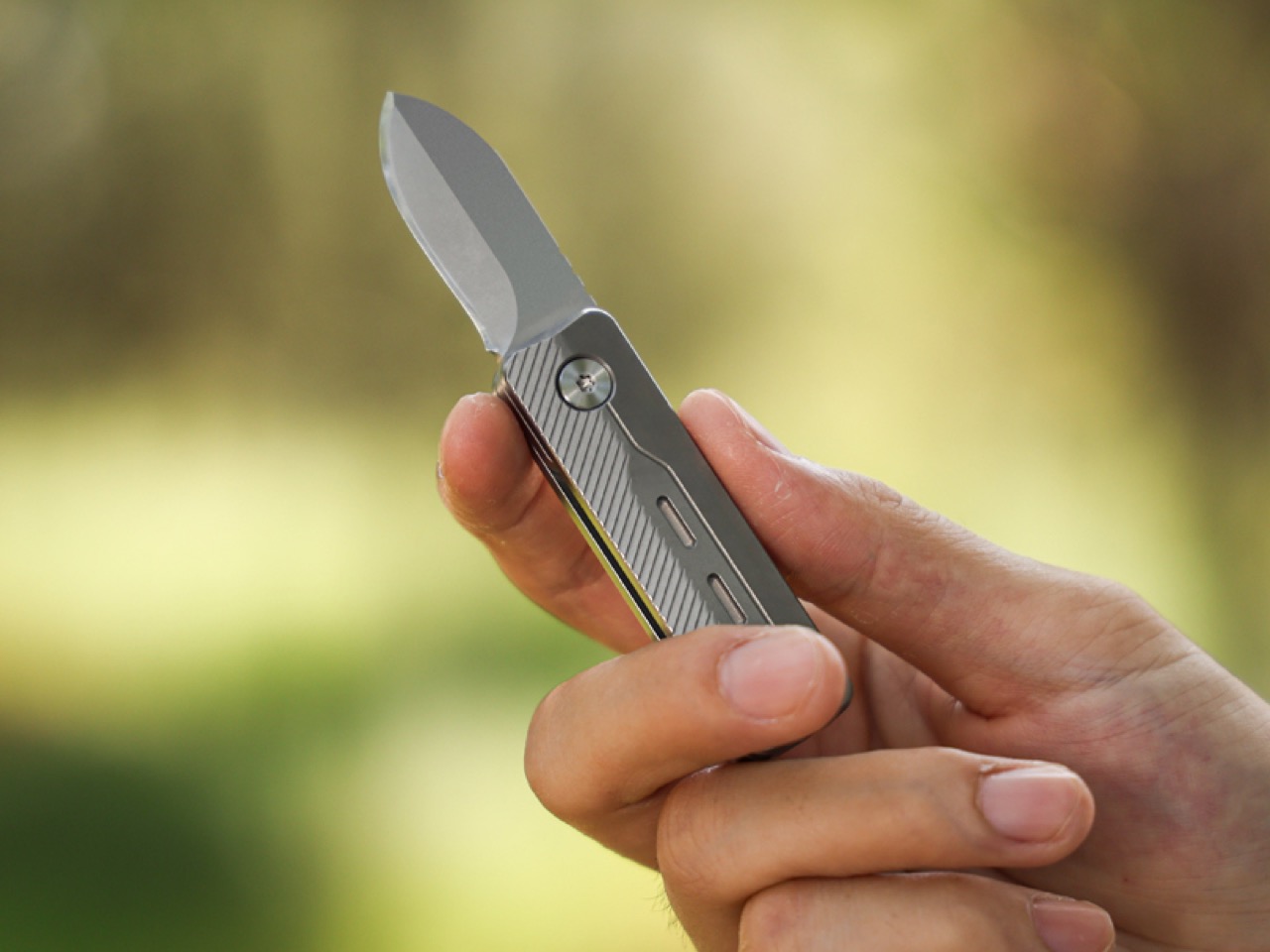
Once out in the open, the TiNova’s blade means absolute business – D2 steel is a top-tier steel in the EDC and knifemaking world, giving the TiNova street cred. A standard spear-tip design with a single drop-point edge makes the TiNova a reliable workhorse. When open, there’s nothing you can do to cause the knife to ‘fail’ the way a cheap lock on a budget knife would. This thing is built solid, and will even pierce through wood without as much as a bit of flex. The drop point edge is a classic in the industry, making it perfect for piercing, cutting, slicing, scraping, and whittling. Although built to withstand the outdoors, the blade works just as effectively indoors or in tactical/emergency situations.

However, seriousness aside, the TiNova’s charm lies in its fun personality. That fidget mechanism is almost entirely the most charming feature about this knife. It’s designed to engage your fingers, as you attach and detach the ends of the handles. If you’ve seen those magnetic fidget bars/sliders, think of the TiNova as just like them, but with a deadly blade just tucked away for when the fun stops.

This tactile appeal is easily what makes the TiNova such a stellar pick for your everyday carry. Why would you carry a boring folding knife when the alternative is something that feels fun and looks intimidating? With enough practice, the knife should flip open effortlessly, and should definitely drop a few jaws in the process. If you don’t believe EDC should have a component of childlike joy, this one might not be for you.

The reliably strong D2 blade cuts through everything with ease, whether it’s as simple as an envelope or an Amazon parcel, or as tough as wood or even paracord. The steel’s high-strength and blade retention means it’s definitely going to stay sharp even with regular use, although the drop-point design means that even IF the TiNova lost its edge (that’s a big if), sharpening it is fairly simple.

Meanwhile, the blade sits within a practically indestructible titanium shell. The machined titanium design boasts this sandblasted finish which is great to grip, while grooves on the handle add to the friction. The flat handle is ambidextrous, and tritium slots on both sides mean you can add glow-vials to make your EDC visible in low light. A lanyard hole means you can string your TiNova to a keyring or even a neck-worn chain, just in case the tiny form factor is a little too small for merely slipping into your pockets. And as far as ‘practically indestructible’ goes, you could run over the TiNova with your car and the titanium will shrug it off like a gentle breeze.

The knife falls within the small-carry category, given its tiny 1.4-inch blade and sub-4-inch overall design. The titanium makes the TiNova as lightweight as it is robust, weighing a paltry 38.8 grams or 1.37 ounces (that’s about as much as an AirPods case).

The TiNova starts at $45, or 20 bucks off its $65 MSRP. It’s designed to be scratch-resistant, corrosion-proof, and will weather any sort of rough use. In fact, designer Ideaspark confidently offers a lifetime warranty on the TiNova. Grab yours now and it’ll ship with a complimentary keyring… and if you want to jazz your knife up, an extra $15 will allow you to either get a custom engraving on the handle, or have it coated in PVD black, making it the ultimate stealthy EDC companion that still knows how to have some fun!

Click Here to Buy Now: $45 $65 (31% off) Hurry, only 11 days left!

The post Fidget-worthy Titanium Micro-knife is a ‘Seriously Fun’ piece of Tactical EDC first appeared on Yanko Design.

❌