Vue lecture

Il y a de nouveaux articles disponibles, cliquez pour rafraîchir la page.

These Steel Chairs Are Too Big to Sit In: Walk Through Them Instead

Most public art earns its place on a pedestal and stays there. It asks you to look, maybe photograph it, and walk away. The relationship between viewer and work rarely extends beyond that brief transaction. That’s been the convention for a long time, but there’s a growing push for installations that don’t just occupy public space but actually do something within it.

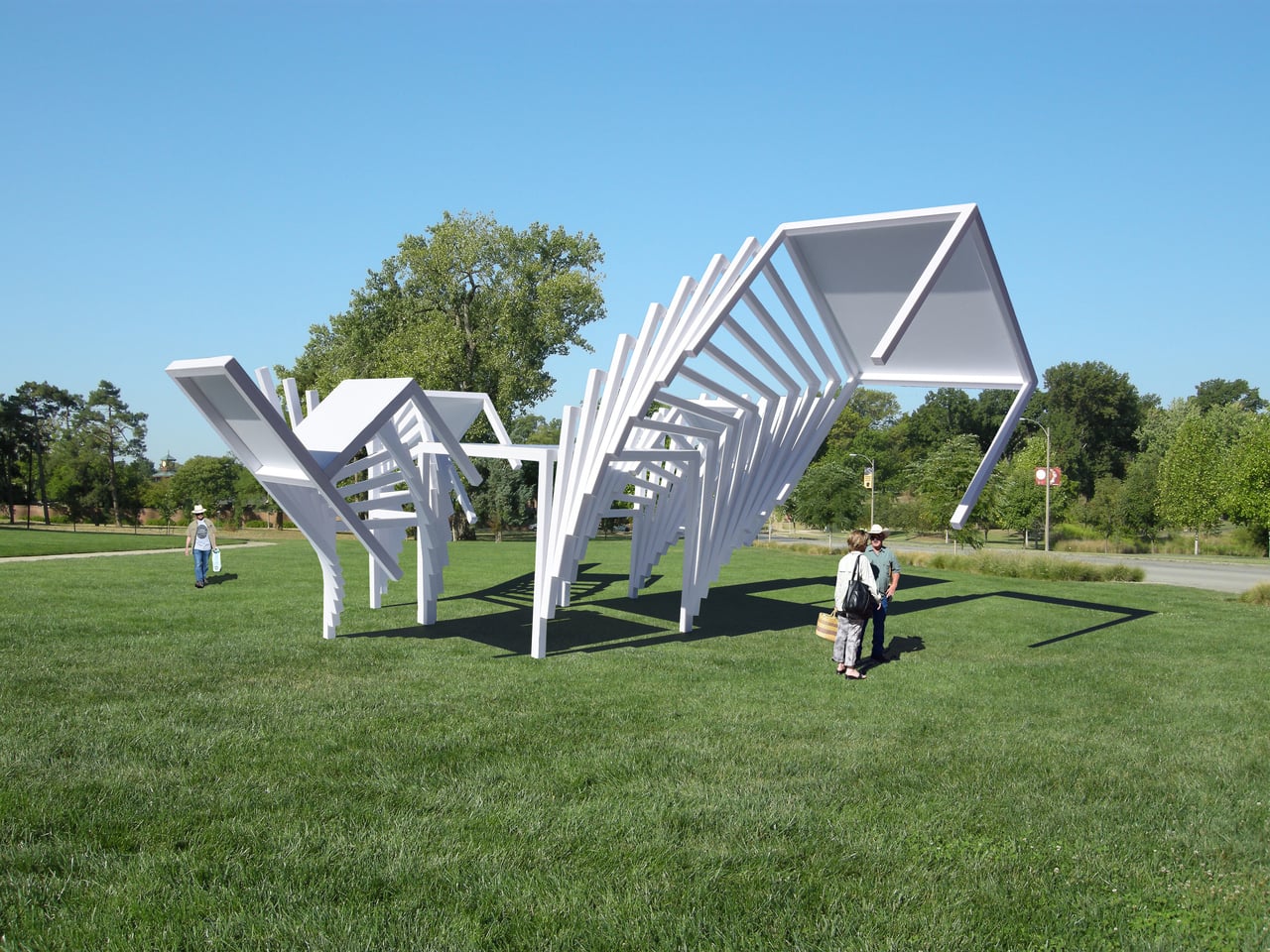
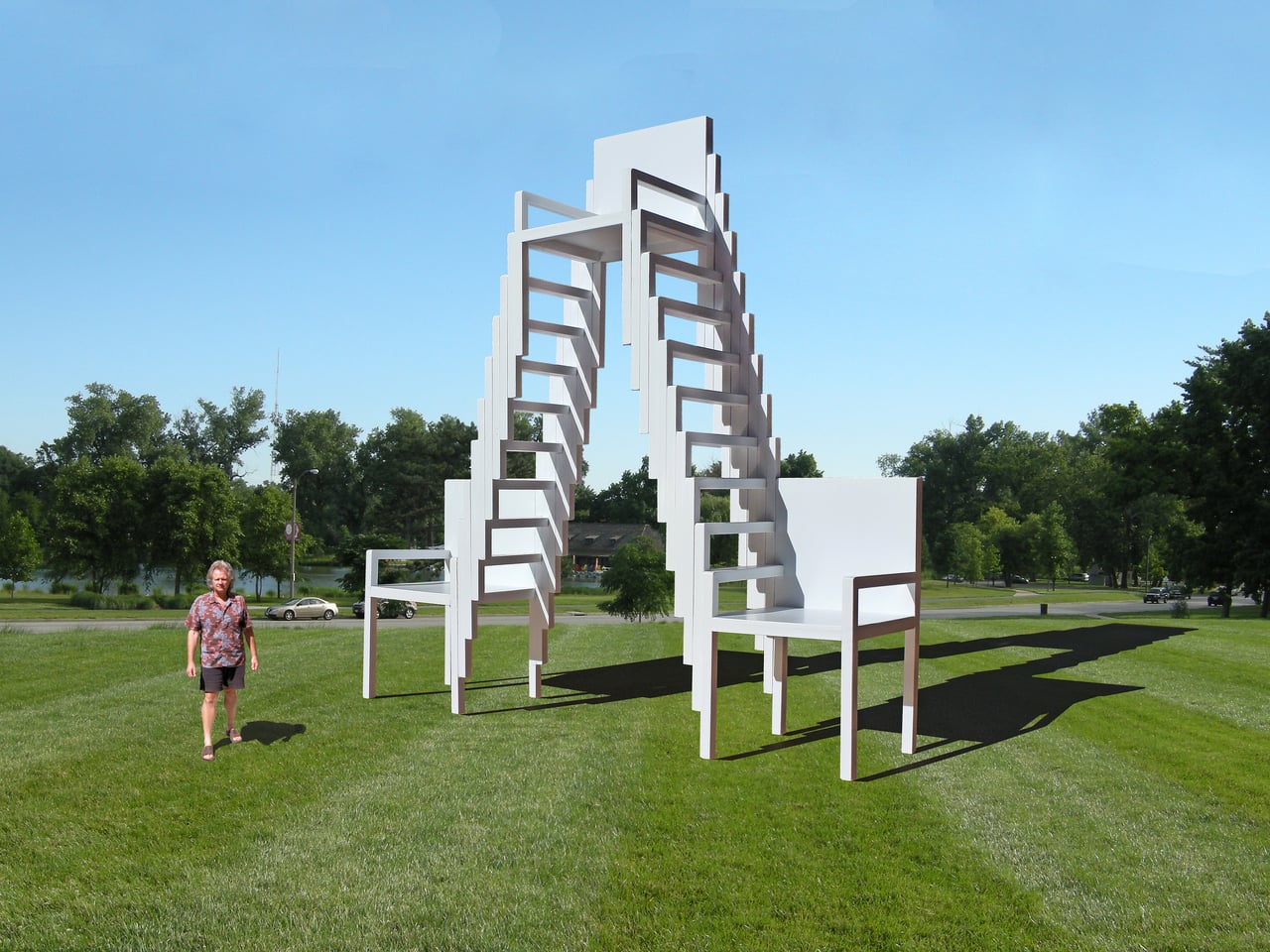
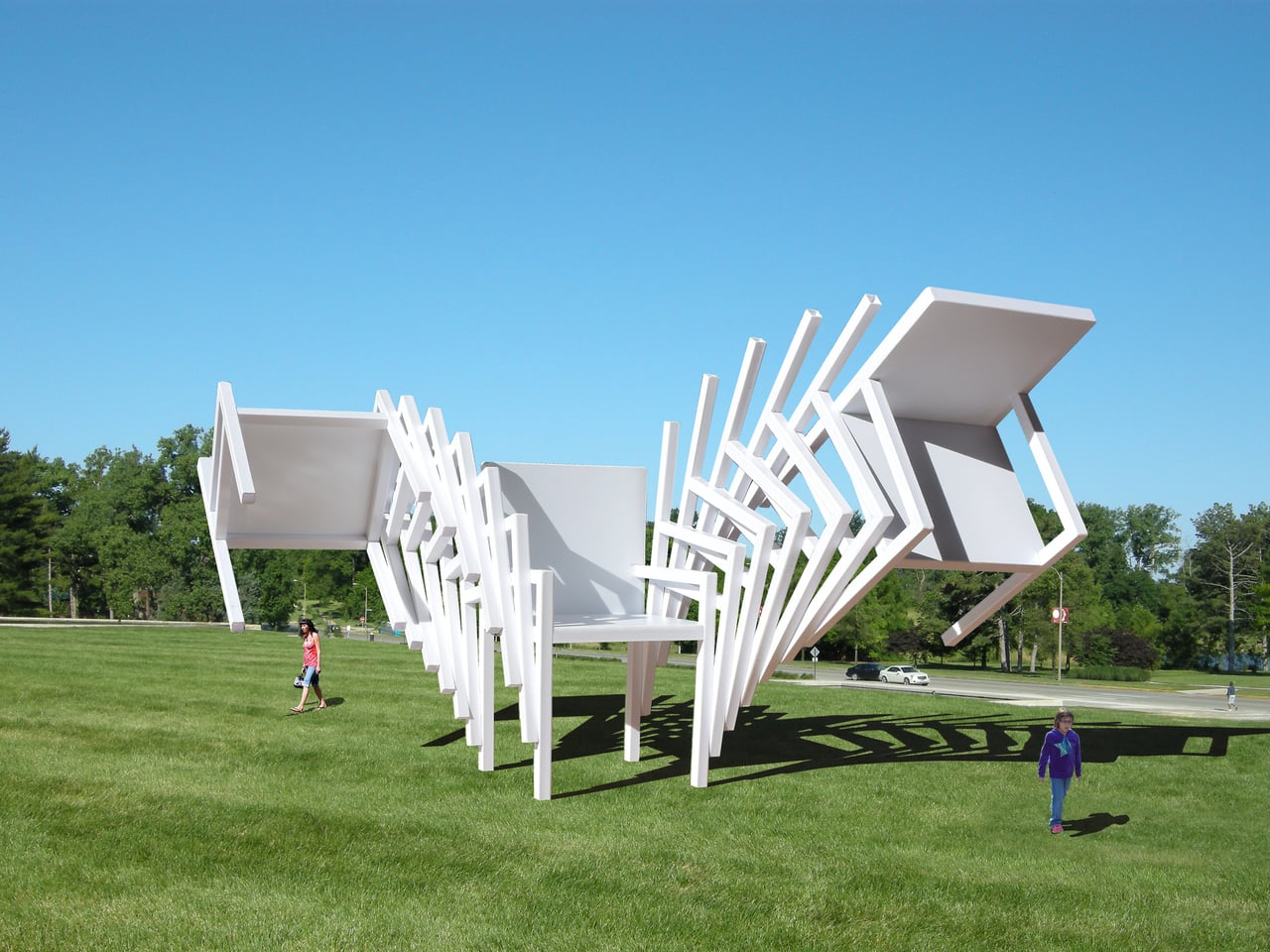
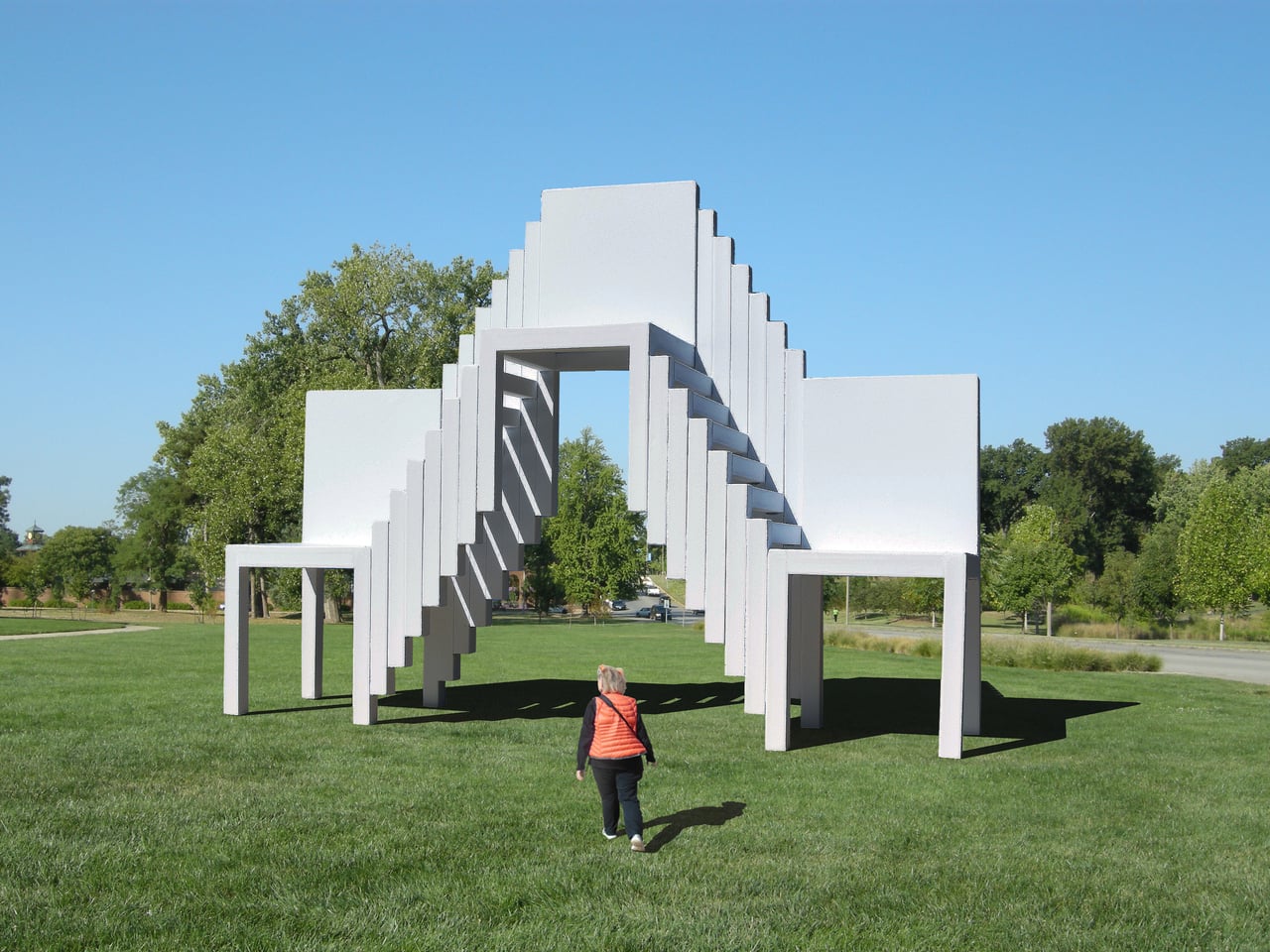
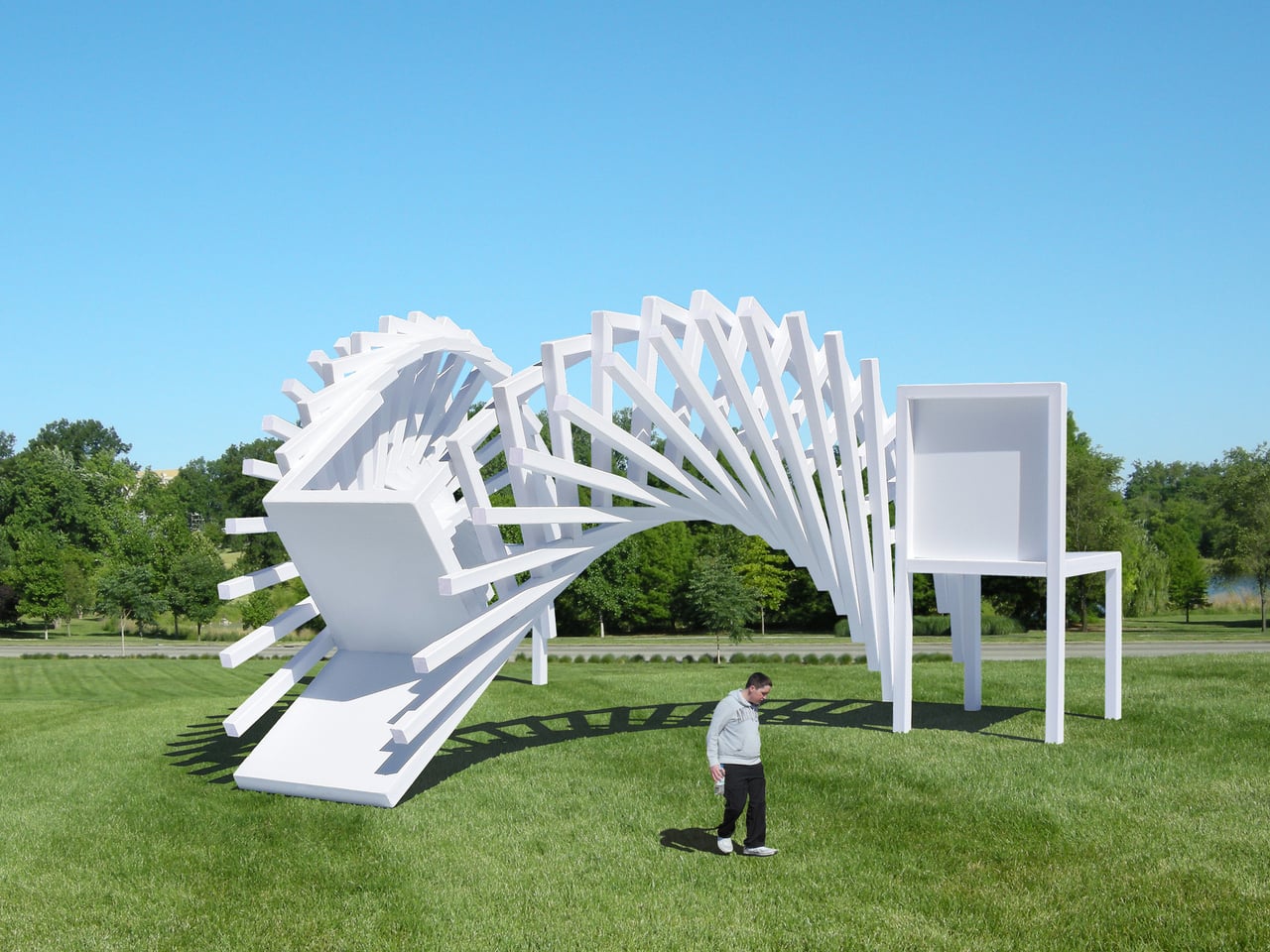
Michael Jantzen has been exploring that tension for years. His Moving Furniture series applies a simple idea to ordinary chairs and tables: take each object’s form and repeat it in progressive intervals as if capturing it mid-movement, then connect those moments into a single piece. The result is something you can still sit in or set a drink on, even if it no longer looks quite built for that.

Designer: Michael Jantzen

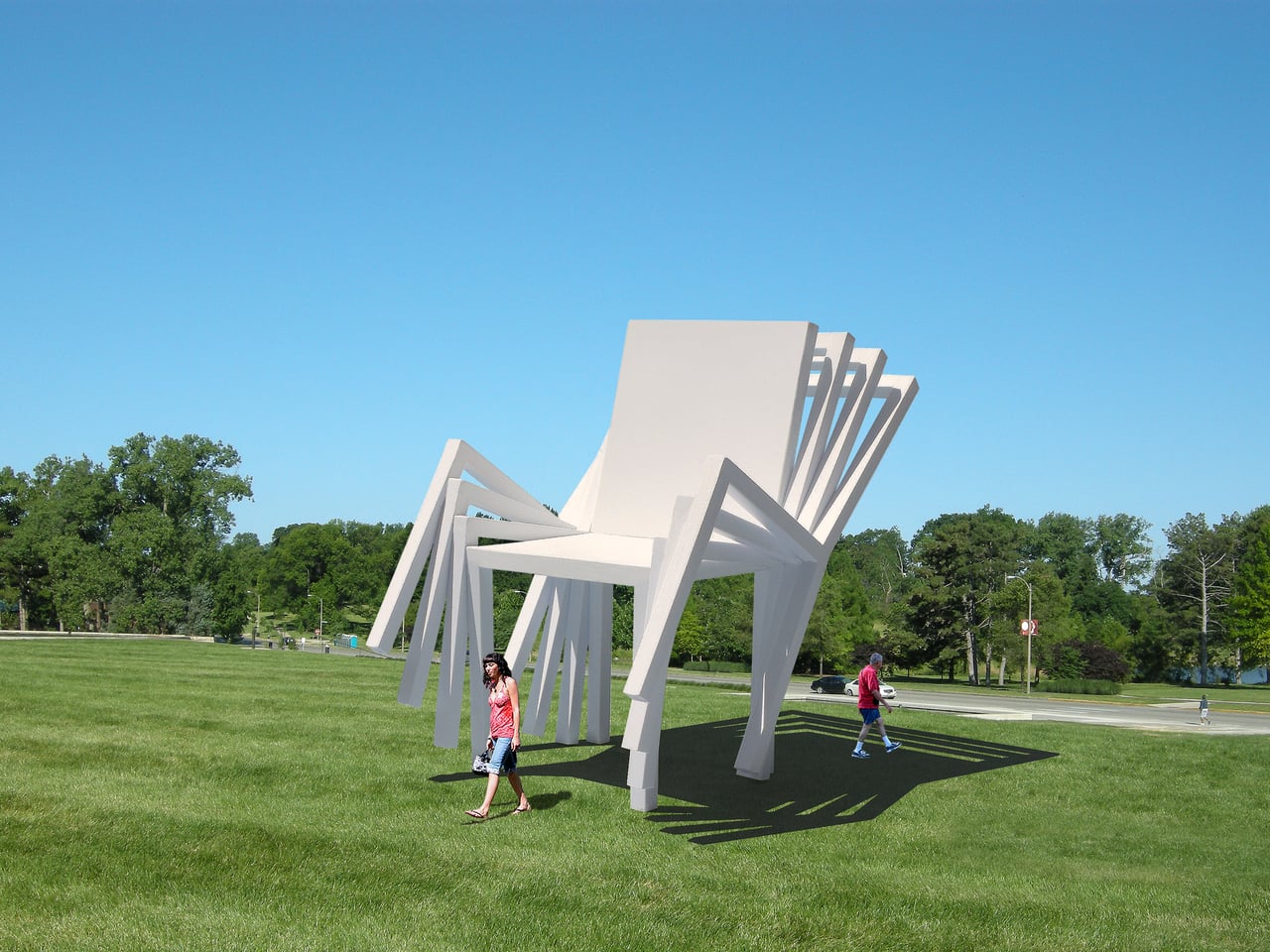
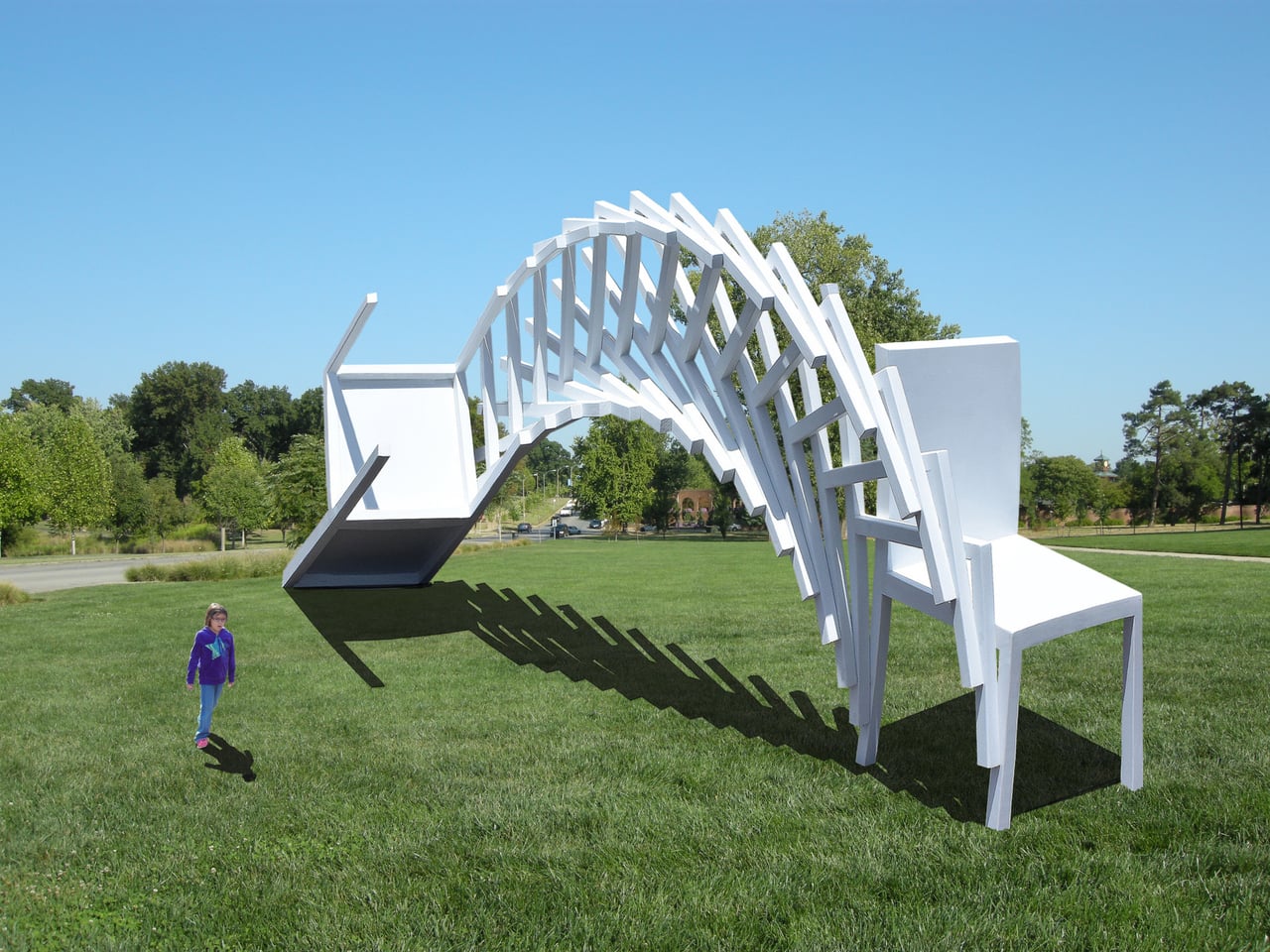
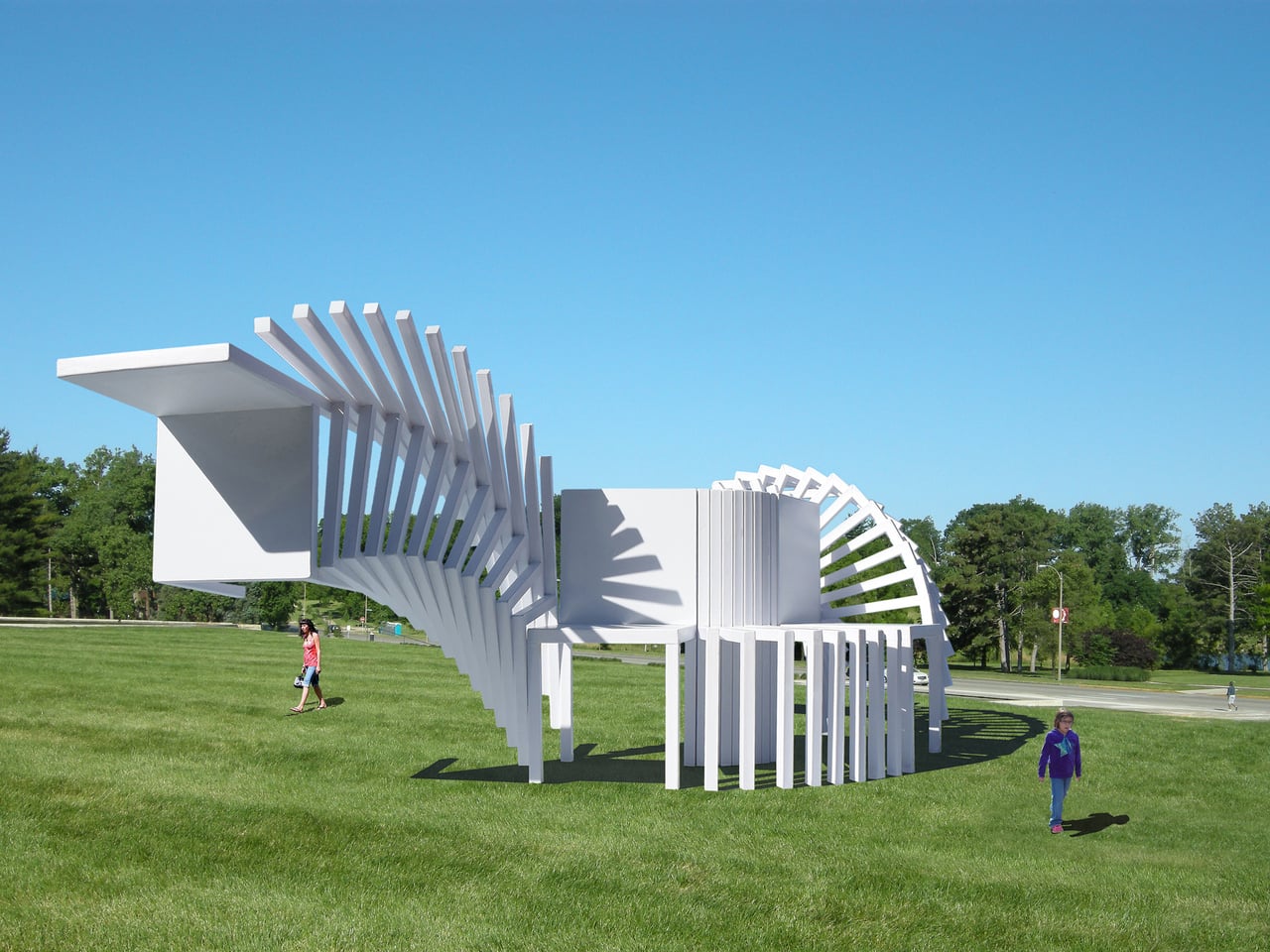
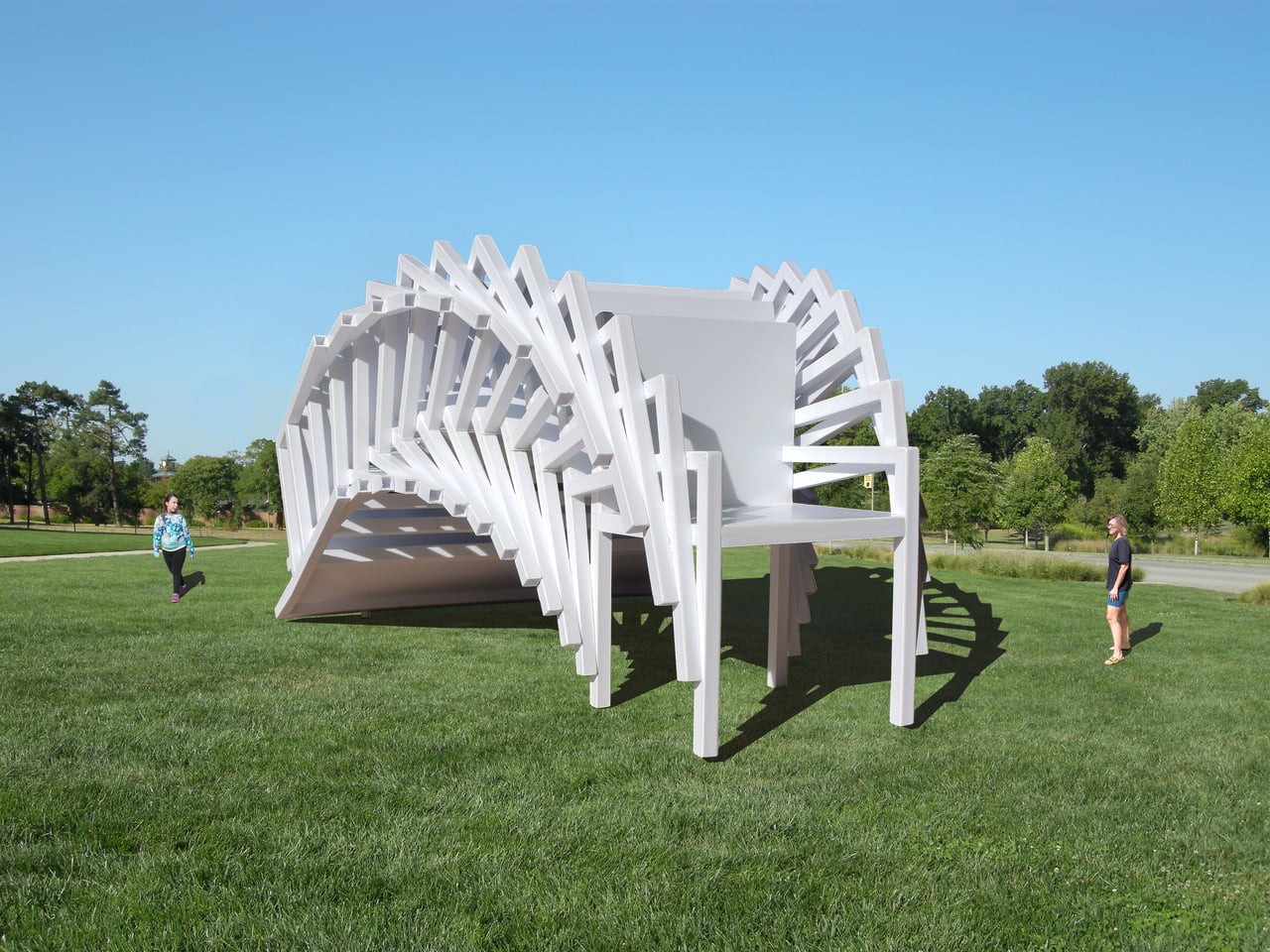
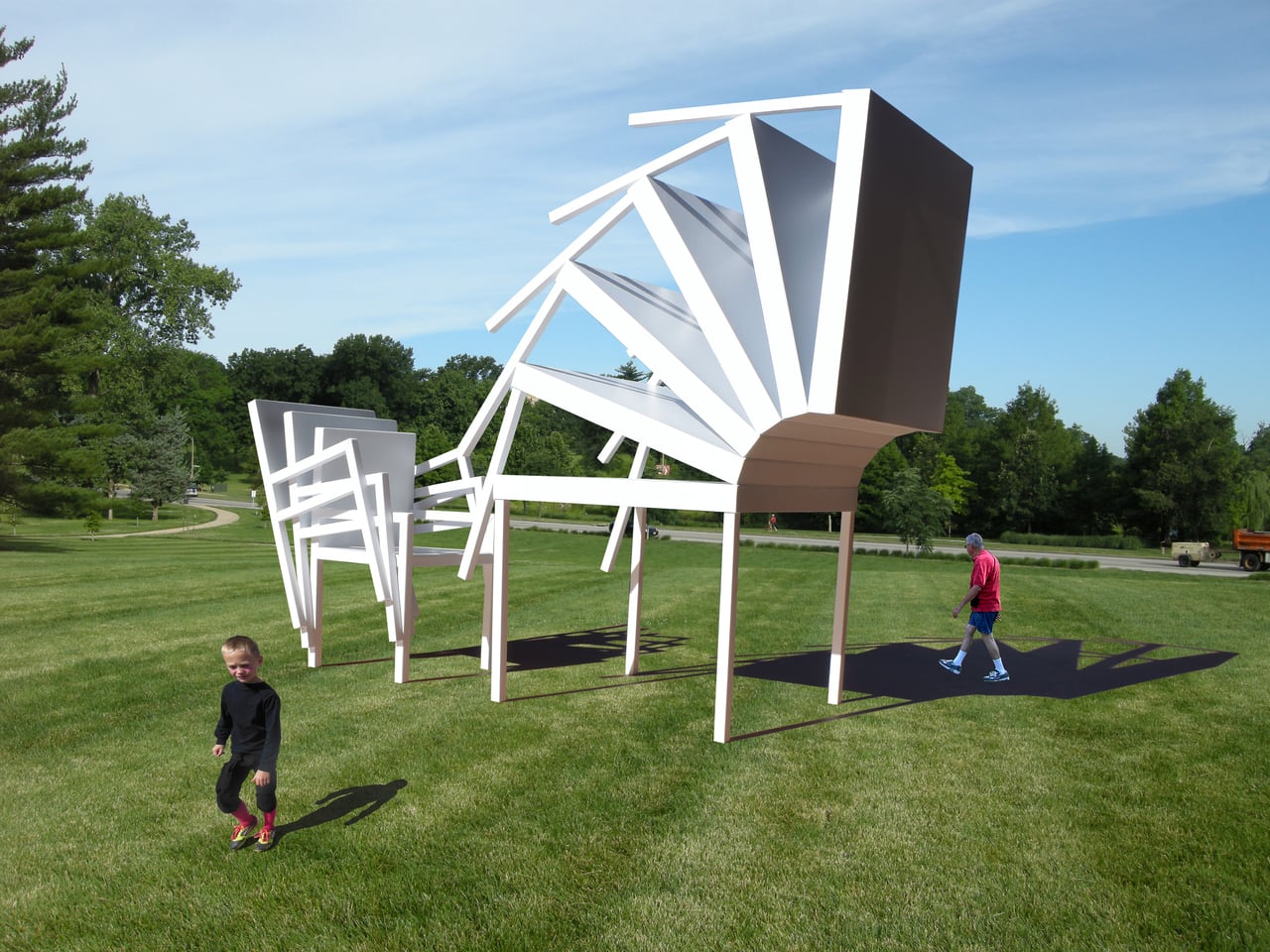
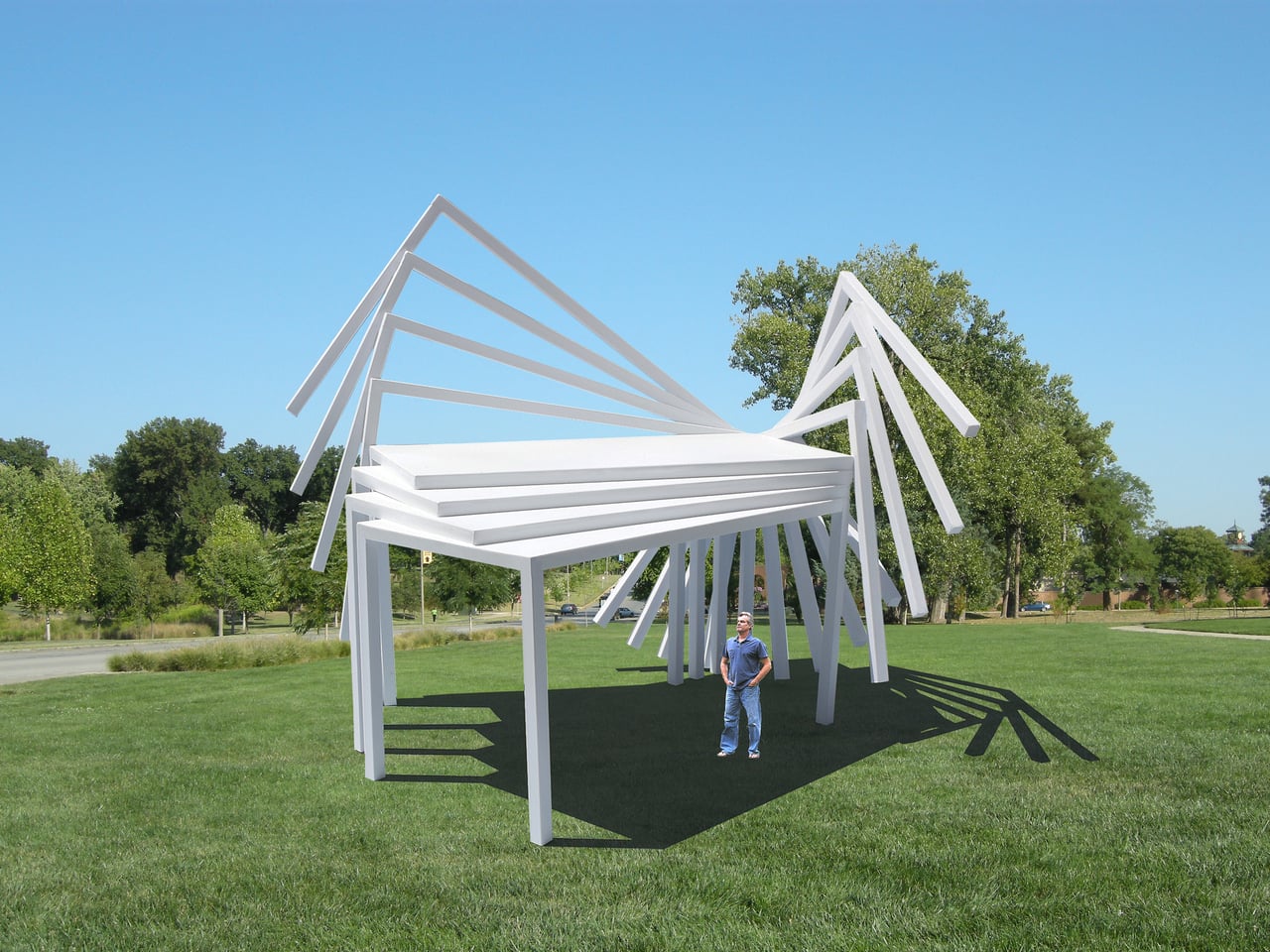
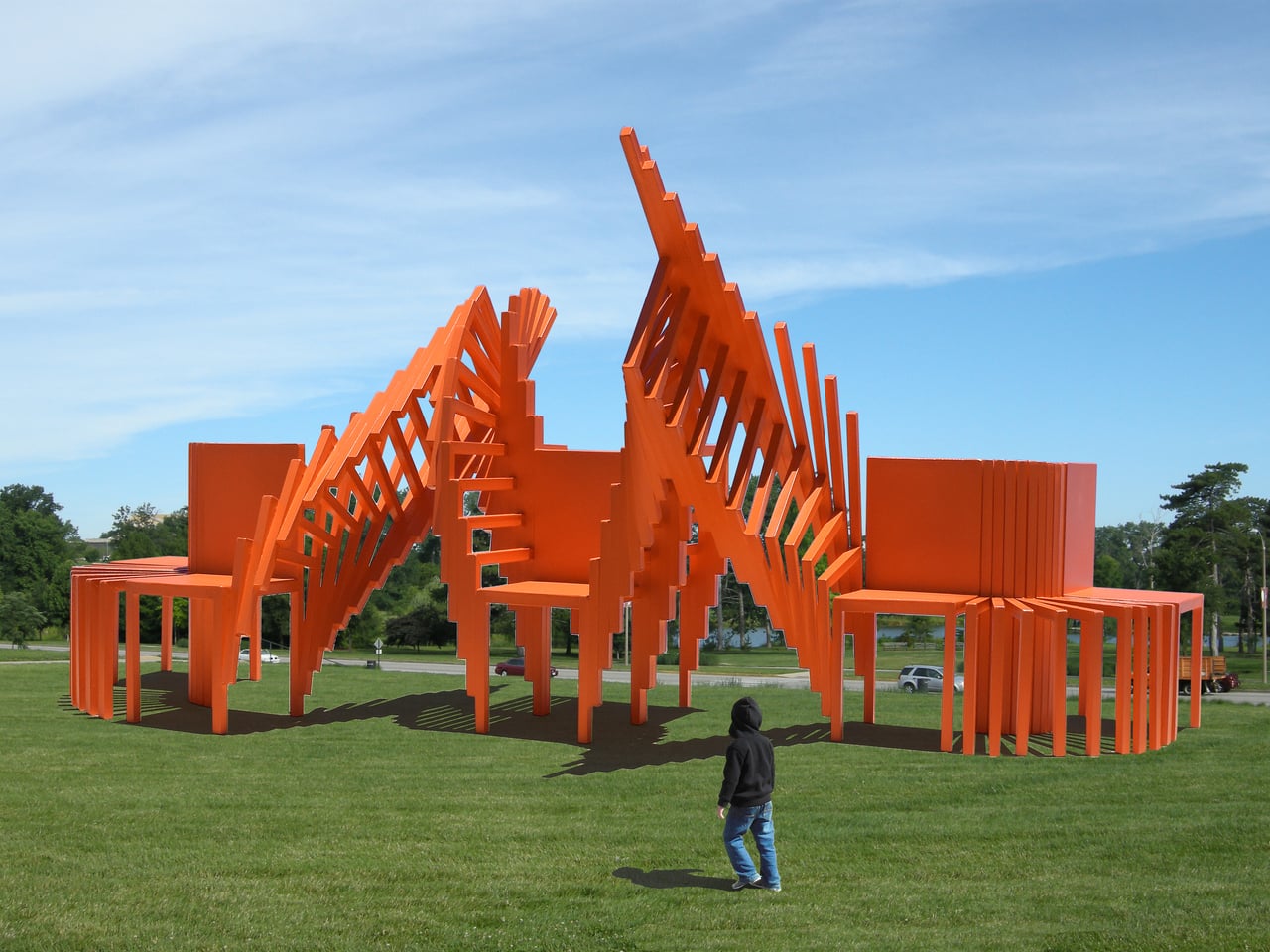
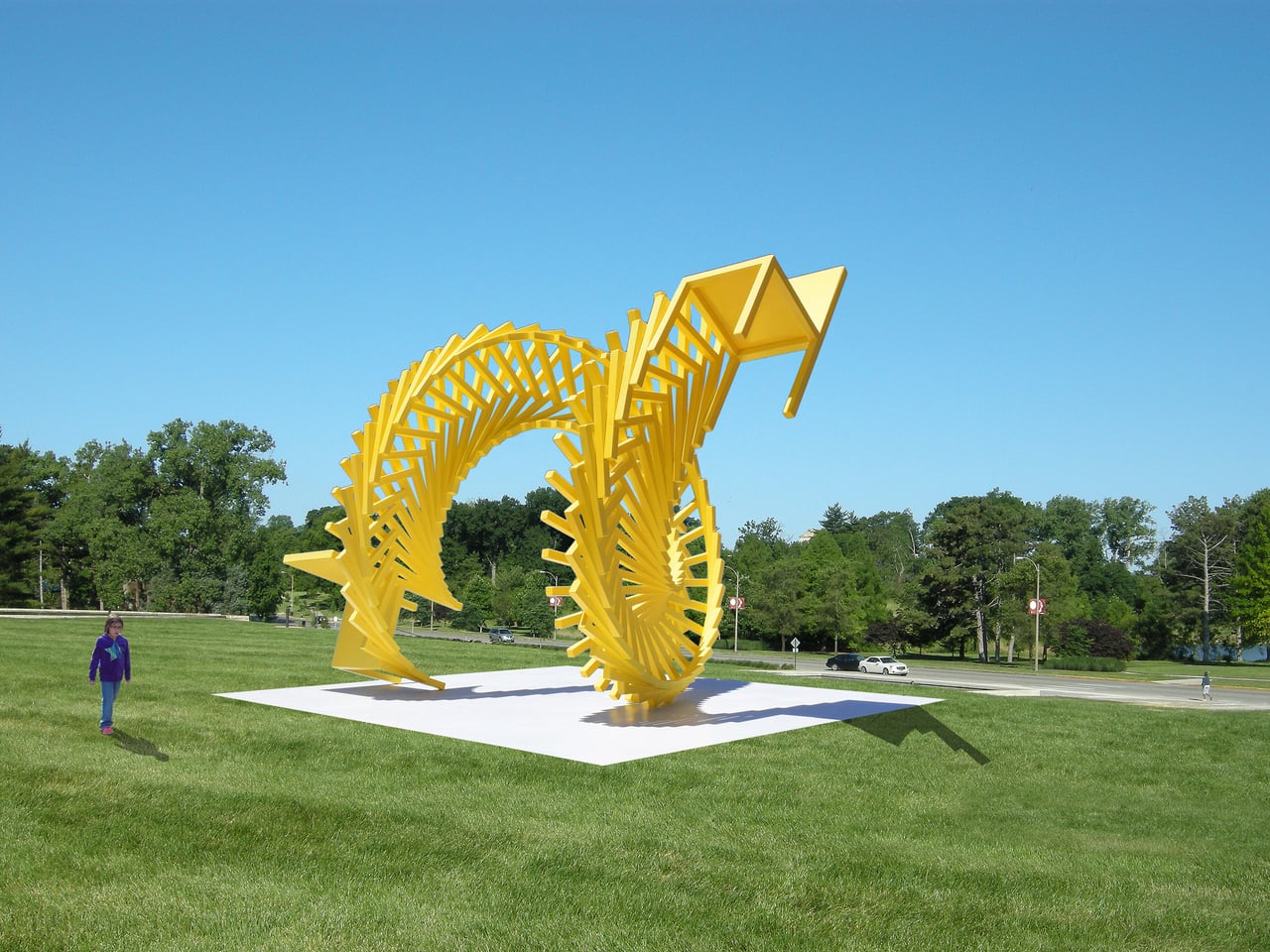
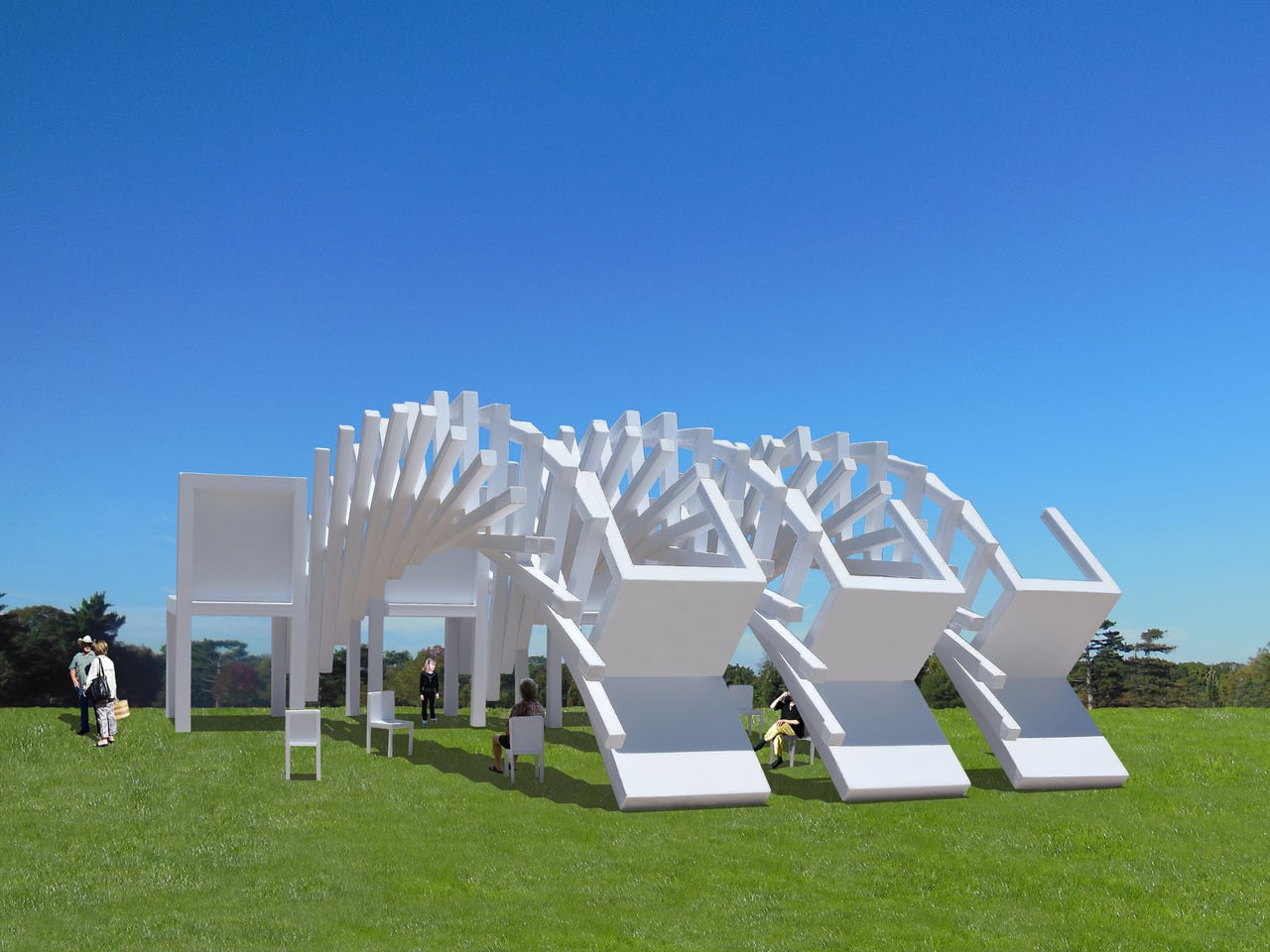
Monumental Moving Furniture takes that same concept into architectural territory. Built from painted steel, the series consists of abstracted chair and table forms, each generated by moving the original object through space and time and locking its path into a chain of connected segments. At this scale, what started as a reference to everyday objects feels closer to a building than a piece of furniture.

The method behind each piece is consistent. A chair or table is set in motion through space and time, with each interval frozen and joined to the next. Some pieces move only part of the original form; others shift the whole thing. The result is a structure that stops belonging to any single discipline and starts reading as furniture, sculpture, and architecture at once.

Despite being too large to sit in, these sculptures aren’t purely decorative. Each is large enough to walk under and through, giving it a practical function as a pavilion and shelter. That’s not something most public art can claim. Instead of asking people to observe from a polite distance, these structures pull you in, turning a passive encounter into something more physical and immediate.

The series covers both chair forms and table forms, each treated with the same sequential abstraction. Individual pieces have also been grouped into configurations that suggest more complex structures, as if each were a building block for something larger. Painted in vivid, solid colors like white, orange, and yellow, each structure commands attention from a distance and rewards a closer look once you’re standing beneath it.

Public spaces deserve more than objects to look at. They deserve things to experience. Monumental Moving Furniture earns its place on both counts, offering structures large enough to shelter visitors while giving them something genuinely puzzling to engage with. These forms don’t demand reverence. They invite curiosity, exploration, and the kind of slow, circling attention that good public space has always been designed to encourage.

The post These Steel Chairs Are Too Big to Sit In: Walk Through Them Instead first appeared on Yanko Design.

NTSYNC - Wine 11 booste les jeux Linux de 678%

Dirt 3 qui passe de 110 à 860 FPS sous nunux, non, j'ai pas fumé la moquette ! En fait c'est surtout grâce au fameux module de synchronisation kernel NTSYNC promis avec Wine 11 qui est enfin dispo dans certaines distros. Et la bonne nouvelle c'est que les premiers benchmarks développeurs viennent de tomber, donc on va regarder ça ensemble !

Concrètement, Fedora 42, Ubuntu 25.04 et SteamOS 3.7.20 beta embarquent maintenant le module par défaut avec le kernel 6.14. Du coup Resident Evil 2 bondit de 26 à 77 FPS, Call of Juarez grimpe de 99 à 224 FPS, et Tiny Tina's Wonderlands passe de 130 à 360. Et Call of Duty Black Ops est maintenant devenu... jouable ! Woohoo !

Alors attention, ces benchmarks comparent Wine vanilla (sans aucune optimisation) avec Wine + le module. Cela veut dire que si vous utilisiez déjà fsync via Proton ou Lutris, les gains seront moins spectaculaires. Après les jeux qui en profitent le plus sont ceux avec de grosses charges multi-thread où la synchronisation était vraiment le problèmo noméro uno.

Pour capter pourquoi cette news est un gros morceau, faut regarder un peu sous le capot. Au temps jadis, chaque fois qu'un jeu Windows devait coordonner ses threads (genre, attendre qu'une texture finisse de charger), Wine faisait des allers-retours avec wineserver... des milliers de fois par seconde. Du coup, on se tapait des micro-sacades et une cadence d'images pourrie.

Y'a eu des tentatives pour arranger ça. D'abord esync, puis fsync... ça améliorait les choses mais c'était du bricolage. Ça nécessitait des patchs kernel non-officiels que personne ne maintenait vraiment, et certains jeux gourmands faisaient carrément tout planter.

Mais tout cela c'est de l'histoire ancienne puisque NTSYNC, semble être enfin la bonne approche. Elizabeth Figura (CodeWeavers), la même dev qui avait pondu les solutions précédentes, a créé, cette fois, un vrai module intégré directement dans le noyau Linux. Comme ça, plus de bidouilles à la con et surtout plus d'approximations. Le noyau gère enfin la synchronisation lui-même, nativement, comme il aurait toujours dû le faire.

La stonksitude du barbu gamer est à son maaaax

Après des années de boulot et une présentation à la Linux Plumbers Conference 2023, le module a fini par être mergé dans le kernel mainline il y a peu. Ça marche donc "out of the box" et ça c'est plutôt chouette !

Et pour les possesseurs de Steam Deck, quand Valve rebasera Proton officiel sur Wine 11, tout le monde aura ça gratos !! En attendant, si vous êtes impatient, sachez que Proton-GE le supporte déjà ! Entre ça et le fait que 90% des jeux Windows tournent maintenant sous Linux , y'a clairement plus d'excuses pour rester sous Windows si c'est le gaming qui vous retenait, mes cocos !

Bref, c'est carrément la plus grosse avancée gaming Linux depuis Proton. Pas mal pour un module kernel bien velu quand même !

Source

Janny Baek’s Ceramics Look Like They’re Still Evolving

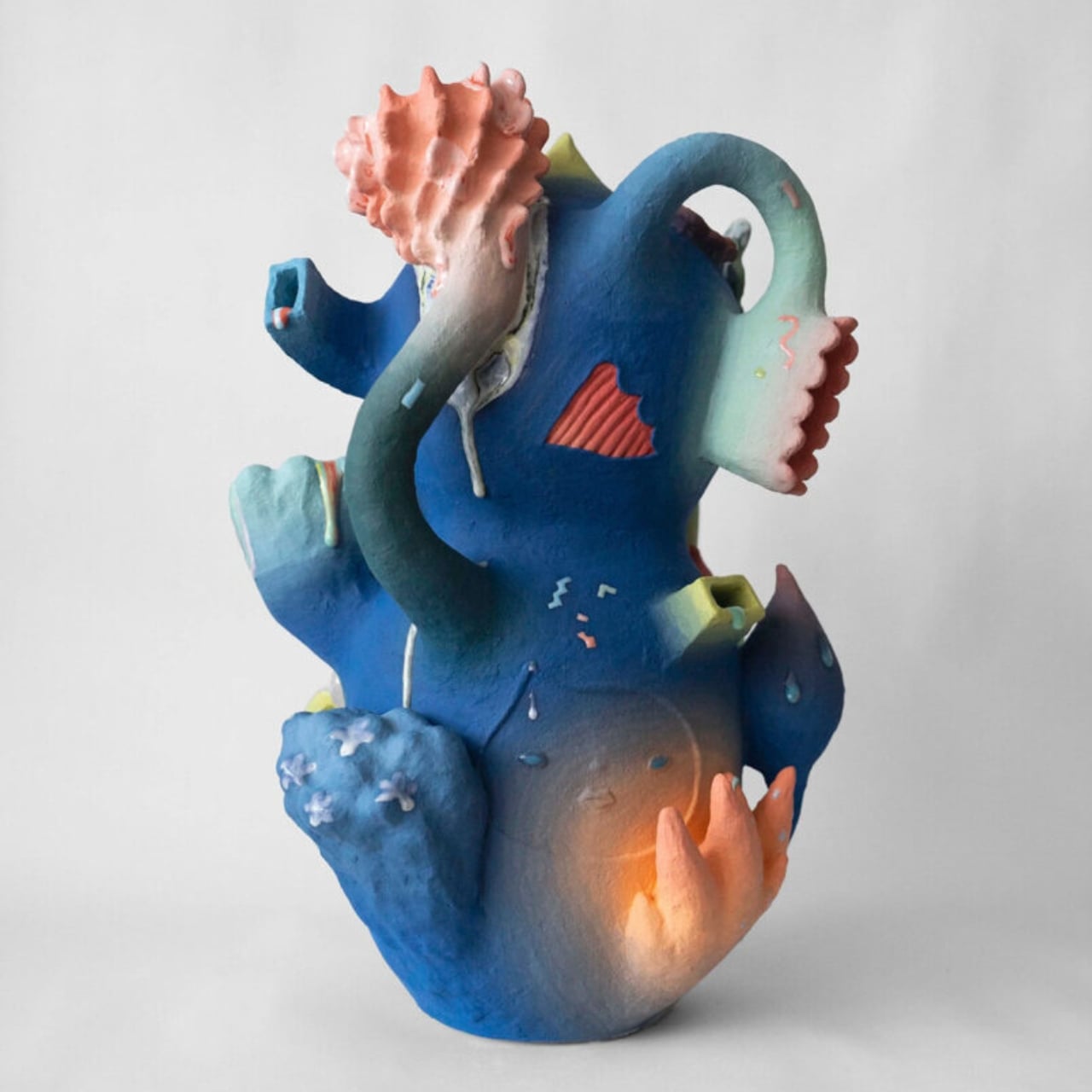
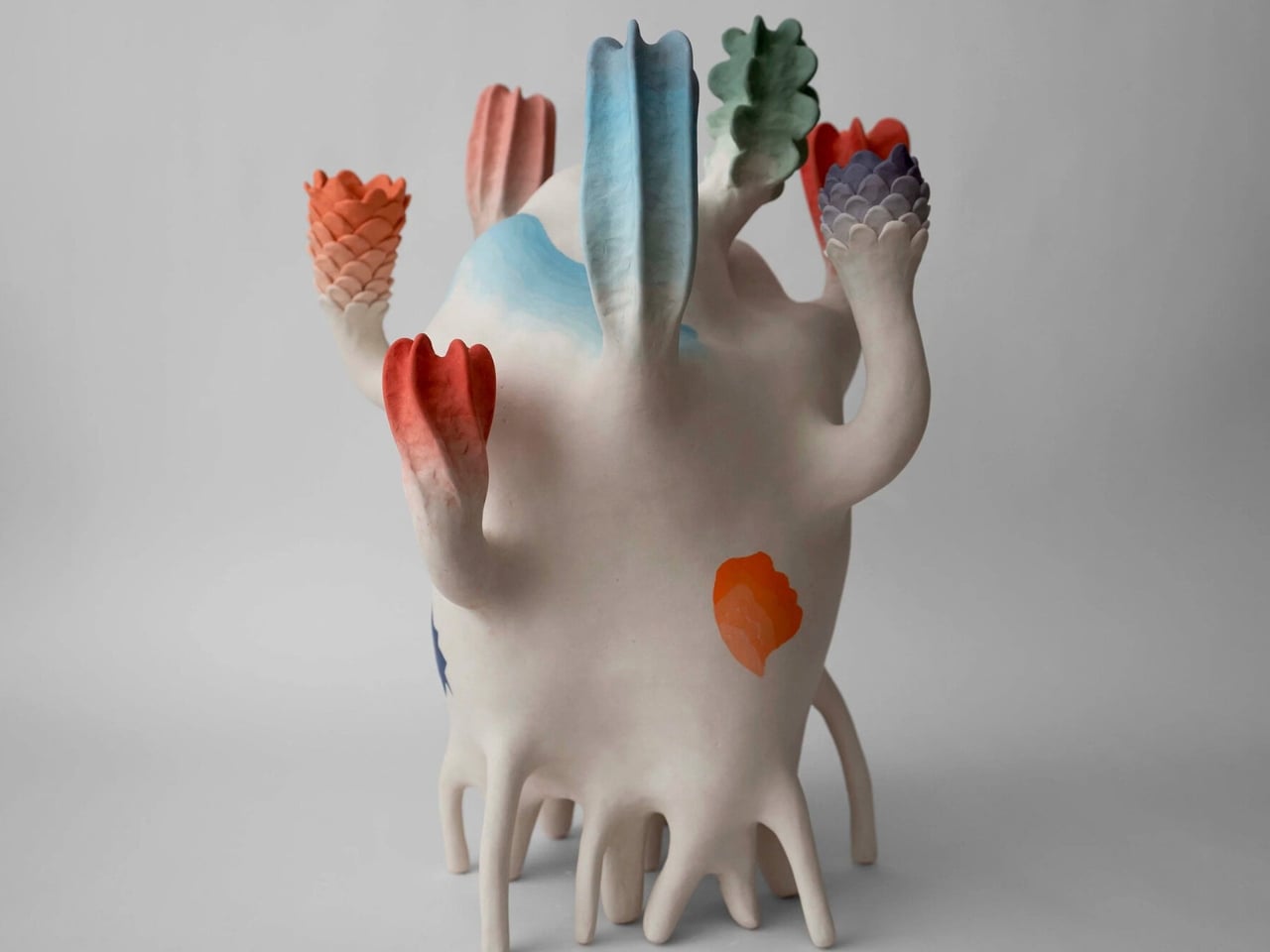
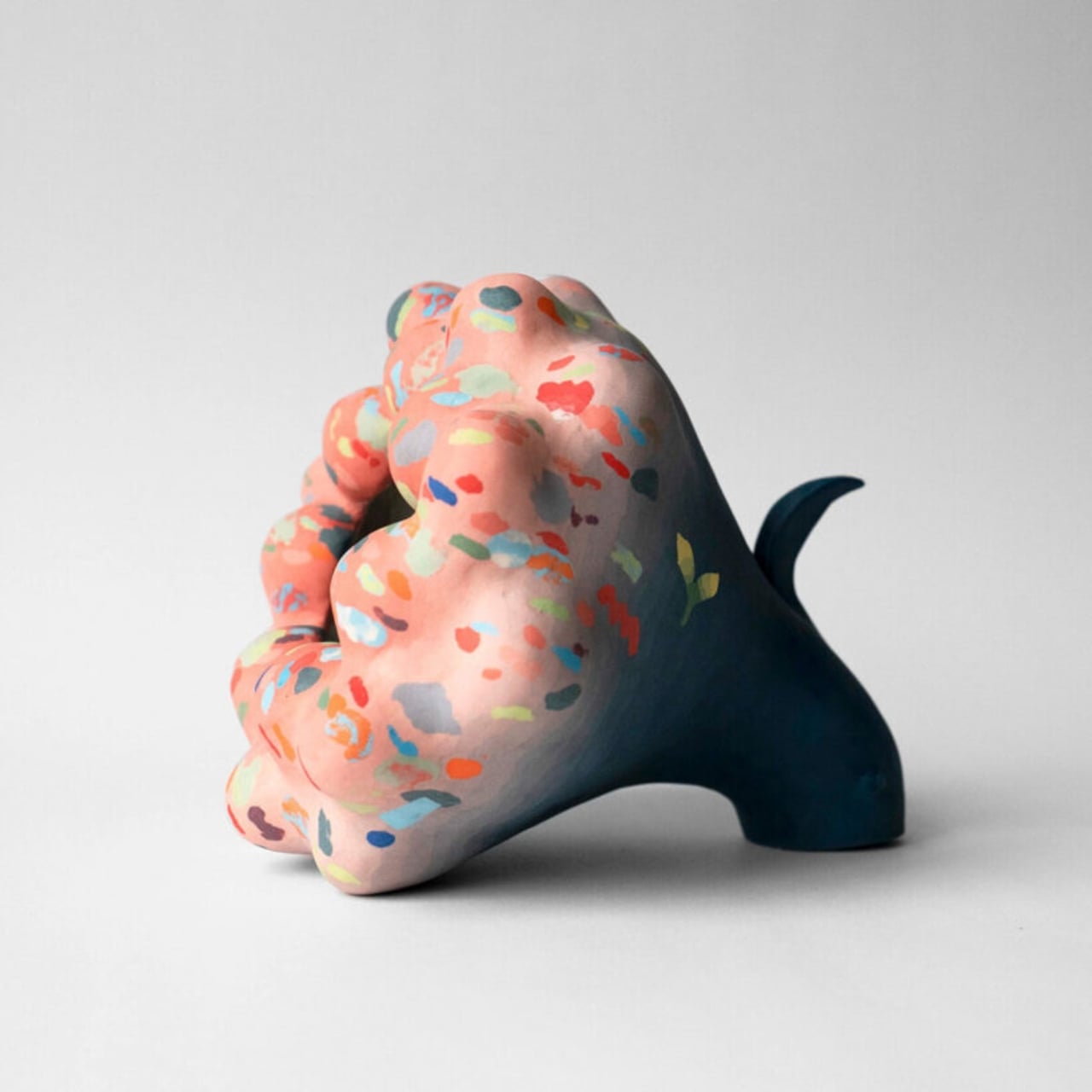
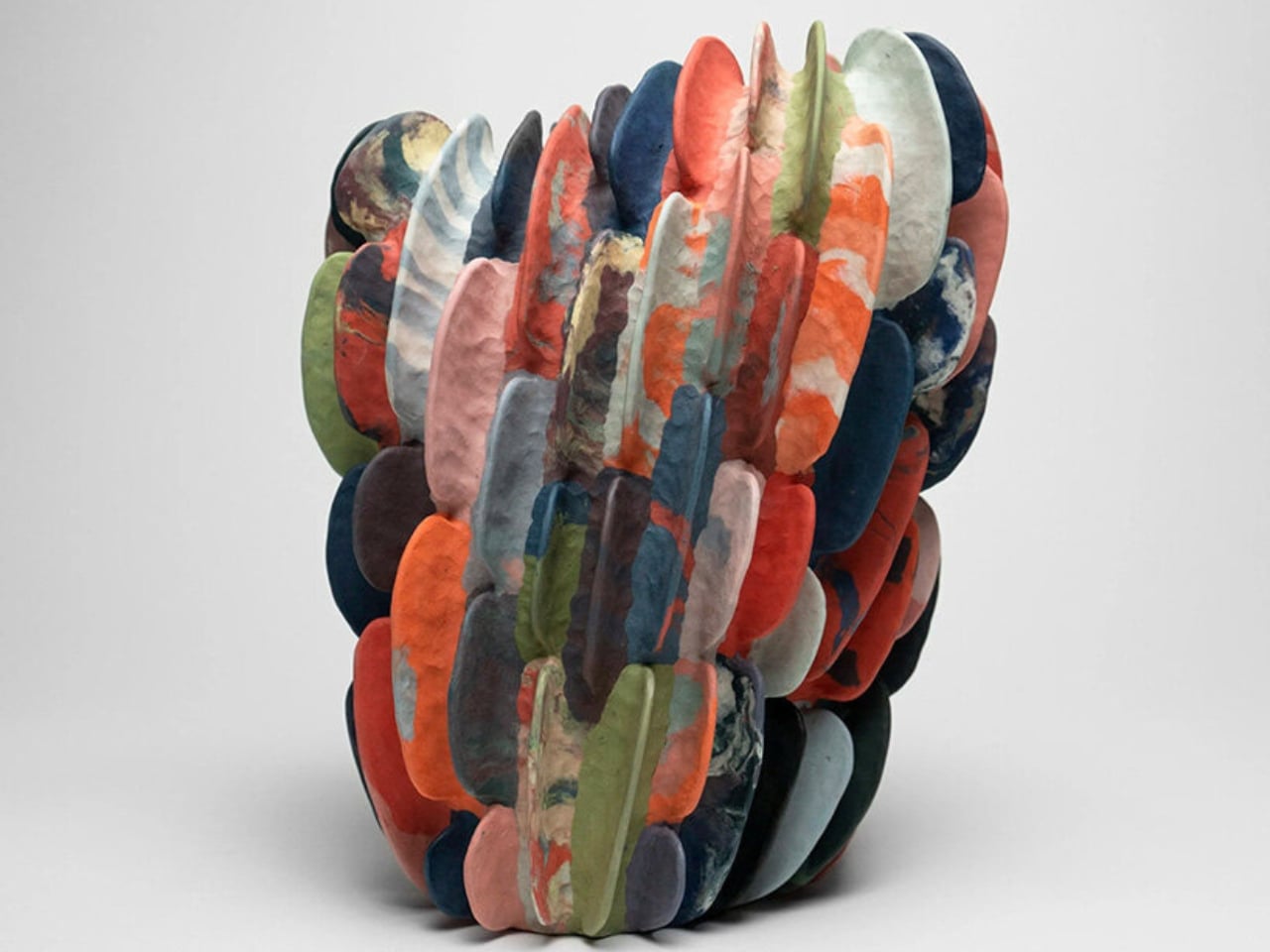
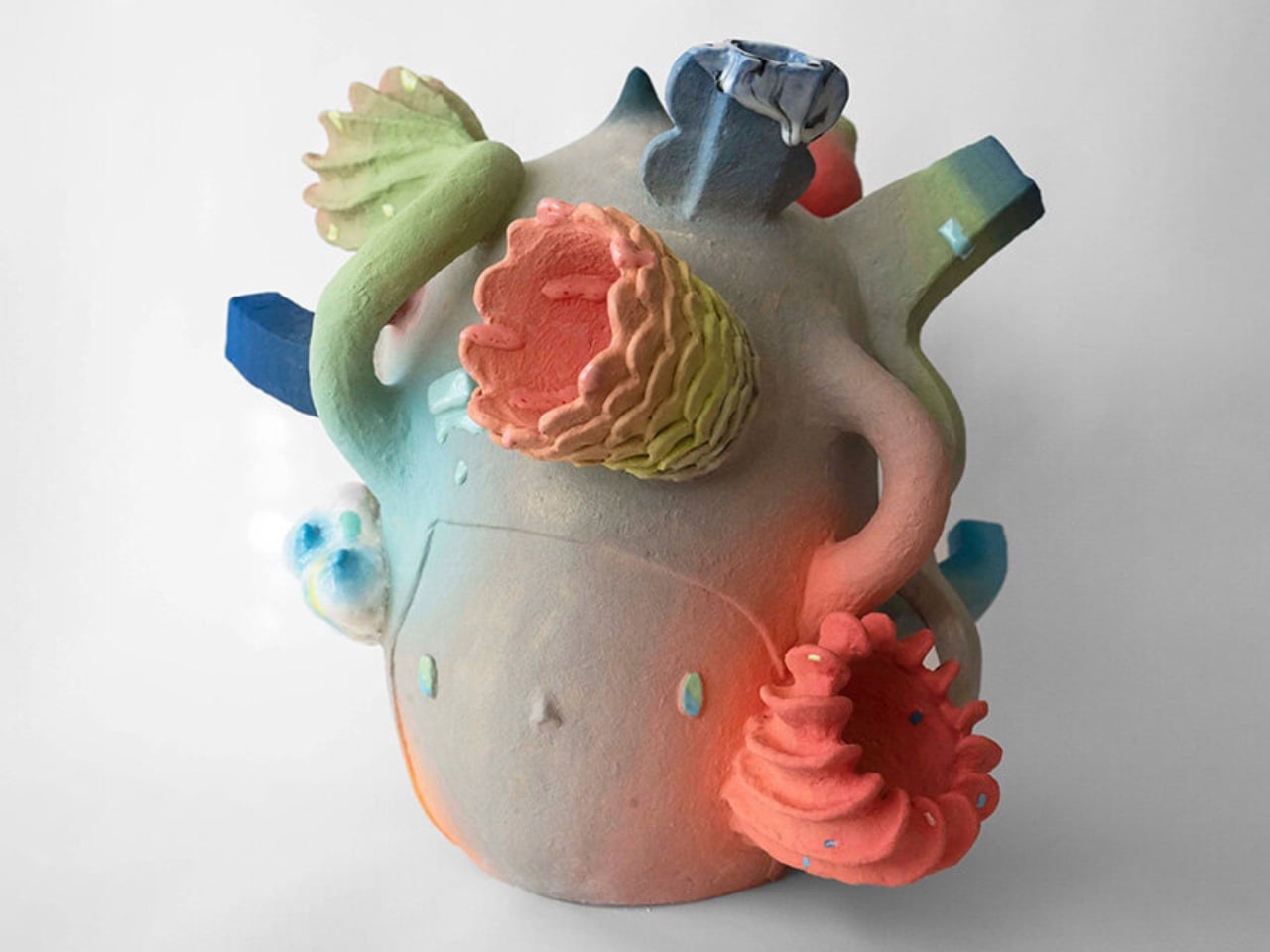
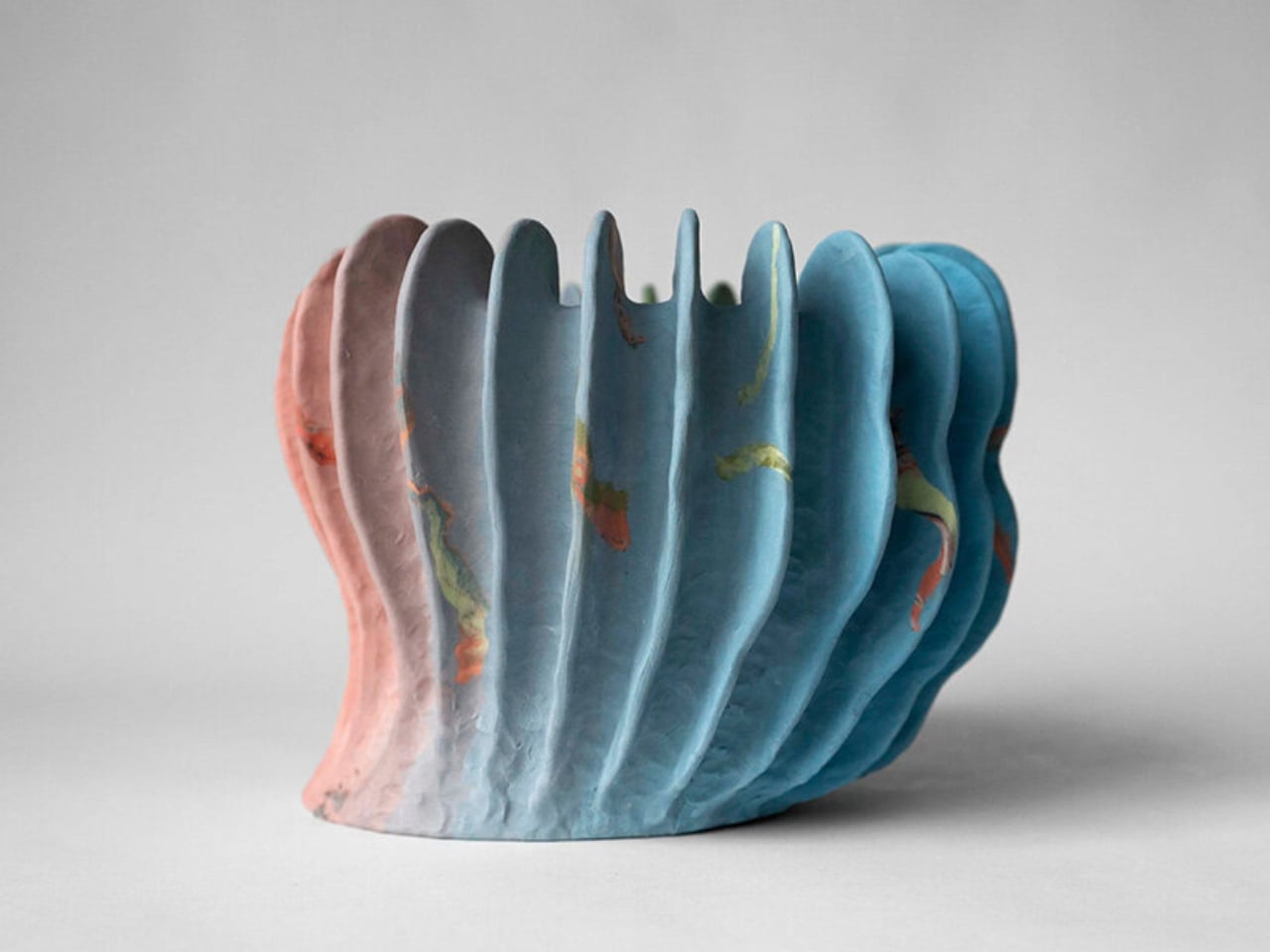
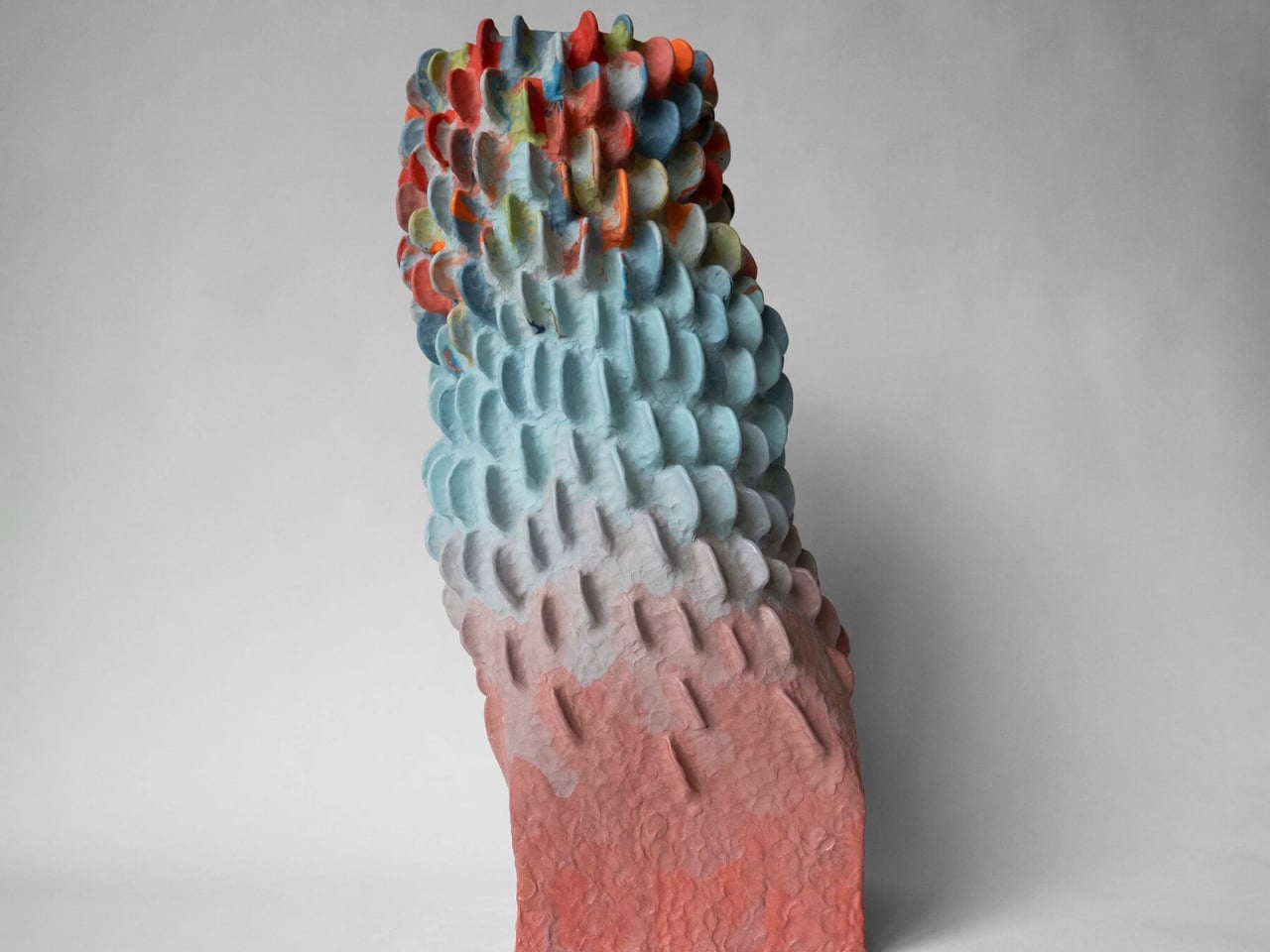
Most ceramic art asks you to admire it from a distance. Janny Baek’s work makes you want to lean in closer and check if it’s breathing. Her upcoming solo exhibition, Life Forms, opens at Joy Machine gallery in Chicago on March 20, running through May 9, 2026, and from everything I’ve seen of it, it might be one of the more visually arresting shows to land this spring. The pieces gather across the gallery space like inhabitants of an ecosystem you’ve never visited but somehow recognize. Some forms open outward like blossoms. Others stretch upward with limbs that suggest wings, or stems, or shells. None of them fully commit to being any one thing, and that’s exactly the point.

What makes Baek’s ceramics so compelling is the feeling that the firing process didn’t quite finish the job. The sculptures look caught mid-transformation, as though another hour in the kiln might have resolved them into something more familiar. Instead, they hold their ambiguity like a posture. That deliberate incompleteness is one of the most interesting creative choices an artist can make, and Baek has built an entire body of work around it.

Designer: Janny Baek
Her path to ceramics is almost as unusual as the work itself. Born in Seoul and raised in Queens, she studied ceramics at the Rhode Island School of Design before taking a turn into animation and toy design as a sculptor. Then she earned a graduate degree in architecture from Harvard, co-founded an architecture practice in Manhattan, and spent years designing high-end residential spaces. When the pandemic hit, she returned to clay, setting up a studio in the back of her Flatiron District architecture office. The ceramics world should be grateful for the timing.
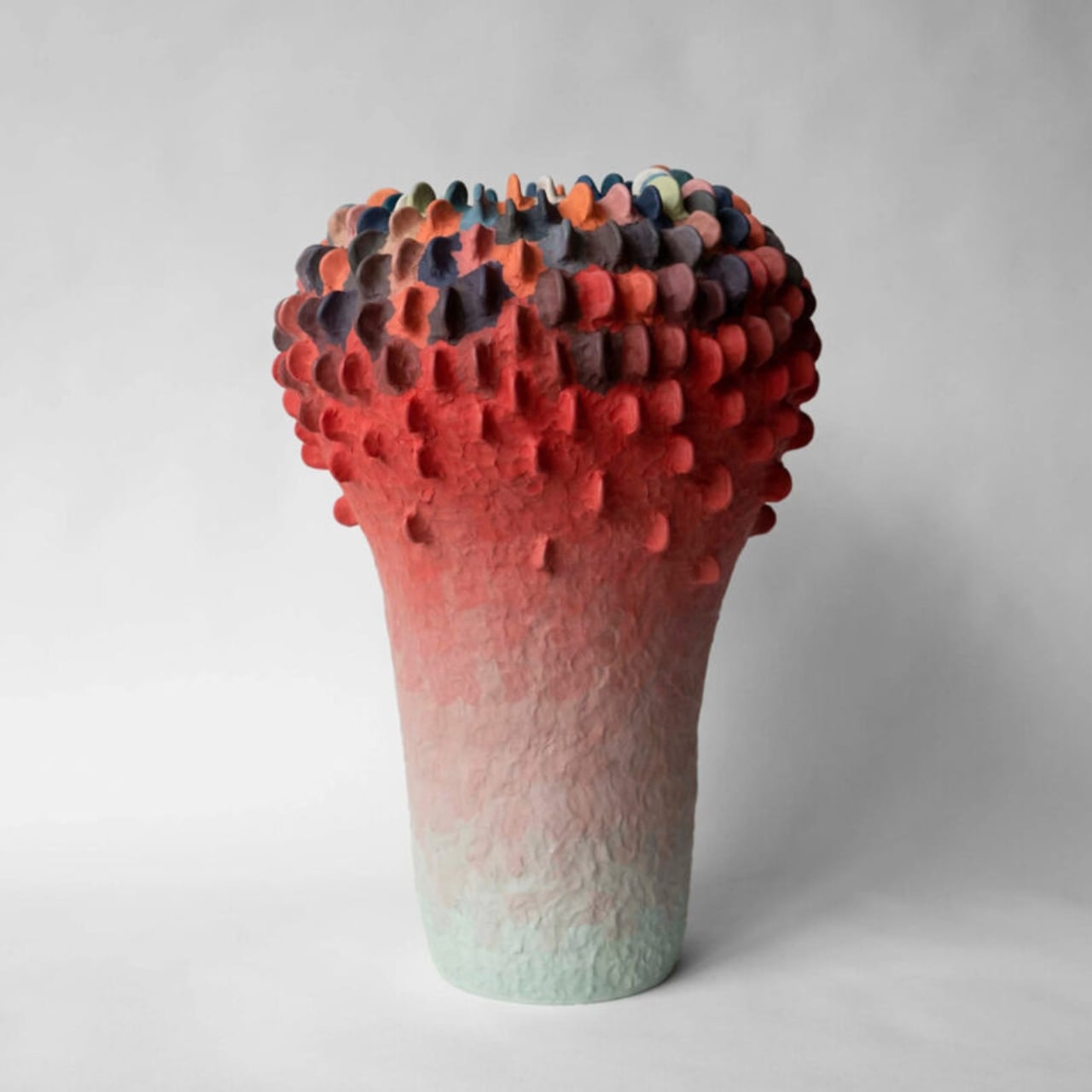
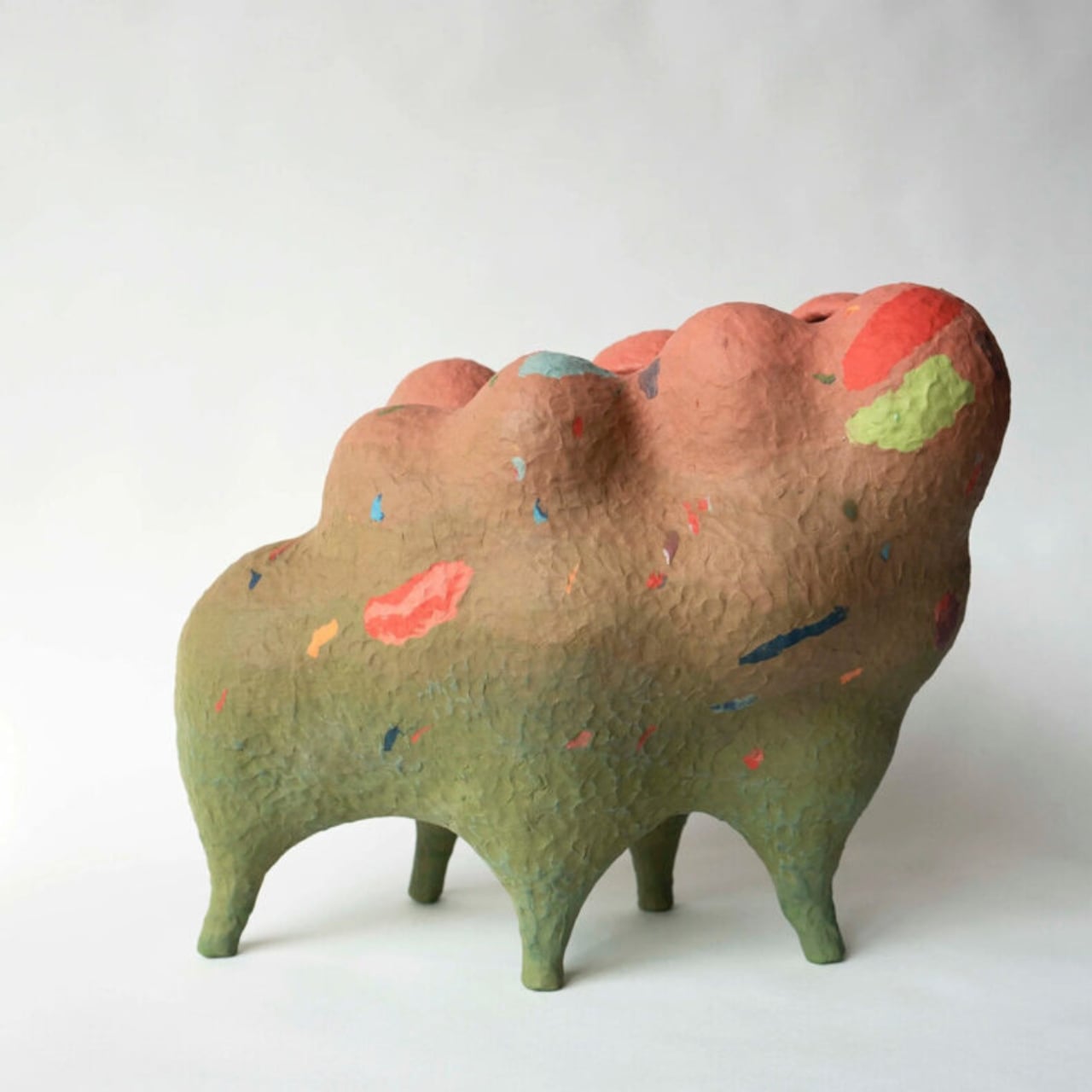
That architectural background isn’t incidental. You can see it in the structural logic of the pieces, which begin with coiled bases and build upward through successive additions of clay, each element branching from the last. The result is less like sculpting and more like construction, or perhaps like watching something grow. Her larger work, Plant Life (2025), stoneware with colored sections rising from white shoots, reads almost like a site plan for a garden on a planet where the plants decided to do their own thing.
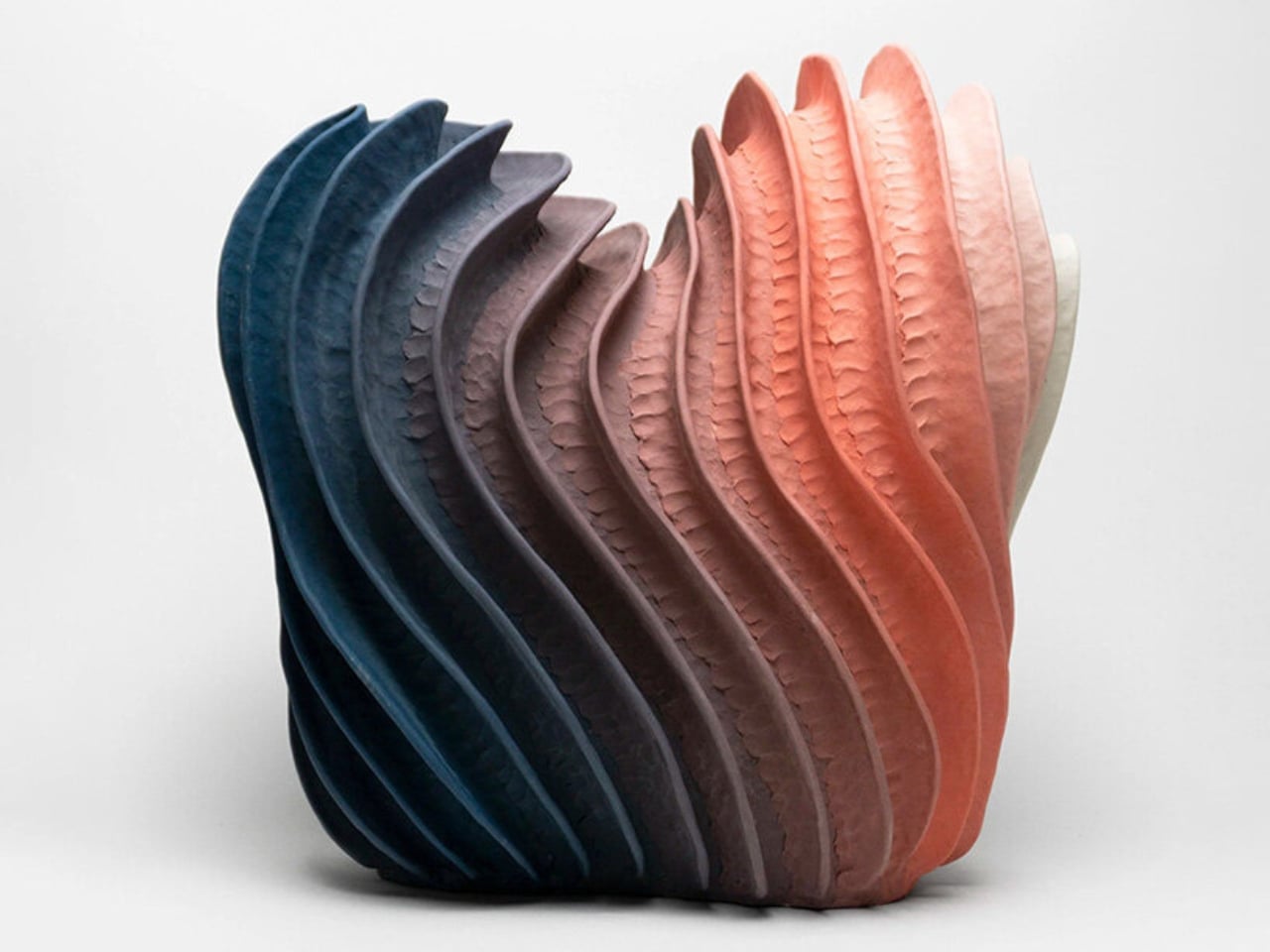
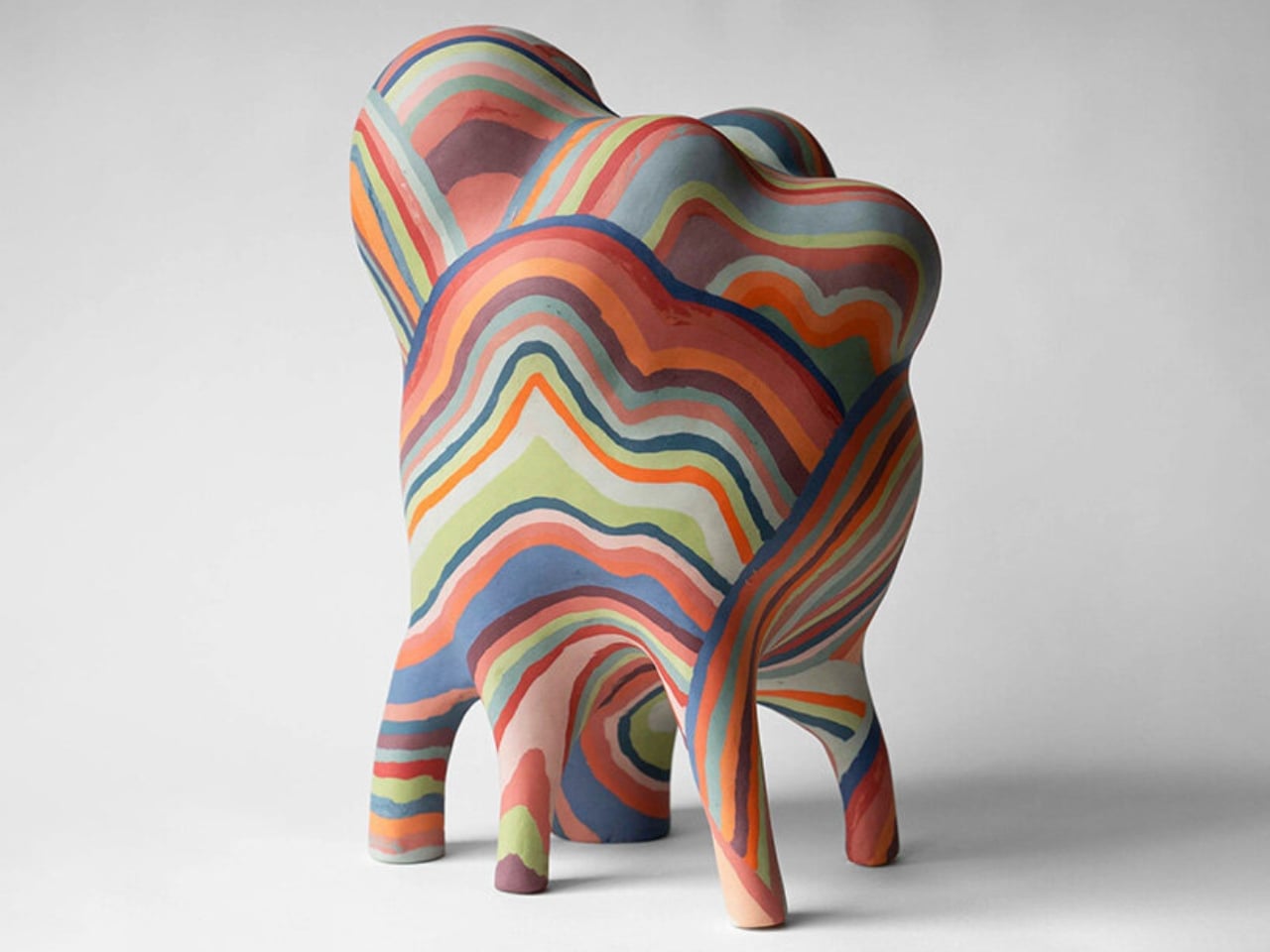
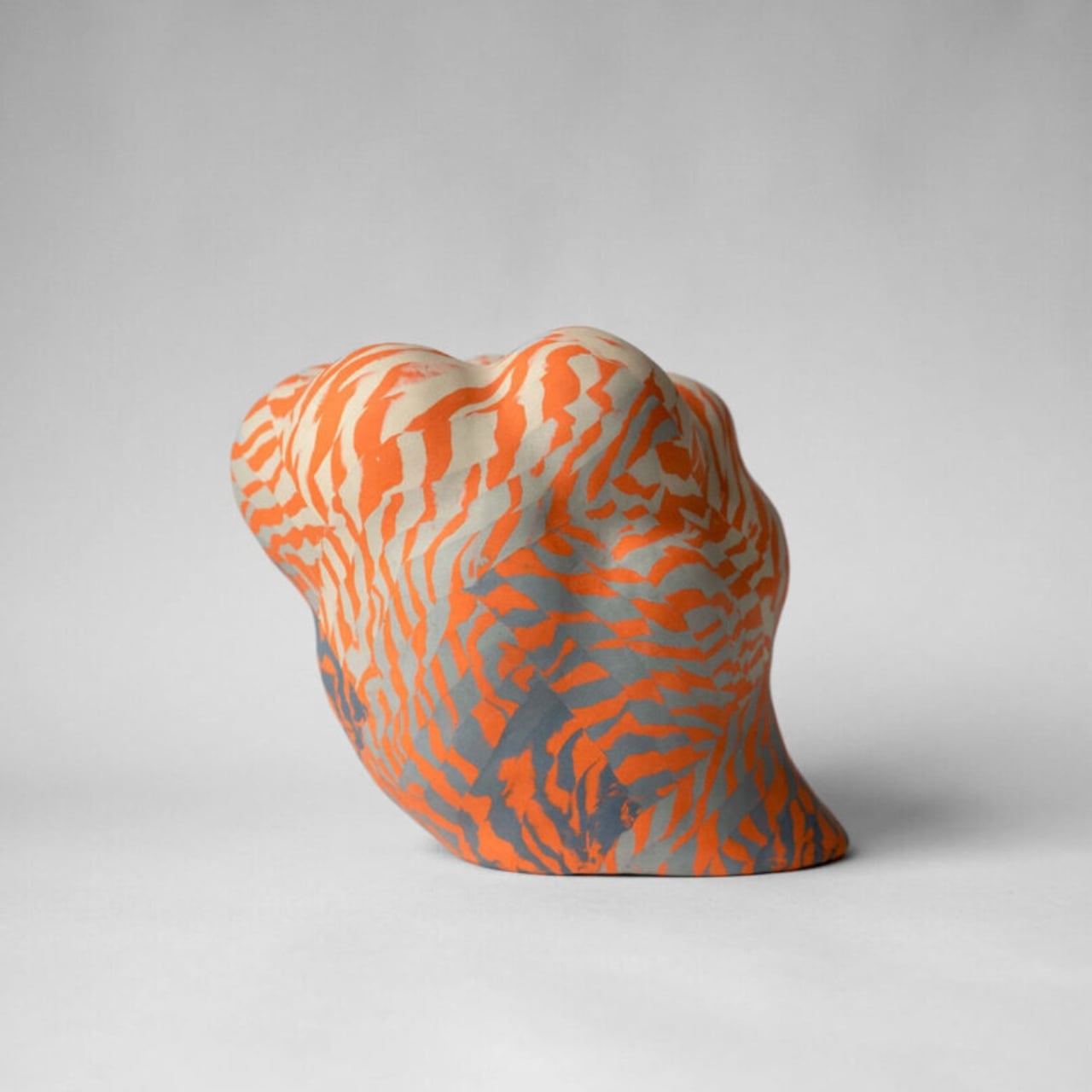
The technique she relies on is nerikomi, a traditional Japanese method that involves stacking clay of different colors and slicing through it to reveal the pattern within. But Baek’s application of it feels more contemporary than the technique’s origins might suggest. Color, in her hands, is structural rather than decorative. It moves through the clay like a current, not like paint on a surface. She has described color gradients as “the continuous nature of change,” and a multitude of colors as “potential, abundance, and vitality.” That framing matters. It tells you the work isn’t just pretty, it’s philosophic.
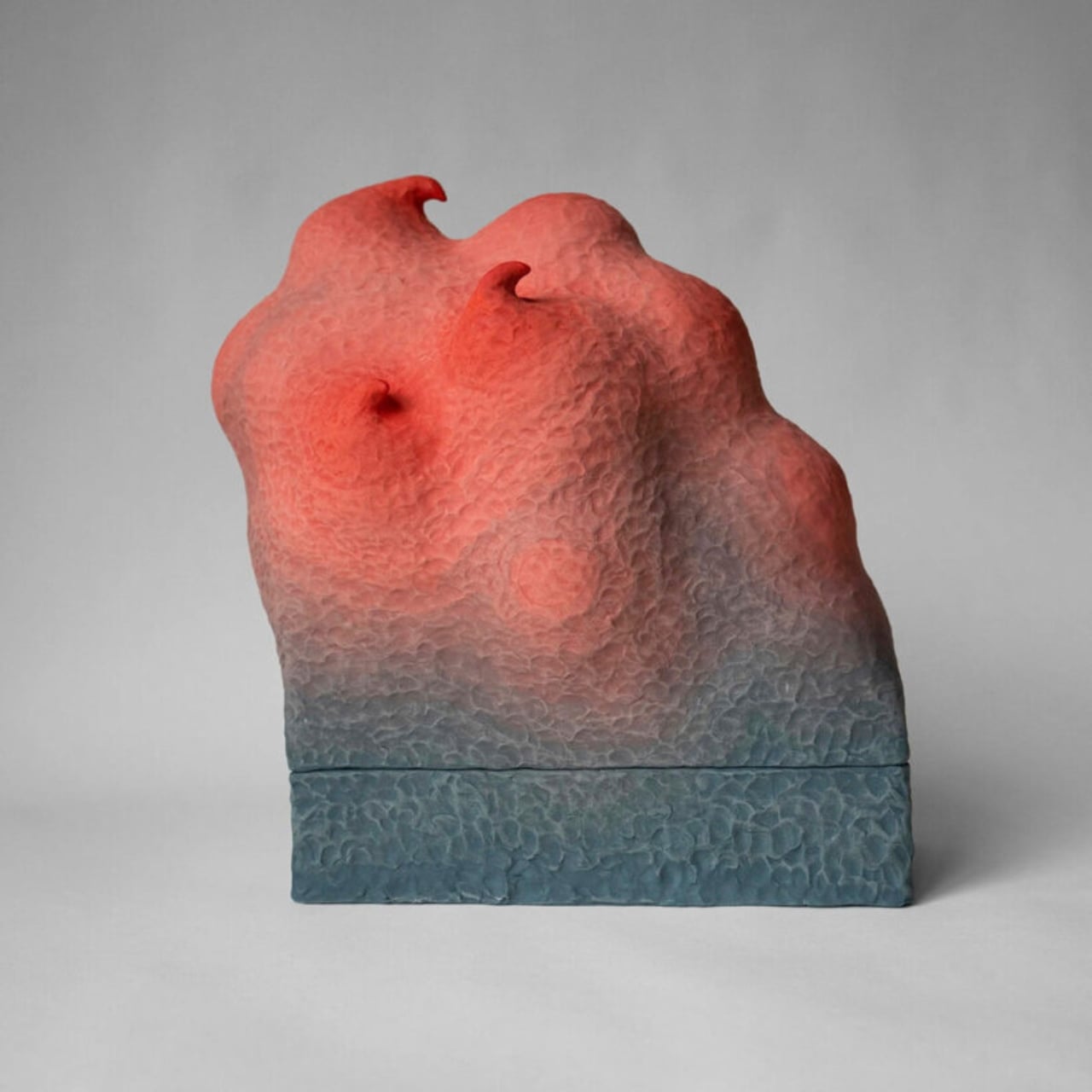
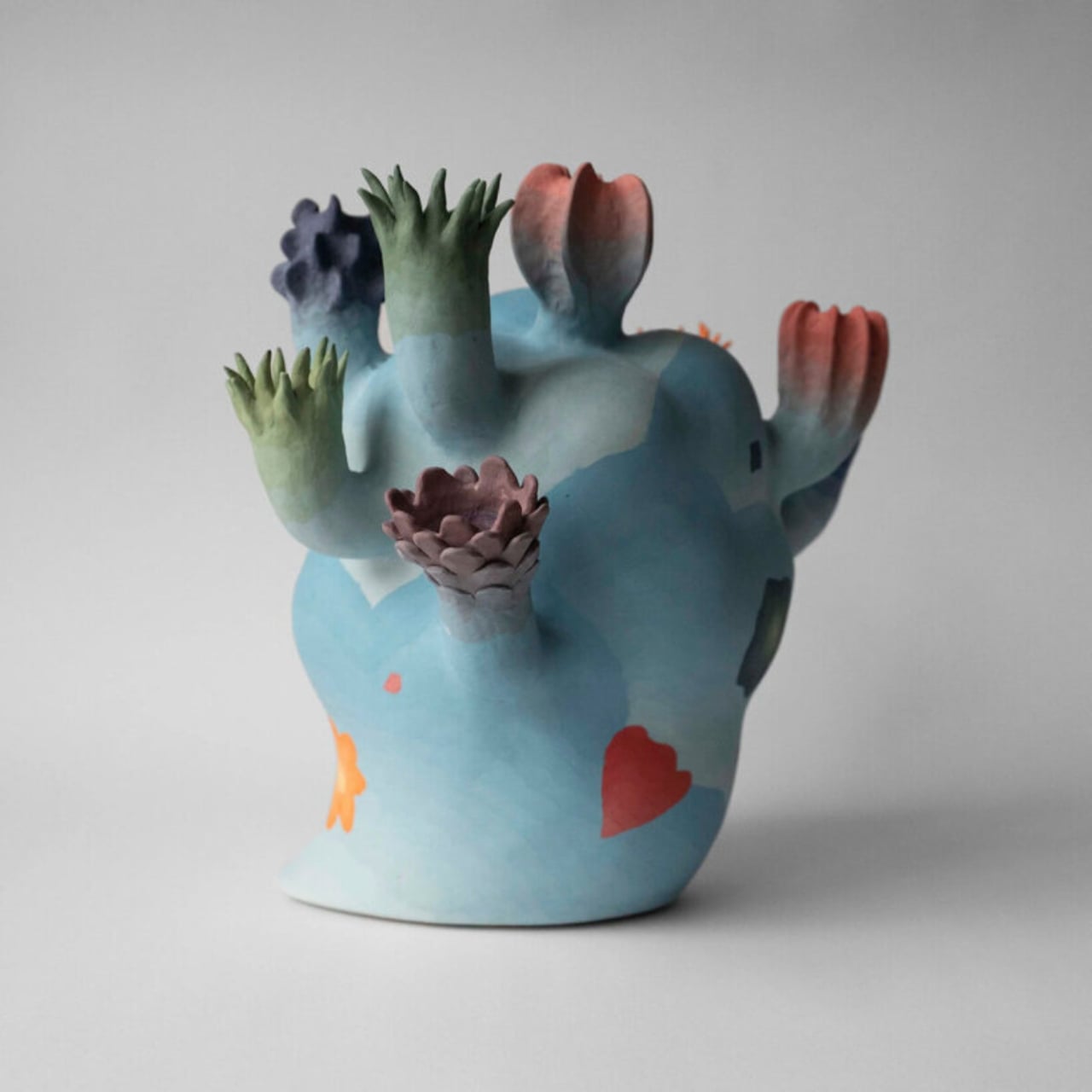
The piece titles reinforce this. Micro-organisms, Glow Sticks, and Outer Galaxies. Prismatic Walking Cloud. 5 Eyes (Dream State Series). Cloudbloom. They read like entries in a field guide to a world that hasn’t been discovered yet, which is probably the most accurate way to describe what Baek is building. Her ceramics operate on what one description of the work calls “dream logic, one that accepts incongruity and dissonance as necessary to play and experimentation.” That’s a generous creative framework, and it shows. The work never feels confused or unresolved. It feels deliberate in its strangeness.
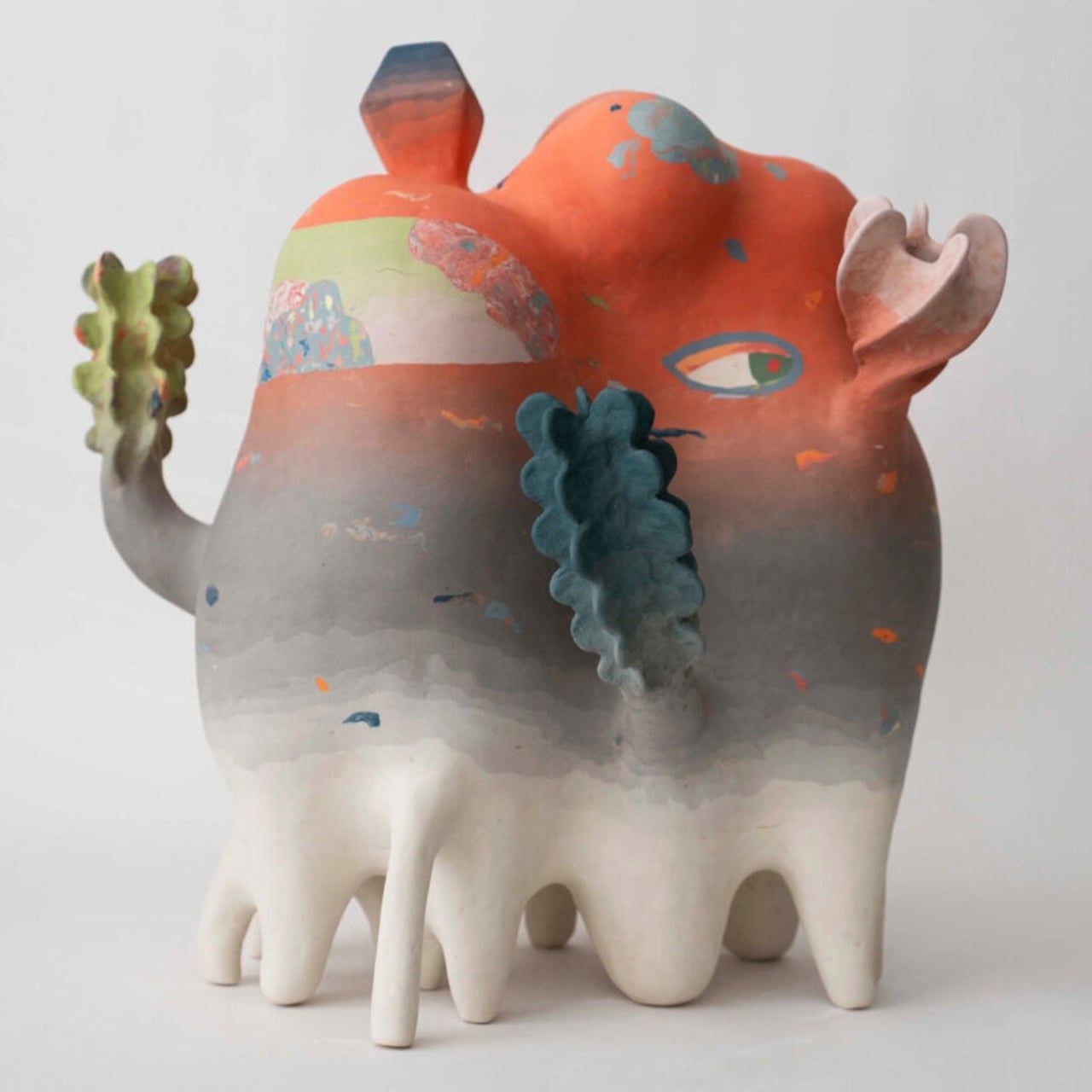
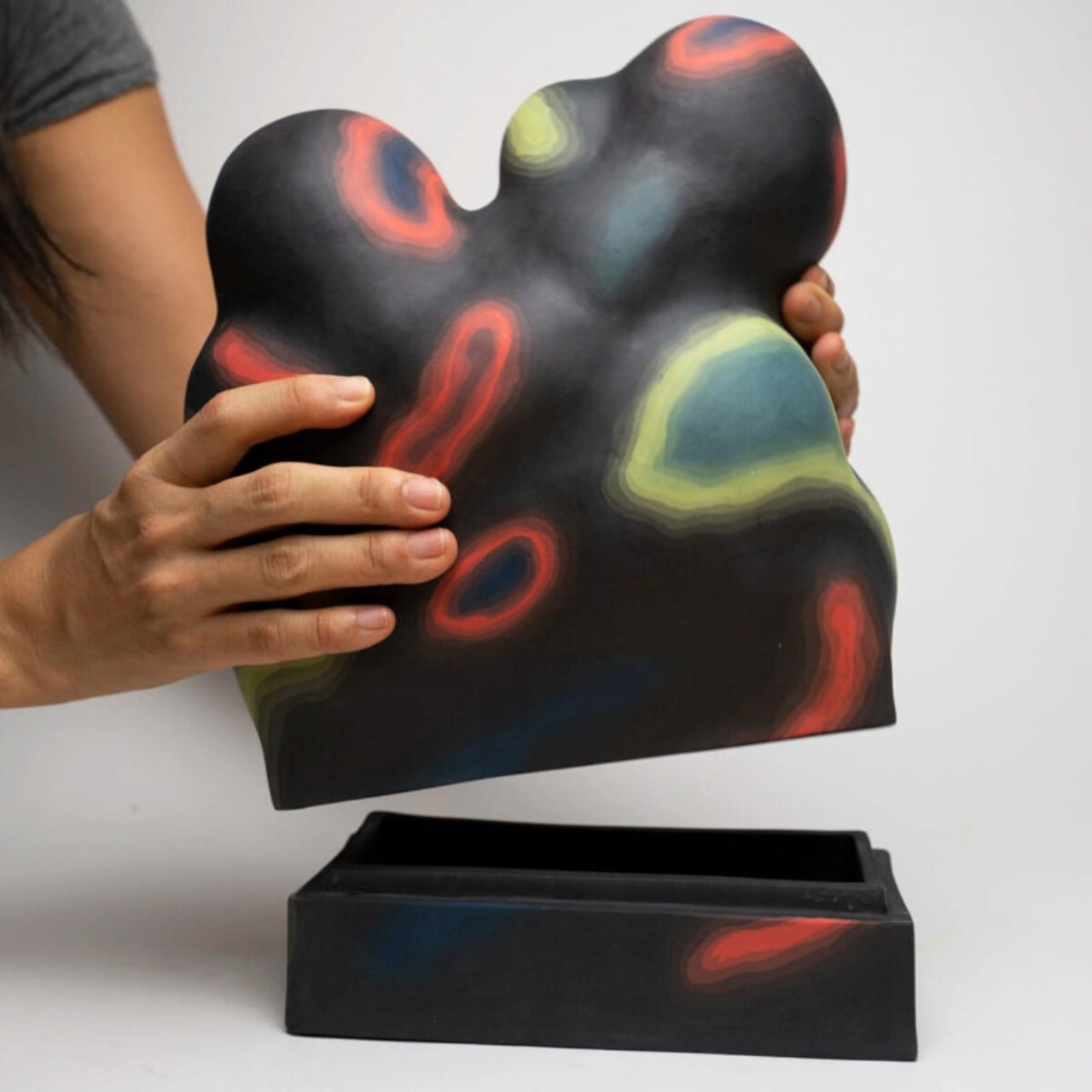
What I find most refreshing about Life Forms is that it doesn’t ask you to bring any specific context to it. You don’t need to know the theory behind nerikomi or have an opinion about contemporary ceramics to stand in front of one of these pieces and feel something. They work on a more basic level, the level of looking at something unfamiliar and recognizing it anyway. Like you’ve seen its kind before, somewhere between a dream and a nature documentary.
The post Janny Baek’s Ceramics Look Like They’re Still Evolving first appeared on Yanko Design.

❌