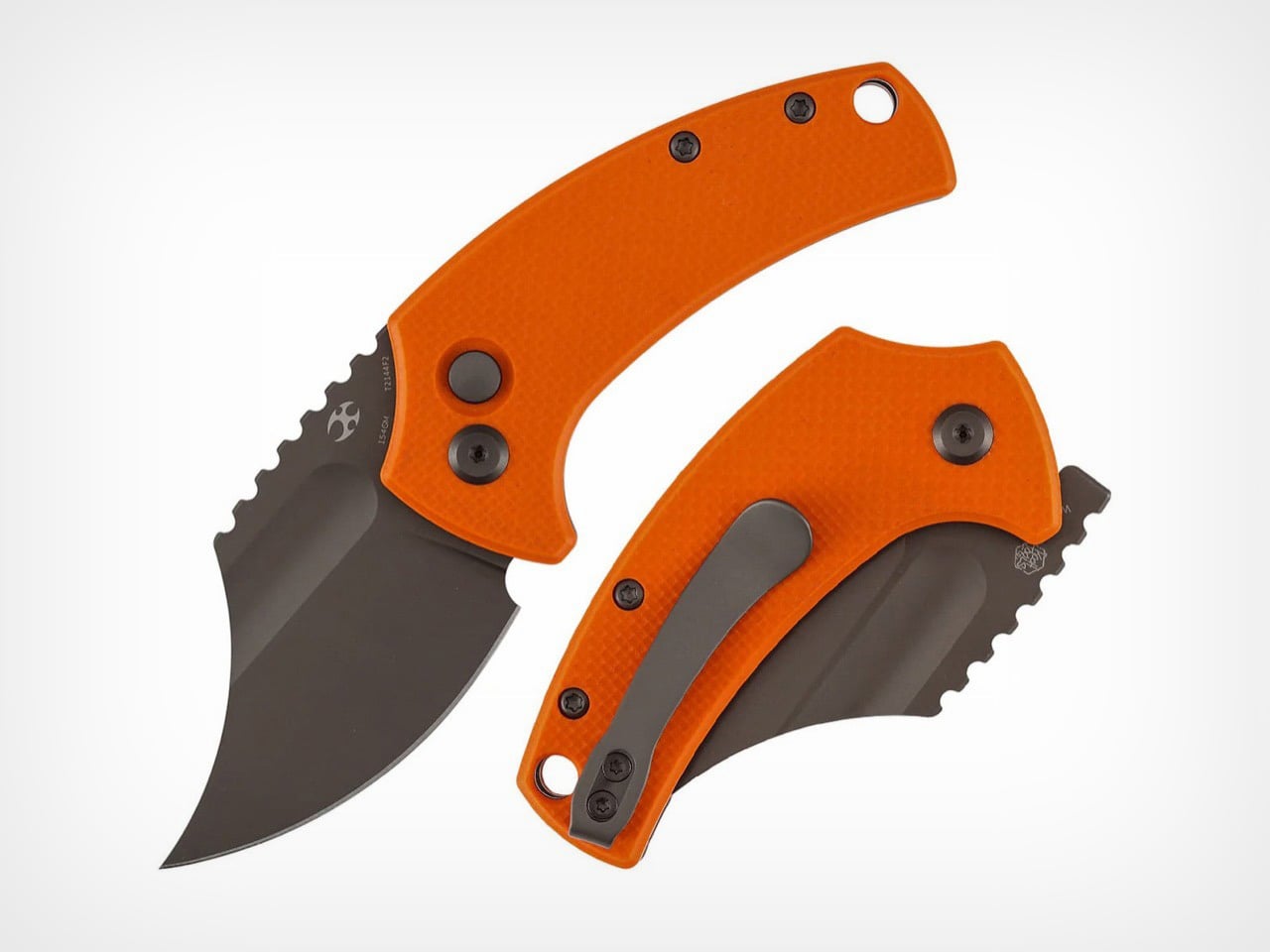
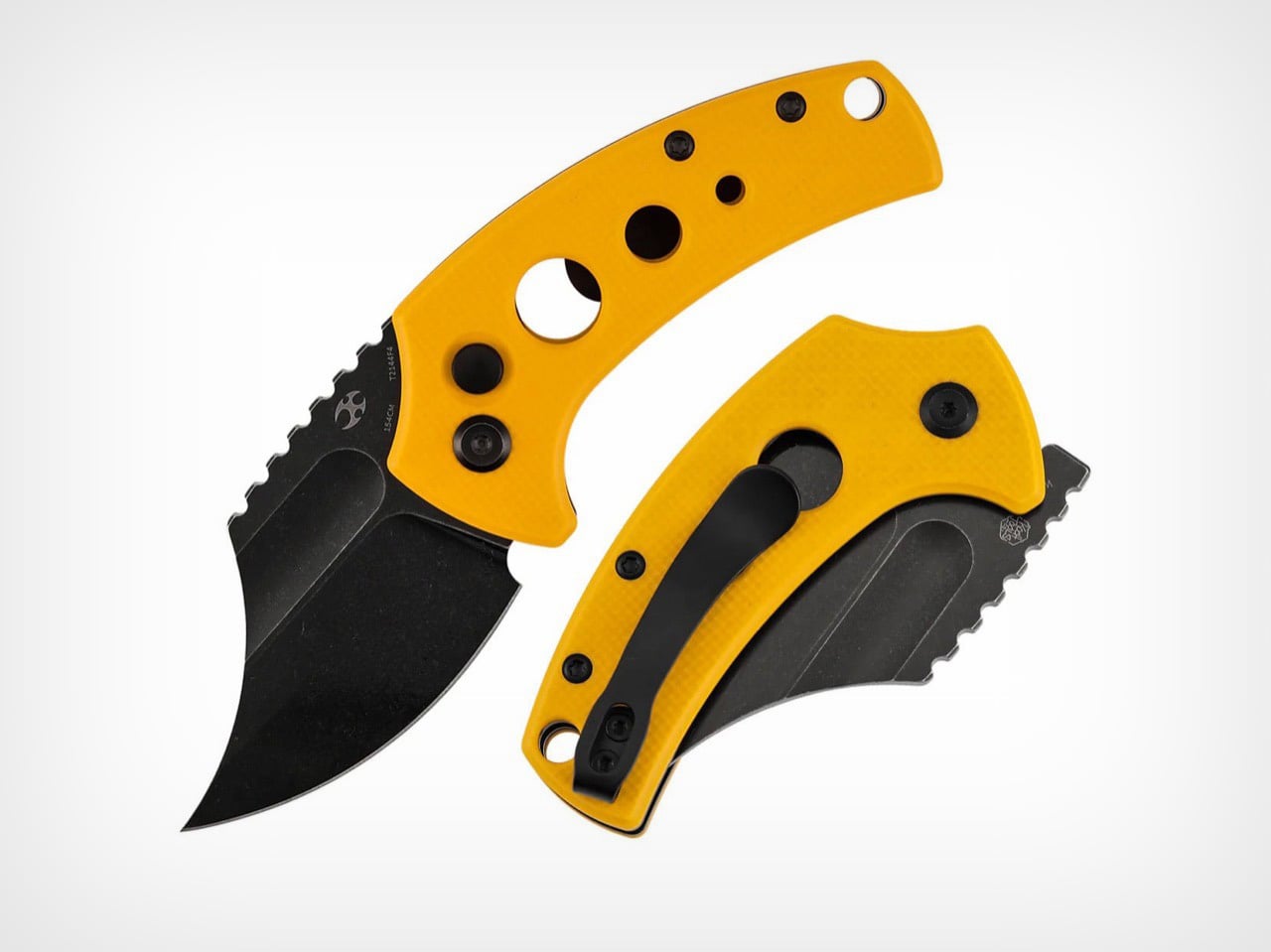
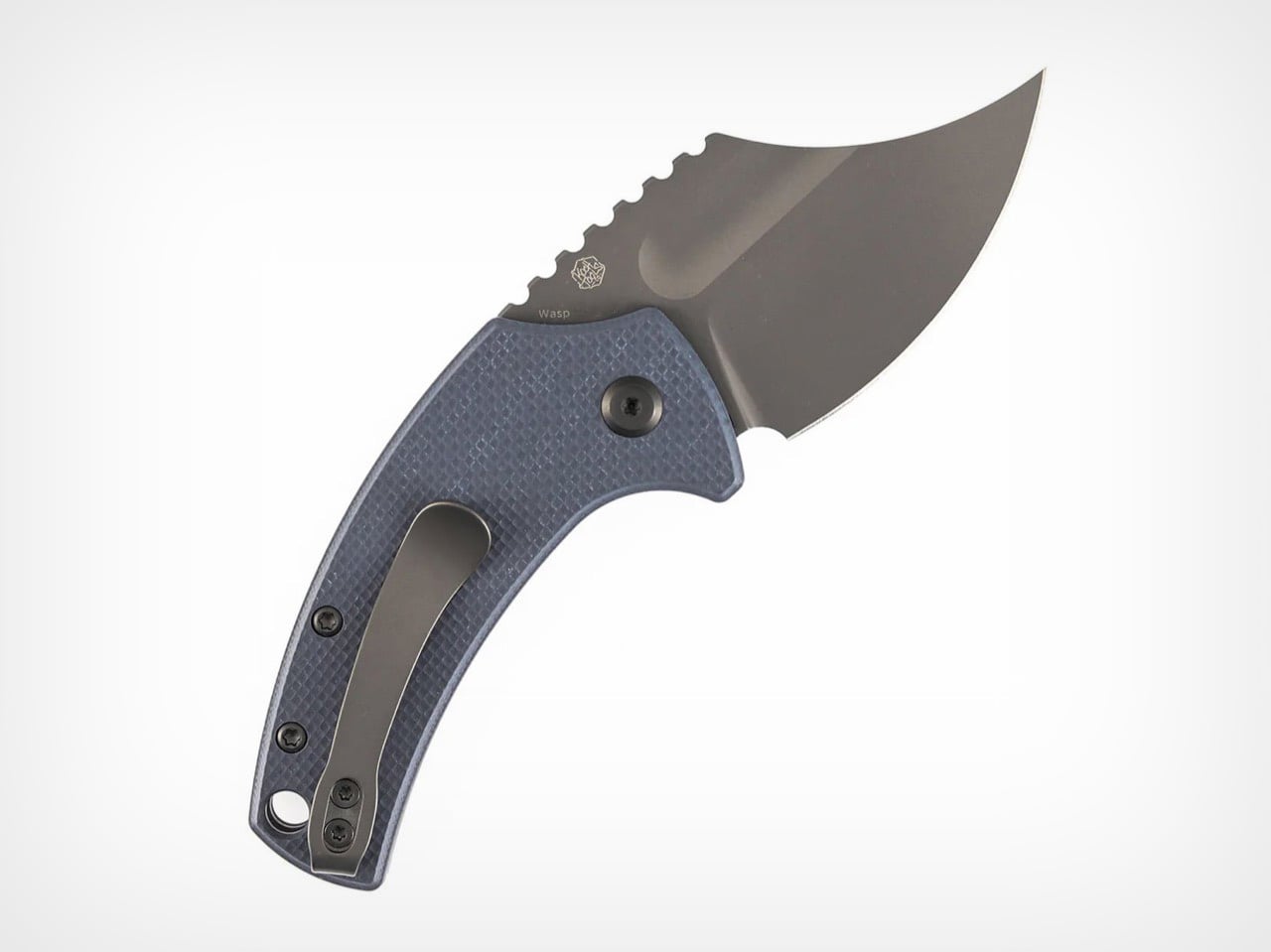
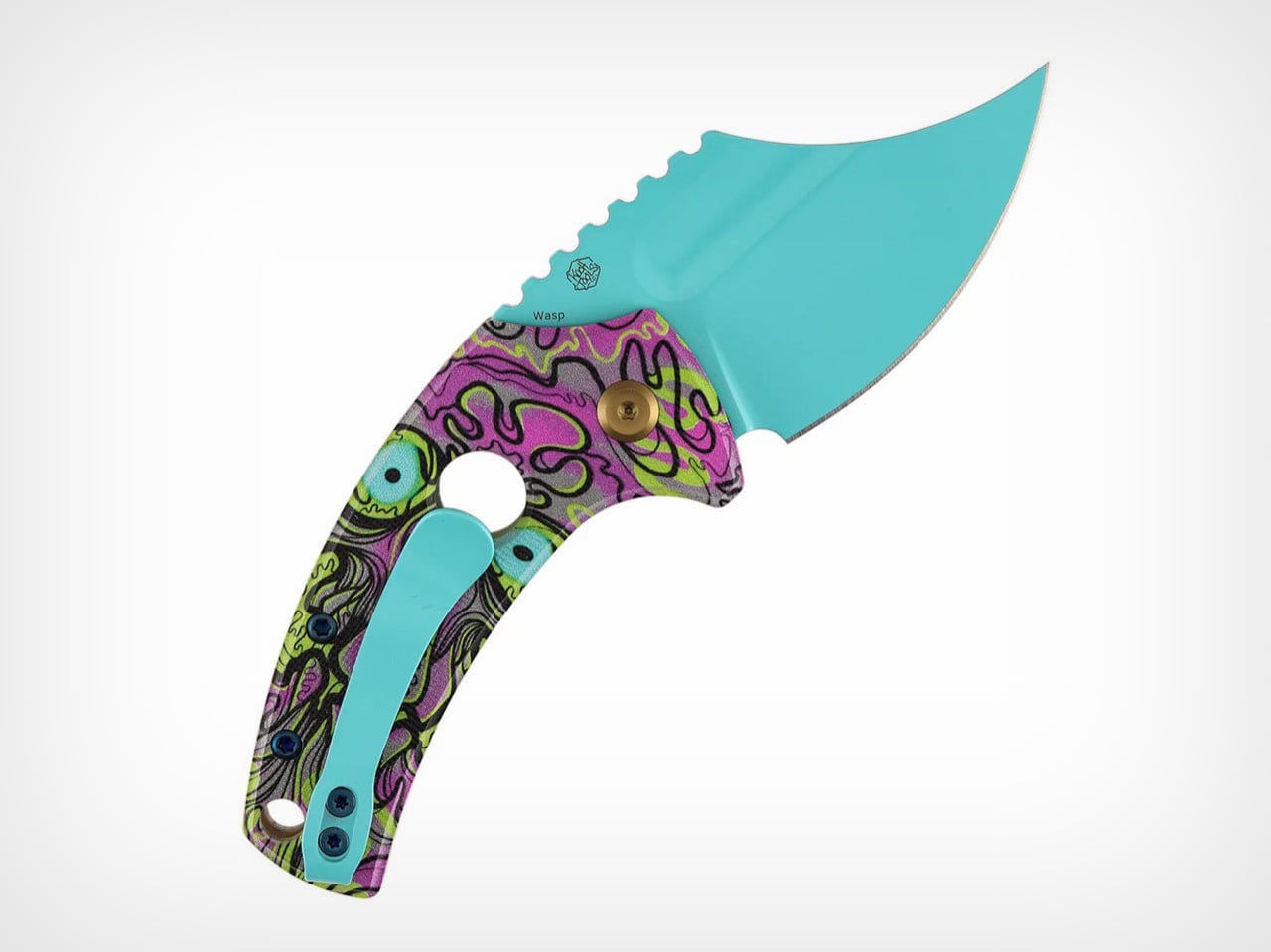
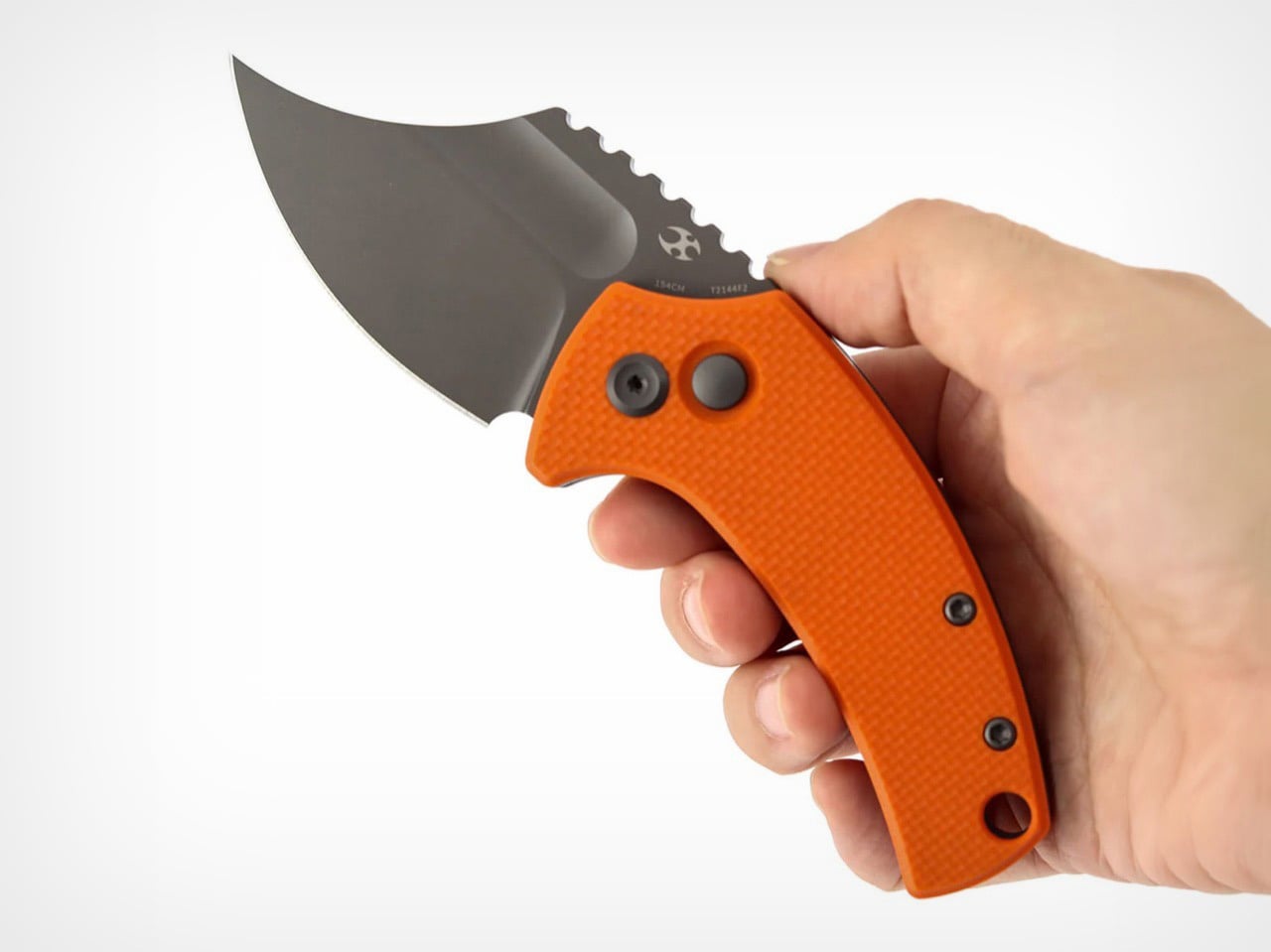
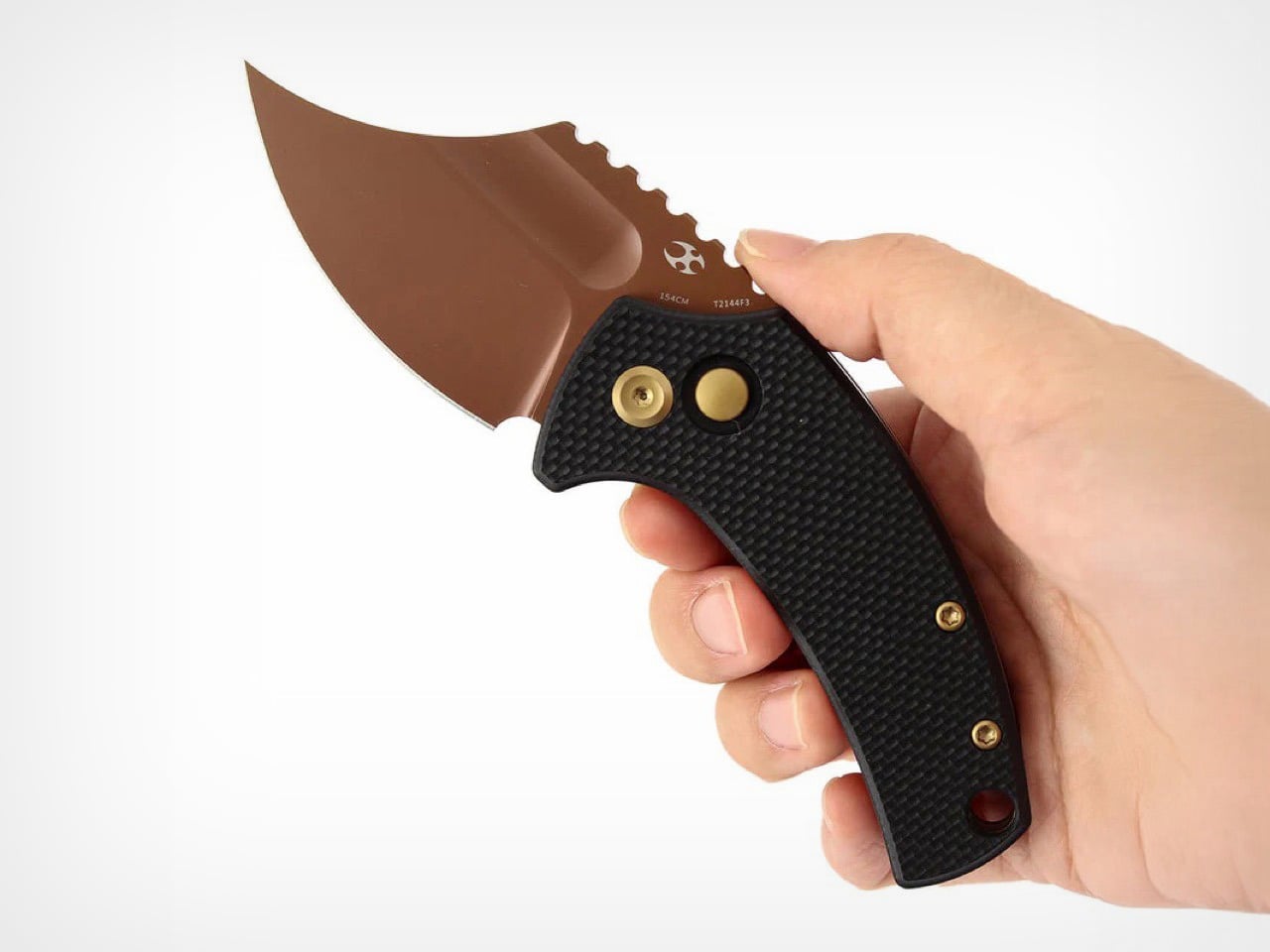
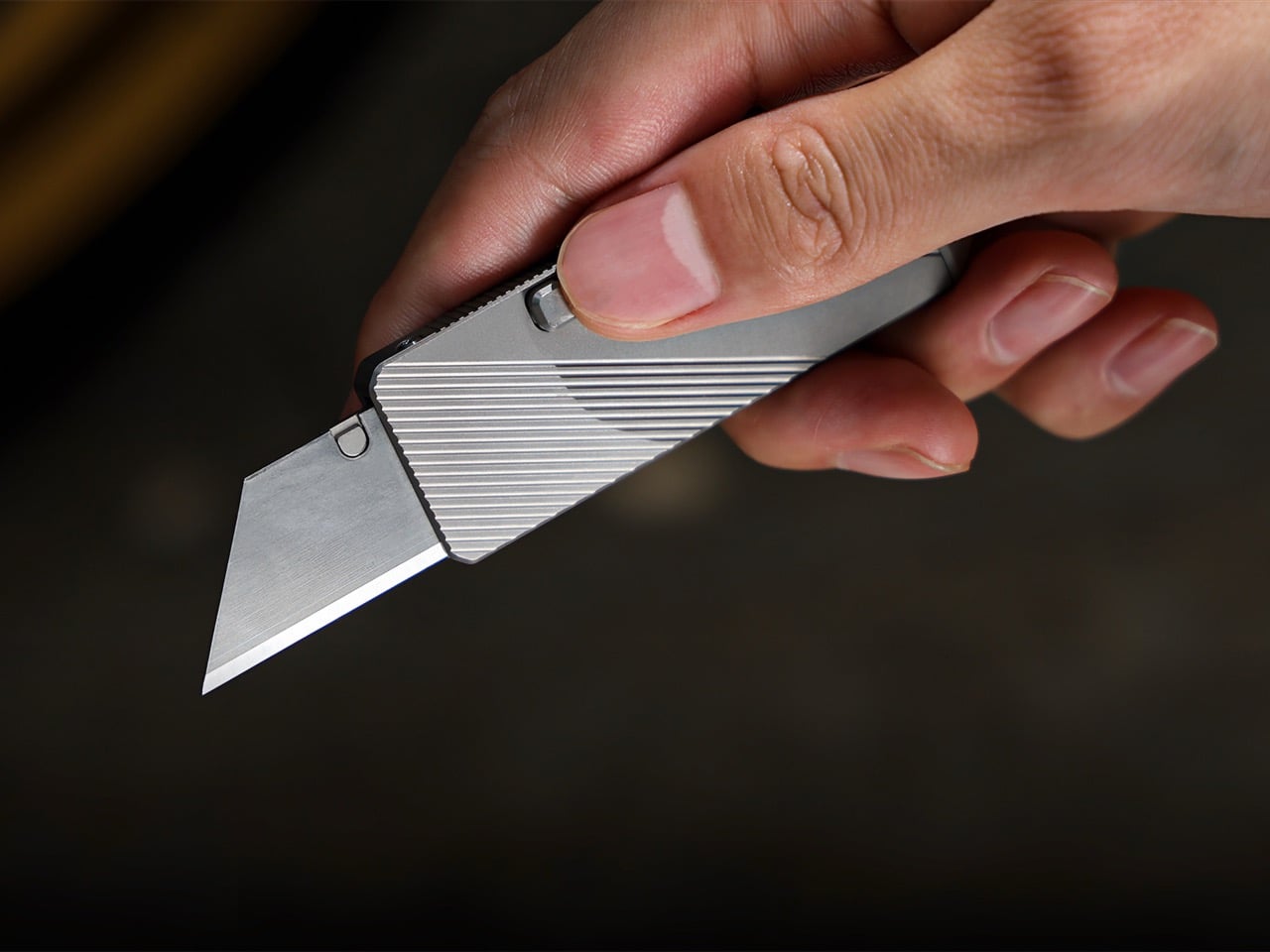
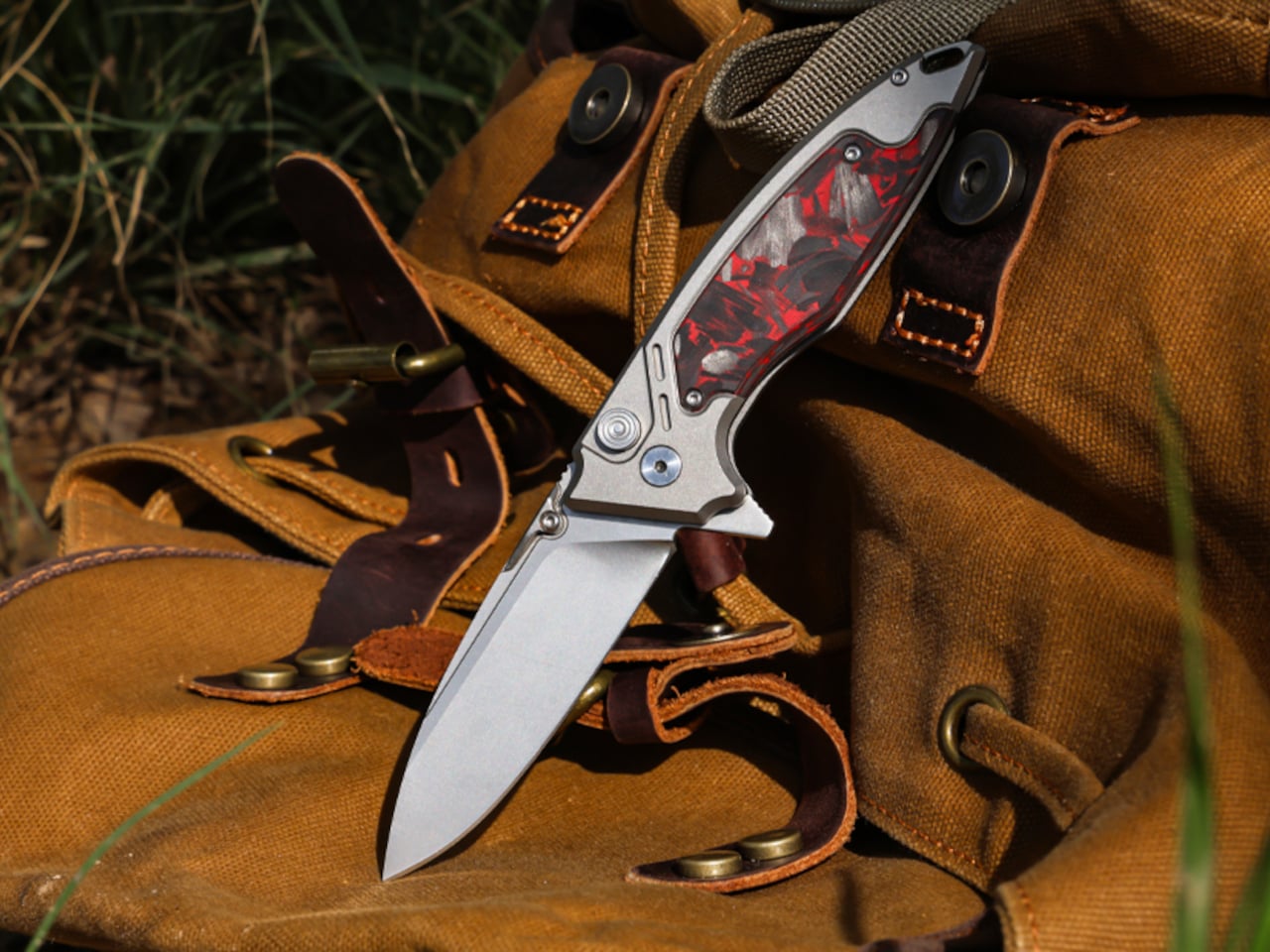
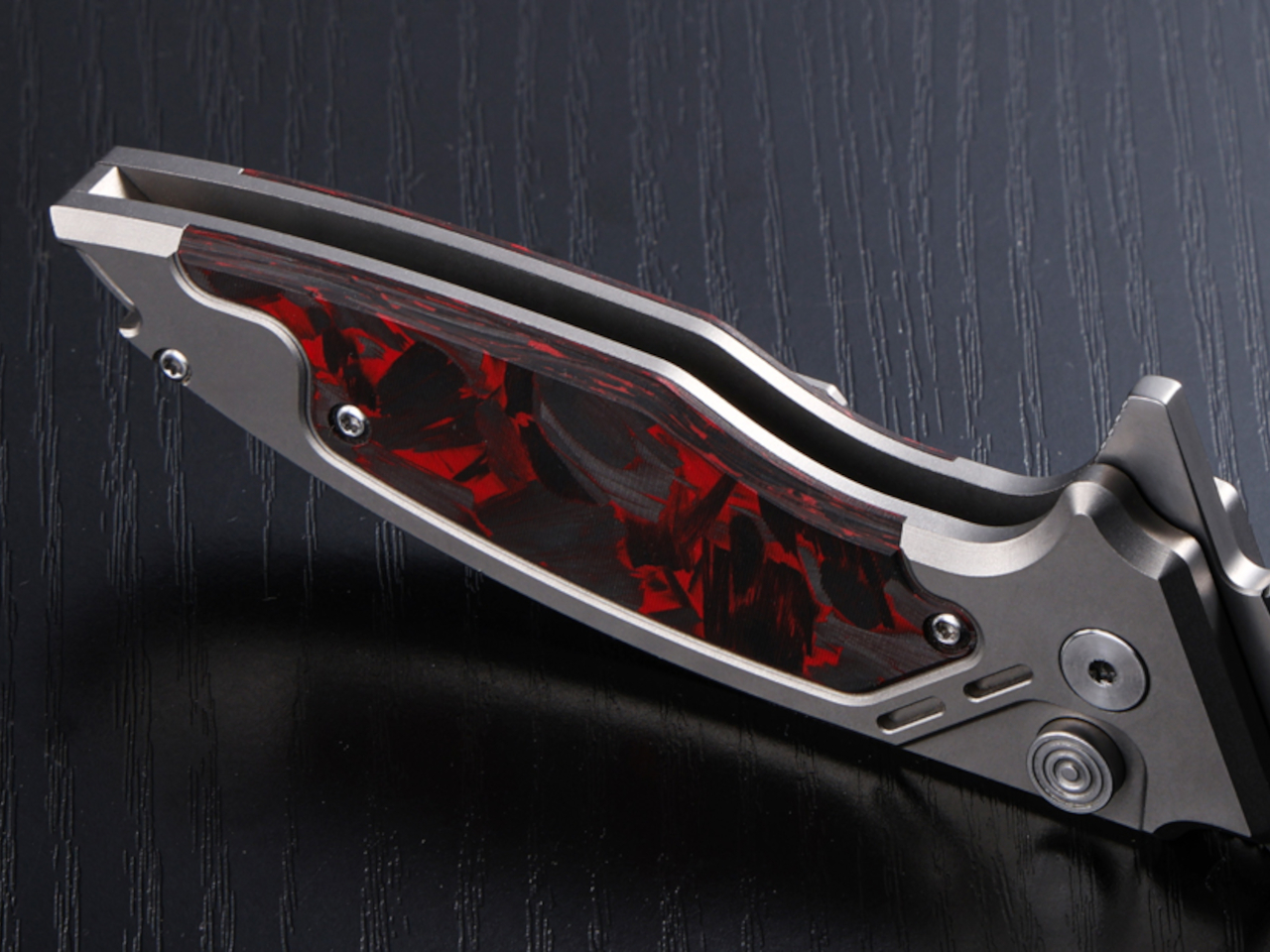
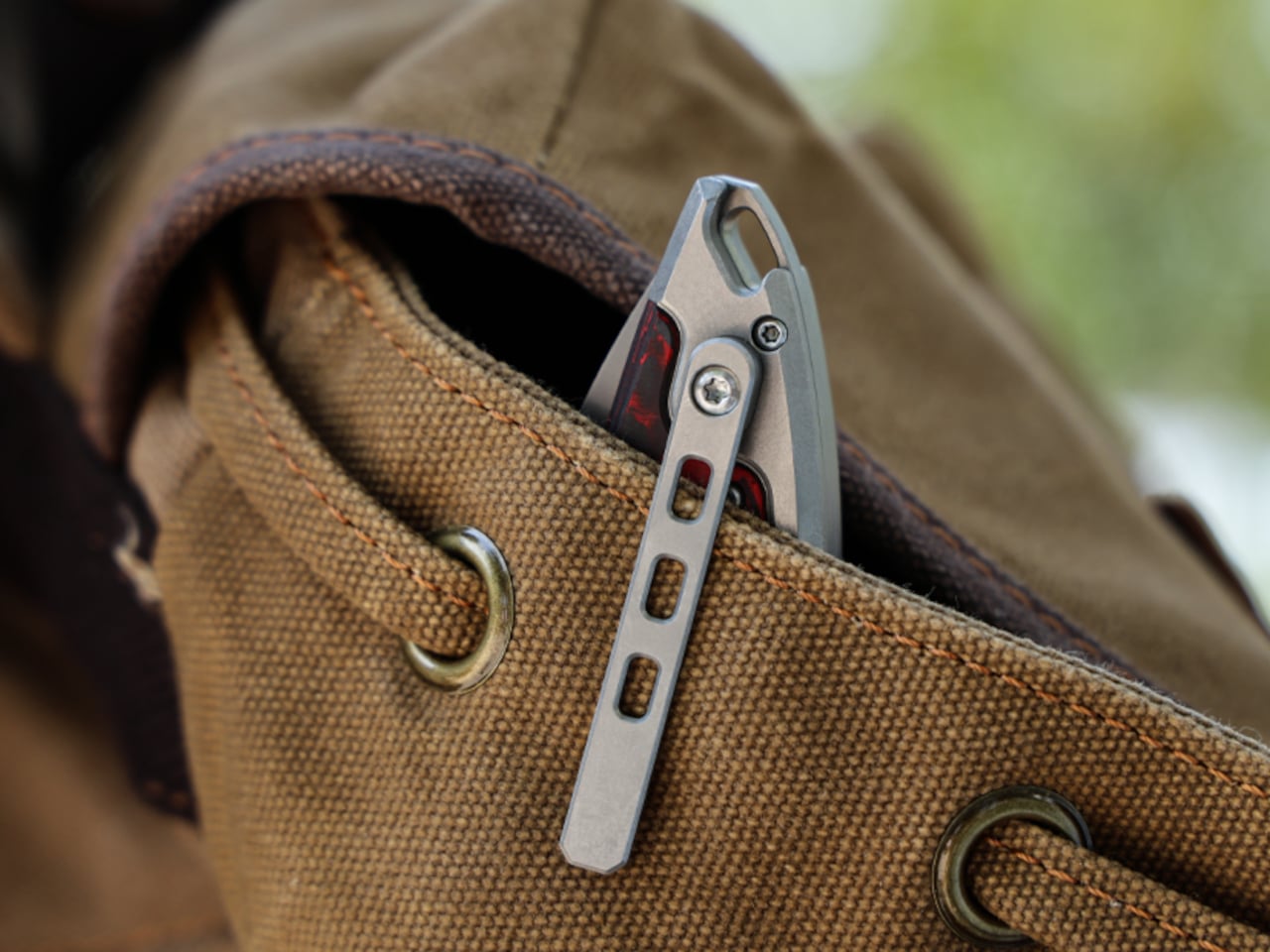
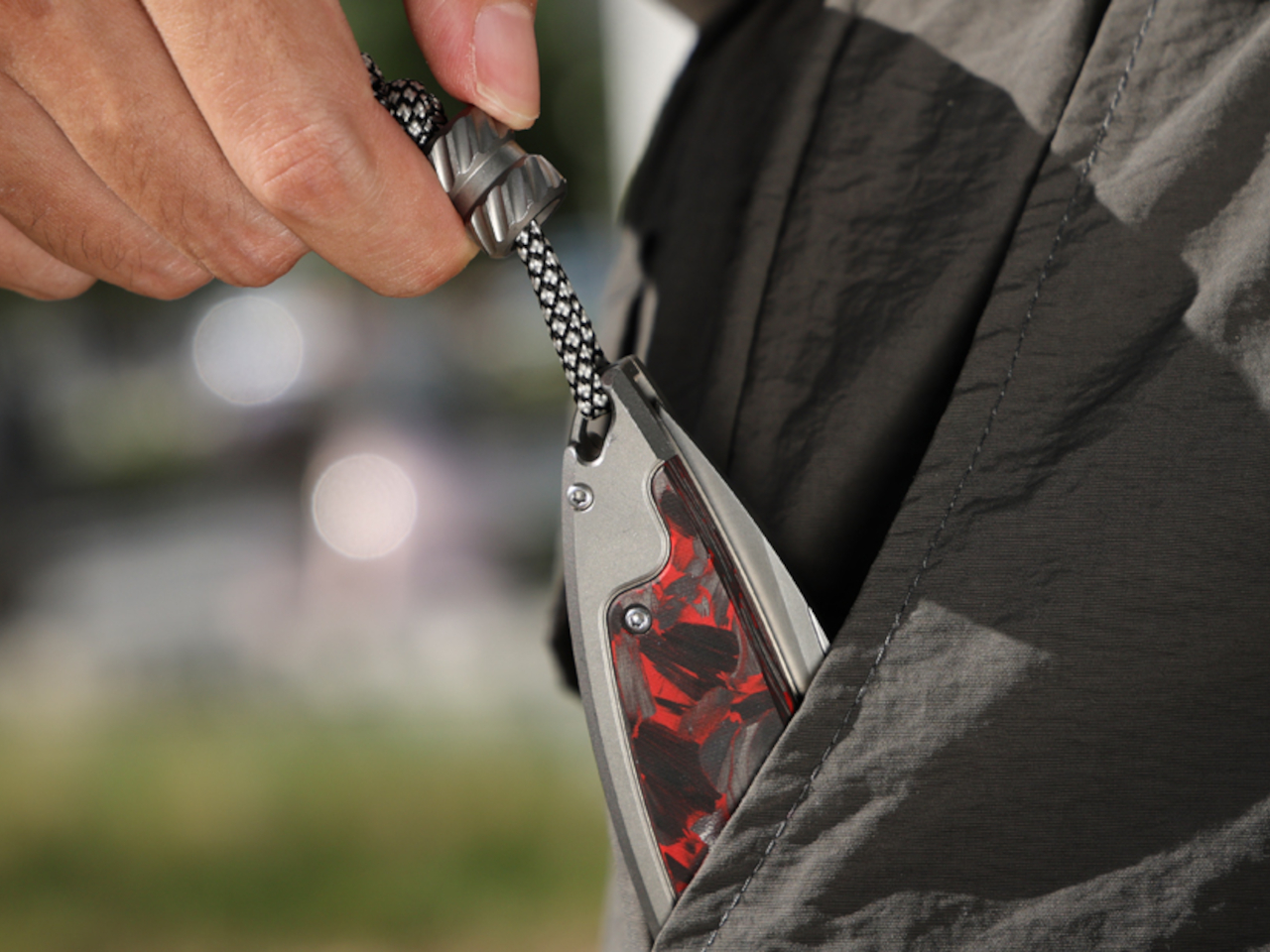
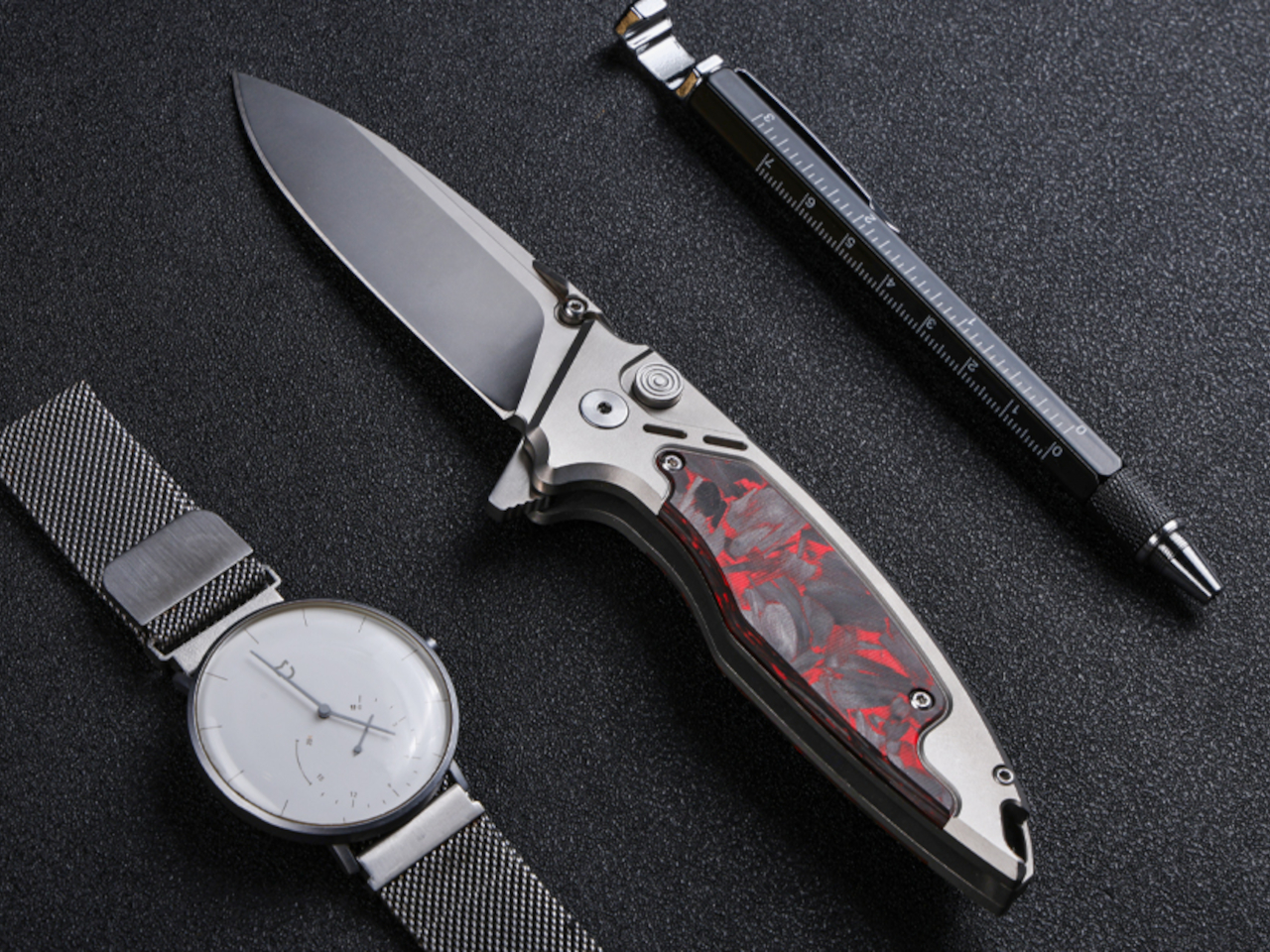
A wasp’s design is a lesson in efficiency. It combines a potent stinger with a small, agile frame to create a threat that commands respect far beyond its physical size. Koch Tools Design captured this spirit perfectly with the Kansept Wasp, a folder where compact dimensions and aggressive geometry work in concert. The knife’s upswept Harpoon Wharncliffe tip acts as a visual stinger, while the sub-3-inch length ensures it remains a nimble and unobtrusive carry. This folder embodies a philosophy of calculated capability, proving that a small tool can still project a serious and purposeful presence.
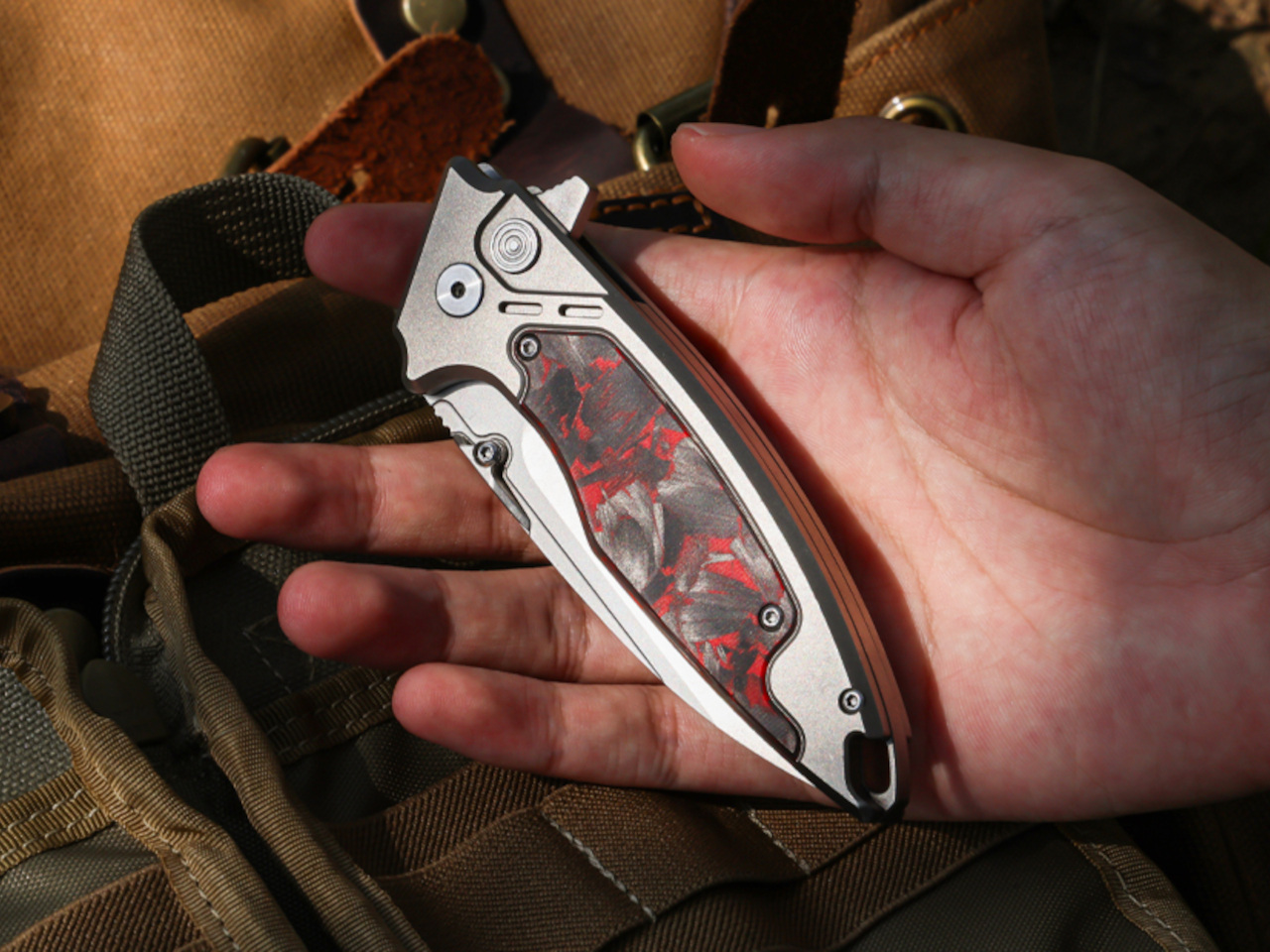
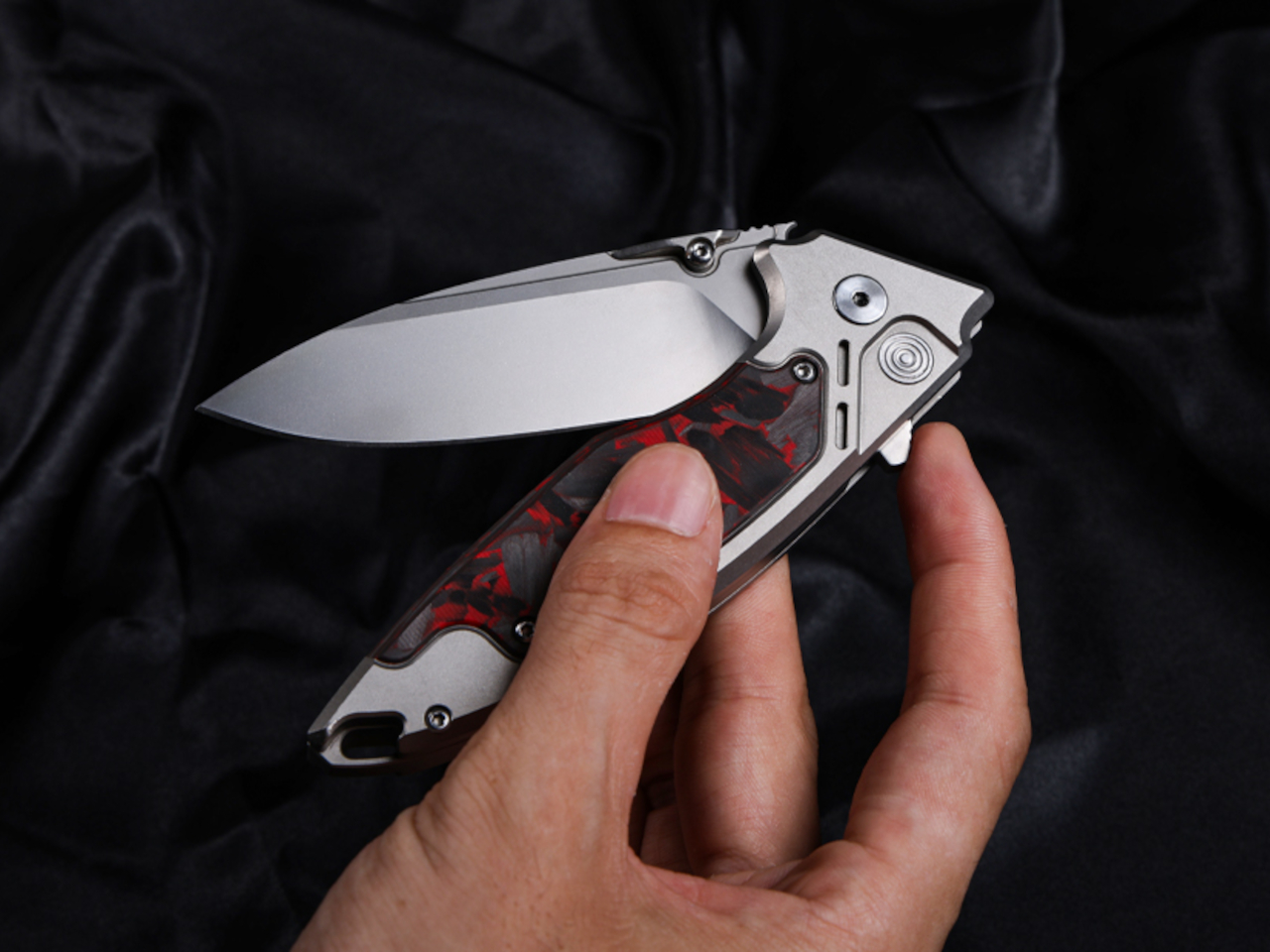
At its core, the Wasp is a button lock folder built from a 2.36-inch 154CM blade and textured G10 handle scales. The Koch Tools collaboration provides the confident stance and deliberate lines, which Kansept executes with a durable gray TiCn blade coating on several models. This finish offers both corrosion resistance and a sharp visual contrast against the vibrant handle options. The button lock itself sits neatly flush with the spine, allowing for a clean profile when closed and delivering a satisfying snap upon deployment. Priced at $75.89, the Wasp targets the intersection where enthusiast-level design becomes accessible to a much broader audience.
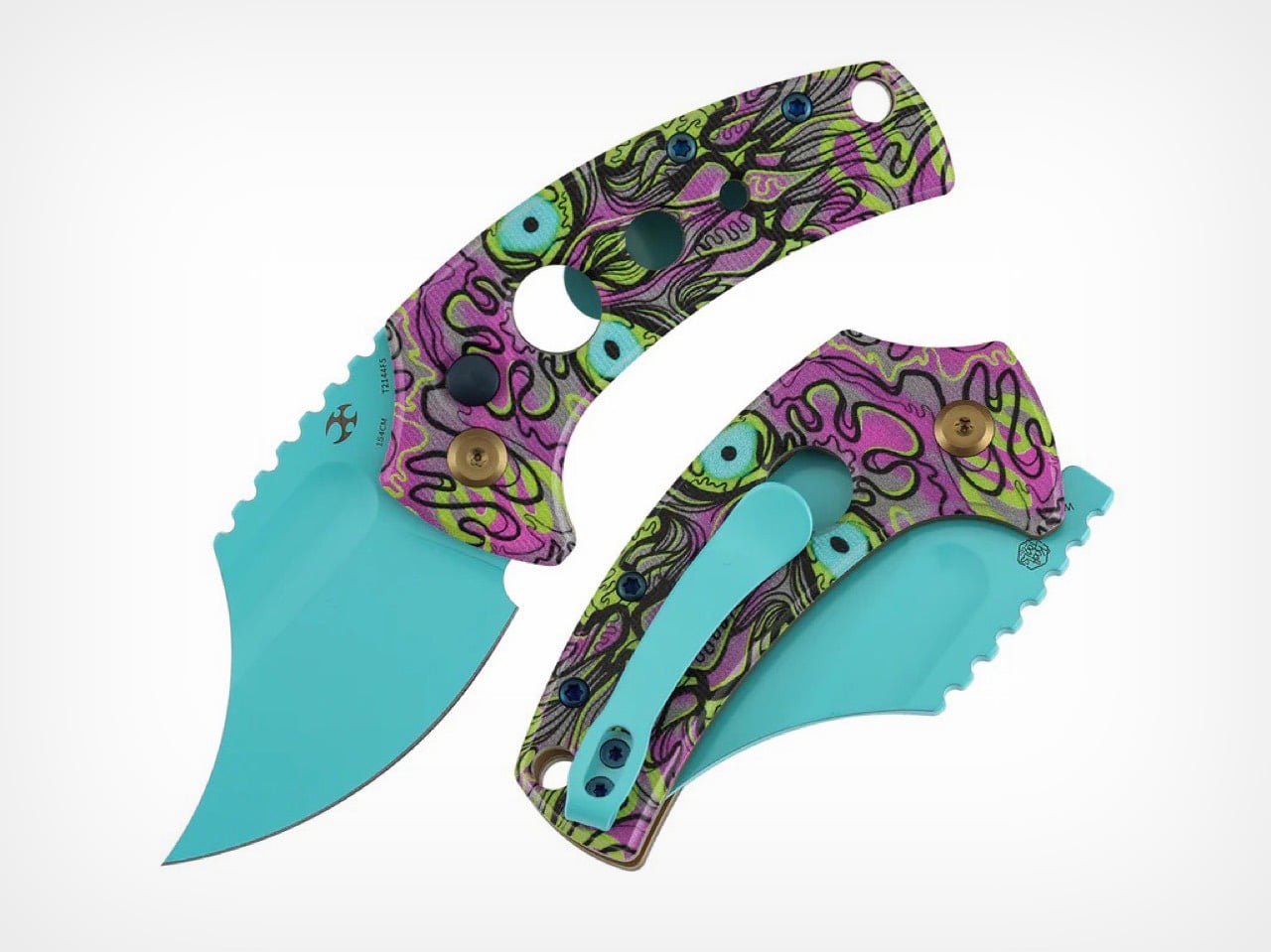
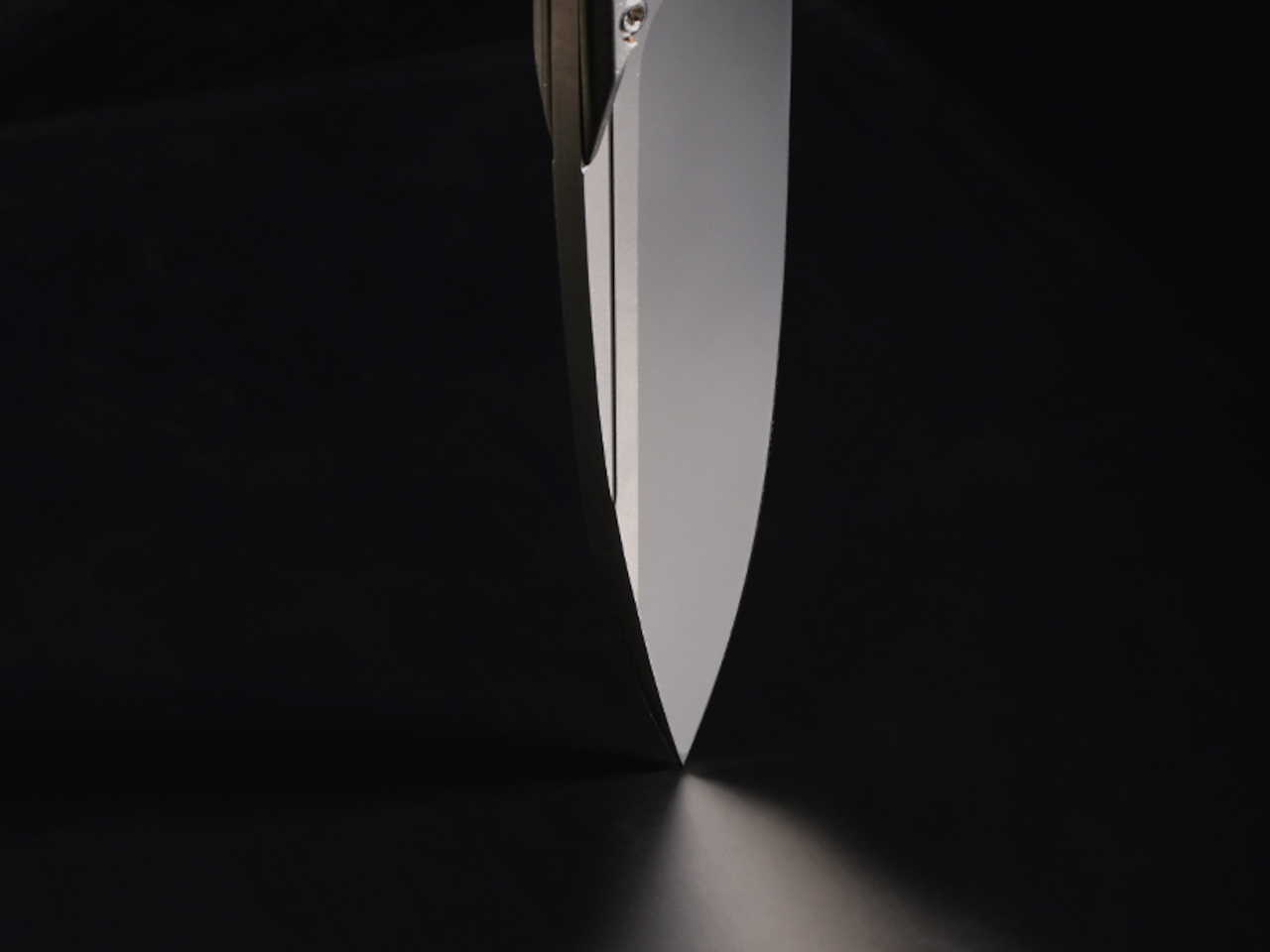
The Harpoon Wharncliffe blade profile delivers exceptional tip control for detail work and piercing tasks. The upswept curve terminates in a fine point that excels at controlled cuts, while the flat cutting edge provides clean slicing performance across its full 2.36-inch length. Aggressive jimping runs along the spine, offering secure thumb purchase during precision work or when applying forward pressure. A tactical swedge grinds down the spine near the tip, reducing drag and sharpening the visual aggression of the blade. The 154CM steel handles daily cutting tasks with reliable edge retention, and the gray TiCn coating hardens the surface against wear while adding a matte finish that reads as tactical rather than decorative.
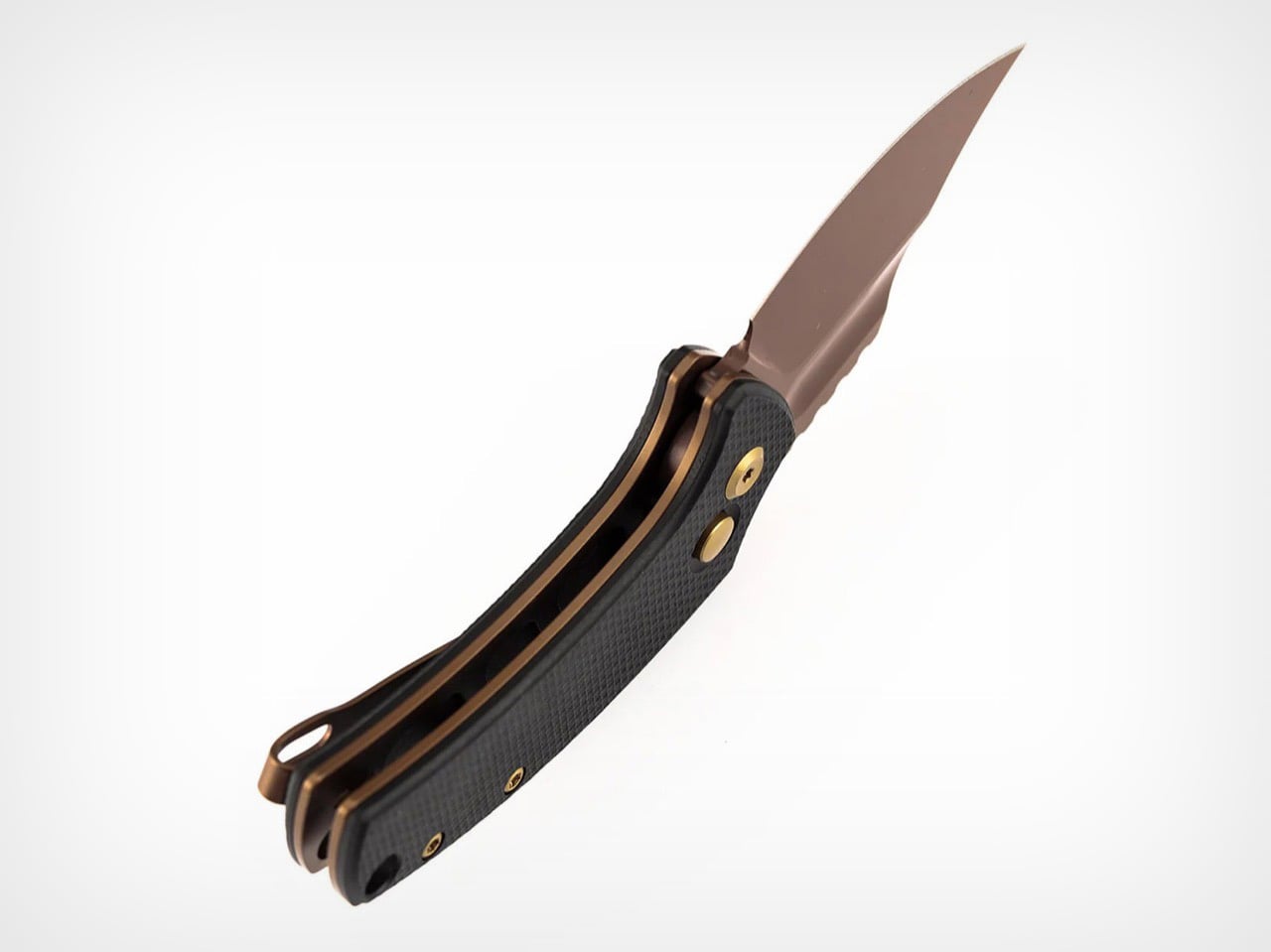
Button locks remain a standout feature at this price point. Most folders under $80 default to liner locks or frame locks, mechanisms that work fine but lack the tactile satisfaction and mechanical interest of a button system. The Wasp’s button sits recessed into the handle spine, protected from accidental activation while remaining easy to locate by feel. Deployment feels crisp and deliberate, with the blade snapping into lockup with authority. The mechanism adds a layer of fidget-worthiness that liner locks simply can’t match, which matters when a knife spends most of its time sitting in a pocket waiting to be used.
Handle construction splits across multiple G10 variants, each delivering a different personality. The light gray and orange versions feature solid scales with diagonal texturing that provides grip without being abrasive. Yellow and jade colorways introduce skeletonized cutouts that reduce weight and create visual drama through negative space. The handle shape tapers toward the base, aiding retention during use and preventing the knife from feeling blocky despite its compact proportions. Closed length measures just over 3 inches, placing the Wasp comfortably in the keychain-compatible category while still offering enough real estate for a full three-finger grip when deployed.
The Wasp competes directly with knives like the Civivi Elementum and CJRB Feldspar, both of which hover around the same price and size. The button lock and Koch Tools pedigree give it an edge in that comparison, offering mechanical and design credibility that budget folders often lack. For collectors chasing variety, the multiple colorways mean there’s likely a version that fits personal taste without compromising on function.
Think for a moment about three common tools: the nutcracker that sends shell fragments flying across the room, the bulky hammer you have to retrieve for the simple task of hanging a photo, and the emergency window breaker you bought for your car but have since forgotten about. Each serves a purpose, yet each comes with its own inconvenience, whether it’s mess, cumbersomeness, or the simple fact that it’s never around when you actually need it. These are the kinds of minor but persistent frustrations that we tend to accept as normal, the small design flaws in our daily routines.
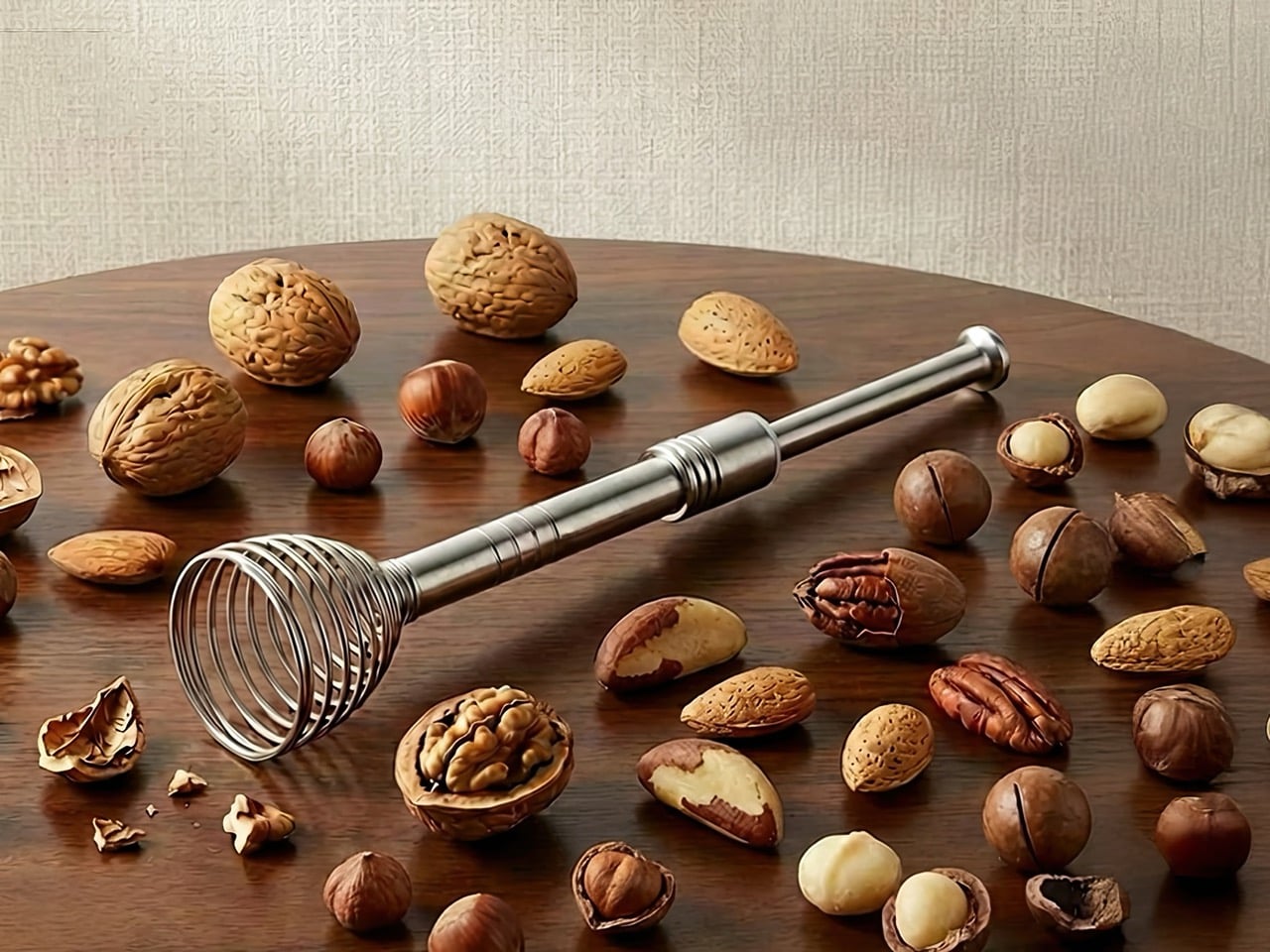
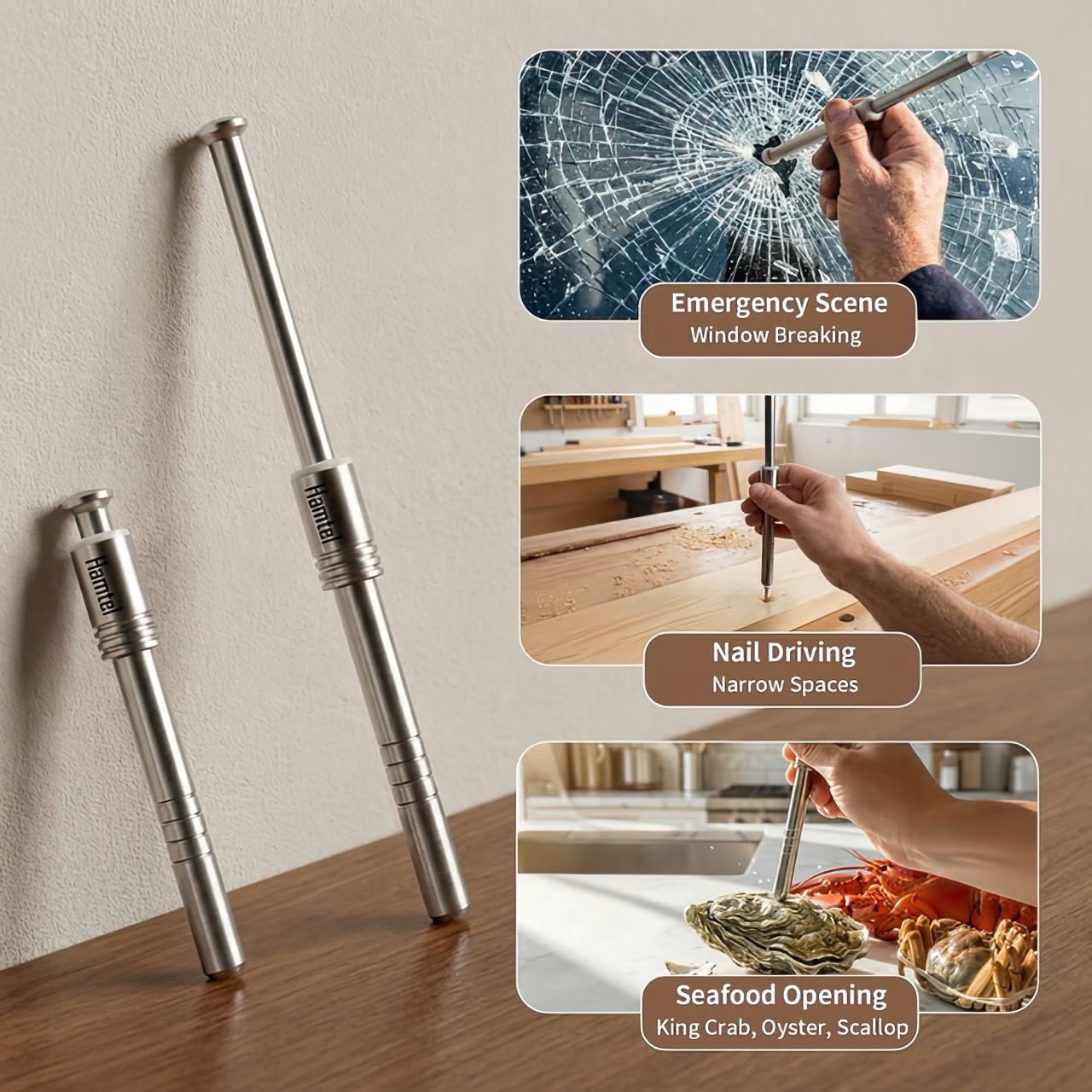
The Hamtel was born from a refusal to accept those flaws. It was conceived as a direct answer to these distinct problems, elegantly combining their solutions into a single, compact device. Its core function is a spring-loaded impact mechanism that cracks nuts with precision, eliminating mess and preserving the kernel. With a simple adjustment, that same tool becomes a capable mini-hammer for light-duty tasks. Finally, its tungsten steel tip provides the reliable performance of a dedicated car safety hammer, creating a single tool that is practical enough for daily use and critical in an emergency.
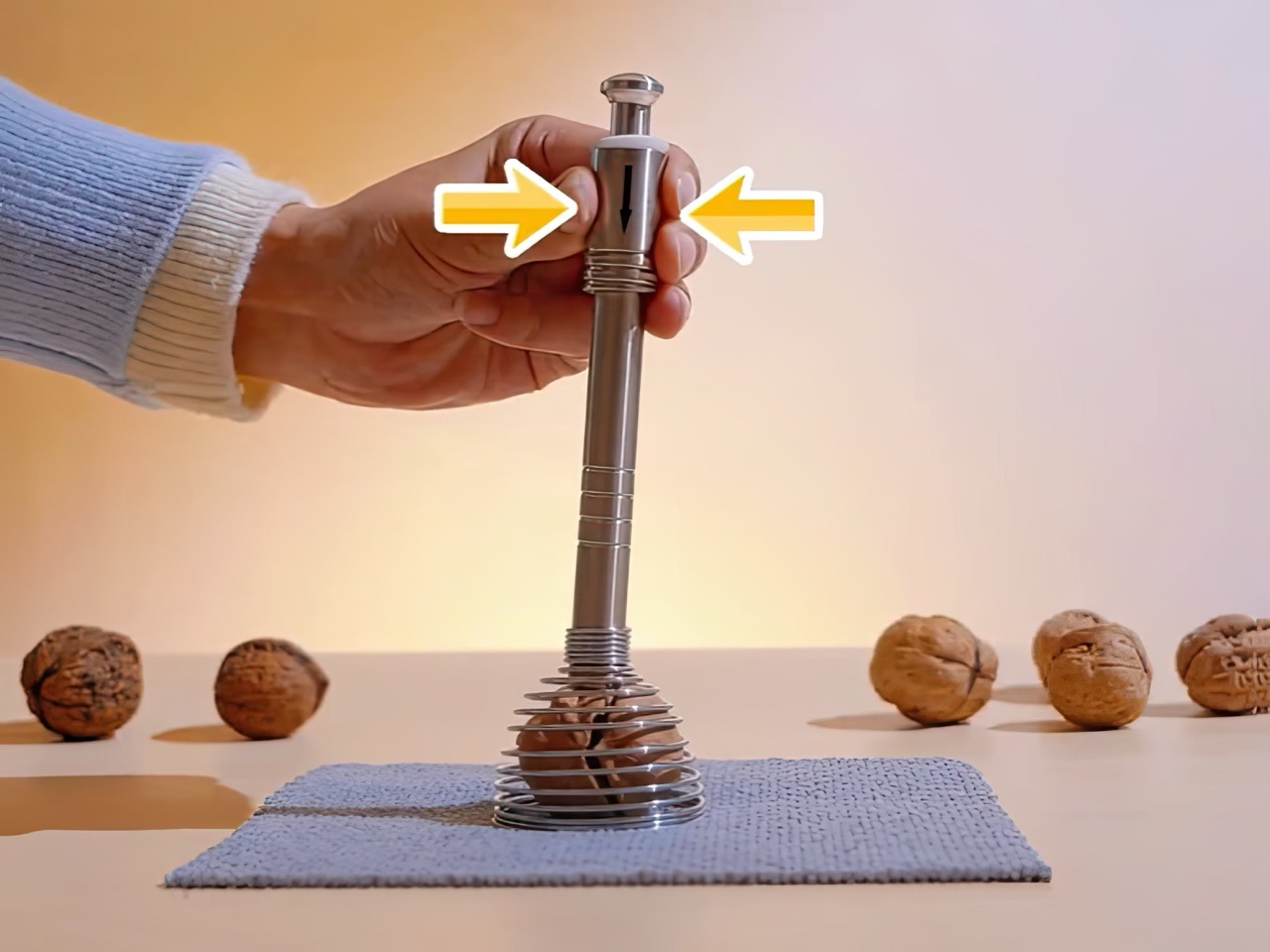
The real draw for anyone with an appreciation for good gear is the sheer tactile satisfaction of its action. You pull back the plunger to arm the manganese alloy steel spring, a process that feels deliberate and mechanical, like chambering a round. Placing the tip on the target and pressing down unleashes an explosive force reportedly moving at over 530 meters per second. This impact-driven deployment is what separates it from every dull lever-action cracker on the market. It’s a clean, contained, and frankly, an incredibly cool way to apply force. This is the kind of thoughtful engineering that gets EDC enthusiasts talking, turning a mundane kitchen task into an opportunity to use a well-made instrument.
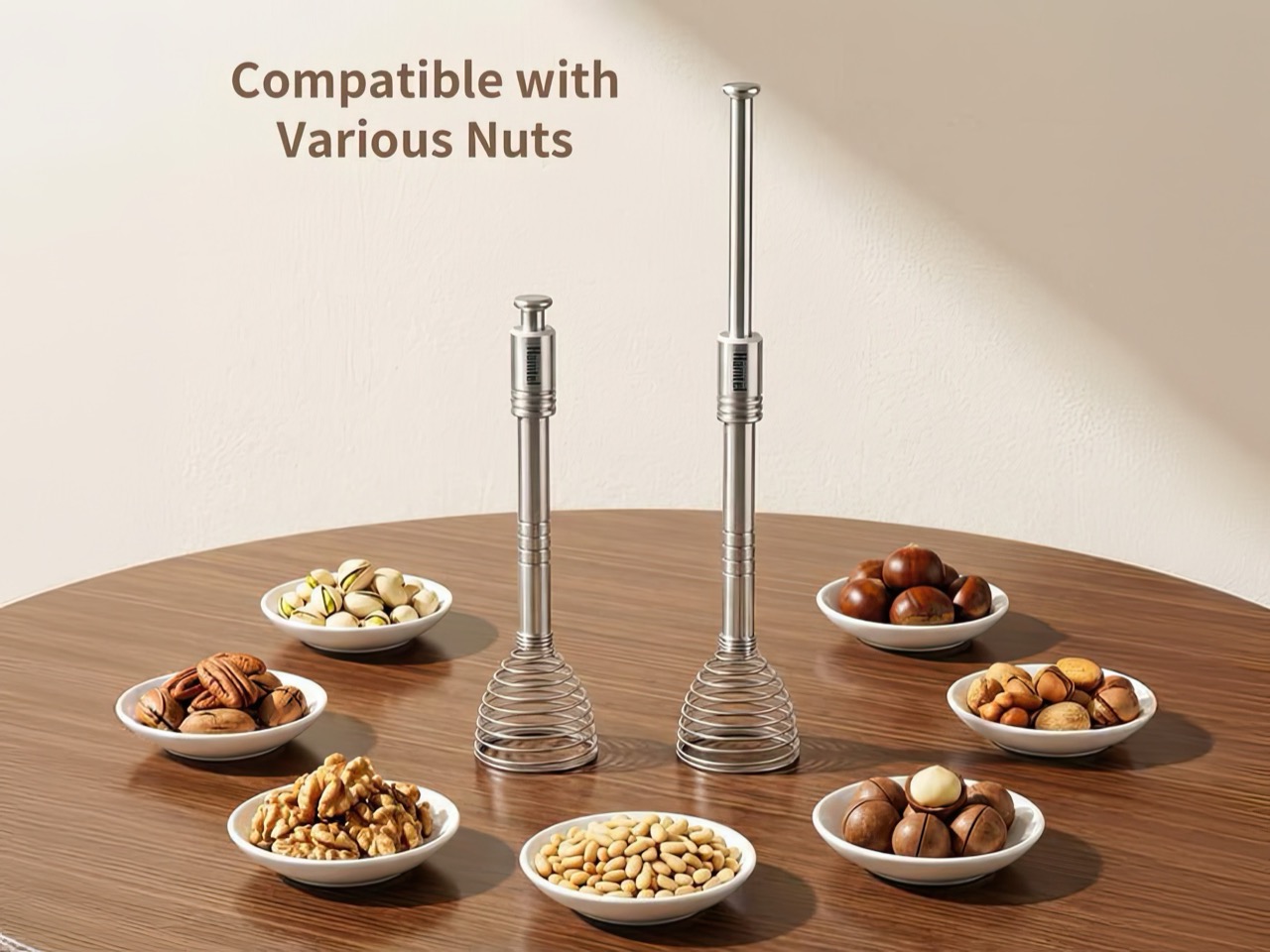
The body is stainless steel, providing a solid, weighted feel in the hand, while the business end features a high-hardness tungsten steel tip rated at HRC60+. This is the material specification you expect in high-end cutting tools or industrial equipment, not something designed to crack walnuts. This choice is critical for its dual-purpose role as a car window breaker, ensuring the tip remains sharp and effective even after repeated use. That effectively means your walnut or macadamia or brazil nut stands absolutely no chance. The tip works remarkably well against seafood too, letting you crack into crab and lobster claws/shells without breaking out industrial equipment.
This precision translates directly to its performance in the kitchen. It boasts a 95% kernel preservation rate, a number that seems ambitious until you consider the physics at play. Instead of crushing a shell with slow, brute force, the Hamtel delivers a sharp, localized impact that fractures the shell without pulverizing the contents. This makes it just as effective for delicate jobs, like cracking open crab legs or lobster claws without shredding the meat inside. It brings a surprising level of finesse to a category of tools typically defined by their crudeness, making it a genuinely useful upgrade for any kitchen.
Initial pricing puts the Hamtel at $66, which is a compelling entry point considering its planned retail is set at $124. Logistics are refreshingly simple, with a flat $9 shipping fee for delivery anywhere in the world. An optional nut pick can be added for just a few dollars, making it a complete package for dealing with stubborn shells. For the price of a single-purpose emergency tool, you’re getting a device that serves three distinct functions, some life-changing, others life-saving. But for most of the time, bon appetit!
Winter pockets are forgiving. Thick jackets and layered coats offer deep storage, and the cold discourages the kind of outdoor tinkering that puts your gear to the test. Spring strips all of that away. Lighter clothing means fewer pockets, tighter fits, and a sudden reckoning with whatever you have been carrying for the past four months. The transition is a forced audit, and most people discover their loadout has gotten lazy, bloated, or both.
These seven products approach everyday carry from the direction that matters most once the temperature rises: density of function in the smallest possible footprint. No redundant tools. No objects that exist only to look tactical on a desk. Every item here earns its pocket space by solving a specific problem with engineering that is tight enough to disappear into a spring carry without adding bulk—time to swap out the winter loadout for something sharper.
1. ScytheBlade
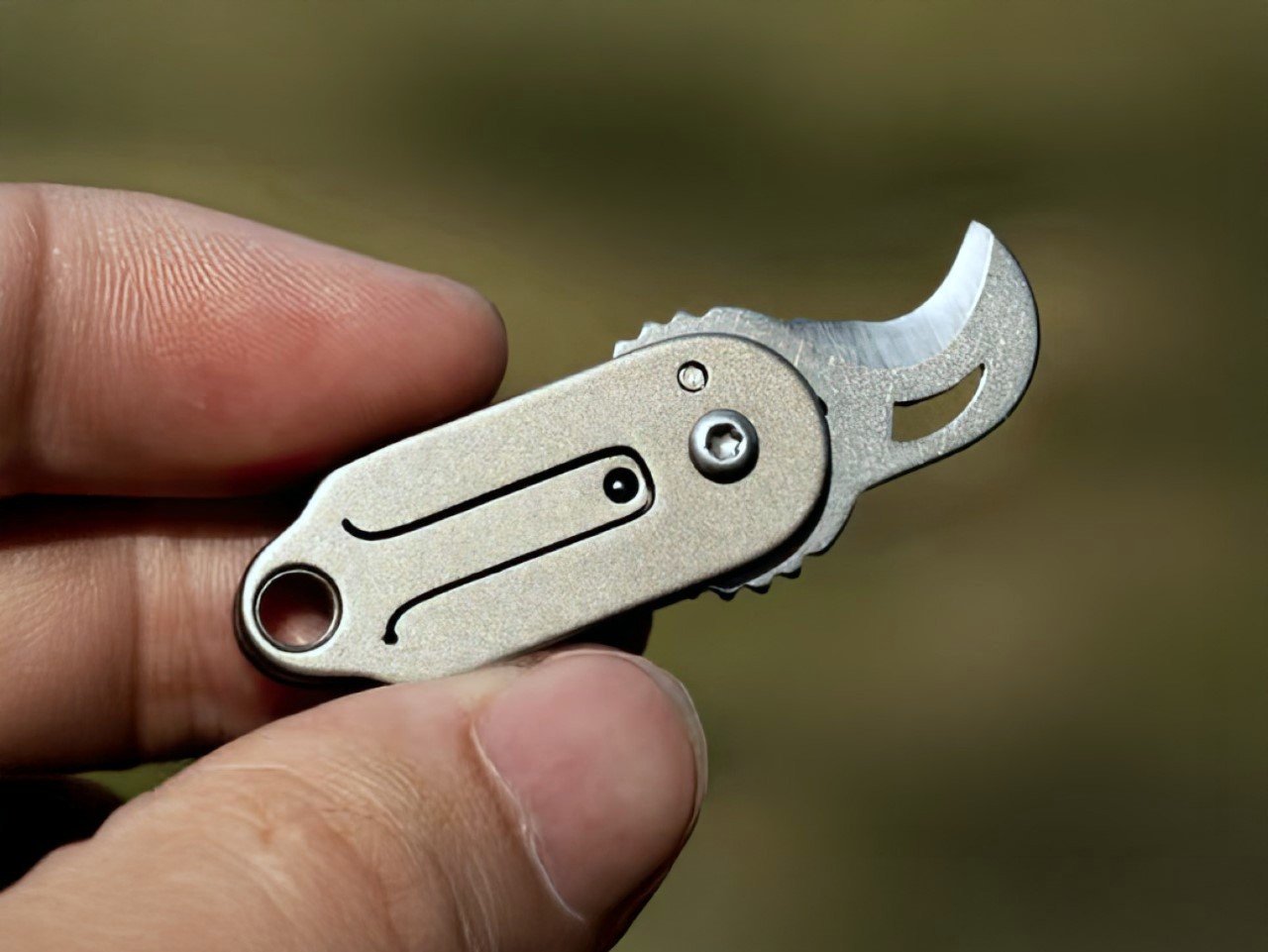
The curved blade of a scythe does not seem like an obvious candidate for pocket carry, but the ScytheBlade makes it work through radical miniaturization. This titanium folding knife borrows the Grim Reaper’s iconic profile and compresses it into something closer to a tiger claw, creating a blade shape that looks aggressive because it is. At just 46mm when deployed, the ScytheBlade challenges the assumption that effective cutting tools need generous proportions. The curve concentrates force along its edge in ways that straight blades cannot replicate, and that geometry turns a small blade into something disproportionately capable.
Titanium construction keeps the weight to 8 grams, making it barely noticeable when clipped to a pocket. The material also offers corrosion resistance without requiring the constant oiling and maintenance that carbon steel demands, a real advantage for spring carriers when rain and humidity are part of the daily equation. The engineering here is in the confidence to go small. Most EDC knife makers chase longer blades and heavier locks to project seriousness. The ScytheBlade proves the opposite: that an unconventional blade geometry, executed at a micro scale with the right material, outperforms bulk.
What we like
At 8 grams in titanium, it disappears into a pocket and removes the excuse to leave a knife at home.
The curved blade concentrates cutting force in a way that straight-edge micro knives cannot match, making it more capable than its 46mm length suggests.
What we dislike
The 46mm blade length limits what the knife can realistically handle; anything thicker than a zip tie or packing tape will push its limits.
The scythe profile is polarizing, and its aggressive look may draw attention in settings where a discreet blade would be preferable.
2. Arcos Driver
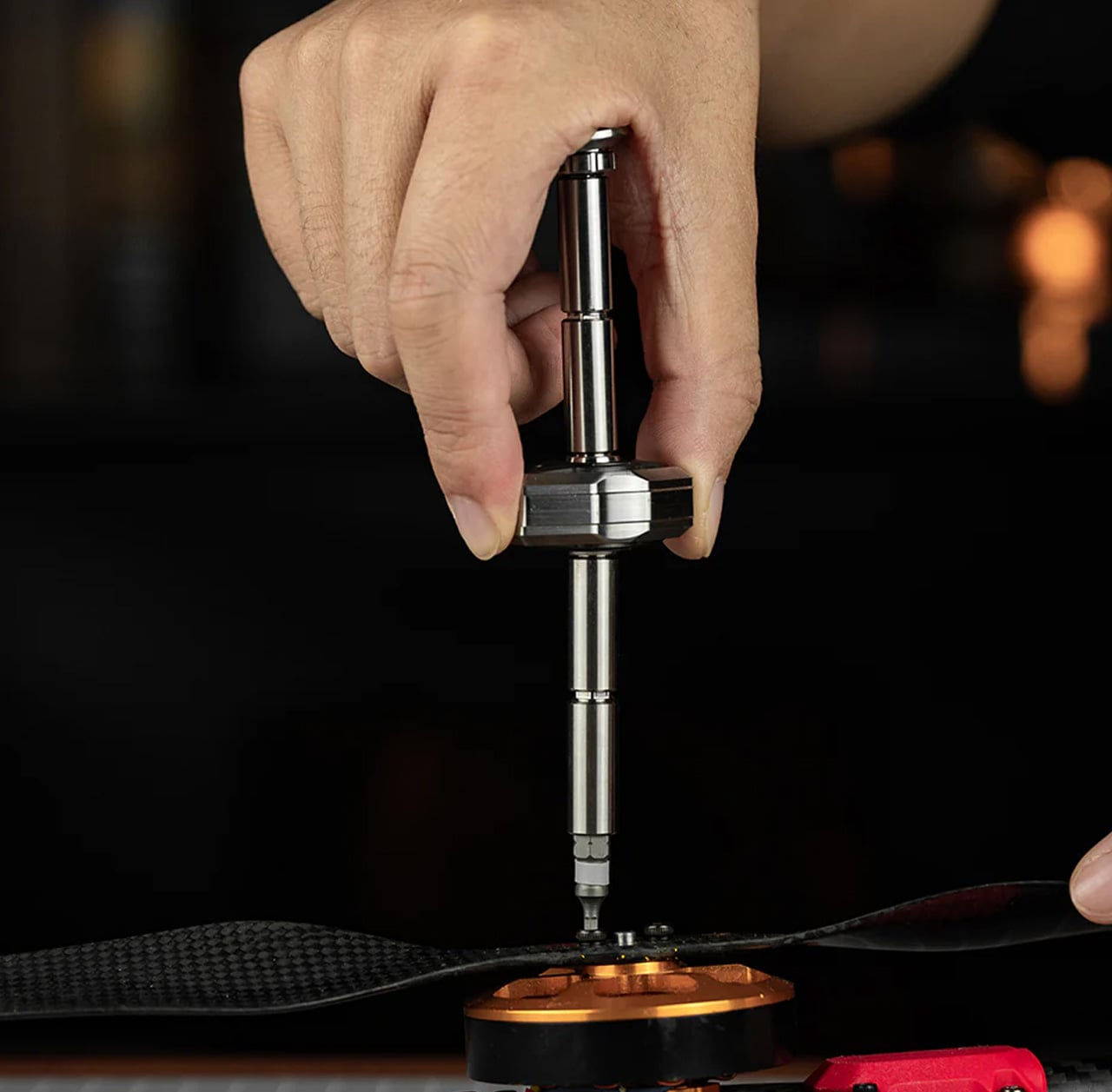
Ratchet screwdrivers work well in open spaces. The problem is that screws rarely live in open space. They sit in recessed housings, tucked behind cables, angled into corners where a straight driver either cannot reach or forces an awkward wrist contortion that strips heads. The Arcos Driver addresses this with a folding titanium body that adjusts to 0, 30, 60, or 90 degrees, allowing the tool to adapt its geometry to match the access angle rather than requiring the user to twist around it.
Inside is a three-mode ratchet system: forward for driving with consistent torque, reverse for clean removal, and a fixed-lock mode for stable, precise control when the screw matters more than speed. Integrated bit storage keeps everything in one unit, which is the kind of detail that separates a tool you actually carry from one that lives in a drawer. The titanium build brings strength without the weight penalty that steel ratchets impose, and the folding mechanism locks securely enough at each angle to feel confident under load. Spring means more outdoor projects, more furniture assembly on balconies, and more repairs that winter made easy to postpone. The Arcos Driver fits all of that into a carry-friendly package.
Four distinct folding angles mean access to screws in tight, awkward spaces without the wrist strain that straight drivers cause.
Integrated bit storage keeps the tool self-contained, so there is no fumbling through a separate bit case mid-task.
What we dislike
Kickstarter-funded tools carry inherent delivery uncertainty, and backers should factor in the risk of timeline delays.
The folding mechanism adds complexity that could develop play over time, particularly at the 30-degree position where lateral force is highest.
3. Pockitrod
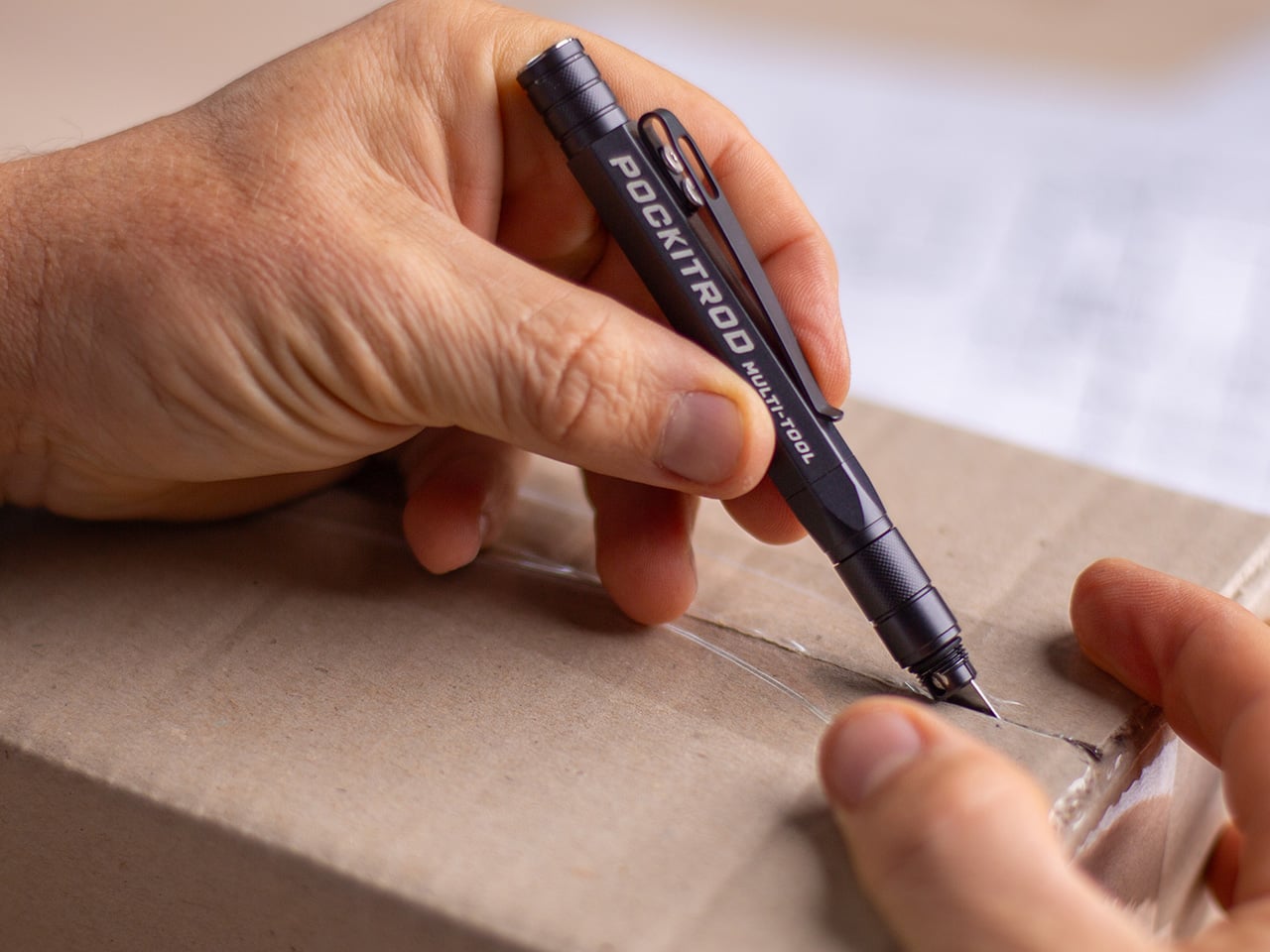
The tactical pen market is full of cylinders that add one feature (usually a glass breaker) to a writing instrument and call it innovation. The Pockitrod is a different animal. Its 6061-T4 aluminum body is machined with a hex cross-section that doubles as a driver grip, and the tool system inside is genuinely modular: a central driver assembly housed within the handle, a box opener with interchangeable 20CV steel tips, an inkless writing implement, and a magnetic-base LED flashlight that threads on as an extension module.
Etched measurement markings along the body function as a built-in ruler, with the zero-reference aligned to the edge for practical, real-world measuring rather than decorative engraving. The pen form factor is the smartest part of the design. A pen lives in a shirt pocket or a bag without raising questions. Nobody looks twice at it. But when work starts, the hex body locks into a bit the same way a proper driver handle would, and the modular extensions transform a pocket pen into a lighting, cutting, and fastening system. It respects the classic pen silhouette while fundamentally expanding what that silhouette can do.
What we like
The hex-profile aluminum body works as a genuine driver grip, not a marketing claim; it locks onto bits with the same positive engagement as a dedicated tool.
Modular extensions (LED, box opener, driver) thread onto a single pen body, consolidating multiple pocket tools into one.
What we dislike
Modularity means more pieces to keep track of, and losing a single extension reduces the tool’s value proposition.
The 6061-T4 aluminum is lighter than steel but also softer, meaning the hex edges will eventually round with heavy driver use.
4. AirTag Carabiner
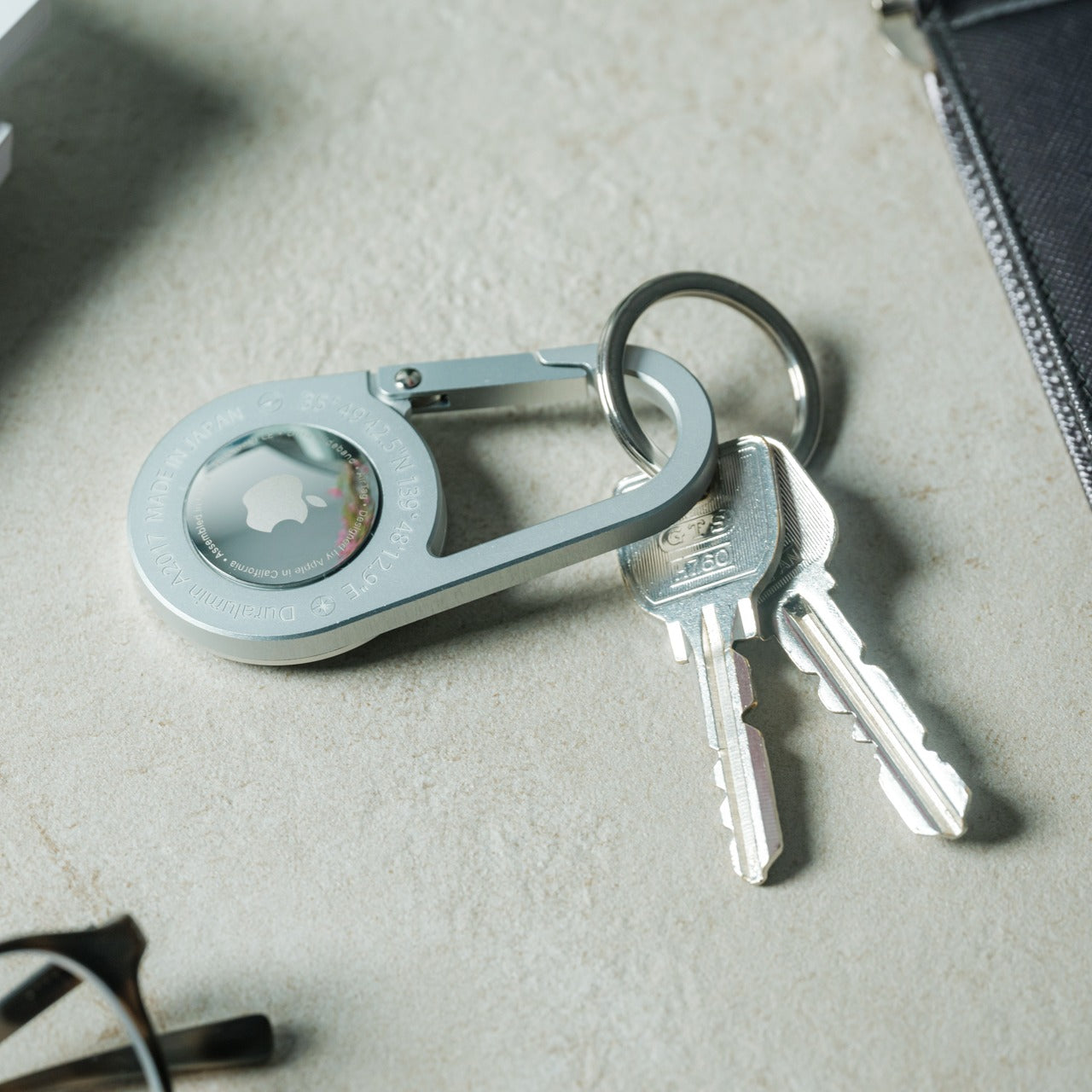
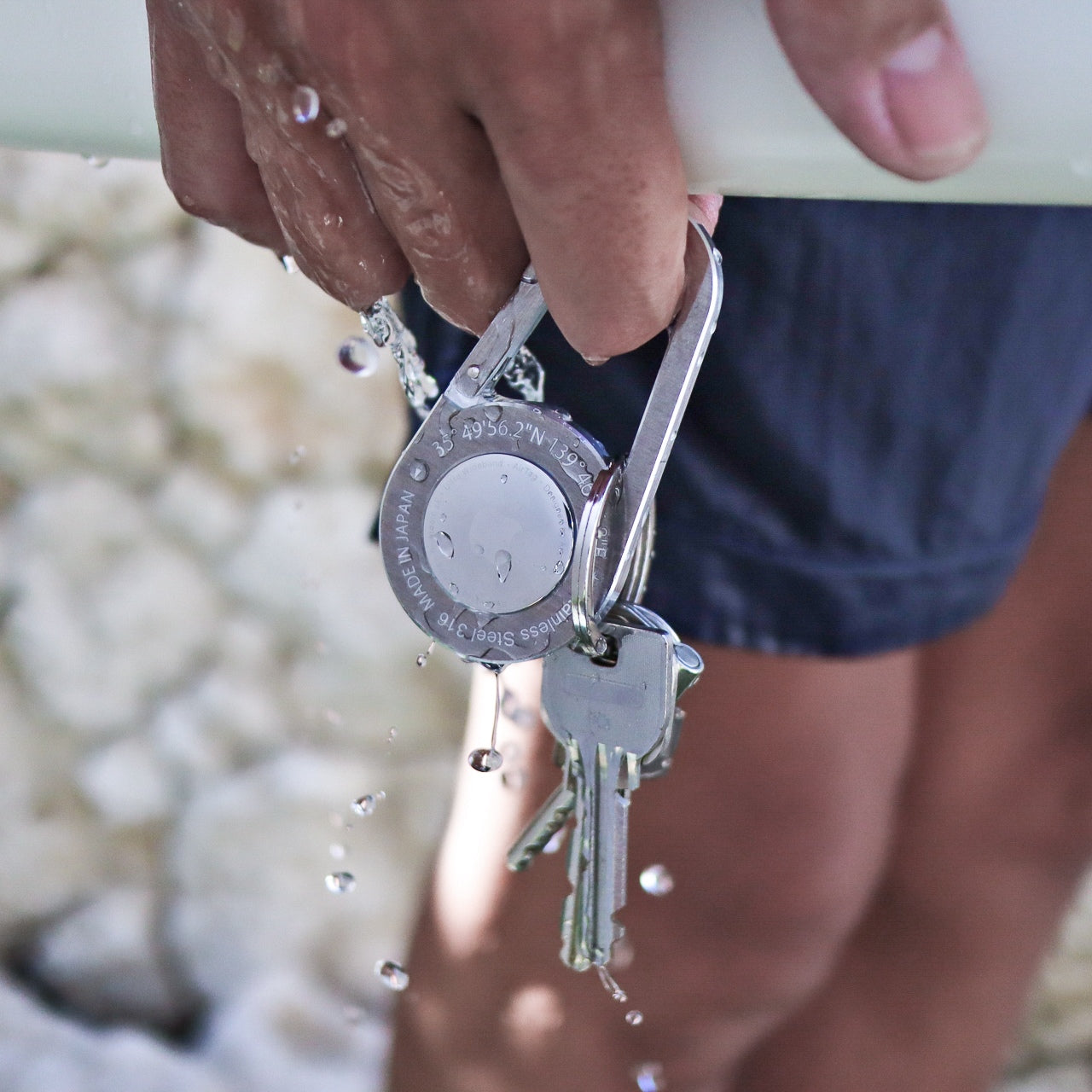
Losing keys is a winter problem that follows people into spring because nobody upgraded their keychain. This carabiner, made from Duralumin composite alloy (the same material used in aircraft and marine construction), is designed to house an Apple AirTag while clipping onto bags, bikes, umbrellas, or whatever tends to wander. The material choice matters because most AirTag holders are silicone or plastic, which means they degrade, stretch, and eventually drop the tag entirely.
Each unit is individually handcrafted from high-quality metal, and the carabiner is also available in untreated brass and stainless steel. The Duralumin version brings water and altitude resistance suited to actual outdoor conditions, not just controlled indoor environments. Spring carry means more time outside, more chances to leave something on a park bench or a cafe table, and a tracking solution that clips seamlessly onto whatever bag or gear you are carrying makes the transition from indoors to outdoors less risky. The lightweight form hides the fact that the alloy underneath is built to handle far harsher conditions than a keychain typically encounters.
Duralumin composite alloy provides aircraft-grade durability in a form factor that adds almost no perceptible weight to a bag or keyring.
Handcrafted metal construction outlasts silicone and plastic AirTag holders, which tend to stretch and lose grip over months of use.
What we dislike
Apple AirTag is not included, so the total cost of entry includes both the carabiner and the tag itself.
The tracking functionality is Apple ecosystem only, leaving Android users without a compatible option.
5. Fingertip-sized Rechargeable Flashlight
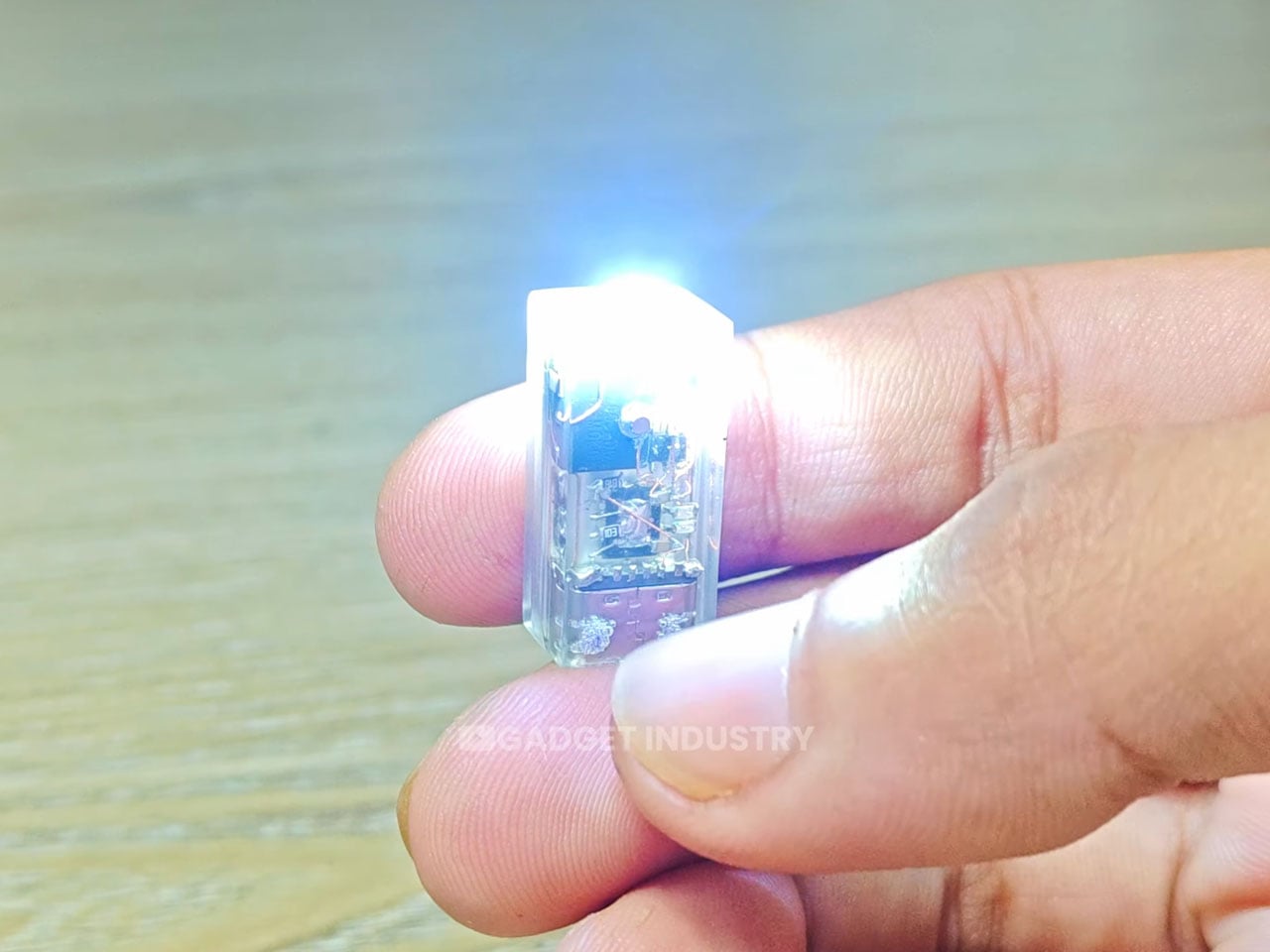
World’s smallest is a claim that usually comes with an asterisk. This flashlight, built as a DIY experiment by YouTube channel Gadget Industry, skips the asterisk. It sits on the tip of a finger. Inside that resin shell: a lithium-polymer battery, a charging circuit, a touch-based control system, and a white LED. That is a fully rechargeable, functional light source condensed into a form factor that most people would mistake for a button.
The scale alone is the point. In a crowded EDC landscape where flashlights compete on lumens, beam distance, and tactical modes, this micro torch takes the opposite approach. It prioritizes presence over power: a light source so small that it will always be with you, because forgetting it is almost impossible. Spring evenings still get dark, and the gap between leaving work and arriving home often involves poorly lit stairwells, parking garages, or bike paths. A light that lives permanently on a keychain or in a coin pocket fills that gap without adding any detectable weight. It is a reminder that miniaturization itself can be the innovation.
What we like
The form factor is so small that it can live permanently on a keychain without adding bulk, which means it is always available.
Fully rechargeable with touch controls, so there are no disposable batteries and no physical switches to break.
What we dislike
As a DIY build from a YouTube channel, it is not commercially available, which limits accessibility to viewers willing to replicate the project.
The tiny lithium-polymer battery means the runtime is limited, and the light output is functional rather than powerful.
6. Titaner Swing Ratchet System
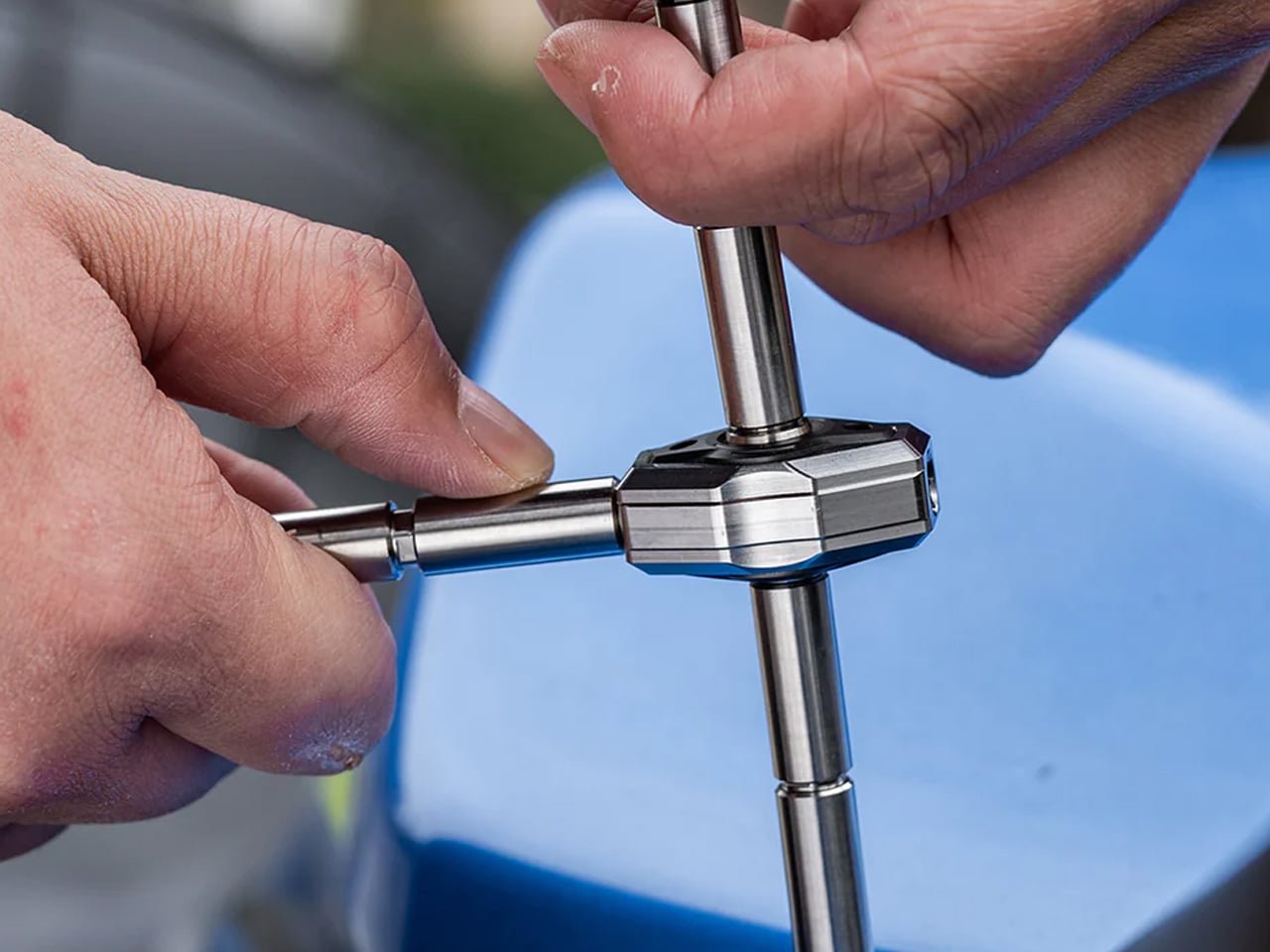
Most ratchets need at least 15 to 30 degrees of swing to engage the next tooth. In tight spaces, that range is the difference between completing a turn and stalling. The Titaner swing ratchet compresses that arc to 4 degrees, which means it can operate in gaps where conventional ratchets physically cannot cycle. Both sides of the ratchet core are functional, with CNC-engraved directional markers (one side locks, the other releases) for intuitive control without trial-and-error guessing.
At 29.8 grams, the system weighs 40% less than traditional ratchets while delivering full torque. The modular design allows different driver heads and bit configurations, so the same core handles multiple fastener types without carrying separate tools. Spring projects (tightening deck furniture, adjusting bike components, assembling outdoor gear) tend to involve screws in confined or partially accessible locations. A ratchet that fits those conditions at under 30 grams is the kind of tool that justifies its pocket space every week rather than sitting idle waiting for a big job. The precision here is not about power. It is about access.
What we like
A 4-degree swing arc allows the ratchet to function in spaces so tight that standard ratchets cannot even begin to cycle.
At 29.8 grams, it is 40% lighter than traditional ratchets, making it realistic for daily pocket carry rather than toolbox-only storage.
What we dislike
Ultra-compact ratchet heads can feel less confident under heavy torque loads compared to full-sized counterparts.
7. Cubik
Knife designers typically rely on springs, flippers, or complex bearing systems to get a blade open. The Cubik discards all of that in favor of gravity. Press the trigger, hold it upside down, and the blade drops into position. Release the trigger, and it locks. This mechanism eliminates the springs that rust, bearings that fail, and maintenance cycles that plague traditional folders. The knife works with physics rather than fighting it, and the satisfying weight of the blade swinging into place feels like the mechanism earned its simplicity.
That simplicity does not mean weakness. The Cubik locks firmly enough to pierce hardwood, which puts it in functional territory that most gravity-deploy designs cannot reach. The tungsten carbide glass breaker integrated into the rear end transforms what could be a gentleman’s folder into a legitimate emergency tool. When most EDC knives chase complexity through additional deployment systems, assisted-open mechanisms, and axis locks, the Cubik goes the other direction. One moving part. One material is doing the heavy lifting. The result is a knife with fewer failure points and a deployment method that never gets old to use.
What we like
Spring-free gravity deployment means zero mechanical parts that can rust, jam, or wear out over years of daily use.
The integrated tungsten carbide glass breaker elevates the knife from an everyday cutter to a genuine emergency tool.
What we dislike
Gravity deployment requires the knife to be held upside down, which is slower than a spring-assisted or flipper-based opening in time-sensitive situations.
The legal status of gravity knives varies by jurisdiction, and some regions classify them differently from standard folding knives.
Lighter pockets, sharper choices
The shift from winter to spring is not about adding gear. It is about compressing a function into less space. Thinner jackets, shorter pockets, and more time outdoors demand a loadout that earns its presence through utility rather than just occupying real estate. These seven tools share a design philosophy rooted in that compression: titanium, where weight matters; modularity, where versatility matters; and miniaturization, where pocket space is the constraint.
Spring carry is a constraint worth designing for. The tools that survive the seasonal edit are the ones that do their job without reminding anyone they exist, until the moment they are needed. That is the entire point of everyday carry, and these seven understand it.
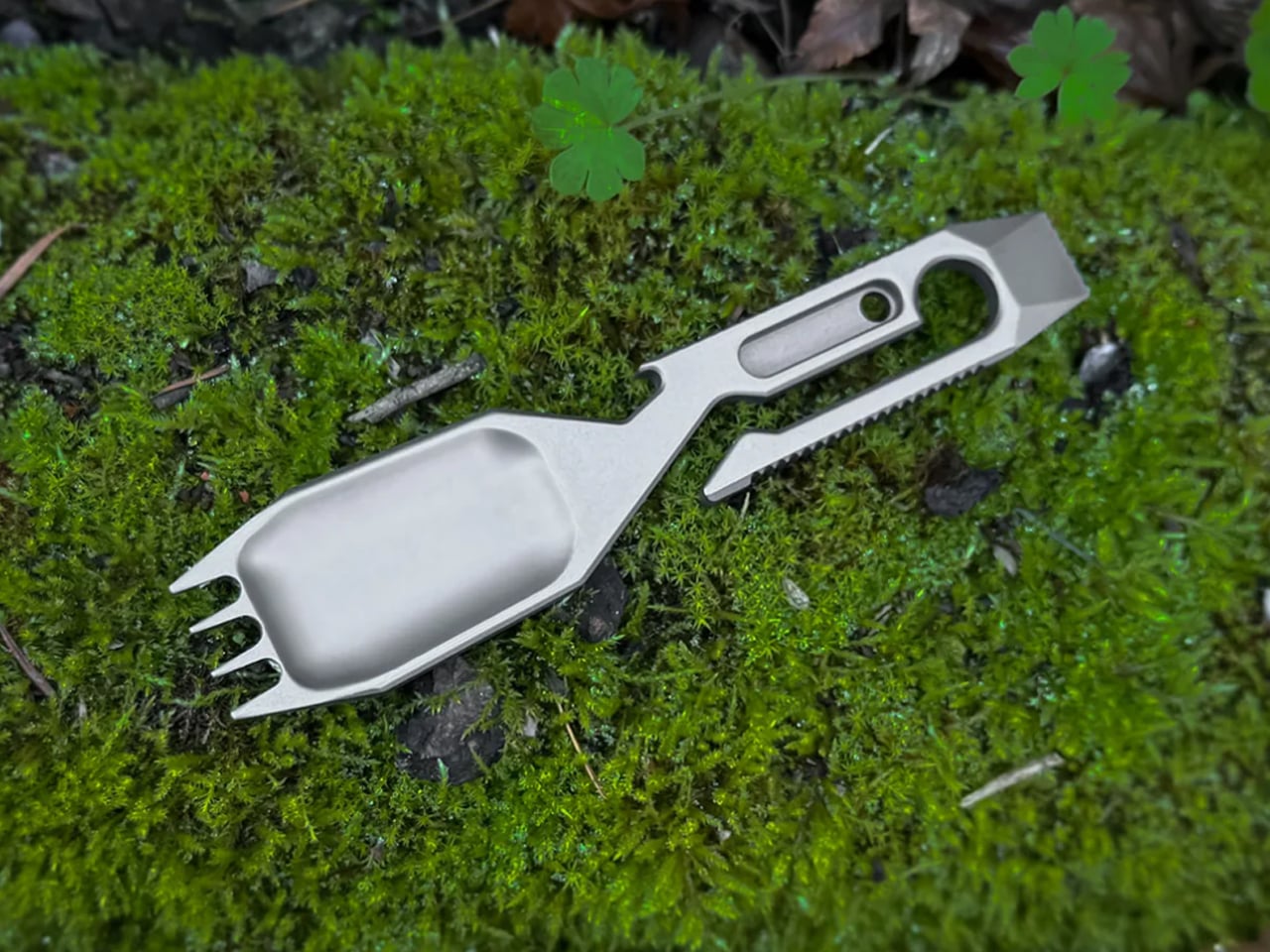
Daily utility meets design in EDC multitools. And here at Yanko Design, we have this knack for recognizing the best tools for you, which would provide advanced features and excellent value when you need them. In the market flooded with multitools that are designed to fold and twist, Prometheus Design Werx has surprised the demanding with the stunning idea of the SPD Ti-Spork Chop – a multitool in its own unibody design.
While multitools that fold and feature pull-out accessories from the body are a common sight, it is unusual for a multitool to arrive in a one-piece design with construction that’s durable enough to withstand whatever you can throw at it. Looking at the Ti-Spork Chop, you can instantly count it out as a viable pocket tool, but spare a thought and read further before you arrive at a conclusion.
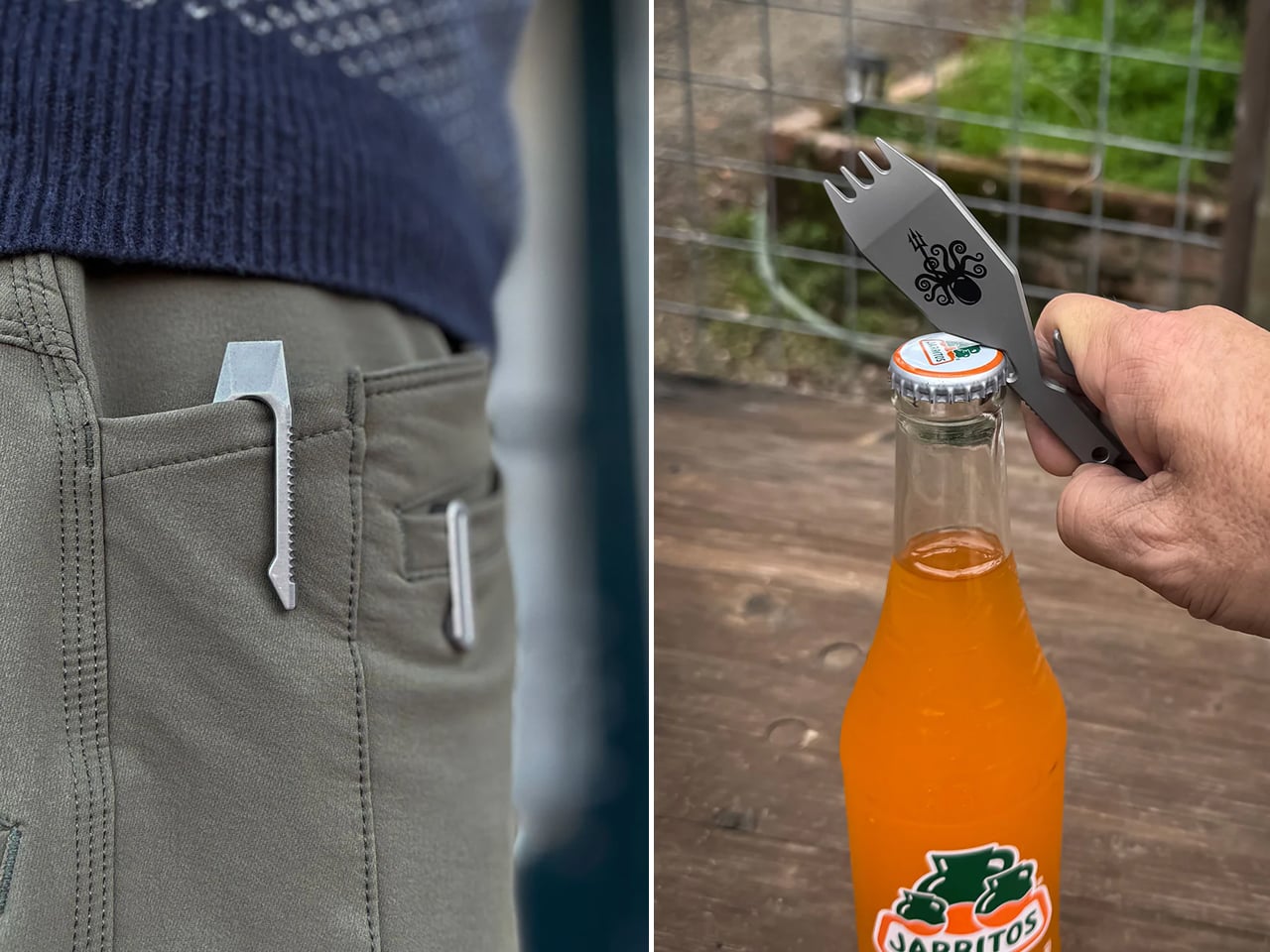
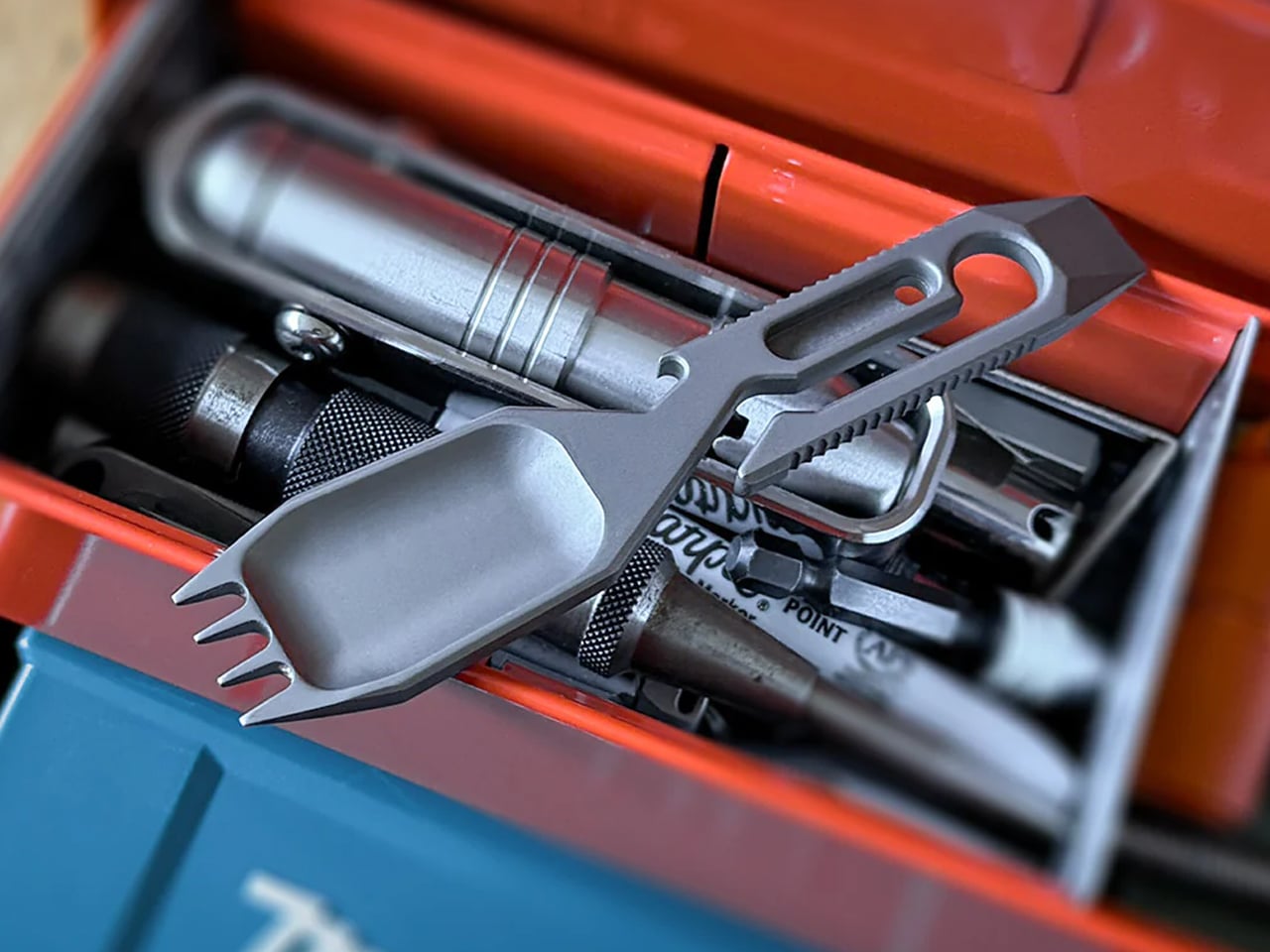
The look of the Ti-Spork Chop is self-explanatory of what the design entails. But the first thing that can disturb many is how to fit that EDC into the pocket. To ensure that it is possible and effortless, the one-piece multitool features a pocket clip to hold it in place inside the pocket. And when you’re unsure of having it in the pocket, the tool’s lanyard hole makes carrying it worry-free. The look may not obviously suggest, but this tool has six built-in functions.
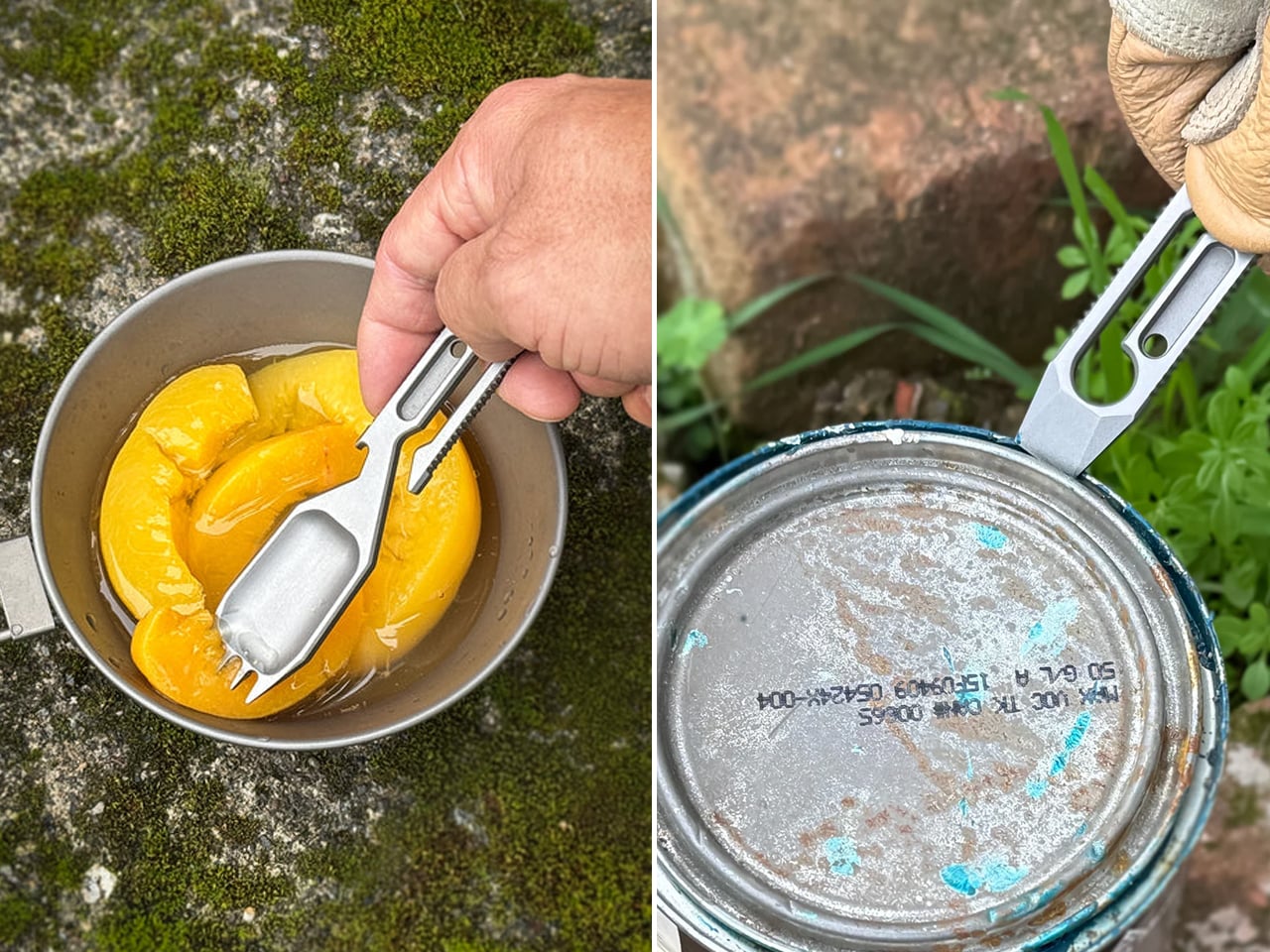
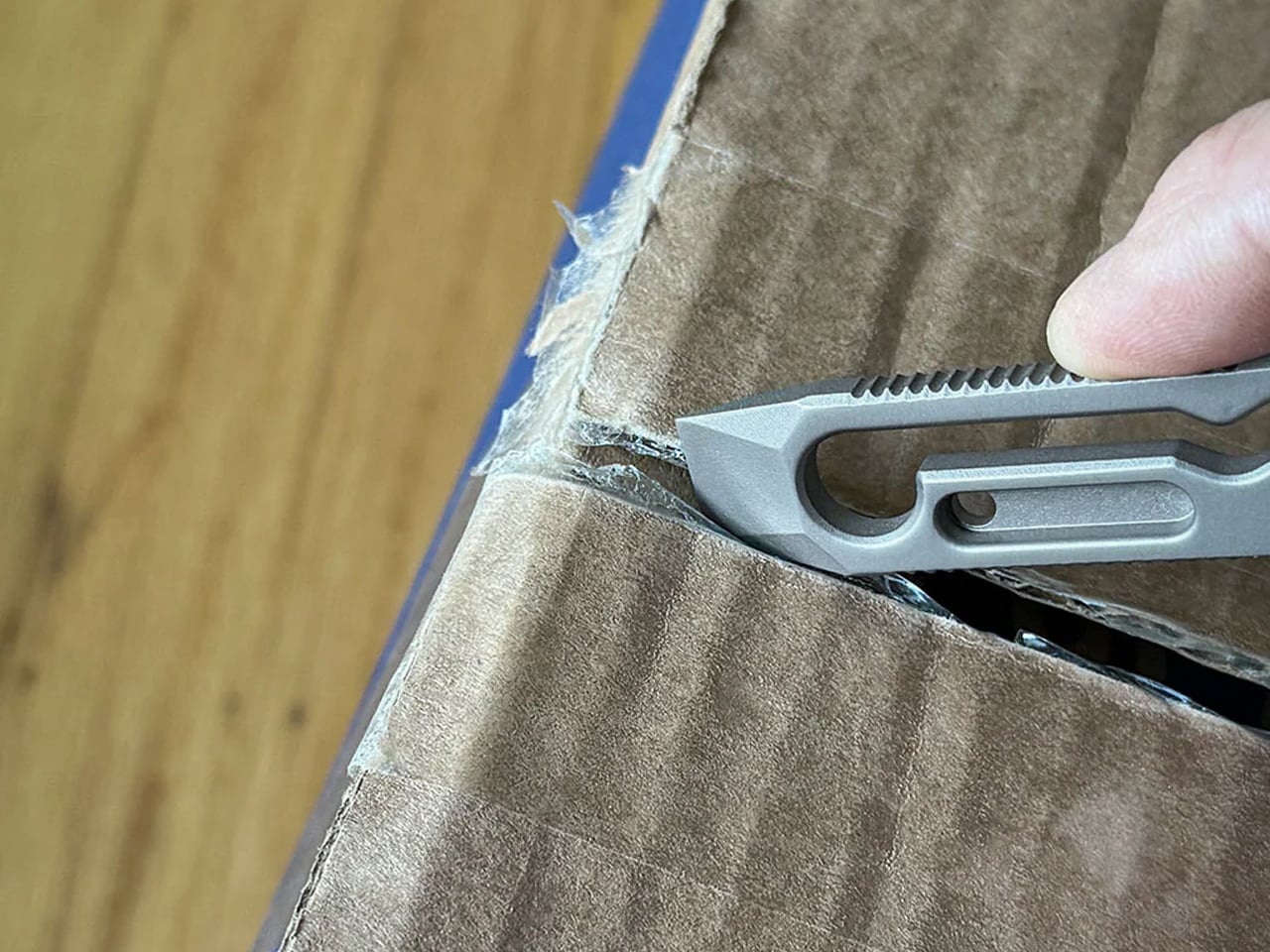
It obviously starts with the combination of a spoon and fork in the front, which clearly wins it the word ‘Spork’ (combination of spoon and fork) in its name. Besides, making it a valuable EDC for casual campers and serious adventurers are features like the bottle opener, box/can opener, and a prybar. Of course, the pocket clip on one side and the lanyard in the middle are other notable options that make the tool even more handy.
Describing various scenarios in which the multitool can be used, the company notes, “Whether you’re shoveling canned peaches, stirring your precious hot cup of instant coffee with powdered creamer in some remote, dangerous corner of the world, or opening a bottle of Jarritos, our Ti-Spork Chop has got you covered.” It’s “A titanium spork to rule them all…” the company website reads.
All these tools are packed on a Ti-Spork Chop that’s milled from a single piece of 6AL-4V grade-5 titanium. The construction makes it highly durable and exceptionally resistant to corrosion. The design, as opposed to that of other folding multitools, ensures that it is easy to clean. Weighing roughly 30g and measuring about 4.72 inches long, the lightweight but incredibly robust Prometheus Design Werx multitool is available on the company website for only $79.
The 58mm Swiss Army Knife has occupied pockets for over a century with the same basic formula: red plastic scales, a handful of tools, and a design language that never needed to change. Victorinox perfected compact utility decades ago, and the format became so synonymous with everyday carry that entire generations never questioned whether it could evolve. But that permanence also created a constraint. Once you chose your tool configuration, you were locked in. Swapping scales meant glue, risk, or permanent modification.
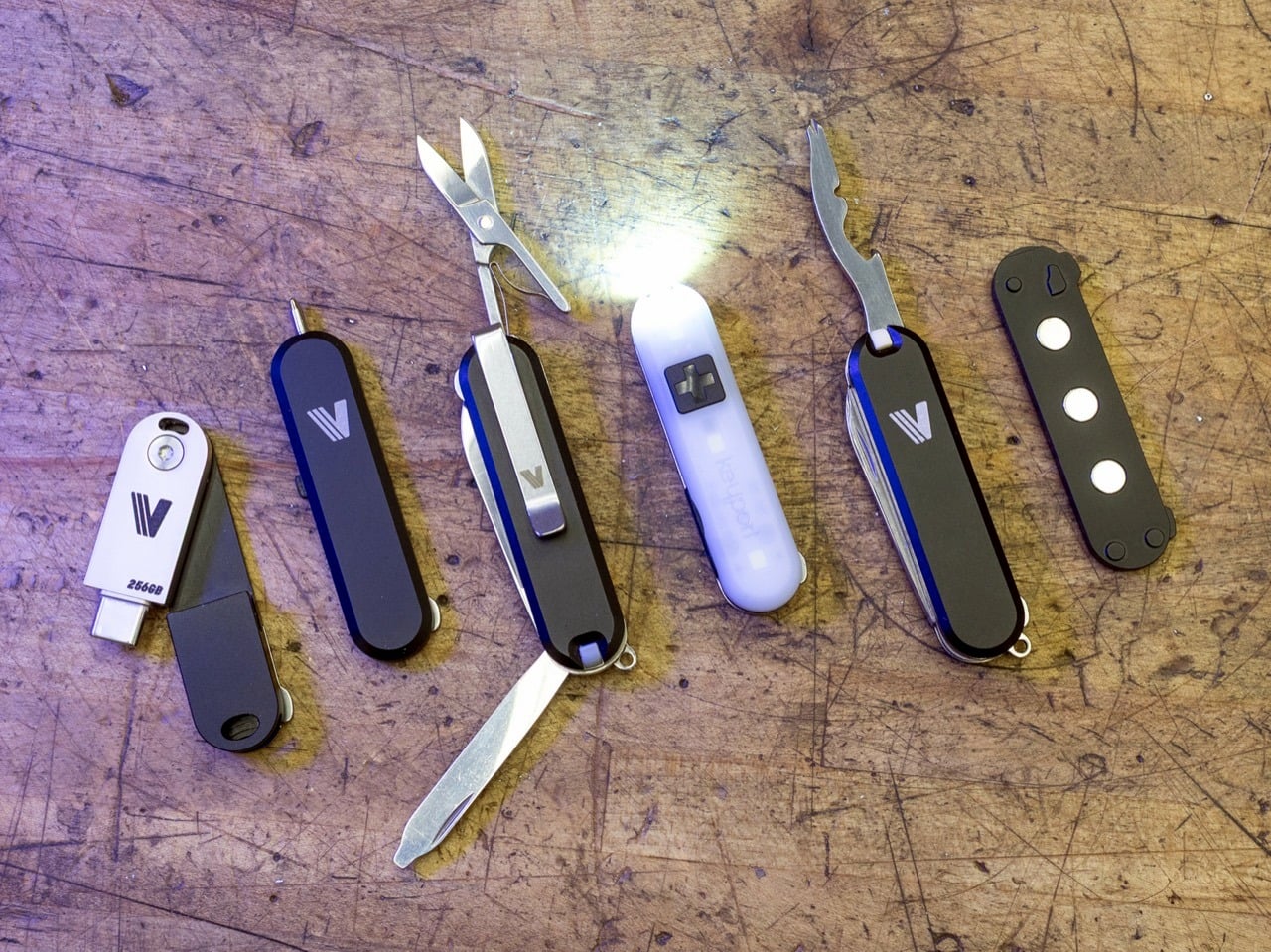
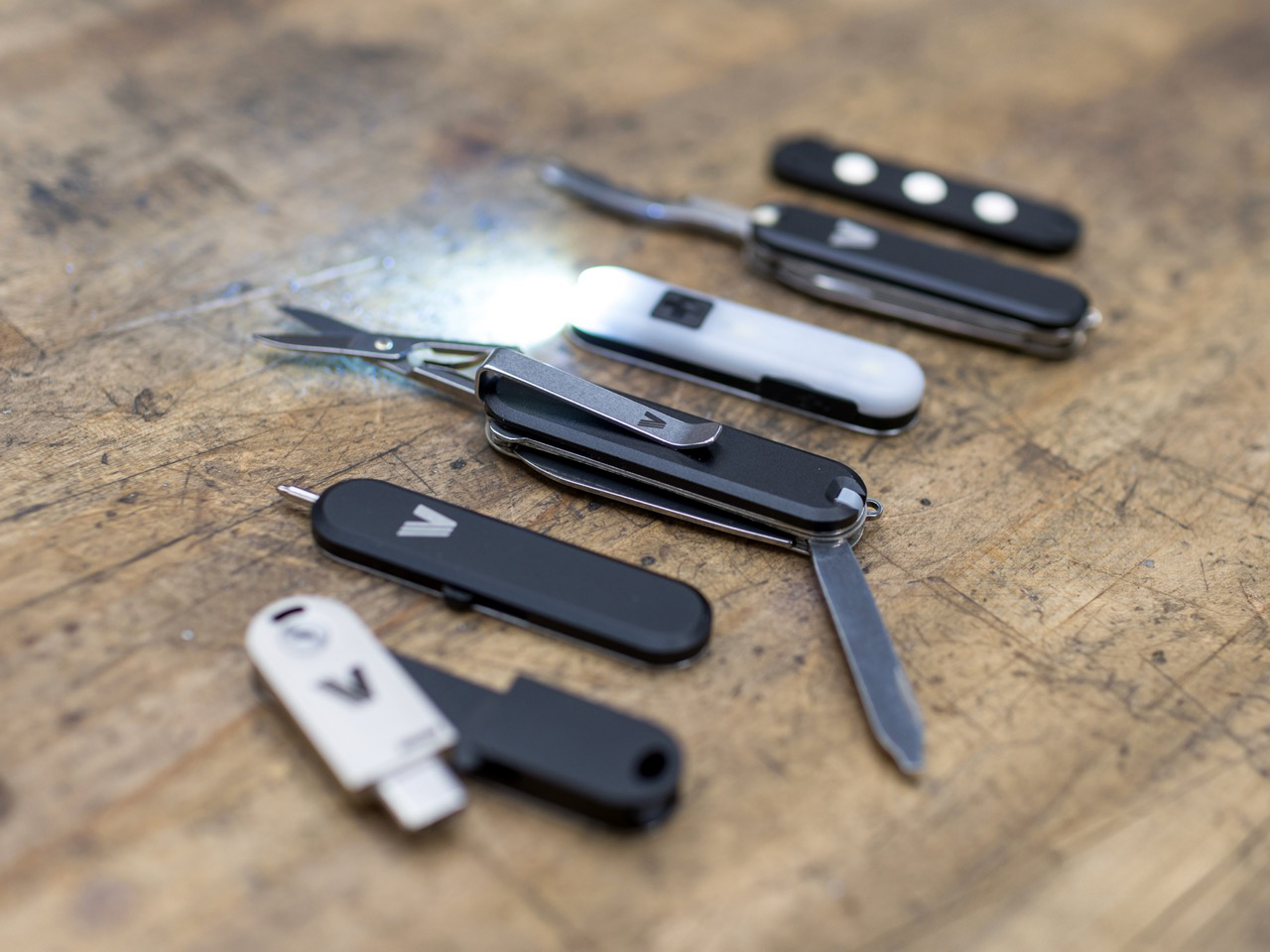
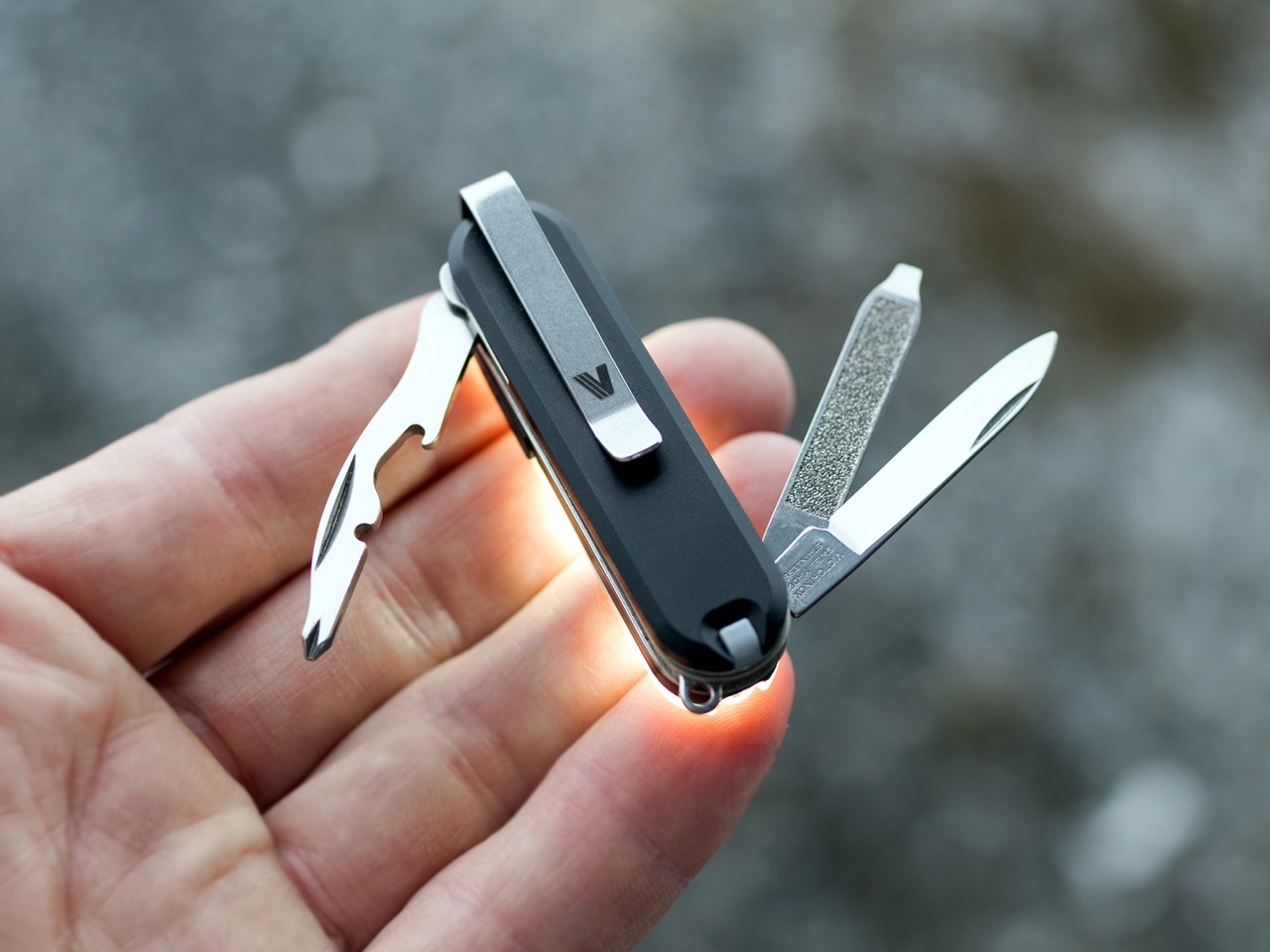
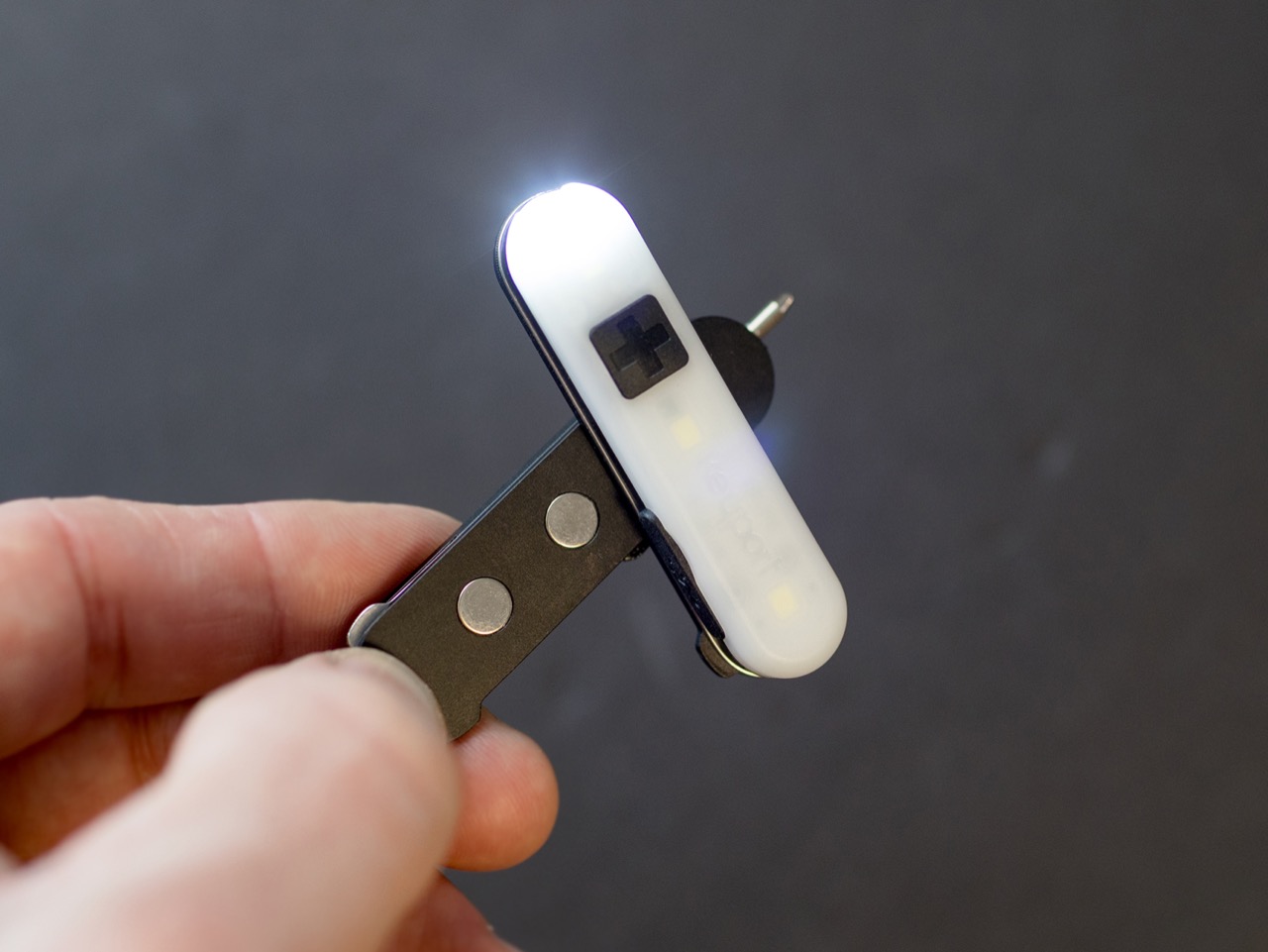
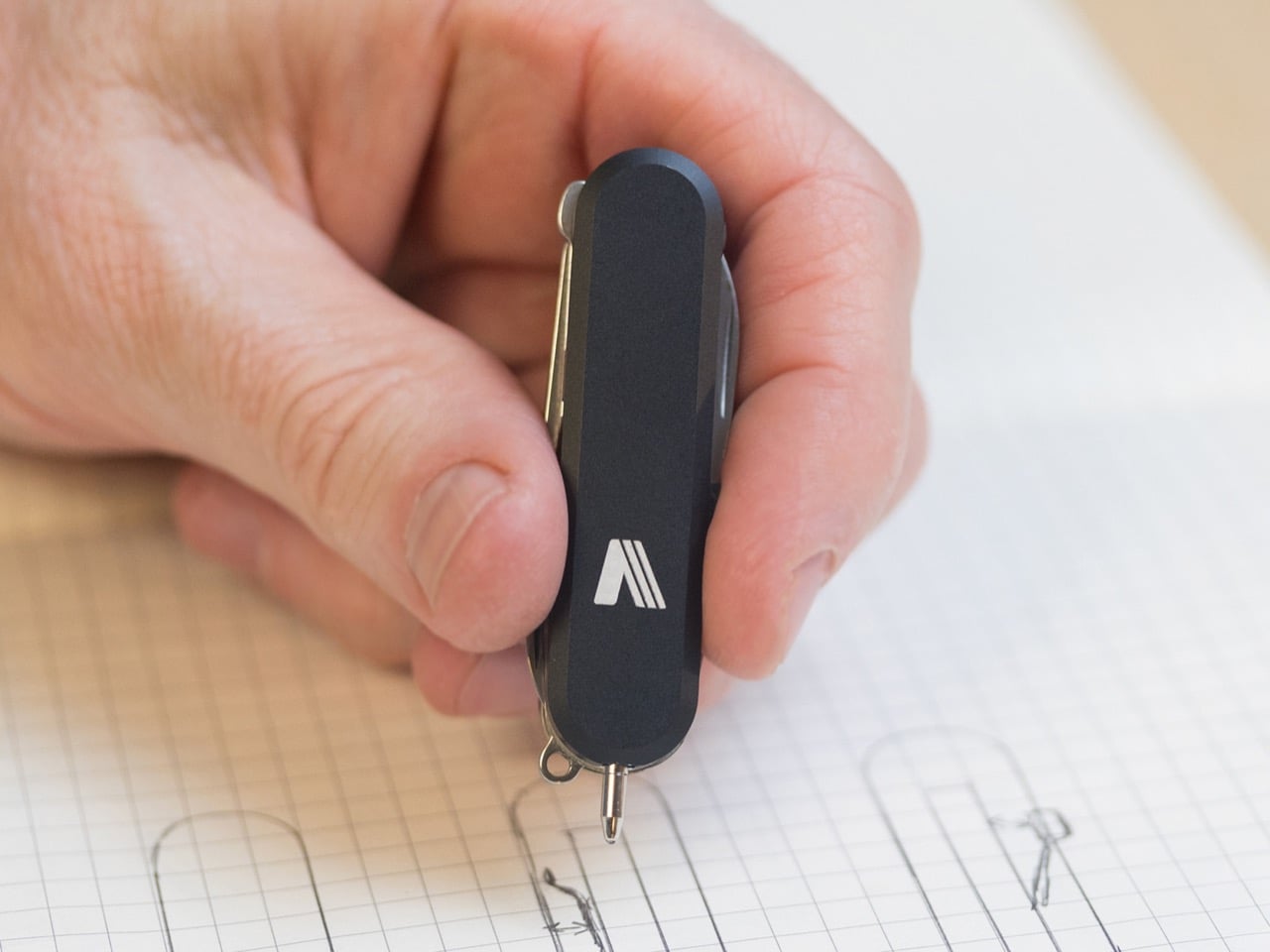
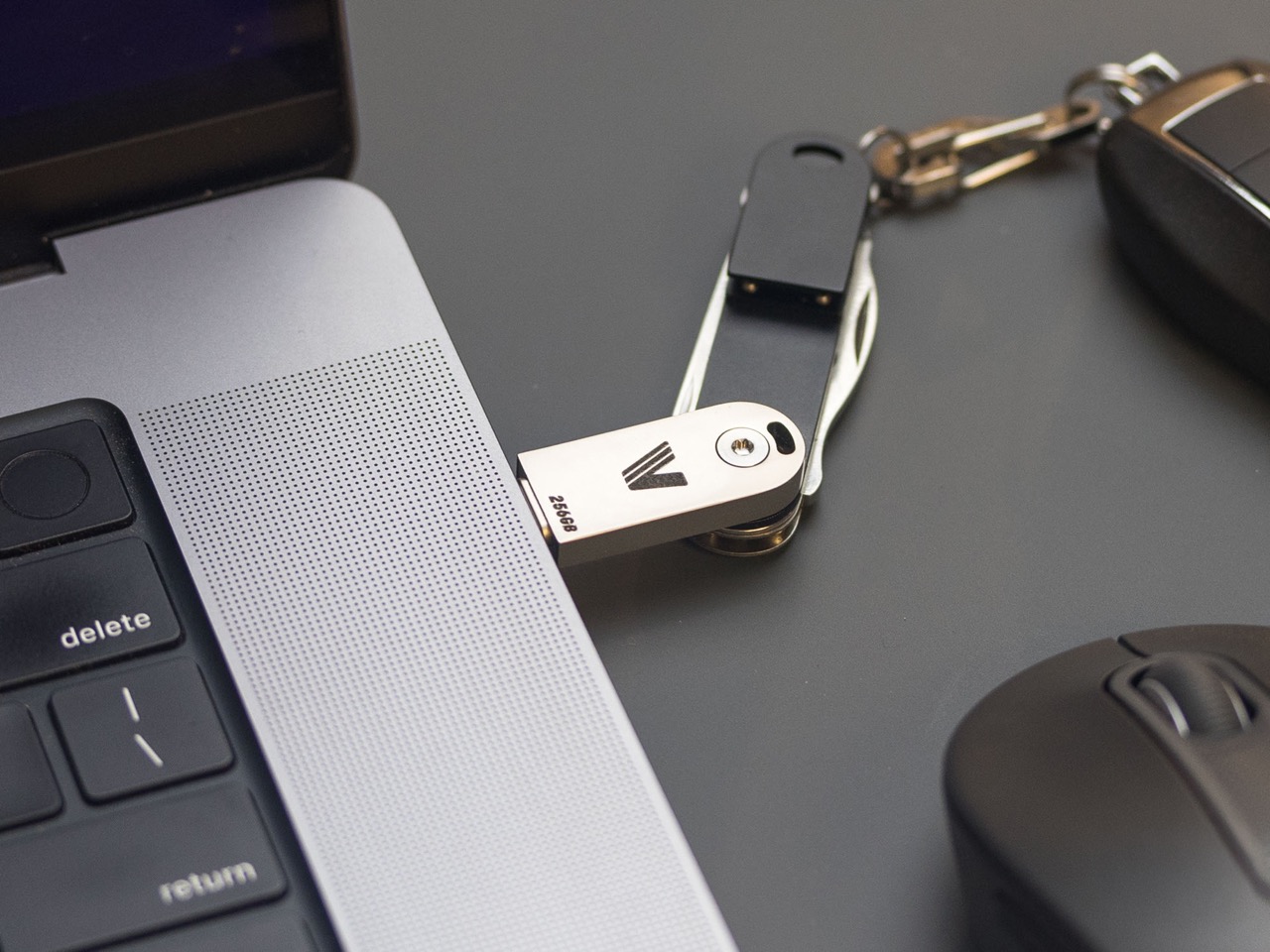
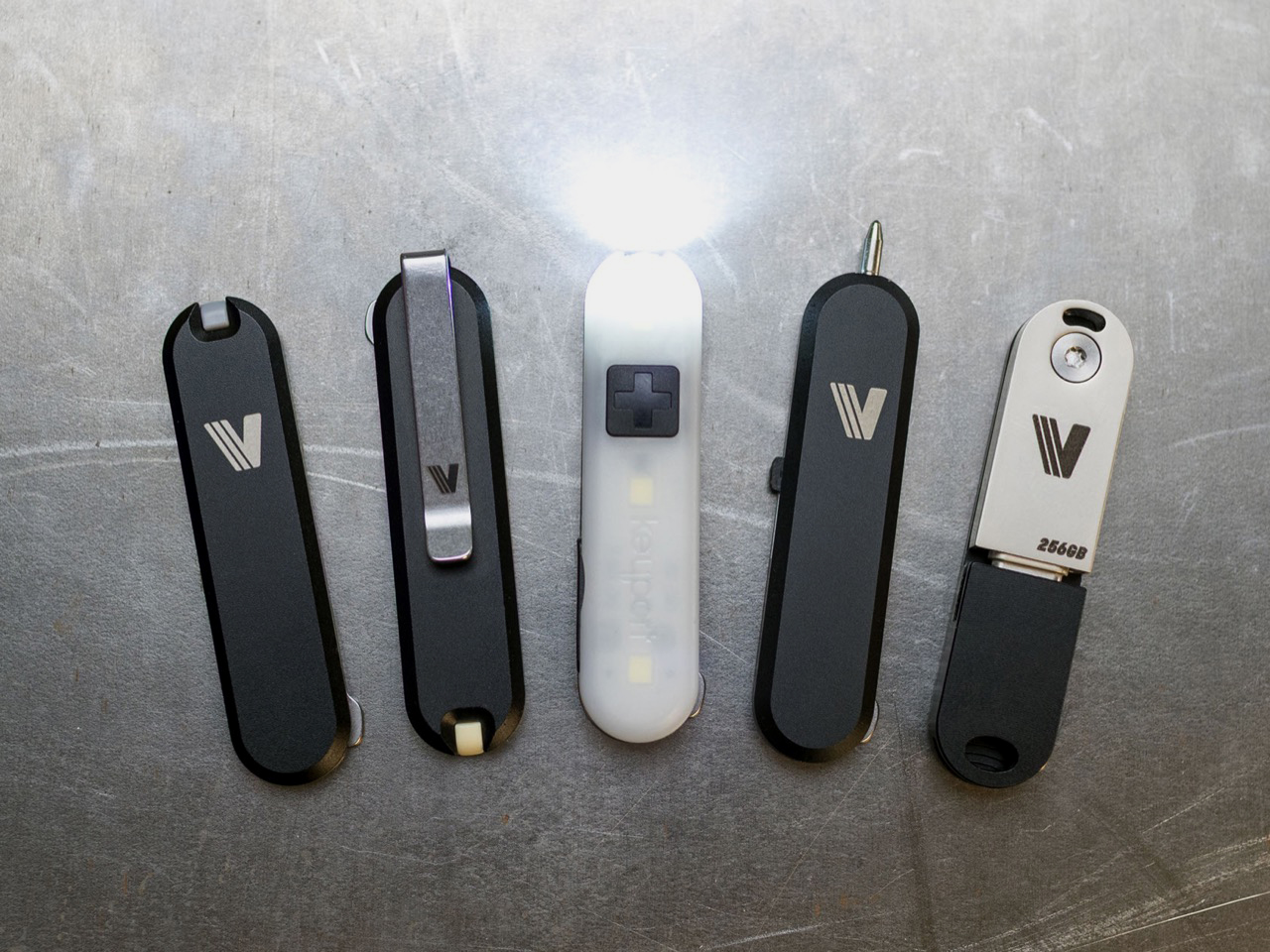
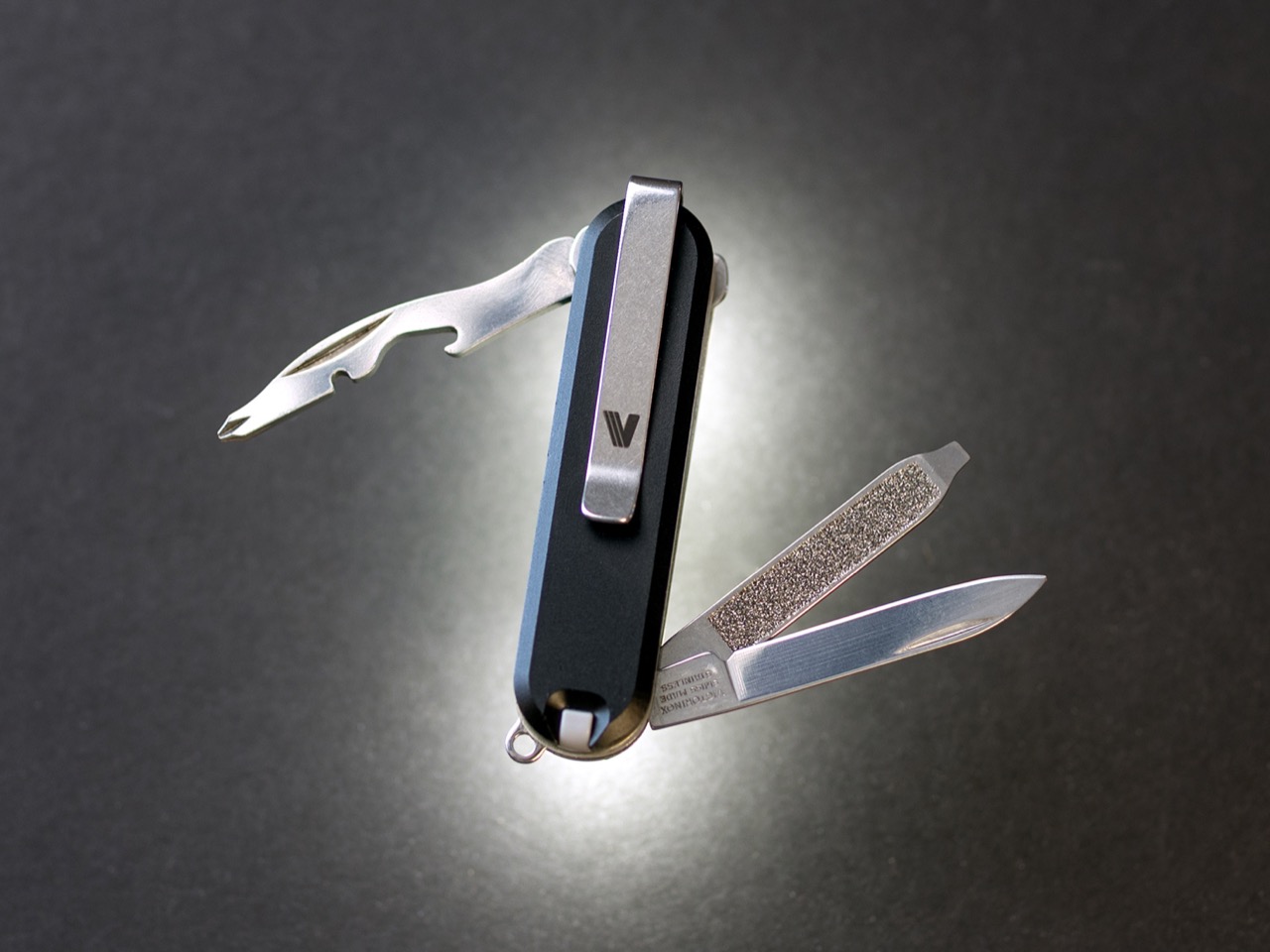
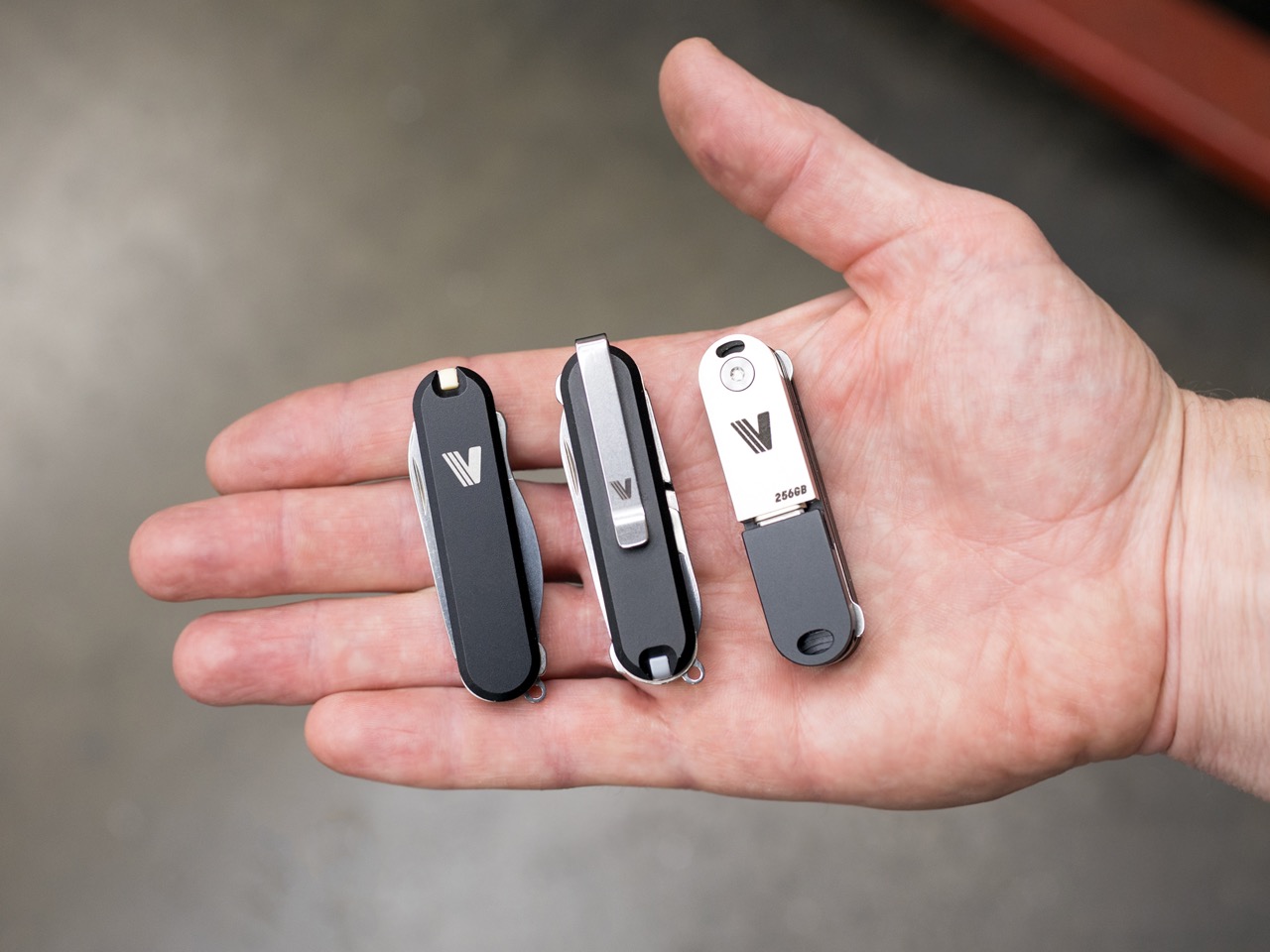
Keyport’s Versa58 system breaks that constraint without breaking the knife. The platform introduces a snap-on interface that attaches to any 58mm SAK’s existing rivets, transforming fixed scales into swappable modules. Add a rechargeable LED light, a mini pen, a USB-C flash drive, or a deep-carry pocket clip in seconds. Remove them just as fast. The knife stays intact, the heritage remains untouched, but the capabilities expand in ways the original designers never imagined. It’s modularity meeting tradition, and somehow both sides win.
The core of this entire system is a deceptively simple piece of spring steel. This patent-pending interface plate is the result of a full year of development and seven complete revisions, a process that speaks to the engineering challenge involved. The plate is engineered to flex just enough to click securely onto the mushroom-shaped rivets that hold a standard SAK together, the same ones hidden beneath the factory scales. The design had to be robust enough to handle repeated attachment cycles without loosening, yet gentle enough to avoid damaging the knife’s frame. It’s a tool-free, glue-free, and completely reversible process that takes seconds. This single component unlocks the entire platform.
Versa58 operates in two distinct universes. The first is as a direct upgrade to your existing Victorinox. You pop off the original scales and snap on the Versa58 modules you need for the day. The second universe is completely independent of the knife. Using a magnetic connector system called MagMount, any two modules can be attached to each other to create standalone tools. This dual functionality means you can either enhance the classic SAK you already own or build an entirely new, minimalist multi-tool from scratch. The system offers a level of flexibility that the 58mm format has never seen before.
The MagMount system is absolute genius, using three tuned neodymium magnets to create a crisp, satisfying connection. This allows for the quick assembly of pocketable rigs or keychain tools. You could, for instance, snap the flashlight module to the pen module for a compact, non-knife tool perfect for travel or restrictive environments. The magnetic pull is tuned for a secure hold while still allowing for smooth rotation and easy reconfiguration. It also introduces an addictive fidget factor, turning the act of customizing your carry into something tactile and engaging. It’s a smart design that expands the ecosystem beyond the knife itself.
Among the first wave of modules, the Clip Scale is likely to be the most celebrated. Machined from either 6061 aluminum or Grade 5 titanium, it finally adds a clean, low-profile pocket clip to the 58mm SAK. This has been a common request in the EDC community for years. Crucially, the clip is designed to be reversible and does not interfere with the knife’s keyring, a flaw seen in some aftermarket solutions. It’s paired with a V Scale for the front, which includes a multi-use slot designed to hold the original SAK’s toothpick or tweezers, ensuring you don’t lose core functionality.
The Pocket Flare module brings modern illumination to the platform. It’s a compact, USB-C rechargeable light with a beam tuned for close-range tasks. It offers three modes: a 3-lumen low beam with a 12-hour runtime, a 43-lumen high beam that runs for two hours, and a 45-lumen side light that acts as a lamp to brighten a small area. Because it uses the MagMount interface, you can also snap it onto any metal surface for hands-free lighting, which is incredibly useful for repairs or finding something in a dark tent.
Keyport also developed modules that bridge the analog and digital worlds. The Pen Module features a precision mini pen with a premium German Troika refill, offering a smooth writing experience without any rattle. For digital needs, there is a streamlined USB-C 3.0 flash drive module available in 64GB and 256GB capacities. This flip-out drive seamlessly integrates secure, portable storage into your pocket setup for documents, media, or backups. These additions transform the classic pocket knife into a tool that feels much more relevant to modern daily life.
Perhaps the most forward-thinking aspect of the Versa58 platform is its openness. Keyport will be selling standalone interface plates, inviting makers, modders, and machinists to design their own compatible modules. This opens the door for a community-driven ecosystem of custom tools built on the Versa58 standard. It’s a canvas for creativity, allowing anyone with an idea to contribute to the platform. This move could give the system incredible longevity and a range of options far beyond what Keyport could develop on its own.
Keyport has already outlined a roadmap for future modules, showing a long-term commitment to the system. Upcoming additions being explored include a Bluetooth locator, an NFC module for digital access or automation, a craft blade for precision cuts, and even a minimalist carrier for a Bic lighter. The plan is to build Versa58 into a comprehensive platform, not just a single product release. Backer feedback from the initial campaign will help shape which of these new tools get prioritized, making early adopters part of the development process.
The Versa58 system is available for backing on Kickstarter, with special pricing tiers for early supporters. The campaign offers several bundles, including the foundational Origin Bundle with the core scales starting at $39 and the more comprehensive Apex Bundle that adds the Pocket Flare module starting at $77. All modules and scales are available in either machined 6061 aluminum or the more premium Grade 5 titanium. The Versa58 ships globally starting August 2026.
There’s a particular kind of panic that sets in about thirty minutes before you need to leave for the airport. You’ve thrown clothes into a suitcase, triple-checked your passport, and convinced yourself that you’ve packed everything important. Then you arrive at your destination and realize you’ve brought three chargers for devices you don’t own but somehow forgot the one thing that would’ve made your entire trip better. Last-minute travel has a way of exposing what truly matters versus what we think we need.
The beauty of spontaneous trips lies in their unpolished edges, but that doesn’t mean you should suffer through bad coffee, tangled headphone cords, or eating with your hands because the airline meal came with a flimsy plastic fork that snapped on contact. The difference between a trip you remember fondly and one you spent complaining about comes down to a handful of well-chosen essentials that solve real problems. These five designs represent the kind of thoughtful gear that takes up minimal space but delivers maximum impact when you need it most.
1. Nikon 4x10D CF Pocket Binoculars
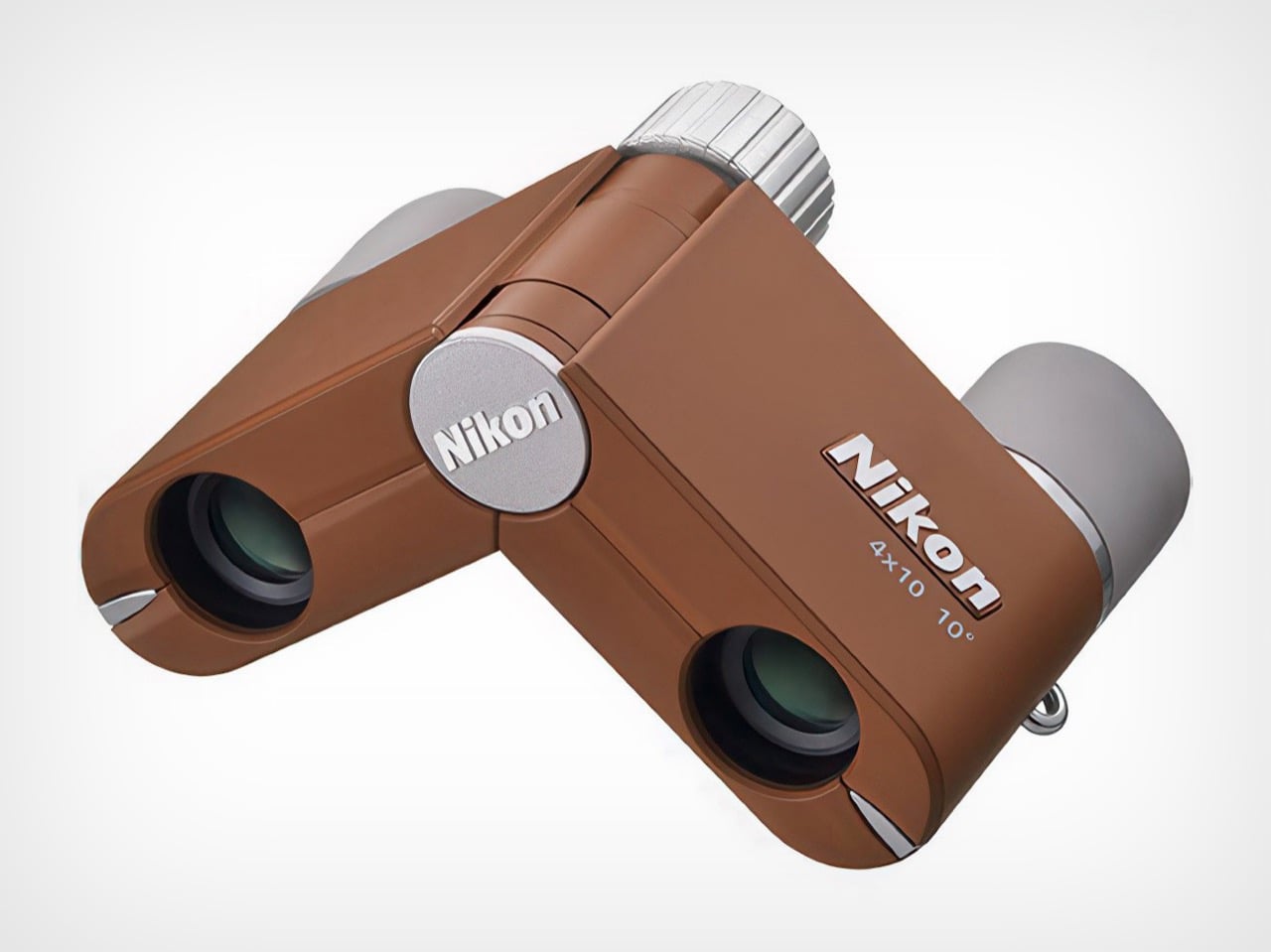
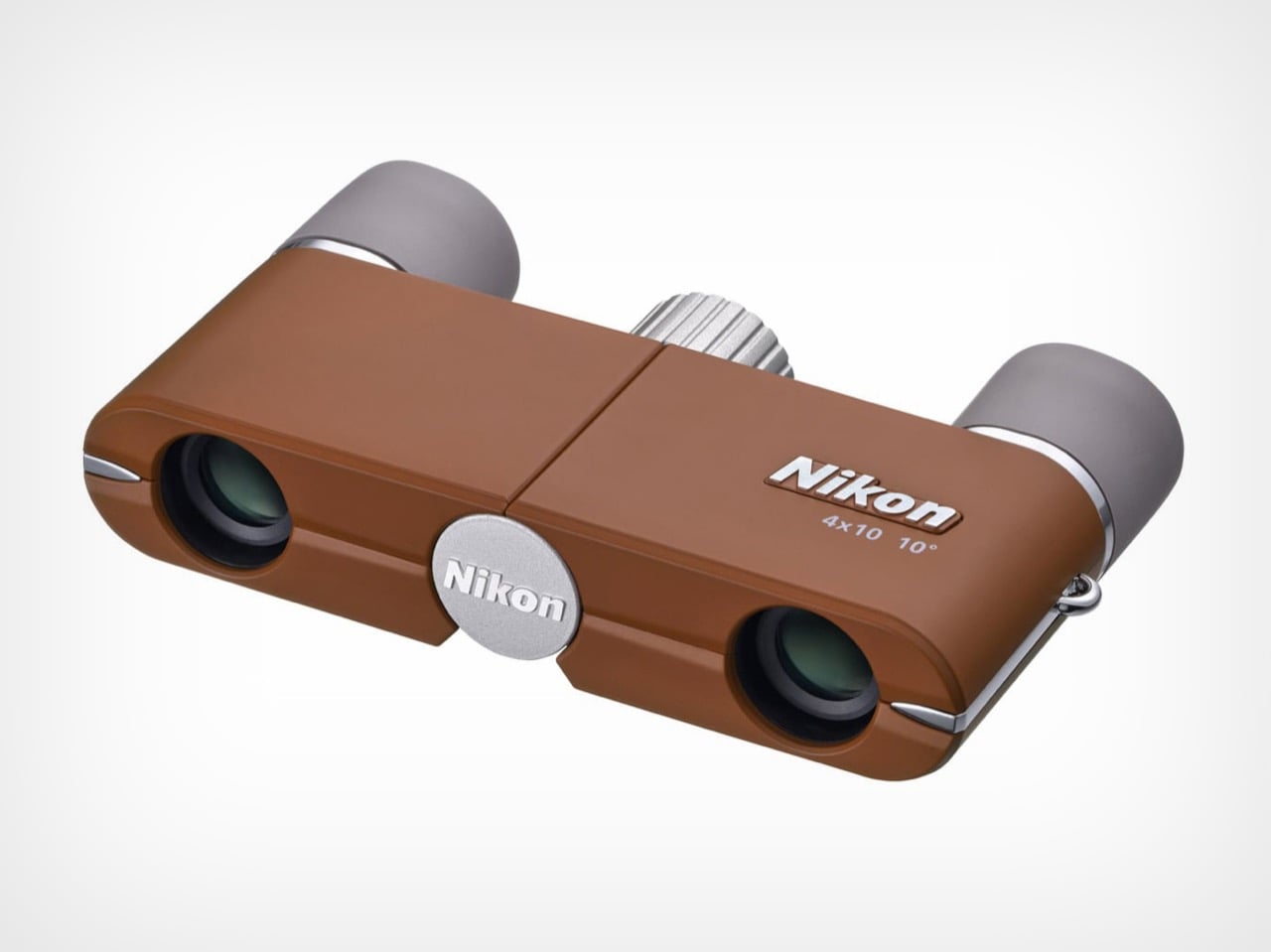
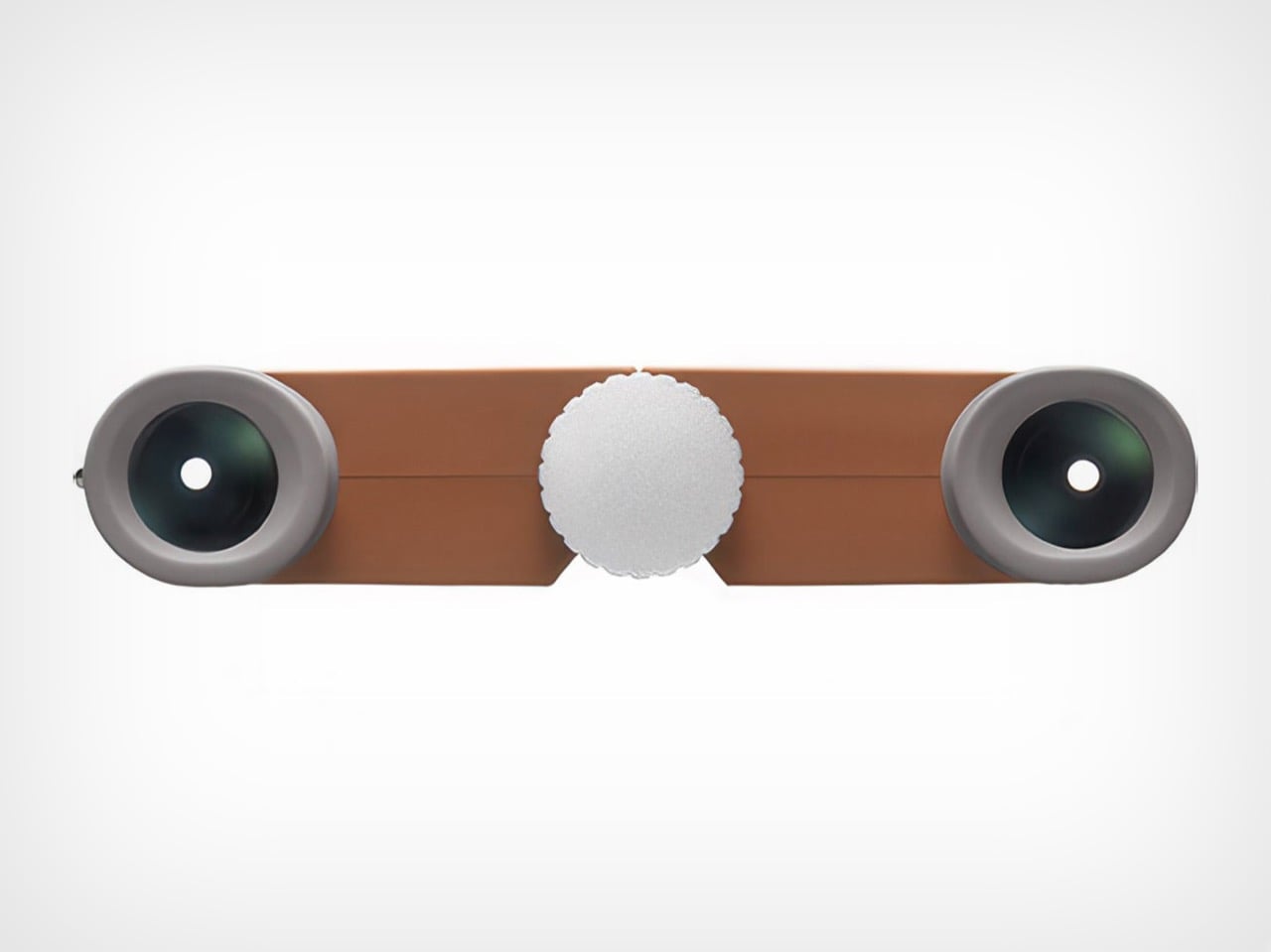
Binoculars feel like relics from another era, the kind of thing your grandfather kept in a leather case that smelled faintly of pipe tobacco. Nikon’s 4x10D CF pocket binoculars challenge that entire perception by shrinking the form factor down to something that actually fits in your pocket without creating an awkward bulge. These aren’t meant to compete with your smartphone’s digital zoom or replace professional birding equipment. They exist in a different category entirely, prioritizing the experience of optical viewing over pixel counts and processing power.
The genius lies in recognizing that people don’t carry traditional binoculars because they’re too bulky and conspicuous. Nikon solved that problem by creating something so discreet it almost disappears. The optical quality remains surprisingly sharp for such a compact device, delivering a viewing experience that feels immediate and artifact-free. Whether you’re trying to read a distant street sign in an unfamiliar city or want a closer look at architectural details without looking like a tourist with professional gear, these slip into your travel kit without demanding dedicated space or special protection.
What we like
• The form factor makes them genuinely pocketable, solving the primary reason people don’t carry binoculars.
• Optical viewing delivers a tactile, immediate experience that digital zoom can’t replicate.
• The updated colorways transform them from technical equipment into an accessory you want to carry.
• Multiple uses, from reading transit signs to appreciating distant landscapes without looking conspicuous.
What we dislike
• The 4x magnification is modest compared to traditional binoculars, limiting long-distance viewing.
• The compact size means smaller objective lenses, reducing light-gathering capability in low-light conditions.
2. StillFrame Headphones
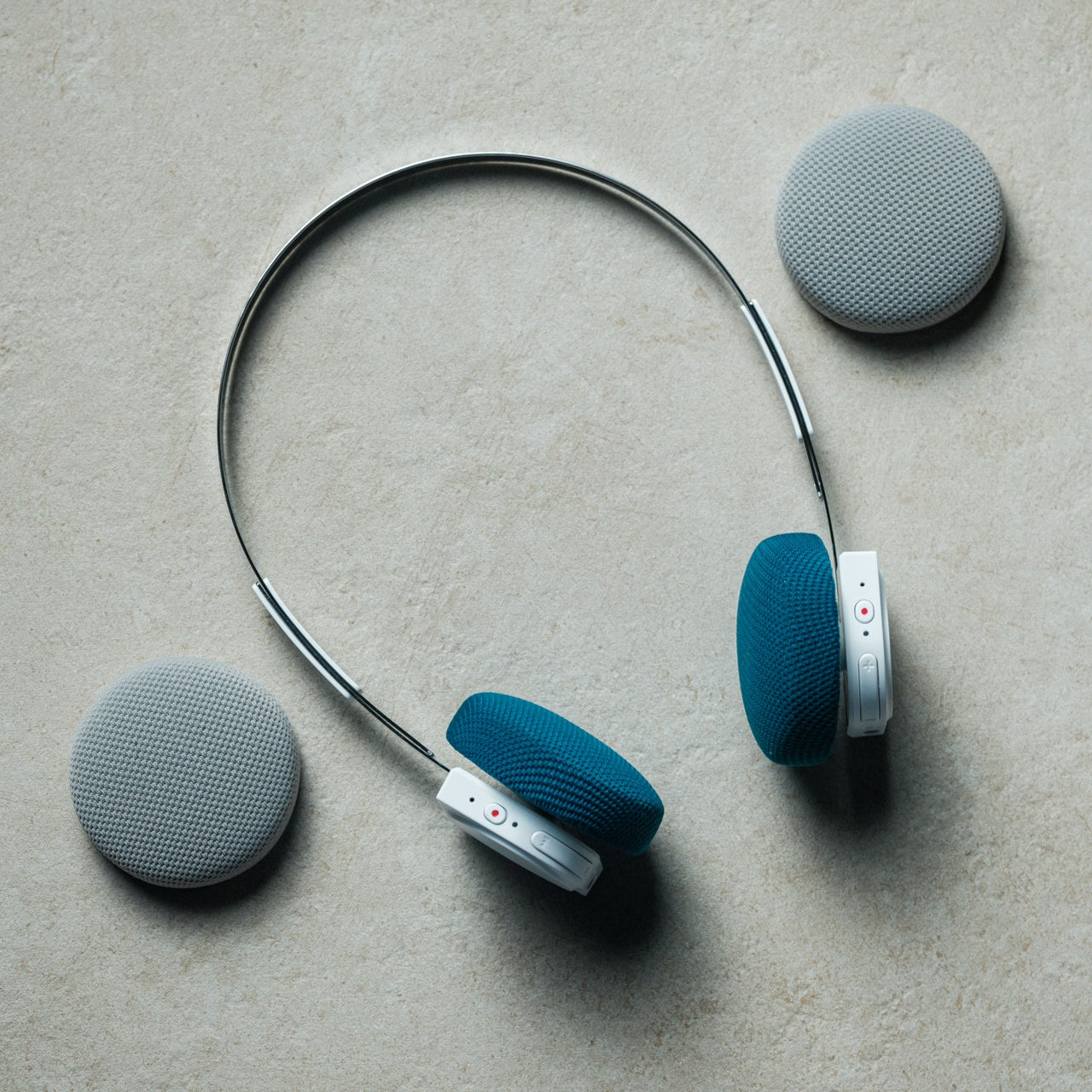
Air travel has become an endurance test for your ears. Between engine noise, crying babies, and the passenger next to you who insists on watching action movies without headphones until a flight attendant intervenes, you need something that creates a barrier between you and chaos. StillFrame wireless headphones approach this problem with a design philosophy borrowed from a time when music felt like a deliberate choice rather than background noise. The aesthetic draws from compact disc geometry, creating a visual language that feels refreshingly analog in an aggressively digital world.
Weighing just 103 grams, these headphones occupy a middle ground between intrusive over-ear designs and in-ear buds that always seem to fall out at the worst possible moment. The 40mm drivers create a soundstage that gives music room to breathe, which matters when you’re spending hours in compressed airplane cabins where everything feels claustrophobic. The combination of active noise cancelling and transparency mode means you can shift between complete isolation and situational awareness without removing them. That flexibility proves essential when navigating unfamiliar airports or wanting to hear boarding announcements without sacrificing your peace during the actual flight.
• The 24-hour battery life eliminates anxiety about running out of power mid-journey.
• Magnetic fabric ear cushions swap easily, giving you color options that match different moods.
• Dual connectivity through Bluetooth 5.4 and USB-C cable offers wireless freedom or wired stability.
• The exposed circuit board aesthetic celebrates the technology rather than hiding it behind plastic shells.
What we dislike
• The on-ear design may cause discomfort during extremely long flights compared to over-ear alternatives.
• The fashion-forward aesthetic might not appeal to travelers who prefer more conventional headphone designs.
3. 0.25 oz Aero Spork
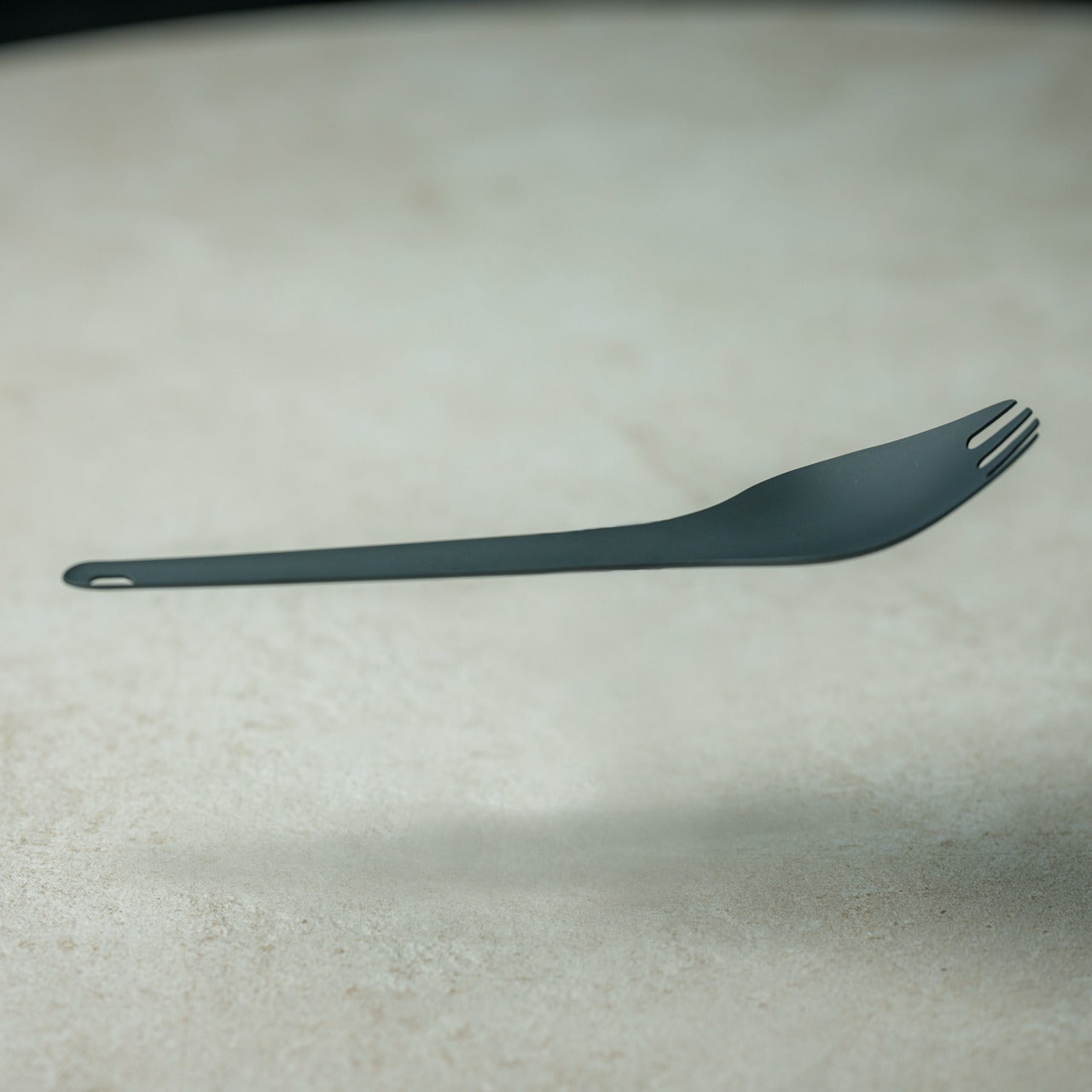
There’s something deeply frustrating about packing perfectly good food for a trip only to realize you have nothing reasonable to eat it with. Plastic cutlery snaps under minimal pressure, full-sized metal utensils add unnecessary weight, and trying to eat noodles with a standard spoon requires patience most travelers don’t have after a long day. The Aero Spork weighs less than a quarter of an ounce but manages to feel substantial enough to handle actual meals. That combination of minimal weight and genuine utility makes it the kind of item that earns permanent residence in your travel kit.
The ergonomic curve gives you a secure grip even when your hands are cold or wet, while the tapered design specifically addresses the noodle-eating problem that plagues travelers across Asia and increasingly everywhere else. The stackable design means you can carry multiple sporks without them taking up more space than a single standard utensil. This becomes relevant when you’re traveling with others or want a backup. The durability factor matters more than you’d expect; these survive being tossed into bags, stepped on accidentally, and subjected to the kind of casual abuse that destroys lesser travel utensils within weeks.
• The 7-gram weight makes it lighter than most travel accessories you’ll forget you’re carrying.
• Stackable design solves the multi-person dining situation without requiring a full cutlery set.
• The tapered shape genuinely improves noodle-eating, addressing a specific and common travel challenge.
• Metal construction means it lasts indefinitely, unlike disposable or plastic alternatives.
What we dislike
• The hybrid spoon-fork design means neither side works quite as well as a dedicated utensil.
• Cleaning can be tricky in the field without proper access to soap and water.
4. MokaMax Portable Coffee Maker
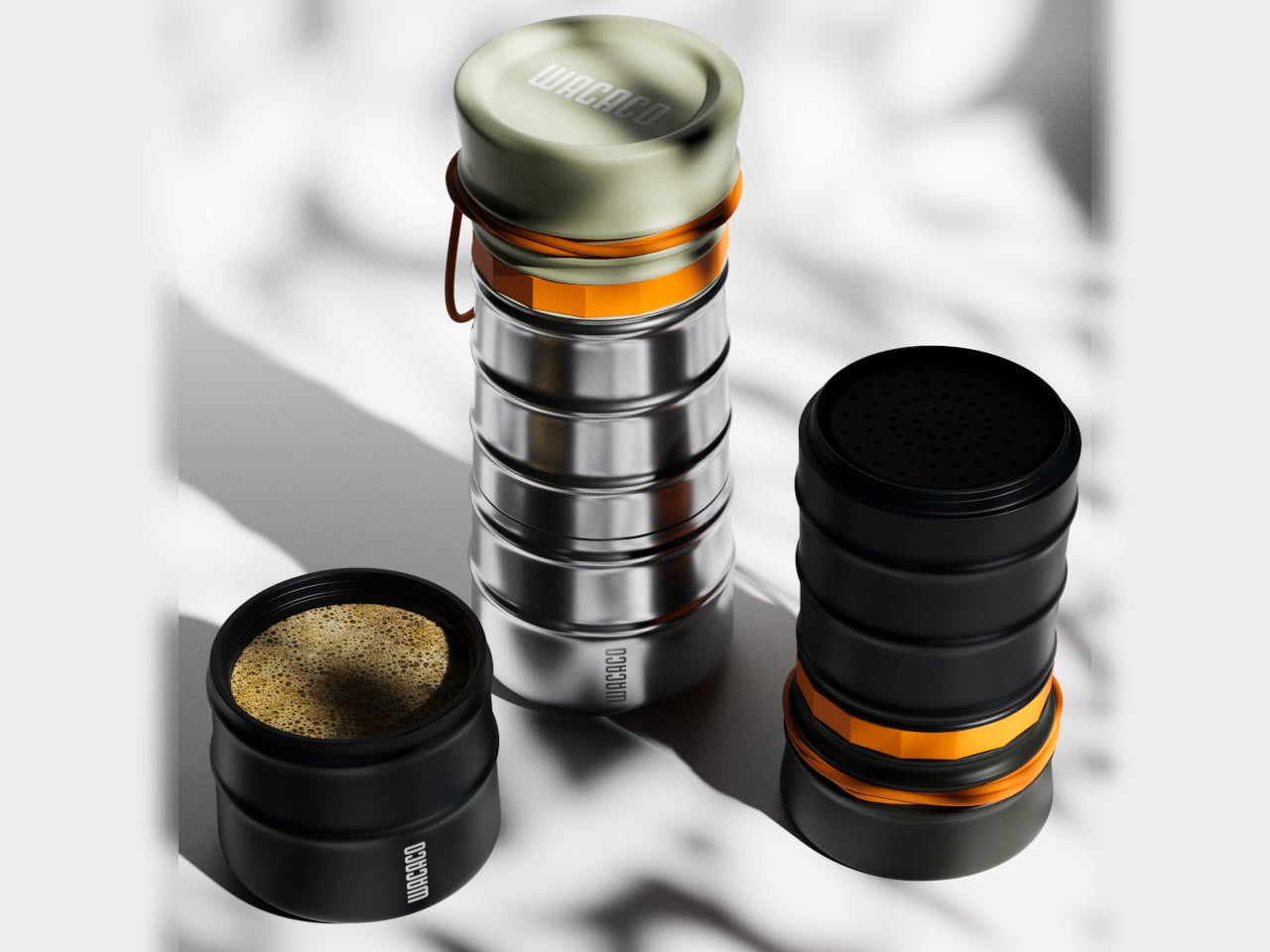
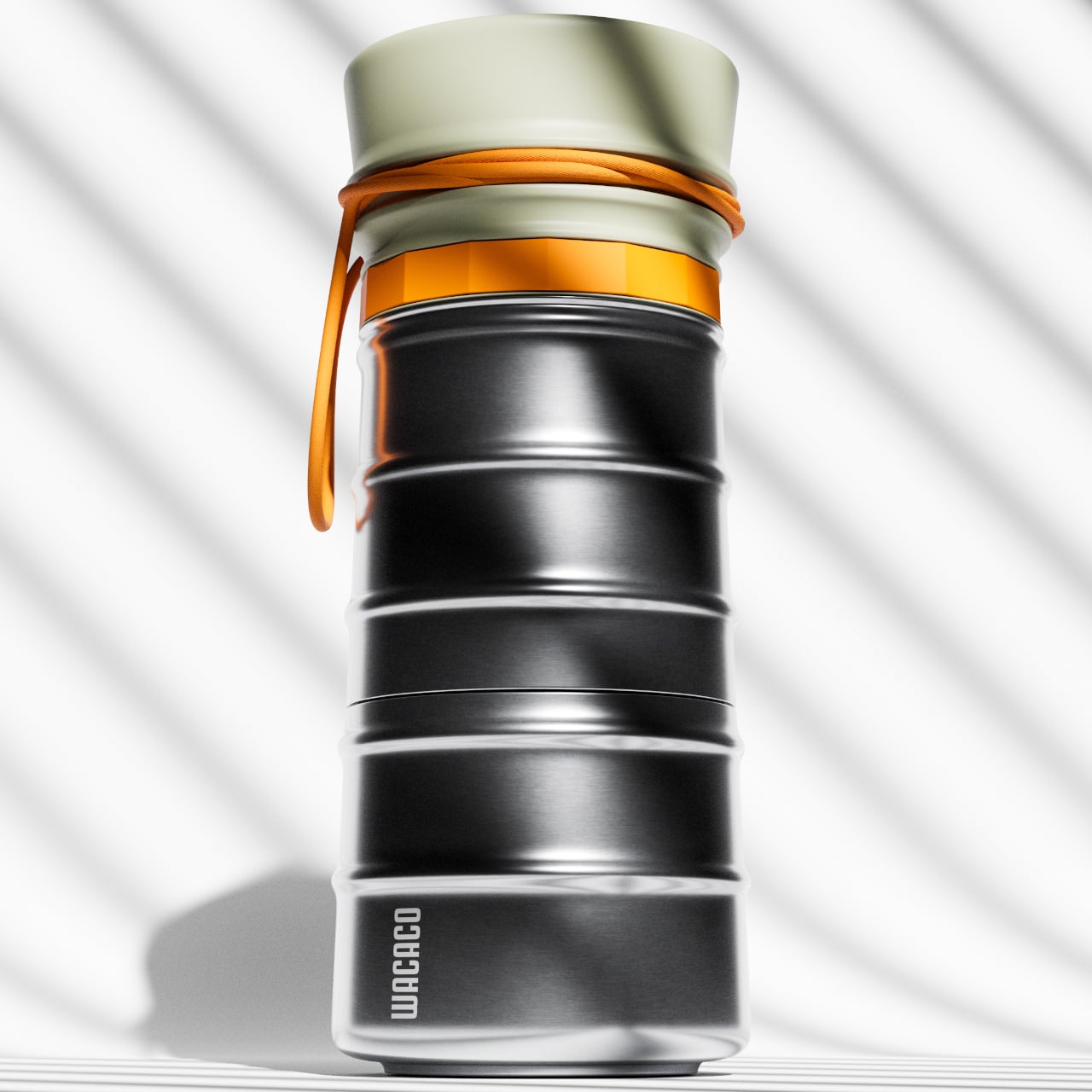
Hotel coffee represents a special category of disappointment. It tastes like regret mixed with lukewarm water, extracted from pods that somehow cost three dollars each. Even when you find a decent café, you’re either waiting in line behind seventeen people who each ordered customized drinks with five modifications, or you’re drinking something that went cold during your walk back to your hotel. MokaMax addresses this problem by building a legitimate pressure-brewing system into a form factor that looks like a standard travel mug. The ridged stainless steel body provides a secure grip while reinforcing the rugged, outdoor-ready aesthetic.
The design spent considerable effort getting those ridges right, balancing functional grip with comfortable handling and visual interest. The flexible rope attachment transforms it from just another mug into something that clips onto backpacks or hangs from hooks, integrating into your mobile gear rather than requiring dedicated carrying. The key advantage over simply buying coffee everywhere you go is consistency and timing. You control the strength, temperature, and exact moment you brew. That autonomy matters when you’re dealing with jet lag and need coffee at 4 AM when nothing is open, or when you’re hiking and want something better than instant crystals dissolved in lukewarm water.
What we like
• The pressure-brewing system delivers espresso-style coffee without electricity or complex equipment.
• Single-vessel design eliminates the need to carry separate brewing and drinking containers.
• Ridged stainless steel construction provides grip and durability for genuine outdoor use.
• The rope attachment integrates it into your travel gear ecosystem rather than requiring dedicated space.
What we dislike
• The brewing process takes longer than simply buying coffee if you’re in an area with good options.
• Cleaning requires more attention than a standard travel mug, especially after brewing dark roasts.
5. Craftmaster EDC Utility Knife
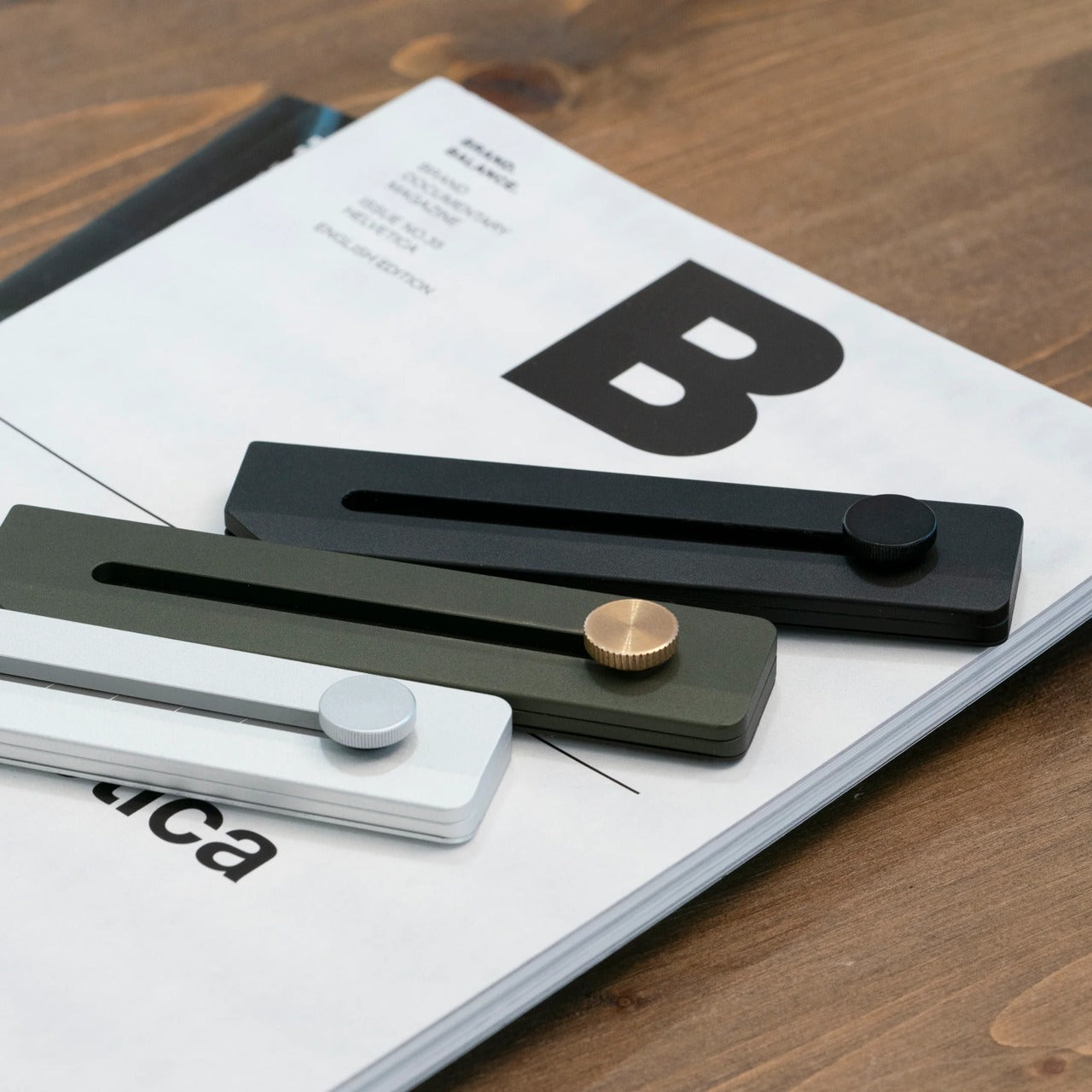
Most travelers don’t think they need a utility knife until they’re standing in a hotel room trying to open packaging with their keys, teeth, or increasingly desperate improvisation. The Craftmaster EDC utility knife occupies just 8mm of thickness and 12cm of length, making it slim enough to slip into pockets, bags, or organizer pouches without creating bulk. The metallic construction gives it heft that feels reassuring rather than burdensome, while the rotating knob deployment mechanism adds a tactile satisfaction that pure functionality doesn’t require but somehow makes the tool more enjoyable to use.
The magnetic back serves double duty by letting you dock the knife on any metal surface and providing a home for the companion metal scale. That scale includes both metric and imperial measurements, a raised edge for easy pickup, and a blade-breaker for maintaining the OLFA blade’s sharpness. The 15-degree curvature protects your fingers during cutting tasks, while the 45-degree inclination helps with opening boxes without damaging contents. These details transform a basic utility knife into something that solves multiple problems, from precise measuring for emergency clothing repairs to clean package opening without destroying whatever’s inside.
• The 8mm thickness makes it genuinely pocketable without the bulk of traditional utility knives.
• Magnetic docking turns any metal surface into convenient storage, preventing loss in hotel rooms.
• The included ruler with blade-breaker combines multiple functions without requiring separate tools.
• OLFA blades are replaceable and widely available, extending the knife’s useful life indefinitely.
What we dislike
• The minimalist metal design lacks texture that could improve grip in wet conditions.
• Airport security restrictions mean it needs to go in checked luggage, limiting accessibility during travel days.
Why These Five Items Matter for Last-Minute Travel
The connecting thread between these designs is that they solve specific problems while occupying minimal space and requiring almost no learning curve. You don’t need an instruction manual, a YouTube tutorial, or previous experience. They work immediately and continue working reliably. That reliability becomes essential when you’re already dealing with the stress of spontaneous travel, unfamiliar locations, and the general chaos that comes from not having time to plan properly.
The other advantage is that none of these items are single-use solutions. Pocket binoculars serve navigation, sightseeing, and practical reading purposes. Headphones deliver both entertainment and environmental control. A quality spork handles any meal situation. The portable coffee maker works everywhere from mountain peaks to hotel rooms. The utility knife solves dozens of cutting, measuring, and opening challenges. That versatility means carrying five items gives you solutions to dozens of potential problems, which is exactly the kind of efficiency last-minute travelers need most.
The annual flood of Black Friday deals can feel overwhelming, a constant barrage of alerts and ads all claiming to offer the deal of a lifetime. For those of us who appreciate well-designed gear, the challenge isn’t just finding something cheap; it’s finding something great at a price that makes it impossible to ignore. A good everyday carry knife, in particular, is an investment in utility and reliability. This is the time of year when that investment pays off before you even make the purchase, with respected brands and proven designs becoming more accessible than ever.
Consider this your curated shortlist, a direct path to the best value in the EDC knife world right now. We’ve cut through the noise to bring you five standout blades that are currently seeing major price drops, from compact workhorses to unique tactical designs. Each one was chosen based on its reputation, build quality, and a discount that truly matters. This is your chance to acquire a fantastic tool that punches well above its weight class for a fraction of its usual cost.
Tekto A5 Spry (20% Off)
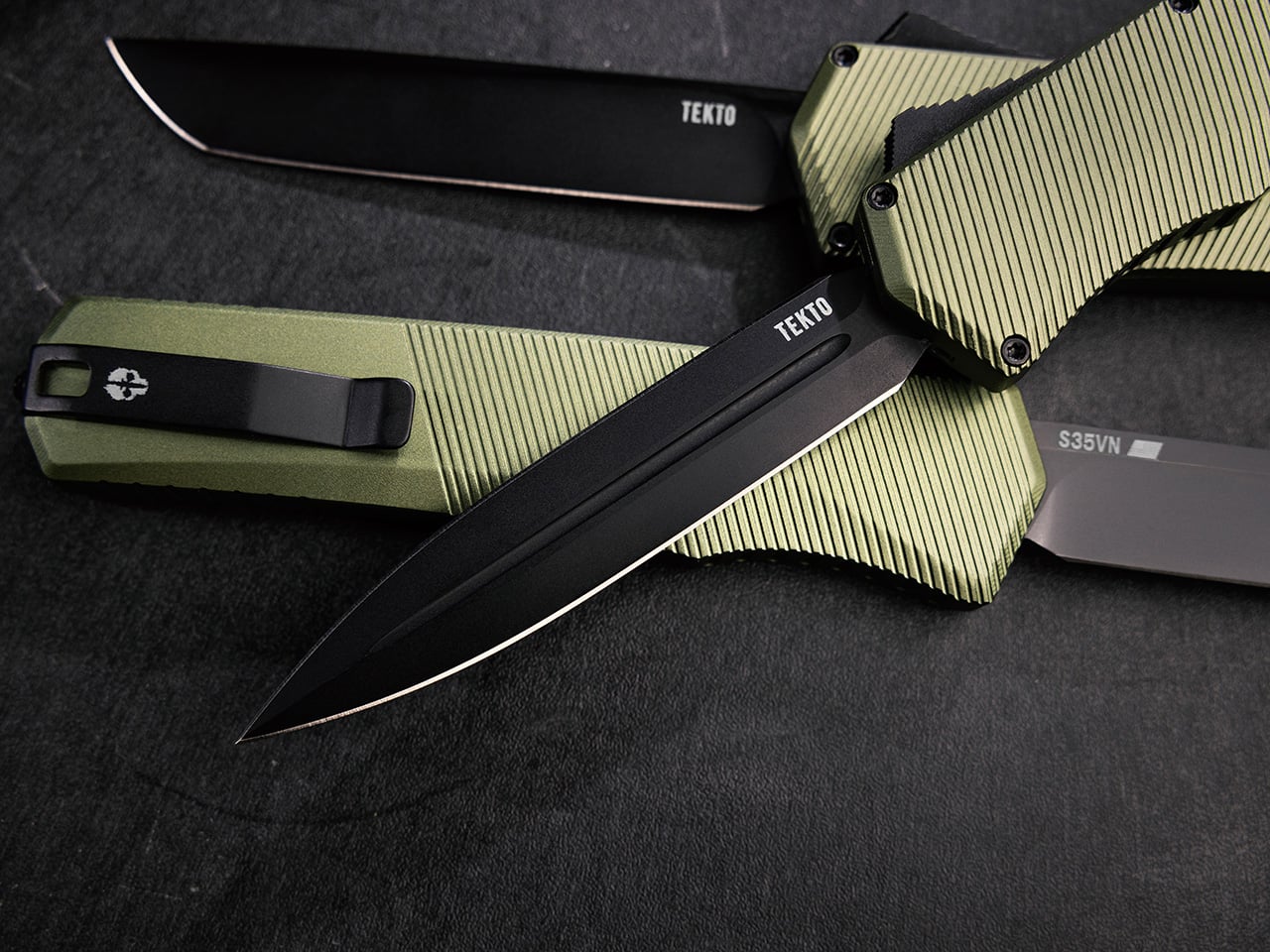
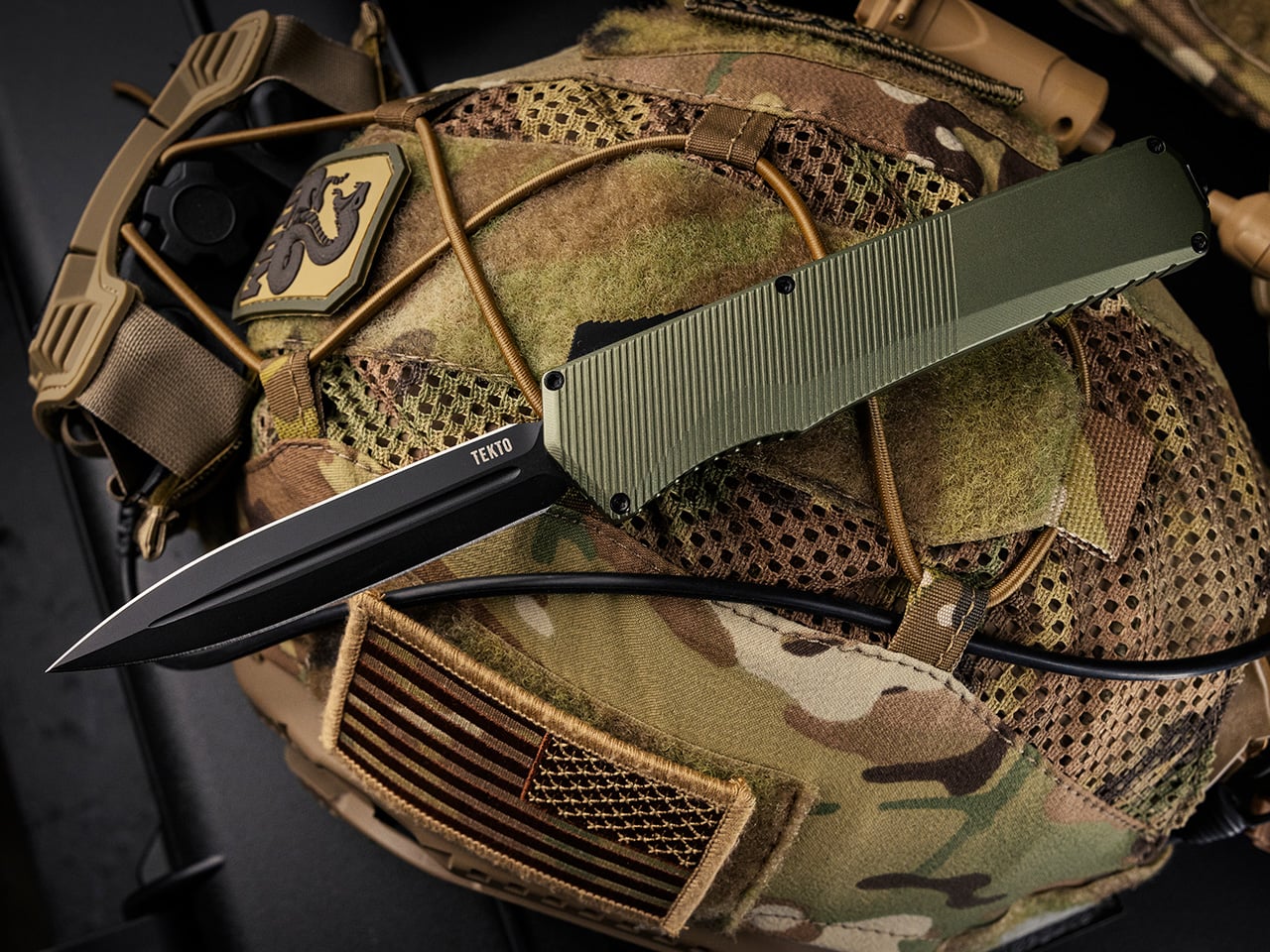
Out-the-front automatics occupy a special place in the knife world, somewhere between practical tool and mechanical indulgence. The Tekto A5 Spry lands firmly in both camps. This is an OTF with a 3.5-inch S35VN blade, titanium-coated and available in three distinct profiles: drop point for general use, dagger for piercing and double-edged utility, and tanto for maximum tip strength. That blade choice matters because each geometry fundamentally changes how the knife performs. The drop point excels at everyday slicing, the dagger offers symmetrical cutting edges and a needle-sharp tip, while the tanto brings reinforced strength for tougher tasks. All three options run 60-62 HRC hardness, putting this steel in premium territory where edge retention meets reasonable sharpening requirements. The 6061-T6 aluminum handle is contoured and textured aggressively, offering what Tekto calls an “iron grip,” and they’re not exaggerating. At 8.6 inches open and 3.49 ounces, this knife has presence without crossing into heavy.
The double-action mechanism fires with the kind of authority that makes cheap OTFs feel like toys. The button sits perfectly positioned for thumb deployment, and the blade launches with zero hesitation. Retraction is equally satisfying, a smooth return that locks back into the handle without play or wiggle. Tekto offers the A5 Spry in black or OD green aluminum, giving you color options to match either stealth or tactical aesthetics. The glass breaker on the pommel isn’t decorative, it’s a legitimate emergency tool that adds function beyond cutting. The ambidextrous pocket clip works for tip-down carry, and the lanyard hole gives you attachment options if you prefer alternate carry methods. This is an American-made OTF priced to compete with imports, which is rare enough to be notable. The build quality reflects domestic manufacturing standards, with tight tolerances and finish work that justifies the premium over budget alternatives.
Why We Recommend It
At 20% off (bringing it to $200 from $249.99), the A5 Spry becomes one of the best values in American-made OTF knives. S35VN steel at this price point is already competitive, but pairing it with three blade options and two color choices means you’re buying exactly the knife you want rather than settling for what’s available. The customization factor alone makes this compelling: drop point for EDC versatility, dagger for collectors who appreciate double-edged designs, or tanto for anyone who prioritizes tip strength. OTF automatics typically command premiums, and finding one with premium steel, solid construction, and genuine versatility under two hundred dollars is legitimately rare. This is the knife for anyone who’s wanted a quality OTF but balked at the typical $300-plus entry point.
Click Here to Buy Now: $200$249 (20% off, use coupon code “YANKO” at checkout for $49.99 off, plus 2-day FedEx shipping. Hurry, deal ends in 48-hours!
SOG Keytron (26% Off)
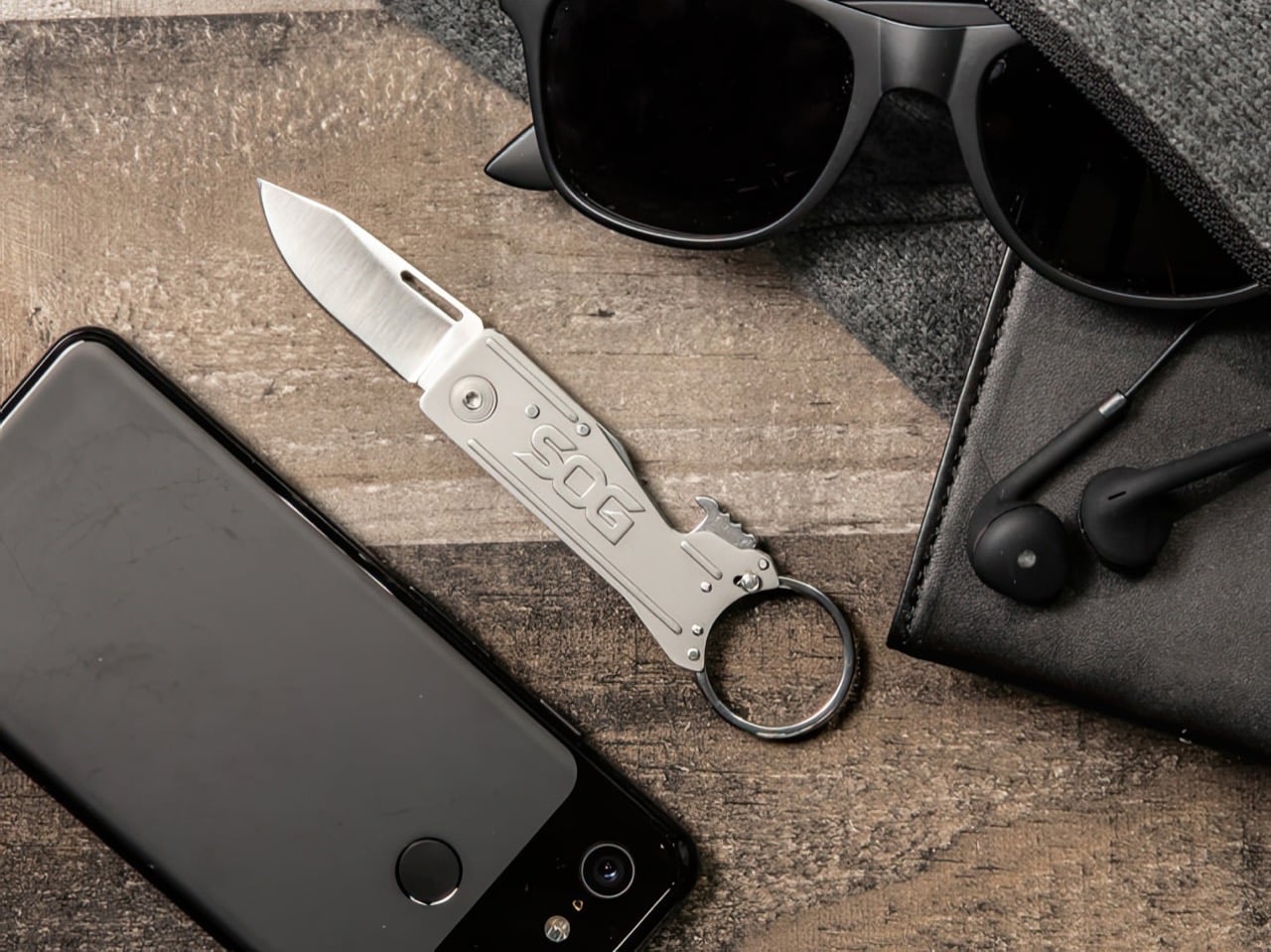
Most people never think about knife accessibility until they’re standing in a parking lot with a package that needs opening and their EDC folder is sitting on their dresser at home. The SOG Keytron exists specifically for that moment. This is a 1.8-inch clip point blade made from stainless steel with a hardness of 54-58 RC, mounted on a slim aluminum handle that stretches to 5.3 inches closed. At 1.3 ounces, it weighs less than most sets of car keys and takes up about as much space. The lockback mechanism keeps the blade secure during use, releasing with a simple press of the spine lock. SOG added a thumb groove for opening, which works well enough once you get the hang of it, though this isn’t a flipper or assisted opener. Deployment is deliberate, not fast, which makes sense for something designed to live on your keychain. The satin finish on the blade is functional rather than flashy, and the flat grind gives you enough cutting edge for everyday tasks.
The built-in bottle opener is the kind of feature that sounds gimmicky until you actually need it, then it becomes the reason you keep this knife around. The keyring attachment uses a simple latch mechanism, making it easy to add or remove from your key collection without disassembling anything. The aluminum handle keeps weight down while providing enough rigidity to handle light cutting without flexing. This isn’t the knife you reach for when serious work needs doing, but it’s the knife that’s always there when you need to open a package, cut some cord, or pop the top off a bottle. The clip point blade shape gives you a fine tip for detail work while maintaining enough belly for slicing. SOG designed this for people who want a knife available at all times without the bulk or weight of traditional EDC folders. It’s the backup to your backup, the blade you forget you’re carrying until you suddenly need it.
Why We Recommend It
At $19.96 (down 26% from $27), the Keytron costs less than most people spend on a single lunch and solves a problem most knife people don’t think about: what do you carry when carrying a real knife isn’t practical? The built-in bottle opener and keyring attachment turn this from a simple blade into a multi-function tool that actually fits on a keychain without destroying your pockets. The aluminum construction and sub-2-inch blade mean it’s legal almost everywhere and inconspicuous enough to carry in settings where larger knives would draw attention. This is the knife for gym bags, travel kits, office drawers, or anywhere you want cutting capability without commitment. At under twenty bucks, it’s cheap enough to buy multiples and stash them everywhere you might need one.
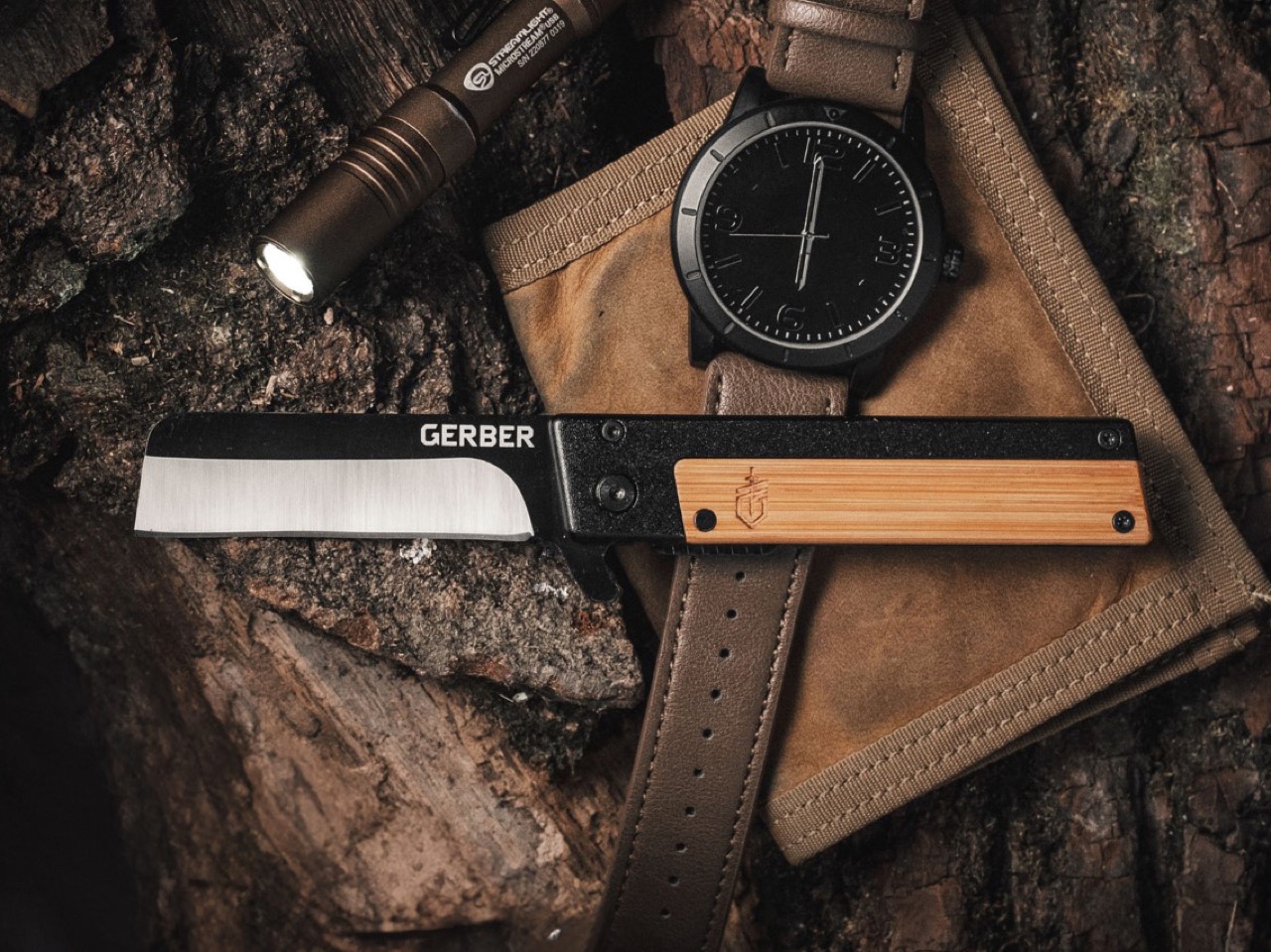
Gentleman’s folders exist in a strange intersection between knife and accessory, where aesthetics matter as much as edge geometry. The Gerber Quadrant understands this assignment perfectly. The 2.7-inch sheepsfoot blade is made from 7Cr17MoV stainless steel, a budget-friendly Chinese steel that sharpens easily and holds an edge well enough for daily cutting without requiring constant maintenance. That sheepsfoot profile is the defining characteristic here, a straight cutting edge with a curved spine that eliminates the pointy tip most knives sport. This makes it less aggressive, more workplace-friendly, and surprisingly effective for precise slicing tasks where you’d normally reach for a box cutter. The frame lock is textured stainless steel, providing structural rigidity while the flipper deployment snaps open with satisfying authority. At around 3 ounces, this knife has enough heft to feel substantial without weighing down your pocket.
The handle is where things get interesting. Gerber offers three scale options: white G-10 composite, natural bamboo, and black bamboo. The bamboo variants turn this knife into a genuine conversation starter, bringing organic warmth to a category typically dominated by synthetic materials and anodized metals. The bamboo isn’t just for looks, it provides natural texture and grip while keeping weight minimal. The white G-10 option appeals to anyone who wants a cleaner, more modern aesthetic without sacrificing durability. The deep-carry pocket clip keeps the knife discreet, sitting low enough that most people won’t notice you’re carrying unless they’re specifically looking. The overall package feels refined in a way that makes it appropriate for office environments, social settings, or anywhere a tactical folder would seem out of place. This is the knife you carry to meetings, dinners, or events where pulling out something aggressively tactical would raise eyebrows.
Why We Recommend It
At $25.10 (slashed 47% from $47), the Quadrant becomes one of the best gentleman’s folder deals you’ll find anywhere. That bamboo handle option at this price is borderline absurd, it’s a material upgrade that typically adds significant cost but here comes in under twenty-six dollars. The sheepsfoot blade makes this genuinely useful in situations where pointed tips feel unnecessary or inappropriate, and the flipper action provides quick deployment without screaming “tactical knife.” Gerber designed this for people who want something classy that still performs, and the discount turns an already reasonable $47 into an impulse buy that makes sense for anyone needing a sophisticated EDC option. This is style meeting substance at a price that removes any reason to hesitate.
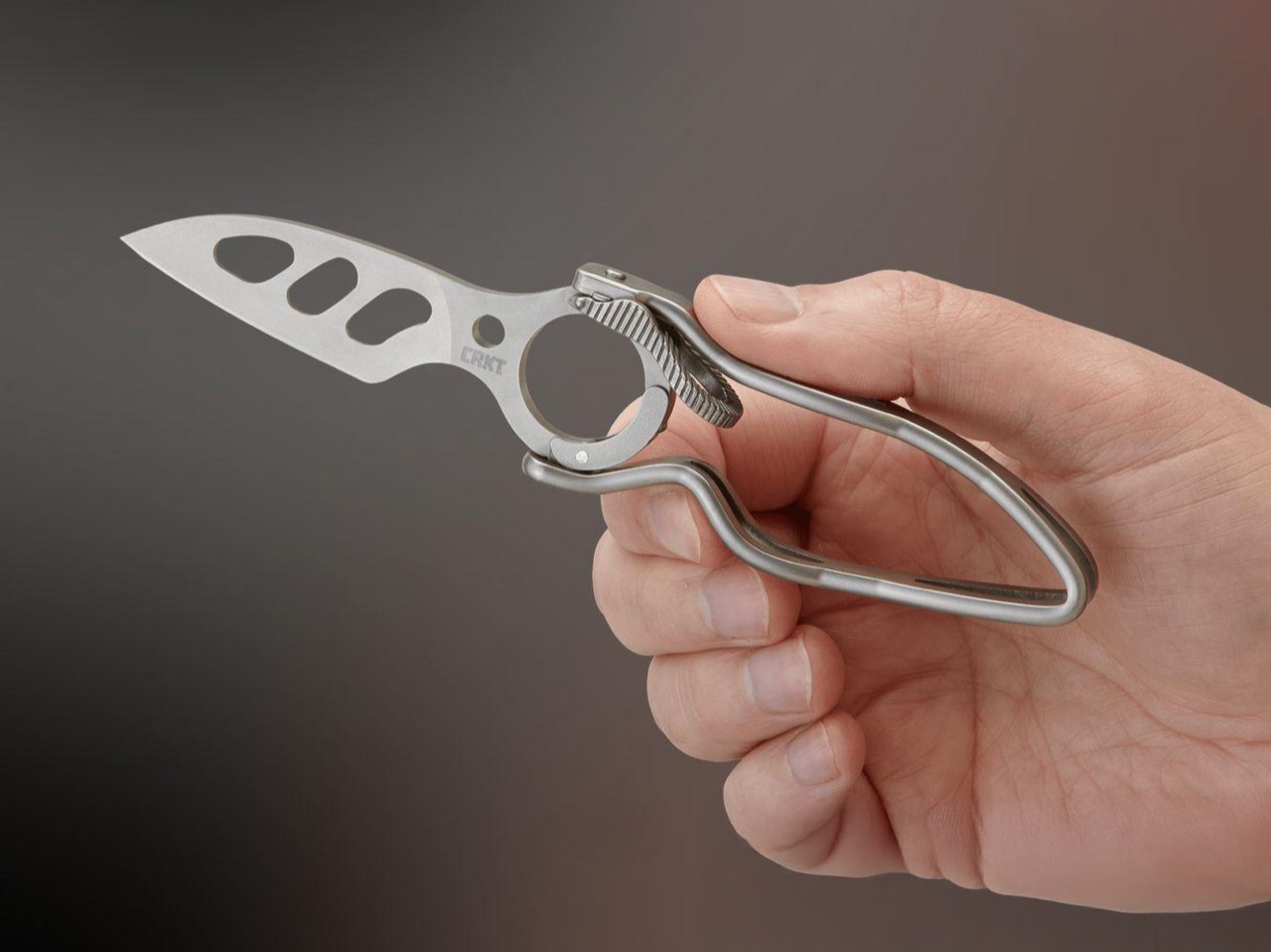
Some knives whisper. The Daktyl screams from across the room. Tom Hitchcock designed this thing to look like it escaped from a sci-fi prop department, and he succeeded completely. The entire knife is cut from stainless steel, both blade and handle, creating a skeletal framework that’s equal parts functional tool and conversation starter. That massive finger ring isn’t just for show, it’s the core of the “Hole In One” deployment system that lets you rotate the 3.05-inch modified Wharncliffe blade open with a flick of your finger. The 420J2 stainless steel blade is skeletonized with oval cutouts that reduce weight and add visual drama, while the slide lock mechanism keeps everything secure once deployed. At 6.813 inches open and weighing just 2.4 ounces, this is lightness taken to its logical extreme.
The handle is where things get interesting, and by interesting, we mean polarizing. Those flowing curves and cutouts look fantastic in photos, but they’re designed around that finger ring more than traditional grip ergonomics. The bead-blasted finish is grippy enough, and there’s a carabiner built into the pivot end that doubles as a bottle opener, because why not add party tricks to your EDC? The deep-carry pocket clip works for left or right-hand carry, and the whole package feels more like jewelry than a tool, which is either the point or the problem depending on your perspective. This isn’t the knife you grab for heavy cutting tasks or extended use. It’s the knife you carry when you want something that looks like nothing else in anyone’s pocket, a blade that values aesthetics and novelty as much as it does utility. The Wharncliffe profile is excellent for precision work and slicing, but that handle design means your grip options are limited by the architecture of the frame itself.
Why We Recommend It
The Daktyl at $45.99 (down from $60) is twenty-three percent off a knife that you either instantly love or completely don’t get, and that’s precisely why it belongs on this list. This is design as statement, a knife that refuses to blend into the background of standard folders and liner locks. That stainless steel skeleton construction and finger ring deployment make it instantly recognizable, and the built-in bottle opener means it’s actually useful at parties where knives normally aren’t. At under fifty bucks, you’re buying into something genuinely different without the usual premium that “unique” commands. It’s not the most ergonomic knife you’ll ever hold, but it might be the most interesting, and sometimes that counts for more than another perfectly competent but forgettable folder.
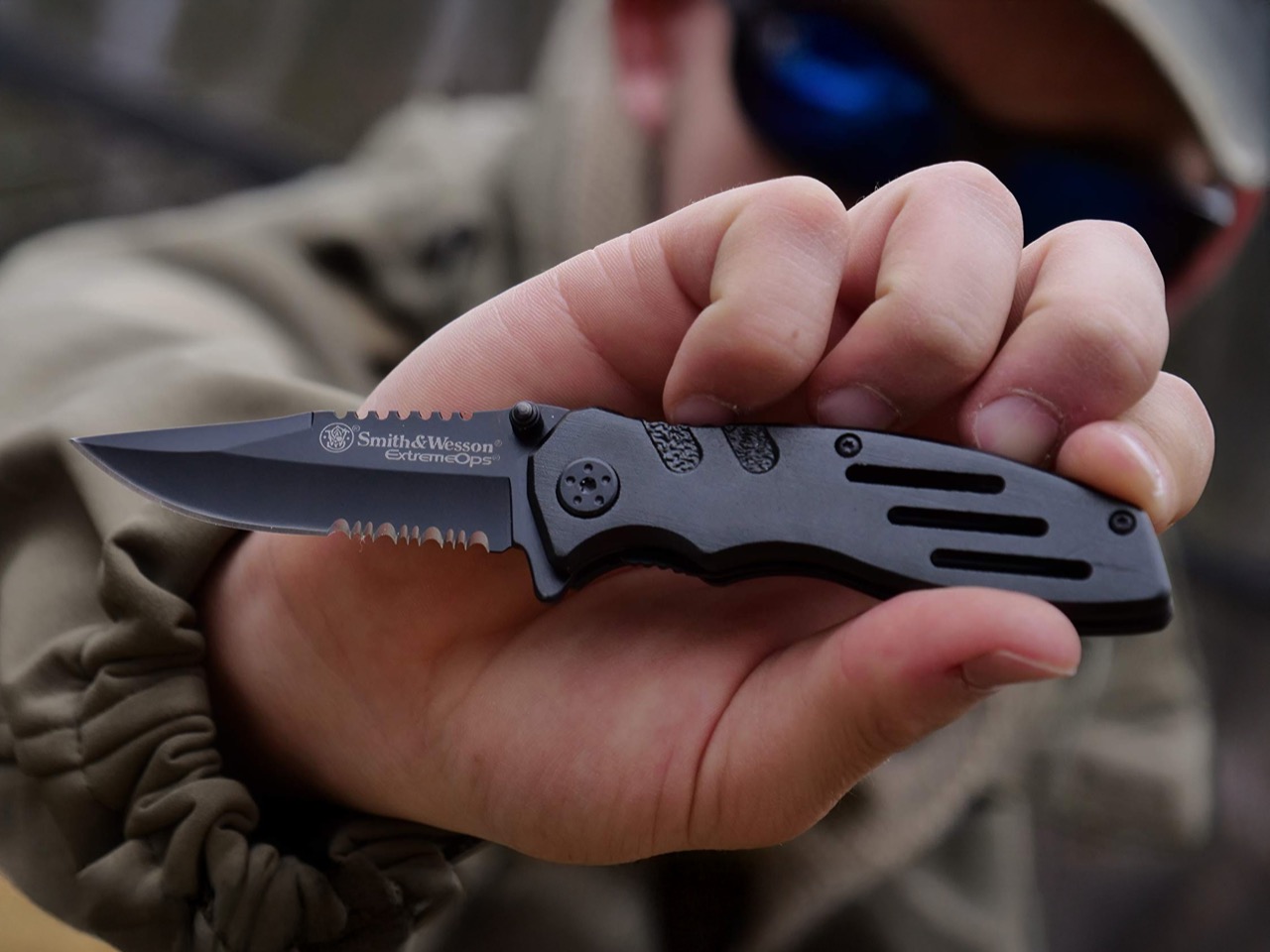
Budget knives have a certain reputation, and the Extreme Ops leans into it completely. This is a knife designed to hit a price point first and ask questions later. The 3.1-inch clip point blade is made from 7Cr17MoV stainless steel, a perfectly serviceable Chinese steel that holds an edge well enough for everyday tasks without requiring expert sharpening skills. The partially serrated configuration gives you options: plain edge for clean cuts, serrations for rope and tougher materials. The black aluminum handle is lightweight and functional, adorned with jimping on both the spine and handle for grip. At 7.1 inches overall and weighing 3.5 ounces, this is a knife that announces its tactical aspirations loudly, with ambidextrous thumb studs, an index flipper, and aggressive styling that screams “I’m ready for anything” even if that anything is usually opening Amazon boxes.
The liner lock is straightforward and reliable, exactly what you’d expect from a workhorse folder at this price tier. The pocket clip allows for ambidextrous carry, and the whole package feels solid enough for regular use without the anxiety that comes with carrying something expensive. Smith & Wesson’s knife division isn’t trying to compete with high-end custom makers; they’re building tools for people who need something functional, affordable, and backed by a recognizable name. The Extreme Ops delivers on that promise without pretense. It won’t impress knife snobs, but it also won’t leave you stranded when you need to cut something. The partially serrated edge is genuinely useful for anyone who regularly deals with zip ties, packaging straps, or fibrous materials, and the aggressive jimping means your grip stays secure even when things get slippery.
Why We Recommend It
At $17.33 (down 31% from $24.99), the Extreme Ops costs less than most people spend on lunch and delivers a fully functional EDC knife with a lifetime warranty. This is the knife you throw in a tackle box, glove compartment, or work bag without worrying about it. The 7Cr17MoV steel won’t win awards, but it’s tough enough and sharpens easily when it dulls. The partially serrated blade makes it more versatile than single-edge alternatives, and the aluminum handle keeps weight down while providing decent durability. This is maximum utility for minimum investment, a knife that understands its place in the world and excels at being exactly that. At under eighteen bucks, it’s an impulse buy that actually makes sense.
The problem with most EDC knives is that they’re either pretty to look at or actually useful, rarely both. Cheap materials make them look tacky, stiff mechanisms make them frustrating to use, and don’t even get started on how quickly they lose their edge. That hasn’t stopped manufacturers from churning out countless variations of the same disappointing formula, leaving users to choose between form and function.
The Scarab 2.0 takes a completely different approach to solving these everyday annoyances. Instead of cutting corners, it brings together aerospace-grade titanium and carbon fiber, paired with an M390 steel blade that knife enthusiasts swear by. The result looks almost too good to use, though that would be missing the point entirely. This is a tool made for daily challenges, not display cases.
The visual appeal hits you immediately, thanks to its striking combination of materials and thoughtful design. Red or black carbon fiber inlays catch light in fascinating ways, while the machined titanium frame adds an industrial sophistication that many premium knives try to achieve but few manage to pull off. It’s definitely quite a sight, though the real magic happens when you actually pick it up.
Anyone who has tried to open a knife with cold, wet, or tired hands knows how frustrating it can be. The Scarab 2.0 solves this with not one but three different opening methods. A thumb stud, button lock, and flipper opening mean you’ll never struggle to deploy the blade. The smooth roller bearing system makes each method feel natural and reliable, without the gritty, stiff action common in other knives.
The M390 steel blade is what really sets this knife apart from the crowd. While other knives might stay sharp for a few weeks of regular use, this steel keeps its edge through months of daily tasks. No more torn packages or awkward cuts. The 15-degree edge angle makes every slice clean and precise, whether you’re breaking down boxes or preparing food outdoors.
The handle isn’t just about looks. The GR5 titanium frame, the same material used in aircraft components, provides incredible strength without unnecessary weight. The textured carbon fiber offers a secure grip even with wet hands or gloves. Together, they create a knife that feels as premium as it looks, with every surface engineered for comfort and control.
Practical features make the Scarab 2.0 genuinely useful for everyday carry. A deep carry clip keeps the knife secure and discreet in any pocket, while the lanyard hole offers alternative attachment options. Four tritium slots compatible with glow tubes ensure you can find your knife quickly in low light. At just 4.59 inches when folded, it maintains a compact profile despite its capabilities.
The knife’s durability goes beyond its premium materials. Sweat, rain, and humidity won’t affect the titanium frame or M390 blade. The carbon fiber components add rigidity while keeping the total weight at just 2.9 ounces. It’s the kind of tool that gets better with use, developing character without losing performance.
Even the manufacturing process reflects attention to sustainability. The titanium components can be recycled and reused, while the precision CNC machining minimizes material waste. Every aspect of the Scarab 2.0 is engineered for longevity, reducing its environmental impact through years of reliable service.
The Scarab 2.0 shows what happens when designers prioritize both aesthetics and functionality. It’s a knife that works as well in the office as it does on outdoor adventures, ready for whatever task comes its way. For those tired of compromising between good looks and actual performance, this knife offers something genuinely different.
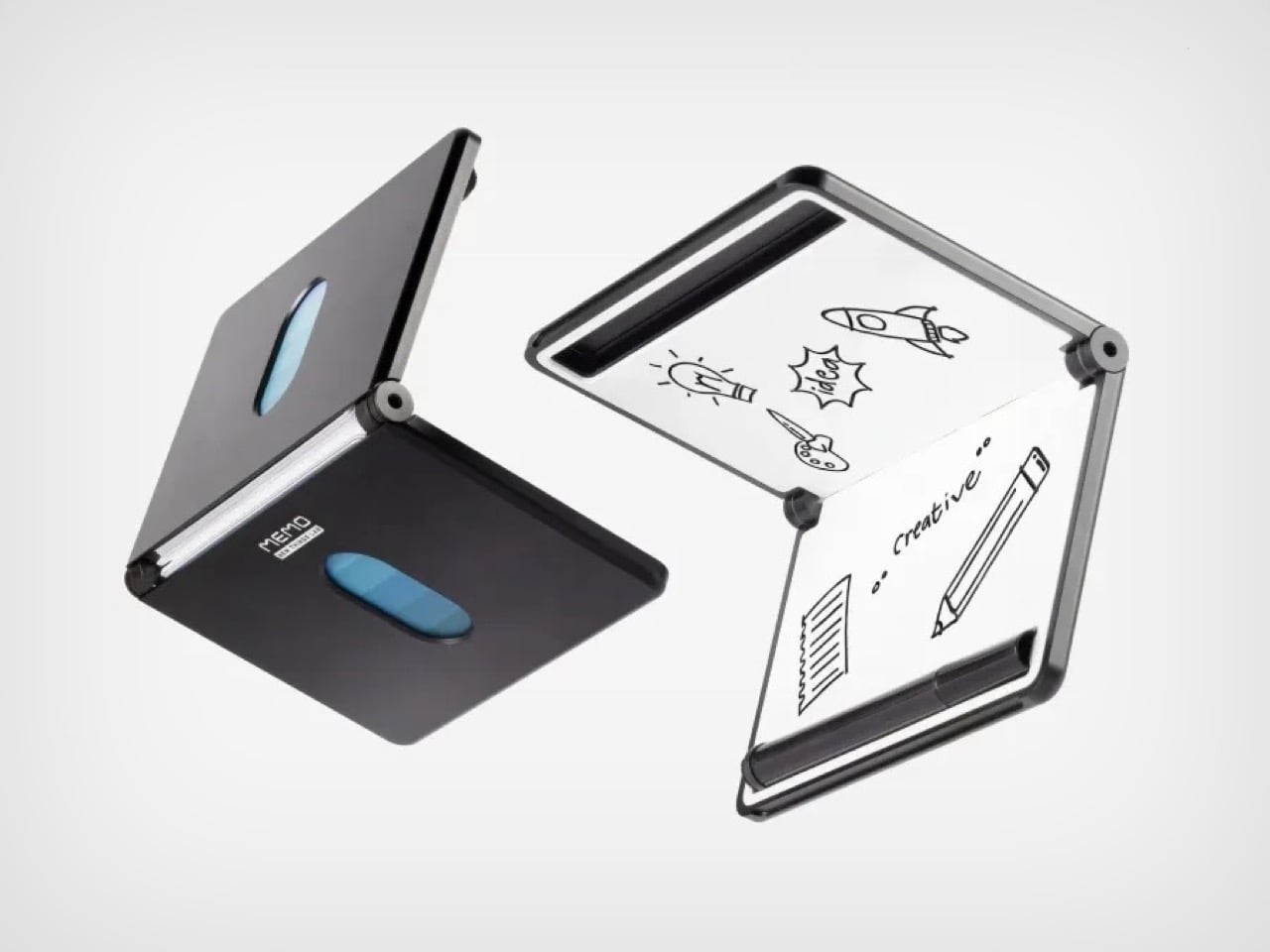
You remember that scene in the first Avengers movie? Captain standing in front of Tony Stark, asking him what he is without the suit? Tony replies without a blink – Genius, billionaire, playboy, philanthropist. I imagine that if this same conversation were to happen in the EDC realm, most wallets are essentially just sheets of leather that hold cash, cards, and currency. Strip the valuables away, and you’ve got nothing but carcass left. The MEMO wallet from New Things Lab, however, has a fairly essential feature even when it isn’t holding anything – it’s a dry-erase whiteboard that also parades as a wallet. Yes, you read that right. A whiteboard. In your wallet.
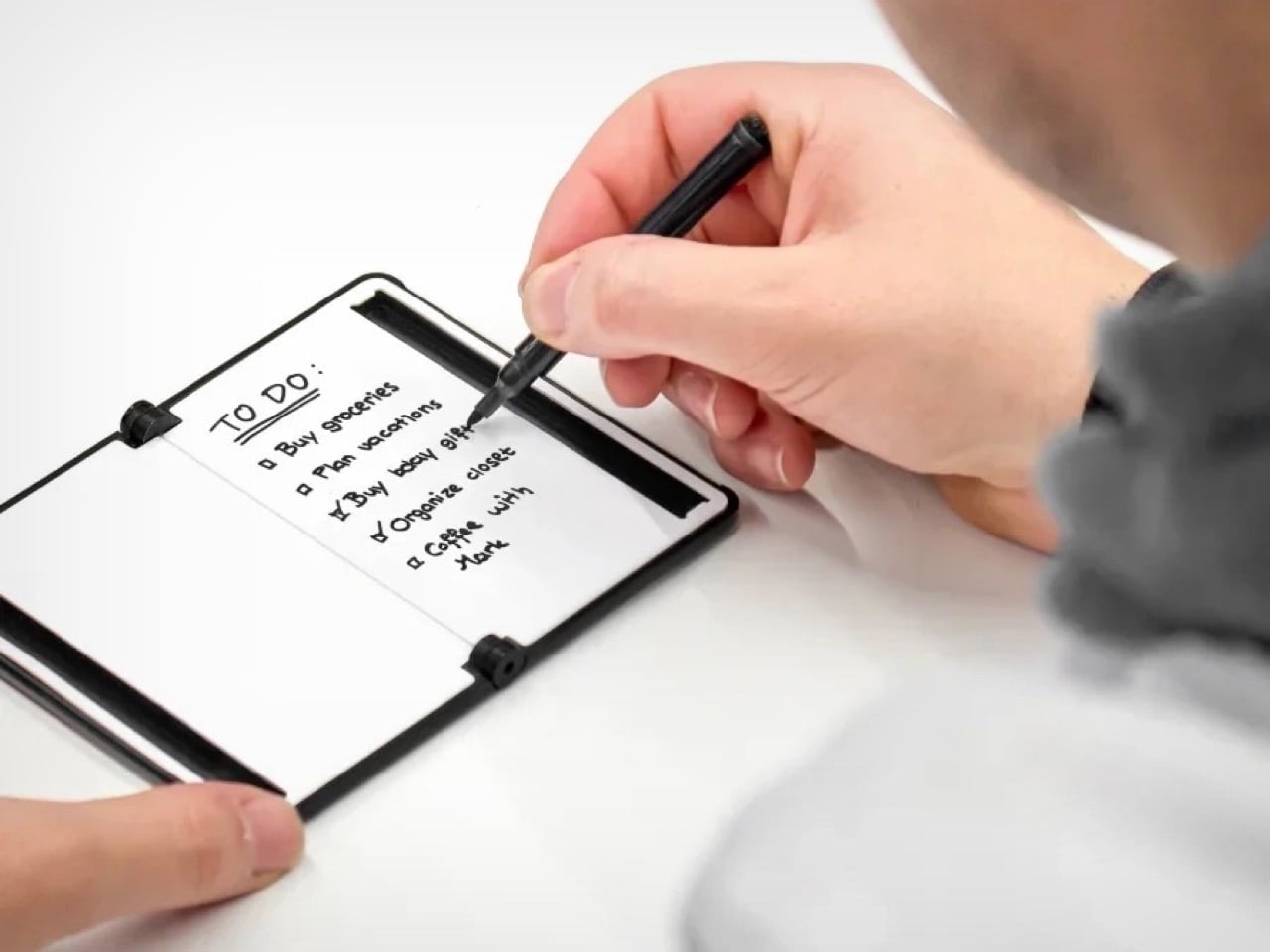
The concept sounds absurd until you actually think about it. When was the last time you saw someone pull out a notepad to jot something down? Probably never, because nobody carries those anymore. But ideas still hit at random moments, phone numbers still need to be scribbled down, and sometimes you just need to sketch something out quickly. The MEMO wallet acknowledges this reality by making the notepad part of something you’re already carrying anyway.
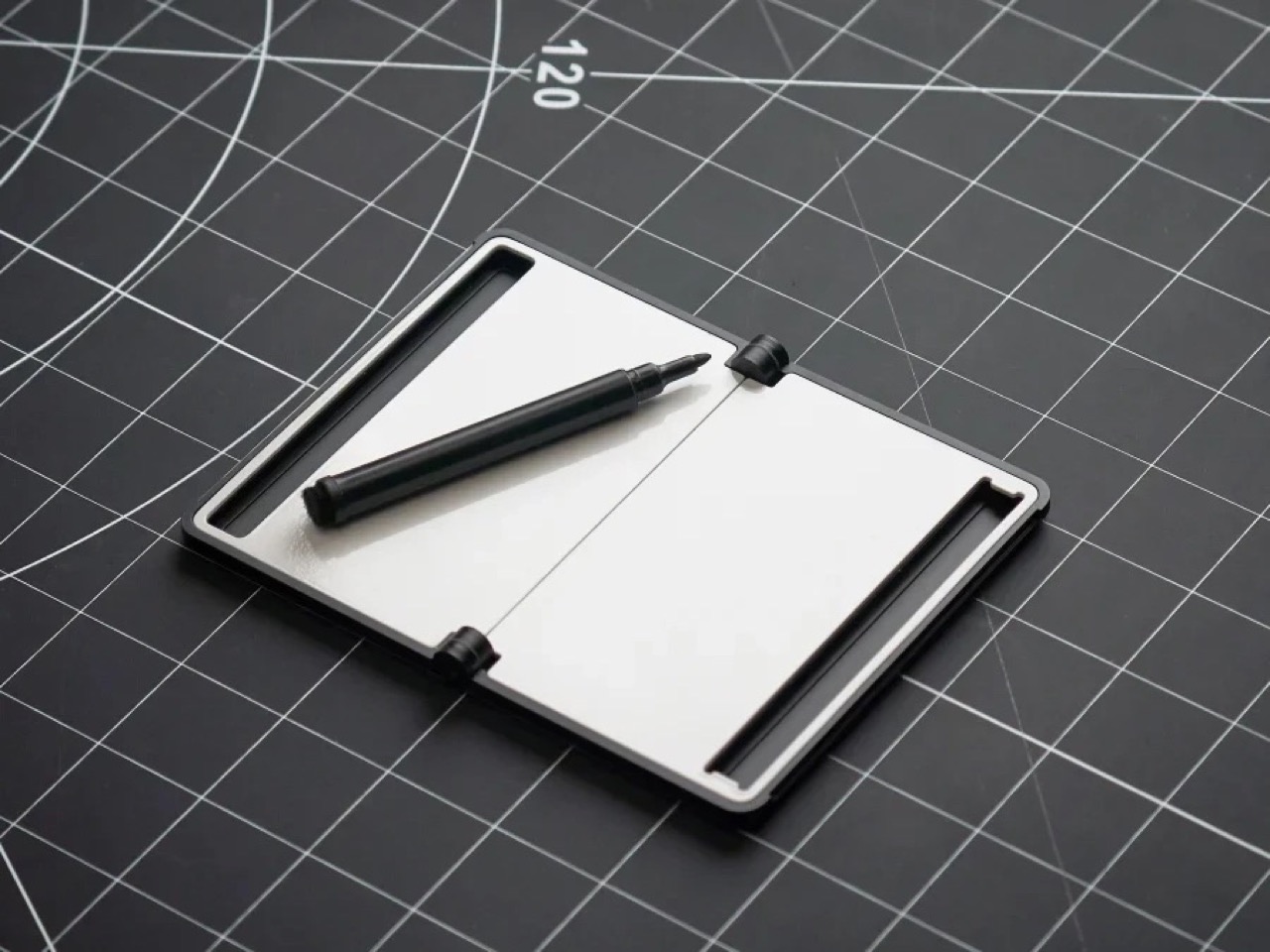
The wallet’s design is deceptively simple. Imagine a bifold wallet, but instead of opening the bifold to reveal your cards and cash, you open it to reveal a two-panel dry-erase whiteboard along with a built-in removable marker. Imagine a tiny notebook – that’s essentially what you get. The panels themselves are whiteboards on the inside, but on the outside, you’ll see a slot that lets you store up to 6 cards. Each panel has enough space for 3 cards, covering most use-cases. I, for example have 3 payment cards, 2 ID cards, and 1 access card for my coworking space. That’s pretty much all I need to carry on a daily basis.
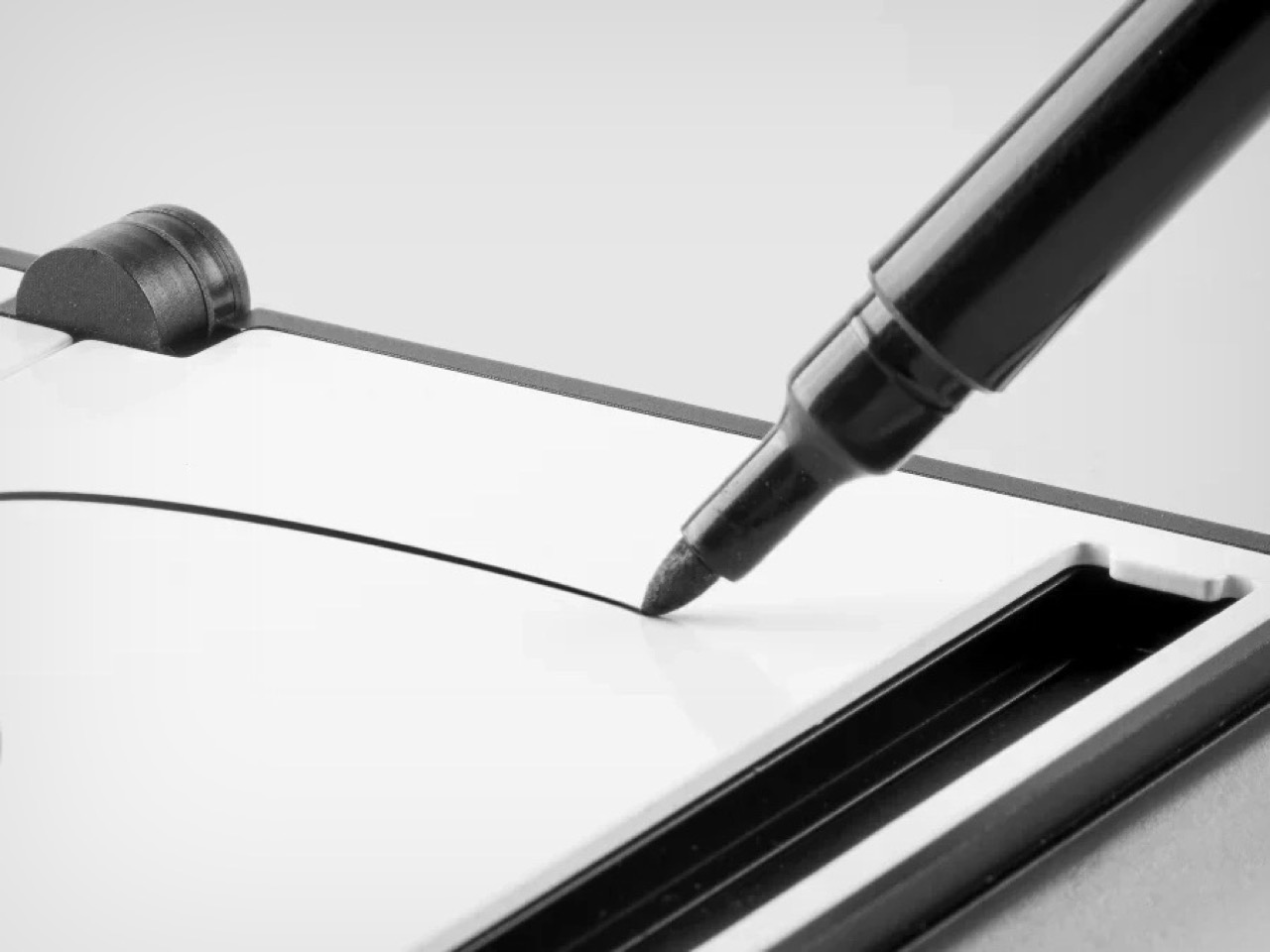
The dry-erase whiteboard is an extra feature that my creative brain personally loves. It feels intuitive, allowing me to quickly take notes without using my phone. There’s no screen-time, the ideas aren’t stored on a device that has internet access, and you can do everything from taking notes to making doodles – analog, baby. The marker docks right inside the wallet (although I wish it were slightly thinner), and when closed, your notes stay hidden and not at risk of accidentally getting wiped away inside your pocket. The marker itself has a built-in eraser just in case you want a fresh slate.
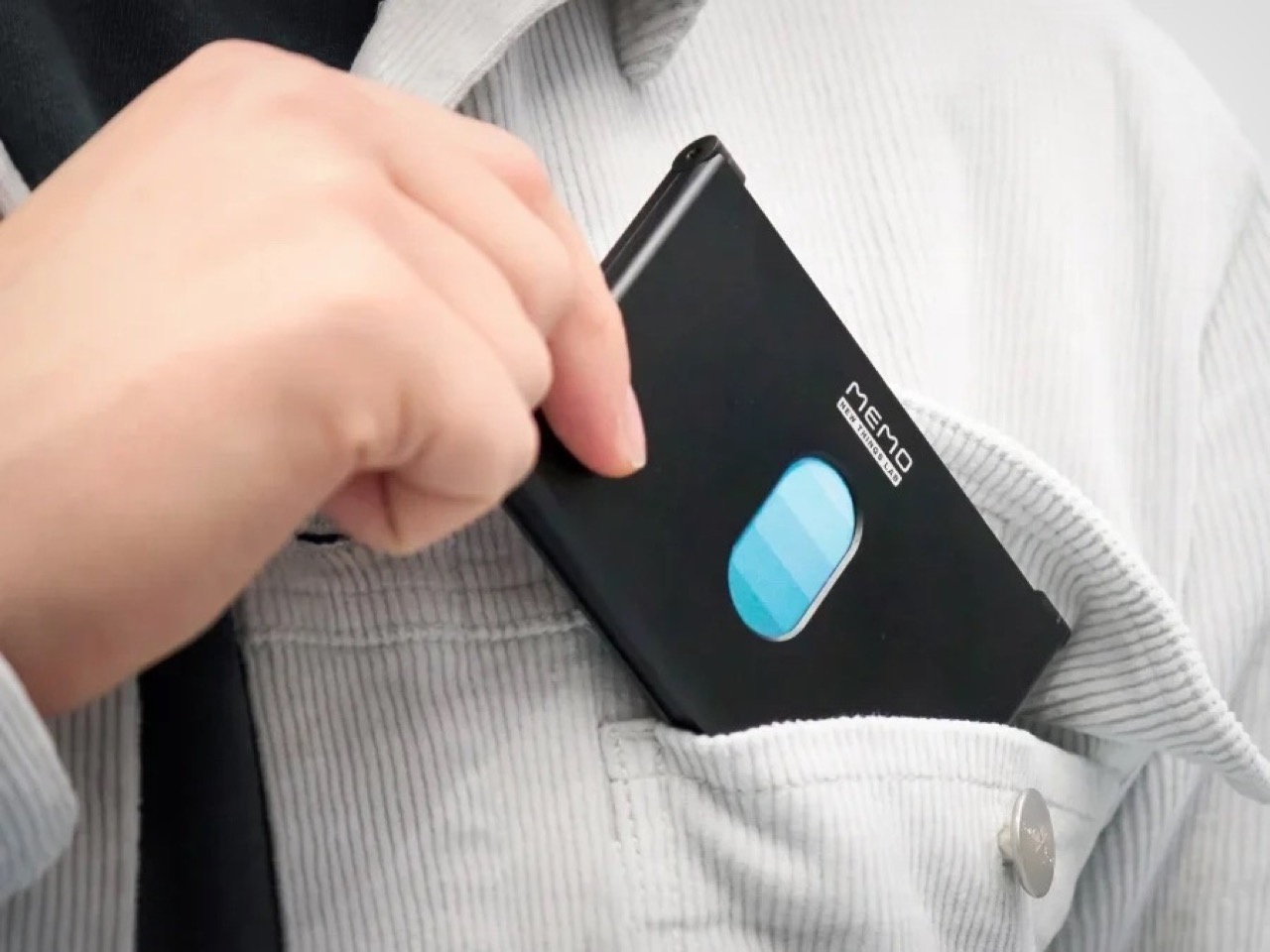
New Things Lab built this thing from precision-milled 6063 aluminum, the same stuff used in window frames, so it can handle daily abuse without showing wear. The CNC machining gives it clean lines and tight tolerances that feel premium in hand. Three anodized finishes are available: Charcoal Black, Slate Grey, and Gilded Rose, though the darker options might disappear in the depths of your bag if you’re not careful.
The whiteboard surface works exactly as advertised. Write on it, erase it, repeat. No paper waste, no running out of pages, no ink bleeding through. Whether you’re sketching out a floor plan, writing down WiFi passwords, or just doodling during a boring meeting, the surface handles it all. The magnetic closure keeps everything secure, and the compact 108 x 74 x 11mm dimensions slip into any pocket without bulk.
RFID blocking comes standard, protecting your cards from digital pickpocketing attempts. The aluminum construction naturally shields electromagnetic signals, so this isn’t some afterthought feature tacked on for marketing purposes.
The trade-offs are real though. Six card slots won’t accommodate everyone’s plastic collection, and the aluminum construction makes it heavier than typical wallets. The pen, while clever, could easily get lost if you’re not careful about clipping it back in place. Some people might find the dry-erase format awkward after years of paper and digital notes.
But for minimalists who actually use their EDC gear, the MEMO wallet makes a compelling case. It’s genuinely innovative without being gimmicky, practical without sacrificing style. In a world of identical carbon fiber and leather wallets, something this different deserves attention. At around $90, it’s not cheap, but the build quality and unique functionality justify the premium. Sometimes the best ideas are the ones that seem completely obvious once someone finally does them.
I don’t think anyone apart from Bruce Lee actually made nunchucks appear ‘seriously dangerous’. A lot of the appeal of a pair of nunchucks lie in the theater, the fanfare, the performance… but operate them well and they’re hellishly deadly. The TiNova is somewhat like that. Its magnet-enabled fidget-to-open mechanism is about as enjoyable as flicking around a butterfly knife or a pair of nunchucks, but once open, the TiNova is a tiny beast that packs a punch.
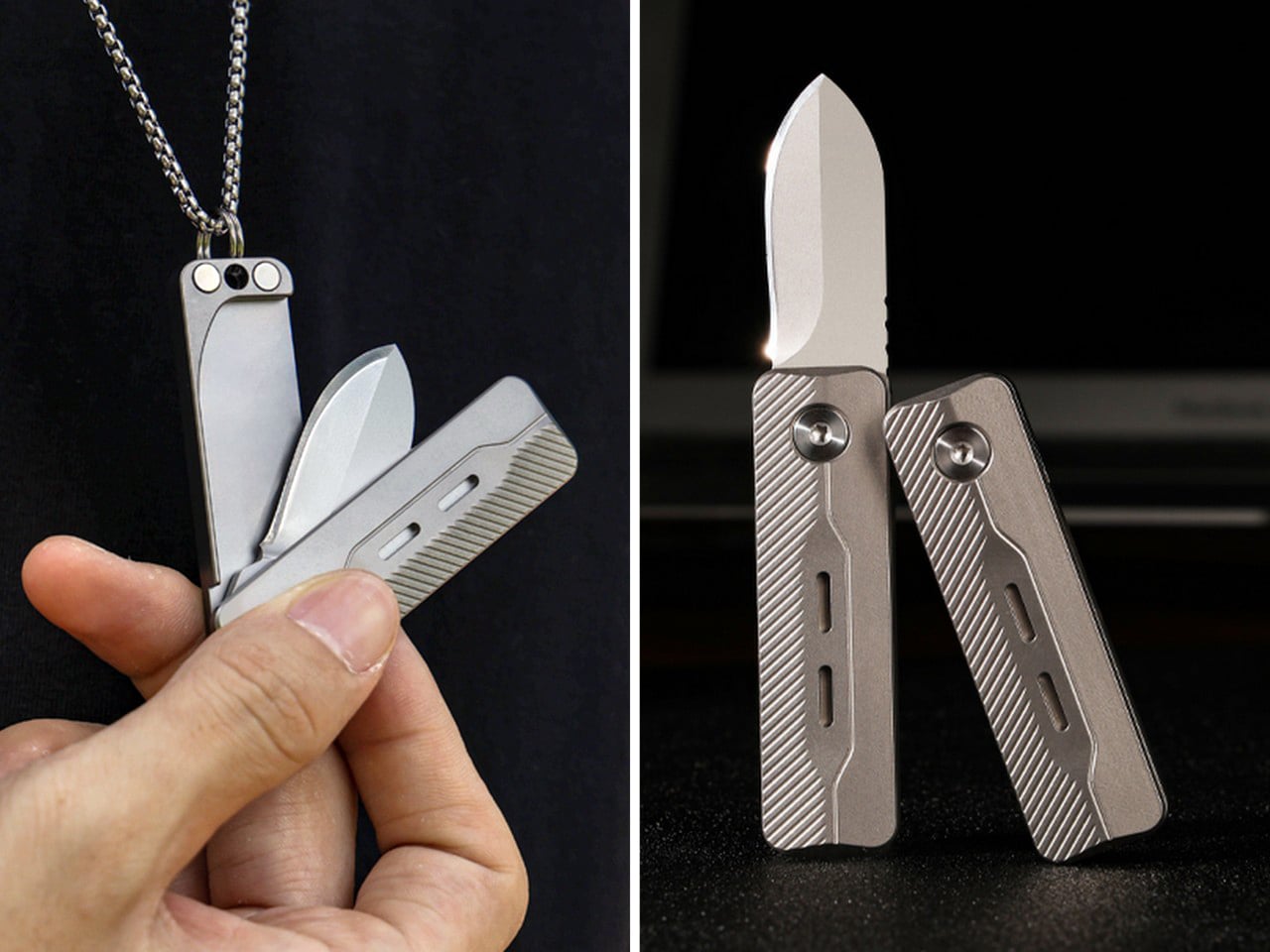
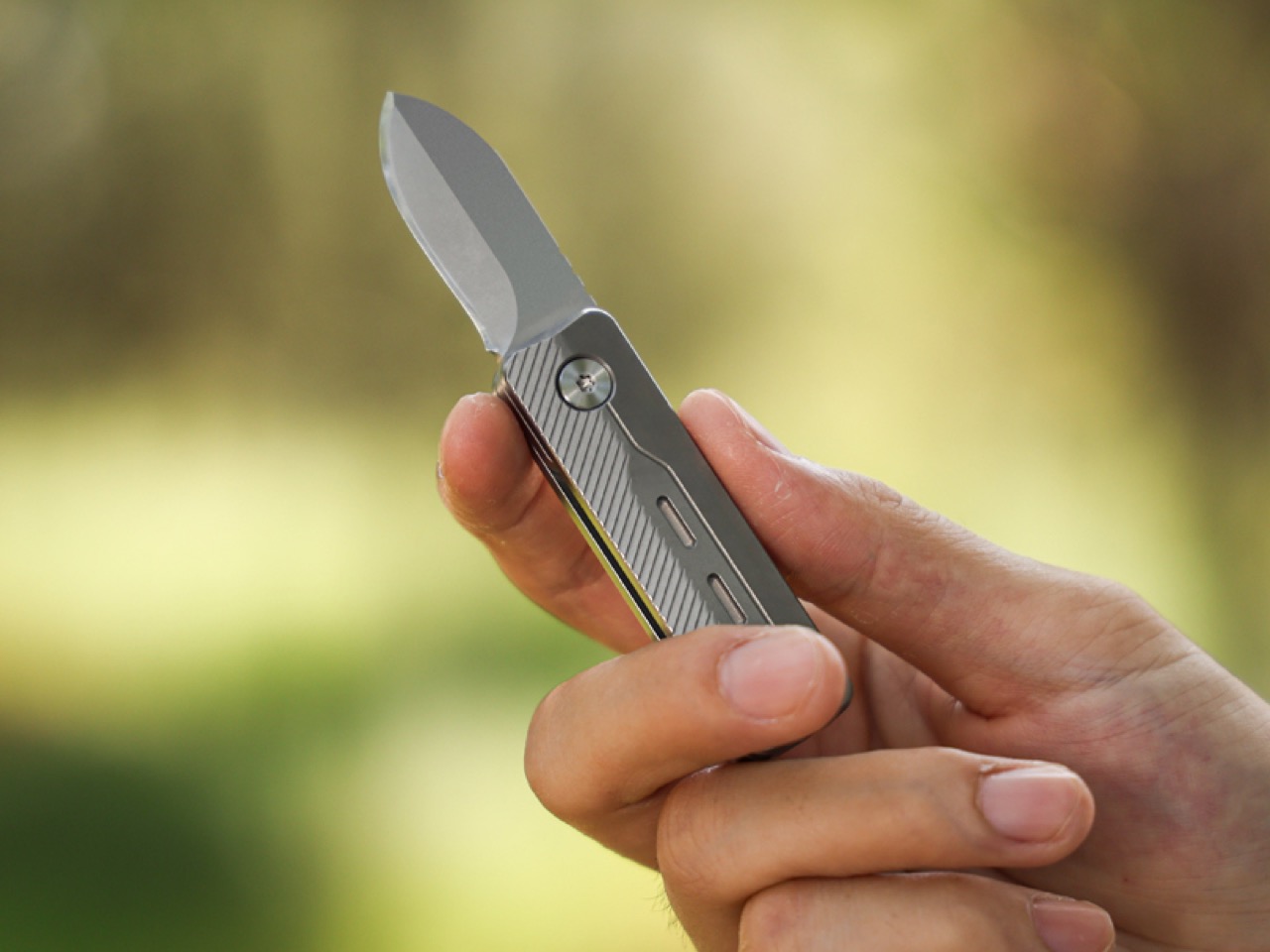
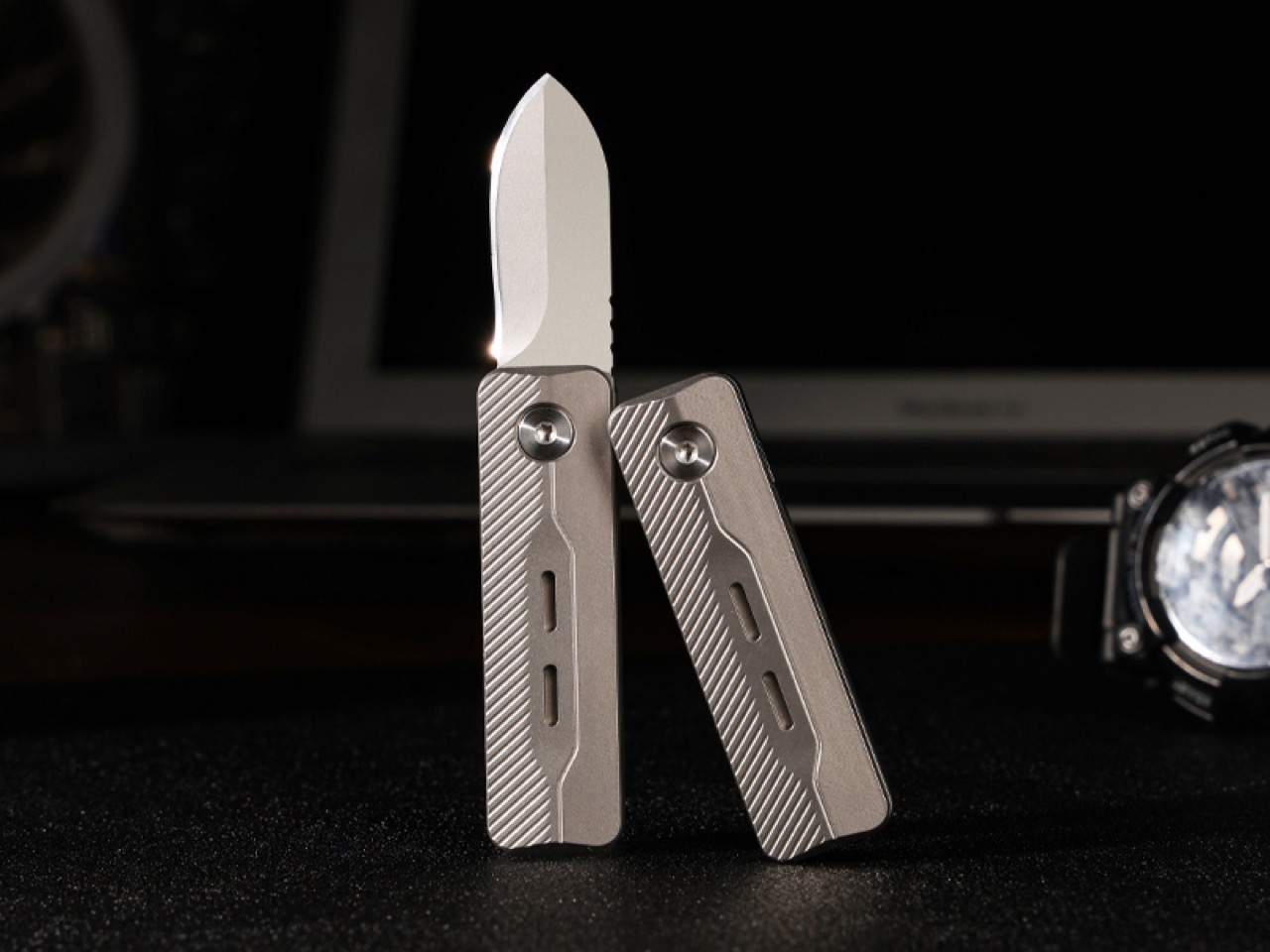
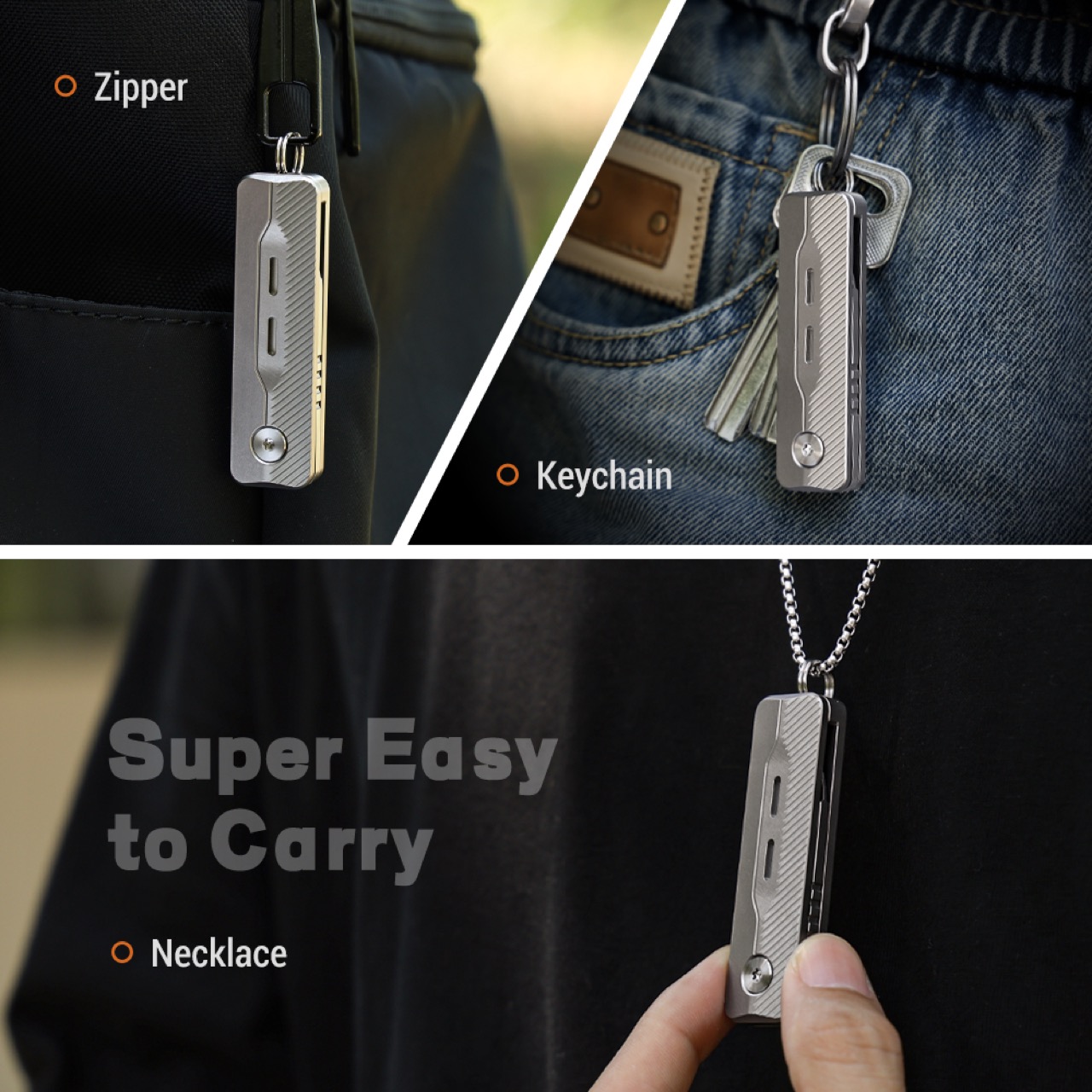
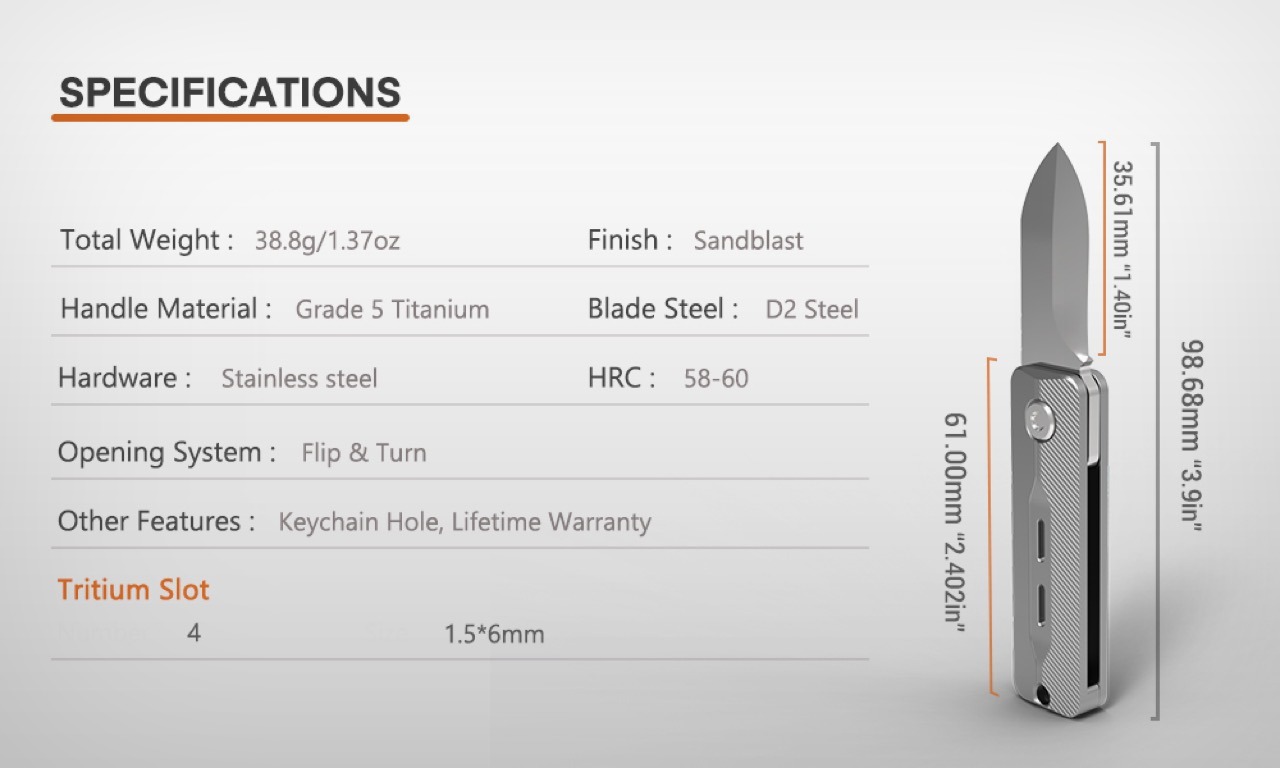
A titanium body, a machined construction, and a D2 blade make the TiNova a bite-sized brute. Nothing about the knife feels flimsy or toy-like… even though the entire thing measures just under 4 inches when open. When closed, the TiNova drops down to a mere 2.4 inches in length, and is small enough to be worn around your neck like a nifty EDC dog-tag. When you mean business, take it off, flick it open, and your pocket powerhouse is ready for serious action.
The TiNova is smaller than the average pinky finger, making it roughly the size of your standard thumb-drive. The two-part titanium handle is held together with a single pivot point, and a pair of magnets that snap the handle into its closed position. A drop-point blade sits in a gap between the two halves of the handle, concealed when not in use. To deploy the blade, simply swivel any one half of the handle around 360° and the blade travels outwards with confidence. It’s not like your regular flipper, which requires dexterity, or a switchblade or OTF, which requires being vigilant. The TiNova’s blade deployment is all about flair and performance. With enough practice, a simple flick of your wrist and a good amount of centrifugal force should have the handles rotate a full 360° to deploy the blade.
Once out in the open, the TiNova’s blade means absolute business – D2 steel is a top-tier steel in the EDC and knifemaking world, giving the TiNova street cred. A standard spear-tip design with a single drop-point edge makes the TiNova a reliable workhorse. When open, there’s nothing you can do to cause the knife to ‘fail’ the way a cheap lock on a budget knife would. This thing is built solid, and will even pierce through wood without as much as a bit of flex. The drop point edge is a classic in the industry, making it perfect for piercing, cutting, slicing, scraping, and whittling. Although built to withstand the outdoors, the blade works just as effectively indoors or in tactical/emergency situations.
However, seriousness aside, the TiNova’s charm lies in its fun personality. That fidget mechanism is almost entirely the most charming feature about this knife. It’s designed to engage your fingers, as you attach and detach the ends of the handles. If you’ve seen those magnetic fidget bars/sliders, think of the TiNova as just like them, but with a deadly blade just tucked away for when the fun stops.
This tactile appeal is easily what makes the TiNova such a stellar pick for your everyday carry. Why would you carry a boring folding knife when the alternative is something that feels fun and looks intimidating? With enough practice, the knife should flip open effortlessly, and should definitely drop a few jaws in the process. If you don’t believe EDC should have a component of childlike joy, this one might not be for you.
The reliably strong D2 blade cuts through everything with ease, whether it’s as simple as an envelope or an Amazon parcel, or as tough as wood or even paracord. The steel’s high-strength and blade retention means it’s definitely going to stay sharp even with regular use, although the drop-point design means that even IF the TiNova lost its edge (that’s a big if), sharpening it is fairly simple.
Meanwhile, the blade sits within a practically indestructible titanium shell. The machined titanium design boasts this sandblasted finish which is great to grip, while grooves on the handle add to the friction. The flat handle is ambidextrous, and tritium slots on both sides mean you can add glow-vials to make your EDC visible in low light. A lanyard hole means you can string your TiNova to a keyring or even a neck-worn chain, just in case the tiny form factor is a little too small for merely slipping into your pockets. And as far as ‘practically indestructible’ goes, you could run over the TiNova with your car and the titanium will shrug it off like a gentle breeze.
The knife falls within the small-carry category, given its tiny 1.4-inch blade and sub-4-inch overall design. The titanium makes the TiNova as lightweight as it is robust, weighing a paltry 38.8 grams or 1.37 ounces (that’s about as much as an AirPods case).
The TiNova starts at $45, or 20 bucks off its $65 MSRP. It’s designed to be scratch-resistant, corrosion-proof, and will weather any sort of rough use. In fact, designer Ideaspark confidently offers a lifetime warranty on the TiNova. Grab yours now and it’ll ship with a complimentary keyring… and if you want to jazz your knife up, an extra $15 will allow you to either get a custom engraving on the handle, or have it coated in PVD black, making it the ultimate stealthy EDC companion that still knows how to have some fun!
You look at certain companies and just instantly a product comes to mind. When you hear the word Yamaha, the vast population thinks ‘Motorcycles’, when you hear Bose, you think ‘Speakers’, and when you hear Zippo, you instantly think of ‘Lighters’. Well, Yamaha also makes some top-notch pianos, Bose has an entire flourishing division of shock-absorbing truck seats, and Zippo also happens to make EDC tools!
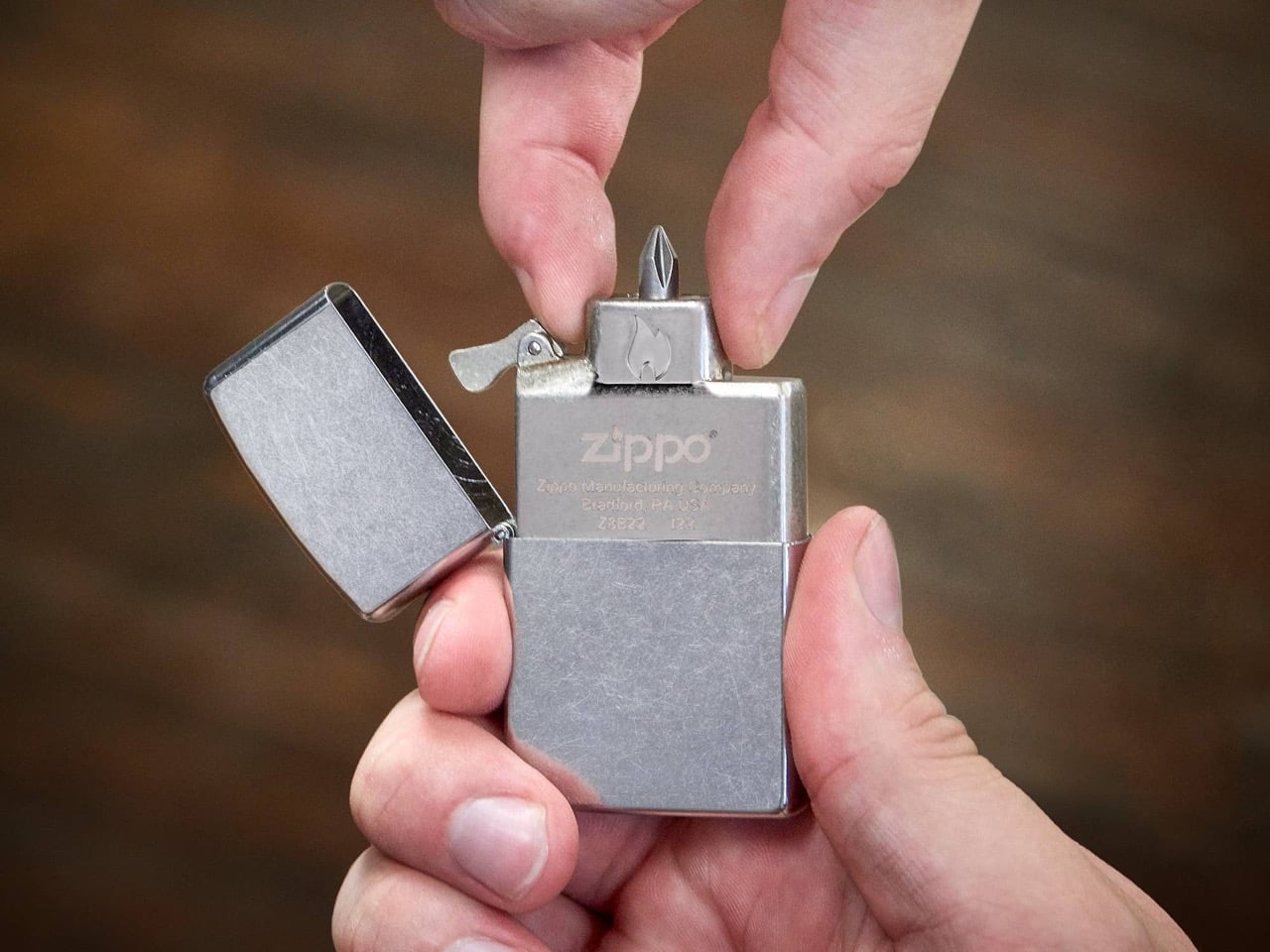
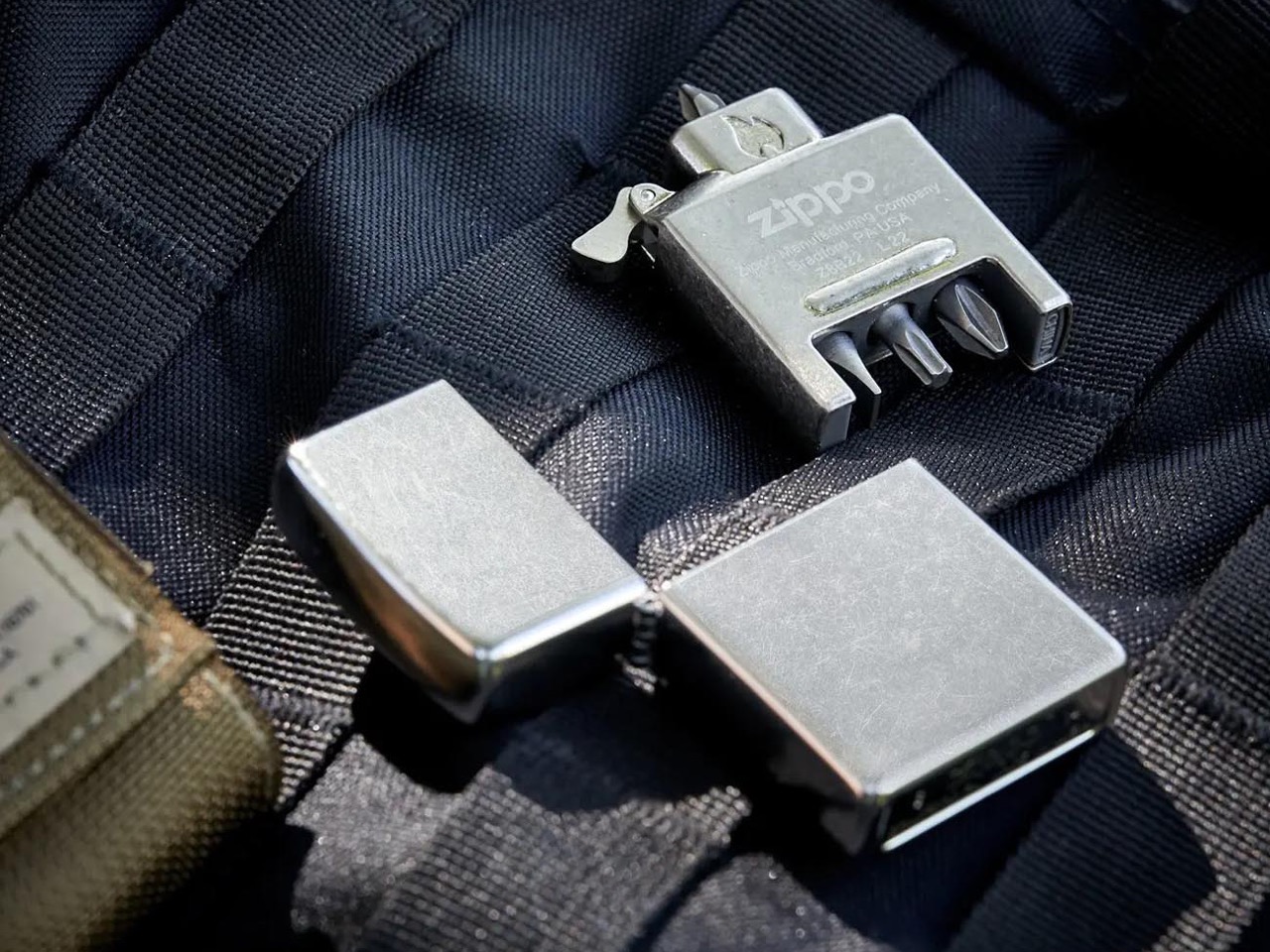
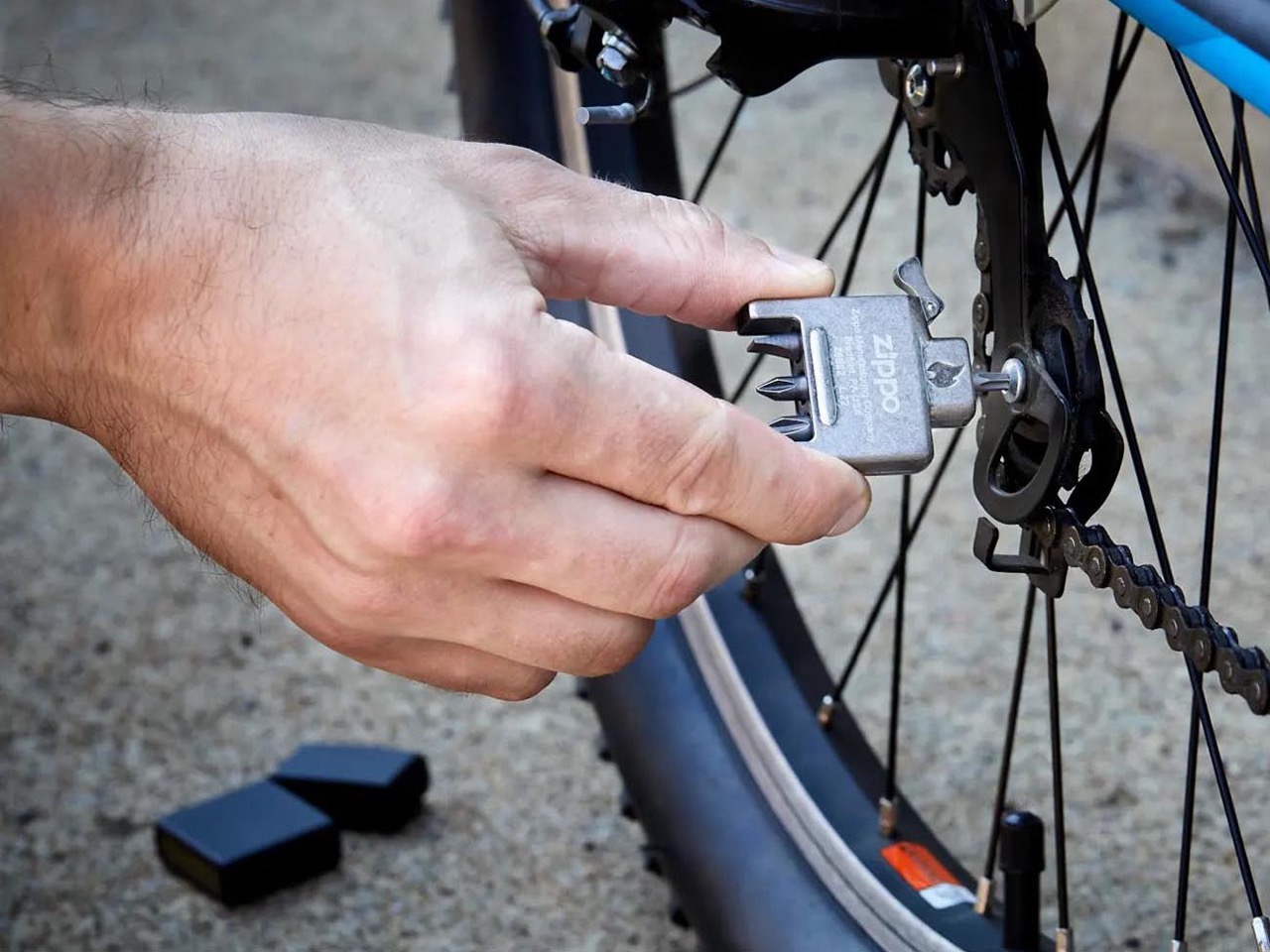
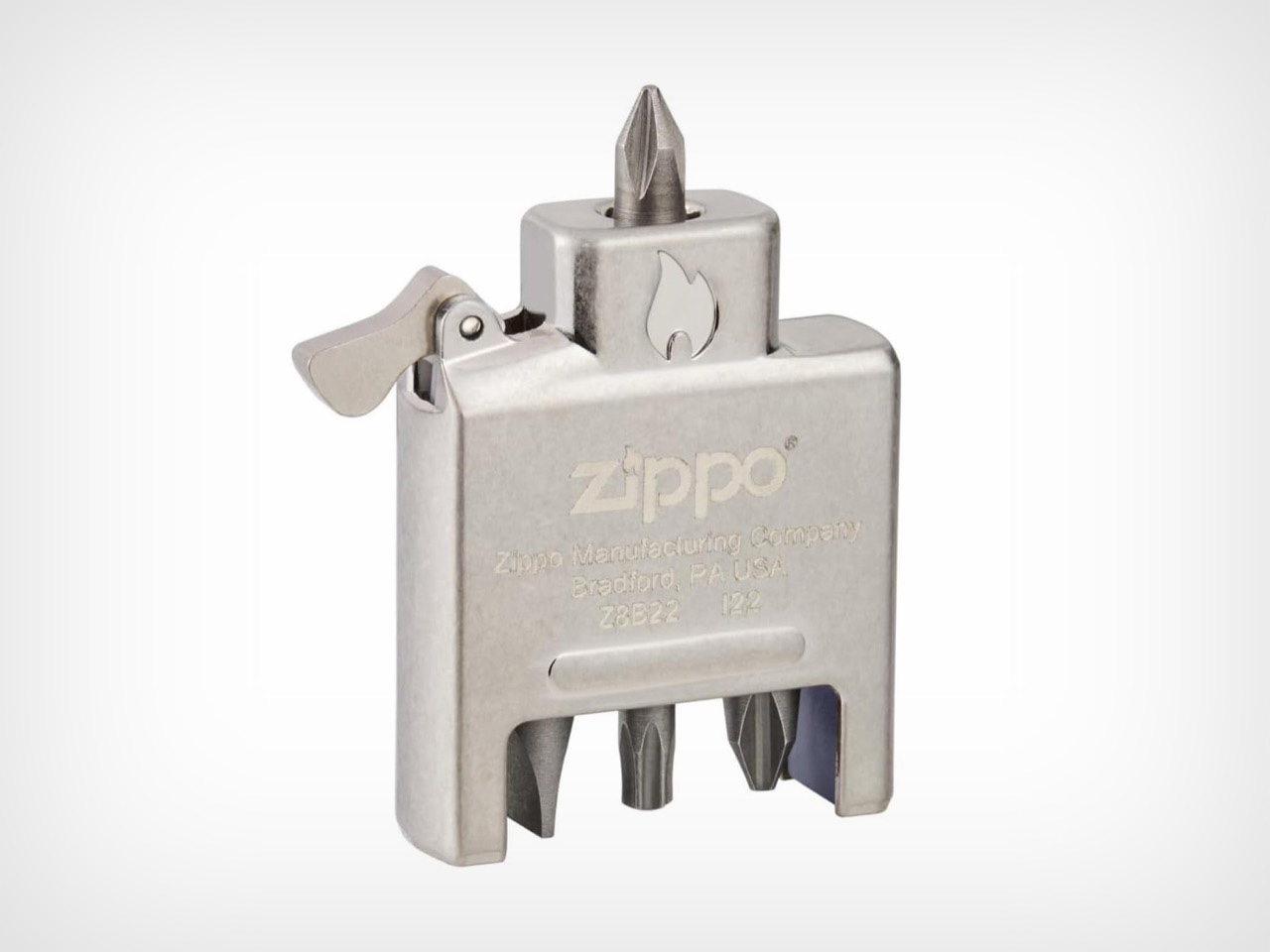
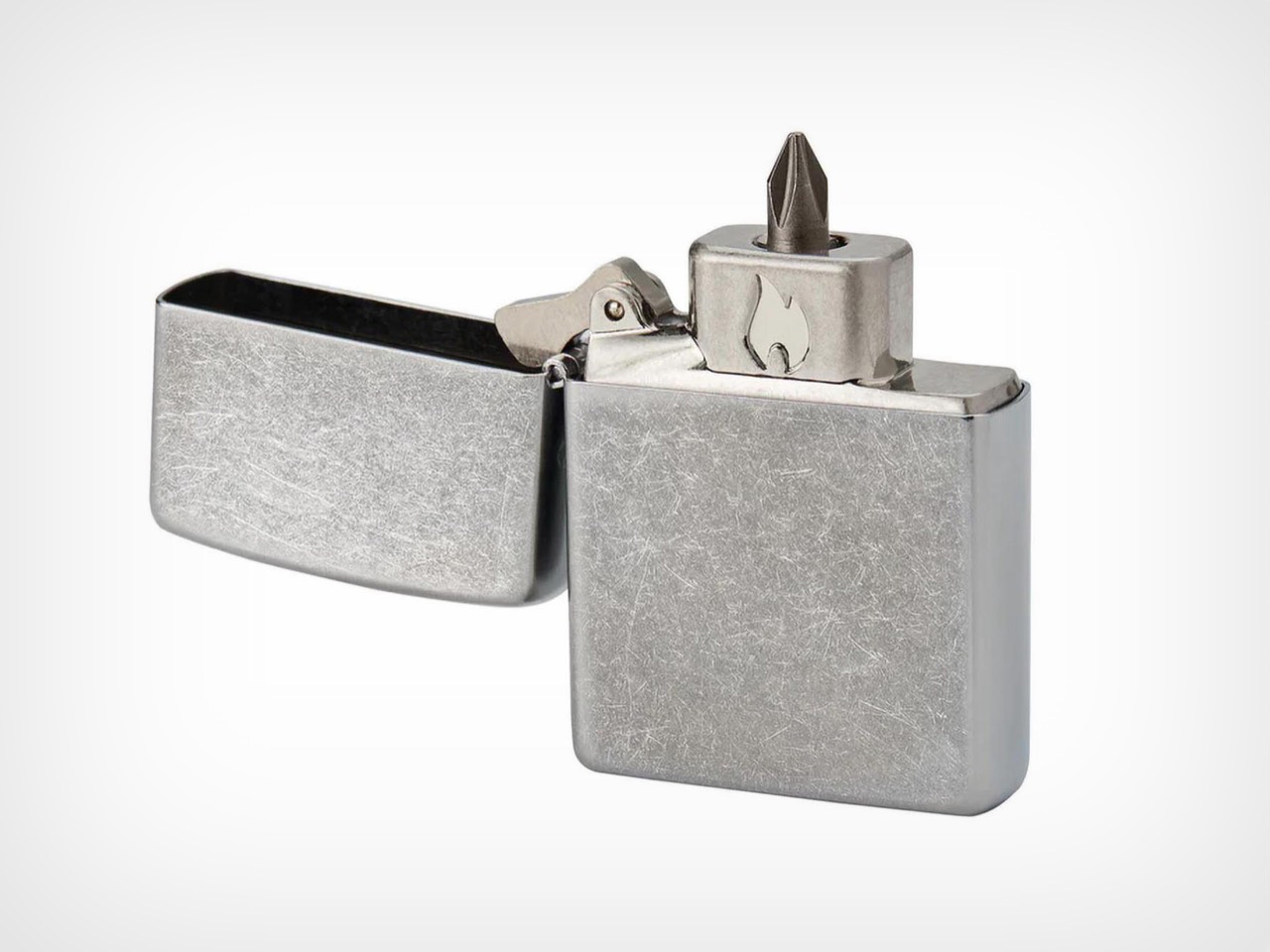
Meet the Zippo Bit Safe Screwdriver Insert – a multitool designed to fit inside your lighter. The company basically looked at its iconic lighter and thought, ‘Hey, what if we developed modules for it?’ To that end, the Bit Safe Screwdriver Insert is a 4-bit multitool that fits right into your standard Zippo lighter case. Flip it open and instead of the flame or the burner, you’re greeted with a screwdriver that you can then use to tighten and loosen stuff, repair gadgets, and be a total tinkerer. The insert works intuitively, and doesn’t have any igniting abilities, which means this might be the only Zippo you can carry into an airport!
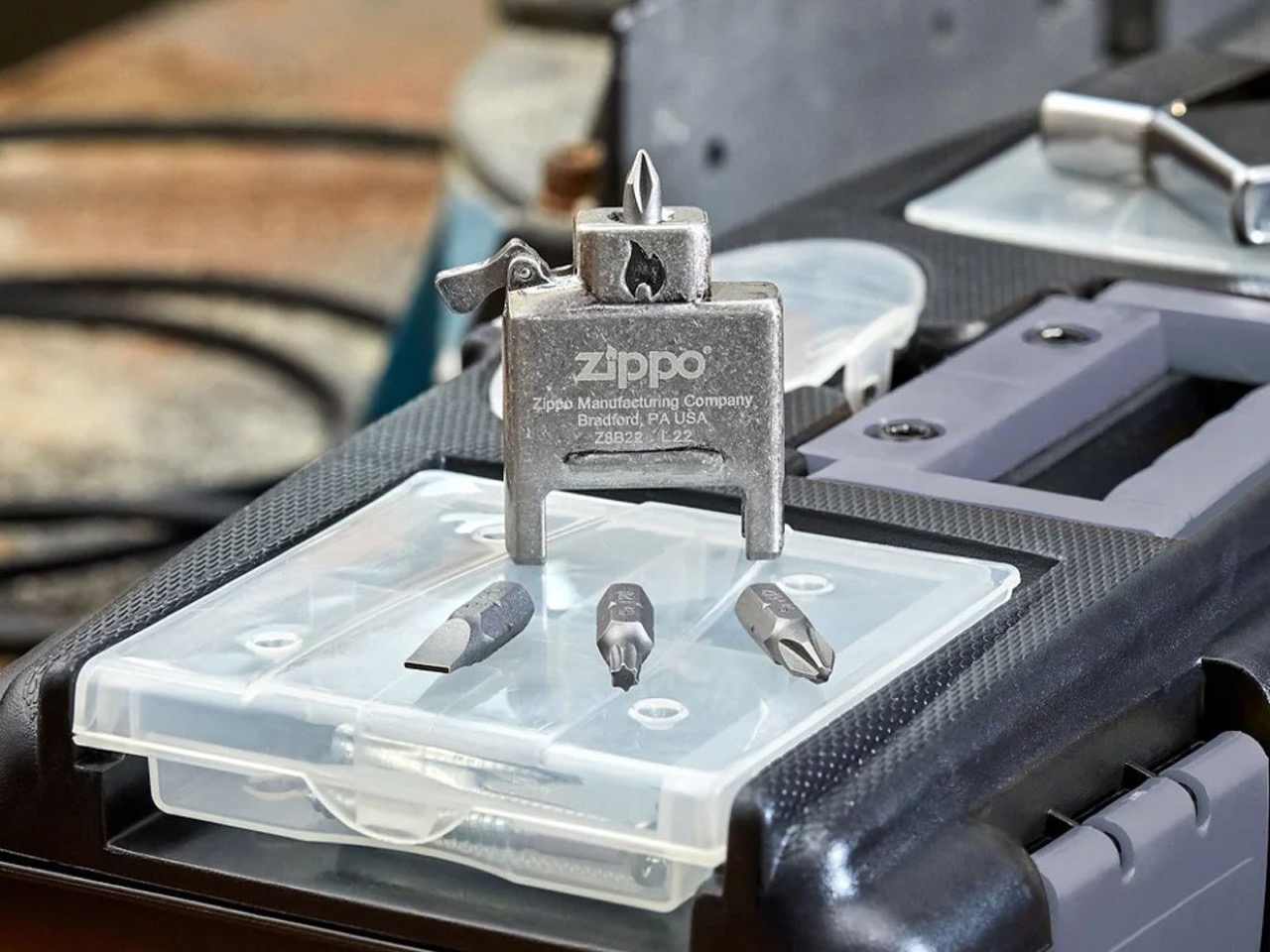
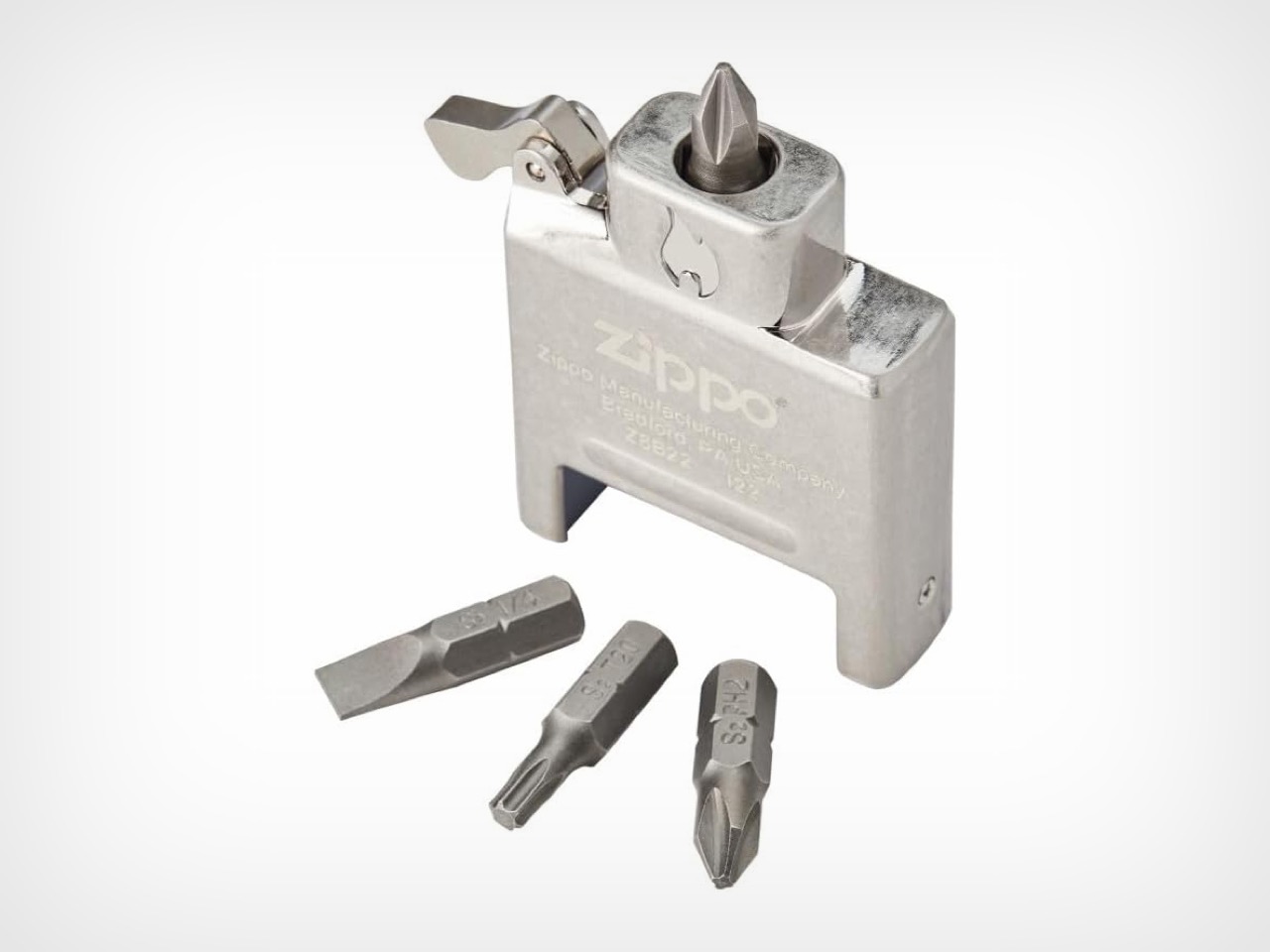
Now I’m not entirely sure what makes a man cooler – whipping out a lighter, or whipping out a screwdriver and fixing something… but Zippo has both those grounds covered. The Bit Safe Screwdriver Insert is a nifty EDC module that attaches into any spare Zippo case you may have lying around. It’s compatible with all Zippo Classic cases, as per the website, and provides storage for 3 bits, along with a mounting bracket for 1 bit. A magnetic insert holds all the bits in place, and to get working, all you need to do is just flip the lighter open and get rotating.
I recommend keeping the lighter case on for most activities (it looks cooler), but there are times when the lighter’s lid may come in the way. That’s when you just remove the Bit Safe insert and use it like a flat-grip driver. Put it back and the insert clicks into place, echoing a familiar Zippo user experience.
Each Bit Safe comes with 4 bits – #1 Phillips, #2 Phillips, #2 Flat, and T20 Torx. The outer shell itself is made from aluminum (with the famous Zippo lid hinge), while the bits themselves are made from tool-grade steel. The bits are your standard hex bits, so you could potentially swap them out for other bits that you constantly find yourself using.
The insert costs under $15 and makes for a pretty nifty piece of EDC. There’s a bit of an illusion at play here, as people just assume you’re pulling a Zippo lighter out of your pocket, only to reveal that it’s actually an EDC multitool. If you’re a Zippo aficionado, this insert’s a great way to make use of any old cases you may have lying around. Zippo, if you’re reading this, make a power bank insert next! Imagine flipping the lid open to reveal a USB-C port!

 Connexion