Vue lecture

Il y a de nouveaux articles disponibles, cliquez pour rafraîchir la page.

Air Purifier Filters Cost $100 a Year, but CUE Uses Water Instead

Air purifiers have become a common fixture in homes and offices, quietly working to keep indoor air breathable. Most of them follow the same basic formula, drawing air through a dry filter that captures dust, pollen, and airborne particles over time. When that filter reaches its limit, you throw it away and buy a replacement, or wash it if it’s the reusable kind. It’s a familiar routine, but not exactly a thoughtful one.

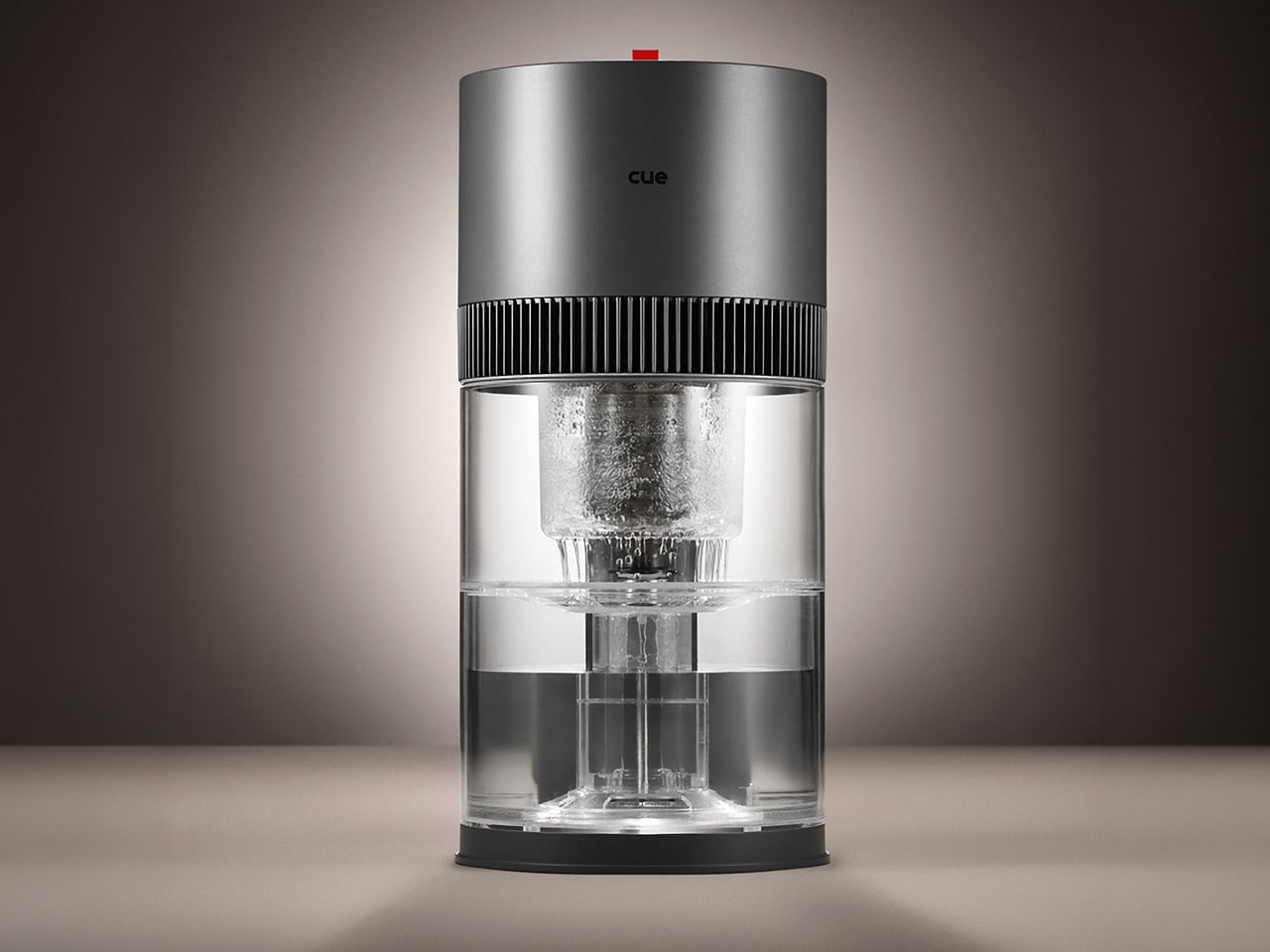
CUE Air Washer from Watervation is a 2-in-1 purifier and humidifier that takes a noticeably different approach. Rather than filtering air through a dry medium that slowly fills with grime, it washes the air with water, borrowing from how rain naturally clears the atmosphere of dust and pollen. It’s a concept that sounds simple in hindsight but actually changes quite a bit about how air care works.

Designer: Watervation

Click Here to Buy Now: $299 $575 (48% off). Hurry, only 41/975 left! Raised over $411,000.

The idea at the heart of CUE is surprisingly intuitive. Instead of holding contamination inside a dry filter, the device draws air through a water-based medium that strips airborne particles and gases from the air. Once the water turns dirty, you empty it, rinse the tank, and refill it, giving the device a clean start every day. There’s nothing to replace, and nothing to accumulate.

The technology behind CUE is Watervation’s patented RainTec system, and its most notable quality is what it doesn’t rely on. Most air washers need motorized water pumps to circulate liquid, but RainTec uses fluid dynamics instead. A spinning rotor generates a vacuum that draws water upward without any pump, eliminating the most common failure point in these devices and keeping the design considerably simpler.

What makes CUE genuinely practical is how naturally it handles two common problems at once. Dry air and airborne pollutants tend to go hand in hand, especially in bedrooms during winter or in home offices that don’t have great ventilation. Instead of running two separate appliances for purification and humidity, CUE handles both, covering spaces up to 300 sq ft, which fits most personal and domestic environments.

The ownership story is where CUE makes the strongest case for itself. Conventional air purifiers can cost over $100 per year in filter replacements alone, a figure that doesn’t stop growing the longer you use the device. CUE cuts that entirely by using water as its only medium. The maintenance routine comes down to emptying the tank, rinsing it, and refilling it with fresh water.

CUE is also one of those rare appliances that’s genuinely pleasant to leave out in the open. The cylindrical device has a dark upper housing and a clear lower tank that lets you watch the water action inside. There’s something calming about it. The swirling motion of water being spun and atomized gives the cleaning process a visible, almost meditative quality that isn’t common in this product category.

Performance testing by Korea Conformity Laboratories gives the product’s claims some independent backing. Results showed a 93.5% reduction in fine particulate matter, a 99.5% reduction in acetic acid, a 99% reduction in ammonia, and a 90% reduction in formaldehyde. The device also includes a built-in UV-C sterilization module that continuously disinfects the water tank while running, keeping the water hygienic throughout each cycle.

There’s a growing appetite for home appliances that earn their place on a shelf rather than hiding behind it. CUE Air Washer fits that thinking, handling air quality in a way that’s quieter, cleaner, and far less dependent on consumables than what came before. Watervation’s direction with this product hints at what home air care could look like when the design is as considered as the engineering behind it.

Click Here to Buy Now: $299 $575 (48% off). Hurry, only 41/975 left! Raised over $411,000.

The post Air Purifier Filters Cost $100 a Year, but CUE Uses Water Instead first appeared on Yanko Design.

No More Waiting in Line for Hot Water, This RV Heater Has 66,000 BTU

Summer has a way of changing the rules for RV travel. What was a relaxed weekend trip for one or two people becomes a full-blown family expedition, with everyone’s routines packed into the same tight space. Showers get longer, dishes pile up faster, and the morning rush gets more competitive. The systems you barely thought about in cooler months suddenly start to matter a great deal.

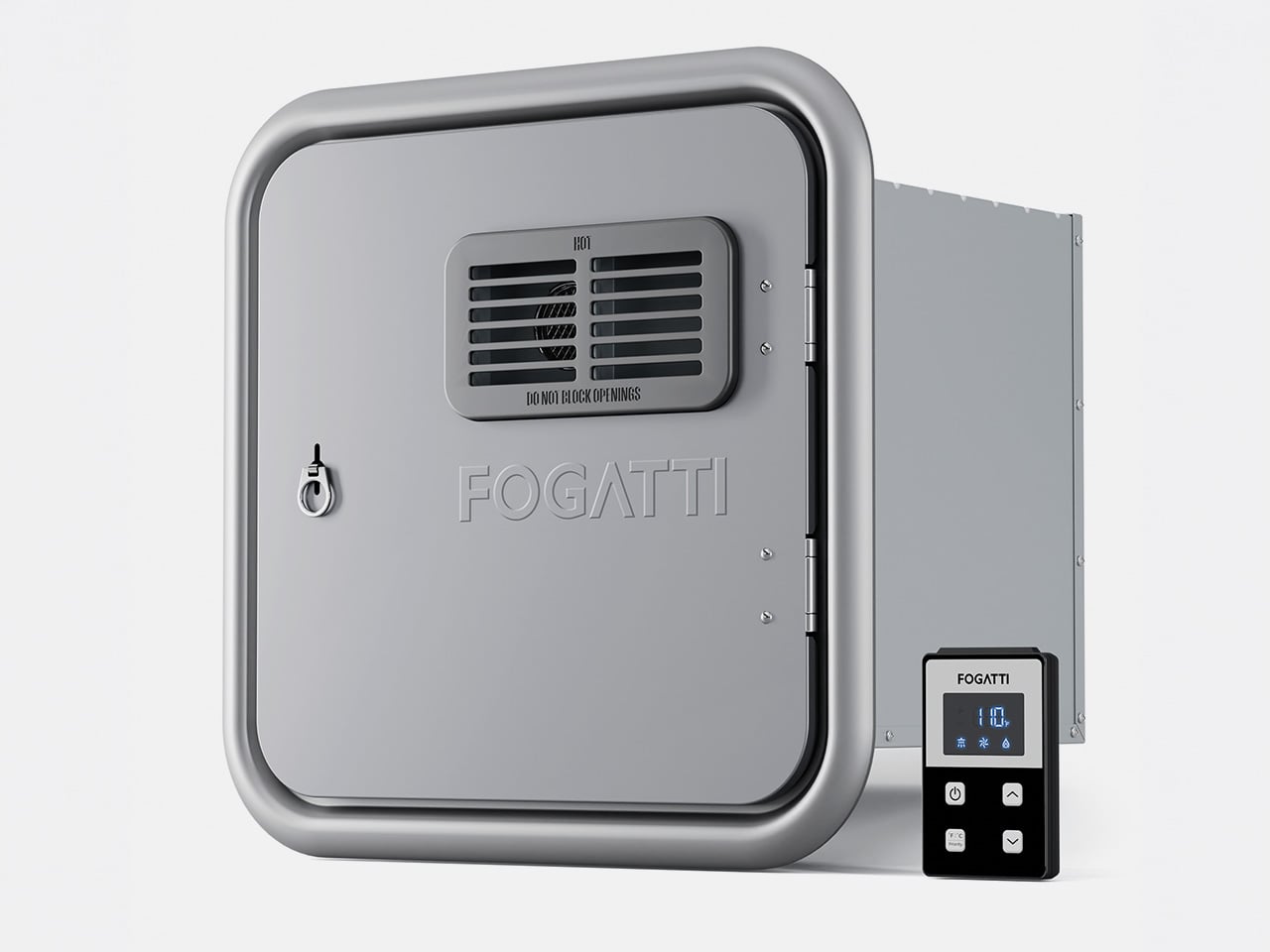
Hot water is one of the first things you notice when an RV can’t keep up. Waiting for the tank to recover, a cold burst just as you find a comfortable temperature, or having to ration usage when multiple people need the sink, these aren’t exactly the highlights of a road trip. The Fogatti InstaShower Ultra is a propane tankless water heater designed to change all of that.

Designer: Fogatti

Click Here to Buy Now: $799.99 $899.99 ($100 off). Hurry, deal ends in 48-hours. Website Link Here.

Picture a typical summer morning at a campground. Someone’s in the shower while another is getting breakfast going, and a third is at the sink washing up before everyone heads out for the day. That kind of simultaneous demand used to be a problem. With 66,000 BTU of rapid heating power and a maximum flow rate of 3.9 GPM, the InstaShower Ultra handles it without much fuss.

The end of a summer day outdoors tells a different story. Whether you’ve been hiking dusty trails, splashing around a lake, or just sitting in the heat all afternoon, everyone comes back to the RV needing a proper wash. A strong, steady shower makes that feel less like a chore and more like a reward, and you don’t have to queue up for it.

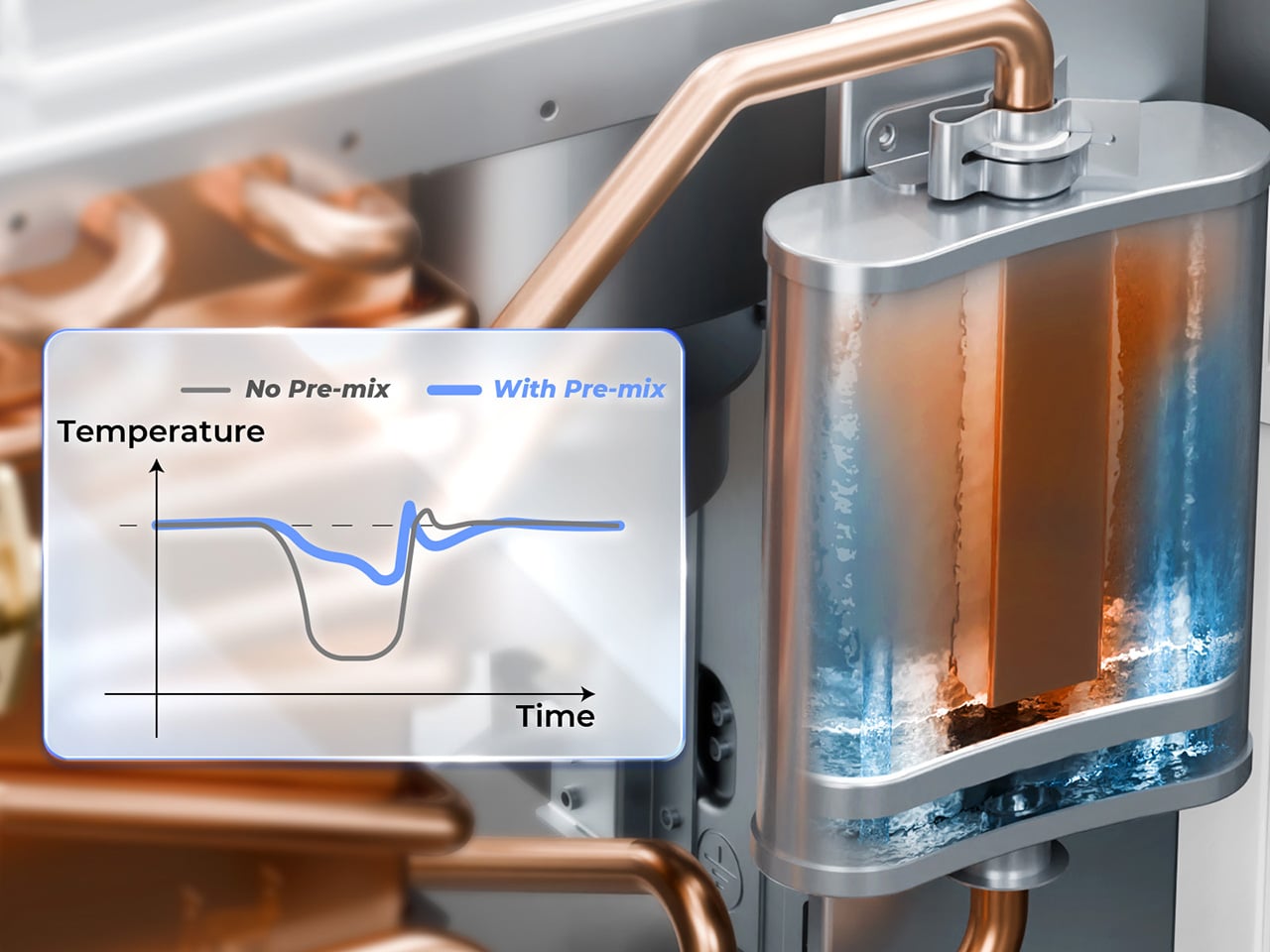
One of the more thoughtful bits of engineering is a built-in pre-mix system with a small mixing tank that balances temperature at startup. It addresses a familiar tankless annoyance, namely the cold burst before the heating kicks in. Once that’s handled, water comes out warm right away, and it’s the kind of improvement you only appreciate once it stops being a problem.

Temperature management doesn’t stop there, either. The heater uses segmented combustion that automatically adjusts heat output based on conditions. On a scorching summer afternoon, it scales back to prevent overheating. On a cool mountain evening or at higher altitudes, it ramps up accordingly. It’s a neat bit of self-regulation that keeps water temperature consistent, whether you’re parked in a sun-baked valley or somewhere up at 9,800 feet.

The InstaShower Ultra also activates at a flow rate as low as 0.5 GPM, which is considerably lower than what most standard tankless heaters require to kick on. That might seem like a minor detail, but it matters quite a bit on longer off-grid trips where every gallon counts. You aren’t forced to run the tap wide open just to get the heater going.

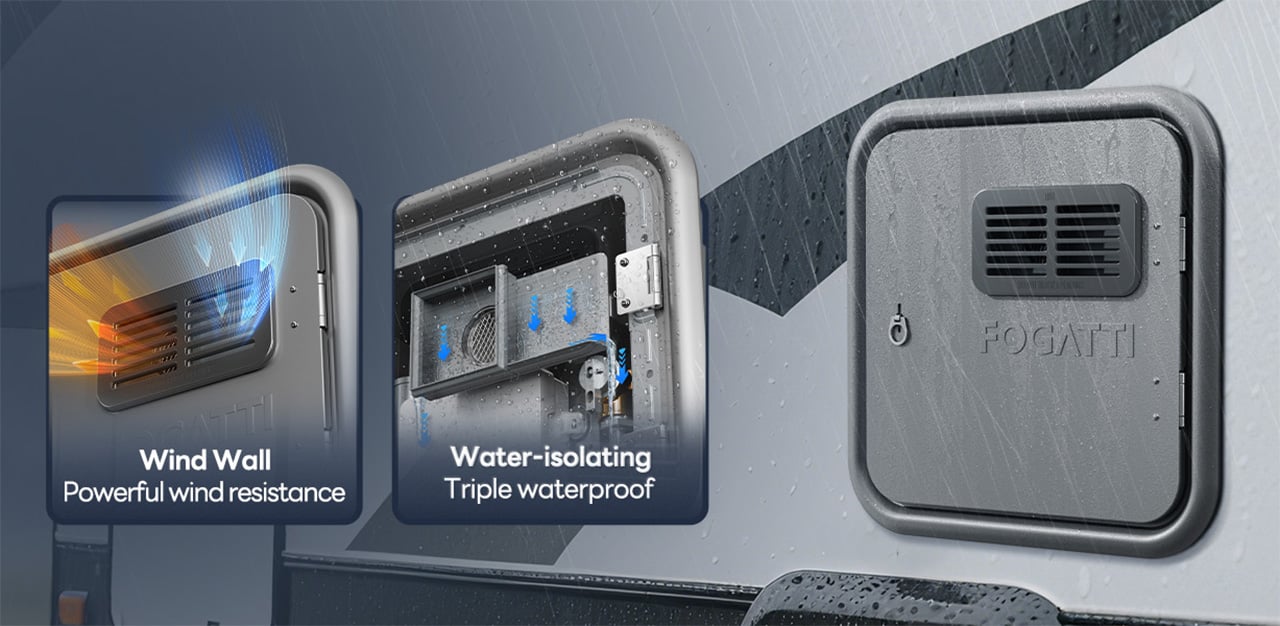
The weather is something a lot of buyers don’t think about until it’s too late. Summer storms roll in fast, and a water heater that can’t cope with heavy rain or strong gusts becomes a liability. HydroShield-Tech gives the InstaShower Ultra both windproof and waterproof resistance, with a NIDEC high-performance fan backing up the wind protection, so the heater keeps running when conditions outside take a turn.

For those still running on an older four- or six-gallon storage water heater, the InstaShower Ultra is a practical replacement. It comes with a door measuring 15 x 15 inches, designed to fit the cutout left by those older tanks, along with a decorative frame. Optional larger door frames are also available separately if your RV’s opening calls for a different fit.

Summer trips have a way of exposing which parts of the RV are actually ready for extended life on the road. A water heater might not top the pre-trip checklist, but it touches nearly every part of the daily routine, from the first shower of the morning to cleaning up after a late campfire dinner. Getting it right makes those routines a lot less stressful, and that’s the peace of mind that the Fogatti InstaShower Ultra delivers.

Click Here to Buy Now: $799.99 $899.99 ($100 off). Hurry, deal ends in 48-hours. Website Link Here.

The post No More Waiting in Line for Hot Water, This RV Heater Has 66,000 BTU first appeared on Yanko Design.

100-Meter A100 concept yacht redefines luxury sailing with massive interior volume

Modern sailing superyachts often struggle to balance two competing priorities: the elegance and efficiency of wind-powered travel and the expansive living spaces typically associated with large motor yachts. The A100 sailing yacht concept approaches this challenge with a bold rethink of traditional yacht architecture. Developed through a collaboration between Van Geest Design and Rob Doyle Design, the 100-meter vessel proposes a layout that delivers the interior volume of a motor yacht while maintaining the identity and performance of a sailing superyacht.

At the core of the concept is a design strategy that maximizes usable space. Traditional sailing yachts require wide side decks for crew movement and sail handling, which limits interior width. The A100 concept reduces the width of these side decks, allowing the main deck to stretch nearly the full beam of the yacht. This architectural shift creates significantly larger interior spaces than typically found on sailing yachts of comparable size.

Designer: Van Geest Design and Rob Doyle Design

The main deck is designed as the primary social and living area. Here, the owner’s suite occupies a substantial portion of the deck, offering a level of space rarely seen on sailing yachts. Adjacent to the suite is a central lounge and formal dining area intended for gatherings and entertaining. An additional space can function as a library or a private cinema, adding flexibility to the interior layout. Large sections of glass surround these living areas, filling the interior with natural light and offering uninterrupted views of the ocean.

Below deck, the yacht accommodates guest cabins along with a variety of leisure-focused facilities. This level also houses a dedicated diving room and storage for water toys such as jet skis and e-foils, allowing guests to transition between onboard relaxation and water activities easily. The layout is designed to maintain a strong visual connection with the surrounding seascape while ensuring privacy and comfort for those on board.

Outdoor areas play an equally important role in this larger-than-life superyacht design. The upper deck includes the navigation and steering stations, along with flexible lounge spaces for relaxation or wellness activities. At the stern, a large beach club spans the full width of the yacht, creating a welcoming space for guests to gather close to the water. Toward the bow, storage areas accommodate tenders and recreational equipment without disrupting the clean lines of the deck.

The sailing system is based on two free-standing DynaRig masts, a modern configuration used on some of the world’s largest sailing yachts. The system employs curved yards that support multiple sails, all of which can be deployed and adjusted electronically at the push of a button. The rotating masts simplify sail handling while maintaining efficient propulsion for a vessel of this scale.

Beyond its layout and sailing system, the A100 concept also reflects growing interest in more sustainable superyacht designs. By relying heavily on wind propulsion supported by advanced onboard energy systems, the concept explores ways to reduce reliance on conventional engine power. If brought to life, the A100 would stand among the largest sailing yachts ever built!

The post 100-Meter A100 concept yacht redefines luxury sailing with massive interior volume first appeared on Yanko Design.

5 Best Waterdrop Filter Systems for Spring 2026, From Renters to Full Family Kitchens

The water coming out of your tap has traveled through infrastructure that, in many American cities, predates the internet by several decades. Municipal treatment plants catch most of what they’re supposed to catch, but aging pipes, PFAS compounds from industrial and agricultural runoff, and lead from corroding plumbing each leave their own signature in what eventually fills your glass. Two people living thirty miles apart can have genuinely different water problems, and the solution that works perfectly in one kitchen may be entirely wrong for the other. Spring tends to be when many families actually act on this, a natural reset point where the habits and home conditions worth changing finally get real attention.

Waterdrop Filter has spent the better part of the last decade building a filtration lineup that treats water quality as a variable, not a constant. Five of their systems are currently on sale on Amazon through March 31st, spanning the full range of how people actually live: renters who can’t drill into cabinets, families running a high-demand kitchen with PFAS and lead on their radar, people who want their minerals preserved, and anyone who wants instant hot filtered water without the plumbing commitment. Each one is built around a different problem, and this guide helps narrow down which one is built around yours.

Waterdrop Filter G3P800 Tankless RO System: The Under-Sink Performer That Stays Out of Sight
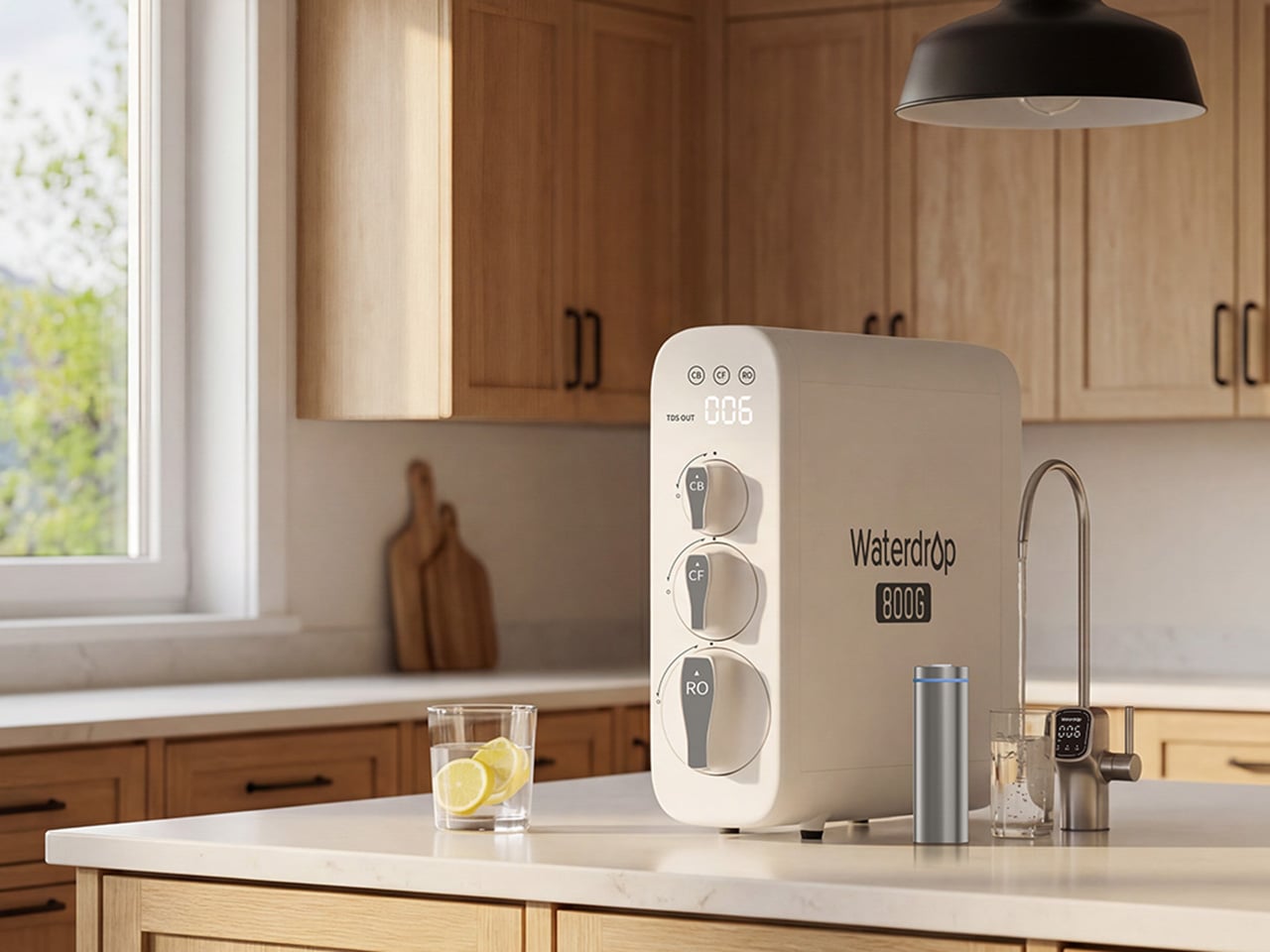
For families thinking seriously about what’s actually in their water this spring, the G3P800 is where Waterdrop Filter’s under-sink lineup earns its bestseller status. The concerns driving most of those conversations, PFAS compounds, lead from aging pipes, chlorine byproducts, are precisely what this system addresses. Its 10-stage RO filtration achieves 98% PFOA reduction, 99% PFOS, and over 99% lead, numbers that carry particular weight for households with infants, pregnant women, or elderly members. NSF/ANSI certifications across standards 42, 53, 58, and 372 back those claims with third-party verification. The tankless design reclaims 50 to 70 percent of under-sink cabinet space, and the UV sterilization stage catches bacteria and viruses that even a high-precision RO membrane cannot address alone.

At 800 gallons per day, the G3P800 handles the full rhythm of a busy family kitchen, from drinking water and cooking to coffee and baby formula preparation. A brushed nickel smart faucet displays real-time TDS readings and filter status at a glance, keeping the system legible without demanding attention. The 3:1 pure-to-drain ratio reflects a genuine shift in responsible RO design, producing meaningfully less drain water than older systems. Spring tends to be the moment families finally act on water quality concerns sitting in the back of their minds, and the G3P800 meets that decision with something durable, rigorously certified, and quietly capable of handling daily household demand for years.

Click Here to Buy Now: $699 $999 (30% off). Hurry, deal ends in 48-hours! Website Here.

Waterdrop Filter X12 RO System: The Flagship That Puts Minerals Back Where They Belong

Where the G3P800 is built for families who want serious filtration at serious capacity, the X12 is for those willing to push further. At 1,200 gallons per day across 11 stages of precision RO filtration, it represents Waterdrop Filter’s most complete answer to the growing list of contaminants giving health-conscious households pause this spring. The PFAS reduction figures here are among the strongest in the lineup, achieving 98.88% PFOA and 98.97% PFOS reduction, alongside a greater than 99.87% lead reduction rate. Certified against NSF/ANSI standards 58 and 372, the X12 carries the kind of third-party verification that families with infants or elderly members look for before trusting a system with daily drinking water and formula preparation.

What genuinely separates the X12 from most flagship RO systems is what it does after filtration. Reverse osmosis at this level of thoroughness strips water down comprehensively, which is where the built-in alkaline mineralization stage earns its place. Calcium and magnesium are reintroduced post-filtration, supporting bone health over time and restoring the balanced, naturally mineral-rich character that makes water taste the way good water should. For families prioritizing both purity and nutritional quality, particularly those with growing children, that combination is difficult to replicate elsewhere. The smart digital faucet handles real-time TDS monitoring and filter life tracking with the same quiet intelligence found across the range. Spring health resets tend to go deeper for some households, and the X12 is designed for exactly that level of commitment.

Click Here to Buy Now: $854.05 $1299 (34.2% off). Use code YKSPRING26 during checkout. Hurry, deal ends in 48-hours! Website Here.

Waterdrop Filter DLG-P: Serious PFAS Protection Without the Installation Headache
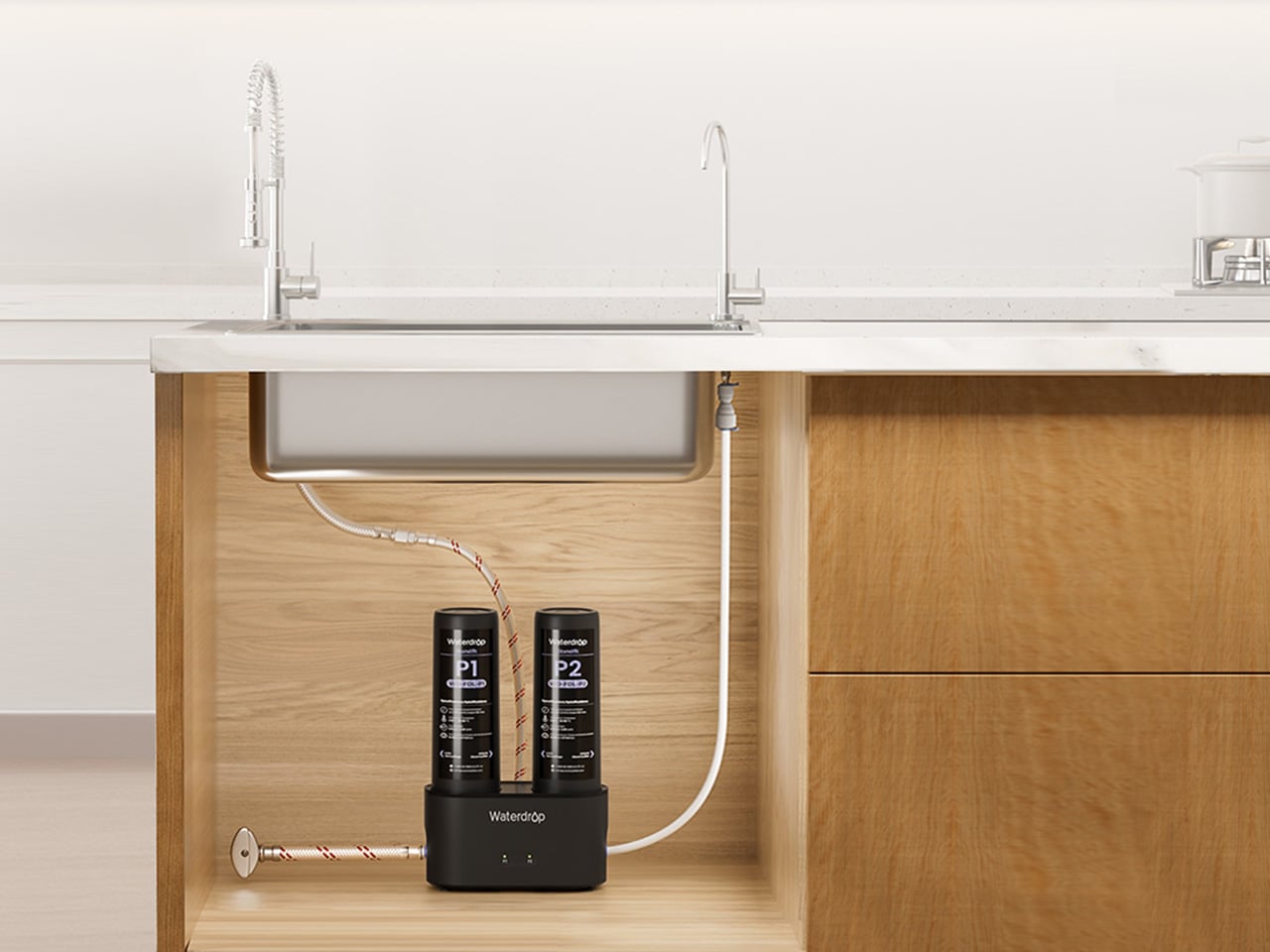
The conversation around PFAS and lead tends to center on high-capacity RO systems, and for good reason. But the reality of how many people actually live, in rentals, in first homes, in apartments where permanent under-sink modifications are off the table, means that access to serious water filtration has historically required commitment that many households simply couldn’t meet. The DLG-P is Waterdrop Filter’s answer to that gap. It installs in around three minutes without specialist tools, routes filtered water through an innovative dual-outlet design serving both a dedicated drinking faucet and the main kitchen tap, and achieves 99.7% PFOA and 99.6% PFOS reduction that rivals systems at considerably higher price points. For renters prioritizing PFAS protection this spring, those numbers reframe what budget-friendly filtration can actually deliver.

The system reduces chlorine, fluoride, sediment, and odors across its filtration stages, covering contaminants that affect daily drinking water quality in the most direct ways. A smart filter life indicator removes guesswork from maintenance, flagging replacement needs before performance drops. Filter cartridge replacement takes around three seconds, keeping upkeep genuinely frictionless for fast-paced households where the water filter is expected to work reliably in the background. The black finish gives it a contemporary presence that holds up in modern kitchen environments, and the compact footprint respects the limited under-sink space that comes with rental kitchens. For those who have looked at the G3P800 or X12 with interest but need a solution that fits a different budget and living situation, the DLG-P covers more ground than its entry price suggests.

Click Here to Buy Now: $91.19 $119.99 (24% off). Use code YKSPRING26 during checkout. Hurry, deal ends in 48-hours! Website Here.

Waterdrop Filter TSU: The Case for Filtration That Knows When to Stop
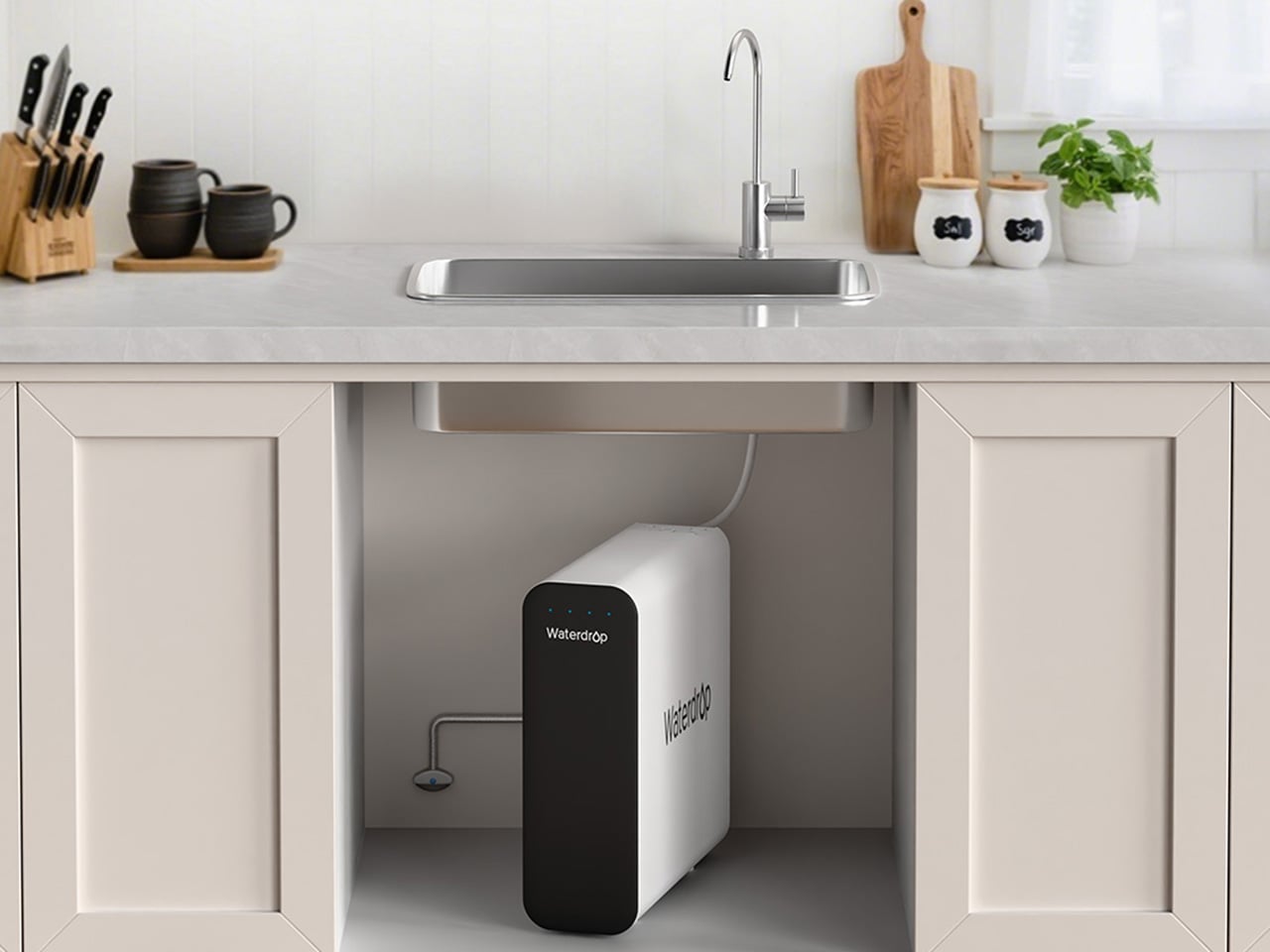
Not every household is starting from the same water quality baseline. In homes where municipal supply is reasonably clean but carrying chlorine taste, sediment, bacteria, and trace heavy metals like lead, deploying a full reverse osmosis system is a longer route than necessary. The TSU operates on that logic. Its 0.01-micron ultrafiltration membrane reduces 99.9% of bacteria, intercepts rust, sediment, fluoride, and heavy metals including lead, while leaving the water’s natural mineral content completely intact. Where the X12 reintroduces calcium and magnesium through a dedicated remineralization stage, the TSU simply never removes them, which for households with acceptable source water is both more efficient and more elegant.

What makes the TSU particularly compelling as a spring upgrade is what it doesn’t require. No electricity, no pump, zero wastewater, running entirely on standard water line pressure with nothing added to the utility bill. The 3-stage tankless system saves 50 to 70 percent of under-sink cabinet space. A brushed nickel dedicated faucet comes included, and the filter lifespan runs up to 24 months, meaning maintenance stays minimal across nearly two years. For busy families where easy installation and low ongoing upkeep matter as much as performance, the zero-waste design also reduces environmental impact and running costs over time. For households that want clean water supporting healthier spring routines without rebuilding their entire under-sink setup, the TSU makes a case that’s difficult to argue with.

Click Here to Buy Now: $123.99 $189.99 (34.7% off). Use code YANSPRING26 during checkout. Hurry, deal ends in 48-hours! Website Here.

Waterdrop Filter C1H: Countertop RO With a Trick Up Its Sleeve
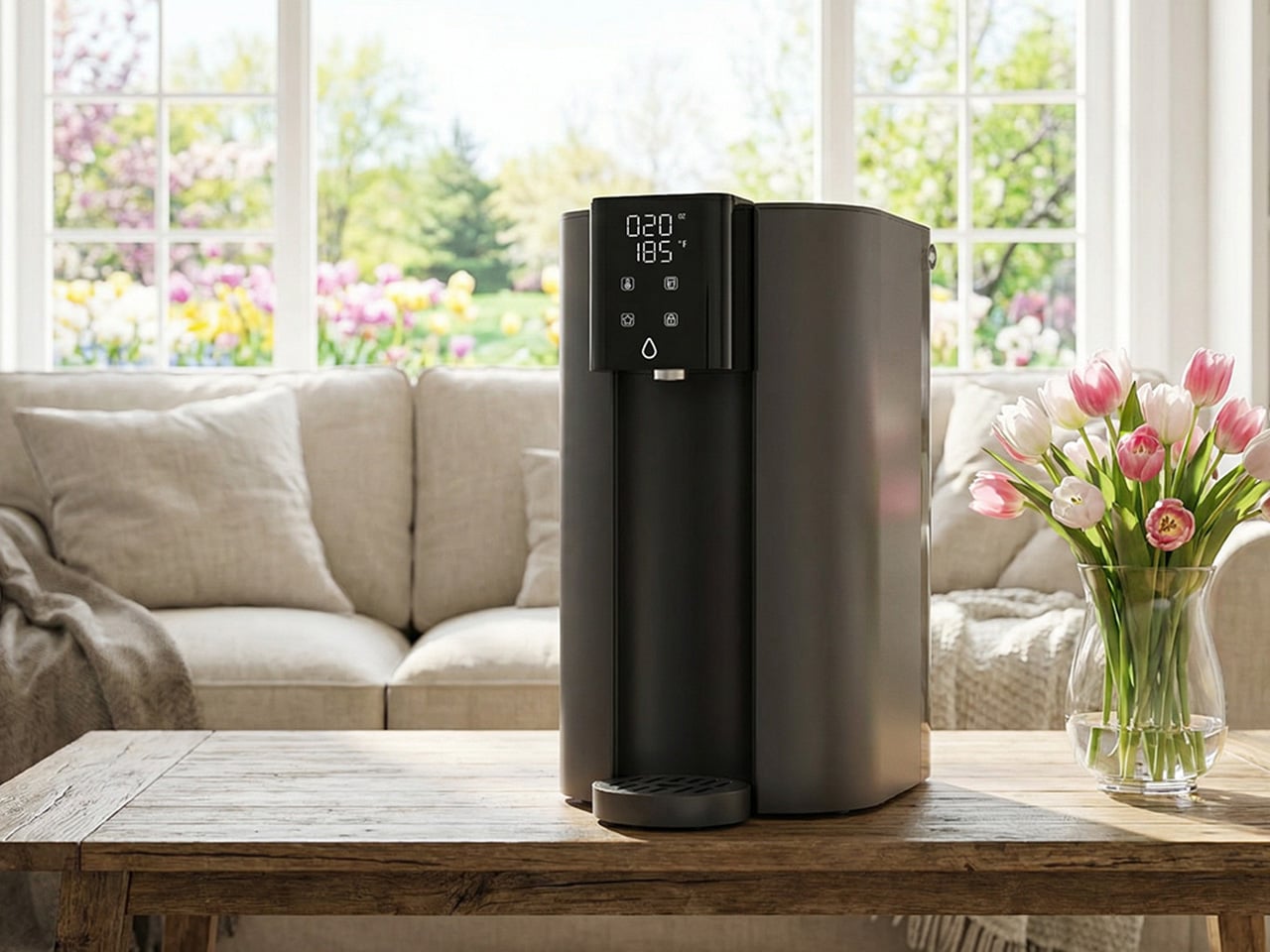
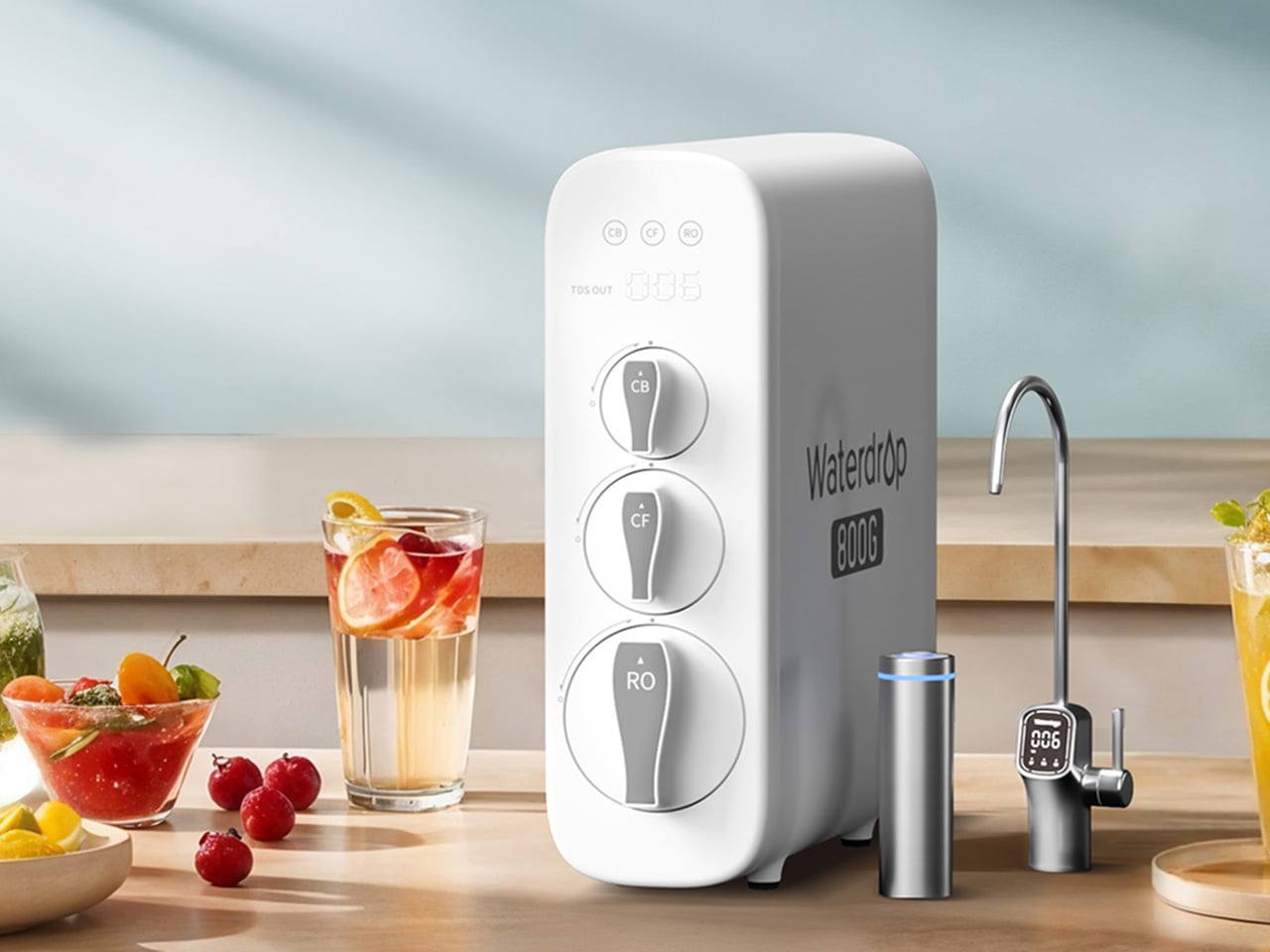
Every system covered in this guide has required going under a sink. The C1H abandons that requirement entirely. It sits on the counter, plugs into a standard outlet, connects to a water source without drilling or permanent modification, and starts delivering six-stage reverse osmosis filtered water with no installation window and no landlord conversation. The 0.0001-micron RO membrane targets the same field of contaminants that motivates most spring filtration upgrades, including PFAS, chlorine, heavy metals, and TDS. The detachable tank design means it moves between a kitchen, an office, or a bedroom without friction, which matters for parents with young children or elderly family members who want safe, filtered water accessible across different rooms rather than anchored to a single tap.

The feature that sharpens the C1H’s appeal for spring routines is instant hot water delivered in three seconds across five adjustable temperature settings. Morning tea, pour-over coffee, baby formula, and quick meal preparation all lose the waiting step that a separate kettle introduces. A Favorite Mode remembers preferred temperature and volume combinations so the same result comes out consistently. Smart touch controls manage everything from volume selection to real-time TDS monitoring and filter life tracking. The 3:1 pure-to-drain ratio and a twelve-month filter lifespan keep both environmental impact and ongoing upkeep to a minimum. For households that have followed this guide and still need a solution on entirely different terms, the C1H closes that gap with confidence.

Click Here to Buy Now: $219 $279 (22% off). Hurry, deal ends in 48-hours! Website Here.

The post 5 Best Waterdrop Filter Systems for Spring 2026, From Renters to Full Family Kitchens first appeared on Yanko Design.

Reverse-SynthID - Le filigrane de Gemini mis à nu

SynthID, le filigrane invisible que Google injecte dans chaque image Gemini, c'était censé être incassable. Sauf qu'un dev a eu l'idée toute bête de générer des images noires et blanches avec Gemini, puis de regarder ce qui restait dans le domaine fréquentiel. Et là, surprise... le watermark est apparu en clair avec toutes ses fréquences porteuses !

Le projet reverse-SynthID documente le truc de A à Z où on comprend en gros, que le marquage IA de Google fonctionne en injectant de l'énergie à des fréquences bien précises dans le spectre de l'image via une transformation de Fourier . Le chercheur a identifié 6 fréquences porteuses principales, toutes avec une cohérence de phase supérieure à 99,9% et la blague, c'est que ce pattern est fixe. Donc pas de message unique par image, pas de clé qui change... c'est juste la même empreinte spectrale sur toutes les images sorties du modèle Gemini.

Spectre FFT du watermark SynthID - les pics lumineux correspondent aux fréquences porteuses identifiées

Du coup, une fois que vous avez profilé cette empreinte avec une cinquantaine d'images PNG de référence (25 noires, 25 blanches, générées via l'API Gemini), vous pouvez faire deux trucs. D'abord, détecter le filigrane avec 90% de précision, sans avoir le moindre accès au code source de Google. Et ensuite le retirer en soustrayant les composantes spectrales identifiées, fréquence par fréquence, tout en préservant la qualité de l'image à plus de 40 dB PSNR. Visuellement identique à l'original !

Et c'est là que la différence avec UnMarker (dont je vous avais parlé) saute aux yeux car ce dernier "secoue" l'image en aveugle pour casser le watermark. Alors que Reverse-SynthID, c'est plutôt scruté à la loupe et hyper ciblé. Résultat, y'a clairement moins de dégradation et un drop de confiance du détecteur.

Les fréquences porteuses reconstruites - la structure diagonale du watermark SynthID

Par contre, je l'ai implémenté en Rust et j'ai essayé de voir si ça marchait vraiment sur mes propres images générée avec Gemini. Hé bien non, car le bypass ne fait PAS chuter la confiance du détecteur de 100 à 0, mais juste de quelques pourcents.

Le watermark est atténué, mais pas effacé. Ce n'est donc pas un outil clé en main pour faire disparaître tous les filigranes SynthID en un clic. Mais le fait qu'une seule personne, avec du Python et du traitement de signal classique (FFT, filtres notch, soustraction spectrale), ait pu reverse-engineerer un système que Google présente comme LA solution anti-deepfakes...

Ça confirme ce que les chercheurs de l'Université de Waterloo avaient déjà démontré : le watermarking d'images IA, c'est pété by design.

D'ailleurs, Google le sait très bien et ils pourraient changer le pattern demain et tout serait à refaire, mais ça confirme surtout que le principe même du watermarking spectral a une date de péremption. Après, ça arrange tout le monde d'avoir un truc à montrer quand les gouvernements demandent "et contre les deepfakes, vous faites quoi ?"

Et si c'est la petite étoile visible en bas à droite des images Gemini qui vous gêne (pas le watermark spectral invisible, juste le marqueur visuel), j'ai développé un outil pour mes Patreons qui s'en occupe.

Bref, tout est sur le repo si le reverse-engineering de watermarks IA, ça vous branche !

UnMarker - Les watermarks IA ne servent à rien

Vous vous souvenez quand les géants de la tech ont promis à la Maison Blanche qu’ils allaient marquer toutes les images générées par IA avec des filigranes invisibles pour lutter contre les deepfakes ? Hé bien, des chercheurs de l’Université de Waterloo au Canada viennent de démontrer que c’était du pipeau avec un outil de leur cru baptisé UnMarker qui supprime n’importe quel watermark IA en quelques minutes, sans même avoir besoin de savoir comment le filigrane a été créé.

Andre Kassis et Urs Hengartner , les deux chercheurs derrière ce projet, ont publié leurs travaux lors du 46ème symposium IEEE sur la sécurité et la vie privée en mai 2025 et leurs résultats sont assez dévastateurs pour l’industrie.

En effet, ils ont testé leur attaque contre à peu près tous les systèmes de watermarking existants : Yu1, Yu2, HiDDeN, PTW, StegaStamp, TRW, Stable Signature… Et le meilleur taux de détection après passage dans UnMarker qu’ils ont obtenu c’est 43%. Et en dessous de 50%, c’est considéré comme inutile statistiquement parlant.

Ils ont aussi testé le tout nouveau, tout beau SynthID de Google, que Mountain View présente comme LA solution miracle. Et résultat le taux de détection est passe de 100% à environ 21% donc autant vous dire que c’est complètement pété.

Alors comment ça marche ce truc ?

Hé bien l’astuce d’UnMarker, c’est d’exploiter une faille fondamentale que tous les systèmes de watermarking partagent. Comme l’explique Kassis avec une analogie plutôt parlante, “Si vous gribouillez l’adresse sur une lettre, le facteur ne pourra plus la livrer.” et comme tous ces systèmes doivent stocker leur watermark dans les variations spectrales des pixels, UnMarker cible précisément ce canal pour le perturber, sans créer d’artefacts visuels. L’image reste ainsi identique à l’œil nu, mais le filigrane invisible est devenu illisible.

Unmarker.it est donc une version côté client de leur outil , qui tourne entièrement dans votre navigateur. Vous déposez une image, vous la “secouez, remuez et écrasez” comme ils disent, et hop, plus de watermark ! Par contre, si le watermark est aussi visuel comme la petite étoile de Gemini, pensez à mettre un petit coup de pinceau dessus pour la cacher.

Et c’est là que ça devient vraiment inquiétant pour la lutte contre les deepfakes car toute la stratégie des gouvernements et des plateformes repose sur l’idée qu’on peut marquer les contenus IA pour les identifier automatiquement. Donc si n’importe quel clampin peut supprimer ces marqueurs en quelques clics, tout le système s’effondre. Les chercheurs sont d’ailleurs assez cash dans leur conclusion, je cite : “Nos résultats montrent que le watermarking n’est pas une défense viable contre les deepfakes, et nous exhortons la communauté à explorer des alternatives.

Voilà, si vous pensiez que les watermarks invisibles allaient nous sauver de la désinformation par l’IA, vous vous mettez le doigt dans l’œil !

Water purifier and ice maker in one is space-saving and single-touch convenient

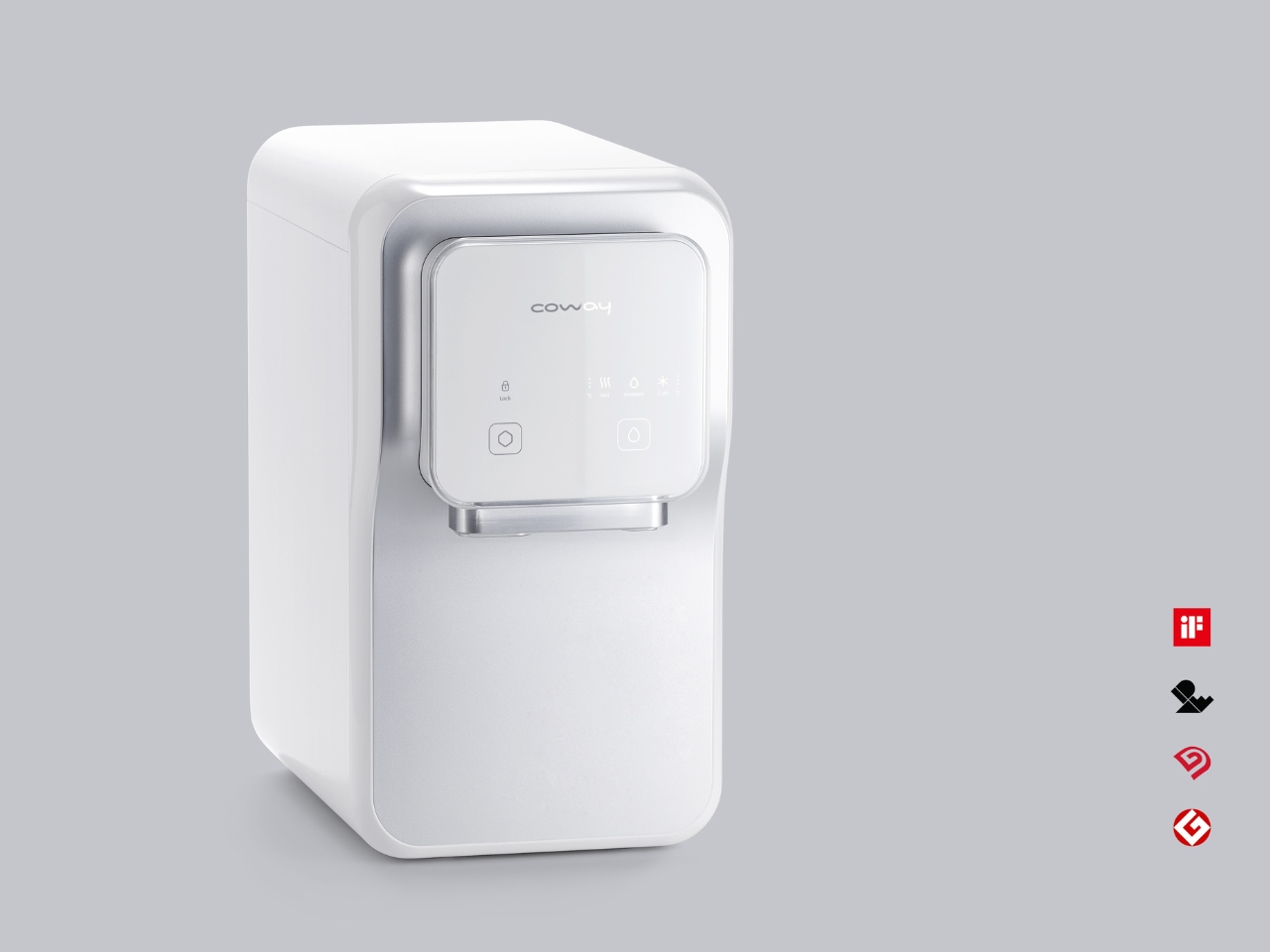
VLND has introduced a sleek appliance that combines two kitchen staples into one compact unit: a water purifier and an ice maker. Designed for modern homes where countertop space is at a premium, the device delivers hot, cold, and filtered water along with clear, clean ice with just a single press of a button. Its streamlined appearance and intuitive controls make it a practical addition for anyone who wants reliable hydration and ice without cluttering the kitchen.

The first thing that catches the eye is the minimalist front panel. A square box rests on a smooth surface, echoing the image of an ice cube floating on gently rippled water. This visual cue is more than decorative; it reinforces the product’s core promise of pure water and pristine ice. The divided face of the unit creates an optical illusion that the machine is smaller than it actually is, helping it blend seamlessly into tight spaces such as narrow countertops, pantry shelves, or even office break rooms.

Designer: VLND Studio

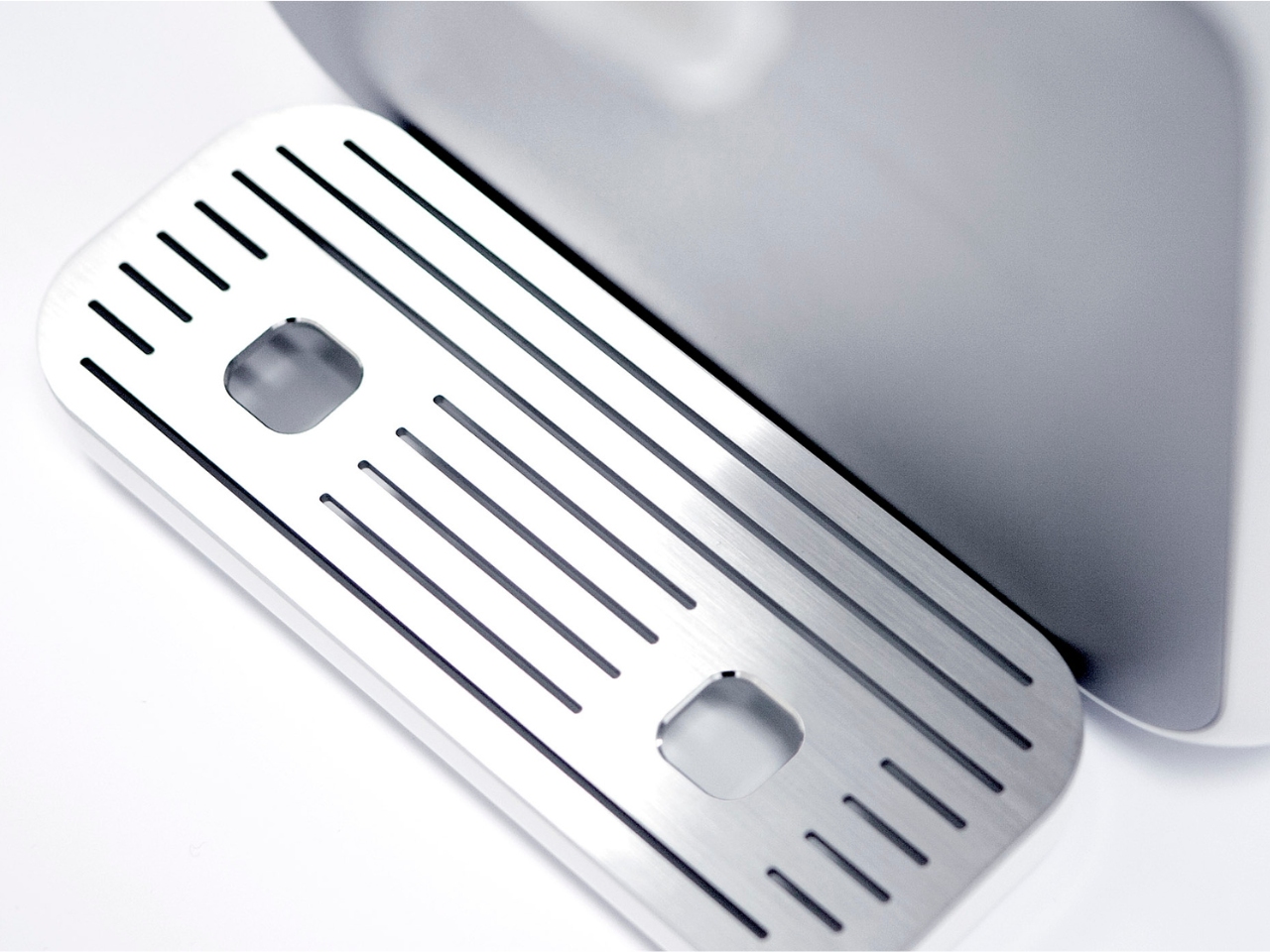
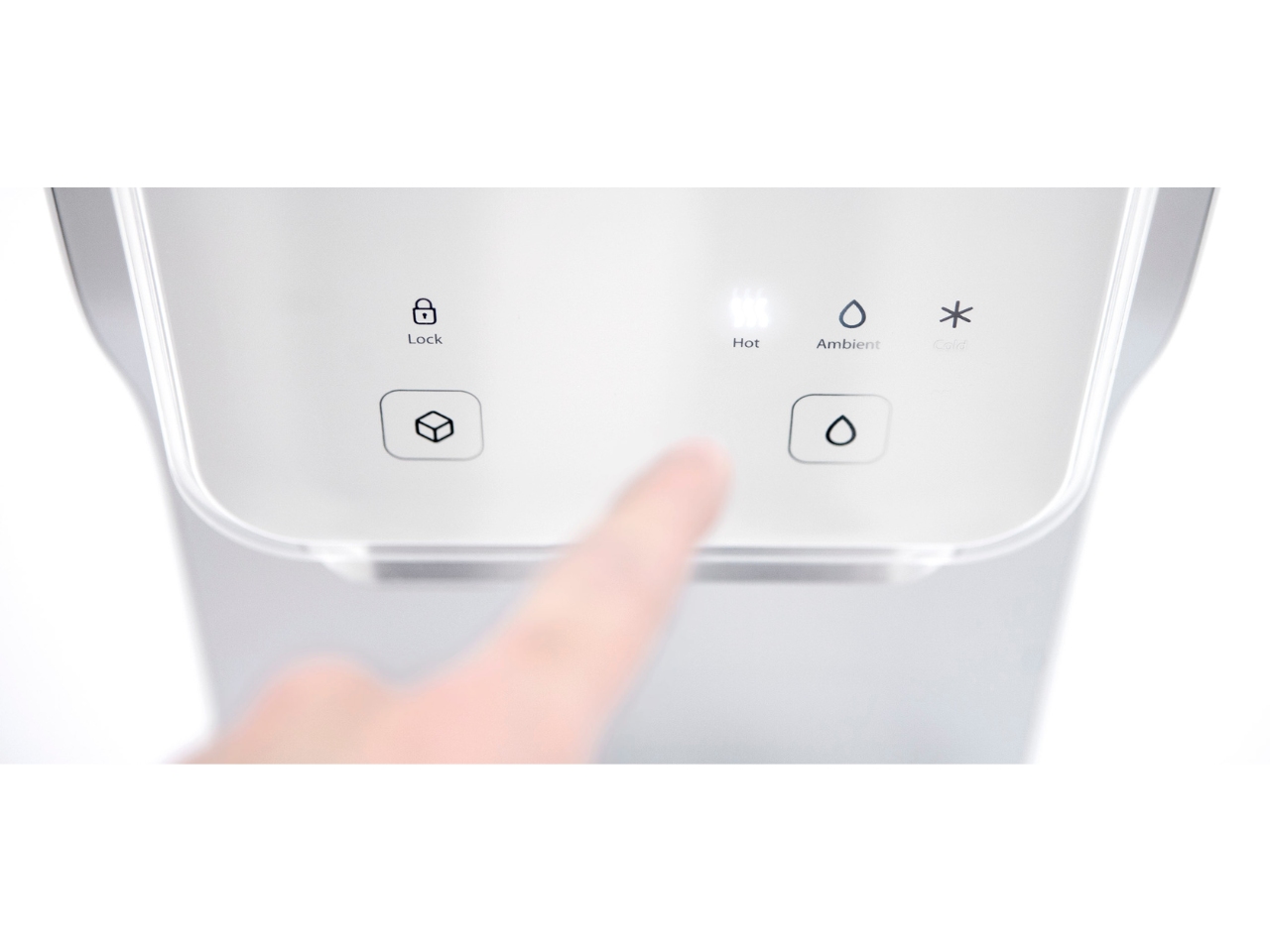
Inside the compact shell lies a sophisticated filtration and ice‑making system. Despite the advanced technology, VLND has stripped away any unnecessary components, resulting in a clean layout with only a few essential buttons. Each button is distinctly labeled and produces a unique audible click when pressed, allowing users to confirm their selection without looking. This sound‑based feedback is especially useful in busy environments where a quick glance at the panel might be inconvenient.

Operation is straightforward. A single touch dispenses hot water for tea or coffee, cold water for instant drinks, and filtered water for cooking or drinking straight from the tap. For ice, the same touch releases a batch of crystal‑clear cubes that have been formed using purified water, ensuring that the ice is free from off‑flavors or impurities. The system’s temperature controls are calibrated to work efficiently year‑round, providing hot water in winter and refreshing cold water or ice during the summer months.

Maintenance has also been simplified. The removable water tank and ice storage compartment can be taken out for cleaning without the need for specialized tools. The filter replacement indicator alerts users when it’s time to change the cartridge, preventing a drop in water quality and extending the life of the appliance. Because the unit is designed to minimize moving parts, it operates quietly, making it suitable for open‑plan living spaces or office environments where noise can be a distraction.

From a design perspective, VLND’s approach aligns with current trends that favor clean lines, multifunctionality, and sustainability. By merging two essential kitchen appliances, the company reduces the need for separate devices, cutting down on both electricity consumption and countertop clutter. The single‑touch interface encourages users to stay hydrated and enjoy ice without the hassle of juggling multiple machines.

The post Water purifier and ice maker in one is space-saving and single-touch convenient first appeared on Yanko Design.

Des scientifiques cachent des codes secrets dans la lumière pour piéger les deepfakes

Ce serait cool non, si on pouvait transformer n’importe quelle lampe de bureau en détecteur de deepfakes, non ?

Car le problème avec les deepfakes aujourd’hui, c’est qu’on court constamment après les faussaires. Ils ont accès aux mêmes vidéos authentiques que nous, aux mêmes outils d’édition ultra-sophistiqués, et l’IA apprend tellement vite qu’elle produit des faux quasi-indétectables. Il leur est donc très facile de reprendre une vraie vidéo et de la trafiquer légèrement pour manipuler les opinions.

Il faudrait donc une sorte de bouclier anti-manipulation-IA pour empêcher toute manip ultérieure d’une captation vidéo. Et bien c’est exactement ce que viennent de réussir des chercheurs de l’université Cornell, et leur technique est brillante… sans mauvais jeu de mots, vous me connaissez ^^.

Abe Davis, à gauche, professeur adjoint d’informatique au Cornell Ann S. Bowers College of Computing and Information Science, et Peter Michael, étudiant diplômé.

Comme l’explique Abe Davis de Cornell : “La vidéo était considérée comme une source de vérité, mais ce n’est plus une hypothèse qu’on peut faire”. Donc, plutôt que de jouer éternellement au chat et à la souris avec la connerie des gens et le talent des faussaires, l’équipe de Cornell a eu une idée géniale : Et si on marquait les vidéos dès leur création, avec un code secret planqué dans la lumière elle-même ?

Leur technologie, baptisée NCI pour “noise-coded illumination”, fonctionne en ajoutant des fluctuations microscopiques à l’éclairage. Ces variations sont totalement invisibles à l’œil nu car votre cerveau les interprète comme du bruit lumineux normal. Mais une caméra, elle pourra tout capter.

Le truc vraiment cool, c’est que chaque source lumineuse peut avoir son propre code secret comme ça vous pouvez programmer votre écran d’ordinateur, vos lampes de bureau, même l’éclairage d’une salle de conférence entière. Et pour les vieilles lampes qui ne sont pas connectées, une simple puce de la taille d’un timbre-poste suffit à les transformer en watermark lumineux.

Mais ensuite, comment ça détecte les fakes ? Et bien c’est là que ça devient vraiment intéressant car le watermark enregistre en permanence une version basse résolution de ce qui se passe sous cet éclairage, avec un horodatage. Les chercheurs appellent ça des “code videos”. Ainsi, quand quelqu’un manipule la vidéo, que ce soit pour insérer un deepfake, changer la vitesse, ou ajouter des éléments, les parties modifiées ne correspondent plus aux code videos. C’est comme si la lumière gardait un registre secret de tout ce qui s’est vraiment passé.

Comme ça, si un petit malin essaie de générer une fausse vidéo avec l’IA à partir d’une vraie vidéo, les code videos ressembleront alors à du charabia aléatoire, ce qui trahira immédiatement la supercherie. Et même si le faussaire connaît la technique et arrive à décoder les codes secrets, il devrait falsifier chaque code video séparément, et s’assurer qu’ils correspondent tous parfaitement entre eux. Autant dire que c’est mission impossible.

Peter Michael, l’étudiant qui a mené les travaux, a présenté cette innovation au SIGGRAPH 2025 à Vancouver et les tests sont vraiment impressionnant car la technique résiste aux compressions vidéo agressives, aux mouvements de caméra, aux flashs, et fonctionne même en extérieur avec différents tons de peau.

Pendant ce temps, la course à l’armement anti-deepfake continue. Le MIT a son projet Detect Fakes actif depuis 2020. Microsoft a son Video Authenticator qui analyse les pixels pour détecter les anomalies. Intel mise sur son FakeCatcher qui atteint 96% de précision en détectant les variations de flux sanguin dans les vidéos (parce que oui, même les meilleurs deepfakes n’arrivent pas encore à reproduire parfaitement les micro-changements de couleur de la peau dus à la circulation sanguine).

Reality Defender, de son côté, utilise une approche multi-modèle qui n’a pas besoin de watermarks préalables. Ils analysent images, vidéos, audio et texte en temps réel pour repérer les manipulations… C’est impressionnant, mais ça reste une approche défensive qui court après les faussaires et n’empêche pas leur “travail”.

Et c’est ça qui rend la solution de Cornell vraiment prometteuse… C’est parce qu’elle est proactive. Plus besoin d’analyser après coup si une vidéo est truquée puisque la preuve d’authenticité est encodée dedans dès le départ. On pourrait sécuriser comme ça des salles de presse équipées de ce système, des interviews officielles protégées par défaut, ou même le siège de l’ONU avec un éclairage anti-deepfake intégré.

Bien sûr, ce n’est pas la solution miracle et Davis lui-même admet que “c’est un problème qui ne va pas disparaître, et qui va même devenir plus difficile” car les faussaires trouveront de nouvelles parades, c’est certain. Mais pour l’instant, cette technologie donne une longueur d’avance cruciale aux défenseurs de la vérité.

Qui aurait cru qu’on combattrait les deepfakes avec une simple lampe de bureau ??

Source

❌