OpenAI may already be testing its next-generation image generation model, and this time there appears to be an actual checkpoint leak pointing toward something new. An unexpected checkpoint called “luna-lisa-alpha” has reportedly appeared in OpenAI’s Arena testing environment, catching the attention of early testers. More importantly, it seems to follow an earlier “mona-lisa-1” checkpoint associated […]
OpenAI is making its image-generation tools a little more useful for developers and designers. The company has enabled transparent background generation for GPT-Image-2 through its APIs, giving developers the ability to create images without the usual solid-color background. This may sound like a small addition, but it can make a big difference for apps that […]
OpenAI appears to be taking a deliberate, safety-first approach with its upcoming model release, codenamed GPT Astra. Rumors and internal leaks suggest that the AI research giant is prioritizing thorough alignment and safety testing over a rushed deployment timeline. Key Takeaways from the Recent Leaks Targeted Release Window: OpenAI is currently aiming to launch GPT […]
The GPT-6 rumors are getting harder to ignore—but separating real signals from internet speculation is becoming more important than ever. Over the past few weeks, OpenAI has dropped several hints about where its frontier-model development is heading. The company has revealed Astra as its next major frontier model, while an unreleased OpenAI model reportedly demonstrated […]
OpenAI may be getting ready for its next major AI model, and the latest clues are pointing toward an imminent launch of Astra. According to reports and posts circulating among AI researchers and leakers, Astra could arrive as soon as this week, although a launch next week remains possible. The model is also rumored to […]
ChatGPT is becoming more personalized with a new Computer History feature that can remember activity across the apps and websites you use on your computer. The idea is simple: instead of having to repeatedly explain what you were working on, ChatGPT can use relevant history from your computer to provide more contextual answers in future […]
I have several PCs in my office that are capable of running Copilot+ tools in Windows 11, but there's one feature I've stayed away from: Windows Recall.
Why? I don't particularly like the idea of AI snapshotting what I do on my PC and making it searchable, even if it promises to never let the data leave my local system. I'm sure it's handy for some users, but I've yet to come across a scenario where I wish I had it enabled.
If you're of the opposite opinion and happen to use macOS, I have good news. OpenAI today announced "ChatGPT Computer History" for its macOS app.
What is ChatGPT Computer History?
Today we're releasing Computer History in ChatGPT.It lets ChatGPT learn from everything you do on your computer, so it can better understand how you work, finish tasks that you're in the middle of, and suggest skills and automations based on how you use your computer. pic.twitter.com/xnTq7hWH8OAugust 13, 2026
Here's a blurb from the ChatGPT press release about how it works:
Computer History turns your activity across apps and websites into memories and a timeline that ChatGPT and Codex can reference. You can ask natural questions about recent work, pick up where you left off, understand patterns in how you work, and turn repeated workflows into skills or automations.
OpenAI
Yeah, that sounds like the same thing. But let me explain ChatGPT's version a bit more.
Computer History, according to ChatGPT's website, is completely optional and turned off by default for Pro, Business, and Enterprise subscribers.
Rather than collecting screenshots every so often to keep track of your doings, Computer History "records interaction events and does not capture your screen or audio." It's basically its own little keylogger, keeping tabs on clicks, typing, app switching, shortcuts, and more.
The data it records is searchable, and you can interact with Computer History the same way you interact with any AI, asking it regular language questions.
The data that Computer History gathers is saved locally on your Mac, but it does get sent to OpenAI's cloud servers in order to turn it into memories. These memories are then sent back to your Mac for local storage.
OpenAI says it does not keep this data on its servers unless required by law, and it does not use the data for training.
Is Computer History different enough from Recall to avoid similar backlash?
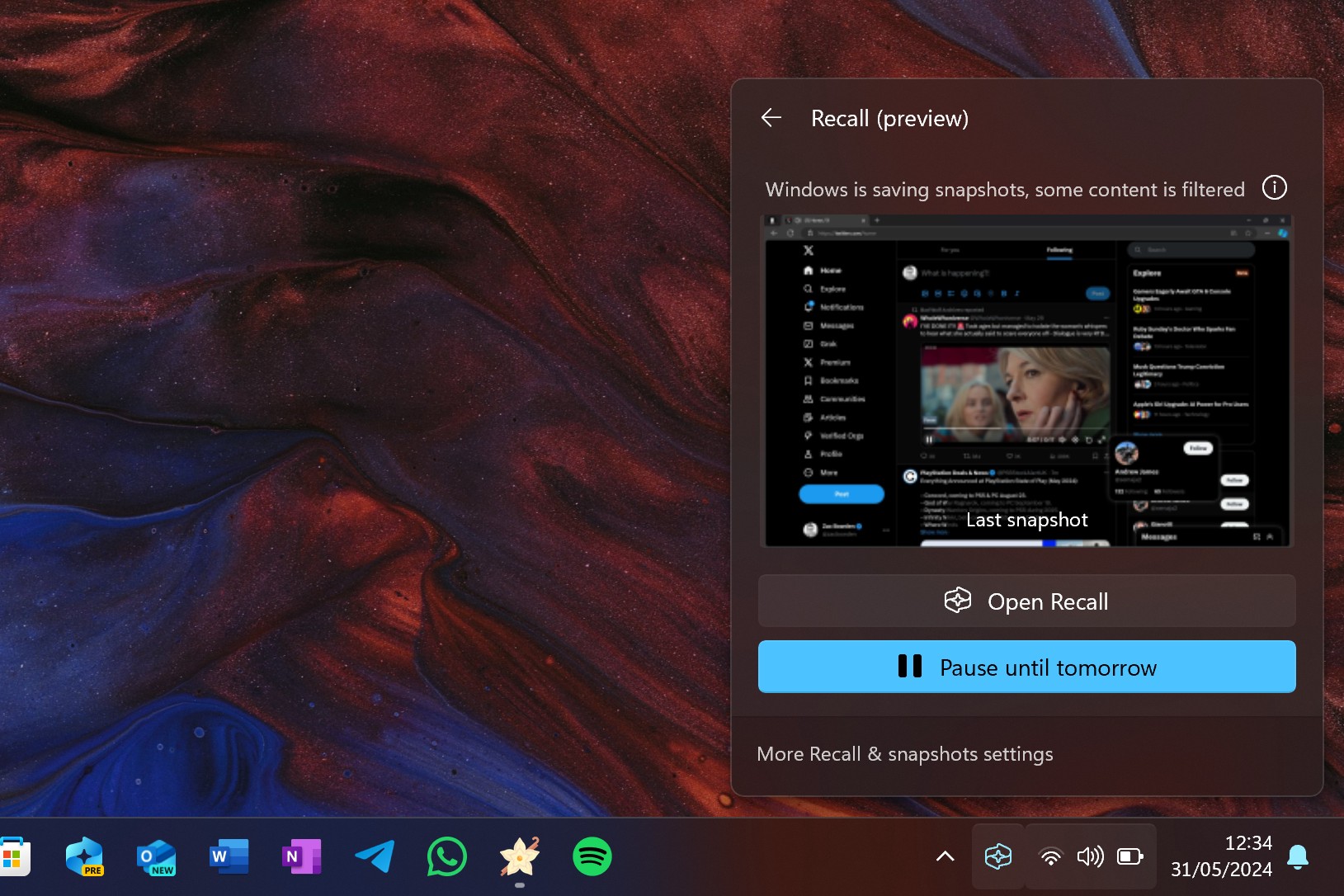
A look at the Recall feature's pause option in the Windows 11 taskbar. (Image credit: Windows Central)
The reaction to ChatGPT's Computer History announcement is surely mixed. It seems like there are just as many people worrying about massive privacy and surveillance issues as there are people wondering if they should go out and buy a Mac.
Windows Recall faced the same adversity when it was announced as a default feature, with no opt-in available. The pushback was so bad that Microsoft delayed its launch by almost a year in order to address security issues. It officially released in April 2025 as an opt-in feature, but I know that many Windows users are still wary of its abilities.
The fact that ChatGPT is making its Computer History opt-in from the start tells me it learned from Microsoft's mistakes. There's also the fact that it doesn't take screenshots, making it feel less like routine spying.
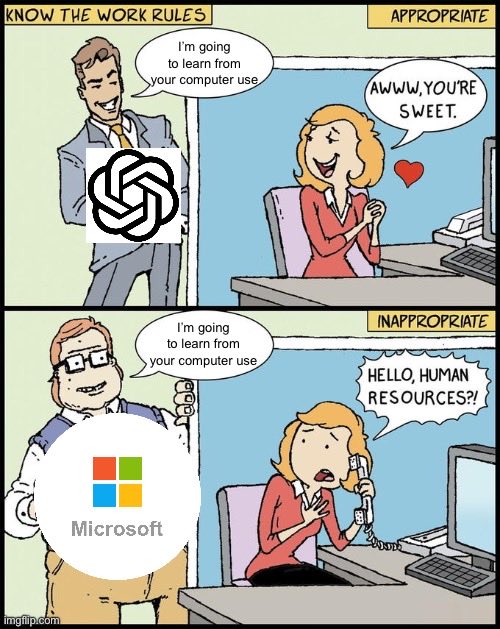
The memes coming out of the ChatGPT Computer History announcement are gold. (Image credit: @trashpandaemoji (X.com))
That doesn't mean there aren't inherent risks to using something like Recall on Windows or Computer History on macOS.
It's clearly noted in OpenAI's Computer History documentation that the feature does not encrypt your information, and that it can be accessible to other apps running on macOS.
Like Recall, there are also serious prompt injection risks. Because these AI-powered features can essentially see what you're doing, they can be tricked with text. You might visit a seemingly innocuous website, only to realize later that it contained hidden instructions aimed at AI that made it do something unsavory.
Windows Central's take
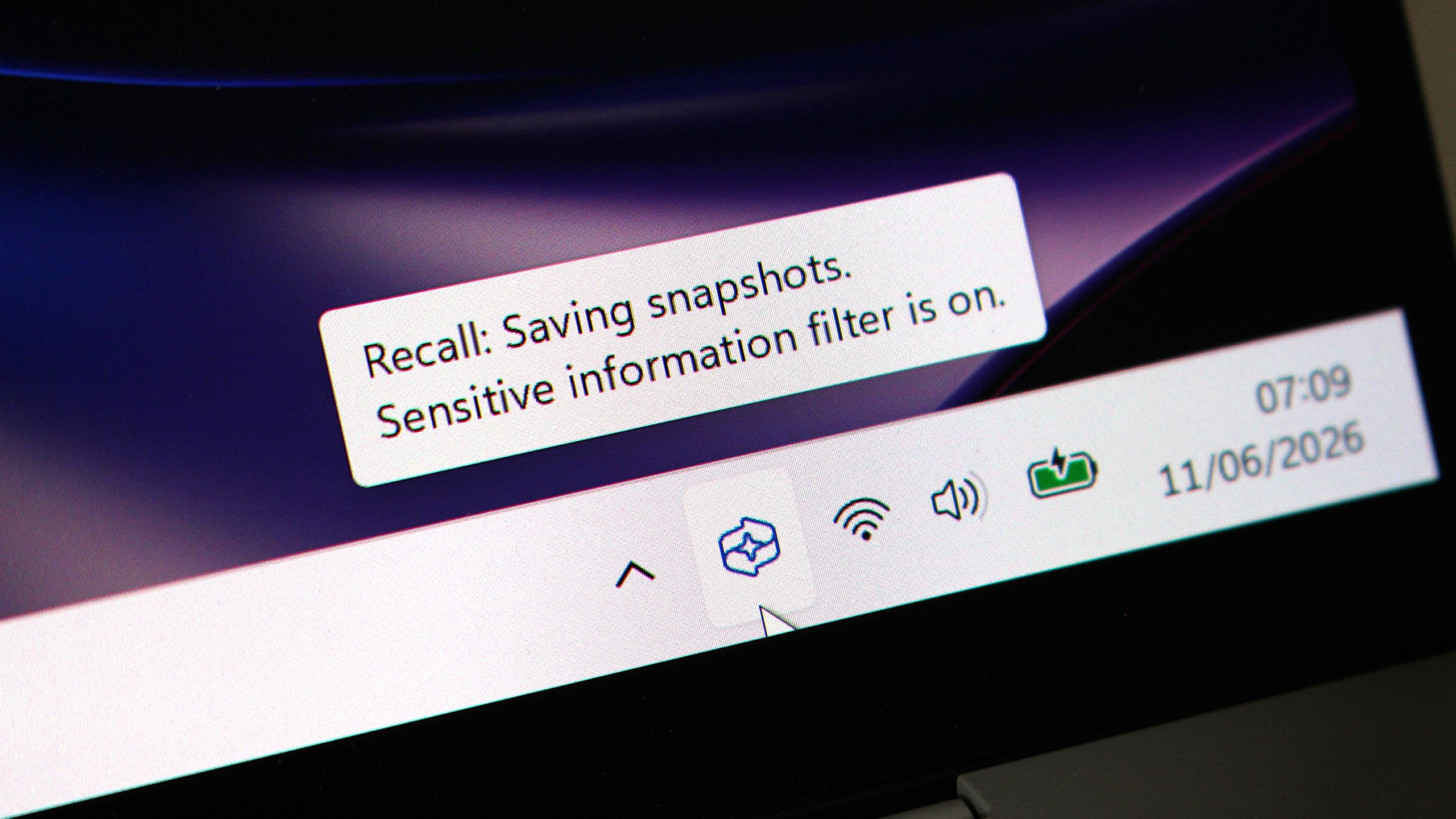
Some of us here at Windows Central use Windows Recall on our PCs, but I stay away from it. (Image credit: Zac Bowden / Windows Central)
Some of us here at Windows Central use Windows 11's Recall feature. Others don't. I'm in the latter camp, but one day that might change.
Why? It feels like there's a definite push going on with AI assistants that can remember everything you do, and it's not just ChatGPT and Microsoft. I've spent time with Lenovo's Qira cross-device ambient assistant, and I've written about HP IQ.
Although I shudder at the privacy implications of these tools gone wrong, they definitely seem like one strong fork in the future of computing. It will be interesting to see how this all plays out, and ultimately to see how macOS users react to something that made Windows users go ballistic.
What do you think about ChatGPT's Computer History? Is it Recall with a different name? Is ChatGPT approaching the tool properly with opt-in-only settings and no screenshotting? Is it something you'd use on Windows 11? Let me know in the comments section below!
Join us on Reddit at r/WindowsCentral to share your insights and discuss our latest news, reviews, and more.
Scooby Doo meme of Fred pulling the mask off of ChatGPT only to reveal Windows Recall beneath.
Scooby Doo meme of Fred pulling the mask off of ChatGPT only to reveal Windows Recall beneath.
ChatGPT Atlas is scheduled to stop working Aug. 9, 2026. Users should export browser data, verify account access, and test replacement workflows before uninstalling it.
OpenAI a présenté trois nouveaux modules destinés à l'enseignement, un pour les professeurs du primaire et du secondaire, un pour ceux du supérieur, et un dernier pour les étudiants eux-mêmes.
Le premier passe par ChatGPT for Teachers, la version gratuite réservée aux enseignants vérifiés (pour le moment uniquement américains) et à leurs établissements. Il fabrique des ressources adaptées au niveau de chaque élève, produit des visuels interactifs et se branche sur les référentiels pédagogiques locaux.
Les deux autres arrivent par ChatGPT Edu, la formule sous licence que les universités achètent pour tout leur campus. Un enseignant du supérieur peut y mettre à jour son programme, monter un site de cours, produire des évaluations multimédias, et reconditionner l'ensemble pour la plateforme pédagogique de son établissement.
Les étudiants, eux, récupèrent un tuteur, des quiz générés à la volée, des fiches de révision et des explications en images. OpenAI précise qu'ils doivent définir leurs objectifs, choisir leurs sources et examiner ce que la machine leur sort.
L'orientation du projet tient en une phrase : l'IA devrait soutenir l'apprentissage et non le raccourcir. Mouais...
Le contexte rend cette approche un peu particulière en fait. La triche assistée par IA s'est installée comme une routine dans les écoles du monde entier, au point que l'Université nationale autonome du Mexique a suspendu des inscriptions après une fraude massive à ses examens d'entrée.
Les travaux qui s'accumulent ne vont pas d'ailleurs dans le sens d'OpenAI. Une étude du MIT a mesuré à l'électroencéphalogramme, l'examen qui enregistre l'activité électrique du cerveau, une activité nettement plus faible chez les étudiants qui rédigeaient avec l'IA. Le résultat est sans appel. Ces mêmes étudiants se souvenaient beaucoup moins bien de ce qu'ils venaient d'écrire.
Une autre enquête, publiée l'an dernier par le Center for Democracy and Technology, montre que les enseignants du primaire et du secondaire réclament surtout qu'on leur explique comment intégrer ces outils, et qu'ils redoutent aussi les dégâts sur les apprentissages.
Il y a un détail qui m'a fait un peu tiquer dans la communication d'OpenAI. La société prend soin de préciser que les enseignants gardent la main sur les décisions pédagogiques, sur la notation et sur les actions automatisées, ce qui laisse penser que la question s'est quand même posée en interne, et surtout qu'on est sur une première étape.
OpenAI may be preparing another major AI update before the arrival of GPT-6. Two previously unseen model codenames—Zinc and Magnesium—have reportedly appeared inside DesignArena, suggesting the company is actively testing the next evolution of its GPT-5.6 lineup. Neither model is currently available for public use, but their appearance has sparked speculation that OpenAI is polishing […]
The race to build the next generation of frontier AI models is heating up, and a new leak suggests GLM-5.5 could become one of the biggest competitors yet. According to the latest rumors, the upcoming model is expected to arrive later this August with a major focus on coding, reasoning, and autonomous AI agents. If […]
A new OpenAI model family, reportedly codenamed Astra, has surfaced in fresh leaks, suggesting the company is preparing a major leap beyond today’s chatbot experiences. According to the information shared online, OpenAI recently demonstrated Astra to US policymakers, showcasing a next-generation AI system designed for long-running tasks, autonomous AI agents, and advanced reasoning. While OpenAI […]
A fresh leak claims OpenAI is preparing to launch GPT-5.7 as an interim flagship model before the arrival of the long-awaited GPT-6. According to the rumor, GPT-6 has reportedly been pushed back to September, prompting OpenAI to release a significantly upgraded GPT-5.7 as early as August. If the information proves accurate, GPT-5.7 won’t simply be […]
OpenAI has announced an important update for GPT-5.6 Sol, addressing one of the biggest concerns raised by ChatGPT Work and Codex users since the model’s launch. After investigating reports that Sol was consuming usage limits much faster than expected, the company has introduced several backend optimizations that should make users’ quotas last around 18% longer […]

 Connexion