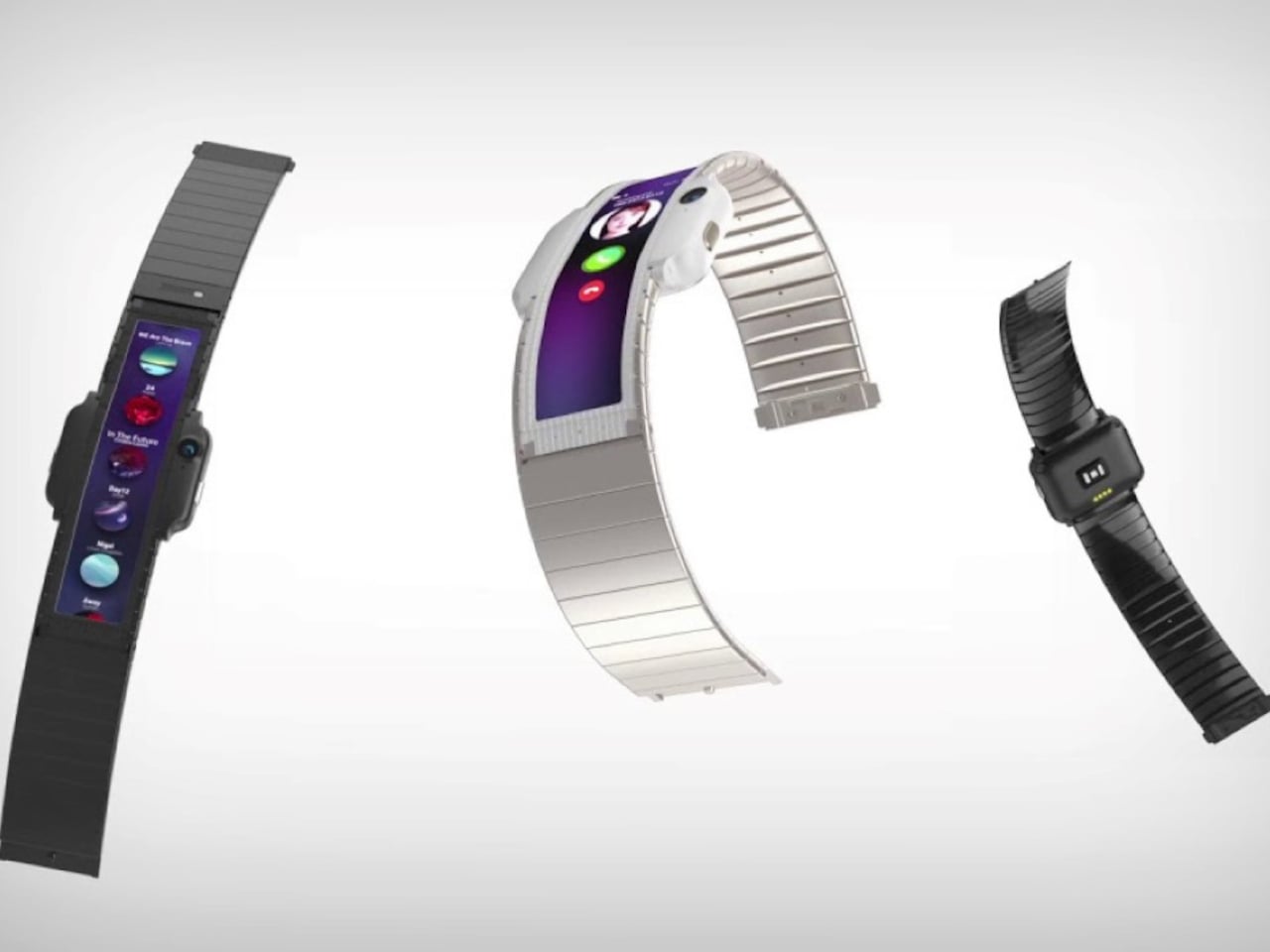
Motorola patented a smartwatch that could one day transform into a phone. See how it works, who might use it, and what could keep it from reaching stores.
The idea of merging a smartwatch and a smartphone into a single device has been floating around the industry for years, mostly because the obvious inconvenience is right there: two screens on two separate devices, one tiny and worn on the wrist, the other large and kept in a pocket, each doing essentially half the job the other can’t. The logical question is whether one of those devices could do both jobs depending on the situation.
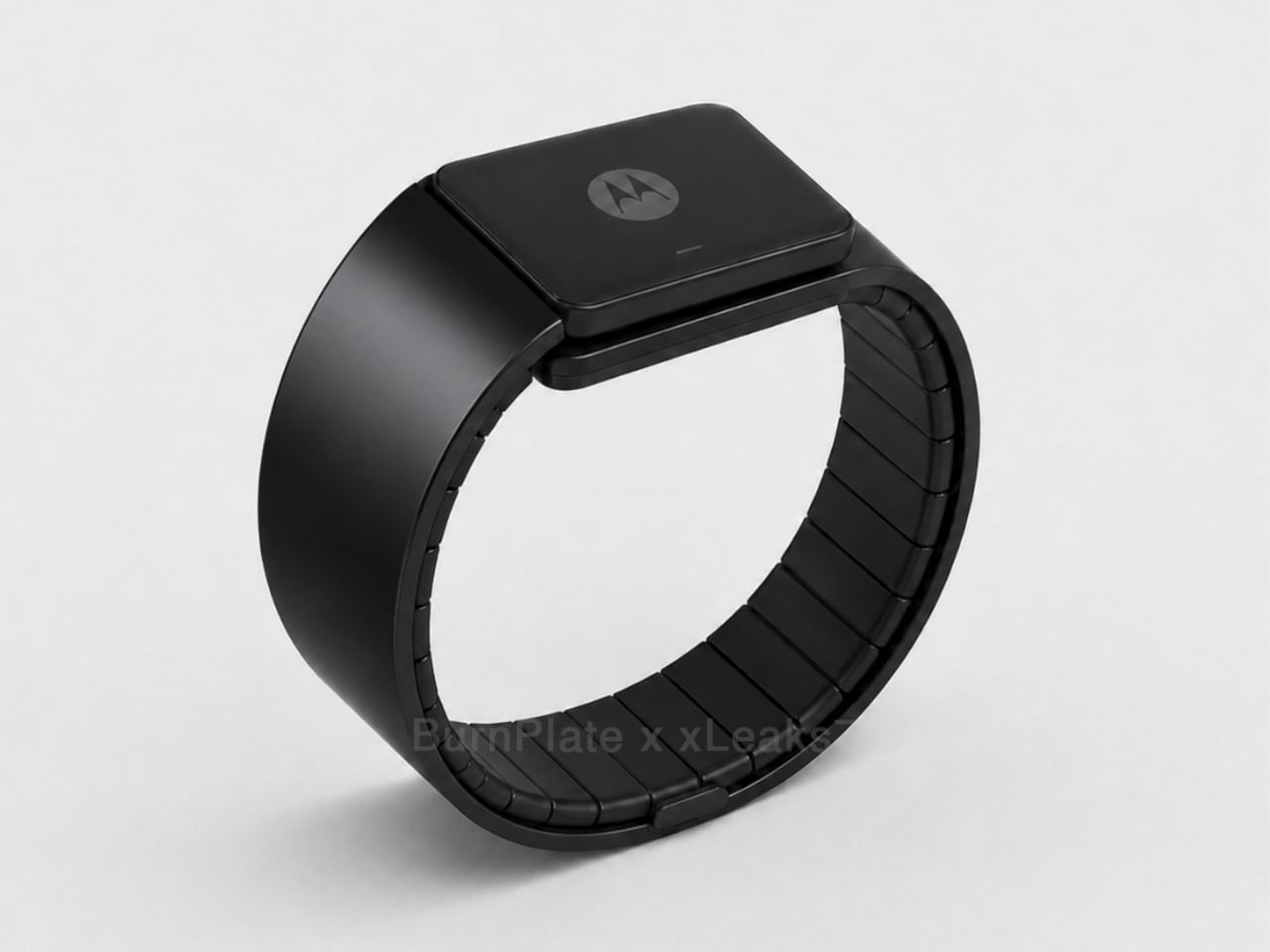
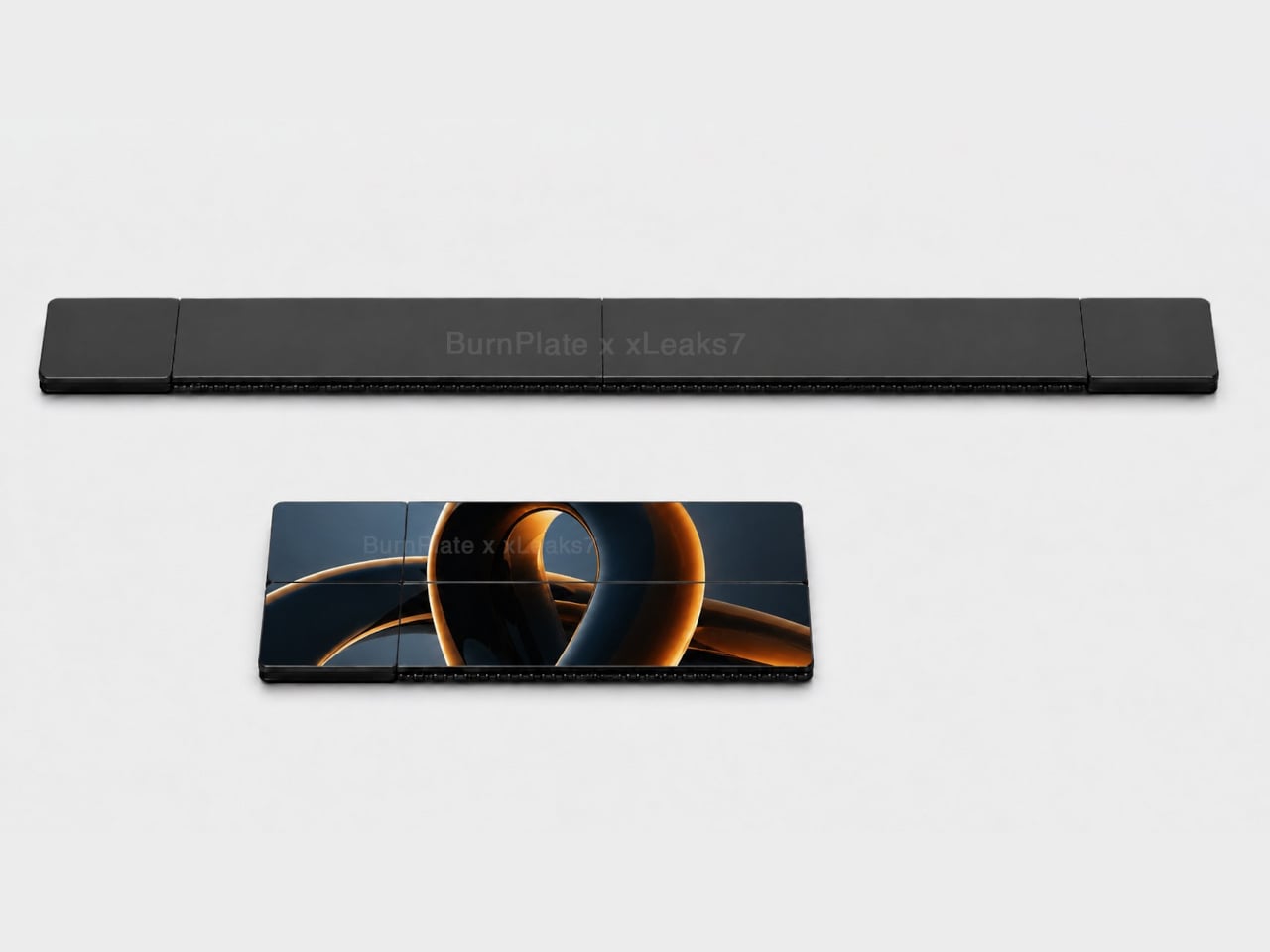
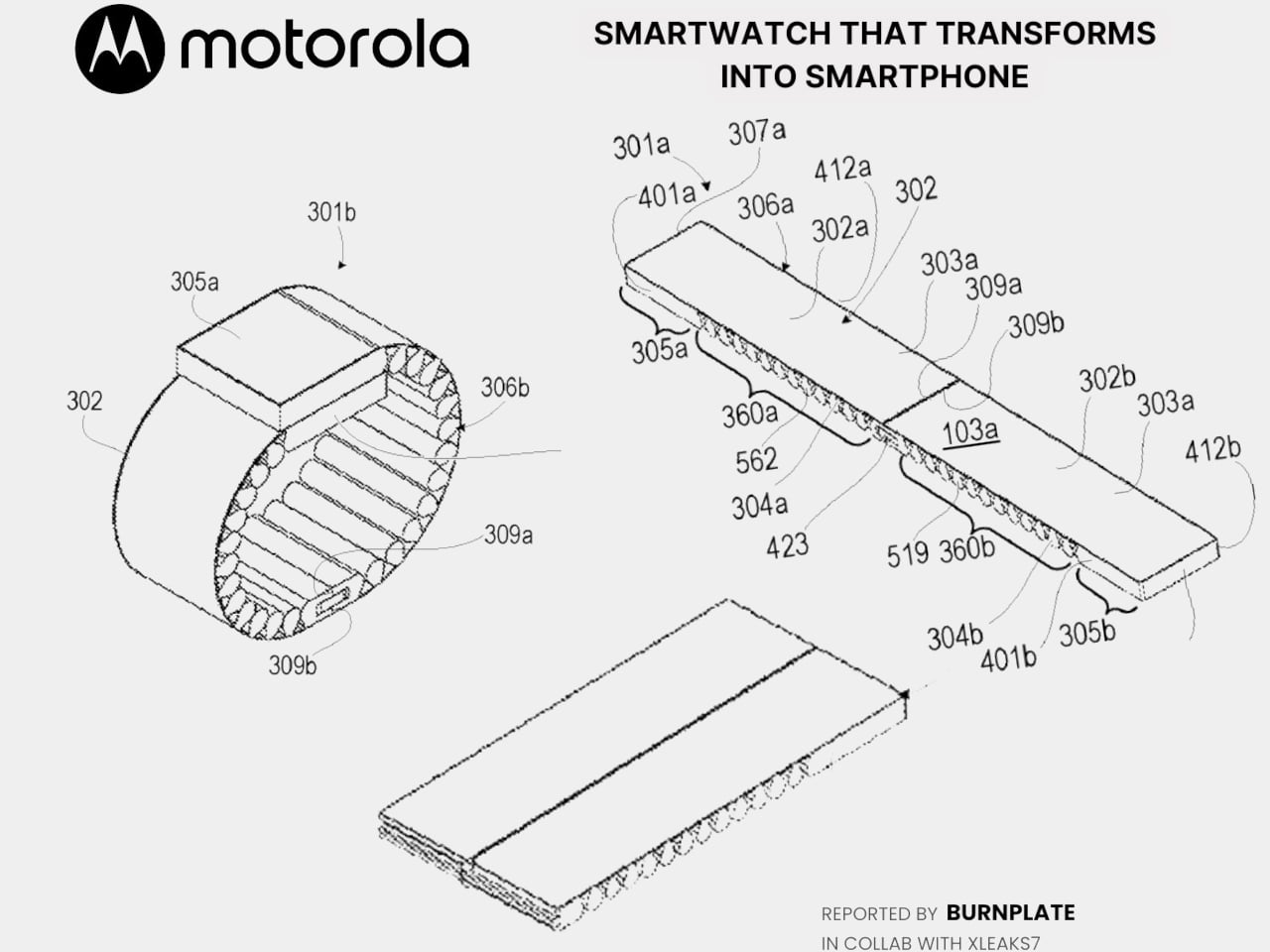
Motorola’s latest patent, officially registered as US12,693,705 under the title “Pivoting wearable reconfigurable screen,” proposes exactly that. The device starts on the wrist as a conventional smartwatch, its flexible display curved around the band. When more screen real estate is needed, the strap pivots and unfolds, flattening into a short, wide display format that functions as a handheld device. A third configuration folds the bottom quarter into an “L” shape, turning the unit into a self-standing desk display.
The mechanism that makes it possible is the strap itself. Rather than housing a traditional watch face with a fixed display, almost the entire outer surface of the band carries a flexible screen. Worn, it reads like a standard wearable. Removed and unfolded, that same surface becomes the display area of a compact, landscape-oriented device. The pivot point is what separates this from simply being a wrist-wrap phone like earlier concepts.
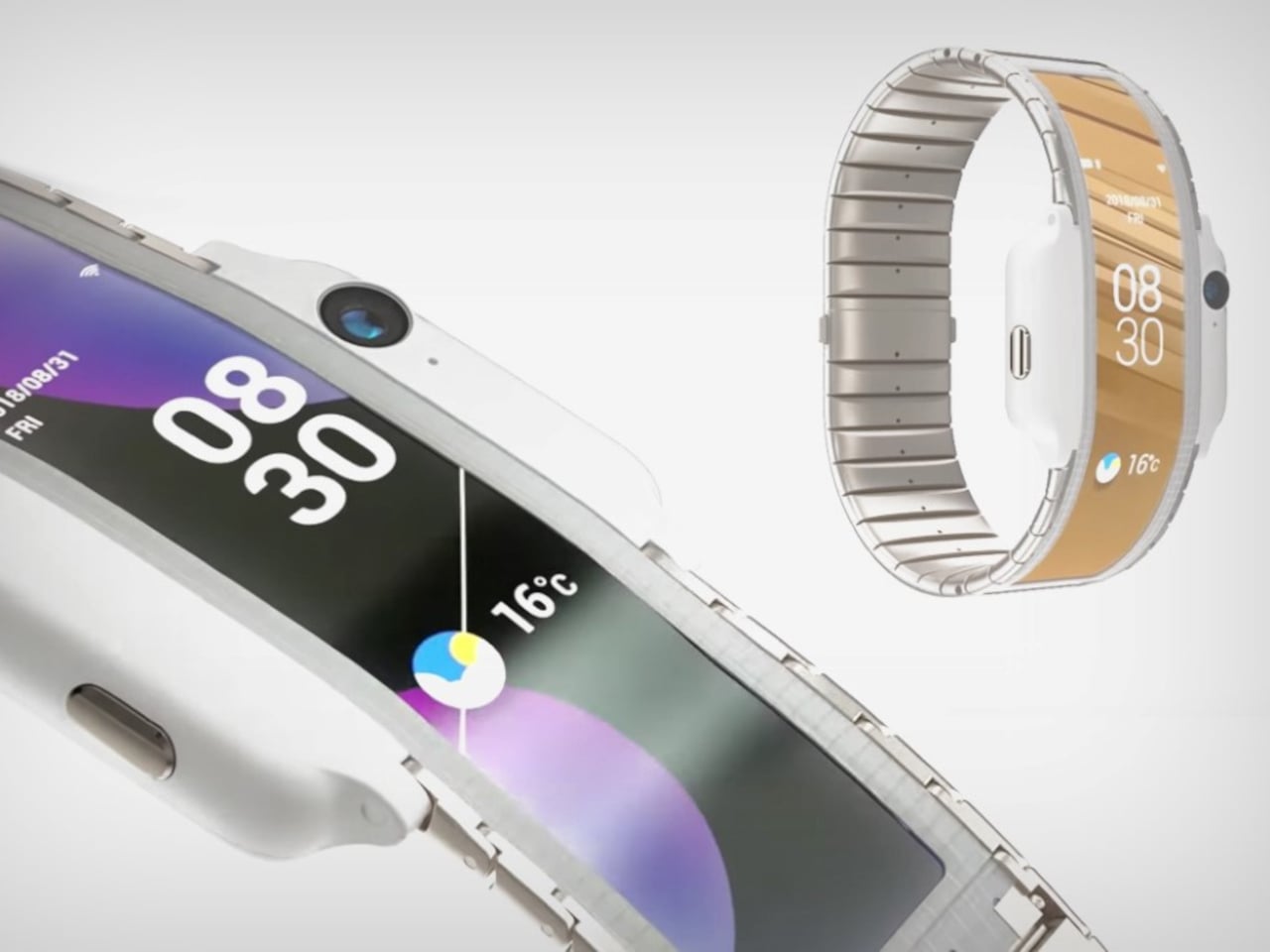
That distinction matters because Nubia tried the wrist-phone idea back in 2018 with the Alpha, and the result was a fascinating but limited object. The Alpha wrapped a 4.01-inch OLED display around the upper wrist, delivering more screen real estate than any smartwatch before it, but the display stayed wrapped. It curved beautifully, could make calls, take photos, and run apps, but it never transformed into anything. The watch was the watch, full stop.
Nubia Alpha
Motorola’s patent reverses the logic. Rather than making a phone you can wear, it proposes a watch you can unfold. The distinction isn’t purely semantic. A device that starts as a watch and transforms into a handheld is solving a different problem than one that starts as a phone and straps to your wrist. The first carries a reasonable identity in both states; the second always feels like a compromise in one of them.
Nubia Alpha
The Nubia Alpha’s sticking point wasn’t the display, which was genuinely impressive and ahead of its time. It was the software, the battery, and the form factor’s limits in practice. Nubia never took the concept further after the original and a 2020 follow-up. The flexible display remained horizontal and wrist-bound, never taking the step toward becoming a genuinely detachable, self-sufficient screen.
Whether Motorola’s patented concept eventually ships as a real device is a separate question entirely. Patents are filed routinely without becoming products, and this one would require flexible display technology durable enough to handle daily wrist bending and regular unfolding, a battery that fits within strap dimensions, and software that transitions cleanly between modes. None of those are trivial problems.
Still, the direction of thinking has clearly shifted since 2018. Nubia asked what happens when a smartphone lives on your wrist. Motorola is asking what happens when a watch becomes a screen the moment you need one.
Samsung’s Galaxy Z Flip8 costs less and has longer support, while Motorola’s Razr Ultra leads on storage, RAM, battery, charging, and cover-screen apps.
Motorola's Edge 70 Max pairs a 7,100mAh silicon-carbon battery with built-in Qi2 magnetic charging, flagship hardware, and a slim design in its India debut.
Android 17 is rolling out to supported Pixel devices first, while non-Pixel users and IT teams face separate OEM timelines, beta programs, and app-testing considerations.
J'sais pas si vous avez vu, mais sur les Motorola Razr 2026, l'app maison Smart Feed intercepte le lancement de l'application Amazon pour y glisser en soumsoum un petit code d'affiliation. Comme ça, à chaque fois que vous tapez sur l'icône Amazon, votre clic se met à rapporter une commission à un compte tiers. Vous ne payez pas un centime de plus rassurez-vous, c'est le principe de l'affiliation, mais il me semble que c'est pas très réglo de ne pas le dire. En plus je pense que ça va à l'encontre des CGU d'Amazon... Breeeef, y'a rien qui va dans cette histoire.
Le truc se déclenche donc uniquement quand vous ouvrez Amazon le menu des applications, et pas depuis un raccourci sur l'écran d'accueil. A ce moment là, pendant une fraction de seconde, Chrome clignote à l'écran, et votre téléphone passe par un site nommé kira-abboud.com, pour ensuite utiliser un lien qui repart vers l'app Amazon avec le code d'affiliation sramz-kff-008-20 comme si de rien n'était. Comme ça Amazon, pense que vous arrivez de ce lien affilié.
C'est tellement rapide que la plupart des gens ne verront jamais rien....
Sauf que kira-abboud.com renvoie vers une influenceuse mode, @kirasfashionfinds présente sur Instagram, et qui n'a aucun lien apparent avec Motorola. Pire, le code d'affiliation collé à votre session ne correspond même pas à ceux qu'elle a déjà publiés. Et voilà comment on se retrouve avec un téléphone vendu par une grosse marque qui détourne vos clics vers un compte tiers, sans la moindre explication.
Côté technique, les logs réseau pointent vers devicenative.com. C'est une régie qui place de la pub sur les smartphones via un SDK intégré aux launchers Android, avec une intégration Motorola documentée. En clair, le mécanisme qui pourrit votre app Amazon pointe vers un kit publicitaire préinstallé d'usine.
Reste à savoir maintenant si c'est un choix assumé de Motorola ou un SDK pub qui part en vrille, voire un hack... et pour l'instant, personne ne le sait.
Ce qui est sûr, c'est que le coupable porte un nom et un numéro de version. Sur la version 2.03.0056 de Smart Feed, aucun détournement alors que sur la 2.03.0070, le hijack apparaît. Et bizarrement, installer manuellement cette même version mise à jour ne reproduit pas le comportement. Autrement dit, y'a quelque chose qui s'active côté serveur ou côté usine, et pas juste dans le code de l'app. C'est vraiment super bizarre...
Les Razr 2026 et Razr Fold sont touchés, tout comme le Razr 60 Ultra de 2025 à l'origine du signalement. Le Moto G Stylus 2026 testé en parallèle, lui, ne l'est pas.
Après la bonne nouvelle, c'est que la parade est facile à faire ! Direction Paramètres, Applications, vous cherchez Smart Feed, et vous le désactivez. D'après les tests que j'ai pu lire, ça n'a pas d'impact visible sur le reste du téléphone donc mieux vaut désactiver cette merde parce que c'est réversible en deux clics et bien moins casse-gueule que de virer l'app via adb.
Perso, qu'un téléphone vendu par une marque sérieuse détourne nos clics vers un compte tiers via un domaine bidon, ça me rend fou et même si à l'échelle d'un clic, la commission c'est trois fois rien, étalé sur tout un parc d'appareils, ça finit par peser lourd niveau oseille pour celui qui encaisse.
Ce problème dépasse le cadre "Motorola" d'ailleurs puisque less apps préinstallées qu'on ne peut pas virer (les fameux bloatware) sont devenues un canal de monétisation à part entière et comme personne ne vérifie jamais ce que ces trucs font tourner en arrière-plan, c'est la fête du slip ! C'est exactement le même genre de paranoïa raisonnable que quand on se demande si
votre téléphone vous écoute
sauf qu'ici, pas besoin de théorie, puisque ce détournement est parfaitement visible.
Pour l'instant, Motorola a été contacté mais n'a pas réagi et le code d'affiliation continue de tourner sur les appareils concernés tant que Smart Feed reste actif. J'imagine quand même qu'Amazon va s'occuper de le désactiver en attendant d'en savoir plus.
Bref, bon courage si vous avez un Motorola récent !

 Connexion