Vue lecture

Il y a de nouveaux articles disponibles, cliquez pour rafraîchir la page.

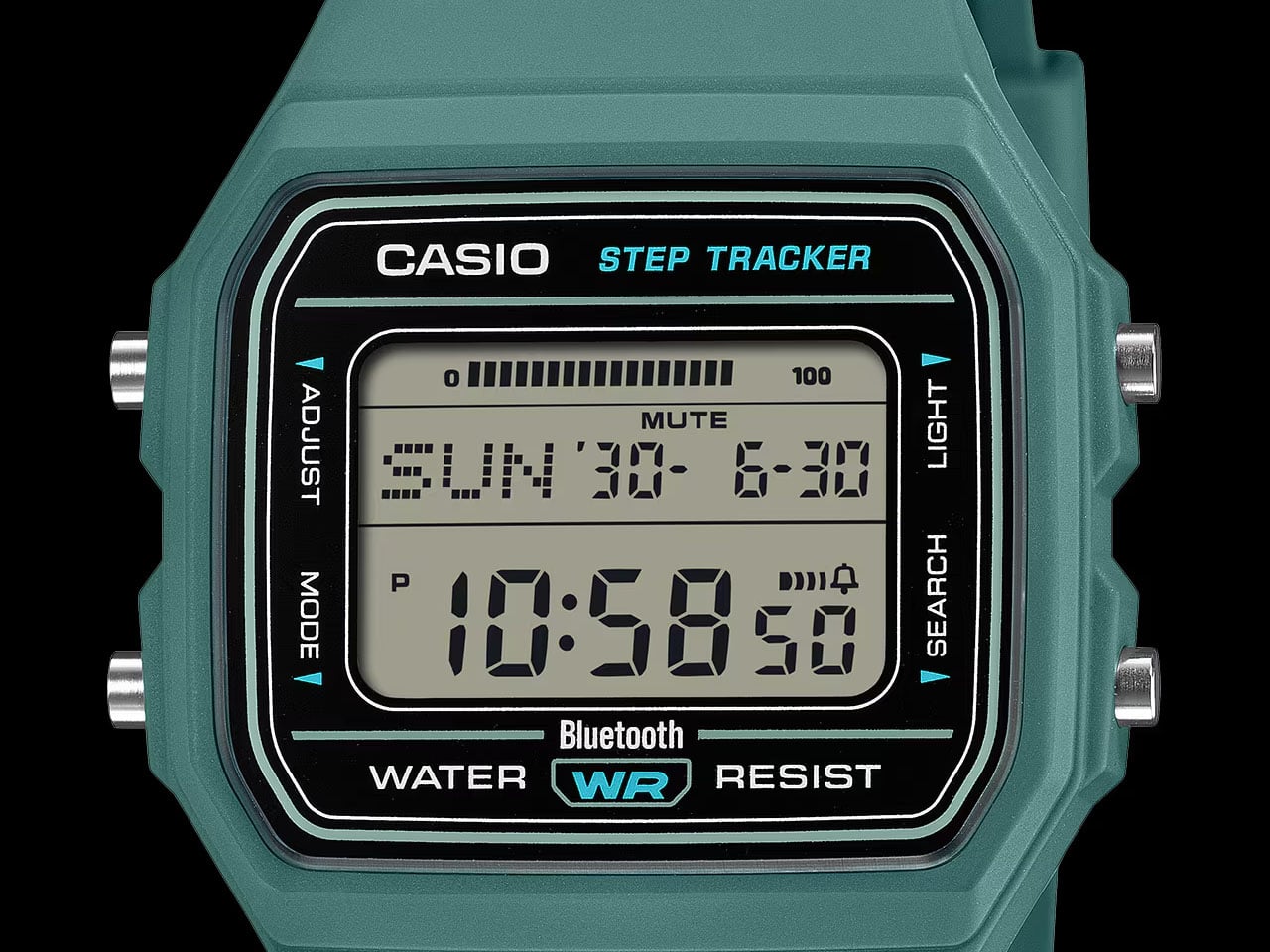
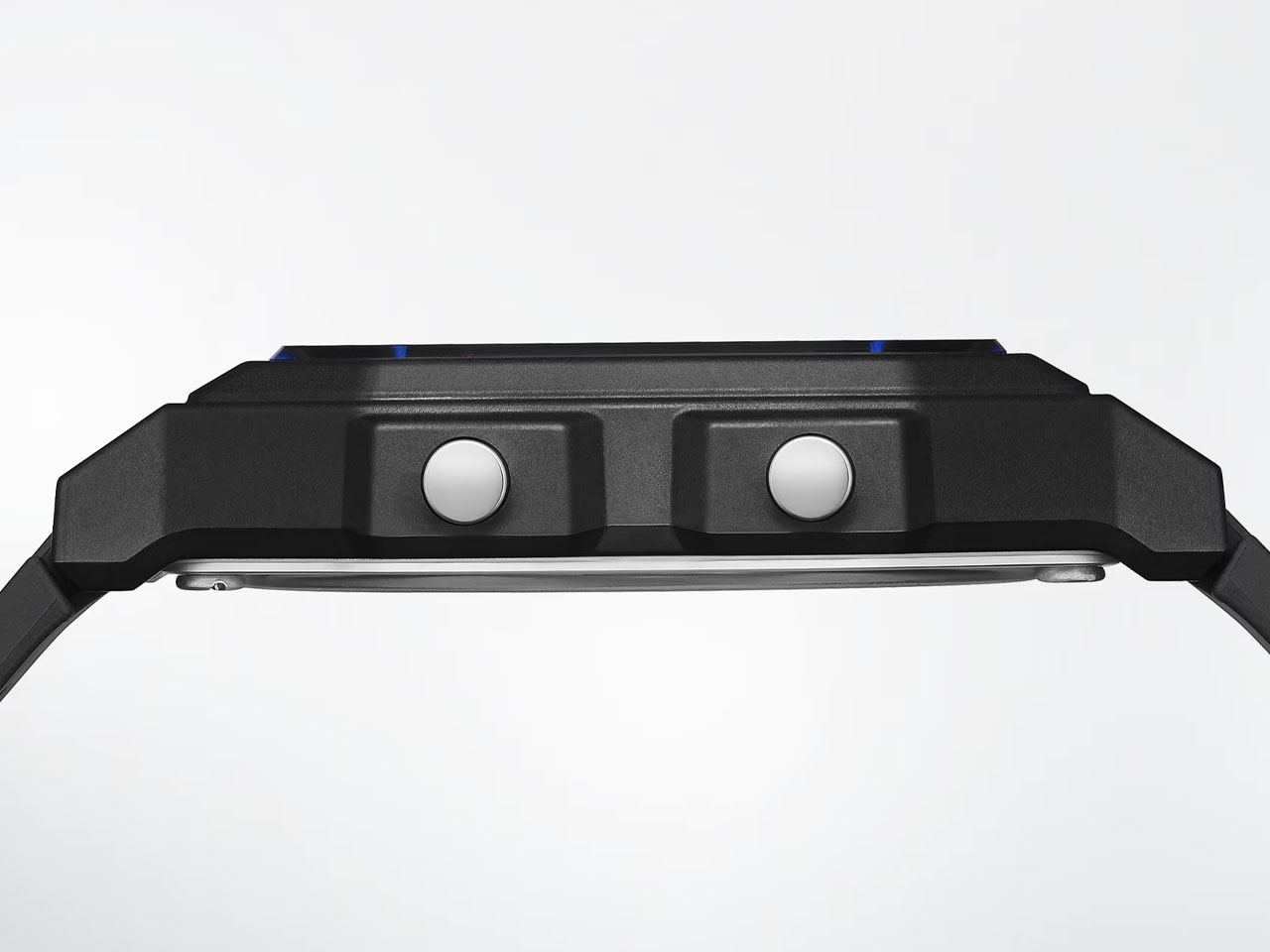
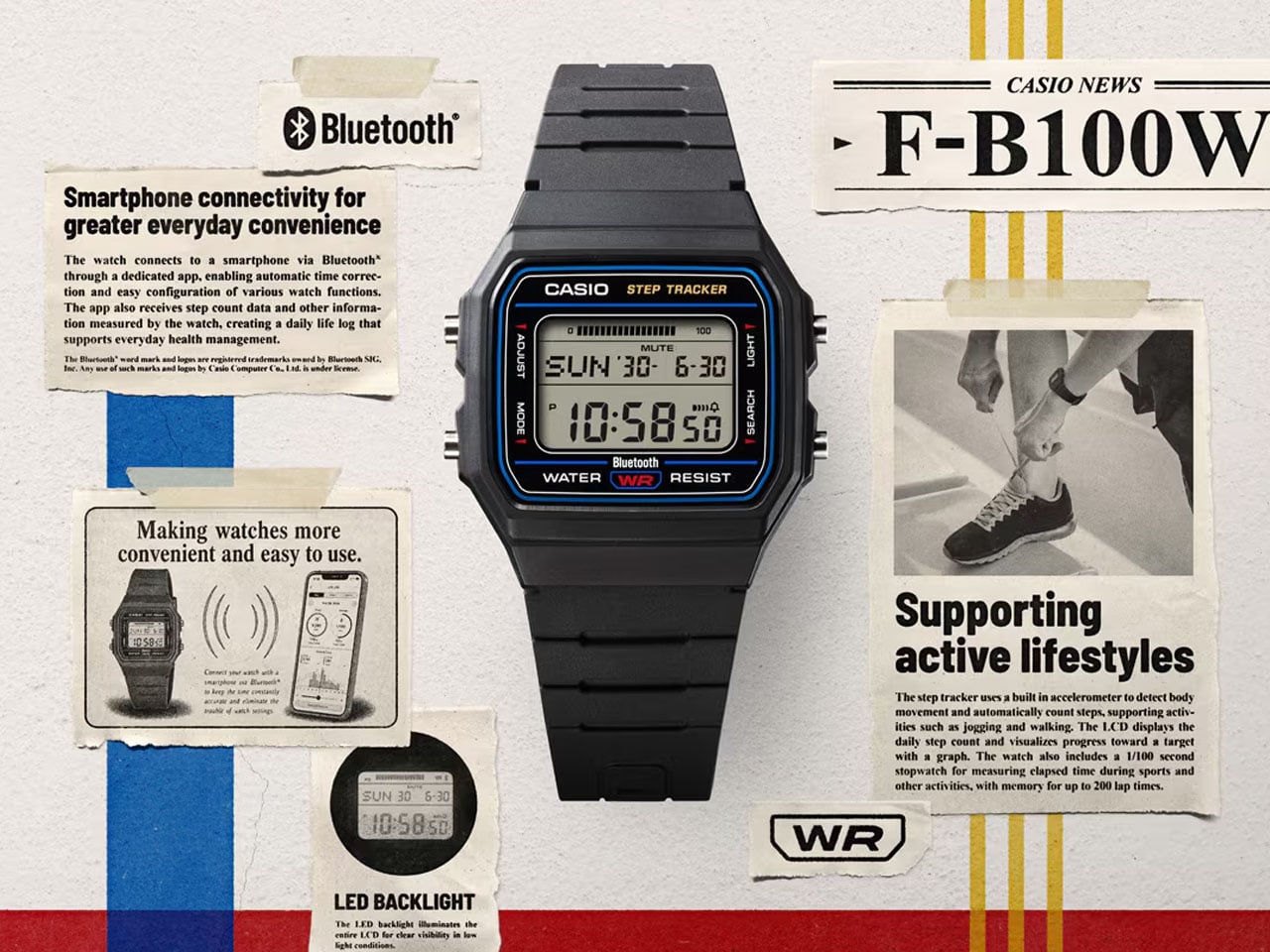
Casio upgrades the classic F-91W watch with smart functions, and it’s already sold out in Japan

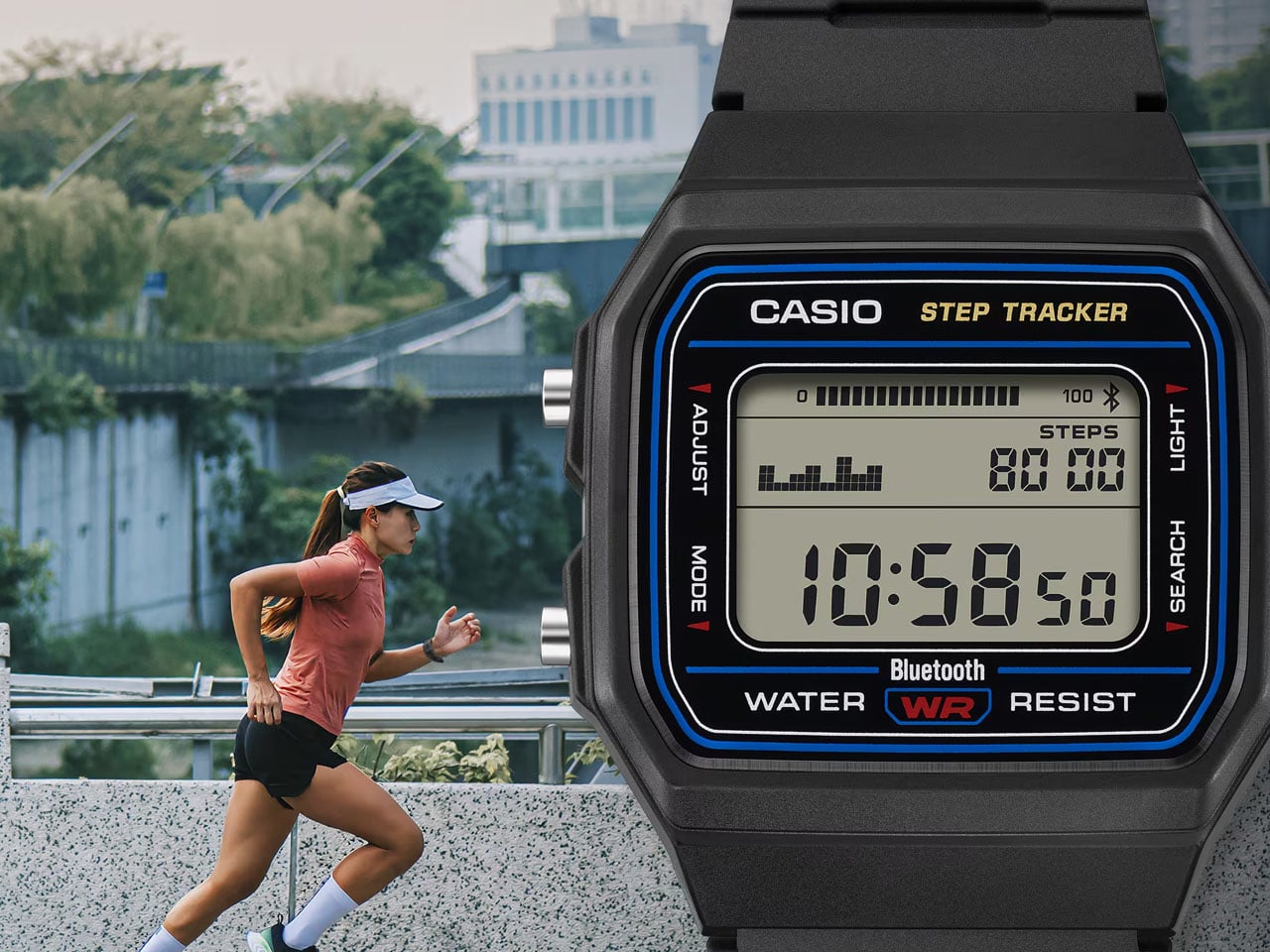
Without a doubt, the Casio F-91W is a legendary timepiece that is still available to buy for $20. While the digital watch has retained its nostalgic charm all these years, it is indeed a little left behind when it comes to smart functionality. Casio is set to change that now with the F-B100W timepiece, which adapts the modern functions expected in a smart timekeeper. The classic 1980s digital watch in the rectangular silhouette, upgraded with the goodness of step counting – I’ll take that any day!

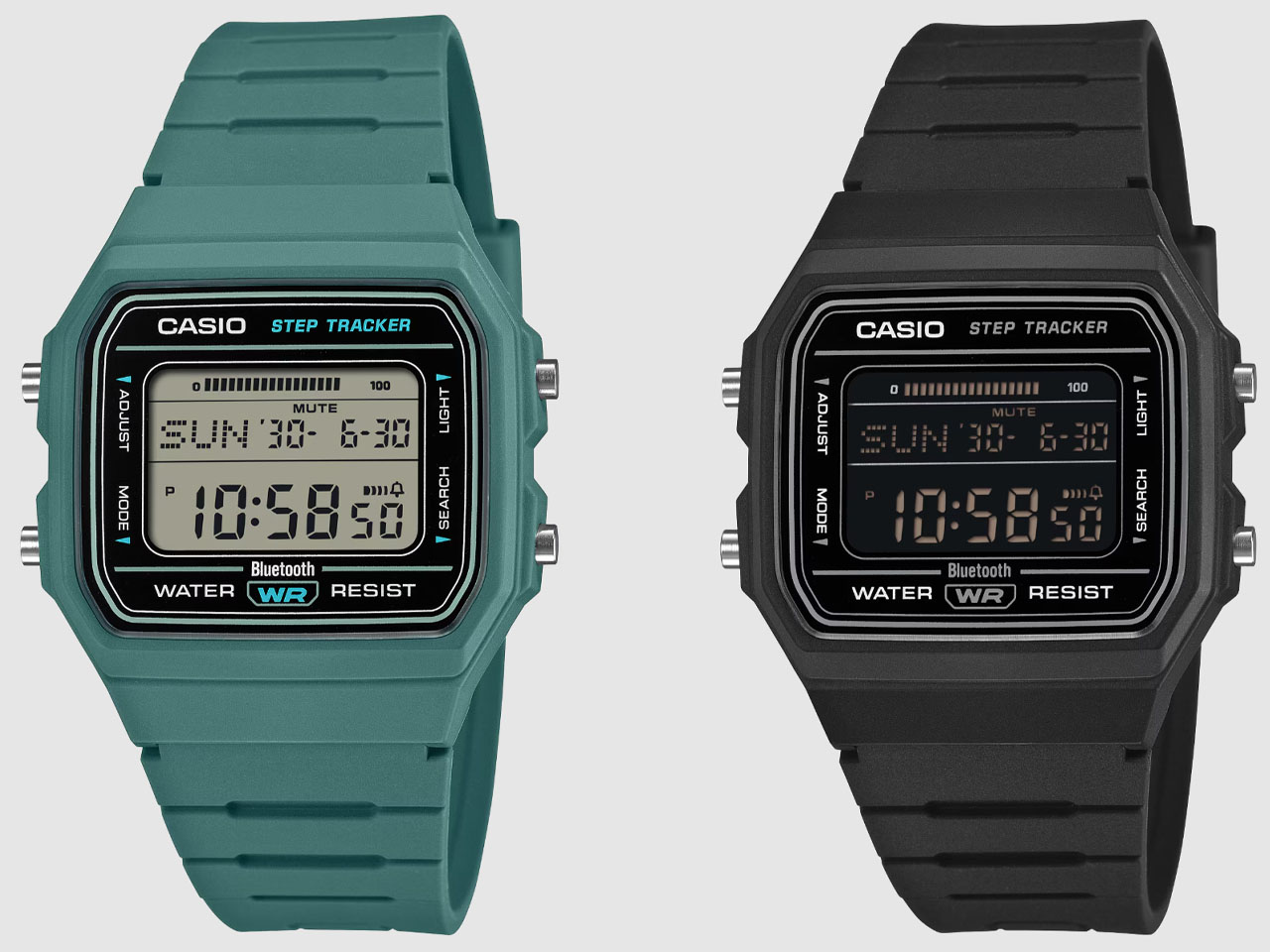
On the outside, this Casio timepiece looks like the trusted F-91W, but inside it has more to offer, making it a sweet deal. For now, the watch is available in Japan for ¥8,800 (around $55), and it’s not surprising it has already been sold out, at least for now. That’s almost double the price tag of the original, which is still up for $22, but you’ll also have to factor in the generational leap in smart features this new model touts.

Designer: Casio

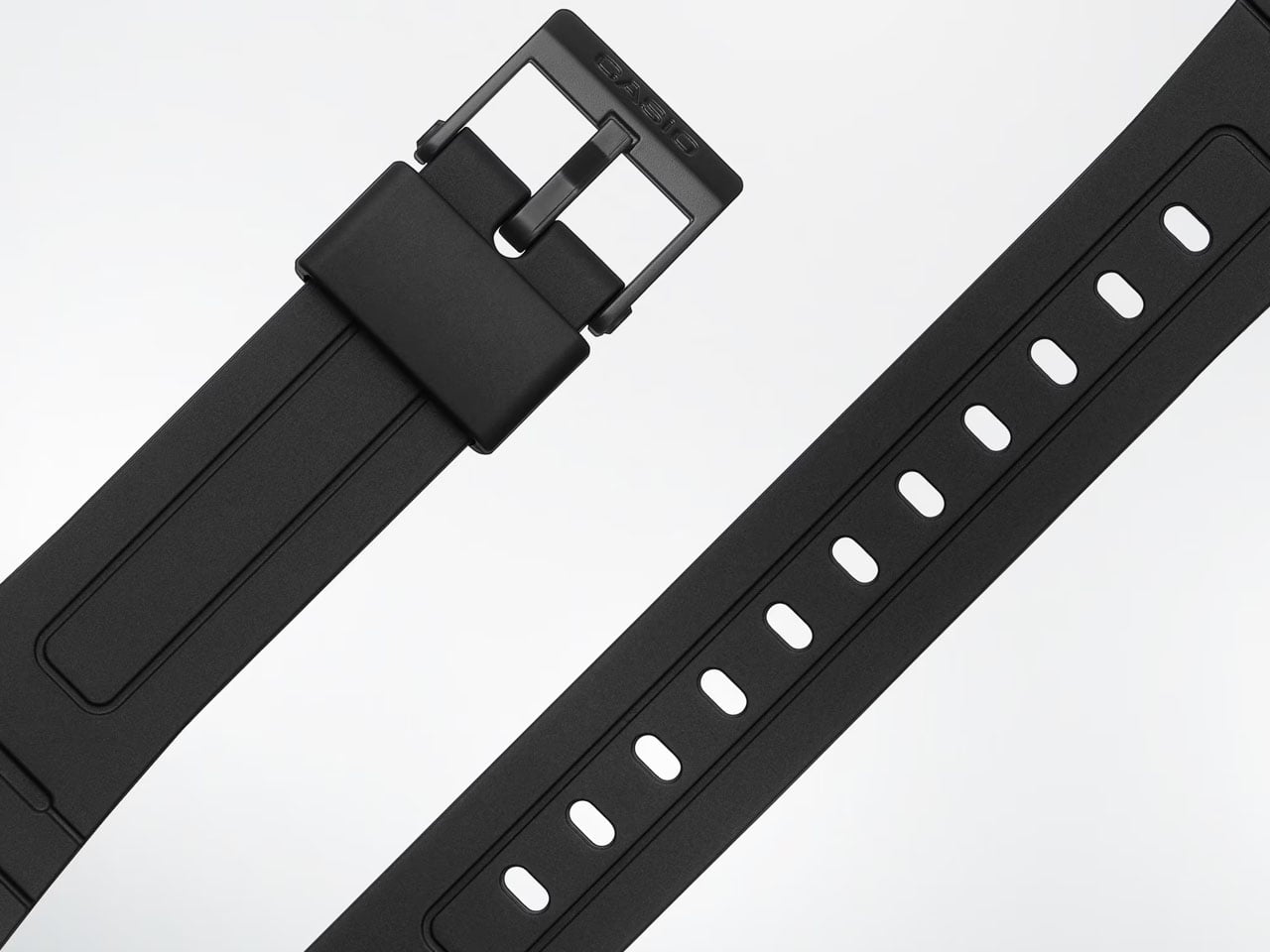
Most of the F-B100W’s functions are fairly straightforward, and the specifications are also very close to the original, measuring 41.9 × 38.1 × 8.8 mm and weighing 26 grams. The timepiece retains features including an amber LED backlight with adjustable glow, water resistance, an hourly time signal, and five daily alarm options. For improved comfort during long hours, the bio-based plastic strap now has improved ventilation slits. Major changes come in the form of a watch battery (as opposed to a rechargeable cell), which lasts for almost two years.

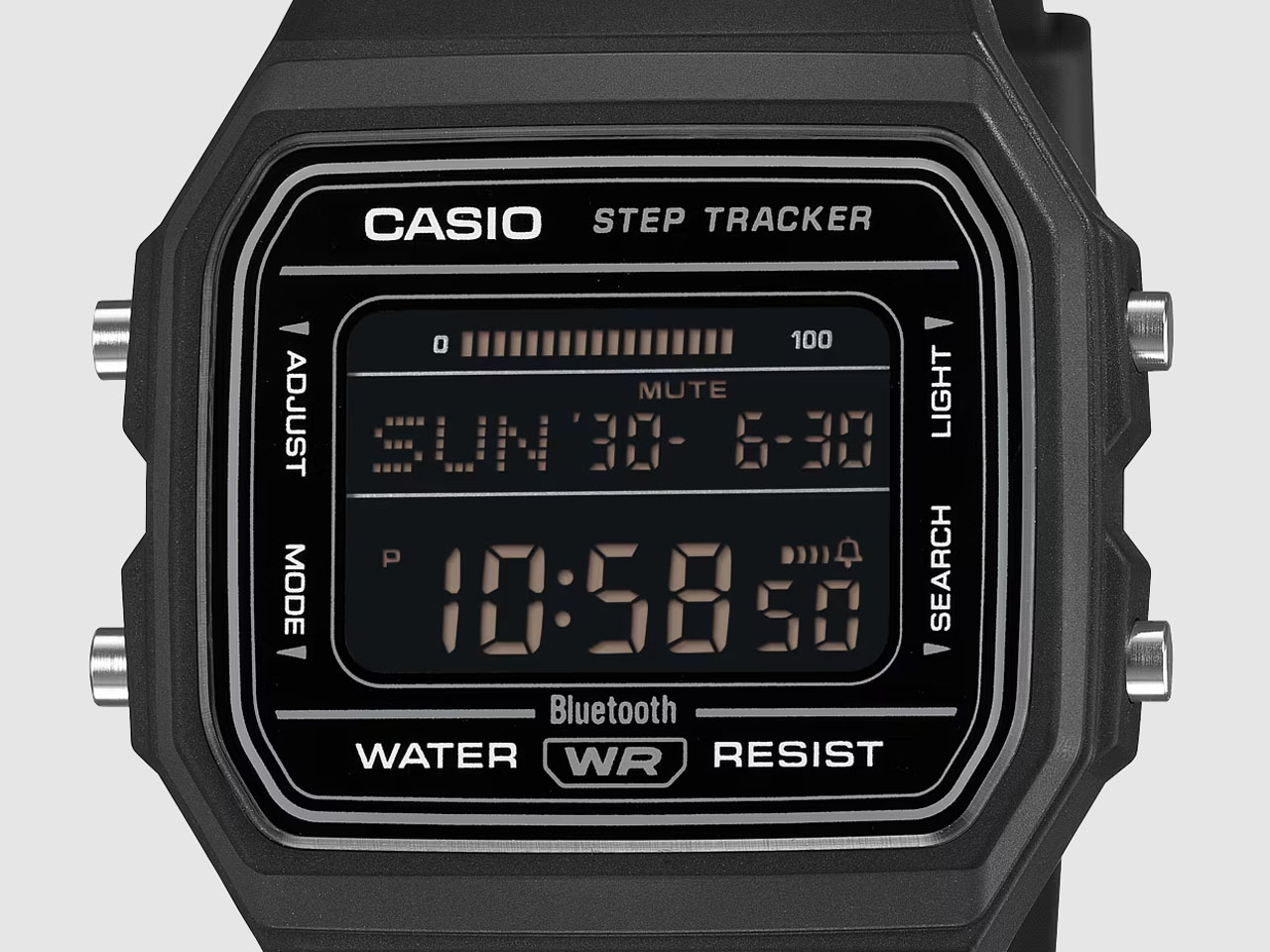
What’s making this Casio timepiece a big buzz already is the inclusion of Bluetooth, which automatically syncs time or toggles the alarms or dual time display. In the mix is the phone finder feature, which can be a really useful addition without all the unwanted nuances. What I’m most excited about is the addition of the step counter and lap split time function, which can be directly synced to your phone with the companion app. You can set goals, record up to 200 laps, and monitor the progress on the watch screen as well. For times when you get too engrossed in work, the F-B100W also sends an inactivity alert via a beep and on-screen prompt. Of course, that is an optional feature that can be turned off as well.

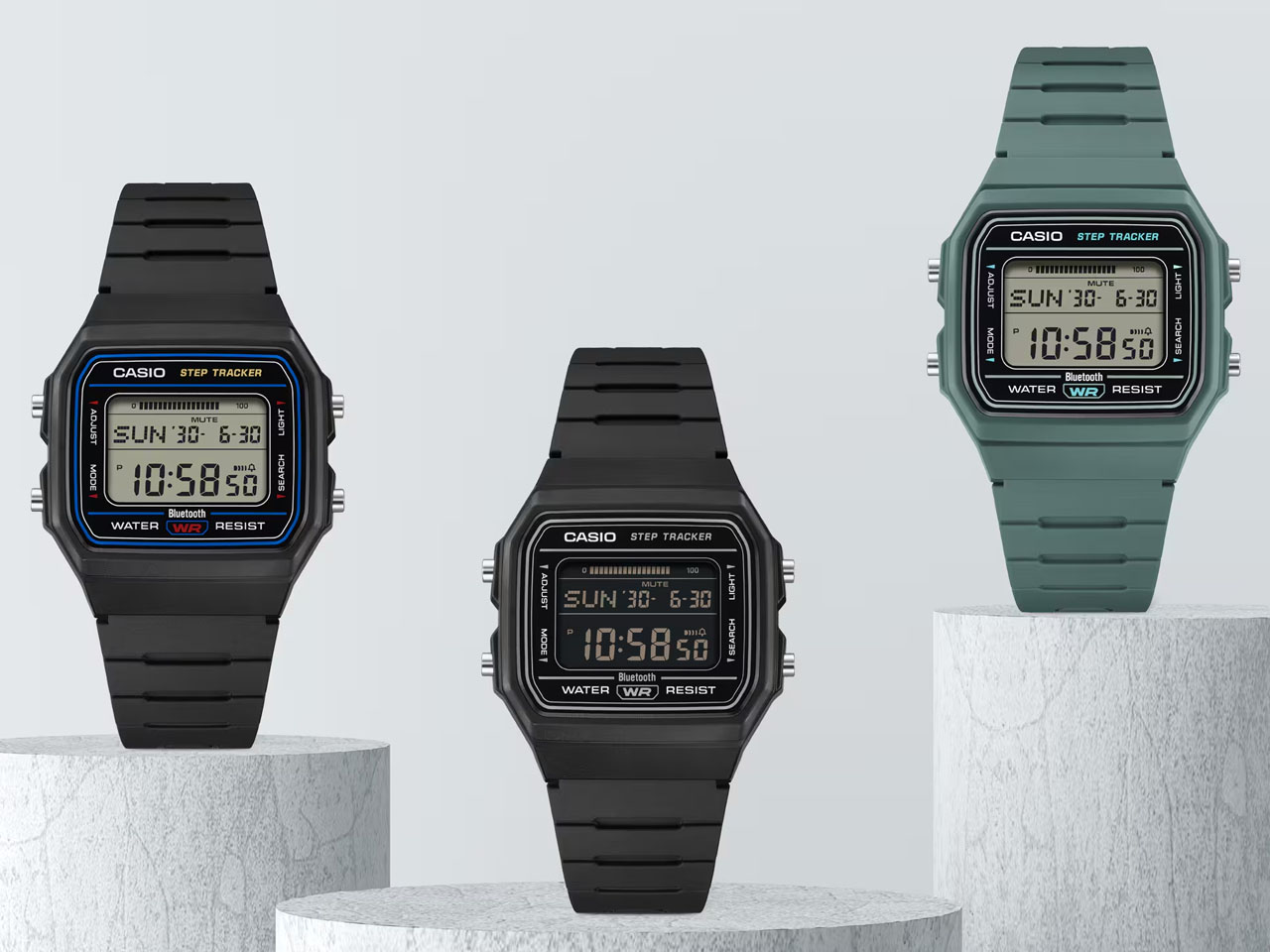
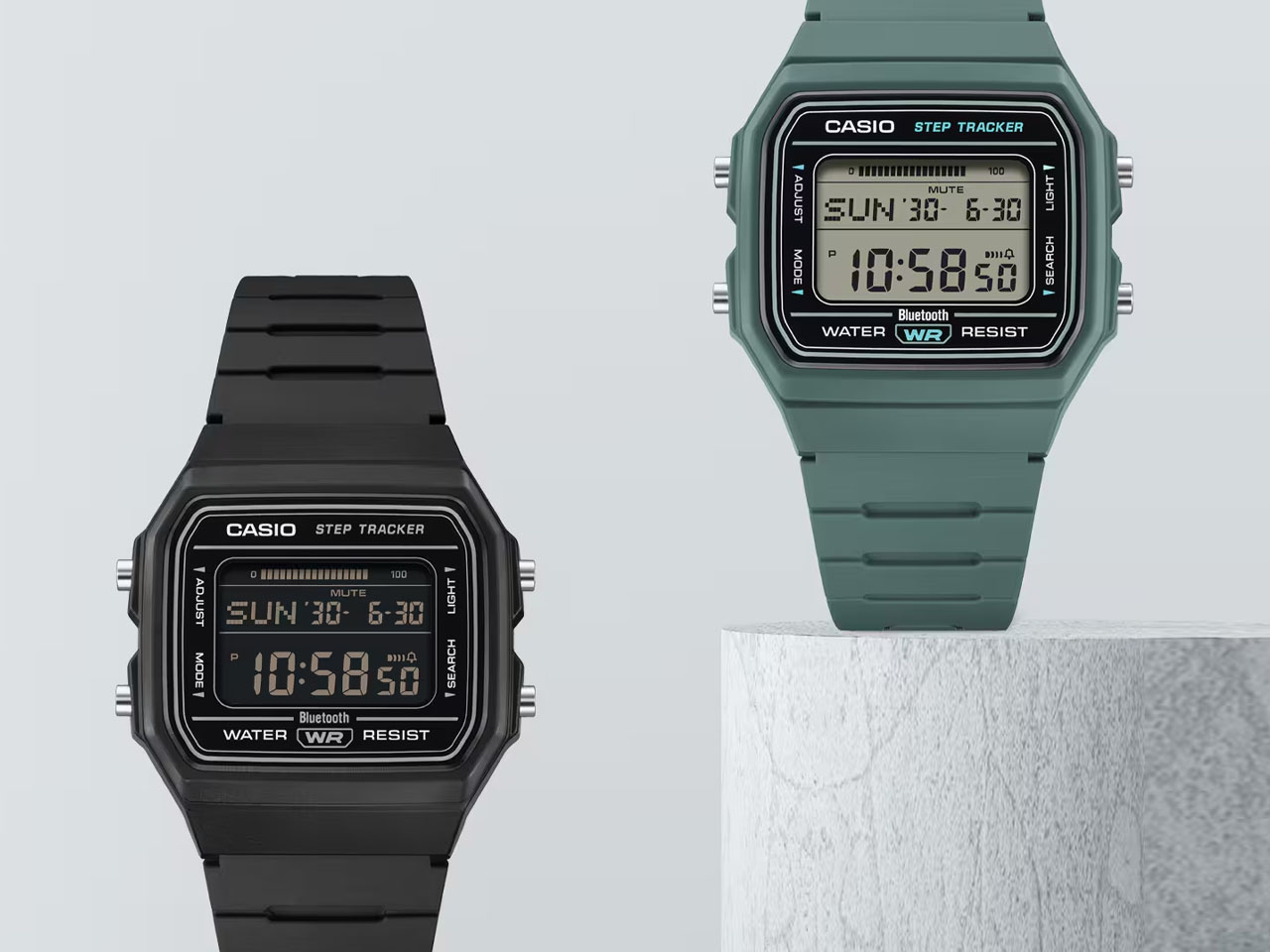
It doesn’t have any other smartwatch features like a heart rate monitor, sleep diagnosis, or even BP monitoring, but that’s the point. The retro-modern Casio watch has all the timekeeping functions, and the most essential smart features without making the wearer too finicky about the vitals. F-B100W comes in three color variants: 1AJF, 1BJF, and 3AJF, which have a black case with a positive LCD and retro blue, red, and yellow dial accents, and all black with a negative display and gray text, respectively.

The post Casio upgrades the classic F-91W watch with smart functions, and it’s already sold out in Japan first appeared on Yanko Design.

The new Timex Retroware Digital Watch Just Rekindled My Childhood Memory

When I was growing up in the 1990s, there was a Timex I would kill for. If you remember the Timex Men’s Ironman Triathlon, you’d know what I mean. Not only was it the first to introduce the Indiglo backlight, but it was also the dominant sports watch, slayed with its rugged resin case. I owned one briefly before my brother, who had more muscle than me back then, coerced it out of my wrist to his advantage one day.

I had, in the last three decades, almost forgotten about it, but the moment the new Timex Retroware Digital showed up on my screen this morning, some memories were definitely rekindled. Thriving on the old digital sports watch charm of the ‘90s, the Retroware Digital is nowhere close to the Ironman for me, but it has its own retro vibe, which will find takers. Me… maybe, maybe not!

Designer: Timex

Taking nothing away from the new Timex sports watch, let me walk you through what’s changed in approach for the company and how this one, with retro looks, has a way forward to chime with Gen Z. It starts right at the bold and oversized display featuring huge, curved numerals that occupy the larger part of the dial. And this display we are talking about is not small by any means. It’s set in a 46 mm lightweight resin case. The size gives the watch a strong wrist presence, while the curved numerals remain arguably easy to read.

The Retroware Digital watch has a large case, but it’s not very thick, even for not-so-big wrists. It measures only 11 mm high and the 46 mm case ensures the distance from lug-to-lug is a large 50 mm. So, you definitely have a great Timex you’re dealing with. That said, it’s packed with features you’d appreciate whether you’re an ‘80s kid or a young athlete setting pace on a 400-meter track.

The watch is equipped with a chronograph and has a timer to make sure you’re never late for practice. The retro charm on the dial is rekindled by the Indiglo backlight. For the unaware, INDIGLO (how it’s stylized) was developed by Timex in 1992 for the, yes, Ironman Triathlon. It is an electroluminescent blue-green night light onboard that allows a wearer to tell the time in low light conditions with the push of a button.

The large display of the Timex Retroware perpetually ticks with the power of a quartz digital movement inside, which is driven by a CR2025 battery under the hood. The watch is 50-meter water-resistant, so you can definitely take it for a light swim in the pool or to shower later. Don’t go deep diving with it or try and set the stopwatch underwater. If you’re interested, Timex offers the Retroware Digital watch in two colors, blue and green-gray, with matching resin straps for $149.

The post The new Timex Retroware Digital Watch Just Rekindled My Childhood Memory first appeared on Yanko Design.

Motorola’s Patent Isn’t a Phone You Wear, It’s a Watch You Unfold

The idea of merging a smartwatch and a smartphone into a single device has been floating around the industry for years, mostly because the obvious inconvenience is right there: two screens on two separate devices, one tiny and worn on the wrist, the other large and kept in a pocket, each doing essentially half the job the other can’t. The logical question is whether one of those devices could do both jobs depending on the situation.

Motorola’s latest patent, officially registered as US12,693,705 under the title “Pivoting wearable reconfigurable screen,” proposes exactly that. The device starts on the wrist as a conventional smartwatch, its flexible display curved around the band. When more screen real estate is needed, the strap pivots and unfolds, flattening into a short, wide display format that functions as a handheld device. A third configuration folds the bottom quarter into an “L” shape, turning the unit into a self-standing desk display.

Designer: Motorola (via Burnplate, David Kowalski/xeaks7)

The mechanism that makes it possible is the strap itself. Rather than housing a traditional watch face with a fixed display, almost the entire outer surface of the band carries a flexible screen. Worn, it reads like a standard wearable. Removed and unfolded, that same surface becomes the display area of a compact, landscape-oriented device. The pivot point is what separates this from simply being a wrist-wrap phone like earlier concepts.

That distinction matters because Nubia tried the wrist-phone idea back in 2018 with the Alpha, and the result was a fascinating but limited object. The Alpha wrapped a 4.01-inch OLED display around the upper wrist, delivering more screen real estate than any smartwatch before it, but the display stayed wrapped. It curved beautifully, could make calls, take photos, and run apps, but it never transformed into anything. The watch was the watch, full stop.

Nubia Alpha

Motorola’s patent reverses the logic. Rather than making a phone you can wear, it proposes a watch you can unfold. The distinction isn’t purely semantic. A device that starts as a watch and transforms into a handheld is solving a different problem than one that starts as a phone and straps to your wrist. The first carries a reasonable identity in both states; the second always feels like a compromise in one of them.

Nubia Alpha

The Nubia Alpha’s sticking point wasn’t the display, which was genuinely impressive and ahead of its time. It was the software, the battery, and the form factor’s limits in practice. Nubia never took the concept further after the original and a 2020 follow-up. The flexible display remained horizontal and wrist-bound, never taking the step toward becoming a genuinely detachable, self-sufficient screen.

Whether Motorola’s patented concept eventually ships as a real device is a separate question entirely. Patents are filed routinely without becoming products, and this one would require flexible display technology durable enough to handle daily wrist bending and regular unfolding, a battery that fits within strap dimensions, and software that transitions cleanly between modes. None of those are trivial problems.

Still, the direction of thinking has clearly shifted since 2018. Nubia asked what happens when a smartphone lives on your wrist. Motorola is asking what happens when a watch becomes a screen the moment you need one.

The post Motorola’s Patent Isn’t a Phone You Wear, It’s a Watch You Unfold first appeared on Yanko Design.

Glucose Tracking for Children Is Moving Into Apps and Smart Devices

Dexcom’s Stelo is the first over-the-counter continuous glucose monitor cleared for children. The FDA decision expands app-based glucose tracking to younger users, but schools, health care teams, and benefits leaders still need to account for device access, caregiver oversight, and coverage questions.

The post Glucose Tracking for Children Is Moving Into Apps and Smart Devices appeared first on TechRepublic.

G-Shock Just Turned a Japanese Paper Lantern Into Wearable Art

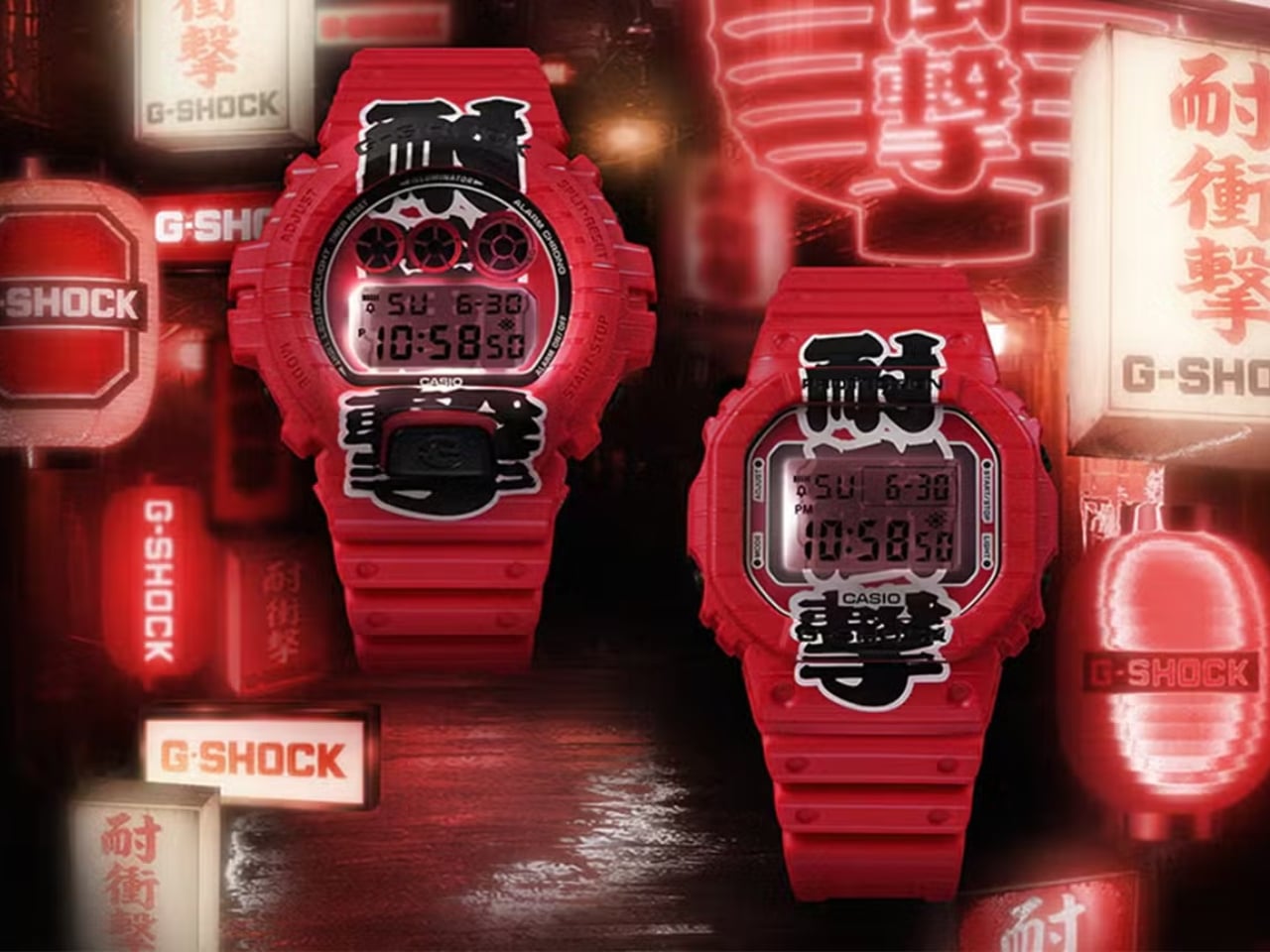
G-Shock has always known how to make a statement. From its reckless-by-design origins in 1983 to its cult status across military barracks, skate parks, and high-fashion runways, the brand has never really needed to justify itself. It just shows up. But with the new Aka-Chochin collection, built around the DW-5600AKA-4 and DW-6900AKA-4, G-Shock isn’t just showing up. It’s glowing.

The concept behind these two watches is, genuinely, one of the more thoughtful design moves I’ve seen from the brand in a while. “Aka-Chochin” translates to “red lantern,” a reference to the traditional paper lanterns that hang outside izakayas, the beloved Japanese taverns where people gather after long days for food, drinks, and the kind of conversation that only happens past 9 p.m. These lanterns, which date back to the early Edo period in the 17th century, weren’t decorative in the precious sense. They were practical and symbolic at once, signaling warmth, welcome, and the specific pleasure of slowing down. Casio took that idea and pushed it into two of its most iconic silhouettes.

Designer: G-Shock
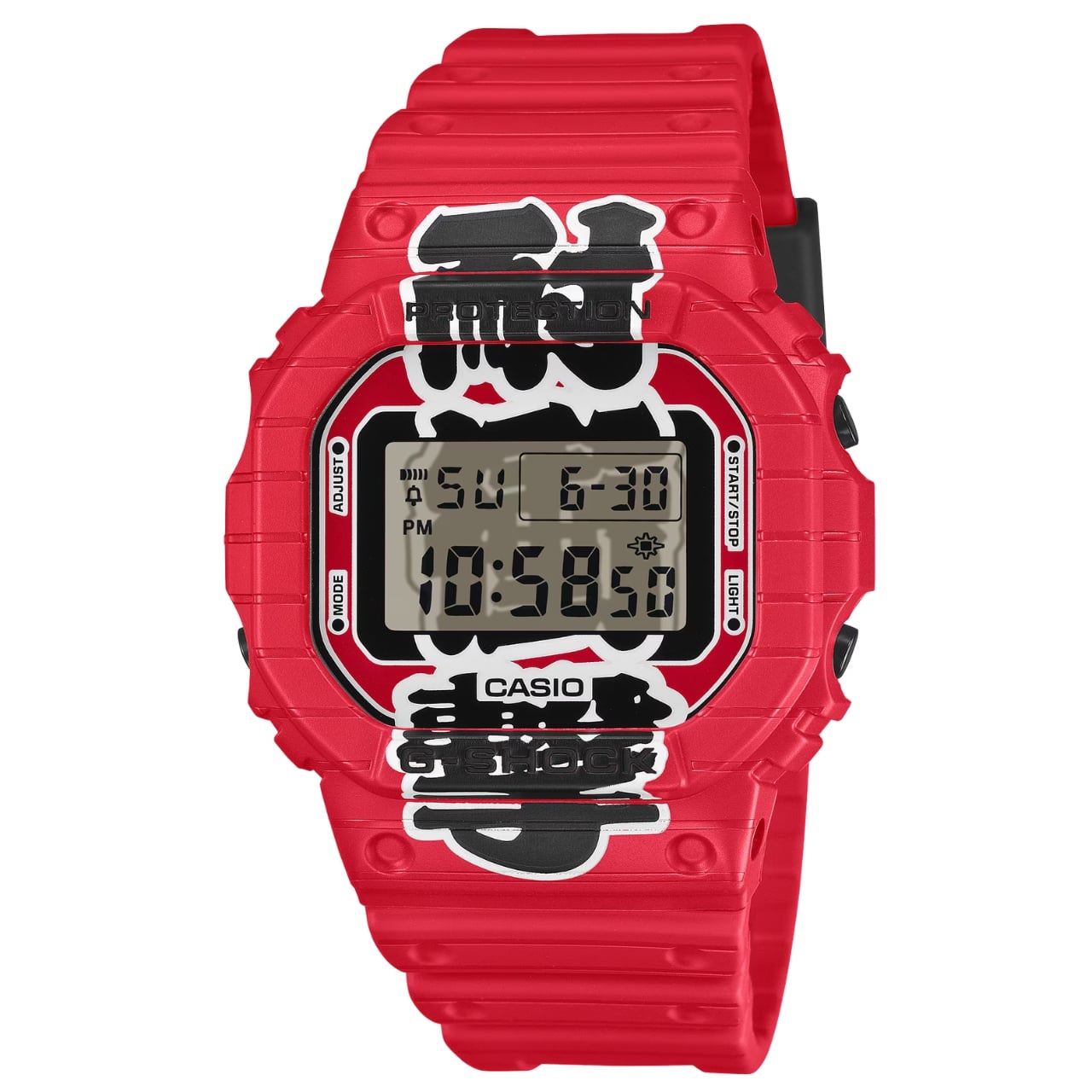
The result is unapologetically red. Not a subtle, wine-at-dinner red. A full-on, stop-what-you’re-doing red that covers the resin case, bezel, and band from top to bottom. On paper, it sounds like a lot. In practice, it earns its confidence. Both watches carry kanji characters down the face of the dial, reading “耐衝撃,” which means “shock resistance,” one of G-Shock’s founding promises. The characters are split between the bezel and the LCD display, and when the LED backlight activates, the two halves complete each other like a puzzle piece lighting up from within. It’s a detail you have to see in person to fully appreciate, and it’s the kind of thing that elevates a colorway from a gimmick to a genuine design choice.
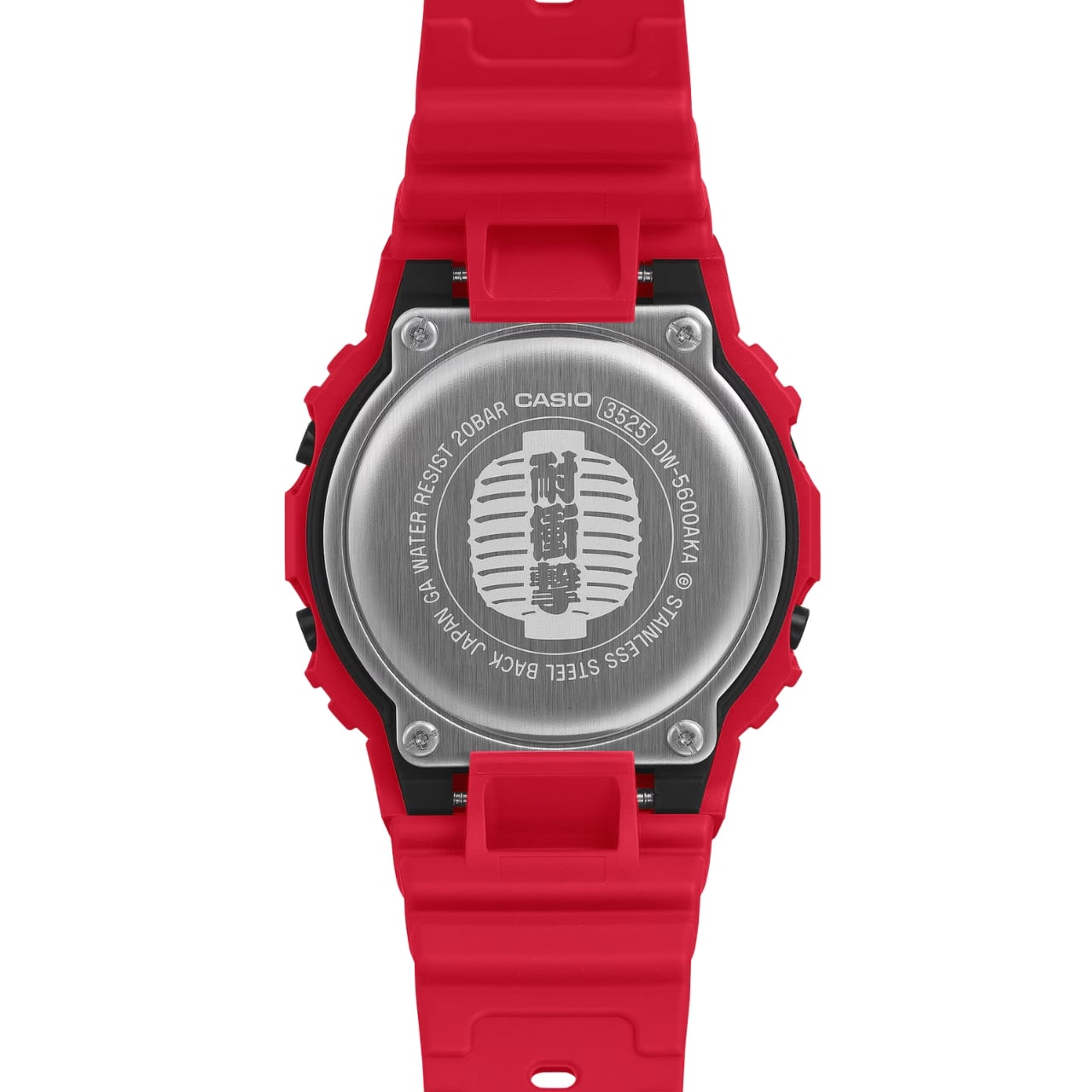
The bezels on both models also feature hot-stamped grooves that mimic the ribbed texture of a paper lantern, and that same motif carries through to the edges of the strap. It’s not subtle, but it is cohesive. G-Shock committed to the bit, and the commitment pays off.

Now, I’ll say this upfront: the Aka-Chochin aesthetic is polarizing. All-red anything tends to divide opinion, and a digital watch in this colorway is not trying to blend in. If your instinct is to gravitate toward muted, understated timepieces, these are probably not for you, and that’s fine. But if you’ve ever wanted a watch that reads as confident and culturally curious at the same time, the DW-5600AKA-4 and DW-6900AKA-4 make a genuinely compelling argument.
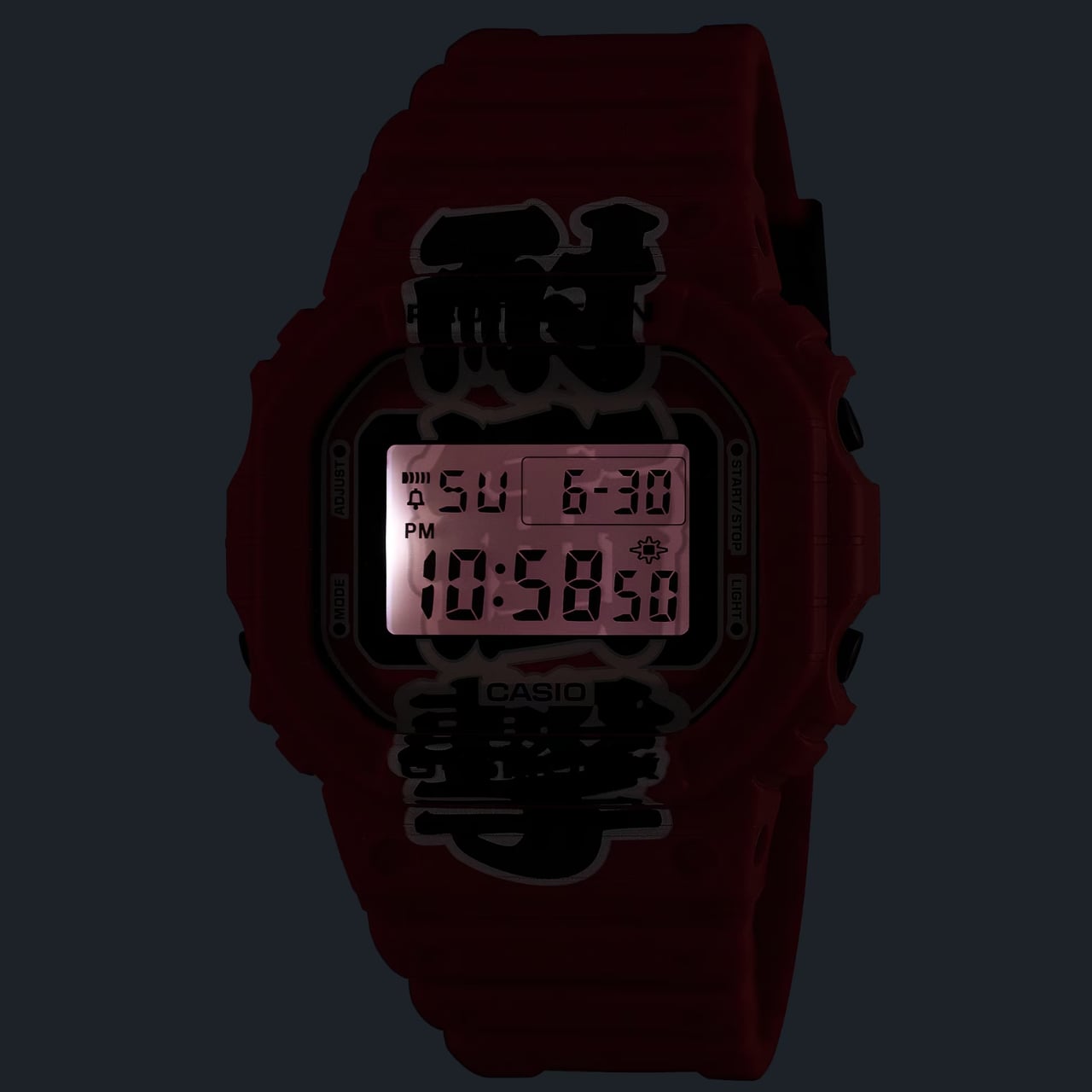
The choice of silhouettes is also worth noting. The DW-5600 is essentially G-Shock’s origin story made physical, the square case that started everything, a design so clean and deliberate it has barely needed updating in four decades. The DW-6900 is its more expressive sibling, with that distinctive triple-window dial and wider case presence. Pairing both with the same concept gives collectors and casual buyers alike an entry point, whether you’re drawn to the classic restraint of the 5600 or the bolder graphic energy of the 6900.
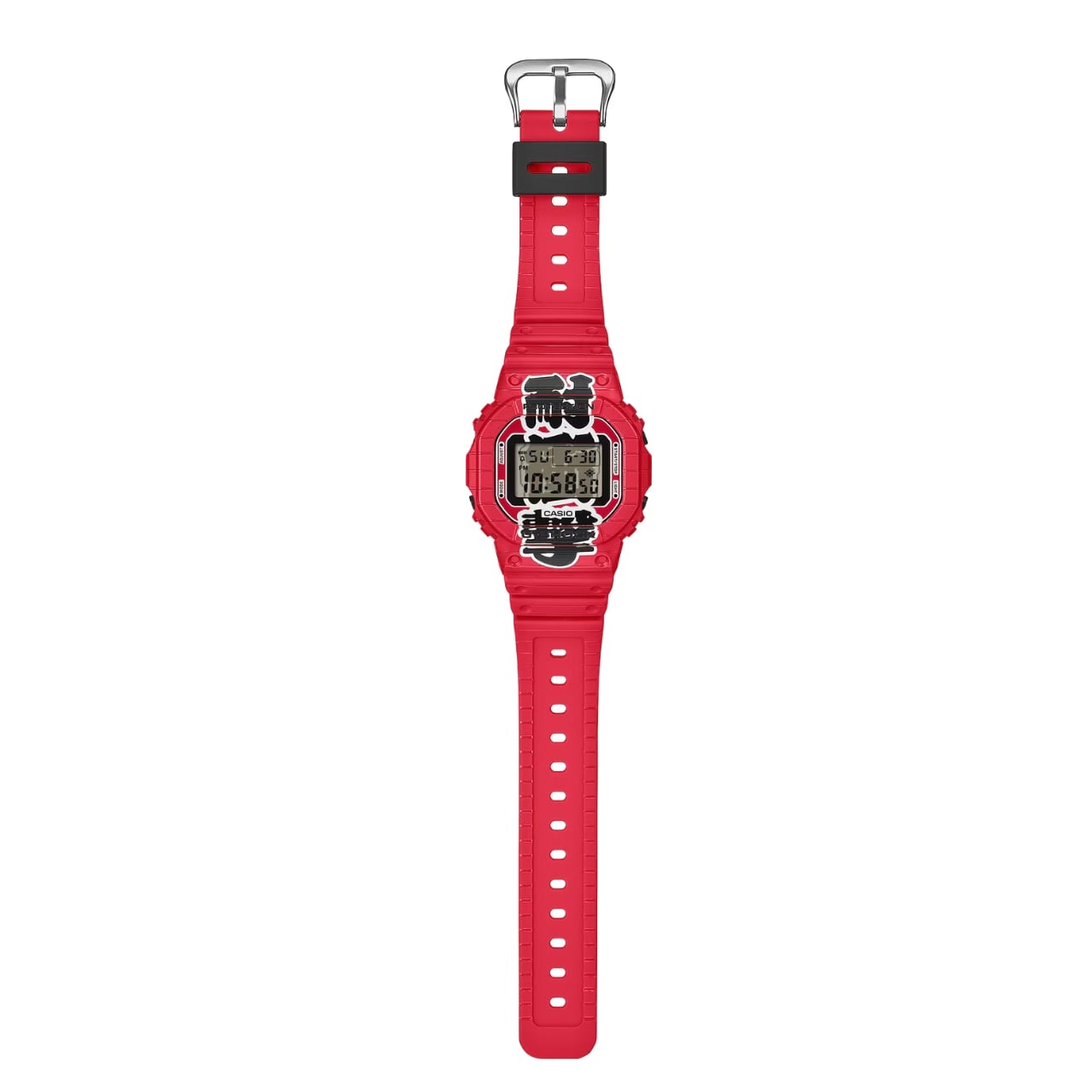
At $190 each, neither watch is a budget impulse buy, but it’s not a stretch, either. G-Shock has always occupied that interesting middle ground between functional tool watch and cultural artifact, and the Aka-Chochin collection lands squarely in that territory. You’re not just buying a watch that tells time reliably. You’re buying into a very specific idea about where design, heritage, and streetwear culture converge.
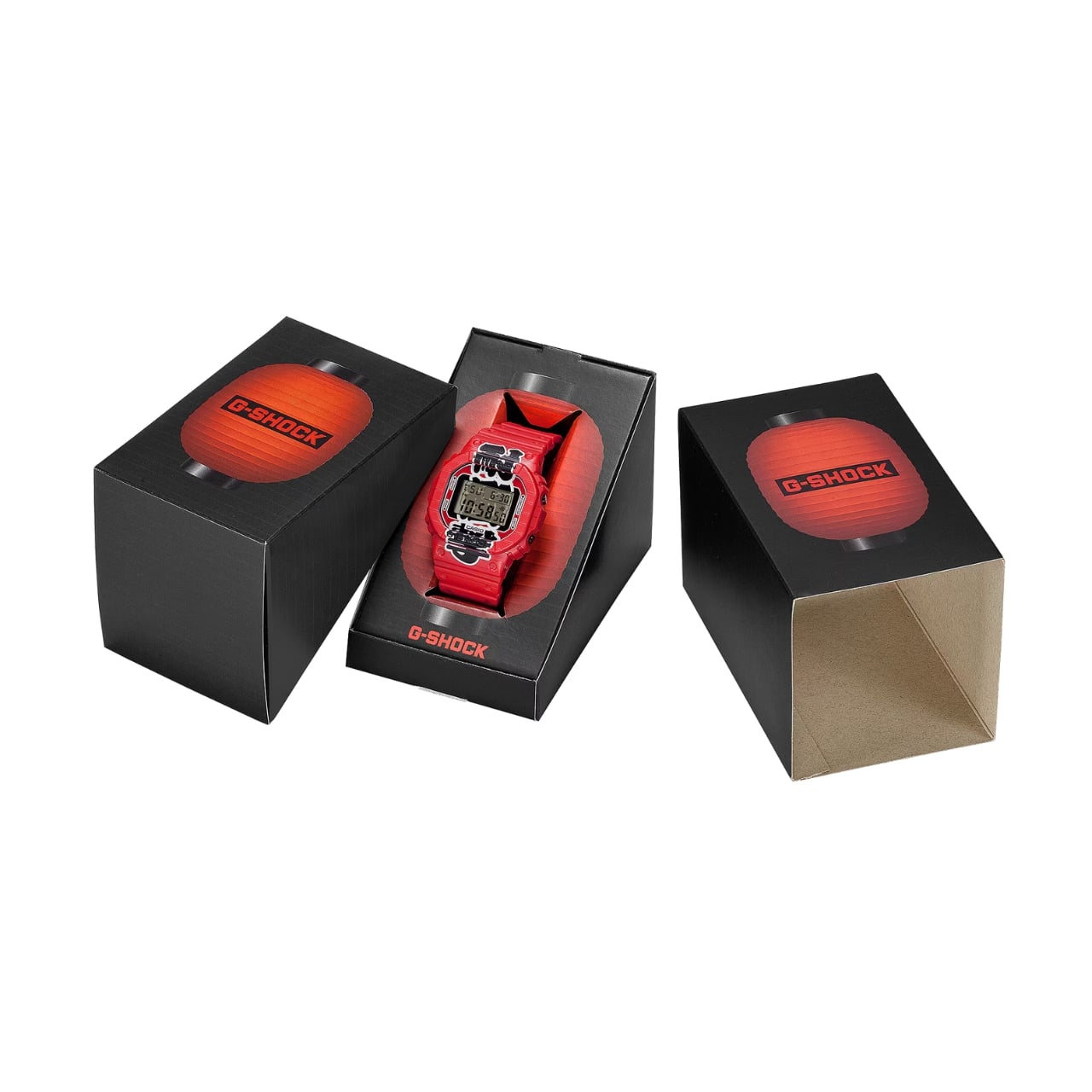
Red lanterns were built to be seen at night, to cut through the dark and draw people in. G-Shock’s interpretation of that idea works for the same reason. Bold doesn’t have to mean reckless. Sometimes it just means knowing exactly what you want to say and saying it clearly, wrist and all.
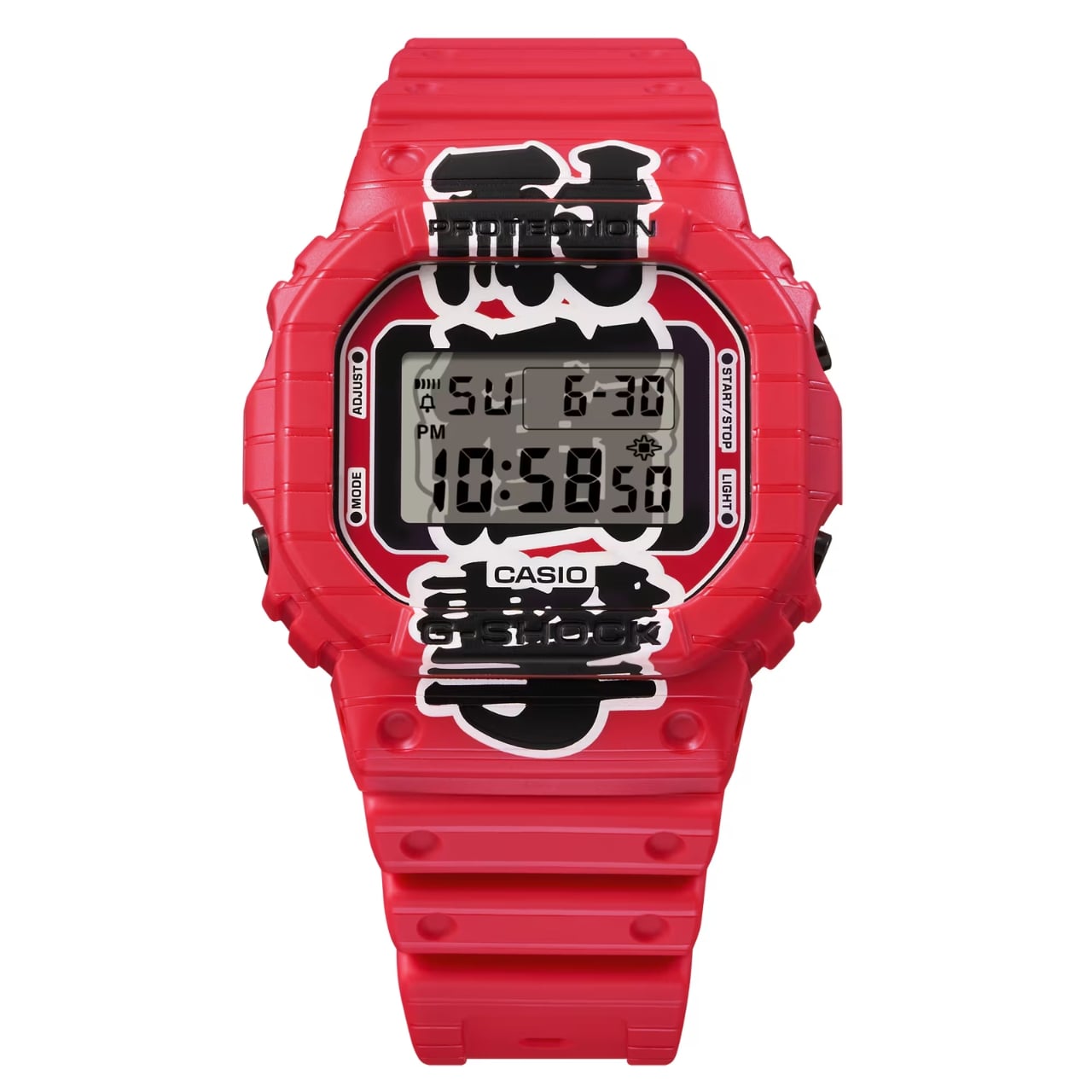
The post G-Shock Just Turned a Japanese Paper Lantern Into Wearable Art first appeared on Yanko Design.

This Luxury Italian Watch Has a Triple-Axis Tourbillon and Looks Like a Ferrari Dashboard

Old sports cars had analog instrument clusters that told you everything through three or four circular gauges mounted in brushed metal housings, each dial showing a different slice of what the engine was doing at any given moment. The information was direct, mechanical, and laid out with the kind of functional clarity that only made sense if you understood how the car worked. Tachometers sat next to oil pressure gauges, fuel levels next to coolant temps, all of it visible through a steering wheel while you were doing 140 km/h on a mountain pass. Desder’s D001 takes that exact visual language and translates it into a wristwatch with a triple-axis tourbillon spinning where the tachometer used to be.

The watch displays time on two separate cylinders, one for jumping hours and one for continuous minutes, flanked by a GMT indicator on the right and a power reserve gauge on the left. Luca Soprana, the master watchmaker who cofounded the Ateliers 7h38 workshop that builds complications for Jacob & Co, designed the caliber with the same obsessive attention to architectural clarity that defined mid-century dashboard design. Mo Coppoletta, the tattoo artist and designer behind collaborations with Bulgari and Montblanc, shaped the case to follow the teardrop aerodynamics of 1920s and 1930s race cars. The watch debuted in April 2026 from Modena, in the heart of Italy’s Motor Valley, limited to six unique pieces. The case wraps around the movement like a coachbuilt body over a chassis, every surface flowing from the mechanical geometry underneath.

Designers: Mo Coppoletta, Luca Soprana (Desder)

Soprana’s caliber is a study in mechanical complexity made legible. The triple-axis tourbillon sits dead center, rotating on three independent axes to counteract gravitational effects on timekeeping accuracy. The movement beats at 3Hz with a 45-hour power reserve, hand-wound through a crown that feels more like a machine interface than a watch component. German silver forms the mainplate and bridges, chosen for its rigidity and traditional finishing properties. Titanium components reduce weight where it matters, while phynox, a high-performance alloy known for extreme strength and corrosion resistance, handles stress points. The entire movement comprises 465 parts, every single one made by hand in Soprana’s Vaumarcus atelier near Neuchâtel. The jumping hour mechanism snaps forward with the kind of mechanical decisiveness that makes you want to watch it cycle through an entire day.

The case construction follows Italian coachbuilding philosophy, where form and function develop together rather than in sequence. Coppoletta designed the case around the movement’s architecture, letting the mechanical volumes dictate the external silhouette. The teardrop shape references 1920s and 1930s aerodynamics, when wind tunnel testing was still a decade away and designers shaped metal based on intuition about airflow. Flowing surfaces connect the cylindrical time displays, each one sitting under domed sapphire crystal that distorts and magnifies depending on viewing angle. The brushed metal finish catches light the way a hand-formed fender does, with subtle variations in surface texture that reveal the construction process. Sculpted lugs integrate directly into the case body without visible seams, continuing the coachbuilt language where every panel flows into the next.

Each of the six pieces carries subtle variations that make it genuinely unique. Coppoletta, whose background in tattooing taught him to treat every commission as an individual artwork, approached each watch as a separate design exercise within the same architectural framework. Different finishing patterns on the case, variations in how the sapphire crystals dome over the displays, minor differences in how the lugs taper into the case body. These aren’t the superficial variations you get when a brand changes dial colors across a limited run. These are structural differences that change how the watch sits on a wrist and how light interacts with the metal surfaces.

The D001 competes with MB&F and Greubel Forsey in the kinetic sculpture category, but carves its own space by grounding the design in automotive heritage rather than abstract futurism. Where MB&F builds machines that look like they belong in science fiction and Greubel Forsey chases chronometric precision with architectural movements, Desder anchors everything in the tangible history of Italian industrial design. The watch references a specific moment when cars were still shaped by hand and instruments were analog by necessity. Pricing is on request, which in this category typically signals seven figures. For collectors who view watches as functional art and value radical design integrated with mechanical innovation, the D001 delivers both. Just don’t expect to wear it through airport security without some explaining.

The post This Luxury Italian Watch Has a Triple-Axis Tourbillon and Looks Like a Ferrari Dashboard first appeared on Yanko Design.

La montre Pebble est de retour - Mais ça part en vrille

Je ne suis pas très montre. Je n’en porte pas, je n’en possède pas… Ce temps qui passe c’est l’angoisse mais je me souviens très bien des montres Pebble qui avec leur écran e-ink tenaient des semaines sur une charge et qui ont carrément démocratisé le concept de smartwatch grand public dès 2012.

Hé bien good news, le fondateur Eric Migicovsky a décidé de les ressusciter sauf que c’est en train de tourner au vinaigre avec les bénévoles qui ont maintenu l’écosystème durant 9 ans.

Pour ceux qui ont raté tout le feuilleton, après la faillite de Pebble en 2016 et le rachat par Fitbit (puis Google), une communauté de passionnés appelée Rebble s’est formée pour sauver les meubles. Ils ont récupéré les données de l’App Store, monté une infrastructure de serveurs, financé des développements… Bref, ils ont maintenu en vie un écosystème que tout le monde avait abandonné.

Puis en janvier 2025, Google a ouvert le code source de PebbleOS et Migicovsky a sauté sur l’occasion et a lancé sa boîte Core Devices en mars pour vendre de nouvelles montres Pebble : La Pebble 2 Duo à 149$ et la Pebble Time 2 à 225$. D’ailleurs, 70% des premières unités ont déjà été livrées. Bref, jusque là, tout va bien.

Sauf que Rebble accuse maintenant Core Devices de piller leur travail sans compensation. Selon ce qu’ils racontent leur blog , Migicovsky aurait “scrapé leurs serveurs” le jour même où il devait les rencontrer pour discuter partenariat. Rebble affirme avoir investi des centaines de milliers de dollars pour maintenir l’App Store et les services backend… et Core voudrait un accès illimité à tout ça pour potentiellement créer un App Store concurrent propriétaire.

La bibliothèque mobile libpebble3 utilisée par l’app Core Devices s’appuie notamment sur du code que Rebble a financé via son programme de subventions. Et c’est pareil pour le portage Bluetooth open source vers PebbleOS puisque c’est Rebble qui a payé les devs. Et bien sûr quand ils demandent un engagement écrit que Core ne créera pas un store concurrent… C’est silence radio.

Migicovsky a ensuite répondu sur son blog perso histoire de se justifier. Il nie tout vol et affirme que 90% du code de libpebble3 a été écrit par Core Devices, et pas par la communauté. Et pour le scraping, il explique qu’il construisait juste une petite webapp pour afficher ses watchfaces préférées et que ça n’a rien téléchargé de substantiel.

Et il contre-attaque en accusant Rebble de vouloir créer un pré-carré bien verrouillé emprisonnant les 13 000 et quelques applications que des développeurs indépendants ont créées. Rebble revendiquerait 100% des données de l’App Store alors qu’ils ne sont que l’hébergeur…

Alors qui croire ? Difficile à dire mais la bonne nouvelle c’est que Core Devices a ouvert les schémas électriques et mécaniques de la Pebble 2 Duo sur GitHub et bientôt, l’installation d’apps se fera via un système de feeds multiples, un peu comme les gestionnaires de paquets open source. Chacun pourra alors choisir son store.

Reste à savoir si les deux camps arriveront à s’entendre puisque Rebble a apparemment fait marche arrière sur certaines revendications, notamment sur la propriété du contenu hébergé. Mais le climat de confiance est sérieusement entamé et pour la communauté qui a bossé durement et gratos pendant 9 ans pour sauver tout écosystème… c’est sûr que ça fait mal de voir le fondateur original débarquer et se servir OKLM.

Après pour ceux d’entre vous qui ont une Pebble ou qui lorgnent sur les nouvelles, surveillez le subreddit r/pebble et le Discord Rebble car c’est là que tout ça se passe.

Source

❌