Connexion

This Electric Superbike Wears Its Battery Like a Honeycomb
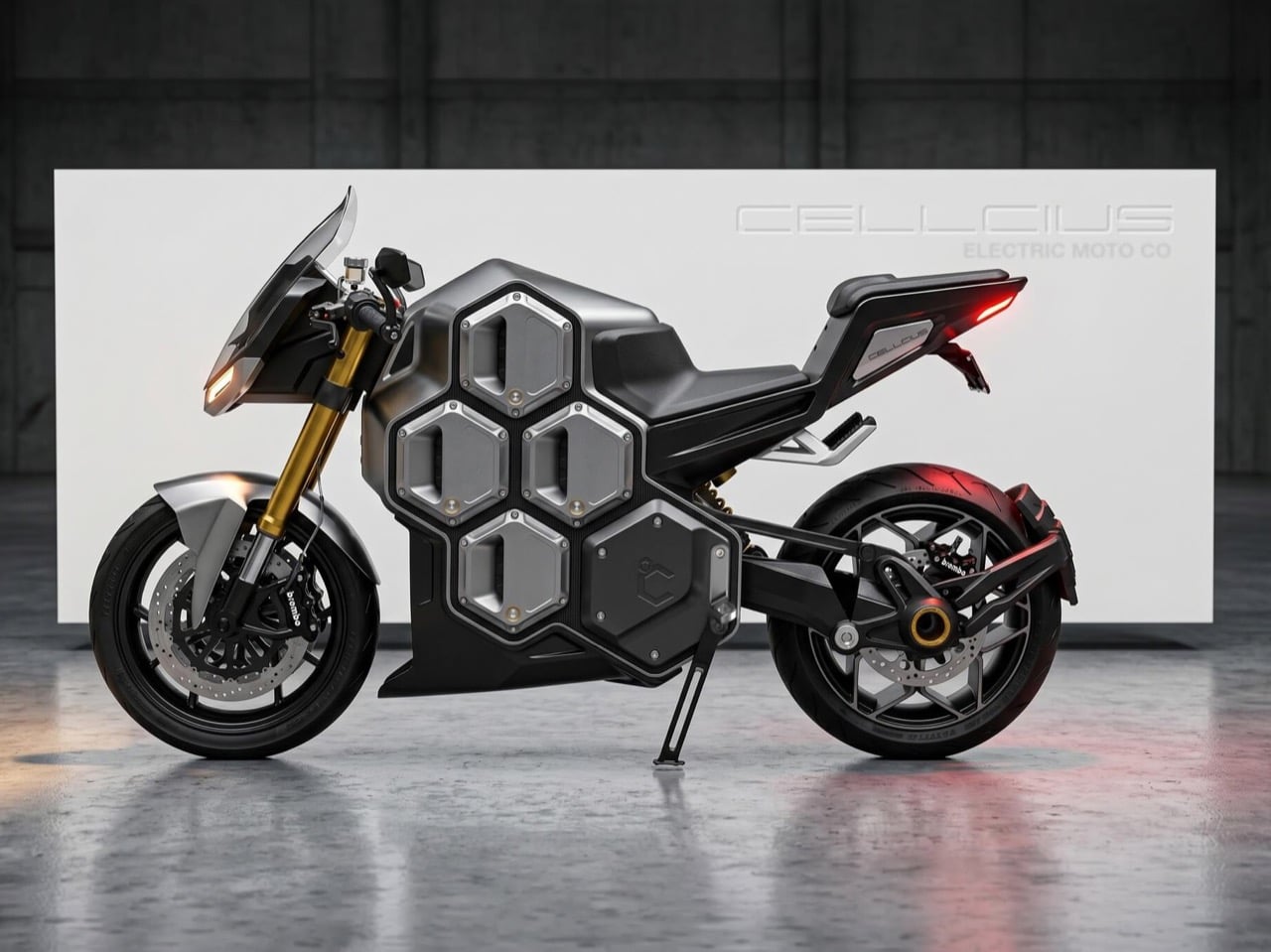
Bees settled on the hexagon ages ago, and nobody has topped it since. The shape packs the most storage into the least material, which is why it turns up in honeycomb aircraft panels and in the way round battery cells get stacked together. Brisbane’s Clandestine Design Group took the hint and built an entire electric superbike around it. The Cellcius C-01 is a hypersport concept whose battery is split into eight hexagonal cells that you can pull out and swap. Those cells line the bike’s flanks like honeycomb, and the result is one of the more striking EV silhouettes I’ve seen in a while.
Neil Davidson, who founded Clandestine in 2014 after 14 years as Creative Director at CMD, has loved motorcycles since he was a three-year-old farm kid on a dirt bike. That obsession shows. The C-01 won a 2026 Australian Good Design Award in the Concept Design category. It is still a concept, so there is no price tag or showroom date yet. The studio’s pitch is that electric bikes force a choice between heavy track machines and short-range commuters, and the Hex-Core battery system lets one bike be both. Load two cells for the commute or all eight for the track, and the same machine changes its personality to match.
Designer: Clandestine Design Group
Two Cells for the Commute, Eight for the Track
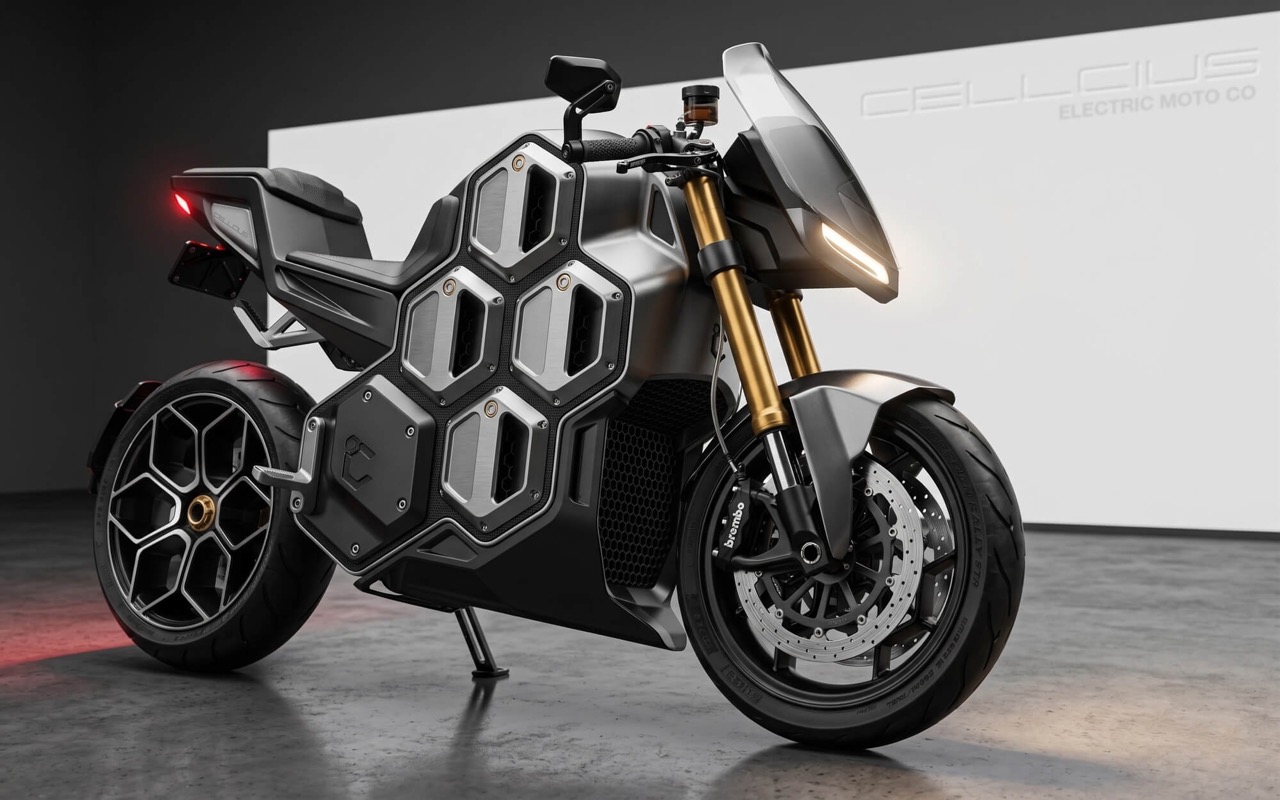
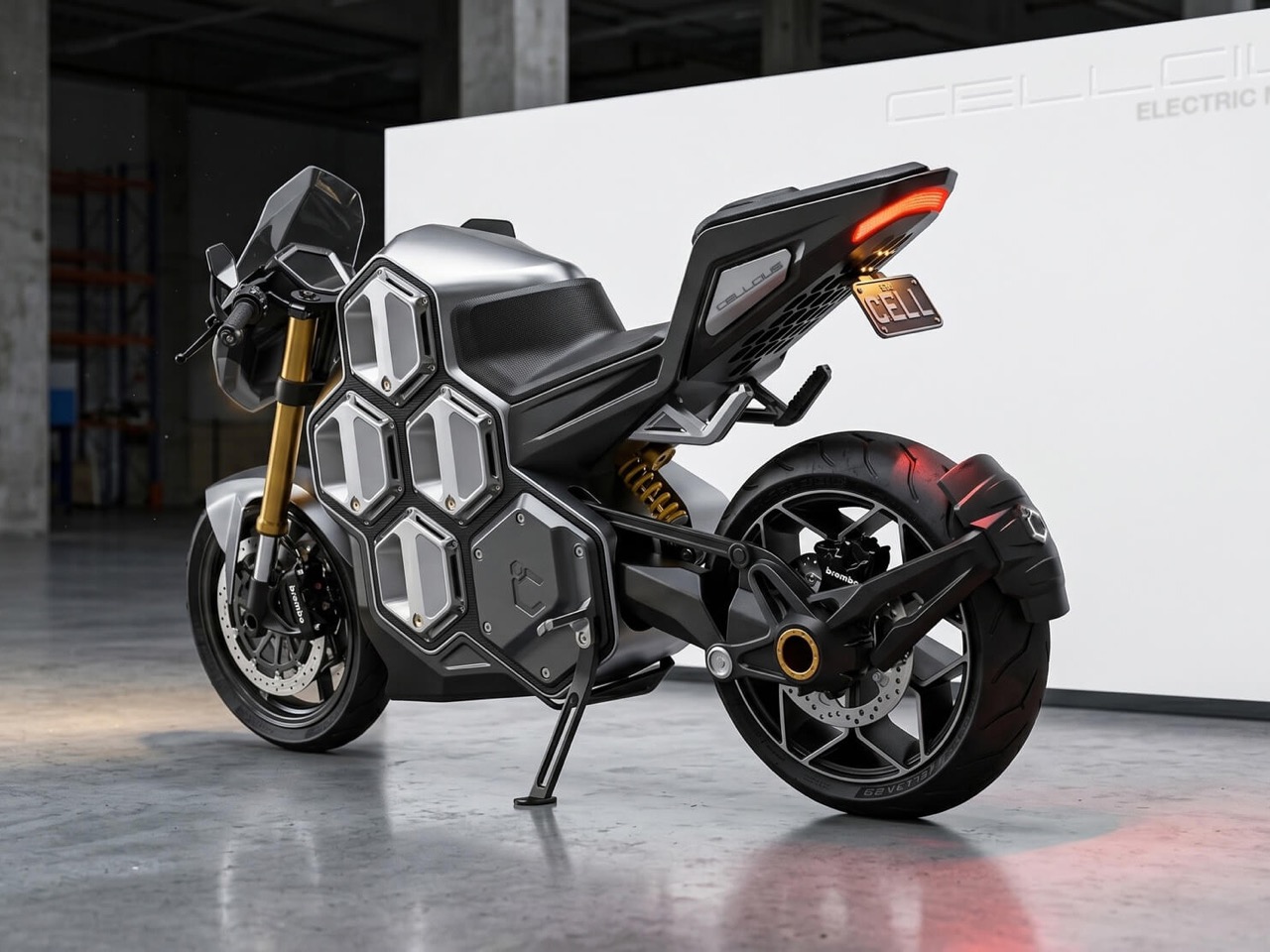
Each Hex-Core cell holds 3 kWh, so the bike carries anywhere from 6 kWh to 24 kWh depending on how many you load. By the studio’s numbers, the weight swings from 353 lb (160 kg) as a commuter to 485 lb (220 kg) as a track bike. Do the math and each cell works out to roughly 22 lb (10 kg), a weight you could carry up a flight of stairs. Two cells also fit Australia’s Learner Approved Motorcycle Scheme (LAMS), a rulebook that keeps new riders on tamer bikes, according to the studio. I can’t think of another superbike that can shrink for a learner permit and then bulk up for a lap day.
Kawasaki’s Ninja e-1 launched in the US at $7,599, weighs 309 lb (140 kg), and carries two removable 1.5 kWh packs that Kawasaki rates at 41 miles in Road mode. Zero’s 2026 SR/F, the usual benchmark for a serious electric streetfighter, packs 17.3 kWh into a body listed at about 500 lb (227 kg). Fully loaded, the C-01 claims 24 kWh at 485 lb, beating the Zero on both counts. That makes the Ninja and the SR/F look like the two ends of a spectrum the C-01 wants to cover with one chassis. Kawasaki’s two-pack setup proves removable batteries work for city riders, and the C-01 keeps adding packs until it hits superbike territory.
A Honeycomb You Can Carry Home
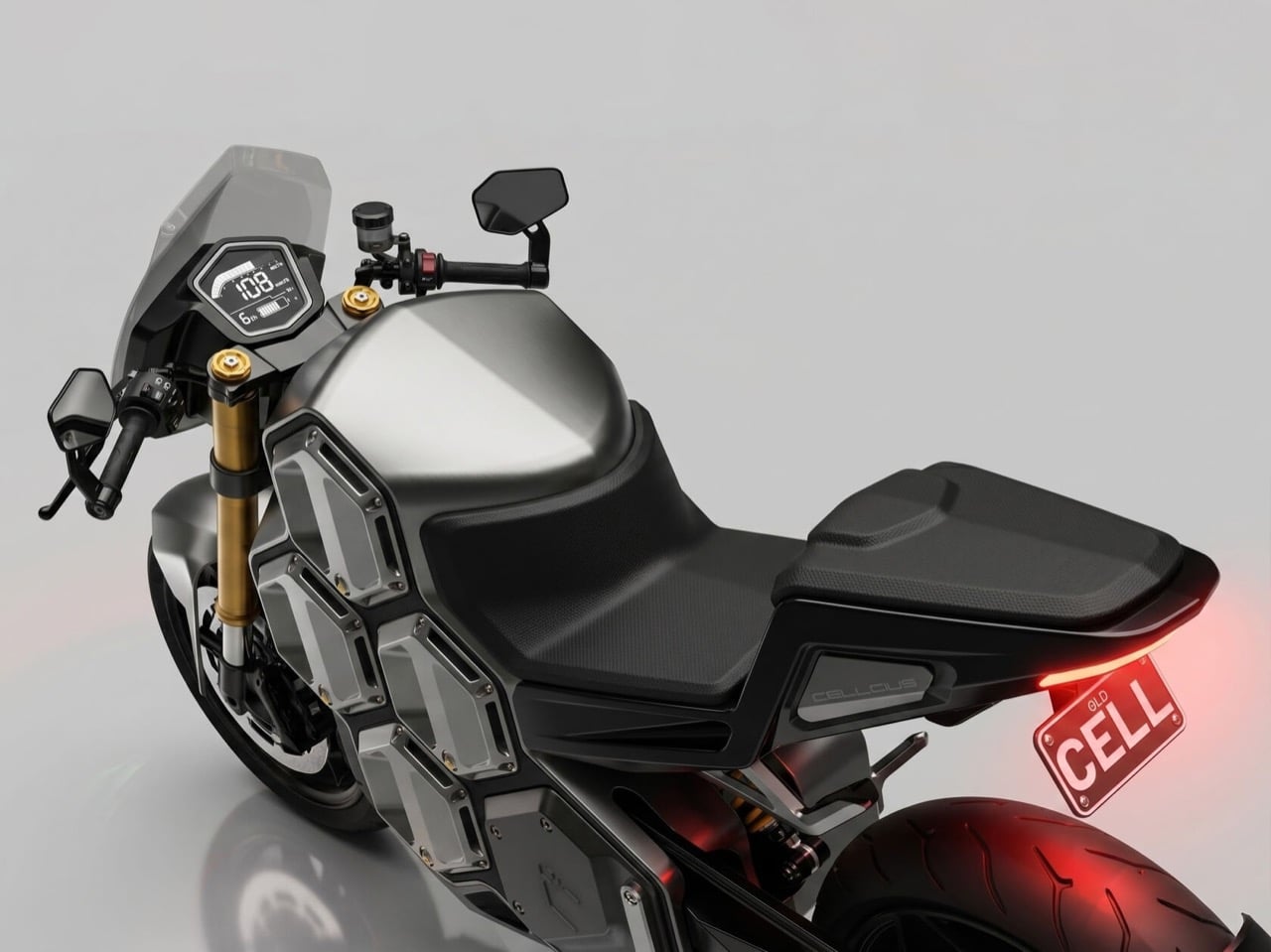
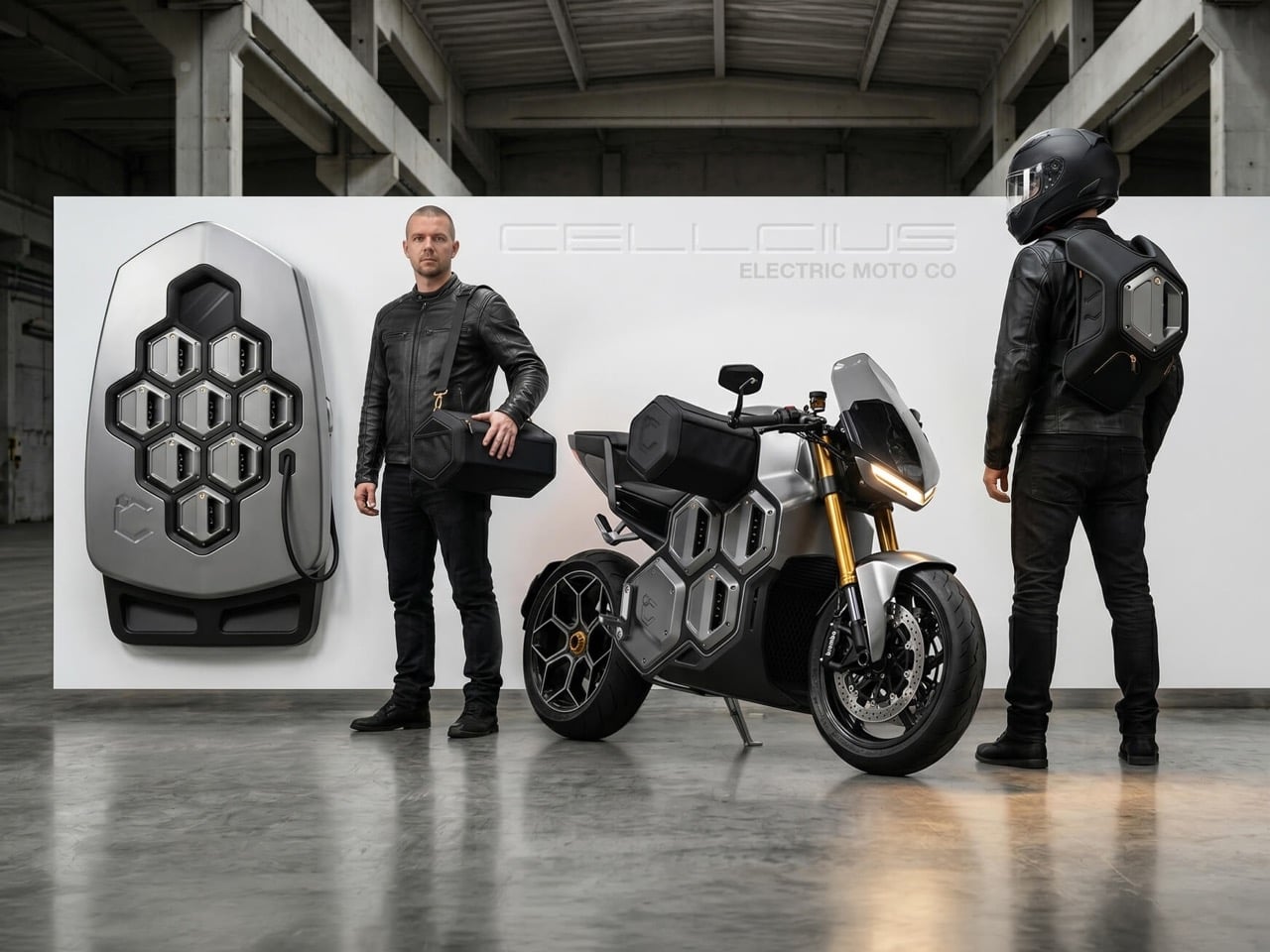
A wall-mounted smart dock charges several cells at once, so a fresh set is always waiting for a swap, a trick the studio calls “zero-minute” hot-swapping. Apartment dwellers get an ergonomic backpack that carries cells indoors for charging at a regular wall outlet. Riders who would rather skip the hauling can plug into a flush CCS port on top of the tank, which hooks into standard street-side fast chargers. Empty bays double as mounts for hex-shaped duffel bags, which keeps luggage inside the silhouette instead of hanging panniers off it. That setup goes straight at the studio’s stated target, urban apartment dwellers who have nowhere to plug in.
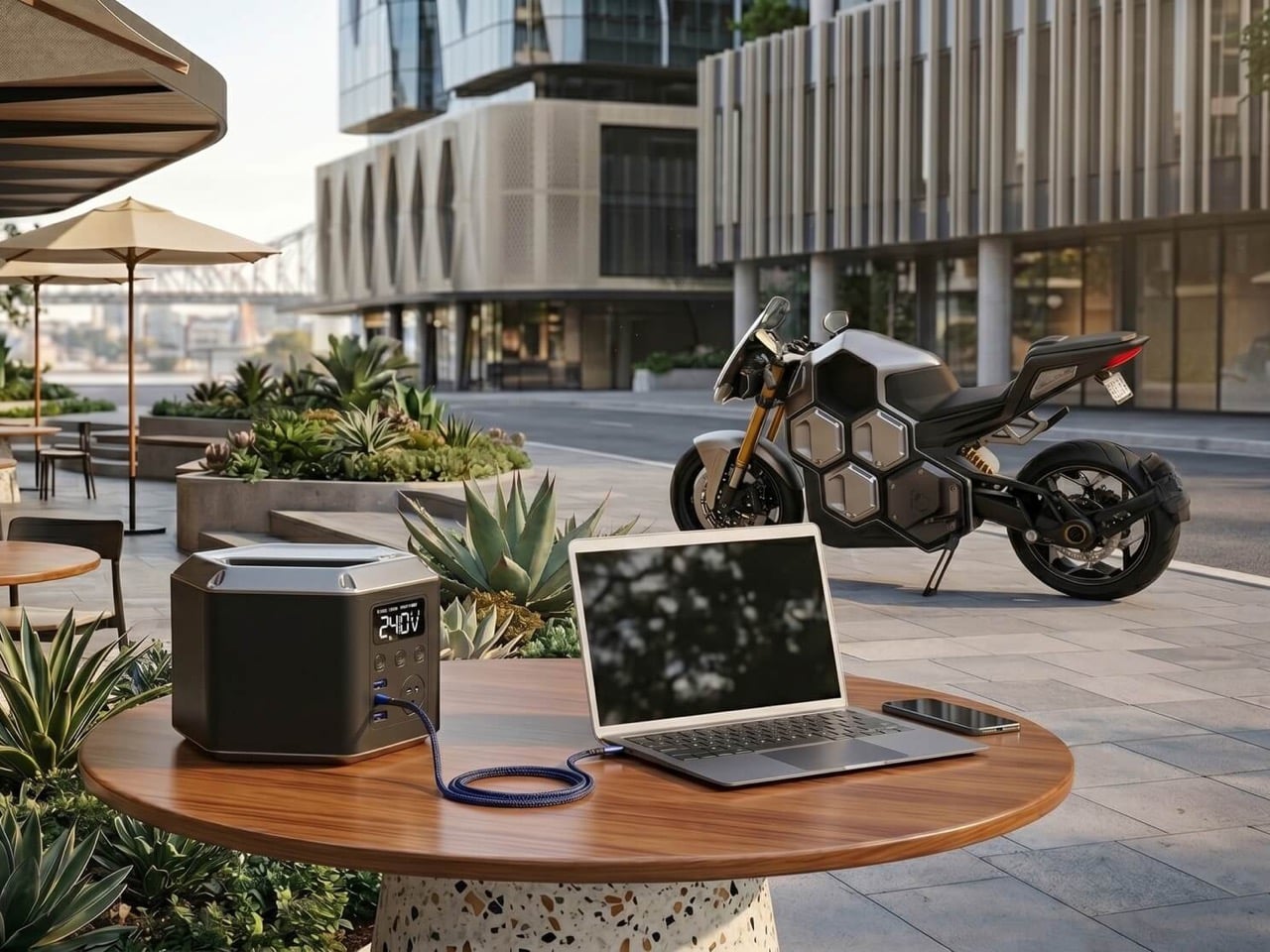
Pulled out of the bike, a cell turns into a portable power station with AC and USB outlets, according to the studio. That is the power tool battery logic every contractor already lives with, where one pack format runs a drill, a saw, and a work light. DeWalt and Milwaukee built huge product families on that idea, and the C-01 wants a superbike in the club. The studio also sees room for an aftermarket of Hex-Core accessories, from luggage to those power stations. A 5G app handles keyless RFID or PIN entry, over-the-air updates, and firmware tuning based on payload.
Shaft Drive, a Venturi Tail, and the Case for Swappable Superbikes
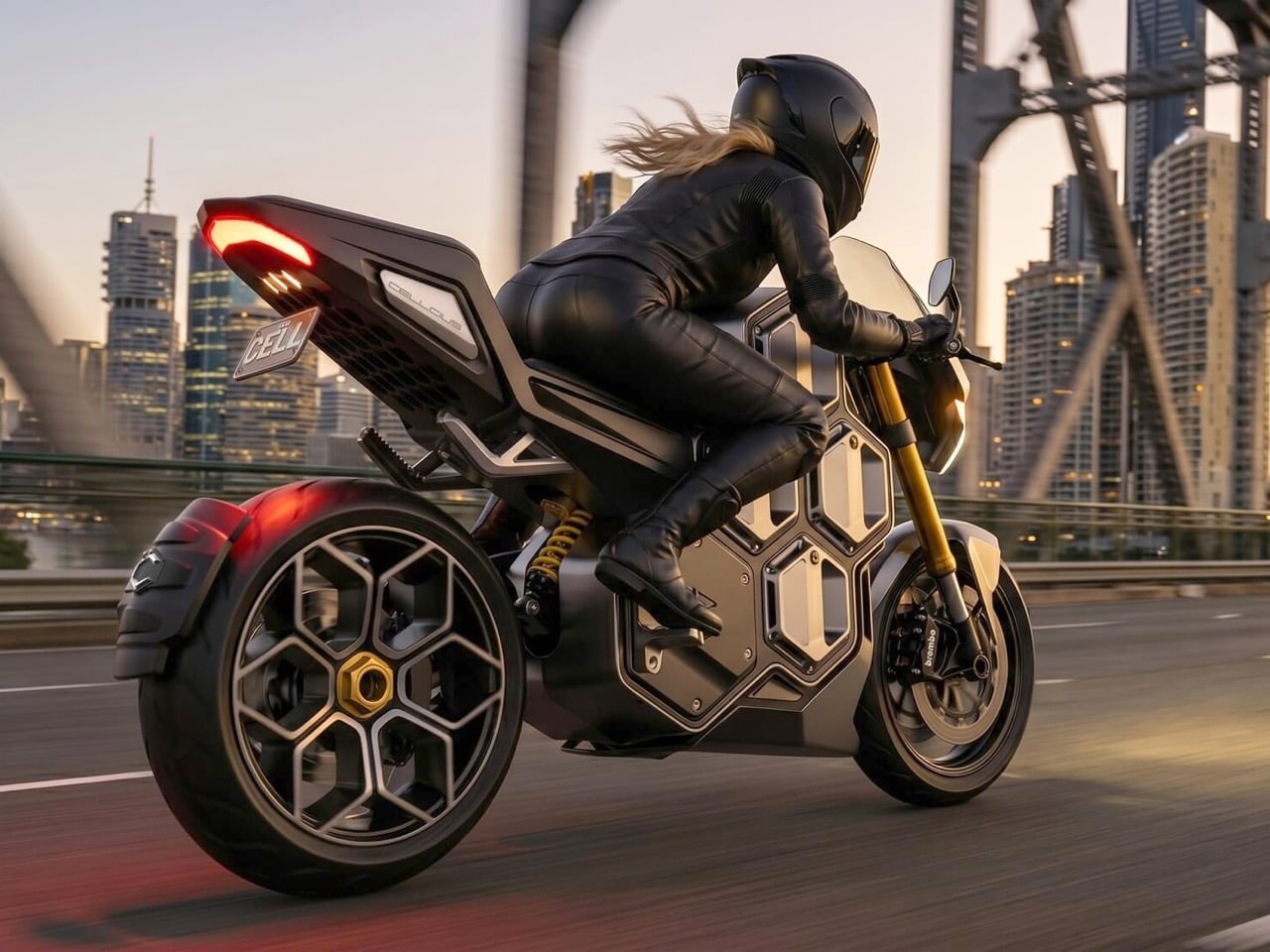
High-pressure ram intakes feed air in at speed while a low-pressure exhaust in the tail pulls it back out, a Venturi effect the studio says passively extracts motor heat without heavy fans. Power reaches the rear wheel through a fully enclosed carbon shaft drive, which the studio calls silent and maintenance-free. BMW has been putting shafts on motorcycles since the R32 in 1923, so the idea has real pedigree. Brembo brakes and fully adjustable Öhlins suspension round out a spec sheet that reads like a track-day wish list. My one wish is for the angular flyscreen to echo the hexagons a little more, since right now it reads like it came from a different bike.
Australia’s Good Design Awards date to 1958, and the Concept Design category, new since 2025, judges early-stage ideas on form, function, feasibility, and safety. A win there rewards the thinking, and the thinking here is easy to admire. My favorite part is that the battery, usually the thing EV designers hide under a tank cover, becomes the main visual feature. Electric bikes have spent years arguing over range versus weight, and the C-01 answers by letting the rider settle it each morning. Bees figured out the hexagon without a design degree, and a Brisbane studio just reminded the motorcycle world how well it stacks.
The post This Electric Superbike Wears Its Battery Like a Honeycomb first appeared on Yanko Design.