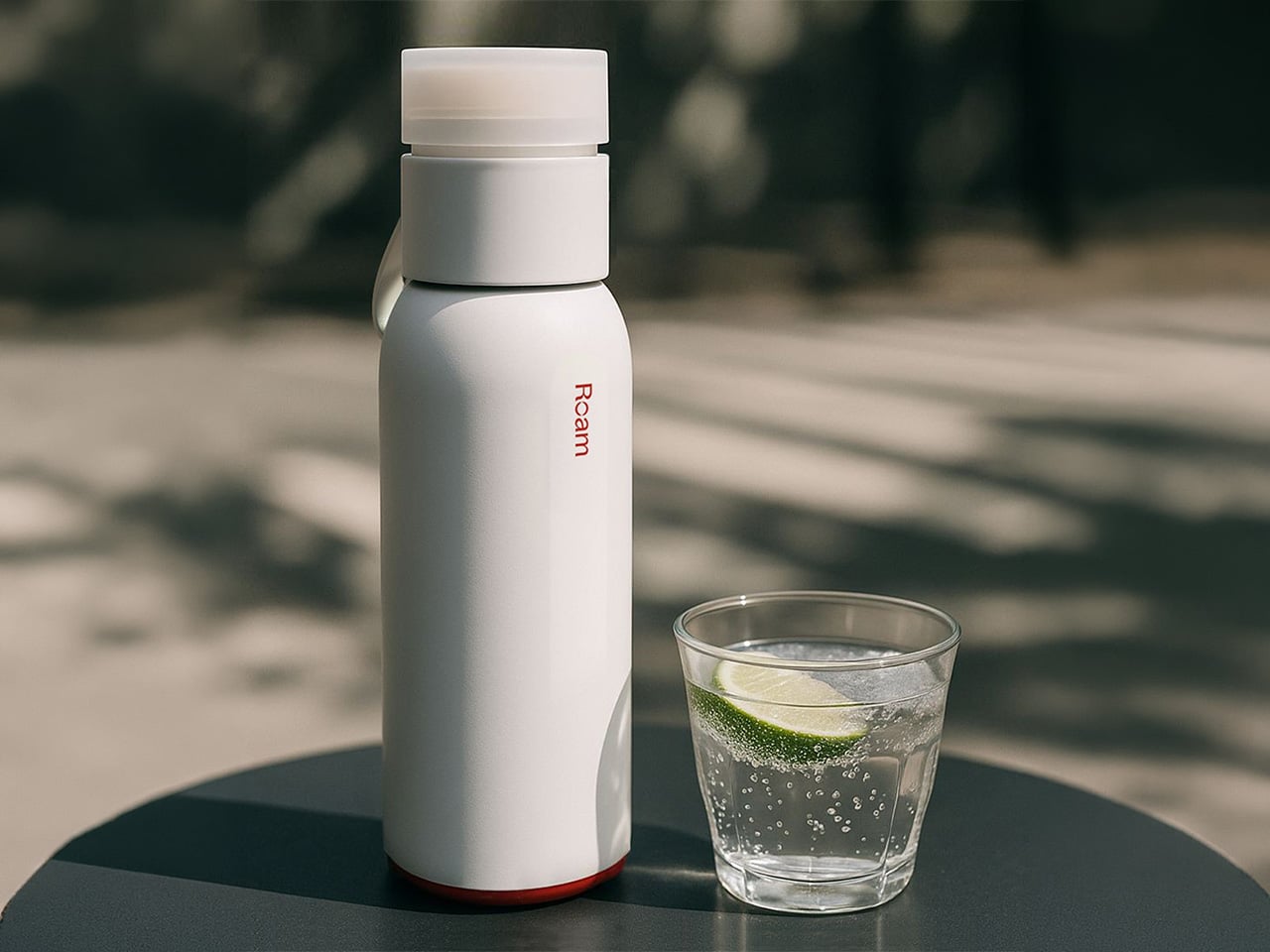
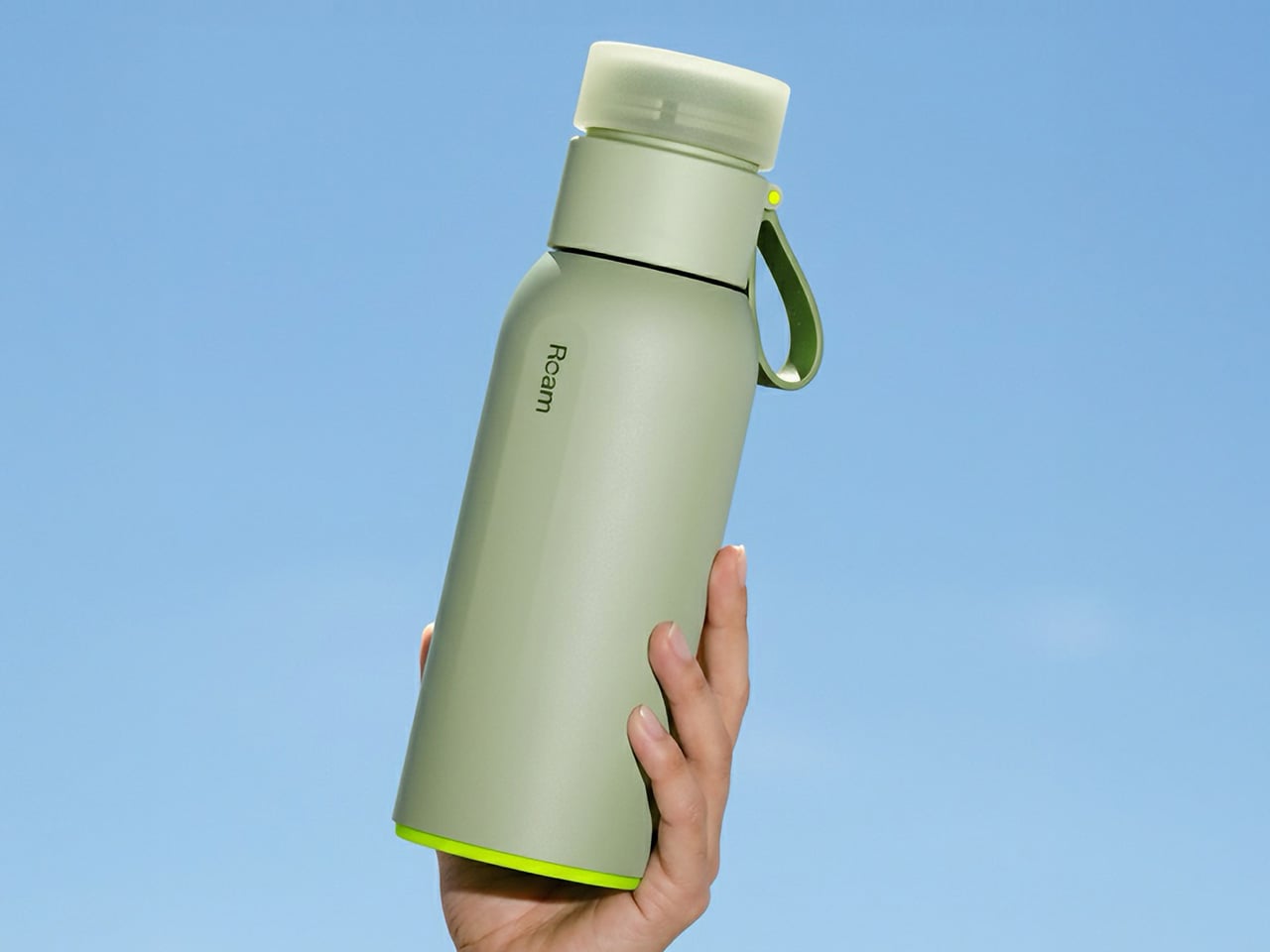
Most people who drink sparkling water have settled into one of two habits. They either haul home cans and bottles from the grocery store every week, or they own a countertop soda maker that never leaves the kitchen. The Roam SodaTop is designed for everyone caught between those options: a 32oz insulated bottle that carbonates still water on demand, wherever you happen to be.
The home soda maker does what it promises, but it’s also a fairly large appliance with a permanent spot on the counter and plastic bottles that aren’t built to travel. Your sparkling water stays fresh for however long it sits in the fridge. Step outside, and you’re back to buying packaged drinks. It’s a frustratingly common situation for something meant to be a simple habit.
That’s the gap the SodaTop fills. The system pairs a stainless-steel bottle with a compact carbonation mechanism powered by small CO2 canisters. The bottle was engineered to handle carbonation pressure, with specially threaded fittings that most regular water bottles simply aren’t built for. Roam describes it as the world’s first insulated bottle that instantly carbonates water, and looking at the category, it’s hard to argue with that framing.
Using it takes just a few steps: fill the bottle to the marked interior line, drop in the CO2 canister, and twist the cap into place. The water is sparkling in about three seconds, and a pressure-release mechanism keeps the carbonation locked inside until you’re ready to drink. There’s no pumping, no separate carafe, and the whole thing takes less time than opening a can.
What makes that genuinely useful is the size. The SodaTop is roughly one-fifth the footprint of a standard countertop unit, compact enough to slip into a bag or a kitchen drawer without drama. Whether it’s on a work desk, a hotel table, or brought along on a day out, fresh sparkling water goes wherever the bottle goes, which is something no countertop soda maker can claim.
The bottle itself does more than hold the mechanism in place. Triple-wall construction keeps drinks cold for up to 24 hours and ice for up to 48 hours, well ahead of the plastic bottles that come standard with most home soda systems. That thermal advantage also matters for carbonation, since cooler water retains CO2 more efficiently and keeps the fizz from fading before the bottle is empty.
On the inside, Roam uses what it calls MirrorTech, a mirror-polished steel surface that the brand says keeps carbonation crisp for longer, resists odor buildup between uses, and discourages flavor transfer. The wide-mouth opening makes adding ice and pouring easy, while a visible fill line inside takes the guesswork out of how much water to add for consistent carbonation every time.
The CO2 canisters are made from recycled steel and are fully recyclable, so when they’re empty, they go straight into the recycling bin with no return shipping involved. Roam positions the ongoing cost at as little as $0.55 per canister for subscribers, framing that as roughly half the cost of buying pre-packaged sparkling water. Cutting out single-use cans and bottles also noticeably reduces household waste.
Roam also offers Natural Flavor Essence Drops designed to pair with the SodaTop, available in eight varieties: Ginger Root, White Peach, Sicilian Lemon, Yuzu Lime, Blood Orange, Strawberry, Grapefruit, and Mango. All are zero calorie, zero sugar, and plant-based. They’re also certified keto, paleo, vegan, gluten-free, kosher, and non-GMO, so they turn sparkling water into a flavored drink without any of the sugar baggage.
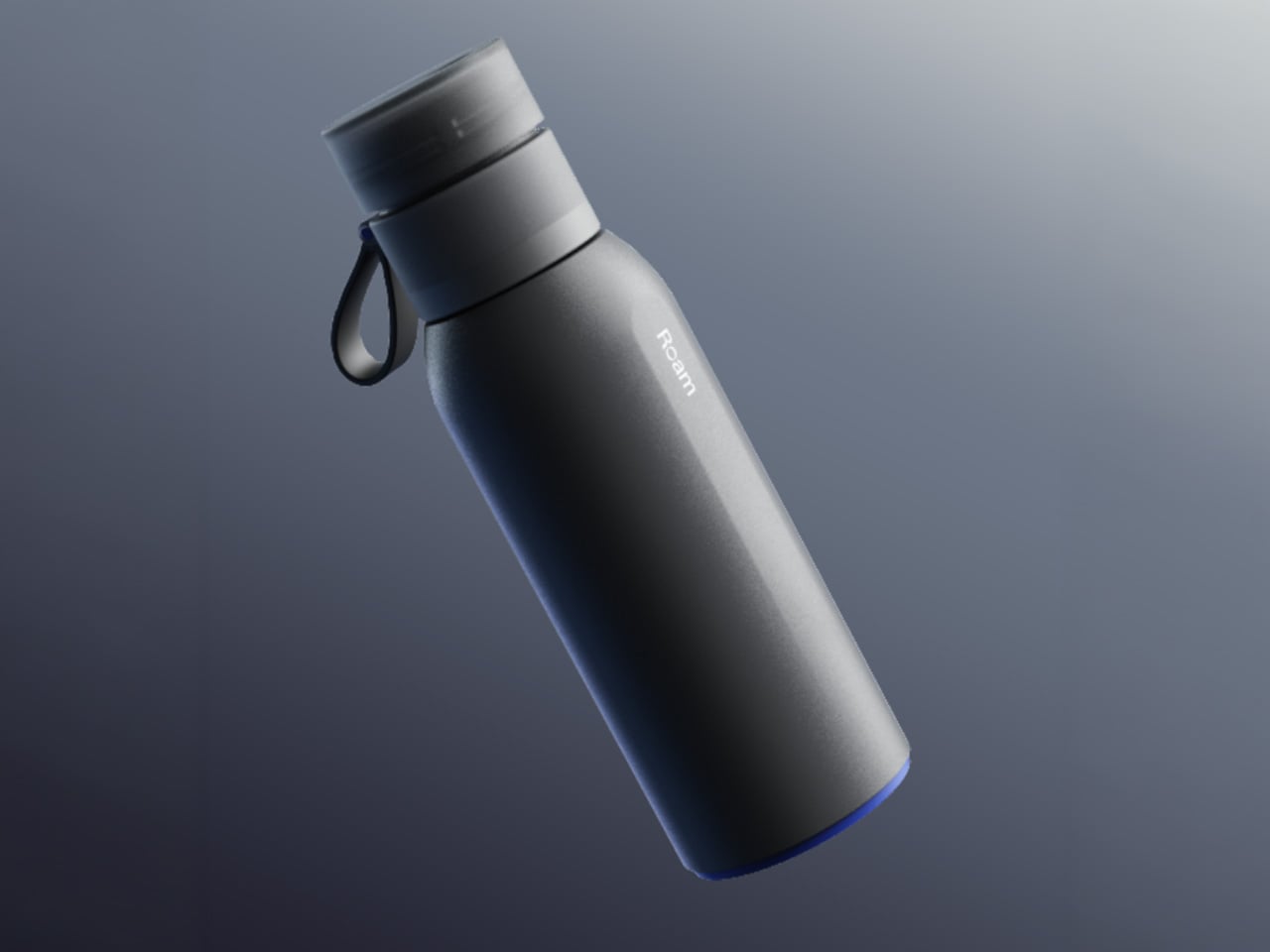
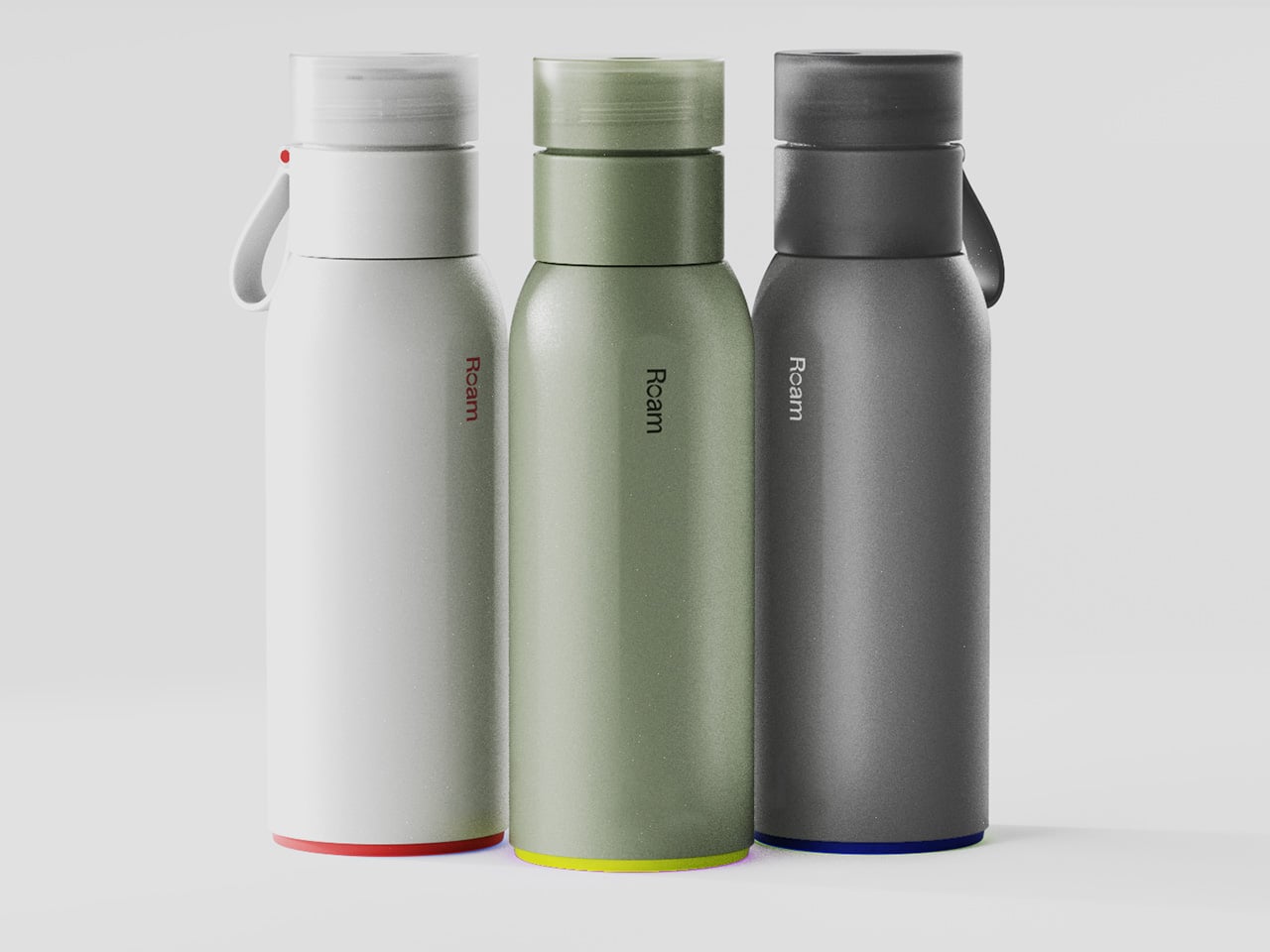
The SodaTop comes in three finishes: Pebble, Sage, and Charcoal, each with a contrasting accent at the base that gives it a quietly distinctive look. The silhouette reads more like premium drinkware than a gadget, which is probably the whole point. It’s the kind of object that fits on a desk, gets tossed in a bag, and doesn’t look out of place in either setting.
The Labor Day weekend has a way of separating gear that belongs from gear that ends up in the car boot. Not by price or feature count, but by how well each object earns its spot before the drive out begins. A Labor Day weekend runs on a different logic than a single overnight. The fire has to hold. The food has to be worth cooking. Everything else has to justify the weight it occupies.
The seven objects here cover the full range: fire, power, cooking, light, water, sound, and one small tool that navigates all of it after dark. What connects them is a commitment to solving a specific outdoor problem with enough precision that the solution becomes the whole reason you own it. Pack these, and the only question left is where to go.
1. Portable Fire Pit Stand
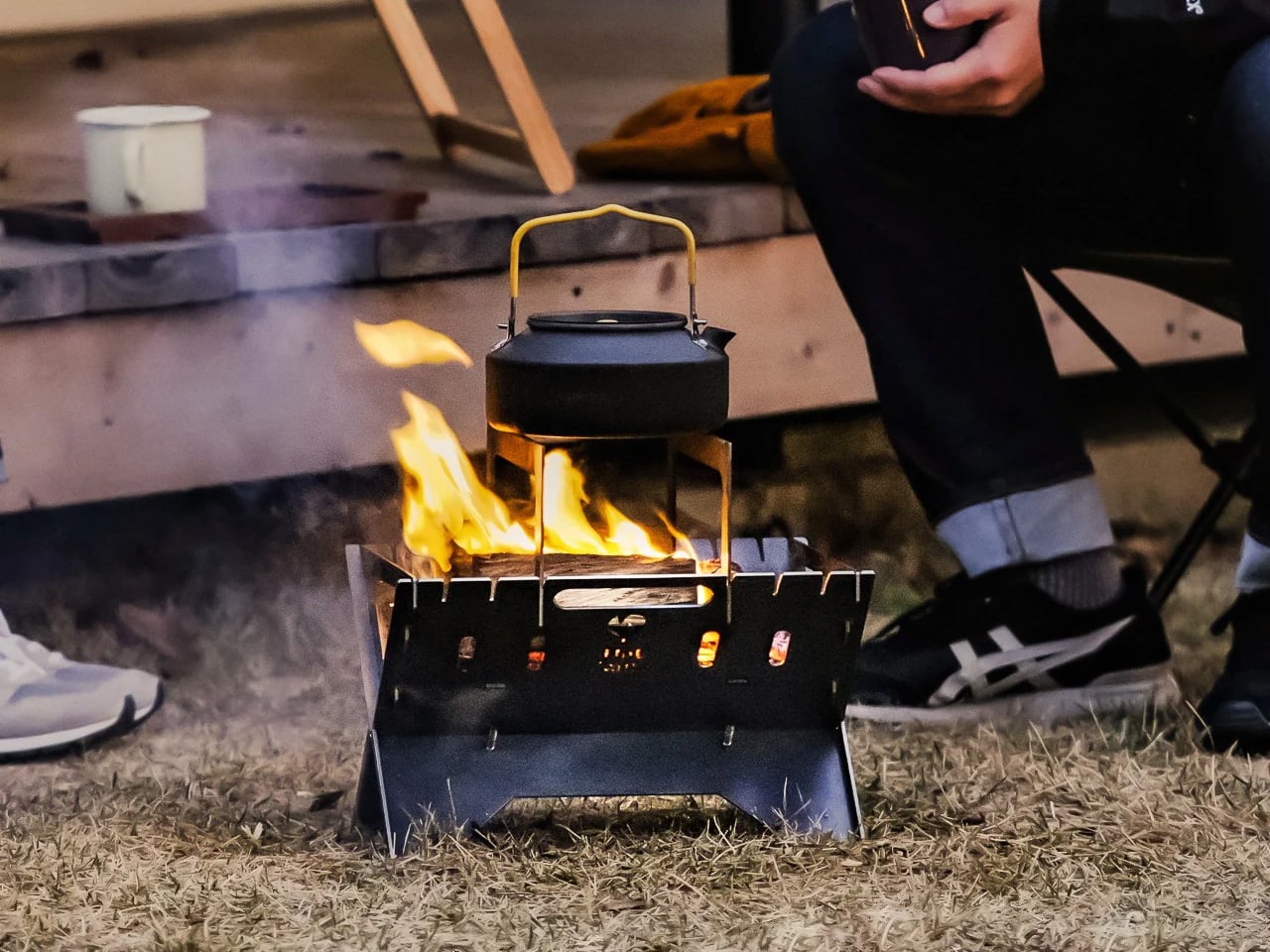
The fire pit category is full of oversized objects that need a truck bed and a second person to manage. The Portable Fire Pit Stand sidesteps that entirely. Precision-cut black steel plates resist warping under sustained heat, assemble without tools, and fold flat when the trip is over. What you get at the campsite is a fire that earns its place as both a functional heat source and the visual anchor every site needs to feel worth sitting around past sundown.
The stand elevates fire off the ground, making it viable on sensitive terrain and at campgrounds where ground fires are restricted. That single design decision opens up far more sites than a standard ring allows. The black steel construction does not bow or distort after repeated use the way cheaper alternatives do, and the footprint is compact enough to work on a picnic table or against a stone wall. It is the kind of gear that earns a permanent place in the kit after a single evening out.
Heat-resistant steel construction holds its shape through repeated use across multiple camping seasons
Elevated design meets leave-no-trace standards on campgrounds where ground fires are restricted
What we dislike
Steel construction adds weight that backpackers counting grams will notice over a long carry
No integrated grill grate, which means a separate purchase for cooking directly over the fire
2. Blavor Power Station + Camping Lantern
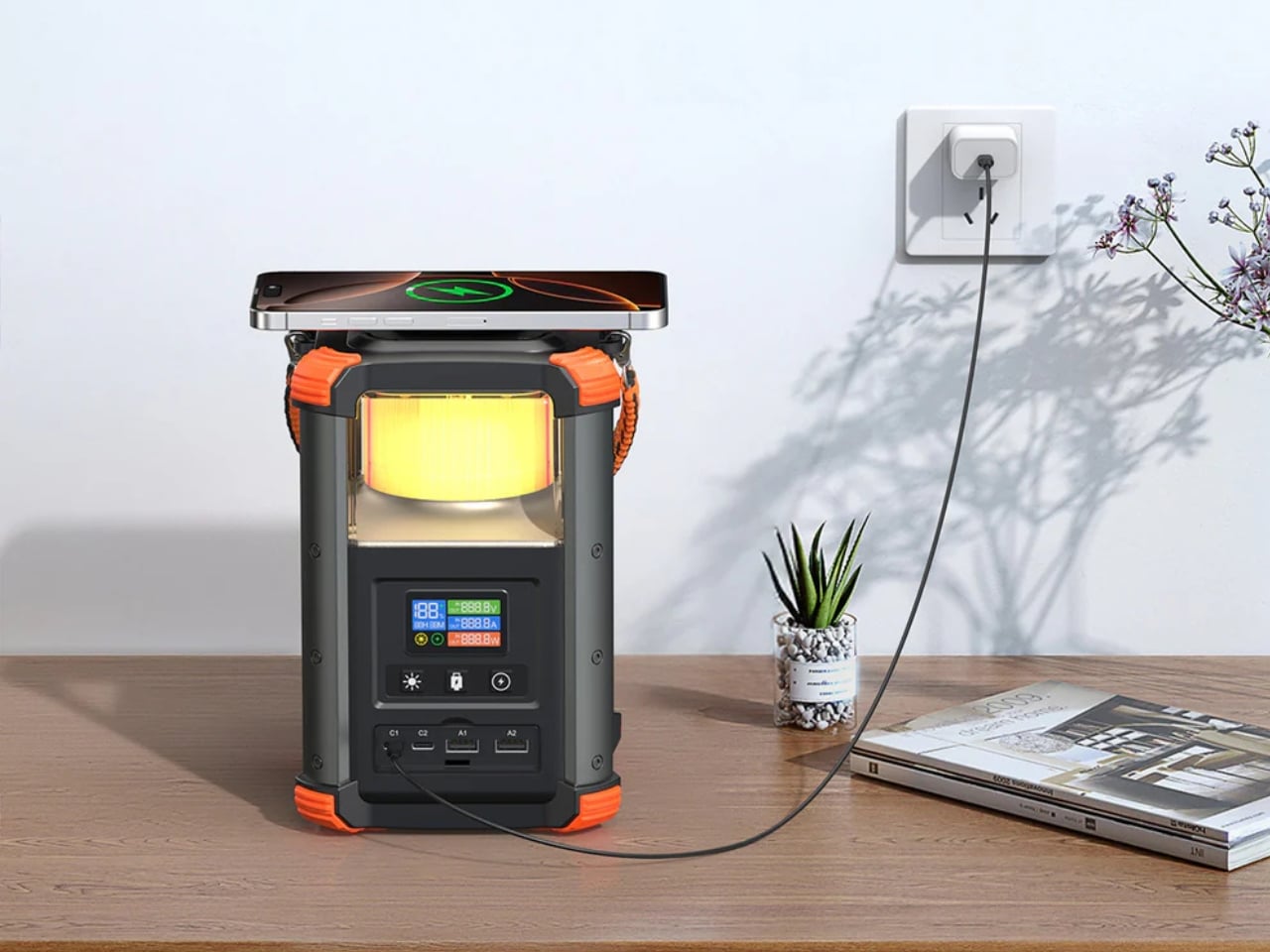
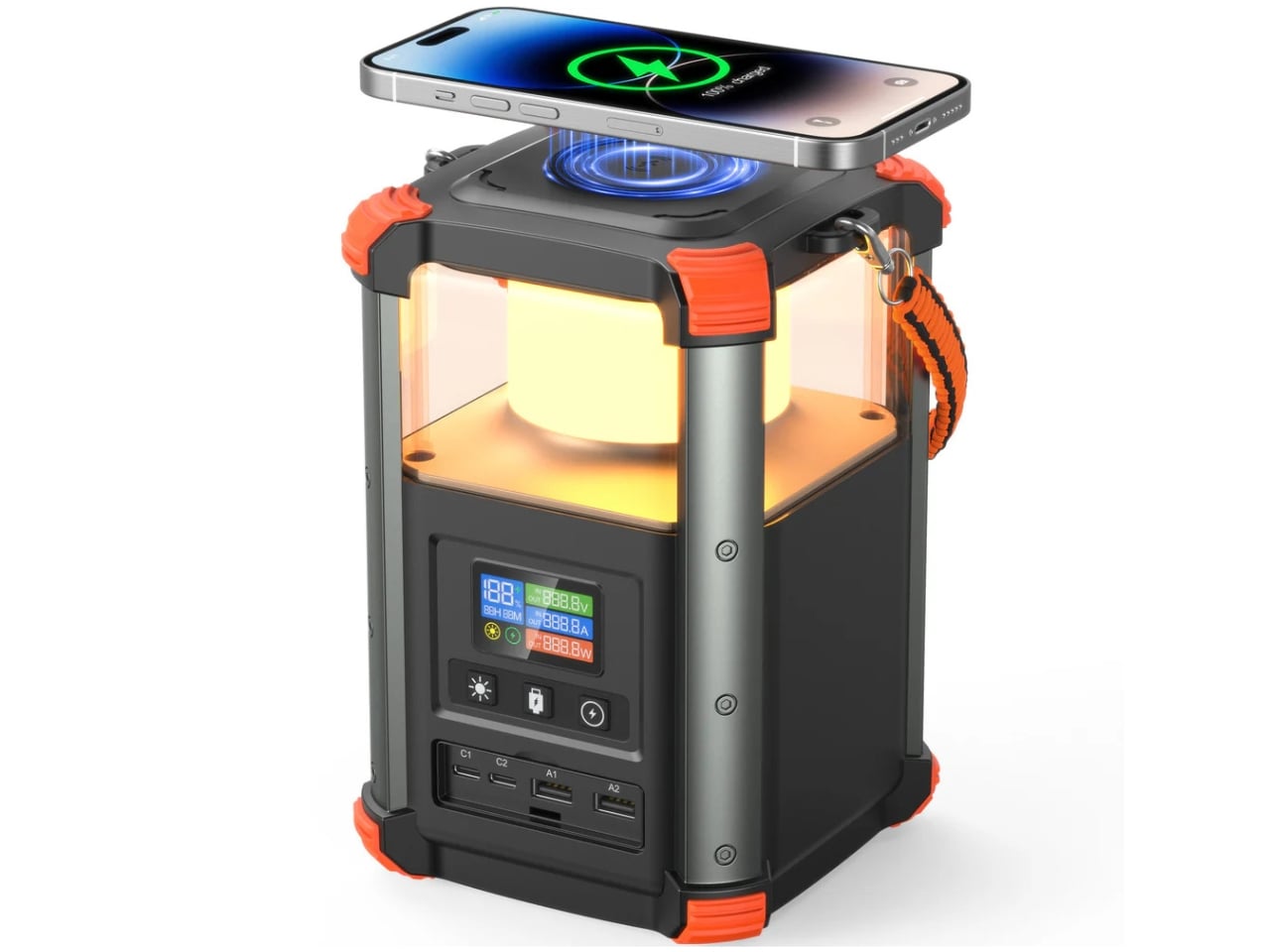
Most portable power stations look like they were designed by someone who has never spent a night outdoors. The Blavor PN-W43 solves that by building a 4W LED camping lantern directly into the form factor. The result is a 64,000mAh device barely bigger than a tall water bottle that covers five charging pathways — solar, AC, car adapter, USB-C, and micro USB — with bidirectional 100W fast charging and a digital display that keeps battery status visible in the field without guesswork.
The real value is how naturally the two functions coexist. When the lantern is on, the power bank is right there. When you are charging devices overnight, the ambient glow handles the tent interior without a separate light source. For campers who have always carried both a dedicated lantern and a backup battery pack, the consolidation alone pays for the weight before the first night ends. A lanyard ships in the box, which tells you someone at Blavor has actually camped.
What we like
Five charging pathways give genuine flexibility across grid-connected and fully off-grid environments
Lantern and power bank coexist without compromising each other — the dual function feels designed in, not added on
What we dislike
At 236.8Wh, capacity suits a weekend trip rather than an extended off-grid expedition
The cylindrical form can sit awkwardly alongside flat gear in a structured pack
3. Camprit TiStove
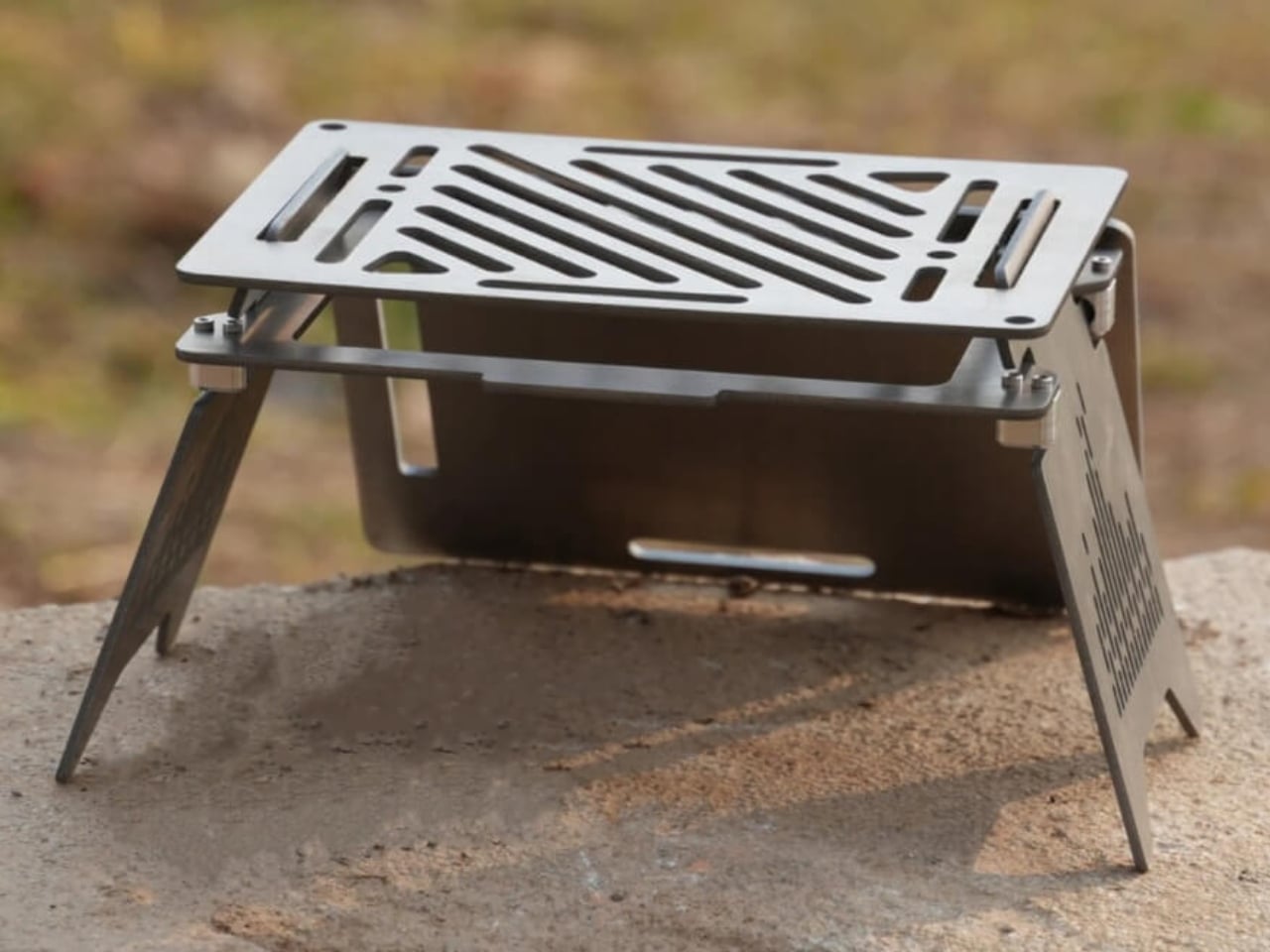
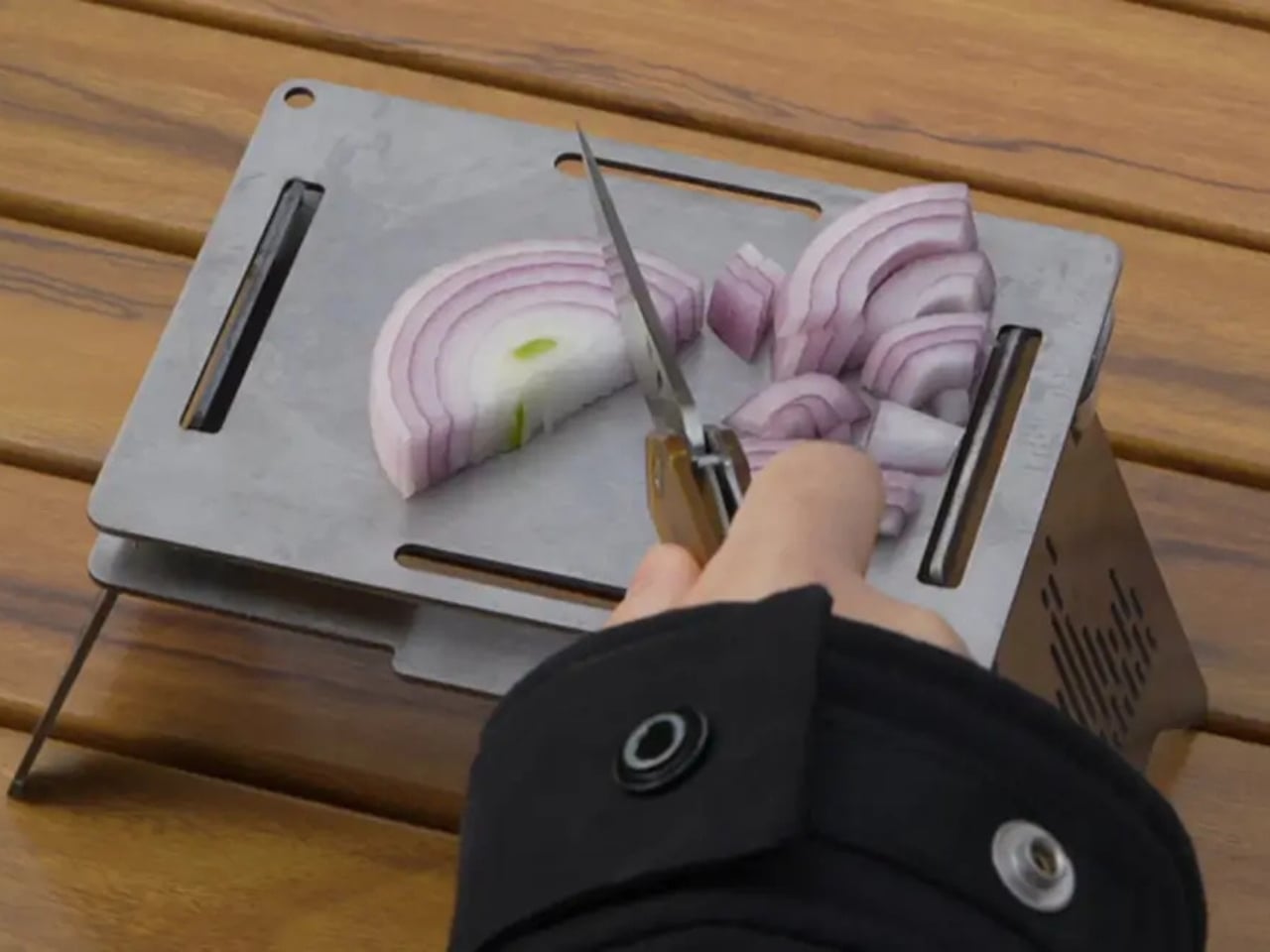
Five flat pieces of Grade 5 titanium, two foldable legs, and three interchangeable cooking panels that together weigh under 1.5 pounds and pack completely flat. The Camprit TiStove reconfigures for boiling, grilling, or searing depending on which panels you assemble, and the extra panels double as a windshield. As heat accumulates over a season, the titanium changes color naturally, giving each stove a visible record of every meal cooked on it. Yours becomes genuinely yours over time.
There is no ignition system to fail at altitude, no gas canister threading to seize in the cold, and no assembly logic that requires reading a manual after dark. The pieces lock together without fasteners and disassemble in seconds. Compatible with wood, gas burner, and alcohol, it adapts to whatever fuel the terrain allows rather than locking you into a single system that can fail or run out. For anyone who has stood over a dead stove in the cold, this addresses the problem where it starts.
What we like
Packs completely flat under 1.5 lbs with three interchangeable cooking configurations for different meal types
Compatible with any fuel source, removing dependency on a single system in the field
What we dislike
Requires a separate burner or fuel source — nothing is self-contained out of the box
Titanium panels need careful packing to avoid scratching each other in transit
4. All-in-One Grill
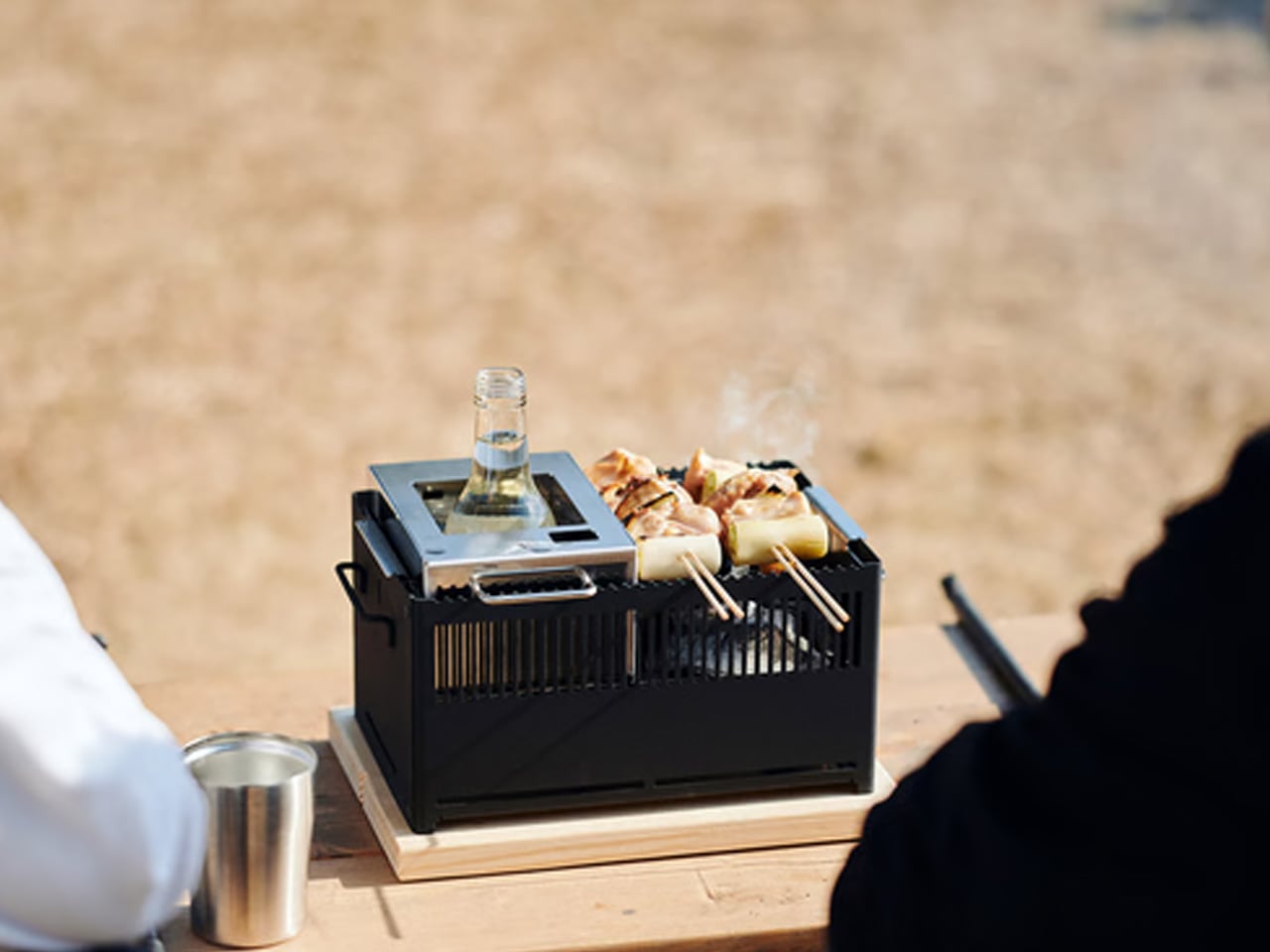
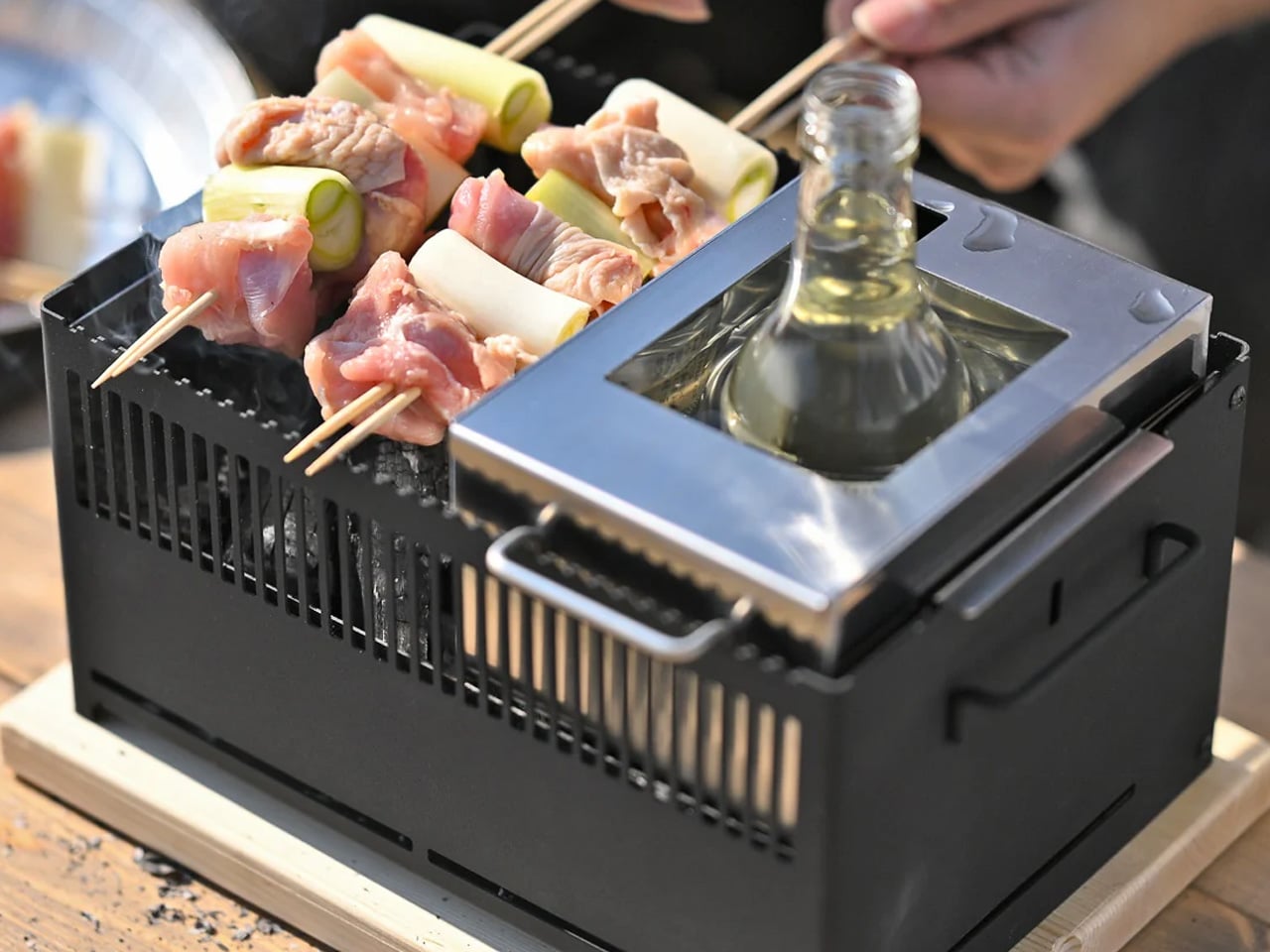
Made in Japan from stainless steel, the All-in-One Grill approaches camp cooking from a completely different position than the TiStove. Where that one is built for portability and fuel flexibility, this is built for the campsite where you are staying put and eating well. A modular lid system converts it between six distinct cooking methods — barbecuing, frying, grilling, steaming, smoking, and stewing — without requiring separate cookware for each. One object covers an entire outdoor kitchen without asking for a second bag.
Japanese stainless steel holds heat evenly, cleans without drama, and does not carry the flavor of every previous meal the way cast iron can. For a long weekend where the grill is the centerpiece of three evenings rather than a convenience, this is the object that makes the drive worth it. The modular configuration grows with the meal rather than limiting it, and the compact footprint fits the full camp kit without demanding its own dedicated storage alongside everything else.
Six cooking methods in one stainless steel body remove the need to pack separate cookware for different meals
Japanese stainless steel construction holds heat evenly and cleans efficiently after each use
What we dislike
At $449, the investment makes the most sense for campers who cook seriously rather than occasionally
Charcoal and wood fuel require ash management that demands more effort in the field than gas alternatives
5. NoxTi Tritium Keychain
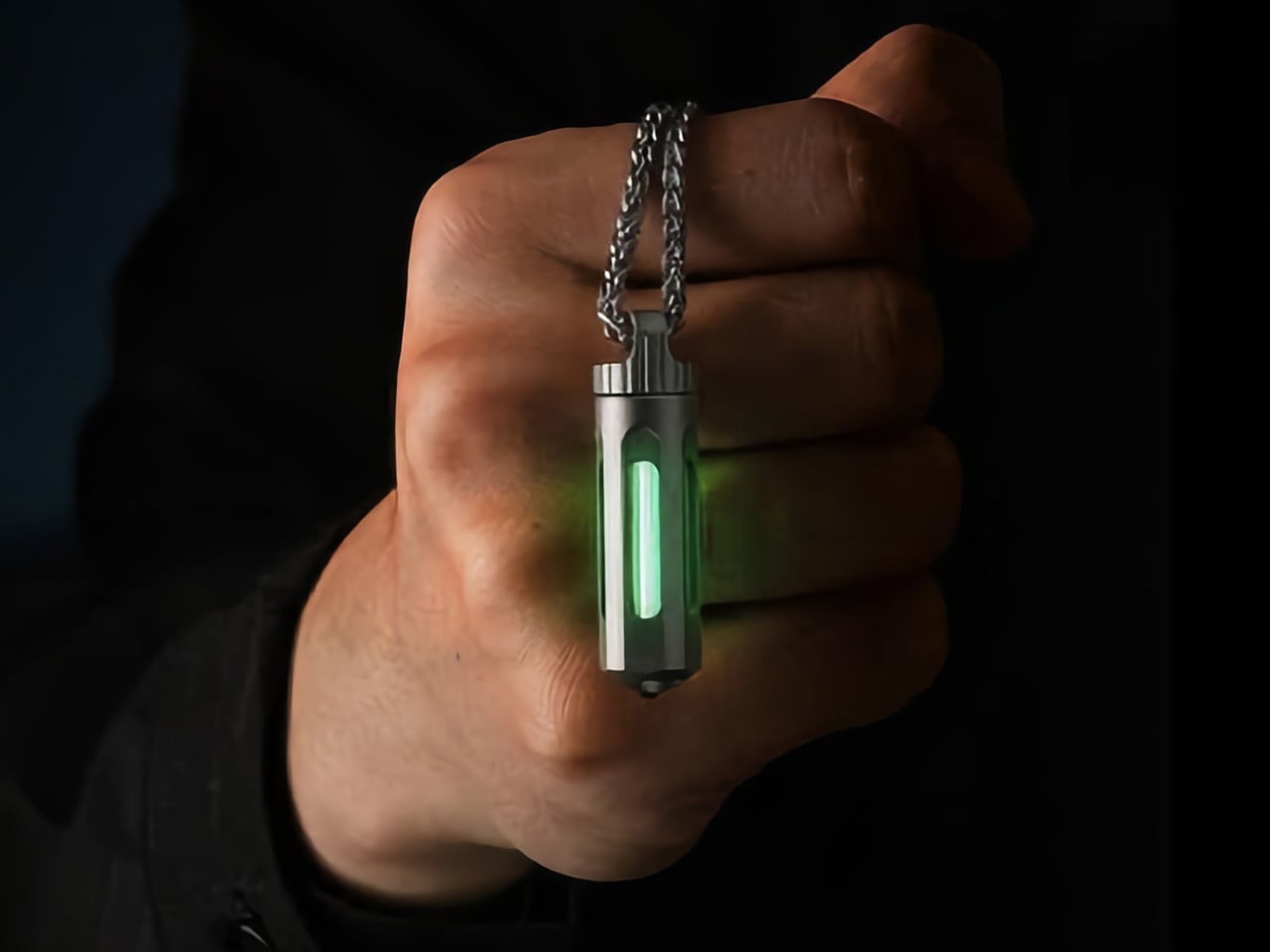
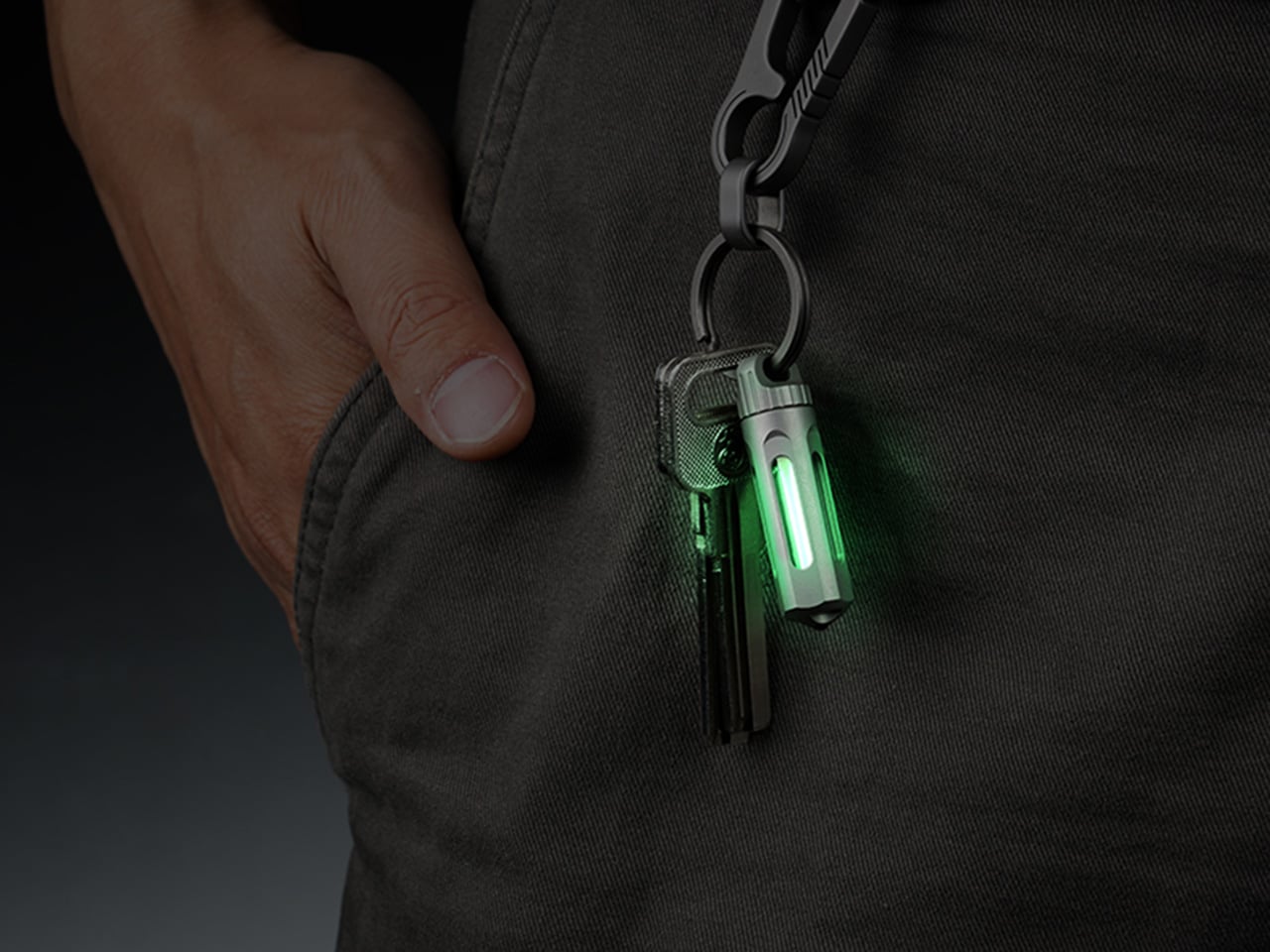
A 45mm CNC-machined Grade 5 titanium cylinder weighing 10.7 grams. The NoxTi carries a tritium vial inside a precision quartz tube with 92% light transmission and glows continuously for 25 years through radioactive decay. No switch, no battery, no charging. Tritium beta particle decay strikes a phosphor coating and produces light as a straightforward byproduct of existing. At a campsite, it marks your tent entrance, your keys at the bottom of a bag, and your gear in the dark without asking anything of you in return.
The ceramic-tipped glass breaker at the tail end adds genuine emergency utility without changing the form. When the vial dims after two decades, the titanium body stays: press the old tube out, slide a new one in. Six glow colors are available, including Apple Green for maximum visibility and Red for preserving night vision. Two silicone O-rings hold the vial suspended and centered inside the shell, which creates the impression of looking into a piece of precision engineering rather than anything from a keychain rack.
What we like
25-year continuous glow powered entirely by physics, with no battery, no charging, and no failure point to manage
Fully user-serviceable titanium body becomes a platform you keep and update indefinitely across decades of use
What we dislike
Glow output is intentionally faint — it marks and locates in the dark but does not illuminate a surface
The tritium light source needs a short explanation before the value proposition fully lands for first-time buyers
6. GoSun Flow Solar Water Purifier
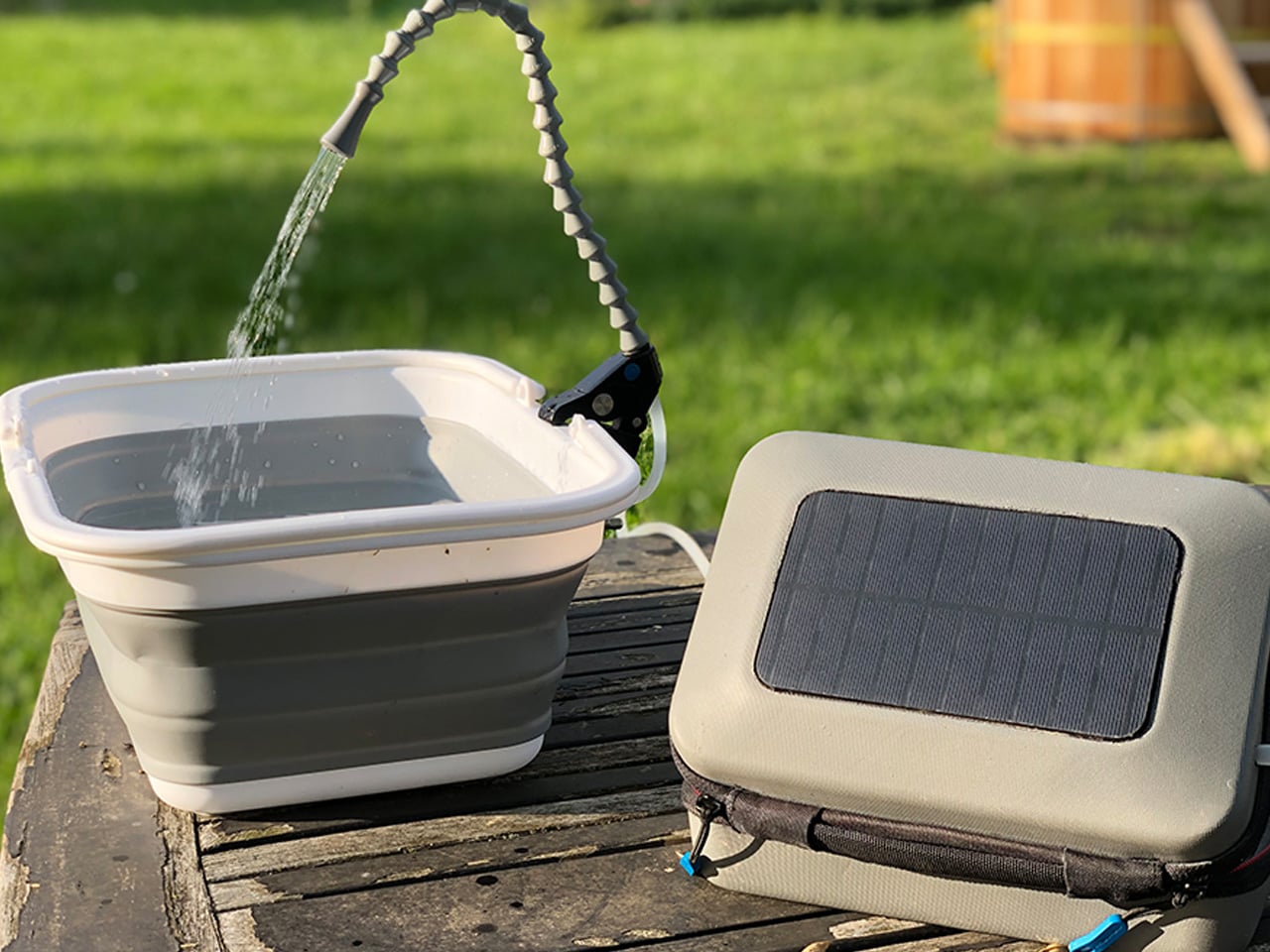
Water is camping’s most basic constraint, and the GoSun Flow addresses it at the source. A solar-powered three-stage cartridge filter eliminates 99.99% of waterborne pathogens while pumping one liter of clean water per minute from any freshwater source. The system compresses into a backpack, and the flexible faucet clamps to branches, tables, or tailgates — opening to 58mm — turning any water access point into a functional camp station. USB power keeps it running when solar is unavailable.
It doubles as a portable handwashing station and solar-heated shower. Thirty minutes of sun delivers a five-minute warm shower, which changes what clean means across a three-day trip without the bulk of carrying a separate shower bag and a purifier as two distinct items. The filter handles 1,000 liters before replacement, and the power bank driving the pump recharges through an integrated solar panel. For anyone who has ever compromised on hygiene to protect pack weight, this removes that trade-off before you even start packing.
What we like
Purifies 99.99% of pathogens and delivers a solar-heated shower from a single system that compresses into a backpack
1,000-liter filter life with USB power backup covers a full camping season without resupply
What we dislike
Cannot process saltwater, which limits utility at coastal campsites
Multiple components increase the number of parts to track and keep together across a multi-day trip
7. RetroWave 7-in-1 Radio
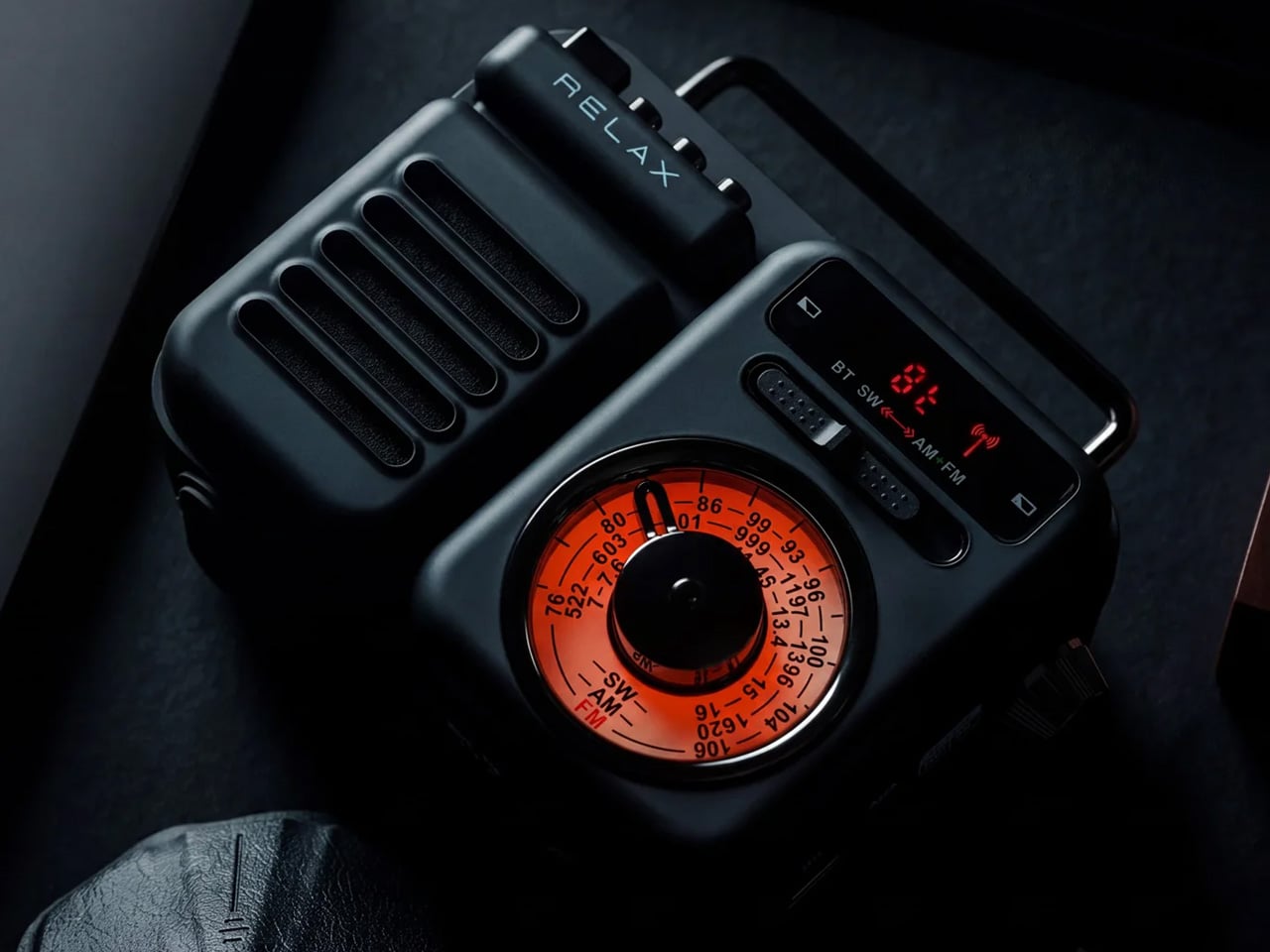
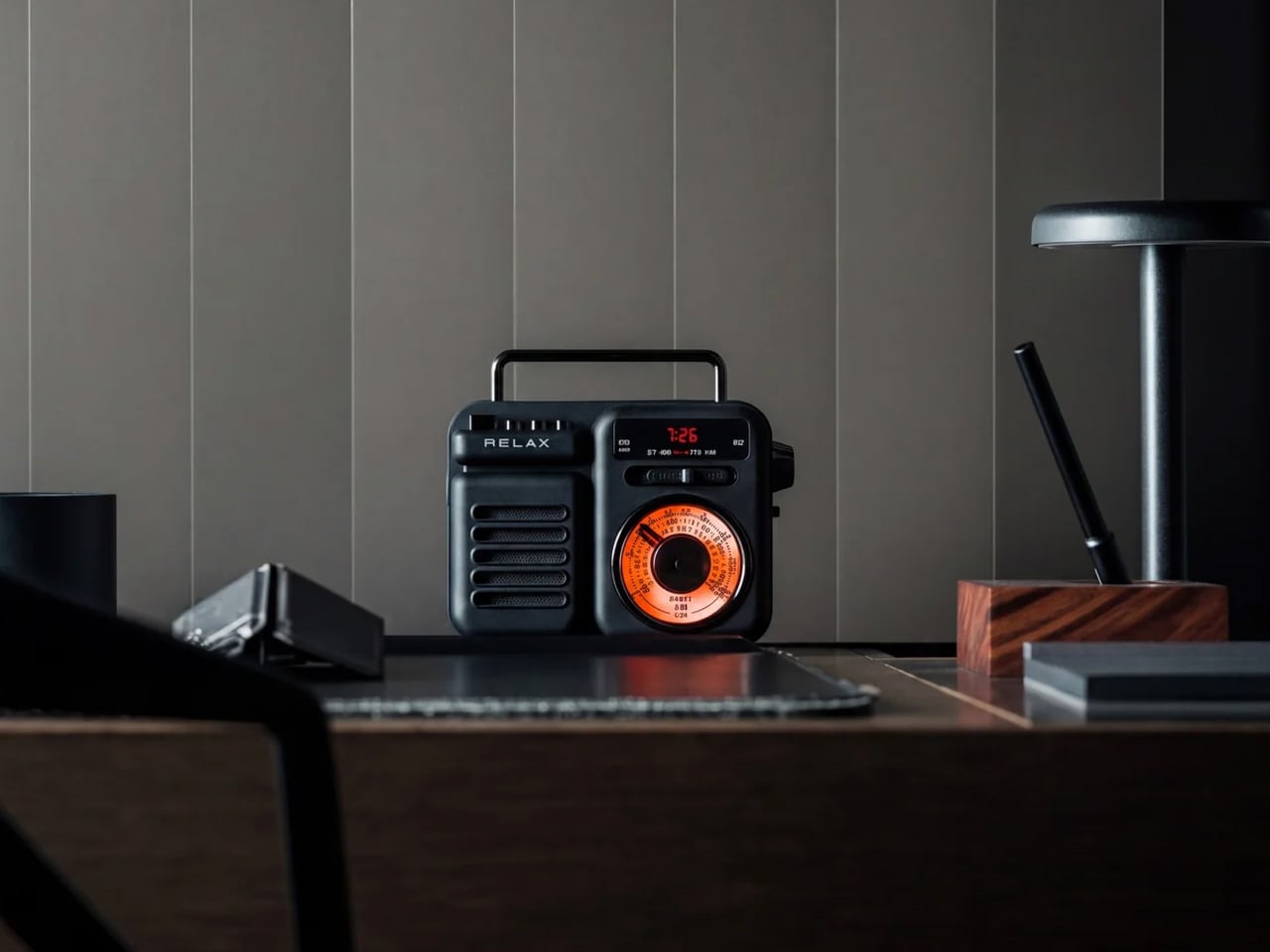
The RetroWave earns its place in a camping kit through an argument that has little to do with aesthetics, even if the aesthetics are genuinely good. A tactile tuning dial, compact body, and warm visual language drawn from classic Japanese radio design make it worth looking at. What it is actually doing is more pragmatic: running AM, FM, and NOAA weather radio without an app, streaming via Bluetooth when connectivity holds, and charging via solar panel and hand-crank when it does not. Seven functions, one charging cable.
Smart speakers go silent when Wi-Fi drops. Earbuds die at the wrong moment. Phones drain precisely when you need them most. The RetroWave does not ping you, does not demand ideal conditions, and does not need a charging window before it becomes useful. It plays, charges other devices, lights, signals, and tells the time across a full weekend without complaint. At the end of the trip, it goes back into the same bag it came out of, ready for the next one.
Seven functions in a single body remove the need to carry and manage multiple separate items across a trip
Solar and hand-crank charging keep it fully operational off-grid with no outlet access required at any point
What we dislike
The retro aesthetic can read as decorative to buyers who have not yet used it in an actual off-grid situation
Shortwave reception quality varies depending on geographic location and surrounding terrain
The Campsite Has Always Been Good. The Gear Finally Caught Up.
The equipment on this list shares one quality that outdoor gear rarely earns: it removes a specific friction from the experience without replacing it with a different one. The fire stand works where others cannot. The purifier turns proximity to water into access to clean water. The stove adapts to whatever fuel the terrain provides. Each object was designed around the constraint it actually faces in the field, which is the harder and more honest design brief.
A Labor Day weekend with gear this considered starts to feel different from the first hour of setup. Not because everything is easier in an obvious sense, but because the small decisions have already been made. Where the water comes from. How the fire holds through the night. What you reach for in the dark. These are solved before the weekend begins, which leaves the actual weekend free to be what it was always supposed to be.
Scanners haven’t changed much in how they occupy a workspace. A flatbed sits in the middle and claims that real estate whether it’s in use or not. Overhead models are more flexible, but they still tend to take up a fixed spot in any setup. For anyone working from a compact home office or shared studio, that trade-off rarely gets a proper answer.
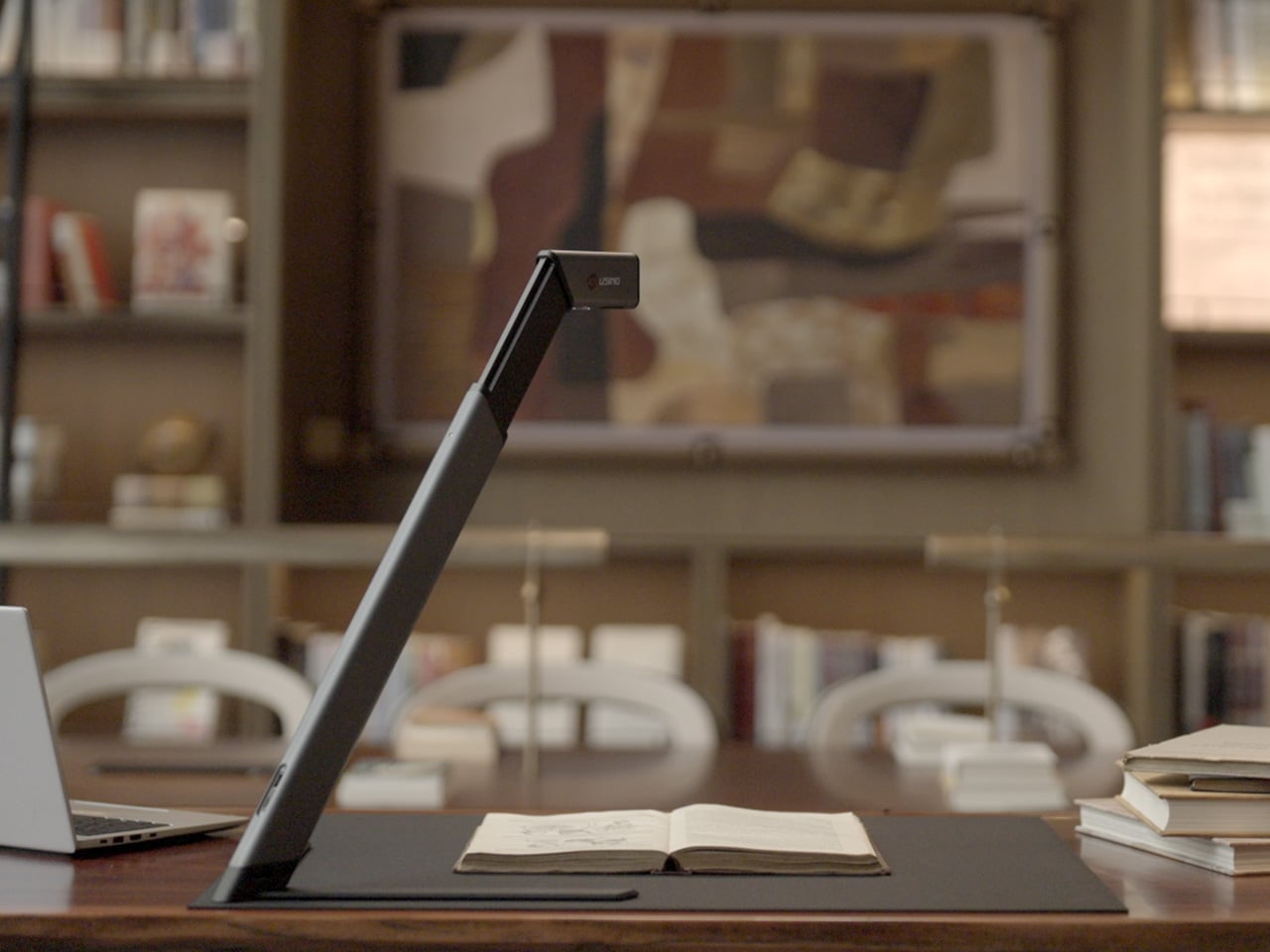
Joyusing’s ScanMax 320 approaches the problem from a different angle, quite literally. Rather than occupying the center of a workspace, it’s built to sit at the edge of a desk, positioned in the corner while its arm reaches overhead. It handles documents, books, artwork, and large-format materials up to A2 size, without taking over the surface it’s meant to serve.
Folded down, the ScanMax 320 measures 355mm x 68mm x 51mm, slim enough to slip into the included carrying bag and move between rooms without any effort. It runs entirely on USB-C power, so getting started means plugging in a single cable. There’s no proprietary adapter to hunt down, no driver installation ritual, and nothing complicated to deal with before the first scan. You can directly use the ScanMax 320 as a live presenter camera, and scanning as well as other advanced features simply require the free Joyusing Scanner intelligence software.
The shooting area extends to a full A2, or 594mm x 420mm, with a 32-megapixel sensor capturing at up to 380 DPI. That covers blueprints, double-page book spreads, large technical drawings, and oversized artwork in a single pass. An intelligent auto-switching system detects whether the material is A2 or A3 and adjusts accordingly, so there’s no manual input needed between sessions.
Overhead scanners tend to have a lighting problem, particularly near edges or when capturing materials that aren’t perfectly flat. The ScanMax 320 uses a rectangular illumination system shaped to match the scanning area, distributing light evenly and keeping shadows from washing out fine detail near the sides. Three brightness levels, at 30%, 70%, and 100%, are accessible with a single touch for quick adjustments in different environments.
Book scanning is where overhead devices tend to earn their keep, and also where they tend to frustrate. Pages curve at the spine, fingers get in the way, and binding shadows creep in from the edges. The ScanMax 320’s software handles most of this automatically, applying auto-flattening, finger removal, de-skewing, and shadow removal without manual adjustment. Book mode, paired with the included finger cots, keeps pages steady for continuous capture.
Once everything is captured, the software’s OCR engine converts printed text into editable, searchable files, with support for 180 languages and export options including Word, PDF, and TXT. A page of Japanese text, a technical report, or a multilingual research paper can go from physical to fully searchable in seconds, turning raw captures into documents you can actually search, copy, and share.
What’s less obvious about the ScanMax 320, and arguably more interesting, is that it also functions as a live visual presenter. Point it at a printed page, a hand-drawn sketch, or a physical object, and the feed goes live to whatever screen or projector it’s connected to. For a teacher going through annotated notes or a designer reviewing a layout with a client, that extra mode earns its place quickly.
Software compatibility covers Windows, macOS, and several Linux distributions including CentOS, Ubuntu, and Debian, though macOS users will find some features limited compared to the Windows version. Everything connects over USB-C, keeping the setup free of dongles and extra cables. Built-in annotation tools allow for direct markup of scanned content, which makes it easier to prepare materials before presenting or sharing them.
There’s something refreshingly considered about a scanner built to work with your desk rather than on top of it. The ScanMax 320 doesn’t ask you to clear space or rearrange anything. It folds, parks at the edge, and gets on with the job. Whether you’re archiving a collection, digitizing a sketchbook, or presenting something in a meeting, the fact that it stays in its corner is, in itself, the point.
August outdoor gear doesn’t get the editorial runway of spring launches or the pre-holiday push. That’s what makes it honest. The products landing in late summer have already been through a season of real conditions and arrive in the lineup on merit rather than timing. This month’s five picks cover the full range of what a serious outdoor day demands: shelter, light, cooking, carry, and sound. Each one addresses a problem its category had been handling adequately for years, then makes adequately feel like the wrong standard to have accepted.
What connects all five is a refusal to inherit the category’s old logic. A jacket that transforms into a tent. A flashlight built around actual daily carry. A backpack that zips apart into three genuinely usable bags. A speaker shaped like a jerry can, with 300 watts and a guitar input. A grill plate that reconfigures to the meal. August’s best gear doesn’t announce itself. It earns its place quietly, trip after trip.
1. Shelter Wear
Yoon Myat Su Lin designed Shelter Wear from a specific memory. The Tokyo-based fashion student experienced an earthquake in Myanmar and watched people left without temporary shelter in the critical hours before help arrived. That moment produced a single design question: what if the garment you were already wearing could become what you needed most? At first glance, the answer looks like structured techwear outerwear with a high protective collar and a silhouette that works as well in a city as on a trail.
The transformation is the design. Unclip a series of buckles, unfold the panelling, and the garment expands into a triangular tent that forms shelter around the wearer. The detachable sleeves double as backpacks before becoming structural components of the form. Ripstop materials and engineered fasteners hold the system together under real conditions, a claim validated by the YKK Special Prize at the 25th YKK Fastening Award. For anyone spending time in unpredictable terrain, Shelter Wear removes the gap between what you’re wearing and what you need.
What we like
The garment-to-tent transformation addresses emergency shelter at the level of what you’re already wearing, not what you remembered to pack separately
The YKK Special Prize validates the mechanical integrity of the fastening system well beyond the concept stage
What we dislike
Currently a student concept design, with production availability and final manufacturing specifications unconfirmed
The techwear silhouette reads as urban and may not suit every outdoor environment or wearer preference
2. CasaBeam Everyday Flashlight
Most outdoor flashlights are built around a peak performance scenario: maximum output, maximum throw, maximum everything. The CasaBeam starts from the opposite end of that thinking. The “everyday” in its name is a design commitment, not a marketing qualifier. It’s sized and weighted for the person who carries their light not only on planned trail days but on every day between them, because those are often the moments that actually test whether your gear kept its promise.
That daily carry philosophy changes how the object performs for you. The pocketable form means it’s already on your person when you need it, not sitting in a pack you didn’t bring. The beam handles close-range campsite tasks and longer throws without demanding a deliberate mode change between them. For a flashlight that lives in your pocket rather than your kit bag, that standard matters every time you reach for it.
Sized and weighted for genuine daily carry, not just the planned outdoor days when remembering a flashlight is already obvious
The pocketable form keeps it accessible in the unplanned moments that a pack-stored light consistently misses
What we dislike
The everyday carry positioning means it isn’t optimized for the peak-output demands of technical night hiking
3. Modevo Trio
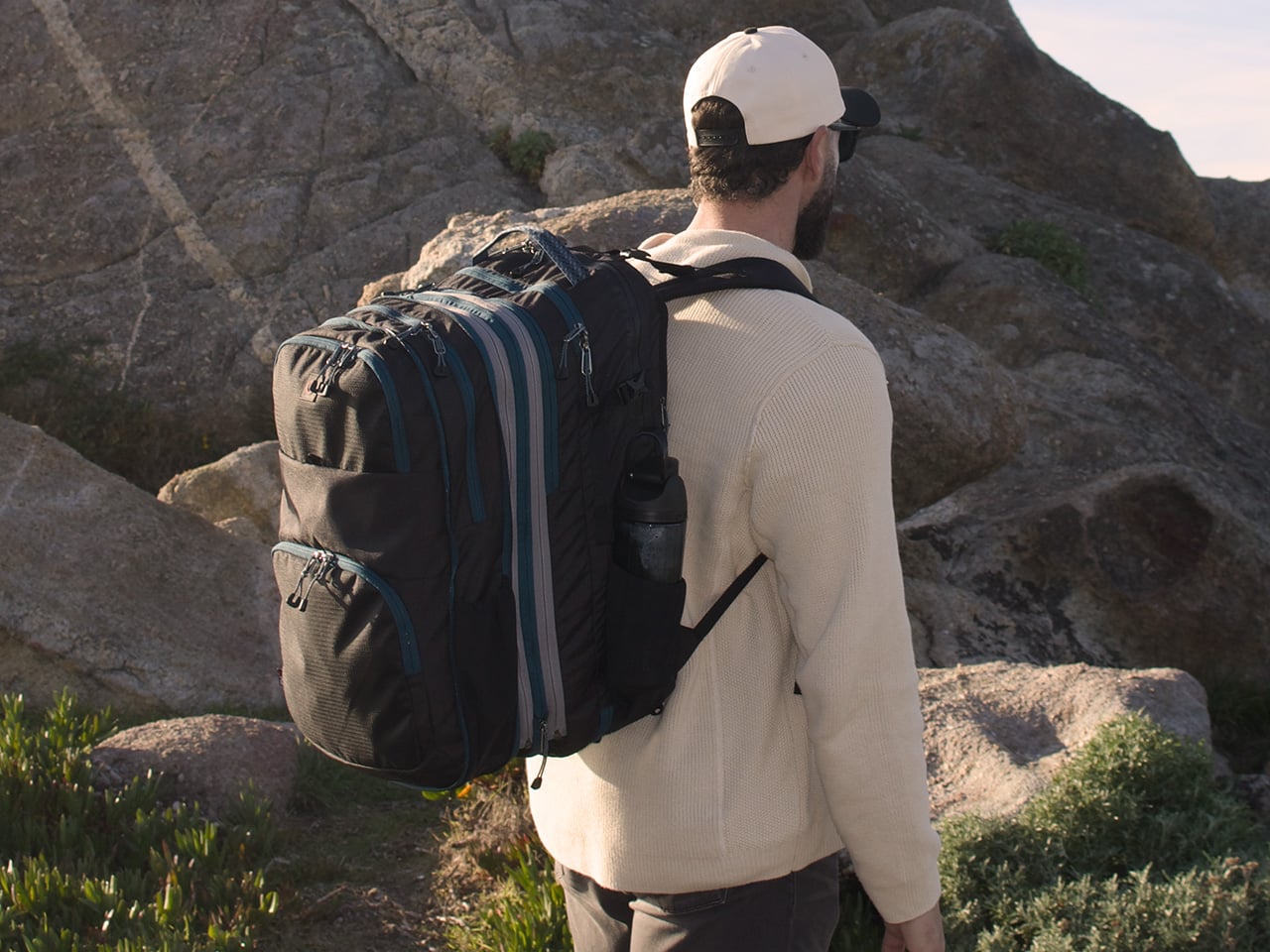
The design insight behind the Modevo Trio is one most bag companies avoid: a single pack that tries to be everything ends up the wrong thing across multiple scenarios. Onli Travel built the system in reverse, designing each of the three components as a genuinely usable standalone bag first, then engineering the connection points between them. The Core Pack is a 28-liter travel backpack with a clamshell opening and a functioning hip belt. The Link works as a briefcase or shoulder bag. The Go Daypack expands from 12 to 27 liters on its own.
Put all three together, and you get 58 to 73 liters of carry. Separate them mid-trip and each piece performs without producing a compromise product. Bluesign and OEKO-TEX certified water-resistant fabric with YKK zippers throughout reflects the build standard expected from a fourth-generation design. At $224 for the full Trio, it’s a considered purchase. For outdoor days that move between activities, the Modevo removes the most persistent pack complaint: that you brought the right bag for the first half of the day and the wrong one for the second.
What we like
Each component was designed as a standalone first, so separating the system mid-trip never produces a bag that only exists as a leftover from the combined configuration
Bluesign and OEKO-TEX certified fabric with YKK zippers reflects independently verified material and construction standards rather than self-reported claims
What we dislike
At $224 for the full Trio, the investment requires genuine confidence in modular carry as a system before committing
Three-bag systems introduce the real possibility of leaving one component behind when packing quickly or in low light
4. Jerry Can Speaker
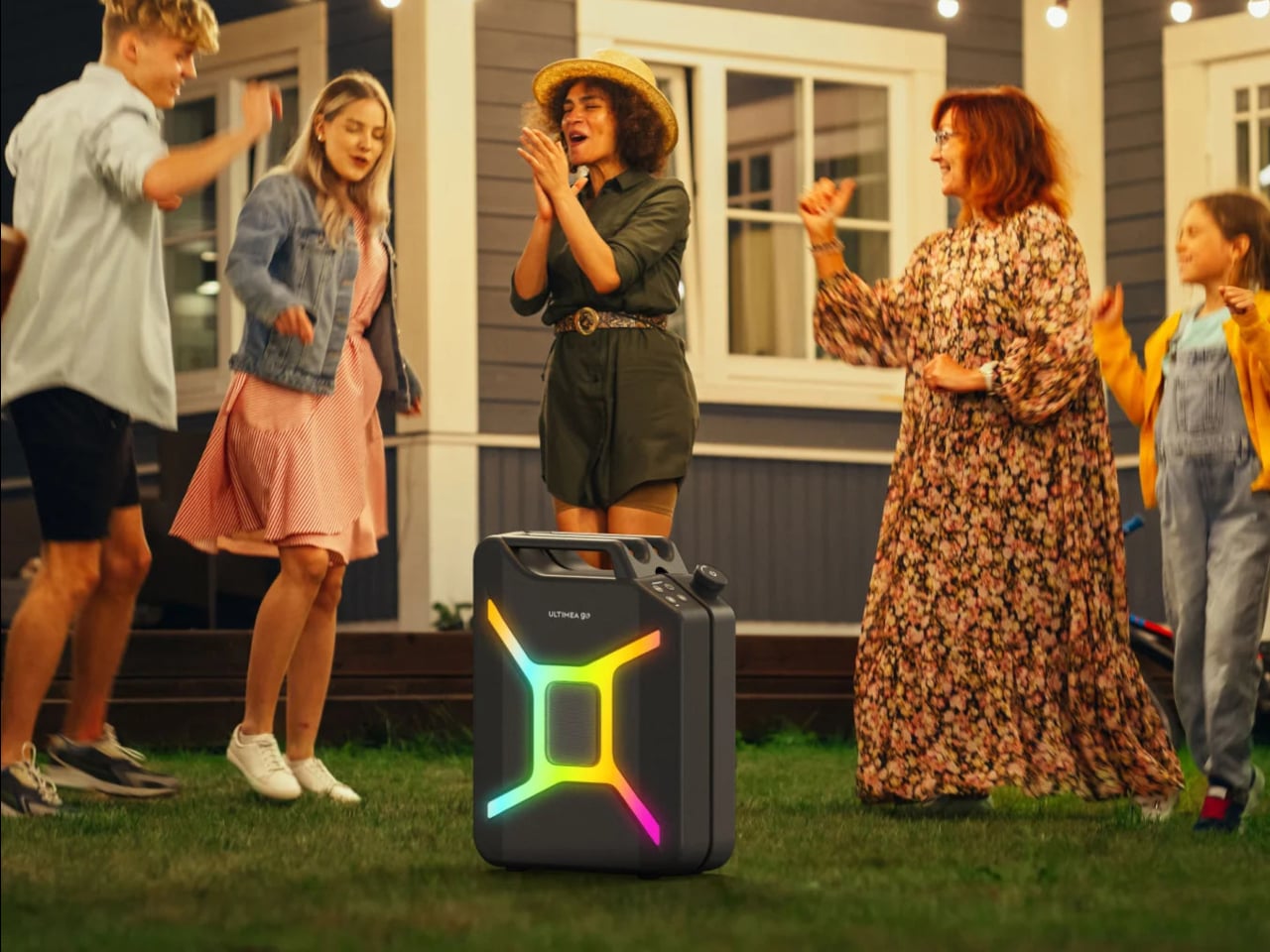
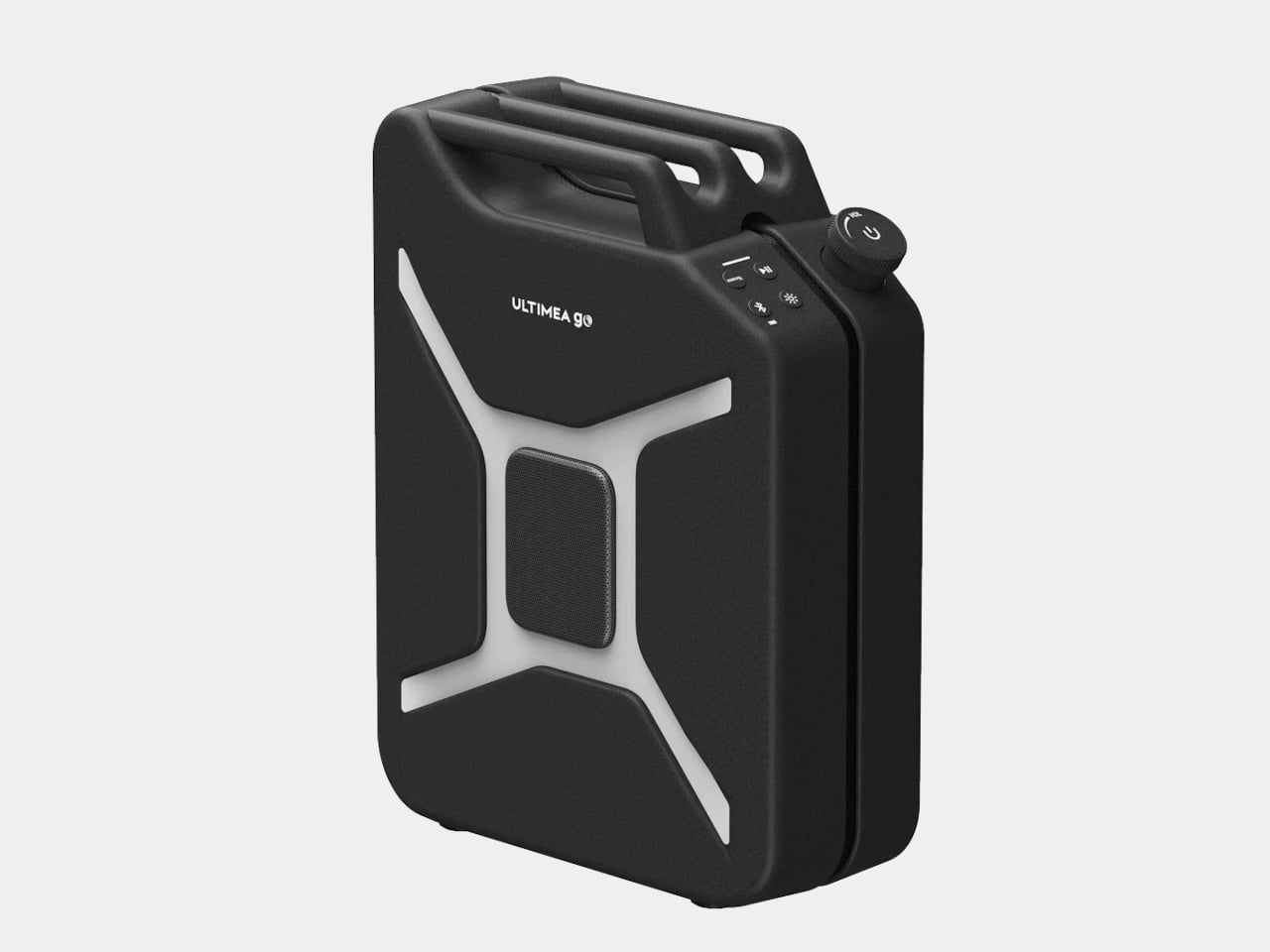
The Ultimea Go looks exactly like a jerry can. Not a loose visual reference or a softened modern take on the form: a full commitment to the fuel container silhouette, boxy proportions, handle and all. The design misdirection is deliberate, and it lands. Under that shell, dual 5-inch woofers, dual 3-inch full-range drivers, and a 1-inch tweeter deliver 300 watts of peak output through 360° omnidirectional sound that radiates in all directions rather than projecting from a single face, which matters when a crowd is gathered around it.
The guitar input is what makes this genuinely useful for you rather than just visually interesting. Two microphone inputs and direct instrument connection turn it from a passive playback device into something you can plug a guitar into at a campsite or a backyard set. Auracast support syncs up to 100 devices simultaneously without the timing offsets that come with daisy-chaining. Sixteen hours of battery and IPX4 water resistance keep it running through a full outdoor day without requiring repositioning or supervision.
What we like
Guitar and microphone inputs transform it from a playback device into one a musician can plug directly into on a campsite, which no comparable outdoor speaker in this class offers
Sixteen hours of battery and IPX4 water resistance handle a full outdoor day without monitoring, repositioning, or an overnight charge between uses
What we dislike
The full-commitment jerry can form is a deliberate design statement that won’t suit every camp aesthetic or setting
At 300W peak output, the power draw requires a reliable source, which adds planning for longer off-grid trips
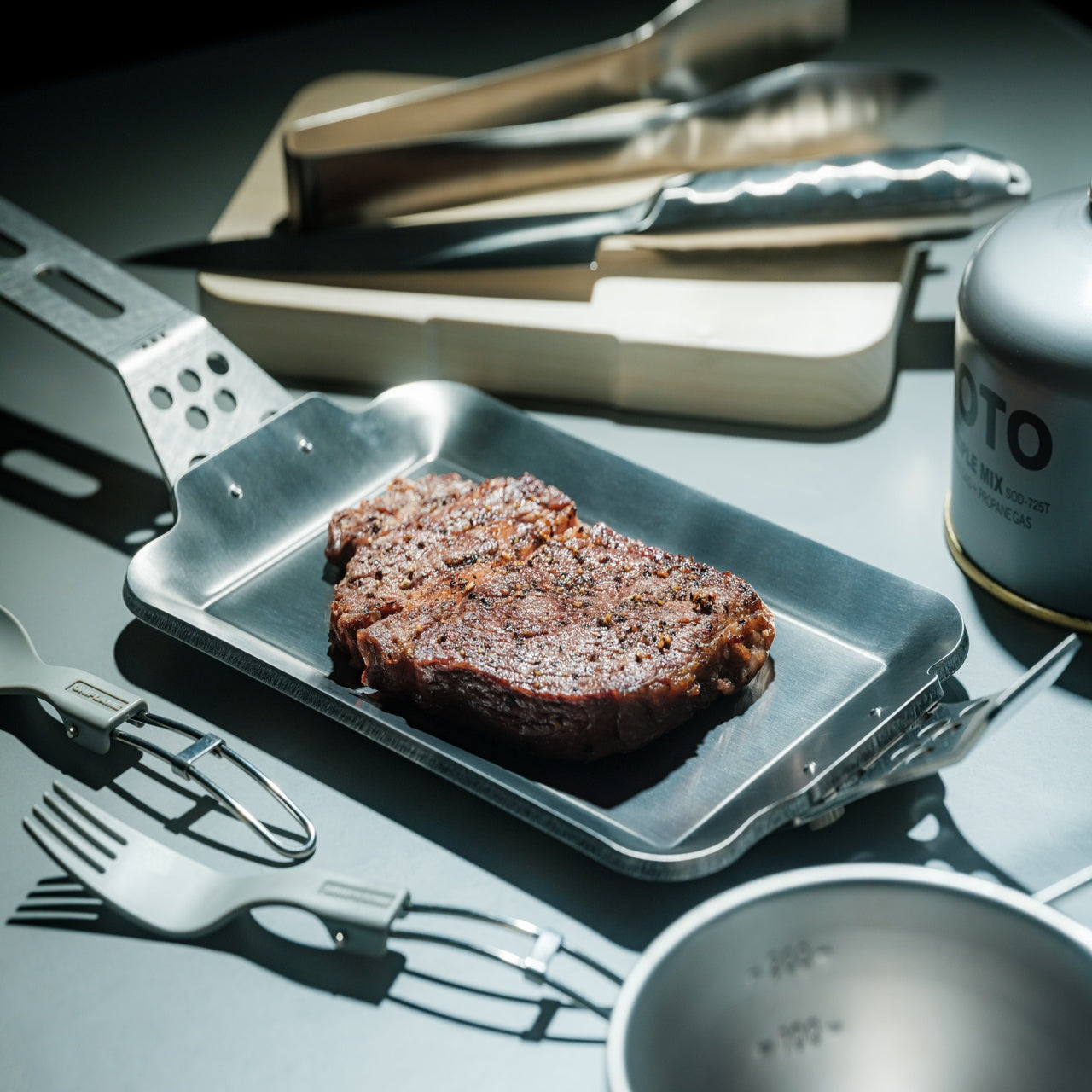
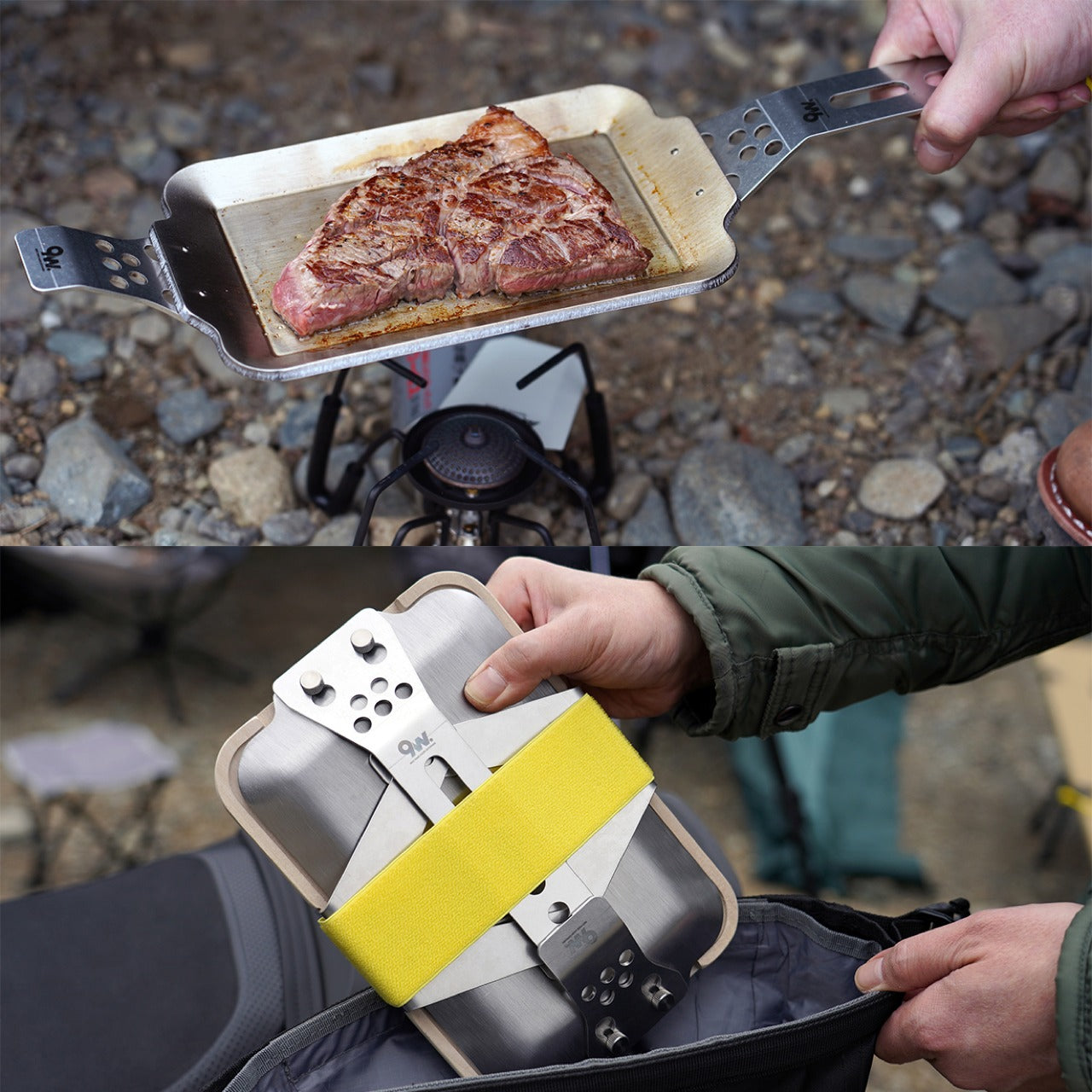
5. Compact Modular Grill Plate
Most camp cooking surfaces commit you to a single method before you’ve decided what you’re making. The Compact Modular Grill Plate works differently. The modular design lets the surface be configured around the meal rather than the other way around, so the same piece of gear that handles a morning sear handles an evening cook without requiring a second surface in the pack. That kind of adaptability usually arrives with a bulk penalty. This one resolves the trade-off rather than asking you to live with it.
The compact form changes what you’re willing to bring on shorter trips. When cooking gear is bulky, it gets left behind. When it packs flat and reconfigures at the campsite, it earns a permanent slot in the kit. For camp cooking that doesn’t require a second thought about space, this is the surface that justifies its place on the first trip and holds it on every one that follows.
Modular configuration adapts to different cooking requirements without adding a second surface or additional weight to the pack
Compact form removes the space calculation that causes most camp cooking gear to get left at home on shorter trips
What we dislike
Modular systems require all components to be present and accounted for before setup, which adds a pre-trip organization step
Still requires a separate heat source, making it a cooking surface rather than a self-contained cooking system
The Gear Holds
The five products in August’s lineup cover every stage of a serious outdoor day. What connects them is a refusal to accept the performance floor their categories had settled on. The Shelter Wear asks why clothing stopped at decoration. The Modevo Trio asks why a single bag has to make compromises. Each product arrived here by questioning something the outdoor gear world had quietly stopped questioning, and all five are better for it.
Gear that earns long-term trust doesn’t announce itself on the first trip. It builds that trust through every trip that follows, quietly removing the small calculations and compromises that average equipment leaves behind. Take these five picks into real conditions, and the design decisions behind each one become self-evident in the best possible way. August’s outdoor gear doesn’t need a seasonal hook to justify it. It just needs the chance to perform.
Summer does a reliable job of exposing what is wrong with your carry. Thinner clothes mean shallower pockets, and whatever has been accumulating since January starts demanding justification it cannot provide. The wallet that has been stretching since February, the key ring that jingles through every meeting corridor, the flashlight that has been dead for three weeks – they all resurface together as you pack a bag and head back. The loadout that survived winter is not the one that deserves September.
The five upgrades here share a single argument: fewer objects doing more work, or one object doing something with enough precision that the supporting cast stops being necessary. None of them ask you to carry more. Each one consolidates something you were already carrying into a form that earns its pocket space so completely you stop thinking about it. That is the standard. That is what back-to-work EDC should actually look like.
1. Olight Baton 4 Premium Edition
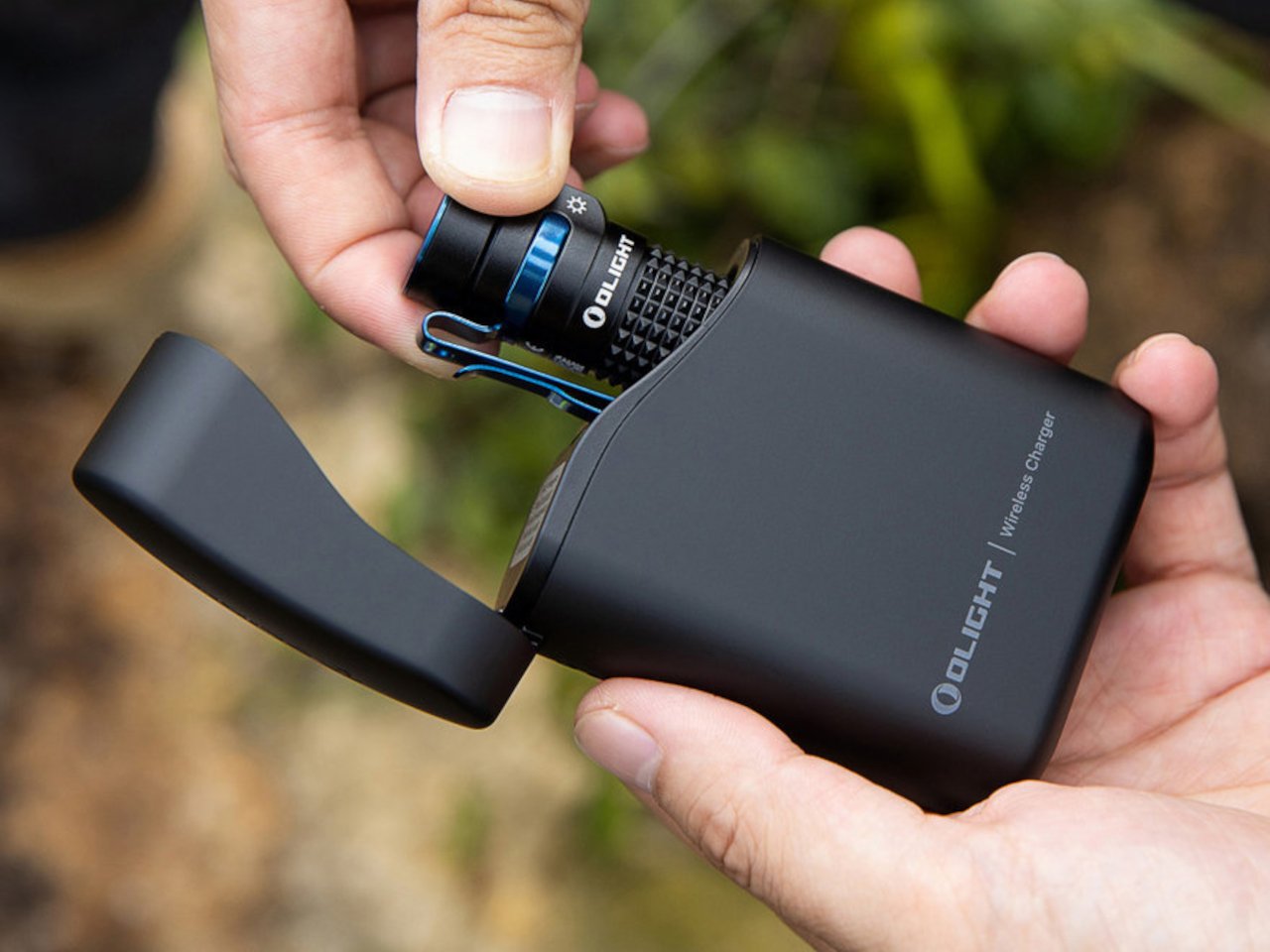
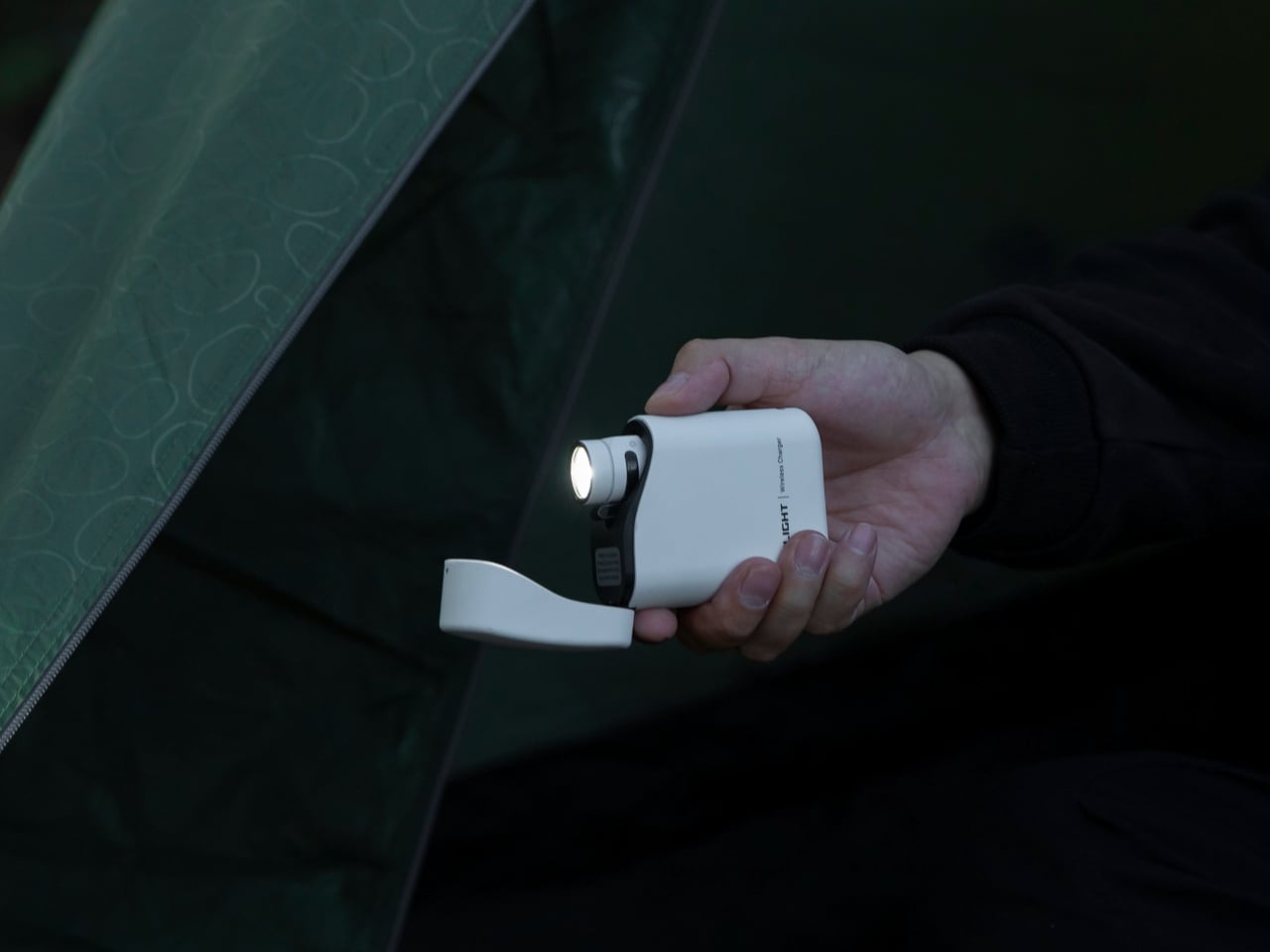
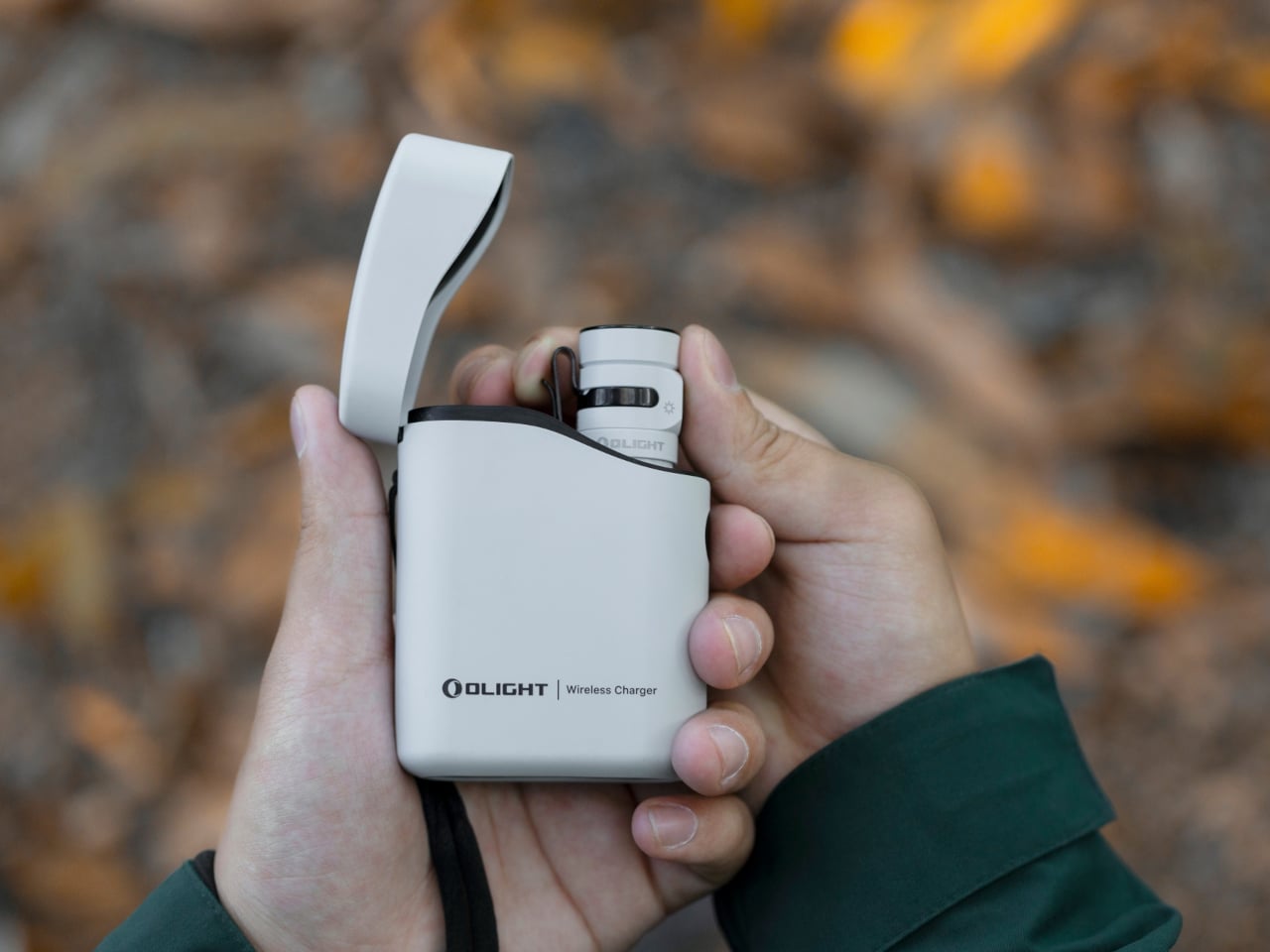
Most people heading back to work carry a flashlight and a power bank as two separate objects, in two separate compartments, with two separate charging cables neither of them can ever locate. The Baton 4 Premium settles that argument by making the charging case the second object, not the flashlight and the power bank as distinct things. The flip-top case carries 5,000mAh, recharges the Baton 4 up to five times, and allows you to activate the light without removing it from the case at all. Open the lid, press the side button, and the light fires. That single interaction collapses the gap between a flashlight that lives in a bag and one that is actually ready when something happens.
The 1,300-lumen output and IP68 waterproof rating handle the practical end of what a flashlight needs to do. The magnetic tail cap converts it into a freestanding lantern by sticking to any steel surface, removing the need for a separate camp light in most outdoor situations and proving genuinely useful in an office during a power outage. For a loadout returning to structure after a summer of loose carry habits, the Baton 4 Premium makes the case that two carry problems can be resolved by a single considered object. That is the only standard that matters right now.
What we like
The charging case serves as a functional 5,000mAh power bank and activates the flashlight without removing it – two carry problems resolved by one object instead of two
The magnetic tail cap frees both hands during stationary tasks without requiring any additional accessories, stands, or setup
What we dislike
Maximum brightness draws battery down faster than lower output modes, which means more frequent recharging on heavy-use days and more reliance on the case as a compensating mechanism
The case adds volume to the carry; users wanting the flashlight alone will need to leave the power bank function behind, which partially defeats the premise of carrying less
2. Fantom X Wallet
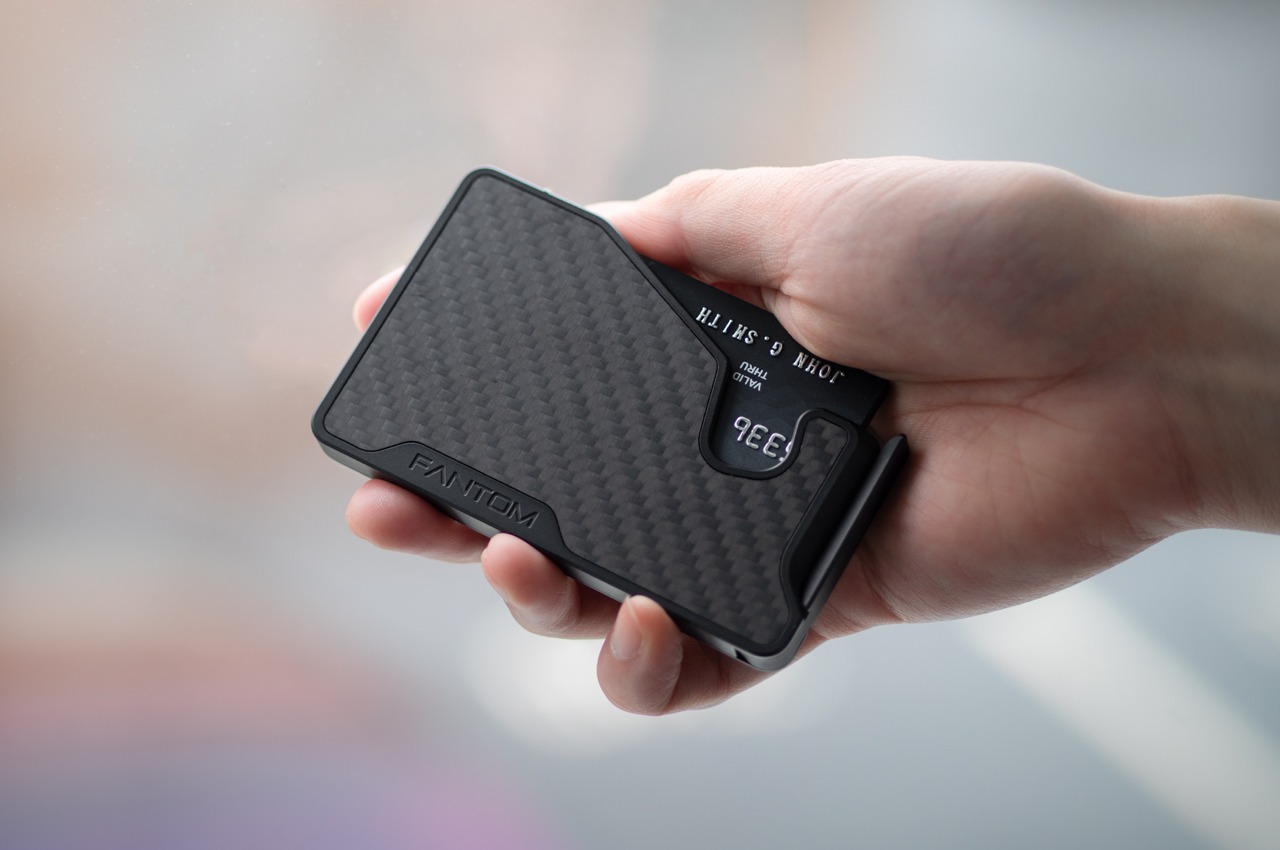
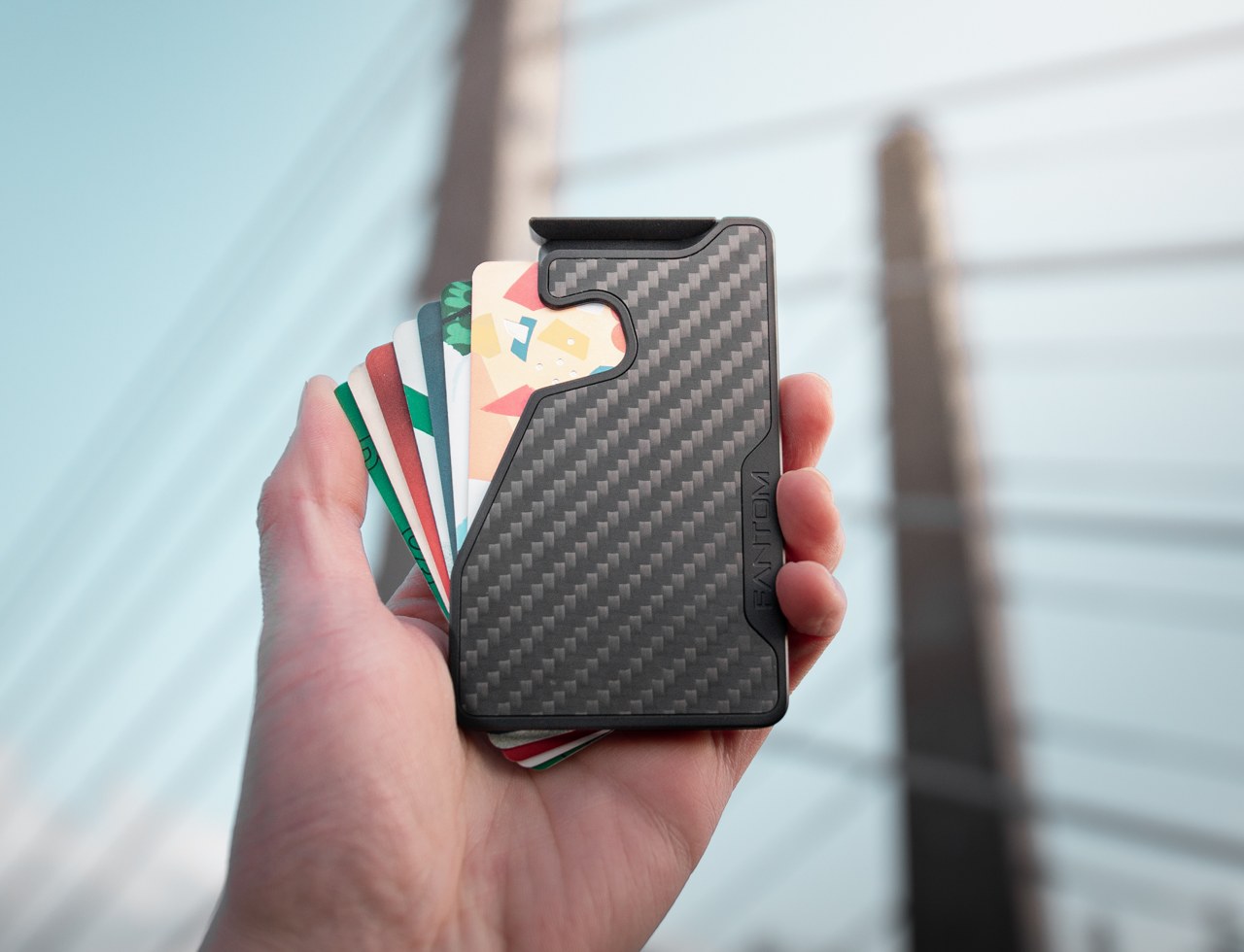
The wallet category has been failing quietly for decades. Leather stitching stretches, bifolds accumulate receipts nobody asked for, and elastic bands lose tension in months rather than years. The Fantom X approaches the problem as an engineering challenge rather than a craft one, building the chassis from machined aluminum, retaining cards mechanically, and adding a spring-loaded ejection system that fans your cards in sequence at the press of a button. Nothing in its construction is soft, which means nothing in this wallet degrades.
The design logic is borrowed from product categories where material failure is not tolerated. A bead-blasted aluminum body carries the same engineering rationale as the titanium tools that dominate the better end of the EDC market: fewer materials, one mechanism, no organic components that can rot or stretch under daily use. Cards are organized by ejection sequence rather than pocket habit, which introduces a useful kind of intentionality about what actually deserves a slot. Heading back to work with a wallet this considered makes the chaos of a stretched billfold feel like a problem you solved rather than one you are still living with.
What we like
Machined aluminum construction eliminates the stretching, cracking, and wear patterns that define the lifespan of leather and fabric wallets across every price bracket
The spring-loaded ejection fans cards in sequence, removing the fumbling that every other slim wallet format still requires at the checkout counter
What we dislike
The mechanical ejection system has a learning curve for anyone switching from a traditional bifold, and the first week of carry involves genuine reorientation
Cash carry is minimal depending on configuration, which limits practicality for anyone who still moves through the day with notes in their pocket
3. Orbitkey Key Organiser
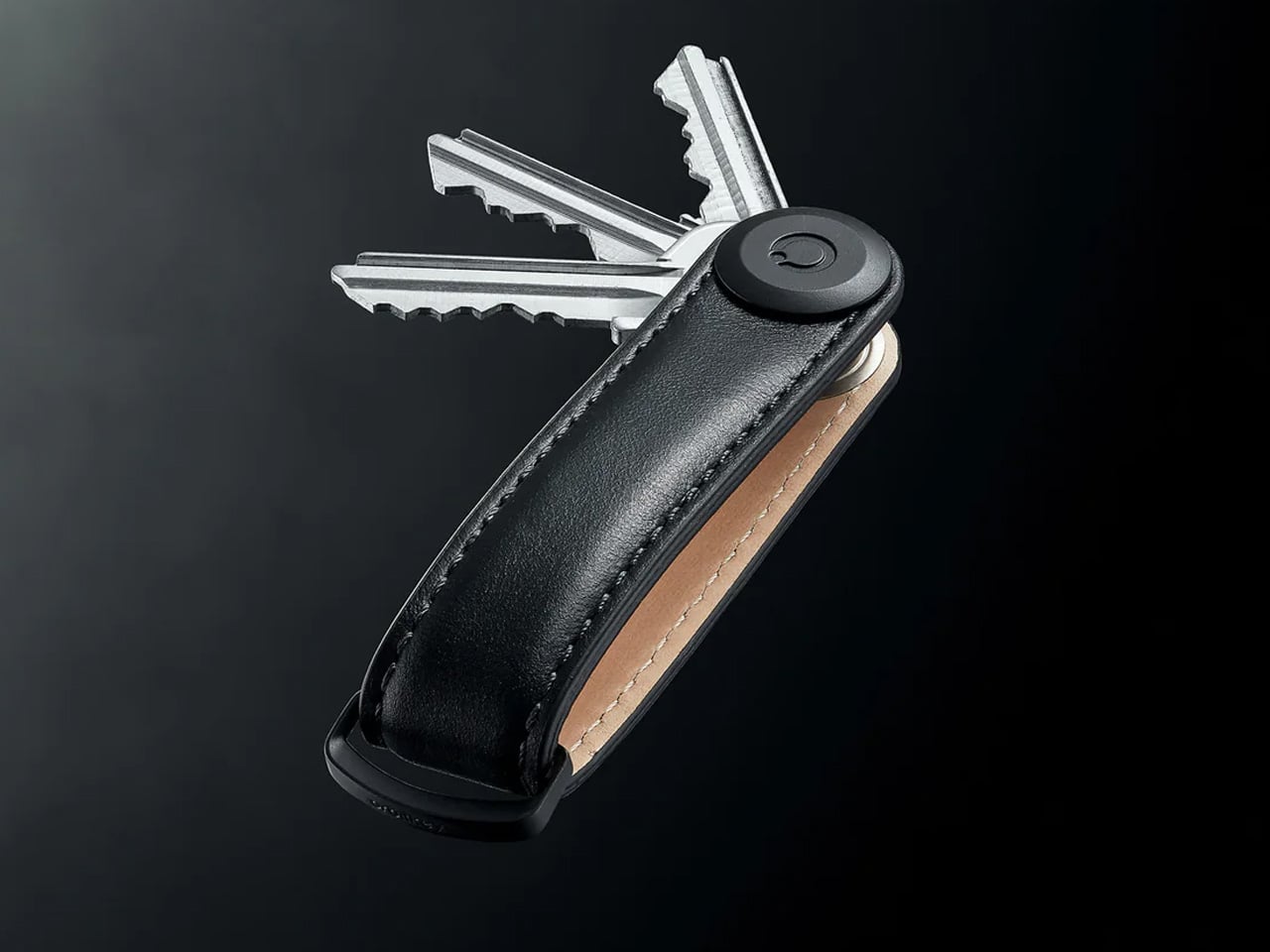
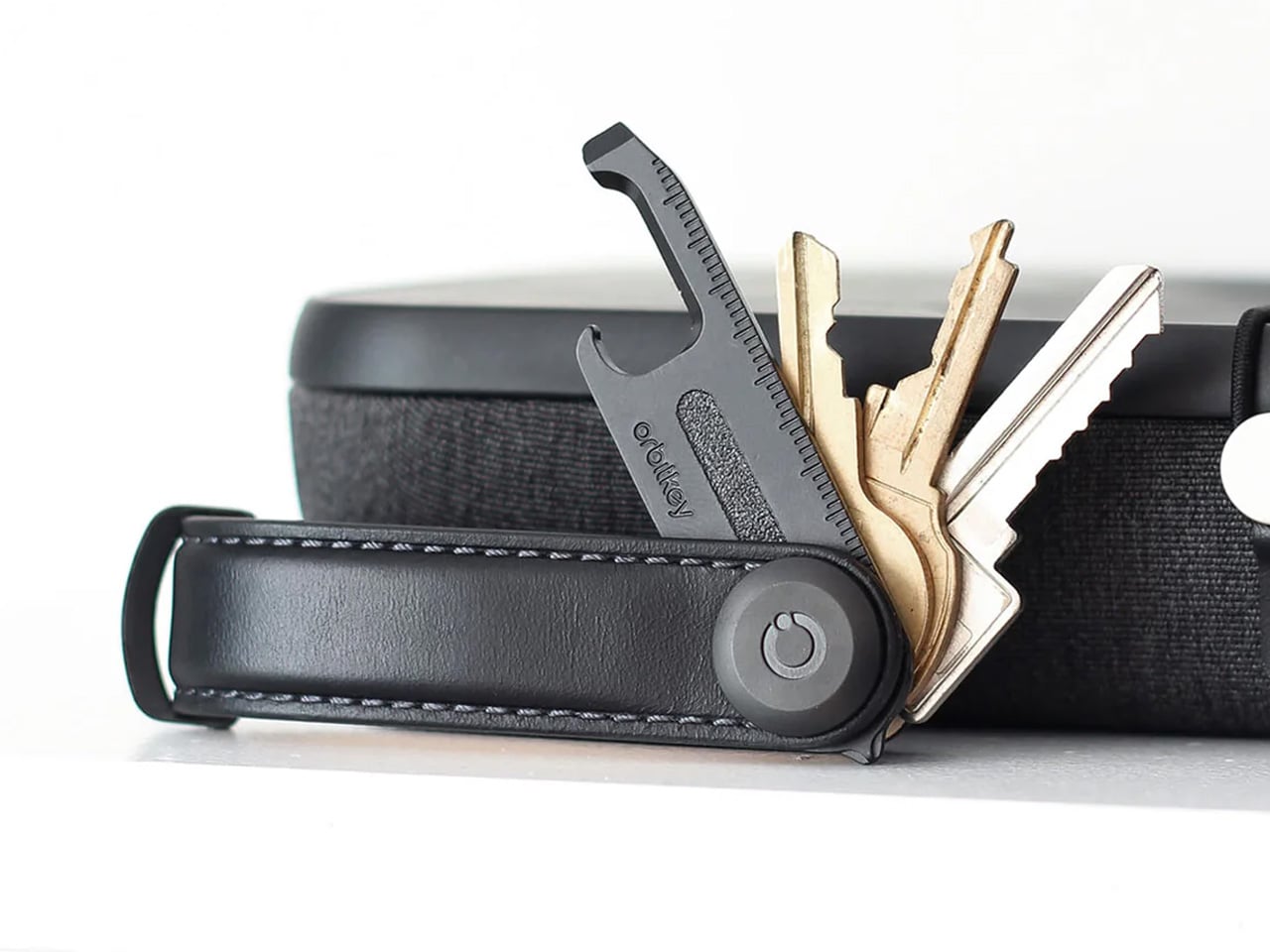
A standard key ring solves the organizational problem with the bluntness of something designed before pockets had size constraints. Keys stack against each other, jingle against everything nearby, and press ridges into the thigh pocket of work trousers for eight hours straight. The Orbitkey stacks two to seven keys flat inside a full-grain leather spine secured with stainless steel hardware, held under tension, producing no movement and no sound when the system is closed. In a pocket, it disappears entirely.
The leather exterior develops its own grain and wear pattern over years of daily use, an explicit design position about longevity that most keychain products never bother taking. The two-screw expansion system accommodates keys confidently up to its rated capacity, and a small ring attachment handles anything that does not stack flat inside the body. Five colorways run from black dress leather to warmer cognac tones, covering the full range of what a work bag demands. Heading to the office with the Orbitkey in your pocket for the first time, the first thing you notice is the absence of sound from your keys. Then you stop noticing it, and that is the point.
What we like
The tension stacking system eliminates key jingle, which sounds like a minor quality-of-life gain until you experience the cumulative quiet of a full working day without it
Full-grain leather construction ages into character rather than showing damage, signaling a product built to outlast the annual trend cycle by a significant margin
What we dislike
Initial key installation involves a screwdriver and careful threading – not difficult, but the setup time is a real first-use commitment that catches some buyers off guard
Oversized or irregularly headed keys may not stack cleanly within the system’s geometry, which is worth confirming before purchase rather than after
4. KeyUnity KK08 Titanium Carabiner Knife
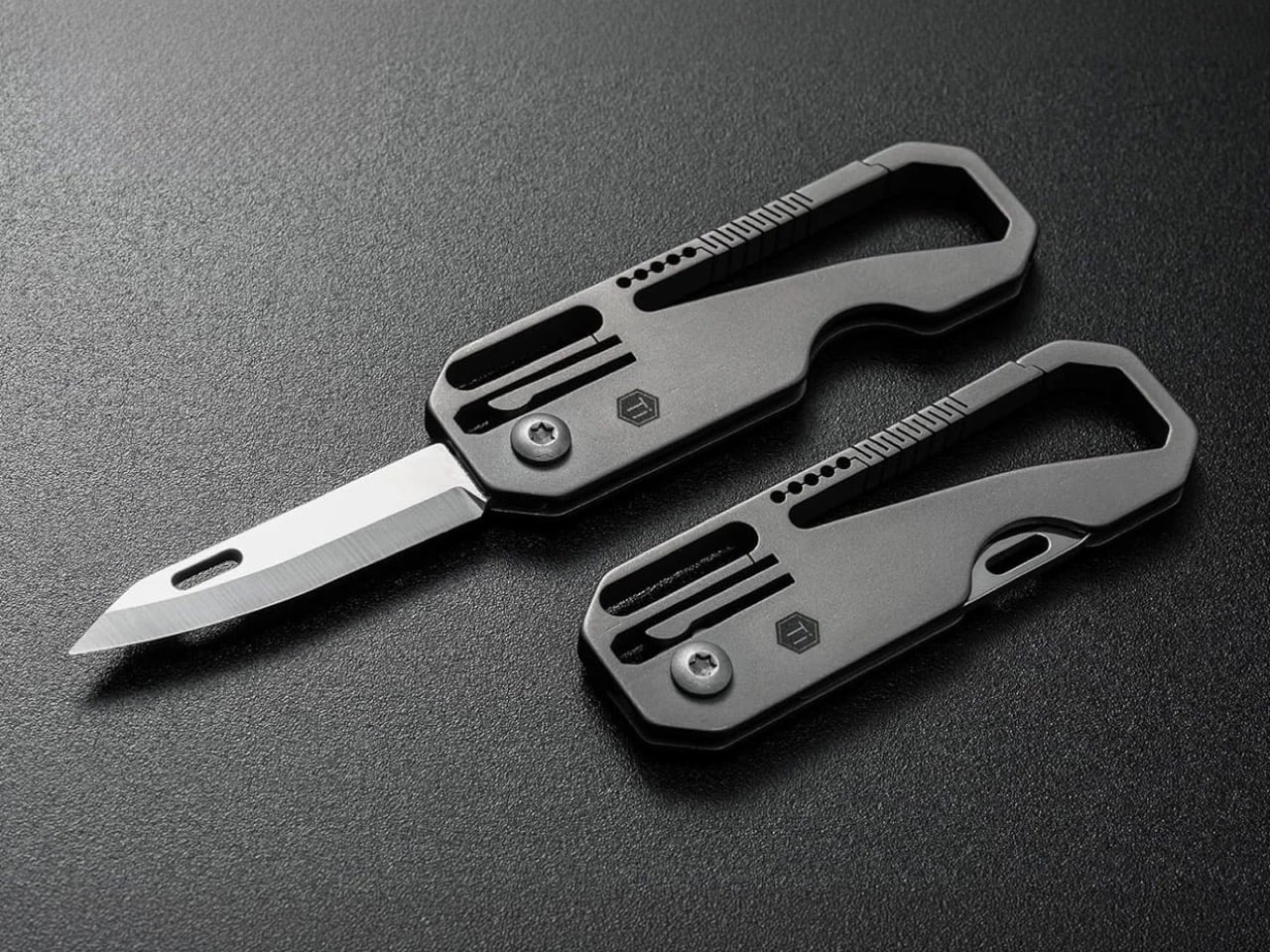
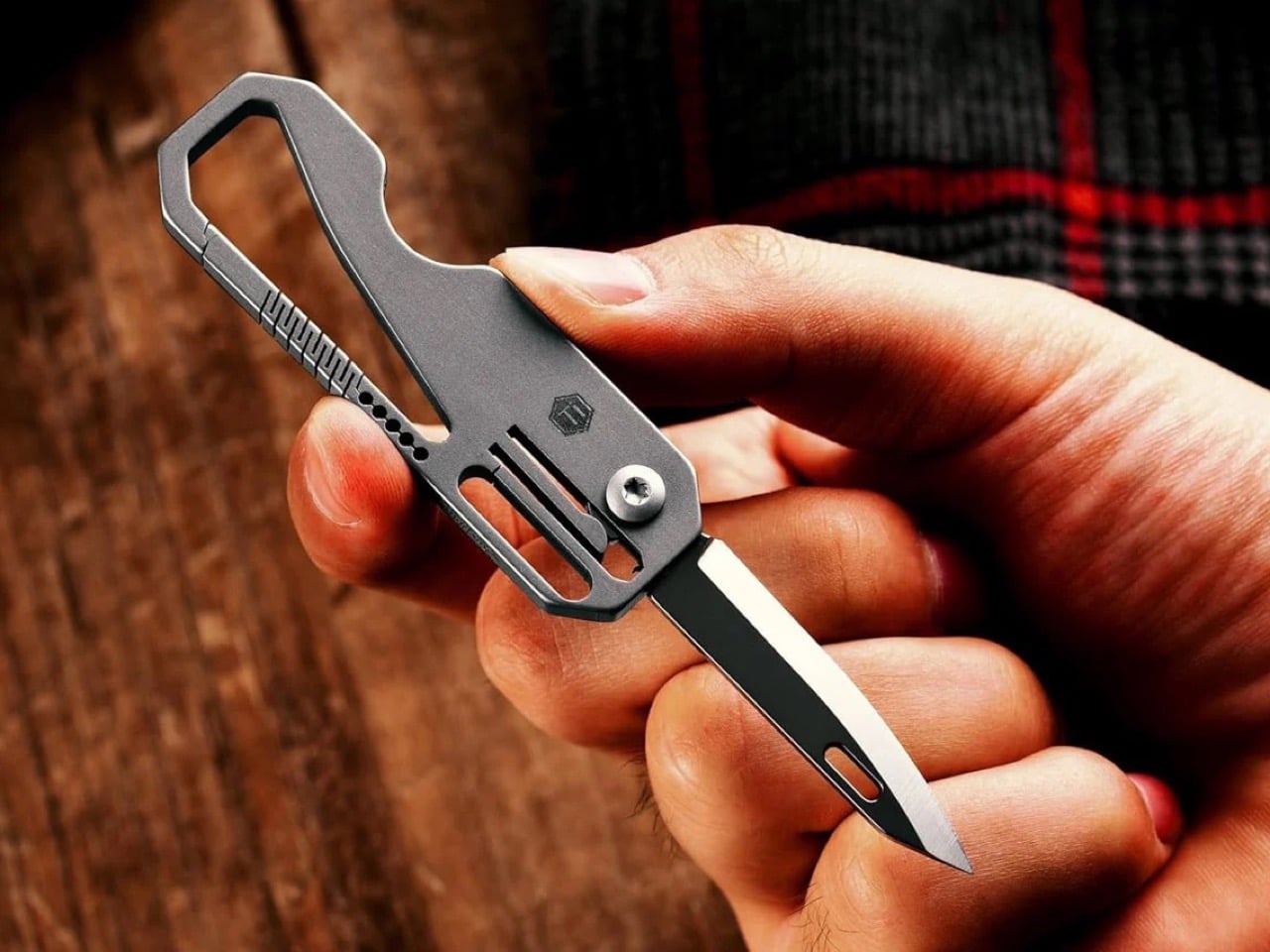
The carabiner is one of the most underutilized platforms in everyday carry. Most examples handle clipping and nothing else, occupying keychain real estate without justifying it with more than a single function. The KeyUnity KK08 corrects that by integrating a deployable blade directly into the gate of a TC4 Grade 5 titanium carabiner. One object handles clipping, carrying, and cutting without requiring any tool swap. The blade locking mechanism operates independently from the carabiner gate, keeping both functions discrete and deliberate rather than tangled.
TC4 titanium earns its place here for the same reason it appears throughout the better end of the EDC market. Corrosion-resistant, strong relative to its weight, and completely indifferent to the wear conditions that define outdoor carry. On a carabiner that lives clipped to the outside of a bag or attached to belt hardware, that resistance matters considerably more than it does for something sitting at the bottom of a pocket. The KK08 simplifies the question of what to clip things with by answering a second question at the same time – the most honest argument any carry tool can make.
What we like
Two functions in one form factor means the carabiner earns twice the keychain space it would otherwise occupy, which is the cleanest possible argument for carrying it daily
TC4 Grade 5 titanium construction handles outdoor exposure and weather without the corrosion concerns that affect steel alternatives over extended carry
What we dislike
The integrated blade deployment requires some familiarity with the gate mechanism before it feels genuinely intuitive in the moment you actually need it
Carabiner knives occupy a legal gray area in certain jurisdictions, so confirming local blade regulations before daily carry is worth the time it takes
5. Titaner Swing Ratchet System
A standard ratchet needs 15 to 30 degrees of swing arc to advance a single tooth. That is a workable trade-off in open space and a complete failure in the places where screws actually live: behind cables, inside recessed housings, angled into corners that no straight tool can reach. The Titaner Swing Ratchet compresses that arc to 4 degrees, which means it can cycle in gaps where conventional ratchets physically cannot complete a single turn. CNC-engraved directional markers on both sides of the core remove any guesswork from direction selection.
At 29.8 grams, it sits 40 percent lighter than a traditional ratchet while delivering full torque through a modular system that accepts different bit configurations. Back-to-work projects – tightening workstation hardware, adjusting studio furniture, building out a new desk setup – involve screws in confined locations far more often than they involve screws in clear, open space. A ratchet that reaches those positions at under 30 grams earns its pocket space across a full working season rather than waiting in a tool bag for a task large enough to justify the trip back to get it.
What we like
A 4-degree swing arc allows operation in spaces so confined that standard ratchets cannot cycle at all, solving the one problem no other tool in this roundup attempts to address
At 29.8 grams, it is genuinely light enough for daily carry rather than tool-bag-only use, which changes how often it actually gets reached for
What we dislike
The ultra-compact ratchet head can feel less assured under heavy torque loads compared to a full-sized alternative with more leverage to draw from
It earns its pocket space most clearly when fastener access is a regular part of your week; for purely occasional use, the weight-to-frequency ratio may not always close the argument
Editor’s Choice: ClearSlide Box Opener
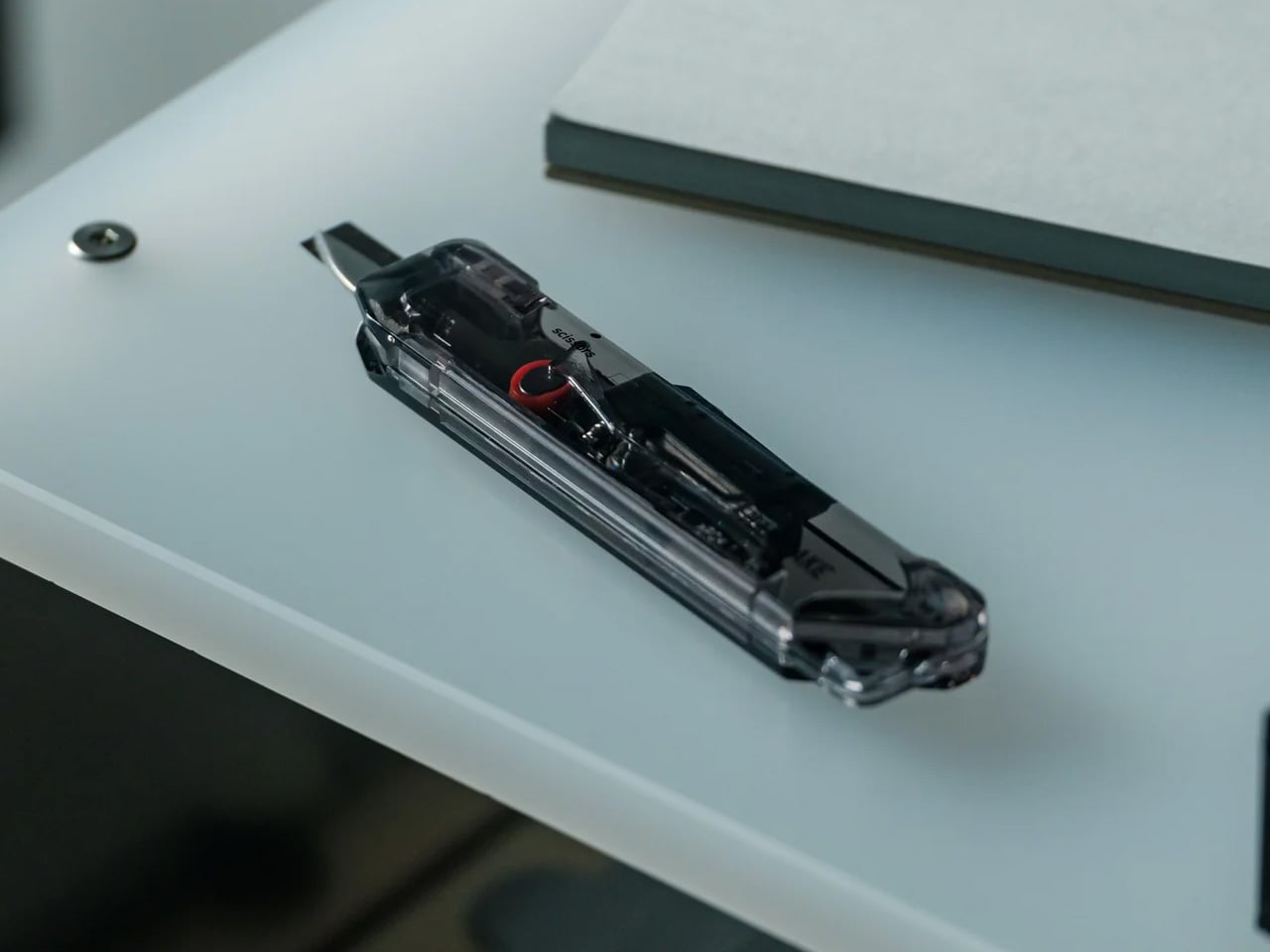
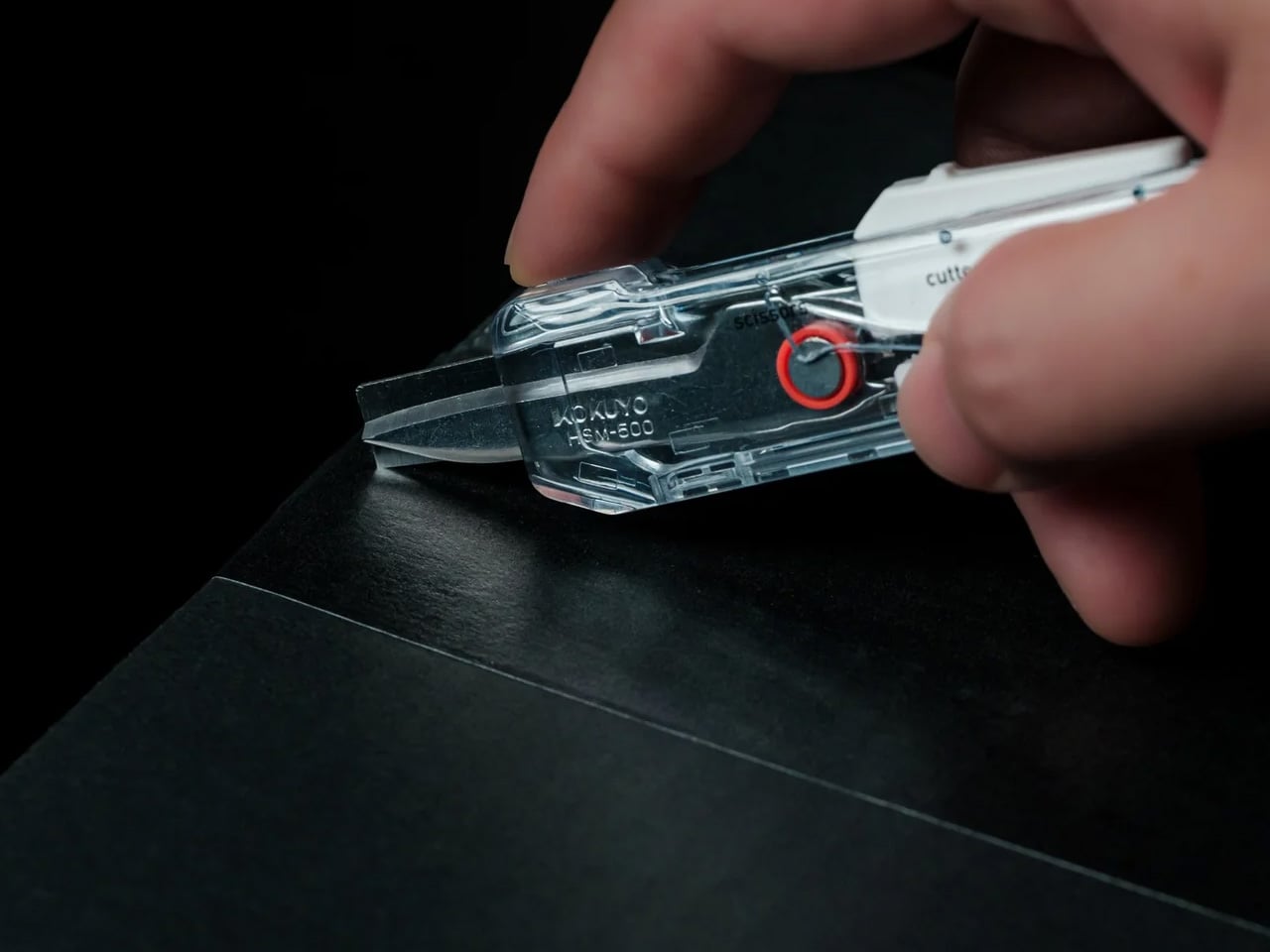
Every back-to-work loadout eventually faces the same moment: a delivery arrives, you reach for a box cutter, realize you also need scissors to deal with the tag inside, and end up setting the box down to find a second tool. The ClearSlide was designed specifically to end that exchange. A smooth sliding thumb mechanism switches between lock, cutter, and scissors in a single hand motion, then cuts with the same thumb – without ever putting the box down. It is a two-tool problem resolved by one object small enough to live on a desk or disappear into a pocket.
The 0.12-inch blade extension is deliberate rather than conservative. It slices through packaging tape cleanly while keeping enough distance from the contents that you are not second-guessing every cut. But the detail that earns it Editor’s Choice is the transparent body. The red slider and internal mechanism are fully visible through the shell as you cycle through positions, each one locking with a crisp click before releasing with a clean spring action. Instead of hiding the engineering, the ClearSlide makes watching it work part of using it – a small thing that changes the object from a utility purchase into something you actually want to keep on your desk. At $30, it is also the most straightforward decision on this entire list.
The single-hand sliding mechanism switches between box cutter and scissors without setting the package down – the exact problem it promises to solve, solved completely
The transparent body exposes every shift of the internal mechanism, turning a functional action into something worth noticing
What we dislike
The 0.12-inch blade is optimized for tape and packaging, not heavier cutting tasks that need more blade depth
Only a few units currently available, so if the ClearSlide catches your attention, the window to order without waiting is short
The Best Carry Is the One You Stop Thinking About
The best September loadout is not a longer list. It is five objects that between them cover a light, a wallet, keys, a clip, and a ratchet – each doing its job well enough that nothing else feels necessary – plus one desk tool that quietly removes a daily frustration you have been tolerating since the last time boxes started arriving. Nothing is left over. Nothing is missing. The edit is worth making now.
What changes when you get this right is not just the weight, though the weight does drop. What changes is the feeling of moving through the day without friction from the objects that are supposed to be helping you. The Baton 4 charges and illuminates from a single case. The Fantom X does not stretch. The Orbitkey does not jingle. The KK08 clips and cuts. The Titaner reaches where nothing else can. The ClearSlide handles the desk. That is the carry.

 Connexion