ChatGPT adds virtual clothing try-ons and product Favorites. Learn how the tools work, what the previews cannot confirm, and how to manage photo privacy.
OpenAI's MentalHealthBench tests responses to 1,215 synthetic mental health conversations, revealing gaps in how AI models seek context and gauge urgency.
Si vous utilisez ChatGPT gratuitement, il y a de bonnes chances que votre navigateur se balade avec un affreux cookie baptisé __obi, posé là par OpenAI et avec une durée de vie de un an. Un chercheur qui publie sous le pseudonyme Buchodi a analysé son fonctionnement et publié un rapport très intéressant ce week-end dans lequel on apprend que ce cookie permet à OpenAI de choper des datas sur les sites marchands que vous visitez.
Le principe est celui du pixel publicitaire, exactement comme celui que Meta et Google vous font installer à l'insu de votre plein gré depuis des années. Une boutique qui achète de la pub dans ChatGPT colle un bout de code d'OpenAI sur ses pages, et ce code les prévient quand vous achetez un truc. Sauf qu'ici, comme __obi est configuré en SameSite=None, votre navigateur l'attache tout seul à la requête qui charge le script, avant que la moindre ligne de code ne s'exécute.
Et cet identifiant n'est pas anonyme ! En effet, sur chatgpt.com, il est généré aléatoirement puis signé par le serveur avec un jeton qui contient aussi l'identifiant de votre compte. Les deux voyagent ainsi collés-serrés l'un à l'autre, ce qui permet donc de vous identifier très précisément. Buchodi explique sur son site qu'il n'a cependant pas observé OpenAI faire le rapprochement côté serveur, mais que ces derniers ont tout ce qu'il faut pour le faire. Sur son mobile, un même __obi est utilisé depuis 12 boutiques, dont Wayfair, HelloFresh ou encore Coursera.
Et le plus rigolo dans tout ça, c'est qu'OpenAI documente absolument tout publiquement sur ce pixel. On lit par exemple dans la doc que le SDK considère que vous y avez consenti par défaut, et que l'annonceur doit écrire une ligne de code explicite pour dire le contraire. On y lit aussi ce que le pixel récupère tout seul depuis la page du marchand : il détecte ainsi votre email, votre téléphone et votre nom, les hash en SHA-256 dans le navigateur, et envoie aussi votre ville et votre code postal en clair. Woohoo \o/ !
Maintenant, le truc qui va faire bondir la secte des adorateurs du RGPD c'est que la politique de cookies d'OpenAI, classe __obi dans la catégorie des "Cookies analytiques". Hé oui, ce sont ces fameux cookies qui, je cite "les aident à comprendre comment leurs Services fonctionnent et sont utilisés". C'est même la seule entrée de cette section
dans leurs cookie policy
, alors que la catégorie marketing juste en dessous nous aligne du LinkedIn, du Google, du Reddit, du Meta, du Bing et du TikTok. Voilà, donc si vous avez accepté les statistiques en refusant le marketing, bah vous l'avez quand même. "Chè" comme dirait Sam Altman !
Buchodi a donc posé la question à OpenAI et "bizarrement", le support a accusé réception mais n'a jamais répondu...
Alors est-ce que vous êtes concerné par cette saloperie ?
Eh bien ça dépend de votre navigateur. Safari, le bienheureux, bloque tous les cookies tiers par défaut depuis 2020, et comme tous les navigateurs iOS tournent sur ce moteur, aucun d'entre eux ne laisse passer le cookie d'OpenAI. Firefox, le vrai navigateur des champions, quant à lui, range les cookies dans un conteneur séparé par site depuis 2022, ce qui casse totalement le recoupement sans péter les sites. Et Chrome, le navigateur des gens qui ne tiennent pas à leur vie privée, a lui renoncé en avril 2025 à supprimer les cookies tiers, et c'est justement sur Chrome sous Android que ce mécanisme d'OpenAI a été observé.
Alors que faire ?
La bonne nouvelle, c'est que la parade la plus solide est sans doute déjà en place chez vous. EasyPrivacy, la liste antipistage activée par défaut dans
uBlock Origin
, contient déjà les règles ||bzr.openai.com^ et ||bzrcdn.openai.com^. Comme elles bloquent le domaine entier, elles coupent aussi la requête qui pose le cookie au départ, sur chatgpt.com. Et si vous filtrez avec un DNS grâce à un Pi-hole ou
NextDNS
, ajoutez ces deux domaines et vous couvrez toute la maison, téléphone sur Wifi compris.
Par contre, ne comptez pas sur Safari ou Firefox pour tout régler par défaut car ils s'occupent du cookie, mais pas du reste. En effet, la requête vers OpenAI part quand même, avec votre adresse IP, votre code postal en clair et votre email hashé si le marchand a activé la détection automatique. Et le pixel a son grand frère côté serveur, une API appelée depuis les serveurs du marchand, qu'aucun réglage de navigateur n'atteindra malheureusement.
Et ne vous dites pas que c'est une histoire uniquement américaine puisque depuis fin août, ChatGPT Ads couvre la France et 30 autres pays européens. Les pubs ne s'affichent que sur les comptes Free et Go (moi j'ai pas de cookies __obi avec mon compte payant) et le cookie se synchronise aussi quand vous êtes déconnecté.
Bref, allez jeter un œil à vos filtres. Et si vous voulez voir votre cookie __obi, il traîne dans les cookies de .openai.com.
Linux users no longer have to rely on a browser to get a native ChatGPT experience. OpenAI has officially brought its ChatGPT desktop app to Linux, making the application available in public preview for several major Linux distributions. The move gives Linux users a dedicated way to access ChatGPT and Codex while working with projects […]
OpenAI and Anthropic are pushing their assistants beyond chat. Here is how their latest agentic tools differ for files, automation, research, and team use.
One of the most useful features hidden inside the ChatGPT desktop app is also one that many users may have never tried: Appshots. The feature solves a simple problem. Instead of spending time explaining what you are looking at on your computer, you can simply send the current app window to ChatGPT and let it […]
OpenAI is bringing ChatGPT directly into Microsoft Word, giving users a new way to write, rewrite, proofread, and improve documents without having to leave the application. The new ChatGPT add-in, which began rolling out around September 17, adds the AI assistant to Word through a persistent sidebar. Instead of opening ChatGPT in a separate browser […]
If AI-generated writing has ever felt a little too polished—or simply not like you—ChatGPT Work is getting a feature that could change that. OpenAI is rolling out a personalization capability that allows ChatGPT Work to learn how you write by using information from connected apps and files. Instead of relying entirely on generic instructions such […]
The big AI era isn't going as some might've hoped.
OpenAI and other big companies are losing billions chasing artificial intelligence technology, and it's only clever accounting and circular investments keeping the entire industry afloat. OpenAI specifically is in hot water, with spending commitments through to 2030 coming scarily close to $1 trillion dollars, and is operating purely on the basis of handouts from the likes of SoftBank, NVIDIA, Oracle, and Microsoft. OpenAI is looking to spend $50 billion in compute alone in 2026 on roughly $25~ billion in revenue, revenue which is also made up at least in part with IOUs.
Despite the scary numbers, OpenAI is trucking along on faith and fumes alone, as companies' belief in the tech keeps the firm alive, for now.
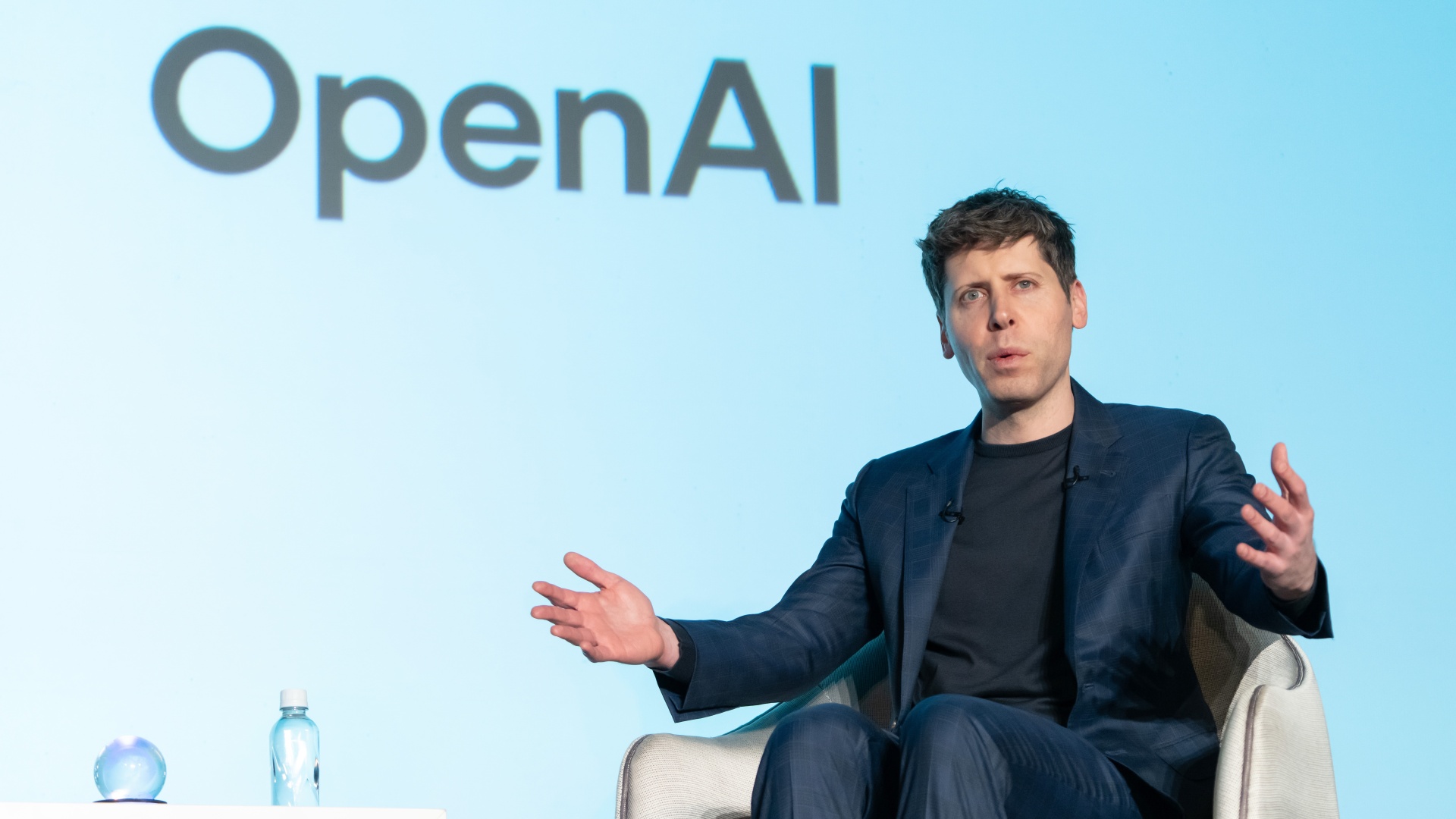
Yet, even Sam Altman is having doubts about the impact of large language models. In a new podcast, Altman lamented "economic inertia" for the lack of adoption, and also called out the AI industry for making the tech seem "scary."
"A lot of the people building AI have been off saying there's a 25% chance we're going to destroy the world ..."
Altman effectively blamed those pesky humans for not adopting ChatGPT and other AI products, lamenting that "people keep using their tools in the same way" they had previously been using them.
"I thought when we got to [ChatGPT]-4, which was back in 2023, I thought very quickly after that there'd be much more disruption, with the software business up for grabs right away. I was wrong about a few things, one of them, in terms of the speed ... the economy just has so much inertia. People keep doing the same things they're doing, they keep buying from the same company, they keep wanting to use their tools in the same way ..."
Altman implied that the "slow" pace of change would make the "transition" to AI "smoother." Elsewhere in the podcast, Sam Altman remarked that AI leaders had "not done a very good job" explaining AI tech, referring to the broad backlash to the technology.
"I also think a lot of the people building AI have been off saying there's a 25% chance we're going to destroy the world ... and yeah, we're going to race ahead and do it because otherwise those bad guys will do it first. Or it's like, 'man, this thing is going to be really terrible, and 50% of the jobs are going to go away in the next year, and we hope you are all okay,' but it seems really scary.
We have not, as a field, done a very good job of explaining to people what the benefits are and how the downsides can be mitigated. We certainly have not done a good job ... even if people have had answers like, 'well, there's going to be universal basic income, or work will be optional', or whatever. There's been very little discussion from people about how and why it's important that people have more power and freedom in the world, not less."
I think the key issue with this AI tech is that most people just don't find it very useful. I work in an industry that, at least on paper, should benefit from some kind of automagical writing tool. The problem is that it loses so much nuance and accuracy that, even if I wanted to use it for work, I literally can't.
I think a lot of these very technical, mathematically-inclined dudebros pushing this format have little knowledge or understanding about how and where this technology should be applied. Spotify, YouTube, Instagram, gaming platforms, and other services are actively trying to filter out AI content, as it is repeatedly proven to decrease engagement — users actively hate it. Companies that are using tokens to try to boost productivity are finding that they're actually just boosting costs, and that they're simply finding a new bottleneck in the finite amount of addressable customers.
LLMs undoubtedly have uses, but when 90% of the compute is being spent on utterly unproductive use cases, the economics simply seem primed to implode. If you're spending tokens for the sake of spending tokens, and it doesn't lead to any discernible increase in sales — what is the point? You could use AI to make hundreds of slop video games, but people already have more than enough to play built by an ironically more affordable human workforce.
In the future, I think we'll find AI probably ends up as a tool of governments in things like law enforcement and medical fields. Specific industries will benefit from tools that can parse and summarize large, complex data sets, albeit with the unfortunate knowledge of LLMs' penchant for hallucinations and outright lies. Just yesterday I asked Copilot to find some links to some old Windows Central articles I did. It just straight up lied and gave me some completely made-up links instead. Extrapolate these simple mistakes to medical fields or military applications, where lives are literally at stake ... is it worth the risk?
Perhaps the issue is that AI's inaccuracy renders it only viable in low-stakes businesses ... and those low-stakes businesses simply won't see a real return over doing things the "old way," which Altman describes as economic "inertia."
Perhaps it's not inertia. Perhaps the AI business model is just not the disruptor it was cracked up to be.
Join us on Reddit at r/WindowsCentral to share your insights and discuss our latest news, reviews, and more.

 Connexion