A free tool with a bit of a strange name will let you know what's using the GPU on your PC. Microsoft engineer Scott Hanselman created gputaskman to show more details than Windows 11's built-in tools.
Task Manager can show per-process GPU usage and memory consumption, but it provides limited insight into exactly how applications are using GPU resources. You can see more information in the Details tab, but that still fails to paint a full picture.
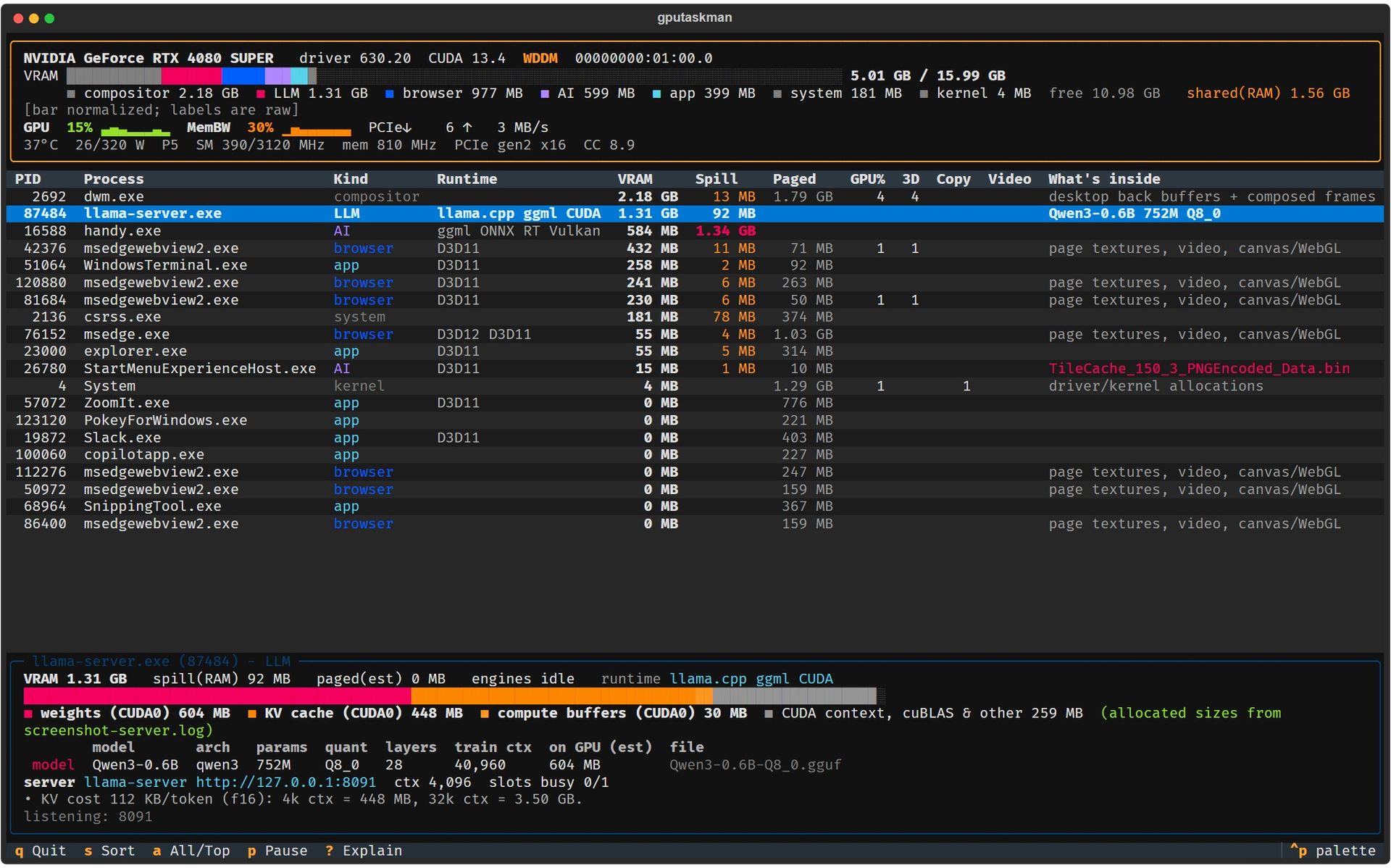
The gputaskman app shows information for individual processes, such as GPU usage and VRAM consumption. Rather than simply showing that GPU memory is in use, gputaskman can help pinpoint whether that memory is being consumed by an AI model, a web browser, desktop rendering, or another process.
It can also identify local AI workloads and display details about running LLMs, including information about model memory usage and related GPU resources. The app displays GPU temperature as well.
Scott Hanselman's gputaskman utility shows per-process GPU activity, VRAM usage, and local AI model information. (Image credit: Scott Hanselman)
Hanselman explained the app's purpose on the gputaskman GitHub page:
"Task Manager says '15 GB used.' This tries to answer: by what? Model weights? KV cache? Your browser? The desktop compositor? And why is so much GPU memory in system RAM?"
The app is still in the early stages of development. Hanselman has invited people on X to create pull requests. Right now, gputaskman supports Windows PCs with AMD or NVIDIA GPUs. Hanselman said in a follow-up post that the goal is to work on the Surface Laptop Ultra and other RTX Spark and Windows on Arm devices.
Microsoft's recently announced Hybrid intelligence initiative combines on-device AI processing with cloud-based AI services. As more AI tasks run locally on PCs, users may want better visibility into how those workloads affect GPU memory and performance. Tools such as gputaskman provide a detailed look at which processes, models, and applications are consuming GPU resources.
Join us on Reddit at r/WindowsCentral to share your insights and discuss our latest news, reviews, and more.
Track Android 17 updates for Samsung, Pixel, OnePlus, Nothing, and Motorola phones. Check eligibility, rollout status, and what to do before upgrading.
OnePlus rolls out Android 17-based ColorOS 17 early to four phones, including the OnePlus 13 and 13R. See what's new, supported devices, and US availability.
With AI continuing to jack up the prices of crucial motherboards, RAM, CPUs, and other components for PC gamers, many are left hoping Black Friday's price cuts can offer them a much-needed reprieve.
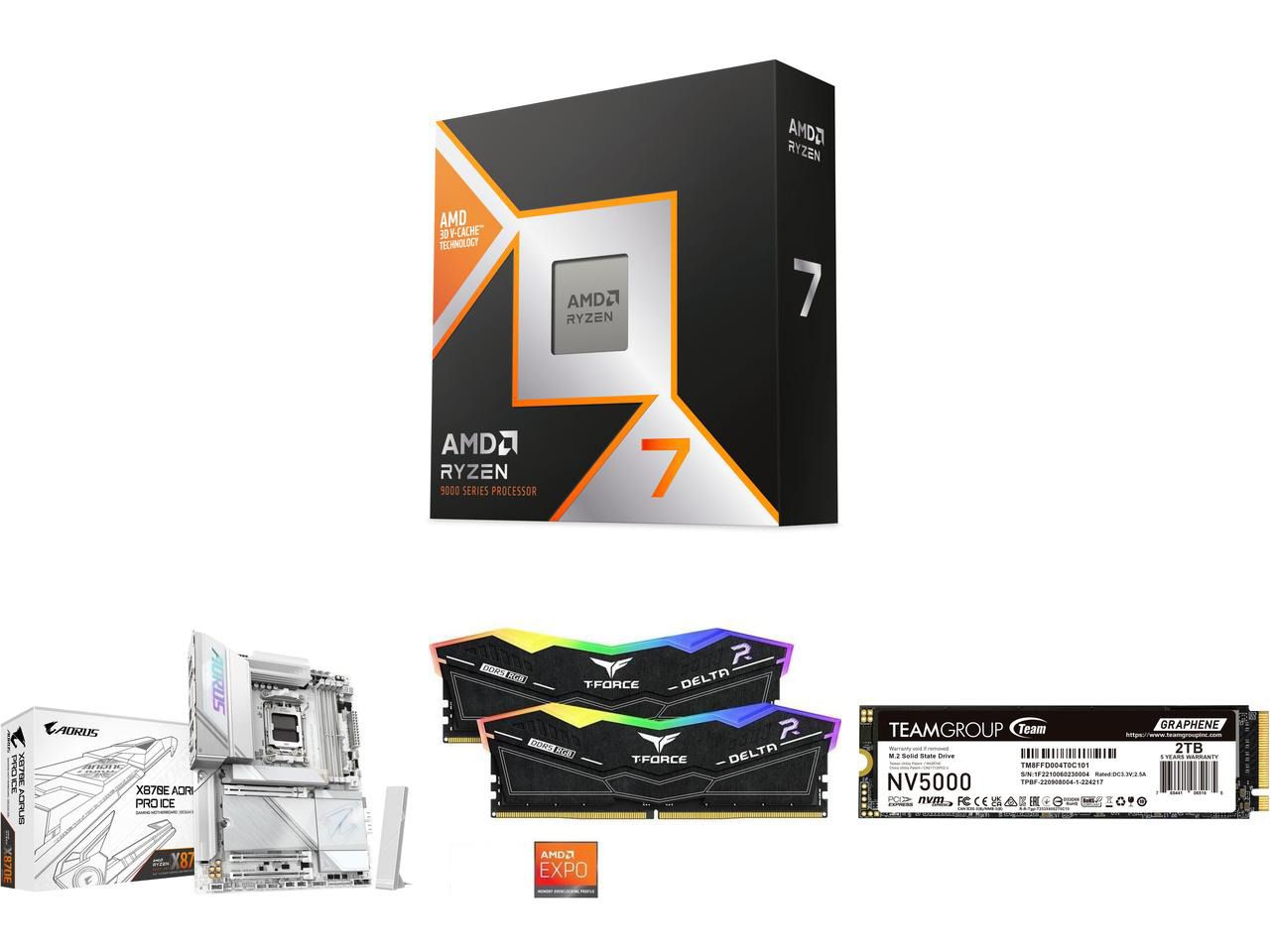
However, some retailers aren't waiting for that. Newegg is offering PC users massive discounts on PC bundles that feature high-end AMD processors, DDR5 RAM, and compatible motherboards to help satisfy your high-end gaming needs at lower prices.
"If you're running older AM4 or LGA1200 hardware, the 9600X offers some of the best performance-per-watt value on a budget, especially if your favorite software suite and games are better optimized for single-core processing." — Ben Wilson, Senior Editor
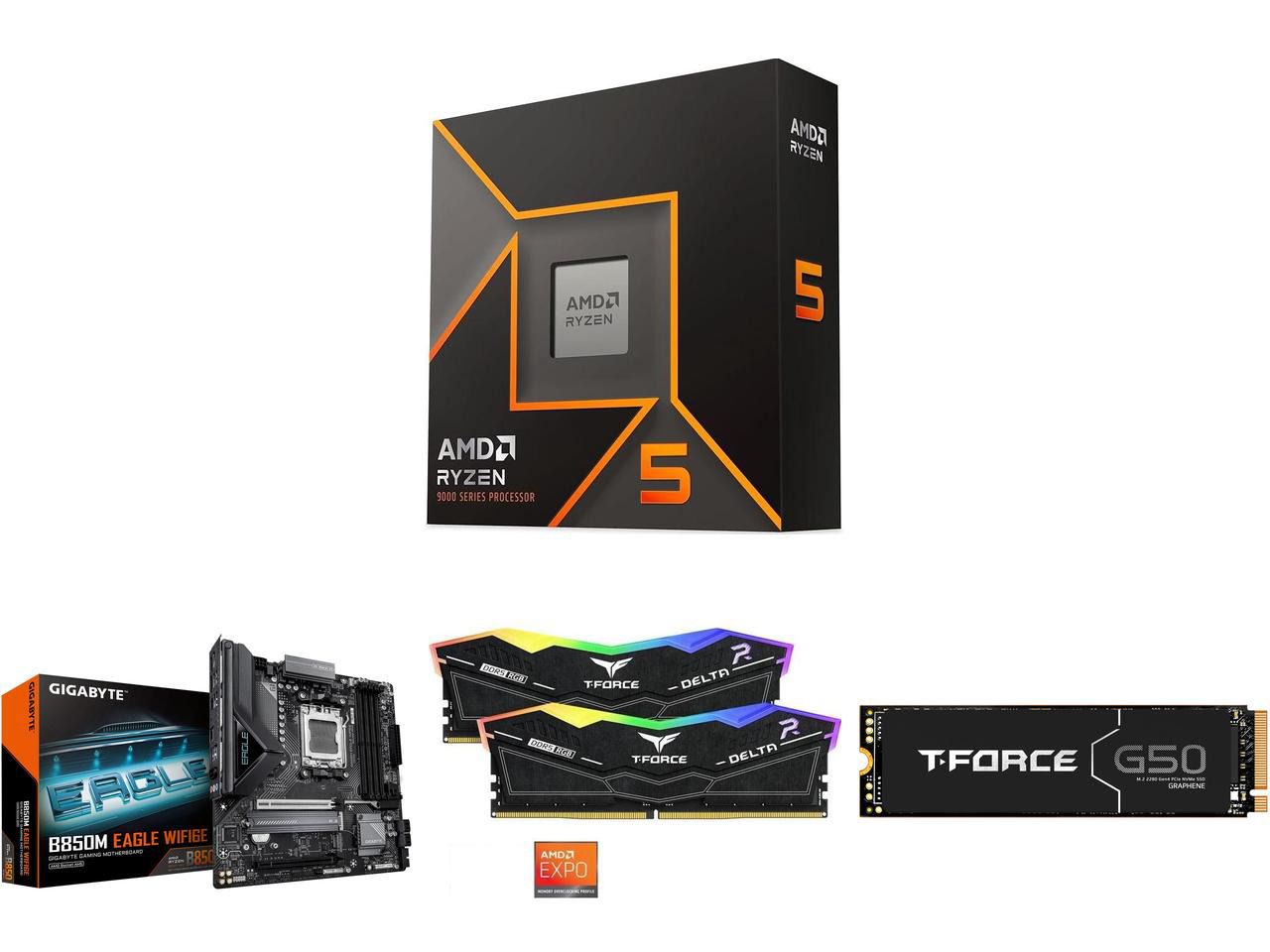
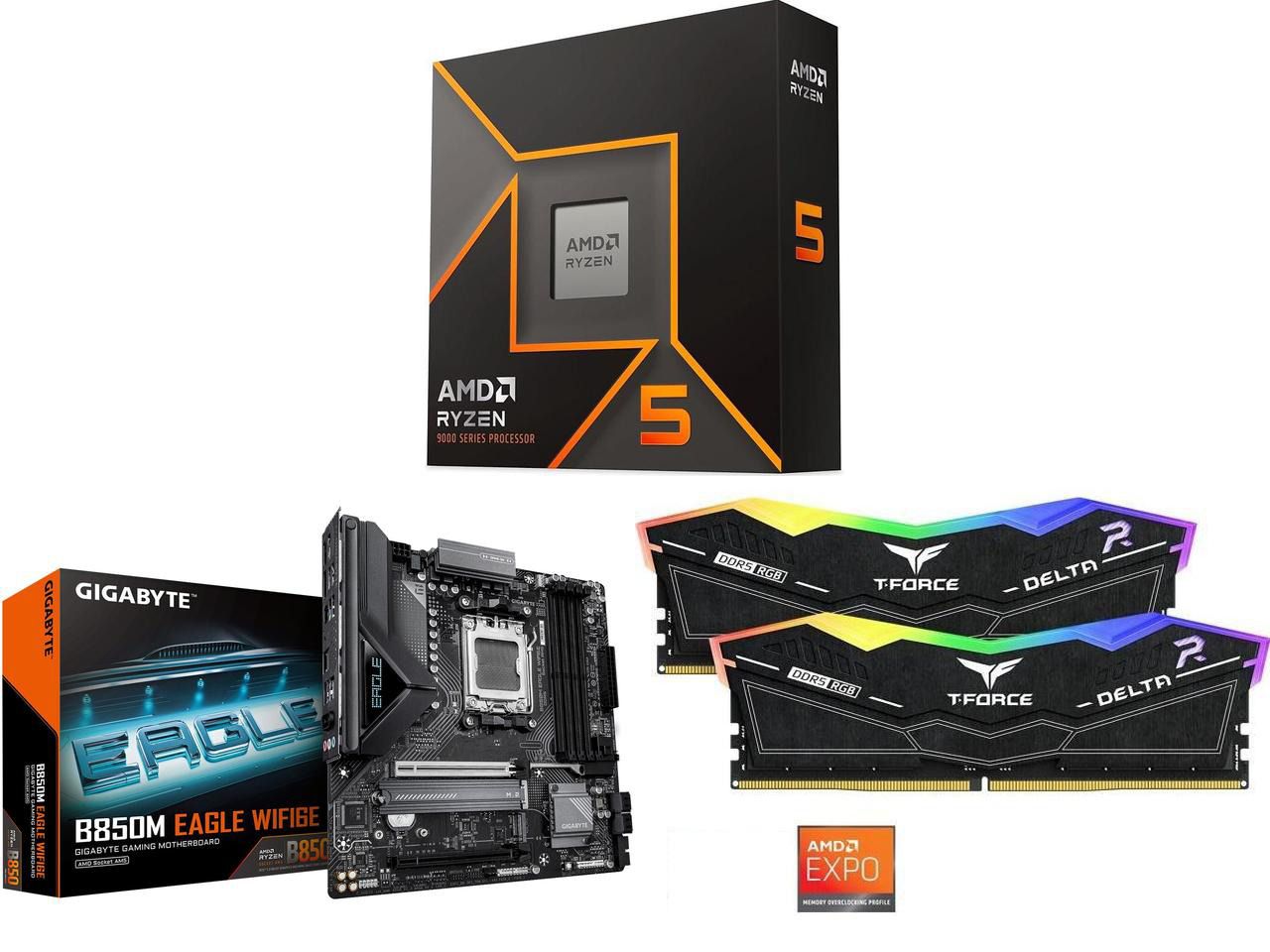
This bundle with the entry-level, gaming-focused Ryzen 5 9600X CPU includes 32GB of DDR5 6000 RAM, and a compatible GIGABYTE B850M EAGLE WIFI6E M-ATX Motherboard to fit them all in.View Deal
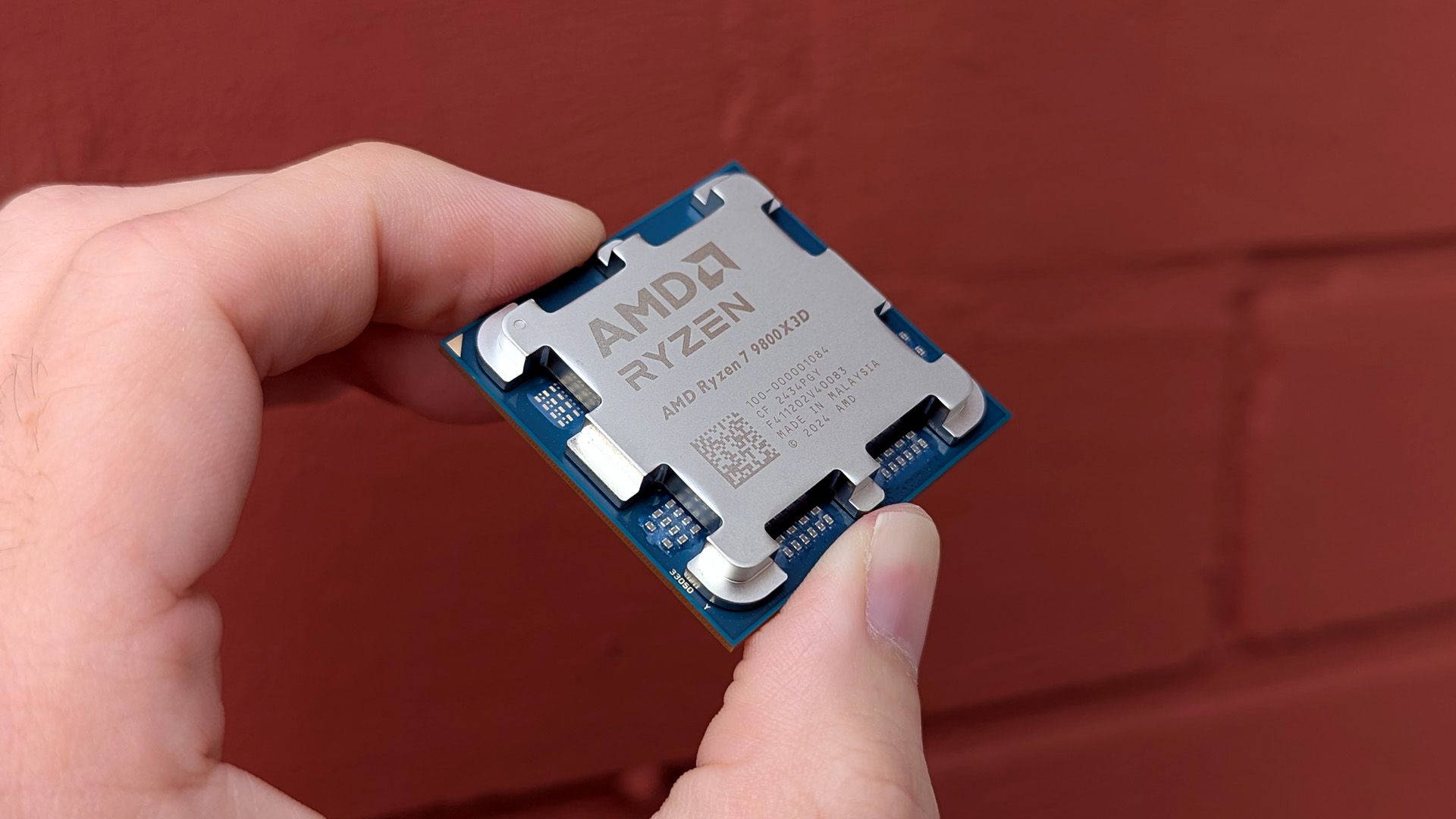
"Make no mistake: the Ryzen 7 9800X3D is the best gaming CPU, politely dethroning its predecessor as the new king of the hill as a cache-heavy monster."— Ben Wilson, Senior Editor
These discount deals will run until October 31, 2026, or while stocks last.
Why are these bundles good for gaming?
They're great for gaming, as AMD Ryzen CPUs paired with 32GB DDR5 RAM boost most modern AAA titles while keeping performance stable. Plus, these bundles include future-proof AM5 motherboards, all while saving you money, as many of these components are sold for higher prices when bought separately.
Should I wait until Black Friday for a better deal?
It depends on your wants and needs. Are you looking to upgrade your PC gaming rig to play next-gen AAA PC games at higher performance rates, and you don't want to wait until Black Friday for a better deal? Then use Newegg's discounted bundles.
If you can hold out for bigger discounts and aren't in any hurry to play any intense PC games at the moment, waiting for Black Friday's discounts on November 27, 2026, is also a valid option.
Join us on Reddit at r/WindowsCentral to share your insights and discuss our latest news, reviews, and more.
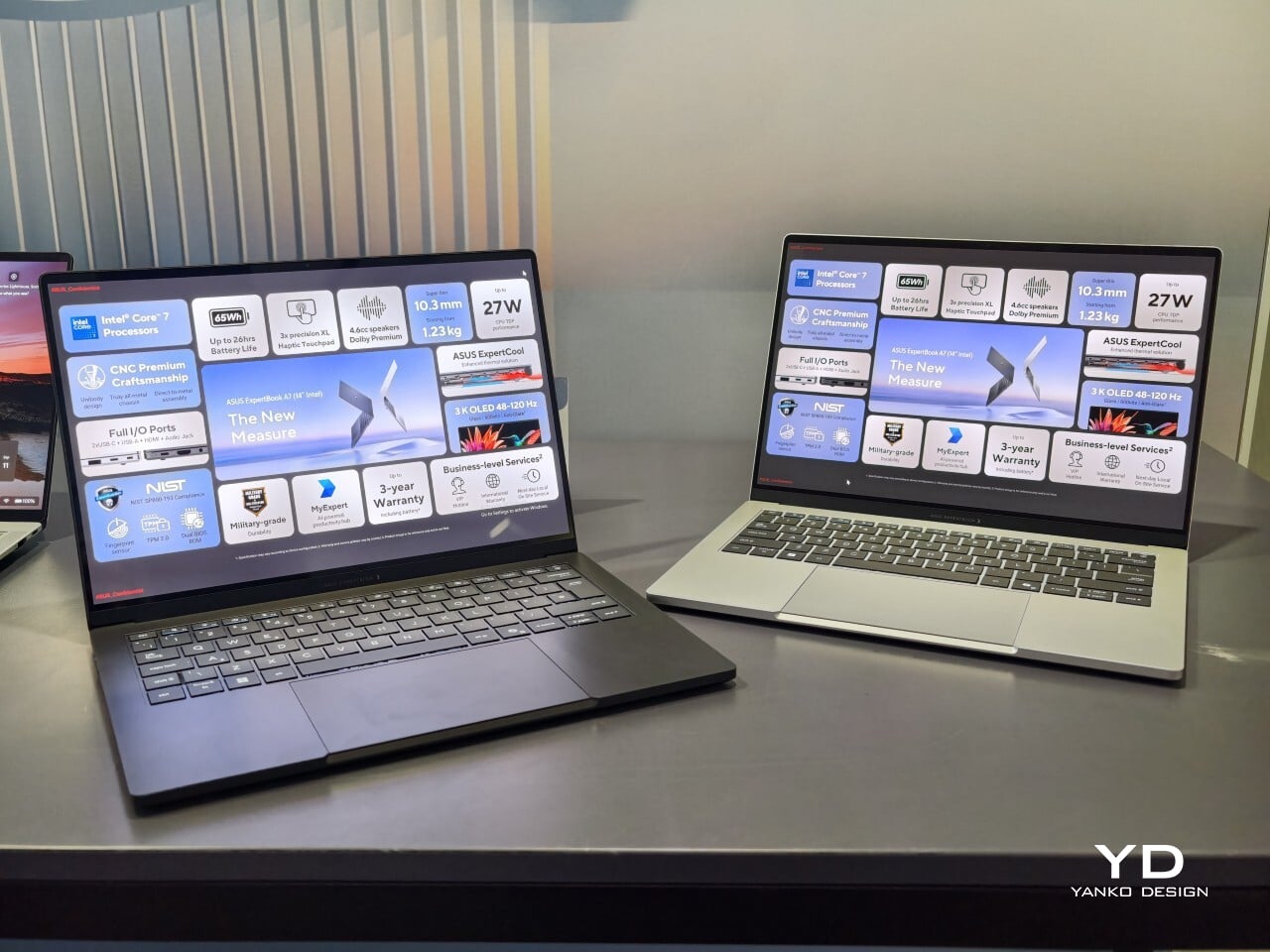
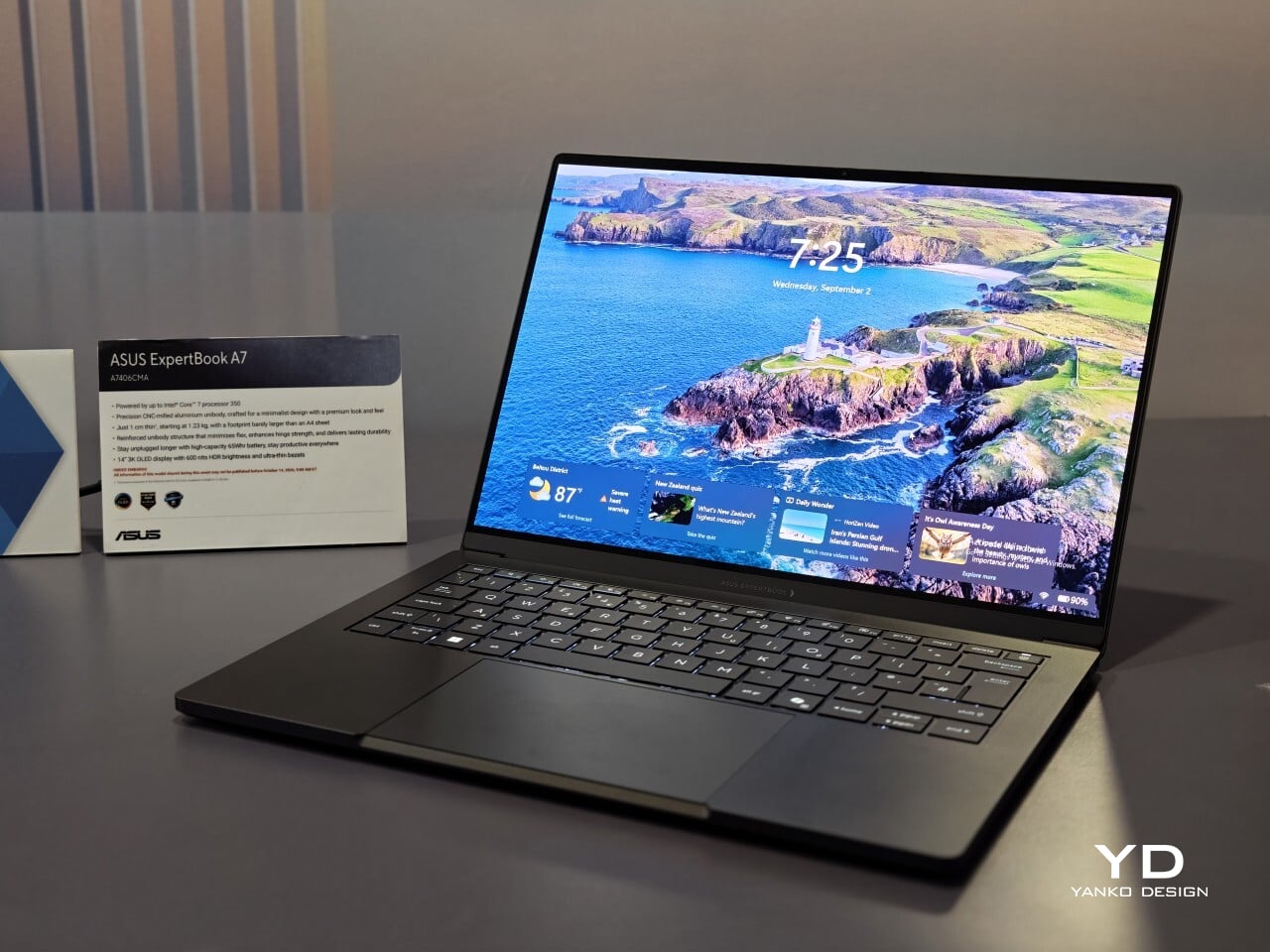
When I first saw the ASUS ExpertBook A7, I had to double-check that it was really meant for business. This laptop immediately cuts a different silhouette compared to the usual gray rectangles that fill airport lounges and open offices. Instead of relying on harsh edges or a boxy build, the A7 projects an air of modern sophistication that feels more at home next to a designer handbag than lost in a sea of generic briefcases. It is refreshing to see a company put such clear effort into making work hardware truly attractive.
With this launch, ASUS introduces an all-new A series to its commercial lineup. Pricing in the US starts at $1,299, which places it among premium options for professionals who care about their tools’ aesthetics as much as their productivity. The combination of an aluminum body with a vivid OLED screen ensures it stands out from the crowd while still promising plenty of business features beneath the surface.
Designer: ASUS
A Work Companion Designed with Intention
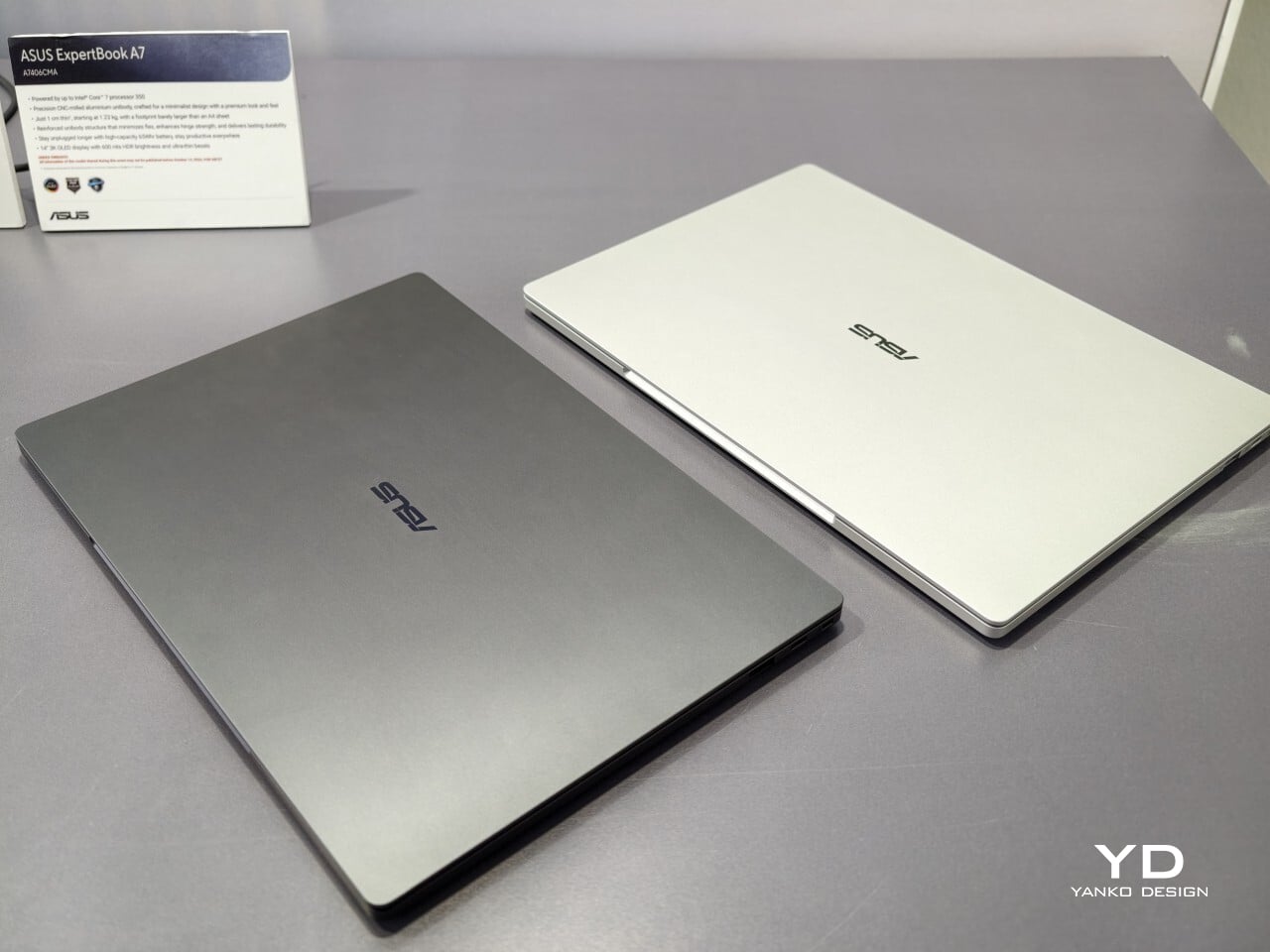
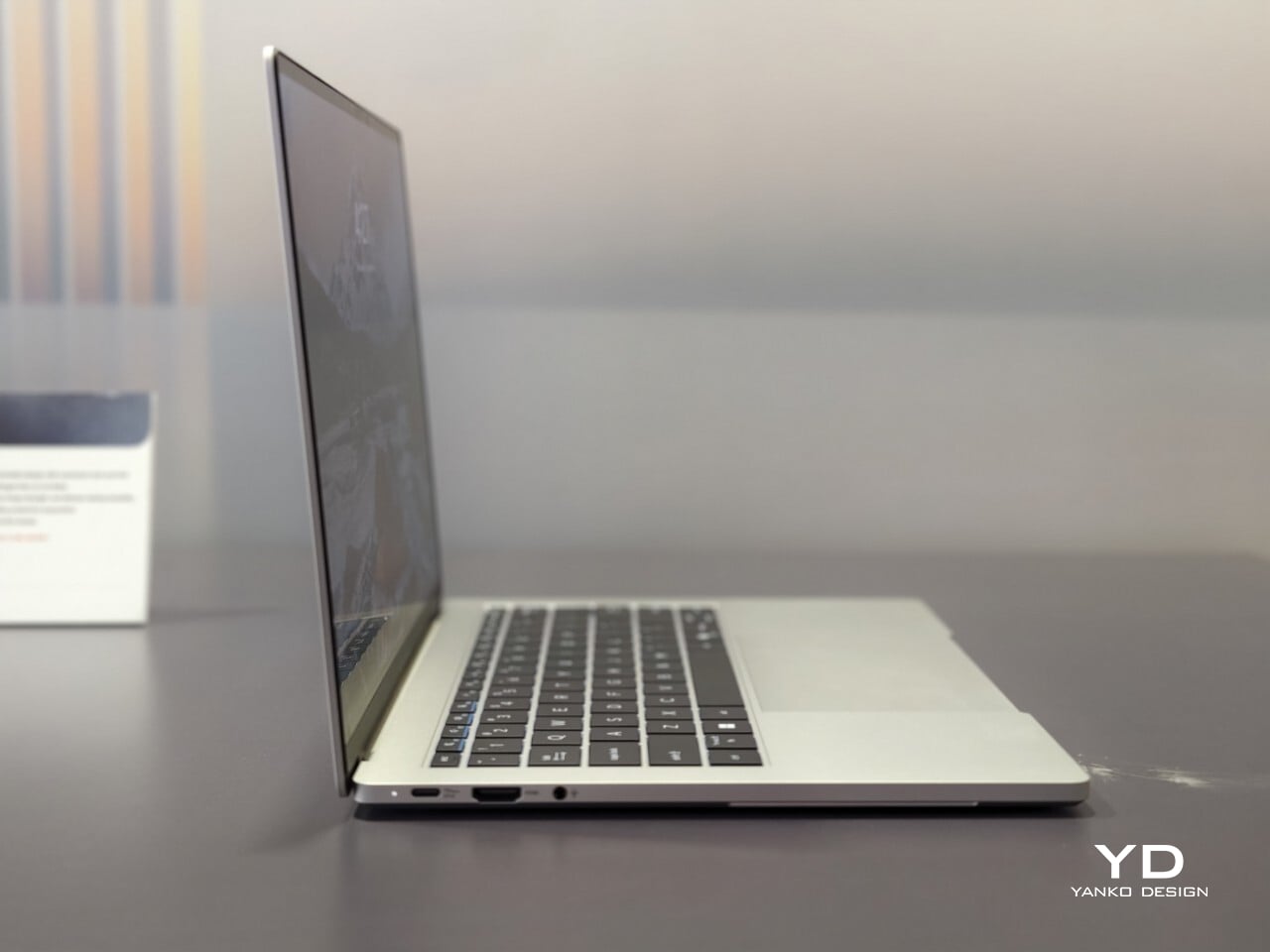
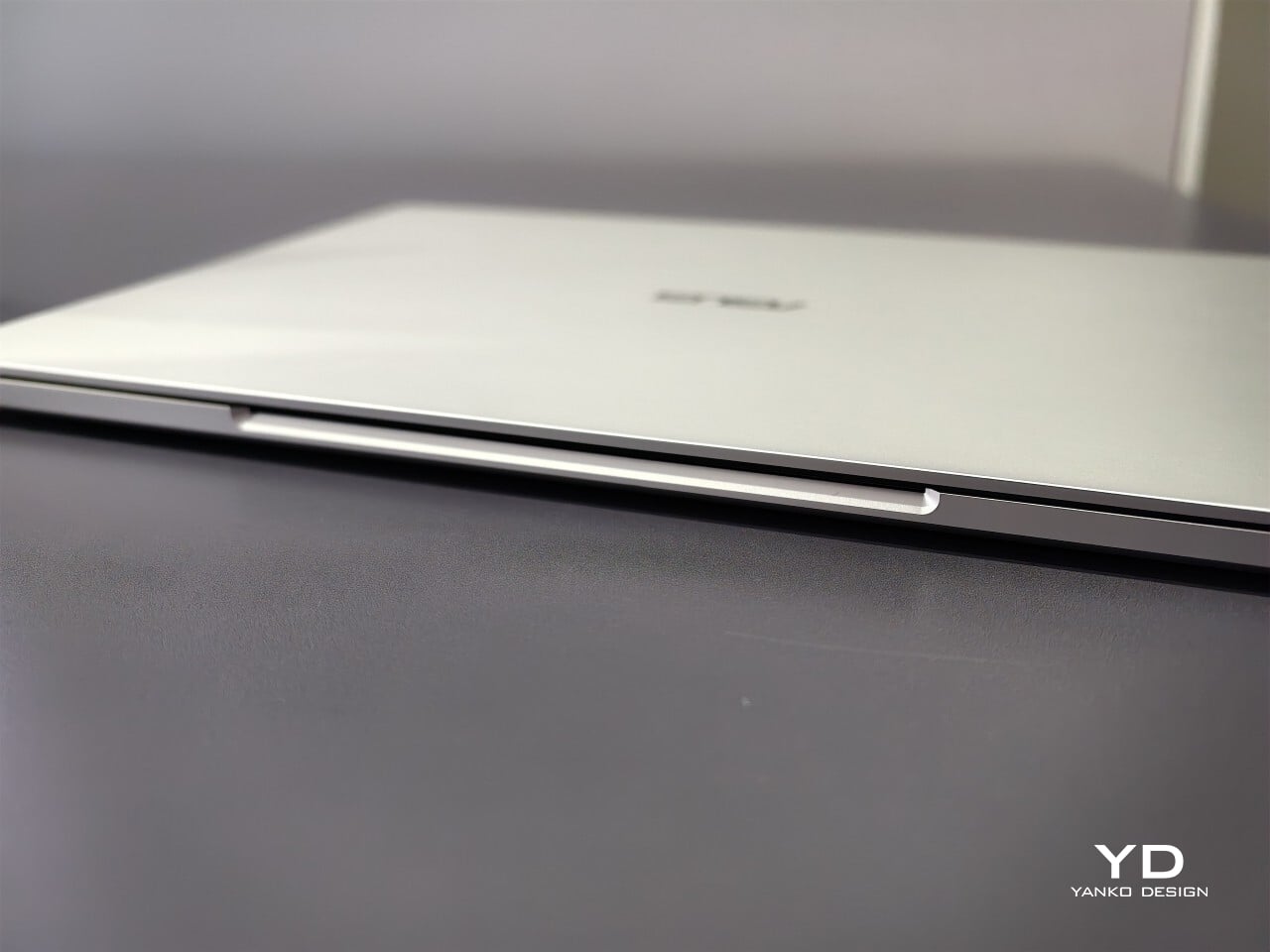
From the first touch, you notice how carefully built the ExpertBook A7 feels. ASUS says this device is milled from a single block of 6000 series aluminum alloy, which is better known for its use in airplanes than office cubicles. This construction helps reduce visible seams and eliminates weak points that could otherwise catch on your bag or wear down over time. The result is a chassis that feels reassuringly solid in everyday use.
Sustainability gets its due as well. Nearly all of the aluminum used around the keys and top cover comes from recycled sources, while the bottom case uses 70% recycled material, too. That focus on sustainability does not just make environmental sense; it gives the laptop a cool touch and premium finish that plastic simply cannot match. Color choices remain subtle yet attractive. You can pick either Lunar Silver or Eclipse Black, both of which offer understated style wherever you work or play.
Measuring just under half an inch thick and weighing less than three pounds, this laptop is easy to slip into any bag without adding bulk or strain. Carrying it around feels closer to bringing along a glossy magazine than hauling old-school work equipment. For people who are always on the move, this lightweight build is more than just convenient.
Display That Draws You In
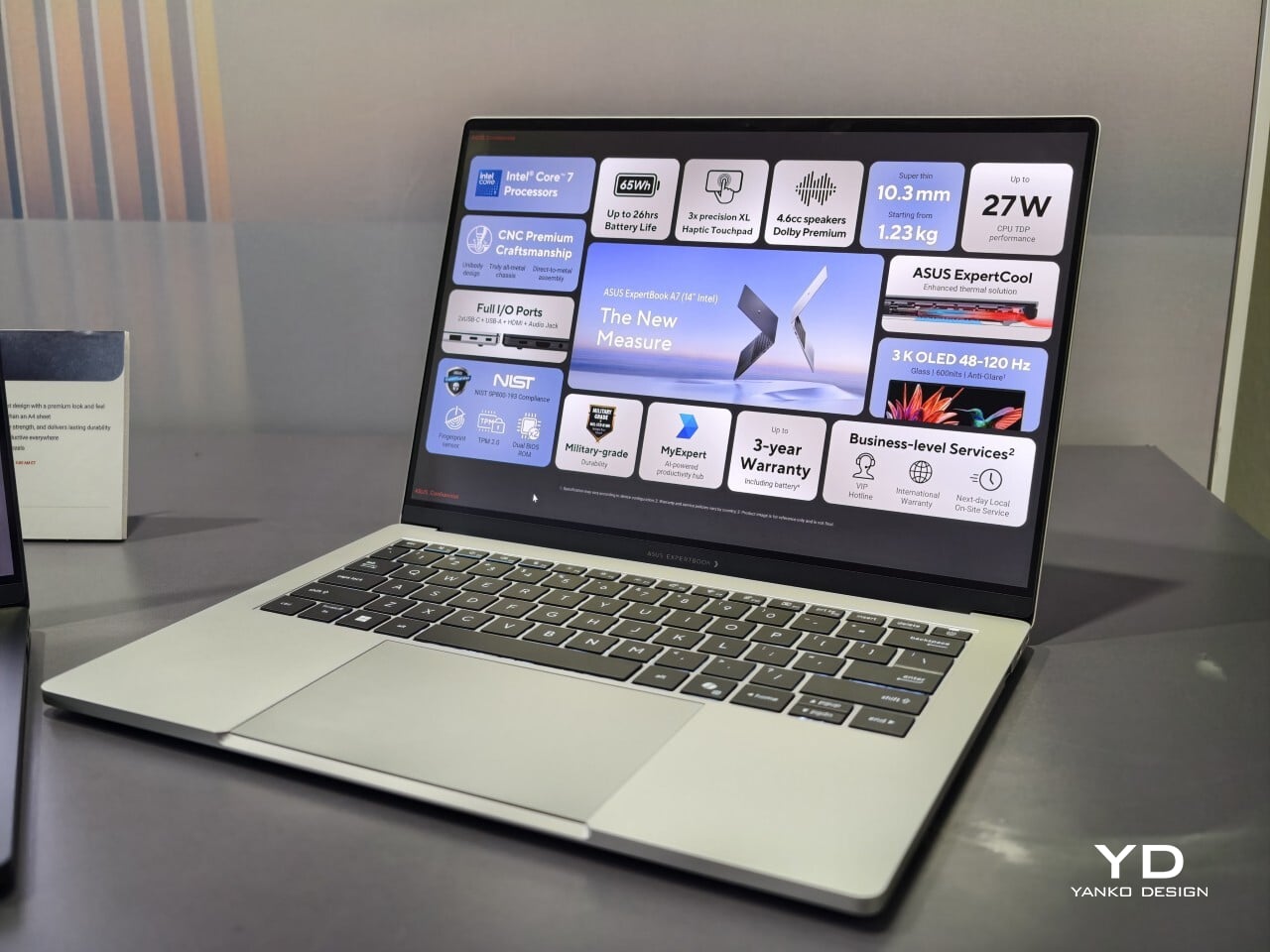
Flip open the lid, and you will immediately notice why ASUS is proud of its screen technology. The 14- inch panel offers 3K resolution at 2880×1800 pixels, using OLED technology for richer colors and true black levels. With a refresh rate of 120Hz, everything from scrolling through presentations to watching videos appears fluid and sharp.
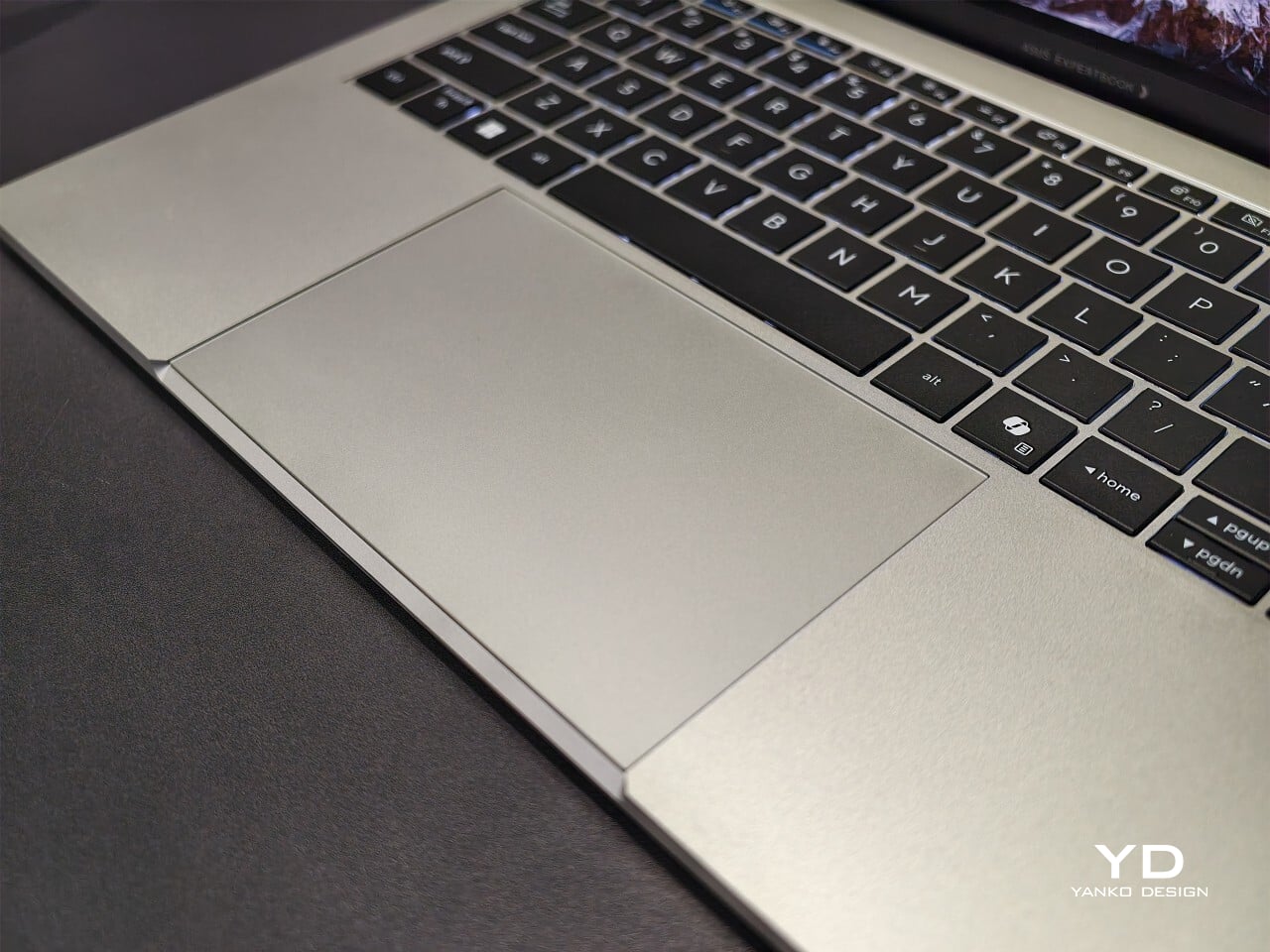
For those who spend time editing photos or creating graphics, full coverage of the DCI-P3 color space means you get accurate color reproduction for creative work as well as daily tasks. Some versions offer an anti-glare coating to help keep reflections at bay if you often work near windows or bright lights. There is no touch input on this model. Instead, all interaction happens through a backlit keyboard and a glass haptic touchpad that gives gentle feedback with every click or gesture.
Thoughtful Features for Real Workdays
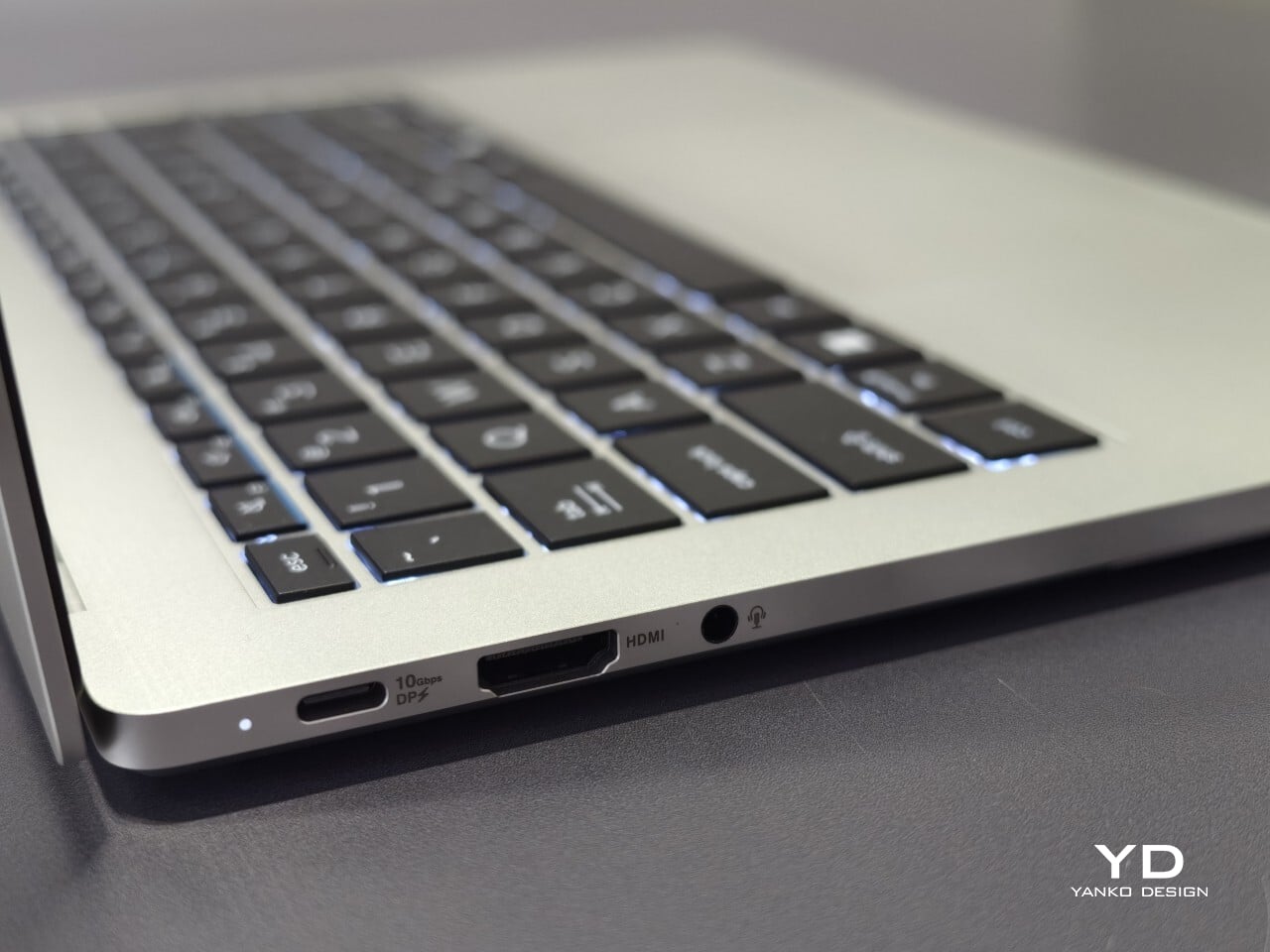
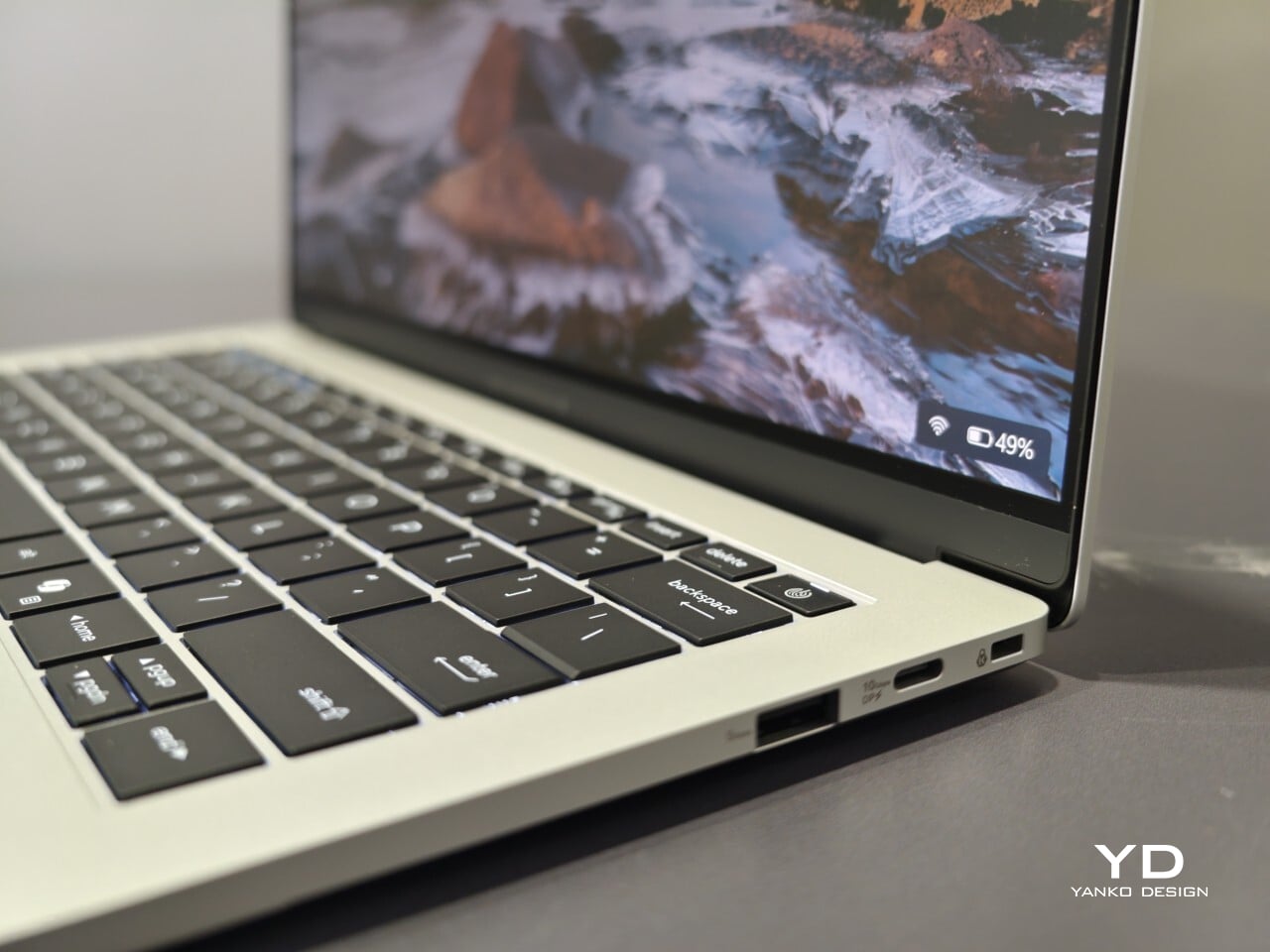
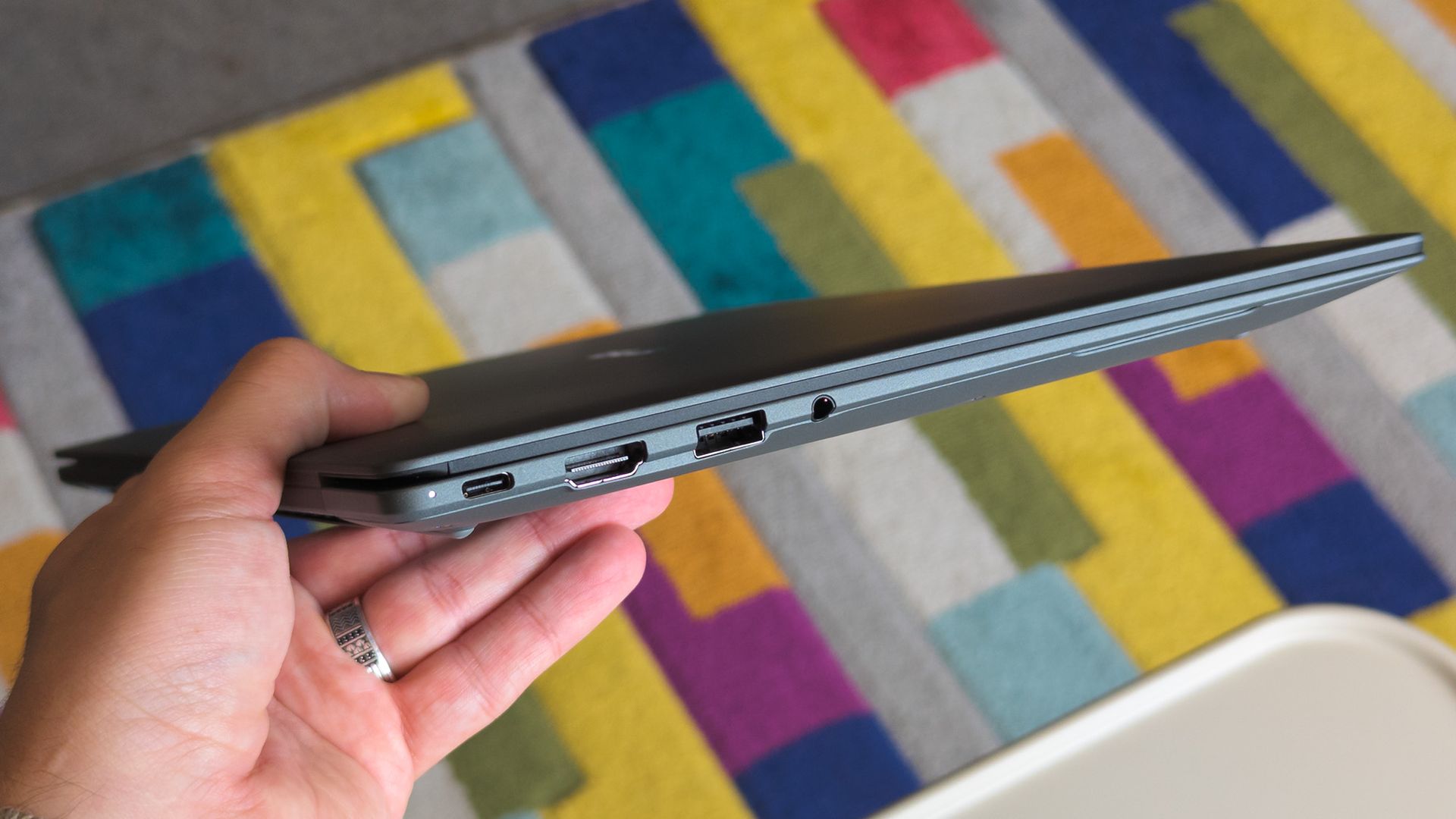
The port selection keeps you ready for any meeting or workspace setup without forcing extra adapters into your bag. Two USB-C connectors handle charging and video output while USB-A supports older accessories you might still rely on day to day. HDMI makes connecting to projectors or external monitors simple, and there is also a headphone jack when wireless audio just will not do.
ASUS includes small touches that make daily use easier than expected. For example, you can open the lid with just one hand, thanks to the carefully tuned hinge resistance. This proves surprisingly handy when juggling coffee cups or paperwork during a busy day. In my own hands-on time with the device, I found screen wobble kept nicely under control even while typing quickly.
Performance starts strong out of the box with Intel Core 5 processors available up to Core 7 models depending on your configuration needs. 16GB of memory comes standard along with 512GB of solid-state storage, so multitasking rarely slows things down.
Battery Life and Security That Keep Up
ASUS advertises up to 26 hours of battery life based on controlled video playback tests using their 65 WHr battery pack. In real-world situations filled with conference calls, dozens of browser tabs, and relentless emails, expect something less, but fast charging back up to 50% capacity in 30 minutes can help keep you unplugged longer when needed.
Security features include fingerprint sign-in support along with enterprise-level BIOS protection. Plus, regular updates are promised for five years after purchase. Buyers also receive three years of warranty coverage, which brings extra peace of mind when investing in premium hardware.
In September this year, Google announced its 'Googlebooks' as a premium laptop counterpart to its budget-conscious Chromebooks, rather than a replacement. It wouldn't have made much of a blip on my radar if the company hadn't paired with some of my favorite OEMs to build them.
Indeed, Google isn't building any first-party devices. Unlike Chromebook, these new Android-based offerings come only from OEMs like Acer, ASUS, Dell, HP, and Lenovo. 14-inch Windows laptops have quickly become my favorite, with ASUS' Zenbook in the lead, so the $1,299 ASUS Googlebook 14 is intriguing.
I think it's a great opportunity to steal consumer windows marketshare from MS, not enterprise.
With that in mind, could I ever seriously expect the general public to adopt another operating system with fewer features than Windows, less customization than Linux, and some pricing sensibilities of Mac? Offered a chance to test-drive a sample from ASUS, I couldn't resist. Here's how it went.
ASUS Googlebook 14: What I like
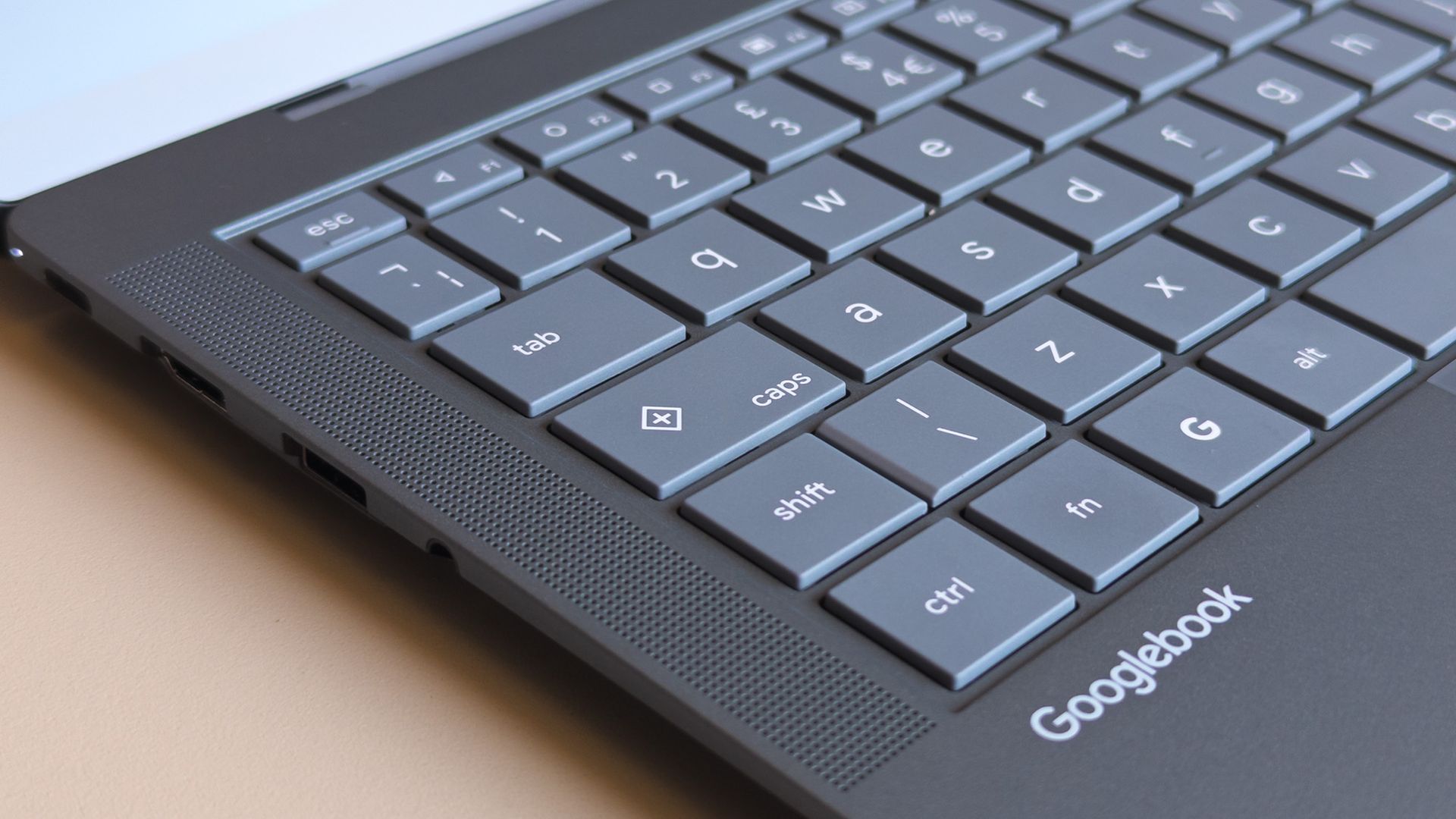
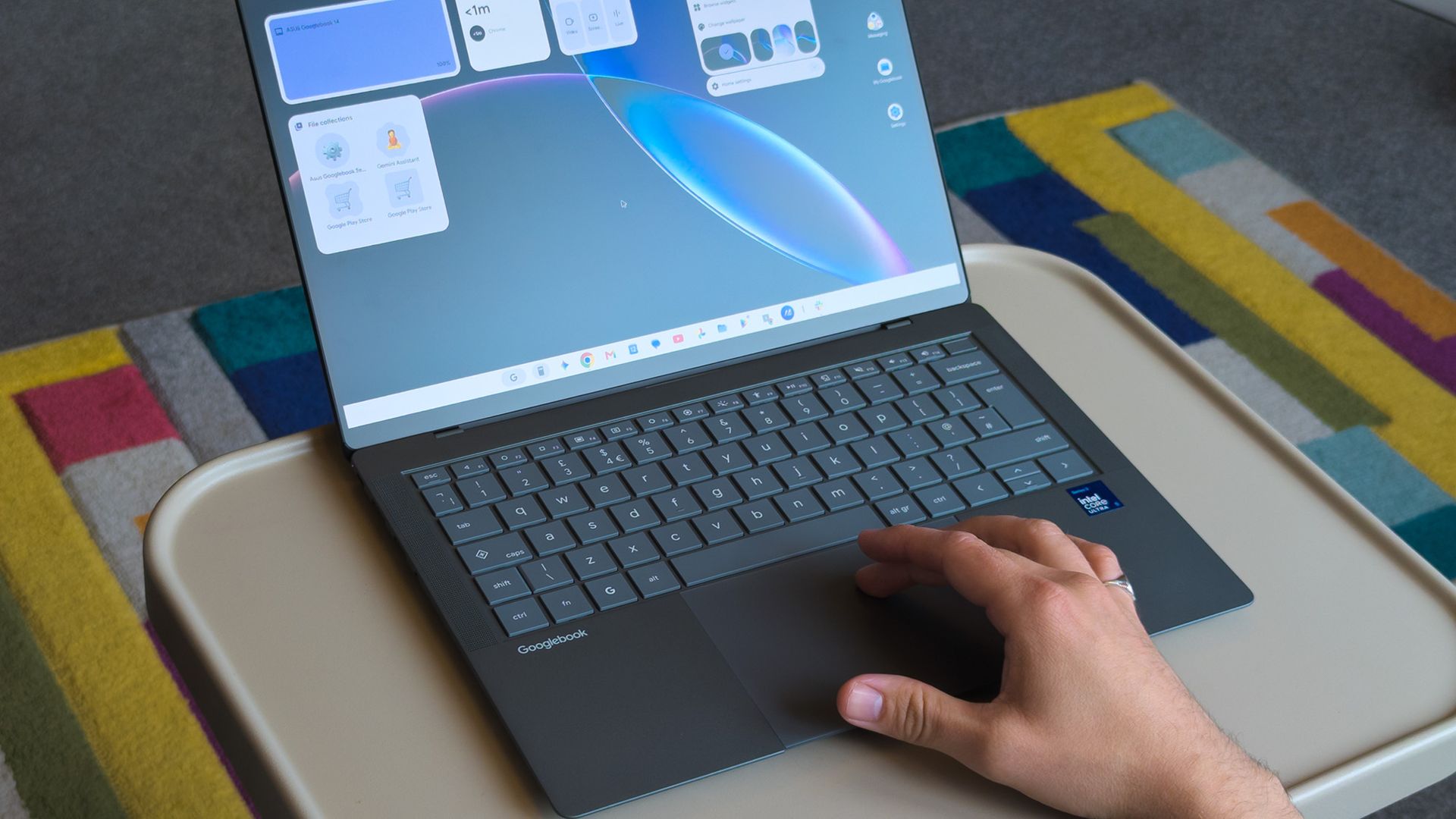
Lightweight 14-inch laptops are my absolute favorite, but I'll always prefer Windows. (Image credit: Ben Wilson | Windows Central)
The ASUS Googlebook 14 looks (and feels) great, which didn't surprise me, given how much I've enjoyed the company's recent design evolutions. Its chassis is coated in a magnesium-aluminum alloy, which explicitly avoids being labeled as the same Ceraluminum as its Zenbooks, but it's extremely similar.
Perhaps most impressive is its weight; ASUS claims the Googlebook 14 starts at 0.99 kg (2.18 lbs), but my scales place it closer to 0.97 kg (2.13 lbs). I'm a big fan of this emerging trend, having adored the Zenbook A14 at 2.18 lbs. Yes, it comes with extra screen flex, but I don't make a habit of bending my laptops.
ASUS claims the Googlebook 14 starts at 0.99 kg (2.18 lbs), but my scales place it closer to 0.97 kg (2.13 lbs)
OLED displays rarely disappoint either, and sure enough, this 16:10 panel also looks great. I'm still getting used to matte screens, and frankly, I almost want to avoid touching it to prevent fingerprints. Nevertheless, it's rated for up to 450 nits of brightness and 100% DCI-P3 color gamut coverage. Good for creators.
Finally, the chiclet keyboard has a 1.5mm key travel, which is relatively deep and feels good enough. The 6-inch haptic touchpad, however, is immediately fantastic. Left-clicking works anywhere, and it responds convincingly when pressed. I'll even commend the I/O for keeping USB-A ports around.
ASUS Googlebook 14: What I don't like
Caps Lock doesn't work without the Fn key, opening a quick context menu if pressed by itself. (Image credit: Ben Wilson | Windows Central)
Before I had a chance to experience much of Googlebook OS (which can refer to itself as ChromeOS during setup), I was irked by a few user experience oddities. Granted, these are primarily related to my expectations as a Windows user, but when I pressed the Caps Lock button, I expected capital letters.
Instead, Caps Lock defaults to activating a context menu indicated by a plus (+) icon, a sort of one-size-fits-all window that resembles Microsoft's 'Emoji and more' picker. Pressing Fn + Caps Lock delivers what I really wanted, which should be no big deal, just a learning curve. But it keeps going.
Even with increased hardware prices you can just buy a full Windows laptop or a MacBook Air for that much. Only a fool would buy one of these.
Fozzy_Bear, Windows Central Community
There's no delete key, so I need Fn + Backspace for that, which I wouldn't mind if double-tapping the touchpad would drag to select multiple words, but it doesn't work that way; I can only double-tap one word at a time. I suppose I might get used to that, too. Shift + arrow keys still select full lines, after all.
Some aren't as drastic; a single haptic click at the top of an app with maintained contact allows me to drag it around, while double-tapping restores or maximizes as I'd expect. On the other hand, there's no right-click area by default, instead requiring a two-finger tap unless I toggle that touchpad tweak in Settings.
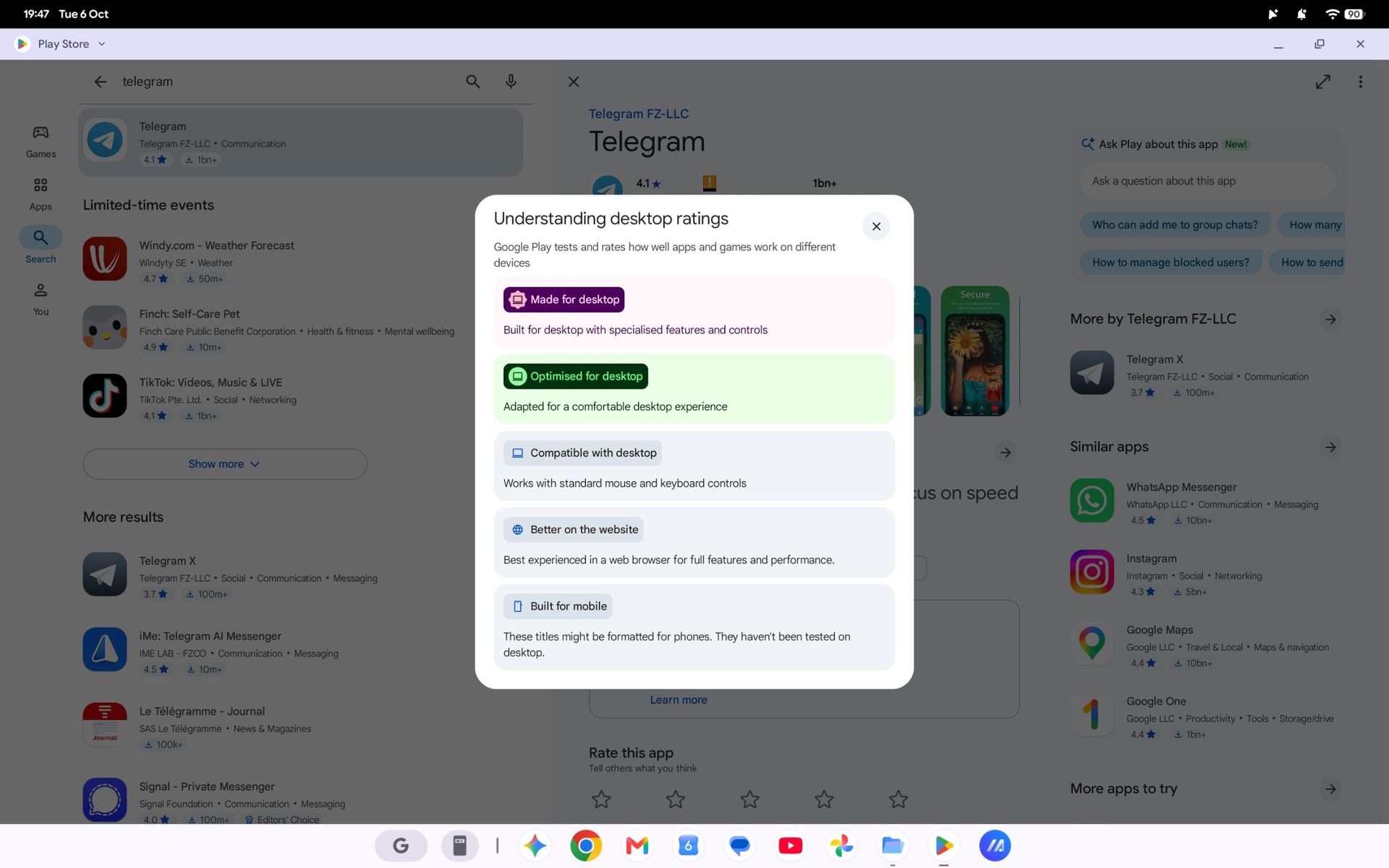
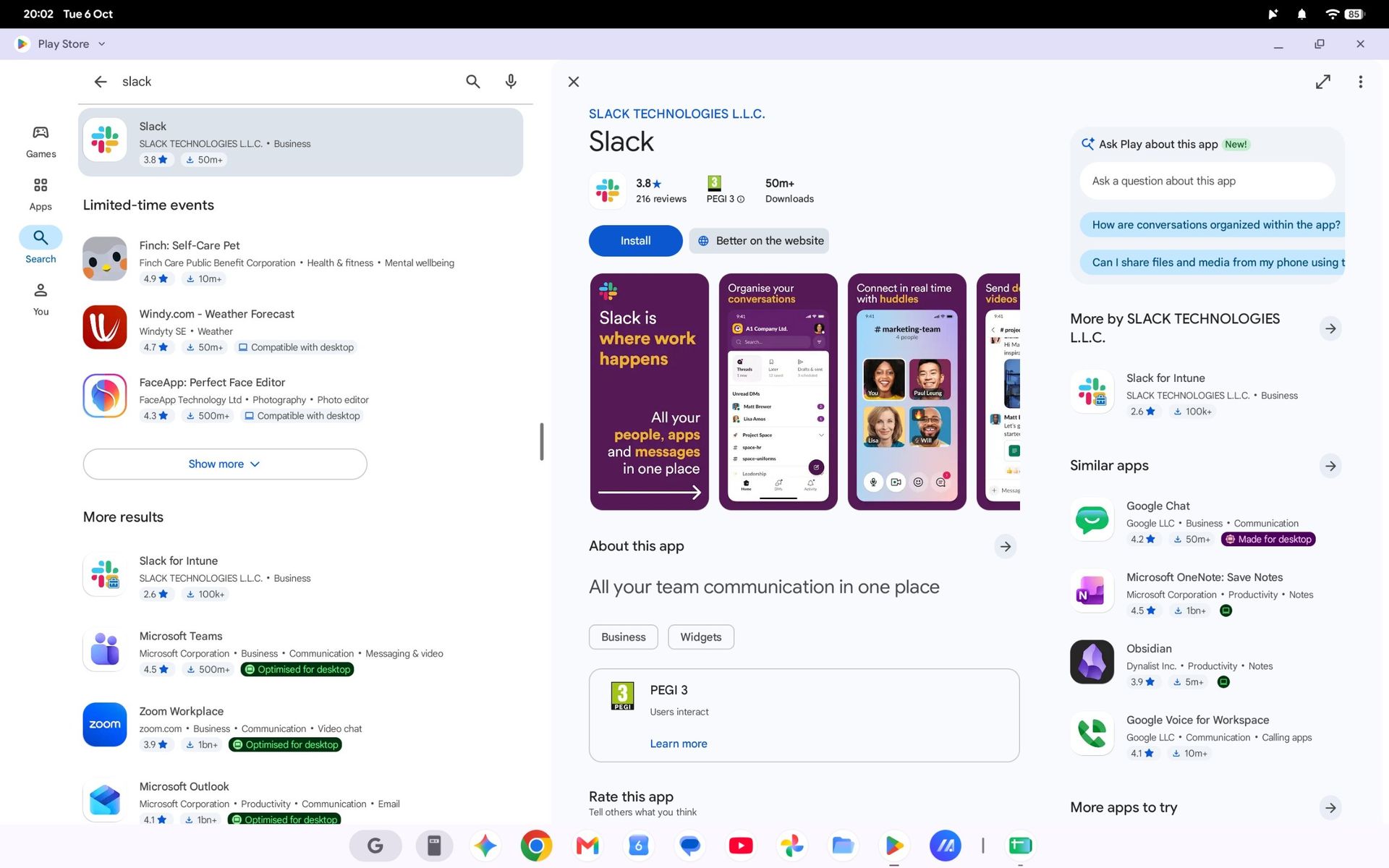
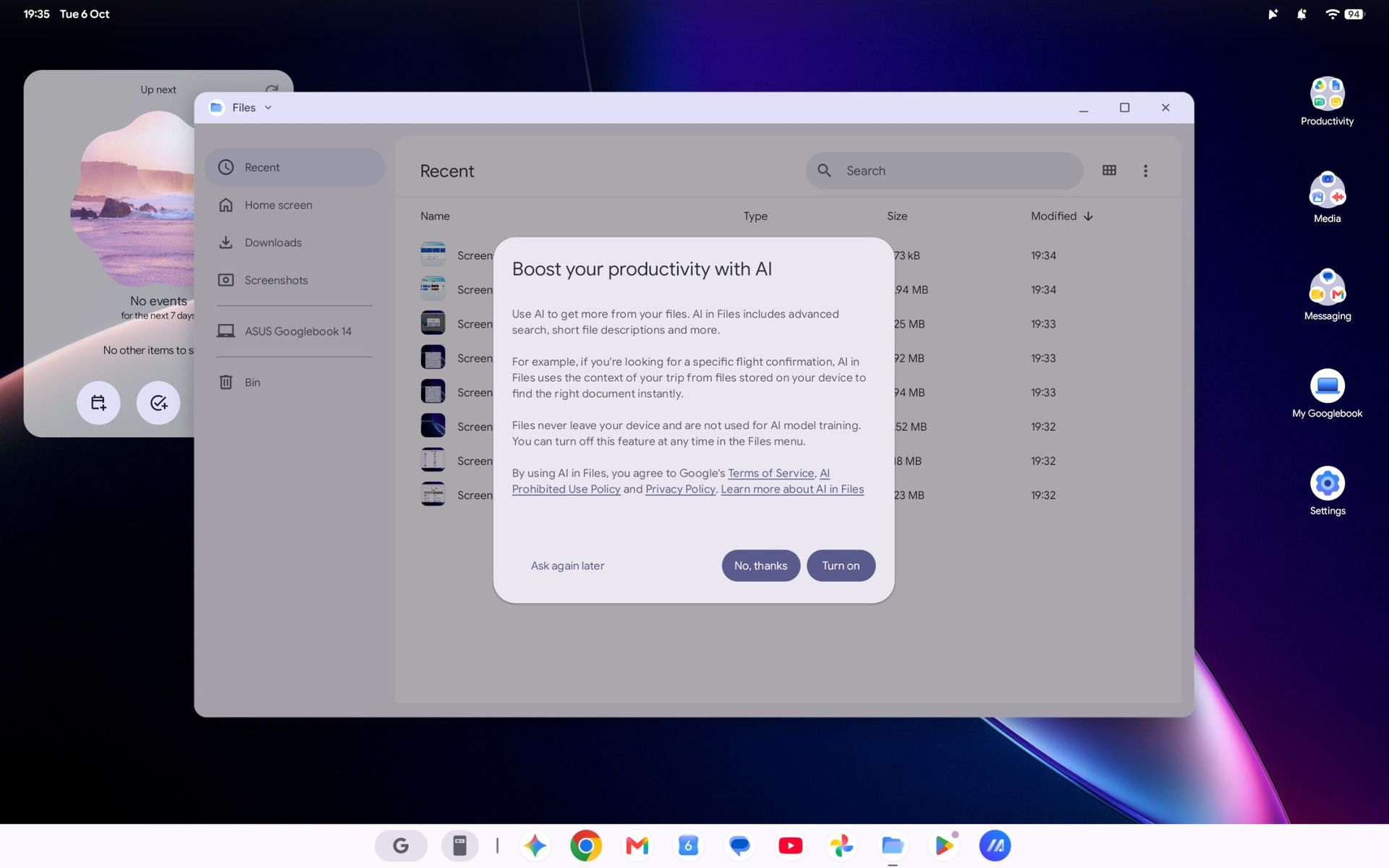
Finding apps that work best on a laptop screen is made easier with Google's app ratings.Google | Windows CentralUnfortunately, some apps fall back on their web versions, keeping you in the browser.Google | Windows CentralExpect to see an AI consent prompt when you open almost every app or feature for the first time.Google | Windows Central
Again, most of these gripes can be so easily dismissed as nothingburger preferences carried over from decades of habits formed on Windows, which is fair, but trying to carry out my daily workflow on the ASUS Googlebook 14 soon had me wondering how much broad appeal this platform will have.
Like an Android smartphone, Google supplies your apps from the Play Store. Starting with Slack shows how a Googlebook handles compatibility by dividing apps into categories ranked from best to worst: Made for desktop, Optimized for desktop, Compatible with desktop, Better on the website, and Built for mobile.
Chrome OS was already able to run android apps; it just looks like they have decided to build it on top of android instead of chrome and its only on premium apps.
Tony Holness, Windows Central Community
Slack feels like an unlucky starting place for my Googlebook adventure since it lands in the 'Better on the website' category, made worse by a message that says, "This app cannot be installed" as a PWA (Progressive Web App). Installing it anyway is, indeed, a lesser experience than using it in Chrome.
Opening the 'Compatible with desktop' Microsoft Edge brings the entire Googlebook to a strange halt, preventing even Task Manager from opening until I restart, and my chosen video editing suite, DaVinci Resolve, isn't available at all. I know it's in its infancy, but Google's OS isn't thrilling me so far.
ASUS Googlebook 14: What happens next?
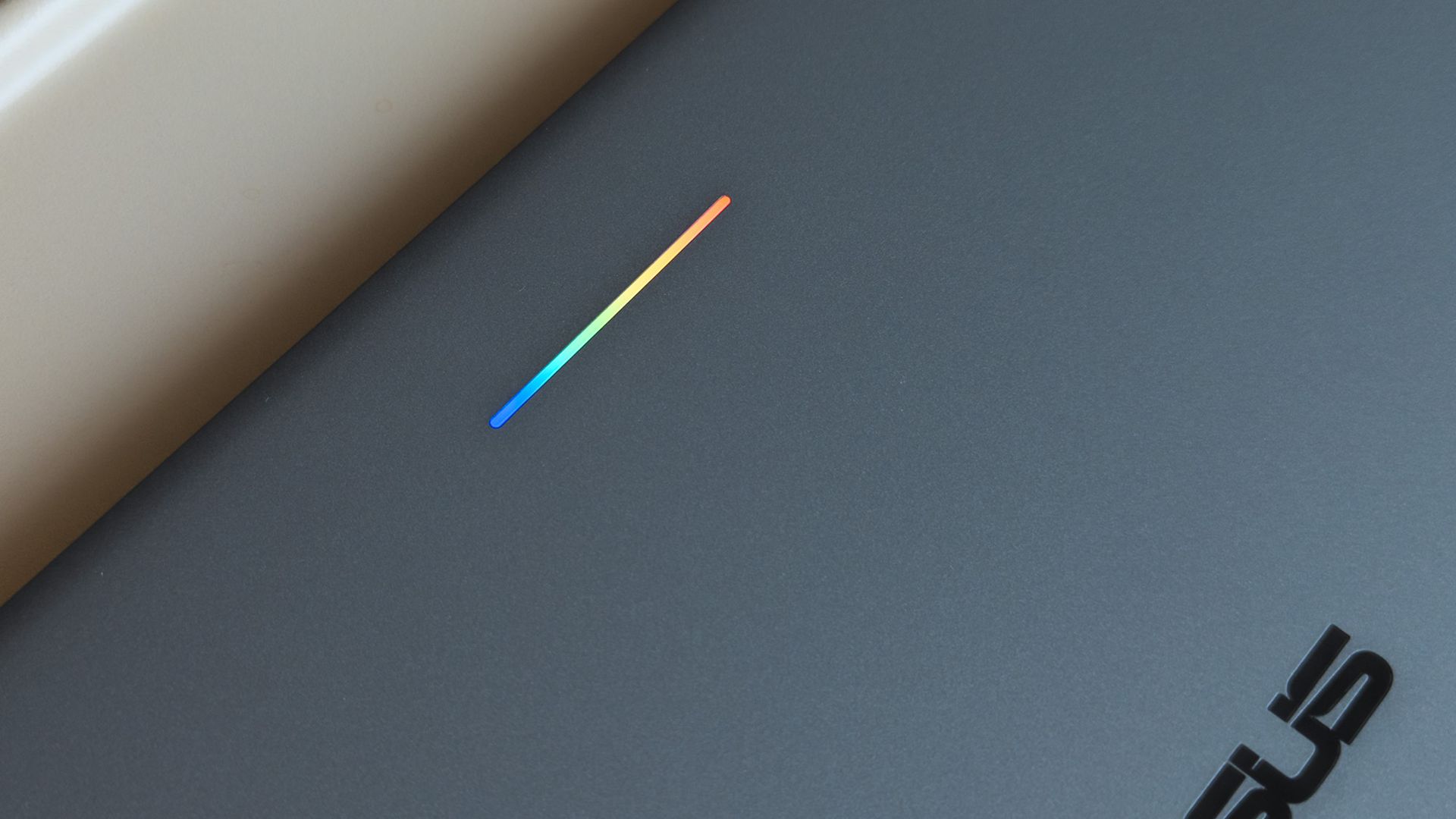
A small 'Glowbar' on Googlebook lids illuminates with RGB colors, but you'll almost never see it. (Image credit: Ben Wilson | Windows Central)
All of these impressions came in the first 24 hours of having my hands on this interesting, AI-centric laptop, and there's more to see. Gemini begs me to use it at every turn, but my next step is syncing my Pixel 7 Pro or Galaxy Z Flip 7 to see how features like 'Cast my apps' actually perform.
I'm not writing it off yet, but my first impressions aren't exactly stellar. Even the RGB Glowbar gimmick offers little more than battery-life visibility; almost as frivolous as the illuminated "look what I have" logos on gaming laptop lids. On the software side, OS updates will likely fix many of my complaints.
Still, I won't ignore the outspoken Windows users who have pushed back on Copilot AI integrations in Microsoft's leading OS for the past few years, and I can only wonder who would adopt something fundamentally the same, except built by Google. Are Googlebooks perhaps only appealing to developers?
Either way, I'm impressed with ASUS but unconvinced by Googlebook. The hardware is fantastic, but it comes from the same people who built the Zenbook, so that's hardly a revelation. I'll keep using Googlebook OS for a few more days and see how it feels once the launch hype dies down.
Join us on Reddit at r/WindowsCentral to share your insights and discuss our latest news, reviews, and more.
ASUS just started shipping the Ascent QN10, the first mini PC built around Qualcomm’s Snapdragon X2 Elite platform and its 80 TOPS NPU.
The 80 TOPS NPU is designed for local AI tasks such as language models, image processing, and automation workflows.
Up to this point, mini PCs running Windows on Arm have been largely dev kits, such as the Windows Dev Kit 2023. Those types of devices allowed developers to optimize apps for Arm, but they were not aimed at general customers. There have been some consumer mini PCs with Arm processors, but the Ascent QN10 is the first with the Snapdragon X2 Elite.
The ASUS Ascent QN10 is a very different device. It’s a consumer‑ready PC with an anodized aluminum chassis rather than the plastic developer boxes we’ve seen in the past. Our friends at Tom’s Guide said the Ascent QN10 “could be the Mac mini M4 alternative for Windows users.”
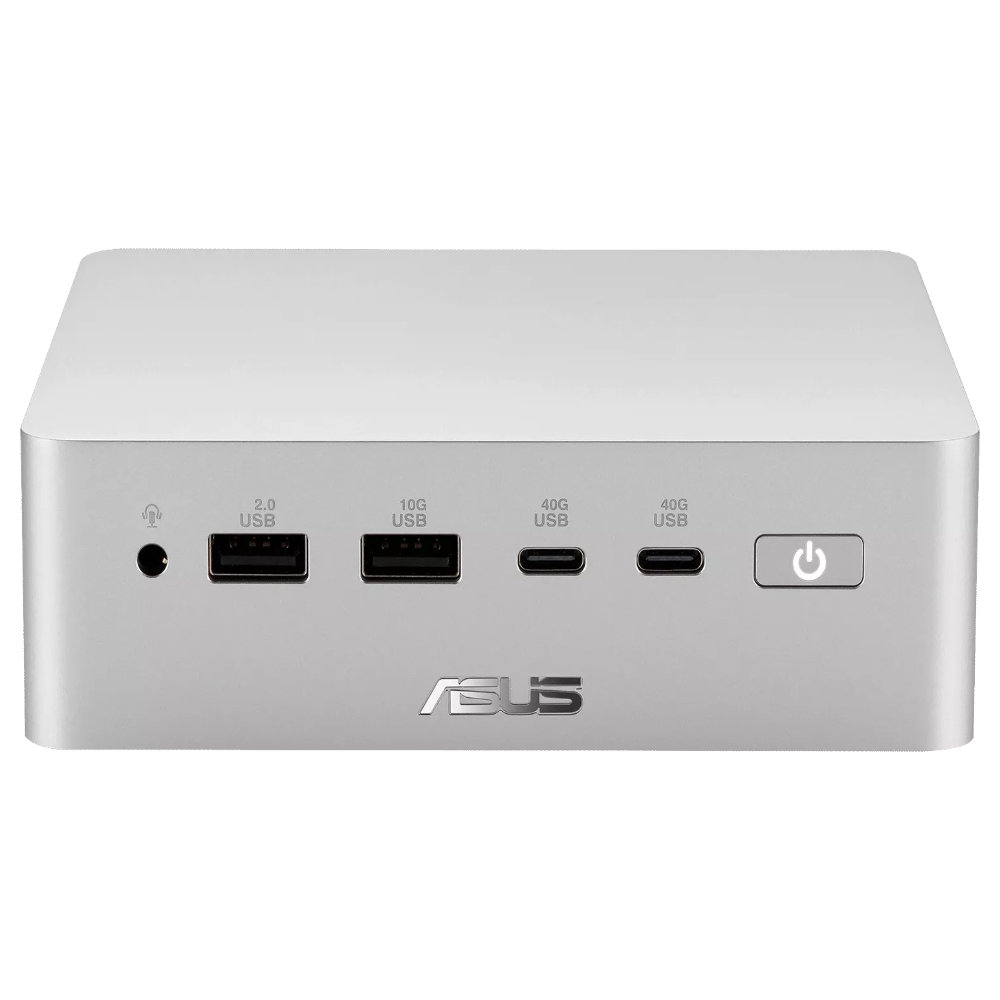
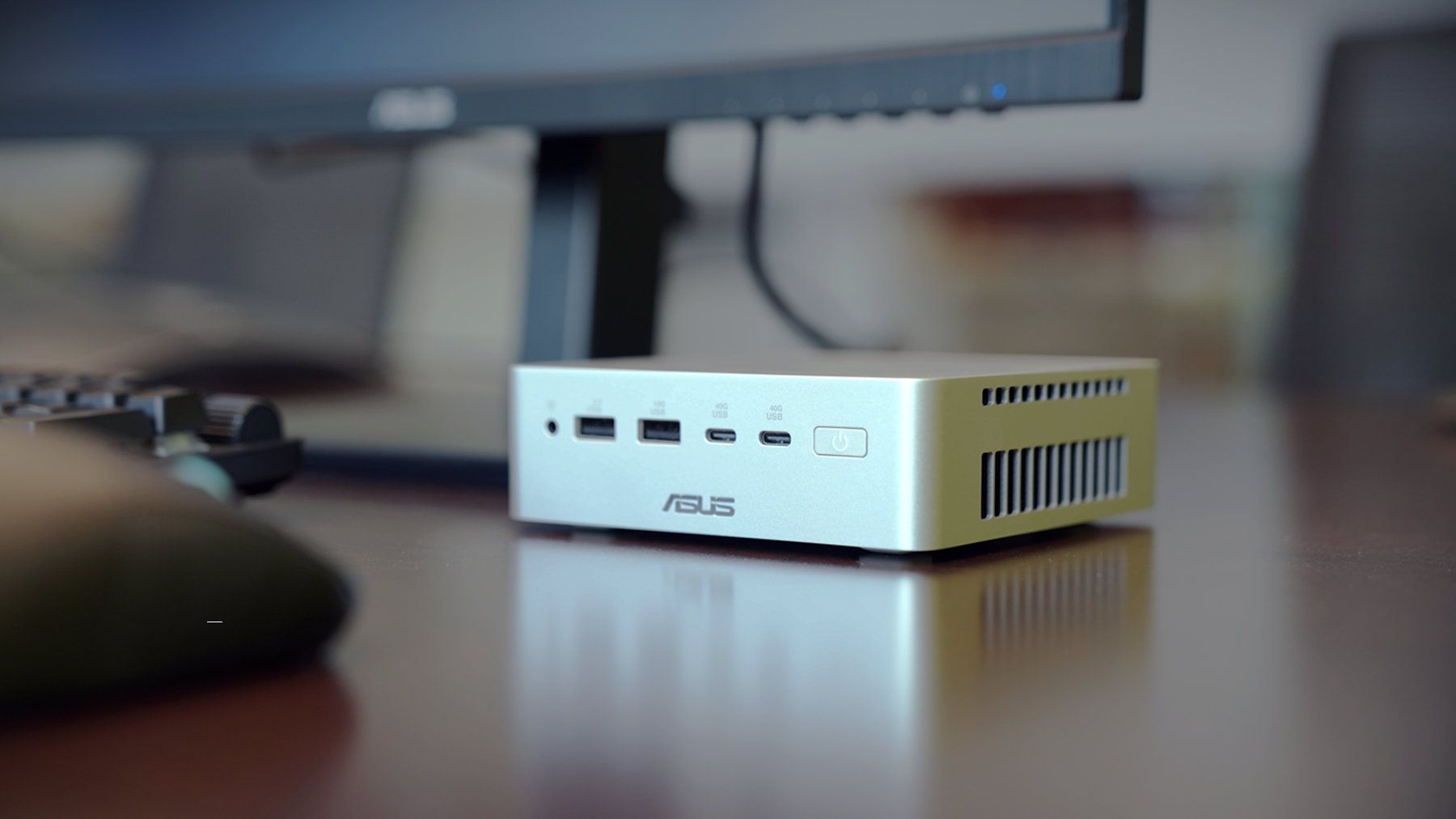
The Ascent QN10 has a 0.7-liter body, making it smaller than many of the best mini PCs. Despite the small body, it packs plenty of ports.
ASUS Ascent QN10 Specs
Processor
Qualcomm Snapdragon X2 Elite (18-Core Oryon CPU)
Graphics
Qualcomm Adreno X2-90
NPU
Qualcomm Hexagon (Up to 80 TOPS)
Memory
Up to 32GB LPDDR5x
Storage
512GB, 1TB or 2TB
Ports
2 x USB4, 2 x USB-A, 1 x 3.5mm audio jack (front), 1 x USB4, 1 x HDMI 2.1, 2 x USB-A, 1 x 2.5 Gigabit Ethernet (rear)
Connectivity
Wi-Fi 7, Bluetooth 6.0
Dimensions
5.1 x 5.1 x 1.5 inches
Weight
1.6 pounds
The specs of the Ascent QN10 received a small bump since our colleagues at Tom's Guide went hands-on with the mini PC. The Ascent QN10 features Bluetooth 6.0 rather than the older Bluetooth 5.4.
The Ascent QN10 has a clever cooling solution that keeps the heat from its CPU and SSD separate. Fresh air is brought in on one side of the device but then split and sent out separately on the other side of the device.
Overall, the Ascent QN10 looks like a strong first showing for Snapdragon X2 Elite in a mini PC. The big question is if there's a demand for an AI-focused mini PC running Windows on Arm.
The Ascent QN10 can access Qualcomm’s AI Hub, which provides over 175 pre‑optimized models and tools for testing and deploying AI workloads.
ASUS
Ascent QN10 Mini PC
This mini PC runs on a Snapdragon X2 Elite and has an NPU with 80 TOPS of performance. Those specs allow it to handle AI workloads effeciently despite the compact body of the mini PC.
Des pirates ont mis en vente cette semaine, sur un site baptisé Nexus, les copies numériques de plus de 153 millions de permis de conduire américains et canadiens, plus de 10 millions de cartes d'identité, 3 millions de documents de voyage et de pièces étrangères, et près de 600 000 cartes médicales. Le site vit sur le darkweb, la partie d'internet où ce commerce se fait entre criminels, à l'abri des regards.
Pour chaque personne, le dossier contient jusqu'à six photos du permis, recto et verso, en lumière normale, en infrarouge et en ultraviolet, avec la date et l'heure de la prise de vue. Un acheteur tape un nom, obtient un aperçu en partie masqué, et paie. Le permis du secrétaire américain à la Défense, Pete Hegseth, était affiché à 100 dollars.
Brian Krebs, un journaliste américain spécialisé dans la cybercriminalité, a tapé son propre nom. Son permis y était, et la date de la photo correspondait au jour et à l'heure où il avait tendu sa carte au comptoir d'une agence Hertz, en juin 2025.
D'autres victimes ont fait le même rapprochement, entre la date de leur photo et une location chez Hertz ou un passage dans une boutique de cannabis légal à Las Vegas. À chaque fois, le permis avait été glissé dans un petit scanner posé sur le comptoir pour vérifier qu'il était authentique.
Ces scanners viendraient tous d'IDScan.net, une société de La Nouvelle-Orléans d'une centaine de salariés que Hertz, Target, FedEx, les casinos Caesars ou des centaines de boutiques de cannabis paient pour contrôler les pièces d'identité de leurs clients. Ses appareils photographient le permis en infrarouge et en ultraviolet pour repérer les faux, et c'est exactement ce jeu de six images qu'on retrouve dans chaque dossier vendu par Nexus.
Vous montrez votre permis pour louer une voiture, le boîtier le photographie sous trois lumières, et les images partent chez un sous-traitant dont vous n'avez jamais entendu parler. C'est infernal.
IDScan.net n'a rien dit sur le fond, se contentant de prévenir ses clients dans la nuit d'un possible incident de sécurité, alors que les pirates affirmaient aspirer ces images depuis plus d'un an et en ajoutaient près de 400 000 en 24 heures. Le FBI de La Nouvelle-Orléans a ouvert une enquête le 1er septembre.
Sauf que voilà, un mot de passe volé se change. Un scan de permis, non, et une photo de pièce d'identité sert couramment à ouvrir un crédit ou à passer les contrôles d'identité en ligne, jusqu'aux prestataires qui vérifient votre âge pour les sites pour adultes par chez nous par exemple.
Le soir même de l'ouverture de l'enquête, la page d'accueil de Nexus ne montrait plus qu'une ligne. Le service n'est plus disponible. Les images, elles, sont toujours quelque part.
I was at Computex this year when NVIDIA's RTX SparkSystem-on-Chip (SoC) was revealed to the world, and from the start, I had a hunch that it would be a big deal.
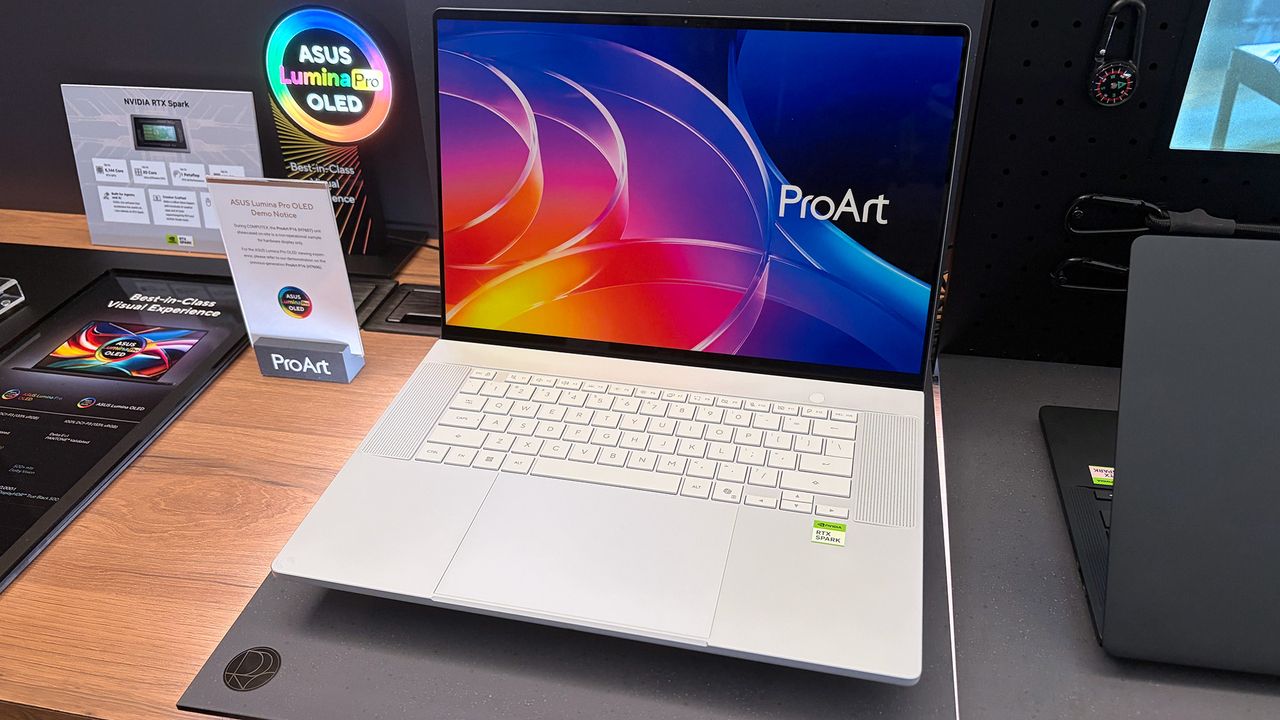
Incredibly sleek and streamlined, these laptops were a smash hit on the show floor. Apparently, they're also far more popular than ASUS was expecting.
In a recent ASUS Q2 earnings call, it was revealed that the company is completely out of ProArt P14 and P16 units to ship to its partners (aka third-party retailers and distributors) as part of pre-order efforts.
As one of the first manufacturers to launch RTX Spark-based systems, the market response to pre-orders for our ProArt notebook P16 and P14 has been intense. They are currently completely sold out. [...] Regarding current demand, the market response has far exceeded our expectations. Essentially, the initial quantities we planned have already been fully pre-ordered by our channel partners. We’re continuing to place additional orders with our partners.
S.Y. Hsu, Co-CEO ASUS (ASUS Q2 earnings call)
More RTX Spark laptops are on the way, of course, and ASUS has some time to shore up supplies before the planned Q4 2026 release of the new Spark-powered ProArt PCs.
It's too bad that the earnings call doesn't mention anything about exact volumes, because it's hard to say exactly how popular these laptops really are. However, ASUS says that it's "very optimistic about next year's sales" thanks to the "high AI computing power relative to its compact size" in the RTX Spark laptops.
What is NVIDIA's RTX Spark?
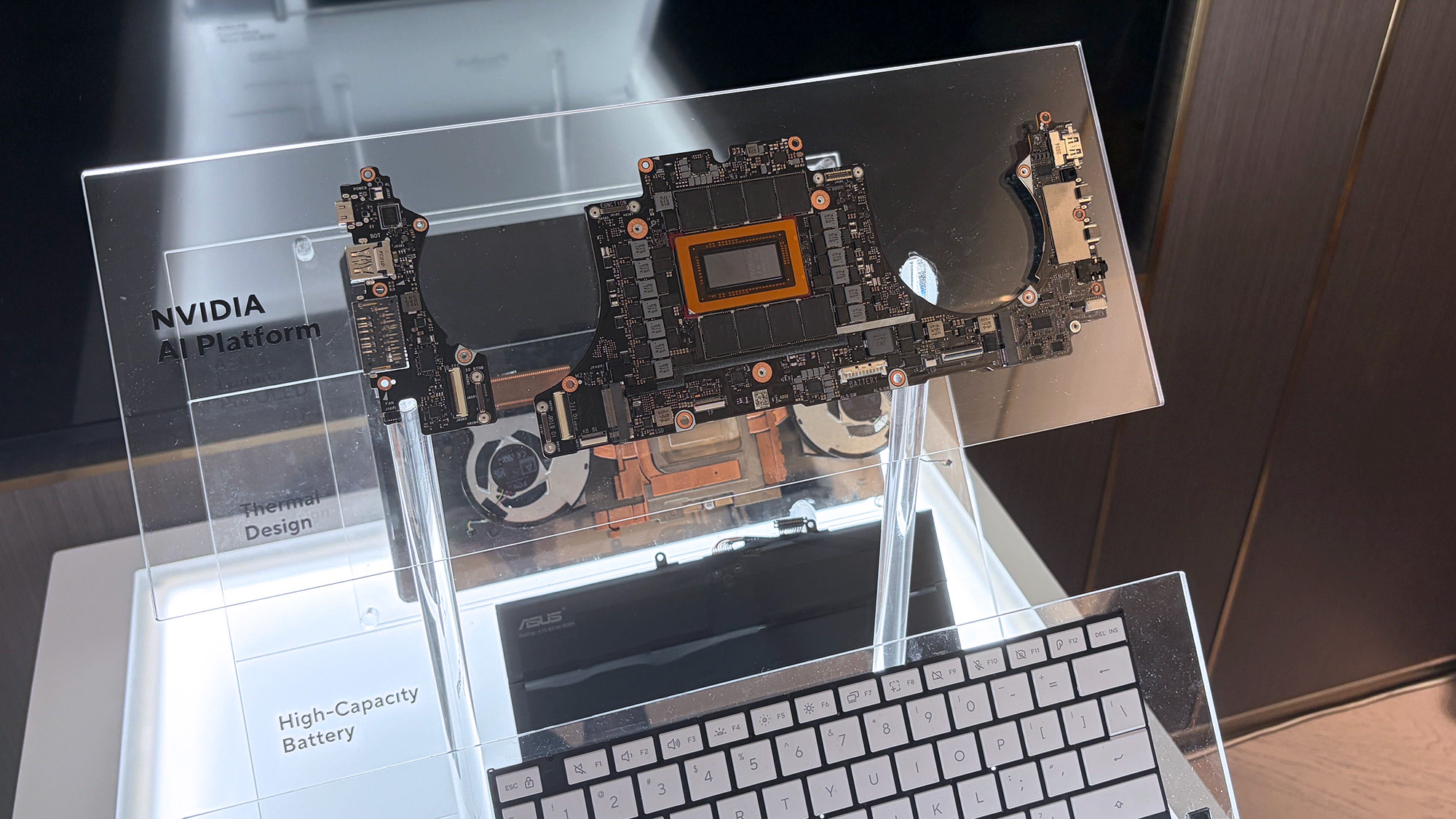
A look at the NVIDIA RTX Spark chip that's (normally) inside the ProArt P16. (Image credit: Cale Hunt | Windows Central)
NVIDIA's RTX Spark is an ARM-powered SoC that's expected to compete directly with the likes of Intel, AMD, and Qualcomm for space in Windows 11 PCs.
I covered rumors of the "N1X" chip for months in the lead-up to Computex 2026, and indeed it seems just as powerful and efficient as pre-announcement estimates.
Spark takes efficient ARM-based CPU cores similar to those found in Qualcomm Snapdragon chips and pairs them with an NVIDIA Blackwell RTX GPU, all while drawing from a unified memory setup that can hit 128GB.
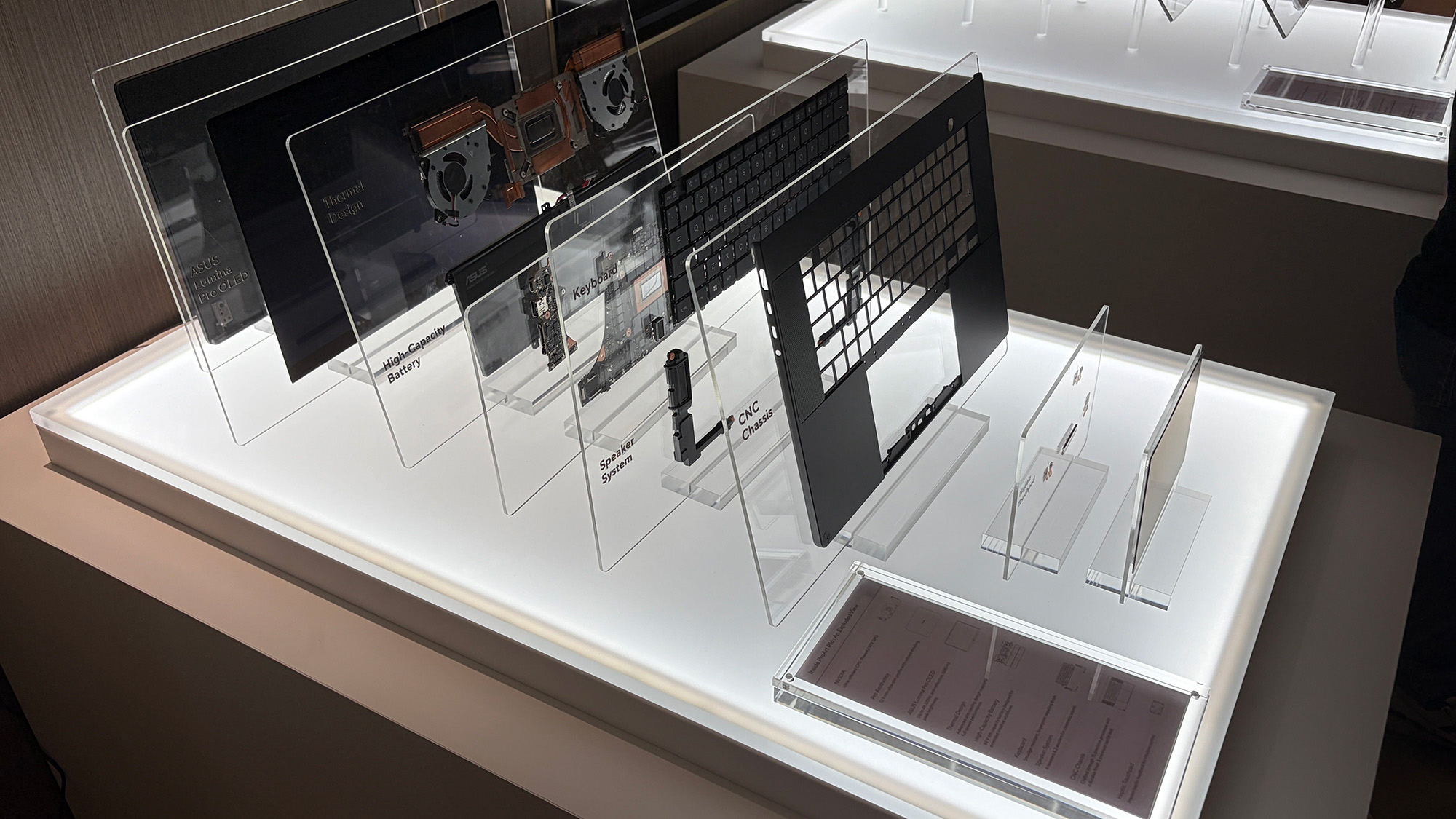
A broken-down example of the ASUS ProArt P16 with RTX Spark. (Image credit: Cale Hunt | Windows Central)
This combination allows for massive performance that can shred standard and AI-related tasks without requiring a bulky discrete GPU.
Throw these chips into ASUS ProArt laptops with "all-day-long" battery life, wide port variety, super slim bodies, and 4K OLED displays, and it's easy to see why there's so much interest from retail partners.
Allez, on va faire un jeu. Cherchez un disque dur externe sur Amazon et regardez où pointe le premier lien de la page. Bingo, ça part sur une adresse en /sspa/click, autrement dit un emplacement publicitaire. Et c'est pas le mieux noté, c'est pas le moins cher, non, c'est juste celui qui a payé le plus pour être là.
Et moi, ce qui me saoule vraiment, c'est que les filtres n'y peuvent rien.
Pour remédier à cela il faut sortir l'artillerie. J'ai d'abord pensé à faire un filtre uBlock Origin, puis à me coder une extension Firefox, avant de me rappeler que Tampermonkey tournait déjà dans mon navigateur.
Direction le repo Greasy Fork, donc, où traîne
un script qui fait exactement ça
. Une cinquantaine de règles CSS, qui dégagent du DOM les résultats sponsorisés de la recherche, les carrousels promo, les encarts publicitaires de la fiche produit, l'upsell Prime et les bannières de marque.
On passe ainsi de ça :
À ça :
Et ça fonctionne super sur toutes les versions d'Amazon, y compris Amazon.fr.
Trois réglages attendent dans le menu du gestionnaire de scripts. Un compteur qui affiche en bas de page ce qui a été retiré et pourquoi, une journalisation console pour les curieux, et une option qui redirige les pages de navigation vers la vraie liste de résultats.
Attention quand même à ce qui saute en plus des pubs. Le bloc "Les gens qui ont acheté ça, ont aussi acheté ça". Le script s'attaque aussi à Rufus, l'assistant d'achat maison et côté installation, il vous faut Tampermonkey, Violentmonkey ou Greasemonkey. Sur Firefox, ça s'arrête là. Par contre sur Chrome, depuis la version 138, il faut en plus activer un switch "Allow User Scripts" sur la fiche de l'extension, coupé par défaut sur toute extension fraîchement installée.
Voilà, j'espère que ça vous aidera à avoir un Amazon un peu plus propre. Maintenant, n'oubliez pas, Amazon, c'est le mal, donc si vous avez les moyens de payer 2x plus cher la même chose et que vous aimez passer votre vie dans les transports ou en bagnole à faire une espèce de chasse au trésor à travers toute la ville, pour trouver le produit qu'il vous faut, le mieux reste encore et toujours d'acheter dans des magasins physiques. Lol.
Jonathan Blow, le développeur de Braid et de The Witness, a annoncé hier (le 12 août) sur X qu'il laissait tomber VLC... La raison c'est 33 putain de secondes d'attente entre un clic sur un fichier MP3 et le début de la lecture, sous Windows (évidement). C'est vrai qu'une demi-minute pour lancer un son sur une machine récente, c'est abusé ! Du coup, il est repassé au bon vieux lecteur multimédia de Microsoft.
Son point de vue c'est que "tout un secteur du logiciel open source est dans un état franchement embarrassant" dès qu'il s'agit de tourner Windows. Je peux pas lui donner tord, c'est vrai que le ralentissement est réel sous Windows 11, sans qu'on sache vraiment pourquoi...
Mais heureusement,
la réponse de VideoLAN
ne s'est pas faite attendre et a replacer correctement le débat. Pour l'équipe de VLC, la lenteur vient d'un bug de Microsoft Defender arrivé avec une mise à jour de Windows 11, qui a mis le cache de plugins de VLC en quarantaine. L'antivirus maison de Windows a donc classé comme suspect, puis mis de côté, un fichier que VLC génère lui-même. VideoLAN écrit qu'il s'est retrouvé là "comme par magie".
Pour remettre VLC d'aplomb, VideoLAN propose donc de réinstaller le logiciel ou de régénérer ce cache. Mais pas besoin d'aller jusqu'à la réinstallation, puisque l'installeur Windows officiel dispose déjà d'un raccourci qu'il faut dans le dossier VideoLAN du menu Démarrer, "VLC media player - reset preferences and cache files".
Ce raccourci lance vlc.exe avec les deux options de remise à zéro, la configuration et le cache de plugins, puis referme aussitôt le lecteur. Ça devrait faire le taf même si attention, vos préférences partent aux chiottes avec le reste, donc si vous avez bricolé vos réglages de sortie audio, vos raccourcis clavier ou vos sous-titres, vous les perdrez. Mais ensuite, le cache, lui, se reconstruira au lancement suivant.
Après régénérer le cache n'empêche pas Defender de le rechoper par la suite. L'autre option, c'est donc d'exclure une bonne fois pour toutes vlc.exe de la liste d'analyse de l'antivirus.
Bref, ce genre de faux positif n'est pas nouveau chez Windows Defender, qui y'a pas longtemps a même pris des certificats DigiCert pour un cheval de Troie, sans parler des
ISO Linux qui se font flagger régulièrement
.
Voilà, hormis la comm de VLC pour le moment, personne n'a encore publié de détails techniques, et Microsoft n'a rien dit.
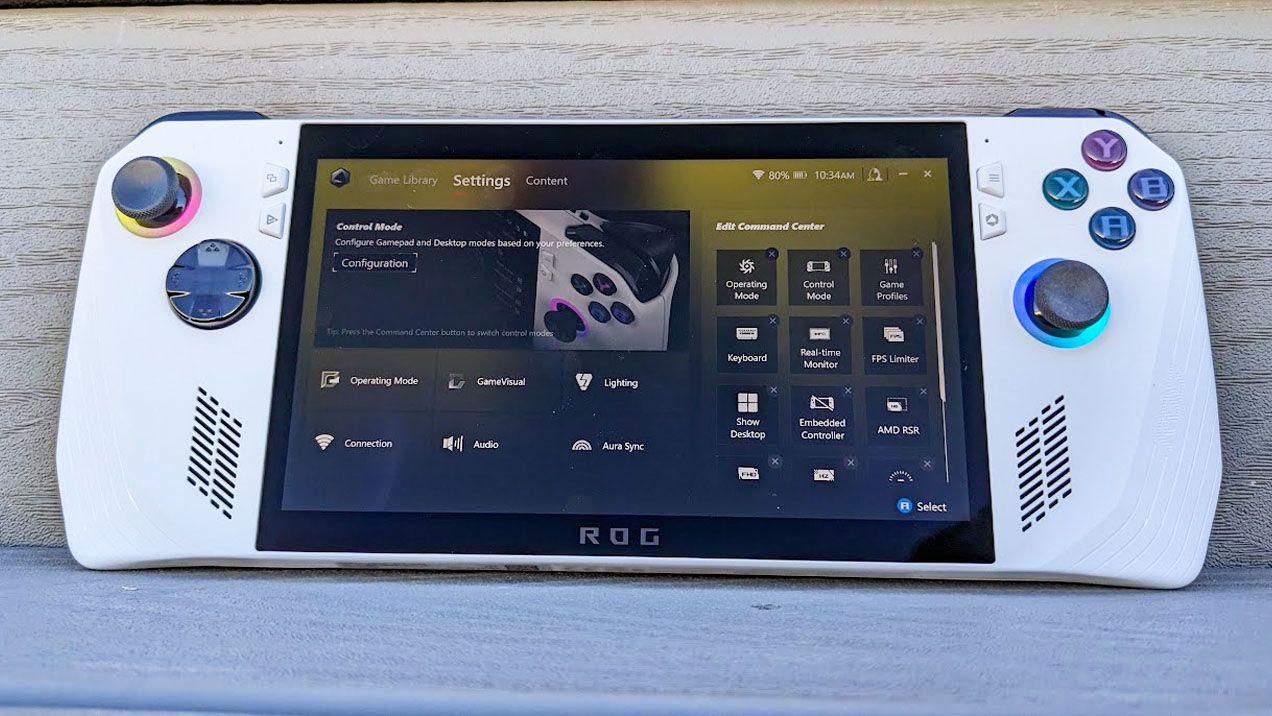
ASUS Armoury Crate is but one piece of specialized management software that many of us have installed on our PC, perhaps without even knowing it. It comes preinstalled on ASUS gaming handhelds, including the Xbox Ally X, as well as ASUS gaming laptops.
If that sounds like hardware you use, it's time to check up on Armoury Crate. According to an August 10 update on the official ASUS advisory board, "a component used by Armoury Crate" is vulnerable and could be leaving you open to attacks.
Alongside that unmentioned component of Armoury Crate, ASUS has also released security updates for its GPU Tweak III, GPU Tweak II, and AI Suite 3 software.
This vulnerability, listed as CVE-2026-8917, comes with an 8.4 rating. That's out of a maximum of 10, meaning this isn't an issue you should ignore for long.
What does this ASUS vulnerability entail?
According to the CVE record, an "IOCTL vulnerability allows a local attacker to write a specific value to an arbitrary memory address, potentially leading to privilege escalation."
Although the CVE record doesn't mention Armoury Crate by name, it's clear that ASUS is concerned with that "certain component" alongside its other standalone software.
How do I update the vulnerable ASUS software?
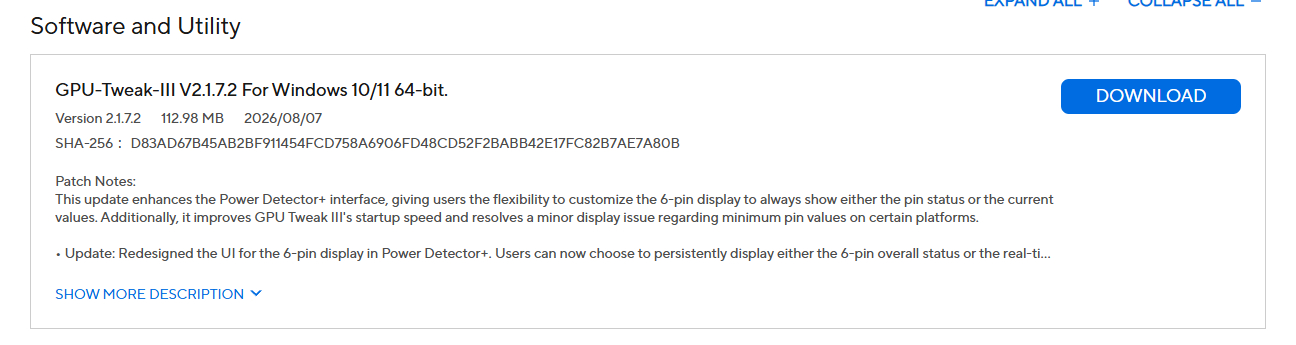
A look at the GPU Tweak III download page at the ASUS support website. (Image credit: ASUS)
Updated versions of GPU Tweak III, GPU Tweak II, and AI Suite 3 software can be directly downloaded from the ASUS support website.
You want to be sure that you're grabbing the most recent version. For GPU Tweak III, I'm seeing version 2.1.7.2. This appears to be a newer version than what's listed as affected on the CVE website.
The GPU Tweak II version on the ASUS support page appears to still be the one affected. (Image credit: ASUS)
For GPU Tweak II, I'm seeing version 2.4.0.0 on the ASUS support page; unfortunately, this version is listed on the CVE page as vulnerable, so I can only guess that ASUS hasn't yet made the necessary updates to its download packages.
It's unclear why ASUS hasn't yet made the secure version of GPU Tweak II available for download. If you're concerned, my best advice is to simply remove the software entirely until it's updated.
And for the actual Armoury Crate software, you can choose to update from within the app itself.
Is there any alternative to ASUS Armoury Crate?
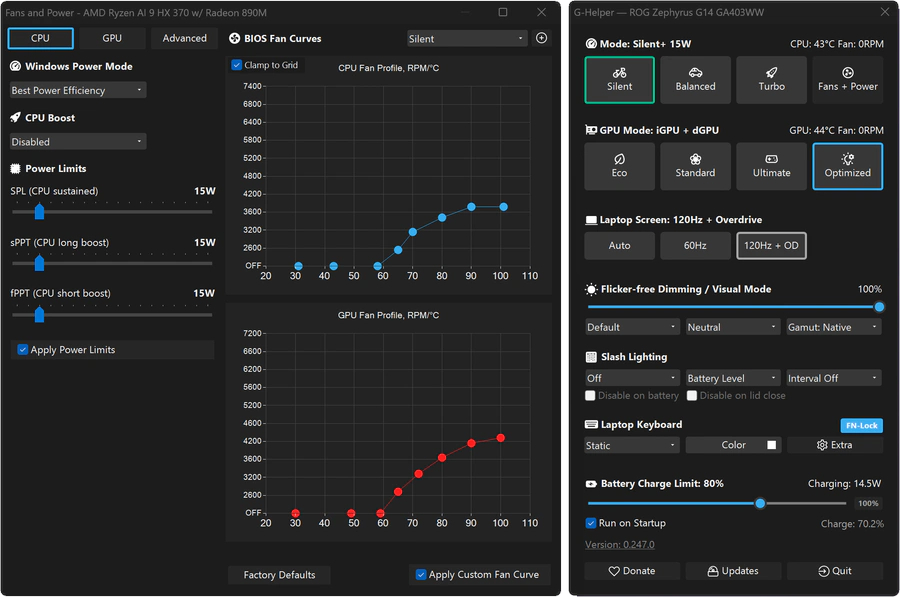
A look at the G-Helper app interface for ASUS laptops and gaming handhelds. (Image credit: Seerge (g-helper.com))
I often use Armoury Crate on my desktop gaming PC to control certain ROG and TUF components, but most of the time it sits idly in the background. It's not the best software, vulnerabilities aside, but it seems to get the job done.
I've read tales of some specific ASUS desktop hardware absolutely requiring Armoury Crate to function properly, but for other ASUS gaming devices, it can be replaced entirely.
Let me introduce you to G-Helper. It's designed to work with ASUS laptops and gaming handhelds, doing what Armoury Crate does in a streamlined, unbloated app that only eats up about 5MB of space.
AI continues to wreak havoc on the tech industry, driving up the prices of processors, RAM, motherboards, and more PC hardware so companies can keep up with its hunger for more power (and RAM).
Fortunately, Newegg is offering a limited sale on several discounted bundles containing AMD processors we've tested and rated highly for their solid performance, alongside compatible motherboards and 16GB RAM modules to help these CPUs reach their full potential.
So, if you're looking to upgrade your PC with some of the best CPUs for gaming or productivity content creation, along with the best motherboards and precious RAM to maintain their stability, this round-up could be your next best solution.
"True to its word, AMD has specifically targeted gamers with this affordable powerhouse, and I expect my upcoming tests only to cement its place in your next rig." — Ben Wilson, Senior Editor
"In a masterclass of performance-per-watt efficiency, AMD offers incredible single-core performance scores that beat its intended 14600K rival and even challenge the 14700K." — Ben Wilson, Senior Editor
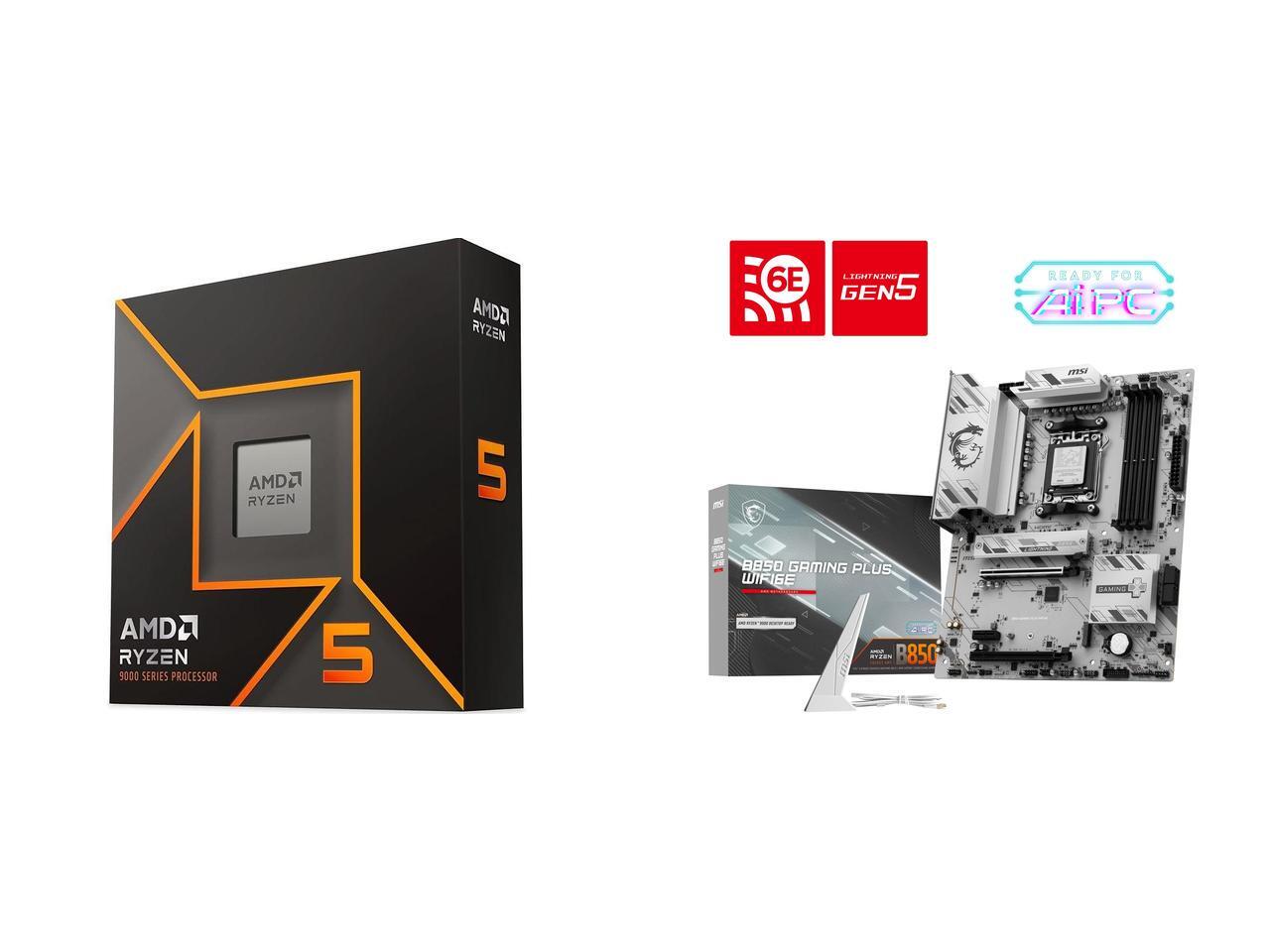
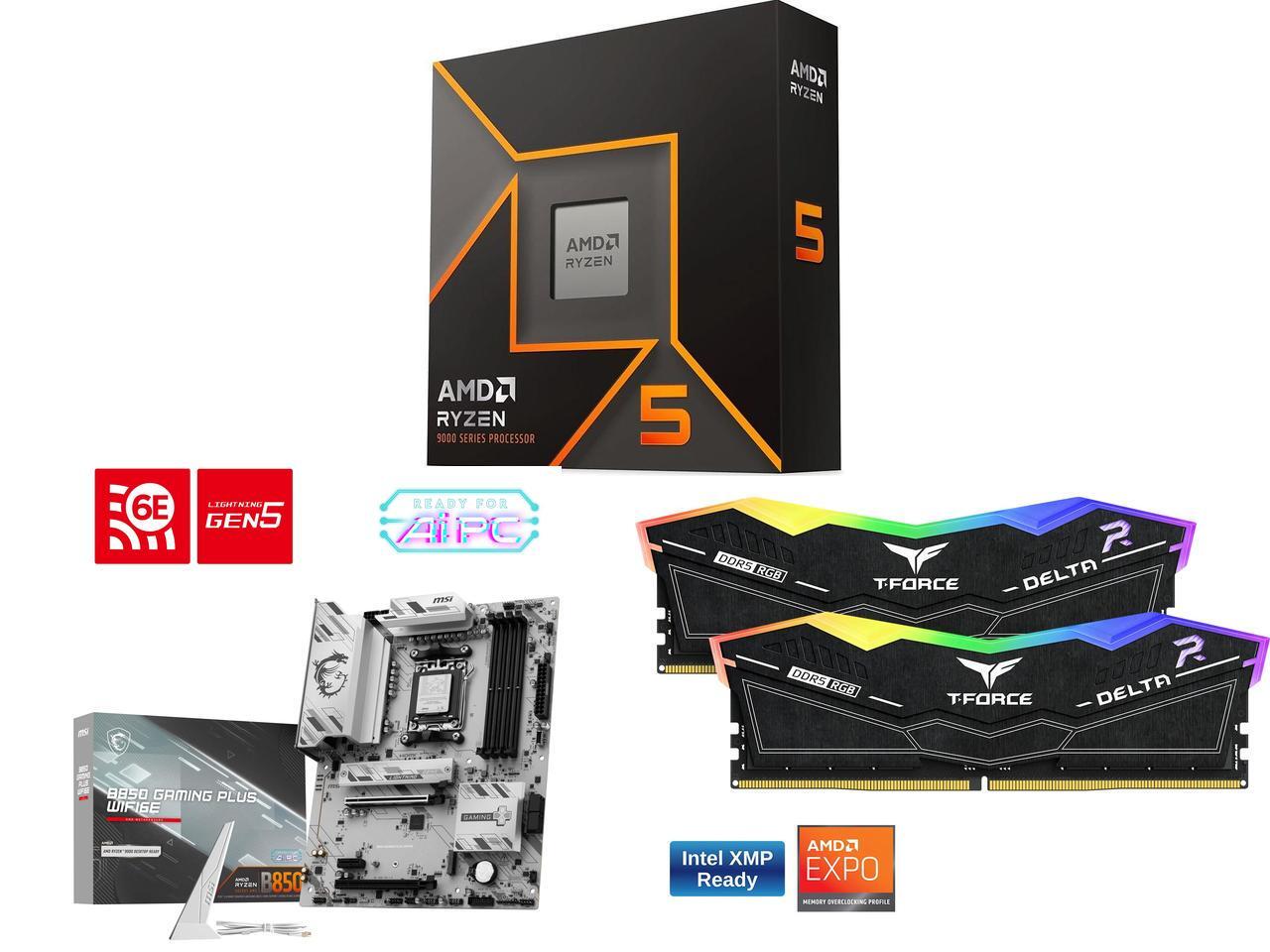
This bundle contains an AMD Ryzen 5 9600X processor along with a compatible MSI B850 GAMING PLUS WIFI6E motherboard with fast WiFi 7 wireless connectivity and two 8GB RAM sticks.View Deal
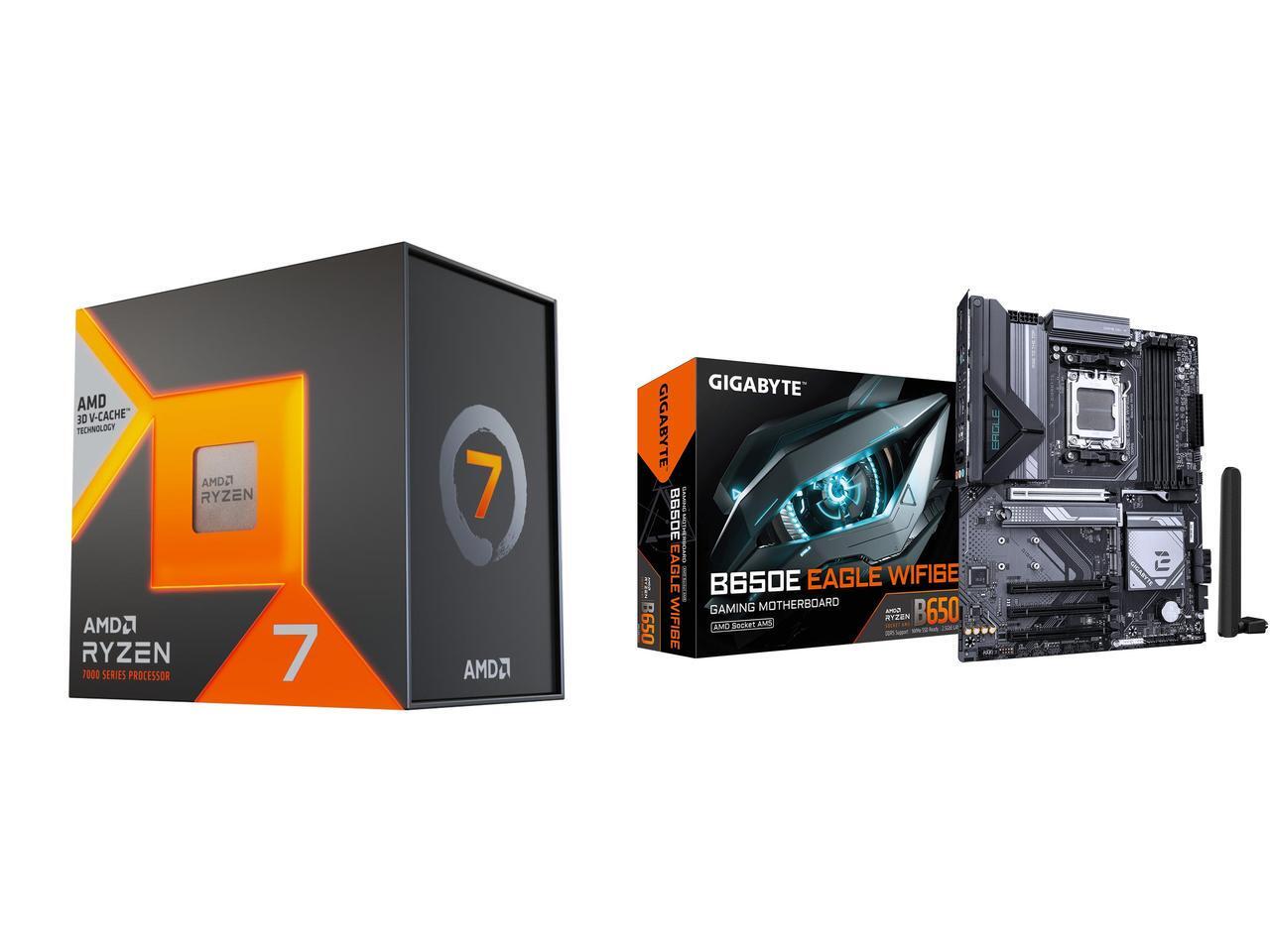
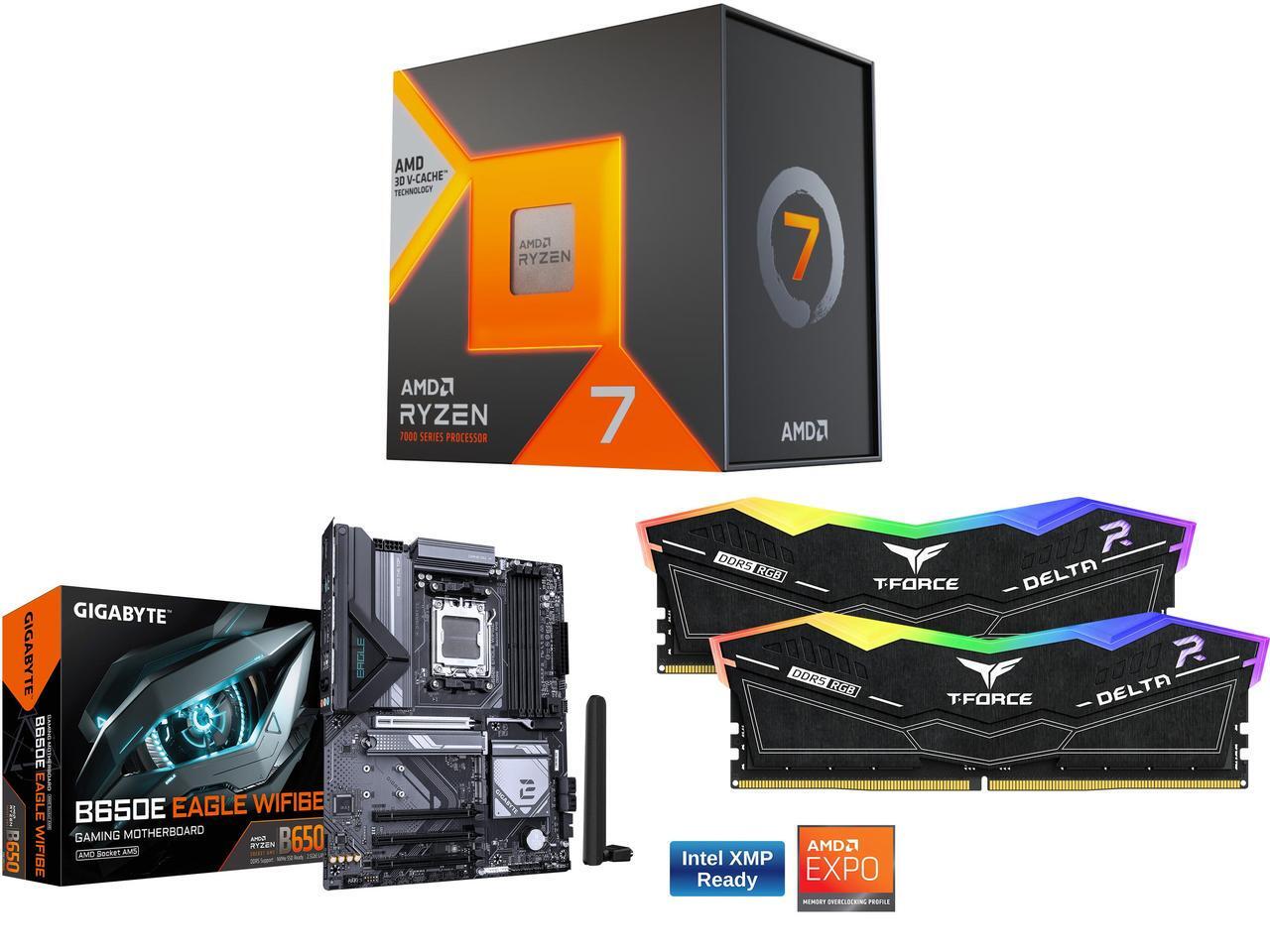
This gaming-focused bundle contains an AMD Ryzen 7 7800X3D processor, a GIGABYTE B650E EAGLE WF6E motherboard that offers PCIe 5.0 and Wi-Fi 6E, and two 8GB RAM sticksView Deal
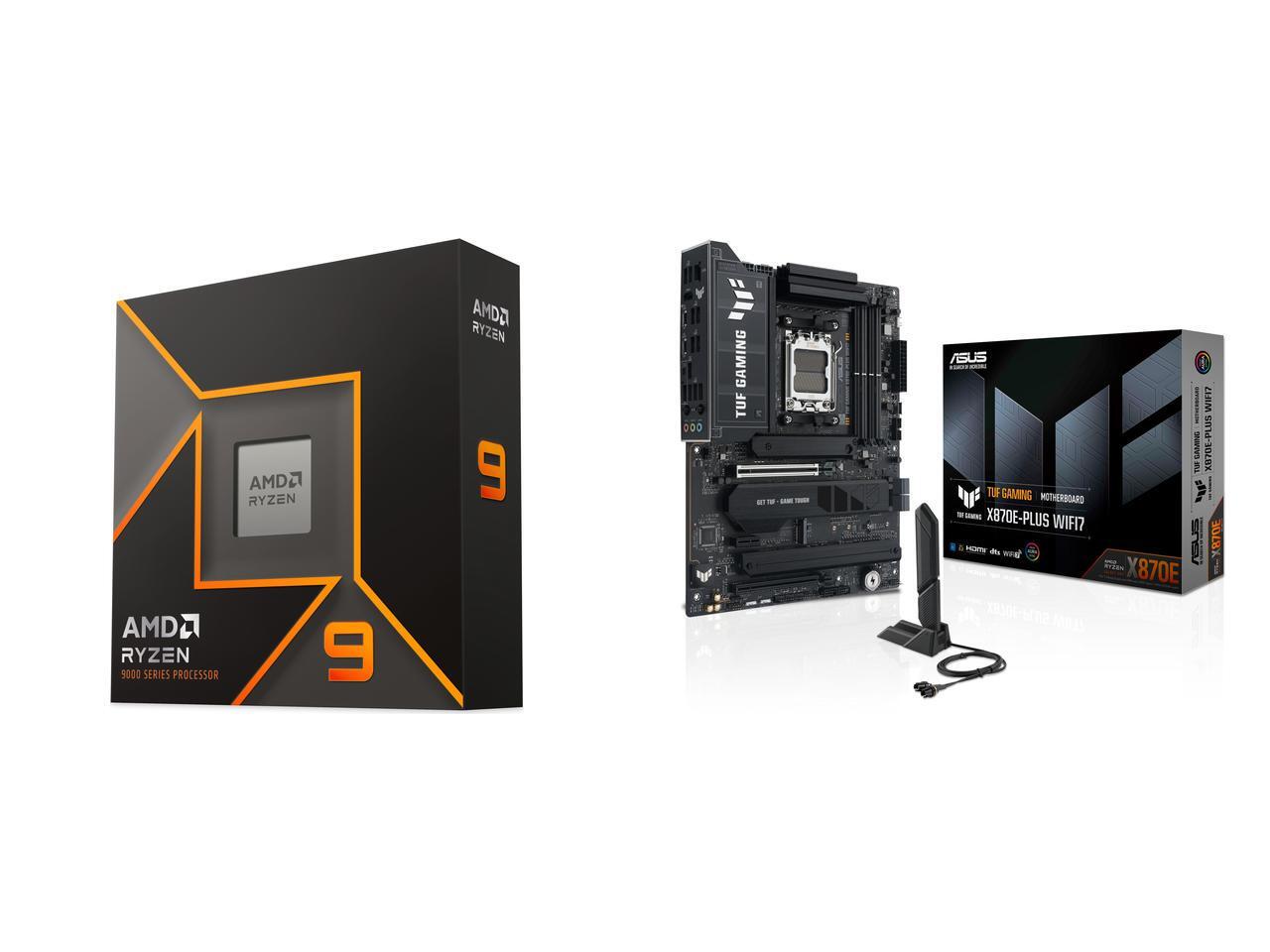
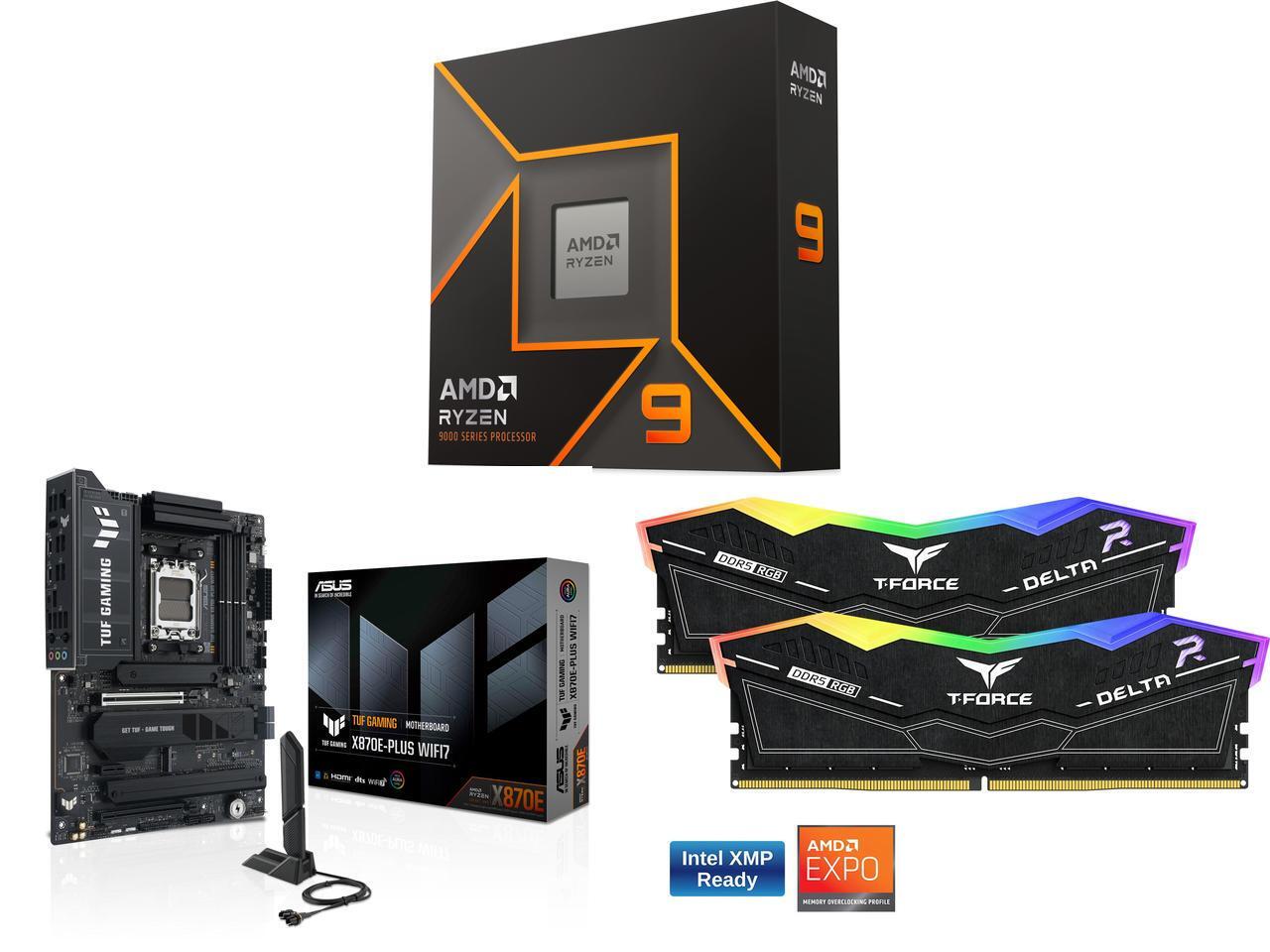
This bundle contains an AMD Ryzen 9 9900X processor with an ASUS TUF GAMING X870E-PLUS WIFI7 motherboard that features two onboard PCIe 5.0 M.2 slots with fast Wi-Fi 7 and two 8GB DDR5 RAM sticks.View Deal
FAQ
How long will these discounts last?
These discount deals will last from July 14, 2026 to July 31, 2026.
Are these AMD processors good for gaming?
Indeed, they are. AMD's Ryzen 9 9900X, Ryzen 7 7800X3D, and Ryzen 5 9600X processors all offer good to exceptional performance for boosting frame rates and smoothness, particularly the -X3D chips.
Which of these processors is good for productivity?
The Ryzen 7 7800X3D productivity performance is somewhat underwhelming, while the Ryzen 9600X fares much better with creative apps and solid single-core performance.
Join us on Reddit at r/WindowsCentral to share your insights and discuss our latest news, reviews, and more.
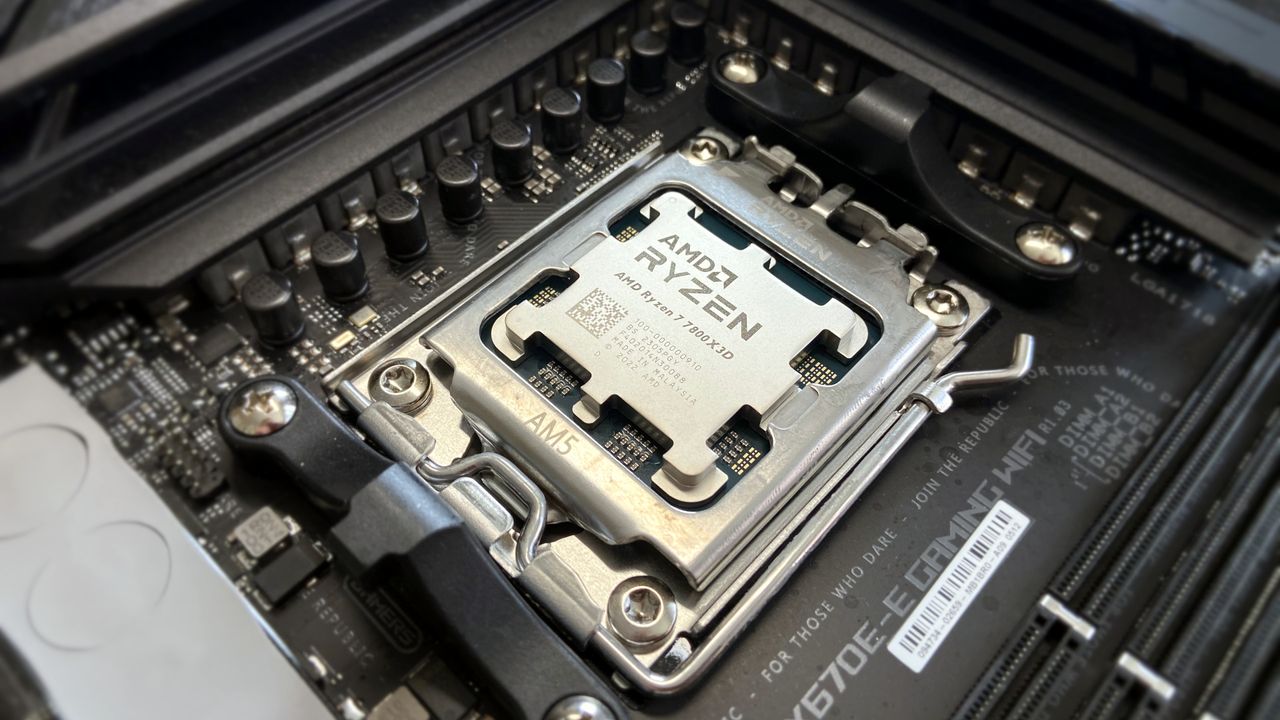
AMD Ryzen 7 7800X3D in socket
AI-generated image of an AMD processor with an MSI motherboard and Team Group RAM.
Pour la première fois, on connaît le titre exact d'un livre antique sans avoir ouvert le livre. Les chercheurs de la Vesuvius Challenge ont lu, écrit en plein milieu d'un papyrus carbonisé, la mention "Sur les vices, livre 1", un traité de philosophie grecque signé Philodème, un penseur épicurien actif au Ier siècle avant notre ère, dont le rouleau était resté soudé sur lui-même depuis l'éruption du Vésuve en l'an 79.
Ce rouleau, baptisé PHerc. 1667, vient d'être déchiffré d'un bout à l'autre. C'est le premier lu en entier.
Pour comprendre l'exploit, il faut imaginer l'état de ces documents : retrouvés en 1752 dans une luxueuse villa d'Herculanum, probablement celle du beau-père de Jules César, les quelque 1 800 rouleaux ont été changés en bâtons de charbon par la chaleur de l'éruption, au point que les dérouler à la main revient encore aujourd'hui à les réduire en miettes.
D'où l'idée, mise au point en vingt ans par Brent Seales, informaticien à l'université du Kentucky, de ne jamais y toucher. On glisse le rouleau dans un accélérateur de particules qui en réalise un scanner à rayons X d'une finesse extrême, on reconstitue en 3D chacune des couches enroulées à l'intérieur, puis on les déplie virtuellement à l'écran comme on aplatirait une viennoiserie feuilletée sans la déchirer.
Restait le pire. L'encre de l'époque est faite de carbone, exactement comme le papyrus brûlé qui la porte, donc elle est quasiment invisible sur les scans, et c'est là qu'intervient une IA entraînée à repérer les infimes différences de texture laissées par les lettres pour redessiner peu à peu un texte que l'œil humain ne voit pas.
Le résultat est franchement fort, avec 70 nouvelles colonnes de texte exhumées et, sur un autre rouleau, la mention "Philodème, Sur les dieux, livre 8" qui révèle aux historiens que cet ouvrage comptait plusieurs tomes, ce que personne ne soupçonnait jusqu'ici.
Et pour les spécialistes de l'Antiquité, ça compte vraiment, parce que la bibliothèque carbonisée d'Herculanum est la seule de tout le monde gréco-romain à nous être parvenue à peu près complète, et non en fragments recopiés au Moyen Âge par des moines.
Honnêtement, lire 2 000 caractères tracés par un Romain juste avant que tout brûle, ça vaut largement tous les chatbots qui écrivent des e-mails à votre place.
We have found a limited-time sale on the AMD Ryzen 9 7900X CPU, giving keyboard warriors and gamers a chance to significantly improve their PCs' performance for much less.
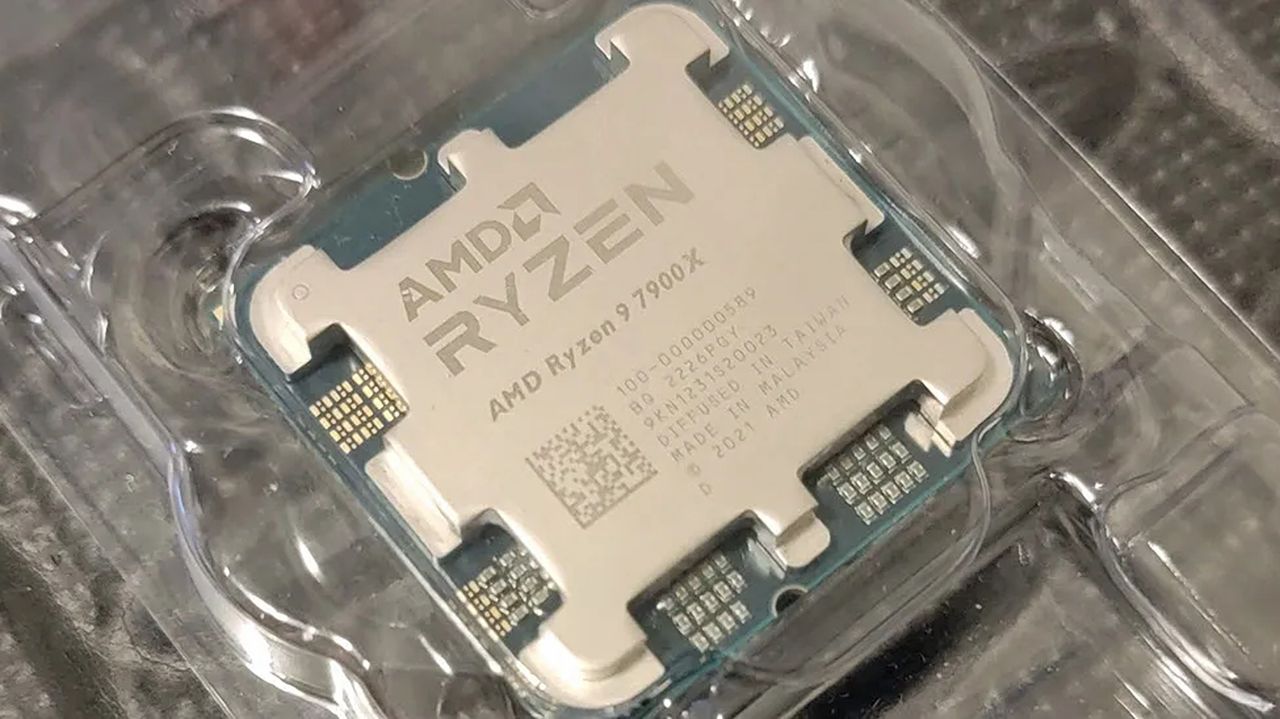
Close-up of an AMD Ryzen 7900X processor in clear packaging, showcasing its metallic surface and circuitry details. The tone is high-tech and sleek.
Close-up of an AMD Ryzen 7900X processor in clear packaging, showcasing its metallic surface and circuitry details. The tone is high-tech and sleek.
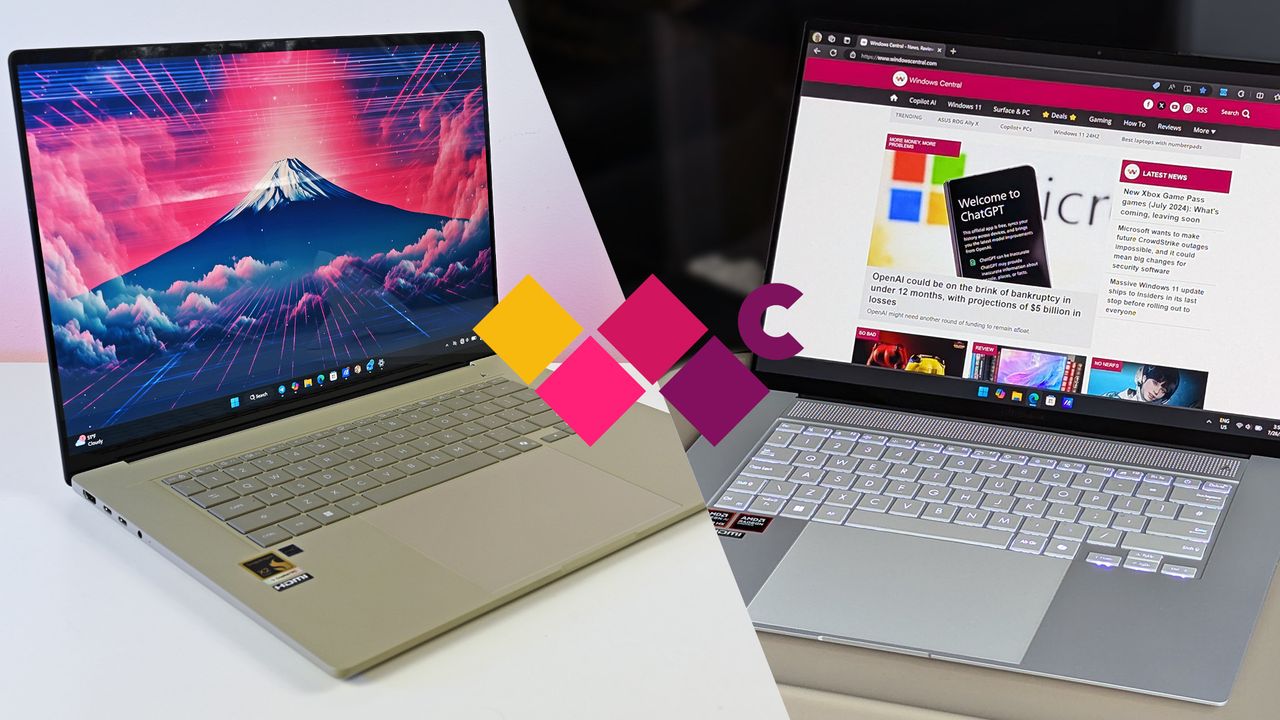
ASUS now has Zenbook A16 and Zenbook S 16 models on the market, and at first glance, they seem quite similar. But once you get inside, differences begin to appear. I've put together this comparison based on our reviews of both laptops to help you make the right decision.
ASUS Zenbook A16 vs Zenbook S 16
I'm comparing the Zenbook A16 to the Zenbook S 16.
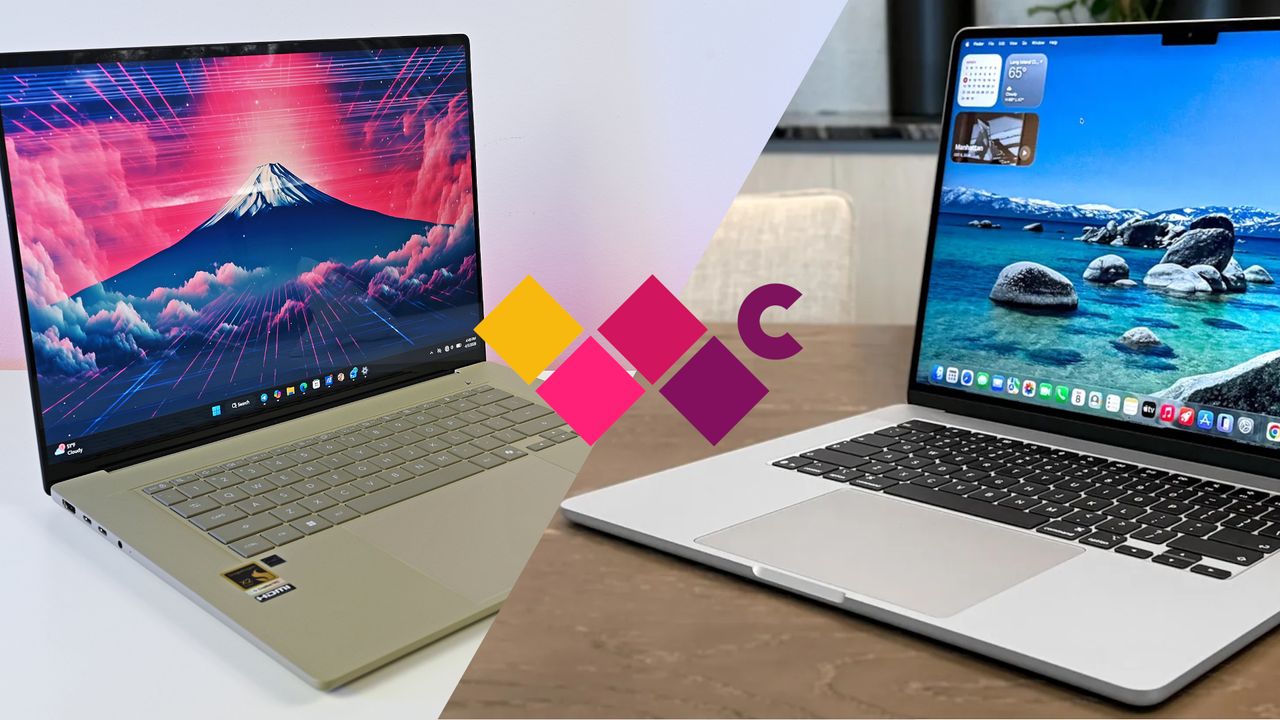
We got our hands on the new ASUS Zenbook A16 for in-depth testing, and it's clear that the new Windows laptop is gunning for Apple's lightweight MacBook Air 15. Here's how the two devices compare in terms of design, features, displays, performance, efficiency, and pricing.
ASUS Zenbook A16 vs. MacBook Air 15 (M5)
I'm putting the new ASUS Zenbook A16 up against the MacBook Air 15 with M5.
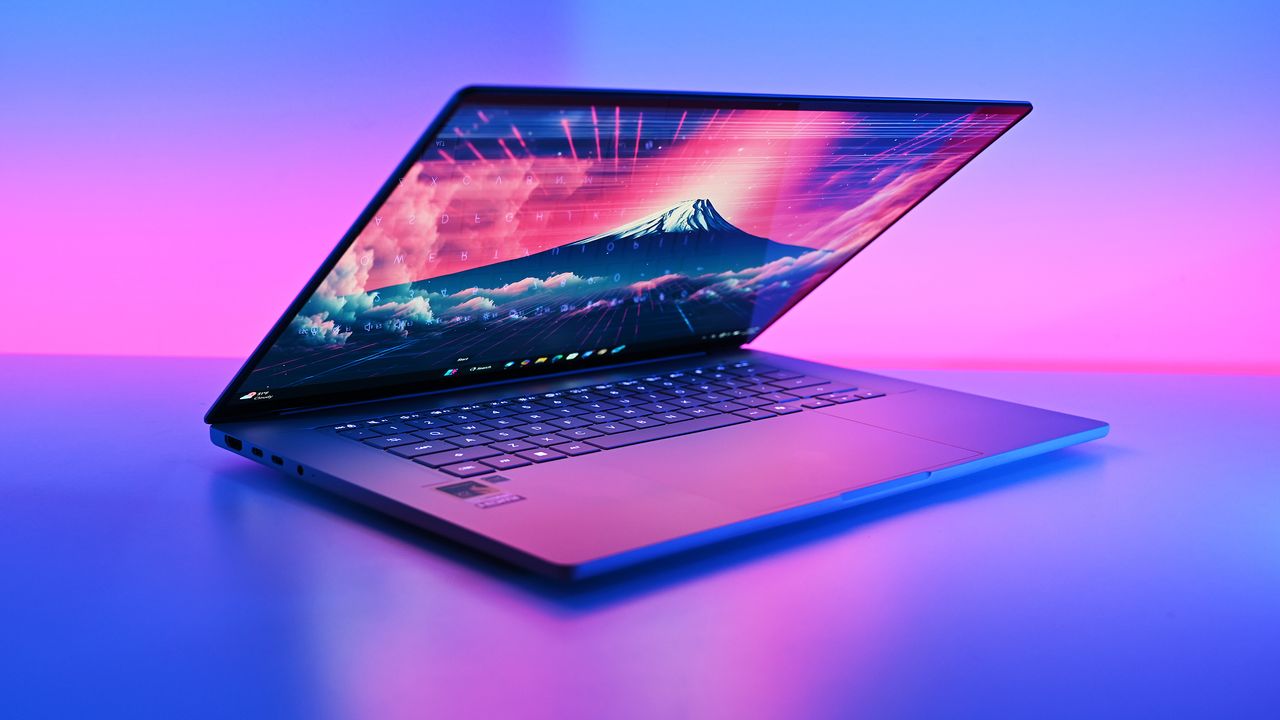
A combination of Qualcomm's phenomenal generational performance gains and refinements to ASUS' already stellar Zenbook design has crafted a practically perfect Windows laptop.
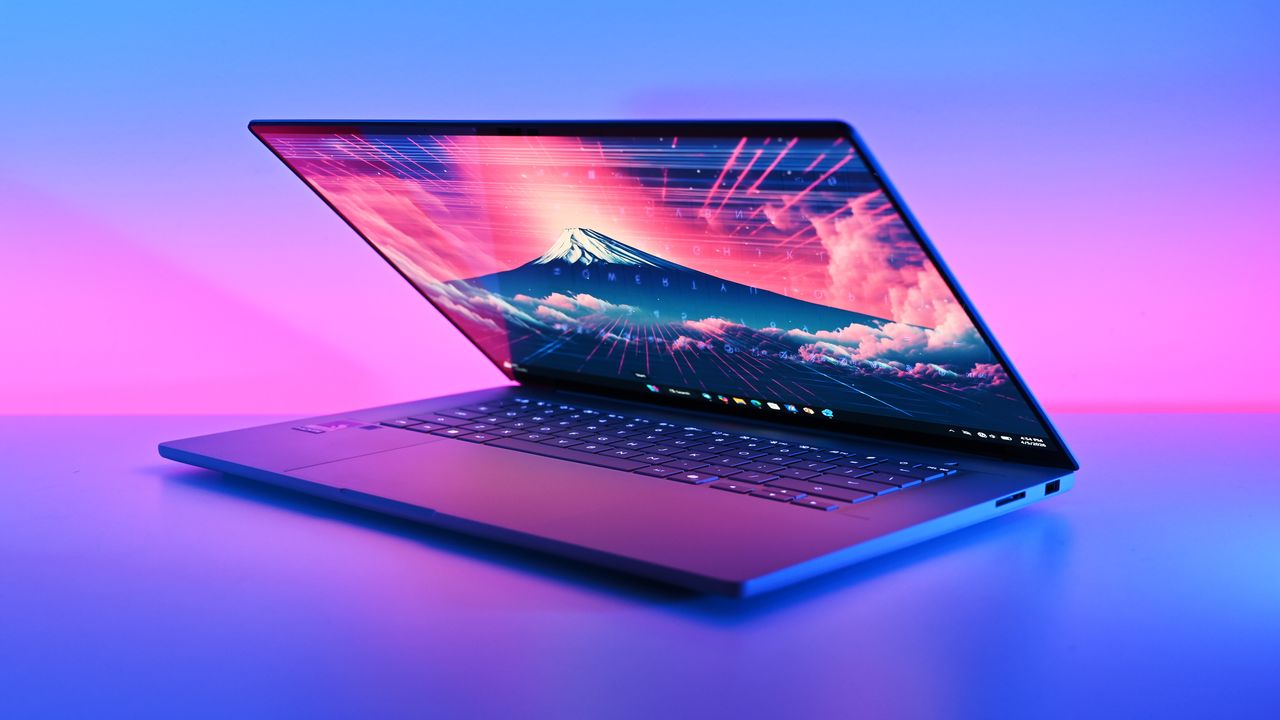
Studio photos of the 2026 ASUS Zenbook A16 laptop featuring the new Qualcomm Snapdragon X2 Elite Extreme processor.
Studio photos of the 2026 ASUS Zenbook A16 laptop featuring the new Qualcomm Snapdragon X2 Elite Extreme processor.

 Connexion