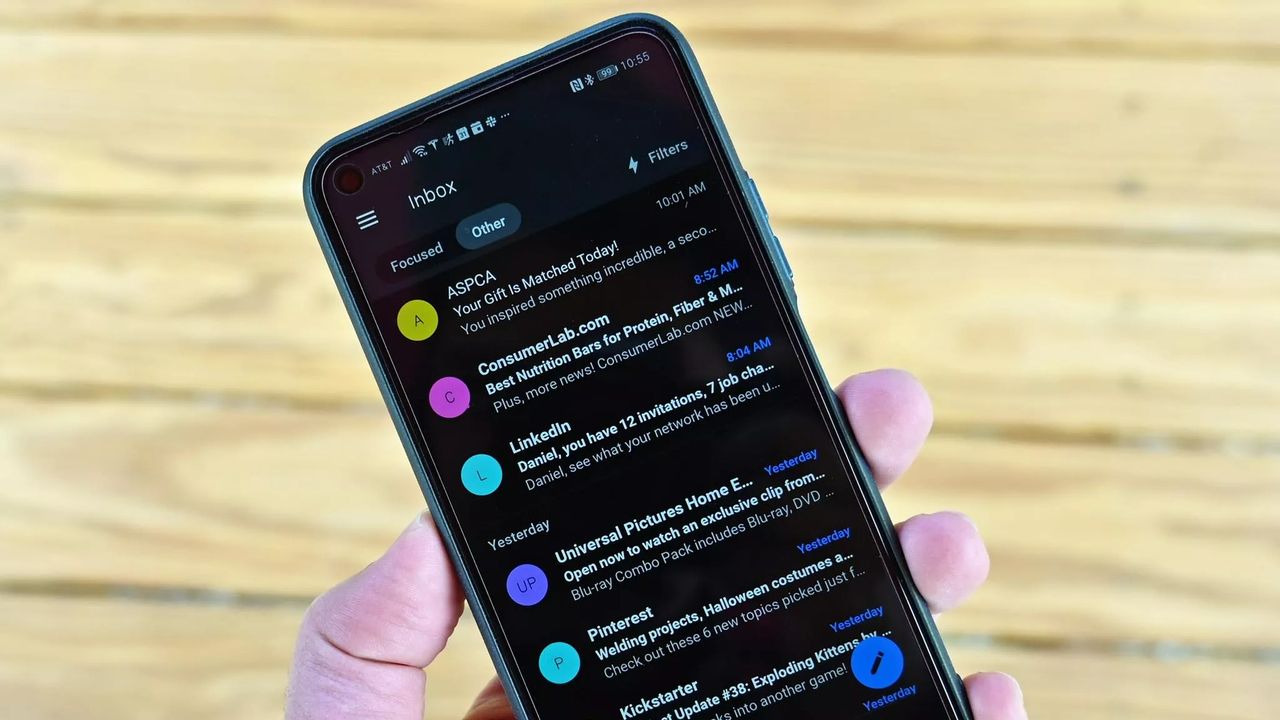
Microsoft Outlook has a handful of changes in the works that will make it easier to stay on top of emails and events. Some of the upgrades, such as drag and drop support for rescheduling events, will change how you interact with Outlook, while others are smaller upgrades.
All of the improvements are detailed on the Microsoft 365 Roadmap. I've taken five of the most exciting entries from that roadmap and gathered them in the chart below.
Feature
Description
Rollout Start
Platform
Filter messages by events
You can now filter your messages for calendar invitations. Simply go to the filter and select Events from the drop down.
August 2026
Android and iOS
Copilot Chat pop-out for Outlook for Mac and iPad
Copilot Chat remains accessible within an Outlook app window but now can also be popped out to float over the main Outlook app window. Popping out Copilot Chat allows people to switch contexts or have more space for what they are working on in Outlook and control the space and form that Copilot Chat takes on screen. When you open Copilot chat and click the pop-out button, Copilot will open separately over the main Outlook window.
August 2026
iPad and Mac
Drag and drop
You can now reschedule events by dragging them to a new time slot in your calendar. This feature is available in day and multi day views.
August 2026
Android and iOS
Insert signature image from OneDrive
Users can now insert images into their email signature directly from OneDrive, in addition to the device photo library.
August 2026
Android and iOS
All day events to show up more clearly in the Mail module calendar preview
We're making it easier to tell when receiving meeting invites that conflict with scheduled Out of Office time or Busy All Day events, on Outlook Web and Outlook for Windows.
August 2026
Desktop and web
Being able to filter messages to only show those with calendar invitations will save me a lot of time. I get a lot of calendar invites from my wife to coordinate our schedules, but I also get a lot of emails from my wife about other things.
After finding those events, I'll be able to move them around in Outlook by dragging and dropping them. Since we have a young child, we often need to move things to different times of the day to align with naptime. I wish drag and drop support was on the way to the web version of Outlook as well, but the roadmap entry only mentions iOS and Android.
Which features would you like to see added to Outlook? Are there any improvements on the way that you're especially excited about? Let us know in the comments!
Join us on Reddit at r/WindowsCentral to share your insights and discuss our latest news, reviews, and more.
In most modern homes, people rarely depend on a single shared computer anymore. Instead, most families use a combination of Windows 11 laptops, macOS devices, Android phones, iPhones, tablets, smart TVs, and cloud services, all connected through the same home network. The problem is that one weak device can compromise the entire network.
As digital life spreads across more devices and services, security gaps become easier to overlook. Attackers increasingly target the weakest link, often a device without proper protection, outdated software, or a misconfigured app.
TL;DR
The risk: Users today rely on multiple devices, accounts, and platforms.
The solution: All-in-one protection makes digital safety easy by eliminating coverage gaps between different operating systems.
Bitdefender Total Security: Provides a seamless multi-device coverage starting point for Windows 11, macOS, iOS, and Android.
Bitdefender Premium Security: Includes integrated privacy tools, such as an unlimited VPN, to remove data caps and protect public connections.
Bitdefender Ultimate Security: Offers identity-first digital protection with identity theft insurance and real-time monitoring.
Fragmented security increases household risk because attackers exploit the weakest device
Using different security solutions across devices creates an unbalanced level of protection. A Windows 11 laptop might have an antivirus installed, while a child's Android tablet might not, and this inconsistency can create openings that malicious individuals can exploit.
Can one vulnerable device really compromise the whole home?
Yes. Modern cyberattacks often use lateral movement, meaning malware on one device can scan the network for others. If one device (laptop, tablet, or phone) is compromised, it can expose other devices in the network.
According to the 2025 Verizon Data Breach Investigations Report, around 60 percent of breaches involve the human element, including non‑malicious actions such as mistakes, misconfigurations, or falling for phishing scams.
When each device in the home uses a different security solution, the chances of mistakes increase.
Why all‑in‑one protection solves this problem
A single security solution reduces that configuration friction. Instead of juggling different apps, settings, and alerts, every device follows the same protection solution. This reduces the number of decisions families must make, and fewer decisions mean fewer gaps.
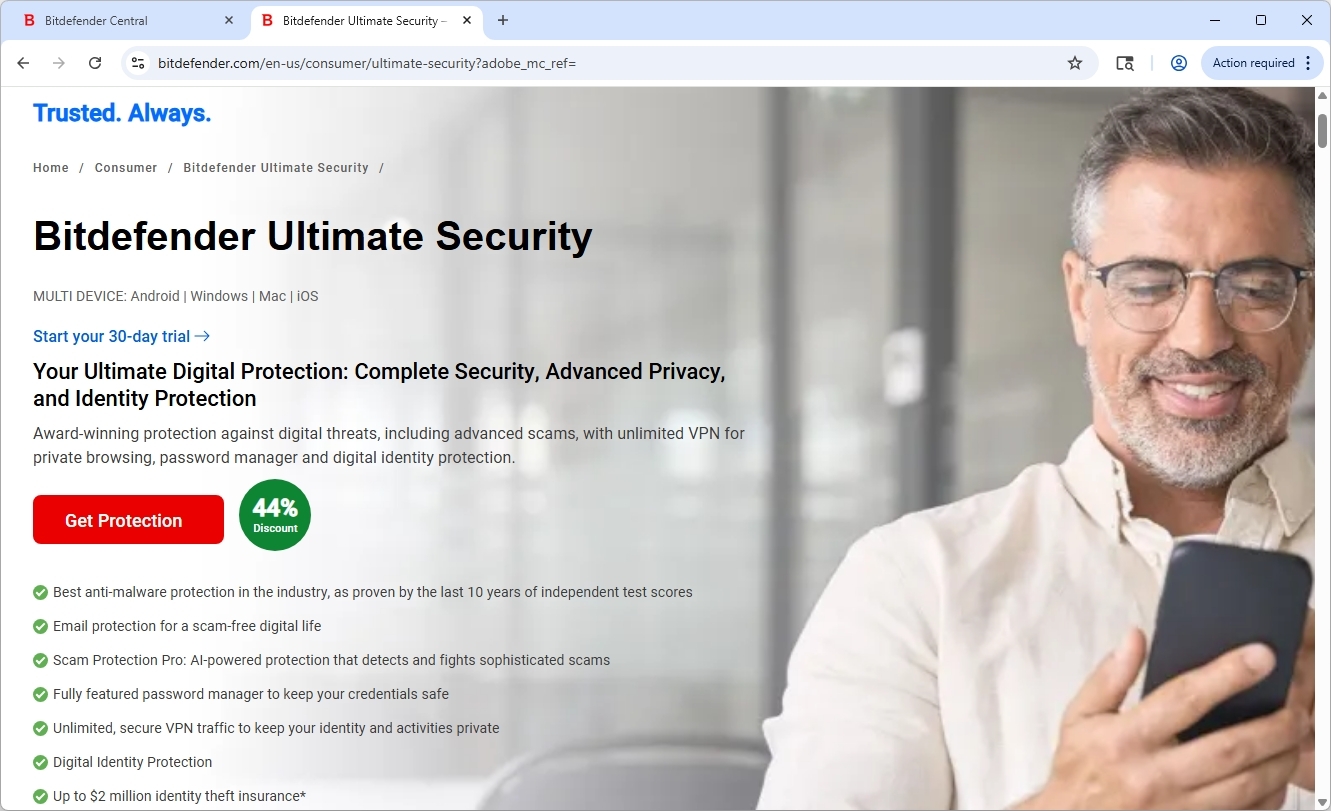
(Image credit: Bitdefender )
Why is an all-in-one suite better than several specialized apps?
Because it removes configuration friction, using a unified protection means all your devices use the same security system, so you don't have to worry about differences between Android and Windows 11. Everything is built on a single platform, helping eliminate potential weak points that attackers could exploit.
Bitdefender Total Security provides seamless multi‑device coverage
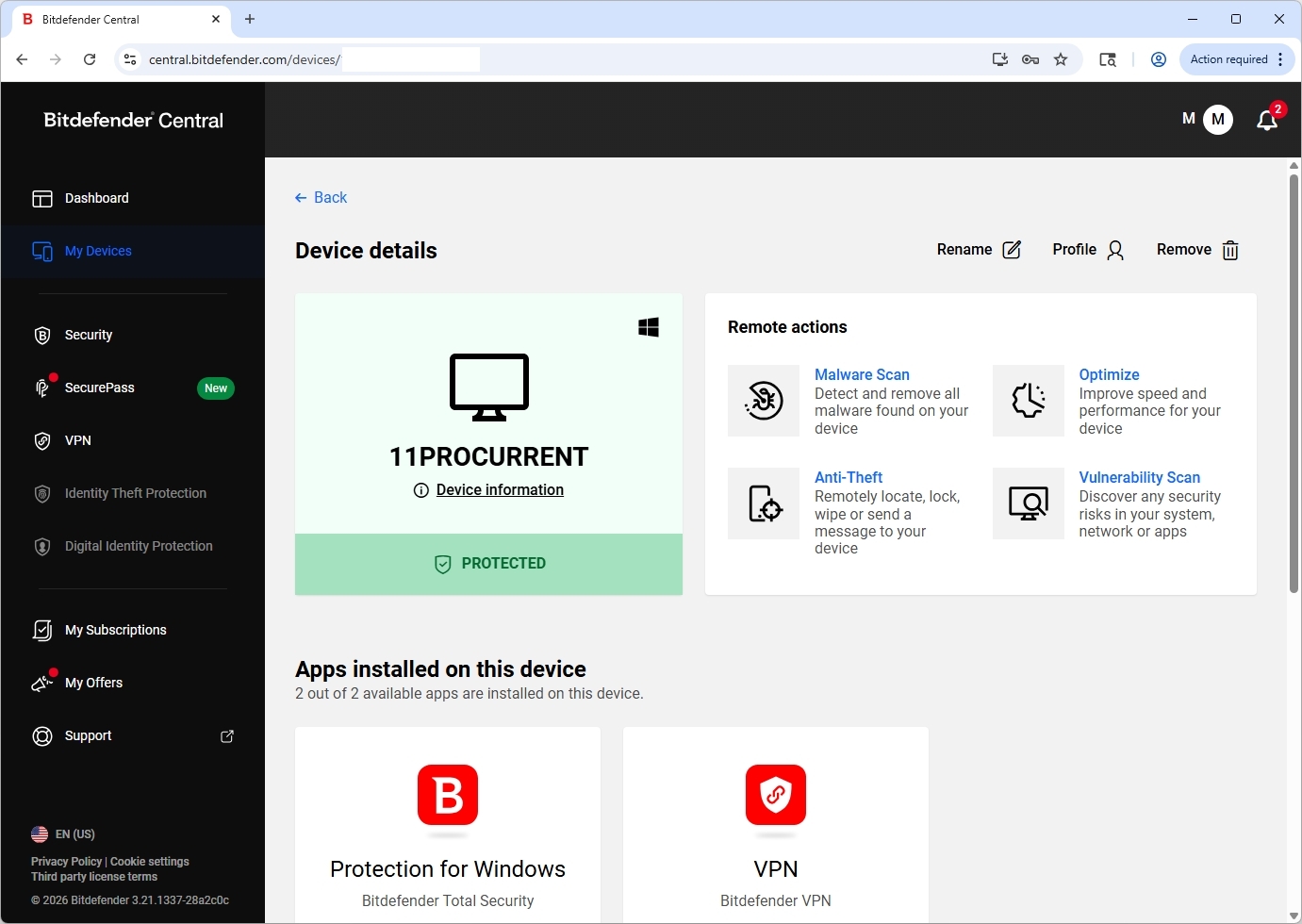
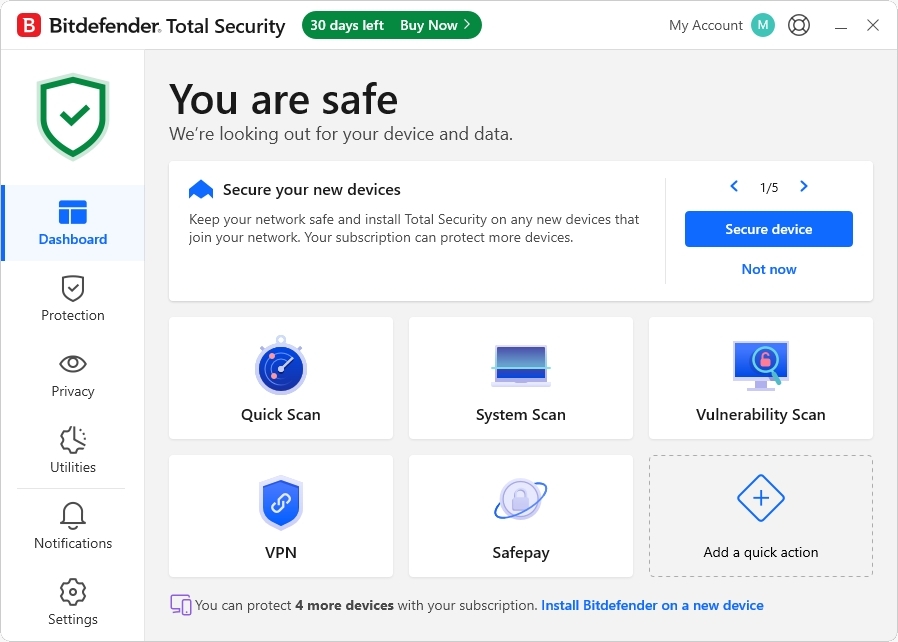
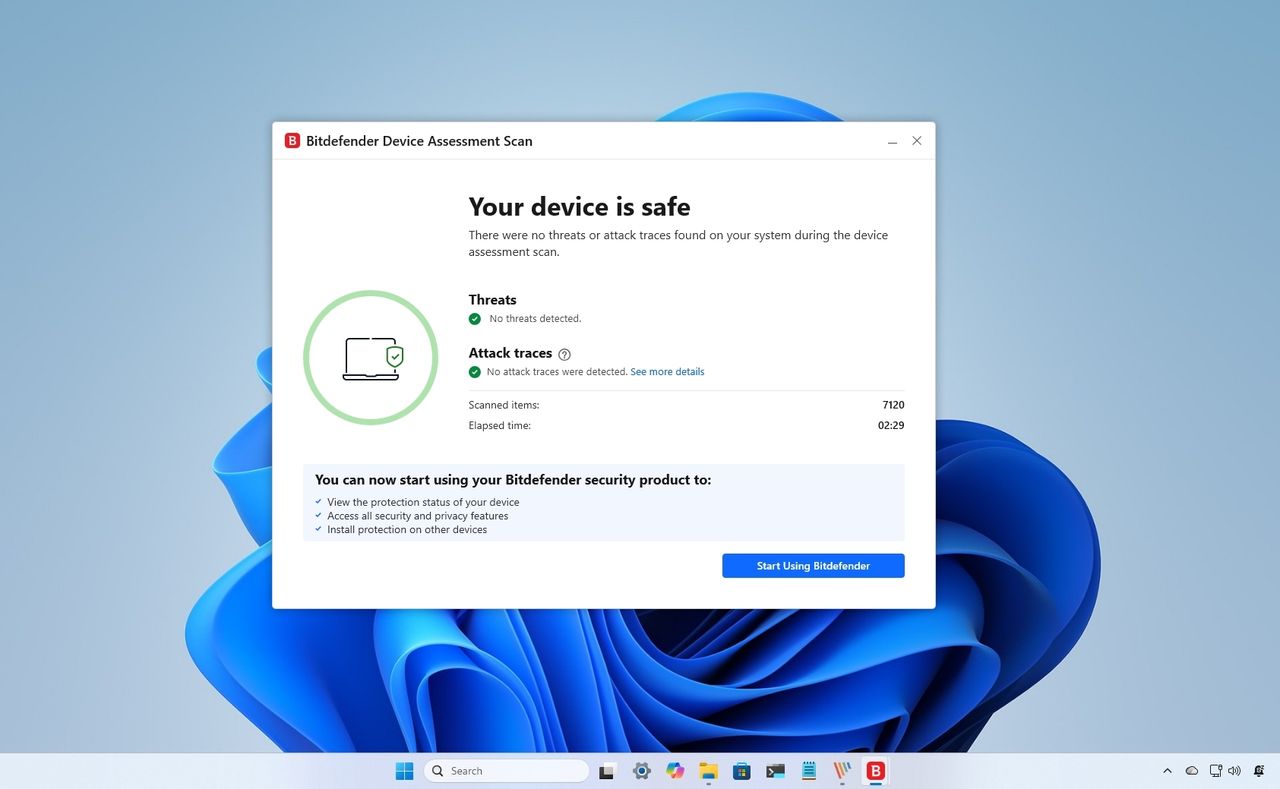
A single defense system is the appropriate solution for busy homes because it stops the manual labor required to stay safe. Bitdefender Total Security is designed as a single protection layer for mixed devices in the home. It brings Windows 11, macOS, iOS, and Android under one unified dashboard.
(Image credit: Future)
Key features of the Total Security tier:
Central dashboard: It monitors the security status of every family device from a single location.
Real‑time protection: Uses advanced threat detection to block malware, ransomware, and zero‑day threats.
Integrated privacy tools: It includes webcam and microphone protection to alert you when apps attempt unauthorized access.
Bitdefender consistently ranks at the top of independent laboratory tests. In the latest AV‑Comparatives Real‑World Protection Test, Bitdefender achieved a 99.5 percent protection rate with one of the lowest false‑positive scores.
Users can start with Antivirus Plus for essential protection on a single device before moving to full-suite plans.
Bitdefender Premium Security removes common limitations like VPN data caps
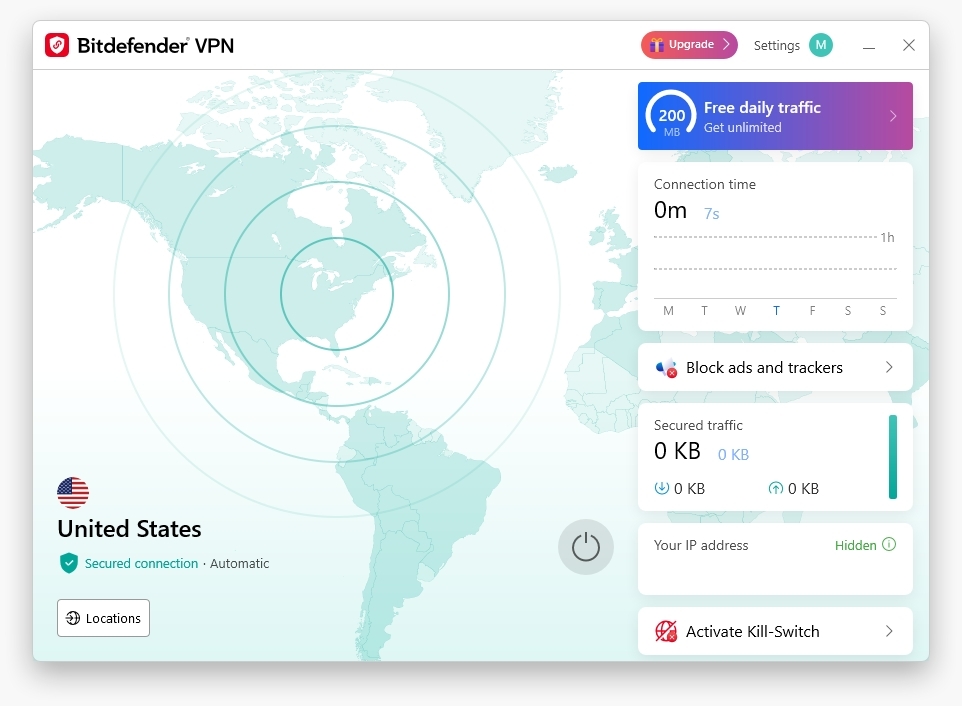
While the standard "Total Security" suite is robust, the jump to Premium Security is where all-in-one protection is the more practical choice because it removes common limitations, such as VPN data caps, that often lead users to avoid certain security features altogether.
(Image credit: Future)
Is upgrading to Bitdefender Premium Security worth it?
Yes, for most homes, upgrading to Bitdefender Premium Security is worth it, especially if you regularly use public Wi-Fi, travel often, or work remotely. An unlimited VPN adds a layer of protection by encrypting your internet traffic without the hassle of data limits.
Why is an integrated password manager helpful?
Integration creates an easier-to-manage experience. Bitdefender's Password Manager is great for shared households because it helps family members generate strong, unique passwords, as well as sync them across devices and reduce password reuse, a major cause of account compromise.
Bitdefender Ultimate Security adds identity‑first protection for modern home
Device protection still matters, but these days your personal data is just as exposed. Families share devices, accounts, and the same wireless network, which creates more chances for information to slip through the cracks. Bitdefender Ultimate Security focuses on that risk, adding tools aimed at protecting financial and personal data, not just the devices themselves.
It offers up to $2 million in identity theft insurance.
Access to restoration specialists.
What happens if your identity is stolen?
Bitdefender's specialists help guide you through restoring your identity, credit, and accounts, a process that can otherwise take a long time.
Bitdefender plan comparison
Feature
Total Security
Premium Security
Ultimate Security
Device Protection
Up to 5 devices
Up to 5 devices
Up to 5 devices
Unlimited VPN
No (200MB/day)
Yes
Yes
Password Manager
Yes
Yes
Yes
Identity Monitoring
No
No
Yes
ID Theft Insurance
No
No
Up to $2M
FAQs about common household security questions
Do I need an antivirus solution on every device?
Yes. Even devices that don't traditionally get viruses can be used as entry points for attackers.
Can an infected device compromise other devices on my network?
Yes. Some malware is capable of scanning your home network and attempting to access other devices.
Is an all‑in‑one suite better than using separate apps?
Yes, for most homes, the unified protection reduces the chances of misconfigurations and improves management.
Is the VPN upgrade worth it?
If you usually connect to public Wi‑Fi or travel, an unlimited Bitdefender Premium VPN is a worthy upgrade.
Bottom line
A security setup is only as good as how well it’s maintained across your devices. When protection is split between different apps and services, it's easy for something to get missed. An all-in-one approach reduces that complexity by bringing device security, account protection, and privacy tools into one place.
Bitdefender brings device protection, privacy tools, and identity monitoring under one system, reducing the complexity that usually causes security gaps at home.
For larger households managing multiple users and devices, Family Plans provide centralized protection and easier subscription management across the entire home network.
Microsoft Edge has a lot of built-in features that go unnoticed. Read Aloud has been part of Edge for a long time, and I use it all the time to review articles and listen to content. But after weeks of testing, I understand how Edge's Read Aloud feature stacks up against a dedicated tool for text-to-speech.
Speechify launched a Windows app earlier this year that adds real-time text-to-speech and voice typing to PCs. There was already a Speechify web extension, which is what I used for testing here. Speechify shared Premium access with me to help me assess their app and extension, so I've had several months to get used to them and compare them to alternatives.
Interestingly, Speechify and Read Aloud in Edge excelled in different areas.
Accuracy and cadence
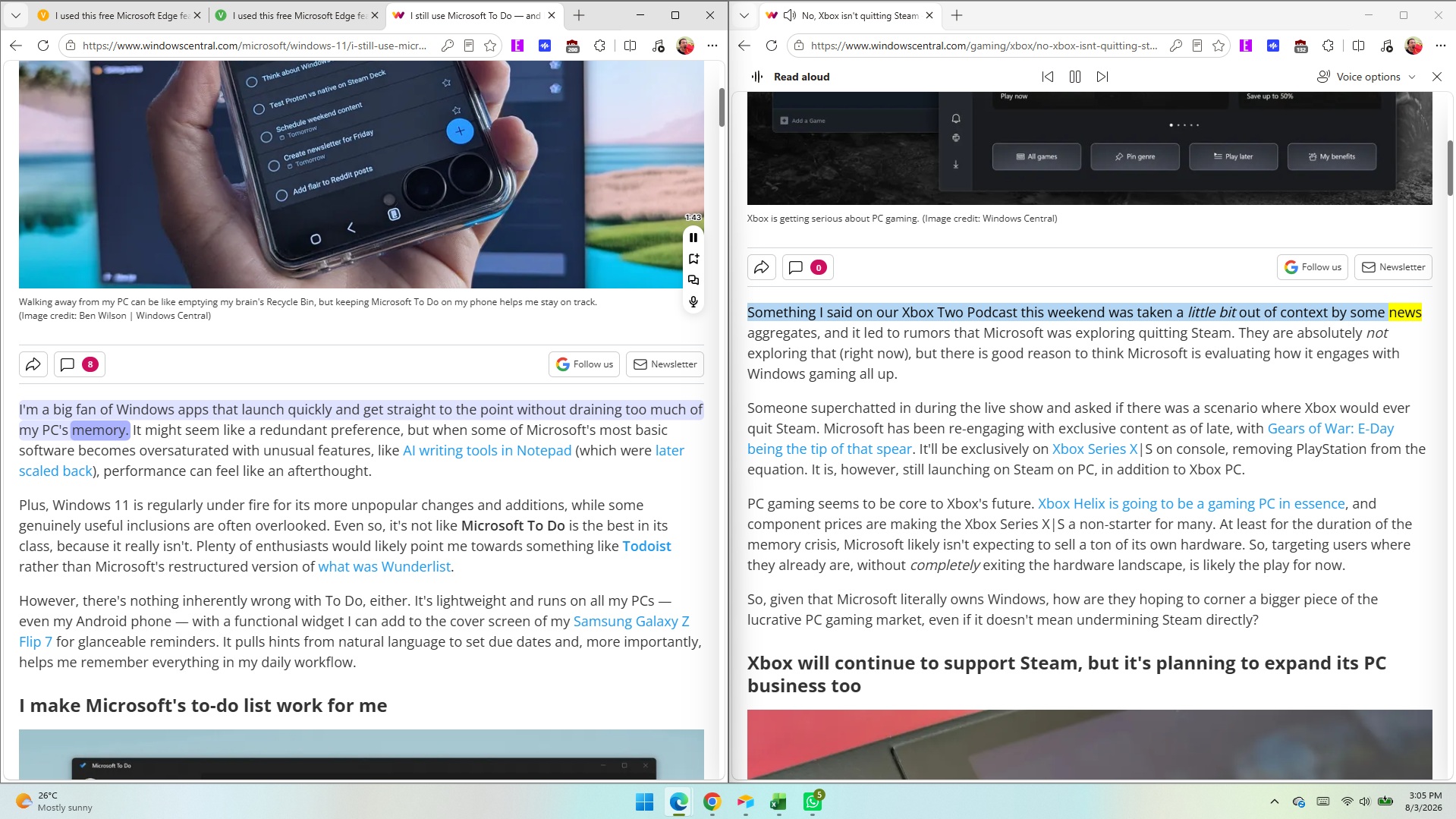
Speechify (left) offers smoother natural voices and page navigation, but Edge's built-in Read Aloud toolbar (right) handles basic text-to-speech for free. (Image credit: Future)
Read Aloud supports a large library of voices. These are fun to play around with since there are quite a few English options sporting different accents.
All of the voices marked as "Natural" in Read Aloud sound fluid and are easy to understand. Occasionally, the feature will pause for a moment as it decides where to jump to next on a page (more on that below).
Read Aloud finds text well and presents pages using voice, allowing you to multitask or absorb content through both reading and listening.
While Edge's voices sound fluid, Speechify's voices sound more natural. They sound as if a voice actor is in a booth reading to you. There's a bit more bass in each voice and more depth than what's in Edge.
Speechify has several celebrity voices, which to be honest I'm not too fussed about. I don't need robot Gwyneth Paltrow to read me the latest Xbox news, but it's an option if you'd like her to.
Voices in Speechify are labeled based on their key characteristic, such as "Velvety" or "Easygoing." The "Resonant" Dominic voice would be a great choice to read the next Sarah J. Maas novel, but I don't think he's the best option for tech news.
Because Speechify's voices are clear and natural-sounding, you can play them at faster speeds before they sound ridiculous. I'm able to play Speechify voices at over 2.2x speed and still understand them. Edge's Read Aloud voices max out at around 2x speed before they're difficult to understand.
Dealing with the modern web
The modern web is full of inserts, page breaks, ads, and other components. When you read an article online, you rarely see a large block of uninterrupted text. In fact, my editor would tell me off if I published a piece of just text.
In order for articles to be visually engaging, publishers place block quotes, embedded posts, videos, and other items. When you read an article, you scan over certain content without thinking. If you spend a lot of time on the web, you've learned what should be read as part of an article, such as a block quote, and what is separate, like a list of related pieces.
Microsoft Edge's Read Aloud feature has not learned the same lessons. It will jarringly jump between the main text of a piece and a "You May Like" section.
In contrast, Speechify sticks with the main text of an article and hops over inserts that are off-topic. In my testing, Speechify correctly identifies the content I'd like read, such as block quotes, but bypasses things I'd want to circle back to later and click.
Both Read Aloud in Edge and Speechify hopped past ads in my experience, which is nice.
This app adds voice typing and text-to-speech to Windows. It can read PDFs, web pages, or documents and can be used to convert spoken words to text with correct punctuation.
A subscription also gets you more features within the web extension.
Note that the free version of the Speechify app is limited to slower listening speeds, fewer voices, and text-to-speech (voice typing requires Premium). Voice typing is free within the extension.View Deal
Is Edge Read Aloud better than Speechify?
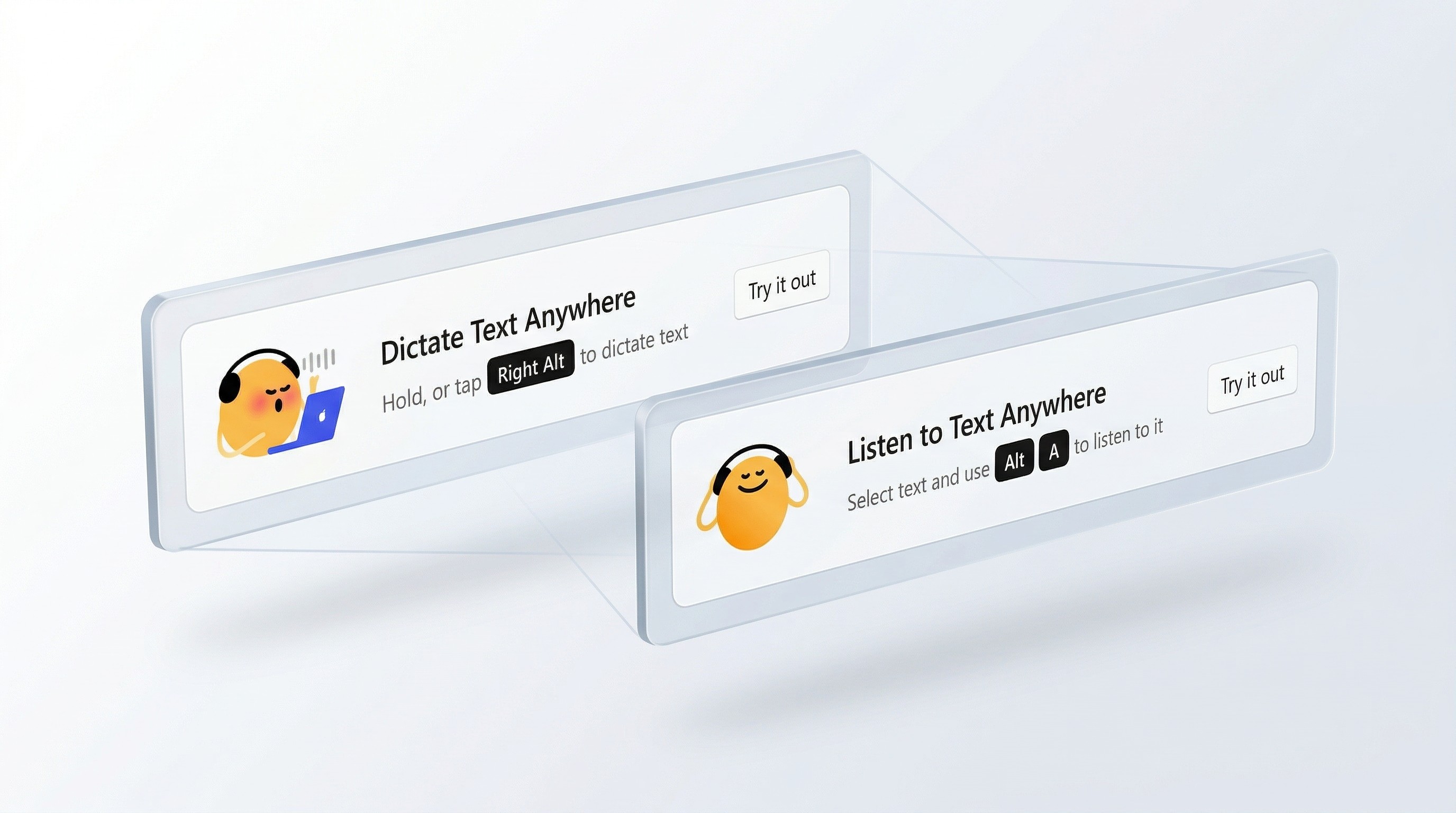
Speechify works well and sounds natural, but it's difficult to justify its cost when Edge can do much of the same for free. (Image credit: Speechify | Edited with Gemini)
Edge's Read Aloud feature is surprisingly solid for a free tool that's built into Microsoft's browser. If you only care about listening to the web, it's the better choice for most people.
Speechify is not worth its subscription cost if you only plan to use it to listen to articles out loud. A large portion of Speechify's value comes from its dictation features.
Don't get me wrong, Speechify is very good at reading websites and documents out loud. I prefer how it handles ads, text blocks inserted into pieces, and other website components. I also prefer the voices in Speechify.
But Edge's built-in Read Aloud feature works well and is free. Paying $29 per month is a large investment to listen to articles.
If you need to dictate text and listen to articles, I'd suggest trying Speechify.
Join us on Reddit at r/WindowsCentral to share your insights and discuss our latest news, reviews, and more.
Microsoft Edge Vertical Tabs
Microsoft Edge has a built in Read Aloud feature that can read articles.

 Connexion