
 Connexion
OpenAI's Sam Altman just admitted he was "wrong" about AI — laments that he made the tech seem "scary"
The big AI era isn't going as some might've hoped.
OpenAI and other big companies are losing billions chasing artificial intelligence technology, and it's only clever accounting and circular investments keeping the entire industry afloat. OpenAI specifically is in hot water, with spending commitments through to 2030 coming scarily close to $1 trillion dollars, and is operating purely on the basis of handouts from the likes of SoftBank, NVIDIA, Oracle, and Microsoft. OpenAI is looking to spend $50 billion in compute alone in 2026 on roughly $25~ billion in revenue, revenue which is also made up at least in part with IOUs.
DEAL: Get Surfshark VPN 86% OFF with Windows Central 🦈
Despite the scary numbers, OpenAI is trucking along on faith and fumes alone, as companies' belief in the tech keeps the firm alive, for now.
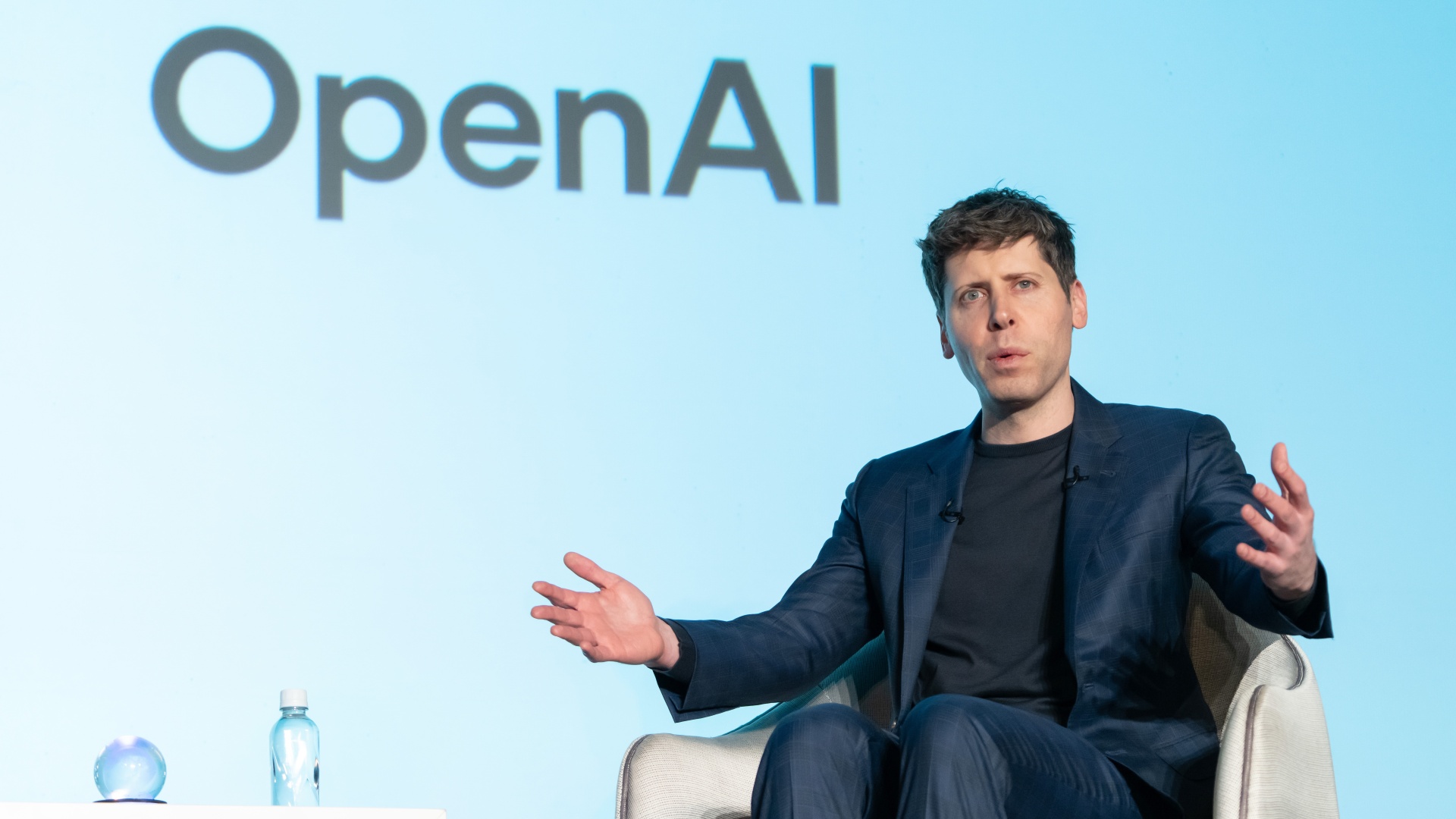
Yet, even Sam Altman is having doubts about the impact of large language models. In a new podcast, Altman lamented "economic inertia" for the lack of adoption, and also called out the AI industry for making the tech seem "scary."
"A lot of the people building AI have been off saying there's a 25% chance we're going to destroy the world ..."
Altman effectively blamed those pesky humans for not adopting ChatGPT and other AI products, lamenting that "people keep using their tools in the same way" they had previously been using them.
"I thought when we got to [ChatGPT]-4, which was back in 2023, I thought very quickly after that there'd be much more disruption, with the software business up for grabs right away. I was wrong about a few things, one of them, in terms of the speed ... the economy just has so much inertia. People keep doing the same things they're doing, they keep buying from the same company, they keep wanting to use their tools in the same way ..."
Altman implied that the "slow" pace of change would make the "transition" to AI "smoother." Elsewhere in the podcast, Sam Altman remarked that AI leaders had "not done a very good job" explaining AI tech, referring to the broad backlash to the technology.
"I also think a lot of the people building AI have been off saying there's a 25% chance we're going to destroy the world ... and yeah, we're going to race ahead and do it because otherwise those bad guys will do it first. Or it's like, 'man, this thing is going to be really terrible, and 50% of the jobs are going to go away in the next year, and we hope you are all okay,' but it seems really scary.
We have not, as a field, done a very good job of explaining to people what the benefits are and how the downsides can be mitigated. We certainly have not done a good job ... even if people have had answers like, 'well, there's going to be universal basic income, or work will be optional', or whatever. There's been very little discussion from people about how and why it's important that people have more power and freedom in the world, not less."
My take: Altman just doesn't get it
I think the key issue with this AI tech is that most people just don't find it very useful. I work in an industry that, at least on paper, should benefit from some kind of automagical writing tool. The problem is that it loses so much nuance and accuracy that, even if I wanted to use it for work, I literally can't.
I think a lot of these very technical, mathematically-inclined dudebros pushing this format have little knowledge or understanding about how and where this technology should be applied. Spotify, YouTube, Instagram, gaming platforms, and other services are actively trying to filter out AI content, as it is repeatedly proven to decrease engagement — users actively hate it. Companies that are using tokens to try to boost productivity are finding that they're actually just boosting costs, and that they're simply finding a new bottleneck in the finite amount of addressable customers.
LLMs undoubtedly have uses, but when 90% of the compute is being spent on utterly unproductive use cases, the economics simply seem primed to implode. If you're spending tokens for the sake of spending tokens, and it doesn't lead to any discernible increase in sales — what is the point? You could use AI to make hundreds of slop video games, but people already have more than enough to play built by an ironically more affordable human workforce.
RELATED: Ed Zitron talks to us about Microsoft, OpenAI, and the future
In the future, I think we'll find AI probably ends up as a tool of governments in things like law enforcement and medical fields. Specific industries will benefit from tools that can parse and summarize large, complex data sets, albeit with the unfortunate knowledge of LLMs' penchant for hallucinations and outright lies. Just yesterday I asked Copilot to find some links to some old Windows Central articles I did. It just straight up lied and gave me some completely made-up links instead. Extrapolate these simple mistakes to medical fields or military applications, where lives are literally at stake ... is it worth the risk?
Perhaps the issue is that AI's inaccuracy renders it only viable in low-stakes businesses ... and those low-stakes businesses simply won't see a real return over doing things the "old way," which Altman describes as economic "inertia."
Perhaps it's not inertia. Perhaps the AI business model is just not the disruptor it was cracked up to be.

Join us on Reddit at r/WindowsCentral to share your insights and discuss our latest news, reviews, and more.
Sam Altman on David Senra's podcast
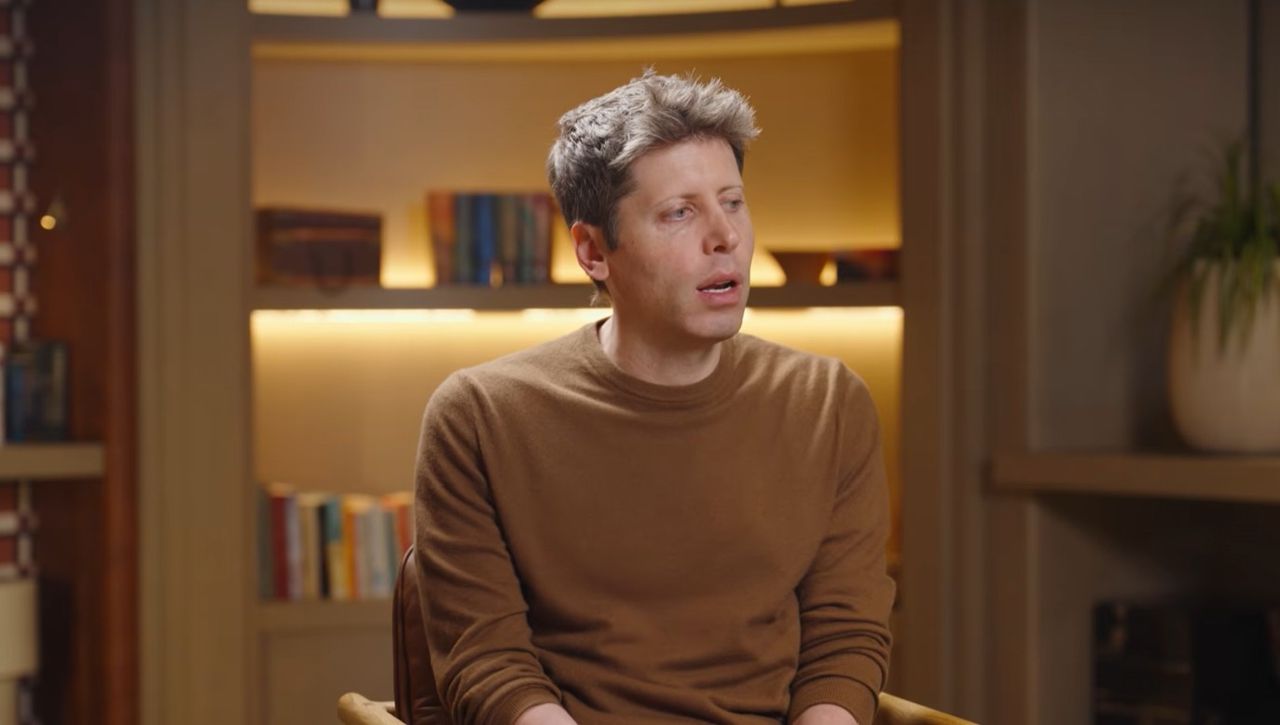
Altman laments.


