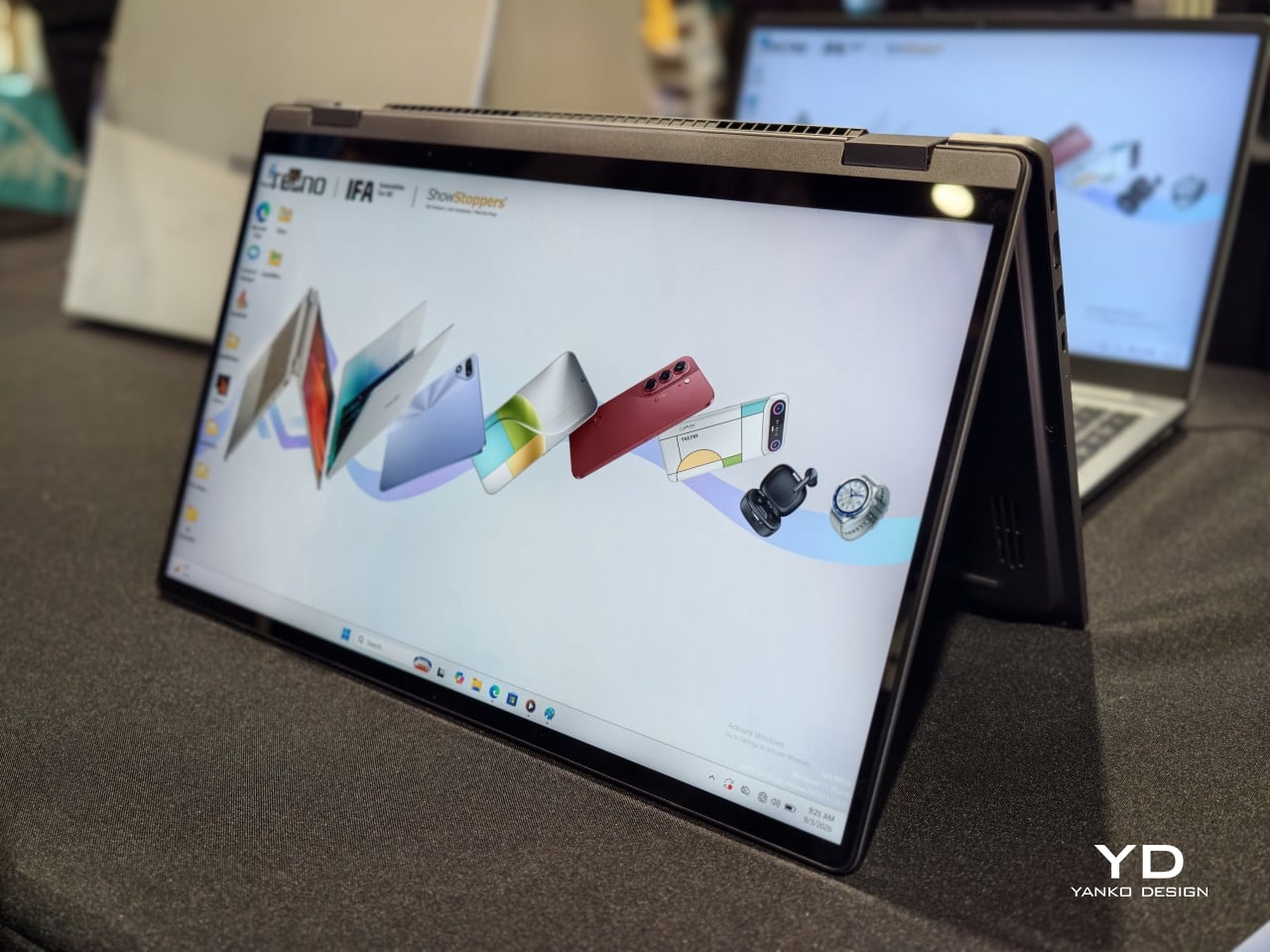
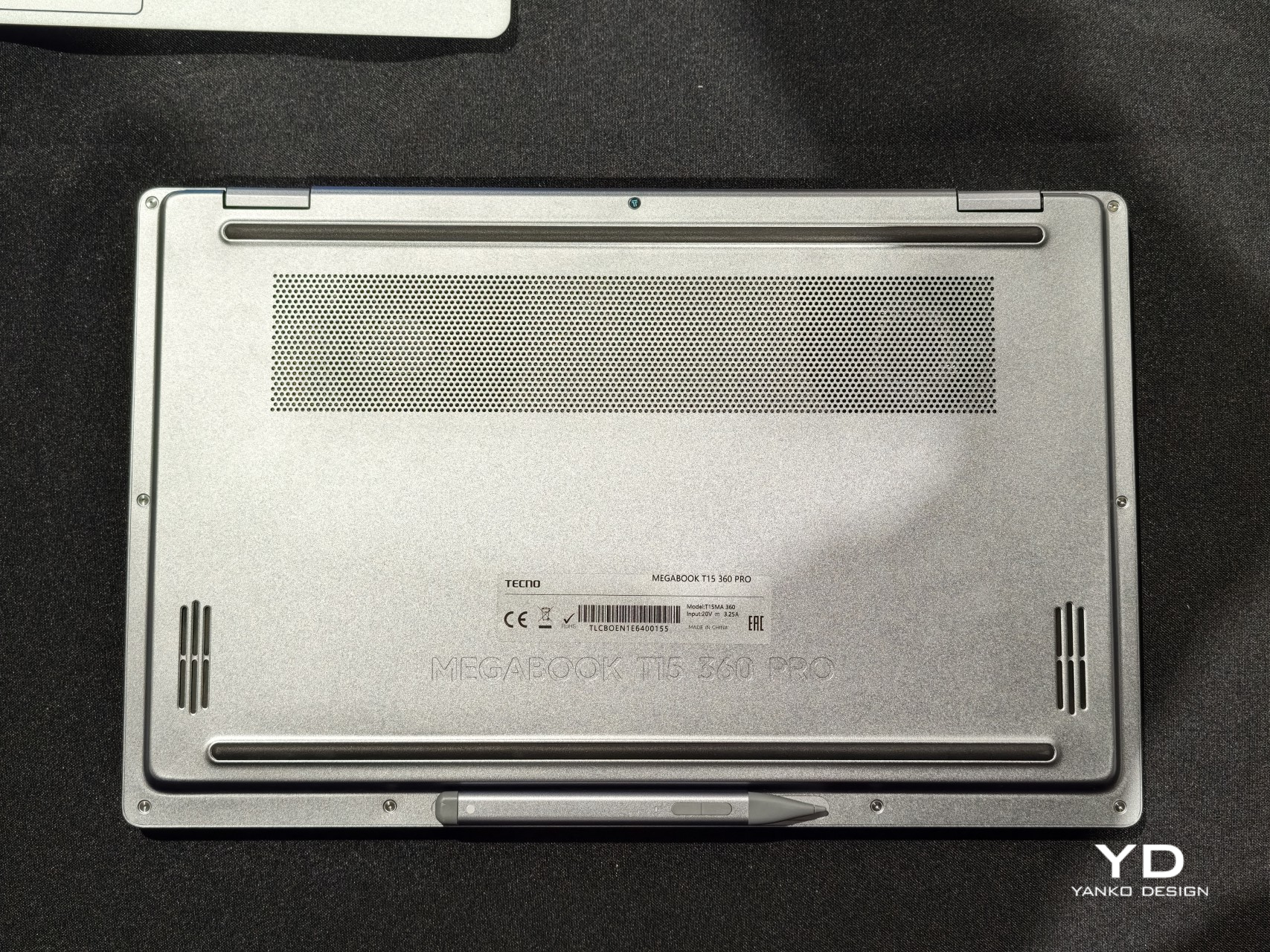
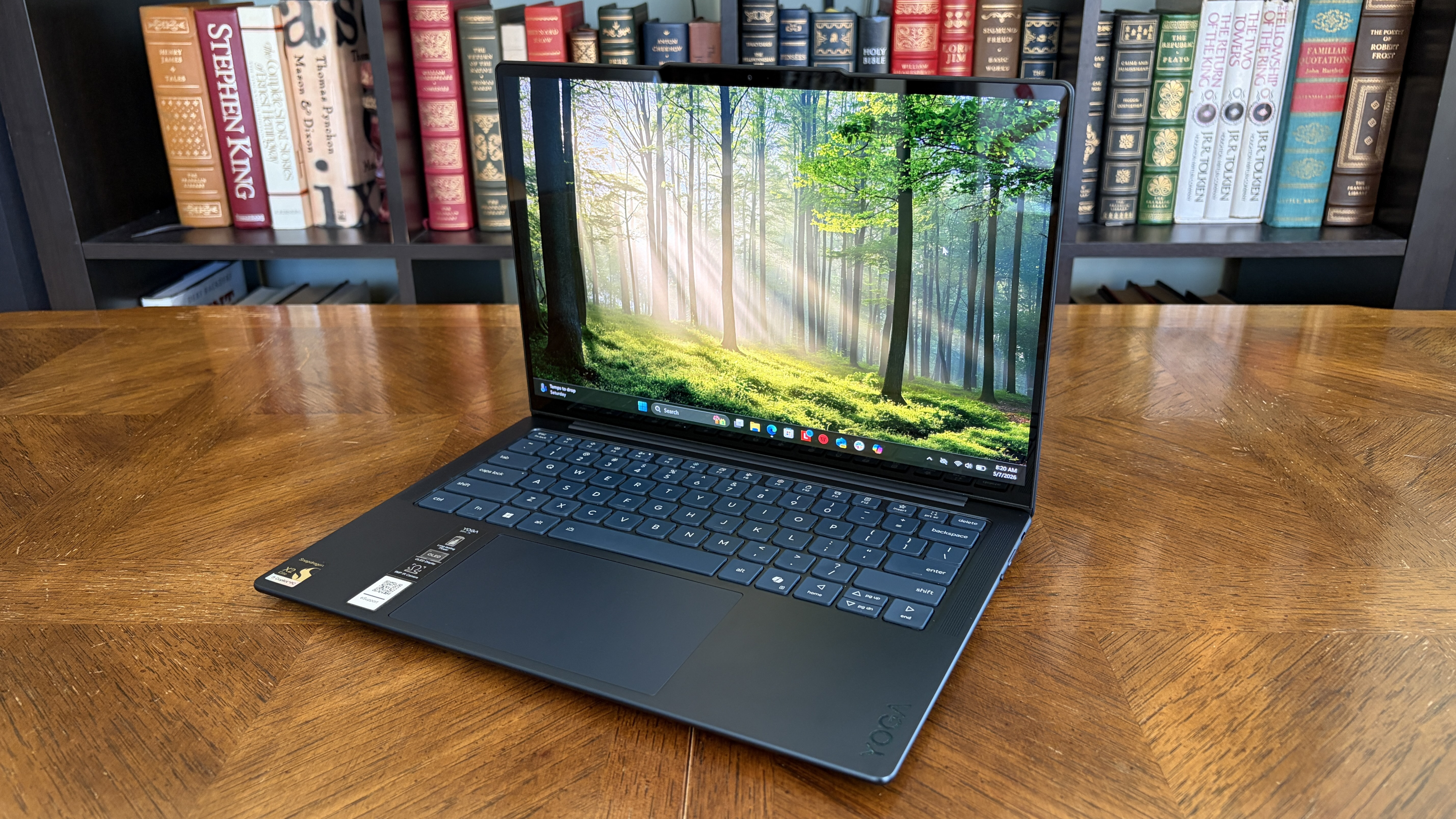
A laptop that only knows one shape stops being useful the moment the day changes its mind. TECNO built the MEGABOOK T15 360 Pro around that exact problem, wrapping a full 360-degree hinge inside an all-metal body machined with precision CNC tooling. The screen folds all the way back, turning one device into four distinct working postures without asking anyone to carry a second gadget.
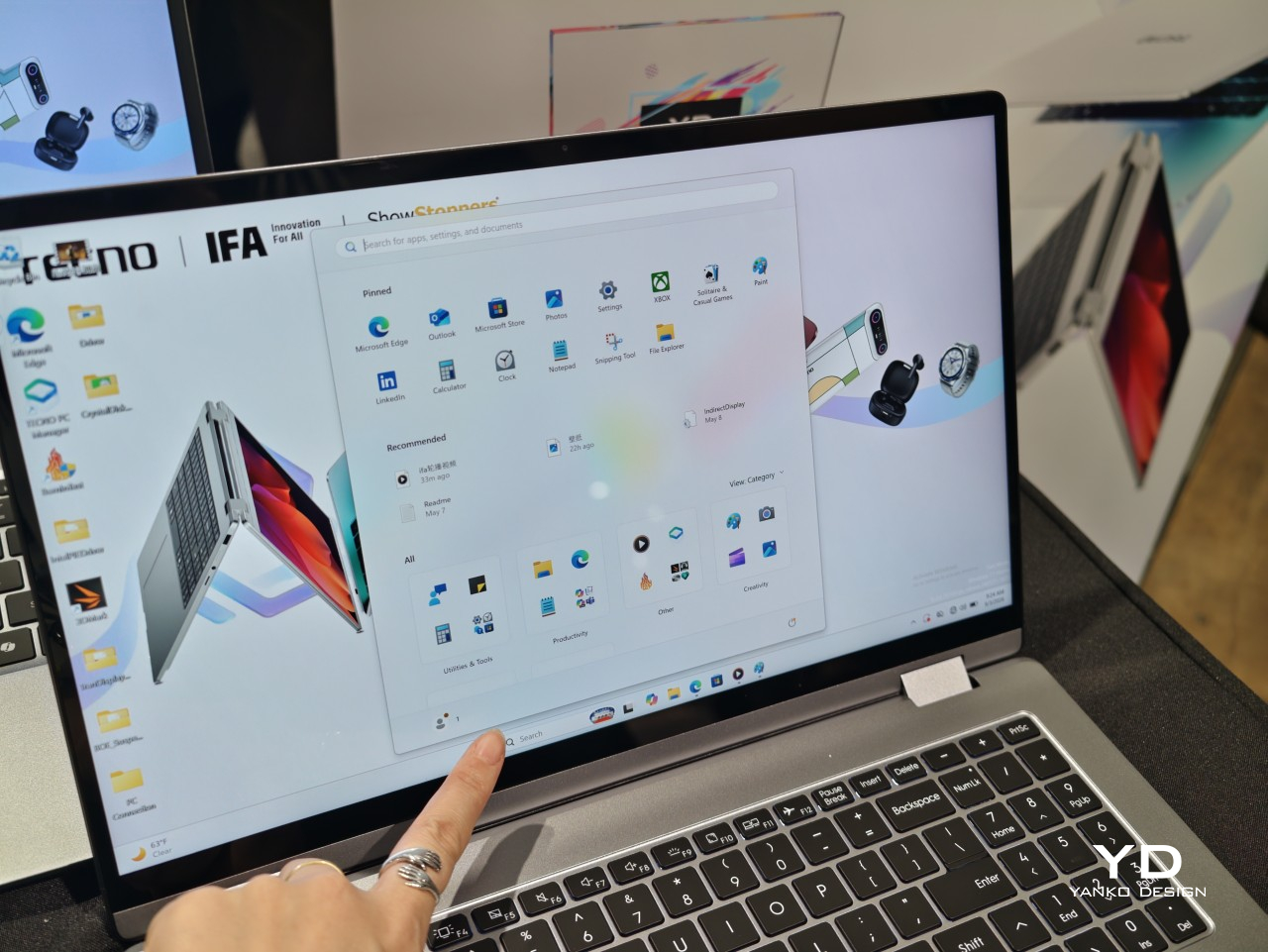
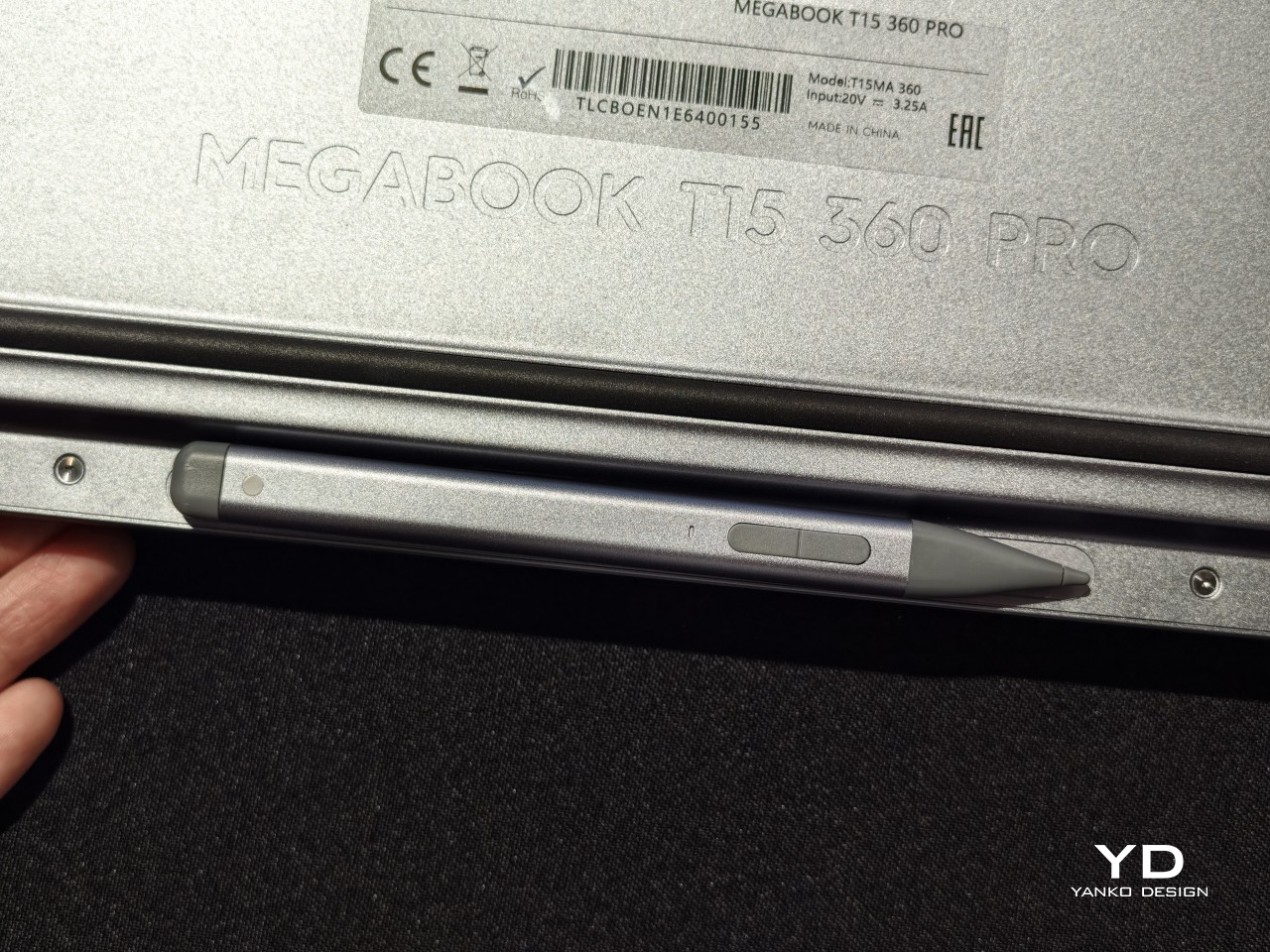
Flip it flat into Laptop mode, and it behaves like any focused productivity machine, keyboard ready and screen upright for spreadsheets or long email threads. Push the display back further and Tablet mode takes over, letting fingers or an optional MPP 2.0 active pen sketch, annotate, and jot notes directly onto the 15.6-inch touchscreen. The same hardware just keeps reshaping itself around whatever task shows up next.
Designer: TECNO
Fold it into a triangle and Tent mode appears, propping the screen up on a cramped tray table or a corner of a crowded desk where a full laptop footprint would not fit. Stand it up the other way and Stand mode turns the same hinge into a presentation tool, angling the display toward a room full of people instead of a single set of eyes typing at a keyboard.
None of those positions would matter much without a screen worth looking at, and TECNO gave the Pro model a 2.5K panel running at 120Hz across 2560 by 1440 pixels, covering 100% of the sRGB color space at 350 nits brightness. Colors hold up during video edits, photo review sits closer to accurate, and scrolling through documents in Tablet mode feels noticeably smoother than on a standard 60Hz screen.
Under the hood, configurations climb as high as an Intel Core Ultra 9 185H processor paired with LPDDR5X memory running at up to 7,467MHz, enough headroom for video exports or a dozen open browser tabs without slowdown. A PCIe M.2 2280 SSD handles storage, and select configurations add a second M.2 slot, giving anyone running out of space room to expand rather than shop for an external drive.
Powering all of that is a 70Wh battery paired with a compact 65W PD GaN charger, a combination built to survive a full workday of meetings, note-taking, and streaming without hunting for an outlet. The included charger sheds the bulk of older power bricks, and the 1.8-meter cable gives enough slack to keep the laptop charging from across a conference table instead of right next to the wall.
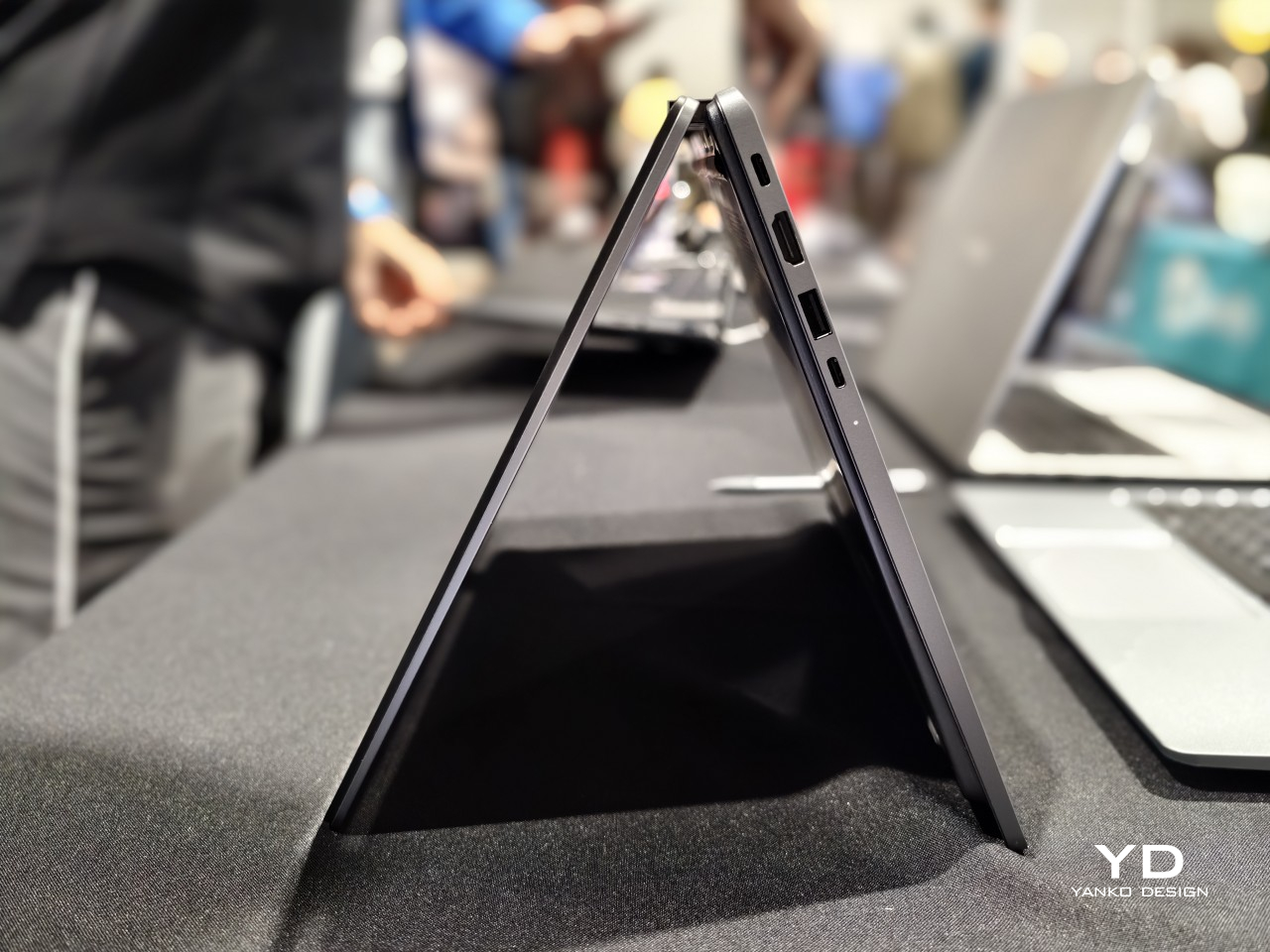
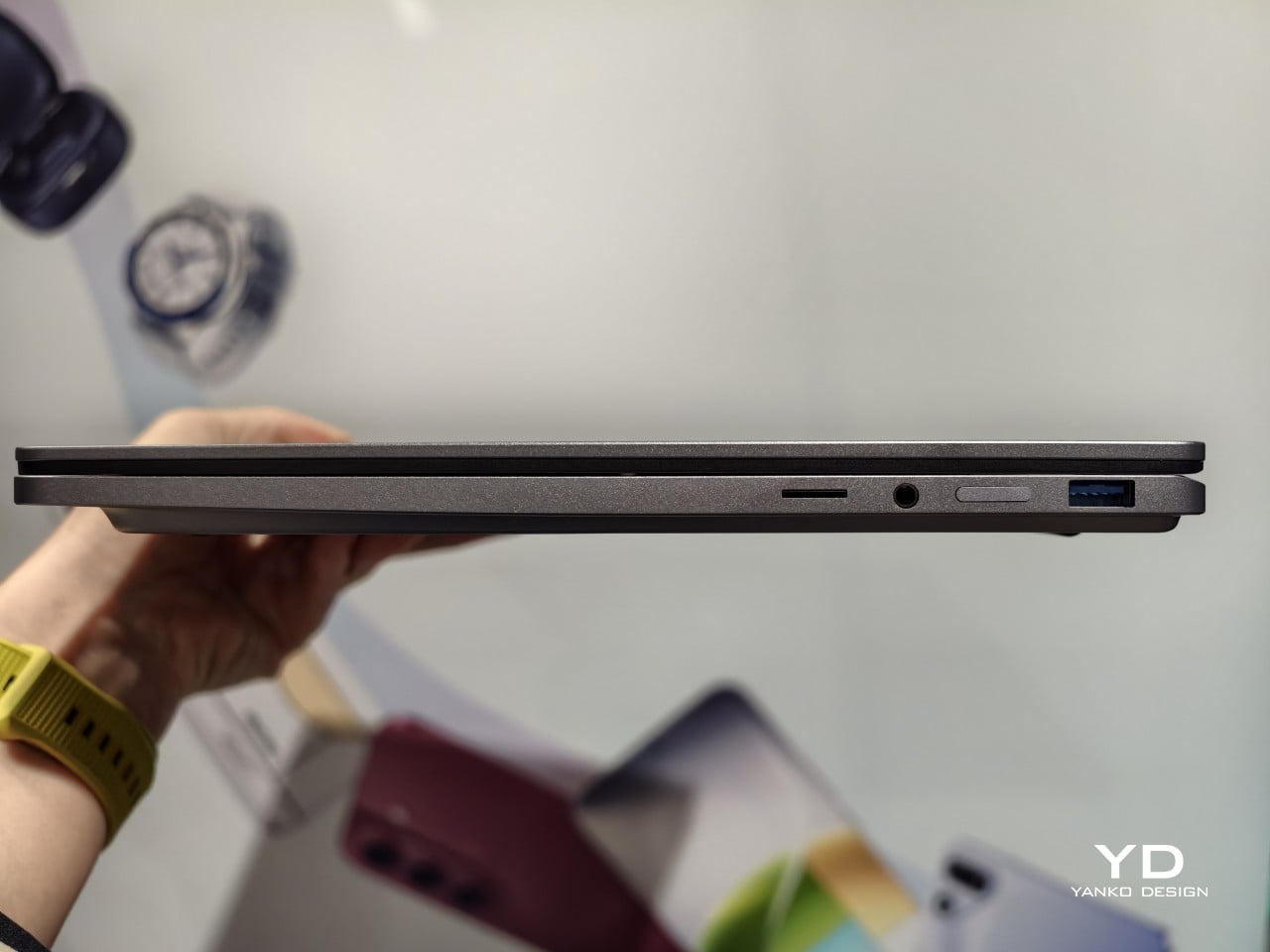
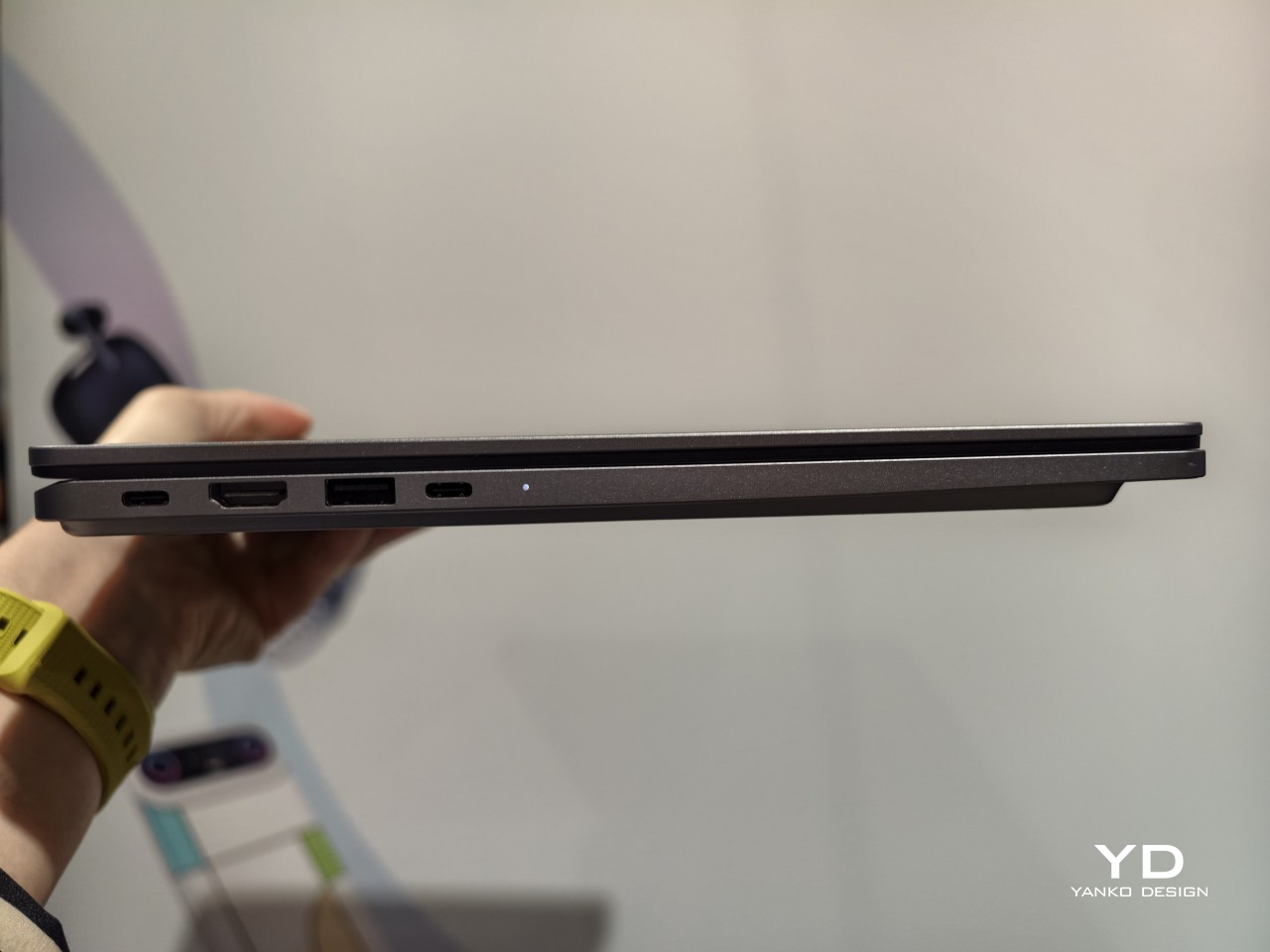
Connectivity keeps pace with the rest of the machine. Wi-Fi 6E and Bluetooth 5.4 handle wireless duties, while seven physical ports, including two Type-C connections rated for 10Gbps data and display output, cover everything from external monitors to storage drives. TECNO OneLeap ties the laptop into phones, tablets, and other PCs, letting files and clipboard content move between devices without emailing anything to yourself first.
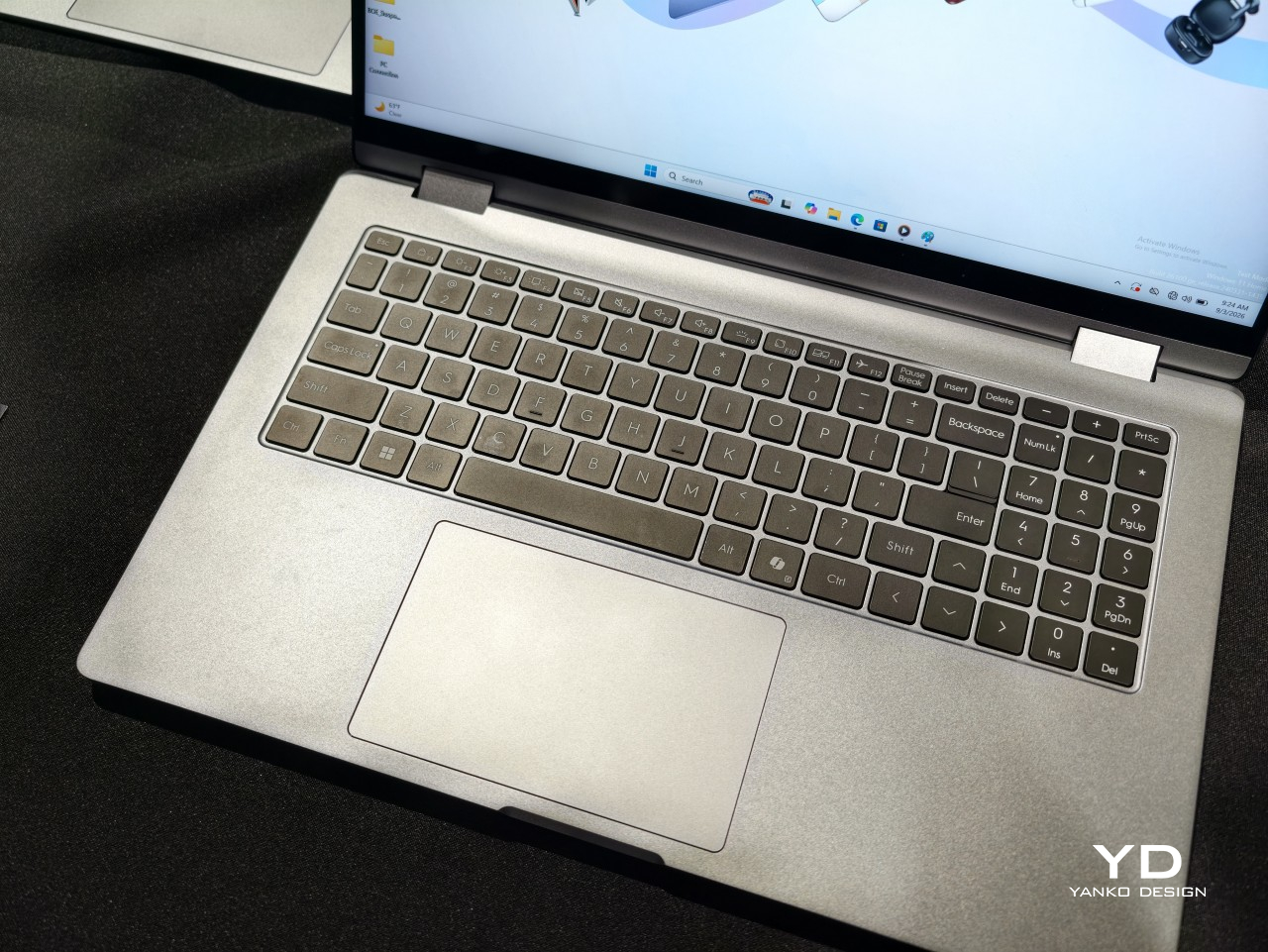
Smaller touches round out daily use. A backlit keyboard with its own numeric keypad handles spreadsheet-heavy work, and a fingerprint reader built into the power button skips the password screen entirely with one press. Dual speakers tuned for DTS:X Ultra and a pair of digital microphones back up video calls and casual media playback, so switching between a meeting and a lunchtime show does not require headphones.
TECNO prices the MEGABOOK T15 360 Pro at €1,099 (around $1,280), with European availability starting in the fourth quarter of 2026. That price sits closer to a well-specced conventional laptop than a premium convertible, positioning the T15 360 Pro as the rare 2-in-1 that does not ask for a luxury markup just because the hinge bends further than everyone else’s.
Over the last several years, the company has become the PC industry's unofficial concept lab, routinely showing off hardware that seems pulled from science fiction. We've seen rollable displays that grow taller, gaming laptops that transform into ultrawide displays, foldable PCs, attachable screens, rotating displays, and enough unusual form factors to make even the most adventurous laptop enthusiast pause for a moment.
Some of those ideas have remained concepts. Others have eventually become real products. The ThinkBook Plus Gen 6 Rollable (yes, they actually ship some of these!) is perhaps the best example, evolving from an eye-catching prototype into an actual shipping device. But even as Lenovo's concepts have become increasingly impressive from an engineering perspective, I've often found myself wondering how many of them actually solve a problem that regular laptop buyers have. Making a display expand is certainly cool. Convincing people they need it is the harder challenge.
That's why Project Swan immediately stood out to me.
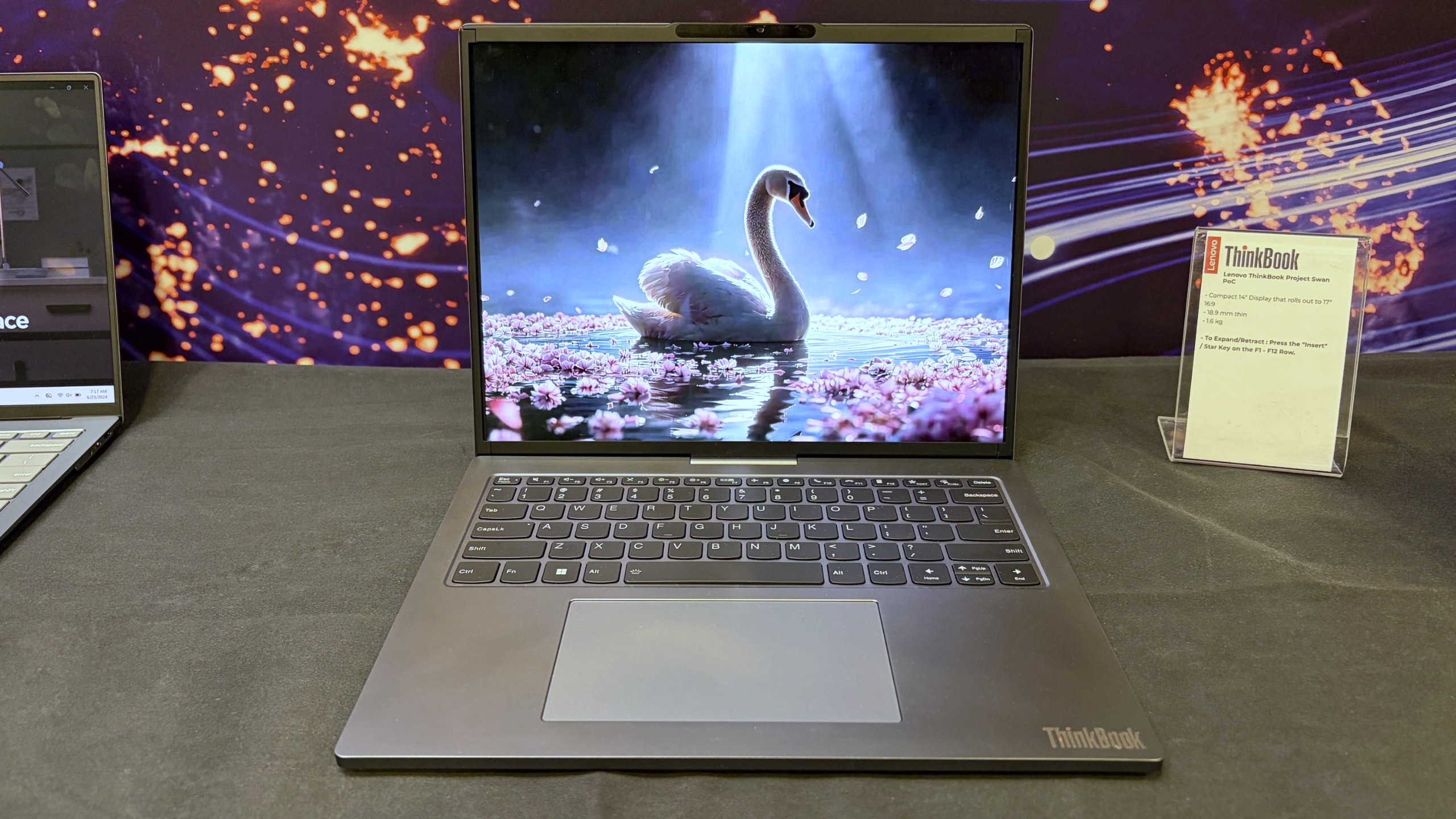
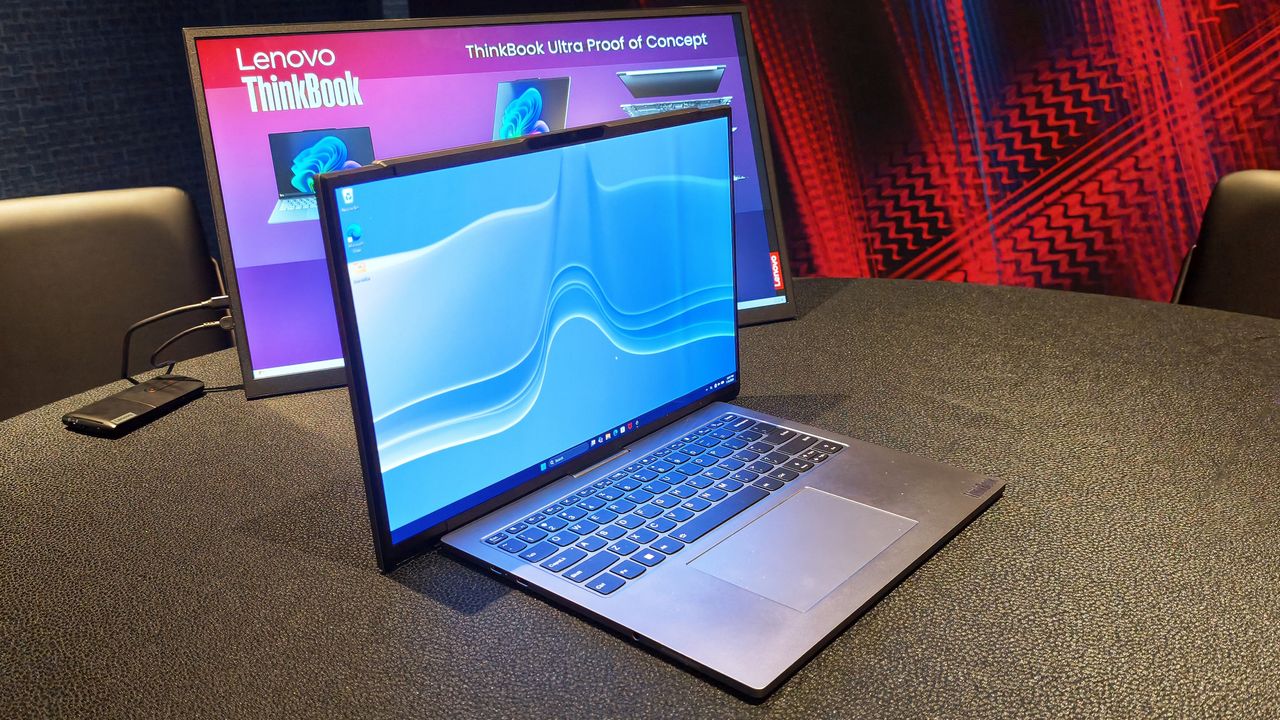
Lenovo's Project Swan laptop in "normal" mode at 14-inches. (Image credit: Future)
Officially, it's another Lenovo proof-of-concept device, but after spending time with it in person, I came away thinking this may be the company's most practical display concept yet. Not because it's the most ambitious, but because it's arguably the least ambitious.
And that's exactly why it works.
Lenovo finally found a sensible use for a rollable display?
The Lenovo ThinkBook Project Swan begins life as a fairly normal-looking 14-inch laptop.
At 17.9mm thick and weighing 1.6kg (3.5lbs), it isn't trying to break weight records or compete with ultra-premium featherweight notebooks (like Lenovo's new AeroBlade concept). Instead, the focus is on creating a laptop that's comfortable to carry throughout the day while offering something extra when users return to their desk, settle into a hotel room, or need more space for serious work.
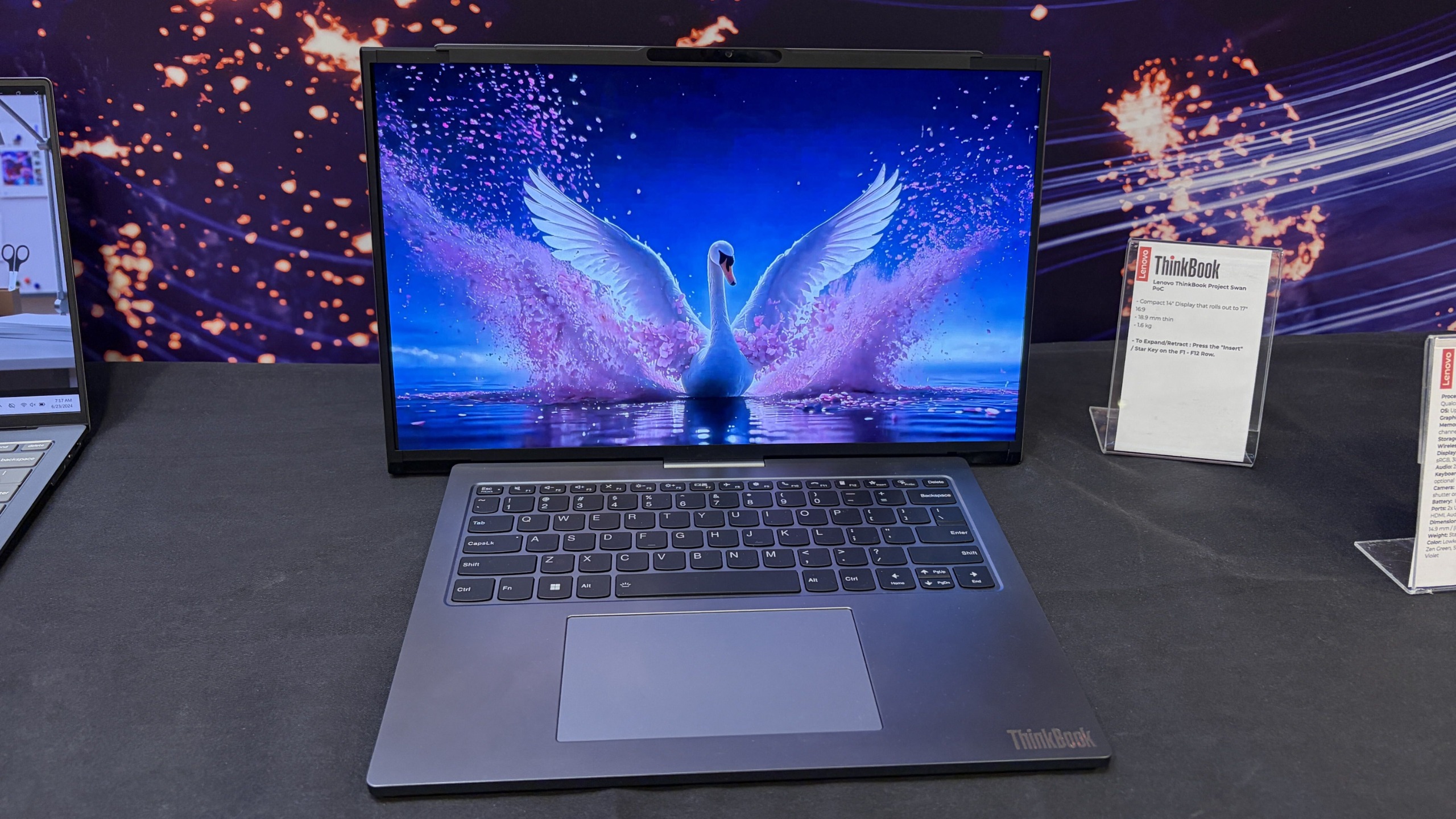
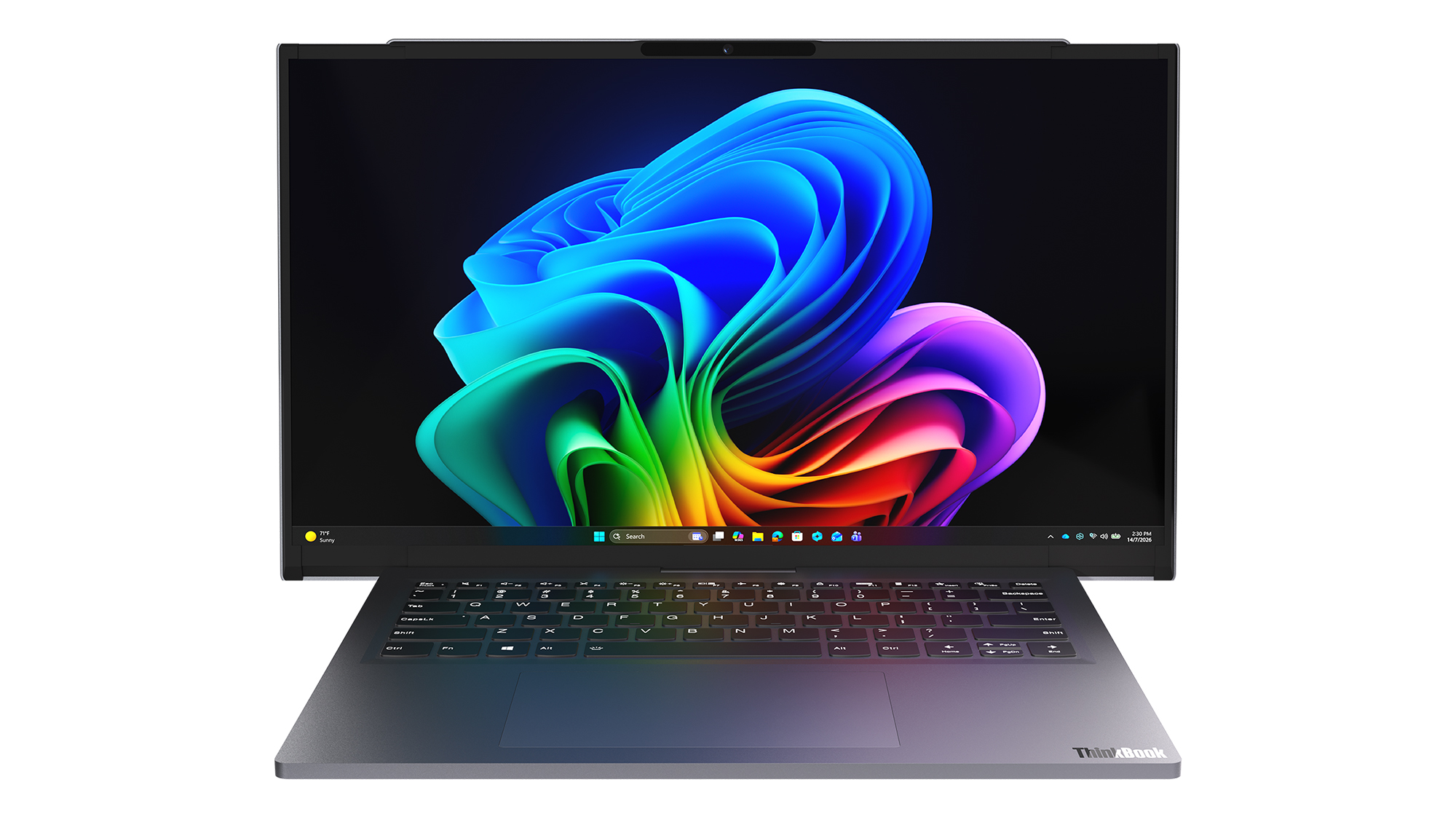
That "something extra" is a rollable display that expands horizontally into a 17-inch 16:9 workspace.
Unlike Lenovo's previous rollable designs, which generally expanded vertically, Project Swan widens itself by extending the display out to the sides. It's all done with a touch of a button (see my video below), and it only takes a few seconds.
The result feels much more like using a traditional external monitor than using an experimental form factor. You suddenly have enough room for side-by-side documents, large spreadsheets, dashboards, presentations, browser windows, Teams chats, and everything else that tends to compete for space on a 14-inch screen.
Lenovo's Project Swan laptop in extended mode, where the display reaches 17 inches. (Image credit: Future)
The transformation is dramatic enough to get attention, but conservative enough to feel practical. During my hands-on session, that was the first thing that struck me about the device.
Many of Lenovo's earlier concepts felt designed to answer the question, "Can we do this?"
Project Swan feels far more interested in answering the question, "Would people actually want this?"
That's a subtle distinction, but it's an important one.
This feels like the next step in Lenovo's display experiments
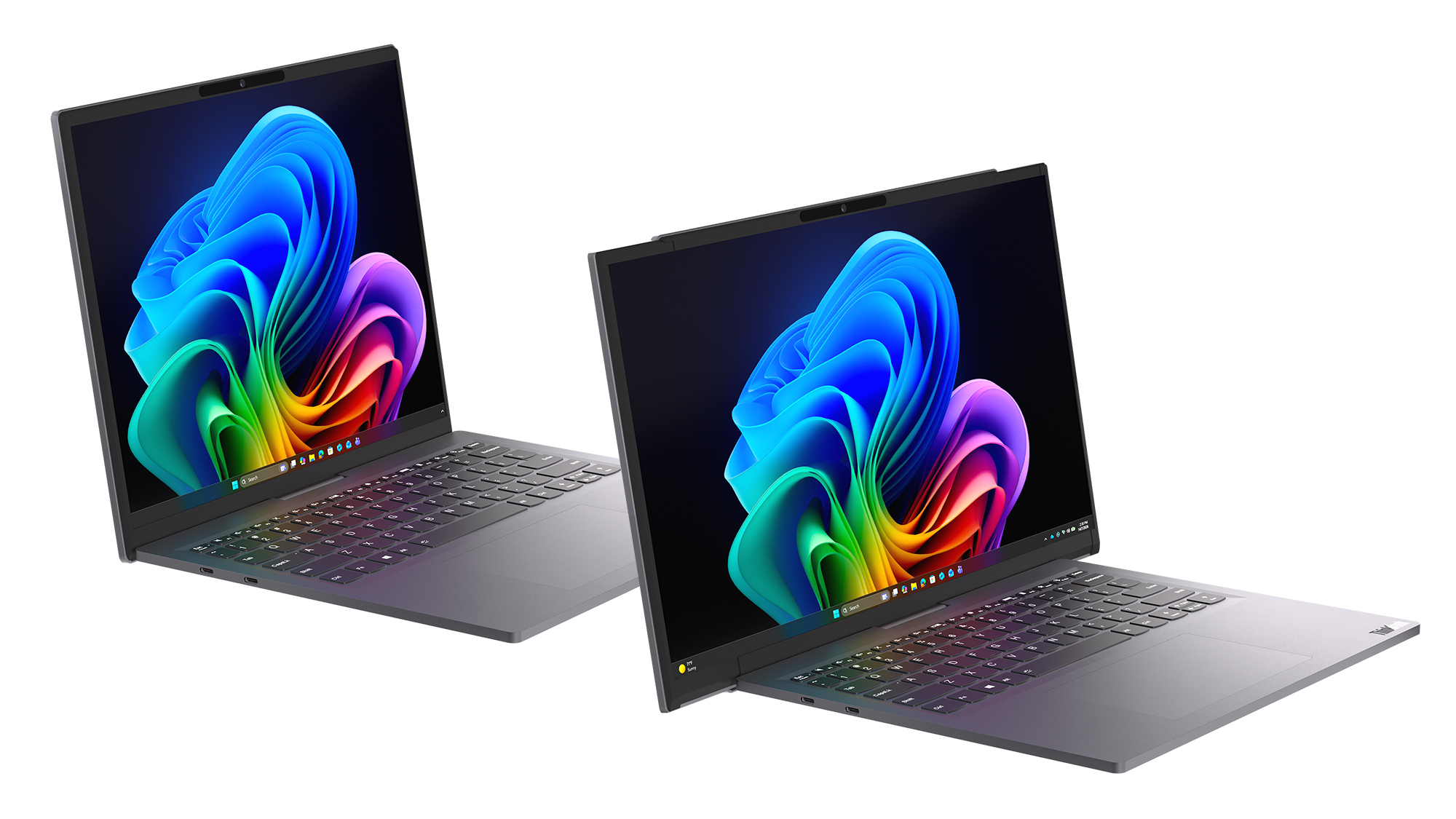
Lenovo Project Swan concept laptops side-by-side, demonstrating the screen in standard view versus expanded rollable view. (Image credit: Lenovo)
Project Swan didn't emerge in a vacuum. In many ways, it feels like the natural evolution of everything Lenovo has been experimenting with over the last few years.
The ThinkBook Plus Gen 6 Rollable demonstrated that expandable OLED displays could successfully transition from concept to commercial product. Lenovo's Legion rollable gaming laptop concept showed how flexible displays could create an ultrawide experience without requiring users to carry an enormous machine. Other projects explored foldable displays, secondary screens, and entirely new ways of interacting with PCs.
As impressive as many of those concepts were, some occasionally felt like technology showcases first and products second.
Project Swan reverses that equation.
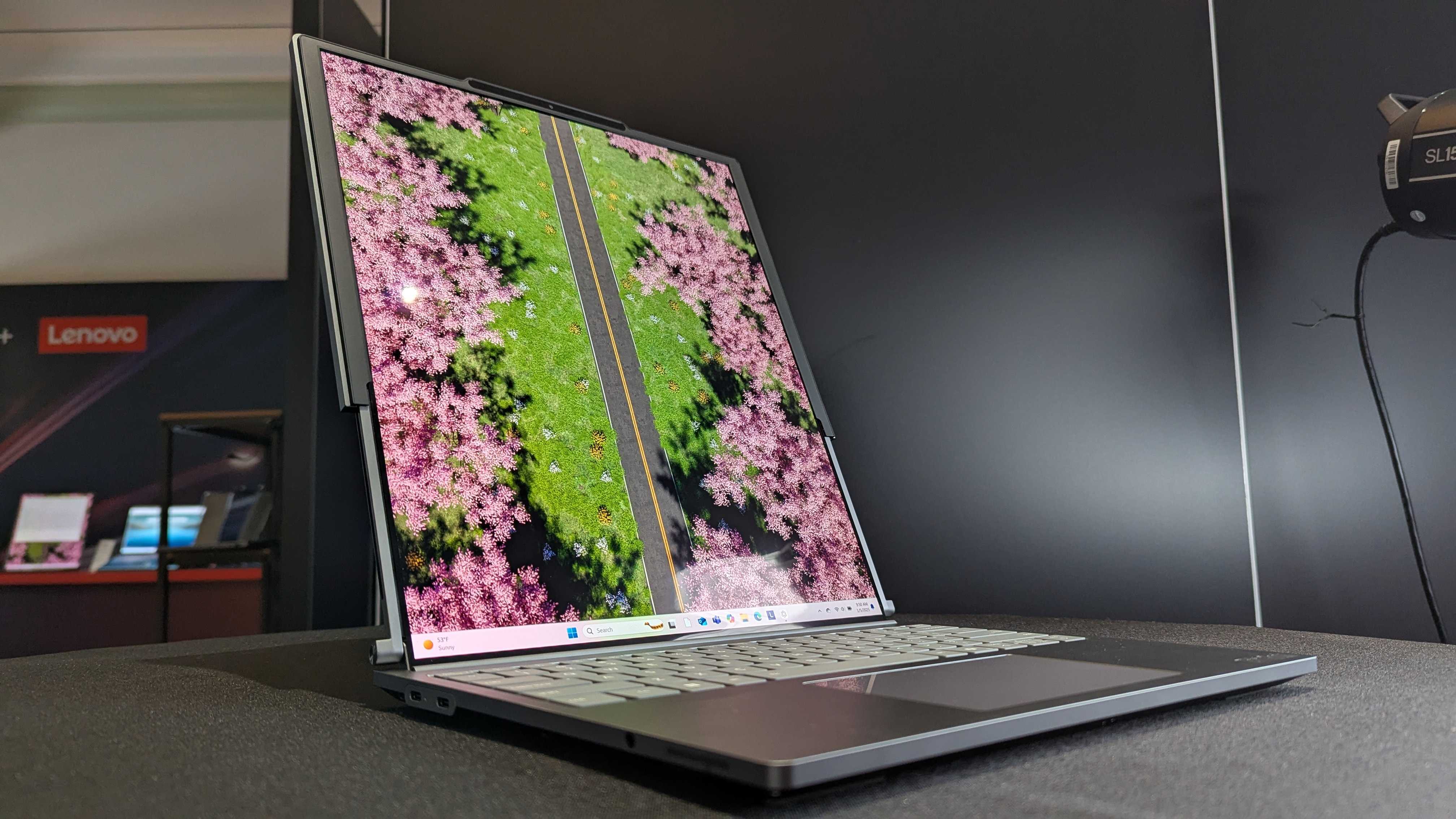
Lenovo ThinkBook Plus (Gen 6) laptop and its vertical rollable display at CES 2025. (Image credit: Windows Central | Zachary Boddy)
Rather than dramatically changing how people interact with a laptop, it simply gives them more screen real estate when they need it and gets out of the way when they don't. That's a much easier benefit for consumers to understand and, perhaps more importantly, a much easier benefit to justify paying for.
After all, most people already know the dilemma.
A 14-inch laptop is ideal for travel. A larger display is ideal for work.
Project Swan attempts to deliver both.
The idea makes sense. The challenges are obvious.
Read image of the Project Swan laptop cover and its motorized rollable display. (Image credit: Lenovo)
That isn't to say there aren't trade-offs.
The first thing I noticed when using the expanded display was that the system becomes somewhat top-heavy. That's hardly surprising given the additional display hardware housed in the lid, but it was noticeable enough that I'd expect Lenovo's engineers to still be looking at ways to refine the balance.
Pricing is another obvious concern.
Rollable OLED displays aren't cheap (it's $3,499 for the ThinkBook Plus Gen 6 Rollable), and if Project Swan ever becomes a commercial product, it's almost certainly going to carry a premium compared to a traditional clamshell laptop. The value proposition may be easier to understand than some other concept devices, but consumers still need to be convinced that expandable screen space is worth the additional cost.
Then there's the question everyone asks whenever a company unveils a rollable or foldable display.
How durable is it?
Flexible OLED technology has improved dramatically over the last few years, but long-term reliability remains an important consideration. How will the mechanism hold up after years of daily use? What happens after thousands of expansion cycles? Will buyers trust a laptop that contains moving display components?
The technology may be ready, but consumer confidence isn't something that can be engineered overnight.
The bigger question is whether people want these new form factors
That's really the challenge facing every laptop manufacturer right now.
The industry has spent years experimenting with alternatives to the traditional clamshell design. Foldable PCs promised tablet-sized displays that fit inside a laptop footprint. Dual-screen systems like the Lenovo Yoga 9i attempted to replace physical keyboards with additional displays. Rollable devices have explored several different directions entirely.
Some enthusiasts love these ideas, but many consumers remain perfectly happy with the laptops they already own.
That's what makes Project Swan so interesting to me. It isn't asking users to learn a new workflow or completely rethink how they use a PC. Instead, it's enhancing something people already understand: bigger screens are often better, but bigger laptops are harder to carry.
Whether that argument ultimately resonates with buyers remains an open question, but it's certainly the clearest pitch Lenovo has made for a rollable display so far.
Lenovo deserves credit for keeping the experimentation alive
Front view of the open grey Lenovo Project Swan concept laptop with its rollable screen expanded horizontally beyond the keyboard base. (Image credit: Lenovo)
Even if Project Swan never reaches store shelves, I appreciate what Lenovo is doing here.
The PC industry can sometimes become obsessed with processor upgrades, AI features, and specification sheets while overlooking more fundamental questions about how people actually use their devices. Lenovo's concepts consistently ask those questions, even when the answers occasionally seem, well, strange.
What's refreshing about Project Swan is that it feels grounded in reality. The company isn't trying to reinvent personal computing or create an entirely new category. Instead, it's exploring a straightforward idea that almost everyone who has worked on a laptop can relate to.
Sometimes you want a compact machine for travel.
Sometimes you wish that same machine had a much larger screen.
Project Swan is the most convincing attempt I've seen yet to bridge that gap.
I still have concerns about durability, balance, pricing, and whether consumers are truly interested in another alternative laptop design. But after trying it for myself, I'm more optimistic about this concept than many of Lenovo's previous experiments.
Ironically, that's because it feels less ambitious. Rather than trying to change how we work, Project Swan simply gives us a little more room to do it.
And that may be exactly what makes it one of Lenovo's most promising concepts yet.
Let me know in the comments what you think about Project Swan. Should Lenovo continue to push this concept of an expanding display, or focus more on other ideas (and if so, which ones)?
Join us on Reddit at r/WindowsCentral to share your insights and discuss our latest news, reviews, and more.
Competition for Apple's MacBook Neo is heating up.
Just days after Dell unveiled a new 14-inch laptop designed to take on Apple's latest mainstream notebook, Lenovo is entering the fight with something considerably more interesting: a laptop that lets you express your personality instead of forcing you to settle for silver, gray, or slightly darker gray.
I recently got to see Lenovo's new IdeaPad Vibe lineup in person in New York City, and while the company talked plenty about AI, processors, and battery life, the thing that immediately stood out to me was how different these laptops look compared to almost everything else on the market.
Most PC makers treat color options as an afterthought. Lenovo is making them the product.
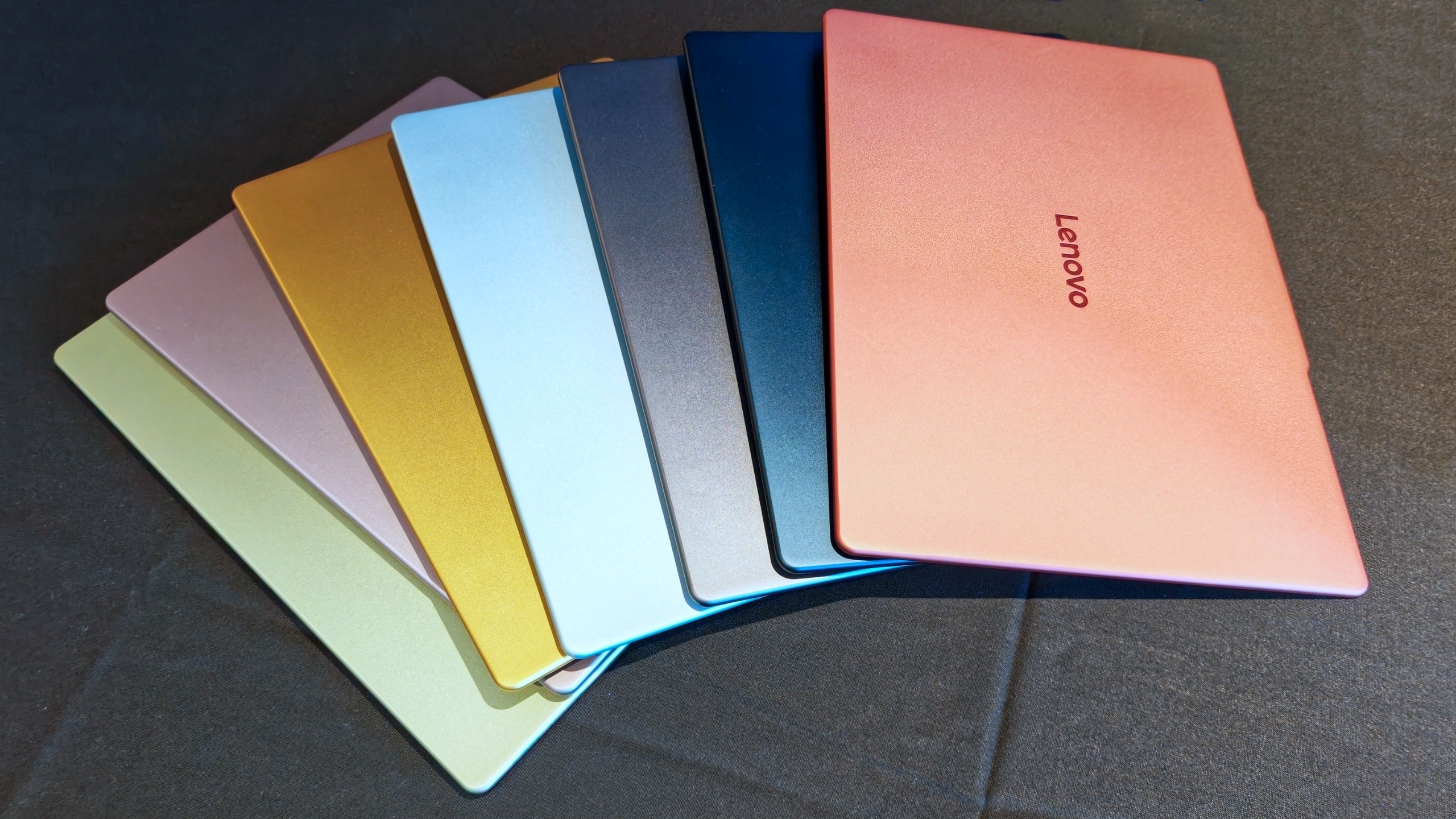
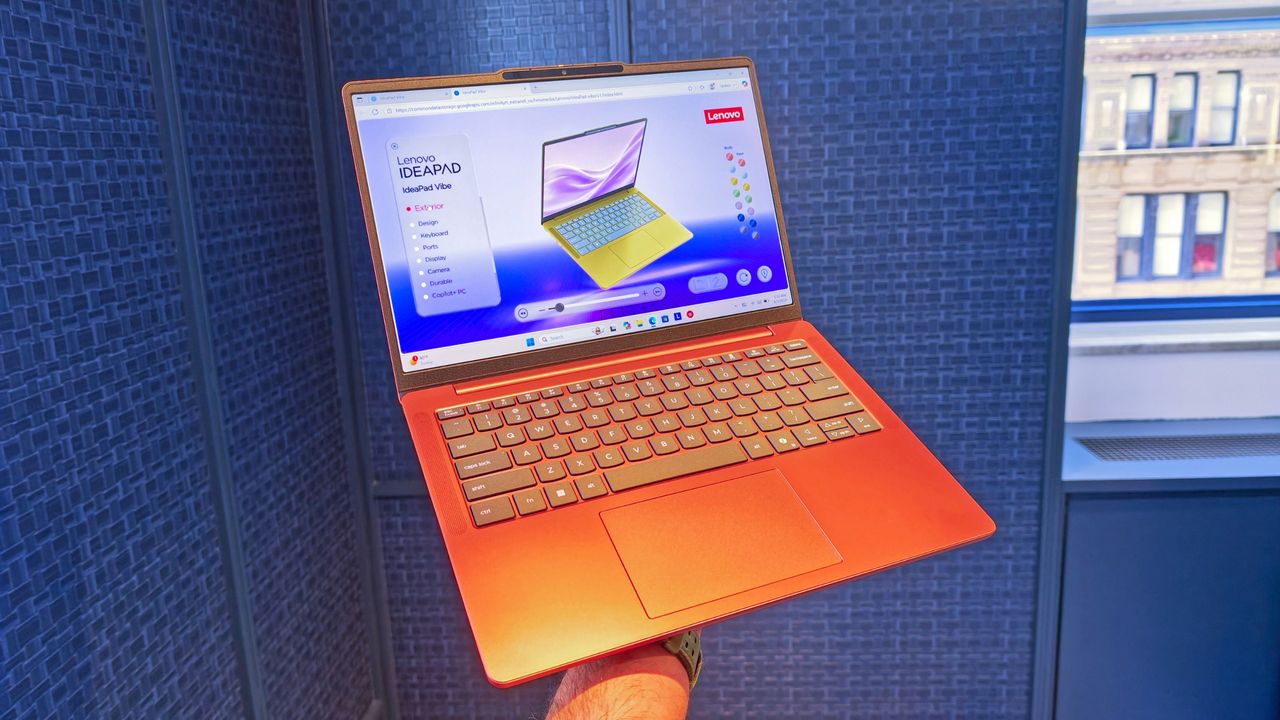
(Image credit: Daniel Rubino)
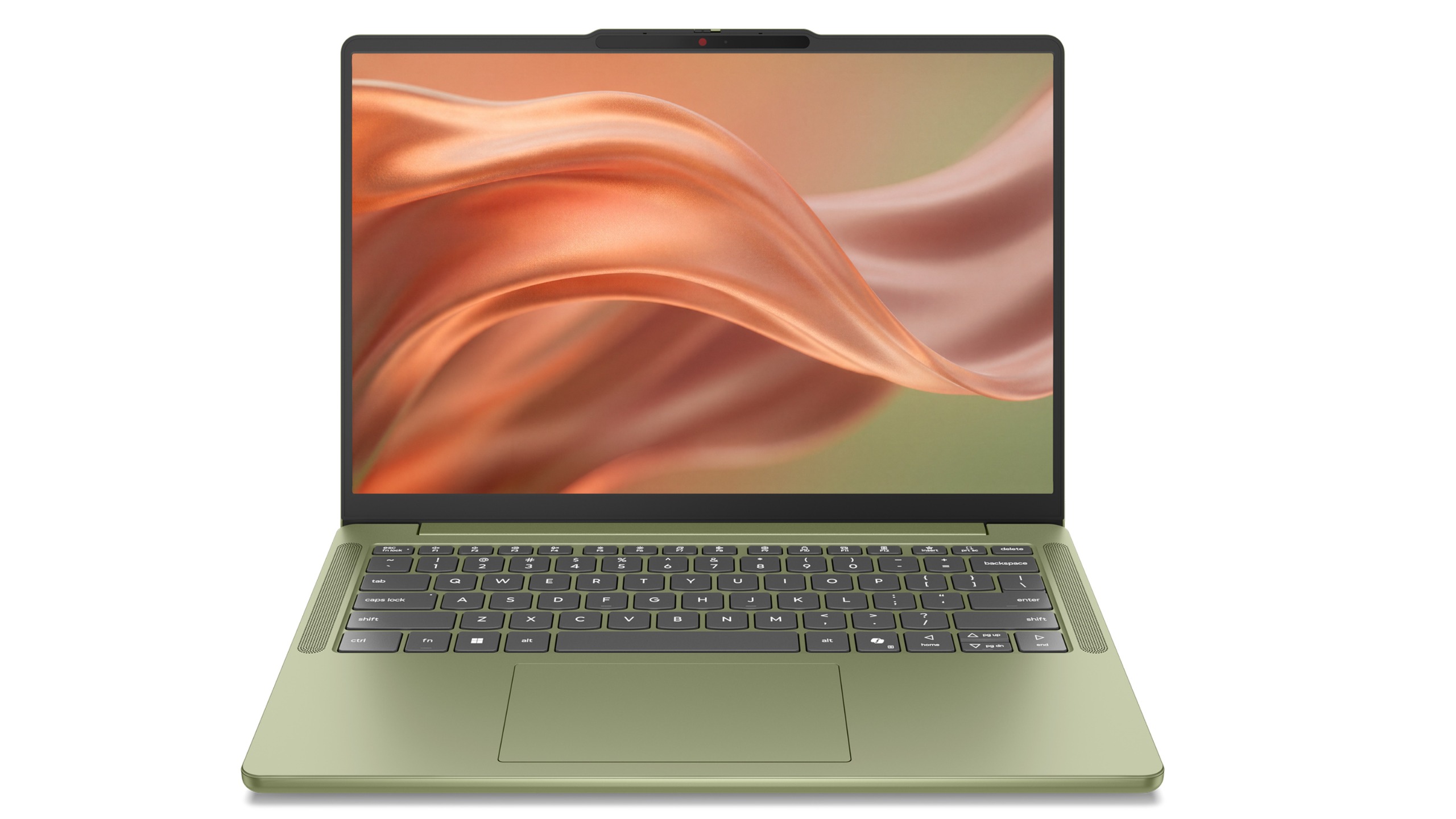
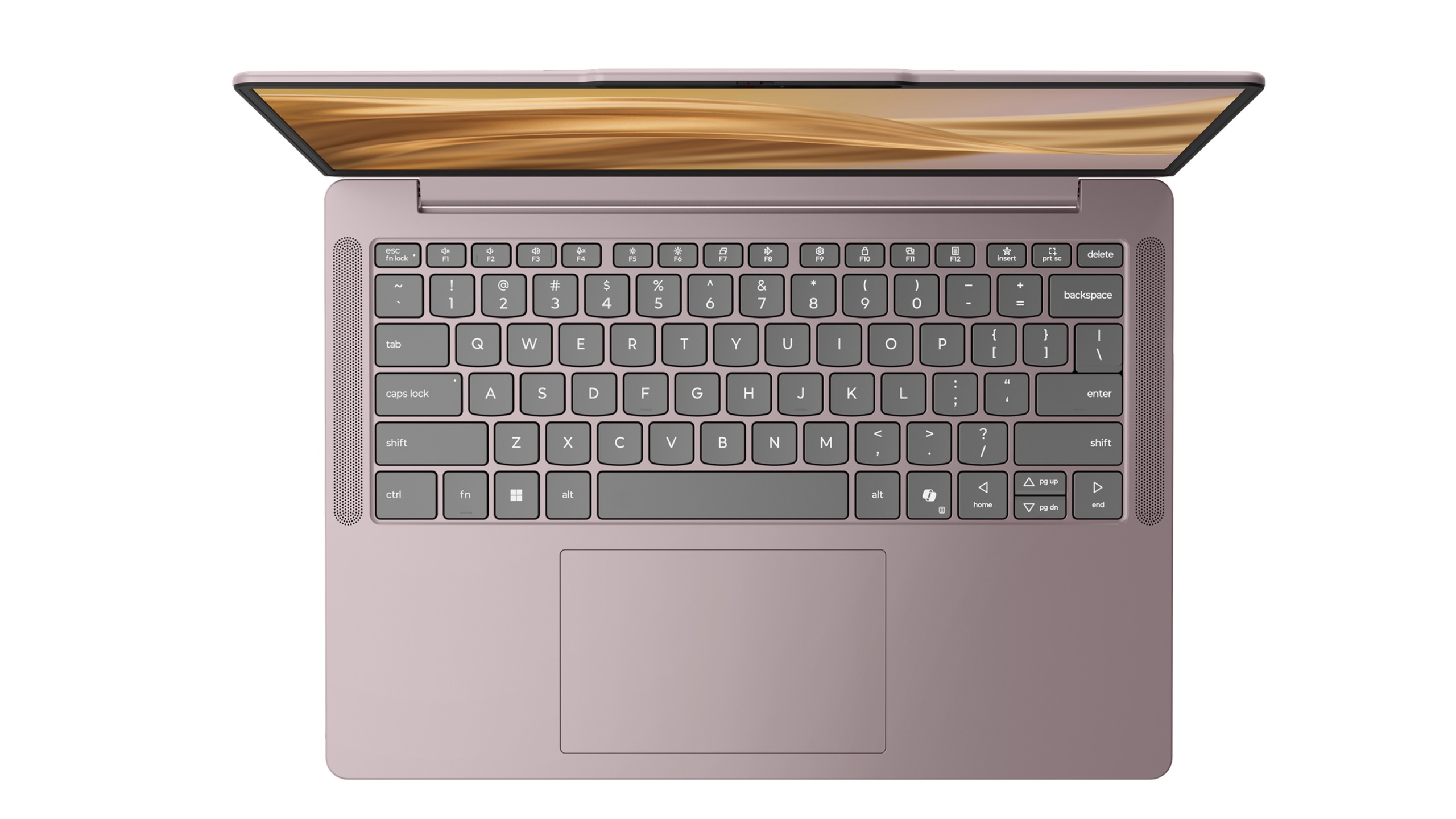
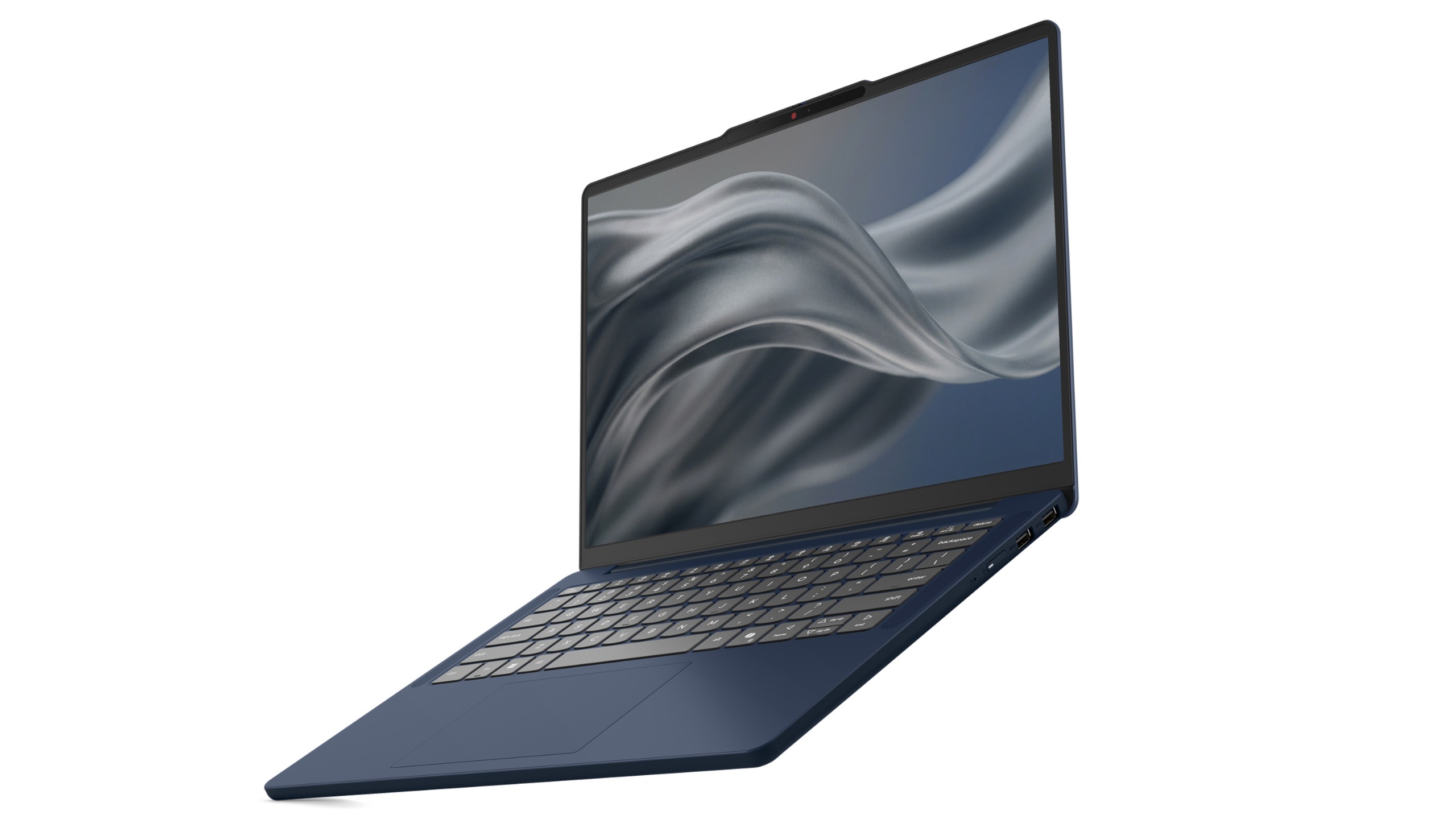
The new IdeaPad Vibe will be available in seven Pantone-developed colors, including Chill Blue, Zen Green, Spicy Gold, Radiant Coral, Dreamy Violet, Lowkey Grey, and Moody Blue. Lenovo says the colors were developed alongside the Pantone Color Institute and are designed to reflect different moods, personalities, and lifestyles.
And that's just the beginning.
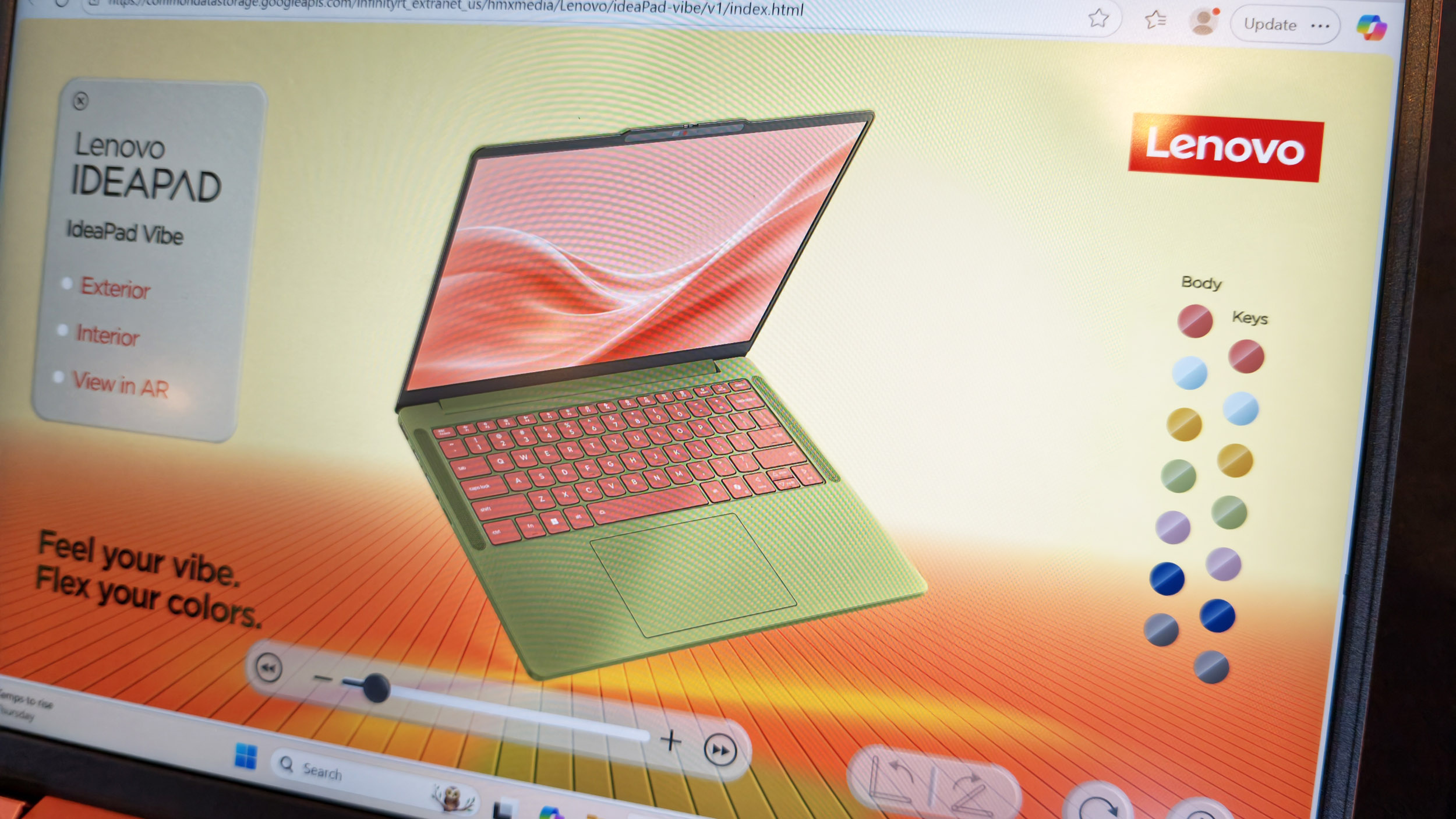
As shown in Lenovo's custom configurator (below), users will be able to mix and match chassis colors and keyboard colors to create something uniquely theirs. The company is also offering swappable custom keycaps, adding another layer of personalization that is virtually unheard of in the mainstream laptop space.
The configurator demo I saw almost felt like building a custom character in a video game rather than buying a laptop, and reminded me of the XBOX Design Lab for custom controllers.
Demo of the web creation tool to let you customize the new IdeaPad Vibe. (Image credit: Daniel Rubino)
In fact, my biggest complaint about the IdeaPad Vibe is that there might be too much choice.
That's obviously a good problem to have, but after looking through the various color combinations, shell finishes, and processor options, I could already imagine spending far too much time trying to decide which configuration to order (I know because I tried).
That's not a sentence I ever expected to write about a Windows laptop.
Lenovo IdeaPad Vibe in Zen Green and black keycaps. (Image credit: Lenovo)
Of course, a laptop can't survive on colors alone, and thankfully Lenovo seems to have put together a genuinely compelling package underneath all that personality.
The IdeaPad Vibe comes in both 14-inch and 15-inch sizes and starts at just 1.3kg (2.87 pounds) for the smaller model. OLED display options are available with up to 100% DCI-P3 color coverage, while IPS models can offer refresh rates up to 120Hz.
Lenovo is also packing in practical features including dual SSD slots, Wi-Fi 7, USB-A and USB-C ports, HDMI, a MicroSD card reader, and a 5MP IR webcam with a privacy shutter.
AMD, Qualcomm or Intel (eventually)
Lenovo IdeaPad Vibe in Dreamy Violet. (Image credit: Lenovo)
Then there's the processor selection.
For launch, buyers can choose between AMD Ryzen AI 400 series configurations and Qualcomm Snapdragon X models (we're not clear on exactly which Snapdragon X chip, or even if it's X2), while Intel-based versions will arrive later. AMD models support up to 32GB of upgradeable memory and up to 1TB of SSD storage, while Snapdragon versions offer up to 24GB of memory and the same dual-slot storage flexibility.
Personally, I'd go Qualcomm.
We've reached a point where Snapdragon X PCs consistently deliver excellent everyday performance while also offering some of the best battery life available in the Windows ecosystem. The combination of a lightweight chassis, Copilot+ PC capabilities on supported configurations, and Qualcomm's efficiency makes the Snapdragon version particularly appealing to me.
That isn't to say AMD isn't tempting. AMD's advantage here is flexibility. The Ryzen AI configurations support memory upgrades up to 32GB and offer optional 50Wh or 65Wh battery configurations, making them attractive for enthusiasts who want more control over their hardware.
What impressed me most during my hands-on time wasn't any single specification. It was how cohesive the overall package felt.
The laptops looked premium, felt solid in the hand, and didn't come across as budget systems despite their surprisingly aggressive pricing. That's important because Lenovo isn't positioning the IdeaPad Vibe as a niche fashion accessory. This is meant to be a mainstream Windows laptop that happens to have far more personality than its competitors.
And right now, that may be enough to help it stand out.
Final thoughts
Lenovo IdeaPad Vibe in Chill Blue. (Image credit: Lenovo)
Apple's MacBook Neo has clearly encouraged PC makers to rethink the mainstream laptop category. Dell has already responded with its own fresh take on the formula with its just-announced Dell 14S, and now Lenovo is bringing something completely different to the table: customization.
Instead of asking buyers which shade of gray they prefer, Lenovo is asking what their "vibe" is.
That's a much more interesting question, even if a bit on the nose and a tad cringey.
The Lenovo IdeaPad Vibe with AMD processorslaunches inOctober 2026 starting at $699.99, while Qualcomm Snapdragon X models will follow in November 2026 with the same $699.99 starting price. Intel is only listed as coming later.
And after seeing them in person, I think Lenovo may have stumbled onto something other PC makers have forgotten: technology can be personal, but it can also be fun.
Join us on Reddit at r/WindowsCentral to share your insights and discuss our latest news, reviews, and more.
Most are fascinating engineering exercises that are never destined for store shelves. They're designed to spark conversation, generate headlines, and give us a glimpse into what might be possible someday. Some do come to market, like rollable display PCs.
Lenovo's new Project AeroBlade concept feels different.
Officially, it's one of the company's latest proof-of-concept devices, unveiled as part of its annual wave of experimental hardware at IFA 2026. Unofficially? I think there's a very good chance we're looking at Lenovo's next big premium laptop platform.
After getting hands-on with AeroBlade, I walked away convinced this isn't some far-future moonshot. If you told me a shipping version appears within the next year, I wouldn't be surprised in the slightest.
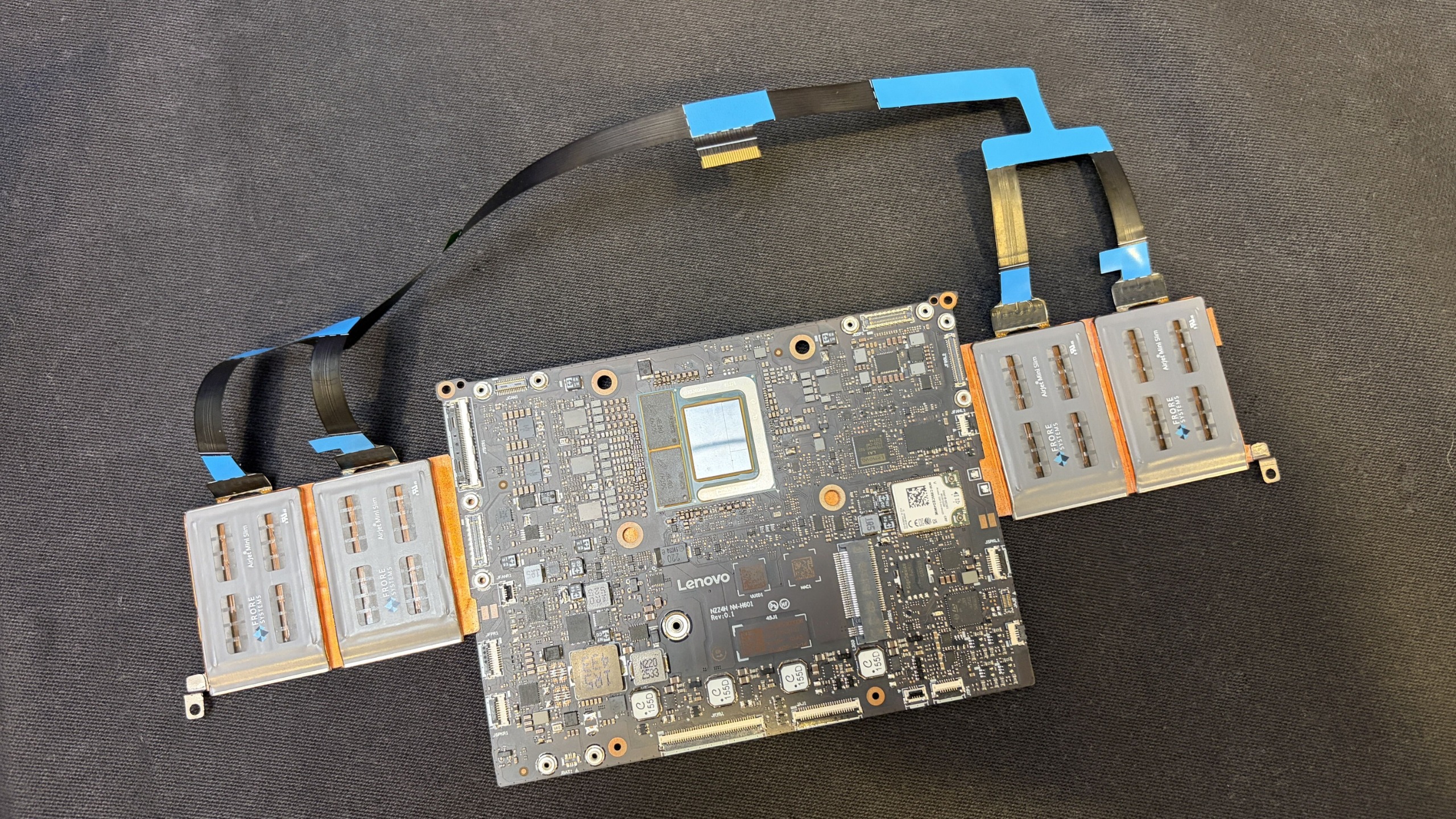
Motherboard and AeroJet cooling system. (Image credit: Future)
And it can't happen soon enough.
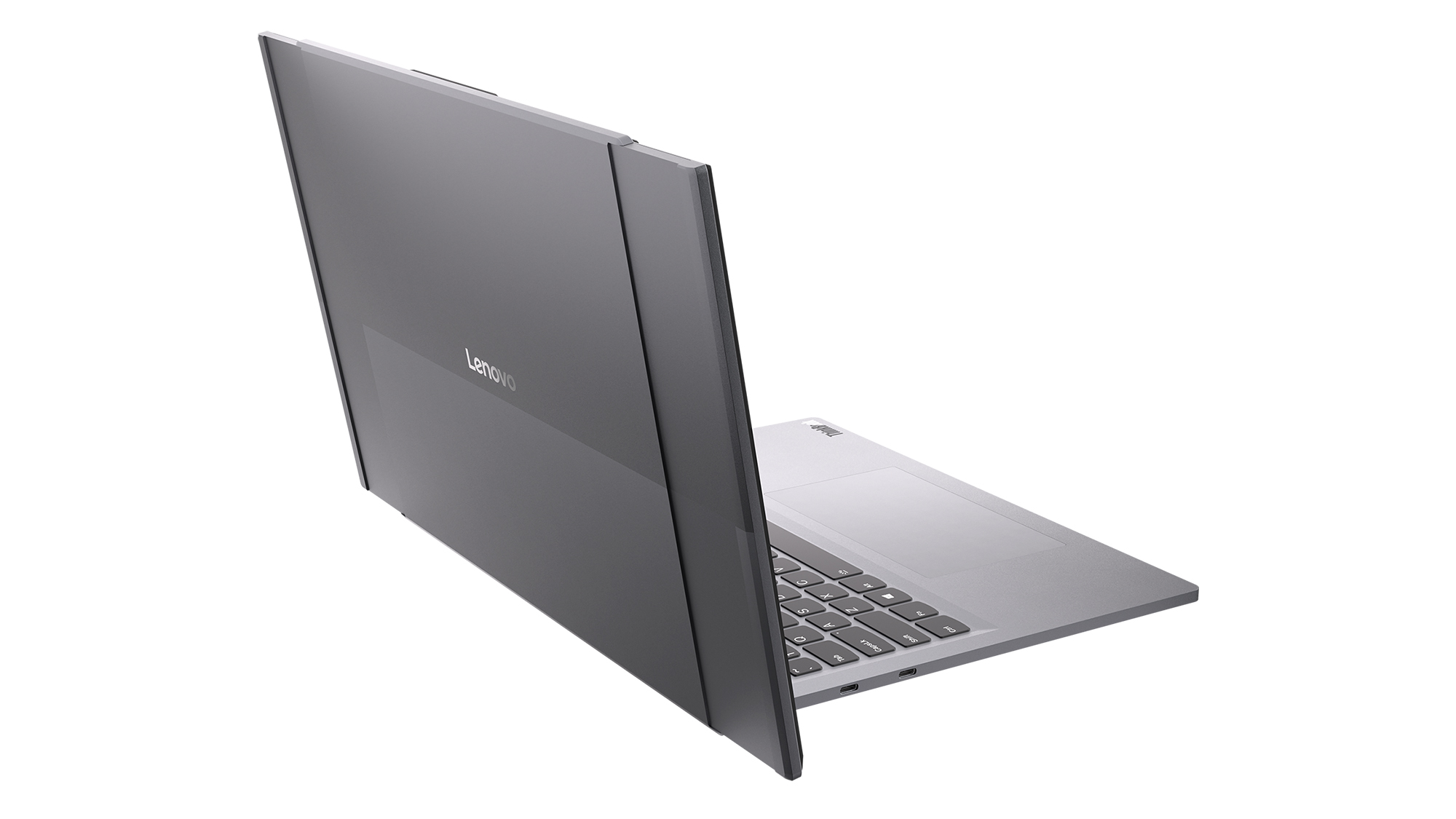
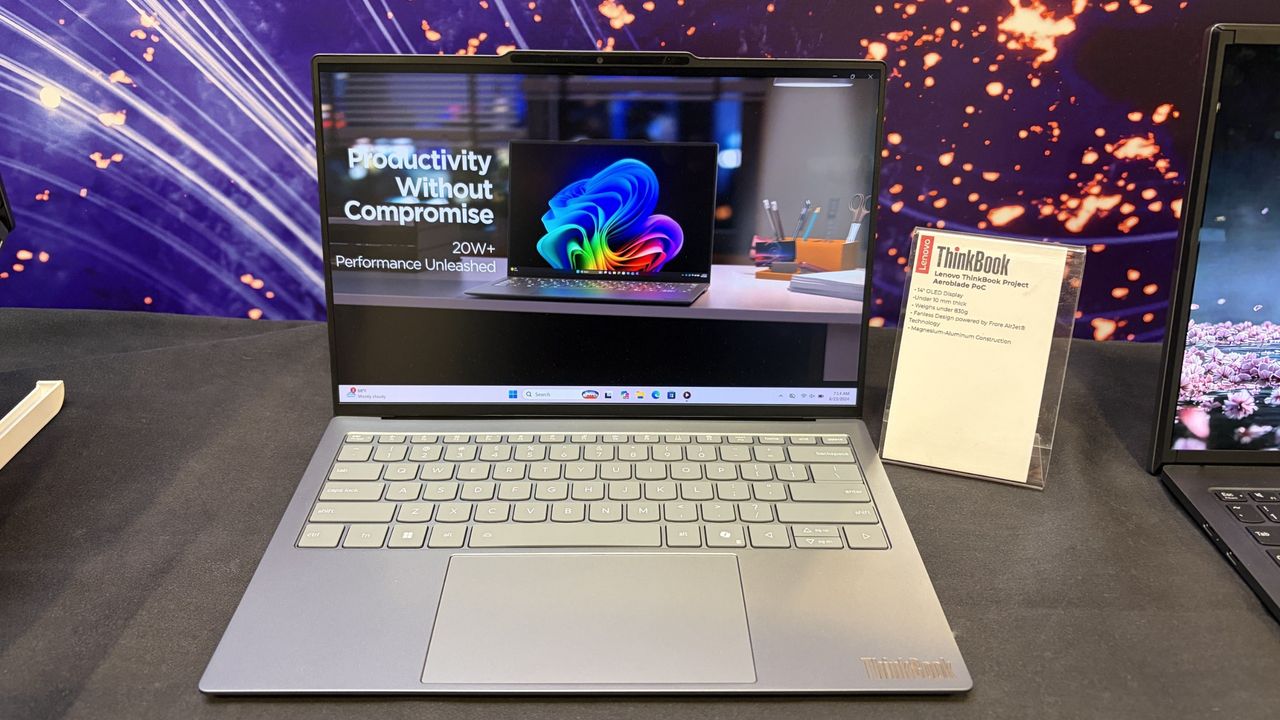
Project AeroBlade is a 14-inch laptop that measures under 10 mm thin and weighs less than 830 grams (1.8lbs). That's lighter than many tablets with keyboard covers attached, yet Lenovo claims performance remains comparable to today's ThinkPad X1 Carbon class of Intel-powered laptops. According to Lenovo, the system achieves this through a completely reimagined thermal design built around its Active Flow cooling architecture developed alongside Frore Systems.
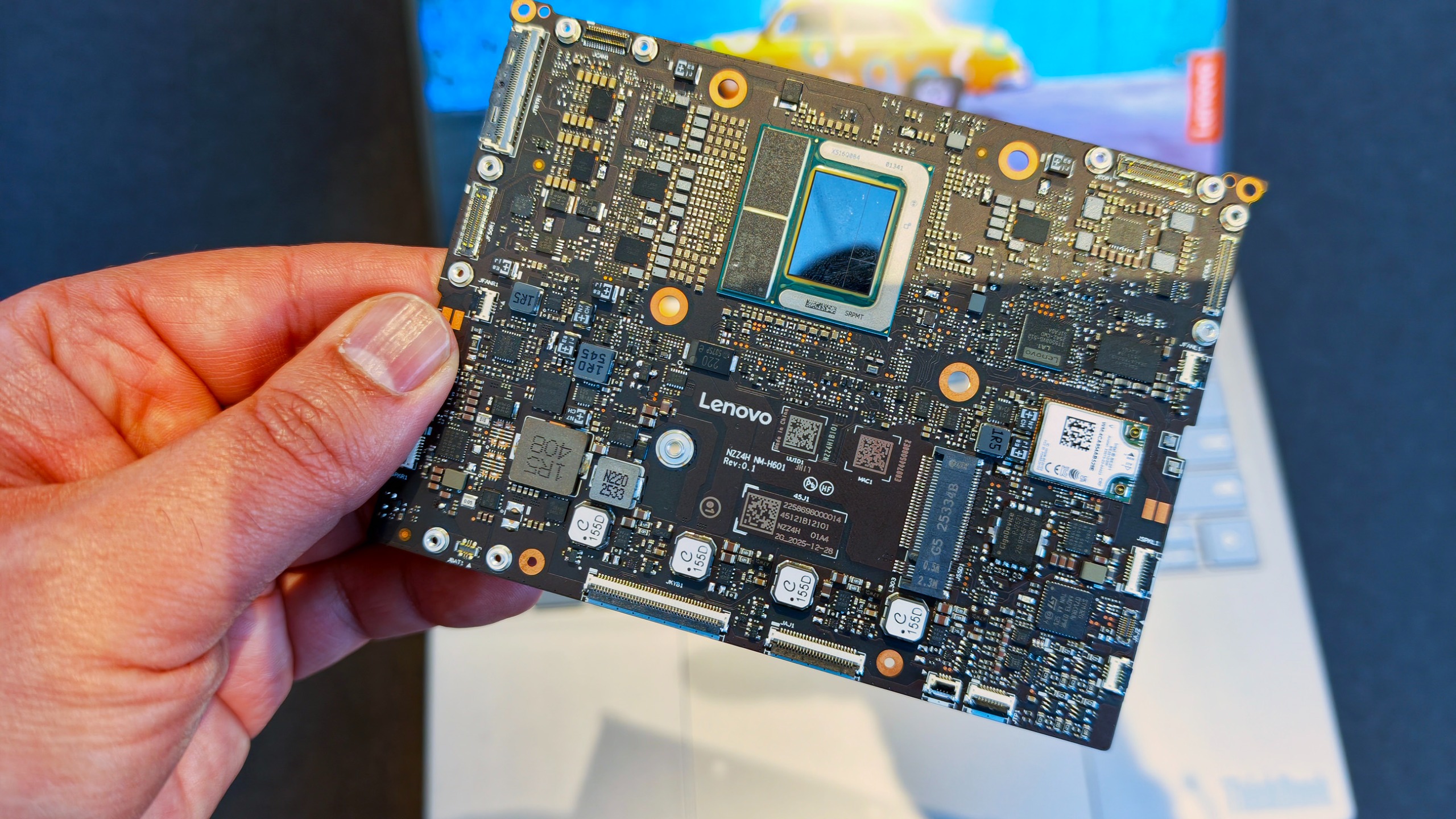
That's the entire motherboad for this laptop👀! (Image credit: Daniel Rubino)
Those numbers don't really hit you until you pick it up.
The first thing that struck me wasn't the thickness. It was the weight. Or rather, the lack of it.
The AeroBlade almost feels unfinished when you lift it because your brain expects more mass. Premium laptops have gotten thinner over the last decade, but reducing weight has become increasingly difficult without introducing compromises. AeroBlade somehow manages to feel substantial and premium while remaining almost shockingly light.
Lenovo says the chassis uses a magnesium-aluminum construction paired with a high screen-to-body OLED display, Thunderbolt 4 connectivity, and Wi-Fi 7. On paper, it sounds like a modern flagship ultrabook. In person, it feels like somebody accidentally removed half the laptop. That's a compliment.
What makes AeroBlade truly interesting, however, isn't how thin it is; it's how Lenovo got there.
The fan is dead. Long live AirJet.
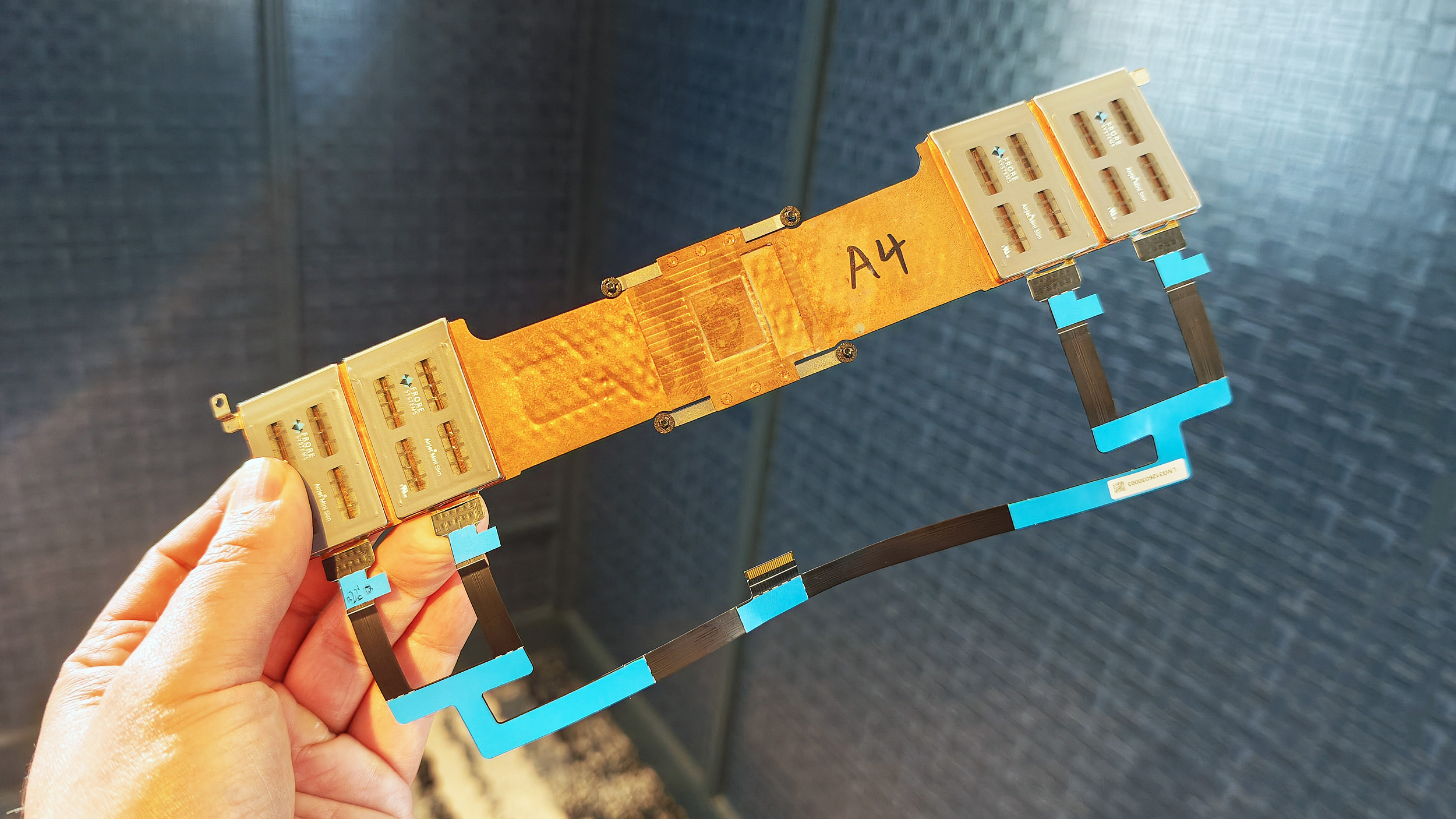
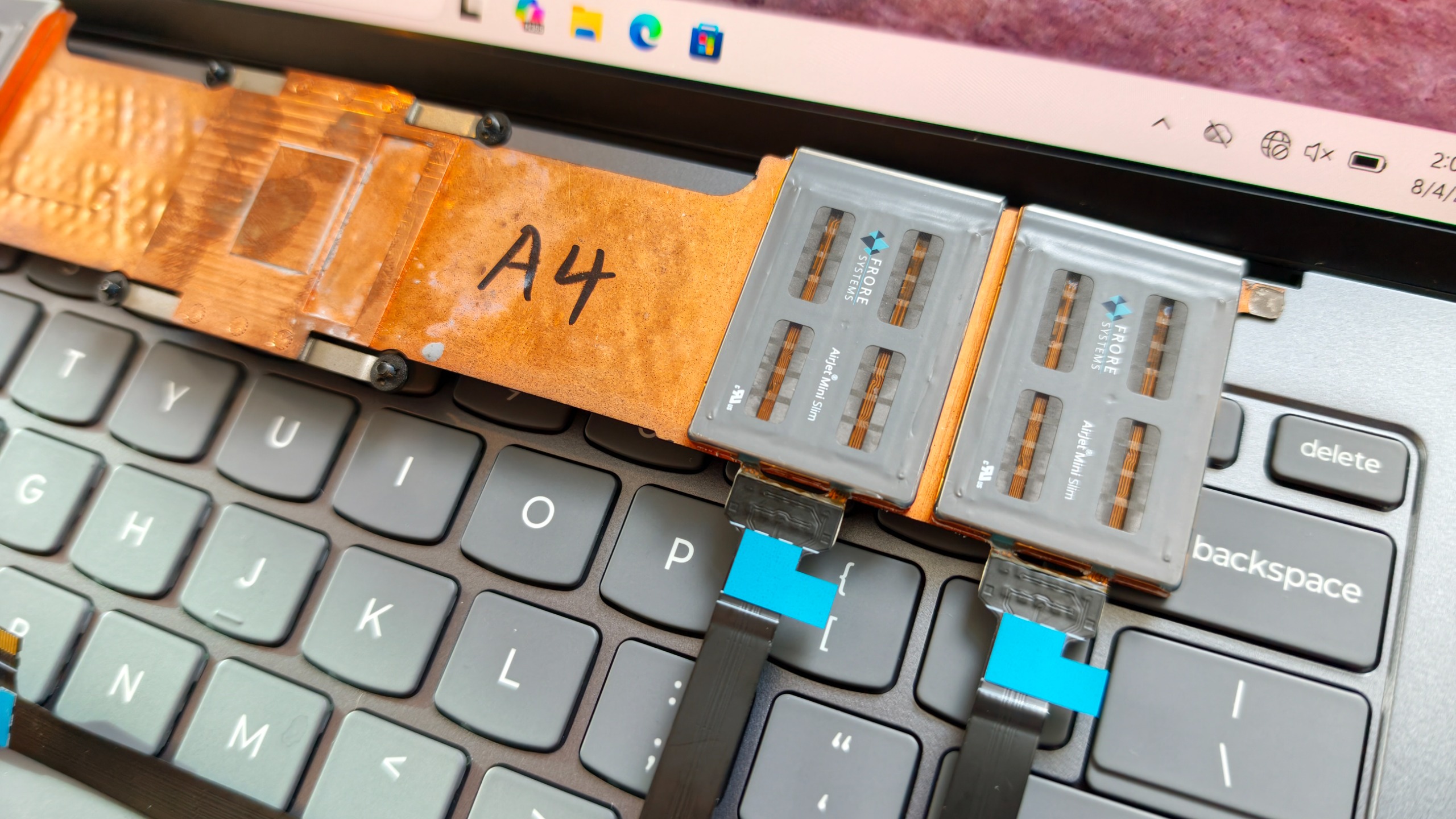
Entire Frore AirJet solid-state cooling strip assembly with copper heat sinks and ribbon cables. (Image credit: Daniel Rubino)
For decades, laptop cooling has largely followed the same formula.
A processor generates heat. Heat pipes move that heat toward a heatsink. One or more fans blow air through the system and out of vents.
The design has evolved, but the fundamentals haven't changed much.
Frore Systems wants to change that.
AirJet is a solid-state active cooling solution that replaces traditional laptop fans with tiny cooling chips that use vibrating membranes to generate airflow. Instead of spinning fan blades, AirJet creates high-velocity pulsating air jets that remove heat while operating at extremely low noise levels. Frore describes it as the world's first solid-state active cooling chip.
One AirJet Mini Slim module is only 2.65mm thick, consumes up to 1 watt of power, removes up to 5.25 watts of heat, and generates significantly higher back pressure than traditional fans. The technology was specifically designed for ultra-thin devices where conventional cooling becomes difficult or impossible.
Close-up of two Frore AirJet Mini Slim solid-state cooling chips installed on a copper heat pipe strip above gray laptop keyboard keys showing how they are placed in the laptop. (Image credit: Daniel Rubino)
The clever part is that these modules don't need the large internal spaces required by traditional fans.
Instead of designing a laptop around cooling hardware, manufacturers can distribute AirJet modules throughout the chassis in different locations.
That flexibility is both the technology's greatest strength and its biggest challenge.
During conversations at the event, it became clear why we've seen AirJet demonstrations for a few years but haven't yet seen a flood of mainstream laptops using it.
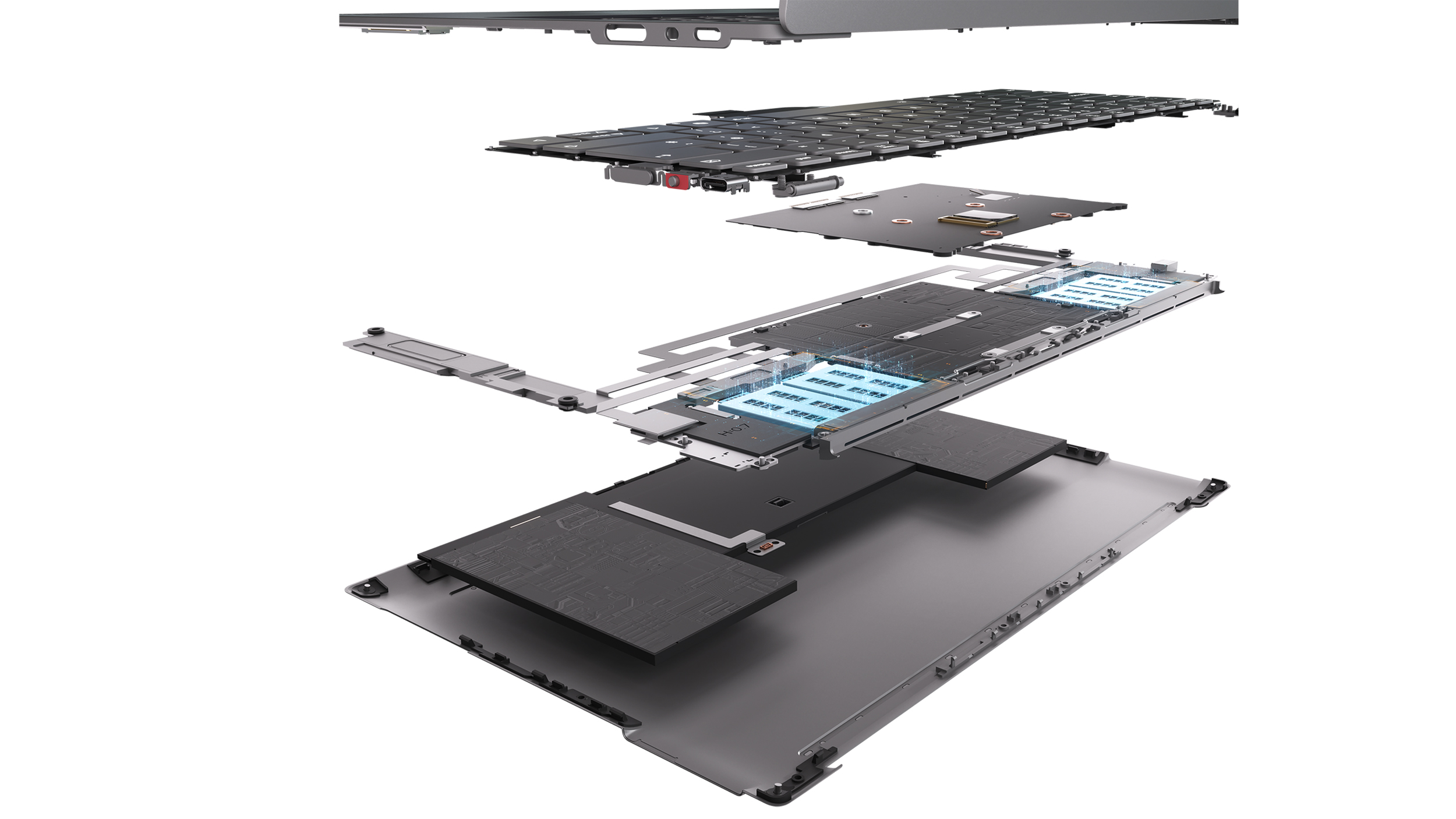
Exploded diagram revealing the internal layers, motherboard, and Frore AirJet solid-state cooling modules of a Lenovo AeroBlade concept laptop. (Image credit: Lenovo)
This isn't a simple parts swap.
OEMs have spent decades designing motherboards, thermal layouts, and internal structures around conventional fans. AirJet requires engineers to rethink much of that architecture. The cooling solution may be smaller, but integrating it properly involves substantial redesign work throughout the entire system.
That's a lot of engineering investment.
But judging by AeroBlade, the payoff might be worth it.
A laptop with almost no compromises
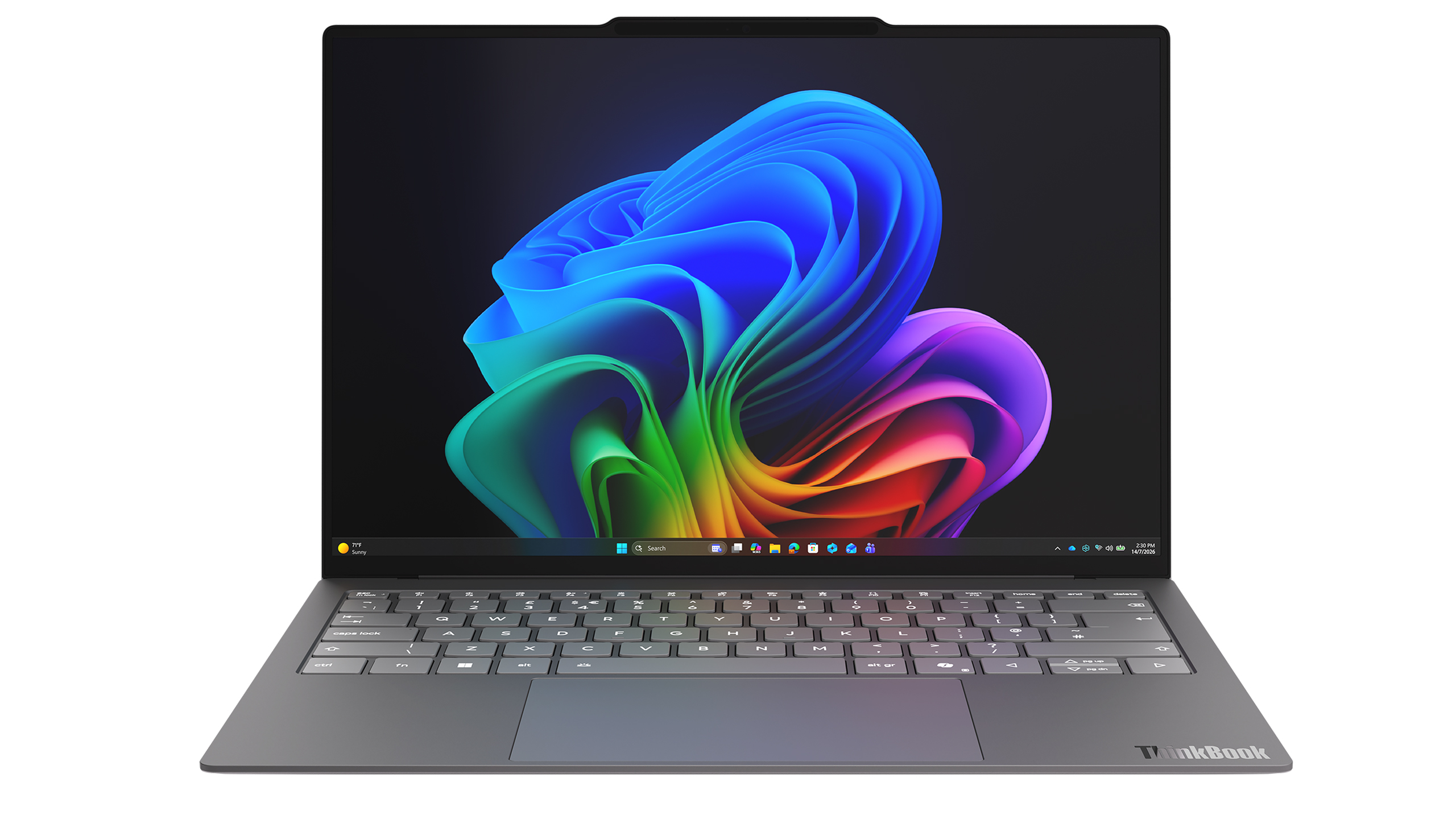
Rendering of the Lenovo ThinkBook AeroBlade laptop. (Image credit: Lenovo)
The most impressive thing about AeroBlade is that Lenovo doesn't appear to be treating fanless computing as a compromise.
Traditionally, when manufacturers build ultra-thin fanless systems, performance becomes the sacrifice. The device is quiet and portable, but sustained workloads eventually cause thermal throttling.
Lenovo's pitch is essentially the opposite.
Side view of an ultra-thin grey laptop standing open at a 90-degree angle, highlighting its extremely slender display and base. (Image credit: Lenovo)
The company believes Active Flow can deliver sustained AI and productivity performance without the compromises typically associated with fanless PCs. The only noise I noticed during my brief hands-on came under heavier workloads, where there was a faint whooshing sound from moving air. It was subtle enough that I had to actively listen for it.
What I didn't notice were intake vents covering the bottom of the chassis. Hooray!
That's because the cooling system works differently than traditional laptop designs. Air management has largely been pushed toward the rear of the system, creating a cleaner and more minimalist design.
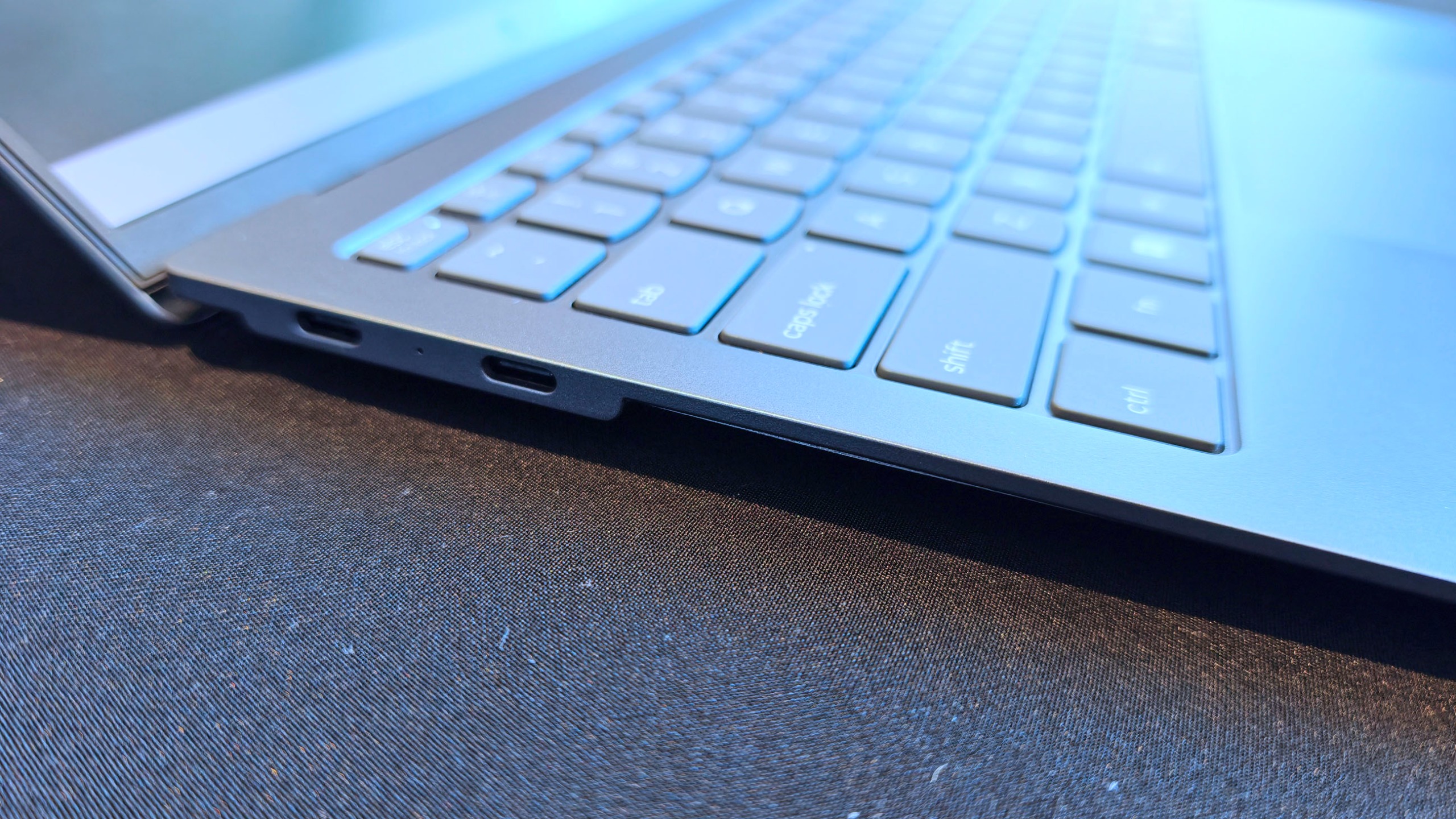
Super thin, but still room for some Type-C ports. (Image credit: Daniel Rubino)
The result is a device that feels almost impossibly refined, and that's why I think AeroBlade is a big deal.
Most laptop innovation over the last few years has focused on AI accelerators, NPUs, display tech, and silicon improvements. Those things are important, but they're largely invisible to users (well, maybe not displays, but still).
In many ways, cooling technology determines what kind of laptop manufacturers can build.
Lenovo could make impossibly thin and light (compared to what we are used to), or use that extra space for a larger battery for absurd laptop longevity. It opens a bunch of engineering doors and options.
The concept that doesn't feel like a concept
Lenovo loves showing proof-of-concept devices, and many never become products.
But the company's track record also shows that some of its most interesting concepts eventually make the jump to production after enough refinement (I'm hoping Lenovo's Legion handheld foldable concept is one of those).
AeroBlade feels like one of those projects. Indeed, this was my first question to Lenovo, as proof-of-concept is often wacky designs, rolling displays, dual displays ... things that look weird but could be useful.
Super thin and light laptop with no vents? Who wouldn't want this? I don't think we really need a focus group to see if it's a good idea!
The hardware already looks polished. The underlying technology exists. The user benefits are immediately obvious. And perhaps most importantly, the industry is constantly searching for ways to make laptops thinner, lighter, quieter, and more efficient.
AirJet checks every one of those boxes.
Will this technology replace fans in gaming laptops with RTX-class graphics anytime soon? Probably not.
But for premium ultraportables, enterprise notebooks, all-in-one desktops, handheld gaming PCs, and productivity-focused systems, I think we're looking at one of the most significant advances in PC design we've seen in years. (We've already openly wondered about Aerojet in a Steam Deck 2).
So, yeah, ironically, the biggest innovation at Lenovo's event wasn't AI.
It was airflow.
Join us on Reddit at r/WindowsCentral to share your insights and discuss our latest news, reviews, and more.
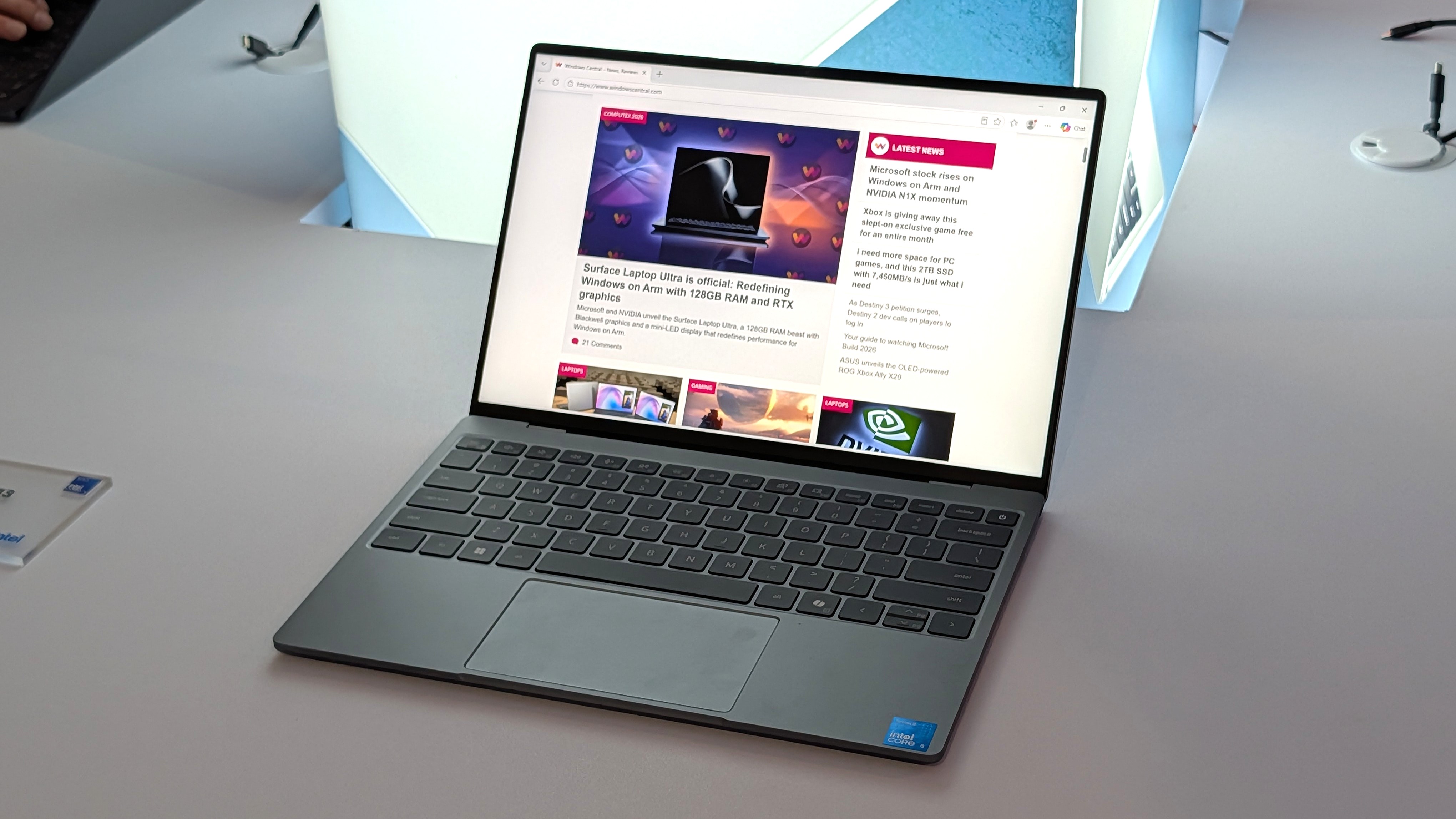
Dell just announced a new laptop to take on Apple's MacBook Neo. The Dell 14S is a colorful laptop designed for college students and young adults, which helps the PC compete with the MacBook Neo's colorful range.
The Dell 14S should be a budget-friendly PC, though Dell has not released pricing for the laptop yet. The laptop has an aluminum body and a nice selection of ports, including two USB 3.2 Type-C ports, an HDMI port, and a 3.5mm headphone jack.
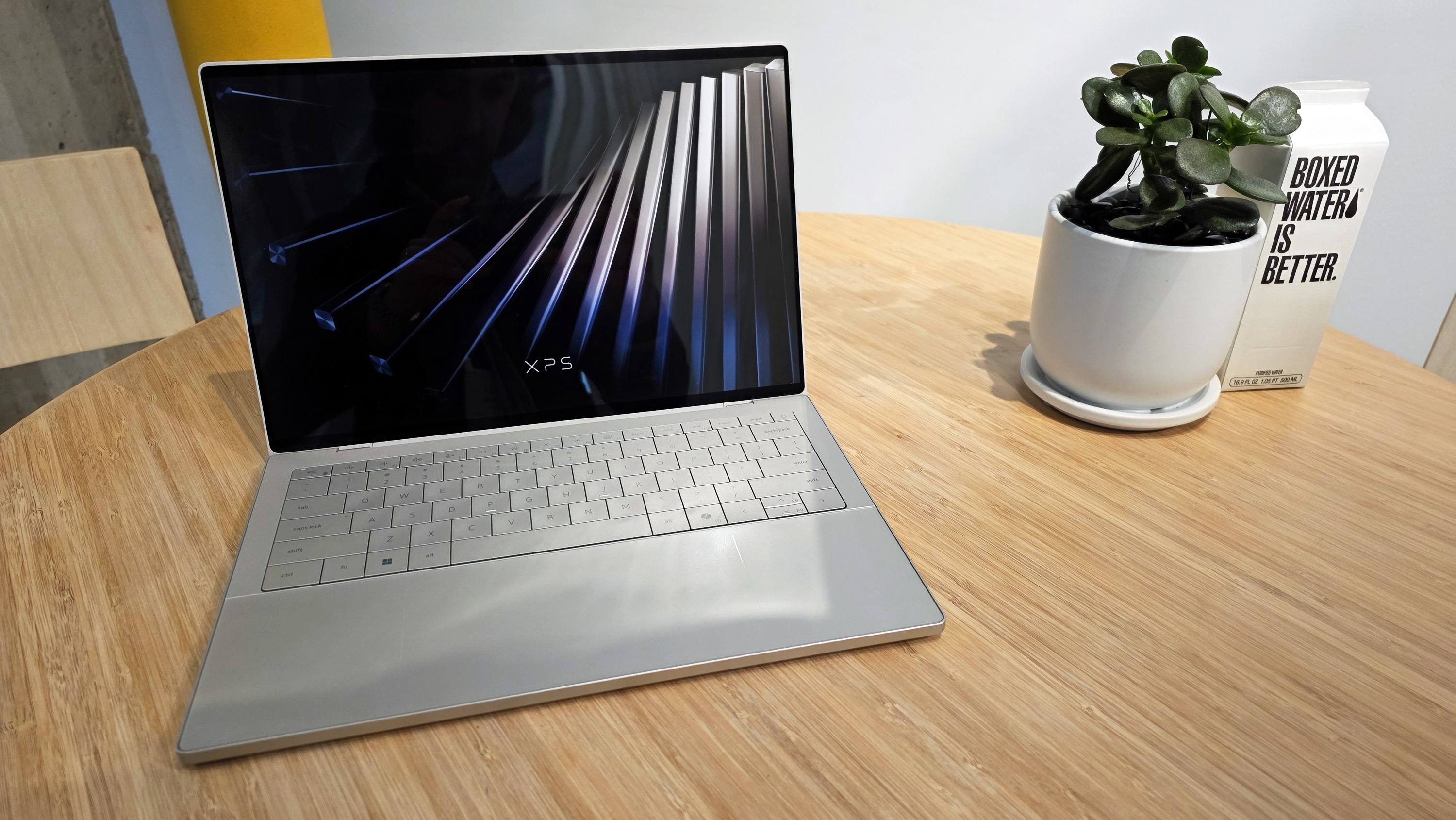
The Dell 14S and the Dell XPS 13 released earlier this year both compete with the MacBook Neo, but they do so in different ways. The XPS 13 has a better display, Wi-Fi 7, a backlit keyboard, and is a more premium device.
The Dell 14S promises all-day battery life, is available in several colors, and has a 16:10 display.
People who were intrigued by the low price of the MacBook Neo but want the look of a premium laptop running Windows 11 will likely prefer the newest XPS 13. Those who like the colorful tone of the MacBook Neo but want a lightweight and affordable device running Windows 11 will probably lean toward the Dell 14S.
Dell's confusing naming scheme
Dell is still struggling with naming its products. The company abandoned the XPS lineup and got rid of its entire consumer-focused strategy but has since backtracked and brought back XPS. But the company seems confused on what XPS means to customers.
If you head over to Dell's webpage about the New Dell 14S, you'll see a comparison chart that includes the New Dell 14, New Dell 14S, and Dell 14S. Incredibly, they are quite different from each other.
Listing two laptops side-by-side and having one labeled as "new" is fine. It's somewhat similar to how car companies handle naming, though the automotive industry often just attaches a year within parentheses.
Sticking with that analogy, if you look at a 2025 Honda Civic and a 2026 Honda Civic, they should be somewhat similar vehicles. Barring a complete overhaul, a new version of a model should resemble its predecessor.
If there is an overhaul, it's usually a linear progression, such as when Dell shifted from the old-old XPS to the once-new-but-now-old XPS.
If you did not already know which of the below PCs were XPS laptops, could you easily guess which are in that family of devices?
Zac Bowden / Windows CentralFuture | Daniel RubinoDell
What is an XPS device in 2026? The new XPS 14 is a premium device featuring an Intel Core Ultra 7 processor or more powerful processor. The not-so-new but still great XPS 14 shares a similar design and also has an Intel Core Ultra 7 chip, albeit an older one.
So, XPS laptops are premium machines with high-end processors and a design resembling the XPS laptops from recent years, correct? Nope. The XPS 13 from this year is a budget-focused PC with options powered by an Intel Core Ultra 3 chip.
Other differences stand out, such as the latest XPS 13 having options with 8GB of RAM compared to the 16GB minimum of the new XPS 14.
Please understand, I think the latest XPS 13 and XPS 14 are excellent laptops. I predict the Dell 14S will also be a solid PC. But I don't understand what Dell is doing with its XPS brand. The company seems to have remembered that consumers value the XPS brand and has chosen to etch the XPS logo onto things willy-nilly.
Join us on Reddit at r/WindowsCentral to share your insights and discuss our latest news, reviews, and more.
The memory crisis continues to get worse, driving the price of gaming laptops to ridiculous extremes while scaring people into buying them despite the price hikes out of fear that their prices will worsen before they get better.
Thankfully, retailers will always continue to offer brief respites from this crisis with generous discounts for the best gaming laptops.
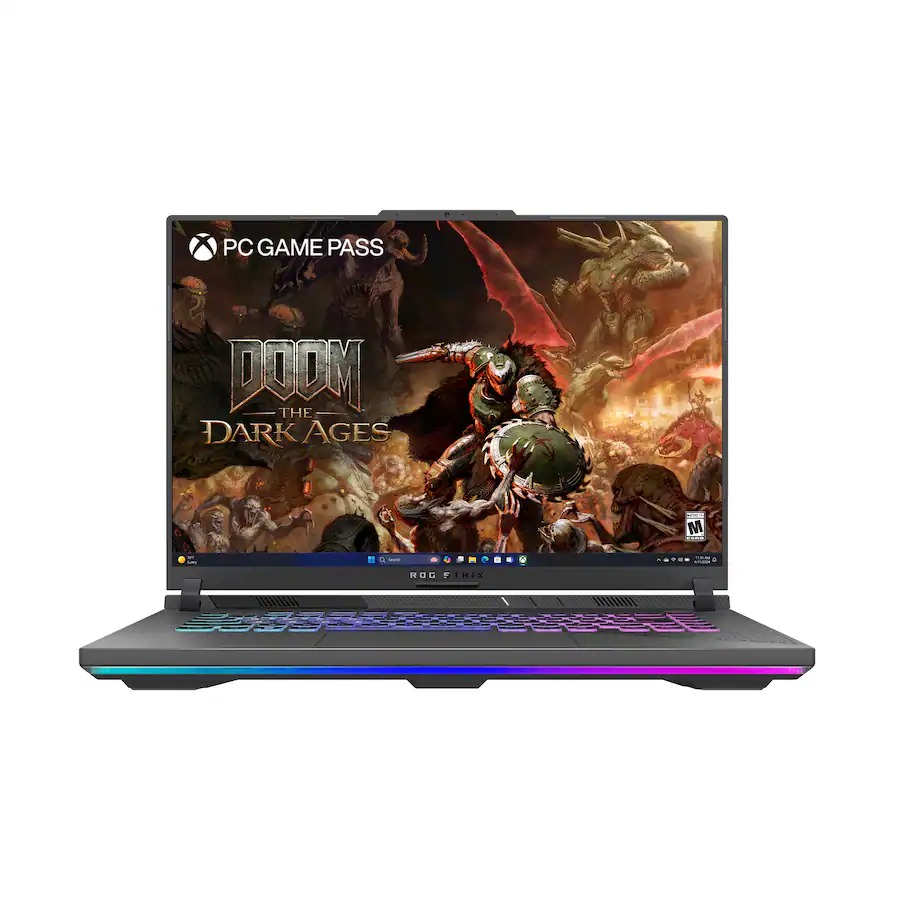
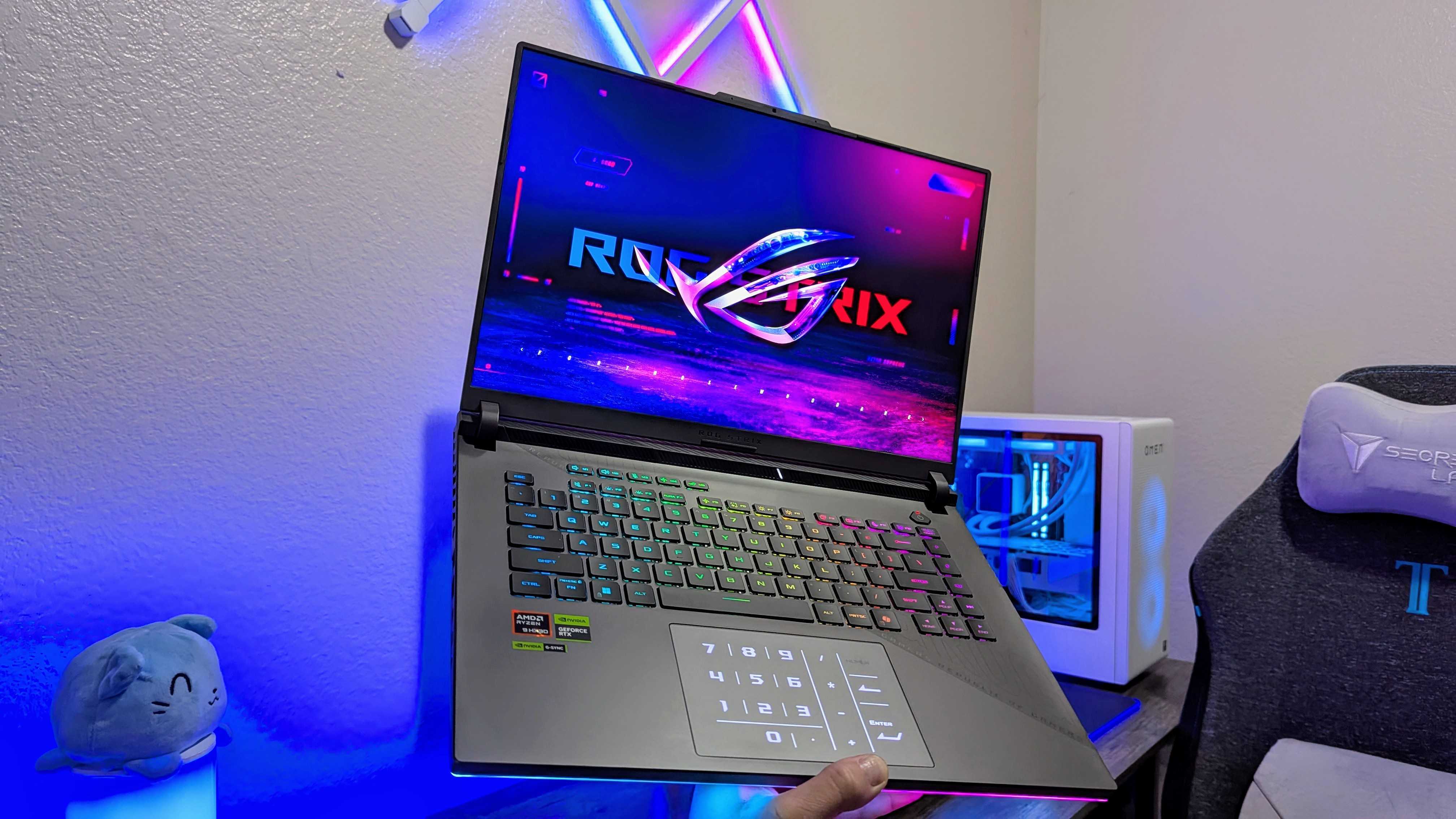
For example, one of our top-rated gaming laptops, the ASUS ROG Strix G16, has had its steep listing price of $2,299.99 brought down to $1,749.99 at Best Buyuntil the end of Best Buy's Labor Day Sale on September 7, 2026.
"The latest ASUS ROG Strix G16 takes full advantage of AMD's most powerful mobile processors to offer excellent performance and a consistent gaming experience, and may end up being an underrated value-play in the premium gaming laptop segment this year." ~ Zachary Boddy, Former Staff Writer
Why buy the ASUS ROG Strix G16 gaming laptop (AMD)?
The ASUS ROG Strix G16 in hand. (Image credit: Windows Central (Zachary Boddy) | ASUS)
Of all the best gaming laptops we've personally tested, the ASUS ROG Strix G16 remains one of the finest for those who prefer to outfit their desktops with AMD hardware.
As noted in our 4.5 Star Review of the ASUS ROG Strix G16, it delivers exceptional performance, capable of running graphically demanding games like Cyberpunk 2077 at 69 fps or over 140 fps thanks to its NVIDIA GeForce RTX 5070 TI graphics card, 16GB of RAM, 1TB SSD, and AMD Ryzen 9 8940HX processor.
In addition, this laptop features an LED, FHD, IPS display capable of rendering images and videos at vibrant and colorful 1600p resolutions with refresh rates of 165 Hz and a max brightness of 300 nits.
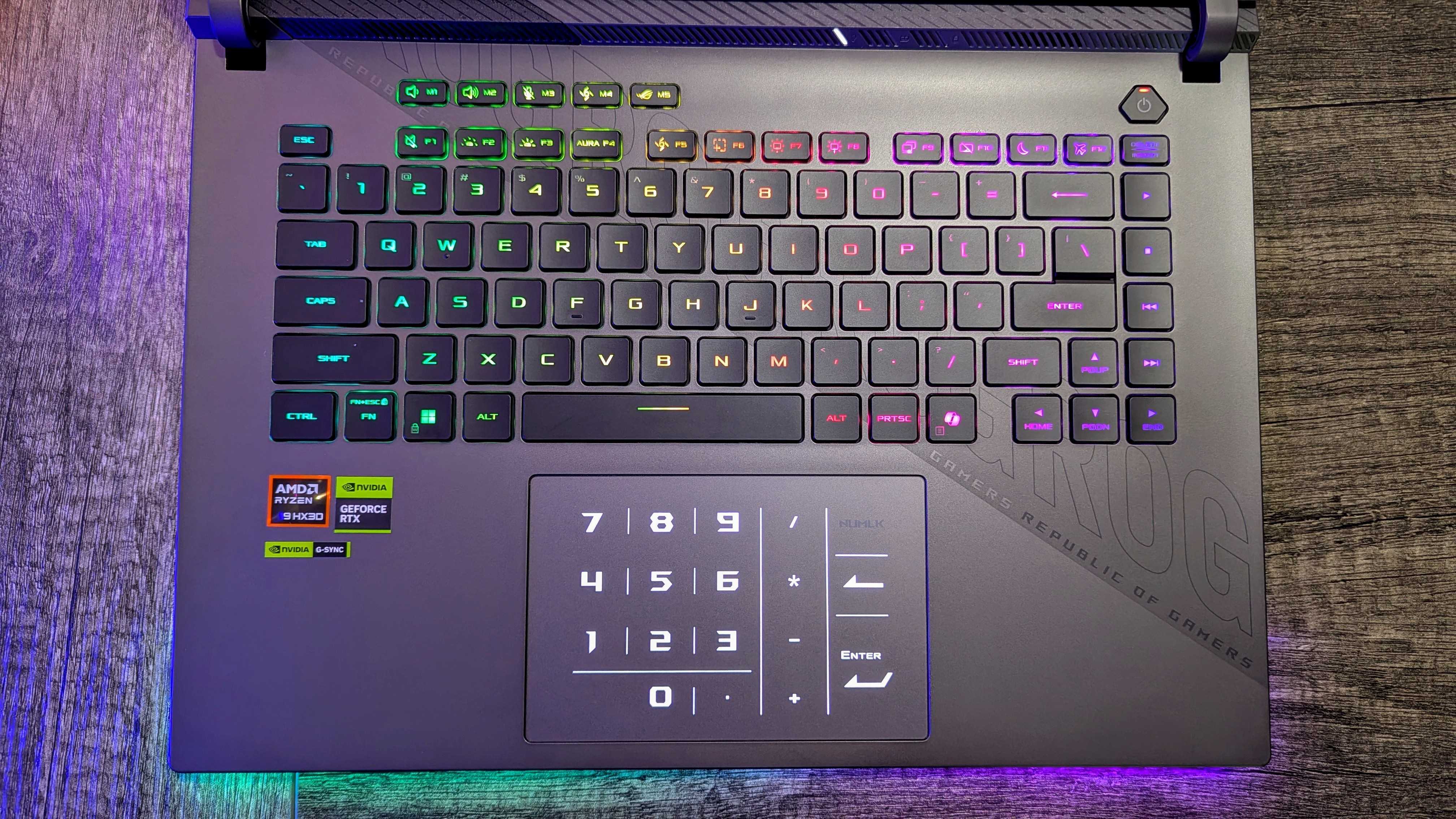
Close-up of the ASUS ROG Strix G16's keyboard. (Image credit: Windows Central (Zachary Boddy) | ASUS)
Combine these specs with a comfy keyboard with extra buttons, and you've got a powerhouse gaming-on-the-go machine that will let you play your favorite games with sublime graphical details and smooth-as-butter gameplay input responsiveness.
So, if you don't mind a laptop with a mostly plastic design and prefer using AMD processors rather than Intel ones, then the ASUS ROG Strix G16 gaming laptop that's now $1749.99 at Best Buy won't steer you wrong.
I know it certainly pleased my former colleague, Zachary Boddy, when he said, "The ROG Strix G16 isn't trying to compete with the most premium devices from Razer or Lenovo, and instead offers a lot of power in a solidly built chassis, paired with a fantastic keyboard and a comfortable display. It could be the underdog of the premium gaming laptop segment."
FAQ
How long will Best Buy's Labor Day Sale last?
Best Buy's Labor Day Sale will last until September 7, 2026
Is its RAM upgradeable?
The ASUS ROG Strix G16 gaming laptop can have its RAM upgraded to a max limit of 64GB via its two DDR5 SODIMM memory slots.
Can its storage space be upgraded?
The ASUS ROG Strix G16 gaming laptop can have its storage upgraded by inserting NVMe PCIe 4.0 SSDs via its two M.2 2280 slots, each of which can support up to 2TB of space for a grand total of 4TB.
Join us on Reddit at r/WindowsCentral to share your insights and discuss our latest news, reviews, and more.
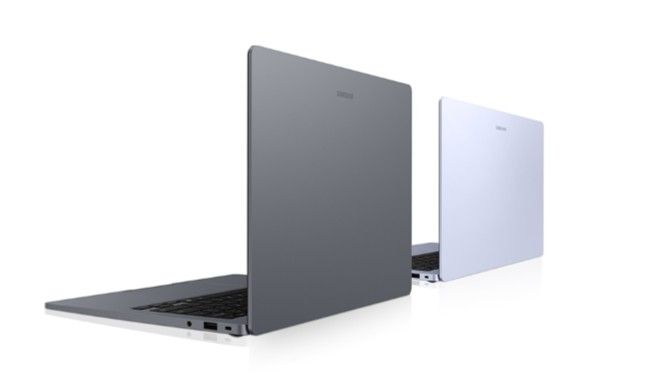
As PC prices continue to rise, seeing a new release at $799 is a welcome sight, and that's where we're at with the new Samsung Galaxy Book6.
It's a decidedly mid-range laptop, but at a mid-range price, and it's not like you're really losing out on much, either.
That is, as long as you're not (for some reason) looking to have Copilot+ since the NPU on the included Intel chips doesn't meet the standard. But it's 2026, so there's still plenty of AI focus on tap, with Samsung's own tools.
Despite the more affordable price, the 14-inch Samsung Galaxy Book6 doesn't skimp on one key spec: Battery life. Samsung claims up to 25 hours, backed by 45W charging that can add 33% charge in half an hour if you do need a top-up.
But in real-world use you're looking at a laptop that will easily get you through a full day off the charger, be that for work or for school. Here's what we're looking at spec-wise:
Dimension
313.0 x 221.0 x 15.7mm
Weight
1.35kg
OS
Windows 11 Pro 25H2 (64-bit) / Windows 11 Home 25H2 (64-bit) Linux (Console only)
Display
14.0″ LCD WUXGA (1920×1200), 350 nits
Processor
Intel® Core™ 5 processor Intel® Core™ 3 processor
NPU
Intel® NPU (up to 15 tops)
Graphic
Intel® Graphics
Network
Wi-Fi 6E, Bluetooth v5.4, 802.11 ax 2×2
Color
Violet Silver, Gray
Memory
8GB/16GB (LPDDR5X)
Storage
256GB/512GB/1TB (PCle)
Camera
2MP (1080p FHD)
Audio
Internal Dual Array Digital Microphones Stereo speaker (2Wx2), Dolby Atmos®
Keyboard
Pro keyboard (Non-Backlit keyboard)
Trackpad
Clickpad
Battery
61.2 Wh (Typical)
Charging
45W USB Type-C Adapter
Port
USB Type-C x 2, USB Type-A, HDMI 1.4 port (Supports 4K@30) Headphone/Microphone
I like that there's anti-glare, and I like that there's a decent array of ports, including a full-sized HDMI output. While the cheapest version will be the Intel Core 3, with the lowest RAM and storage on offer, there is at least an option at an attractive price, and for many, it'll be plenty.
Being a Samsung laptop, if you also use a Galaxy smartphone or tablet, you'll unlock some additional integration, such as second screen support and the ability to use a single keyboard and mouse across multiple devices.
Galaxy AI has a few neat features, too, despite the low-powered NPU on the Galaxy Book6, with some useful tools for images and note summarization.
It's also available in two colors, a dark gray and a "Violet Silver." The Galaxy Book6 isn't going to set performance records, but that's not who it's for. It's for someone who wants a good-quality laptop to do everyday, normal things, and for that, it doesn't look bad at all.
Join us on Reddit at r/WindowsCentral to share your insights and discuss our latest news, reviews, and more.
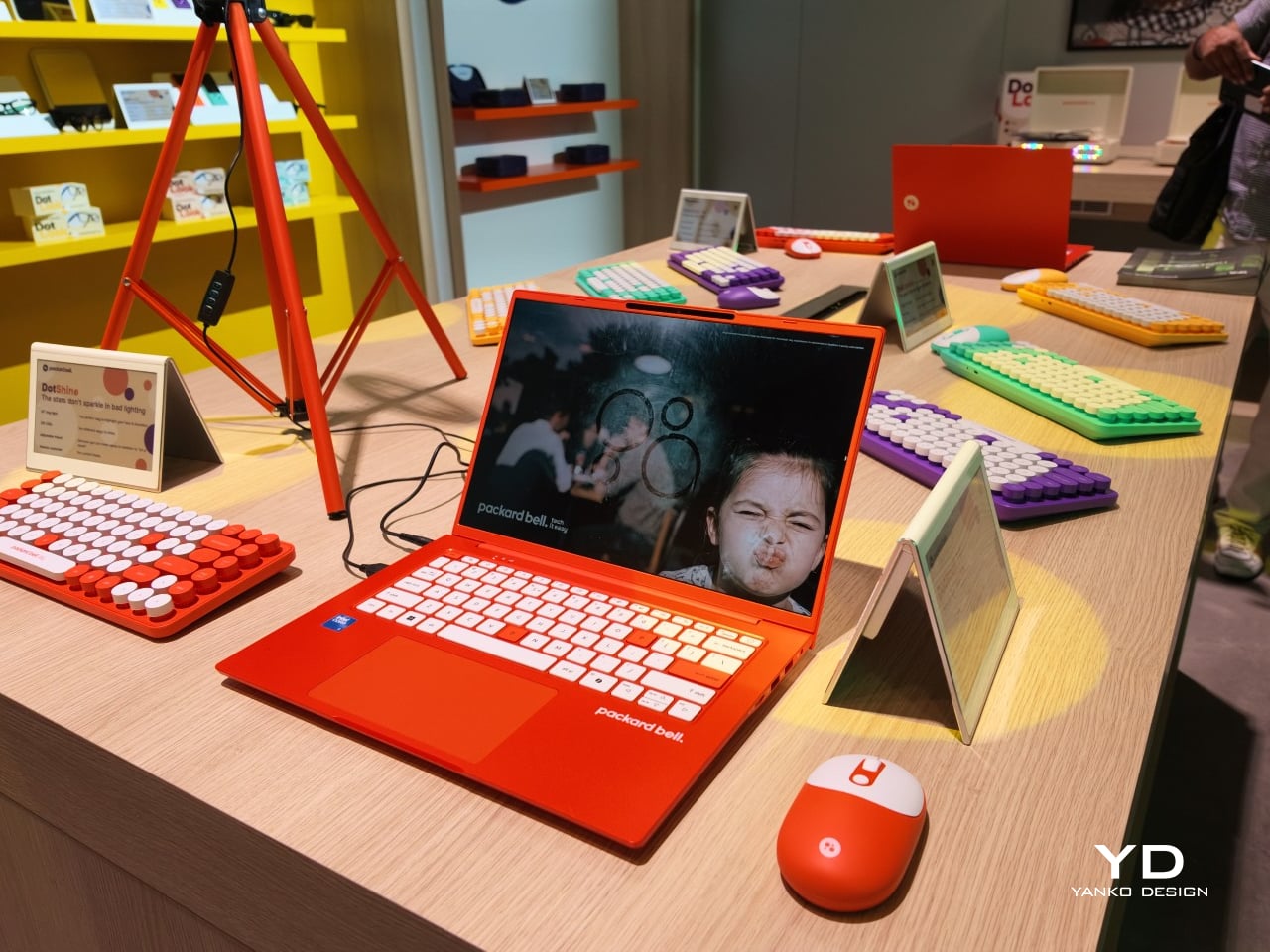
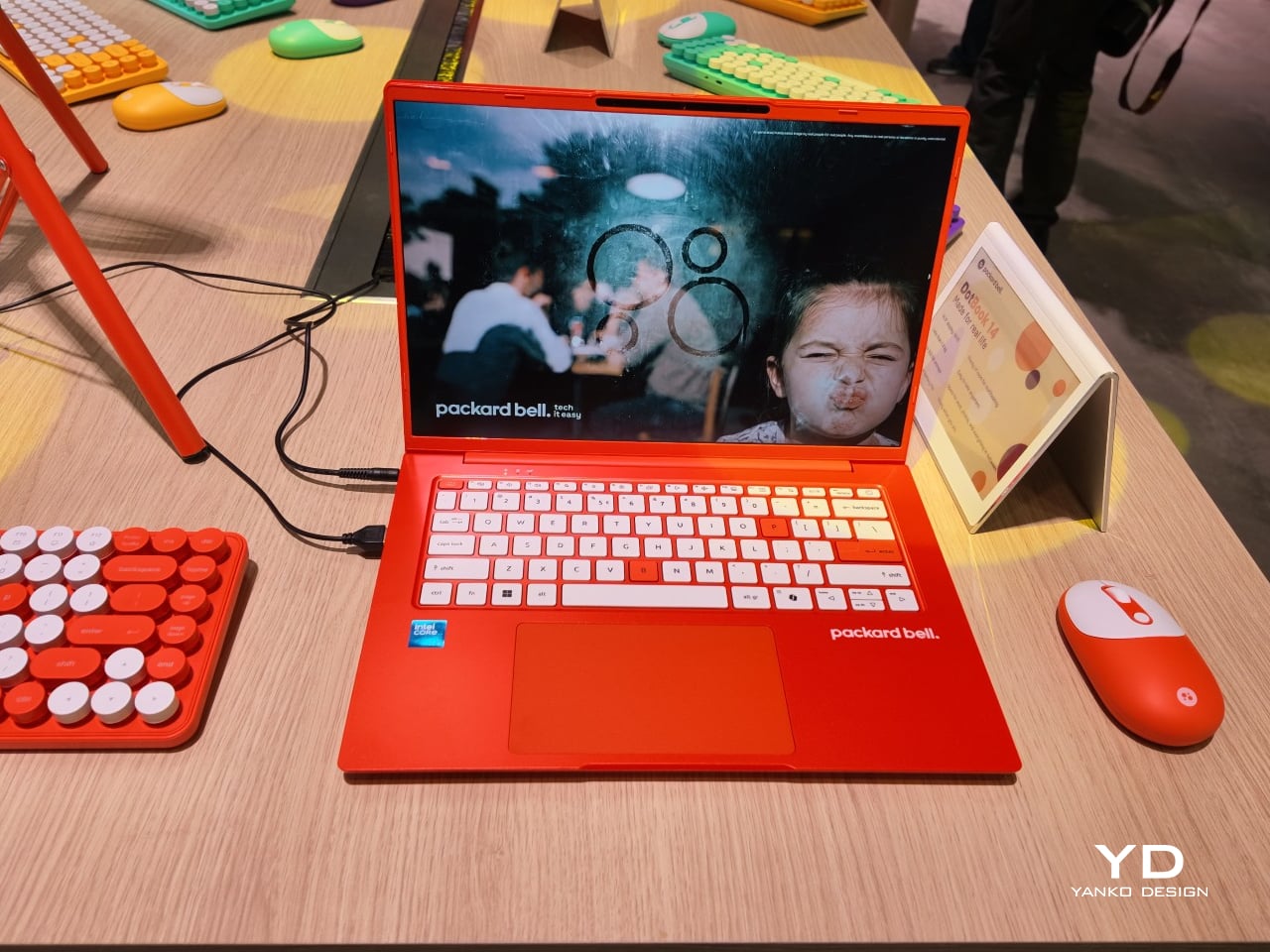
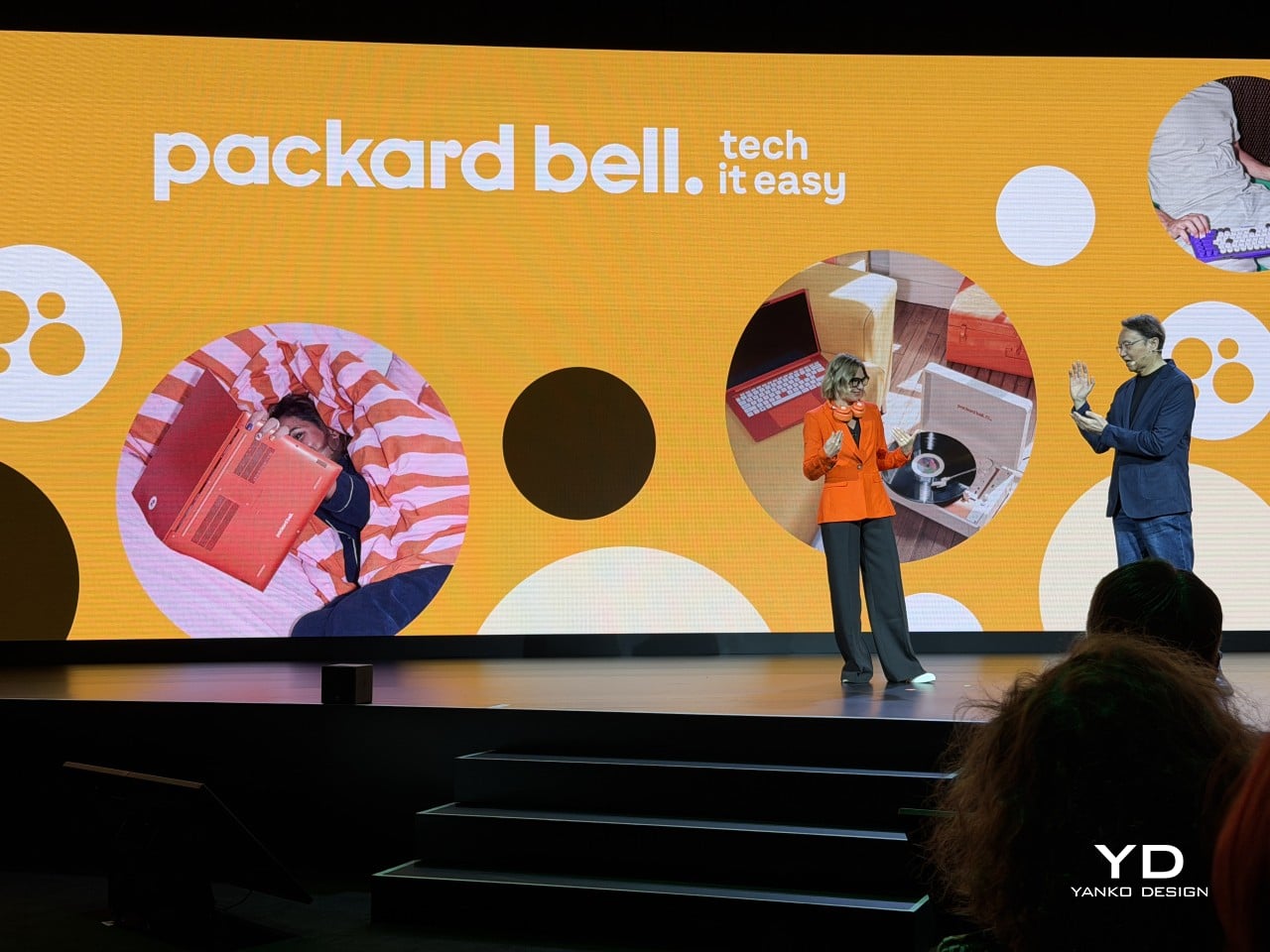
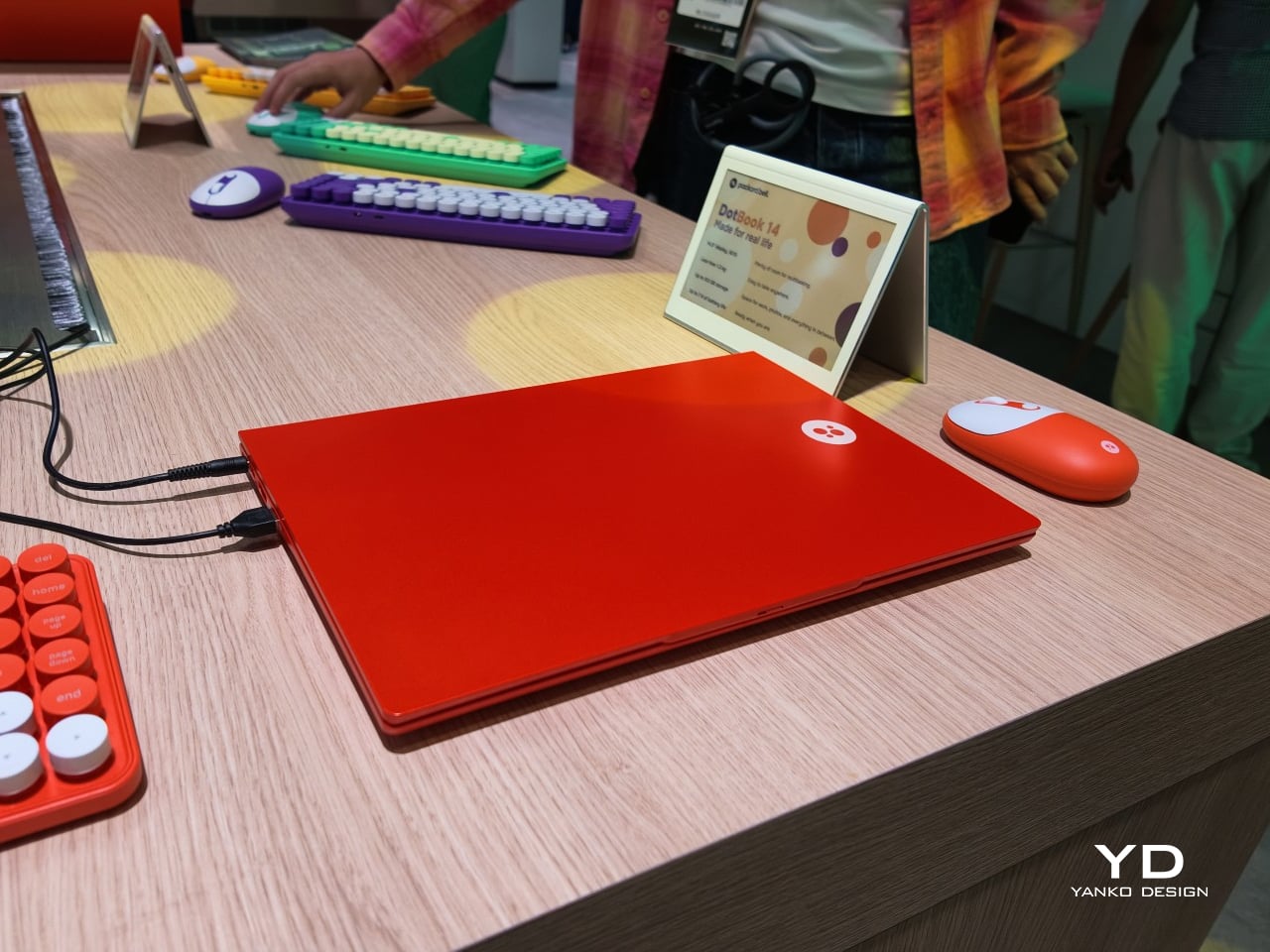
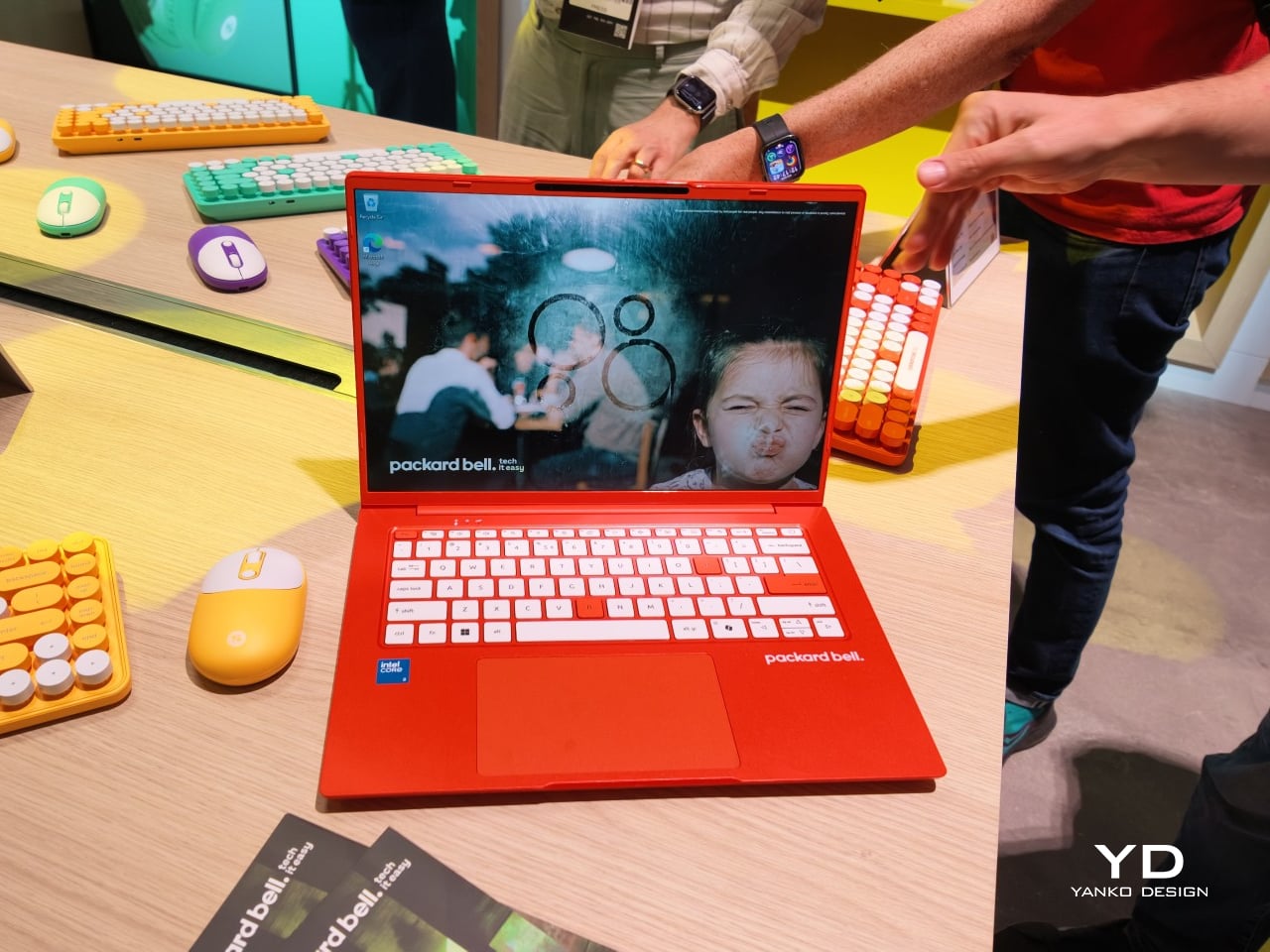
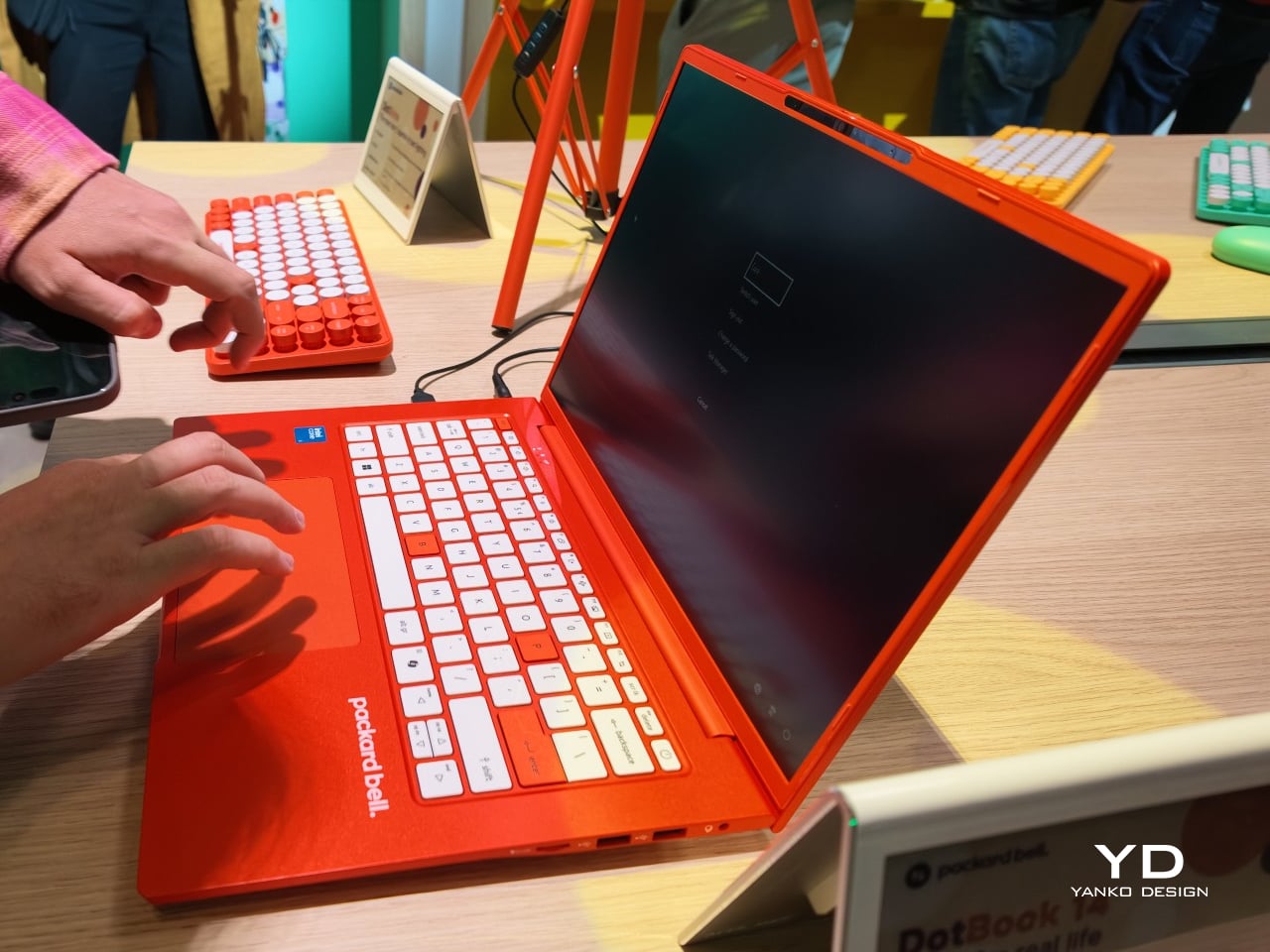
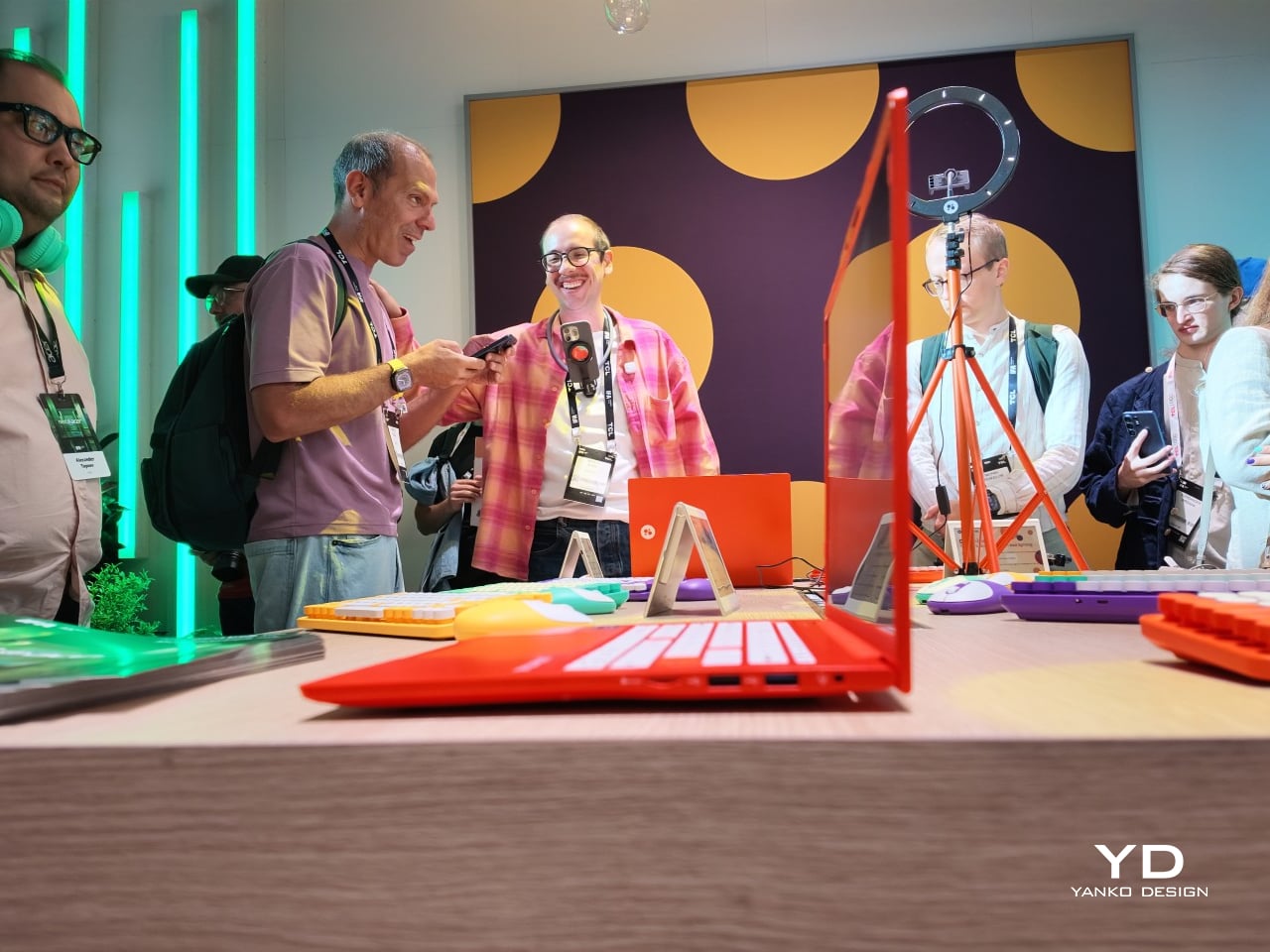
Packard Bell spent a century teaching people that new technology doesn’t have to feel intimidating, and its 100th birthday present to itself leans hard into that idea. Under Acer’s ownership, the brand relaunched at IFA 2026 with a philosophy it calls “Tech it easy,” built around a lineup that trades beige plastic and quiet corporate design for colors loud enough to notice from across a room. Four products anchor that comeback, and each one argues that everyday tech gains something when it stops taking itself so seriously.
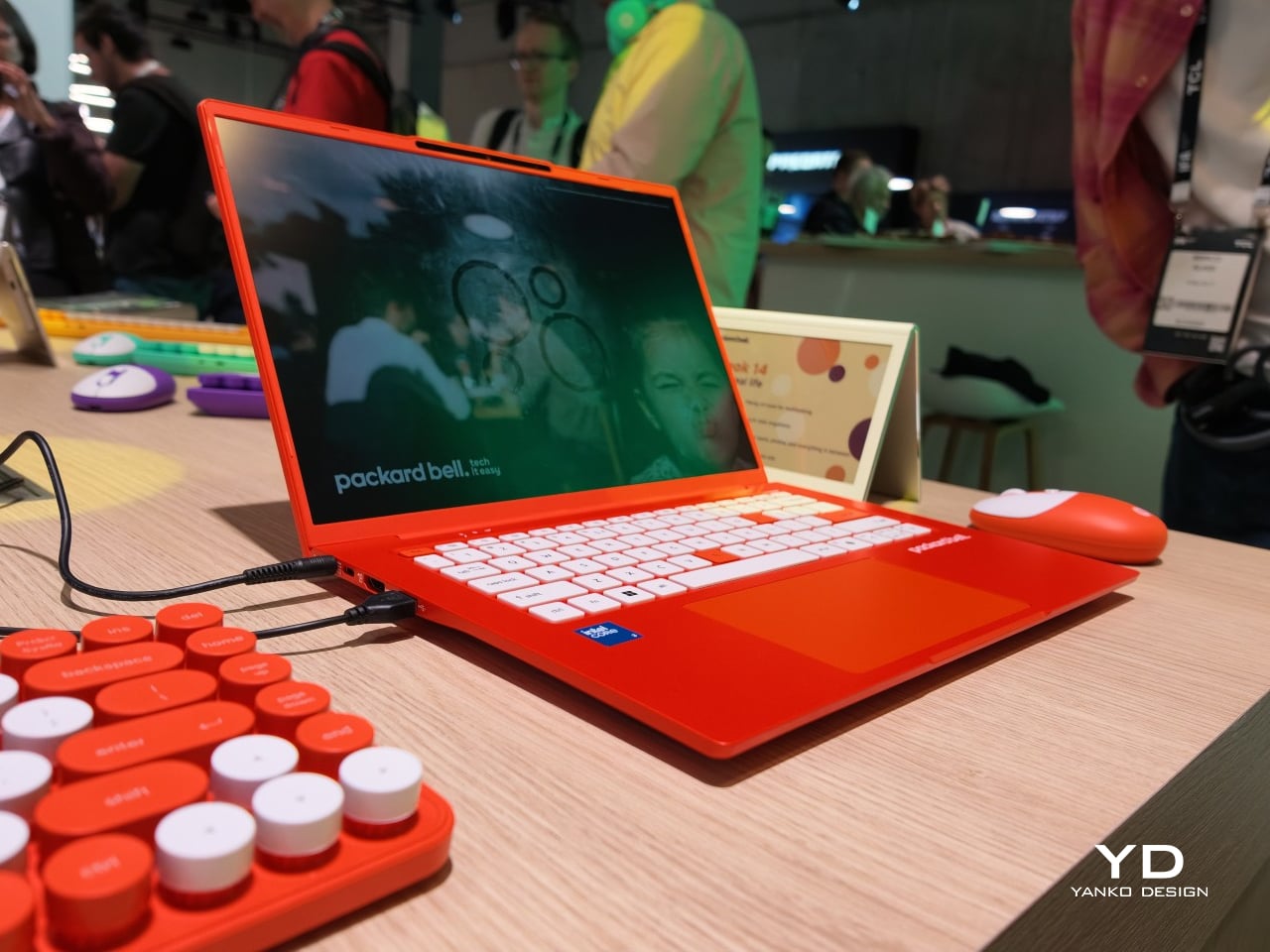
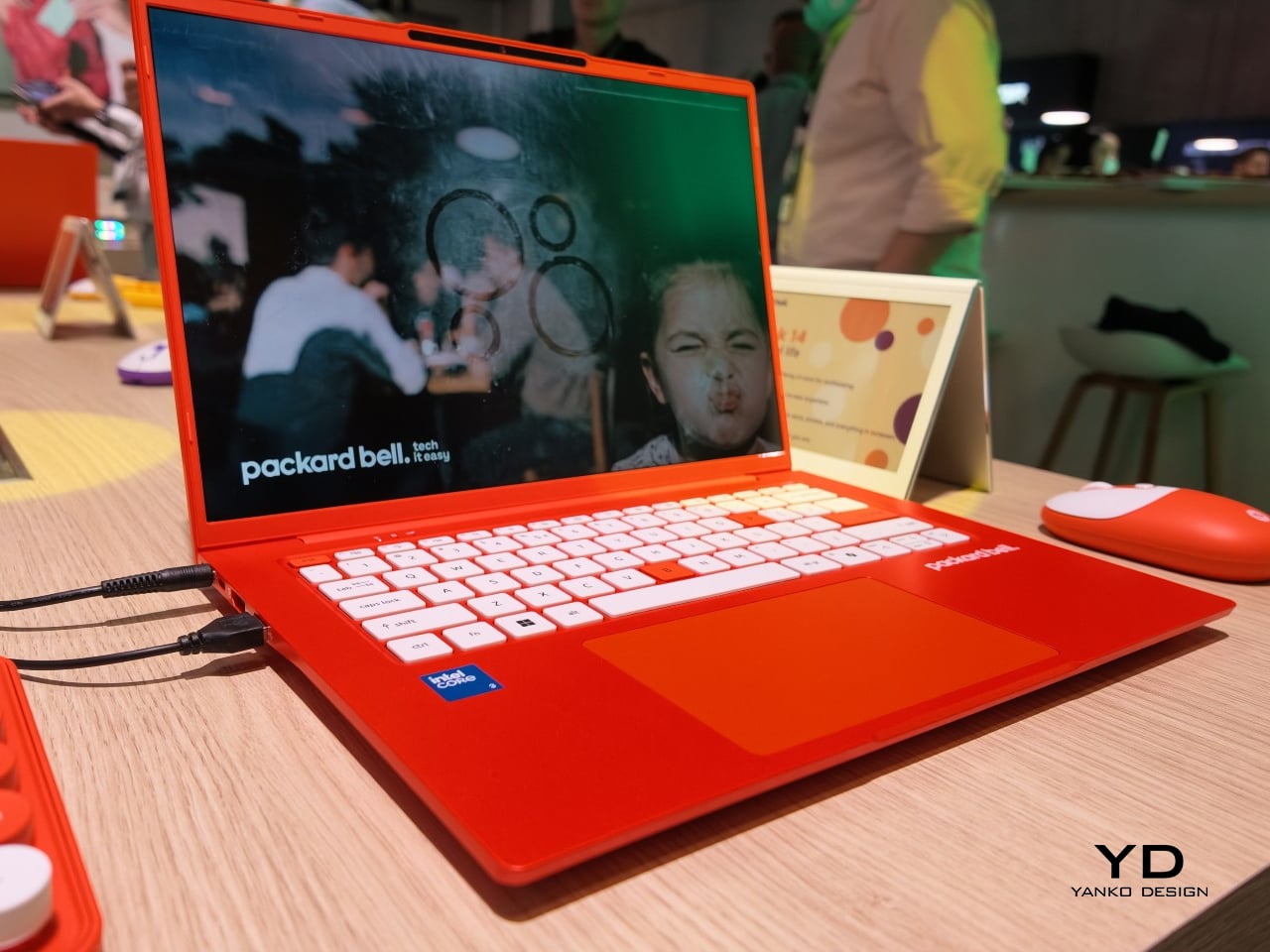
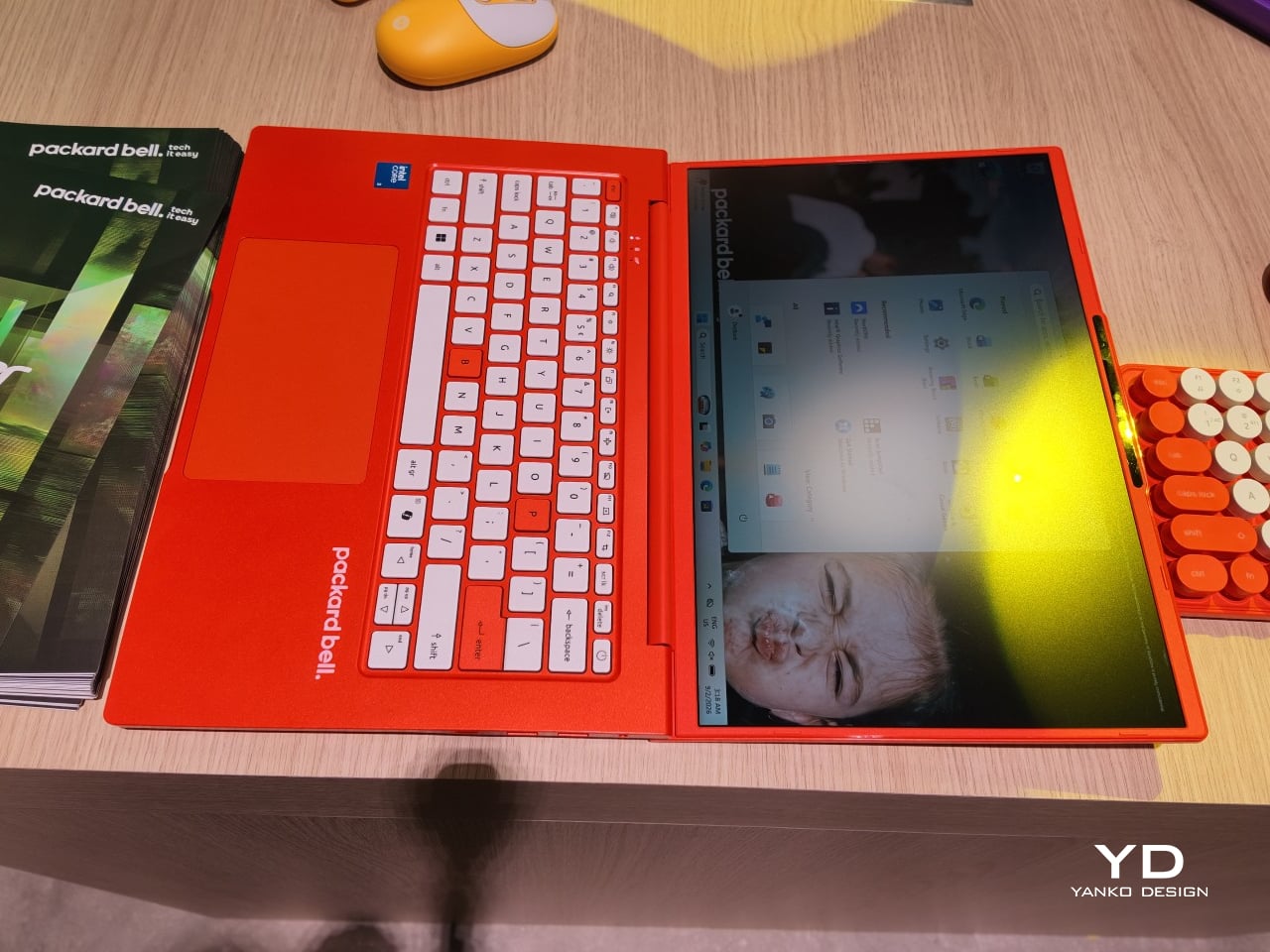
The DotBook carries the heaviest expectations as the collection’s flagship, a 14.5-inch laptop finished in a red-orange shell bright enough to spot on a crowded coffee shop table. Weighing under 1.3 kg and measuring just 17.9mm thin, it’s built for browsing, streaming, and everyday work rather than chasing benchmark scores, backed by up to 512GB of storage and 16GB of memory running quietly under Windows 11. It’s a laptop designed to disappear into a bag, not a spec sheet debate.
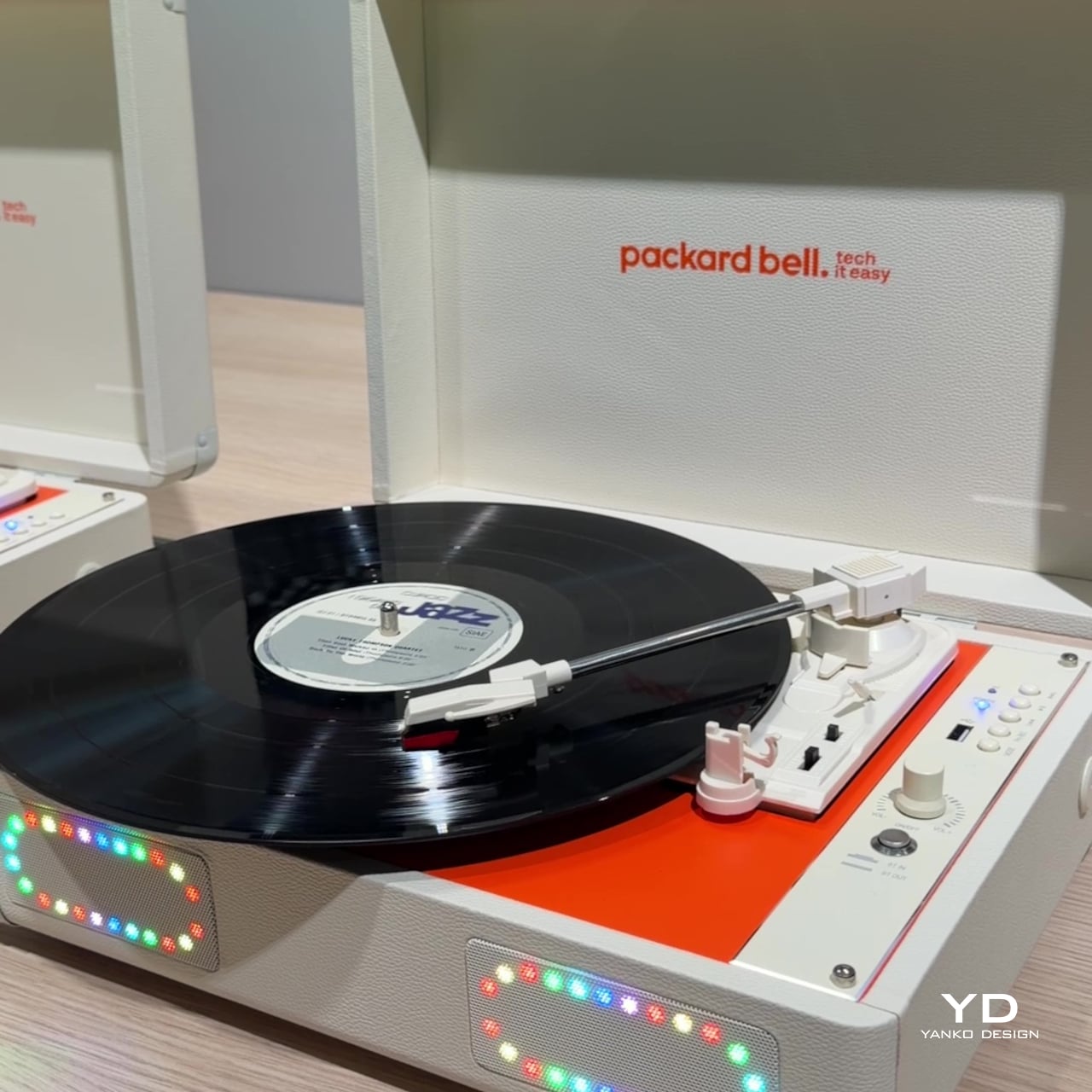
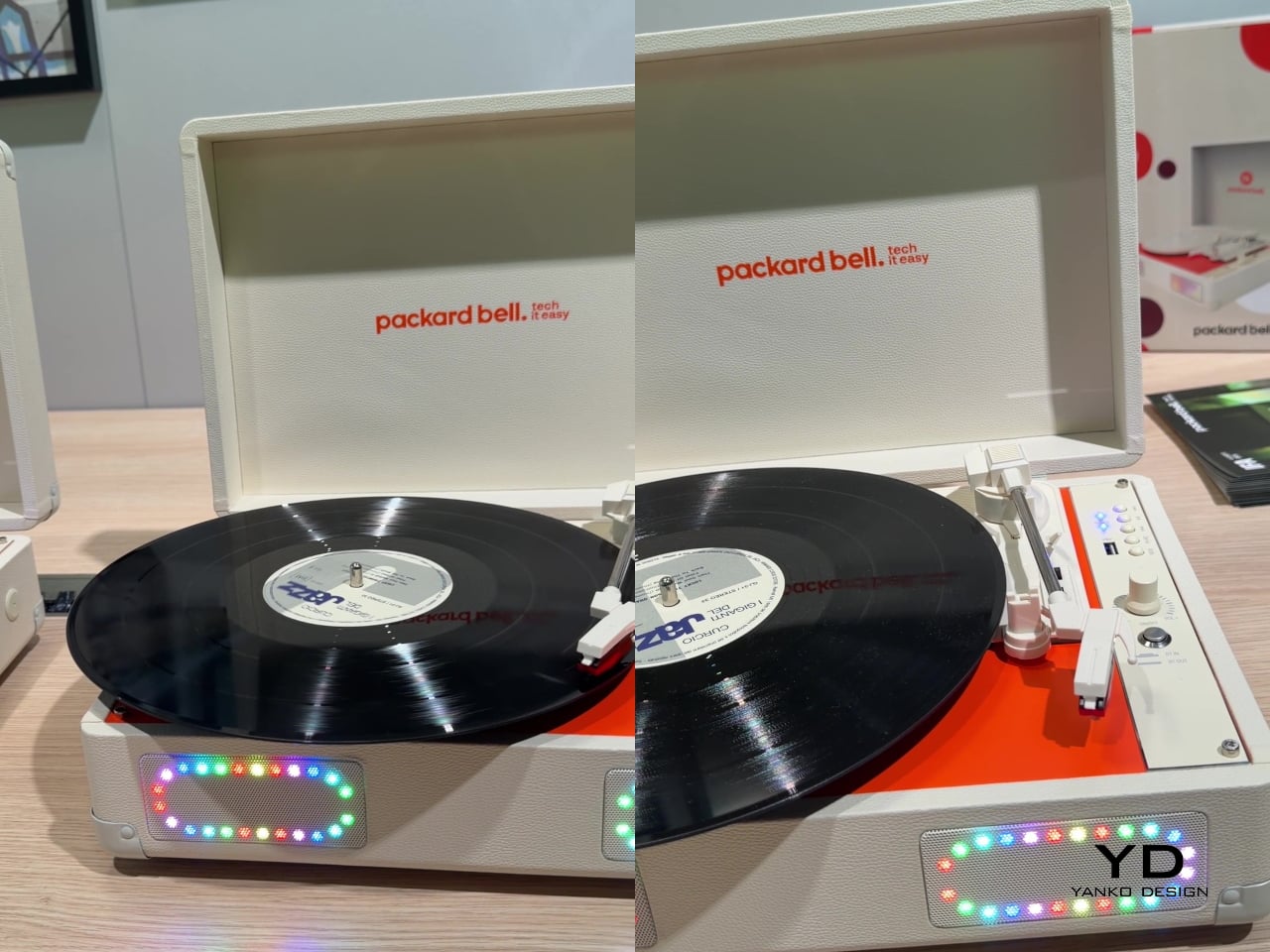
Where the DotBook plays it relatively straight, the DotLoop commits fully to spectacle. Housed inside an actual briefcase shell with a 1970s silhouette, the turntable pops open to reveal a working tonearm flanked by RGB-lit speaker grilles that glow while a record spins. Two built-in 3W speakers handle sound on their own, though Bluetooth and RCA outputs let the DotLoop hand audio off to a proper stereo system whenever the moment calls for something louder.
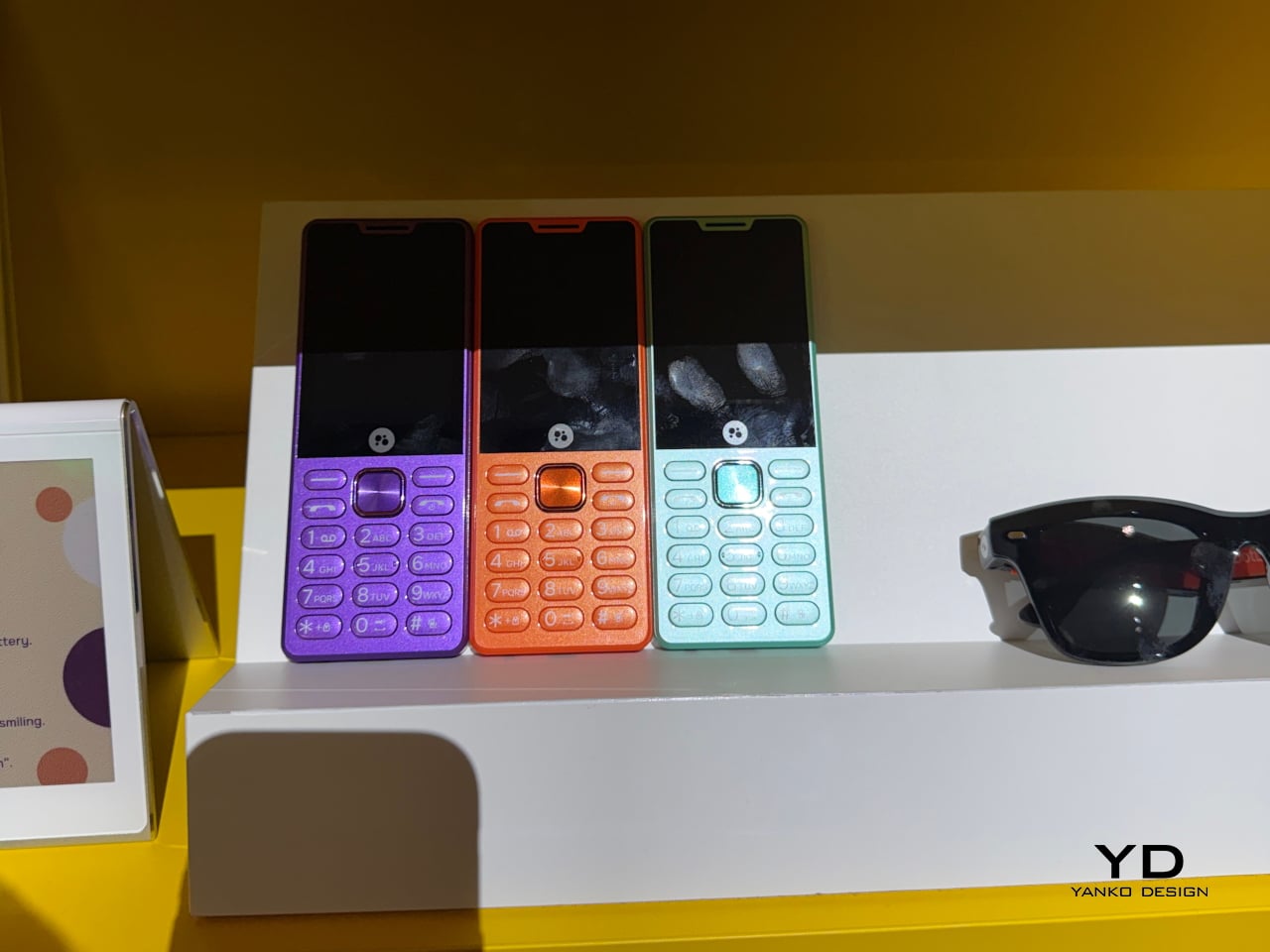
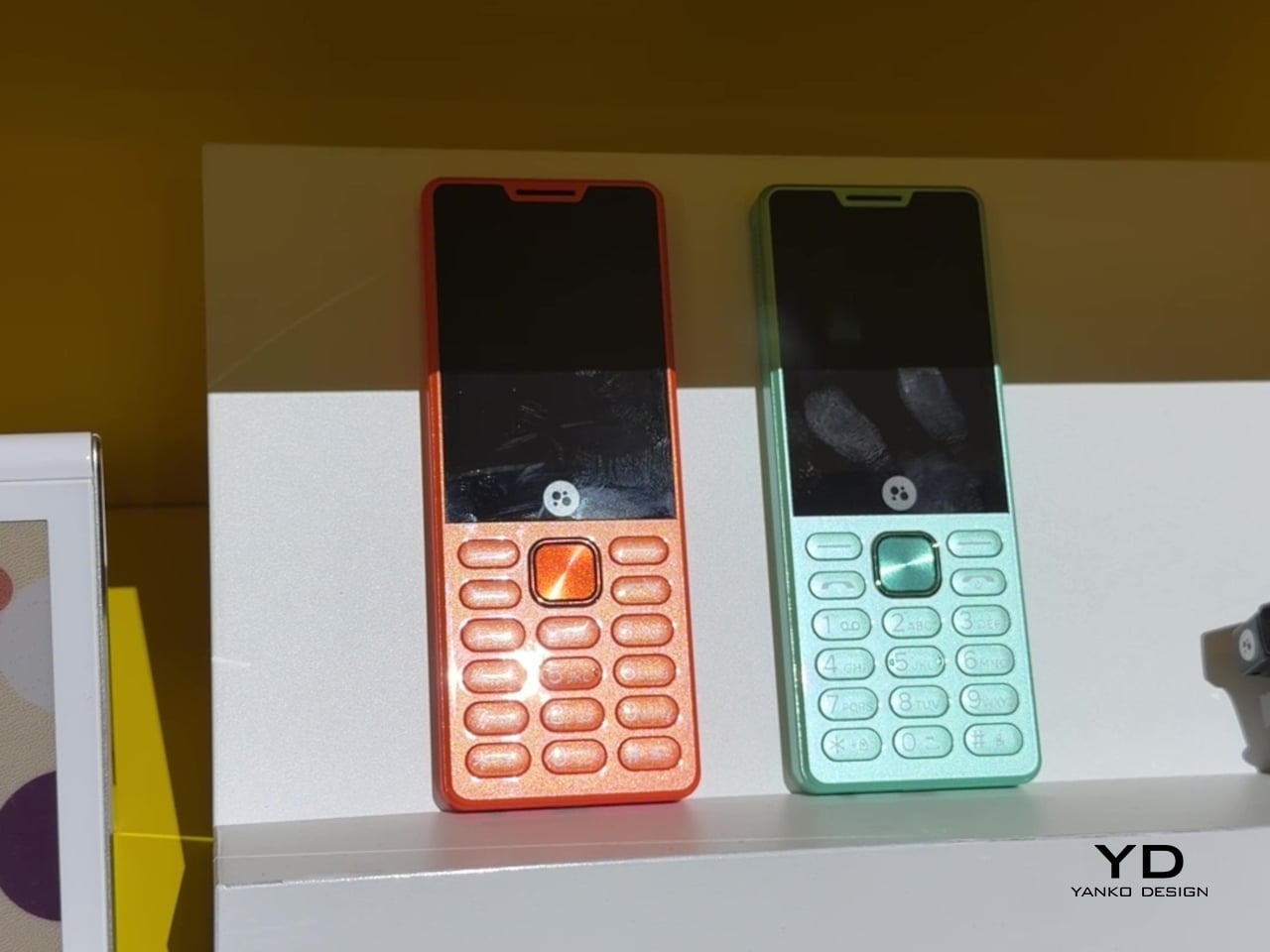
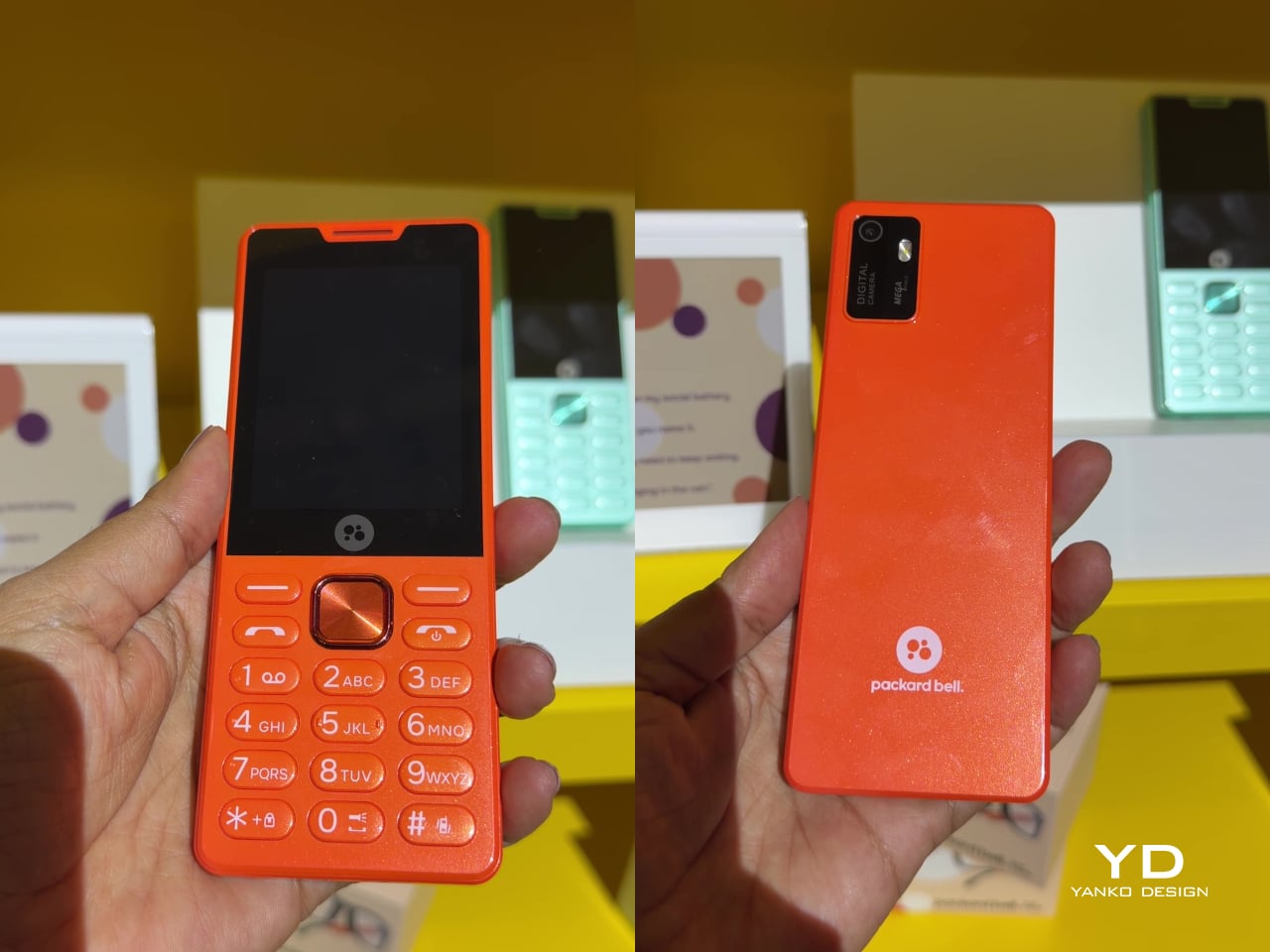
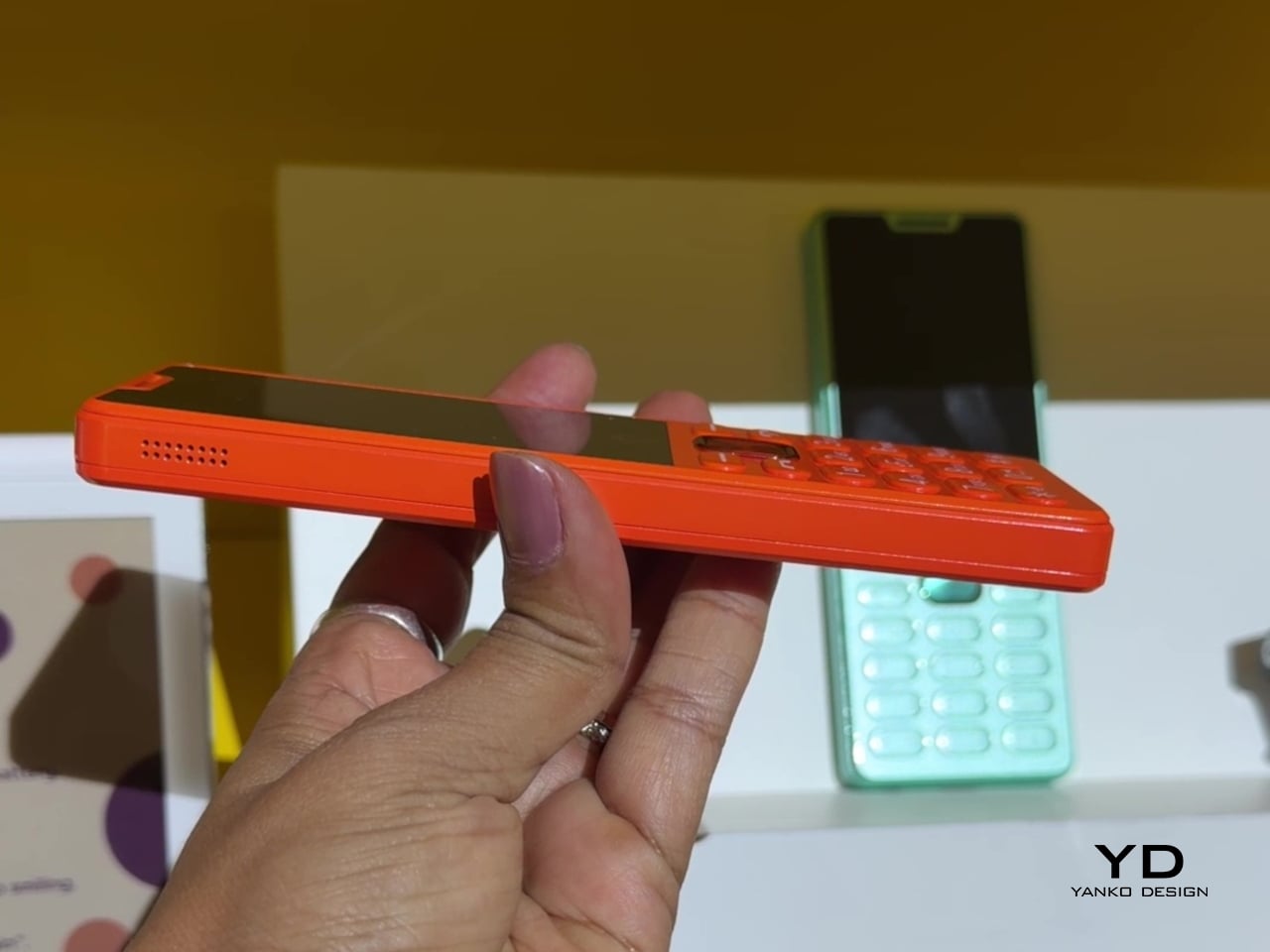
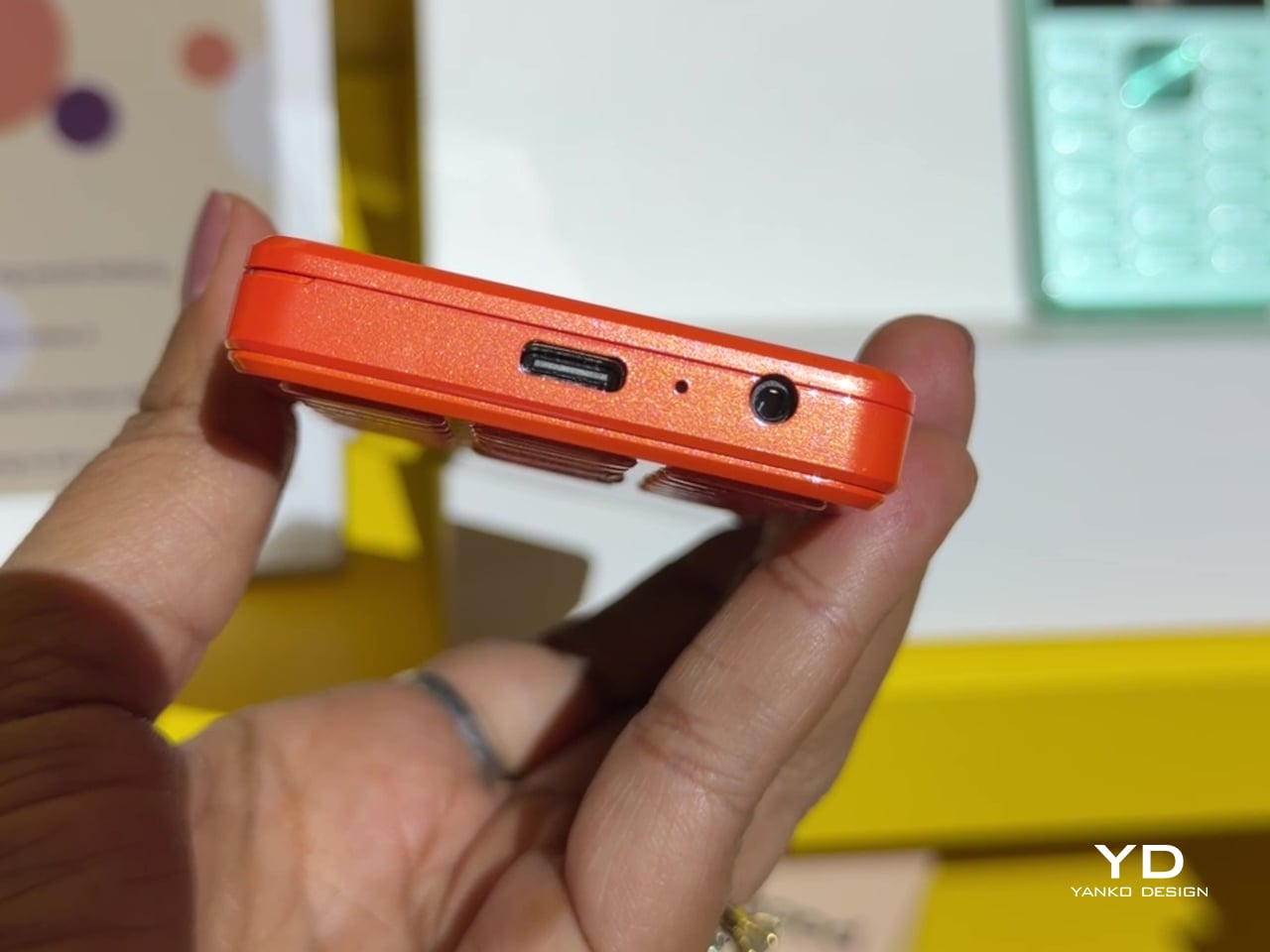
That willingness to have fun with format extends into the DotLine, a feature phone built for anyone tired of feeding a smartphone’s constant appetite for attention. A 2.8-inch display and physical keypad keep the experience deliberately simple, while an 1800mAh battery stretches across roughly two weeks between charges, a number that sounds almost mythical next to a modern flagship’s overnight anxiety. Four color options keep it from feeling like a consolation prize.
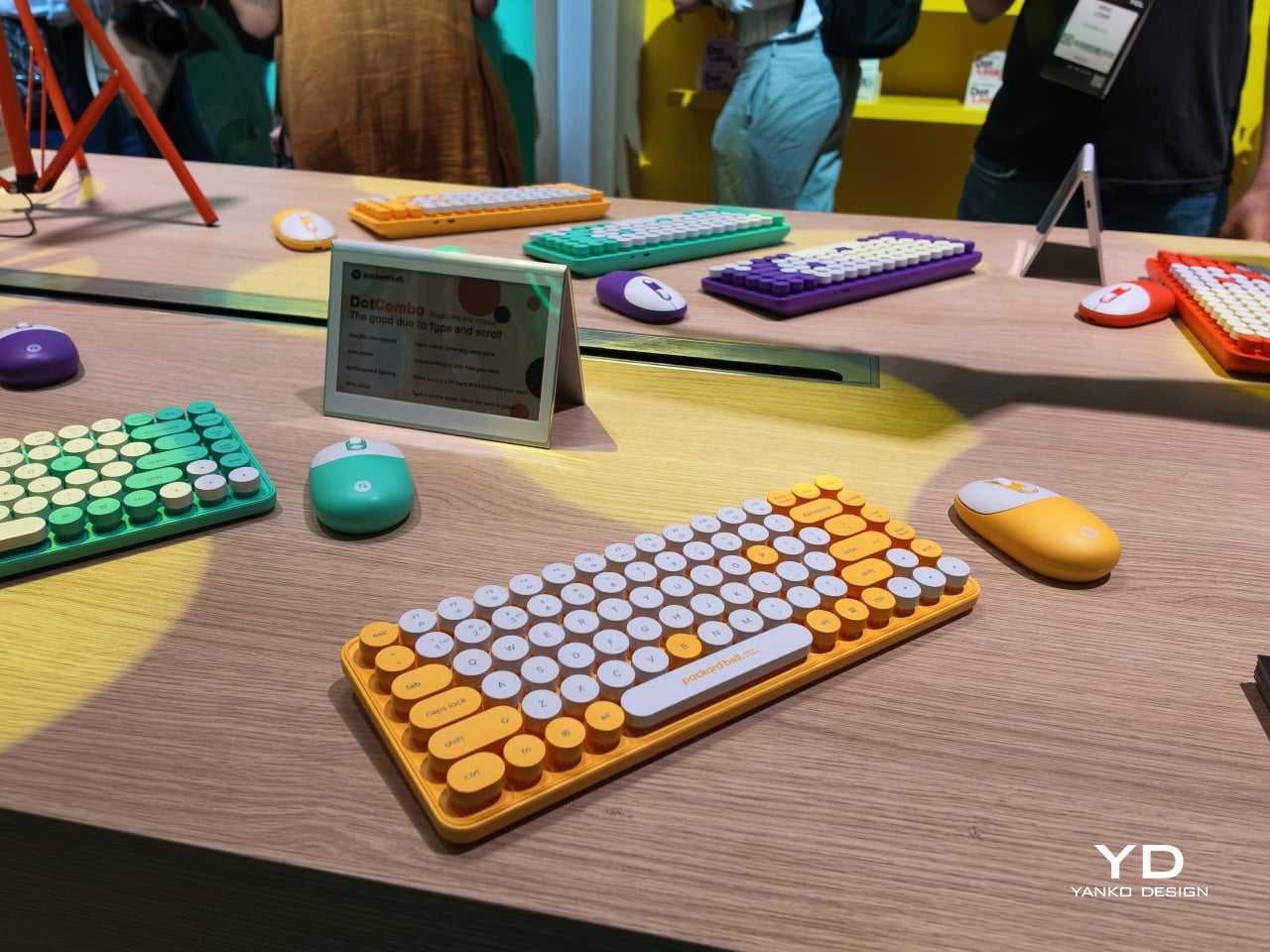
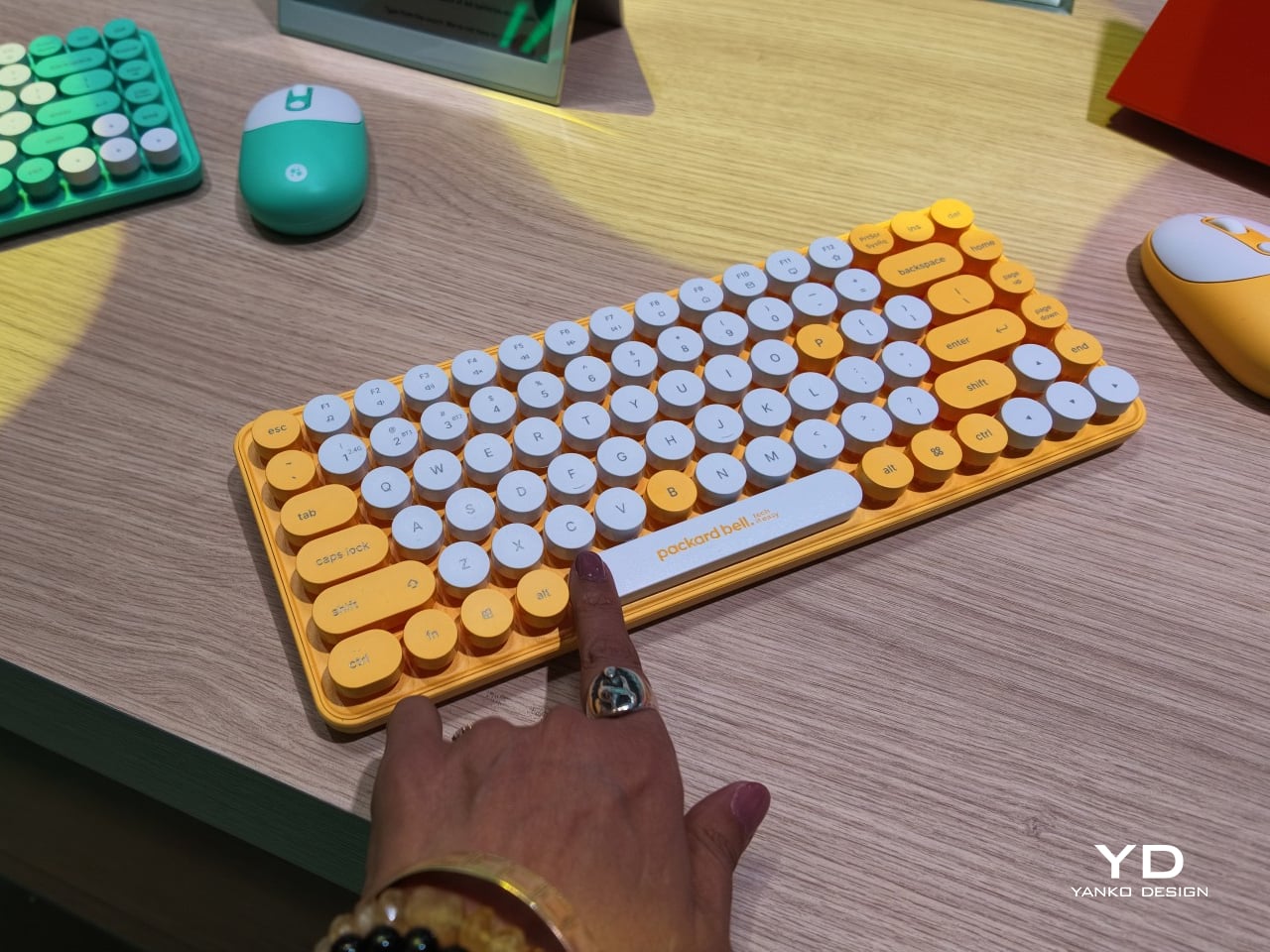
Rounding out the focus lineup, the DotCombo bundles a keyboard and mouse into a single color-matched purchase, eliminating the usual mismatched beige-on-black desk setup that so many peripherals default to. Both pieces run on rechargeable batteries good for hundreds of charge cycles, connecting over Bluetooth or a 2.4GHz receiver without a single AA battery required. Round keycaps borrowed from typewriter design give the whole thing a tactile, almost toy-like presence on a desk.
Beyond these four, Packard Bell rounds out its centennial collection with a portable speaker (DotTune), audio glasses (DotLook), a ring light for creators (DotShine), matching headphones (DotBass), and even a countertop food steamer (Steasy), all sharing the same saturated color palette and straightforward pricing. None of them ask for much attention individually, but together they paint a lineup unwilling to blend into a beige office shelf.
Pricing stays approachable across the board, with the DotBook starting around €499 (around $578), the DotLoop at €149 (around $173), the DotLine at €69 (around $80), and the DotCombo at just €39 (around $45). Packard Bell’s return proves that a century-old brand can still find something new to say, mostly by refusing to whisper it.
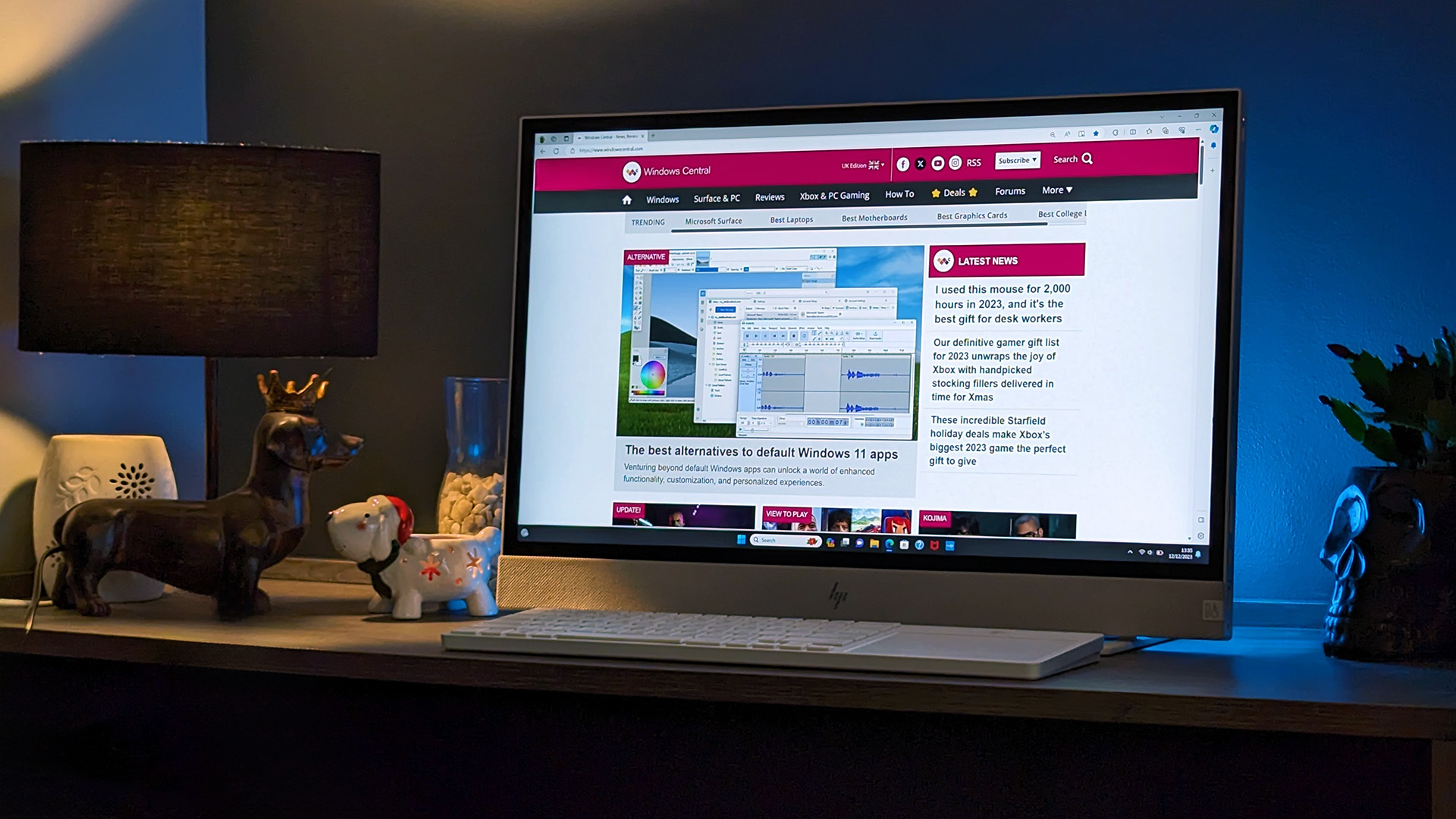
Back in 2023, HP released the Envy Move, an all-in-one (AIO) PC with a clever quirk: It could run wirelessly on battery power. The average lifespan was around 4 hours, but it was enough to watch a movie, join a video call, or have a playful family interaction with its touchscreen on whatever app or website you wanted.
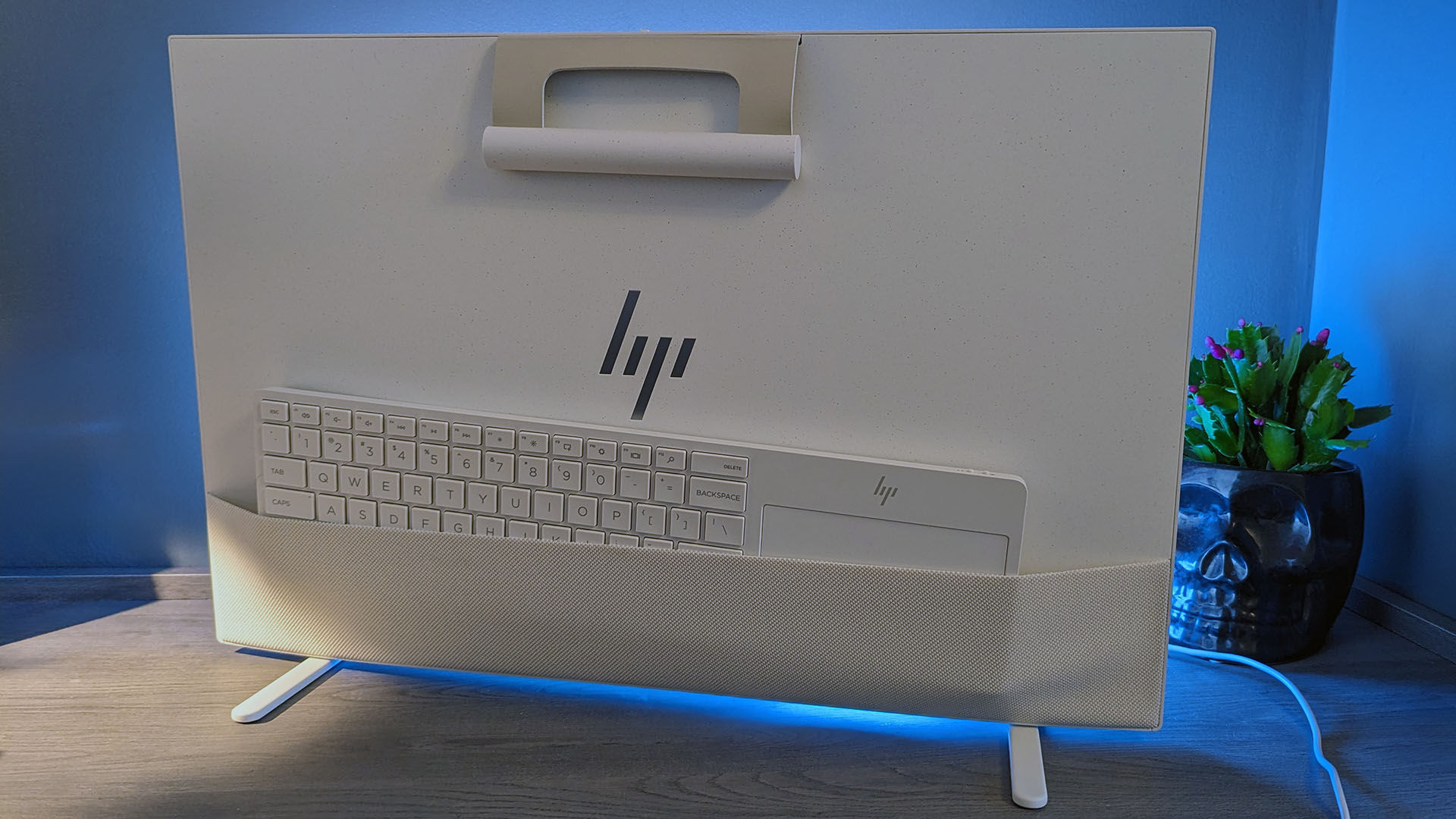
To make it even more portable, HP included a built-in handle attached to a flexible loop on its top side, pop-out feet on its underside, and a rear pouch that held a keyboard with an included touchpad. It was genius; a 24-inch touchscreen PC with great speakers that moved wherever you needed it.
Its design could have used some tweaks, but its downsides didn't feel at all severe, resulting in a perfect score in my Envy Move review. It was the most remarkable sample I'd ever tested, but it quickly became evident that consumers weren't interested enough to choose it over a traditional laptop or desktop.
This portable PC deserved more
Not quite a desktop, but certainly more than a laptop, HP's Envy Move was a unique AIO PC. (Image credit: Ben Wilson | Windows Central)
Following my review in 2023, the Envy Move was later discontinued from HP's official storefront and third-party retailers across the world, while the broader Envy range itself was dropped alongside the Spectre, Pavilion, and Dragonfly names, in favor of a major HP portfolio overhaul that introduced 'Omni' and 'Elite' PCs to replace them.
HP all-in-ones now sit alongside higher-end models like the impressive OmniStudio X, but nothing replaced the Envy Move, leaving any remaining stock with its already modest Core i7-1355U mobile processor from Intel's 13th generation. It was never intended to be a high-performance machine, but I'm sure modern, efficiency-centric Intel chips would have supercharged it perfectly.
Then again, if previous-generation components could maintain the ~$900 price tag on an Envy Move with 16GB of RAM and 512GB of storage, I'd let it slide. Frankly, I doubt many customers in HP's target audience would care to scrutinize its specific choice of processor, especially when the experience is great nonetheless, but future models could have been even better.
Too quirky to live, too clever to die
Its wireless keyboard and touchpad tucked away for transport in a cute pouch. (Image credit: Ben Wilson | Windows Central)
In the following summer, HP's Envy Move made a few appearances at my family gatherings and various parties, watching UEFA Euro 2024 matches in a shaded garden during BBQs in the best weather. At one point, I even connected an old Guitar Hero controller to its built-in Bluetooth receiver and turned it into a type of arcade machine; it was so much fun.
Everyone who would listen was impressed by what I could demonstrate, but nobody was particularly interested in replacing their long-lasting laptops or self-built desktop PCs. Its appeal should have been clear; anyone looking to share a family PC with their children would surely love its touchscreen and a general theme of collaboration, but it still fizzled out.
It's just the way she goes. Sometimes, brands take a risk and let something unusual escape the concept phase, but it never comes with a guarantee that enough people will buy it. I've seen plenty of oddities at conventions like CES, but they usually come with the understanding that it's just brands flexing their manufacturing muscles, showing what they could do if they wanted to.
The Envy Move felt different, but it ultimately doesn't matter how much I admired it, at least not compared to the sales figures that PCs need to pull in to stand a chance. Instead, I just keep my fingers crossed that it could make a comeback someday, or that the people who helped the Envy Move earn a Good Design award would at least know how much I admired what they made.
To be clear, the only reason I suddenly felt all nostalgic and bubbly about an AIO PC is that I started seeing bizarre knockoffs popping up on TikTok and Instagram Reels. Strange, Android-based screens lampooning the same kind of unique selling point as the Envy Move, pulling in frustratingly positive comments about how good the idea is — I know it's a good idea.
Laptops are great, and custom-built desktop PCs are even more rewarding when you can afford it, but all-in-one PCs still have their place. HP tried something unique with the Envy Move, and it's something I'll still praise in the hopes that it tries again when the timing is right (if that ever happens). Let's see what turns up at CES in 2027.
Join us on Reddit at r/WindowsCentral to share your insights and discuss our latest news, reviews, and more.
HP Envy Move
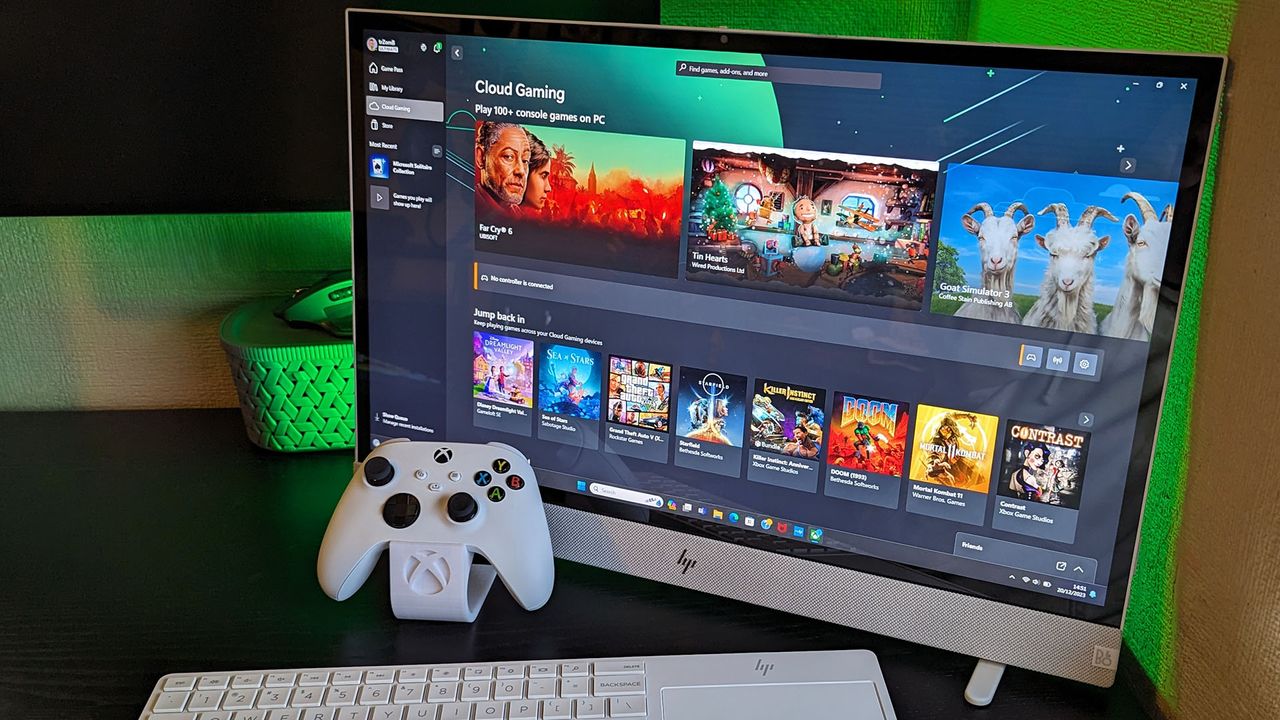
<p>A free Xbox Game Pass Ultimate trial immediately unlocks the opportunity to try out cloud gaming.</p>
I've used Windows PCs for most of my life, and I've tested some of the latest laptops from the most reliable brands for the last half-decade. Even before that, I worked in retail, specifically advising on laptops and helping people spend their money where it makes the most sense. So, despite spending most of my time on desktop PCs, I'm savvy with laptops.
For the most part, my criteria for choosing a laptop relate to how well it travels with me. I take regular trips by plane, train, and car to work from hotels and conventions, all with their own limitations and considerations, which has narrowed my list of must-haves to seven non-negotiables. If you're considering a new Windows laptop, this is what matters the most to me.
1. An OLED display for better contrast
ASUS Zenbook A14 (2026) (Image credit: Ben Wilson | Windows Central)
I was a skeptic for a long time, but OLED laptops have won me over when I'm looking for a new daily driver. Offering better contrast with deeper blacks than traditional IPS screens, many of these color-rich panels also deliver higher-than-average max brightness, though I generally keep mine at around 250 nits. Most of my apps are in dark mode, too, so my average experience looks great.
You can go even more advanced with a mini LED screen, such as the one I tried in Lenovo's Slim Pro 9 a few years ago that reached an incredible 615 nits, but it's far and above anything I've ever needed. OLED is a noticeable improvement over LCD, and many, myself included, will find that anything beyond that yields diminishing returns if you aren't a professional image or video creator.
2. 14-inch chassis (and lightweight)
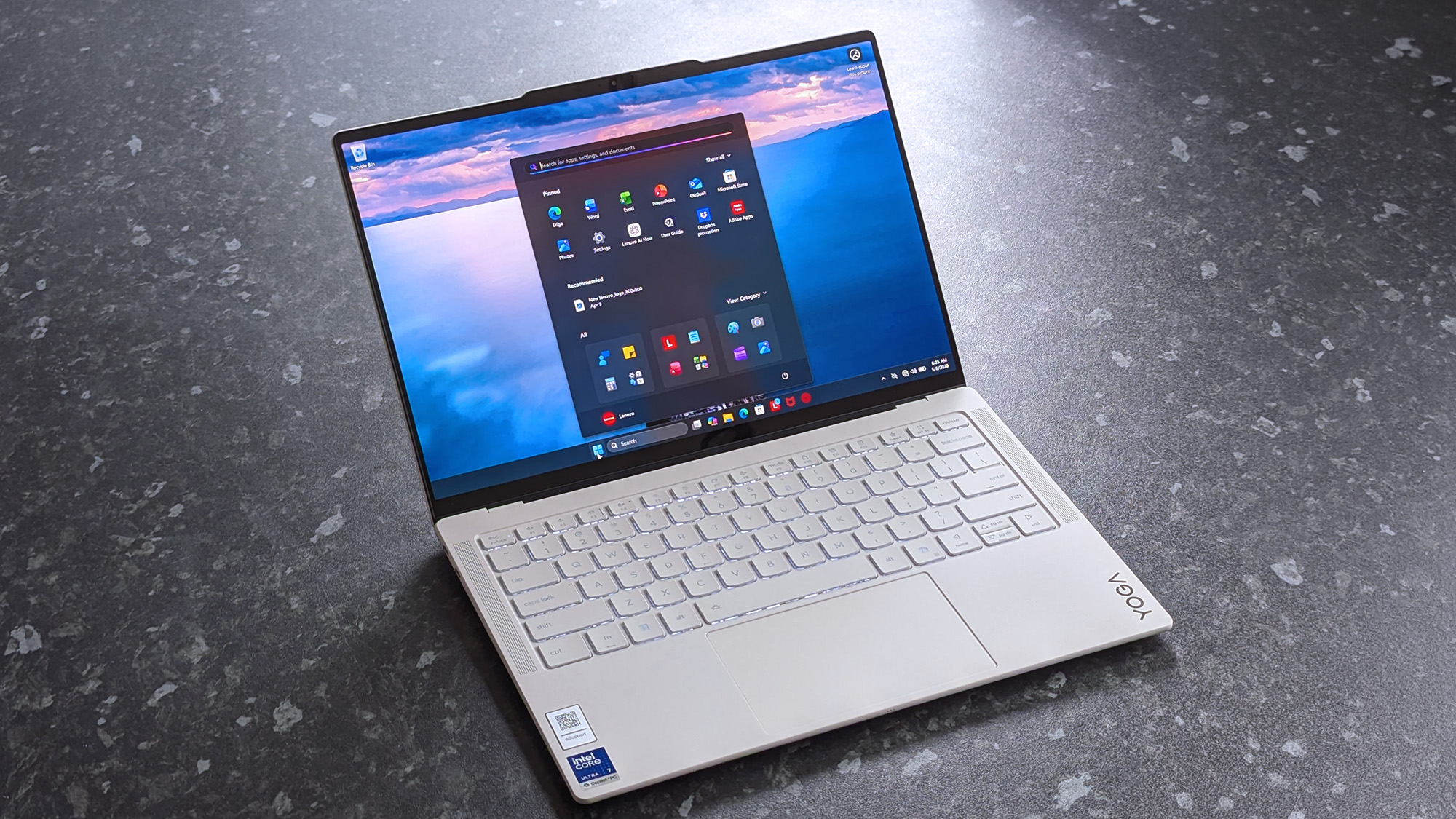
Lenovo Yoga Slim 7i Ultra (Gen 11) Aura Edition (Image credit: Ben Wilson | Windows Central)
It sounds unusually specific, but after traveling with laptops, I found that 14-inch models with 16:10 ratio displays offered me the best experience. They fit perfectly in cramped travel environments with tray tables and tiny tables, yet still feel spacious enough in a hotel room when I can connect an external mouse. A 13.8-inch Surface Laptop 7 with a 3:2 screen also passes.
Anything around or below 2.65 lbs (1.20 kg) is a bonus, as I'm regularly throwing these compact laptops into rucksacks or whatever carry-on I'm lumped with at the time. However, the lightest laptops are rarely the most affordable, as Lenovo's Yoga Slim 7i Ultra Aura Edition I tested clearly demonstrated with its 2.15-lb (975 g) chassis. The trick is to find something within that ideal window.
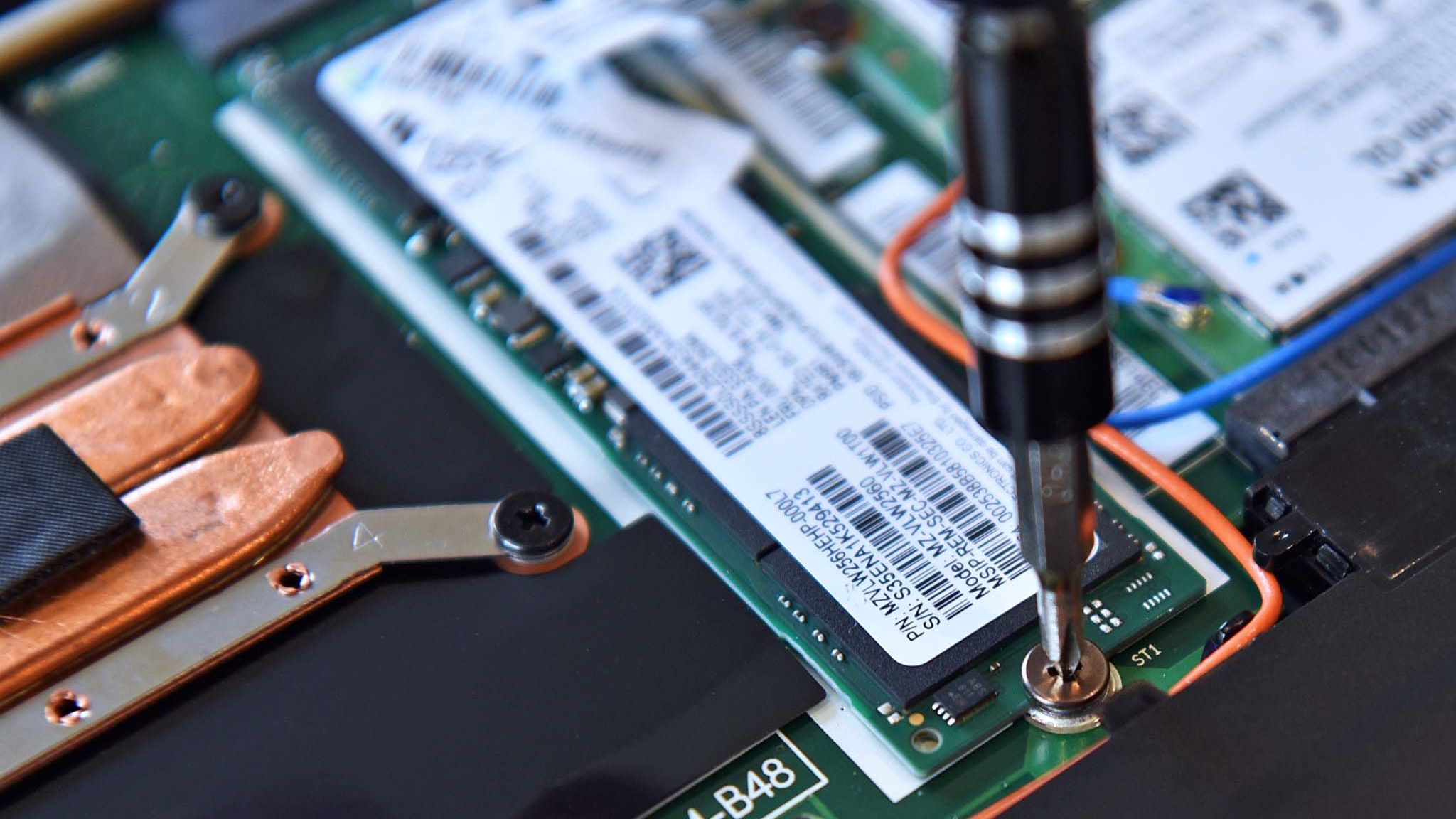
3. At least 512GB of storage
M.2 SSD in a Lenovo ThinkPad X1 Carbon (Image credit: Cale Hunt | Windows Central)
Plenty of Windows laptops are listed by major retailers with 256GB of storage, particularly in budget models. That kind of entry-level drive is aimed firmly at casual users who mostly stick to web browsing, but it's never enough for me. Images and video files build up in my workflow, and I'm often hovering around half capacity on a 512GB drive.
To be transparent, my desktop PC has twin 1TB drives, but that's mostly for games and other gigantic software that I'd never need on the road. Plus, if I tried hard enough, I'm sure I could offload some of my largest files onto external drives, but I'd rather not travel with extra gadgets if I don't have to. 512GB has been perfect for years, and I don't see that changing.
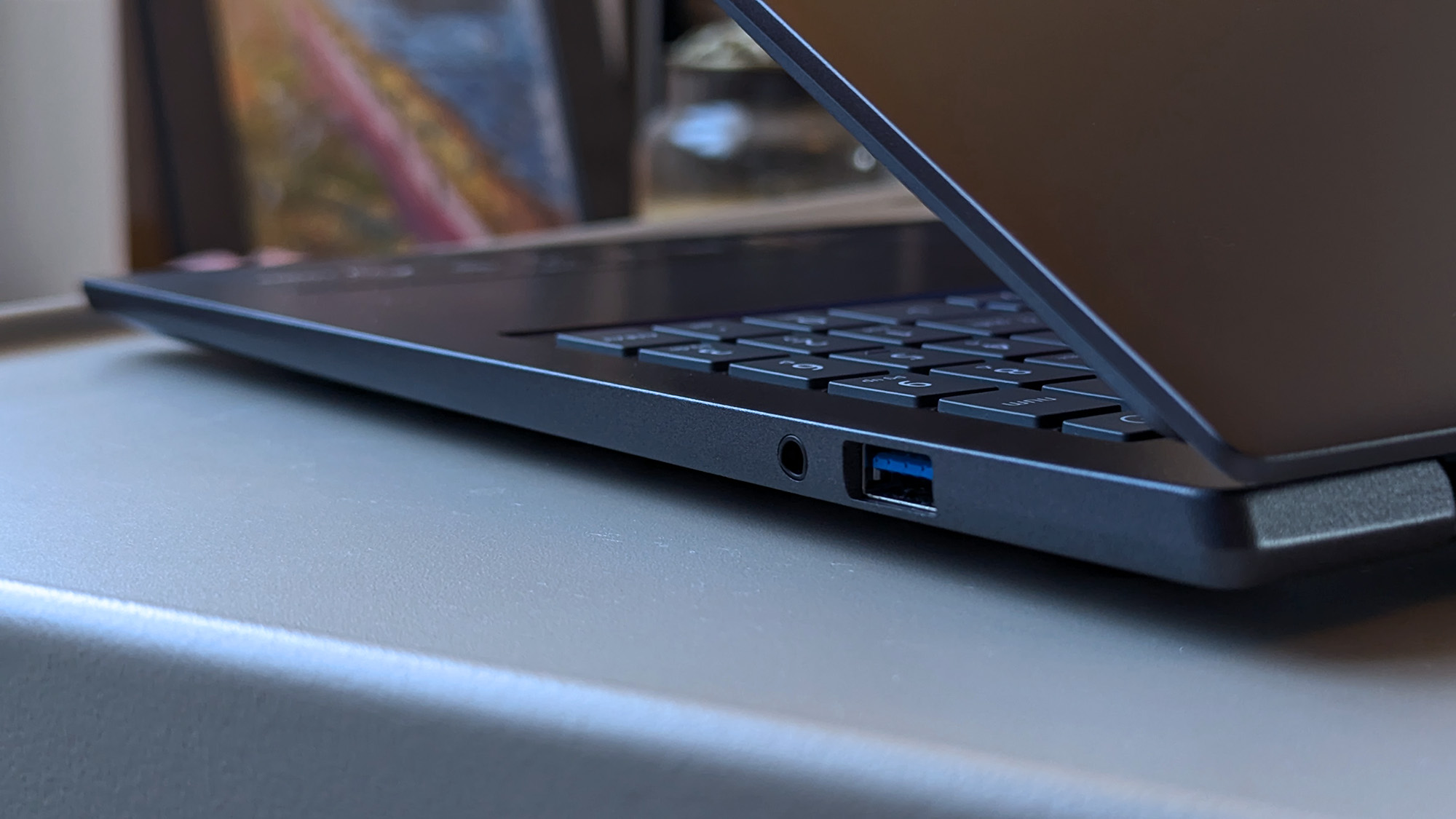
4. At least one USB-A port
Acer Swift Go 16 AI (Image credit: Ben Wilson | Windows Central)
My dinosaur bones are showing. This is mostly about me hanging on to hardware for as long as possible, including my most-used flash drives and dongles for an older mouse. USB-C variants are out there and becoming quite common, but I have too many USB-A accessories that show no sign of wearing out, and I'm keeping them.
If you narrow your search to the absolute thinnest possible laptops, you'll find that USB-A ports disappear. Not a big deal if you have modern peripherals compatible with USB-C ports using popular standards like Thunderbolt 4 and USB4, but at least one full-size offering is a traditional mainstay that I'll always look out for. Wired headphone jacks are a bonus, too.
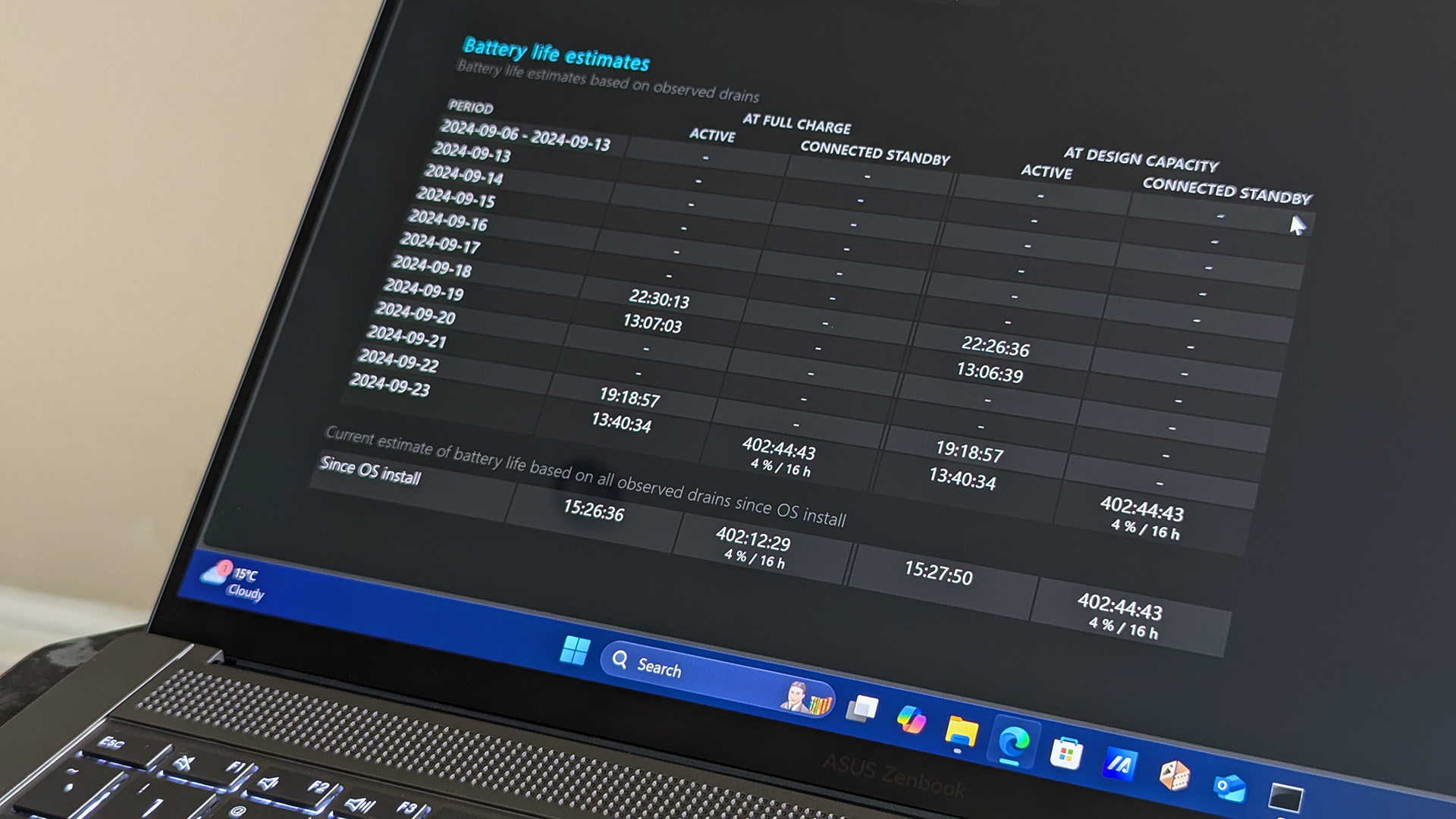
5. Legitimately all-day battery life
ASUS Zenbook S 14 (UX5406S) (Image credit: Ben Wilson | Windows Central)
Essentially, the major x86-64 chip manufacturers escalated a back-and-forth rivalry over battery-life claims around the time Qualcomm launched its first-generation Snapdragon X processors, and consumers have generally been better off for it in recent years. Testing ASUS' Zenbook S 14 proved to me that all-day battery life is now a reasonable expectation that doesn't cost the Earth.
6. Backlit keyboard
Lenovo Yoga Slim 7i Ultra (Gen 11) Aura Edition (Image credit: Ben Wilson | Windows Central)
Typing in the dark has become a pretty regular occurrence at trade shows, whether I'm seated for a glorified PowerPoint presentation in a dim theater or traveling to the event itself on a red-eye flight. To be clear, I've been able to touch type since I was a teenager, but the nuances of switching between US and UK keyboard layouts can still catch me out.
At home, I have desk lamps and plenty of other comfortable light sources, but since my laptops are primarily for travel, I always prefer a backlit keyboard. This generally isn't a difficult criterion to meet, as only entry-level laptops would be likely to sacrifice the backlight to save money, though using the Surface Laptop Go 2 for a few years really made me realize how much it matters.
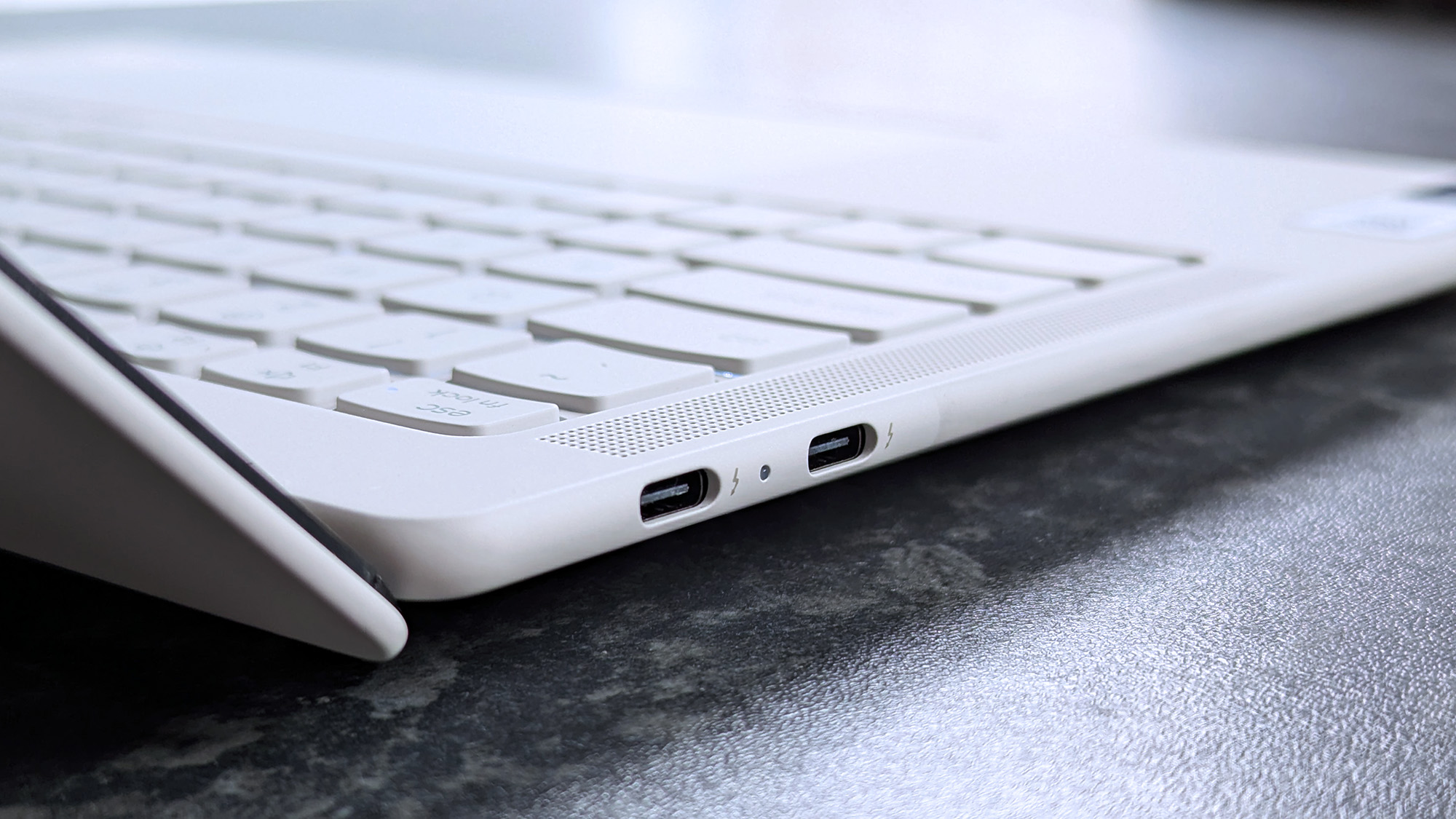
7. No proprietary chargers!
Lenovo Yoga Slim 7i Ultra (Gen 11) Aura Edition (Image credit: Ben Wilson | Windows Central)
I've seen a huge improvement in this area since USB-C chargers became more mainstream, and I have a growing collection of 65W plugs suited for various countries. Even the 45W AC adapter from my Steam Deck is a reliable backup in a pinch, and I don't mind that it charges my laptops more slowly. It's much better than a proprietary barrel jack.
Gaming laptops often sit in limbo between USB-C, tethered to a gigantic power brick, and the old-school barrel jack, because they draw so much power. It's similar with higher-end laptops for creators, as the more powerful CPUs and GPUs inside thirst for the extra juice. I just want to travel with a single USB-C adapter that charges my laptop, phone, and everything else.
So, my ultimatum isn't actually that unreasonable, as plenty of brands offer all of the above. Then again, some might start disappearing soon, since USB-A ports and headphone jacks will probably be seen as fossils in a few years. At least those two aren't too difficult to adapt to, as I've owned pairs of wireless headphones that can connect to multiple Bluetooth devices simultaneously.
Still, these are all problems that can only be solved by spending money, which is a big ask when the laptops themselves are creeping up in price, snared by the ongoing memory crisis affecting RAM and storage availability. As it stands, my taste traps me into a laptop price bracket of at least ~$1,000. Any less than that, and I start to notice some parts of my list disappearing.
Join us on Reddit at r/WindowsCentral to share your insights and discuss our latest news, reviews, and more.
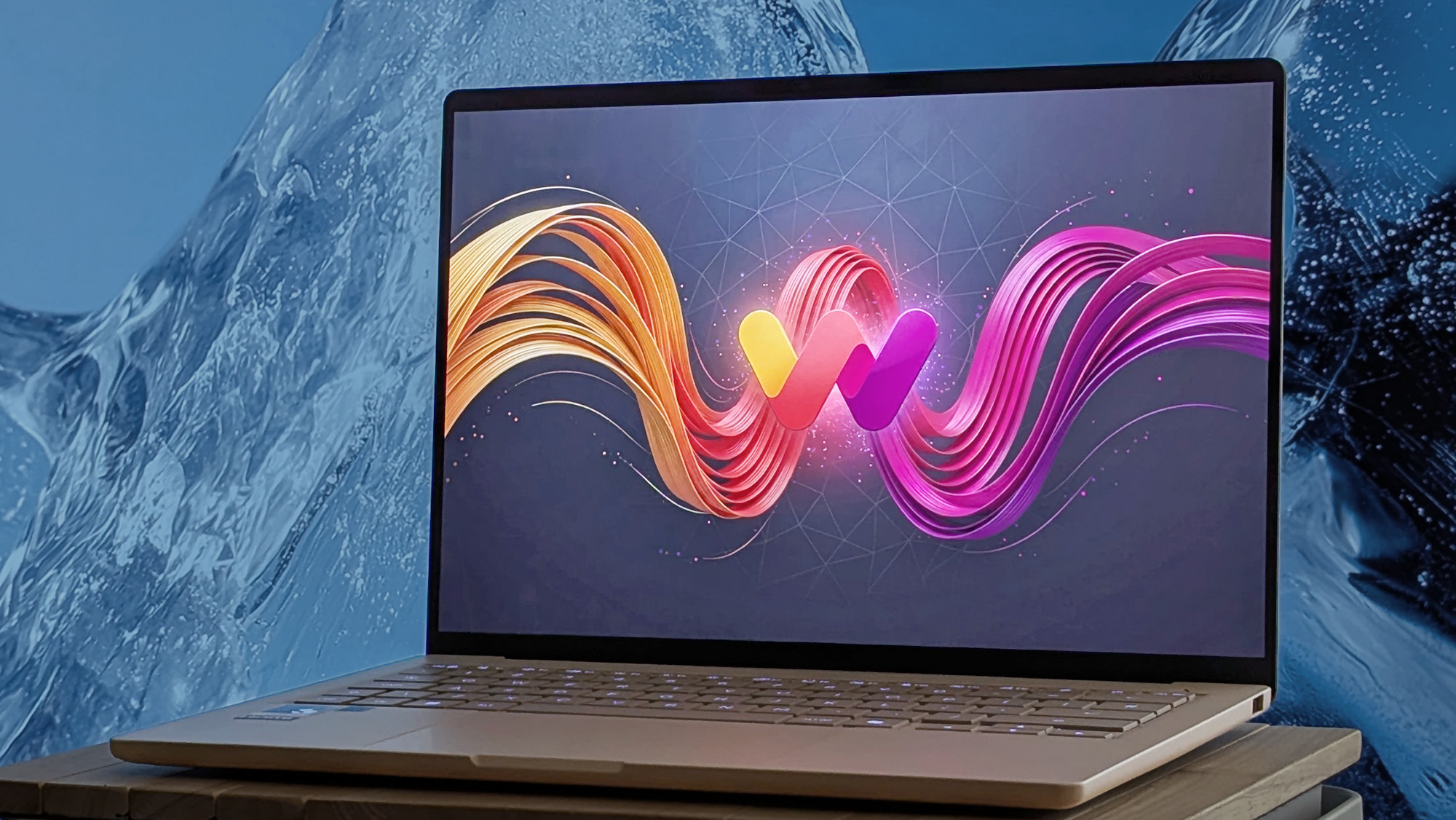
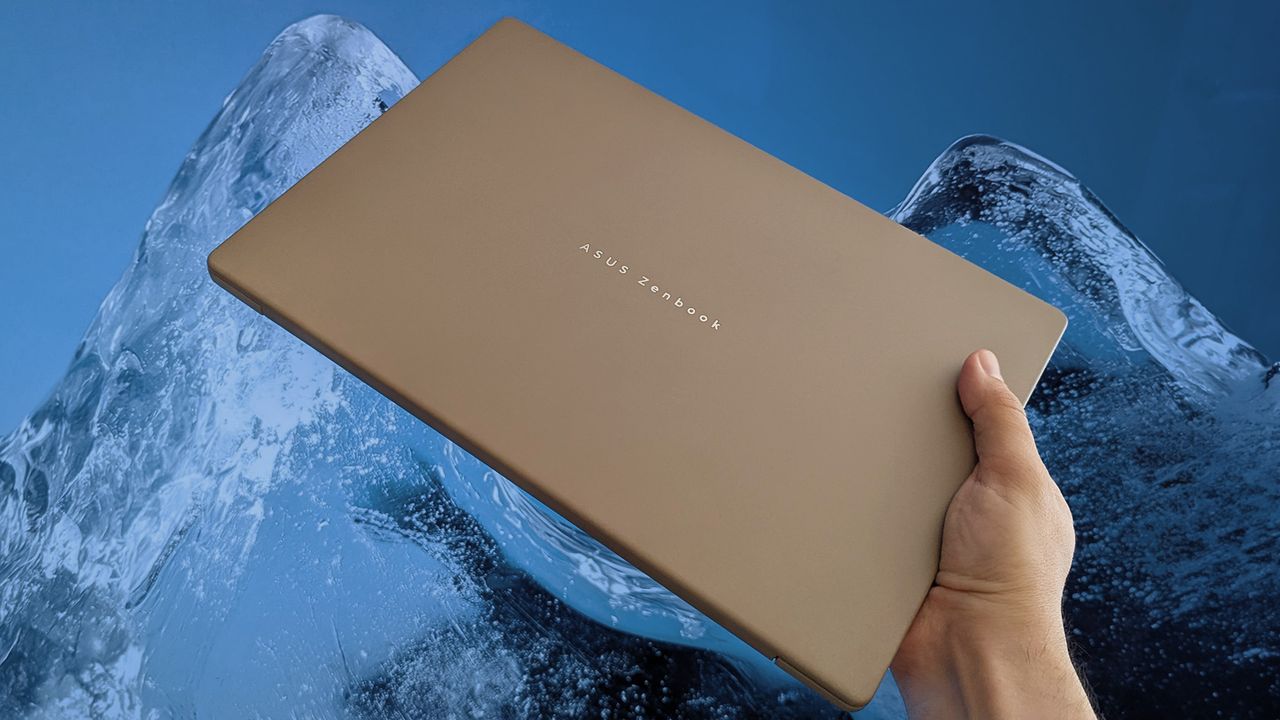
A hand holds a closed ASUS Zenbook A14 with a beige finish, positioned against a dramatic blue ice formation that contrasts with the laptop’s warm color and sleek design.
ASUS&#39; Zenbook range regularly impresses, but it&#39;s not the only brand to tempt me.

 Connexion