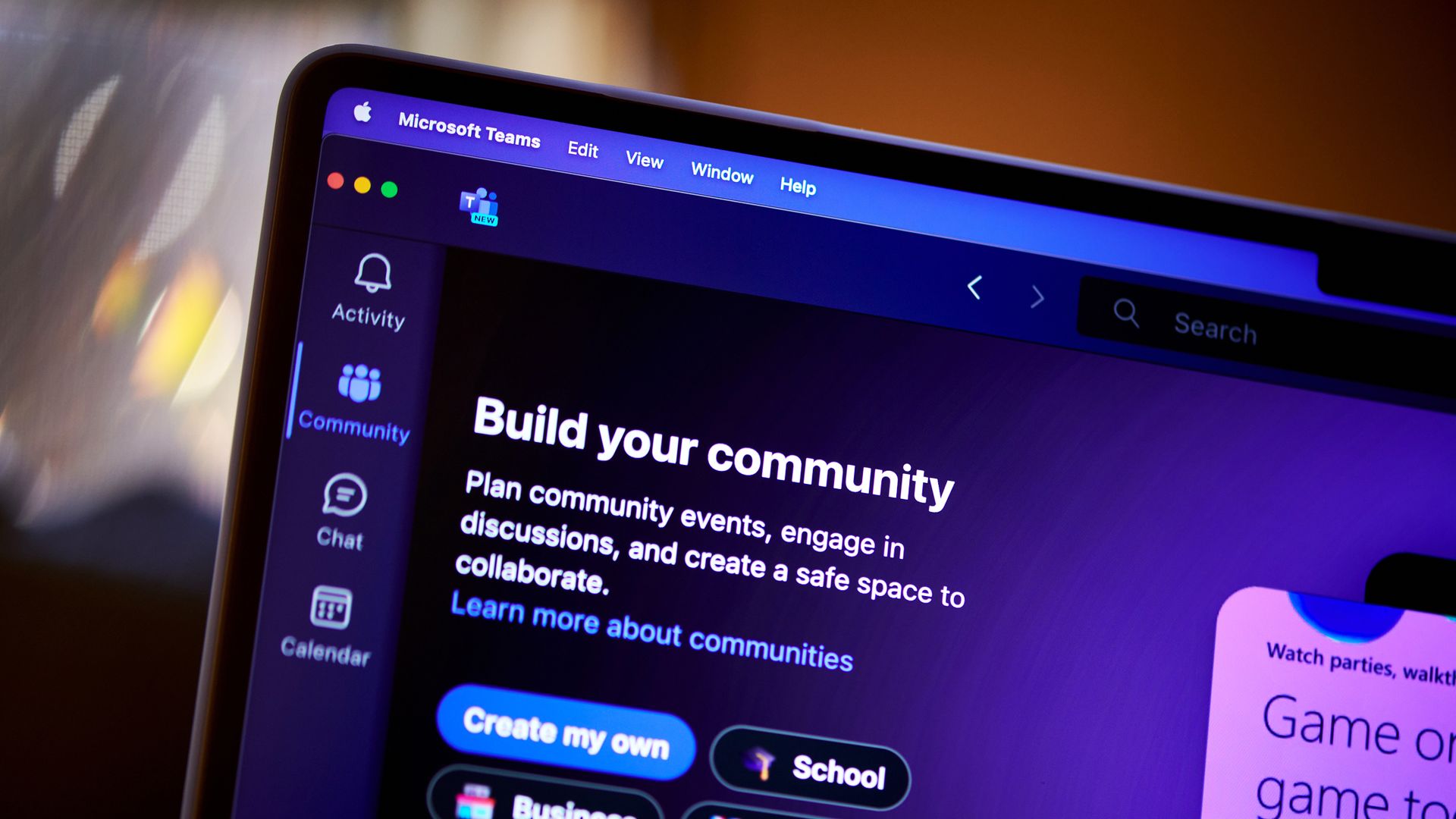
Microsoft Teams will soon let administrators tweak the list of file extensions commonly associated with security threats to meet their company's security requirements. [...]
Microsoft Teams currently limits sharing a screen to a single presenter. This can result in some awkward handoffs between presenters or restrict how much content can be shared at once. But those challenges should be a thing of the past because soon, Microsoft Teams will allow two users to share screens at once within a meeting.
"Microsoft is working on a solution: two presenters will be able to share their screens or windows simultaneously in a Teams meeting. Participants will be able to view both shared screens at the same time, making it easier to compare and discuss content without constantly handing the screen back and forth."
The feature is expected to ship in November 2026. When it does roll out, it will be available for Teams desktop and Teams on the web.
The Reddit post focuses largely on handing off between presenters, but I think the ability to leave two shared screens up at once is more interesting. You can already take over sharing in a Teams meeting, which forces one shared screen to go away and be replaced by a new one.
Having two shared screens appear makes it easier to compare content, guide people through tasks, or present side-by-side.
Some questions remain about the new feature, such as how the two shared screens will appear within a meeting. Microsoft will have to optimize that experience for different form factors, since viewing two shared screens at once would be much easier on a large monitor than a smaller laptop screen.
The post only mentions the desktop and web versions of Teams, so it's unclear how the new feature would appear for mobile users.
It's nice to see the addition to Teams because it helps the platform catch up to one of its biggest competitors. Zoom has long allowed multiple users to share screens simultaneously within a meeting.
Join us on Reddit at r/WindowsCentral to share your insights and discuss our latest news, reviews, and more.
Microsoft has fixed a known issue that causes copy-and-paste failures for some Excel users after installing the September 2026 KB5002914 security update. [...]
Microsoft recently announced a Windows 11 and Surface event for October, but that’s not the only time the tech giant will take the stage next month. Microsoft will host its annual OneDrive + Copilot digital event on October 20, 2026.
Microsoft highlighted several of the key speakers in its post announcing the event:
Jeff Teper, Executive Vice President of Microsoft Apps and Agents
Adam Harmetz, Corporate Vice President of Product, OneDrive and SharePoint
Arwa Tyebkhan, Head of Product, OneDrive
Microsoft also promised that "product leaders, engineers, and experts from across the OneDrive team" will share during the event.
The group of experts will show product demos and discuss real-world use cases for OneDrive and Microsoft 365.
OneDrive is at the center of many AI workflows, linking documents and images to tools like Copilot. Microsoft's teaser for the event focuses on "turning files into outcomes."
This event may appear in fewer headlines than the Windows 11 and Surface event, but I suspect a higher percentage of attendees will enjoy the event than those who watch the Windows 11 and Surface event.
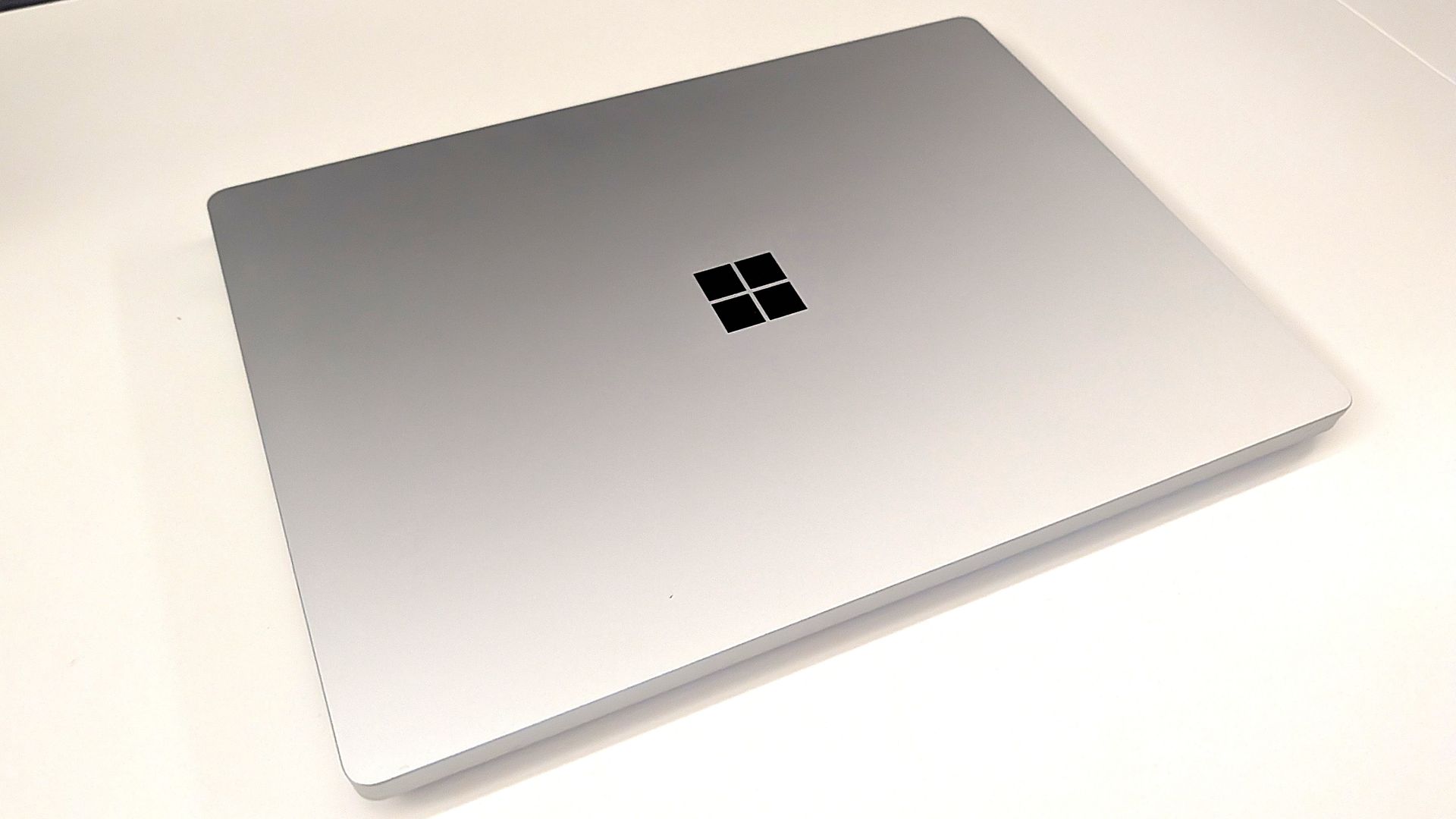
Microsoft set a high bar for its Surface events for years, often introducing revolutionary hardware or major updates to fan-favorite devices. This year's Windows 11 and Surface event will likely focus more on using AI locally on devices like the Surface Laptop Ultra. We've already seen that device and even gone hands-on with it, so there isn't much mystery surrounding it.
Microsoft could always surprise us, of course, but the last few Surface or Windows 11 events have been rather tame. I don't expect the OneDrive and Copilot event to break any major news, but people will likely go into it with grounded expectations.
Join us on Reddit at r/WindowsCentral to share your insights and discuss our latest news, reviews, and more.
Microsoft appears keen to go ahead with plans to build a data center in Slough, England. Plans could be submitted as soon as this autumn, according to The Slough Express.
Recently, a consultation was held to receive feedback from local residents about the data center. In that process, Microsoft said: "Data centres have become integral to our lives, with social media, contactless payments and remote working all reliant on the functionality they provide."
The tech giant added, "The UK needs more new data centres to power the economy of the future."
The consultation covered several topics related to the proposed data center, including on-site parking and if the building of the data center would affect local traffic.
Councillor Chandra Muvvala discussed the impacts of data centeres with the Local Democracy Reporting Service (LDRS). "Not having a data centre is not a problem, but having a data centre is certainly a problem," said Muvvala.
The councillor also noted things Microsoft could do to help the community, such as planting trees or improving local parks.
A petition to pause the data center project has over 600 signatures at the moment. Petitioners want an independent assessment to be completed to determine the impacts of the project.
Controversial data centers
The proposed data center in Slough is not alone in drawing criticism. Microsoft has also faced pushback about its planned data center in Leeds, England.
The complaints about the project in Leeds are similar to those from people in Slough. Residents in both areas have expressed concerns about the environmental impact of the data centers and raised flags about potentially high noise levels and other ways the data centers could harm their respective surrounding areas.
Microsoft has already received the go-ahead to build the data center from the Leeds City Council, which voted unanimously to approve the project. But the final decision on the project will come from Chief Planning Officer Martin Elliot.
Join us on Reddit at r/WindowsCentral to share your insights and discuss our latest news, reviews, and more.
Microsoft just announced a Windows and Surface event for October 7, 2026. The event will be held in San Francisco and will focus on "how local AI will shape the next chapter of the PC." It will start at 10 AM PT / 1 PM ET.
Microsoft CEO Satya Nadella will be at the event, as will Surface chief Pavan Davuluri. NVIDIA CEO Jensen Huang will also be there, so we can expect to see RTX Spark discussed on stage.
RTX Spark is NVIDIA's new superchip. It powers the Surface Laptop Ultra and Surface RTX Spark Dev Box. Microsoft already announced those devices but has not shared key details yet, including pricing and availability. The event in October could be a chance to share more about the devices and the RTX Spark in general.
Microsoft is also expected to highlight improvements to Windows 11. The tech giant is deep into its Windows K2 initiative that aims to reduce pain points in the operating system and smooth the overall experience. We've seen some early wins from that initiative, such as the option to resize and move the Taskbar on Windows 11.
But Microsoft still has a long way to go before Windows 11 is redeemed in the eyes of many. Windows updates often ship with bugs and the operating system still has mismatching UI elements. Fixing Windows 11 is a large project that will take time, and Microsoft would be wise to show what it's already done to improve the OS and point to what's on the way.
While Microsoft could always surprise us with more hardware announcements, its quote about "how local AI will shape the next chapter of the PC" aligns well with devices we already know are on the way. The Surface Laptop Ultra and Surface RTX Spark Dev Box are designed to run AI locally.
Based solely on that quote, we could see Microsoft discuss Project Zenith at the event. That's the codename of a new class of devices aimed at developers that want to build apps and local AI experiences.
Join us on Reddit at r/WindowsCentral to share your insights and discuss our latest news, reviews, and more.
Microsoft is having a bit of a rough September when it comes to bugs. Another issue has been discovered in Windows 11. This time, it's Excel's copy and paste feature that's been broken by an OS update.
That bug was discovered shortly after Microsoft confirmed issues with Hyper-V Linux folder shares, Remote Desktop, and USB audio. Those have since been fixed through an out-of-band update, but the Excel bug has not been fixed yet.
"In Microsoft Excel 2024, 2021, 2019, and 2016, the paste operation might fail silently. Although users try to paste content, the source remains selected and the destination is unmodified. When this issue occurs, users receive no indication of the failure, such as a beep or error message. Microsoft is researching the issue and will post more information in this article when the information becomes available."
The September Patch Tuesday update has almost 1,000 security fixes, so it is important to install it on PCs. But it may be worth holding off a bit if your workflow would be hindered by lingering bugs.
I don't want to come across as a doomsayer. The sky is not falling because copy and paste in Excel is broken. But it's frustrating to see bugs creep into Windows 11 updates.
Microsoft is aware of negative feelings many users have toward Windows 11. The company has a Windows K2 initiative that aims to reduce pain points and improve the overall Windows 11 experience. Part of that initiative centers around improving Windows updates.
On paper, Microsoft is trying to reduce how many updates people need to install each month. But I've had to install several Windows 11 updates just in September, including the out-of-band update that fixed the audio issue.
Join us on Reddit at r/WindowsCentral to share your insights and discuss our latest news, reviews, and more.
Windows 11 just received an out-of-band update that addresses several issues with the operating system. The September Patch Tuesday update includes almost 1,000 security fixes and other improvements, but it also had bugs that broke folder shares in Hyper-V-based Linux virtual machines, Remote Desktop Services, and certain audio devices.
Microsoft released the out-of-band update shortly after the issues were confirmed. It should download automatically in the background if you're running Windows 11 versions 26H1, 25H2, or 24H2. You can also grab the update through the Microsoft Update Catalog.
For the sake of clarity, Microsoft refers to these types of updates as out-of-band updates, but many people refer to them as emergency updates because installing them is urgent enough to ship the fixes immediately.
Here's a quick summary of the fixes, as outlined by Microsoft:
Out-of-band updates have been released more in 2026 than in previous years. Some bugs in Windows 11 have required multiple patches.
When we publish a piece on Windows Central about a Windows 11 update, it's normal to see comments asking what the update will break. When there are inevitably issues with Windows 11, people ask "what do you expect" or something along those lines.
Obviously, if Microsoft finds issues, it needs to patch them. Emergency updates should be used when needed. My question is: why are they needed more frequently this year?
Microsoft is in the middle of an initiative to improve Windows 11 and reduce pain points in the operating system. But no one will care if they can move the Taskbar to the top of the screen or customize the Start menu if their speakers don't work.
Join us on Reddit at r/WindowsCentral to share your insights and discuss our latest news, reviews, and more.
Jusqu'à présent, personne ne l'avait remarqué, mais sur l'écran d'installation de Windows 11 Home, celui qui vous réclame un compte Microsoft avant de vous laisser aller plus loin, il y a un tout petit lien "Learn more" planqué au milieu d'un paragraphe. Personne ne clique jamais dessus mais
Bob Pony, lui, l'a fait
et magie-magie, Windows l'a propulsé directement sur la création d'un compte local.
Sur la page qui s'ouvre, on vous demande alors le nom de celui qui va utiliser cet ordi, puis derrière, c'est un mot de passe, trois questions de sécurité, et hop vous voilà sur le bureau avec votre compte local ! C'est top non ? Plus besoin de vous prendre la tête avec une invite de commandes, ou des clés de base de registre !
Plusieurs sites ont fait le test, moi je n'ai pas encore eu le temps, mais apparemment ça fonctionne très bien sur la version Home de Windows 11 mais je ne sais pas pour la version Pro.
Faut dire que ça fait un an que Microsoft ferme les autres portes du compte local. La clé de registre BypassNRO, puis la commande ms-cxh:localonlydont je vous parlais l'automne dernier
, ont été rebouchées les unes après les autres dans les préversions, avec à chaque fois la même explication foireuse : Ces bidouilles laissaient soi-disant des gens sortir du process d'installation avec une machine qui n'était pas entièrement configurée. Sauf que ce lien qui mène exactement au même compte local, lui, bah visiblement il a échappé à Microsoft... lol.
Un truc à savoir quand même avant de choisir le compte local, et
c'est Microsoft qui le dit
: le chiffrement de l'appareil ne s'activera pas tout seul. Quand vous ouvrez la session avec un compte Microsoft, il boote et la clé de récupération va se loger dans ce compte alors qu'avec un compte local, il reste inactif. Ça peut bien sûr se régler en allant dans les Paramètres, Confidentialité et sécurité, Chiffrement de l'appareil, mais faut y penser avant le jour où votre portable partira sous le bras de quelqu'un d'autre pendant que vous tapez votre meilleure sieste dans le TGV...
Alors maintenant, combien de temps tiendra cette astuce ?
Aucune idée, mais on espère tous que Microsoft laissera ça tranquille. Et si le lien a disparu quand vous lirez ces lignes, sachez qu'il reste des chemins qui passent par le média d'installation notamment via
Rufus, que je vous ai déjà présenté
. Suffit de cocher une case et hop, ça vous fera une clé USB qui ne réclamera aucun compte.
Voilà, si vous avez une machine à installer ce week-end, c'est donc le bon moment de tester cette astuce !
The latest Windows 11 update gives you plenty of reasons to upgrade, including hundreds of security fixes. But it also includes some bugs that range from frustrating to workflow-breaking.
Microsoft recently confirmed that a bug in Windows security update KB5124008 can cause some audio devices to fail. Affected systems will see one or more of the following issues:
The device displays an error in Device Manager: "This device cannot start (Code 10).”
No audio output.
Volume controls are unresponsive or remain at zero.
Sound settings are unresponsive or unavailable.
Some devices might function in standard stereo configurations but fail when using multichannel audio features, including 8-channel or 3D audio modes. Some customers have reported that they're able to restore audio in these cases by switching to 2-channel mode.
I believe my PC was affected by this bug. After installing the most recent Patch Tuesday updates, my external USB speakers stopped working, and Windows automatically defaulted my audio output back to my docked laptop's built-in speakers.
The problems only affect USB Audio Class 1.0 devices. Just about any operating system or platform that supports USB audio works with USB Audio Class 1.0. That class was the first standard for audio devices and shipped in 1998. There are USB microphones, headsets, speakers, and many other devices that fall into the category.
Because some modern platforms (most notably gaming consoles like the PS5 and Nintendo Switch) do not support newer standards, headsets and other peripherals are often made to be USB Audio Class 1.0 devices so they work everywhere.
The bug affects Windows 11 versions 26H1, 25H2, and 24H2. Microsoft has confirmed the issue but has not released a fix at this time.
You may be able to workaround the bug by switching to 2-channel mode, but that is not a permanent fix. You can also uninstall the KB5124008 update, though it may be better to just wait for an official fix or to find a workaround.
Join us on Reddit at r/WindowsCentral to share your insights and discuss our latest news, reviews, and more.
OneDrive is getting ready for its biggest AI-focused showcase of the year. Microsoft has announced that its fourth annual OneDrive + Copilot Digital Event will take place on October 20, 2026, bringing together OneDrive and Microsoft 365 product leaders to demonstrate how AI is changing the way people work with files, documents and photos. The […]
Microsoft is preparing for one of its most significant Windows-focused events in more than two years. The company has announced a major Windows and Surface event for October 7, 2026, in San Francisco, where it will discuss how local AI will shape the next chapter of the PC. The event is expected to bring together […]

 Connexion