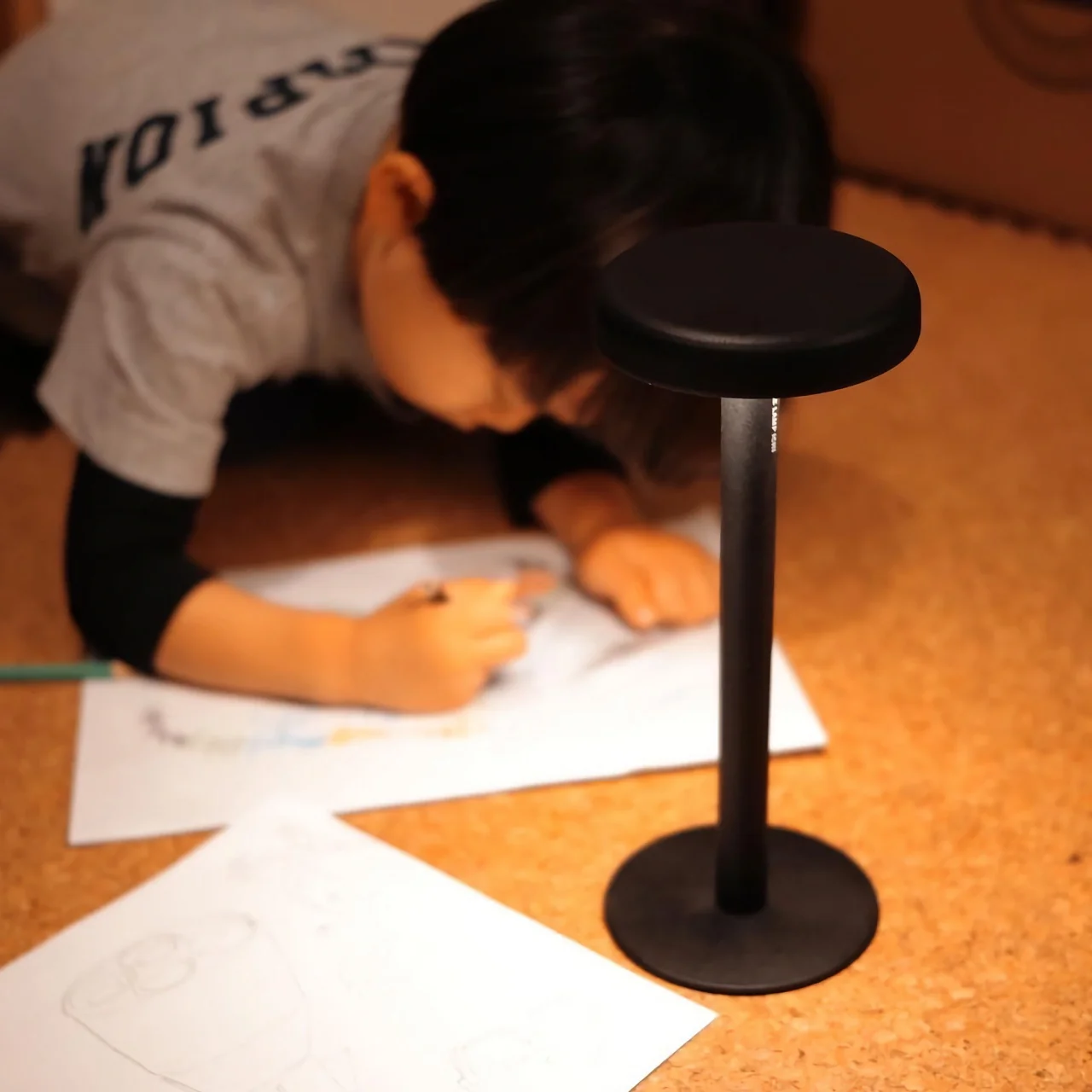
There aren’t a lot of situations that would require me to pull a portable lamp out of my bag. But as someone who likes to journal on the go and read whenever I get the chance, I’ve run into more than a few moments where the available light just wasn’t enough. Even at home, a lamp comes in handy for those times when the main overhead lighting feels like way too much.
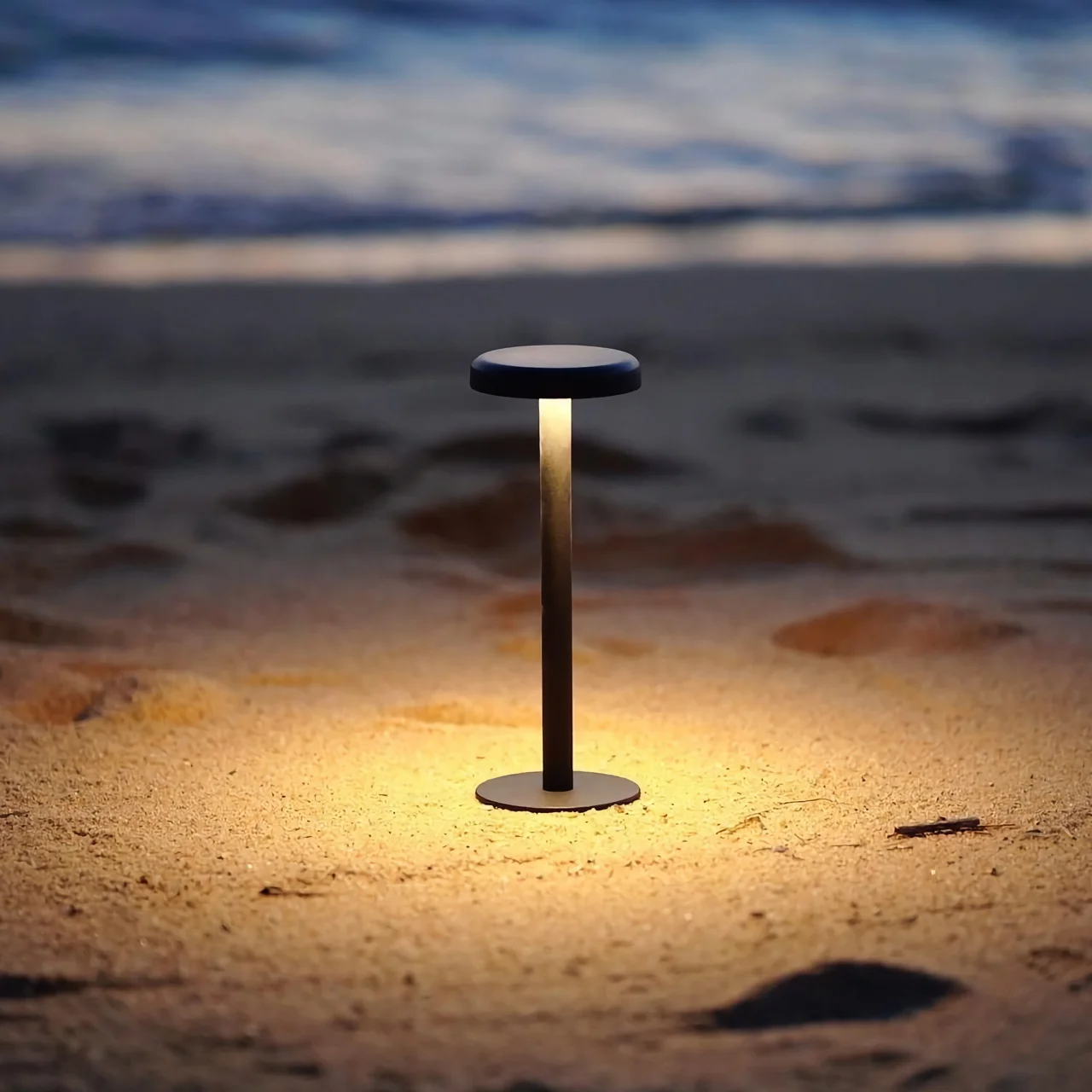
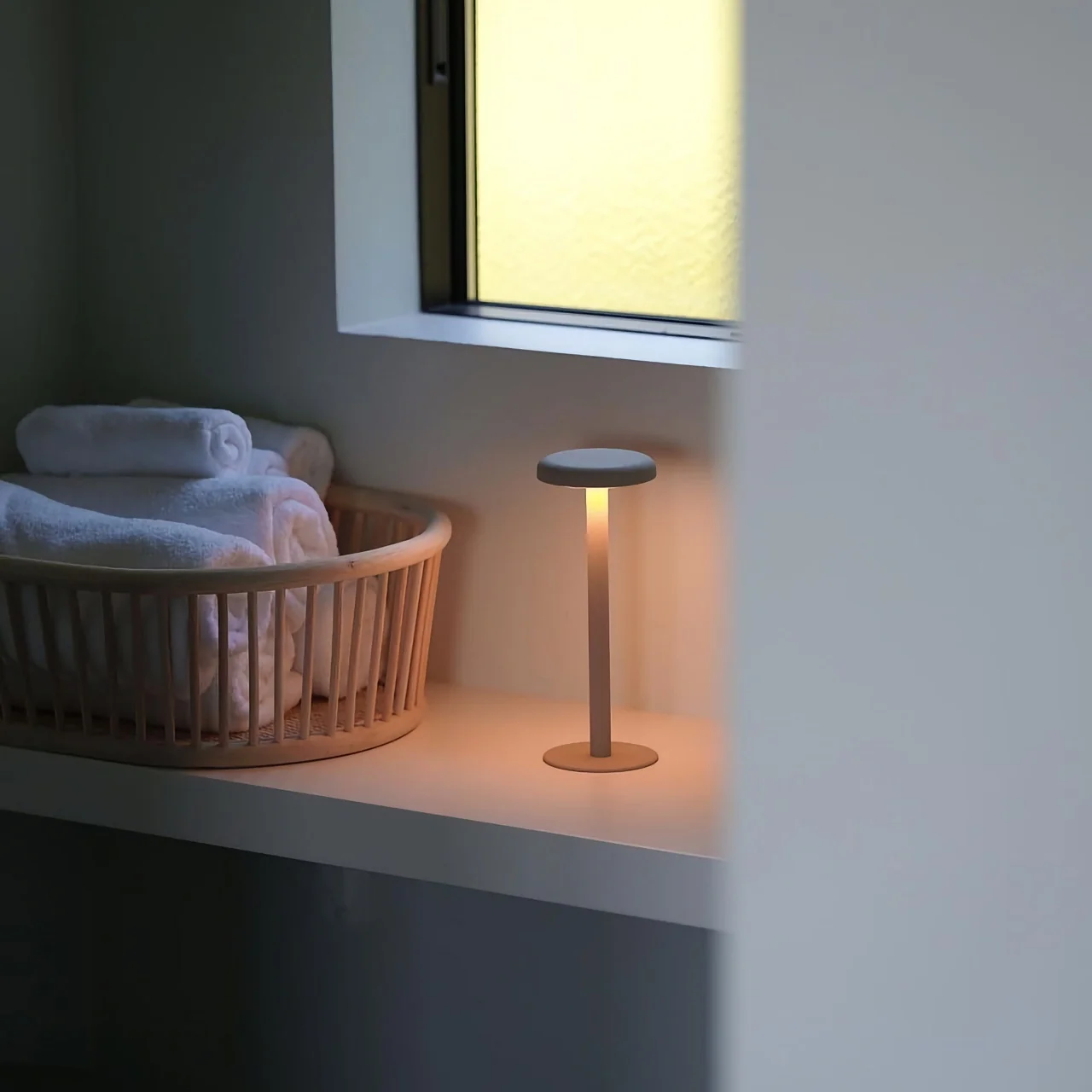
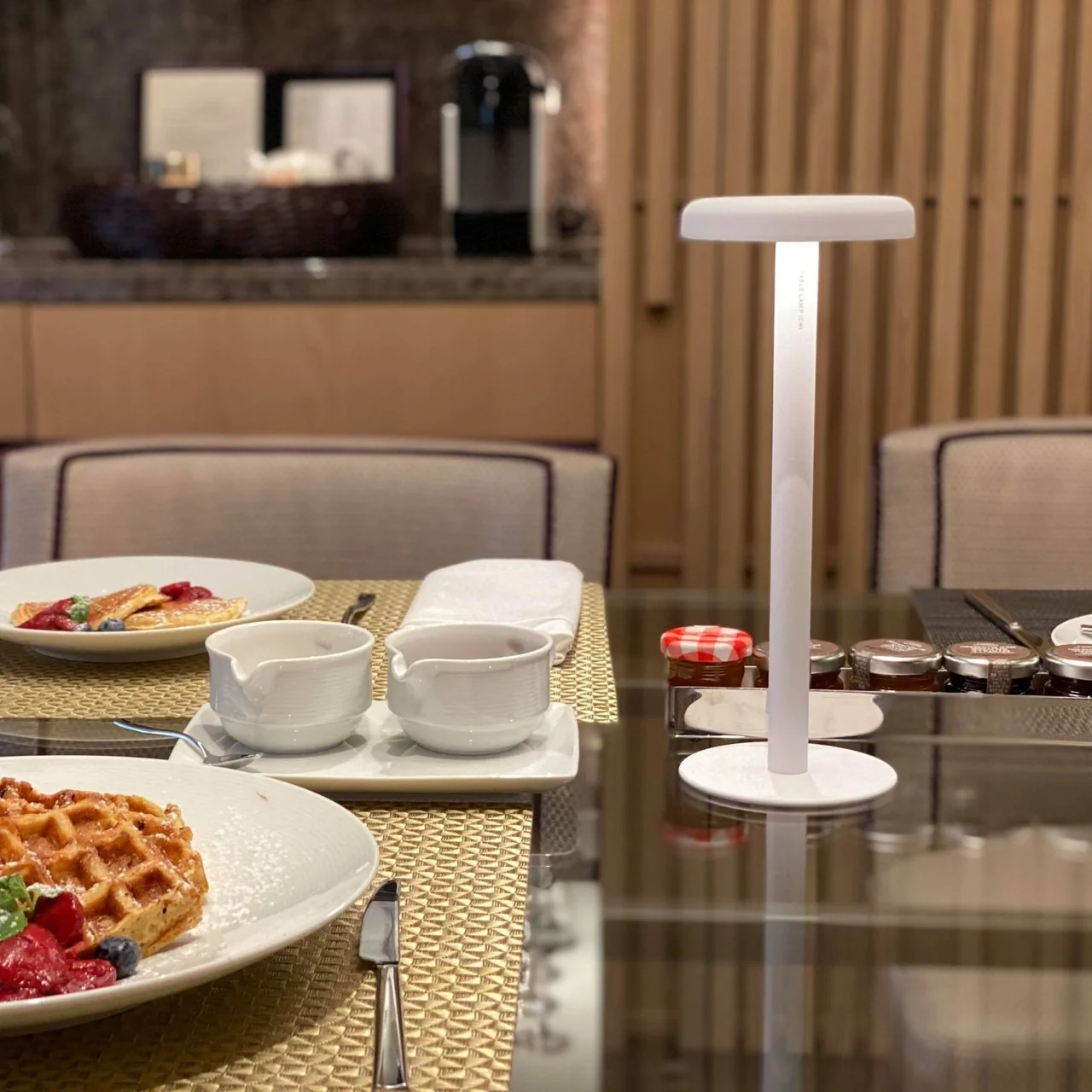
The Anywhere-Use Lamp is built for exactly those moments. You don’t need an outlet, you don’t need an extension cord, and you don’t need to panic if your battery is dead. This lamp works wherever you need it, whether that’s indoors on your desk or nightstand, or outdoors on a picnic table or inside a camping tent.
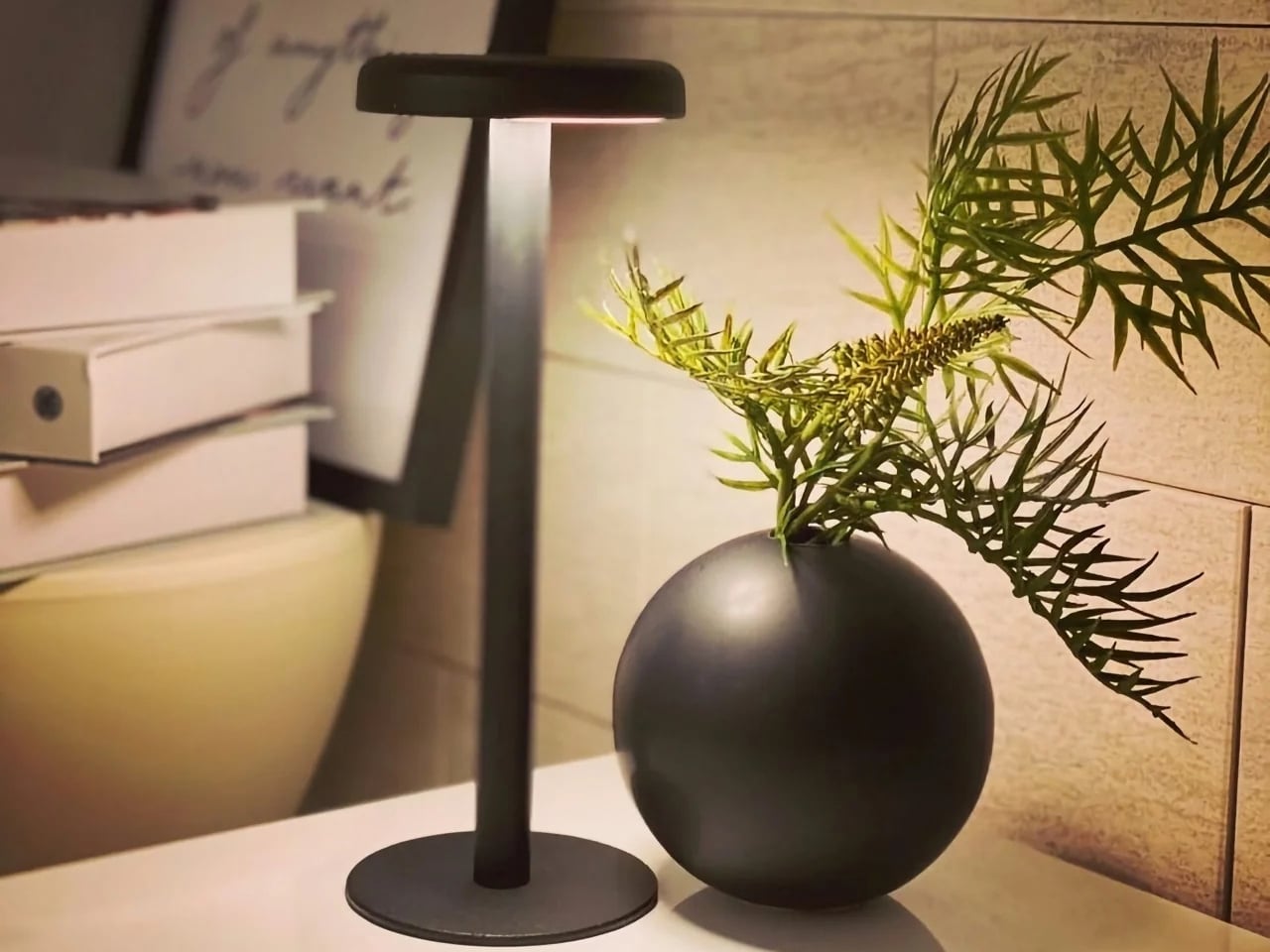
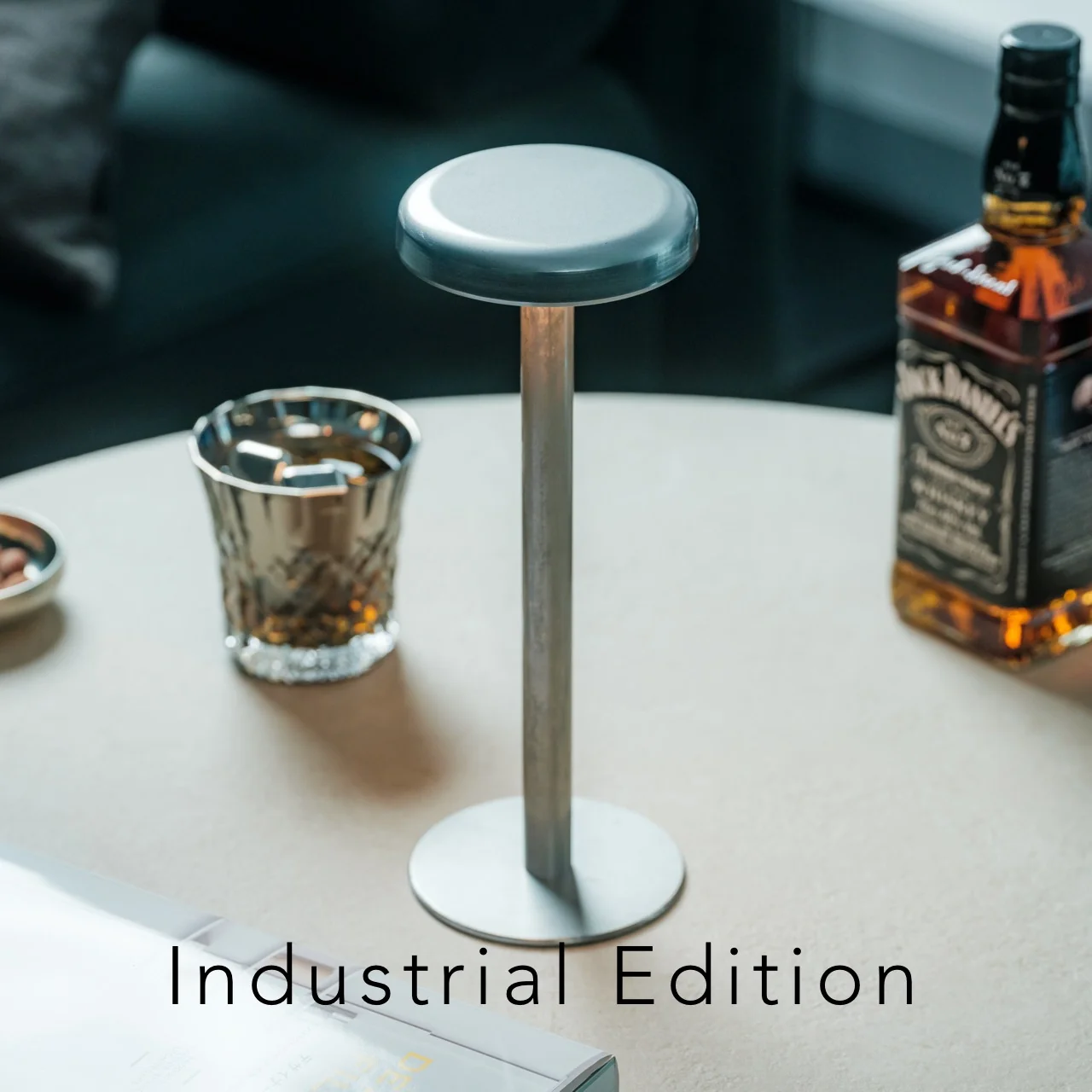
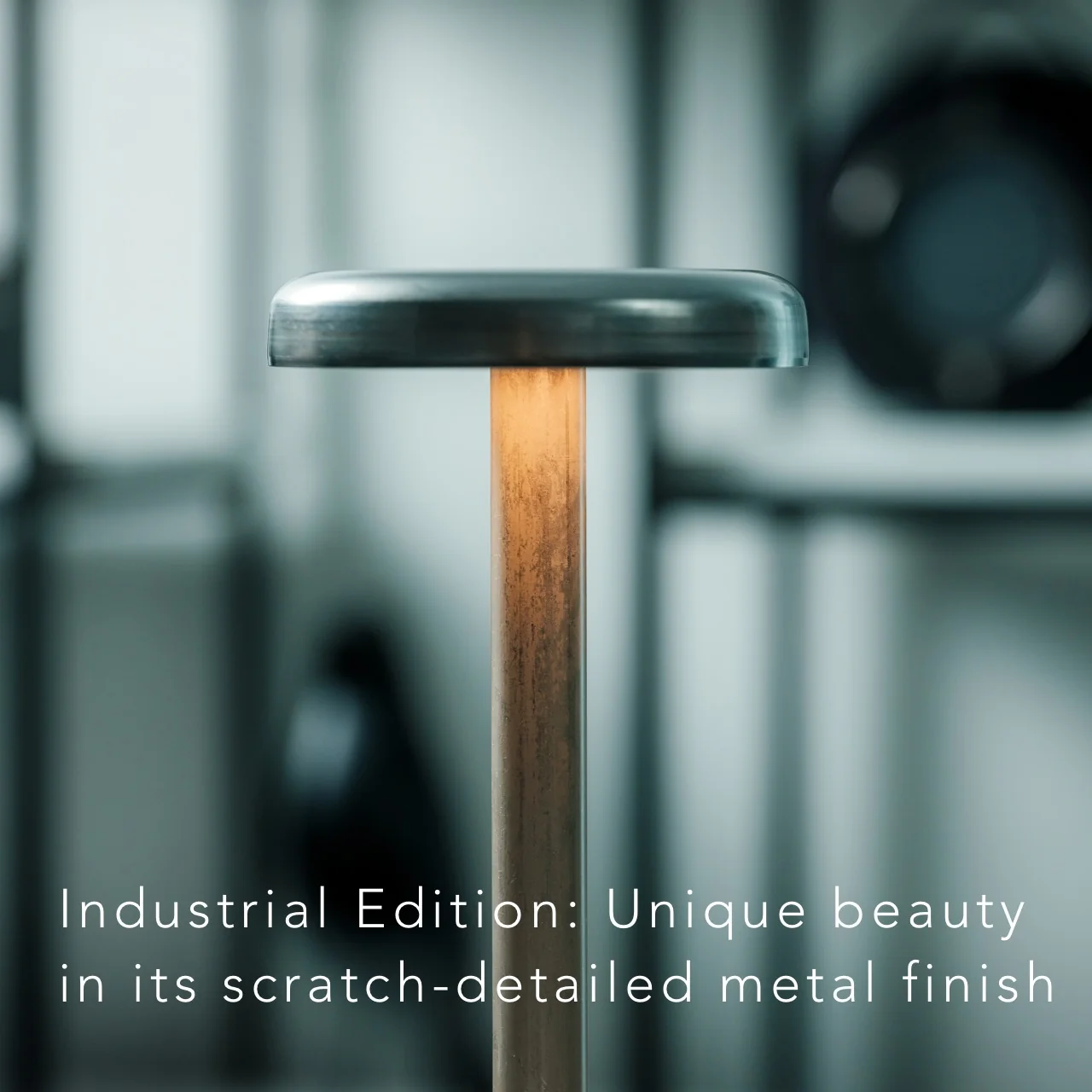
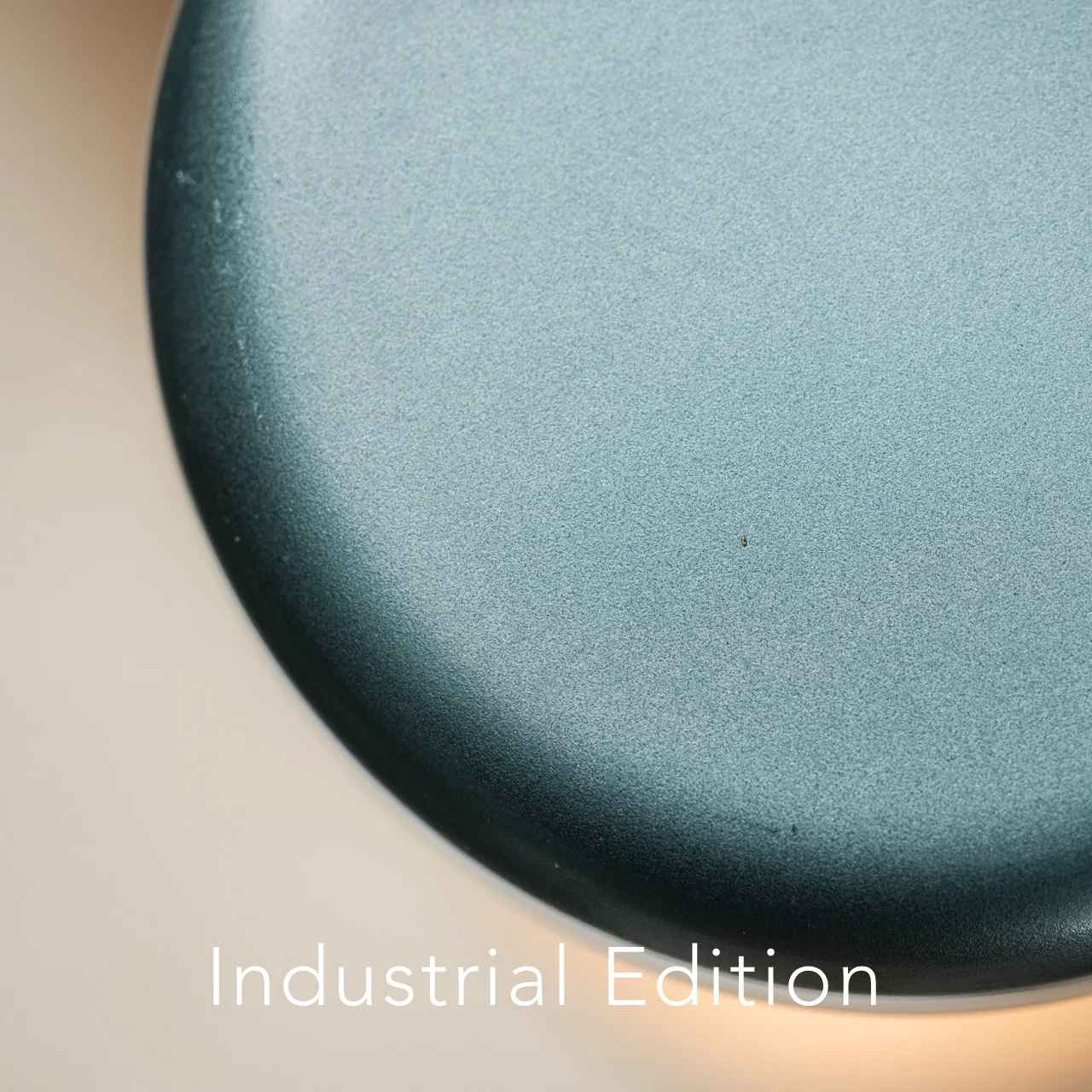
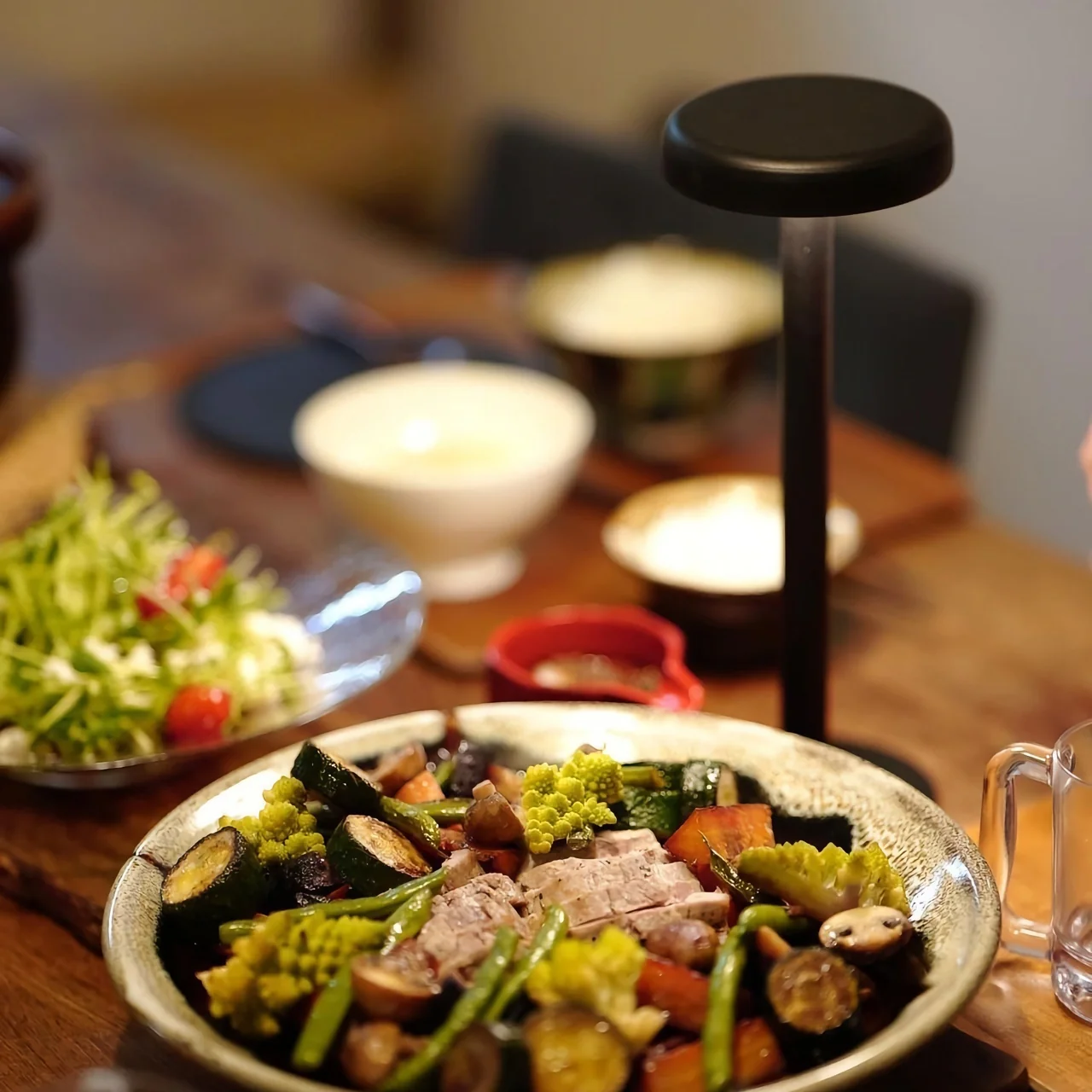
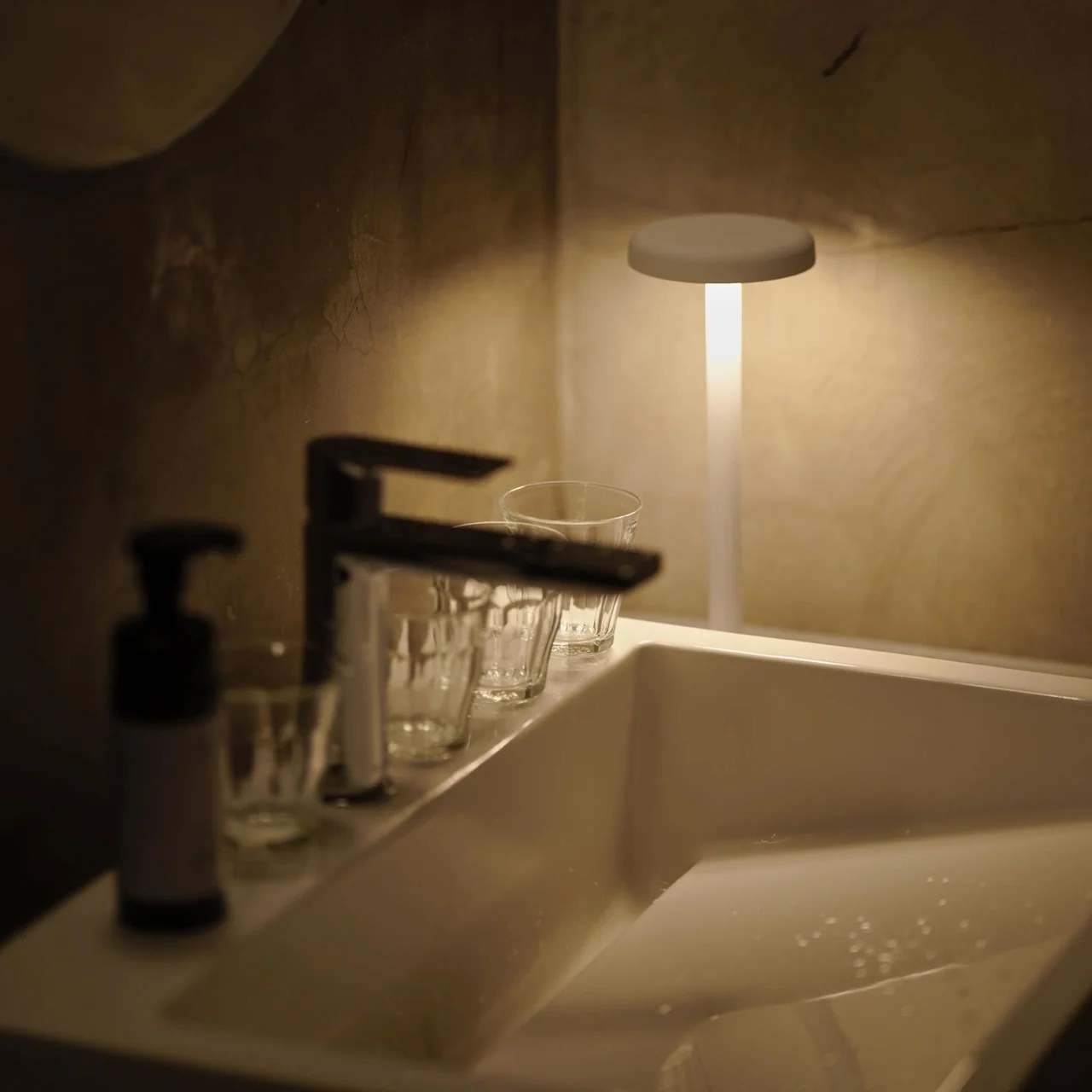
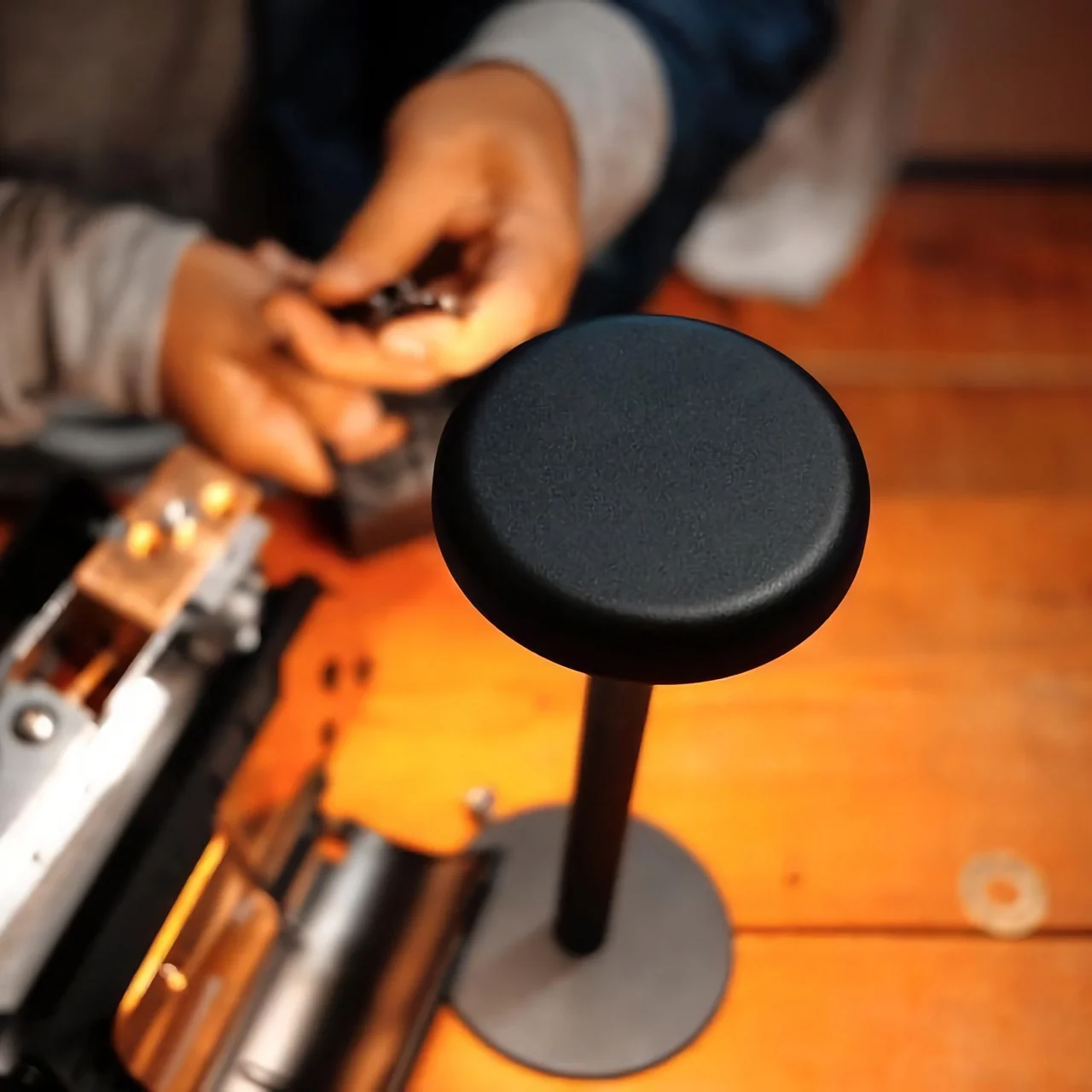
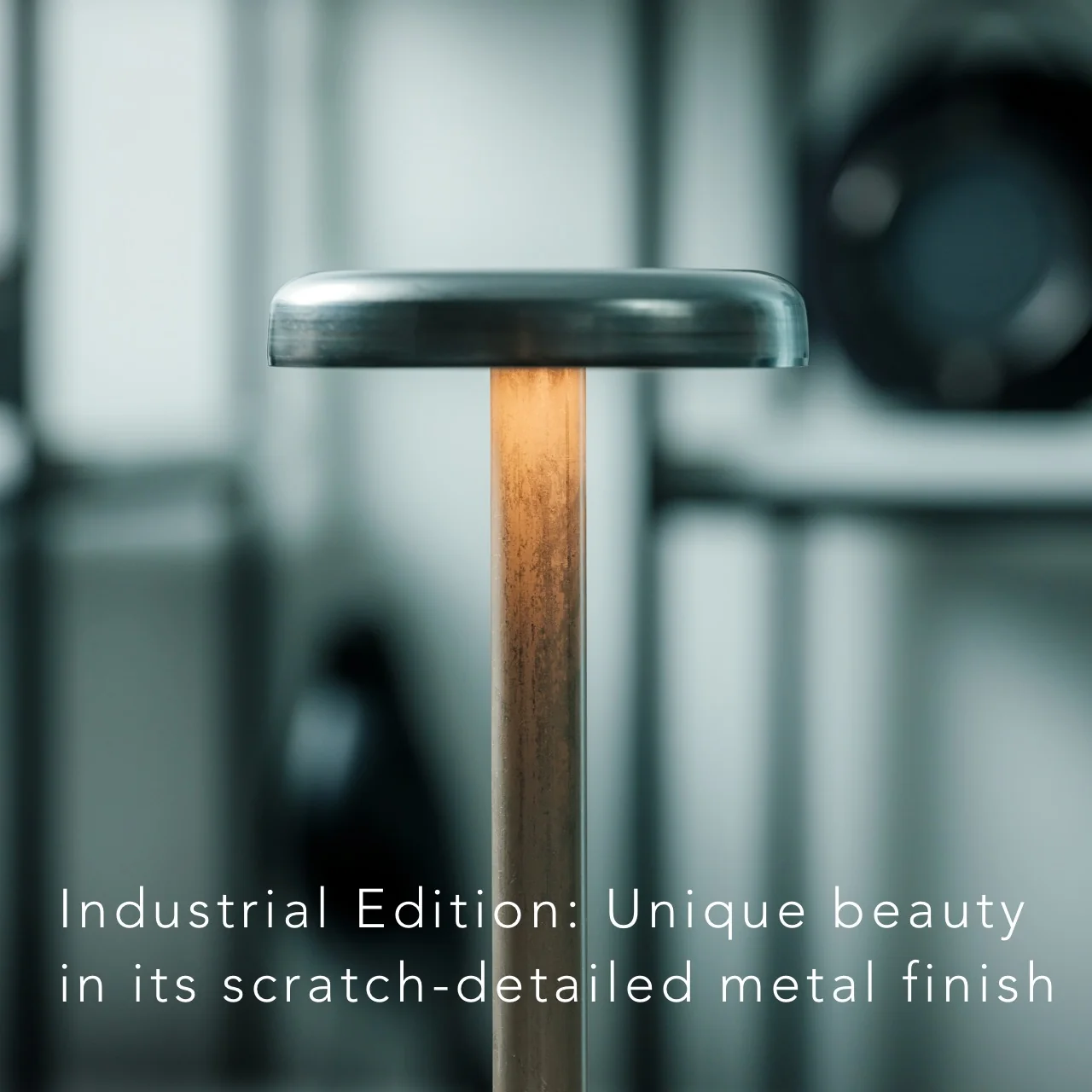
The lamp looks like a mushroom popping up out of the ground, with a soft, rounded cap sitting atop a slim stem base. It reads more like a small sculptural object thanks to its minimalist design, rather than the sleek, tech-forward look most portable gadgets go for. The metal base is “scratch-detailed,” meaning the wear and imperfections it picks up over time become part of its character instead of something you need to constantly wipe down or worry about.
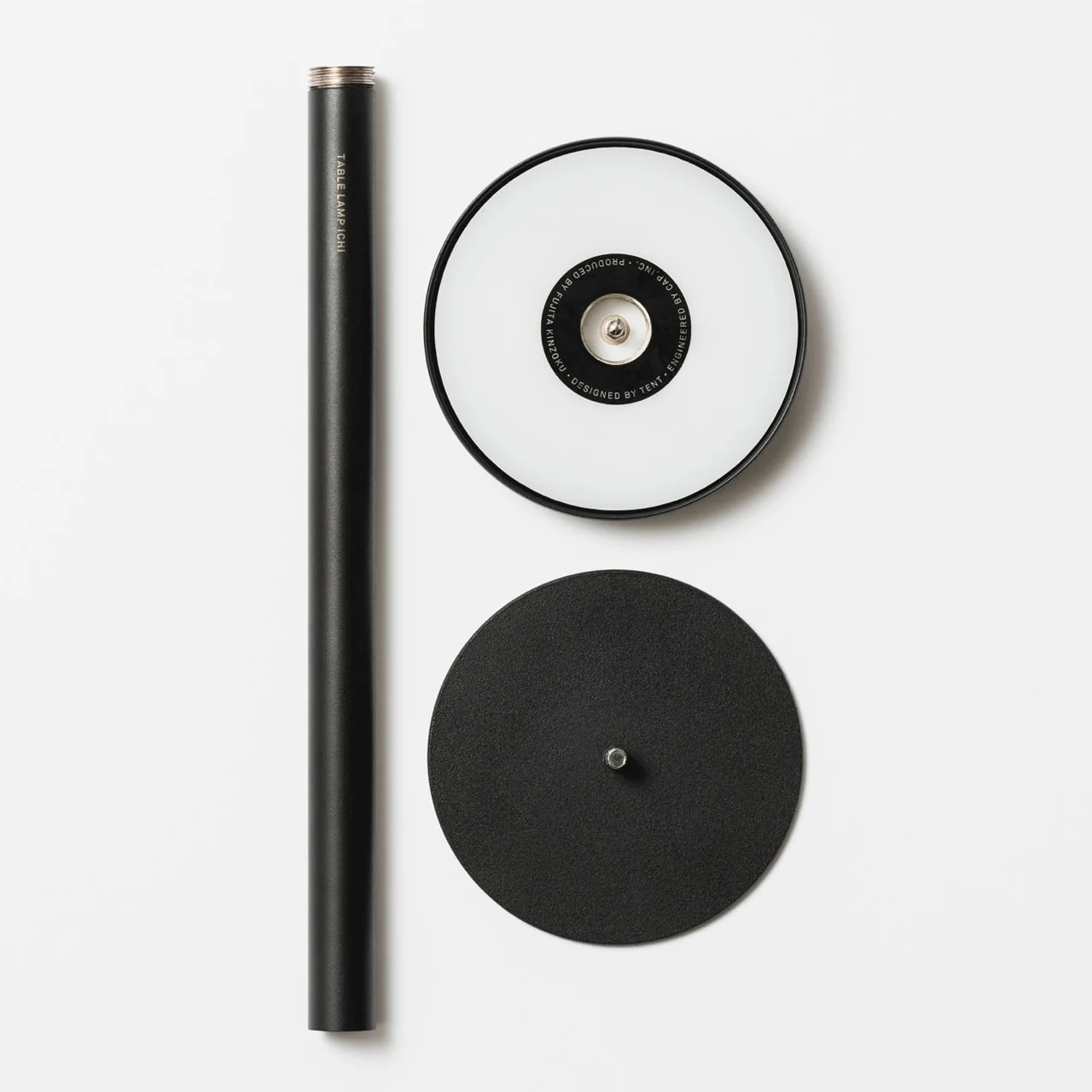
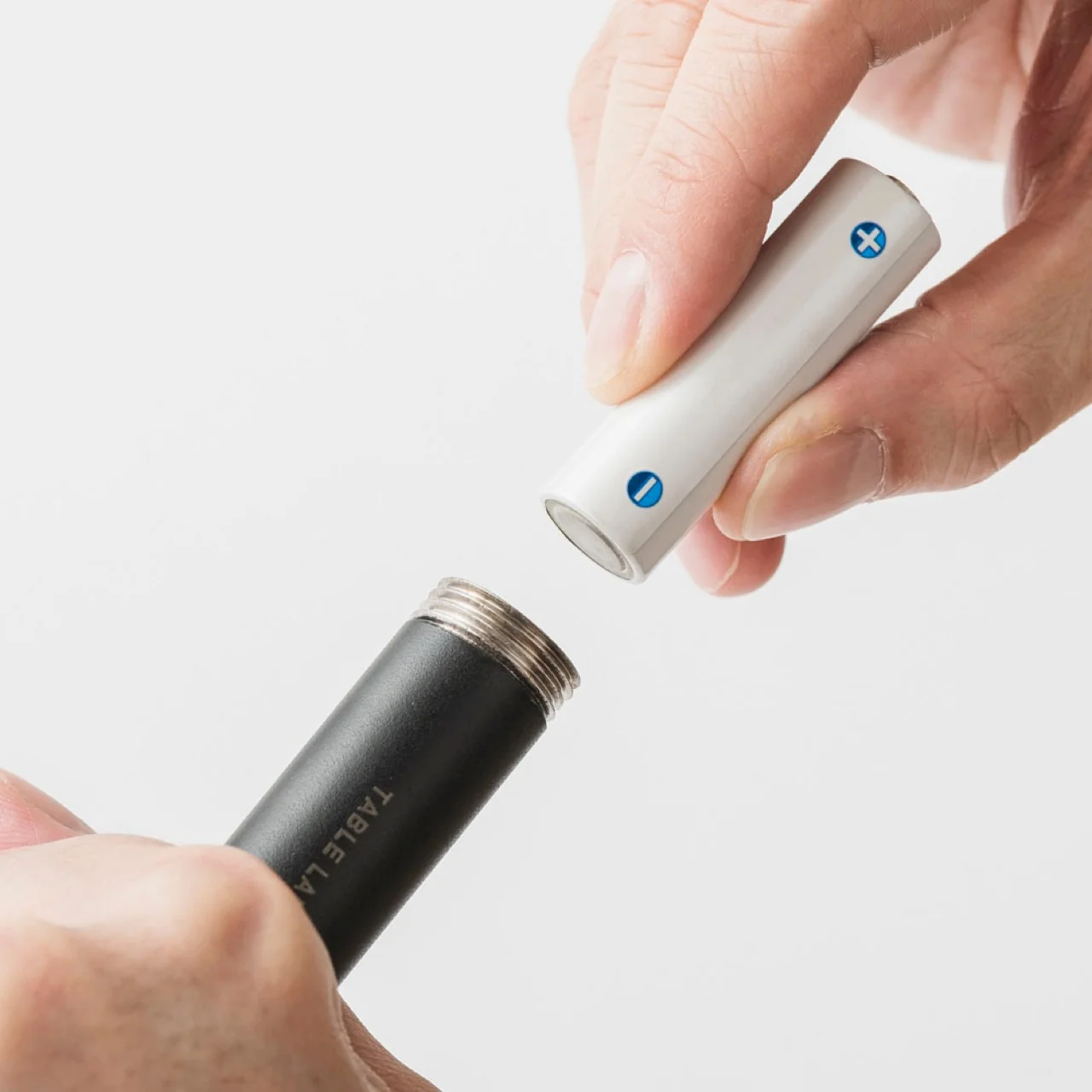
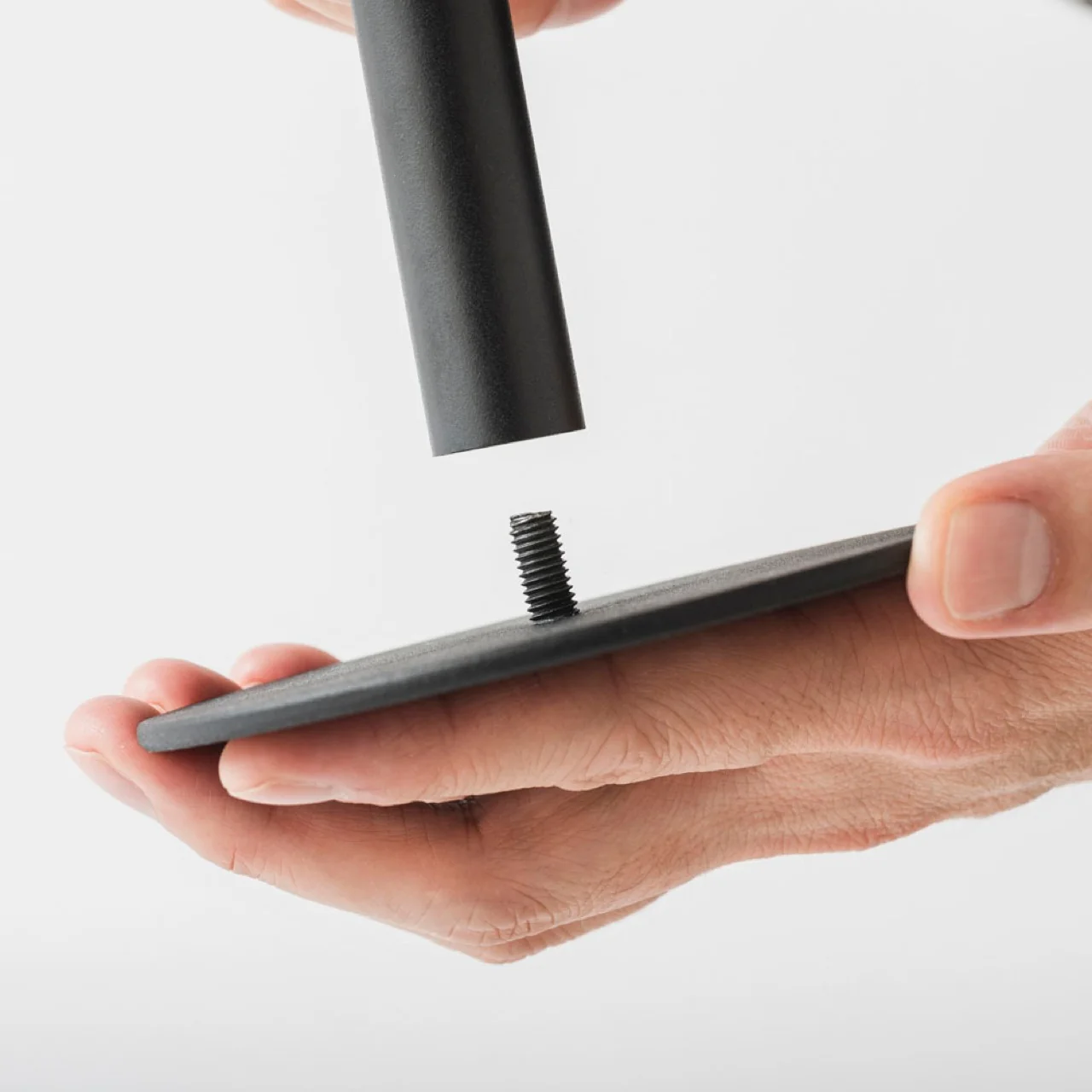
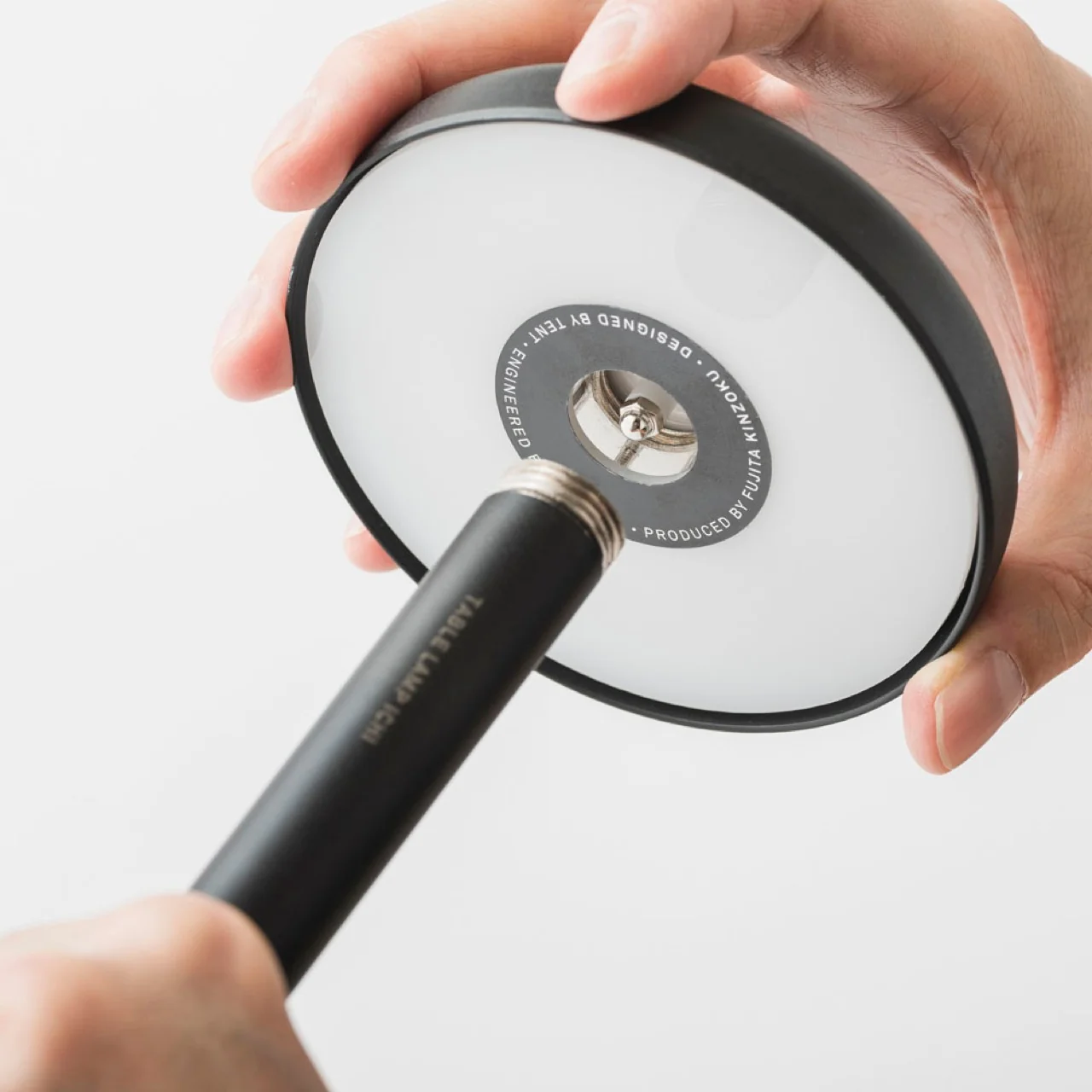
Because it comes in a modular, pack-flat construction, you can assemble and disassemble the lamp quickly and toss it into your bag whenever you’re on the move. There are no dials or switches to fuss with, either. You simply press along any edge of the cap to cycle through brightness levels, and you’ll even feel a satisfying haptic click each time you adjust it, a small but memorable tactile detail that makes the whole interaction feel more considered than your average lamp.
The six high-CRI LEDs are built for light quality over quantity. The warm, soft glow settles gently into your space, functioning more like ambient lighting that supports your surroundings rather than a harsh task light glaring in your face. It runs entirely on AA batteries, so there’s no charging cable to hunt down. As long as you’re carrying a spare set, you can keep the light going for as long as you need.
If you’ve shopped for portable lamps before, you’ve probably come across the Philips Hue Go, one of the biggest names in the battery-powered lighting space. At $179.99, the Hue Go offers smart features the Anywhere-Use Lamp doesn’t try to compete with, including app control, millions of color options, and Alexa or Google Home compatibility. But that convenience comes with strings attached. It relies on a charging base, needs to be recharged every 5 to 48 hours depending on brightness, and works best when you’re connected to Wi-Fi or Bluetooth for full functionality.
The Anywhere-Use Lamp takes the opposite approach. At $149, it skips the smart home ecosystem entirely and leans into pure simplicity: no app, no charging base, no dead battery with nowhere to plug in. If you’re at a campsite, a beach house, or a hotel with an outlet that’s just out of reach, you can swap in fresh AAs and keep going, no Wi-Fi signal required. For readers who want dependable, no-fuss lighting over smart-home bells and whistles, that difference matters.
The true beauty of the Anywhere-Use Lamp is right there in its name. You can use it anywhere you want or need to, thanks to its thoughtful design and practical features. Whether you’re at home looking for a bit of mood lighting or out camping and need a reliable light source to finish up a task, this lamp is ready to be your go-to lighting companion.
At the end of the day, good lighting shouldn’t come with a long list of conditions attached. It shouldn’t require a nearby outlet, a fully charged battery pack, or a phone app just to turn on. The Anywhere-Use Lamp strips all of that away and hands you something refreshingly simple: warm, reliable light that goes exactly where you go. For anyone who values design as much as function, and who’s tired of being tied down by cords and chargers, this little mushroom-shaped lamp might just earn a permanent spot in your bag.
We put glow on everything we are afraid of losing in the dark. Watch hands, exit signs, stair edges, light switches, and those plastic stars on a kid’s ceiling all got the memo decades ago. The carabiner, an object whose entire job is hanging onto things in low light, somehow missed it. It sits there, smug in anodized aluminum, daring you to find it. That is the oversight of the century, and I will happily defend that claim at any campsite.
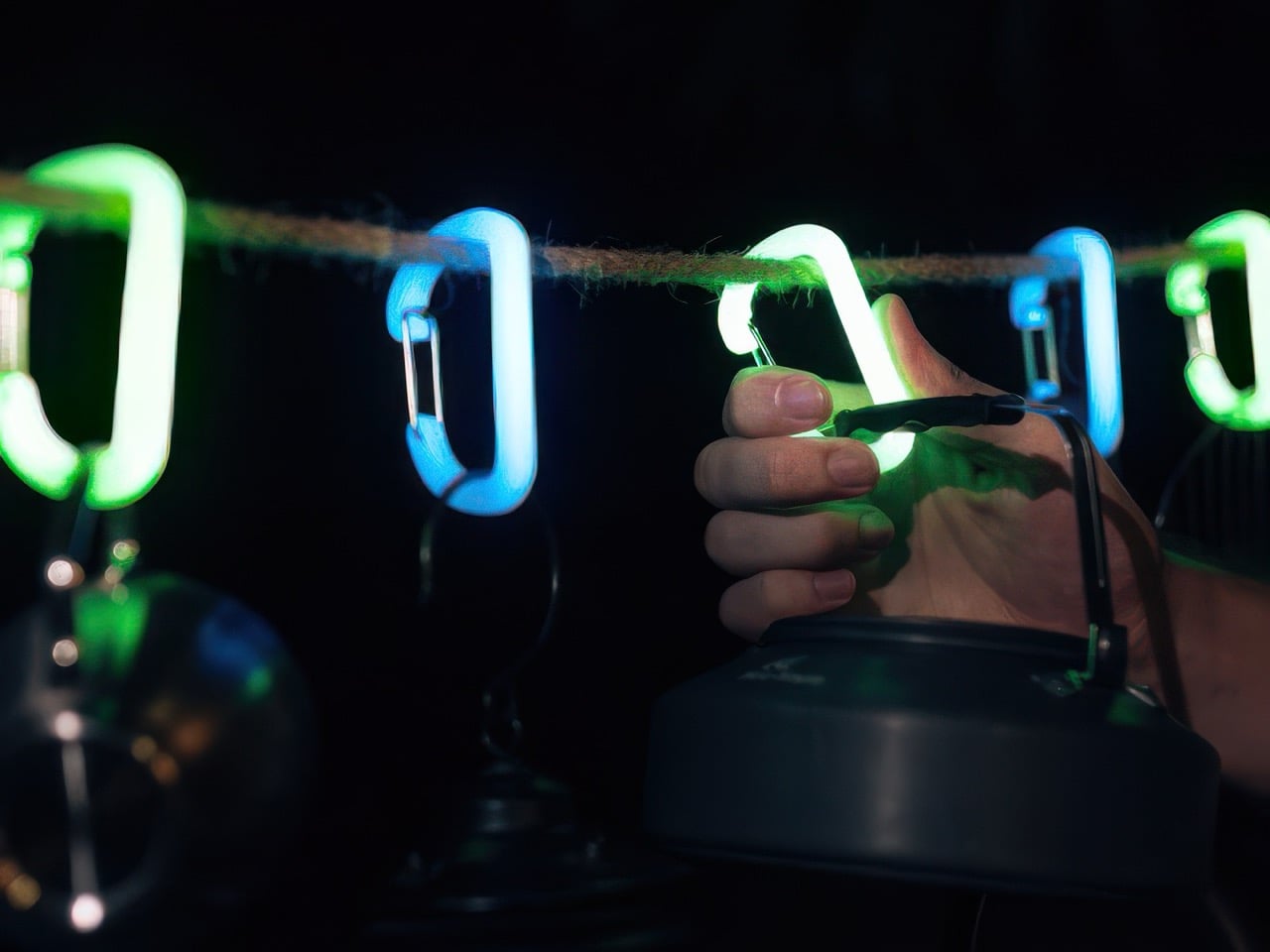
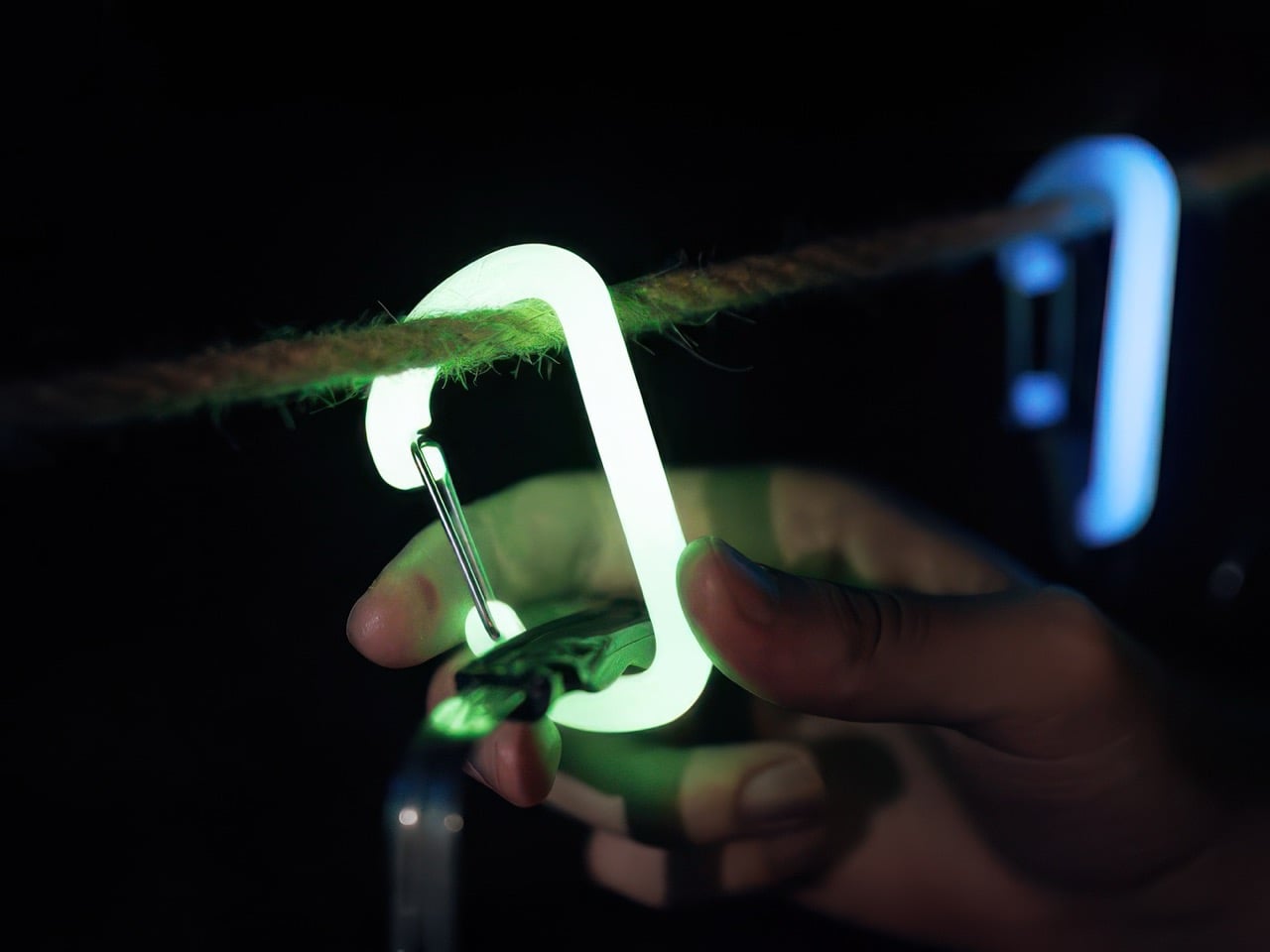
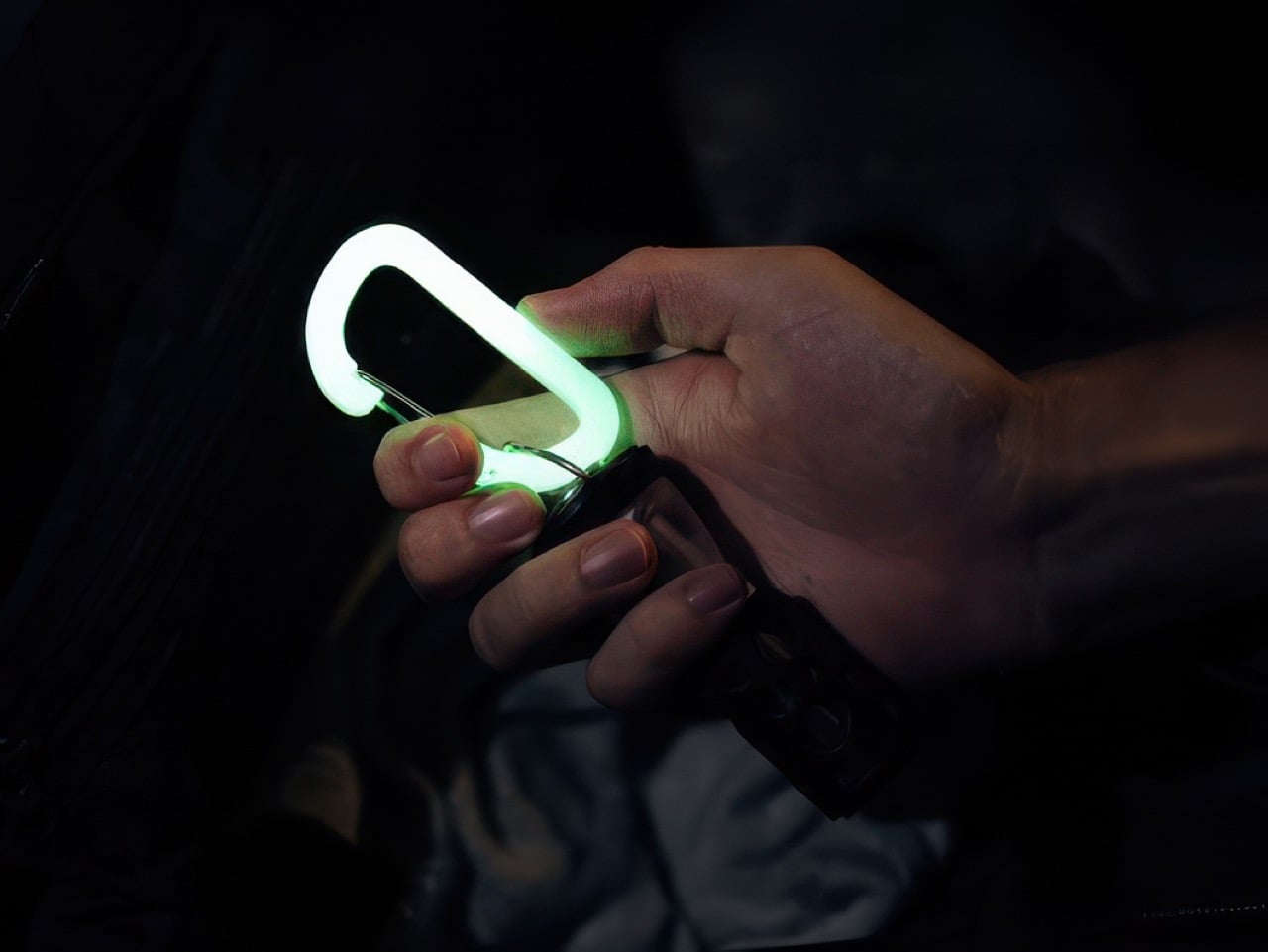
OBORO, from Maruhachi Kasei, a plastics factory in Nagoya, Japan that has been molding resin since 1974, closes the loop. The large D carabiner is glow-infused polycarbonate, measures about 3 by 1.7 inches, weighs 0.42 ounces, and is rated for 66 pounds. Leave it in sunlight or under a lamp for a bit and it shines for hours, with no battery, no charging, and no app (thankfully). A one-handed clip joins it for towels and tarps, rated for 55 pounds, and both come in green or a cooler blue. It is accessory gear rather than climbing gear, so keep your rope work on the real stuff.
The glow pigment is mixed into the polycarbonate itself, so the entire body is the light source. There is no paint layer to chip or flake, which matters on an object that spends its life banging against rocks, zippers, and other gear. Polycarbonate is the same family of plastic used in bulletproof glazing, and the maker claims five times the impact resistance of ABS and 250 times that of ordinary glass. It also handles weather and heat better than most plastics. The gate is a nickel-plated metal wire, the one part that has to flex thousands of times, so it makes sense that it is not resin.
In the maker’s own test, twenty minutes under a blacklight gave about three hours of visible glow. Brightness peaks in the first 10 to 20 minutes and fades gradually from there, the way every glow-in-the-dark thing you have ever owned behaves. Sunlight and ordinary LED room lighting both recharge it, as many times as you like. Long-afterglow pigments like this trace back to a 1993 breakthrough at Japan’s Nemoto & Co., the lineage behind Super-LumiNova on Swiss watch dials, though the maker does not name its exact pigment. Water is the weak spot: the maker says wet pigment loses its charge and the surface can cloud, so this belongs in the tent, not out in the rain.
A Bigger Gate, Beefier Numbers, and a Clip for Towels
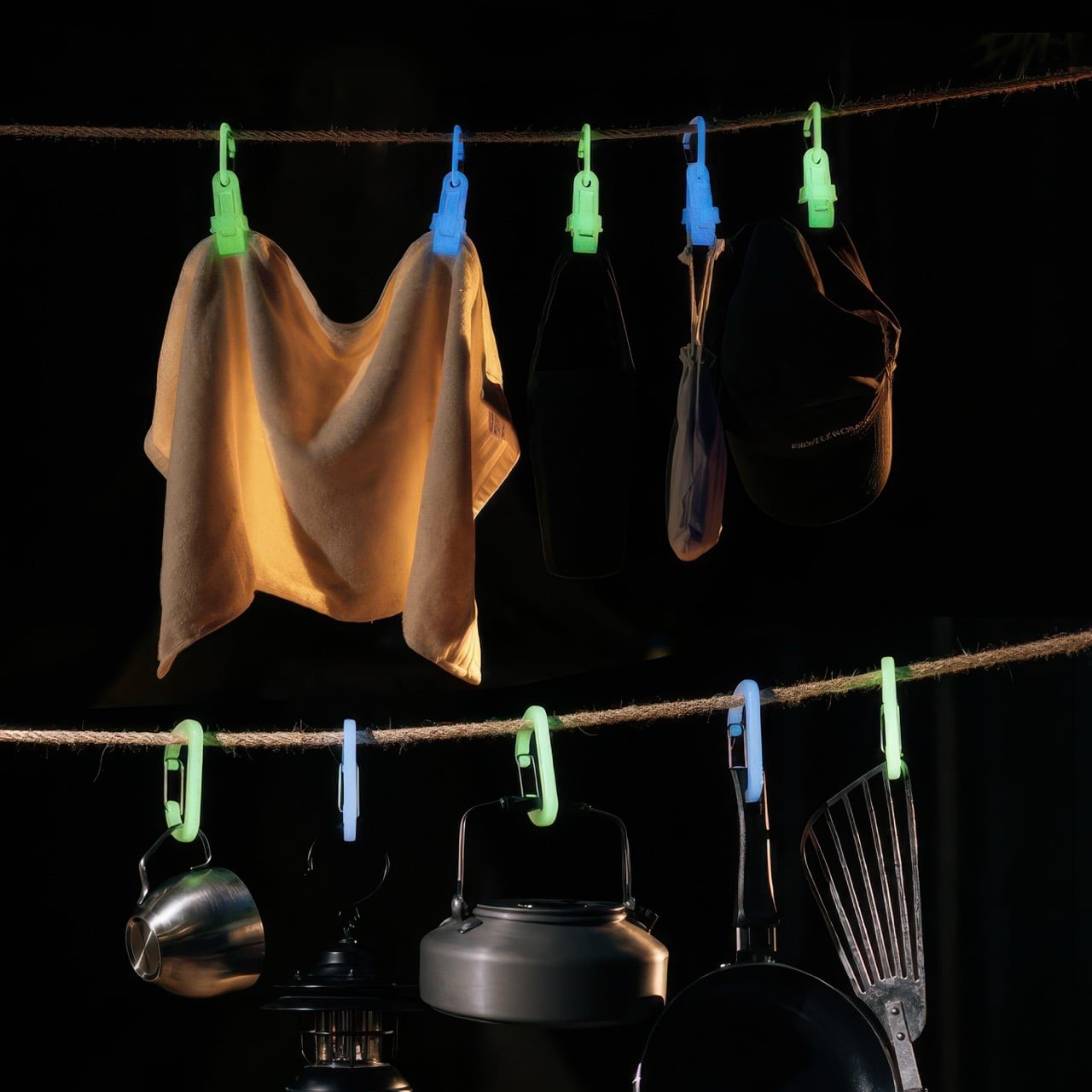
The large D measures about 3 by 1.7 inches and 0.28 inches thick, which the maker says is 30 percent bigger than a standard carabiner. That extra room is the whole point of the redesign. The gate opens wide enough for thick camp rope, so a mug, a kettle, and a lantern can all hang without a game of Tetris. The working load is rated at 66 pounds, while the maker’s pull test ended at 213 kilograms, roughly 470 pounds. That gap is deliberate, since the rating sits near 15 percent of breaking load, and at 0.42 ounces you will forget the thing is on your bag until you need it.
The clip is built for flat, floppy things like towels and tarps. It opens and closes with one hand, using serrated jaws and a sliding block with a toothed lock, and a thin metal loop up top lets it hang from a line or a bag. The wide mouth takes thick fabric where a standard clothespin gives up. Its 55-pound rating sits a bit under the D carabiner, which is plenty for a soaked camp towel. Two clips and a rope between trees give you a glowing clothesline you can actually find after dark.
Two Colors, Endless Things to Hang, and Roughly $6 a Piece
Green is the classic and the brighter of the two, while blue is the rarer, cooler color that I find more fun to look at. By day neither looks like it does at night, since green reads pale yellow-green and blue looks milky white. Blue is dimmer after dark, which seems a fair trade for the novelty. The use cases click once the idea sinks in: a tent guyline, a go-bag handle, a kid’s school backpack, a dog’s leash, a key hook by the front door.
The 12-piece set (six large D carabiners and six clips) is ¥11,616, about $73, against a ¥14,520 (about $91) retail price, which works out to roughly $6 a piece. Singles run about $6 for a D carabiner and about $7 for a clip. Pink versions of both ($40 for six of each), a three-pack of Suncheck glow carabiners ($33), and the older Ouroboros Carabiner Clip ($4) are available as add-ons. OBORO ships worldwide with delivery estimated for January 2027.
A multitool can earn its place in your pocket, right up until its weight makes you leave it at home. Pliers, blades, drivers, and openers all need somewhere to go, and those stacked layers of steel add up. If your daily repairs mostly involve opening a package or tightening a loose screw, carrying the entire assortment can feel like packing a toolbox for a job that takes thirty seconds flat.
The five designs here keep their ambitions small and their functions specific. There’s a DIY toolkit inside a Zippo case, a utility knife with a magnetic ruler, a keychain tool, a flat flashlight, and compact scissors with a few useful extras. Each offers a different way to pare down your everyday carry. Pick the one that matches your usual tasks rather than treating the collection as a pocket packing list.
1. Tiny Tool Shop’s DIY Zippo Toolkit
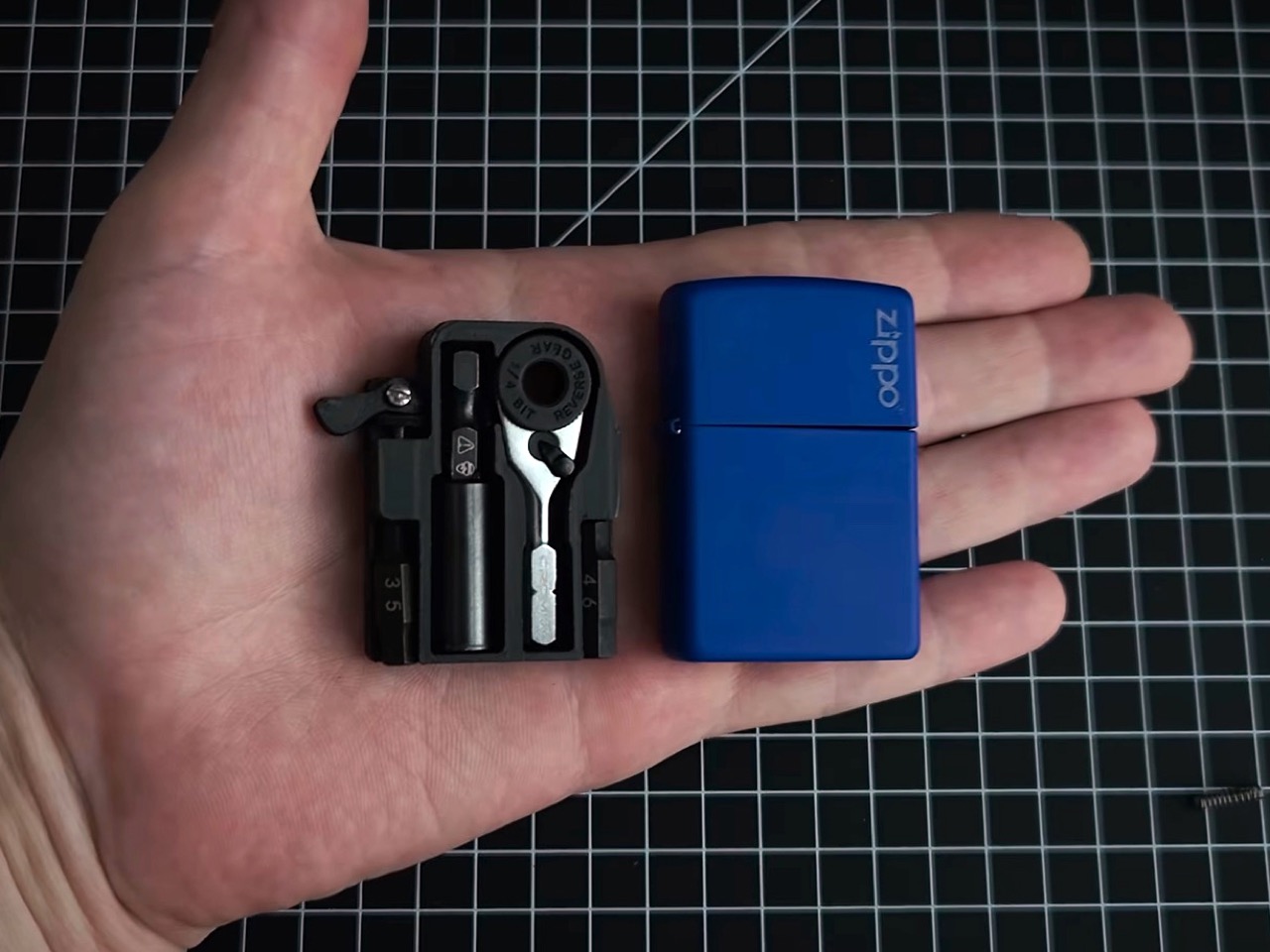
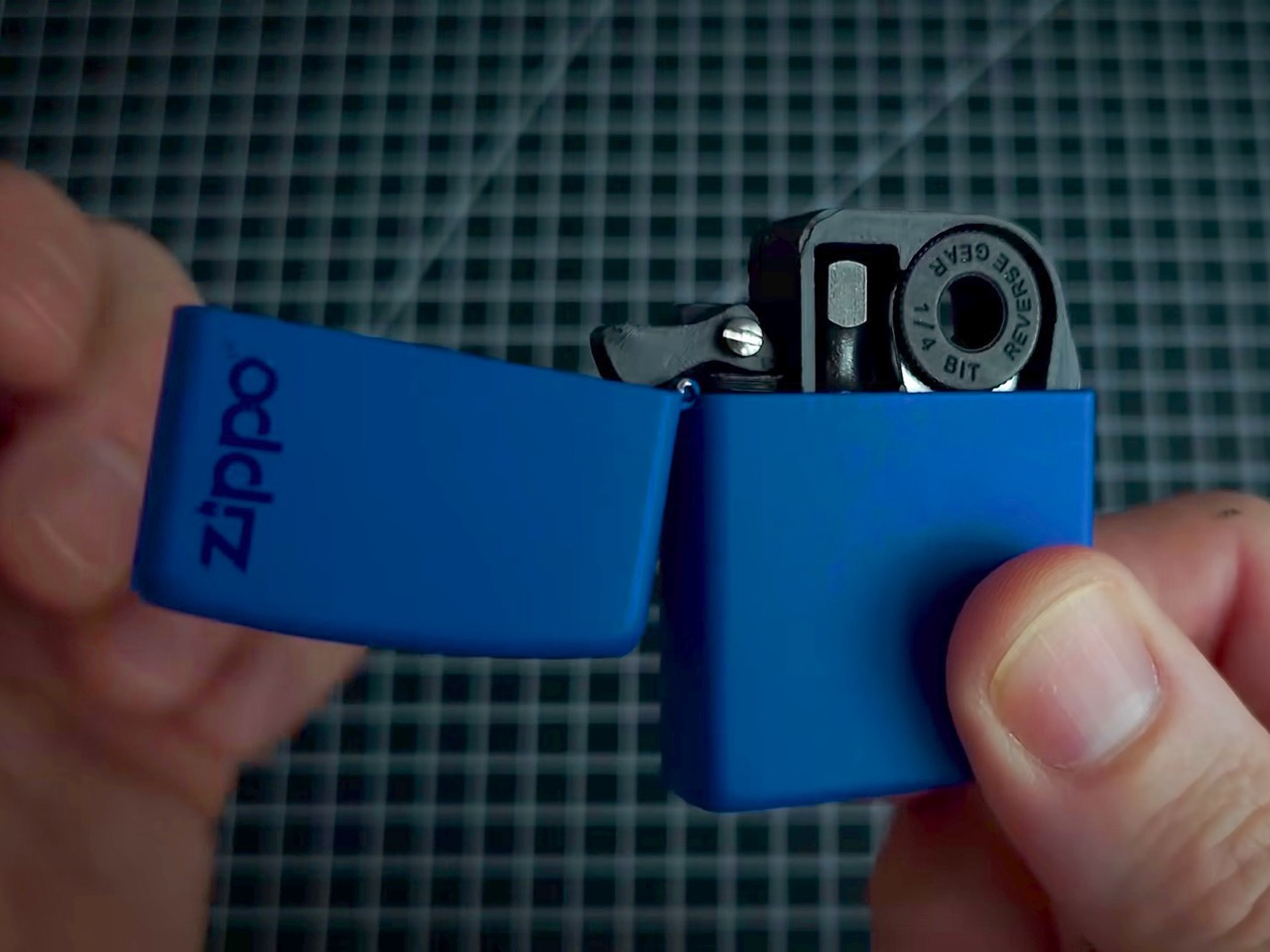
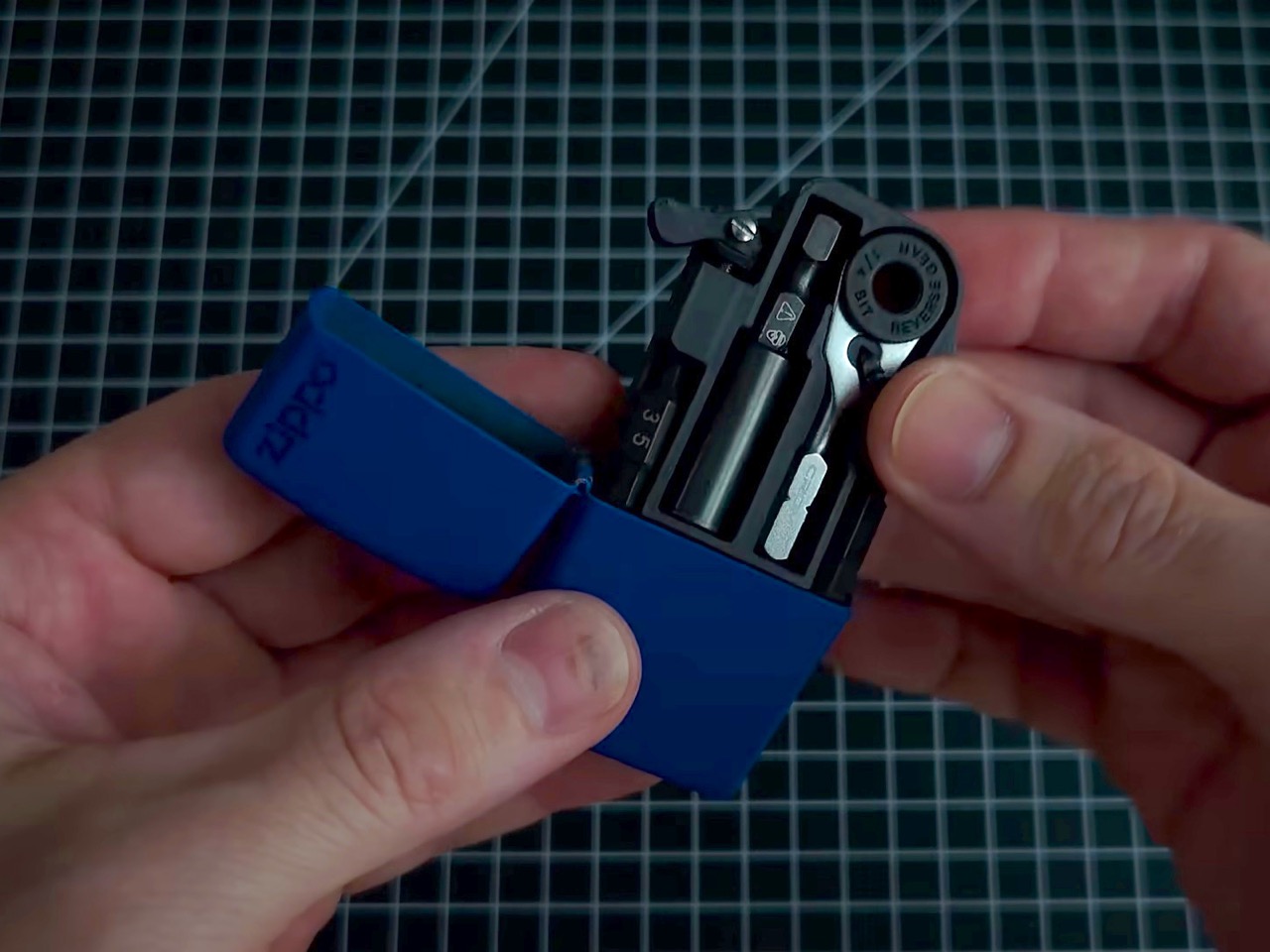
Closed, Tiny Tool Shop’s DIY toolkit is still a Zippo case. Open it, and a custom 3D-printed insert holds a Crom micro ratchet, two Steinwhale micro bits, and a Klein utility knife extension. The lighter insert has been removed, so this no longer doubles as a lighter. That constraint is part of the appeal: the maker uses an existing enclosure, with its hinged lid already solved, then designs the internal storage around a very specific selection of small tools.
The cleverest detail is retrieval. A spring salvaged from a Bic lighter helps push the ratchet through an opening in the case’s back, addressing the obvious problem of extracting something packed this tightly. Dedicated recesses organize the components instead of leaving them loose inside the shell. This is a maker project, not a ready-made Zippo product, and reproducing it means sourcing parts and making the insert. For someone drawn to mechanical projects, that assembly process is part of its attraction.
What we like
Reuses a familiar hinged enclosure with dedicated tool storage.
Spring-assisted retrieval addresses the difficulty of removing tightly packed components.
What we dislike
Requires DIY assembly and a custom printed insert.
Storage is tailored to the specified ratchet, extension, and bits.
2. CraftMaster EDC Utility Knife
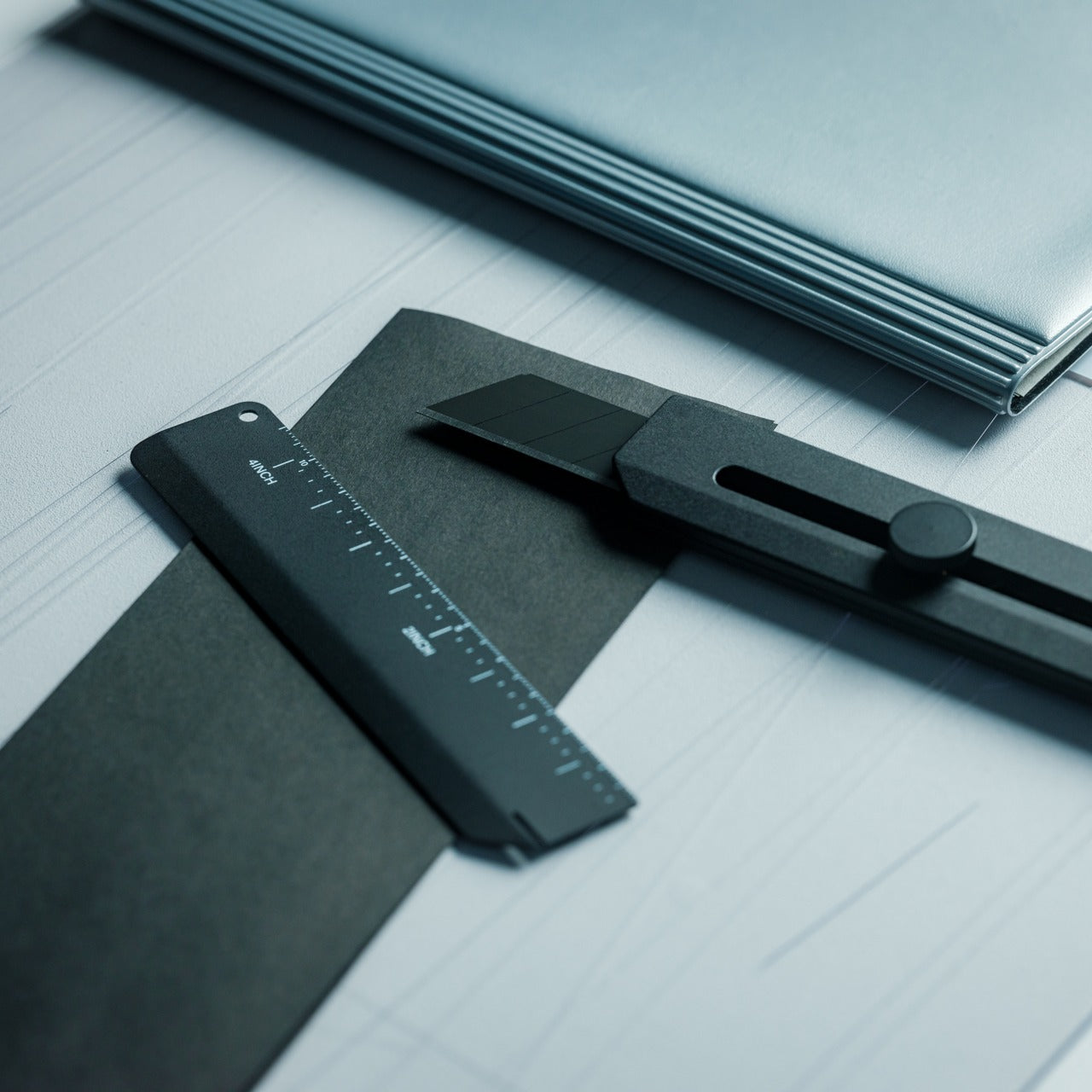
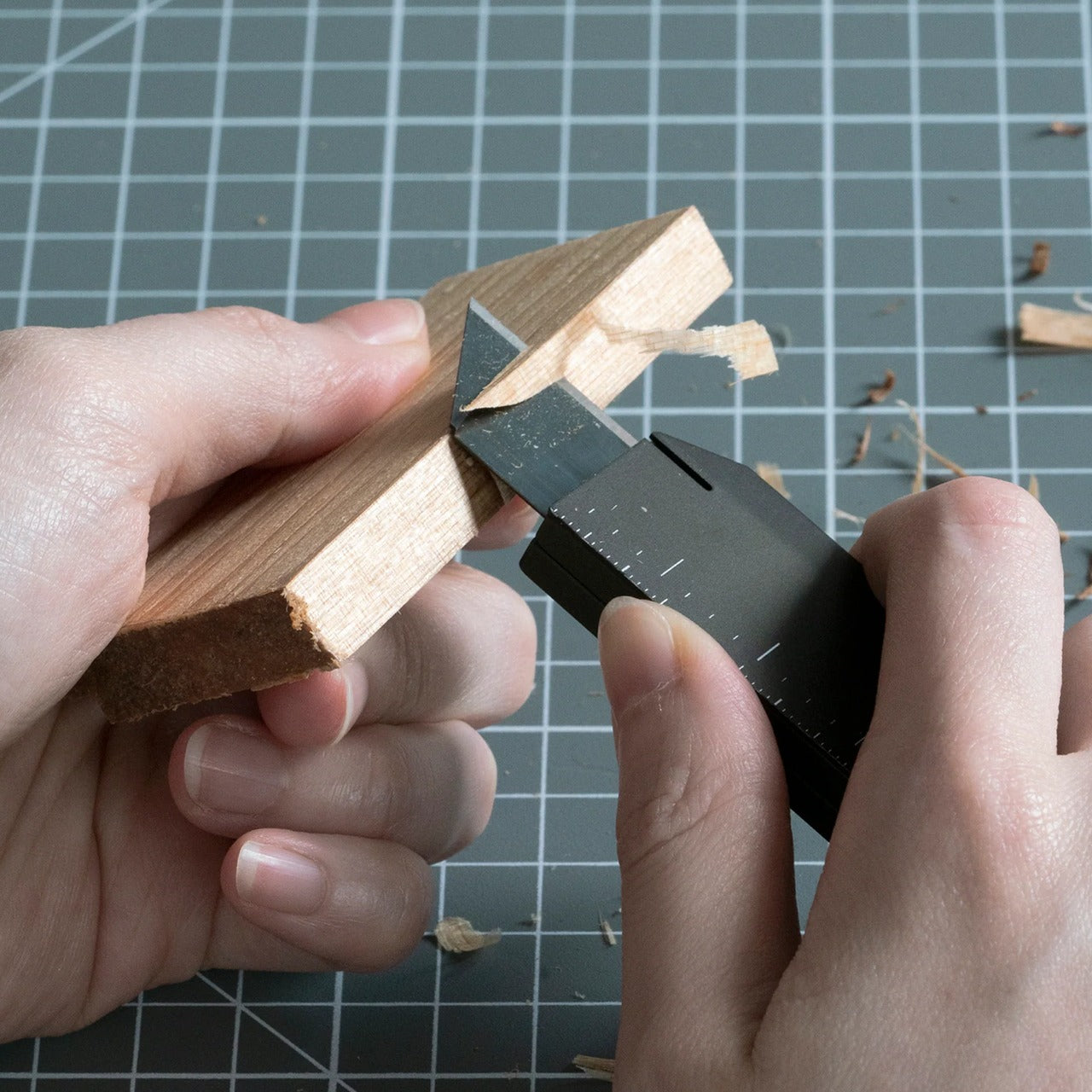
CraftMaster makes more sense when opening boxes and trimming materials account for most of your tool use. The utility knife pairs a metal body with a replaceable OLFA blade deployed using a rotating knob. At 4.72 inches long, the package stays compact, while a companion metal ruler docks magnetically against the back. Rather than hiding a blade among unrelated attachments, the design gives cutting and measuring the full object, with the ruler stored alongside the knife.
The ruler carries both metric and imperial markings, with a raised edge to help lift it from a flat surface. It also incorporates a blade breaker for removing dull segments, keeping a maintenance accessory within the same compact arrangement. That’s the interesting decision here: the extra features support the main task instead of chasing a larger function count. At $80, this is a deliberate upgrade to a basic cutter, and its appeal depends on how often you cut and measure.
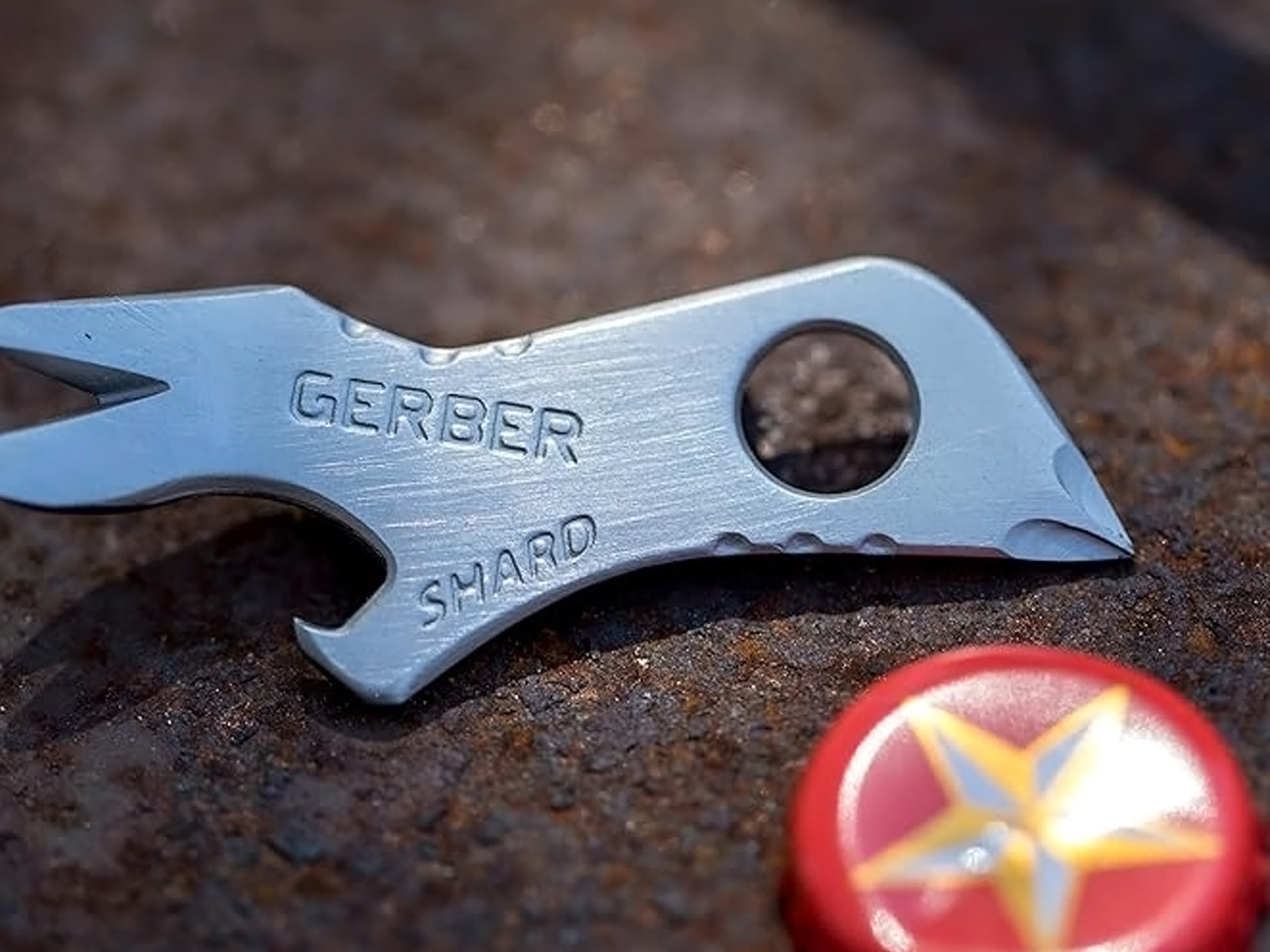
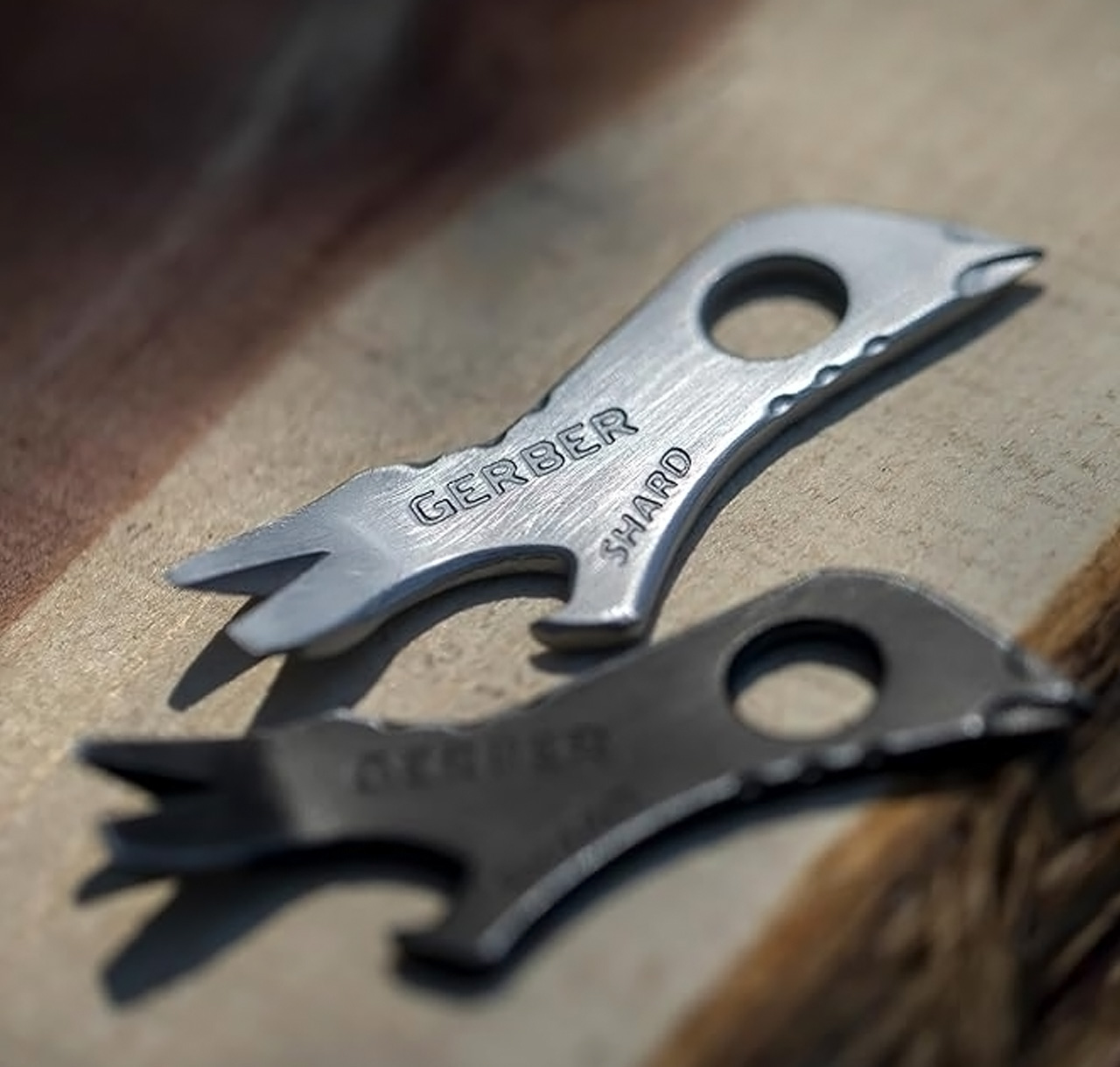
Gerber’s Shard takes the opposite approach to the Zippo build: there’s nothing to unpack. This stainless steel keychain tool integrates a pry bar, two flathead drivers, a cross driver, a wire stripper, and a bottle opener into its fixed shape. A hole attaches it to your keys, so it doesn’t demand a separate pouch. The appeal is straightforward. For occasional small adjustments or light prying, you can reach for a tool without unfolding an entire set of handles and attachments.
The design asks you to accept a small gripping surface in exchange for less hardware. That’s a reasonable bargain for a backup, but not a reason to retire proper screwdrivers. There’s no blade or pair of pliers here, and the integrated tips aren’t interchangeable. Gerber specifies a titanium nitride coating for corrosion resistance, although that’s a protective treatment rather than a claim that the tool is titanium. Its distinction is how little mechanism it needs to do its limited jobs.
What we like
Integrated tools need no unfolding or assembly.
Keyring attachment avoids a separate carrying case.
Small gripping area limits its role in demanding jobs.
4. Streamlight Wedge SL
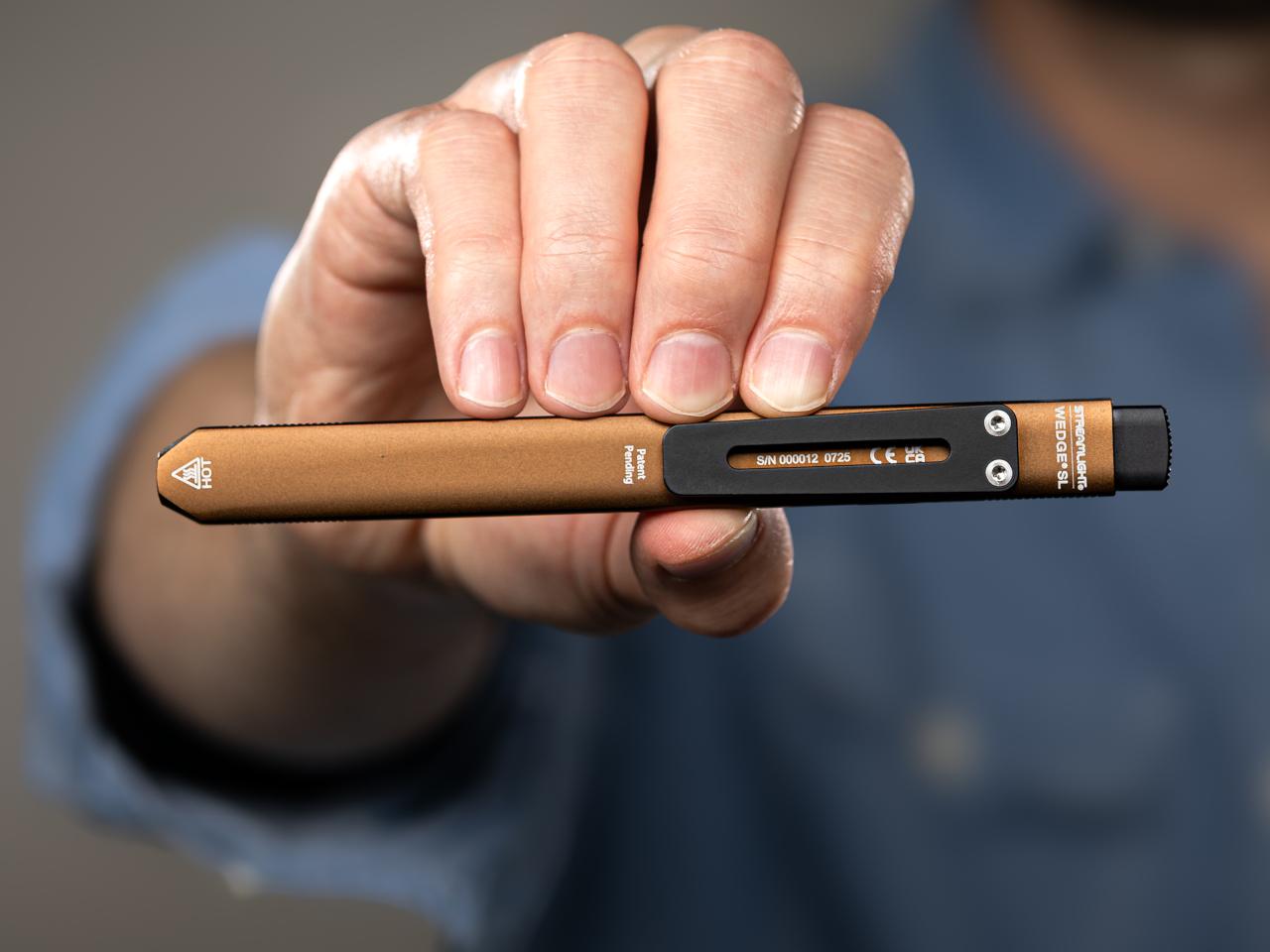
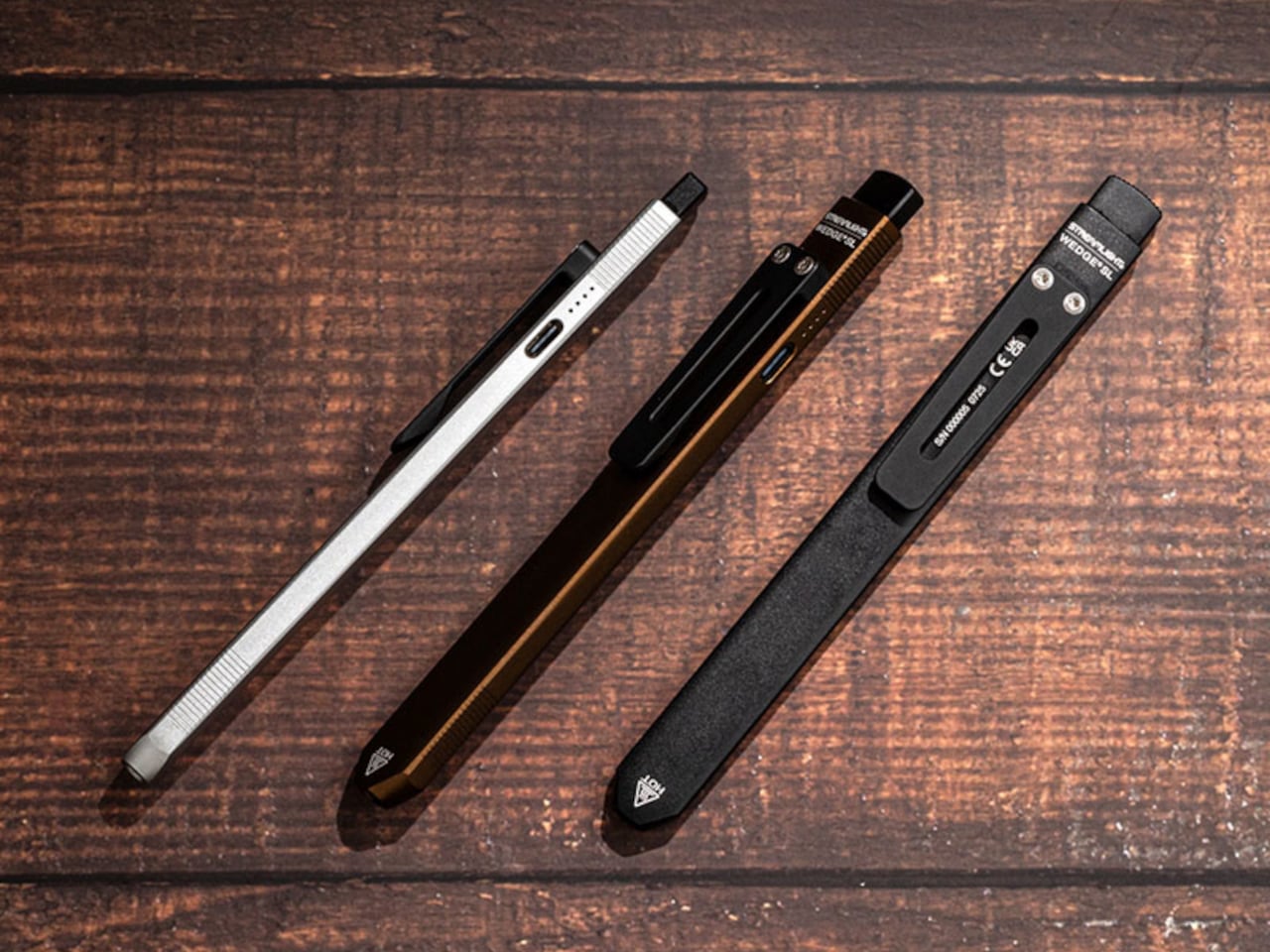
A flashlight earns its place here because seeing the screw can matter as much as having the right bit. Streamlight’s Wedge SL uses a flat aluminum body rather than a cylindrical tube, measuring 0.28 inches thick, or 0.41 inches with its pocket clip. It weighs 1.14 ounces and measures 5.65 inches long. Those proportions explain the design: this is a slim inspection light for a pocket edge or tool pouch, with dimensions that prioritize a thin profile over outright miniaturization.
Streamlight rates continuous output at 100 lumens on high and 50 on low, with a temporary mode reaching 500 lumens. Keeping those figures distinct matters more than leading with the biggest number. A tail switch handles operation, while USB-C charging and a user-replaceable battery support continued use. The manufacturer quotes 1.75 hours on high, so this is worth choosing around short inspections rather than assuming an entire evening at full output. That runtime deserves as much attention as the brightness.
What we like
Flat body measures 0.41 inches thick, including the clip.
USB-C charging and a user-replaceable battery.
What we dislike
The 500-lumen output is temporary, not continuous.
Rated runtime on high is only 1.75 hours.
5. Eiger 8-in-1 Scissors
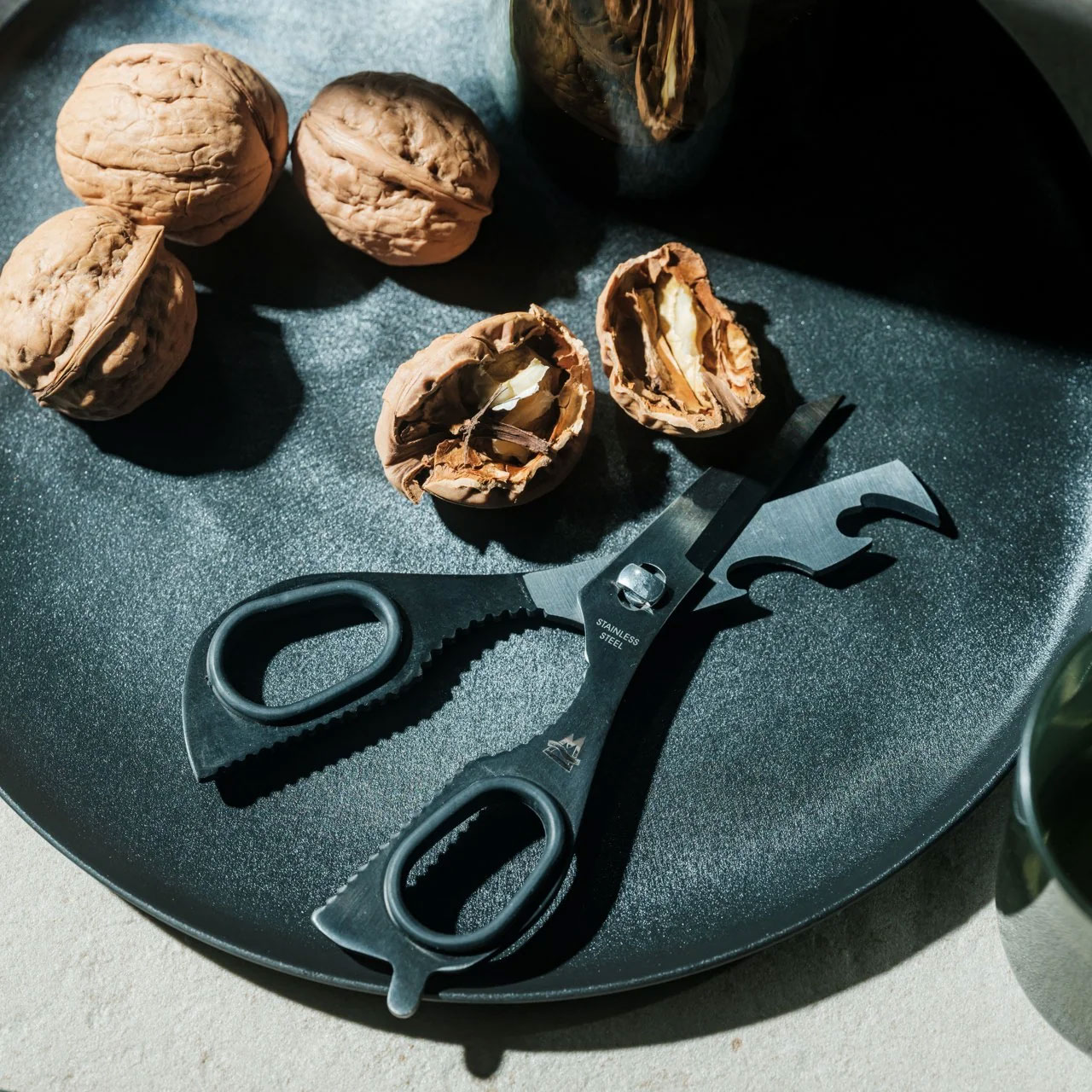
EigerTool starts with the scissors, which is a sensible choice if most of your everyday cutting involves packaging, string, or labels. Made in Sanjo, Japan, the Eiger 8-in-1 Scissors use SUS420J2 stainless steel and measure 5.12 inches long, weighing 1.87 ounces without the carrying case. The handles and blades incorporate bottle, can, and screw-cap openers alongside other functions. Instead of burying small scissors inside a conventional folding tool, Eiger makes the familiar cutting action the center of the whole design.
A leather case covers the tool for carrying, and the included Nite Ize carabiner offers a bag attachment option. That matters because a tool this long still needs room, even if the scissors themselves weigh little. The case belongs in the size calculation, too: the listed 53 grams refers to the scissors, not everything you’ll carry when they’re protected and clipped on.
Case weight isn’t included in the 53g specification.
Choose the Task Before the Tool
Before adding another tool, think about the last few times you actually needed one away from home. Frequent deliveries suggest carrying a dedicated package cutter. Loose fasteners suggest a driver. Dark cupboards suggest a light. That sounds obvious, but it’s an effective way to avoid choosing by function count alone. Your pocket has limited space; the useful question is which recurring inconvenience deserves a permanent place in it each day.
There’s also permission here to leave capabilities behind. If pliers rarely solve a problem for you, their absence isn’t automatically a flaw. If you need them regularly, none of these smaller alternatives make that requirement disappear. Compact carry works best as an honest edit, including the case, clip, or loose components that come along. The goal is a tool you’ll willingly bring, without slowly rebuilding the toolbox inside your pants.
My phone flashlight handles most of my after-dark chores, which is a funny confession from someone who writes about EDC gear for a living. It is always in my pocket, it is bright enough, and it asks for nothing extra. Then a job needs both hands, and suddenly the phone is clamped in my teeth, aiming at the ceiling while I squint at a breaker box. The phone flashlight is a great idea with one design flaw, which is that it comes attached to a phone. Hands-free light has always been the gap, and headlamps are too much hardware for a trip to the garage.
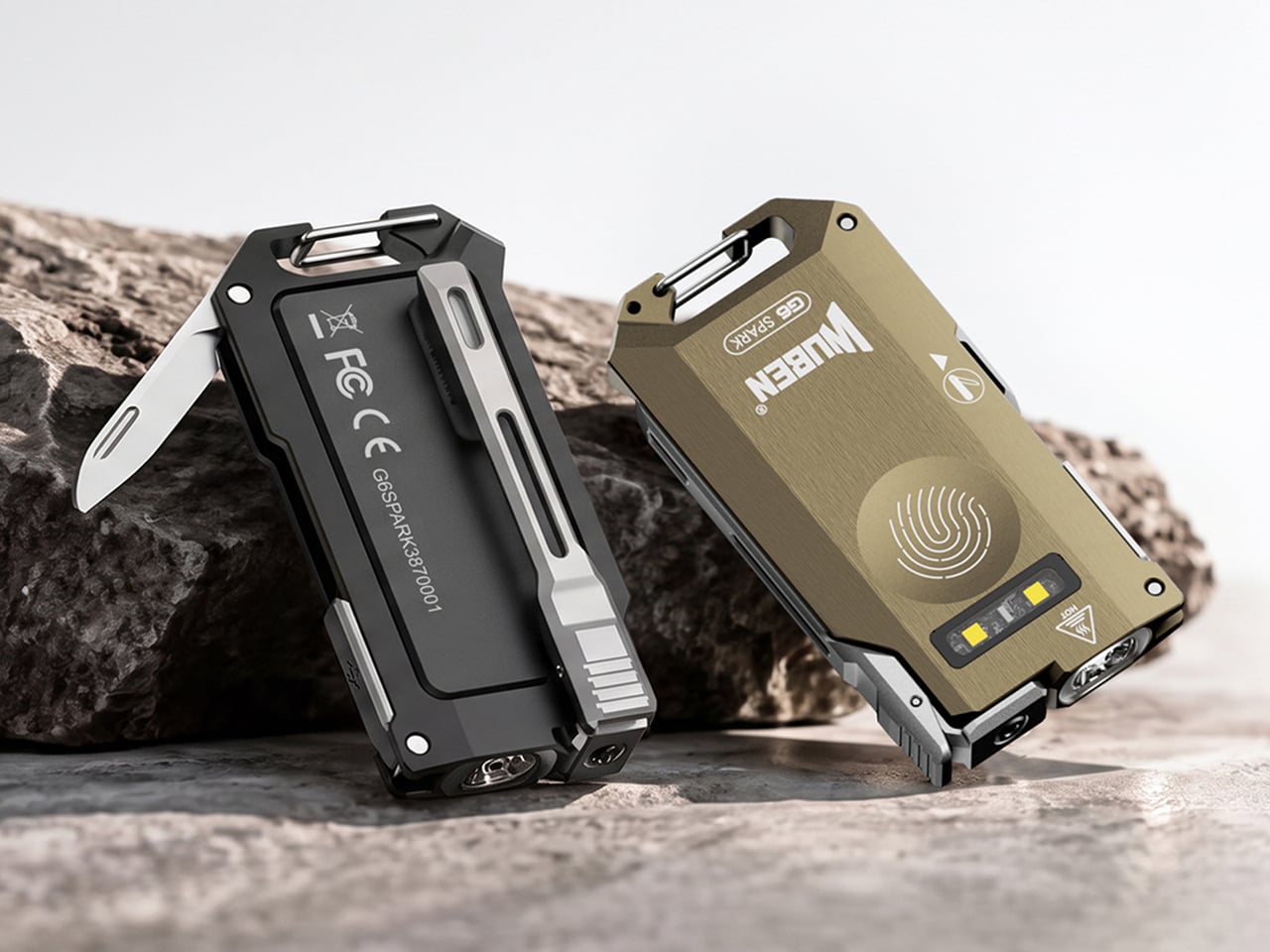
Wuben’s G6 SPARK is a keychain-sized answer to the teeth problem. Its clip rotates 90 degrees with distinct clicks, so you can clip it to a pocket, cap brim, or backpack strap and aim the beam where your hands are busy. The 500-lumen main light handles distance, a 100-lumen side light with red modes handles up close, and a hidden blunt-tip blade covers the odd chore. The body is 7075 aluminum, 0.34 inches (8.6 mm) thick, and 1.4 ounces (40 g or about as much as an AirPods case).
Eleven credit cards thick and cut from aerospace aluminum
The G6 SPARK measures 2.56 by 1.35 inches and 0.34 inches thick (65 by 34.2 by 8.6 mm), and it weighs 1.4 ounces (40 g). That makes it roughly eleven credit cards thick, so it vanishes into a jeans pocket. The body is 7075 aluminum, which Wuben calls aerospace-grade, and a slab this thin needs a metal with a spine. Wuben rates it IP66 against dust and powerful water jets, with 1 meter (3.3 feet) of impact resistance, so a keychain’s daily abuse should not scare it. The USB charging port hides inside the body, which keeps the face clean and symmetrical.
7075 is the zinc-rich member of the aluminum family, and it has a reputation for being far tougher than the 6061 found in most flashlight bodies. Aircraft engineers fell for it because it is light and stiff at the same time. Stiffness is exactly what a flat flashlight needs, since a thin body that flexes is a bad day for the lens and the electronics. On a keychain, that rigidity should also help it survive a crowded pocket full of other metal. A push-release attachment lets you pop it off the ring when you want it in your hand instead of dangling off your keys.
Three lights, one button, and a click code you can learn in an evening
The main light tops out at 500 lumens with a 66 meter (217 ft) throw and a peak beam intensity of 1,089 candela. Those numbers describe a beam for the space around you, like a driveway or a campsite, rather than a hillside across the valley. Light color is 5000K, a daylight white, and the CRI of 70 means colors look decent rather than lab-accurate, which is fine for finding a dropped screw. Brightness steps are Eco, Low, Medium, and High, and you cycle them by holding the button. A double click jumps to Turbo, a triple click gives you Strobe, and mode memory remembers your last setting.
The independent side light is the one I expect to use most, since it gives a close-range pool of light at arm’s length. White comes in Low, Medium, and High, topping out at 100 lumens, which is plenty for reading a label or tracing a wire. Red adds a steady mode and a signal mode at 10 lumens, handy for saving night vision or flagging yourself on a dark road. Hold the button while the main light is off to wake the side light, and hold again to cycle the five modes. That is a lot of options on one button, though the click patterns are easy enough to learn in an evening.
A clip that aims, a blade that hides, and a cap brim that becomes a headlamp
The clip is the headline trick, rotating through 90 degrees with distinct mechanical clicks so you can feel each position. Clipped to a cap brim, it works like a minimalist headlamp, and I would happily wear it to read in a tent. Tucked into the side is a blunt-tip utility blade that handles opening boxes, slicing tape, and sharpening a pencil, and probably a marshmallow stick if you ask nicely. Fold it away and the G6 goes back to being a slab that keeps your keys company. My one wish is a tiny tactile mark near the button, so a cold thumb can find it in the dark.
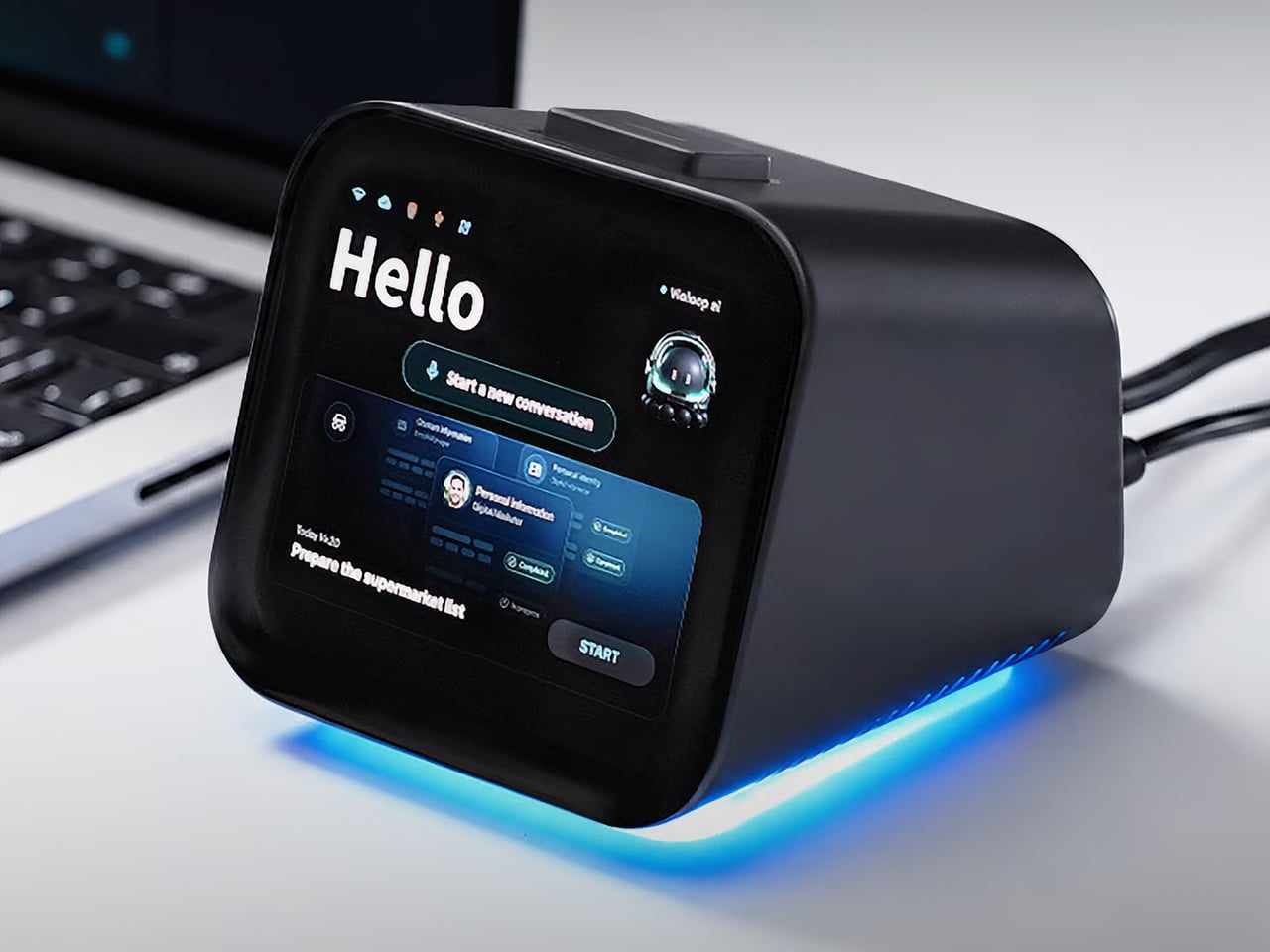
Copying customer details from a message into a spreadsheet probably isn’t anyone’s idea of a good afternoon. Unfortunately, even a perfectly capable computer still leaves plenty of that work to you. Bvio’s Violoop is a plug-in AI operator designed to handle those repetitive steps, giving your existing computer an assistant without asking you to replace the machine you’re already comfortable using.
You can tell Violoop what you need in ordinary language, such as finding customer information in a WhatsApp conversation and entering it into a customer relationship management (CRM) system. That might sound like a small convenience, until you’ve spent an afternoon repeating the same routine. The aim is to let you explain the task instead of manually carrying every detail from one window to another.
To do that, Violoop interprets what’s on the screen and interacts with applications through keyboard and mouse controls. Its companion software supports Windows, macOS, and Linux, while the screen-based approach means it doesn’t need a dedicated integration for each application. You’re still working with familiar programs, only with assistance intended to bridge the gaps between them, and without the need to learn programming to give it instructions.
Of course, customer records are only part of the paperwork that follows a small business around. Invoice details need entering into spreadsheets, documents need organizing, and files rarely end up where they belong without some encouragement. Violoop is designed to help with that preparation, taking on the repetitive handling while leaving you to check the information and decide what to do with it.
Email offers another familiar example. Having something sensible to edit can be easier than staring at an empty reply box, especially when several messages need similar responses. Violoop can prepare replies as drafts for review, giving you a starting point while keeping the final wording in your hands. You can add the context that a customer relationship or a delicate conversation actually needs.
There’s also a reason this assistant takes up physical space on your desk. Its compact enclosure and angled touchscreen give ongoing tasks a place of their own, rather than burying everything in another software window. Inside, the tiny device packs a punch of up to 26 trillion operations per second (TOPS) of AI processing. That hardware is intended to support local screen understanding and other AI work on Violoop itself.
That local processing also supports a more personal approach to recurring work. Violoop keeps personal memory on the device, retaining preferences and context so you don’t have to explain the same habits every time. Local memory doesn’t mean every task stays offline, however. Depending on the selected mode, Violoop can also connect to cloud services or larger AI models when additional help is needed.
The most interesting control might be the button on top. Violoop separates AI processing from a dedicated security controller, with an approval step for sensitive actions. The physical confirmation button gives that pause a tangible form. Preparing information and committing to an action are different responsibilities, after all, and the design puts a deliberate checkpoint between what the AI proposes and what happens next.
You don’t have to stay beside it to keep an eye on progress, either. Phone access lets you check tasks, send further instructions, and approve sensitive actions while you’re away from the desk, provided the computer remains on and connected. That’s useful when you need to step out but still want to see how things are going, without returning to the keyboard for every update.
An organized spreadsheet won’t decide which project you should take on next, and a drafted reply doesn’t know everything about the person receiving it. Those parts still belong to you. Violoop’s role is to help get the surrounding work ready, using a device that keeps progress visible and approval close at hand. That leaves the final email waiting for something decidedly familiar: your own words.

 Connexion