❌

Vue lecture

The 8 Best Halloween Designs for a Delightfully Spooky October

Halloween decorating can start small, with something like a skeleton on the porch. A strange little object on the dinner table, a lamp that reveals something unexpected, or a pair of shoes with eyes on the heels can be enough. The most interesting seasonal designs give familiar things a new personality, leaving room for a little mischief without turning the entire house into a haunted attraction overnight.

These eight picks approach the season through miniature storytelling, everyday utility, and atmospheric details. Some are unmistakably Halloween, while others suggest a darker mood without wearing a pumpkin on their sleeve. This is an editorial selection rather than a tested ranking or a collection of new releases. It includes retail products, an older lighting design, and a LEGO fan proposal, with those distinctions kept clear as we explore each one below.

1. Halloween Snow Globe

The Brick Artist’s Halloween Snow Globe puts a graveyard where you would normally expect a snowman. Published as a LEGO Ideas fan proposal, rather than an official retail set, it gathers a twisted tree, a floating ghost, and a pumpkin-headed scarecrow beneath a transparent dome. Its proposed hand crank rotates the scene, bringing a skeleton and spider into view from behind the tombstones. That gives the mechanism a storytelling purpose beyond simply displaying the same arrangement from another angle.

The published renders make the strongest case for its inclusion here. Orange leaves interrupt the black and gray palette, while a vampire on the base greets anyone approaching the miniature scene. It would be an appealing centerpiece for someone who prefers examining tiny details to hanging oversized decorations. The construction is less convincing from behind, where the moon exposes its studs, but that also reveals the theatrical thinking: this is a small stage with a carefully arranged opening view.

What we like

  • Rotation reveals hidden characters.
  • The dome contains an entire miniature Halloween scene.

What we dislike

  • It is a fan proposal, not an official retail set.
  • The rear view exposes some scenic construction.

2. Nike Dunk Low “Shibuya Halloween”
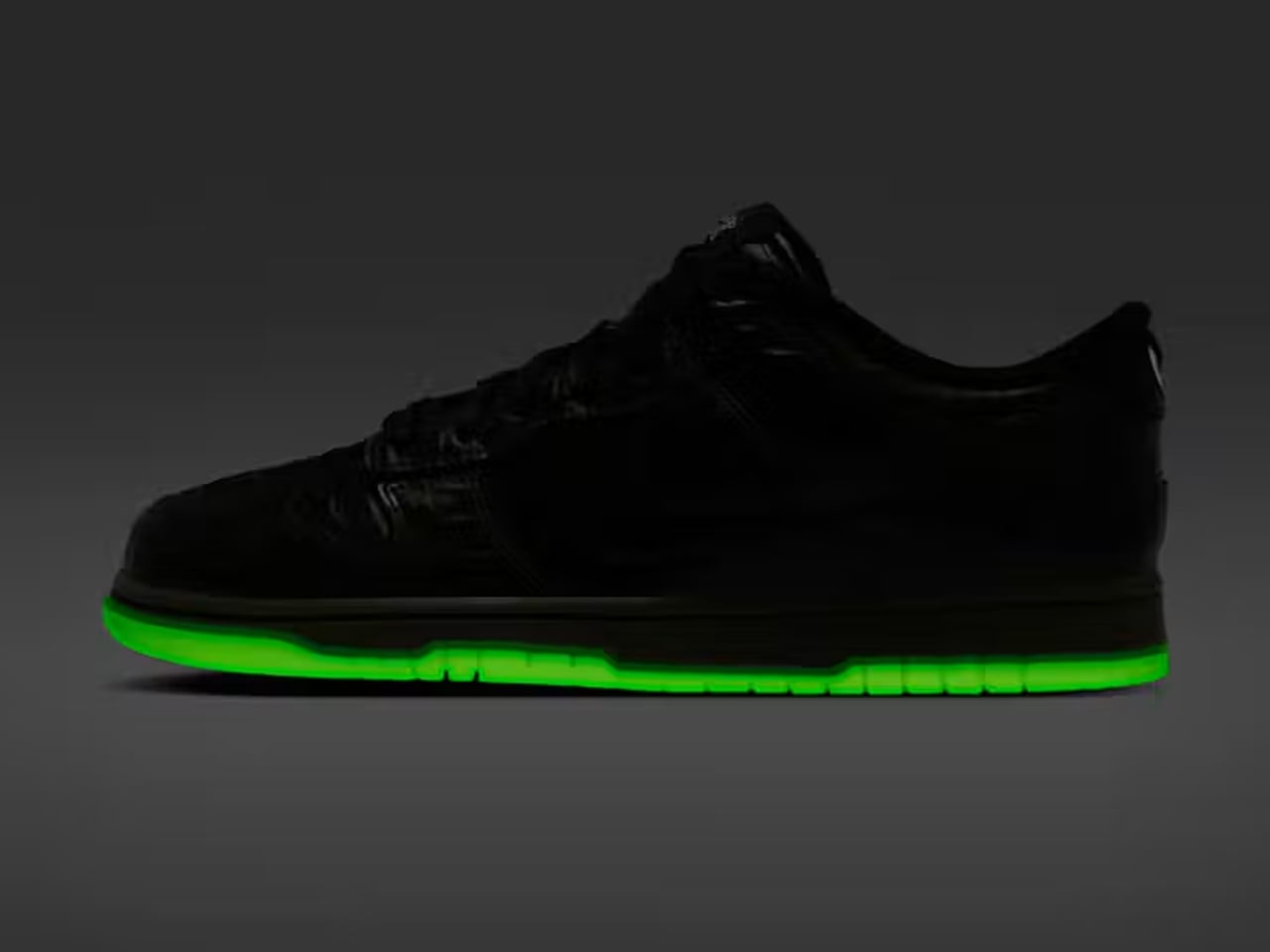
Nike’s Dunk Low Premium Halloween takes a quieter approach to dressing for October. The leather upper has a scaly appearance, with dark green and black keeping the daytime palette restrained. The more theatrical detail sits behind you: eyes on the heel tabs glow in the dark, accompanied by an outsole with the same effect. Nike also includes a Shibuya city tongue label, connecting the shoe’s familiar nickname to a specific detail rather than relying on Halloween colors alone.

For anyone who wants a seasonal accessory without committing to a costume, that restraint is the attraction. The familiar sneaker silhouette remains intact, and the monster character emerges through texture and small graphic interventions. It is a more flexible wardrobe proposition than footwear covered in pumpkins, at least aesthetically. The limitation is that much of the Halloween effect depends on darker surroundings. Nike describes the glowing elements but does not specify their duration, so treat them as decoration, not illumination.

What we like

  • Heel eyes give a familiar sneaker an unexpected character.
  • The dark palette is less overtly seasonal than orange graphics.

What we dislike

  • The Halloween effect is subdued in daylight.
  • Nike does not specify how long the glow lasts.

3. Skeleton Wine Glasses

Pottery Barn’s Skeleton Wine Glasses let a tiny skeletal figure do the lifting. Instead of decorating the bowl with a printed Halloween motif, the design incorporates the skeleton into the stem, with raised arms reaching toward the glass above. The manufacturer specifies a handmade zinc alloy embellishment and a bowl made from mouth-blown soda lime glass. It is a satisfying change of scale: something normally imagined standing in a doorway becomes the character supporting a drink at dinner.

This is a particularly useful direction for a Halloween table because the decoration participates in the meal rather than occupying another patch of tabletop. Set against plain plates and napkins, the figure could carry most of the seasonal theme on its own. The practical compromise comes afterward. Pottery Barn calls for washing by hand with mild soap and warm water, and the glass cannot be removed from its skeleton. These are entertaining pieces that ask for a little extra cleanup.

What we like

  • The skeleton becomes part of the glass’s structure.
  • One piece supplies both drinkware and table decoration.

What we dislike

  • Cleaning requires washing by hand.
  • The glass does not detach from the skeleton.

4. Elizabat Kitchen Scissors

Elizabat turns a pair of kitchen scissors into a bat without hiding what the tool is supposed to do. The wings form the handles, and a small face sits between them, giving the silhouette a character that becomes especially clear when the scissors open. OTOTO combines stainless steel blades with plastic and rubber components. The tool also incorporates a bottle opener and a nutcracker, putting several kitchen jobs inside a shape that would otherwise be easy to dismiss as novelty.

Something is appealing about letting Halloween enter through food preparation instead of adding another ornament to a shelf. Elizabat can remain in the kitchen after the decorations come down, assuming the bat aesthetic suits your everyday tools. OTOTO lists the scissors as dishwasher-safe, which is a useful distinction from the more demanding glassware in this collection. The wing shape is still a stylistic commitment, and the friendly expression should not obscure the fact that these are sharp kitchen scissors.

What we like

  • The handles give the bat silhouette a functional role.
  • Scissors, bottle opener, and nutcracker share one tool.

What we dislike

  • The winged handles are visually busy.
  • The playful appearance can obscure the sharp blades.

5. Angela Deane Incense Smoker

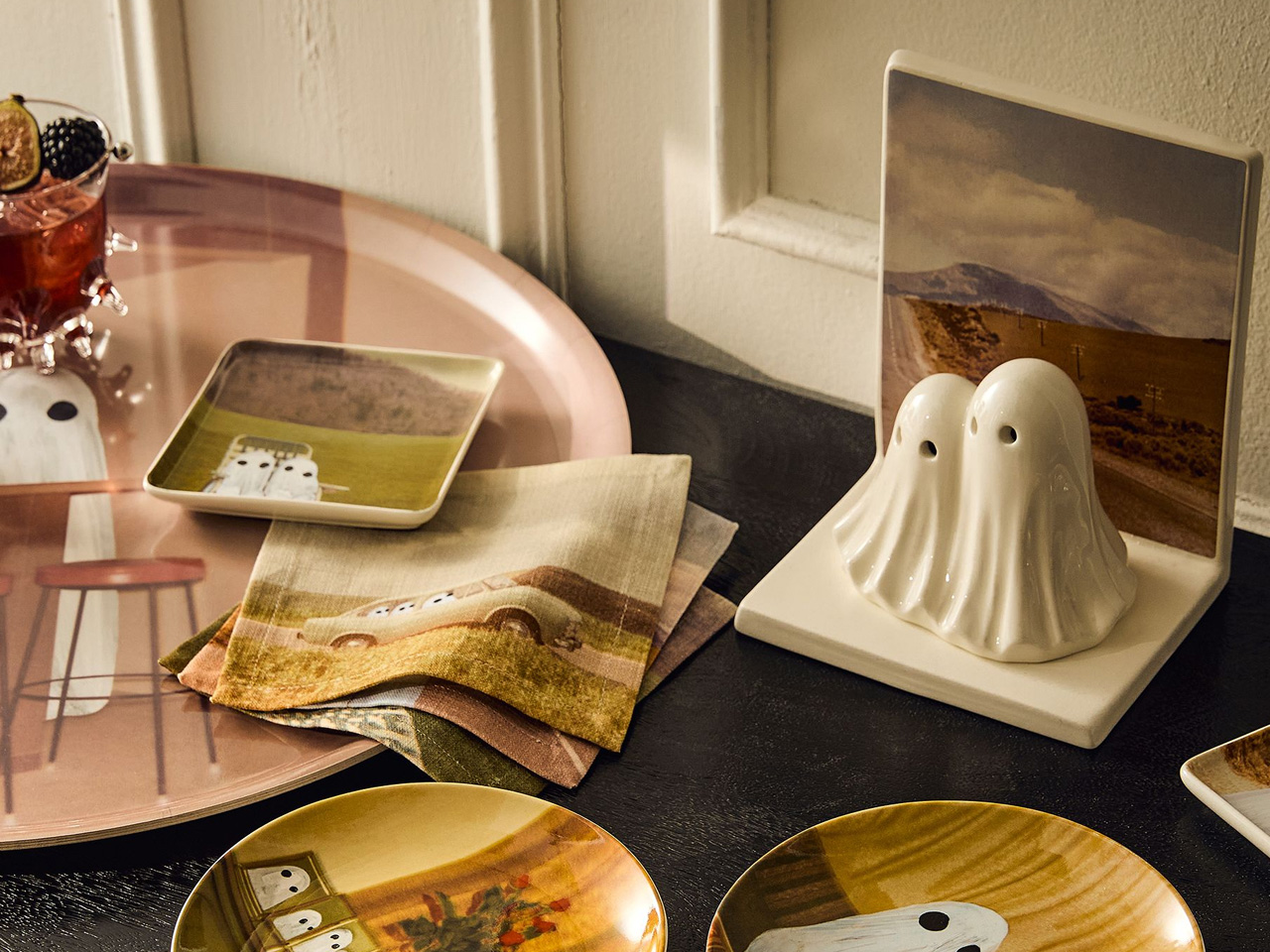
West Elm’s collaboration with Angela Deane brings a pair of small ceramic ghosts to the tabletop. Their uneven heights, dark eyes, and draped forms make them look more like curious visitors than threatening apparitions. The object is an incense smoker, giving the sculpture a role beyond standing on a shelf. Its soft, pale silhouette offers a useful alternative to the black metal, orange plastic, and deliberately distressed finishes that can make a Halloween display feel visually crowded before anything happens.

For a smaller seasonal arrangement, the ghost pair could sit beside a stack of books or become the focus of an otherwise ordinary side table. The ceramic form remains legible without needing a large surrounding display, which is part of its appeal. Incense introduces another layer of atmosphere, though smoke and fragrance will not suit every space or preference. West Elm recommends wiping the piece with a soft, dry cloth, so its upkeep is closer to caring for a sculpture than washing tableware.

What we like

  • Two ghost figures create a charming sculptural composition.
  • It combines seasonal decoration with an incense function.

What we dislike

  • Incense smoke will not suit every space.
  • Care requires wiping with a soft, dry cloth.

6. Agatha Spoon Holder & Steam Releaser

Agatha’s joke becomes clear as soon as a spoon passes through her hands: the utensil becomes a witch’s broomstick. Designed by OTOTO in collaboration with Uli Ben Israel, the purple silicone character works as a spoon holder and steam releaser. Her pointed hat and flowing outline make the Halloween reference immediate, but the cooking connection gives the character a reason to exist. A witch beside a pot is a more convincing piece of visual storytelling than a random seasonal graphic.

The appeal is strongest for someone who enjoys the season while doing ordinary things. Preparing dinner becomes the setting for the design, with the pot standing in for a cauldron and the spoon completing the scene. OTOTO lists the silicone as dishwasher-safe and resistant to boiling water. Fit still deserves attention, since a useful holder needs to work with your particular spoon and cookware. Agatha is a small accent rather than a decoration that changes the mood of an entire room.

What we like

  • The spoon completes the witch’s broomstick silhouette.
  • One silicone character serves two cooking roles.

What we dislike

  • Compatibility needs checking against your utensils and cookware.
  • Its decorative impact stays mostly around the stove.

7. King Edison Ghost Pendant Lamp

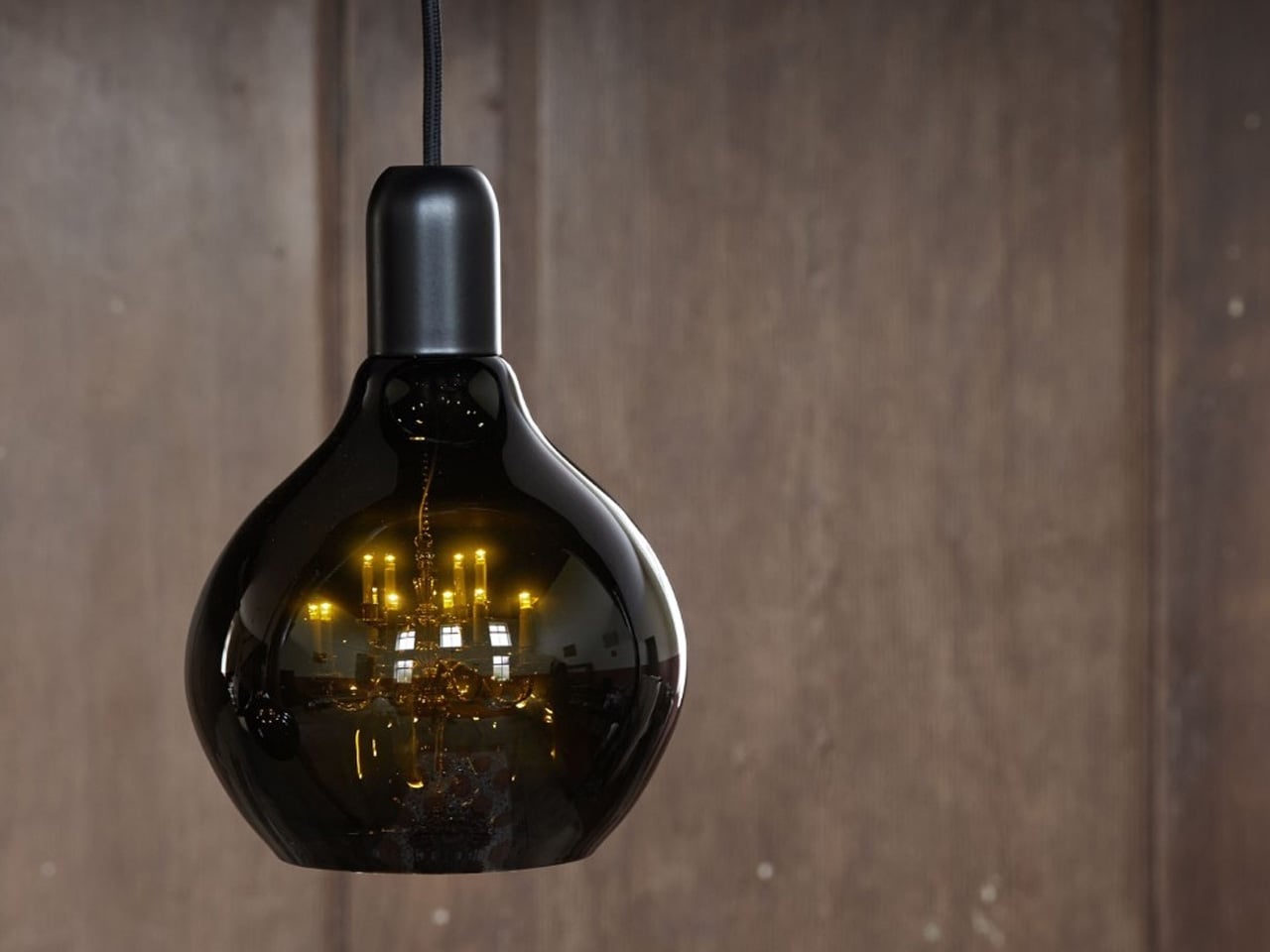
A dark pendant shade is not an obvious Halloween decoration until it reveals the chandelier hidden inside. Designed by Young & Battaglia for Mineheart, the King Edison Ghost contains a miniature brass chandelier within a shade of hand-blown black glass. According to the manufacturer, the interior becomes visible when the light is switched on. The result borrows the visual language of an old drawing room, then compresses it into an object whose exterior initially gives very little away.

This is the collection’s most permanent approach to creating an eerie atmosphere. There are no cartoon ghosts or seasonal slogans, just an illuminated object appearing through dark glass. It could appeal to someone who prefers a suggestion of haunted architecture to literal party decor. It also demands a different commitment: this is a ceiling pendant with a ceiling rose, not a lamp to unpack for one evening. Mineheart’s page currently offers availability notifications, so immediate purchase should not be assumed.

What we like

  • Switching it on reveals an unexpected miniature chandelier.
  • The ghostly effect does not depend on seasonal graphics.

What we dislike

  • Ceiling installation makes it a longer-term commitment.
  • The manufacturer currently directs shoppers to availability notifications.

8. Miniature Bonfire Wood Diffuser Set
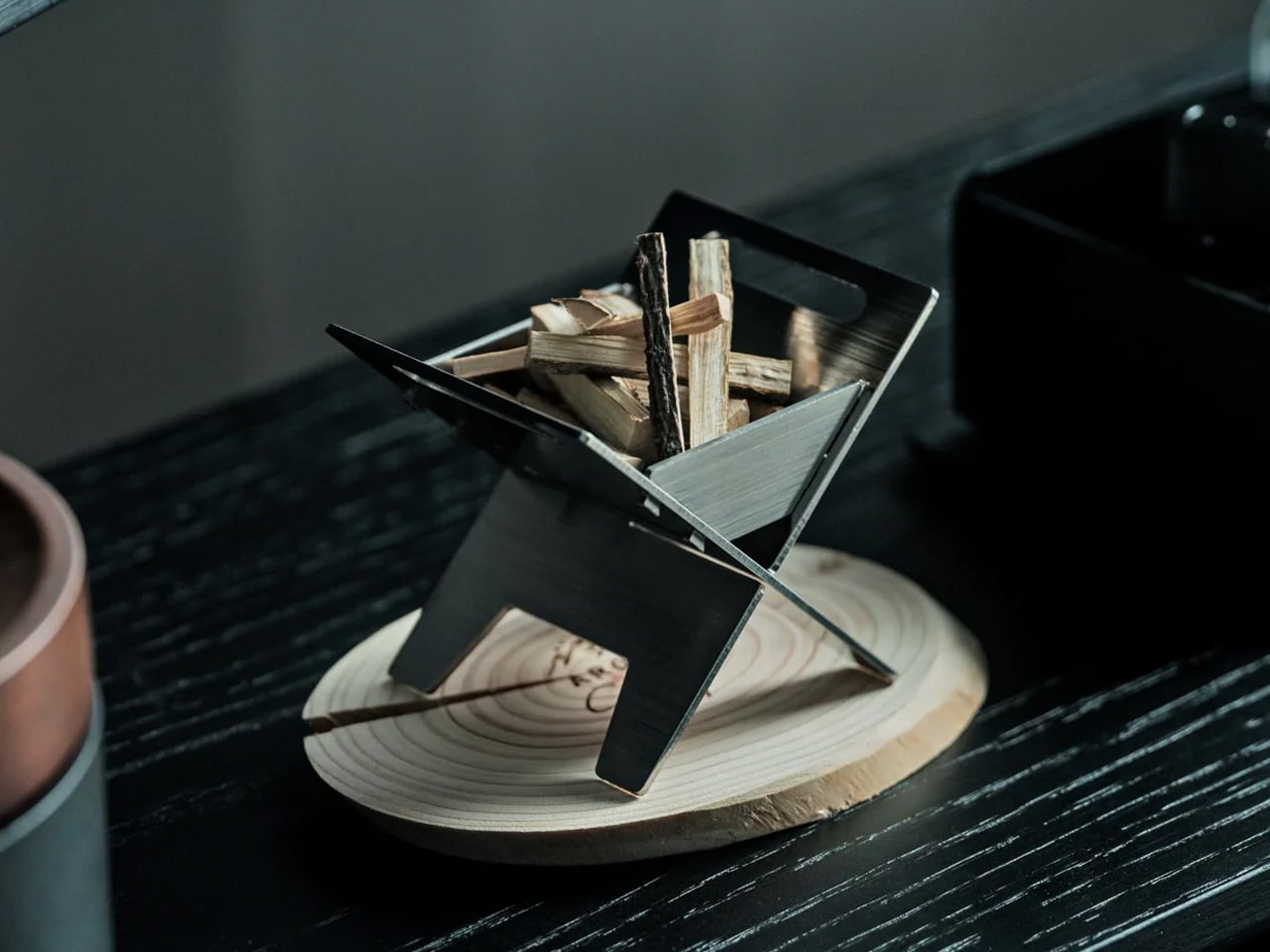
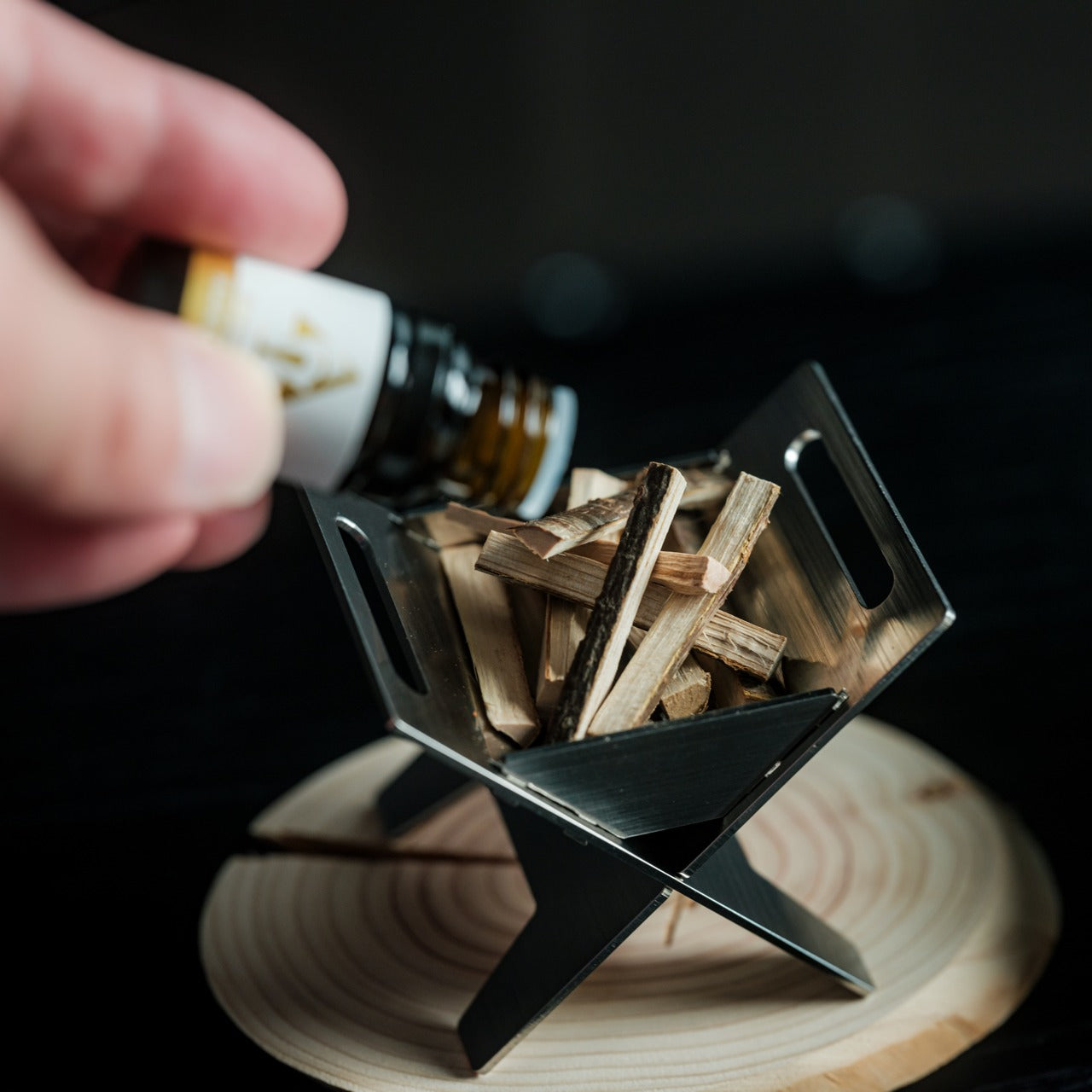
Shinchi Ringyo’s Miniature Bonfire Wood Diffuser Set takes its seasonal cue from campfire stories rather than haunted houses. The Japanese design arranges miniature firewood on a stainless steel stand, using the wood to disperse aromatic oil. The stand measures about 2.1 by 2.7 by 2.3 inches, making this a tiny campsite rather than a conventional centerpiece. Its appeal lies in recognizing a familiar outdoor arrangement at a scale intended for a desk or shelf.

The Halloween connection is atmospheric, so this is the pick for anyone who would rather suggest a woodland evening than display another pumpkin. The shop lists cedar and Hakusan scent options, with the latter combining cedar, cypress, and lindera umbellata. Fragrance preferences are personal, and the set’s $99 price makes this a considered purchase for such a small object. Its role here is as an aroma diffuser; the listing’s separate stove claims are not the basis for recommending it.

Click Here to Buy Now: $99.00

What we like

  • The miniature campsite offers a quieter autumnal mood.
  • Its woodland theme can remain relevant after Halloween.

What we dislike

  • At $99, it is expensive for a small decorative diffuser.
  • The Halloween connection is indirect.

A Little Halloween Goes a Long Way

A good starting point is to choose the moment you want to change rather than the number of decorations you want to own. A dinner table needs something different from an entryway, and a kitchen tool earns attention differently from a display piece. Give one object enough space to be noticed. A distinctive silhouette or unexpected reveal can lose its effect when surrounded by too many competing seasonal props nearby.

It is also worth deciding how much Halloween you want to keep after October. Literal ghosts and skeletons can become an annual ritual, while darker lighting or woodland references may suit the room for longer. Neither approach needs to dominate the house. The pleasure is in finding a design whose particular joke, detail, or small surprise still makes you look twice when you pass it during an otherwise ordinary day.

The post The 8 Best Halloween Designs for a Delightfully Spooky October first appeared on Yanko Design.
  •  

Arrowspace’s $119 screwdriver identifies screws and lights up the matching bit

For five years, Arrowmax has been teaching screwdrivers to read people. The SES Pro in 2021 watched your wrist, so a twist left or right told the motor which way to spin. The SES Max added app control, and the M1 Pro stretched output to 10 kgf·cm with a manual fallback for stubborn screws. Its little screen could report torque and battery level all day. Your screwdriver got smarter and you got lazier, in the best possible way. The obvious next question was why the tool still had no idea what screw it was holding.

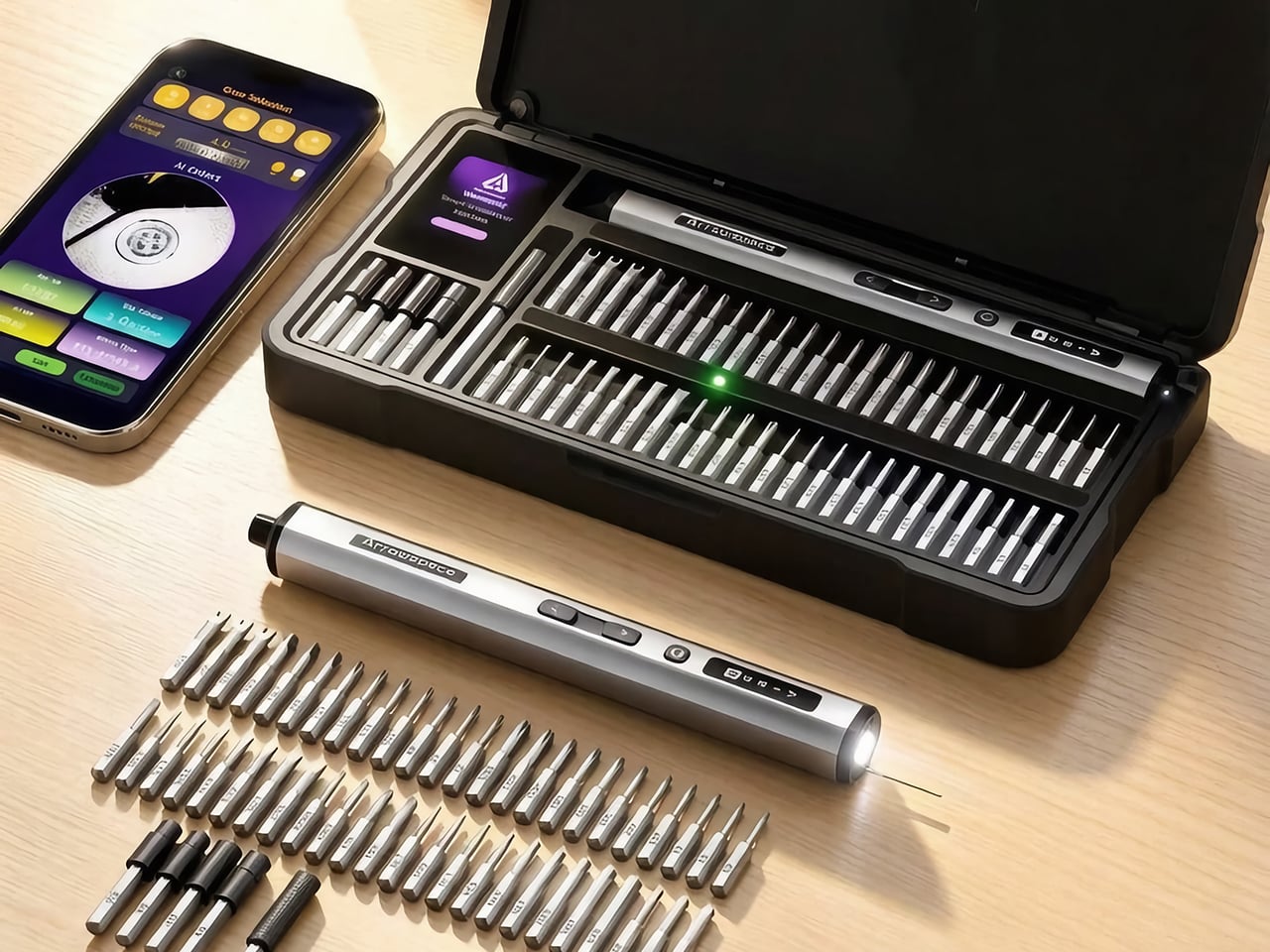
The Arrowspace S1, built by the same team under a new brand name, answers that with a camera on the tail end of the screwdriver. Image recognition names the screw’s drive type and exact size, while a small probe holds the lens at a fixed distance so tiny heads stay sharp. The smart case then lights the slot of the matching bit, and Auto mode picks a safe torque for that fastener. It keeps the 10 kgf·cm ceiling of the M1 Pro, which is plenty for everything from earbuds to e-bike parts. Early pricing starts at $119, and the kit includes the case, 52 S2 steel bits, and a power tip extension.

Designers: LAU YIN / XU YU

Click Here to Buy Now: $129 $215 (40% off). Hurry, only 40/400 left! Raised over $119,000.

The Screwdriver That Squints So You Don’t Have To

The camera sits at the rear of the S1, right behind a small contact probe, and the two work as a team. You rest the probe on the screw head, which locks the lens at one fixed distance, so every shot lands sharp. A screw this small turns to mush if the camera drifts even 1mm. Arrowmax fixed that blur problem with a metal pin instead of more code, which is a very hardware-person way to win an argument. I love it, because it means recognition survives a messy bench and shaky hands instead of working only in a demo video.

Once the shot is sharp, the driver sends it to the companion app on your phone, which works out the drive type and exact size. Everything runs locally with no internet involved, so your screw photos stay on your phone. Arrowmax trained the model, a YOLO object detector, on its own collection of tens of thousands of real screw photos, currently covering 12 common head profiles. The app shows the actual camera image next to the verdict, so you can see what the S1 sees and judge the call yourself. Only the reading step needs the phone, since motor control, torque, and the displays all work on their own.

A Case That Points at the Right Bit

The smart case turns the app’s verdict into something you can see across the bench. A 2-inch TFT screen with Arrowspace’s purple interface shows the recognized screw type and size, while an LED glows under the slot holding the matching bit. Reach, grab, done. Compare that with the usual ritual of squinting at tiny codes on dozens of near-identical shafts, and the old way starts to look like a part-time job. It is the same idea as a warehouse pick-to-light shelf, shrunk down to a tray of S2 steel bits.

The 52 bits are S2 steel hardened to HRC60, which keeps the tips from rounding off after repeated use, and extended bits reach screws buried in deep holes. A magnetic holder keeps bits seated while you work. The case itself is a CNC-machined frame in aerospace-grade aluminum with EVA protection inside, a build the M1 Pro’s CNC aluminum box would recognize. That solid metal feel suits a bench that sees daily use. One box ends up holding the driver, the bits, and the answer to which bit you need.

Gentle With Earbuds, Firm With E-Bikes

Electric torque runs from 1 to 10 kgf·cm, roughly 0.1 to 1 N·m, and Arrowspace’s own chart maps that range to real jobs. The low end suits earbuds, smart bands, and glasses. Around 3 you are into laptops and camera bodies, 6 covers RC cars, drones, and game consoles, and the full 10 handles e-bike parts and large appliances. Auto mode matches a conservative preset to the screw it just identified and remembers your last setting between jobs. Prefer to drive? The app lets you tune the torque for each mode yourself.

When electric mode runs out of muscle, the S1 switches to manual on its own, a trick it inherits from the M1 Pro. The mechanism is rated for 30 kgf·cm of hand-twisted force, which handles the factory screw that laughs at motors. A 600mAh LiPo battery covers 900+ screws or about 90 minutes of continuous use, and USB-C refills it in roughly 70 minutes. An OLED on the body shows torque level, spin direction, and battery, and it even animates while charging. A full session of fiddly repairs fits comfortably inside one charge.

The Price of Never Guessing Again

The S1 suits anyone who repairs often enough to own a drawer of bits but not often enough to have a veteran’s eye, meaning RC builders, scale modelers, drone owners, and the friend who gets every laptop question. Arrowspace says the AI handles identification while your hand keeps the control, and that split feels right to me. My one wish is friendlier recognition for oddballs like JIS cross-head screws, the Phillips look-alikes in plenty of Japanese electronics. Arrowmax says updates will keep widening the 12 profiles covered today, so the wish has a path. A screwdriver that learns new screws over time is a fun idea for a tool that used to be a metal stick.

Pricing for a single S1 kit starts at $119, listed at 45% off, with $129 and $149 tiers also available. Every tier includes the driver, the illuminated smart case, 52 S2 steel bits, and a power tip extension. Shipping is an estimated $16 by air freight to anywhere in the world, so US buyers are covered, with delivery expected in April 2027. Two kits run $238 and three run $339, with shipping at $30 and $45. The optional Angle Screw attachment is sold separately, so check the product page for its price. A stripped screw can cost you a whole device, which makes $119 look like cheap insurance.

Click Here to Buy Now: $129 $215 (40% off). Hurry, only 40/400 left! Raised over $119,000.

The post Arrowspace’s $119 screwdriver identifies screws and lights up the matching bit first appeared on Yanko Design.

  •  

Do yourself a favor and buy a power station now, before the energy crisis gets worse

Every crisis has its panic buy. In 2020 it was toilet paper and N95 masks, in 2021 it was graphics cards, in 2025 it was RAM chips, and in 2026 my money is on lithium iron phosphate. With Iran attacking tankers in the Strait of Hormuz, gas sitting at a record-for-October $4.36 a gallon, and heating oil bills forecast to climb 21% this winter, the case for keeping your own stash of electrons has never been stronger. A portable power station from Anker, EcoFlow, or Jackery keeps your fridge cold and your lights on when the grid gives up. It also runs indoors without trying to poison you, and it never needs a trip to the gas station.

Stockpiling toilet paper made you look a little unhinged. Owning a power station makes you the neighbor everyone suddenly wants to befriend during an outage. Black Friday could knock a few more dollars off, sure, but fall sale prices are already the best we’ve seen this season, and winter storms rarely wait for a coupon code. I’ve narrowed the field to one value pick from each brand, all hovering around the 2kWh mark, enough to keep a fridge humming for well over a day. Anker gets first crack, because its S2000 squeezes 2,010Wh into a 35.7-pound body that costs less than a decent espresso machine.

[Editor’s Pick] Anker S2000 2,010Wh Portable Power Station: $699.99

Anker announced at IFA 2026 that its SOLIX power station brand is folding into the Anker name, so you’ll still spot “SOLIX” on boxes and Amazon listings while the switch plays out over the next couple of years. Same company, same warranty, simpler logo. The S2000 makes a great poster child for the new identity, because it looks like it wandered over from the home appliance aisle. At 8.2 x 11.1 x 12.7 inches (208 x 282 x 323mm) and 35.7 pounds (16.2kg), it takes up roughly the counter space of a coffee maker. That makes it nearly 4 pounds lighter than Jackery’s Explorer 2000 v2 and 9 pounds lighter than EcoFlow’s DELTA 3 Max.

Inside are 314Ah lithium iron phosphate cells rated for 6,000 cycles to 80% capacity and 10,000 to 60%, the same chunky format used in grid-scale storage. Anker estimates a 15-year design life, so this thing could easily outlast your fridge. Output tops out at 1,500W continuous with a 3,000W surge, plenty for a fridge, router, lights, laptops, and a CPAP. The real magic is efficiency, with idle draw of just 6W, which helped it keep a fridge running for 34 hours and 15 minutes in GearJunkie’s testing. At $599.99 for subscribers, that works out to roughly $300 per kilowatt-hour, the cheapest of our three picks by a wide margin.

Click Here to Buy Now

What we like

  • At 35.7 pounds, it’s the lightest 2kWh station you can buy right now, and compact enough to live on a kitchen counter.
  • A UPS switchover of 10ms or less keeps your router and desktop online the moment the grid drops.
  • Long-life cells and roughly $300 per kWh make it the best value of the three.

What we dislike

  • Solar input caps at 400W, which means about five hours of ideal sunshine to refill, and winter rarely delivers ideal.
  • It isn’t expandable, so 2kWh is your ceiling.
  • 1,500W of output rules out running a space heater alongside much of anything else.

Jackery Explorer 2000 v2 2,042Wh Portable Power Station: $899

Jackery’s orange-trimmed Explorers were the default power station for years, long before Anker, EcoFlow, and Bluetti started crowding the category. The Explorer 2000 v2 keeps that familiar look but trims the bulk, measuring 13.2 x 10.4 x 11.5 inches (335 x 264 x 292mm) and weighing 39.5 pounds (17.9kg). Its proportions are squatter and more cube-like than the Anker’s, which makes it easier to tuck under a desk or beside a fridge. Jackery marketed it as the lightest and most compact 2kWh LiFePO4 station around, a crown the S2000 snatched this year by shedding nearly four more pounds. The two brands are basically locked in a very nerdy weight-loss competition.

Output is where the Jackery pulls ahead of the Anker, with 2,200W continuous and a 4,400W peak spread across three AC outlets. That’s enough headroom for a sump pump, a fridge compressor, or a microwave without the station breaking a sweat. Jackery’s ChargeShield 2.0 system layers in 62 protection mechanisms, and Silent Charging Mode keeps noise under 30dB, roughly a whisper, which is handy if it ends up in your bedroom during an outage. The cells are rated for 4,000 cycles and a 10-year lifespan, fewer than Anker promises but still plenty for daily use well into the 2030s. At $899, you’re paying about $440 per kilowatt-hour, dropping to $416 when it dips to $849.

Click Here to Buy Now

What we like

  • 2,200W of continuous output handles bigger appliances than the Anker can.
  • Silent Charging Mode stays under 30dB, so it won’t keep you up at night.
  • A 3-year standard warranty plus a 2-year extension covers you for five years total.

What we dislike

  • Only three AC outlets, so a power strip becomes part of the kit.
  • It isn’t expandable, and solar input maxes out at 400W.
  • It won’t charge below 32°F (0°C), so an unheated garage in January is a bad home for it.

EcoFlow DELTA 3 Max 2,048Wh Portable Power Station: $899

EcoFlow’s DELTA family is the brand’s bread and butter, and the DELTA 3 Max is the 2kWh sweet spot of the current lineup. It’s also the chunkiest of our three picks, measuring 19.45 x 9.41 x 12.01 inches (494 x 239 x 305mm) and weighing 44.8 pounds (20.3kg). That long, low, suitcase-like shape belongs on the floor next to the fridge, and you’ll want two hands whenever you move it. EcoFlow spends that extra bulk on muscle, and the trade feels fair once you see the output numbers. The Halloween sale has it at $899, down from $1,199, which puts it neck and neck with the Jackery on price.

You get 2,400W continuous across four AC outlets, the most of our three picks, plus EcoFlow’s X-Boost mode for resistive appliances up to 3,400W. X-Boost works by dropping the voltage, so a kettle or hair dryer runs a little slower instead of tripping the station. That’s enough headroom to run a 1,500W space heater with the fridge and router still plugged in. EcoFlow also rates it at 25dB or less when charging or discharging at 600W, which is quieter than a library. At $899, it lands at about $439 per kilowatt-hour, essentially tied with the Jackery, so the choice comes down to extra watts versus a lighter box.

Click Here to Buy Now

What we like

  • 2,400W continuous output, with X-Boost up to 3,400W, makes it the most powerful of the trio.
  • Four AC outlets, one more than the Jackery.
  • It stays under 25dB at moderate loads, so it’s easy to live with indoors.

What we dislike

  • At 44.8 pounds, it’s the heaviest of the three, roughly 9 pounds more than the Anker.
  • The long footprint eats more floor space than its boxier rivals.

The post Do yourself a favor and buy a power station now, before the energy crisis gets worse first appeared on Yanko Design.

  •  
❌