❌

Vue normale

  • ✇Yanko Design
  • Diden Spider Robot Climbs Steel Walls and Actually Welds Them
    A welding tool is only useful if you can get it to the seam. Inside a ship’s steel structure, that can mean bringing a worker, equipment, and a platform into position before the actual welding begins. It’s the less glamorous side of industrial work, and arguably one of the more compelling reasons to build a climbing robot. South Korea’s Diden Robotics approaches that problem with four widely spread legs and magnetic feet. Its Diden Spider is designed to carry welding equipment onto steel walls
     

Diden Spider Robot Climbs Steel Walls and Actually Welds Them

7 novembre 2026 à 15:15

A welding tool is only useful if you can get it to the seam. Inside a ship’s steel structure, that can mean bringing a worker, equipment, and a platform into position before the actual welding begins. It’s the less glamorous side of industrial work, and arguably one of the more compelling reasons to build a climbing robot.

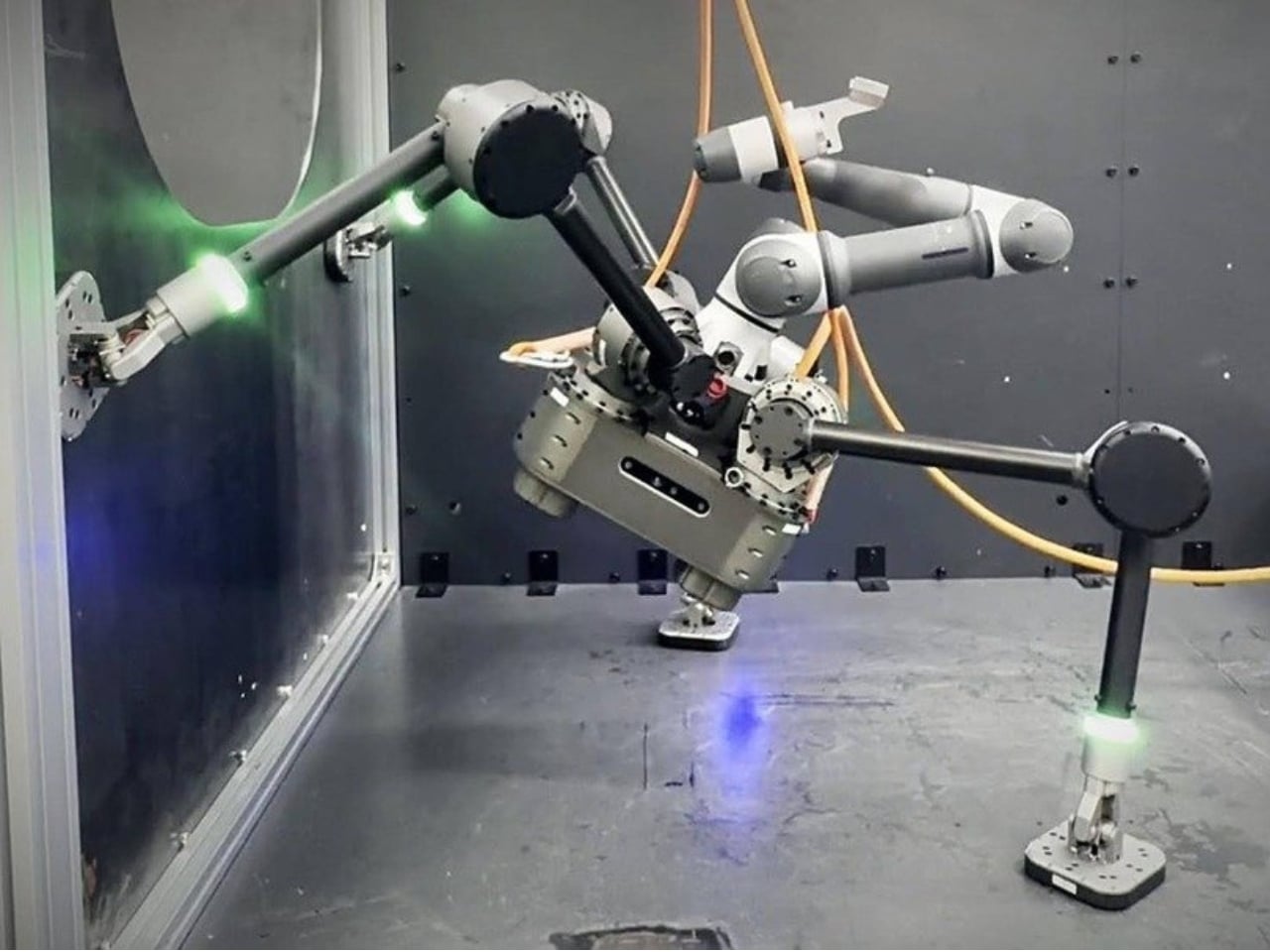
South Korea’s Diden Robotics approaches that problem with four widely spread legs and magnetic feet. Its Diden Spider is designed to carry welding equipment onto steel walls and ceilings, taking the tool to places that are awkward for people to reach. I like how directly its strange-looking body answers the task. The low stance and broad footprint aren’t there to give it personality. They help it stay attached while carrying equipment that has a job to do.

Designer: Diden Robotics

That spider shape also came from a practical failure. In a company interview, co-founder and COO Youngha Shin explains that early, dog-shaped configurations struggled when turning sideways on walls. The arrangement left fewer joint actuators supporting the body, and feet that failed to sit flat could cause the robot to flip. Spreading the legs outward kept the body closer to the wall and improved how the feet met the surface. The silhouette follows the problem.

The feet use electropermanent magnets, which deserve a little attention because they make the whole idea possible. An electrical pulse switches their magnetic state on or off. Once attached, they don’t need a continuous supply of electricity to maintain that magnetic hold, according to Diden. That doesn’t make the entire robot power-free. Its joints, sensors, and computing still have work to do. It means staying attached doesn’t require constantly feeding electricity into the magnets.

Diden rates the Spider 30 configuration for a payload of 30 kilograms, roughly 66 pounds. That capacity is important because climbing alone doesn’t accomplish much welding. The platform needs to carry useful equipment once it gets there. Diden describes interchangeable task modules, including robotic manipulators and inspection equipment. I find the traveling-tool-platform idea more compelling than treating the machine as a single-purpose mechanical welder. Its mobility could serve different jobs along the same steel structure.

One of my favorite details is much smaller than the legs. Shin says feedback from people using the robot led Diden to add LEDs to its feet, allowing them to see whether each foot had attached. That’s a sensible concession to human nerves. A control system may know its magnetic foot is holding, but someone watching expensive equipment hang from steel deserves a readable signal, too.

Finding the work is another challenge. Diden describes a navigation system that compares live, three-dimensional sensor data with a ship’s CAD model to estimate position and orientation. Its mapping system also reconstructs nearby obstacles from depth-camera data. In practical terms, the robot needs to understand where it is and what blocks its next step. A magnetic grip provides attachment; navigating a cluttered structure requires a separate layer of perception and control.

This is a physical machine with reported industrial use, rather than a speculative rendering. Diden says Spider 30 has completed field deployment at major Korean shipyards and that its welding results have been applied to vessels in production. Separately, Maeil Business Newspaper reported in May 2026 that Diden had completed sales to some major Korean shipbuilders. Those are meaningful signs of progress, although neither establishes dependable performance over every production shift.

I’d judge it by the less photogenic parts of the job: repeatable weld quality, maintenance demands, setup time, and how often somebody needs to intervene. Still, the design makes a persuasive starting argument. It gives an awkwardly placed tool a way to reach its work. If that removes even some occasions when a person has to climb into position with welding gear, the unusual body has earned its place.

The post Diden Spider Robot Climbs Steel Walls and Actually Welds Them first appeared on Yanko Design.
Nvidia-Backed Agility Robotics Goes Public at $2.5B in Humanoid Robot Milestone

5 novembre 2026 à 16:11

Nvidia-backed Agility Robotics goes public at a $2.5 billion valuation, raising $465 million in gross capital to expand its Digit humanoid robot business.

The post Nvidia-Backed Agility Robotics Goes Public at $2.5B in Humanoid Robot Milestone appeared first on TechRepublic.

Apple’s $1,000 Tabletop Robot Could Arrive in 2027

2 novembre 2026 à 17:37

Apple's rumored $1,000 tabletop robot could launch in 2027 with a swiveling display and Siri AI, but software delays may push its release into 2028.

The post Apple’s $1,000 Tabletop Robot Could Arrive in 2027 appeared first on TechRepublic.

  • ✇Yanko Design
  • Voxel the Robot Wants to Tidy Your Home Without Looking Human
    A mustard-yellow body, rosy arms, and bent legs make this household robot look like it might wander out of an animated movie and ask where you keep the mugs. Its illuminated eyes sit low on a boxy torso, leaving a lot of forehead, if that’s even the right word. I like the awkward proportions. They give it character without trying to pass for a person. Called Voxel, the robot is being developed by New York company Tuesday Labs to tackle the little jobs that keep a home from staying tidy. Put the
     

Voxel the Robot Wants to Tidy Your Home Without Looking Human

2 novembre 2026 à 16:30

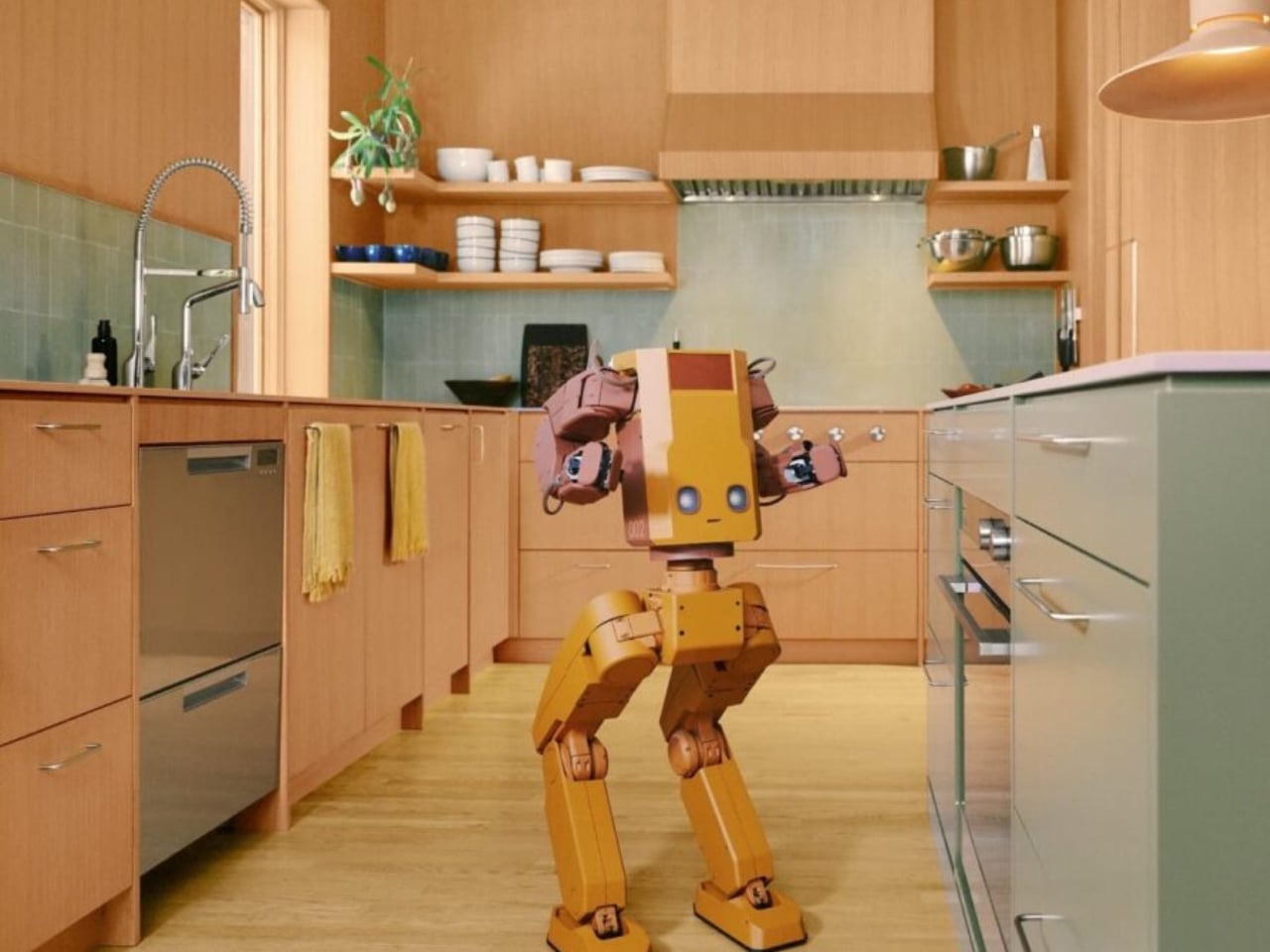
A mustard-yellow body, rosy arms, and bent legs make this household robot look like it might wander out of an animated movie and ask where you keep the mugs. Its illuminated eyes sit low on a boxy torso, leaving a lot of forehead, if that’s even the right word. I like the awkward proportions. They give it character without trying to pass for a person.

Called Voxel, the robot is being developed by New York company Tuesday Labs to tackle the little jobs that keep a home from staying tidy. Put the book away. Bring over a drink. Water the plants. Remember where the wallet went. Those are the four roles outlined for the robot: Home Reset, Fetch, Tend, and Find.

Designer: Tuesday Labs

For now, though, Voxel is a development prototype, not a household appliance you can order for next weekend. Tuesday Labs expects to substantially redesign its hardware before delivery, and its reservation agreement says appearance, capabilities, and specifications may change significantly. That distinction matters here because the version we’re admiring is also a design proposal, not a settled promise about what arrives at your door.

Still, I’m glad the proposal has a point of view. The warm colors and exposed joints make Voxel look approachable to me, while the unapologetically mechanical body avoids the strange social expectations of a realistic human face. Tuesday Labs works with illustrators, animators, and character designers on its robots. You can see why that matters: a machine sharing your kitchen has to be tolerable company, even when it isn’t doing anything.

The hardware description is more practical than the cartoon styling suggests. Each arm has seven degrees of freedom and an actuated wrist, intended to help it maneuver around counters, shelves, and doors. The grippers have just one degree of freedom. That’s a relatively simple hand for a complicated environment, and I’d judge it by how consistently it handles everyday objects rather than how convincingly it imitates fingers.

Find is the feature that makes the premise feel especially relatable. Tuesday Labs says Voxel would tell you where it last saw a misplaced object. That’s a modest but useful distinction: remembering the wallet on the counter is different from magically knowing where it is now. I’d take a dependable last sighting over a confident guess, particularly during the familiar scramble to get out the door.

The plant-watering brief also sets a sensible scale for the ambition. I don’t need a robot to perform an elaborate dinner routine to understand the appeal of getting small chores off my list. The harder question is how much setup and supervision those chores would require. A helper that needs constant rescuing would simply create another household responsibility.

That attentive presence raises a less photogenic design issue, too. Voxel’s listed vision system includes stereo RGB cameras and wide-field vision. Before putting one in my living room, I’d want clear answers about what gets recorded, what stays on the robot, and who can access it. The published privacy policy covers the website, purchases, and reservations; it doesn’t establish those operating details for a robot inside the home.

The financial commitment is equally worth slowing down for. Reservations cost $200 and are fully refundable before an order is placed. The estimated purchase price is $20,000, not a fixed final price, and deliveries are expected to begin in 2028, potentially later. A reservation buys an opportunity to purchase, not a finished machine or a guaranteed arrival date.

At that price, charm would get Voxel my attention, but it wouldn’t settle the decision. I’d want to watch it repeat the same ordinary tasks, unassisted, in a room that hadn’t been carefully arranged for it. Keep the odd proportions and the expressive eyes. Just make the useful behavior as convincing as the character. A robot earns its place beside the couch by giving you fewer reasons to get up.

The post Voxel the Robot Wants to Tidy Your Home Without Looking Human first appeared on Yanko Design.

  • ✇Yanko Design
  • Flying Traffic Cone concept transforms into a Drone to auto-assemble itself on roads
    The traffic cone is basically a Rorschach test for the internet generation. Construction workers see a long night shift, college kids see dorm decor, and anyone who’s ever downloaded a movie sees VLC. I mostly see something to swerve around. Xinhao Guo saw a robot. Guo led a student team at the Beijing Institute of Technology that developed SkyCone, a drone concept designed to fly to a highway incident, land in position, and fold itself into a traffic cone. Guo’s teammates were Songyan Pan, Zix
     

Flying Traffic Cone concept transforms into a Drone to auto-assemble itself on roads

2 novembre 2026 à 15:20

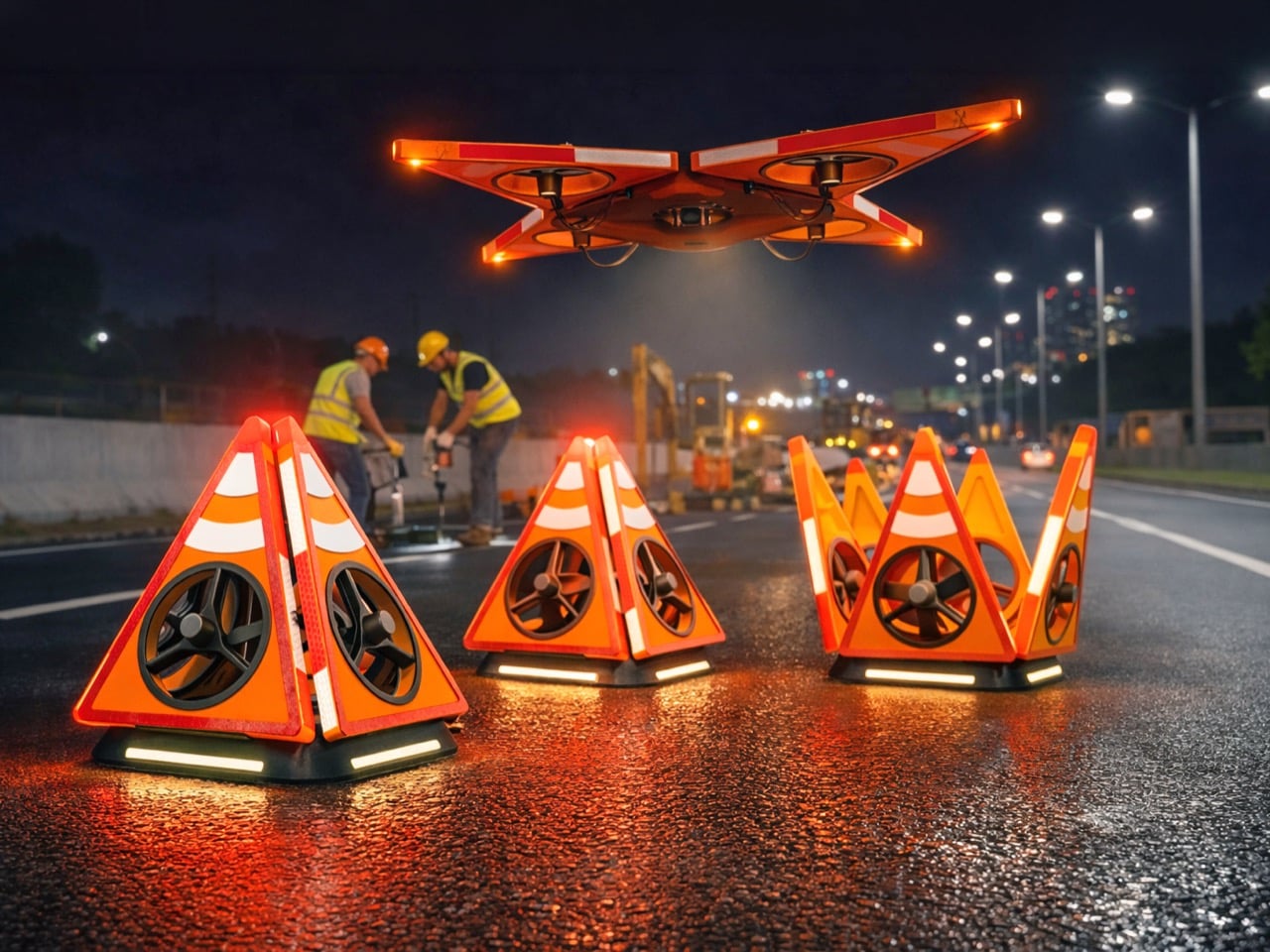
The traffic cone is basically a Rorschach test for the internet generation. Construction workers see a long night shift, college kids see dorm decor, and anyone who’s ever downloaded a movie sees VLC. I mostly see something to swerve around. Xinhao Guo saw a robot. Guo led a student team at the Beijing Institute of Technology that developed SkyCone, a drone concept designed to fly to a highway incident, land in position, and fold itself into a traffic cone.

Guo’s teammates were Songyan Pan, Zixu Zhang, and Wanzheng Liu, and their concept won in the Conceptual Industrial Product Design category at the 2026 European Product Design Award. SkyCone is designed to fly as an X-shaped quadcopter, with each of its four triangular arms housing a ducted propeller. After landing, the arms would tilt up and lock together at magnetic tips, forming a four-sided pyramid with the familiar orange and white stripes. The goal is to keep workers out of live lanes. The team cites a figure that 57% of frontline highway personnel consider manual cone placement their most dangerous task.

Designers: Xinhao Guo, Songyan Pan, Zixu Zhang & Wanzheng Liu

A square central hub anchors SkyCone, carrying a downward-facing camera on a gimbal, with an LED strip and a non-slip mat built into its underside. The four arms are what the team calls Triangular Prism Buckets, hollow orange wedges that each surround a ducted propeller. Red magnetic locks with integrated indicator lights cap the arm tips, which meet at the cone’s apex when everything folds shut. Reflective strips trace the arm edges to improve visibility. My favorite detail is graphic: the white cone bands sit on the faces that point outward after folding, so the drone only looks like a cone once it actually is one.

Charles D. Scanlon, a Los Angeles street painter, designed the modern traffic cone to keep cars away from his wet paint, building it from rubber and fabric salvaged from old tires. His patent was granted in November 1943, and Interstate Rubber Products began manufacturing the design in 1947. The cone eventually made it into the Manual on Uniform Traffic Control Devices, the federal traffic-control manual. Materials and reflective collars have evolved over eight decades, yet the silhouette has barely budged. SkyCone largely keeps that familiar shape while changing how it gets into position, a sensible approach for an object drivers need to recognize quickly.

Placing those cones is still mostly manual work, with crews riding the back of a slow-moving truck or walking beside it and setting cones down a few feet from passing traffic. The US recorded 850 work zone deaths in 2024, an average of more than two a day. In March 2023, a single crash on I-695 outside Baltimore killed six roadway workers. The SkyCone team describes the first few minutes of an emergency or maintenance call as the most critical stretch, when crews are particularly exposed. A fleet of drones that could position cones before anyone steps out of the truck might reduce that initial exposure.

Brisbane-based Arrowes has already built an Automated Cone Truck that drops a cone every five seconds. On Melbourne’s Eastern Freeway, it handled 65,000 cones while cutting worker exposure to live traffic by roughly 500 hours. Caltrans and UC Davis developed a cab-operated cone machine back in the 2000s, and Spain’s Sacyr and GMV set out to prototype a self-driving trailer with an AI-guided robotic arm. Each system relies on a truck or trailer. SkyCone proposes making each cone responsible for its own delivery. Chris Chang’s Apiece showed in 2022 that a cone could be assembled from flat triangles, and SkyCone basically gives those triangles propellers.

The team’s renders place SkyCone at a nighttime highway repair, an incident scene behind an arrow-board truck, a rockfall on a mountain road, a snowed-over highway, and the crumbling edge of an open-pit mine. The mine scenario sold me, since walking a crumbling pit edge to place cones sounds like a genuinely terrible afternoon. SkyCone joins a line of highway concepts that propose sending machines into hazardous places. The Highway Patrol Drone was designed to wait on light towers and fly to crash scenes ahead of responders, while the Median AMB proposed riding the road divider like a monorail to skip traffic. SkyCone’s role would be marking off the scene so responders can work.

The European Product Design Award is a global, open-entry program run by Farmani Group. SkyCone won in its conceptual tier as a student project, so the award recognizes a design proposal rather than proven roadside performance. Guo and his team want the cone to get into position on its own; whether it can do that reliably beside live traffic remains to be demonstrated. My brain will probably keep saying VLC whenever I see a cone, but now it’s going to add “robot” right after.


The post Flying Traffic Cone concept transforms into a Drone to auto-assemble itself on roads first appeared on Yanko Design.

  • ✇Yanko Design
  • This palm-sized robot dog has a Nokia battery and a customizable LEGO-compatible back
    Petoi has been shrinking Boston Dynamics down to desk size for almost a decade now. Dr. Rongzhong Li started the company in his dorm lab in 2016, after a video of his open-source robot cat prototype went viral. That cat became Nybble, a laser-cut wooden kitty, and it was followed by Bittle, a palm-sized robot dog that ended up in classrooms, research labs, and a surprising number of home offices. Petoi says it has shipped more than 30,000 robots to over 60 countries, all running its open-source
     

This palm-sized robot dog has a Nokia battery and a customizable LEGO-compatible back

28 octobre 2026 à 14:20

Petoi has been shrinking Boston Dynamics down to desk size for almost a decade now. Dr. Rongzhong Li started the company in his dorm lab in 2016, after a video of his open-source robot cat prototype went viral. That cat became Nybble, a laser-cut wooden kitty, and it was followed by Bittle, a palm-sized robot dog that ended up in classrooms, research labs, and a surprising number of home offices. Petoi says it has shipped more than 30,000 robots to over 60 countries, all running its open-source OpenCat framework. Each new model has gotten smaller, smarter, and easier to build, which brings us to the newest pup in the litter.

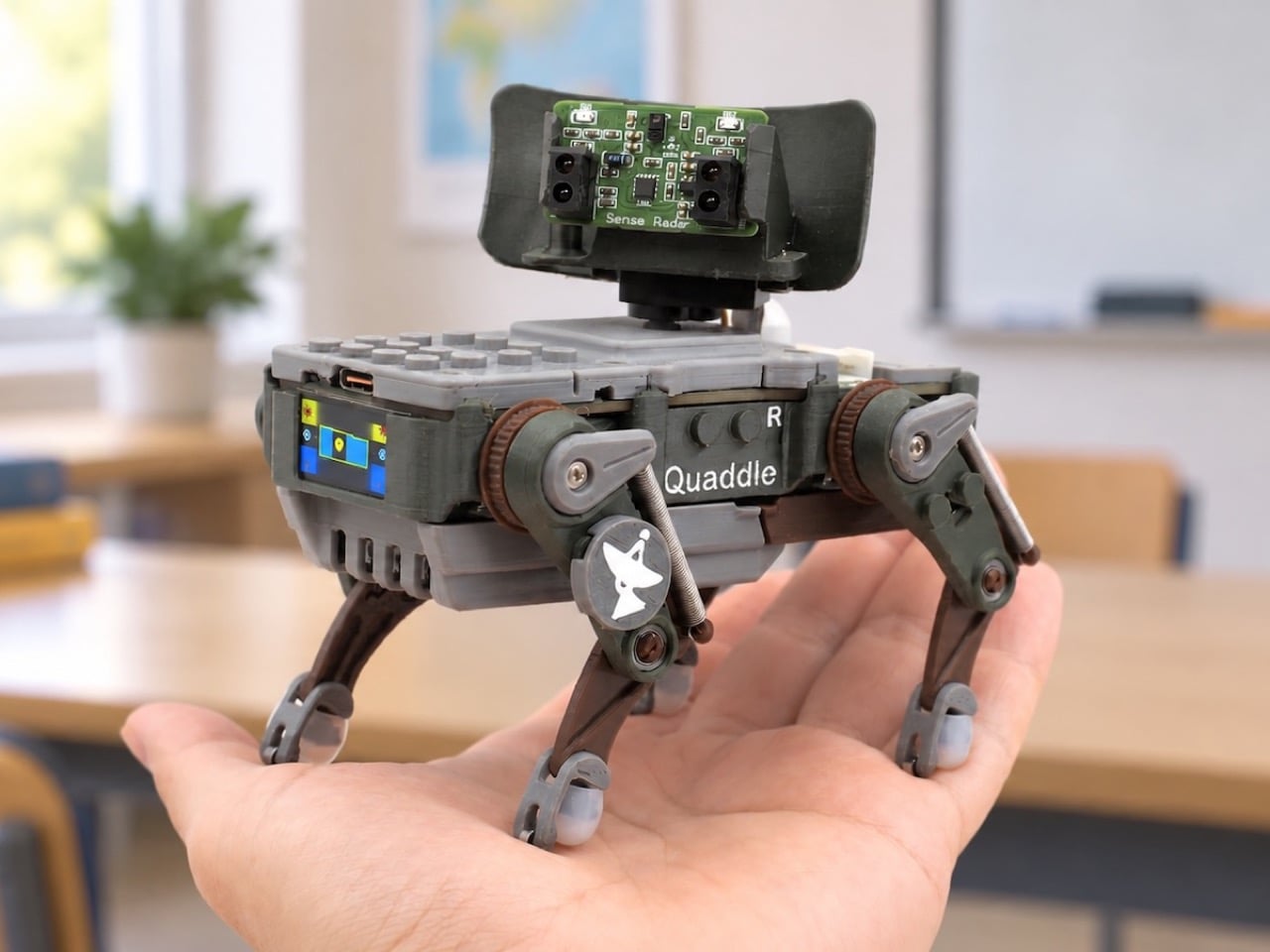
Meet Quaddle, a palm-sized robot dog that walks, glides, spins, and does backflips using just four servos. That’s half what Bittle uses in its legs and roughly a third of what most quadrupeds need, thanks to a spring-loaded linkage Petoi calls the MinDoF leg, which lets one motor drive both the shoulder and the knee. It weighs about 6 ounces, snaps together without screws, and takes LEGO bricks on its back. You can teach it tricks by physically moving its legs, chat with it, or code it in anything from beginner blocks to ROS. Prices start at $179, which is pretty reasonable for a dog that never needs walking.

Designer: Petoi

How one servo runs an entire leg

Each of Quaddle’s legs hangs off a single servo, with a spring and a four-bar linkage doing the job a second motor normally would. As the servo swings the upper leg, the linkage folds the knee up and straightens it again, turning one rotating shaft into a proper step. Petoi calls this the MinDoF leg, short for Minimal Degrees of Freedom, a degree of freedom being one independent way a joint can move. The spring clips onto different anchor points, changing how stiff or bouncy each leg feels. In Petoi’s tabletop tests, Quaddle walks about one body length per second, turns 90° in a single step cycle, and climbs onto a ledge as tall as its own knee.

Walking machines driven by a single crank go back to Pafnuty Chebyshev, the Russian mathematician whose 1870s linkage turned rotation into a surprisingly lifelike stride. Theo Jansen’s wind-powered Strandbeests on Dutch beaches run on the same basic idea, and Quaddle feels like their tiny, battery-powered cousin. Petoi added one more trick by fitting small bearings to the tips of the feet. Angle the legs just right and those bearings become wheels, letting Quaddle glide across a smooth desk at around three body lengths per second without a single extra motor. Fewer motors also means less weight, less cost, and less battery drain, which is how the whole dog comes in at roughly 6 ounces.

Teach it tricks by hand, then teach it in code

On the Buddy and Scout models, every leg servo reports its position back to the robot, so you can teach Quaddle a move by simply grabbing its legs. Tap to start recording, guide the legs through whatever silly dance you have in mind, and tap again to have it play the motion back. There’s no app or code involved, and Petoi says you can teach it a basic walk in about ten seconds. Recorded moves can be pulled into Petoi’s Skill Composer software for fine-tuning and shared with other Quaddle owners. For a kid, this is probably the fastest route from “I wonder if” to a robot actually doing the thing.

Buddy and Scout split their thinking across two ESP32-S3 chips, one for motion and balance and one for voice chat and smart home control. A physical slide switch cuts power to the AI chip entirely, which is great for privacy and for days when your robot dog gets a bit too chatty. Coding starts with drag-and-drop blocks, moves to Python or MicroPython, and eventually reaches the Arduino C++ firmware. Bigger projects can mount a Raspberry Pi Zero on its back or plug into ROS, the software framework most research robots run on. A browser-based simulator runs the same code as the real robot, so you can test ideas on a laptop or even a phone with no robot in sight.

LEGO bricks, a Nokia battery, and three Quaddles to pick from

The top of Quaddle’s shell takes LEGO bricks, and Petoi will publish printable shells and mounts for anyone with a 3D printer. Petoi’s own demos have turned it into a walking LEGO AT-AT, a waddling biped called the NanoDuck, and a rover on Mecanum wheels, which use angled rollers to slide sideways. Power comes from a swappable Nokia-format phone battery, the same BL-5C shape that lived inside Nokia’s famously indestructible early-2000s handsets. Quaddle ships with the bigger 1,800 mAh BL-10C cell, good for roughly 1 to 1.5 hours of walking depending on the model. Plug it into USB-C while you code and it charges as it runs, so marathon debugging sessions are fair game.

Builder PLUS ($179) handles walking and coding, Buddy ($219) adds AI chat and teach-by-hand, and Scout ($269) adds a sensor head that detects gestures, light, distance, and people. All three are priced at $144, $175, and $215, with deliveries starting in December. For context, Petoi’s own Bittle X lists at $279, Unitree’s Go2 starts around $1,600, and Sony’s Aibo launched in the US at $2,900. Petoi spent a decade shrinking big robots down to desk size, and Quaddle shows the smartest way to shrink one further is to give it fewer parts.

The post This palm-sized robot dog has a Nokia battery and a customizable LEGO-compatible back first appeared on Yanko Design.

Agile ONE SN Humanoid Robot Bundles Nvidia’s Robotics Stack

23 octobre 2026 à 05:36

Nvidia and Agile Robots unveiled Agile ONE SN, a compact humanoid with Jetson Thor computing and Isaac GR00T training tools. Here's what it can do, its specifications, and when it launches.

The post Agile ONE SN Humanoid Robot Bundles Nvidia’s Robotics Stack appeared first on TechRepublic.

China’s Unitree Shows Off H2-X Robot With Kung Fu Moves and Rescue Skills

22 octobre 2026 à 10:23

China's Unitree unveils the H2-X humanoid robot with kung fu moves and rescue demonstrations, but questions remain about its autonomy, safety and endurance.

The post China’s Unitree Shows Off H2-X Robot With Kung Fu Moves and Rescue Skills appeared first on TechRepublic.

German Police Seize Robot After Alleged Groping of 16-Year-Old Girl

15 octobre 2026 à 10:37

German police seized a humanoid robot after it allegedly groped a teenage girl in Cologne, raising questions about human control and criminal responsibility.

The post German Police Seize Robot After Alleged Groping of 16-Year-Old Girl appeared first on TechRepublic.

  • ✇Yanko Design
  • This Robotic Pavilion Concept Would Change Its Layout Only When Empty
    A public pavilion can give people somewhere to gather, but returning to it usually means finding the same spaces and following the same paths. Self-Assembling Robotic Environments explores a more flexible alternative: mobile architectural sections that could rearrange themselves between visits. This unbuilt public art concept would pause whenever someone enters, letting people explore one arrangement before the space changes for another group. Each section combines a floor, wall, and roof in a
     

This Robotic Pavilion Concept Would Change Its Layout Only When Empty

Par : JC Torres
13 octobre 2026 à 12:20

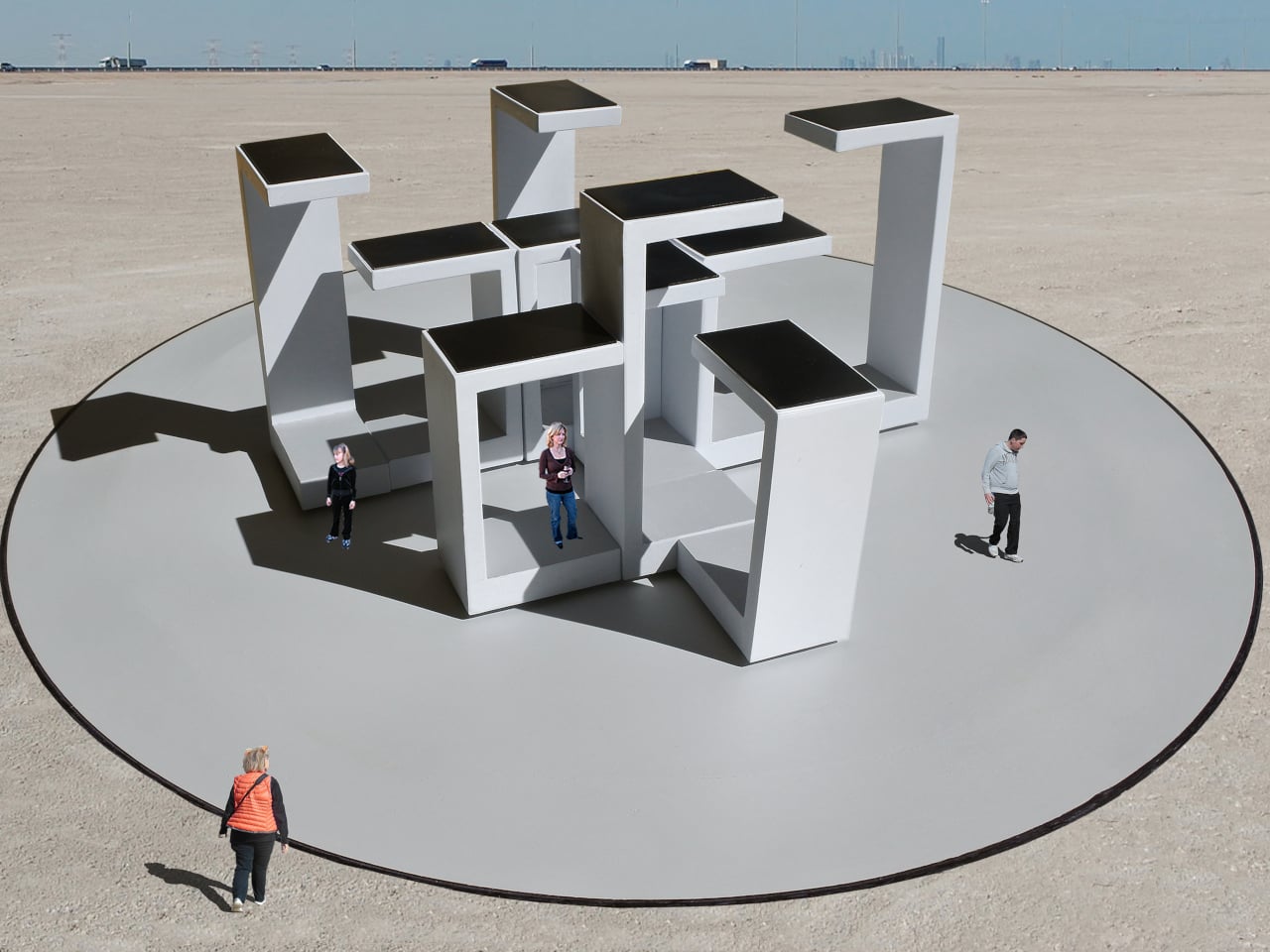
A public pavilion can give people somewhere to gather, but returning to it usually means finding the same spaces and following the same paths. Self-Assembling Robotic Environments explores a more flexible alternative: mobile architectural sections that could rearrange themselves between visits. This unbuilt public art concept would pause whenever someone enters, letting people explore one arrangement before the space changes for another group.

Each section combines a floor, wall, and roof in a large C-shaped profile, like a little shelter with its sides left open. Two versions stand about 10 and 14 feet tall, both four feet wide. Place several together, and those simple shapes could become passages or covered pockets. Separate them again and the same pieces would offer a different place to wander.

Designer: Michael Jantzen

Of course, rearranging those sections wouldn’t mean asking someone to wheel them into position. Each floor would contain its own computer, sensors, motors, wheels, and battery, allowing the entire unit to travel forward, backward, or sideways. The wall and roof would move with it. The robotics aren’t proposed as equipment that builds the installation and then leaves; they’d remain part of the architecture.

Rather than following one permanent floor plan, the modules would use artificial intelligence to decide on their positions through majority agreement. The proposal doesn’t explain how they would evaluate possible arrangements, though. A gap between two units could become a passage, while several facing one another might define a gathering spot. The same pieces could give visitors different ways to use the space.

The roof would do more than shelter whoever stands beneath it. Solar cells on top would recharge the battery inside the floor, keeping the proposed power supply within each moving section. It’s a sensible place to collect sunlight, but the project doesn’t specify how much energy movement would require. Keeping these large pieces in motion isn’t as simple as putting solar panels overhead.

A black perimeter would mark the robots’ territory, containing their movements within a circular arena. Sensors would watch for people or objects entering that space, pausing every module until the area is clear. You wouldn’t be expected to dodge a moving wall while exploring. The intended sequence is straightforward: the pieces rearrange when empty, then hold their positions while visitors are inside.

That rule still needs engineering before anyone could walk in. Detecting a visitor isn’t the same as stopping safely, and the project doesn’t establish braking distances or structural performance. Raised floor sections also need an accessible way in. These are questions for a working installation, rather than reasons to dismiss the idea, but the concept drawings don’t settle them on their own.

For visitors, the pause could make staying put part of the interaction. Sit inside a sheltered corner for a while, and that particular arrangement would remain available until everyone leaves. A later group might find a different route or gathering spot. Someone lingering to finish a conversation would therefore be doing something rather unusual: keeping a version of the architecture from disappearing yet.

The post This Robotic Pavilion Concept Would Change Its Layout Only When Empty first appeared on Yanko Design.

❌