Vue lecture

Il y a de nouveaux articles disponibles, cliquez pour rafraîchir la page.

5 Rammed Earth Homes in 2026 That Make Concrete Walls Look Outdated

The architectural world is shifting toward materials that feel grounded, honest, and deeply connected to the earth. Instead of relying on high-energy industrial products, designers and homeowners are embracing approaches that honor the planet’s natural tectonics. In this movement toward true sustainability, rammed earth has re-emerged as a powerful, modern choice for those seeking beauty, integrity, and a low-carbon footprint.

Its tactile layers and sculptural warmth create spaces that feel rooted, calm, and inherently biophilic. Rammed earth offers durability, thermal comfort, and long-term value, transforming simple structures into timeless experiences and reflecting the five pillars driving its revival.

1. Low-Carbon Construction

Rammed earth stands out as a low-carbon building method because its main ingredient, subsoil, is often sourced directly from the construction site or nearby. This drastically cuts transportation emissions. Unlike concrete or brick, rammed earth requires no firing, kilns, or intensive chemical processes. Its formation relies on simple mechanical compaction and moisture, keeping the embodied energy among the lowest of any mainstream wall system.

This approach makes each project inherently more responsible and materially honest. By using local resources and eliminating energy-heavy manufacturing, rammed earth aligns with global decarbonization goals. It has become a preferred choice among forward-thinking firms committed to sustainable, large-scale performance.

Arquipélago Arquitetos’ Piracaia Eco-Village in rural São Paulo exemplifies sustainable home design, using rammed earth construction to create affordable, eco-friendly residences. Located in the village of Piracaia, the development currently includes three homes ranging from a 538-square-foot studio to a 1,245-square-foot two-bedroom unit. Each home features rammed-earth walls formed from local soil, providing structural strength and natural insulation. A modular design allows the system to be easily replicated or scaled, offering flexibility and efficiency.

Large clerestory windows bring in natural light while preserving privacy, and the aluminium roofs are designed to harvest rainwater for everyday use. Wood panels and steel tie rods ensure stability and structural integrity. Initiated by a resident who sought a deeper connection to nature and community, the project stands as a model for sustainable rural living—embracing local resources, traditional techniques, and modern architectural thinking to shape a more conscious way of life.

2. Honors Raw Materiality

Rammed earth’s signature beauty lies in its dramatic, layered texture, which is an architectural reflection of geological time. Each compacted lift reveals natural striations shaped by the soil’s mineral makeup, giving every wall a distinct, site-specific identity. This visual honesty creates an immediate sense of grounding, making the material feel ancient and deeply contemporary.

In double-height spaces, these walls do more than define boundaries as they hold light, absorb warmth, and shift subtly throughout the day. The result is an atmosphere that feels calm, elemental, and immersive. The wall becomes an artwork in itself, guiding the mood, rhythm, and spatial flow of the entire home.

Japanese architecture studio Lib Work has introduced the Lib Earth House Model B, a 1,076-square-foot home made primarily from 3D-printed soil. Located in Yamaga, Kumamoto Prefecture, and developed with Arup and WASP, this project represents a significant departure from traditional concrete construction. The single-story structure features gently curved walls and a ribbed exterior texture, showcasing the potential of combining ancient materials with advanced printing technology. Constructed from a mix of soil, sand, slaked lime, and natural fibres, the home cuts typical construction emissions by more than half while promoting durability and thermal performance.

Inside, the design balances minimalism and warmth, with natural light accentuating the earth walls’ varied textures. Embedded sensors monitor moisture and structural performance discreetly, improving long-term sustainability. The flat roof accommodates future solar or water systems, highlighting a practical integration of eco-friendly features.

3. Natural Temperature Control

Rammed earth excels in passive design because of its dense, high–high-thermal-mass composition. These walls act as natural thermal batteries, absorbing heat throughout the day and releasing it slowly at night. This steady modulation of indoor temperatures reduces sharp fluctuations and minimizes dependence on mechanical heating or cooling systems. For homeowners and designers, this means long-term savings and an impressive ROI on energy infrastructure.

Beyond performance, the material elevates the visual and spatial experience. Its ability to regulate climate naturally eliminates the need for excessive mechanical fixtures, creating cleaner lines and a more intentional aesthetic. Rammed earth becomes both structure and climate strategy in one.

The Rammed Earth House in Slovenia reimagines the early 20th-century farmhouse by combining ancient building methods with modern solar technology. Designed by architects Merve Nur Başer, Aslı Erdem, and Fatma Zeyneb Önsiper, the tiny home uses rammed earth, a sustainable technique dating back thousands of years – along with a concrete foundation and timber framework. Inspired by Slovenian architect Oton Jugovec’s floating roof, the house also features an extended green roof to protect the structure from erosion caused by Dobrava’s varied climate of rain, snow, and humidity.

Oriented to optimise passive heating and cooling, the Rammed Earth House is carefully positioned to capture winter sunlight and block summer heat. Strategically placed windows enhance natural ventilation throughout the year, while the roof supports solar panels, a rainwater harvesting system, and an integrated septic tank. The interior layout further improves efficiency, with fewer windows on the north side to minimize heat loss and more on the west to capture warmth when needed.

4. Built for Centuries

Modern rammed earth, lightly stabilized with cement, delivers exceptional compressive strength and long-term durability. Its dense composition makes it naturally fire-resistant, pest-resistant, and remarkably stable across changing climates. History reinforces this reliability with rammed-earth structures around the world having survived for centuries, proving the material’s endurance far beyond typical contemporary systems.

For homeowners, this resilience translates directly into value. The walls demand minimal upkeep and offer a long structural lifespan, financially sound over decades. Their inherent thickness also enhances acoustic comfort, reducing noise transfer and improving the quality of everyday living within the home.

Casa Covida is a modern reinterpretation of ancient building methods that merges traditional materials like mud, clay, and straw with advanced 3D-printing technology. Developed by Emerging Objects, the project showcases how earth-based architecture, used by nearly 30% of the global population, can be revived for contemporary living. Built in Colorado’s San Luis Valley using a SCARA robotic printer, the structure is made from an adobe blend and features three interconnected zones: a central space with a hearth, a sleeping area furnished with reclaimed beetle kill pine, and a bathing zone with a river-stone-embedded tub. An inflatable cactus-inspired roof adds weather protection and visual intrigue.

Designed for two people, Casa Covida acts as a prototype to explore how ancient techniques can coexist with digital fabrication. The 3D-printed walls, custom earthen cookware, and natural insulation demonstrate how sustainability and innovation can shape the future of housing.

5. Celebrates Nature-Rooted Architecture

Rammed earth grounds a home not just physically but culturally, drawing directly from the soil that defines its region. By using material sourced from the site itself, the architecture gains a deep sense of place and authenticity. This alignment with biophilic design principles creates a natural, instinctive connection between occupant and landscape, allowing the structure to feel both contextual and emotionally reassuring.

The experience is more than visual as it is tactile and psychological. The walls embody local history, climate, and geology, offering a timeless identity that outlasts design trends. In this way, rammed earth supports well-being while honoring the land it stands on.

Contrary to the belief that sustainability requires sacrificing comfort, Ulaman Eco-Retreat Resort in Bali demonstrates that ecological responsibility can coexist with luxury. Designed by Inspiral Architects, this carbon-neutral resort is constructed primarily from bamboo and rammed earth, locally sourced materials that significantly reduce environmental impact.

Situated in Kaba-Kaba village, the resort showcases the structural and aesthetic potential of sustainable materials. Rammed earth, used for the ground-level walls, offers a low-emission alternative to concrete, while the curvilinear bamboo roofing blends cultural authenticity with structural beauty. Powered by hydroelectric energy from a nearby river, the resort includes a cliffside yoga studio and a meandering pool designed to reflect natural surroundings.

Rammed earth’s resurgence is not a design fad but a meaningful answer to today’s calls for beauty, sustainability, and lasting value. By choosing this ancient yet future-ready material, homeowners invest in sustainable luxury that elevates both life and environment. Its layered, monolithic presence creates a sanctuary that endures quietly elegantly, deeply responsible, and profoundly connected to the earth it rises from.

The post 5 Rammed Earth Homes in 2026 That Make Concrete Walls Look Outdated first appeared on Yanko Design.

Track Trailer reinvents Tvan, one of the toughest off-roading trailers with roomier MK6 model

Track Trailer, the name behind the famous Tvan off-road camper trailers, needs little introduction. It has been powering the overlanding experience in Australia and worldwide for a good part of four decades now. Over the years, we have seen some interesting variants of the Tvan, which has now reached the MK6. The sixth iteration in the successful portfolio, Tvan MK6 Model, retains the same aluminum body, which runs in the bloodline, but is more spacious and even more comfortable.

As the appearance suggests, the new Tvan MK6 is available in four variants and is almost identical to its predecessors. What changes are the interior space and the headroom, which make the MK6 a different entrant in the same effective branding of the world’s toughest off-roading trailer.

Designer: Track Trailer

Track Trailer first tried reworking the interior space with the MK5 model. It was done staying within the confines of the Tvan styling: no pop-up roof attachment, but a slight raise in roof height. With the MK6, the company has also stayed true to its design ideology. It has only increased headroom, stretched the neck forward, and pushed the sides of the trailer outward to increase the interior space by up to 20%.

The expansion to the trailer permits more natural light inside the cabin, which is constructed using an aluminum sandwich-panel construction. Moreover, the MK6 features a durable chassis based on an advanced suspension system that enables it to roll comfortably on rugged terrains and off-road destinations. With its ruggedness assured, the camping trailer is ideal for all types of adventures, which is facilitated by its quick setup and clever storage designed throughout its exterior and also on the inside.

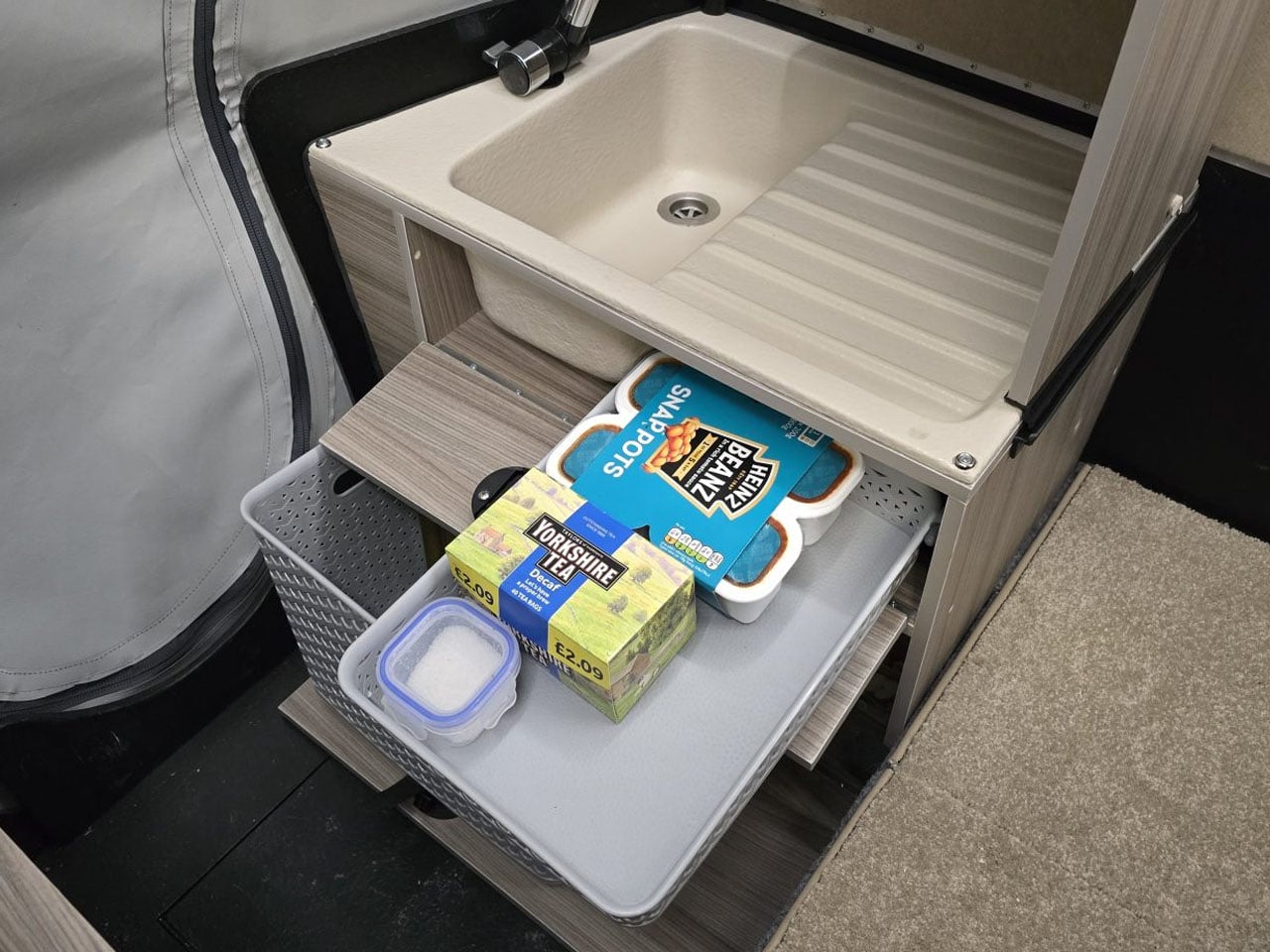
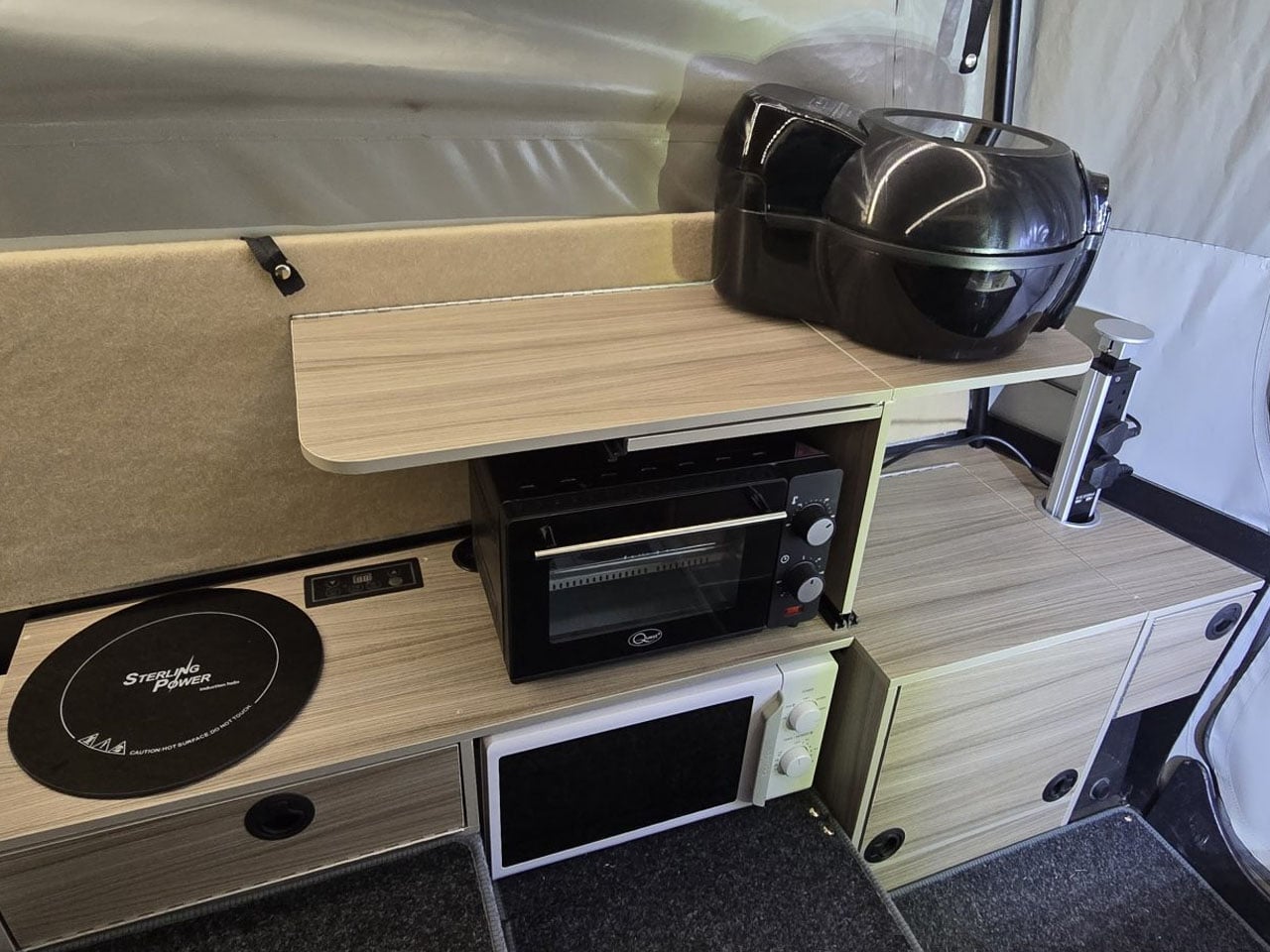
MK6 measures 16-foot-long and 6.3 feet wide, the trailer has an interesting storage cabinet in the extended nose up front, comprising a pantry and up to 95 liters fridge/freezer. Slightly further back is the slide-out kitchen with a three-burner gas stove, a full-size sink connected to a 108L fresh water tank, and a storage drawer topped with a prep area.

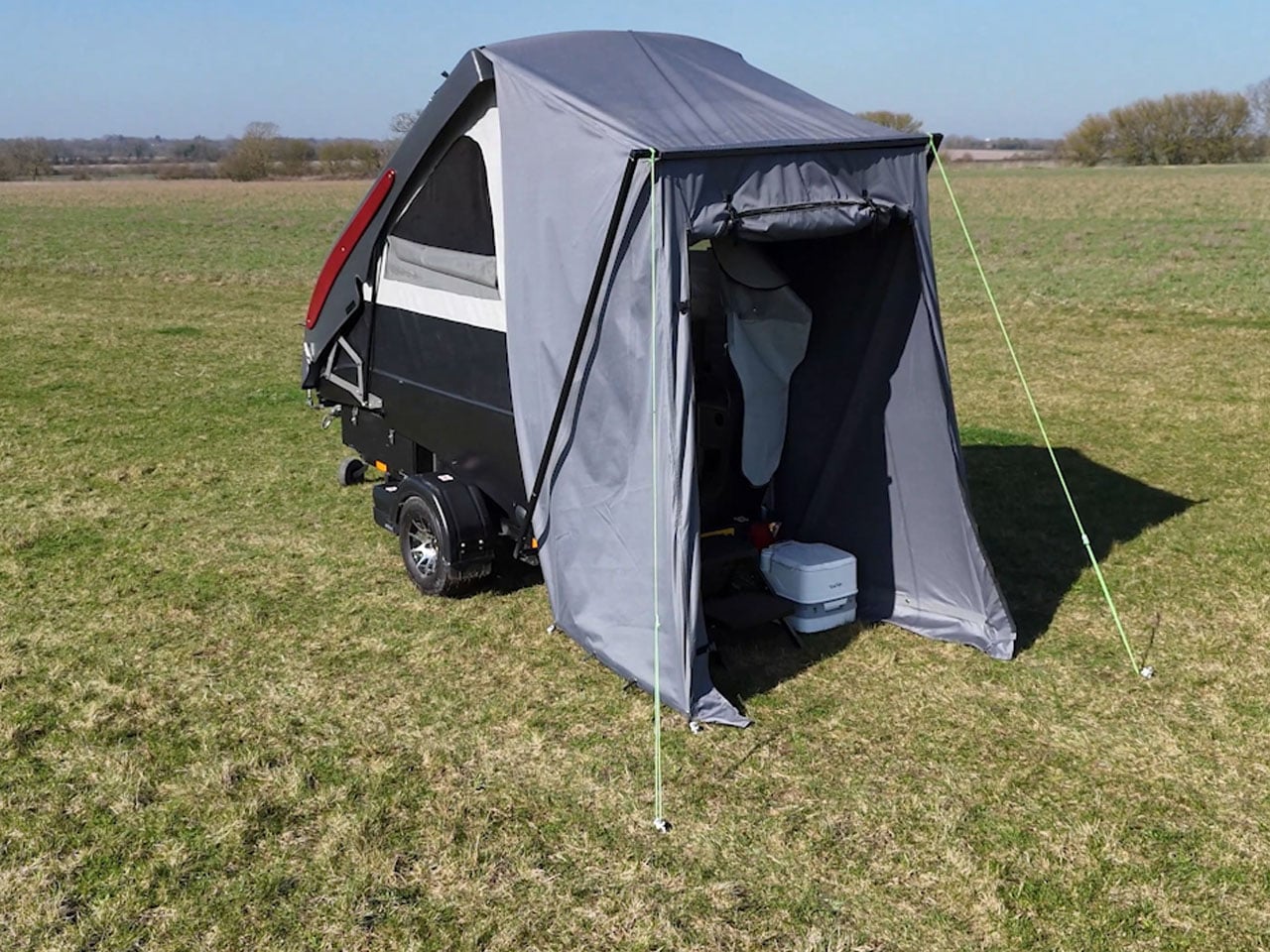
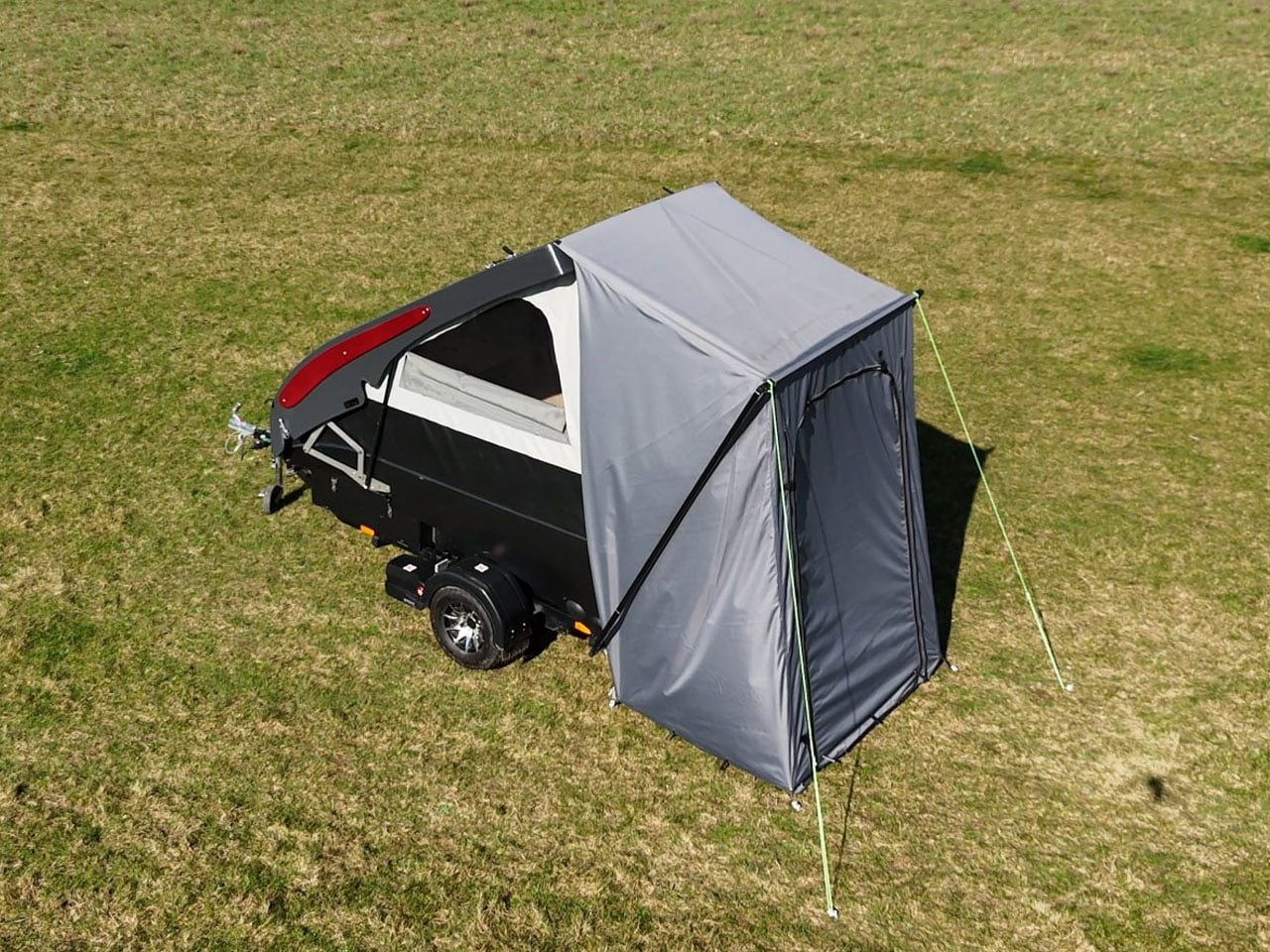
The most interesting part of the MK6 camping trailer is the rear hatch design. It features Track Trailer’s patented Skyward Lift Up Deck, which combines the hatch and the hard-floor deck. The electric lock system allows the two to lift up in unison for quick and direct access into the living space of the trailer. Just when you need it, a tent can be attached to the trailer to increase the living quarters.

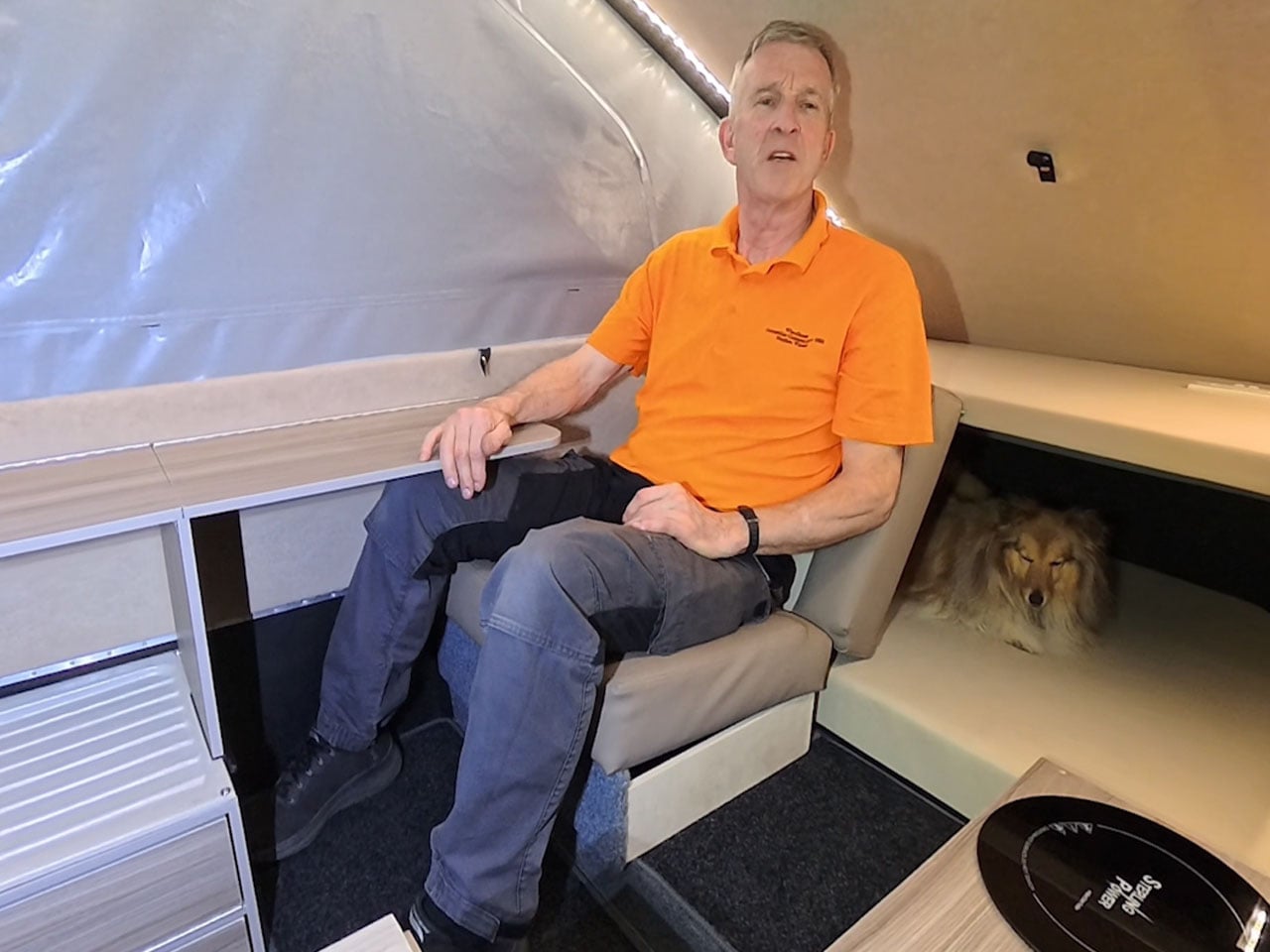
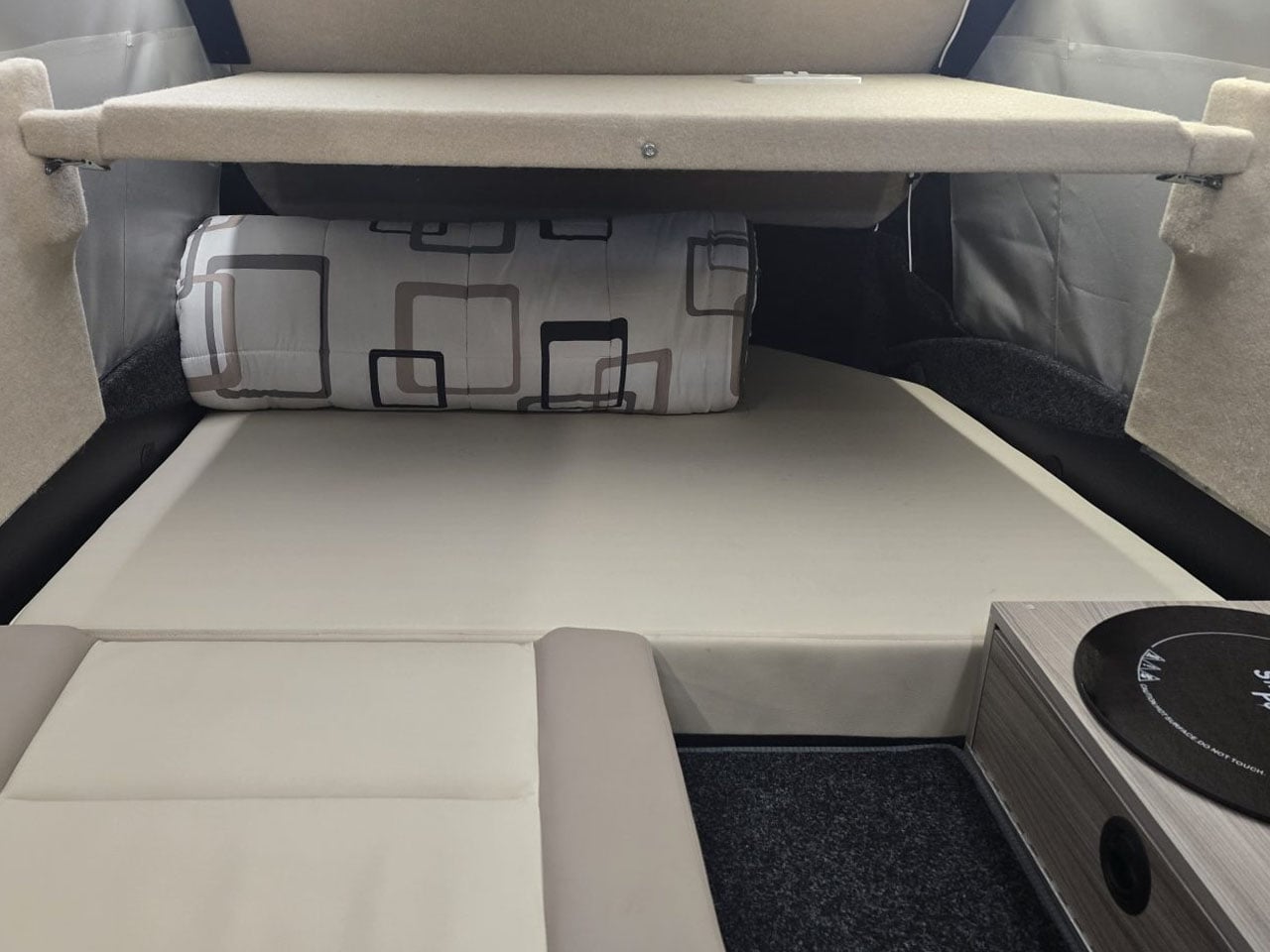
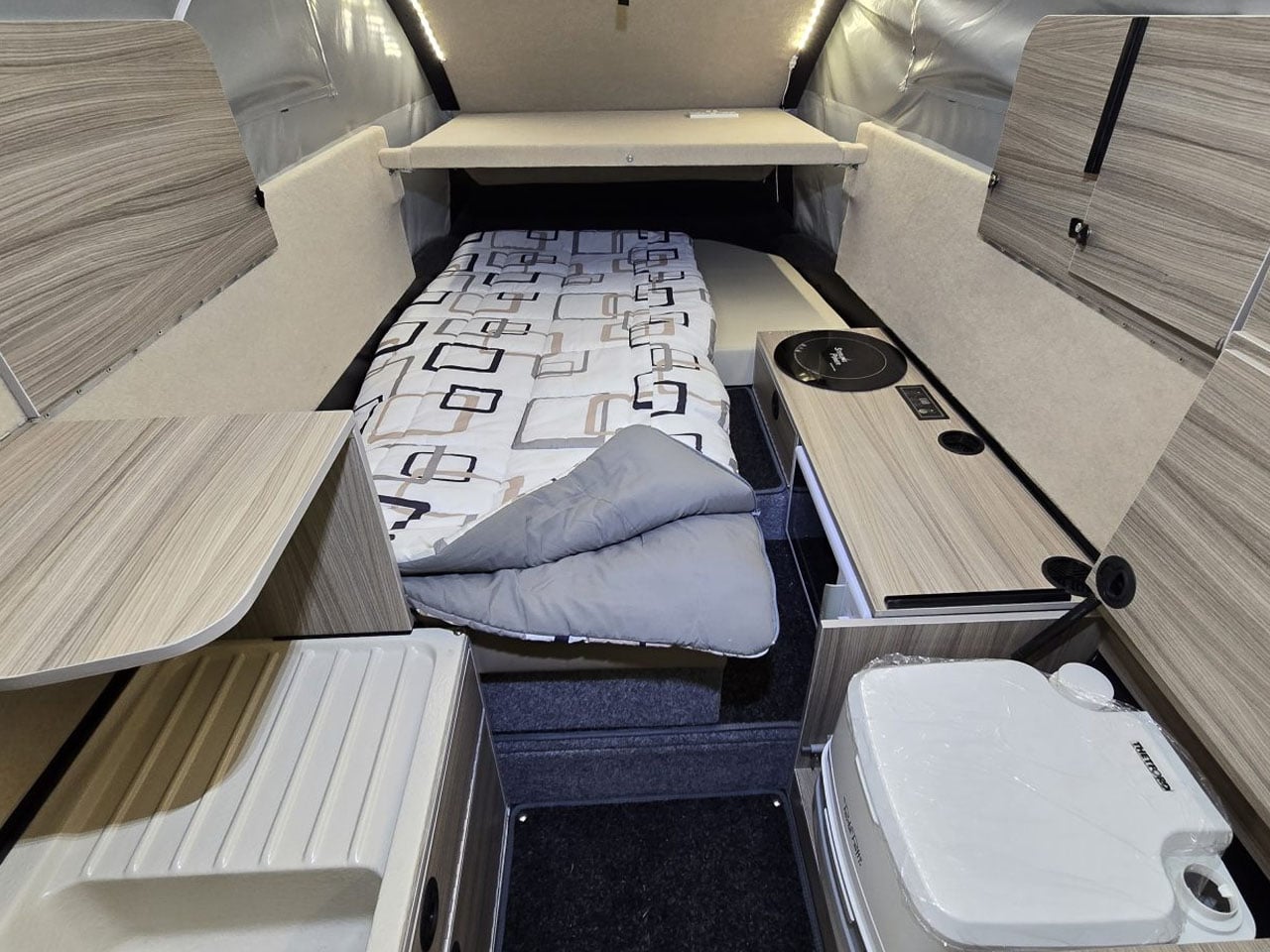
Inside is a double bed surrounded by large windows and overhead and sidewall storage. LED lighting and dual roof hatches complete the design. Since the MK6 is available in four variants, each is designed differently for off-the-grid living. The entry-level Inspire features a 125Ah lithium battery that draws energy from a 200W rooftop solar panel, while a 350W inverter takes care of the power backup. Firetail accommodates a pair of 125Ah batteries, a 2000W inverter, and some premium features in the kitchen.

Tvan MK6 Murranji adds a 200W solar panel to the Firetail setup, but leaves out the inverter. The top-of-the-line, Lightning, on the other hand, comes with a 500Ah battery. It features a 2,000W inverter and a 360W solar panel to complete its all-electric setup. Each of these models can have further upgrades with add-ons like awnings and more. MK6 starts at AU$69,900 (approximately $50,000) with the mentioned amenities.

The post Track Trailer reinvents Tvan, one of the toughest off-roading trailers with roomier MK6 model first appeared on Yanko Design.

Microsoft Copilot Cowork can do your tasks automatically

Copilot CoworkMicrosoft has introduced a new feature to Microsoft 365, Copilot Cowork. It is a new AI tool designed to carry out tasks autonomously in a Microsoft 365 environment. Copilot Cowork acts more like a digital coworker that can plan and execute tasks, helping teams complete their work more efficiently. This article covers important highlights of […]

The post Microsoft Copilot Cowork can do your tasks automatically appeared first on TheWindowsClub News.

Ils trouvent 100 failles dans le noyau Windows pour 600 dollars

2 chercheurs en sécurité, Yaron Dinkin et Eyal Kraft, viennent de publier les résultats d'une expérience qui devrait donner des sueurs froides à pas mal de monde... Ils ont découvert 521 vulnérabilités dans les pilotes du noyau Windows, dont une bonne centaine exploitables pour de l'escalade de privilèges. Et tout ça ne leur a coûté que 600 dollars !

Mais comment ont-ils fait ? Eh bien ils se sont construit un pipeline en 5 étapes. D'abord, il a fallu récupérer 1654 pilotes uniques depuis le catalogue Microsoft Update ainsi que depuis les sites des constructeurs.

Ensuite, ils ont lancé un prétraitement automatique pour classer les cibles par surface d'attaque. Pour faire simple, dans Windows, quand un logiciel veut causer à un pilote du noyau, il lui envoie des commandes appelées IOCTL (Input/Output Control)... c'est un peu la sonnette d'entrée entre le monde utilisateur et le monde noyau. Leur pipeline analysait donc la complexité des fonctions qui répondent à ces commandes (les "handlers IOCTL"). Plus un handler est complexe, plus il y a de chances qu'une erreur s'y planque.

Et ils cherchaient en priorité les pilotes qui utilisent un mode de transfert de données appelé METHOD_NEITHER, c'est-à-dire le mode "démerde-toi". Car contrairement aux autres modes où Windows joue les intermédiaires et vérifie un minimum ce qui transite, ici le pilote reçoit directement les pointeurs bruts depuis l'espace utilisateur, sans aucun filet de sécurité du noyau. C'est ensuite au développeur du pilote de tout vérifier lui-même… et spoiler : beaucoup ne le font pas correctement ! Bref, c'est le genre de truc qui sent la vuln à plein nez.

Ensuite pour la recherche de vulnérabilité, c'est-à-dire vraiment le cœur de leur système, ils ont mis en place un conseil de 3 agents LLM avec chacun un rôle bien défini. Un agent décompile d'abord le binaire et renomme les fonctions, ensuite un autre identifie la surface d'attaque, et enfin le troisième audite chaque fonction pour trouver des corruptions mémoire. Le tout via OpenRouter , en mixant les modèles pour optimiser le ratio vulnérabilités par token. Coût moyen par cible : 3 dollars.

Et les résultats obtenus sont assez crazy loco car sur 202 binaires analysés, ils ont trouvé 521 vulns au total dont 45% de bugs de lecture/écriture mémoire arbitraire. Et 70% de ces vulnérabilités sont classées High ou Critical.

Mais évidemment y'a du faux positif (environ 60%), donc ils ont dû faire une review manuelle de chacun de ces bugs. Mais même après le tri ça laisse plus de 100 bugs réellement exploitables pour de l'escalade de privilèges sur Windows 11 ! Et les vendeurs concernés, c'est pas des petits joueurs : AMD, Intel, NVIDIA, Dell, Lenovo, IBM, Fujitsu...

D'ailleurs, le cas du driver AMD Crash Defender (amdfendr.sys) est parlant. Le device est accessible en écriture par n'importe quel utilisateur, expose des IOCTLs sans validation de taille correcte et permet de la corruption heap. Avec un peu de pool grooming, on arrive donc à de l'exécution de code kernel. Et quand on sait que ce driver tourne sur les instances AWS EC2 Windows avec processeurs AMD, on comprend vite que la surface d'attaque s'étend largement jusqu'au cloud.

(En parlant de reverse engineering assisté par IA, perso en ce moment, je suis en train de faire joujou avec Claude Code et Ghidra pour un projet dont je vous parlerai peut-être plus tard si j'y arrive, et franchement ça marche troooop bien c'est fou ! Les chercheurs de l'étude notent d'ailleurs qu'aujourd'hui, ils utiliseraient probablement "juste Claude Code avec des skills custom" plutôt que leur pipeline maison. C'est dire si l'outil d'Anthropic est fou !

Après le plus flippant dans cette histoire, comme d'habitude c'est pas les bugs. Non, ce sont les réactions des constructeurs car sur 15 vulnérabilités confirmées et rapportées à 8 vendeurs, toutes avec un score CVSS (gravité de la faille, sur 10) supérieur à 7, un seul a patché ! Il s'agit de Fujitsu, avec la CVE-2025-65001 . Les autres ont rejeté les rapports ou baissé les priorités malgré des vidéos de proof-of-concept montrant par exemple un BSOD depuis un compte utilisateur standard !

Le problème c'est que certains de ces produits hardware sont en fin de vie. Donc y'a plus de support. Mais ils ne révoquent pas les certificats de signature du driver. Du coup, ces pilotes restent utilisables pour des attaques BYOVD (Bring Your Own Vulnerable Driver), où un attaquant chargerait volontairement un driver signé mais vérolé pour compromettre le noyau.

Si vous bossez en sécurité, les chercheurs ont publié une liste de 234 hashes en double-SHA256 pour vérifier si vos machines contiennent des drivers affectés. Pour checker vos drivers, c'est simple :

sha256sum driver.sys | awk '{print $1}' | tr -d '\n' | sha256sum

...et vous comparez avec leur liste.

Ce qui est clair en tout cas, c'est que l'IA en cybersécurité n'est plus un concept de labo. Microsoft avait déjà son Security Copilot qui trouvait des failles dans GRUB2, et maintenant ces chercheurs indépendants qui scannent l'intégralité de l'écosystème drivers Windows pour le prix d'un Macbook Neo... La course entre attaquants et défenseurs vient clairement de changer de vitesse.

Source

DarkSword, le kit d'exploit qui transforme votre iPhone en passoire

Google, iVerify et Lookout viennent de mettre au jour un kit d'exploitation baptisé DarkSword, capable de prendre le contrôle total d'un iPhone en enchaînant six failles iOS dont trois zero-day. Espions russes, vendeurs de surveillance turcs et hackers saoudiens s'en sont servis. Apple a corrigé le tir avec iOS 26.3, mais jusqu'à 270 millions d'appareils restent exposés.

Six failles, trois zero-day et un iPhone grand ouvert

Pour tout vous dire, DarkSword, avec son nom qui fait peur, n'est pas un petit malware de plus qui pointe le bout de son nez. C'est une chaîne d'exploitation complète écrite en JS, qui cible tous les iPhone qui tournent sous iOS, de la version 18.4 à la 18.7.

Le principe : vous tombez sur une page web piégée dans Safari, une iFrame charge du code malveillant, et c'est parti.

Ensuite, il contourne les protections du bac à sable via le processus GPU, escalade les privilèges jusqu'au noyau, et finit par injecter un module dans le daemon mediaplaybackd. Six vulnérabilités au total, dont trois étaient des failles zero-day au moment de leur exploitation : CVE-2026-20700, CVE-2025-43529 et CVE-2025-14174.

Et les données aspirées ne sont pas anecdotiques : e-mails, fichiers iCloud, contacts, SMS, historique Safari, mots de passe, photos, données de localisation, et même les messages Telegram et WhatsApp.

Les portefeuilles crypto aussi sont visés. Le tout en quelques secondes à peine, avec nettoyage des traces après exfiltration. Du travail soigné, d'après les chercheurs, même si le code n'est curieusement pas du tout obfusqué.

Espions russes, vendeurs de surveillance et sites ukrainiens piégés

Trois groupes distincts ont utilisé DarkSword depuis novembre 2025. Le premier, UNC6353, est un groupe d'espionnage présumé russe qui a ciblé des utilisateurs ukrainiens via des sites web compromis. Le deuxième, UNC6748, a utilisé un faux domaine Snapchat pour piéger des cibles en Arabie saoudite.

Et le troisième n'est autre que PARS Defense, un vendeur turc de solutions de surveillance commerciale. Chacun déploie sa propre variante de malware : GHOSTBLADE, GHOSTKNIFE ou GHOSTSABER selon le cas.

DarkSword est d'ailleurs le deuxième kit d'exploit iOS découvert en un mois, après Coruna. Les deux partagent une partie de leur infrastructure, mais sont développés par des équipes différentes.

Selon iVerify, jusqu'à 270 millions d'iPhone seraient potentiellement vulnérables, et Lookout estime que 15 % des appareils iOS en circulation tournent encore sur des versions antérieures à iOS 26.

Mettez à jour, et vite

Apple a corrigé l'ensemble des failles avec iOS 26.3, sorti plus tôt ce mois-ci. La version la plus récente est iOS 26.3.1. Si vous n'avez pas encore fait la mise à jour, c'est le moment.

Pour les profils les plus exposés — journalistes, militants, chercheurs en sécurité — Apple recommande aussi d'activer le mode Isolement, qui limite les surfaces d'attaque en désactivant certaines fonctionnalités de Safari et des services de messagerie.

Deux kits d'exploit iOS découvert en l'espace d'un mois, avec des acteurs aussi variés que des espions russes et des boîtes de surveillance turques, ça fait quand même beaucoup. On savait que l'iPhone n'était pas invulnérable, mais là on parle de chaînes complètes qui fonctionnent sur des versions récentes d'iOS, pas sur de vieux iPhone 6 oubliés dans un tiroir.

Bon, au moins, Apple a réagi et les correctifs sont là. Mais entre le moment où ces failles ont été exploitées, fin 2025, et leur correction complète, il s'est passé plusieurs mois. Franchement, si vous repoussez les mises à jour iOS depuis des semaines, c'est peut-être le bon moment d'appuyer sur le bouton.

Comma 4 + openpilot 0.11 - La conduite assistée open source passe un cap

Vous vous souvenez quand je vous parlais de Geohot et de sa voiture autonome en 2015 ? Le mec bidouillait une Acura avec des caméras à 13 balles et rêvait de vendre son kit à 1000 balles. Hé bien 10 ans plus tard, c'est fait ! Et si je vous reparle de ça aujourd'hui, c'est parce que sa société comma.ai sort la v0.11 d' openpilot ainsi qu'un nouveau boîtier qui tient dans la main, le Comma 4 !

Alors qu'est-ce qui change avec cette version 0.11 ?

En gros, c'est le premier système de conduite assistée dont le modèle est entièrement entraîné dans une simulation générée par un réseau neuronal.

Comma est donc sorti du simulateur classique avec des règles codées à la main pour passer officiellement sur World Model de 2 milliards de paramètres qui a avalé 2,5 millions de minutes de vidéo de conduite réelle filmées par les dashcams de leurs anciens boîtiers Comma 3 et 3X pour apprendre à simuler tout ce qu'il se passe sur la route.

Et c'est dans cette simulation apprise que le petit réseau neuronal qui pilote votre voiture s'entraîne. Concrètement, openpilot gère le maintien de voie et l'accélération/freinage sur l'autoroute, un peu comme un super régulateur adaptatif. Résultat avec cette v0.11 (qui succède à la v0.10 sortie il y a quelques mois ), ça converge mieux en vitesse, ça réagit mieux autour des voitures garées, et les utilisateurs qui l'ont testé préfèrent carrément ce mode Experimental au régulateur classique de leur voiture.

George Hotz, alias Geohot (le génie qui avait hacké l'iPhone à 17 ans puis la PS3), continue de faire les choses à sa manière et c'est pour ça que je l'adore ! Pas de levée de fonds à 10 milliards, pas de partenariat avec un constructeur auto. Non, juste sa dream team à San Diego qui conçoit, fabrique et assemble tout sur place et dernièrement, ils ont même ouvert leur propre datacenter avec 600 GPU et 4 pétaoctets de stockage... le tout pour environ 5 millions de dollars alors que la même infra en cloud leur aurait coûté 5 fois plus cher.

Donc bravo George pour les économies ^^ !

Côté hardware, le Comma 4 est une petite merveille d'ingénierie. Il est cinq fois plus petit que le Comma 3X, avec la même puissance de calcul (Snapdragon 845 MAX), un écran OLED, triple caméra 360 degrés et un système de refroidissement custom qui ne bride jamais le processeur... le tout sans faire un bruit.

Vous le collez sur votre pare-brise, hop, 5 minutes d'install, pas de temps de séchage (le 3X demandait 48 heures de séchage !), pas besoin de Wi-Fi au démarrage et c'est parti mon kiki. Et c'est compatible avec plus de 300 véhicules , dont Toyota, Hyundai, Honda, Ford et même des Lexus ou des Kia. Cela coûte 999 dollars, ou 699 si vous renvoyez votre ancien appareil, peu importe son état.

Et pour ceux qui se demandent comment ça se compare aux gros... Hé bien pendant que Mercedes met en pause son Drive Pilot de niveau 3 parce que ça coûte trop cher à développer, et que Tesla promet le niveau 5 depuis une décennie sans jamais le livrer, comma.ai sort un truc open source qui marche sur beaucoup de bagnoles lambda (pas les françaises, désolé ^^).

Donc pas besoin de claquer 35 000 à 45 000 euros dans une Tesla pour avoir de l'assistance à la conduite potable. Vous gardez votre Toyota ou votre Honda, vous branchez le Comma 4 sur le bus CAN (le réseau interne de votre voiture) et vous avez un truc qui envoie du bois ! Attention par contre, c'est du niveau 2 : donc vous devez garder les mains sur le volant et les yeux sur la route !! Car le problème c'est qu'en France, la légalité de ce genre de boîtier reste floue, donc renseignez-vous bien avant de foncer. Et sauf si votre bagnole est dans la liste de compatibilité, ça ne marchera pas forcément et là faudra suer un peu dans le code et le reverse pour le portage !

La v0.11 apporte aussi un détail technique qui a son importance. La consommation en veille du Comma 4 est passée de 225 milliwatts à 52 milliwatts, soit une réduction de 77%. Cela veut dire qu'avant ça vidait la batterie de votre bagnole en quelques semaines si vous le laissiez branché sans démarrer la voiture. Mais maintenant c'est plutôt en mois donc on peut le laisser tout le temps actif, ça passe. Pour réussir cette prouesse, ils ont désactivé les périphériques inutiles sur le microcontrôleur STM32, réduit le voltage scaling de VOS1 à VOS3, et mis le CPU en mode stop... du bel embarqué bien optimisé comme on aime !

Ce que je trouve dingue, c'est que c'est open source et qu'il n'y a encore eu aucun constructeur en Europe qui n'a eu la présence d'esprit d'intégrer ça dans ses bagnoles alors que les Chinois ne font que ça depuis des mois.

Perso, j'ai pas encore craqué pour le Comma 4. À vrai dire j'attends qu'il y ait une petite promo parce que 999 dollars ça pique un peu, mais clairement c'est sur ma liste. Mais en tout cas, je ne peux que saluer le chemin parcouru depuis ce prototype de 2015 conçu dans un garage. C'est quand même dingue ce que fait cette boîte avec une fraction des moyens de Tesla ou de Waymo.

Bref, si la conduite assistée open source vous branche, c'est le moment de s'y intéresser.

Stop Adjusting Your Office Chair. The LiberNovo Omni Adjusts to You Instead

Spring cleaning has a branding problem. Every year, the ritual circles back to the same tired playbook: declutter the shelves, reorganize the desk, maybe splurge on a new monitor arm. What never makes the list is the thing your body has been arguing with for eight hours a day, five days a week. The chair. It sits there, static and indifferent, while you shift and squirm through another afternoon of accumulated spinal resentment. LiberNovo’s Spring Refresh campaign, running now through April 15 across North America, is built on a premise the rest of the furniture industry still hasn’t internalized: the most important thing in your workspace is the one holding your skeleton together.

We’ve been fans of the LiberNovo Omni pretty much since day one (and the chair even secured an iF Design Award this year) because it rejected the foundational assumption behind almost every ergonomic seat on the market. Traditional chairs treat sitting as a problem to be solved with the right fixed position. The Omni treats it as a continuous, dynamic event. Its Bionic FlexFit backrest uses 16 spherical joints and eight elastic panels to create a responsive S-curve that maintains full spinal contact as you move, lean, and fidget through your day. Rather than locking you into an ideal posture and hoping for the best, it follows you. LiberNovo calls this “Support by Motion,” and after three rounds of coverage, it remains the most honest description of what the chair actually does.

Designer: LiberNovo

Click Here to Buy Now: $848 $1099 ($251 off). Hurry, deal ends in 48-hours!

What the Spring Refresh edition brings into focus is the Moss Green colorway, and the design rationale runs deeper than seasonal window dressing. Office furniture has defaulted to clinical grays and matte blacks for decades because they read as serious and professional, but that palette does nothing for the visual fatigue that compounds over a long work session. The Moss Green option is a low-saturation, earth-toned hue informed by biophilic design principles, which connect sustained exposure to natural tones with measurable psychological restoration. The short-pile velvet surface introduced with this variant reinforces that effect tactilely, rated to withstand over 50,000 wear cycles while remaining breathable against skin. It is a quieter, more grounded presence than the existing Midnight Black and Space Grey options, and it suits the growing cohort of professionals who want their workspace to feel less like a server room.

The four recline modes map to distinct cognitive and physiological states that anyone logging long creative or technical sessions will recognize. The 105° Deep Focus position keeps the body alert and slightly forward, suited for concentrated output where posture and attention run in parallel. The 120° Solo Work setting is where most of a professional day actually happens, steady and supported without any sense of being locked in place. At 135°, the chair shifts into active recovery territory, appropriate for long calls or the kind of diffuse thinking that does not look like work but frequently is. The 160° Spine Flow position, combined with the OmniStretch motorized stretch function, delivers a five-minute spinal decompression cycle that reframes the mid-afternoon energy crash as something addressable rather than just inevitable.

The Spring Refresh pricing is tiered across both US and Canadian markets for the duration of the campaign. In the US, the Omni starts at $848, with Spring Refresh bundles discounted up to 30% off. Orders over $800 receive a $15 instant checkout discount, orders above $900 include the Eco Comfort Set comprising a silk eye mask, eco tote bag, and StepSync mat, and orders over $1,000 unlock the Ultimate Perks Pack with a branded cap, sticker set, tote bag, and limited-edition fridge magnet. Canadian pricing starts at CA$1,292, with bundles up to 34% off and parallel tier thresholds at CA$1,200, CA$1,400, and CA$1,500 respectively. The promotion runs through April 15 in both regions.

The broader argument LiberNovo is making this season is worth sitting with. Most workspace upgrades stop at the surface: a new desk pad, better cable management, the kind of organization that photographs well but does not change how your body feels at 4pm. The Omni, particularly in the Moss Green edition, pushes toward a different category of improvement, one that treats the workspace as health infrastructure rather than aesthetic backdrop. That is a less immediately gratifying pitch than a fresh coat of paint on the home office, but for anyone who has spent enough time in a bad chair to understand what a good one actually costs, it is the more compelling one.

Click Here to Buy Now: $848 $1099 ($251 off). Hurry, deal ends in 48-hours!

The post Stop Adjusting Your Office Chair. The LiberNovo Omni Adjusts to You Instead first appeared on Yanko Design.

❌