❌

Vue normale

  • ✇Yanko Design
  • This $6 Glow-in-the-dark Carabiner might be Camping EDC’s biggest upgrade
    We put glow on everything we are afraid of losing in the dark. Watch hands, exit signs, stair edges, light switches, and those plastic stars on a kid’s ceiling all got the memo decades ago. The carabiner, an object whose entire job is hanging onto things in low light, somehow missed it. It sits there, smug in anodized aluminum, daring you to find it. That is the oversight of the century, and I will happily defend that claim at any campsite. OBORO, from Maruhachi Kasei, a plastics factory in Na
     

This $6 Glow-in-the-dark Carabiner might be Camping EDC’s biggest upgrade

25 octobre 2026 à 21:45

We put glow on everything we are afraid of losing in the dark. Watch hands, exit signs, stair edges, light switches, and those plastic stars on a kid’s ceiling all got the memo decades ago. The carabiner, an object whose entire job is hanging onto things in low light, somehow missed it. It sits there, smug in anodized aluminum, daring you to find it. That is the oversight of the century, and I will happily defend that claim at any campsite.

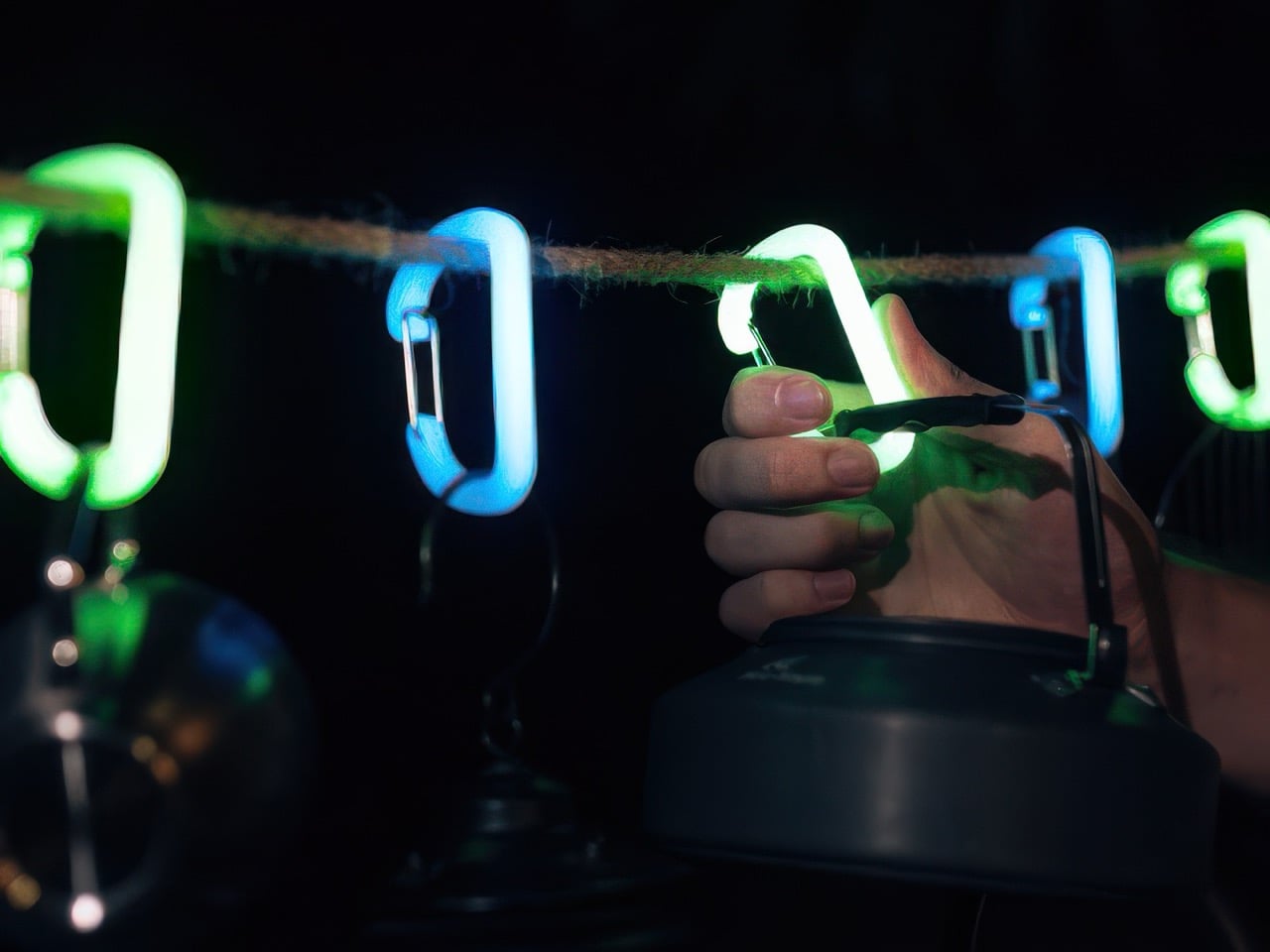
OBORO, from Maruhachi Kasei, a plastics factory in Nagoya, Japan that has been molding resin since 1974, closes the loop. The large D carabiner is glow-infused polycarbonate, measures about 3 by 1.7 inches, weighs 0.42 ounces, and is rated for 66 pounds. Leave it in sunlight or under a lamp for a bit and it shines for hours, with no battery, no charging, and no app (thankfully). A one-handed clip joins it for towels and tarps, rated for 55 pounds, and both come in green or a cooler blue. It is accessory gear rather than climbing gear, so keep your rope work on the real stuff.

Designer: Maruhachi Kasei

Click Here to Buy Now: $73 $91 (20% off) for 12 pieces. Hurry! Only 5 days left.

The Glow Is Baked Into the Plastic Itself

The glow pigment is mixed into the polycarbonate itself, so the entire body is the light source. There is no paint layer to chip or flake, which matters on an object that spends its life banging against rocks, zippers, and other gear. Polycarbonate is the same family of plastic used in bulletproof glazing, and the maker claims five times the impact resistance of ABS and 250 times that of ordinary glass. It also handles weather and heat better than most plastics. The gate is a nickel-plated metal wire, the one part that has to flex thousands of times, so it makes sense that it is not resin.

In the maker’s own test, twenty minutes under a blacklight gave about three hours of visible glow. Brightness peaks in the first 10 to 20 minutes and fades gradually from there, the way every glow-in-the-dark thing you have ever owned behaves. Sunlight and ordinary LED room lighting both recharge it, as many times as you like. Long-afterglow pigments like this trace back to a 1993 breakthrough at Japan’s Nemoto & Co., the lineage behind Super-LumiNova on Swiss watch dials, though the maker does not name its exact pigment. Water is the weak spot: the maker says wet pigment loses its charge and the surface can cloud, so this belongs in the tent, not out in the rain.

A Bigger Gate, Beefier Numbers, and a Clip for Towels

The large D measures about 3 by 1.7 inches and 0.28 inches thick, which the maker says is 30 percent bigger than a standard carabiner. That extra room is the whole point of the redesign. The gate opens wide enough for thick camp rope, so a mug, a kettle, and a lantern can all hang without a game of Tetris. The working load is rated at 66 pounds, while the maker’s pull test ended at 213 kilograms, roughly 470 pounds. That gap is deliberate, since the rating sits near 15 percent of breaking load, and at 0.42 ounces you will forget the thing is on your bag until you need it.

The clip is built for flat, floppy things like towels and tarps. It opens and closes with one hand, using serrated jaws and a sliding block with a toothed lock, and a thin metal loop up top lets it hang from a line or a bag. The wide mouth takes thick fabric where a standard clothespin gives up. Its 55-pound rating sits a bit under the D carabiner, which is plenty for a soaked camp towel. Two clips and a rope between trees give you a glowing clothesline you can actually find after dark.

Two Colors, Endless Things to Hang, and Roughly $6 a Piece

Green is the classic and the brighter of the two, while blue is the rarer, cooler color that I find more fun to look at. By day neither looks like it does at night, since green reads pale yellow-green and blue looks milky white. Blue is dimmer after dark, which seems a fair trade for the novelty. The use cases click once the idea sinks in: a tent guyline, a go-bag handle, a kid’s school backpack, a dog’s leash, a key hook by the front door.

The 12-piece set (six large D carabiners and six clips) is ¥11,616, about $73, against a ¥14,520 (about $91) retail price, which works out to roughly $6 a piece. Singles run about $6 for a D carabiner and about $7 for a clip. Pink versions of both ($40 for six of each), a three-pack of Suncheck glow carabiners ($33), and the older Ouroboros Carabiner Clip ($4) are available as add-ons. OBORO ships worldwide with delivery estimated for January 2027.

Click Here to Buy Now: $73 $91 (20% off) for 12 pieces. Hurry! Only 5 days left.

The post This $6 Glow-in-the-dark Carabiner might be Camping EDC’s biggest upgrade first appeared on Yanko Design.
  • ✇Yanko Design
  • This titanium watch turns Yuri Gagarin’s first orbit into a dial
    Ask any American watch nerd about space watches and you’ll hear one word within three seconds: Speedmaster. Moon landing, NASA certification, the whole legend. Meanwhile, eight years before Apollo 11, a Soviet pilot strapped on a standard-issue navigator’s watch and went around the planet first, and that story gets a fraction of the airtime. I love a Speedy as much as anyone. Still, the first human in orbit deserves a little more wrist love, and a Moscow designer just delivered some. Alexey Yak
     

This titanium watch turns Yuri Gagarin’s first orbit into a dial

25 octobre 2026 à 16:45

Ask any American watch nerd about space watches and you’ll hear one word within three seconds: Speedmaster. Moon landing, NASA certification, the whole legend. Meanwhile, eight years before Apollo 11, a Soviet pilot strapped on a standard-issue navigator’s watch and went around the planet first, and that story gets a fraction of the airtime. I love a Speedy as much as anyone. Still, the first human in orbit deserves a little more wrist love, and a Moscow designer just delivered some.

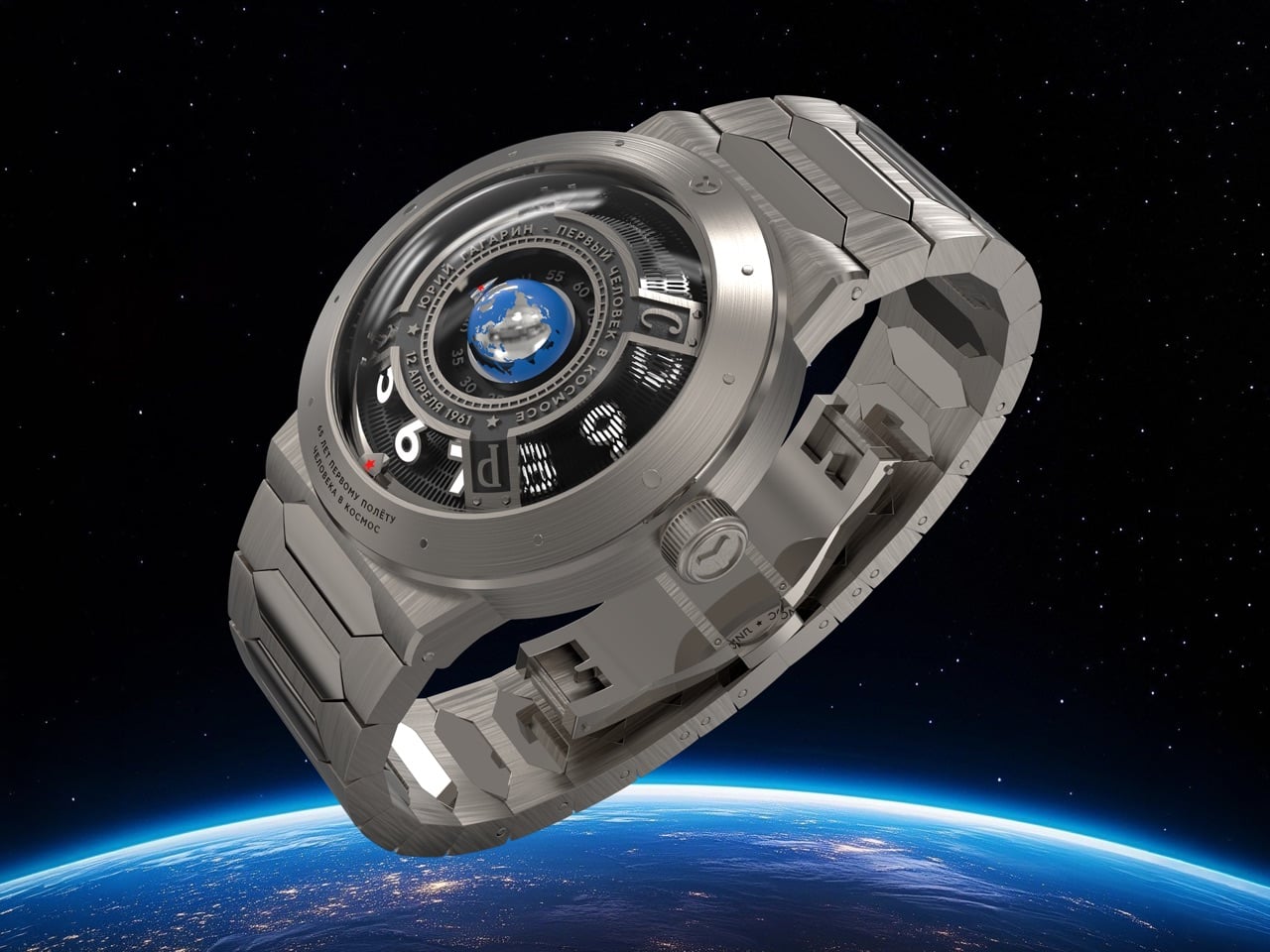
Alexey Yakushik’s Yuri Gagarin: First in Space is that delivery. His brand launched in 2025, and this is a big step up from its earlier releases on Vostok and Luch movements. The case is Grade 5 titanium, 45mm across (about 1.8 inches), with a domed sapphire crystal, a Miyota 8215 automatic sits under a custom module, and a rocket hand circles a blue Earth every hour. It collected two European Product Design Award wins this year. The run is 130 pieces, split between natural titanium and black PVD, at about $4,150 each, sold only through the brand’s Russian site.

Designer: Alexey Yakushik

A polished blue Earth sits dead center of the dial, and a rocket-shaped minute hand laps it once an hour. Minute numerals ring the globe like a launch-control readout. Hours sit lower down as bold Arabic numerals, with a red marker picking out the current one. Four plates on the diagonals spell СССР in Cyrillic, which is about as subtle as a Soviet space poster should be. For the record, Vostok 1 took roughly 89 minutes to orbit the planet and the rocket does it in 60, but I won’t be filing a complaint about the pacing.

The case and the integrated bracelet are both Grade 5 titanium, the alloy aerospace engineers love because it is strong, light, and unbothered by most of what life throws at it. At 45mm the case is large on paper, though titanium weighs far less than steel, and the brand hasn’t published the weight or thickness. The domed sapphire crystal is 35mm across and bulges up over the globe like a capsule window, which is the whole porthole idea in one piece of glass. Water resistance is 100 meters, the lume is BGW9, and the links look faceted and angular in the renders. Nobody is mistaking it for a dress watch.

Underneath sits the Miyota 8215, a 21-jewel Japanese automatic workhorse that keeps time reliably and stays out of the dial’s way, with the brand’s AYW001.1 module built on top. The renders show a custom rotor stamped with 1961, СССР, and 2026, the sort of detail only the owner will ever see. Yuri Alekseyevich Gagarin’s full name wraps the sapphire caseback window, and every watch carries its own number, such as 01/65. Hiding a love letter on the back of a watch is a wearer-only flex, and I’m here for it. Nobody across the table will ever read it, which is exactly the point.

Yakushik says the project has the blessing of Gagarin’s daughters, Galina and Elena, along with Roscosmos support. It launched April 16, 2026, timed to the flight’s 65th anniversary, and the first piece went to the Moscow Museum of Cosmonautics. The European Product Design Award is a paid-entry Farmani Group competition that covers concepts and finished products, so read the two wins as a nod to the design and leave the horological verdict to others. At about $4,150, the money goes to the titanium, the bracelet, the dome, and the custom display more than the base caliber. Gagarin carried a 33mm brass tool into orbit, and sixty-five years later his flight has a 45mm titanium watch of its own.

The post This titanium watch turns Yuri Gagarin’s first orbit into a dial first appeared on Yanko Design.

  • ✇Yanko Design
  • This Jenga tower is also a lamp, and it lights up as you stack it
    Give an architect a box of blocks and they’ll tell you it’s research. Toronto architecture studio PARTISANS took that excuse all the way and came out the other side with a lamp. The Jenga Light rebuilds the game’s famous rectangles in a translucent material that glows from inside. Set the blocks on a powered base and electricity travels upward through every point where one block rests on another. The path the weight takes is the same path the power takes. That one idea turns a party game about
     

This Jenga tower is also a lamp, and it lights up as you stack it

25 octobre 2026 à 15:15

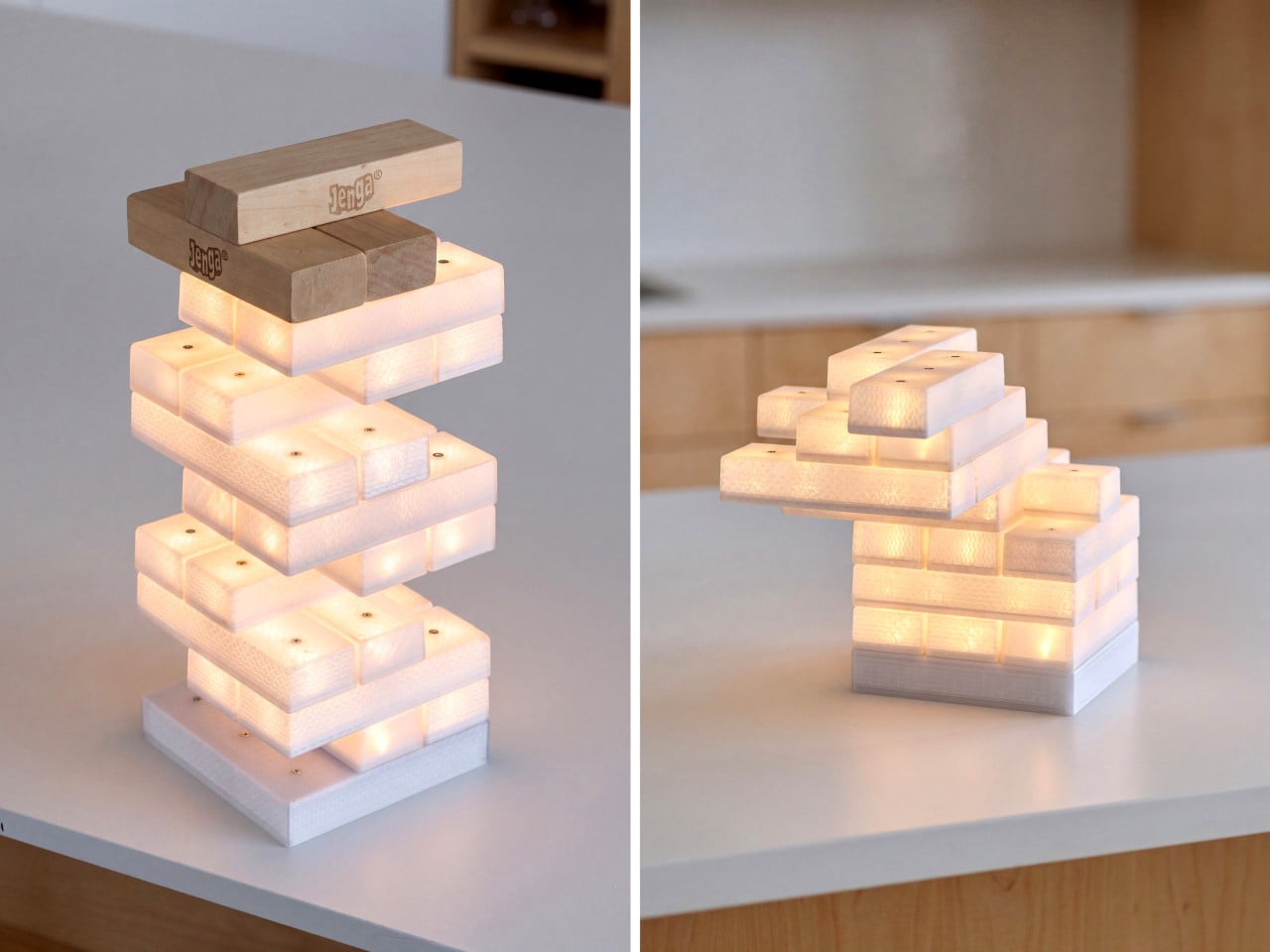
Give an architect a box of blocks and they’ll tell you it’s research. Toronto architecture studio PARTISANS took that excuse all the way and came out the other side with a lamp. The Jenga Light rebuilds the game’s famous rectangles in a translucent material that glows from inside. Set the blocks on a powered base and electricity travels upward through every point where one block rests on another. The path the weight takes is the same path the power takes. That one idea turns a party game about collapse into a lamp you build by hand, one glowing brick at a time.

Lead designer Alex Josephson and teammate Teddy Shropshire solved the fiddliest part of the problem with a component most people have never heard of. The blocks hide bridge rectifiers, tiny circuits that make polarity a non-issue. Flip a block, rotate it, or push it into a cantilever that looks like it’s daring gravity, and it still lights. The lamp won its category, Home Lighting: Lamps and Luminaires, at the 2026 European Product Design Award, an international competition that welcomes prototypes as well as finished designs. Pricing and availability haven’t been announced yet. Meanwhile, I’m trying to figure out how many blocks it takes to reach the ceiling.

Designers: Alex Josephson & Teddy Shropshire

How bridge rectifiers make every block reversible

Every electrical connection has a positive side and a negative side, and most stacking lamps deal with that by forcing pieces to go one way. A bridge rectifier is four diodes arranged in a loop, and it sends current out the same way no matter which way it comes in. Tuck them inside the blocks and “upside down” stops meaning anything. A brick can sit flat, sit flipped, or spin around, and its LEDs get the right polarity every time. That one cheap part deletes every rule you’d otherwise have to learn before playing. It’s the electrical version of a USB-C plug, which also stopped caring which way you hold it.

Compare that with the Tetris lamp ThinkGeek sold around 2012, where a powered bottom piece fed light to the tetrominoes stacked above it and the interlocking shapes did the steering. Later patents for modular light kits went mechanical, adding magnets and contacts shaped to avoid short circuits when blocks meet at odd angles. LumiBlocks took the magnetic route too, pairing snap-together blocks with app control and RGBCW LEDs. PARTISANS skips magnets entirely, letting electronics handle orientation and gravity handle everything else. The result asks nothing of you except a steady hand. That also happens to be the only thing Jenga ever asked.

Translucent printed bricks and a grid of contacts

From the photos, the bricks appear 3D-printed in a translucent plastic, with visible layer lines and a wavy internal infill. Most designers would sand or hide that texture, but here it does the job of a lampshade. Light passes through the infill and paints a woven, scaly pattern across every face, so each block glows with a grain that frosted acrylic could never give you. The shots mostly show warm white light, with one hero image running cooler. PARTISANS hasn’t published brightness or color temperature figures yet. Stack enough bricks and the whole thing reads like a lantern built by someone who really loved masonry.

Small metal contacts dot the top of each block, three in a row on the long pieces, while the base carries more, plus a power cord and a small port on one side. Those dots likely form a grid that decides how far one block can overhang the next and still stay lit. They also mean you can’t play an actual round of Jenga on it, since shimmying a brick out of the middle of a tower will just disconnect the entire top half of the lamp. Think of it as Jenga-inspired, with the building half of the game kept and the pulling half retired. A bumped table can still flatten a ten-minute spiral, which is the most Jenga thing left about it.

From a Toronto toy fair to a Toronto studio

Jenga began as a family game Leslie Scott played with wooden blocks growing up in Ghana, and it launched at the London Toy Fair in 1983. Its real break came in 1986 at the Toronto Toy Fair, where Hasbro’s chairman reportedly decided he had to have it. Forty years later, a Toronto studio has turned the same stack into a table lamp. PARTISANS is mostly an architecture practice, best known for the cedar-lined Grotto Sauna on Georgian Bay, yet Josephson keeps drifting into lighting. His Gweilo lamps, made from hand-molded acrylic sheets, won the 2016 AZ Award for Best Lighting Installation.

Playful lighting has had a good run lately, from Analog lamps, which grew out of LEGO play and now sell at MoMA, to app-controlled magnetic blocks for desk setups. The Jenga Light skips apps and color modes and bets everything on the hands-on part. The European Product Design Award judges entries anonymously and accepts prototypes, so this win recognizes the idea and its engineering ahead of any retail launch. PARTISANS hasn’t announced pricing or a release date. Until it does, I’m staring at my old Jenga set and wondering how hard bridge rectifiers really are to solder.

The post This Jenga tower is also a lamp, and it lights up as you stack it first appeared on Yanko Design.

  • ✇Yanko Design
  • Only nine of these gorgeous red-to-aluminum Ducati customs will ever exist
    Paint has one job on most vehicles, and that job is covering up the metal underneath. Bandit9 clearly doesn’t agree with that particular ideology. The Saigon-based studio’s new (RED) 800 starts out in deep Racing Red at the nose, then lets the color thin out as it sweeps back until all that’s left is raw, hand-brushed aluminum. It’s a Ducati 821 custom built with (RED), the charity co-founded by Bono and Bobby Shriver, and only nine will ever exist. Every one of them sends $14,000 to the fight
     

Only nine of these gorgeous red-to-aluminum Ducati customs will ever exist

25 octobre 2026 à 09:20

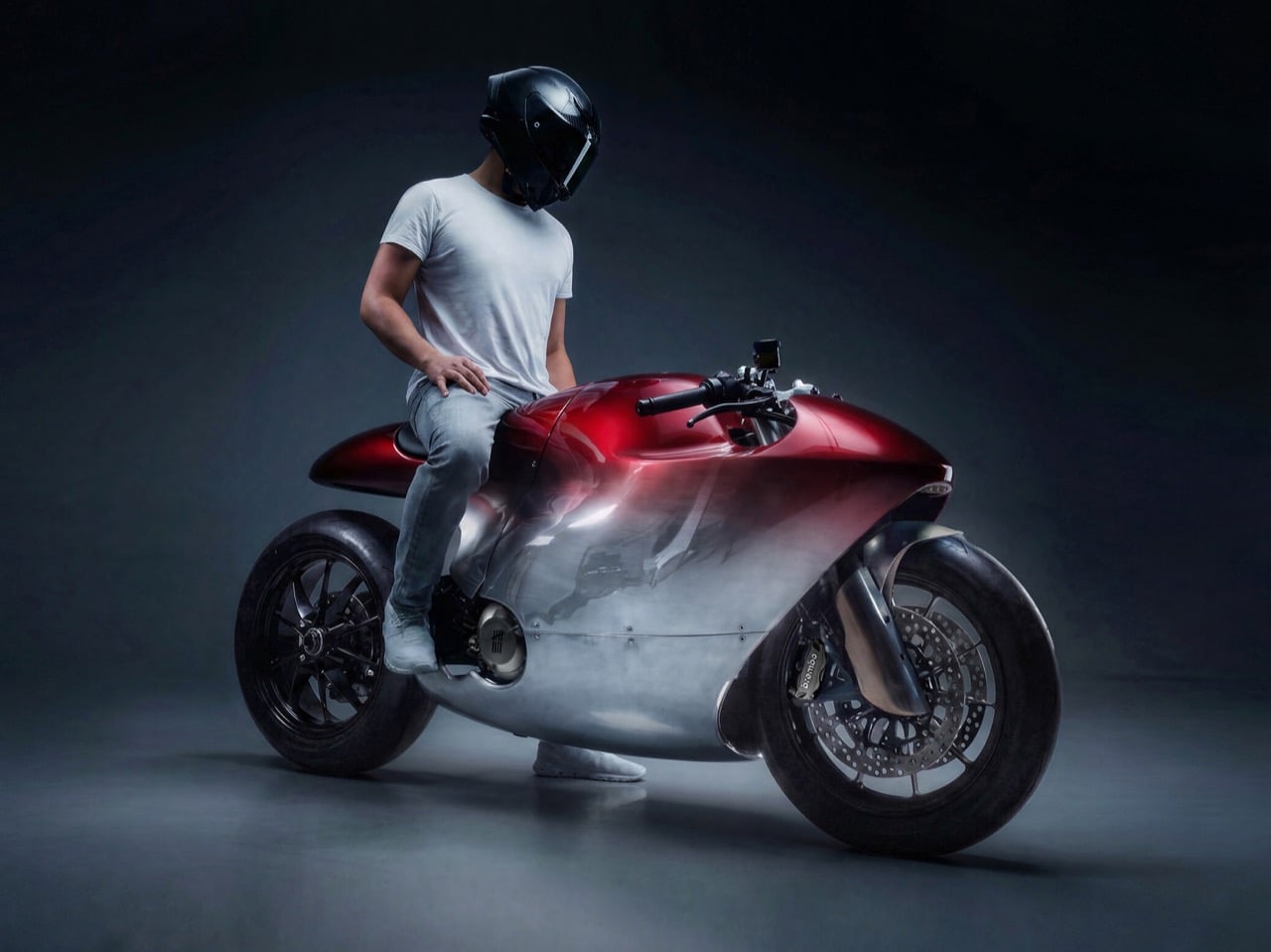
Paint has one job on most vehicles, and that job is covering up the metal underneath. Bandit9 clearly doesn’t agree with that particular ideology. The Saigon-based studio’s new (RED) 800 starts out in deep Racing Red at the nose, then lets the color thin out as it sweeps back until all that’s left is raw, hand-brushed aluminum. It’s a Ducati 821 custom built with (RED), the charity co-founded by Bono and Bobby Shriver, and only nine will ever exist. Every one of them sends $14,000 to the fight against AIDS and other preventable diseases, which is a pretty great excuse to own a motorcycle this good-looking.

Each fade gets applied by hand, so no two of the nine bikes will wear their red in exactly the same spot. I love that, because the paint job becomes a fingerprint. Underneath sits the same recipe from Bandit9’s Ducati 821 build: Ducati’s 821cc Testastretta twin making 110 horsepower, wrapped in a seamless hand-shaped aluminum unibody that weighs a claimed 386 pounds dry. That earlier bike went with aluminum and carbon and skipped the red entirely, which feels almost rude for a Ducati. This one brings the red back and then lets it fade out halfway, a Ducati that only partly remembers its roots. It’s priced at $49,900 and built to order, with an 8 to 12 month wait.

Designers: Bandit9 & (RED)

How the red drains across one seamless aluminum shell

The fade works because there’s nowhere for it to stop. Bandit9’s unibody wraps the nose, tank, and flanks in one hand-shaped aluminum skin, so the red never runs into a panel gap that would force a hard edge. The color sits deepest on the tank and tail, then drains down the flanks toward the belly like it was poured on from above. By the time it reaches the engine cases, the brushed grain of the metal has taken over completely. In the close-up shots, that grain even seems to show through the red near the transition, which hints at a translucent candy coat laid straight onto bare aluminum.

That candy approach, if it is one, would explain why the bike looks lit from inside. Translucent paint lets light hit the metal underneath and bounce back through the color, so the red picks up a glow that solid paint can’t fake. Thinning the coat by hand also means the painter controls exactly how fast the red gives up, which is where the fingerprint comes in. A red LED strip tracing the tail’s edge down toward the rear suspension carries a line of color past the point where the paint stops. Basically, the red keeps going even after the bike runs out of paint.

A fade with roots in 1950s hot rods and (RED)’s aluminum gadgets

Southern California painter Larry Watson gets a lot of the credit for turning fades into a custom-culture staple. Starting in the late 1950s, Watson helped popularize panel paint, scallops, veils, and fades, shooting candy colors over silver and pearl on cars like his own 1958 Thunderbird. Those jobs were loud, flashy, and built to be seen at a drive-in. Bandit9 takes the same basic idea and strips out the flash, using a single color and letting bare metal do the rest. It’s a hot rod technique wearing a gallery outfit.

Red over bare aluminum also happens to be (RED)’s unofficial house style. One of the organization’s most famous early products was a red aluminum iPod nano in 2006, and in 2013 Jony Ive and Marc Newson designed a one-off aluminum Leica M for a (RED) auction at Sotheby’s. That camera sold for $1.8 million, and the whole sale raised $26.2 million once the Gates Foundation matched it. Bandit9’s bike slots neatly into that family of red-and-metal objects built to raise money. It’s also the only one I know of with a Ducati engine.

The same price as the regular 821, which makes the red free

Bandit9 left Ducati’s mechanical bits alone and rebuilt everything you actually look at. The 821cc Testastretta twin makes 110 horsepower and 65.8 lb-ft of torque, good for a claimed 0 to 60 mph run of 3.3 seconds and a top speed of about 125 mph (201 km/h). A custom tubular steel trellis frame holds it together, with a 43mm Sachs fork, an adjustable Sachs rear shock, and a single-sided swingarm. Dual 320mm Brembo monobloc calipers handle stopping up front. Ducati’s engineers did the hard part, and Bandit9 spent its months on the shell.

At $49,900, the (RED) 800 costs exactly what Bandit9 charges for its regular Ducati 821, which means the buyer pays nothing extra for the paint or the $14,000 donation. Sell all nine and (RED) collects $126,000. Orders go directly through Bandit9, and with only nine slots, they probably won’t hang around long. Plenty of charity editions just dip a product in red and call it a day. Bandit9 made the red the entire design, then had the good sense to let it fade out right where the metal gets interesting.

The post Only nine of these gorgeous red-to-aluminum Ducati customs will ever exist first appeared on Yanko Design.

  • ✇Yanko Design
  • Wuben’s tiny flashlight packs 500 lumens and a blade into 40 grams
    My phone flashlight handles most of my after-dark chores, which is a funny confession from someone who writes about EDC gear for a living. It is always in my pocket, it is bright enough, and it asks for nothing extra. Then a job needs both hands, and suddenly the phone is clamped in my teeth, aiming at the ceiling while I squint at a breaker box. The phone flashlight is a great idea with one design flaw, which is that it comes attached to a phone. Hands-free light has always been the gap, and h
     

Wuben’s tiny flashlight packs 500 lumens and a blade into 40 grams

24 octobre 2026 à 21:45

My phone flashlight handles most of my after-dark chores, which is a funny confession from someone who writes about EDC gear for a living. It is always in my pocket, it is bright enough, and it asks for nothing extra. Then a job needs both hands, and suddenly the phone is clamped in my teeth, aiming at the ceiling while I squint at a breaker box. The phone flashlight is a great idea with one design flaw, which is that it comes attached to a phone. Hands-free light has always been the gap, and headlamps are too much hardware for a trip to the garage.

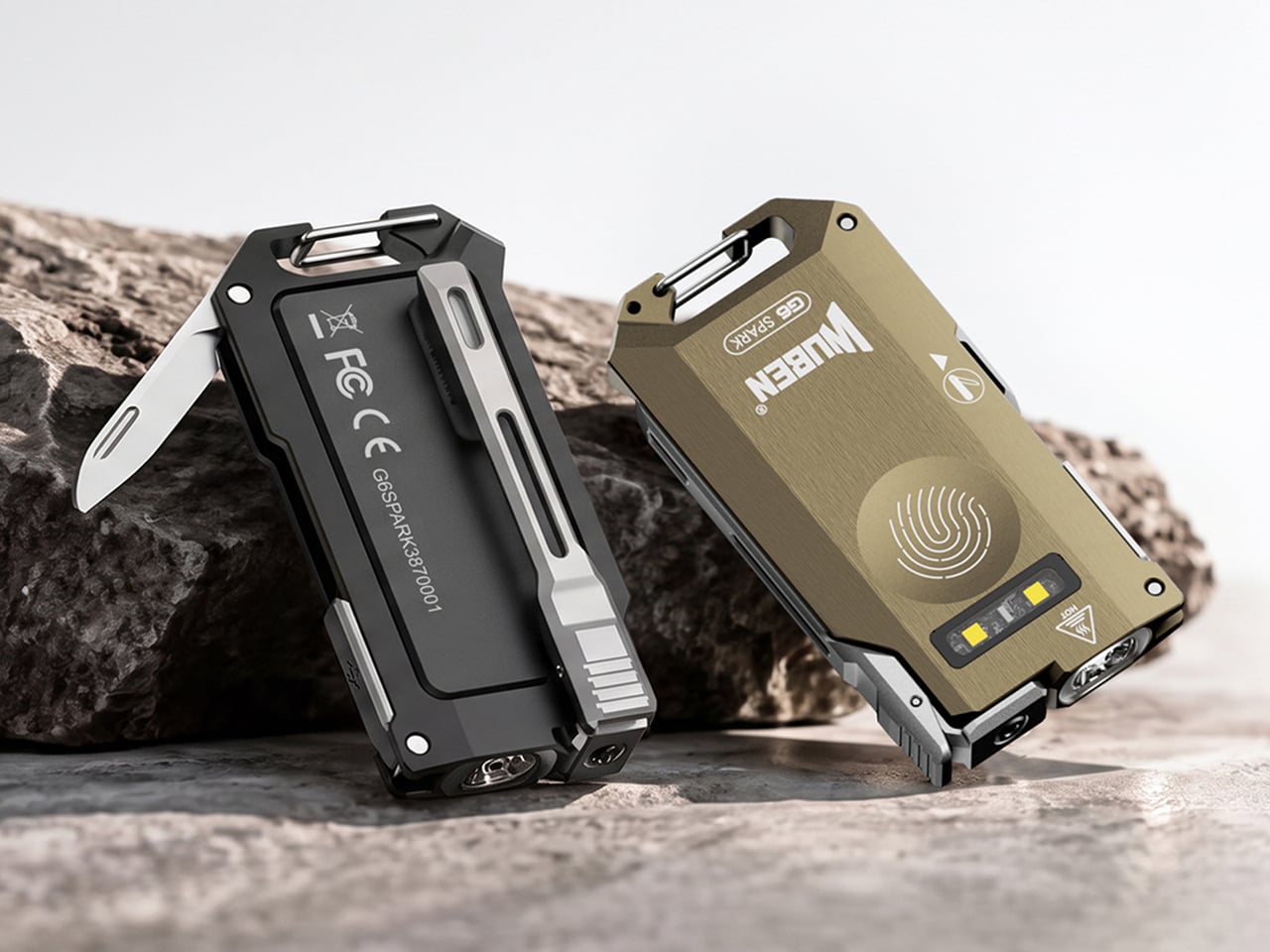
Wuben’s G6 SPARK is a keychain-sized answer to the teeth problem. Its clip rotates 90 degrees with distinct clicks, so you can clip it to a pocket, cap brim, or backpack strap and aim the beam where your hands are busy. The 500-lumen main light handles distance, a 100-lumen side light with red modes handles up close, and a hidden blunt-tip blade covers the odd chore. The body is 7075 aluminum, 0.34 inches (8.6 mm) thick, and 1.4 ounces (40 g or about as much as an AirPods case).

Designer: Wuben

Click Here to Buy Now: $33.99 $44.99 (24% off). Hurry, only 411/1000 left! Raised over $111,000.

Eleven credit cards thick and cut from aerospace aluminum

The G6 SPARK measures 2.56 by 1.35 inches and 0.34 inches thick (65 by 34.2 by 8.6 mm), and it weighs 1.4 ounces (40 g). That makes it roughly eleven credit cards thick, so it vanishes into a jeans pocket. The body is 7075 aluminum, which Wuben calls aerospace-grade, and a slab this thin needs a metal with a spine. Wuben rates it IP66 against dust and powerful water jets, with 1 meter (3.3 feet) of impact resistance, so a keychain’s daily abuse should not scare it. The USB charging port hides inside the body, which keeps the face clean and symmetrical.

7075 is the zinc-rich member of the aluminum family, and it has a reputation for being far tougher than the 6061 found in most flashlight bodies. Aircraft engineers fell for it because it is light and stiff at the same time. Stiffness is exactly what a flat flashlight needs, since a thin body that flexes is a bad day for the lens and the electronics. On a keychain, that rigidity should also help it survive a crowded pocket full of other metal. A push-release attachment lets you pop it off the ring when you want it in your hand instead of dangling off your keys.

Three lights, one button, and a click code you can learn in an evening

The main light tops out at 500 lumens with a 66 meter (217 ft) throw and a peak beam intensity of 1,089 candela. Those numbers describe a beam for the space around you, like a driveway or a campsite, rather than a hillside across the valley. Light color is 5000K, a daylight white, and the CRI of 70 means colors look decent rather than lab-accurate, which is fine for finding a dropped screw. Brightness steps are Eco, Low, Medium, and High, and you cycle them by holding the button. A double click jumps to Turbo, a triple click gives you Strobe, and mode memory remembers your last setting.

The independent side light is the one I expect to use most, since it gives a close-range pool of light at arm’s length. White comes in Low, Medium, and High, topping out at 100 lumens, which is plenty for reading a label or tracing a wire. Red adds a steady mode and a signal mode at 10 lumens, handy for saving night vision or flagging yourself on a dark road. Hold the button while the main light is off to wake the side light, and hold again to cycle the five modes. That is a lot of options on one button, though the click patterns are easy enough to learn in an evening.

A clip that aims, a blade that hides, and a cap brim that becomes a headlamp

The clip is the headline trick, rotating through 90 degrees with distinct mechanical clicks so you can feel each position. Clipped to a cap brim, it works like a minimalist headlamp, and I would happily wear it to read in a tent. Tucked into the side is a blunt-tip utility blade that handles opening boxes, slicing tape, and sharpening a pencil, and probably a marshmallow stick if you ask nicely. Fold it away and the G6 goes back to being a slab that keeps your keys company. My one wish is a tiny tactile mark near the button, so a cold thumb can find it in the dark.

Click Here to Buy Now: $33.99 $44.99 (24% off). Hurry, only 411/1000 left! Raised over $111,000.

The post Wuben’s tiny flashlight packs 500 lumens and a blade into 40 grams first appeared on Yanko Design.

❌