
Vue normale

Il y a de nouveaux articles disponibles, cliquez pour rafraîchir la page.
Aujourd’hui — 8 avril 2026Flux principal

This $215 Phone Has a 7,000mAh Battery and Lasts 20 Hours on Video

Par : JC Torres
8 avril 2026 à 08:45

Budget smartphones have always played the same game of compromises. You get 5G connectivity but lose camera quality, or you get a fast screen but sacrifice battery life. As affordable phones adopt faster network speeds, keeping up with 5G’s energy demands has become one of the biggest challenges for manufacturers trying to keep costs down without leaving users hunting for an outlet before noon.

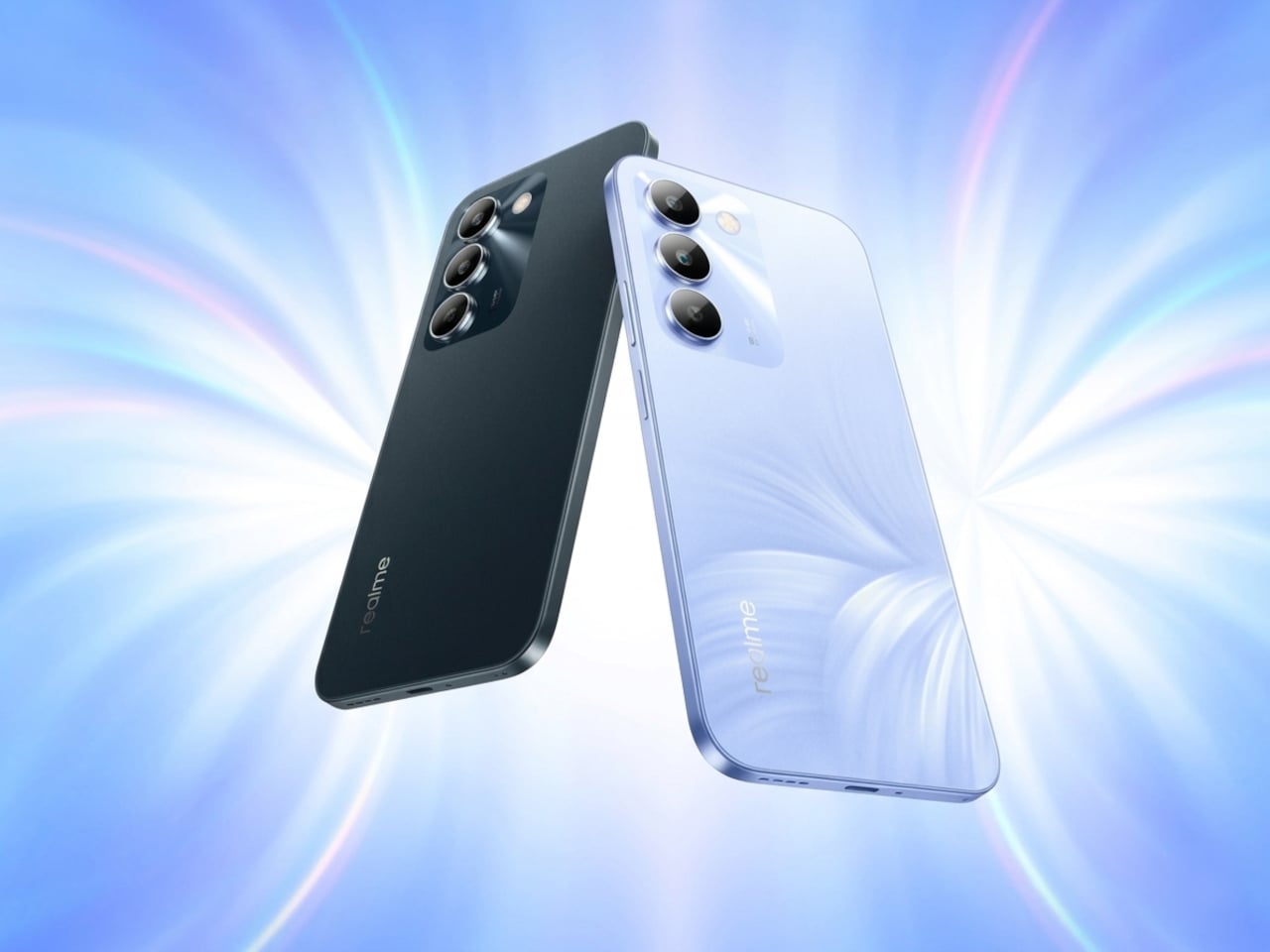
Realme’s answer to that is the C100 5G, a phone that doesn’t shy away from its budget origins but tries to get the fundamentals right. Built around the energy demands of a full-time 5G device, it leads with a 7,000mAh battery, backed by 45W SuperVOOC fast charging, a capable processor, and a 6.8-inch display that refreshes faster than most phones twice its price.

Designer: realme

Imagine the kind of day that drains most smartphones by mid-afternoon. You’re streaming music during your commute, navigating with GPS through unfamiliar streets, and then spending the evening on video calls or catching up on a show. Realme claims the C100 5G can handle nearly 20 hours of continuous video playback and over 18 hours of GPS navigation before needing a recharge.

When you do eventually need to plug in, the 45W fast charging takes care of the battery fairly quickly. There’s also 6.5W reverse wired charging built in, meaning the phone can act as a power bank for other devices when you’re away from an outlet. It also supports bypass charging, which helps reduce battery strain during extended gaming or heavy usage sessions.

Under the hood is MediaTek’s Dimensity 6300, a 6nm chip that handles 5G connectivity and everyday multitasking without much fuss. The display runs at up to 144Hz, which is genuinely rare at this price point, making scrolling and casual gaming feel noticeably smoother. It peaks at 900 nits of brightness and covers 83% of the NTSC color gamut, holding up decently outdoors.

The rear camera centers on a 50MP main sensor with an f/1.8 aperture and autofocus, capable of solid daylight photography, while the 5MP front camera handles selfies and video calls without complaint. The phone comes in two colors, Blooming Purple with a floral-patterned back and Sprouting Green, both with a matte frame and a squared-off silhouette measuring about 8.88mm thick.

Durability is also factored in, with an IP64 rating for dust and water splash resistance and a claim of 360-degree drop protection with military-grade certification. Running Realme UI 7.0 based on Android 16, the phone also supports external memory cards for additional storage. In Thailand, pricing starts at THB 6,999 (around $215) for 4GB/128GB and THB 7,499 (around $230) for 6GB/128GB.

For a budget phone, the C100 5G makes an interesting case by not competing on camera specs or premium materials, but on the one thing most users are tired of compromising on. Not everyone needs the sharpest sensor or the fastest chipset, but nearly everyone has panicked at a single-digit battery percentage at some point, and Realme clearly knows exactly who it’s building this for.

The post This $215 Phone Has a 7,000mAh Battery and Lasts 20 Hours on Video first appeared on Yanko Design.
Hier — 7 avril 2026Flux principal
À partir d’avant-hierFlux principal

Custom-built 96,000mAh power bank charges your laptop, phone, and even runs small appliances off-grid

Par : Gaurav Sood
19 février 2026 à 16:20

For power users loaded with a laptop, tablet, drone, a robot, and, of course, a smartphone, the ordinary power bank options do not make the cut. The amount of power required to keep these gadgets juiced up is considerable, especially when on the go. The only solution is a custom-made power bank that suffices all the needs of your power-hungry gadgets.

A custom-built portable power station offers a high-capacity solution for people who need to run multiple devices without reliable access to wall power. Standard consumer power banks are often too limited for users carrying a laptop, phone, tablet, router, and other gear at the same time, especially in remote or mobile situations. To solve this problem, creator Luq1308 developed the Omnibus 4×8, a DIY backpack-friendly power bank with enormous capacity and flexible output options.

Designer: Luq1308

The heart of this project is a dense battery pack made from 32 brand-new 18650 lithium-ion cells arranged in a 4S8P configuration. Each cell is rated at 3000 mAh, and when assembled into the pack and scaled for usable voltage, the complete system delivers roughly 96,000 mAh, equivalent to about 345 watt-hours (Wh) of stored energy. This substantial capacity makes it suitable for powering a range of electronics for prolonged periods without recharging. Critical to the build is a battery management system (BMS) rated for 4S and 30 amps. The BMS monitors and balances the individual cells, prevents overcharging and deep discharge, and includes multiple safety fuses. The system also draws very little power at rest, with a standby current of less than 400 microamps, helping to preserve stored energy when the unit is not in active use.

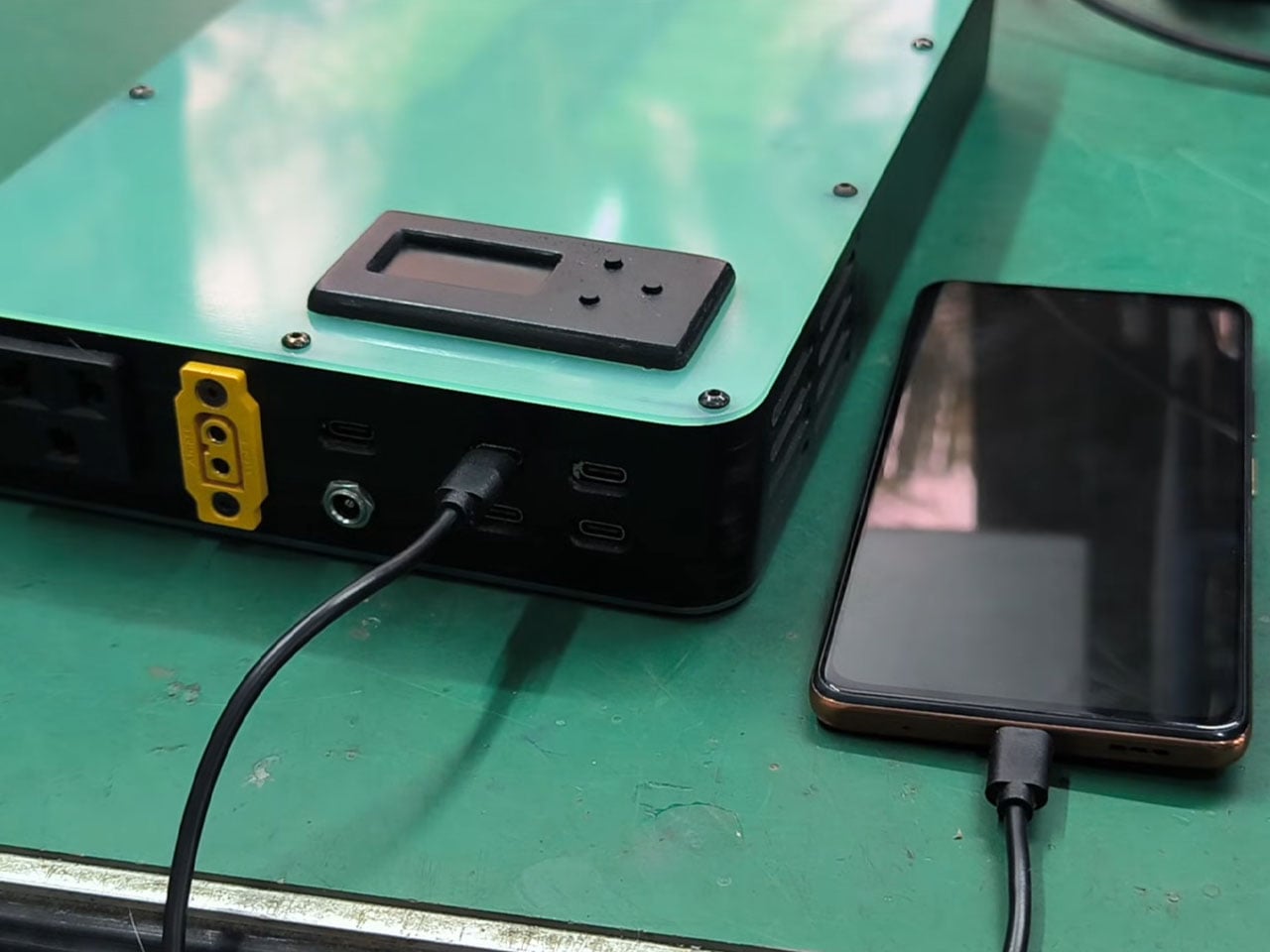
The Omnibus 4×8 offers a wide range of outputs to suit both everyday gadgets and more demanding equipment. There are four USB-C ports, each capable of delivering up to 36 watts, which is enough to charge phones and tablets simultaneously. A 100 W bidirectional USB-C port supports fast laptop charging and can also accept power input from compatible charging sources. For broader custom needs, a DC jack provides adjustable outputs between 2.7 V and 20 V, and a high-wattage XT60 connector can handle loads exceeding 400 W. A dedicated 150 W AC outlet enables the use of small appliances through an inverter, expanding the range of devices that can be supported.

Inside the power station, an ESP32-C3 microcontroller oversees system operations. It reads real-time data such as voltage, current, and temperature from sensors and displays this information on a 1.3-inch OLED screen with simple navigation buttons. Four temperature sensors monitor the battery pack, heatsinks, and inverter, and dual 40 mm cooling fans are triggered as needed to manage heat during high loads. Custom aluminum heatsinks with thermal pads are included to further reduce thermal stress.

The enclosure combines hand-cut G10 fiberglass plates for strength with 3D-printed ABS plastic sides in a subdued matte black finish. Brass spacers and mesh vents enhance airflow and protect internal components while maintaining a rugged aesthetic suitable for outdoor use. Internally, thick-gauge silicone wiring and a perfboard distribution bus with fuses connect the various modules safely and efficiently.

One notable feature of this DIY build is its adaptability. The inverter was modified to work across the full battery voltage range, and the system can accept solar input with maximum power point tracking (MPPT) for efficient off-grid recharging. All design files have been made open source on GitHub, allowing others to replicate or expand on the concept.

The post Custom-built 96,000mAh power bank charges your laptop, phone, and even runs small appliances off-grid first appeared on Yanko Design.

❌
❌