❌

Vue normale

  • ✇Yanko Design
  • 7 Japanese-Inspired Bedroom Accessories That Make a Dorm Room Feel Like a Ryokan
    A dorm room rarely arrives with any intention behind it. The furniture is standard issue, the lighting is whatever the university installed, and the walls belong to someone else’s lease. None of that stops you from shaping how the space feels. Japanese design has always found calm not through more, but through better. These seven objects apply that same thinking to the smallest rooms most people will ever live in. None of these picks need a drill, a landlord’s approval, or a subscription to any
     

7 Japanese-Inspired Bedroom Accessories That Make a Dorm Room Feel Like a Ryokan

10 septembre 2026 à 07:40

A dorm room rarely arrives with any intention behind it. The furniture is standard issue, the lighting is whatever the university installed, and the walls belong to someone else’s lease. None of that stops you from shaping how the space feels. Japanese design has always found calm not through more, but through better. These seven objects apply that same thinking to the smallest rooms most people will ever live in.

None of these picks need a drill, a landlord’s approval, or a subscription to anything. They are small, portable, and built around the same logic that shapes a good ryokan room: comfort comes from restraint, not accumulation. Each entry here handles one of four things — scent, light, sound, or surface — extremely well. Start with one, give it a few weeks, and notice how quickly the rest of the room reorganizes around it.

1. Battery-Free Aroma Diffuser

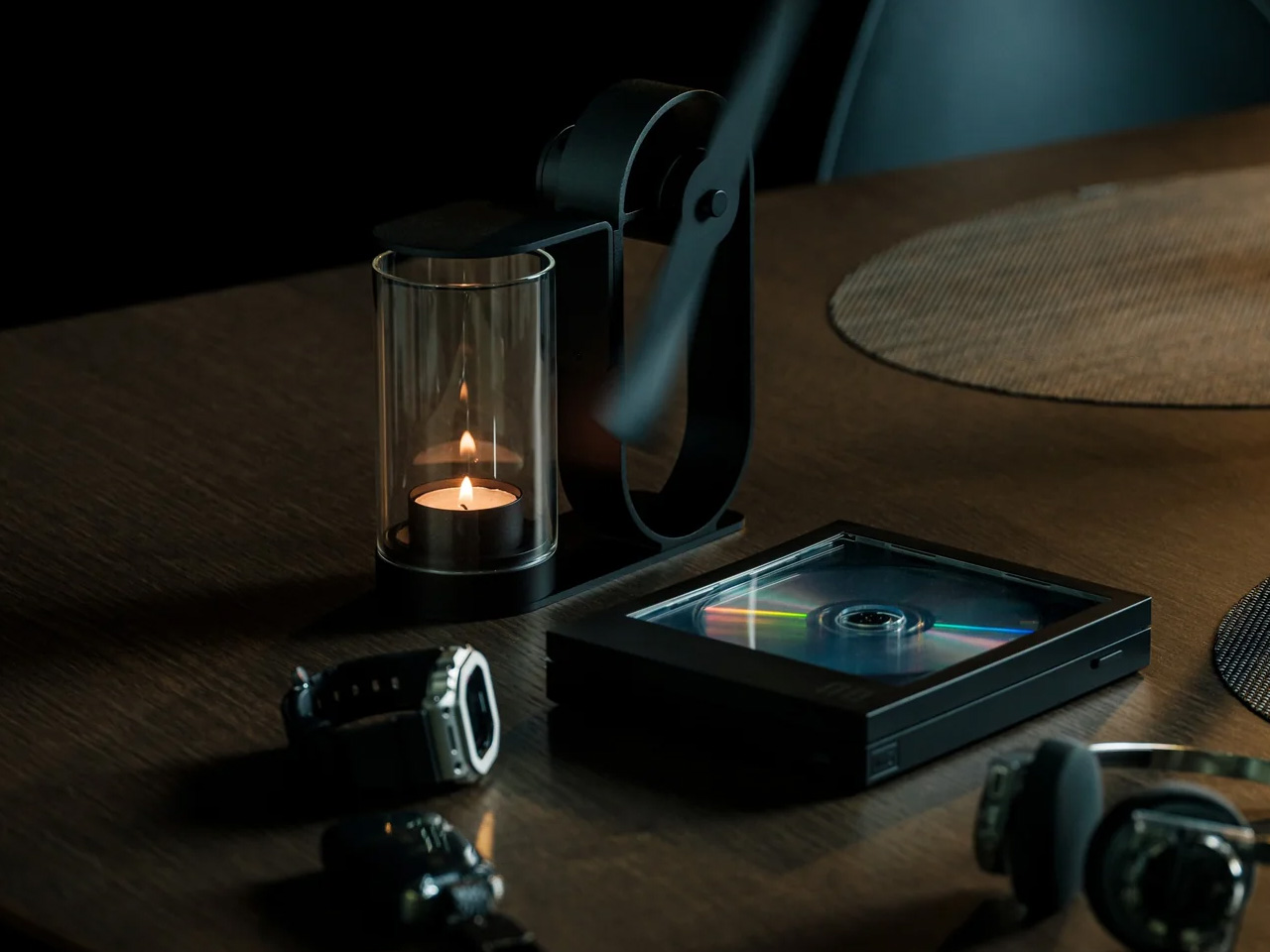
The most obvious thing about the Battery-Free Aroma Diffuser is right there in the name. No cord to manage, no batteries to replace, no USB port to compete with your laptop. A small candle sits inside a shielded housing, and the heat it generates spins a single fan blade that pushes scent further into the room than a standard candle would alone. The whole mechanism is visible from the outside, which is part of what makes it worth keeping on a nightstand in the first place.

There is something meditative about watching it work. The fan blade turns without any electricity, the scent builds slowly rather than blasting the room at once, and the exposed metalwork turns what is usually a plastic object into something closer to a piece of craft. In a dorm room where most objects compete for attention, this one earns it quietly.

Click Here to Buy Now: $290.00

What We Like

  • No batteries or cords means it works anywhere, including the awkward corner beside your bed
  • The exposed mechanism makes it look closer to a small kinetic sculpture than a gadget

What We Dislike

  • Scent only diffuses while the candle burns, so the effect does not last through the night
  • Open flame requires supervision and may conflict with dorm fire safety policies

2. REBORN PULP Acoustic Panel

Most acoustic panels solve one problem while creating another. They dampen sound but look like something salvaged from a recording studio, and nobody wants a room that looks like that. LIBGRAPHY’s REBORN PULP takes a different position entirely. Made from 100% recycled paper pulp with no plastics and no synthetic adhesives, it is fully biodegradable. The surface carries ridges and textures that reference a raked zen garden, available in colors drawn from traditional Japanese naming: natural, pale grey, celadon, and indigo.

What that means in practice is a panel that absorbs sound and reads as intentional decor at the same time, a combination almost nothing else in the acoustic category manages. The name Reborn refers to the material itself: paper that would otherwise be discarded, pressed into panels and returned to something useful. In a dorm room where wall decor is usually a poster or nothing, a REBORN PULP panel brings texture, quiet, and a considered material story from one object on the wall.

What We Like

  • The raked surface texture reads as genuine wall art, not acoustic treatment hiding behind decor
  • 100% recycled paper pulp construction with no plastics, no synthetic adhesives, fully biodegradable

What We Dislike

  • Availability outside Japan is still limited, making international purchasing complicated
  • Pricing is not publicly listed, which makes budgeting harder before you commit to inquiring

3. Portable CD Cover Player

Music in a dorm room usually comes from a phone propped against a glass. The Portable CD Cover Player changes the ritual entirely. You slot an actual CD into the body of the player, slide the album jacket into a front-facing pocket, and the artwork becomes part of what sits on your desk or hangs on the wall while the music plays. A built-in rechargeable battery and speaker mean it works anywhere you put it, no outlet or external speaker needed.

The design logic here is genuinely Japanese in its thinking: one object, handled well, replaces three. A phone stand, a music player, and wall art collapse into the same device. Priced from $199, it reintroduces the physical ritual of choosing and loading a disc, which is a deliberate act in a way that queueing a playlist never quite is. That small moment of intention is exactly what separates a ryokan from a hotel.

Click Here to Buy Now: $199.00

What We Like

  • Album art display turns a music player into a piece of rotating wall decor
  • Battery-powered and portable, so it moves freely around the room without hunting for an outlet

What We Dislike

  • Requires owning physical CDs, which most students no longer have on hand
  • The built-in speaker suits a small room but is not a substitute for dedicated audio

4. Pattern as Structure Shelf

When Japanese designer Muto Yumi set out to make furniture from paper, the result was not what most people would picture. No papier-mâché, no origami folding, no salvaged cardboard called art. What she built is a modular shelf system so structurally sound and visually precise that it makes you question most of what you assumed about material strength. The whole structure is built from rolled paper rods, and the pattern printed across each rod is not decoration. It is the joint itself.

Other paper rods slot through the pattern holes, linking each piece to the next without glue or hardware. The aesthetics and the engineering are the same thing, which is a level of design clarity rare in furniture of any material. Paper does not pretend to be something else. You can see the rolled layers at the cut ends. The pattern on each rod is both surface and structure, decoration and joint, and that indivisible coherence is what makes the shelf feel genuinely resolved.

What We Like

  • The pattern doubles as both decorative surface and structural joint, a design coherence almost nothing else achieves
  • Fully modular and hardware-free, meaning it can be reconfigured or disassembled without tools

What We Dislike

  • As a concept project, it is not yet available as a retail product to purchase
  • Paper furniture requires careful handling, and a shared dorm environment adds more risk than most

5. Infinite Solas Lamp

A dorm desk pulls double duty as dining table, reading surface, and workspace, often within the same hour. The Infinite Solas Lamp is built for that kind of restless room. It is fully wireless, running on a rechargeable battery that lasts up to 70 hours at low brightness or 6 to 7 hours at full, and the height adjusts between 22.5cm and 50cm so it fits wherever the moment calls for it, without the usual cord hunt before every use.

The color temperature runs from 2500K to 4000K with full dimming across the range, which means the same lamp that pushes you through a late assignment can settle into something much softer for reading in bed. The machined aluminum body with its anodized finish weighs just over a kilogram, enough to anchor a corner without needing shelf space.

Click Here to Buy Now: $325.00

What We Like

  • Battery life of up to 70 hours at low brightness means days between charges in normal use
  • Height adjusts from 22.5cm to 50cm so it functions equally well on a desk or nightstand

What We Dislike

  • At $325, it is one of the more expensive items on this list, which strains a dorm budget
  • Full brightness lasts only 6 to 7 hours per charge, so heavier use means more frequent recharging

6. Hinoki Bath Stools

A dorm shower is not typically where design decisions get made, but that does not mean the space is beyond improvement. Hinoki cypress lines traditional Japanese bathing rooms, carrying a natural oil that resists moisture and releases a gentle, forest-like scent that intensifies with warmth and steam. Tortoise General Store stocks these stools from $90, in three sizes, from the compact Umezawa at 10.5 inches long to the taller High Stool at nearly 15 inches.

The woodworkers of Tosaryu have perfected their craft in the mountains of Kochi, Japan since the 1970s, which matters for an object used every morning. The solid hinoki does not turn slippery underfoot the way plastic bath accessories do, and the natural oil within the wood keeps releasing scent each time it gets wet. Bringing one into a shared dorm bathroom is a small change with an outsized effect on how the space starts to feel.

What We Like

  • Natural hinoki oil releases a forest-like scent with heat and steam, making every shower more intentional
  • Three sizes available to suit different shower setups, from compact corners to wider stalls

What We Dislike

  • Solid wood requires occasional oiling to prevent drying and cracking in dry indoor climates
  • In a shared dorm bathroom with communal use, the stool will need consistent care and personal supervision

7. Aji Stone Book End Large

Most objects on a dorm desk either do a job or look good doing it. This one does both at once, without announcing either. The Aji Stone Book End Large is cut by Aoishima artisans from a single piece of granite quarried exclusively in the Aji and Mure regions of Kagawa Prefecture — a stone so dense and fine-grained it has been called the Diamond of Granite for over a thousand years. At 5.9 inches tall and 5.9 inches wide, it holds a shelf of design books in place with the kind of quiet authority that comes from actual mass, not styling.

The material itself is what makes it worth placing in a room. Aji stone is composed of quartz, feldspar, and biotite, and its tightly bonded crystals produce a polished surface with a speckled cloud pattern — called “ban” — that is unique to this stone alone and shifts subtly under different light. A ryokan room earns its calm partly through the weight and texture of real materials left to speak for themselves. One granite bookend on a shelf, holding a small stack of books, does more for a room’s mood than a shelf full of objects trying harder.

What We Like

  • Cut from a single piece of Aji granite by Kagawa artisans, so every surface marking is unique to that specific stone
  • The polished “ban” pattern shifts under different light conditions, making it a surface worth looking at even when nothing is leaning against it

What We Dislike

  • At $240, this is the highest price-per-square-inch object on the list, which is a real ask for a desk accessory
  • Genuine stone weight means it is not something to repack or move frequently, which matters in a room you vacate once a year

The Room You Sleep In Should Earn the Rest It Promises

A ryokan room earns its reputation not through luxury but through restraint. Nothing in it is accidental, and nothing is there simply to fill space. That same principle scales to a dorm room just as well. The objects on this list work because each one handles a single function with more care than the default version of that thing, and that care accumulates into something the room actually starts to feel like.

Start with light, since it does the most emotional work in the smallest footprint. Add scent next, because it transforms a room’s character without touching a single surface. Sound comes third. Surfaces come last, and they come slowly. The point is not to recreate a ryokan from scratch in a rented room. The point is to bring enough of that thinking with you that the place you sleep actually earns the rest it is supposed to give you.

The post 7 Japanese-Inspired Bedroom Accessories That Make a Dorm Room Feel Like a Ryokan first appeared on Yanko Design.
  • ✇Yanko Design
  • 7 Outdoor Gadgets For Labor Day Weekend That Make Camping Look Effortlessly Good
    The Labor Day weekend has a way of separating gear that belongs from gear that ends up in the car boot. Not by price or feature count, but by how well each object earns its spot before the drive out begins. A Labor Day weekend runs on a different logic than a single overnight. The fire has to hold. The food has to be worth cooking. Everything else has to justify the weight it occupies. The seven objects here cover the full range: fire, power, cooking, light, water, sound, and one small tool tha
     

7 Outdoor Gadgets For Labor Day Weekend That Make Camping Look Effortlessly Good

23 août 2026 à 19:30

The Labor Day weekend has a way of separating gear that belongs from gear that ends up in the car boot. Not by price or feature count, but by how well each object earns its spot before the drive out begins. A Labor Day weekend runs on a different logic than a single overnight. The fire has to hold. The food has to be worth cooking. Everything else has to justify the weight it occupies.

The seven objects here cover the full range: fire, power, cooking, light, water, sound, and one small tool that navigates all of it after dark. What connects them is a commitment to solving a specific outdoor problem with enough precision that the solution becomes the whole reason you own it. Pack these, and the only question left is where to go.

1. Portable Fire Pit Stand

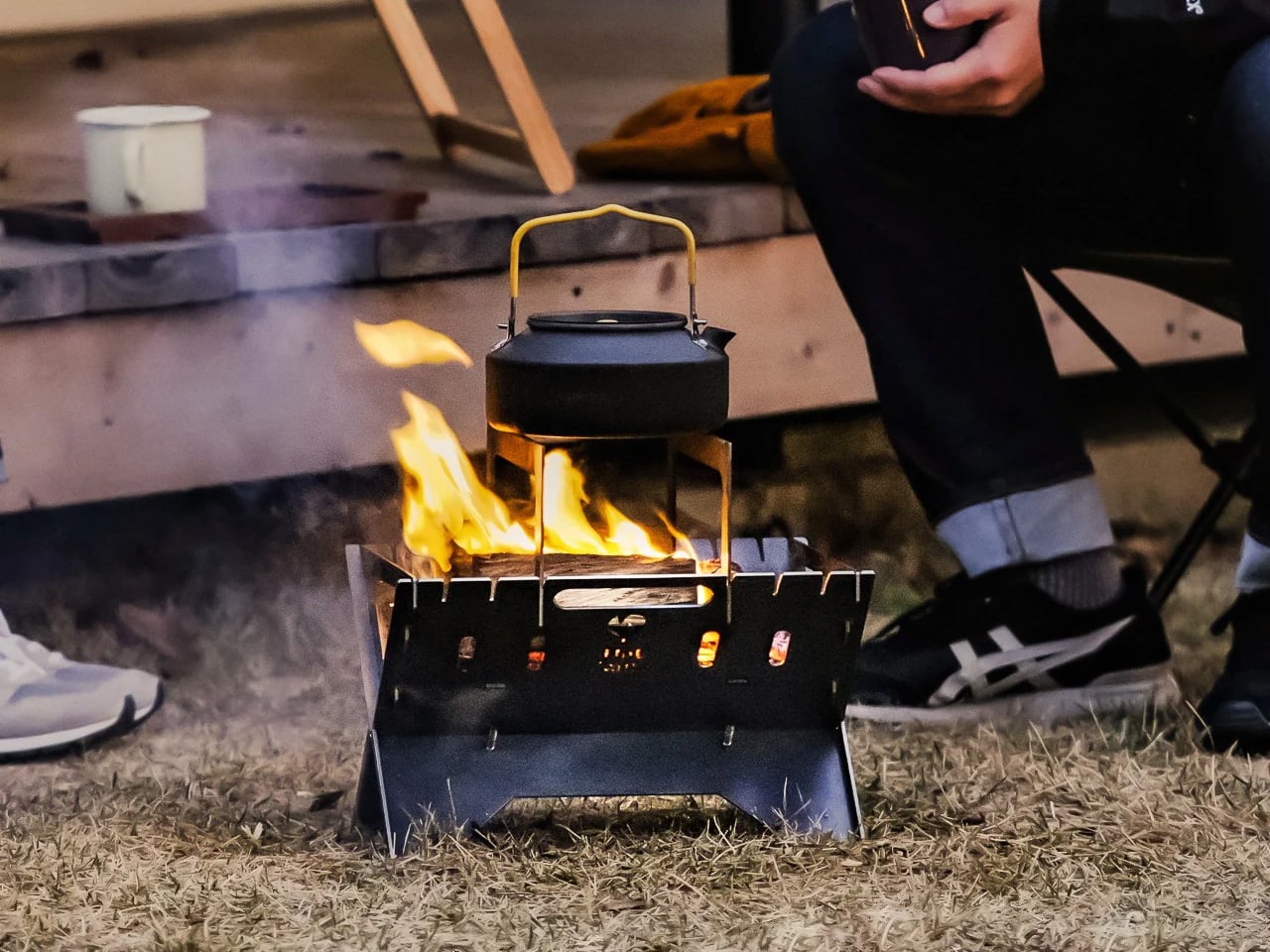
The fire pit category is full of oversized objects that need a truck bed and a second person to manage. The Portable Fire Pit Stand sidesteps that entirely. Precision-cut black steel plates resist warping under sustained heat, assemble without tools, and fold flat when the trip is over. What you get at the campsite is a fire that earns its place as both a functional heat source and the visual anchor every site needs to feel worth sitting around past sundown.

The stand elevates fire off the ground, making it viable on sensitive terrain and at campgrounds where ground fires are restricted. That single design decision opens up far more sites than a standard ring allows. The black steel construction does not bow or distort after repeated use the way cheaper alternatives do, and the footprint is compact enough to work on a picnic table or against a stone wall. It is the kind of gear that earns a permanent place in the kit after a single evening out.

Click Here to Buy Now: $119.00

What we like

  • Heat-resistant steel construction holds its shape through repeated use across multiple camping seasons
  • Elevated design meets leave-no-trace standards on campgrounds where ground fires are restricted

What we dislike

  • Steel construction adds weight that backpackers counting grams will notice over a long carry
  • No integrated grill grate, which means a separate purchase for cooking directly over the fire

2. Blavor Power Station + Camping Lantern

Most portable power stations look like they were designed by someone who has never spent a night outdoors. The Blavor PN-W43 solves that by building a 4W LED camping lantern directly into the form factor. The result is a 64,000mAh device barely bigger than a tall water bottle that covers five charging pathways — solar, AC, car adapter, USB-C, and micro USB — with bidirectional 100W fast charging and a digital display that keeps battery status visible in the field without guesswork.

The real value is how naturally the two functions coexist. When the lantern is on, the power bank is right there. When you are charging devices overnight, the ambient glow handles the tent interior without a separate light source. For campers who have always carried both a dedicated lantern and a backup battery pack, the consolidation alone pays for the weight before the first night ends. A lanyard ships in the box, which tells you someone at Blavor has actually camped.

What we like

  • Five charging pathways give genuine flexibility across grid-connected and fully off-grid environments
  • Lantern and power bank coexist without compromising each other — the dual function feels designed in, not added on

What we dislike

  • At 236.8Wh, capacity suits a weekend trip rather than an extended off-grid expedition
  • The cylindrical form can sit awkwardly alongside flat gear in a structured pack

3. Camprit TiStove

Five flat pieces of Grade 5 titanium, two foldable legs, and three interchangeable cooking panels that together weigh under 1.5 pounds and pack completely flat. The Camprit TiStove reconfigures for boiling, grilling, or searing depending on which panels you assemble, and the extra panels double as a windshield. As heat accumulates over a season, the titanium changes color naturally, giving each stove a visible record of every meal cooked on it. Yours becomes genuinely yours over time.

There is no ignition system to fail at altitude, no gas canister threading to seize in the cold, and no assembly logic that requires reading a manual after dark. The pieces lock together without fasteners and disassemble in seconds. Compatible with wood, gas burner, and alcohol, it adapts to whatever fuel the terrain allows rather than locking you into a single system that can fail or run out. For anyone who has stood over a dead stove in the cold, this addresses the problem where it starts.

What we like

  • Packs completely flat under 1.5 lbs with three interchangeable cooking configurations for different meal types
  • Compatible with any fuel source, removing dependency on a single system in the field

What we dislike

  • Requires a separate burner or fuel source — nothing is self-contained out of the box
  • Titanium panels need careful packing to avoid scratching each other in transit

4. All-in-One Grill

Skewers of meat and green onions grilling on a small portable charcoal grill with a metal insert holding a glass bottle.

Made in Japan from stainless steel, the All-in-One Grill approaches camp cooking from a completely different position than the TiStove. Where that one is built for portability and fuel flexibility, this is built for the campsite where you are staying put and eating well. A modular lid system converts it between six distinct cooking methods — barbecuing, frying, grilling, steaming, smoking, and stewing — without requiring separate cookware for each. One object covers an entire outdoor kitchen without asking for a second bag.

Japanese stainless steel holds heat evenly, cleans without drama, and does not carry the flavor of every previous meal the way cast iron can. For a long weekend where the grill is the centerpiece of three evenings rather than a convenience, this is the object that makes the drive worth it. The modular configuration grows with the meal rather than limiting it, and the compact footprint fits the full camp kit without demanding its own dedicated storage alongside everything else.

Click Here to Buy Now: $449

What we like

  • Six cooking methods in one stainless steel body remove the need to pack separate cookware for different meals
  • Japanese stainless steel construction holds heat evenly and cleans efficiently after each use

What we dislike

  • At $449, the investment makes the most sense for campers who cook seriously rather than occasionally
  • Charcoal and wood fuel require ash management that demands more effort in the field than gas alternatives

5. NoxTi Tritium Keychain

A 45mm CNC-machined Grade 5 titanium cylinder weighing 10.7 grams. The NoxTi carries a tritium vial inside a precision quartz tube with 92% light transmission and glows continuously for 25 years through radioactive decay. No switch, no battery, no charging. Tritium beta particle decay strikes a phosphor coating and produces light as a straightforward byproduct of existing. At a campsite, it marks your tent entrance, your keys at the bottom of a bag, and your gear in the dark without asking anything of you in return.

The ceramic-tipped glass breaker at the tail end adds genuine emergency utility without changing the form. When the vial dims after two decades, the titanium body stays: press the old tube out, slide a new one in. Six glow colors are available, including Apple Green for maximum visibility and Red for preserving night vision. Two silicone O-rings hold the vial suspended and centered inside the shell, which creates the impression of looking into a piece of precision engineering rather than anything from a keychain rack.

What we like

  • 25-year continuous glow powered entirely by physics, with no battery, no charging, and no failure point to manage
  • Fully user-serviceable titanium body becomes a platform you keep and update indefinitely across decades of use

What we dislike

  • Glow output is intentionally faint — it marks and locates in the dark but does not illuminate a surface
  • The tritium light source needs a short explanation before the value proposition fully lands for first-time buyers

6. GoSun Flow Solar Water Purifier

Water is camping’s most basic constraint, and the GoSun Flow addresses it at the source. A solar-powered three-stage cartridge filter eliminates 99.99% of waterborne pathogens while pumping one liter of clean water per minute from any freshwater source. The system compresses into a backpack, and the flexible faucet clamps to branches, tables, or tailgates — opening to 58mm — turning any water access point into a functional camp station. USB power keeps it running when solar is unavailable.

It doubles as a portable handwashing station and solar-heated shower. Thirty minutes of sun delivers a five-minute warm shower, which changes what clean means across a three-day trip without the bulk of carrying a separate shower bag and a purifier as two distinct items. The filter handles 1,000 liters before replacement, and the power bank driving the pump recharges through an integrated solar panel. For anyone who has ever compromised on hygiene to protect pack weight, this removes that trade-off before you even start packing.

What we like

  • Purifies 99.99% of pathogens and delivers a solar-heated shower from a single system that compresses into a backpack
  • 1,000-liter filter life with USB power backup covers a full camping season without resupply

What we dislike

  • Cannot process saltwater, which limits utility at coastal campsites
  • Multiple components increase the number of parts to track and keep together across a multi-day trip

7. RetroWave 7-in-1 Radio

The RetroWave earns its place in a camping kit through an argument that has little to do with aesthetics, even if the aesthetics are genuinely good. A tactile tuning dial, compact body, and warm visual language drawn from classic Japanese radio design make it worth looking at. What it is actually doing is more pragmatic: running AM, FM, and NOAA weather radio without an app, streaming via Bluetooth when connectivity holds, and charging via solar panel and hand-crank when it does not. Seven functions, one charging cable.

Smart speakers go silent when Wi-Fi drops. Earbuds die at the wrong moment. Phones drain precisely when you need them most. The RetroWave does not ping you, does not demand ideal conditions, and does not need a charging window before it becomes useful. It plays, charges other devices, lights, signals, and tells the time across a full weekend without complaint. At the end of the trip, it goes back into the same bag it came out of, ready for the next one.

Click Here to Buy Now: $89.00

What we like

  • Seven functions in a single body remove the need to carry and manage multiple separate items across a trip
  • Solar and hand-crank charging keep it fully operational off-grid with no outlet access required at any point

What we dislike

  • The retro aesthetic can read as decorative to buyers who have not yet used it in an actual off-grid situation
  • Shortwave reception quality varies depending on geographic location and surrounding terrain

The Campsite Has Always Been Good. The Gear Finally Caught Up.

The equipment on this list shares one quality that outdoor gear rarely earns: it removes a specific friction from the experience without replacing it with a different one. The fire stand works where others cannot. The purifier turns proximity to water into access to clean water. The stove adapts to whatever fuel the terrain provides. Each object was designed around the constraint it actually faces in the field, which is the harder and more honest design brief.

A Labor Day weekend with gear this considered starts to feel different from the first hour of setup. Not because everything is easier in an obvious sense, but because the small decisions have already been made. Where the water comes from. How the fire holds through the night. What you reach for in the dark. These are solved before the weekend begins, which leaves the actual weekend free to be what it was always supposed to be.

The post 7 Outdoor Gadgets For Labor Day Weekend That Make Camping Look Effortlessly Good first appeared on Yanko Design.

❌