Apple unveils HomeView, Apple TV 4K, HomePod mini 2 and smart home accessories. Compare prices, release dates, device requirements and subscription costs.
The post Apple Unveils HomeView and More: What Buyers Should Know appeared first on TechRepublic.
Apple unveils HomeView, Apple TV 4K, HomePod mini 2 and smart home accessories. Compare prices, release dates, device requirements and subscription costs.
Intel’s Xeon rack designs and D-series GPUs target agentic AI. Learn what IT teams should check on memory, power, compatibility and deployment readiness.
The post Intel Unveils Xeon Rack Designs and D-Series GPU Details for AI appeared first on TechRepublic.
Intel’s Xeon rack designs and D-series GPUs target agentic AI. Learn what IT teams should check on memory, power, compatibility and deployment readiness.
HomePod mini 2 can serve as a Mac speaker for movies, gaming, and video calls. Here's what Apple confirms about compatible Macs, stereo pairing, setup, and microphone limitations.
The post Use HomePod mini 2 as a Mac Speaker: What Apple Says appeared first on TechRepublic.
HomePod mini 2 can serve as a Mac speaker for movies, gaming, and video calls. Here's what Apple confirms about compatible Macs, stereo pairing, setup, and microphone limitations.
Apple's fourth-generation Apple TV 4K supports four HomePods in surround sound. Here are the confirmed speaker combinations, total hardware costs, and remaining setup questions.
The post Apple TV 4K Four-HomePod Surround Sound: Compatible Speakers and Total Cost appeared first on TechRepublic.
Apple's fourth-generation Apple TV 4K supports four HomePods in surround sound. Here are the confirmed speaker combinations, total hardware costs, and remaining setup questions.
Apple's new $200 indoor camera automatically turns away when residents return home. Here's how its privacy feature works and what remains unconfirmed.
The post Apple’s New $200 Indoor Camera Turns Away When You’re Home — for Privacy appeared first on TechRepublic.
Apple's new $299 Apple TV 4K faces Google's $149.99 TV Streamer. Compare streaming performance, voice assistants, smart-home compatibility, and value.
The post Apple TV 4K (2026) vs Google TV Streamer: Is Apple Worth $150 More? appeared first on TechRepublic.
Honor's WIN 2 phones bring dual cooling fans, with a fan-equipped gaming tablet set for an October 21 launch in China. See the features and buyer trade-offs.
The post Honor Unveils Dual-Fan Gaming Phones: What Buyers Should Know appeared first on TechRepublic.
Honor's WIN 2 phones bring dual cooling fans, with a fan-equipped gaming tablet set for an October 21 launch in China. See the features and buyer trade-offs.
In September this year, Google announced its 'Googlebooks' as a premium laptop counterpart to its budget-conscious Chromebooks, rather than a replacement. It wouldn't have made much of a blip on my radar if the company hadn't paired with some of my favorite OEMs to build them.Indeed, Google isn't building any first-party devices. Unlike Chromebook, these new Android-based offerings come only from OEMs like Acer, ASUS, Dell, HP, and Lenovo. 14-inch Windows laptops
In September this year, Google announced its 'Googlebooks' as a premium laptop counterpart to its budget-conscious Chromebooks, rather than a replacement. It wouldn't have made much of a blip on my radar if the company hadn't paired with some of my favorite OEMs to build them.
Indeed, Google isn't building any first-party devices. Unlike Chromebook, these new Android-based offerings come only from OEMs like Acer, ASUS, Dell, HP, and Lenovo. 14-inch Windows laptops have quickly become my favorite, with ASUS' Zenbook in the lead, so the $1,299 ASUS Googlebook 14 is intriguing.
I think it's a great opportunity to steal consumer windows marketshare from MS, not enterprise.
With that in mind, could I ever seriously expect the general public to adopt another operating system with fewer features than Windows, less customization than Linux, and some pricing sensibilities of Mac? Offered a chance to test-drive a sample from ASUS, I couldn't resist. Here's how it went.
ASUS Googlebook 14: What I like
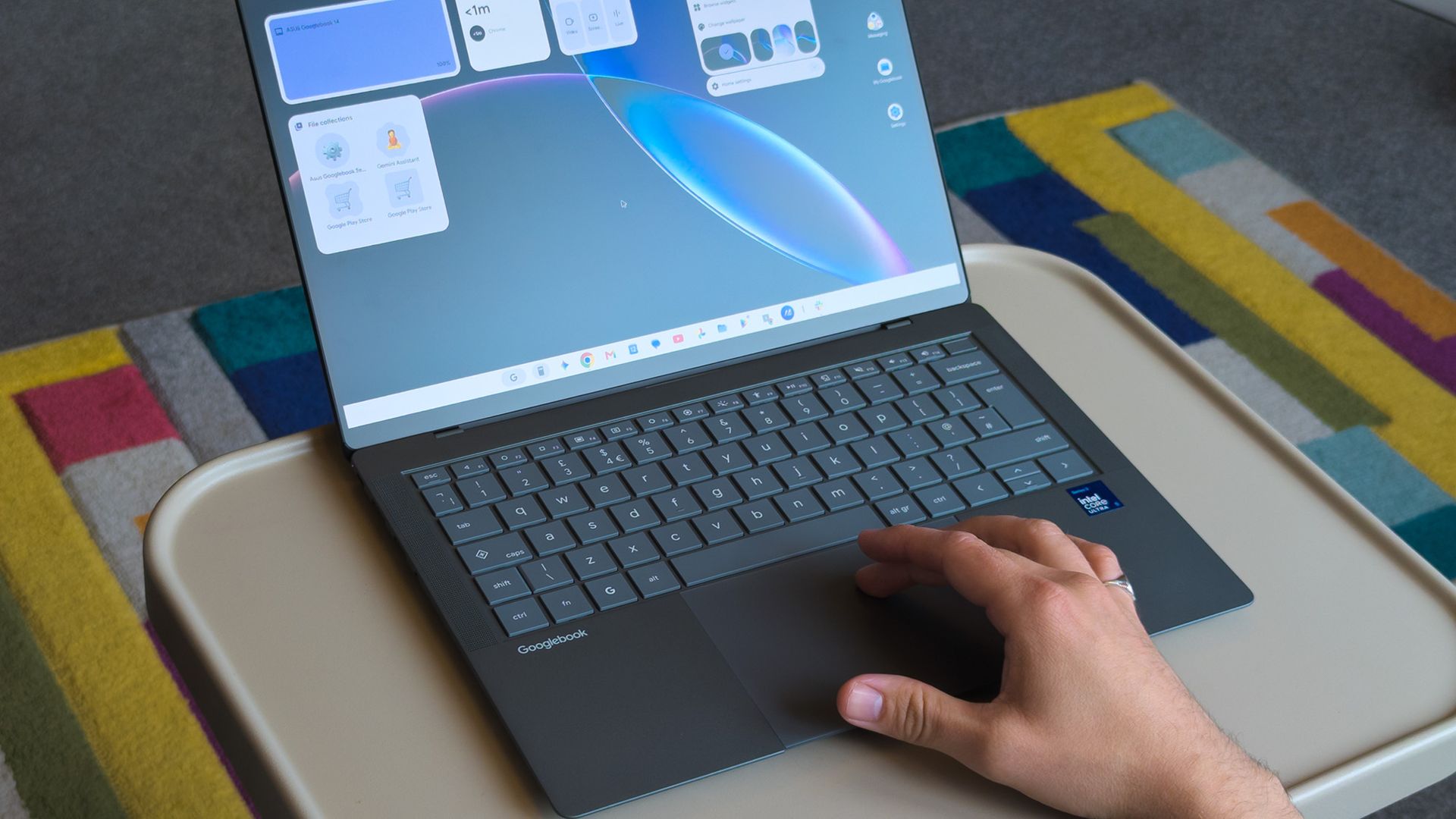
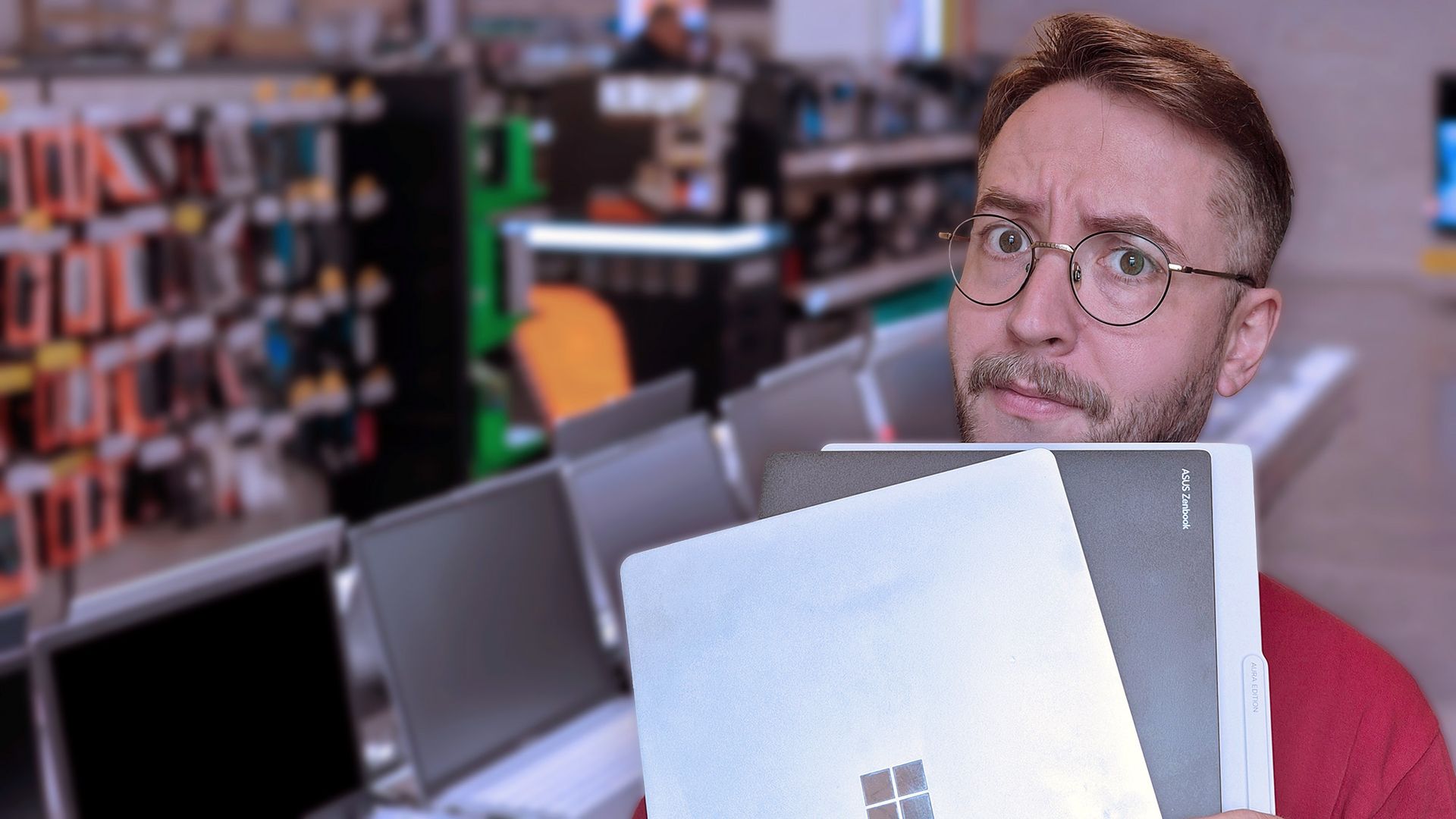
Lightweight 14-inch laptops are my absolute favorite, but I'll always prefer Windows. (Image credit: Ben Wilson | Windows Central)
The ASUS Googlebook 14 looks (and feels) great, which didn't surprise me, given how much I've enjoyed the company's recent design evolutions. Its chassis is coated in a magnesium-aluminum alloy, which explicitly avoids being labeled as the same Ceraluminum as its Zenbooks, but it's extremely similar.
Perhaps most impressive is its weight; ASUS claims the Googlebook 14 starts at 0.99 kg (2.18 lbs), but my scales place it closer to 0.97 kg (2.13 lbs). I'm a big fan of this emerging trend, having adored the Zenbook A14 at 2.18 lbs. Yes, it comes with extra screen flex, but I don't make a habit of bending my laptops.
ASUS claims the Googlebook 14 starts at 0.99 kg (2.18 lbs), but my scales place it closer to 0.97 kg (2.13 lbs)
OLED displays rarely disappoint either, and sure enough, this 16:10 panel also looks great. I'm still getting used to matte screens, and frankly, I almost want to avoid touching it to prevent fingerprints. Nevertheless, it's rated for up to 450 nits of brightness and 100% DCI-P3 color gamut coverage. Good for creators.
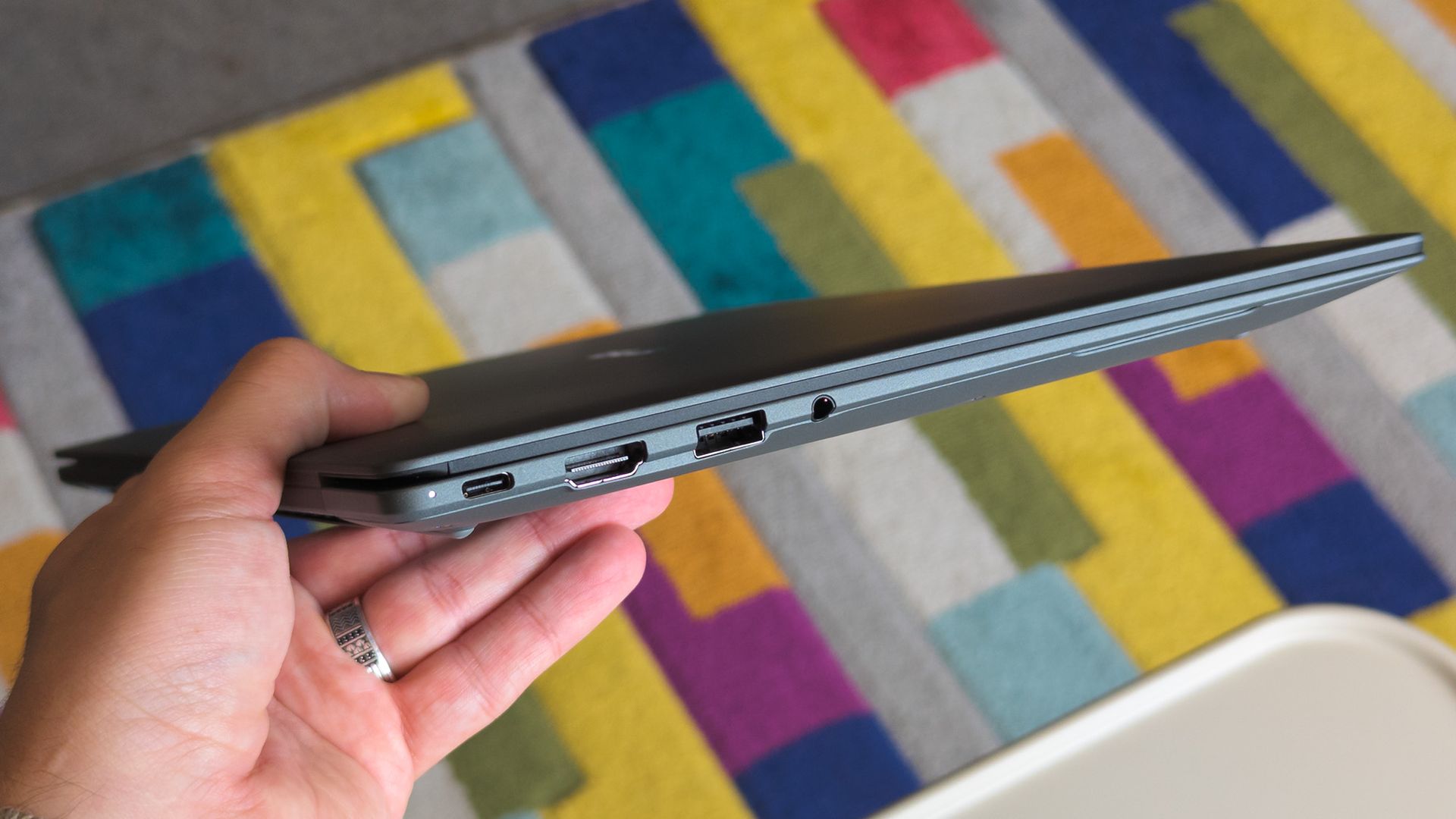
Finally, the chiclet keyboard has a 1.5mm key travel, which is relatively deep and feels good enough. The 6-inch haptic touchpad, however, is immediately fantastic. Left-clicking works anywhere, and it responds convincingly when pressed. I'll even commend the I/O for keeping USB-A ports around.
ASUS Googlebook 14: What I don't like
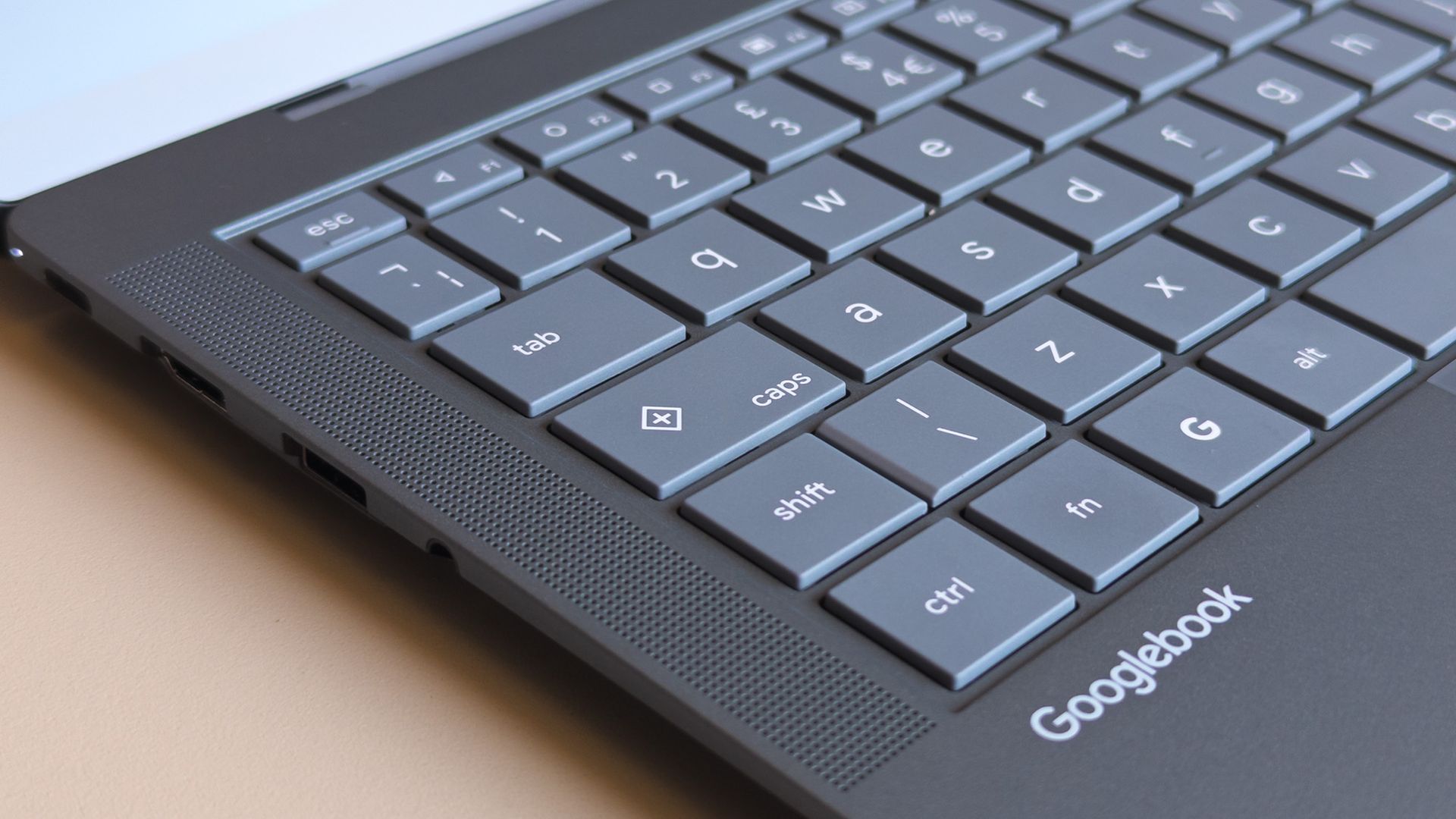
Caps Lock doesn't work without the Fn key, opening a quick context menu if pressed by itself. (Image credit: Ben Wilson | Windows Central)
Before I had a chance to experience much of Googlebook OS (which can refer to itself as ChromeOS during setup), I was irked by a few user experience oddities. Granted, these are primarily related to my expectations as a Windows user, but when I pressed the Caps Lock button, I expected capital letters.
Instead, Caps Lock defaults to activating a context menu indicated by a plus (+) icon, a sort of one-size-fits-all window that resembles Microsoft's 'Emoji and more' picker. Pressing Fn + Caps Lock delivers what I really wanted, which should be no big deal, just a learning curve. But it keeps going.
Even with increased hardware prices you can just buy a full Windows laptop or a MacBook Air for that much. Only a fool would buy one of these.
Fozzy_Bear, Windows Central Community
There's no delete key, so I need Fn + Backspace for that, which I wouldn't mind if double-tapping the touchpad would drag to select multiple words, but it doesn't work that way; I can only double-tap one word at a time. I suppose I might get used to that, too. Shift + arrow keys still select full lines, after all.
Some aren't as drastic; a single haptic click at the top of an app with maintained contact allows me to drag it around, while double-tapping restores or maximizes as I'd expect. On the other hand, there's no right-click area by default, instead requiring a two-finger tap unless I toggle that touchpad tweak in Settings.
Finding apps that work best on a laptop screen is made easier with Google's app ratings.Google | Windows CentralUnfortunately, some apps fall back on their web versions, keeping you in the browser.Google | Windows CentralExpect to see an AI consent prompt when you open almost every app or feature for the first time.Google | Windows Central
Again, most of these gripes can be so easily dismissed as nothingburger preferences carried over from decades of habits formed on Windows, which is fair, but trying to carry out my daily workflow on the ASUS Googlebook 14 soon had me wondering how much broad appeal this platform will have.
Like an Android smartphone, Google supplies your apps from the Play Store. Starting with Slack shows how a Googlebook handles compatibility by dividing apps into categories ranked from best to worst: Made for desktop, Optimized for desktop, Compatible with desktop, Better on the website, and Built for mobile.
Chrome OS was already able to run android apps; it just looks like they have decided to build it on top of android instead of chrome and its only on premium apps.
Tony Holness, Windows Central Community
Slack feels like an unlucky starting place for my Googlebook adventure since it lands in the 'Better on the website' category, made worse by a message that says, "This app cannot be installed" as a PWA (Progressive Web App). Installing it anyway is, indeed, a lesser experience than using it in Chrome.
Opening the 'Compatible with desktop' Microsoft Edge brings the entire Googlebook to a strange halt, preventing even Task Manager from opening until I restart, and my chosen video editing suite, DaVinci Resolve, isn't available at all. I know it's in its infancy, but Google's OS isn't thrilling me so far.
ASUS Googlebook 14: What happens next?
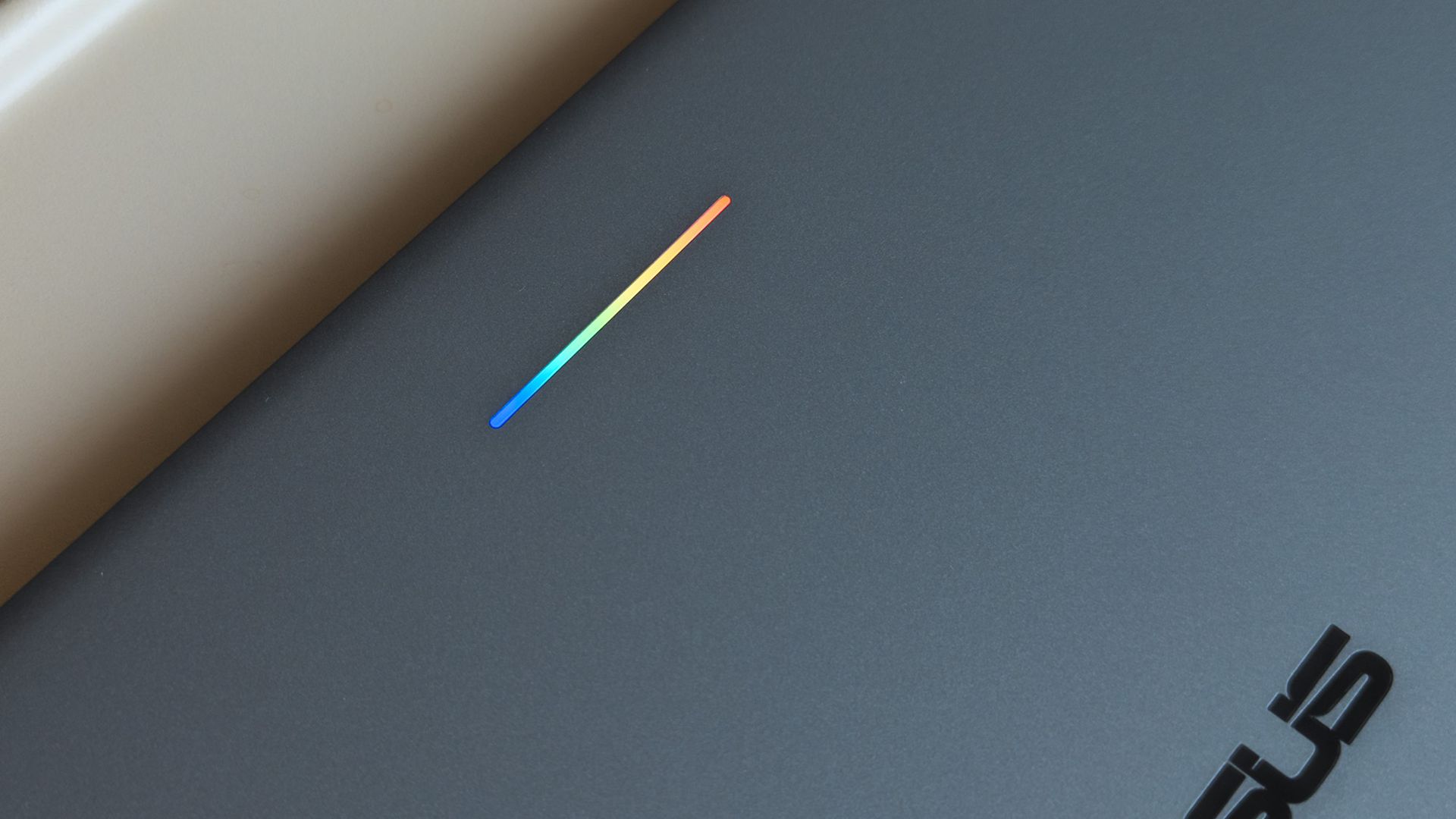
A small 'Glowbar' on Googlebook lids illuminates with RGB colors, but you'll almost never see it. (Image credit: Ben Wilson | Windows Central)
All of these impressions came in the first 24 hours of having my hands on this interesting, AI-centric laptop, and there's more to see. Gemini begs me to use it at every turn, but my next step is syncing my Pixel 7 Pro or Galaxy Z Flip 7 to see how features like 'Cast my apps' actually perform.
I'm not writing it off yet, but my first impressions aren't exactly stellar. Even the RGB Glowbar gimmick offers little more than battery-life visibility; almost as frivolous as the illuminated "look what I have" logos on gaming laptop lids. On the software side, OS updates will likely fix many of my complaints.
Still, I won't ignore the outspoken Windows users who have pushed back on Copilot AI integrations in Microsoft's leading OS for the past few years, and I can only wonder who would adopt something fundamentally the same, except built by Google. Are Googlebooks perhaps only appealing to developers?
Either way, I'm impressed with ASUS but unconvinced by Googlebook. The hardware is fantastic, but it comes from the same people who built the Zenbook, so that's hardly a revelation. I'll keep using Googlebook OS for a few more days and see how it feels once the launch hype dies down.
Join us on Reddit at r/WindowsCentral to share your insights and discuss our latest news, reviews, and more.
Recently, it was revealed that fans can expect FSR4 on the likes of the Xbox Ally X, something my colleague Jez Corden covered. But now, thanks to god-knows-what-kind-of wizardry, a new mod developed by lonewolf0622 has managed to get Nvidia’s own DLSS 3.7 working on AMD’s hardware, including the ROG Ally X and Steam Deck.For those unfamiliar with what DLSS and FSR do, they basically let hardware render games at lower resolutions to improve performance, then upsc
For those unfamiliar with what DLSS and FSR do, they basically let hardware render games at lower resolutions to improve performance, then upscale that image without tanking visual quality. Think of it as a game rendering at 720p and upscaling to 1080p for a much sharper image.
The mod, called HelixSR, is quite clever in how it achieves this. Rather than requiring NVIDIA hardware, it effectively tricks the hardware in believing it's AMD's FSR 3.1, allowing games to use DLSS's image reconstruction instead.
In testing from various creators, we actually know whether the mod is good or not. And early testing says, yes, it is. Over on ResetEra, users have been comparing HelixSR against FSR 4. One test showed that upscaling at 1080p took around 7 milliseconds with HelixSR, compared to 11 milliseconds using FSR 4.
It's not an insignificant difference, particularly for handhelds where performance is already rather limited. Of course, there's more to upscaling than raw performance, and whether the resulting image looks better is up for debate.
YouTuber BlackHeart909 has also been experimenting with the mod, reportedly achieving between 35 and 40 FPS in CONTROL Resonant on the ROG Ally X at 1080p. Dropping the output to 720p apparently allowed the game to maintain a locked 60 FPS, which is rather impressive.
There are some catches, though. HelixSR currently only works with DirectX 12 games, and those without FSR 3.1 support need an additional tool called OptiScaler.
Still, I find this whole thing fascinating. NVIDIA has spent years making DLSS a major selling point for its graphics cards, and now we're seeing people bring the technology to AMD-powered handhelds, which is just something I never thought we'd see.
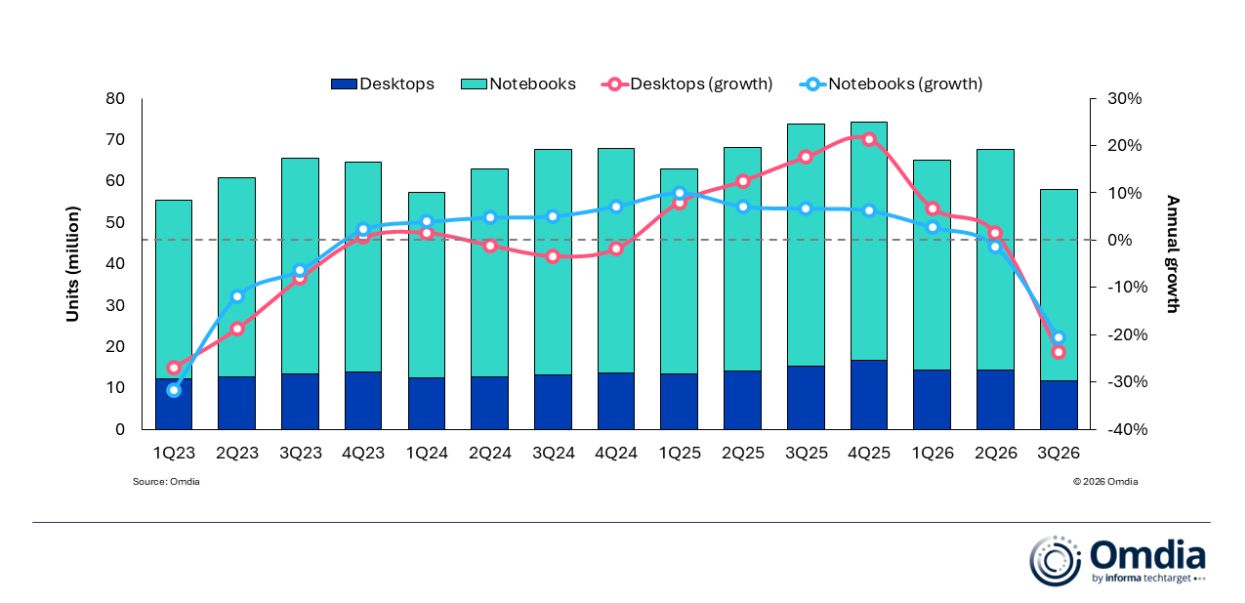
IDC and Omdia, two major analyst firms, recently released independent reports showing massive year-over-year drops in global PC shipments in Q3 2026. IDC shows a slightly rosier 20.1% decline compared to Q3 2025, whereas Omdia reports a 21.2% decline.Breaking that down, Omdia notes that desktop shipments dropped 23.5% and laptops 20.6% to arrive at the average.This decline is not normal. As IDC notes, Q3 almost always beats Q2, but this year, it's dropped by 9.1%
IDC and Omdia, two major analyst firms, recently released independent reports showing massive year-over-year drops in global PC shipments in Q3 2026. IDC shows a slightly rosier 20.1% decline compared to Q3 2025, whereas Omdia reports a 21.2% decline.
Breaking that down, Omdia notes that desktop shipments dropped 23.5% and laptops 20.6% to arrive at the average.
This decline is not normal. As IDC notes, Q3 almost always beats Q2, but this year, it's dropped by 9.1% sequentially.
Is there a need to panic? Probably not, at least not more than the new normal, as RAM and storage shortages have pushed prices beyond what many users are willing to pay. Let me explain.
Why did global PC shipments fall off a cliff in Q3 2026?
Omdia's chart shows a more detailed breakdown of the year-over-year PC shipment decline in Q3 2026. (Image credit: Omdia)
Both analysts agree that the sharp drop in global PC shipments is due to vendors and supply channels buying up stock earlier in the year. IDC's Jitesh Ubrani says it's the result of "strong first half pull-in" which has "thrown off the usual seasonality".
Despite the RAM and storage crisis already digging its claws into the market in Q1 2026, global PC shipments actually rose by 3.2% on the back of panic buyers, Windows 10 upgraders, and advance vendor stockpiling.
That momentum has finally tailed off in a major way. Ubrani remarks:
Channels are now worried about carrying too much inventory into a market where high prices are suppressing demand. That could translate into promotions and some short-term relief for consumers, but we don’t expect pricing anywhere near what it was a year ago.
Jitesh Ubrani for IDC
Omdia's Research Director Ishan Dutt agrees, noting that "pull-forward activity buoyed the PC market in the first half of the year" and that the sharp drop in Q3 2026 "comes as no surprise."
Which PC brand got hit the hardest in Q3 2026?
Lenovo is one of the PC brands that got hit hardest in Q3 2026. (Image credit: Windows Central)
Omdia and IDC both provide detailed numbers as to how many shipments each major PC brand was able to send out in Q3 2026.
According to IDC, HP saw the biggest year-over-year decline at 30.9%, with Lenovo coming in second at a 22.6% decline. Omdia's numbers put HP at -31% and Lenovo at -22.9%, so not much difference.
Moving down IDC's list, Dell was hit by a 25%decline, ASUS by 8.6%, and other brands together by 14%. Despite Apple growing strongly in Q2 2026 thanks to the launch of its MacBook Neo, it also dropped off by 11.3% in Q3.
What does the drop in global PC shipments mean for regular buyers?
It's not easy shopping for a new laptop in 2026. (Image credit: Getty / Ben Wilson | Windows Central)
Basically, this sharp drop in shipments doesn't mean that you should suddenly see a return to more regular prices.
Vendors and suppliers had to buy their PCs in the first half of 2026 at a much higher price than usual, and they're not likely keen on losing money as they get rid of stock in Q4.
RAM and storage costs have not improved, and IDC's Ubrani notes that "with macro conditions worsening, the risk is that the outlook for the next few quarters gets worse before it gets better."
Offering buying advice here sort of feels futile. On one hand, yes, some vendors might realize they need to offload stock and will offer some tasty discounts that bring prices back into the realm of reality. Unfortunately, I can't guarantee that will happen any time in the near future.
On the other hand, laptops might be at their most affordable right now, and waiting for a great deal will only end up making you pay more later this year or next year. It's a frustrating predicament, to be sure.
It will be interesting to see what Q4 2026 has in store for the global PC market.
Join us on Reddit at r/WindowsCentral to share your insights and discuss our latest news, reviews, and more.
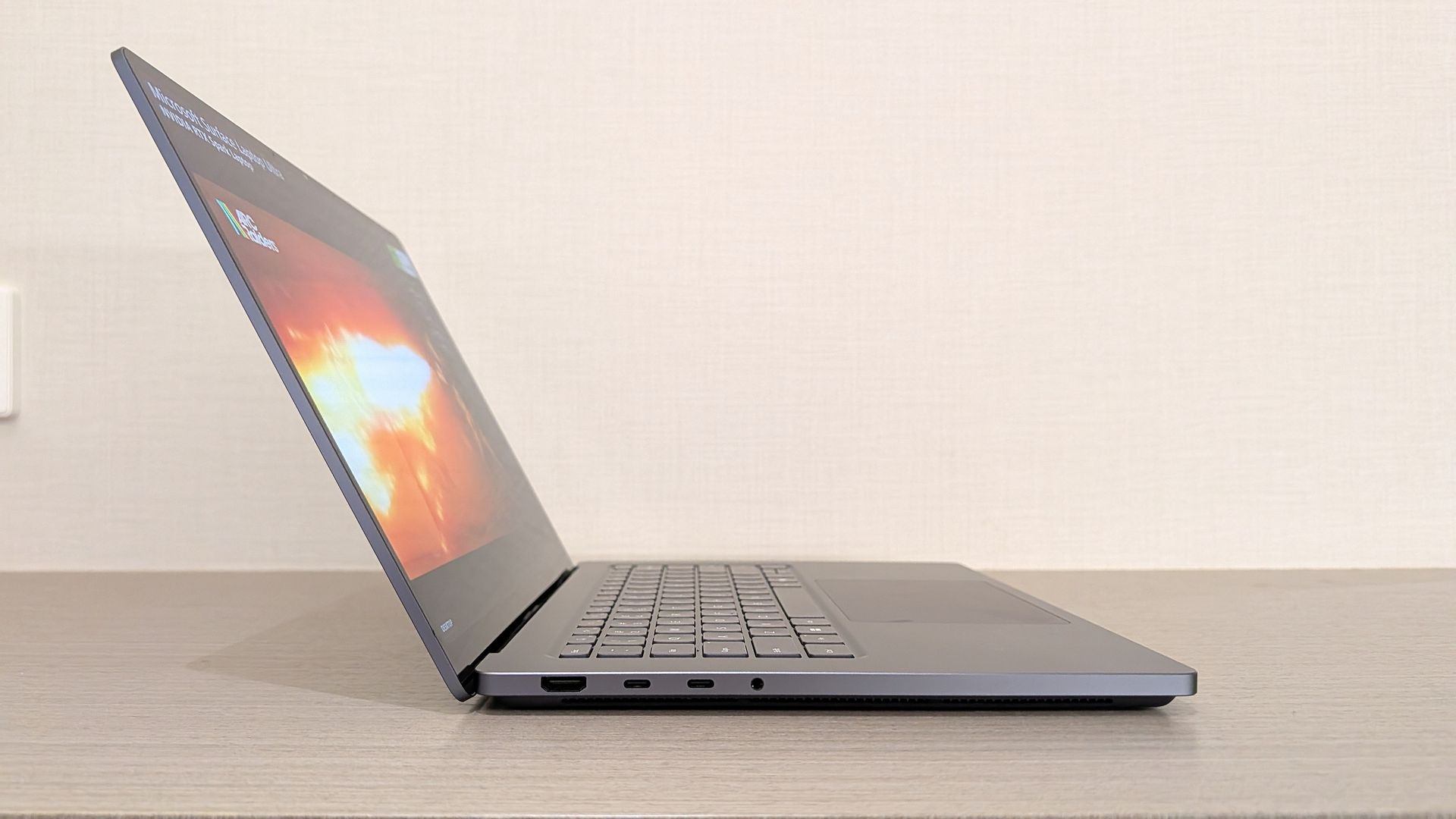
Microsoft's new Surface Laptop Ultra is here. Preorders are live and shipments start next week. The PC packs an RTX Spark processor and has a mini-LED display and a nice range of ports, including the special magnetic USB-C port.Surprisingly, the Surface Laptop Ultra has the lowest starting price of all the RTX Spark laptops. But Microsoft is pushing to compete with more than just Windows laptops. The tech giant will give you up to $1,000 cash back when you trade
Microsoft's new Surface Laptop Ultra is here. Preorders are live and shipments start next week. The PC packs an RTX Spark processor and has a mini-LED display and a nice range of ports, including the special magnetic USB-C port.
Surprisingly, the Surface Laptop Ultra has the lowest starting price of all the RTX Spark laptops. But Microsoft is pushing to compete with more than just Windows laptops. The tech giant will give you up to $1,000 cash back when you trade in a MacBook Pro and buy a Surface Laptop Ultra.
The cash back you receive would be on top of the trade-in value, not in place of it. Rather than the funds being dispensed at checkout, Microsoft will pay the cash back after receiving and evaluating your device.
"A promotional offer is extra value added to your trade-in when your device and purchase qualify," says Microsoft. "For example, you may receive a promotional bonus in addition to your device's standard trade-in value. The total amount is paid after your device is received and evaluated, not applied at checkout."
Built around the NVIDIA RTX Spark platform with an N1X CPU, RTX GPU, and up to 128GB of unified memory, the Surface Laptop Ultra hits new performance heights for power users. It's all contained in a gorgeous chassis with a mini-LED display and tons of ports. Prices start at $2,599.99, and units will begin shipping on October 16, 2026.
If you stack trade-in value with cash back, you can effectively save thousands of dollars on a Surface Laptop Ultra. Of course, that would require you to have a MacBook Pro in excellent condition that has incredibly high specs, all while wanting a Surface instead. I'm not sure how many people will check all those boxes.
Perhaps the bigger news here is that Microsoft specifically made a cash back offer targeting MacBook Pro owners. That's a clear shot at Apple and a sign that Microsoft wants to compete with what are often considered the best laptops on the market.
As you'd expect, the value of your device trade-in depends greatly on the model you're trading in and the condition that device is in. The highest trade-in value I was able to get through Microsoft's website was $2,115 for a MacBook Pro 16-inch (2025) with 128GB of RAM and 4TB of storage.
Interest in the Surface Laptop Ultra has been strong from our readers. It will be interesting to see if that sentiment is widespread and translates to sales.
Join us on Reddit at r/WindowsCentral to share your insights and discuss our latest news, reviews, and more.
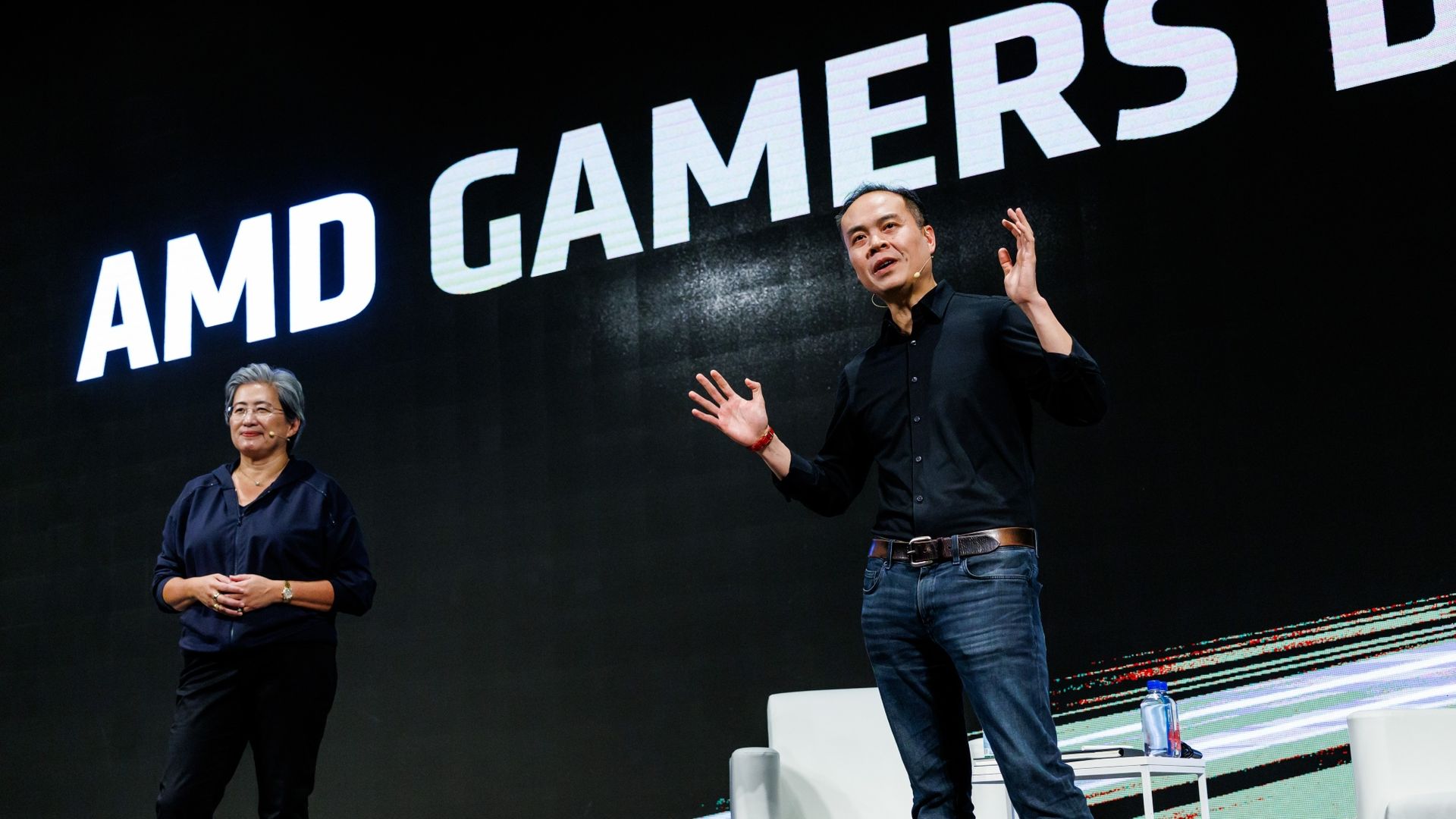
AMD's Senior VP and GM of Computing and Graphics, Jack Huynh, recently revealed to Korean tech outlet TheElec that the company intends to launch FidelityFX Super Resolution 4 (aka FSR 4) on more than just its Radeon RX 9000 and RX 7000 discrete graphics cards before 2027.Huynh notes that the FSR 4 saturation will not only cover new APU hardware, but also existing APUs, gaming handhelds, and gaming laptops. We will expand the machine learning and AI-based FSR 4 te
AMD's Senior VP and GM of Computing and Graphics, Jack Huynh, recently revealed to Korean tech outlet TheElec that the company intends to launch FidelityFX Super Resolution 4 (aka FSR 4) on more than just its Radeon RX 9000 and RX 7000 discrete graphics cards before 2027.
Huynh notes that the FSR 4 saturation will not only cover new APU hardware, but also existing APUs, gaming handhelds, and gaming laptops.
We will expand the machine learning and AI-based FSR 4 technology, which was preemptively introduced in existing external graphics cards, to the entire product lineup by the end of this year, including APUs, gaming laptops, and handheld devices. We plan to respond in two directions: existing APUs and launching new product lines."
Jack Huynh, AMD Senior VP and GM of Computing and Graphics (Translated from TheElec)
For us here at Windows Central, this is big news. Many of our favorite gaming handhelds, including the ROG Xbox Ally X and Legion Go, use an AMD Ryzen APU, which, to this point (and until AMD flips the switch), has only had official access to FSR 3.
I say official, because savvy enthusiasts have actually been able to get a leaked version of FSR 4 running on hardware suitable only for FSR 3 and 3.5, like the APUs used in gaming handhelds.
This hack delivered the change from FSR 3's manually tuned upscaling to FSR 4's machine learning approach, but it didn't come without some performance drawbacks.
According to Huynh, the secret to bringing FSR 4 to such a wide range of AMD GPUs is a new custom model.
We have newly developed a dedicated model of FSR 4 that is lightweight and tailored for APU environments. We are focusing on delivering excellent game graphics and low latency.
Jack Huynh, AMD Senior VP and GM of Computing and Graphics (Translated from TheElec)
AMD teased this advancement earlier this year when it unveiled FSR 4.1 for its Radeon RX 7000 GPUs, saying it needed more time to develop the lightweight alternative. About four months later, we now have confirmation that it's arriving before 2026 is through.
Is this what AMD needs to compete with Intel?
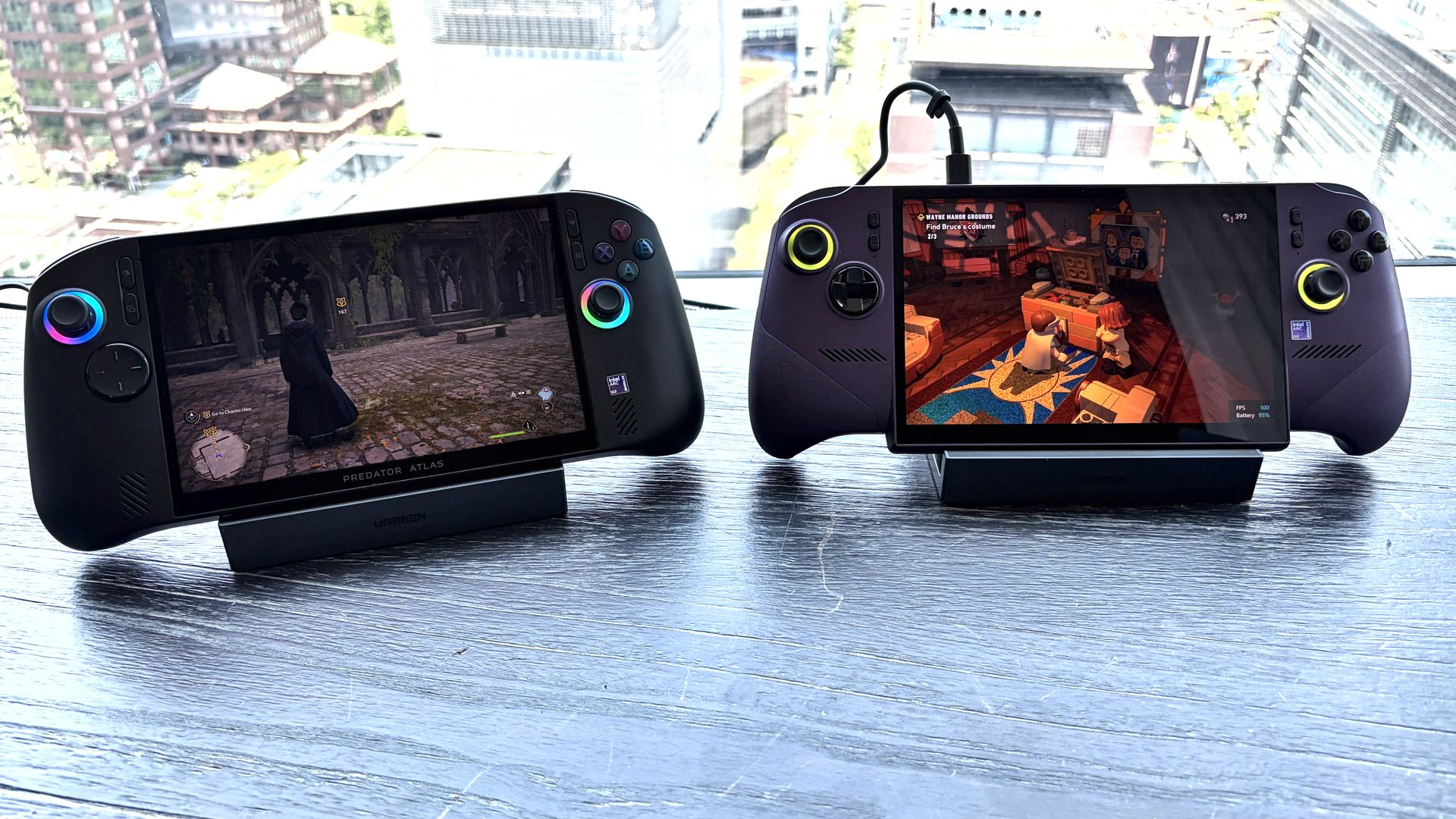
The Acer Predator Atlas 8 and MSI Claw 8 EX AI+ at Computex 2026. (Image credit: Future)
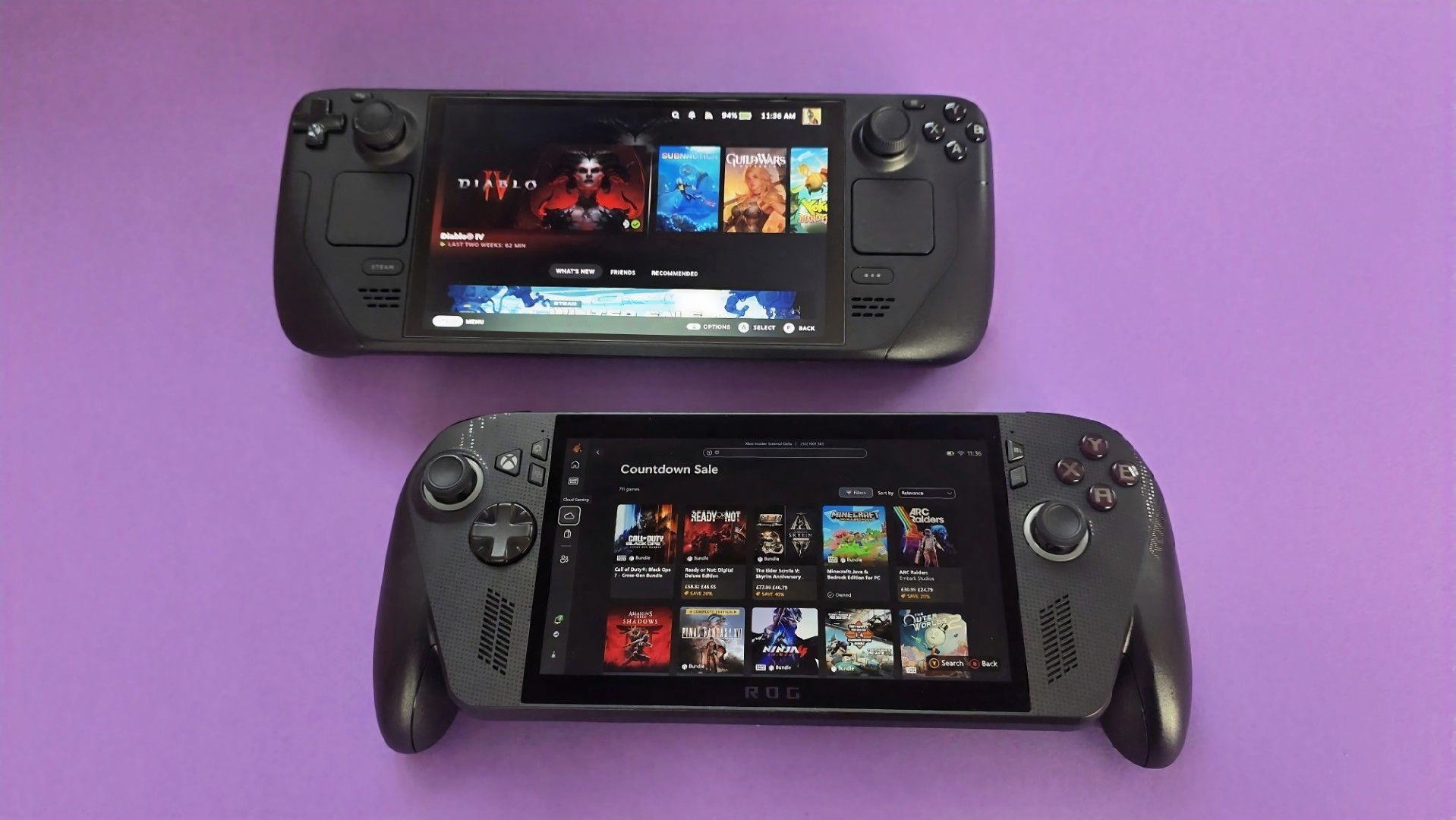
My first thought, as I was enjoying some smooth gameplay on MSI's handheld, was that AMD had better cook something up quickly to compete with Intel.
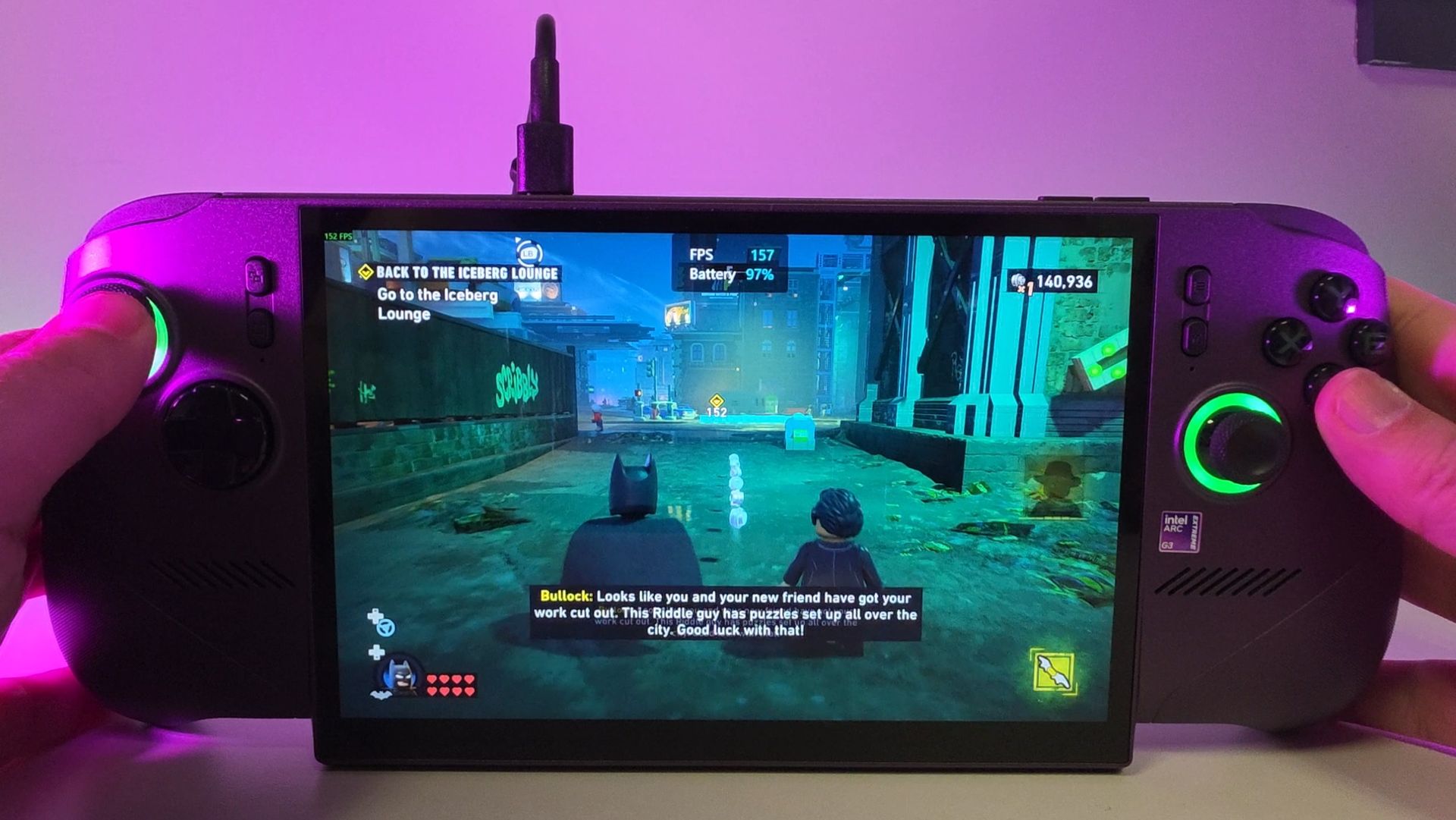
My Steam Deck can barely run LEGO Batman, but it's no trouble hitting 155+ FPS with the Intel-powered MSI Claw 8 EX AI+. (Image credit: Daniel Rubino)
Intel's package is all about superb performance with XeSS 3 multi-frame generation and low latency, with Team Blue claiming roughly 42% better performance than AMD's Ryzen Z2 Extreme at 35W.
If you've also had a chance to try out this latest wave of Intel handhelds, you know exactly what I'm getting at.
Part of the problem with AMD's existing handhelds is that they don't have access to machine learning upscaling, and the gap between FSR 3's hand-tuned abilities and FSR 4's AI-based approach is noticeable.
That will change whenever AMD actually drops FSR 4 down to its existing APUs. The real upshot here is that countless handheld gamers are going to suddenly get a boost without paying anything extra.
With Intel's G3/G3 Extreme handhelds generally costing significantly more than AMD alternatives, this should also help keep Ryzen-powered devices in the mix.
The bottom line here is that it's great to see AMD catching up to its competition, no matter how late it arrives. And I'll be keeping my eye on whatever next-gen APUs AMD is working on next.
Join us on Reddit at r/WindowsCentral to share your insights and discuss our latest news, reviews, and more.
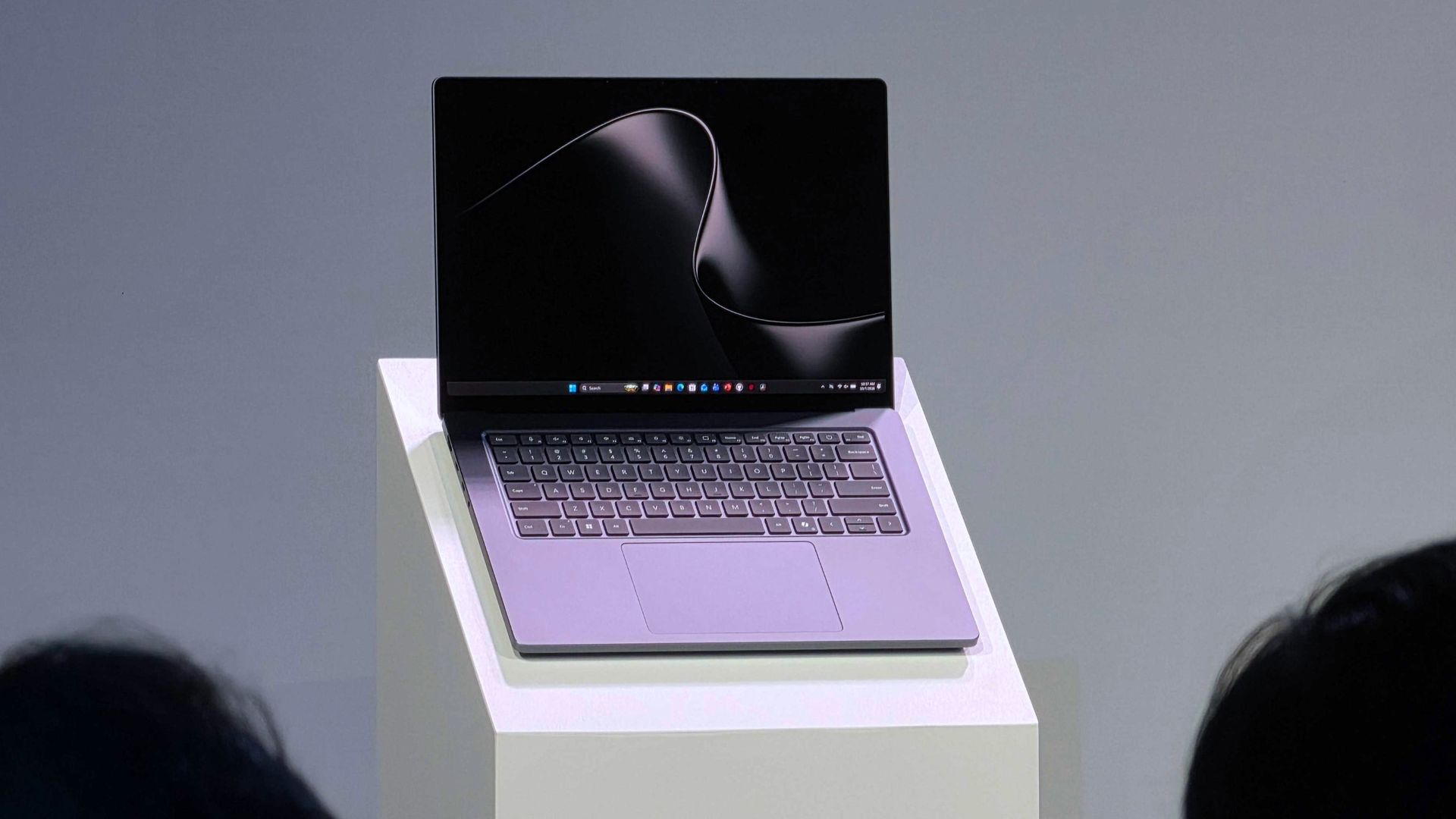
Microsoft's Surface Laptop Ultra is part of a new wave of Windows laptops running on NVIDIA's RTX Spark platform. It was first revealed at Computex 2026, and Microsoft followed up with pricing, release date, and more feature details at a special event on October 7, 2026. Prices are confirmed to start at $2,599.99, and models are expected to begin shipping on October 16.The Surface Laptop Ultra is the most powerful Surface device yet thanks to its ARM-based NVIDIA
Microsoft's Surface Laptop Ultra is part of a new wave of Windows laptops running on NVIDIA's RTX Spark platform. It was first revealed at Computex 2026, and Microsoft followed up with pricing, release date, and more feature details at a special event on October 7, 2026. Prices are confirmed to start at $2,599.99, and models are expected to begin shipping on October 16.
The Surface Laptop Ultra is the most powerful Surface device yet thanks to its ARM-based NVIDIA System-on-Chip (SoC) with up to 20 CPU cores, 6,144 Blackwell RTX GPU cores, and 128GB of unified memory. Microsoft built the Surface Laptop Ultra for "world makers," also known as developers, scientists, engineers, and creators, who need a fresh take on performance and portability in the age of AI.
PC prices could stay high through 2027 as IDC forecasts an 18.3% increase in average selling prices. Here's what PC buyers and IT teams should know.
The post PC Prices Could Stay High Through 2027: What Buyers Should Know appeared first on TechRepublic.
Tesla's Optimus robot production reportedly increased in 2026. Here's what to know about Elon Musk's 2027 sales target, manufacturing challenges, and rollout.
The post Elon Musk’s Tesla Optimus Timeline: Robots Targeted for 2027 Launch appeared first on TechRepublic.
Tesla's Optimus robot production reportedly increased in 2026. Here's what to know about Elon Musk's 2027 sales target, manufacturing challenges, and rollout.
Microsoft finally gave us more information about the Surface Laptop Ultra, including price, release date, and features, at a special event on October 7. It's confirmed that the RTX Spark-powered PC will begin shipping on October 16, and preorders are live now, starting at $2,599.The reactions to this announcement have been interesting. It seems like a fair number of people were expecting a higher baseline price, while others are just happy that Surface now has a
The reactions to this announcement have been interesting. It seems like a fair number of people were expecting a higher baseline price, while others are just happy that Surface now has a true MacBook Pro competitor for the age of AI.
Here's what people are saying about the new Surface Laptop Ultra and its RTX Spark platform.
The Windows community reacts to the Surface Laptop Ultra's pricing
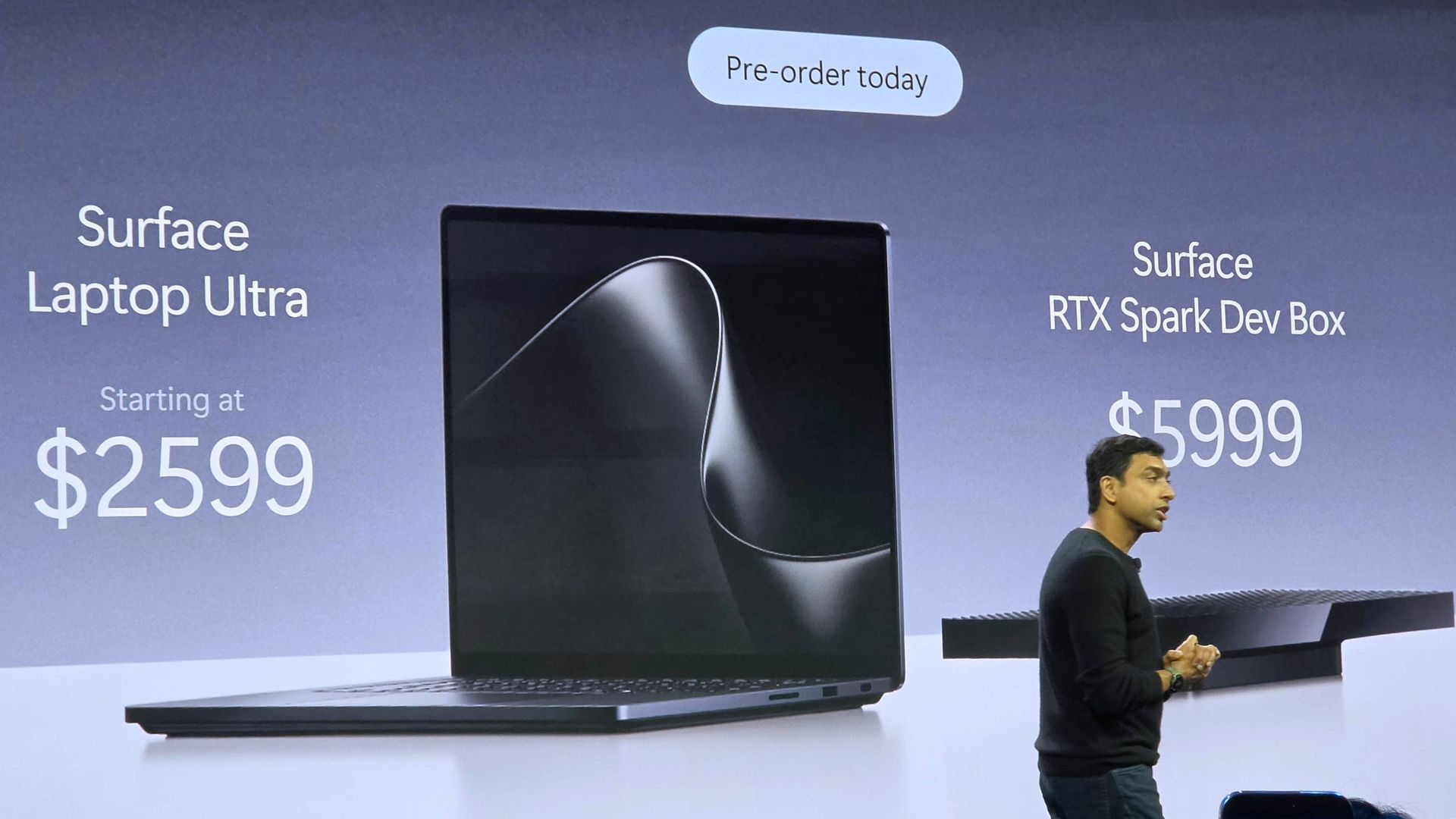
The Surface Laptop Ultra's price reveal at the October 7 Microsoft event. (Image credit: Daniel Rubino | Windows Central)
Responding to a Windows Central subreddit thread regarding other RTX Spark laptops and their pricing, user Icybubba noted, "And somehow the Surface seems to be the cheapest out of all those."
Another redditor, Valterri_Its_James, remarked, "Lowkey the pricing isn't absolutely horrendous. 32GB costs $3300 which is about the same as the ROG Zephyrus G14."
Not everyone is loving the Surface Laptop Ultra's pricing
The Surface Laptop Ultra from our hands-on time at Computex. (Image credit: Windows Central / Zac Bowden)
Others aren't so sure that the Surface Laptop Ultra is a reasonable price, especially once they dig into the configuration options and see what's available for each chip.
For reference, the Laptop Ultra has two RTX Spark options available: a more affordable option with an 18-core CPU and 5120-core GPU, or a more expensive option with a 20-core CPU and 6144-core GPU.
The price difference between these two models is roughly $1,100, though the more powerful Spark defaults to at least 32GB of RAM (compared to 24GB) and a 1TB SSD (compared to 512GB).
The announced feature that seems to be getting a lot of attention alongside pricing is the Surface Laptop Ultra's breakaway USB-C port.
It's sort of a mashup between Apple MagSafe and Surface Connect, designed to pull out of the laptop rather than ripping it off a desk should you trip on the cable. It's designed to work with any USB-C cable, and the port offers full functionality.
There are, of course, plenty of detractors noting that it took Microsoft this long to finally copy Apple MagSafe. That's not exactly true; Surface Connect was always magnetic and would break away if jarred. The move to the more ubiquitous USB-C form factor erased that failsafe, and Microsoft has now reintroduced it.
It's also worth pointing out that MagSafe does not handle any data and is for power only. The Surface Laptop Ultra's USB-C port handles both.
I want to know what you think!
We're a community here at Windows Central, and I'm always interested in your opinions. I want to know what you think about the Surface Laptop Ultra's pricing, configuration options, and features in more detail, so please be sure to leave a comment below!
Built around the NVIDIA RTX Spark platform with an N1X CPU, RTX GPU, and up to 128GB of unified memory, the Surface Laptop Ultra hits new performance heights for power users. It's all contained in a gorgeous chassis with a mini-LED display and tons of ports.
Apple Watch Ultra 4 and Garmin Fenix 9 Pro offer phone-free connectivity, but subscription fees, satellite coverage, and battery life change the equation.
The post Apple Watch Ultra 4 vs Garmin Fenix 9 Pro: The Hidden Costs of Going Phone-Free appeared first on TechRepublic.
Apple Watch Ultra 4 and Garmin Fenix 9 Pro offer phone-free connectivity, but subscription fees, satellite coverage, and battery life change the equation.
AMD's Ryzen 7 9850X3D leads in gaming, while Intel's Core Ultra 7 270K Plus delivers much stronger multi-threaded performance for less.
The post Ryzen 7 9850X3D vs Core Ultra 7 270K Plus: Which CPU Is Better in 2026? appeared first on TechRepublic.
Samsung's 9100 Pro and WD Black SN8100 are flagship PCIe 5.0 SSDs, but independent tests reveal meaningful differences in sustained writes, thermals, and value.
The post Samsung 9100 Pro vs WD Black SN8100: Which Is Better? appeared first on TechRepublic.
Samsung's 9100 Pro and WD Black SN8100 are flagship PCIe 5.0 SSDs, but independent tests reveal meaningful differences in sustained writes, thermals, and value.
Samsung's S95H and LG's G6 share a $2,499.99 55-inch MSRP but differ on brightness, reflections, HDR formats, gaming latency, and warranty.
The post Samsung S95H vs LG G6 OLED: Which TV Is Better? appeared first on TechRepublic.

 Connexion