❌

Vue normale

  • ✇Yanko Design
  • These Five 3D-Printed Lamps Shape Light With Mazes and Moving Rings
    The relationship between technology and craftsmanship is evolving rapidly, and 3D-printed lighting sits at the center of this transformation. What once belonged purely to industrial manufacturing has now become a creative medium for designers, artists, and architects. Through digital modeling, parametric experimentation, and sustainable fabrication, 3D-printed lamps are redefining how ambient light interacts with interiors. These sculptural objects are more than functional fixtures. They merge
     

These Five 3D-Printed Lamps Shape Light With Mazes and Moving Rings

23 octobre 2026 à 12:20

The relationship between technology and craftsmanship is evolving rapidly, and 3D-printed lighting sits at the center of this transformation. What once belonged purely to industrial manufacturing has now become a creative medium for designers, artists, and architects. Through digital modeling, parametric experimentation, and sustainable fabrication, 3D-printed lamps are redefining how ambient light interacts with interiors.

These sculptural objects are more than functional fixtures. They merge precision engineering with artistic expression, creating lighting that feels organic, customizable, and emotionally engaging. As digital craft evolves, here is how 3D-printed lamps are shaping a future where light becomes both atmosphere and architecture.

1. Parametric Light Sculptures

Traditional lighting design often begins with hand sketches and material studies, but digital craft introduces a more fluid design process. Using parametric software, designers can manipulate patterns, geometries, and textures in real time. This allows lighting forms to evolve naturally through algorithms and experimentation.

The result is a new language of illumination where every curve, perforation, and layer influences the diffusion of light. Designers can create highly detailed structures that would be difficult or impossible to produce through conventional manufacturing. Digital precision transforms lamps into immersive visual experiences.

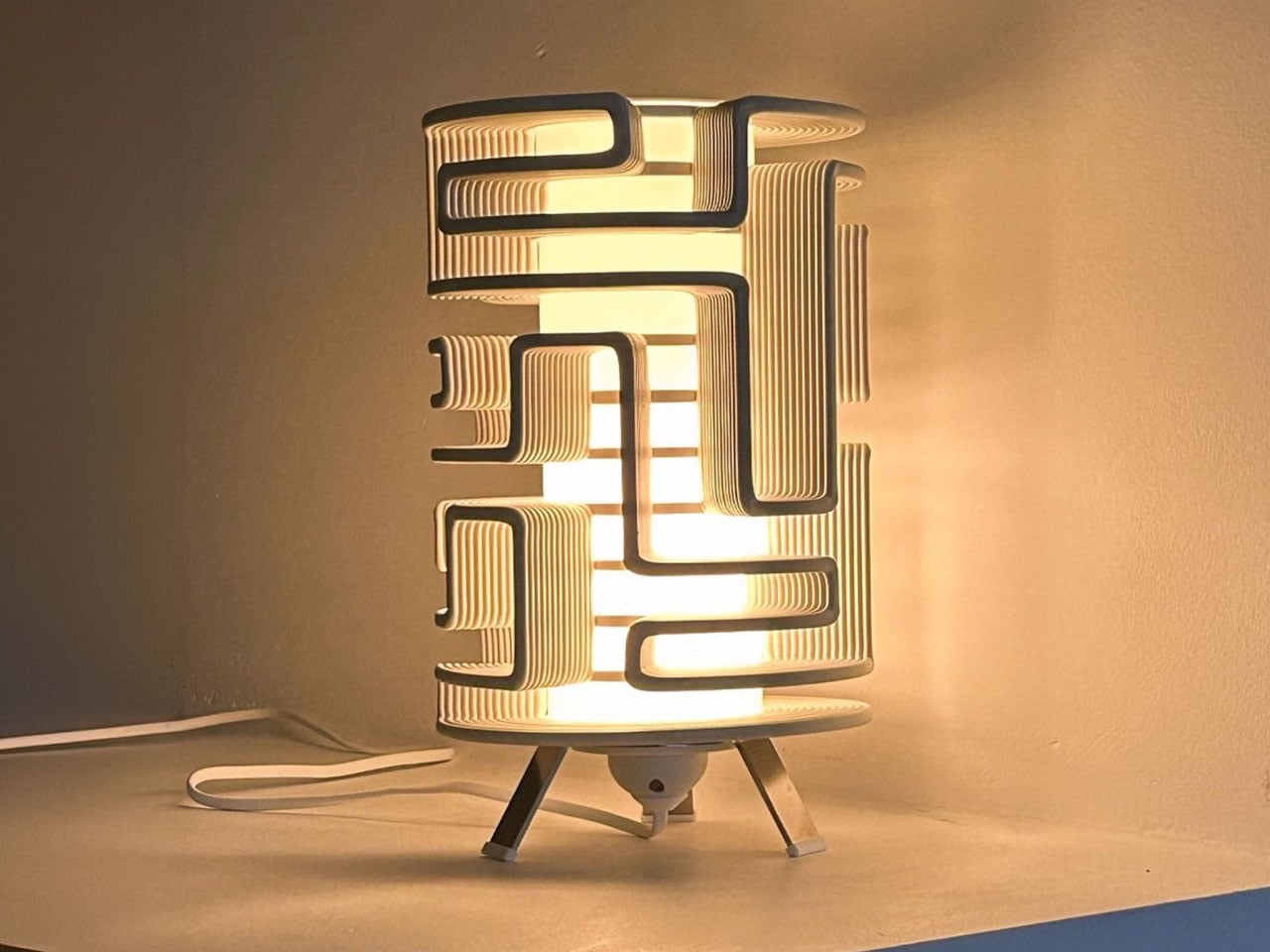
The Maze Lamp transforms experimental 3D printing into a sculptural lighting piece filled with movement, texture, and individuality. Created by designer Stijn van Aardenne, the lamp features intricate winding lines produced through an industrial 3D printing process that moves across a rotating axis. This technique creates mesmerizing maze-like patterns that wrap around the cylindrical form, casting dramatic shadows and ambient light throughout the space. Even when switched off, the lamp stands as a striking decorative object with an artistic and futuristic presence.

Each Maze Lamp is unique, as the flowing patterns are generated through a randomized printing process, ensuring no two pieces are ever identical. Crafted using recycled plastic sourced from discarded refrigerator doors, the design also embraces sustainability while celebrating digital craftsmanship. The layered structure creates a glowing effect that feels both mysterious and architectural, turning the lamp into a functional work of art.

2. Layered Printing Creates Soft Illumination

One of the most fascinating aspects of 3D-printed lamps is how layered fabrication affects light quality. During the printing process, thin material layers form subtle textures that interact beautifully with illumination. These ridges scatter light softly, creating a warm and ambient glow within interiors.

Instead of harsh brightness, the lamp becomes a medium for atmosphere. The printed patterns generate shadows and gradients that shift depending on viewing angles and light intensity. This blend of texture and luminosity turns ordinary lighting into a sensory and sculptural feature.

The Alherd Collection by YET FAB transforms lighting into a sculptural exploration of nature, technology, and atmosphere. Inspired by the organic growth of coral formations and the erosion of natural stone, the collection features porous, cellular structures created through advanced computational design and custom 3D printing. Founded by Ilya Kotler, Anastasiya Kotler, and Rael Kaymer, the studio blends biomimicry with digital fabrication to create lamps that glow like living forms while adding a soft ambient presence to contemporary interiors.

The collection includes table, floor, and pendant lamps, all sharing a unified visual language that adapts beautifully across different scales. Crafted from recyclable plastic, each lamp is made to order and can be customized in various finishes and colors. Integrated LED lighting softly illuminates the textured surfaces, producing a warm, atmospheric glow that feels both futuristic and organic.

3. Sustainable Materials Shape Modern Lighting

Sustainability has become a defining factor in contemporary product design, and 3D-printed lighting responds directly to this shift. Many designers now use biodegradable plastics, recycled polymers, and plant-based materials to produce environmentally conscious lamps. Digital fabrication also reduces material waste compared to traditional manufacturing methods.

Since objects are printed only where material is required, excess production is minimized. Designers can also manufacture locally, reducing transportation emissions and unnecessary inventory. This approach reflects a future where digital craft aligns aesthetics with responsible production practices.

The Drop Light by Teixeira Design Studio redefines everyday desk lighting through a thoughtful blend of functionality, sustainability, and minimalist design. Created in collaboration with Oftwise Studio, the lamp is 3D printed entirely from recycled plant-based PLA and features an integrated storage tray within its sculptural base. Designed to organize essentials like charging cables, earphones, and small accessories, the lamp transforms clutter into a seamless part of the design while maintaining a clean and contemporary aesthetic suited for modern interiors and workspaces.

The design highlights the versatility of 3D printing through contrasting textures and finishes. Its matte, tactile base offers durability and warmth, while the smooth, semi-translucent shade softly diffuses light to create a calm, ambient glow. The layered printing details feel intentional rather than industrial, emphasizing craftsmanship and precision. Combining sustainable materials with intelligent functionality, the Drop Light stands as a refined example of modern lighting design where utility, environmental consciousness, and understated elegance exist in perfect balance.

4. Customization Redefines Personal Spaces

3D printing allows lighting design to move beyond mass production toward personalization. Lamps can now be customized in size, texture, color, and form according to the needs of individual users or specific interiors. This flexibility creates stronger emotional connections between objects and spaces.

For homeowners and designers, customization means lighting can adapt to modern lifestyles. Organic forms inspired by nature, futuristic geometric structures, or minimal sculptural silhouettes can all be produced with ease. The result is lighting that feels unique rather than standardized.

The lighting collection from Gantri focuses on sustainable, design-led lamps made using plant-based, sugar-derived PLA materials. Each product is 3D printed to achieve precise forms, soft textures, and environmentally responsible construction. The designs combine modern aesthetics with functional lighting solutions suited for compact and contemporary interiors. The material choice ensures durability while maintaining a low environmental impact, making the lamps both practical and sustainable for everyday use.

The collection includes table, desk, and ambient lighting designed to enhance workspace and home environments. Products like sculptural desk lamps, multi-functional tray lights, and ambient mood lighting solutions offer features such as diffused illumination, space-saving bases, and integrated utility functions. Many designs emphasize minimal silhouettes, warm LED lighting, and ergonomic light distribution to reduce eye strain. Across the range, the focus remains on combining functionality, clean design, and eco-conscious production through advanced 3D printing technology, resulting in versatile lighting objects that suit modern living spaces.

5. The Fusion of Art, Technology, and Atmosphere

3D-printed lamps exist at the intersection of digital innovation and artistic craft. Designers are no longer limited by traditional tools or manufacturing constraints. Instead, they can experiment freely with fluid geometries, intricate lattices, and biomorphic forms that transform illumination into art.

As these lamps glow, they create immersive environments where technology feels human-centered rather than mechanical. Ambient lighting becomes an emotional experience shaped by texture, transparency, and shadow. This fusion of craft and computation reflects the future of contemporary design culture.

The Armadillo series by OHR Design explores how 3D printing can move beyond novelty objects into functional lighting systems. Inspired by the layered armor of the armadillo, the design transforms a simple shade into a kinetic, adjustable structure made of concentric printed rings. Originally developed from the OHRB tea light holder, the Armadillo introduces a flexible lighting concept where form directly controls illumination. The compact version stands at 240 mm and works as a bedside or accent light, while maintaining a sculptural presence even when unlit.

The Armadillo XL expands the concept into a full-scale desk lamp at 373.8 mm tall, designed for standard light bulbs and stronger everyday use. Its adjustable ring system allows users to open or close the shade, shifting light from a soft ambient glow to a focused beam depending on the need. Instead of being a fixed object, the lamp becomes interactive, letting the user physically shape lighting conditions.

These 3D-printed lamps transform digital craft into atmospheric experiences, blending technology, sustainability, and artistry. Through innovative fabrication and customizable forms, ambient lighting evolves into a sculptural expression that reshapes modern interior design.

The post These Five 3D-Printed Lamps Shape Light With Mazes and Moving Rings first appeared on Yanko Design.
  • ✇Yanko Design
  • Your Small Room Secretly Needs Fewer Lamps, Not More
    A small room rarely gets to do just one thing. The table that holds your laptop during the day might host dinner a few hours later, while the chair beside it becomes your reading spot before bed. The problem is that lighting often stays fixed while everything else changes. An overhead fixture can feel harsh at dinner, and a decorative table lamp may be lovely but useless when you need to see what you’re doing. That is a more interesting way to look at the Infinite Solas Lamp than simply calling
     

Your Small Room Secretly Needs Fewer Lamps, Not More

11 octobre 2026 à 16:45

A small room rarely gets to do just one thing. The table that holds your laptop during the day might host dinner a few hours later, while the chair beside it becomes your reading spot before bed. The problem is that lighting often stays fixed while everything else changes. An overhead fixture can feel harsh at dinner, and a decorative table lamp may be lovely but useless when you need to see what you’re doing.

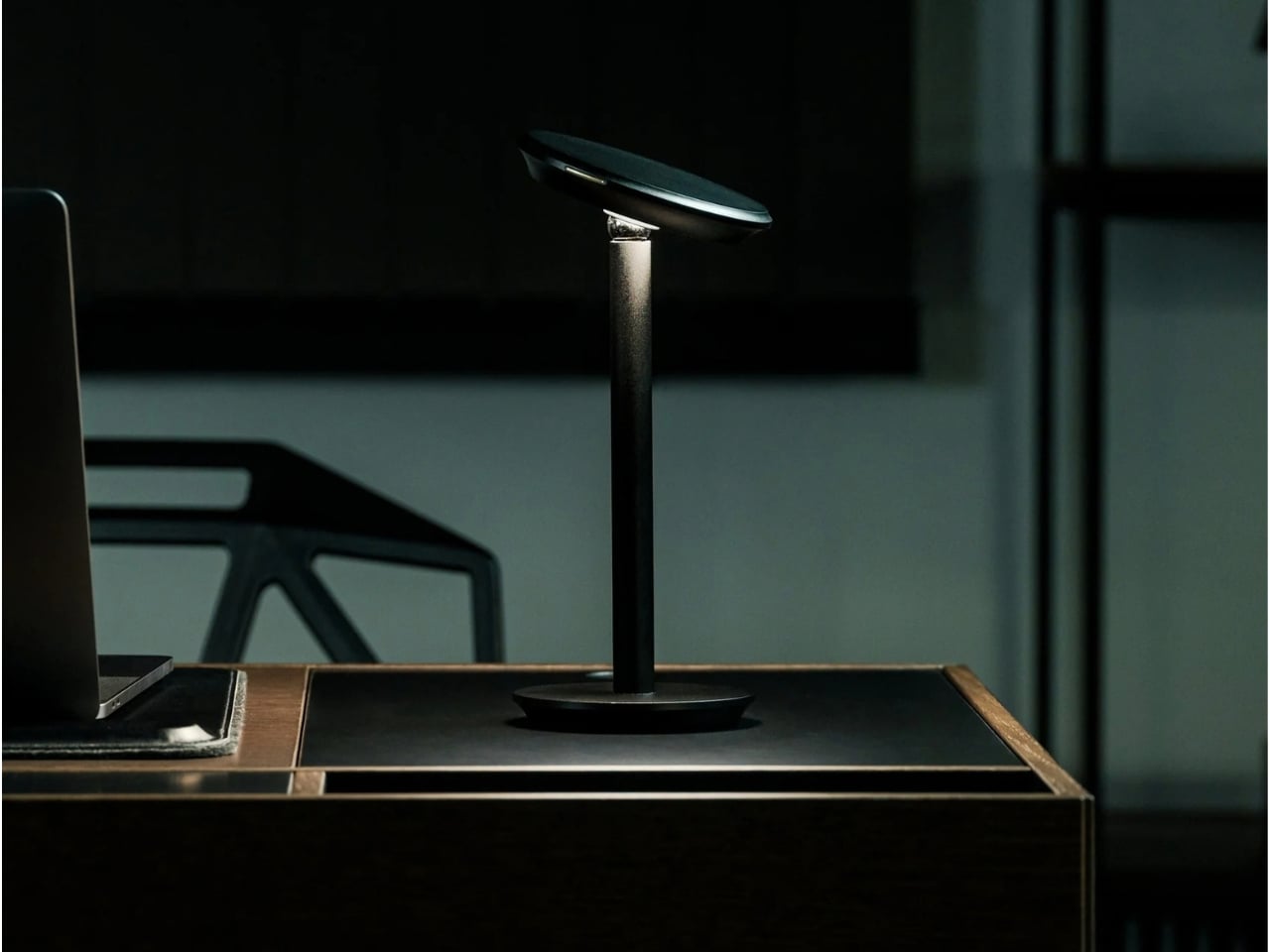
That is a more interesting way to look at the Infinite Solas Lamp than simply calling it a cordless desk lamp. Its height, direction, brightness, and color temperature are adjustable, so the same object can play different roles as a room changes throughout the day. I like the idea of a lamp that adapts to the space you have, rather than asking you to find space for another lamp.

Click Here to Buy Now: $325

Picture a table on a weekday morning. You pull the Solas taller and angle its head toward a notebook or the project in front of you. Later, you lower it and soften the light for dinner. By evening, it can move beside a chair and become a reading light. None of those uses is particularly dramatic on its own. Together, they make a persuasive case for a lighting object that doesn’t belong to one corner of the home.

The mechanics behind that flexibility are pleasantly straightforward. The Solas adjusts from 8.9 to 19.7 inches tall, while a magnetic ball-joint head lets you redirect the beam without shifting the whole lamp. Its LED light can be dimmed, with color temperature adjustable from 2500K to 4000K. Those choices matter because a change in angle can be just as useful as a change in brightness. Sometimes you want to see the pages in front of you. Sometimes you want the room to feel a little softer.

I also appreciate that the design doesn’t insist on looking like equipment. Machined aluminum with an anodized finish gives it a composed, minimal shape, and it comes in black or warm champagne. Either could sit on a shelf or side table without making the room feel like an office. That matters in a smaller home, where every object tends to be visible from almost everywhere else. A lamp can be useful, but you still have to enjoy looking at it when it’s off.

Of course, movable lighting is not a new idea. IKEA has helped make portable table lamps feel familiar as everyday home accessories. The Solas asks for a more specific kind of attention: not just where you can carry a lamp, but how much you can change its height, aim, and warmth once you set it down. I wouldn’t say that makes it the right choice for everyone. If all you want is a gentle glow on a shelf, a simpler lamp may do the job beautifully. The Solas makes more sense when one surface has several jobs.

That flexibility does come at a considered-object price. The Solas is listed at $325, which is a lot to spend on a lamp if you need light in only one place. It also still needs charging: the listed runtime is six to seven hours at full brightness, or up to 70 hours at its lowest setting, with a recharge taking approximately four hours via USB-C. Those numbers are worth knowing before imagining it as a fixture you can leave on indefinitely.

For me, the appeal isn’t the promise of owning one lamp and never buying another. It’s the smaller, more believable improvement of having one good lamp that can follow the way a room is actually used. When furniture has to work harder, lighting should be allowed to change its job too. The Infinite Solas Lamp understands that a home doesn’t hold still from morning to night. Its best trick is making those transitions feel a little easier.

The post Your Small Room Secretly Needs Fewer Lamps, Not More first appeared on Yanko Design.

  • ✇Yanko Design
  • The 90-Year-Old Lamp Nobody Improved On — Until Now
    A lamp can look beautiful on a desk and still make it harder to work. The bulb catches your eye, the light lands everywhere except the page, or the fixture takes up the space you needed for a notebook. Louis Poulsen’s reissued PH Piano Lamp starts with a more useful question: How do you put light precisely where it’s needed without making the lamp itself a distraction? Poul Henningsen designed the original for pianists, who needed to see their sheet music without uncomfortable glare. That probl
     

The 90-Year-Old Lamp Nobody Improved On — Until Now

2 octobre 2026 à 10:20

A lamp can look beautiful on a desk and still make it harder to work. The bulb catches your eye, the light lands everywhere except the page, or the fixture takes up the space you needed for a notebook. Louis Poulsen’s reissued PH Piano Lamp starts with a more useful question: How do you put light precisely where it’s needed without making the lamp itself a distraction? Poul Henningsen designed the original for pianists, who needed to see their sheet music without uncomfortable glare.

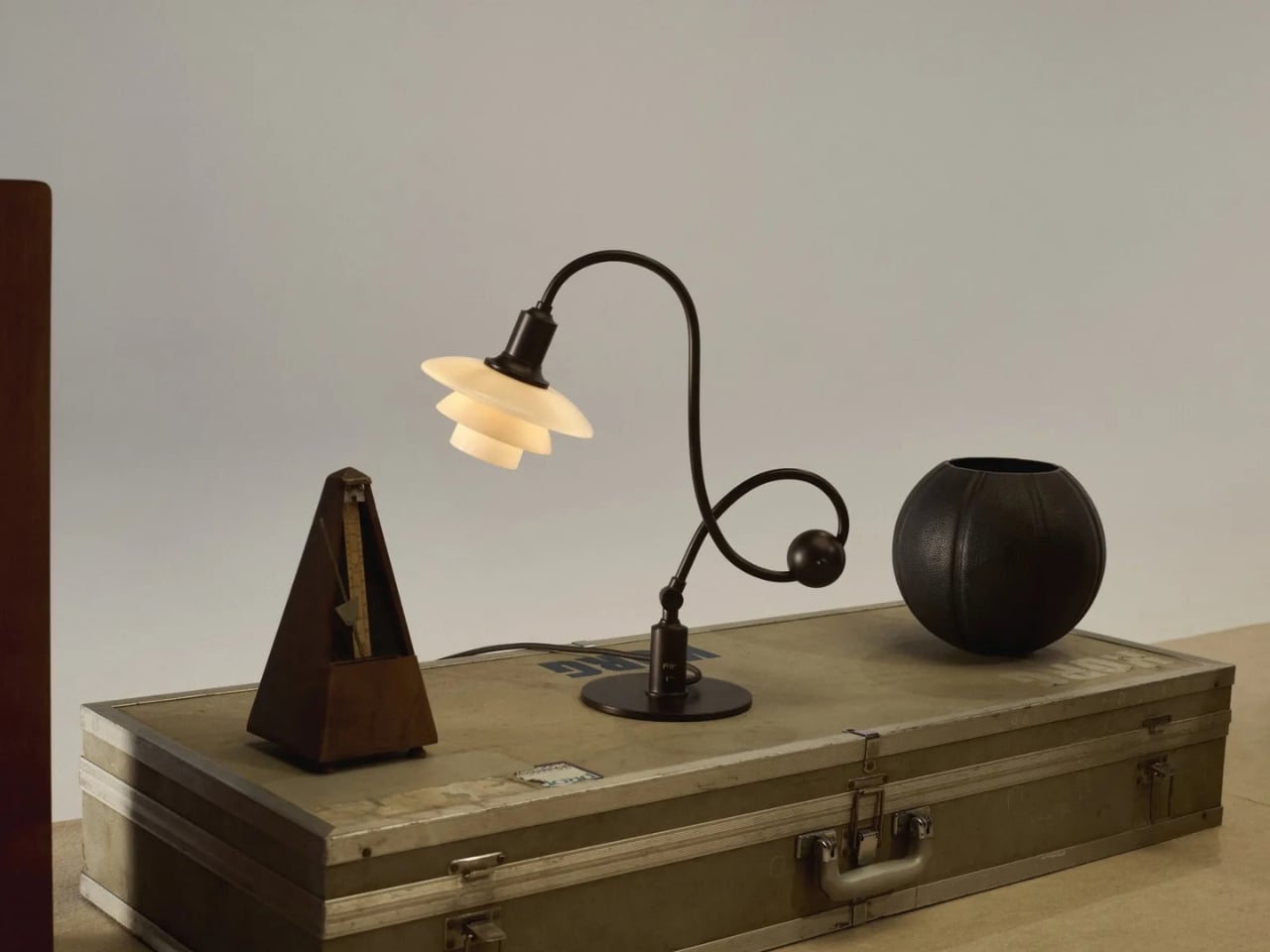
That problem reaches well beyond the piano. Anyone who has tried to read beside a bright table lamp or work under a harsh overhead light knows the difference between having enough light and having the right light. I like that this reissue hasn’t lost sight of its practical beginnings. Its curved, counterbalanced arm lets the shade move while the lamp stays stable, giving the design a sense of purpose you can read from across the room.

Designer: Poul Henningson for Louis Poulsen

Henningsen first created the Piano Lamp in the early 1930s, building on his PH lighting system, which uses layered shades to manage how light reaches the eye. Louis Poulsen has brought it back as the PH 1/1 Piano Table Lamp Limited Edition 2026, with adjustments intended to make it useful beyond its original setting. It’s an appealing idea for a reissue: keep the reason the object existed, then give more people a reason to use it.

The new version pairs aged brass with glass shades in a color Louis Poulsen calls Dusty Terra Cotta. On paper, that combination sounds richly nostalgic. In practice, its appeal is more specific. The warm-toned glass gives the lamp a softer visual presence, while the long arm and compact shade keep it from feeling like a decorative lamp that has wandered onto a work surface by mistake. You could imagine it near a keyboard, but also beside a book, a sketchpad, or a late-night crossword.

That versatility matters because our rooms rarely serve just one purpose anymore. A dining table becomes a desk. A side table has to accommodate a drink, a charger, and whatever we’re currently reading. Good lighting can make those small shifts easier without demanding that we rearrange the room. The Piano Lamp feels suited to those spaces precisely because it was designed around a task. Its shape may be memorable, but the starting point was helping someone see what they were doing.

I’m also drawn to the fact that it looks a little unusual. The arm has a gentle, almost musical curve, while the shade sits low enough to suggest a conversation between the lamp and whatever is beneath it. Many contemporary lights aim to disappear into the background. This one has a clear silhouette, yet its job is to make the thing you’re doing more comfortable. That balance is harder to achieve than a striking shape alone.

Of course, a limited-edition design lamp isn’t an automatic solution for every desk or budget. If all you need is a cheap light for a spare room, this probably isn’t the practical choice. But it does offer a useful reminder that a lamp’s value isn’t measured only by how brightly it shines. Where the light goes, how it feels, and how easily the fixture fits into daily routines all count. Those are the details you notice after the novelty of a new object wears off.

Louis Poulsen says the PH 1/1 Piano Table Lamp Limited Edition 2026 will be available from October through December 2026. The short window gives it collectible appeal, but I hope that isn’t the only reason people pay attention. Its more interesting quality is how current its original problem still feels. We have plenty of ways to brighten a room. Finding light that helps us focus, without making us squint, remains a much better goal.

The post The 90-Year-Old Lamp Nobody Improved On — Until Now first appeared on Yanko Design.

  • ✇Yanko Design
  • The 1969 Lamp Nobody Knew They Needed Is Back
    Most statement lighting presents a familiar dilemma. A lamp can give a room personality, but the more attention it demands, the harder it can be to live with everything around it. Furniture starts to feel like a supporting cast. Even the lamp’s glow can seem secondary to its silhouette. Gubi’s reissued Lotus lamp offers a more appealing proposition: a piece with enough presence to change the mood of a room, without making the room feel like a showroom. Designed by Carlo Nason in 1969, the Lotus
     

The 1969 Lamp Nobody Knew They Needed Is Back

1 octobre 2026 à 18:30

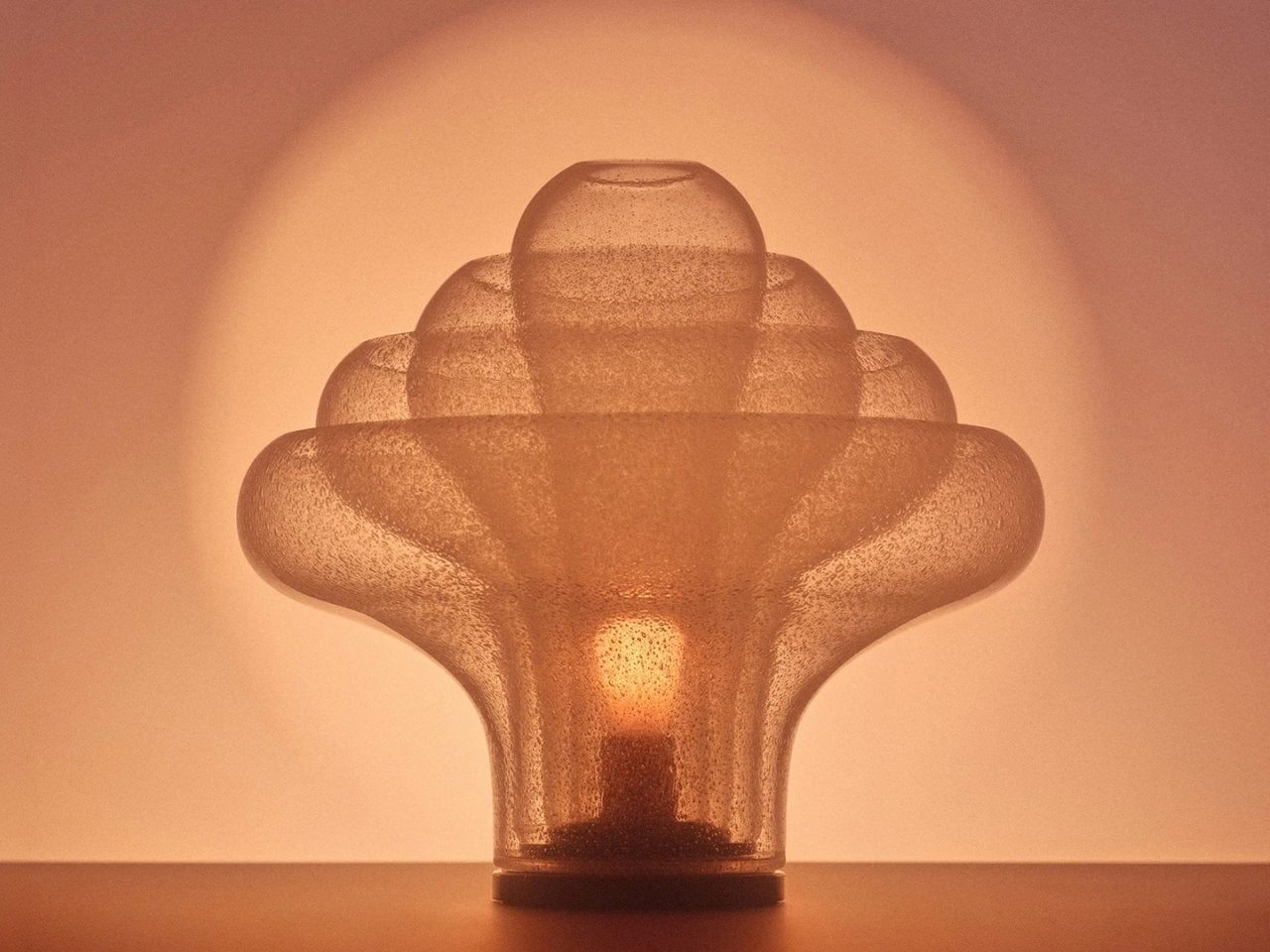
Most statement lighting presents a familiar dilemma. A lamp can give a room personality, but the more attention it demands, the harder it can be to live with everything around it. Furniture starts to feel like a supporting cast. Even the lamp’s glow can seem secondary to its silhouette. Gubi’s reissued Lotus lamp offers a more appealing proposition: a piece with enough presence to change the mood of a room, without making the room feel like a showroom.

Designed by Carlo Nason in 1969, the Lotus lamp belongs to a period when designers were willing to treat lighting as sculpture. Nason’s fluency with glass is central to its appeal, and Gubi’s reissue brings that idea back into view more than half a century later. It is easy to see why the design has returned now. Plenty of contemporary interiors look polished, yet oddly reluctant to have fun. A lamp with a little imagination can do more for them than another carefully chosen neutral.

Designer: Carlo Nason

What makes Lotus interesting to me is the difference between being distinctive and being loud. Its flower-inspired identity gives you a way into the design, but it does not require an entire room to follow the theme. You can appreciate the botanical reference without surrounding it with curved chairs, patterned wallpaper, and a vase of matching flowers. That restraint matters. The best objects leave space for the lives unfolding around them.

Glass also changes how we read a lamp. A metal shade tends to draw a firm outline; glass has a more elusive presence, especially when light enters the picture. It can feel substantial and delicate at once. Nason built a career around exploring what the material could do, and Lotus carries that curiosity into an everyday object. I like the idea of a lamp that rewards a second look when it is switched off, rather than disappearing until evening.

Of course, reissuing a decades-old design invites a fair question: Are we drawn to the lamp itself, or to the comforting idea of owning a piece of design history? Vintage references can become a shortcut to taste. A recognizable date and designer’s name do some of the work that the object should be doing on its own. Lotus earns more attention when you set that pedigree aside and imagine it in an actual home, beside the books you have not put away and the chair you sit in every night.

That is where its value as a design object becomes clearer. A good lamp changes a space twice: once as an object you notice during the day, and again when you turn it on. The Lotus makes a case for treating those experiences as connected rather than choosing one over the other. It asks to be seen, but the point of bringing a lamp home is still to live with its light.

There is a broader reason this reissue feels timely. So much shopping for the home now happens through images that reward instant impact. A dramatic silhouette can stop a scroll, even if it would be exhausting across the room from your couch. The more useful test is slower. Would you want to see it on a rainy Tuesday? Would it still hold your attention once you stopped photographing it? Lotus strikes me as the kind of design that could pass both tests.

It also offers an alternative to the notion that a room has to speak in one consistent style. An older Italian design can sit comfortably among newer pieces if you let it be a point of contrast rather than the start of a complete makeover. That is a more personal approach to decorating. Most homes accumulate meaning over time, through choices made for different reasons and at different moments.

Gubi did not need to invent a new kind of lamp to make lighting feel fresh. Reintroducing Nason’s 1969 design is a reminder that an object can have a strong point of view without turning the rest of your home into a backdrop. For anyone caught between the sensible lamp and the memorable one, Lotus makes a persuasive argument for wanting both.

The post The 1969 Lamp Nobody Knew They Needed Is Back first appeared on Yanko Design.

  • ✇Yanko Design
  • This Tabletop Fireplace Does What Solo Stove Doesn’t: Burn Indoors
    Fall is when the appeal of an open flame reasserts itself. The air turns crisp, and everyone wants that fireplace glow back in their evenings. The trouble is that most homes, especially rentals and apartments, were never built to give it to them. Adding a real fireplace means a gas line, a flue, a permit, and a contractor’s schedule that eats up far more than the one free weekend anybody actually has for it. That gap between wanting fire and being able to install it is exactly what the Harmony
     

This Tabletop Fireplace Does What Solo Stove Doesn’t: Burn Indoors

28 septembre 2026 à 18:30

Fall is when the appeal of an open flame reasserts itself. The air turns crisp, and everyone wants that fireplace glow back in their evenings. The trouble is that most homes, especially rentals and apartments, were never built to give it to them. Adding a real fireplace means a gas line, a flue, a permit, and a contractor’s schedule that eats up far more than the one free weekend anybody actually has for it.

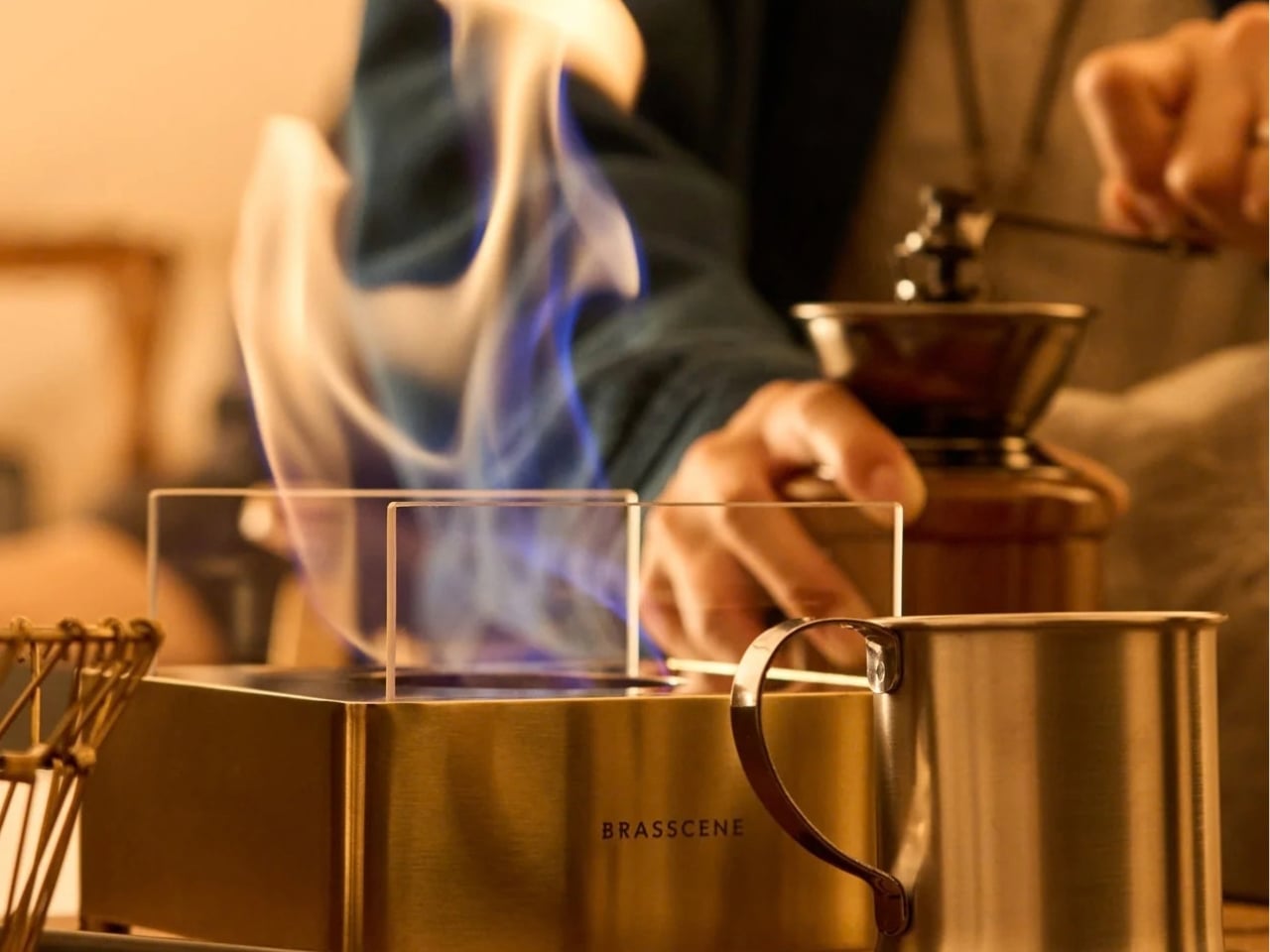
That gap between wanting fire and being able to install it is exactly what the Harmony Flame Lamp solves. It is a brass tabletop fireplace that runs on bioethanol, sits on any flat surface you own, and produces a genuine flame with no ventilation, no gas hookup, and nothing built into a wall. You light it the way you’d light a candle, except what comes back is heat and light with real presence.

Click Here to Buy Now: $240

What sets it apart from most decorative objects claiming craftsmanship is who actually makes it. The Harmony Flame is built by hand by artisans who normally work on brass instruments, the kind of metalworkers who shape tubas and French horns for a living. That background is not a marketing footnote. Instrument-grade brass has to hold precise acoustic properties and structural integrity, and those same qualities happen to make it excellent at containing and reflecting a flame. The polished surface catches the fire and throws it back in shifting patterns of light and shadow, which is a much harder effect to fake than most LED “flame” gadgets ever manage.

Practically, the lamp behaves the way fall entertaining actually works. It moves from the dining table to the patio to a reading corner without any setup beyond a refill of fuel. Bioethanol burns clean, without smoke or odor, so there’s no lingering campfire smell on your jacket the next morning and no soot to wipe off afterward. The brass itself develops a patina with use, which means the lamp you buy in October will look different, and honestly better, by the time next fall rolls around.

It’s worth putting this next to the fire pit most Americans already know, which is Solo Stove. Solo Stove built an entire category around smokeless backyard fires, and it deserves credit for that. But it’s a wood or pellet-burning outdoor unit, sized for a patio and not meant to come inside. The Harmony Flame is working a different scale entirely. It’s small enough for a dinner table, quiet enough for a bedroom, and refined enough that it reads as a design object first and a heat source second. One is built for a backyard gathering. The other is built for the room you’re actually sitting in on a Tuesday night in November.

At $240, it isn’t an impulse buy, and I don’t think it’s trying to be one. You’re paying for hand-finished brass and a fuel system that skips every complication a real fireplace usually demands, and that combination is genuinely rare at this price. Compare it to a high-end bioethanol fireplace from a home goods brand and you’ll often pay two or three times as much for something with none of the instrument-making pedigree behind it.

The part that sold me is how ordinary the ritual feels once you own it. You strike a match, the brass catches the light, and the room changes temperature and mood at the same time. The Harmony Flame Fireplace is the kind of object that quietly becomes the centerpiece of a dinner party without anyone having to point it out. Fall has a way of making people want warmth and atmosphere they can control themselves, and this lamp answers that without asking for a renovation in return. If you’ve spent the last few autumns wishing your apartment had a fireplace, this is about as close as you’ll get without knocking down a wall.

The post This Tabletop Fireplace Does What Solo Stove Doesn’t: Burn Indoors first appeared on Yanko Design.

  • ✇Yanko Design
  • The Lamp That Actually Looks Better With the Lights Off
    Most lighting has a dirty secret: it only works half the day. Flip the switch and a pendant or sconce can look spectacular, all warm glow and dramatic shadow. Flip it off, and you’re left staring at what is often just a glorified fixture, a thing bolted to a ceiling that has nothing to say for itself once the bulb goes dark. That gap between “on” and “off” is where a lot of home lighting quietly fails us, and it’s a problem most people never think to name because they’ve simply accepted it. Hol
     

The Lamp That Actually Looks Better With the Lights Off

12 septembre 2026 à 15:15

Most lighting has a dirty secret: it only works half the day. Flip the switch and a pendant or sconce can look spectacular, all warm glow and dramatic shadow. Flip it off, and you’re left staring at what is often just a glorified fixture, a thing bolted to a ceiling that has nothing to say for itself once the bulb goes dark. That gap between “on” and “off” is where a lot of home lighting quietly fails us, and it’s a problem most people never think to name because they’ve simply accepted it.

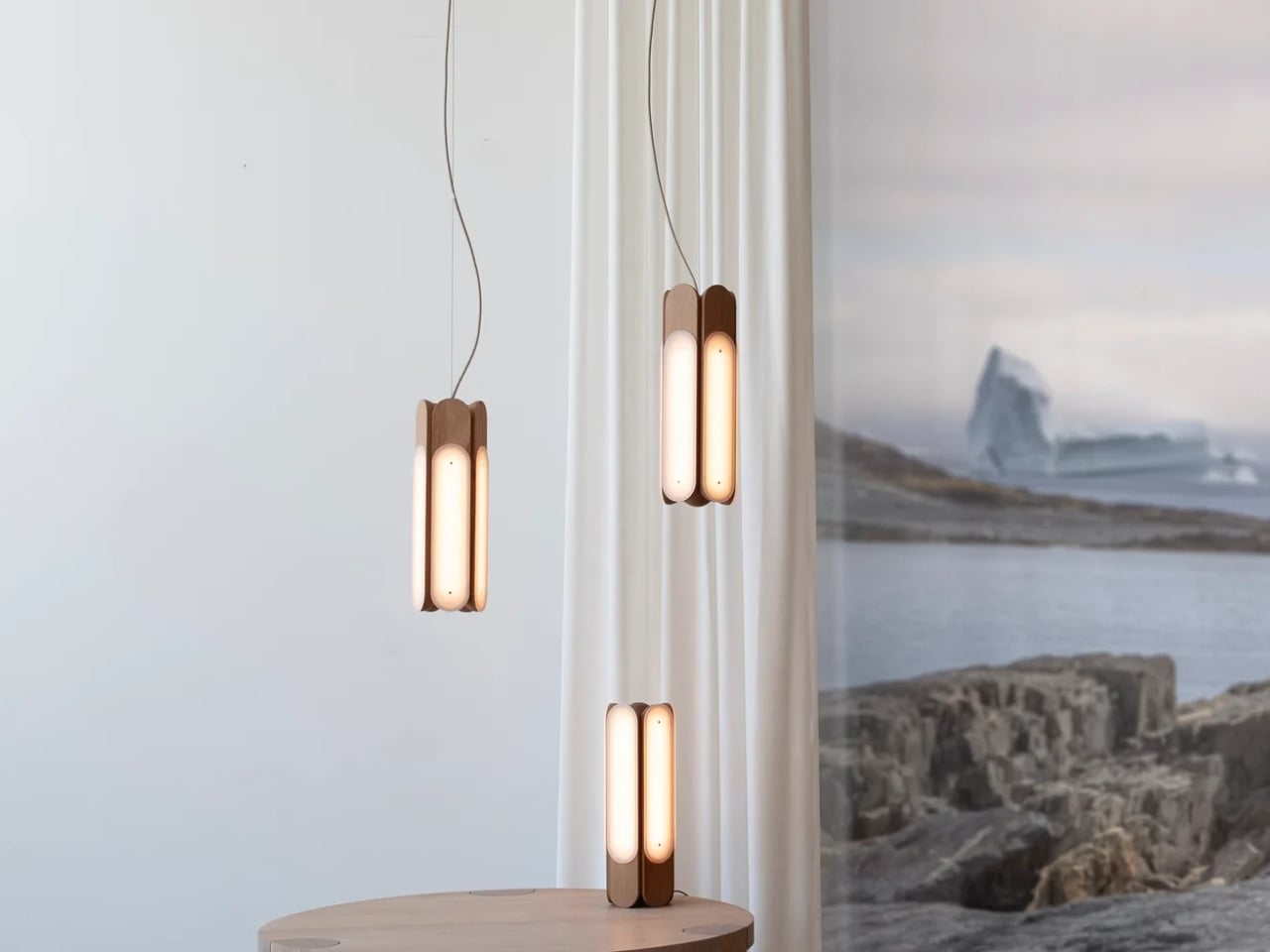
Hollis+Morris, the Toronto studio behind the new Beaufort collection, clearly has thought about it. Their solution isn’t a smarter bulb or a clever dimmer app. It’s a rethinking of what a light fixture is supposed to do when it’s doing nothing at all. Beaufort is built from sculpted solid wood paired with sandblasted acrylic, and the acrylic is cut and finished so it holds a kind of frozen depth, layered, translucent, a little mysterious, whether or not there’s current running through it. Turn it on and light diffuses through those layers in soft gradients. Turn it off and you still have an object worth walking past twice.

Designer: Hollis+Morris

The origin story is the kind of thing that sounds almost too tidy, except it happens to be true. Mischa Couvrette, the studio’s founder and lead designer, was flying home from Copenhagen’s 3daysofdesign when a conversation about ice, and about climate change, turned into sketches on a cocktail napkin somewhere over the Atlantic. By the time the plane landed, the collection basically existed in his head. The name comes from the Beaufort Sea, that remote stretch of Arctic water above Alaska and Canada’s Northwest Territories, which is a fitting reference for a studio that has built its identity on restraint rather than spectacle.

I appreciate that the collection doesn’t try to literally recreate an iceberg hanging from your ceiling. Instead it borrows the logic of ice: how light moves through something dense and layered, how clarity shifts depending on where you’re standing. The studio achieves that through repetition, mirroring, and rotation of a small set of core components, which is a fancy way of saying they’ve built one coherent visual language and then let it flex across a sconce, a mirrored horizontal pendant, a lantern-like vertical pendant, and a table lamp. Nothing in the lineup feels like an afterthought tacked onto a single hero piece just to pad out a catalog.

Jonathan Mandeville of Hollis+Morris put it plainly when he said the collection sits in a lineage of Scandinavian and Canadian design that values material honesty and quiet restraint, the idea that an object should earn its keep even when it isn’t doing anything. That’s a bit of a jab, gentle as it is, at a design moment that has leaned hard into maximalism and novelty for novelty’s sake. I don’t think Beaufort is arguing that bold, loud design is wrong. Plenty of homes need a little chaos. But there’s real value in a piece that doesn’t ask for your attention so much as reward it once you’ve already given it, and that’s a harder trick to pull off than another oversized statement chandelier.

It also matters, at least to me, that these pieces are made in Canada by a B Corp certified studio that treats that fact as a working value rather than a sticker on the box. Knowing who made a light and how isn’t a small thing anymore, especially with home goods, where supply chains can be murky at best.

Beaufort isn’t cheap. The R5 horizontal pendant runs $3,800 and the M2 horizontal starts around $1,900, so this is squarely in investment-piece territory, not an impulse buy from a big box store. But for anyone who has ever bought a light fixture, loved it while it was on, and felt a little let down by it during the day, Beaufort makes a fairly convincing case that the two states shouldn’t have to be so different.

The post The Lamp That Actually Looks Better With the Lights Off first appeared on Yanko Design.

  • ✇Yanko Design
  • A Ceramic Lamp That Refuses to Stay the Same
    Most lamps ask you to commit. You pick a shade, a finish, a mood, and that’s what you’re stuck with until the bulb burns out or you get sick of it and drag the whole thing to a donation bin. For anyone who likes to rearrange a room the way some people rearrange their playlists, that’s a real limitation, and it’s one nobody really talks about because we’ve just accepted lighting as a fixed decision rather than a flexible one. Seoul-based designer Byunggwon Na looked at that problem and did somet
     

A Ceramic Lamp That Refuses to Stay the Same

2 septembre 2026 à 15:20

Most lamps ask you to commit. You pick a shade, a finish, a mood, and that’s what you’re stuck with until the bulb burns out or you get sick of it and drag the whole thing to a donation bin. For anyone who likes to rearrange a room the way some people rearrange their playlists, that’s a real limitation, and it’s one nobody really talks about because we’ve just accepted lighting as a fixed decision rather than a flexible one.

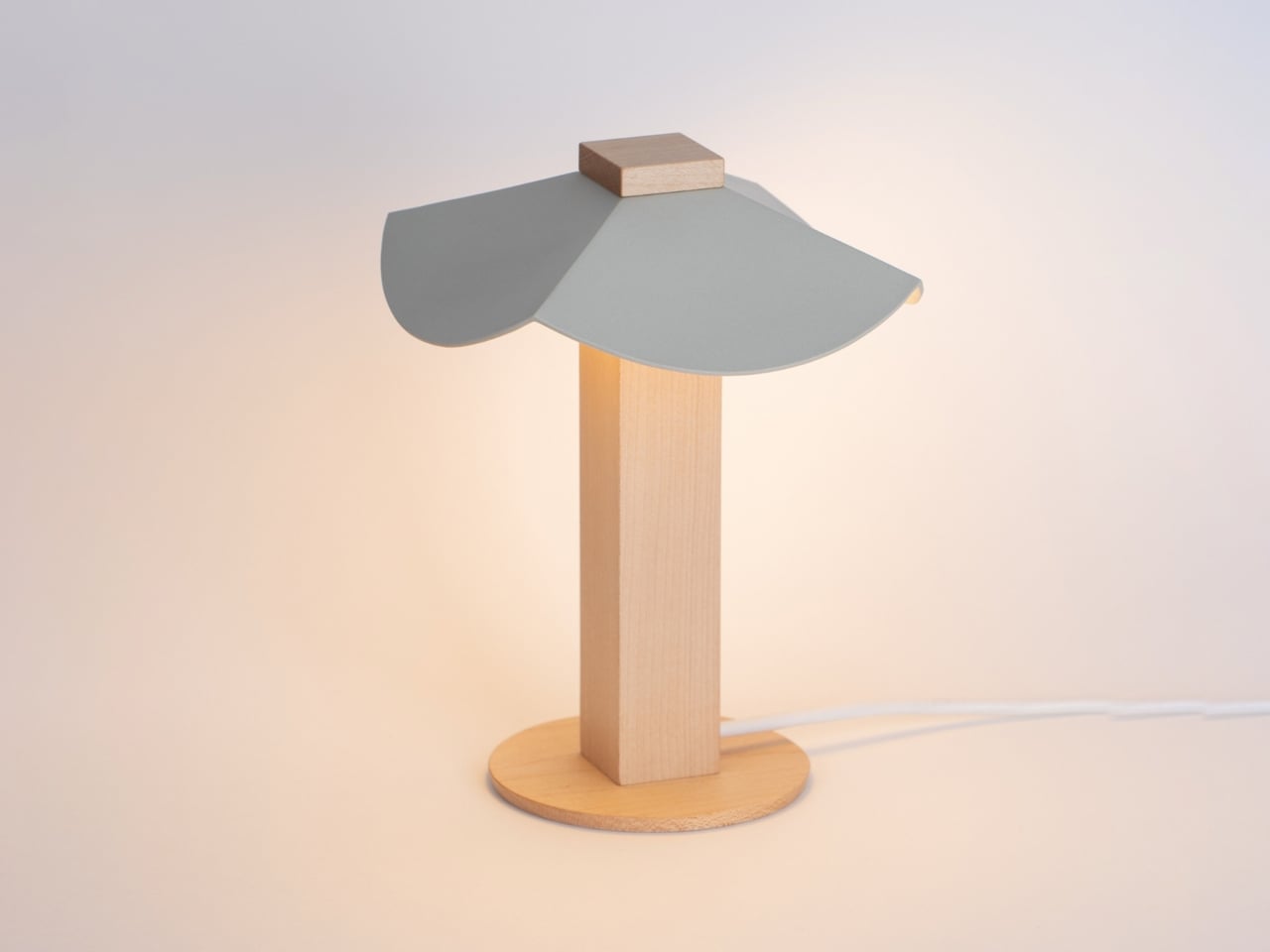
Seoul-based designer Byunggwon Na looked at that problem and did something refreshingly simple about it. His new piece, ALIT, is a lamp built from two honest materials, slip-cast ceramic and solid wood, and it’s designed so the ceramic shade can be lifted off and swapped for another one entirely. The wooden column stays put. The ceramic changes. One base, endless personalities.

Designer: Byunggwon Na

I’ll admit I’m a sucker for objects that do more with less, and ALIT is a good example of that instinct done right. It isn’t trying to be smart, connected, or app-controlled, which honestly feels like the correct move in a market saturated with lighting products chasing the “smart home” label. Instead, Na leaned into contrast: the coolness of ceramic against the warmth of wood, the matte against the grain, the handmade against the geometric. The square wooden column reads almost architectural, a quiet, upright form that could disappear into a Scandinavian-leaning living room or a mid-century one just as easily. The ceramic shade sitting on top is where the personality lives, and because it’s removable, that personality isn’t permanent.

This piece treats color and light together, not separately. A pale, unglazed ceramic shade lets light spill out soft and even, almost like paper. A darker or glazed version holds the light closer, letting it glow through in patches instead of flooding the room. So the same base lamp can go from a reading-corner glow to something moodier for a dinner table, just by switching the top. That’s not a gimmick. That’s actual utility dressed up as good design, and those two things don’t always travel together.

American interiors have leaned hard into modularity over the past few years, from sectional sofas you can rearrange endlessly to shelving systems that grow with you. Lighting has lagged behind that trend, still mostly sold as one fixed object per mood. ALIT fits into where the category is quietly heading: fewer disposable purchases, more pieces designed to be lived with and adjusted rather than replaced. For a design market that talks a lot about sustainability but rarely builds it into something this tactile, that matters.

There’s also something to be said for the fact that Na didn’t overcomplicate the engineering. No magnets, no proprietary mounts, no fragile clip system to break after six months. The shade simply rests on the column, held by gravity and good proportions. It’s the kind of restraint that separates designers who understand materials from those who just decorate around them.

I don’t think ALIT is going to reinvent the lighting industry, and I don’t think it’s trying to. What it does is solve a small, specific annoyance, the fact that changing a lamp’s mood usually means buying a whole new lamp, and it solves it with a design vocabulary that feels considered rather than trend-chasing. In a category full of objects competing for attention, ALIT seems more interested in earning a long-term place in a room. That’s a rarer ambition than it should be, whether this one ends up in a Seoul studio or an apartment in Brooklyn.

The post A Ceramic Lamp That Refuses to Stay the Same first appeared on Yanko Design.

❌