
Vue normale

  • ✇Yanko Design
  • TCL’s P80 Pro and Ultra Are the Phones That Replaced Your Kindle Too
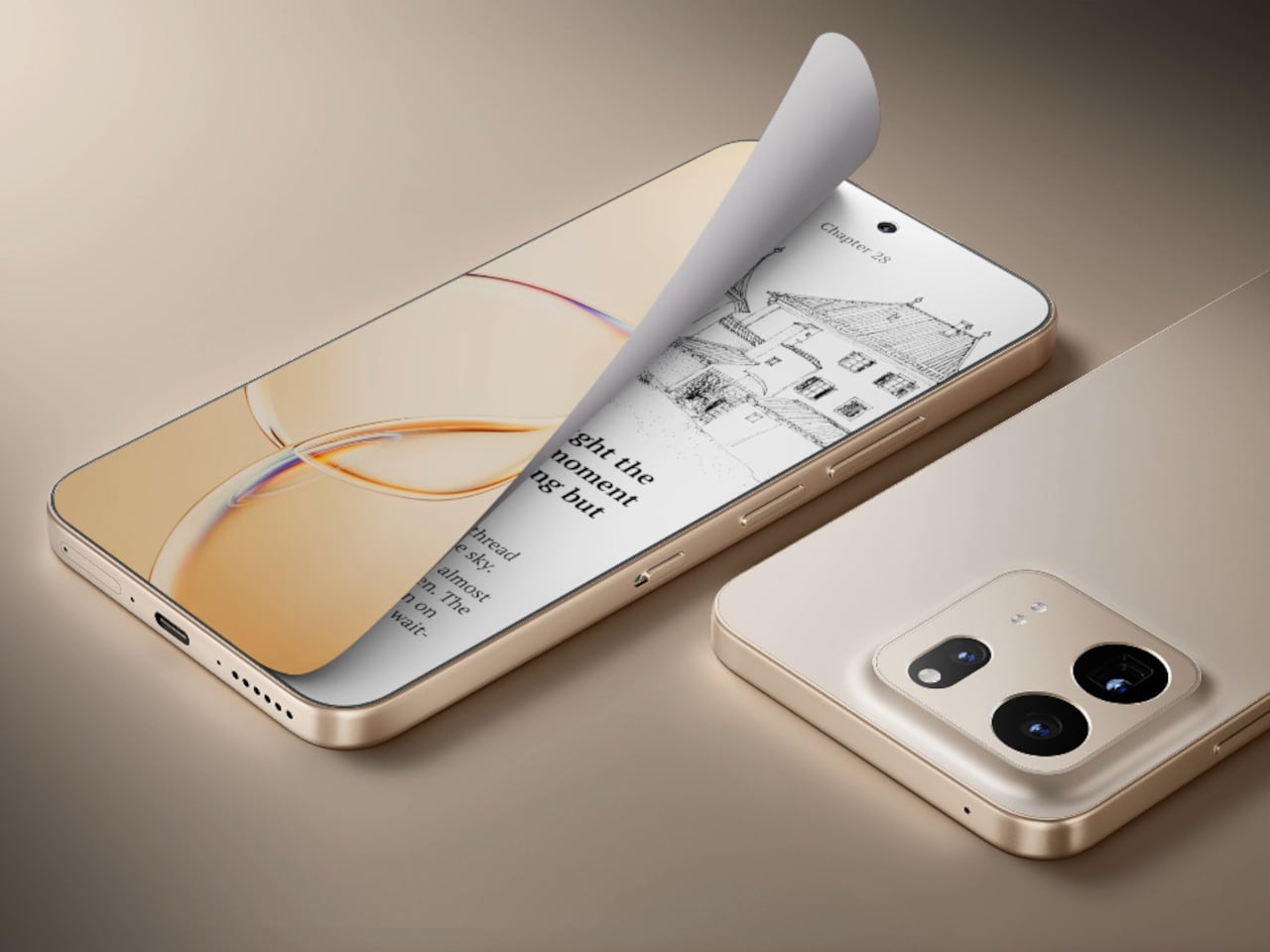
    TCL’s P80 Ultra and P80 Pro prove a phone screen doesn’t have to pick one personality and stick with it. Unveiled at IFA 2026 in Berlin, both handsets fold a vivid AMOLED panel and TCL’s paper-like NXTPAPER technology into the same sheet of glass, letting the display shift moods with a flick of a switch instead of forcing a trade-off between color and comfort. Run a finger along the frame, and you’ll find a thin slider, a small physical detail that carries plenty of weight in daily use. Slide i
     

TCL’s P80 Pro and Ultra Are the Phones That Replaced Your Kindle Too

Par : JC Torres
4 septembre 2026 à 04:15

TCL’s P80 Ultra and P80 Pro prove a phone screen doesn’t have to pick one personality and stick with it. Unveiled at IFA 2026 in Berlin, both handsets fold a vivid AMOLED panel and TCL’s paper-like NXTPAPER technology into the same sheet of glass, letting the display shift moods with a flick of a switch instead of forcing a trade-off between color and comfort.

Run a finger along the frame, and you’ll find a thin slider, a small physical detail that carries plenty of weight in daily use. Slide it, and the 6.83-inch panel drops its saturation, taking on a warmer, textured look that mimics a printed page. A commuter buried in a novel or someone proofreading a document late at night gets a screen that behaves like paper, without losing the sharpness underneath.

Designer: TCL

Push that same slider one notch further, and the screen drops color entirely for Max Ink Mode, a stripped layout that silences notifications except for calls and texts. It reads like a design decision as much as a software one, TCL betting people want to quiet their phone rather than mute it completely. The payoff is a battery that can stretch across roughly a week of steady reading.

That reading-first mindset carries into the software too. Both phones can convert e-books into audiobooks or podcast-style narration using on-device AI, giving Max Ink Mode a voice to lean on when eyes need a break instead of ears. It is a small addition, but it treats the slower, paper-like mode as a genuine feature rather than a bolted-on gimmick for a keynote slide.

None of that would matter if the screen looked washed out the rest of the time, so TCL leaned on a 1.5K AMOLED panel that hits 3,200 nits and covers the full DCI-P3 color range. A Nano Crystal Shield coating cuts glare enough to keep the display readable under direct sun, marking TCL’s first pairing of NXTPAPER with OLED rather than the LCD panels it used before.

The frame wrapping that screen is aluminum rather than the plastic often found at this price, giving both phones a sturdier grip without piling on bulk. TCL backs that up with an IP68 rating against dust and water, plus MIL-STD-810H certification for the inevitable drop. Buyers get to pick between Sunlit Gold, Burgundy, and Midnight Blue, three finishes that lean more toward jewelry-box color choices than typical slab-of-glass smartphone palettes.

Where the two models part ways is around the back. The P80 Ultra carries a 50-megapixel main camera next to a 50-megapixel periscope lens for 3x optical zoom, tucked into a housing shaped to avoid throwing off the phone’s balance. The P80 Pro drops the periscope for a simpler dual-camera arrangement, trading reach for a slimmer build that still shares the same main sensor and 8-megapixel ultrawide.

TCL is rolling both phones out across Europe first, with the P80 Ultra priced from €549 (around $635) and the P80 Pro starting at €429 (around $500), before a Latin American launch follows in October. A wider release is expected to reach additional regions afterward. In a category full of identical glass rectangles, these two phones actually behave differently depending on what someone needs from them that day.

The post TCL’s P80 Pro and Ultra Are the Phones That Replaced Your Kindle Too first appeared on Yanko Design.
  • ✇Yanko Design
  • TECNO and Tonino Lamborghini Prove You Can’t Fake a Real Collab
    Slapping a famous badge on a phone’s back panel is the easy version of a brand partnership. TECNO and Tonino Lamborghini clearly wanted the harder version instead. The POVA 8 Pro 5G Tonino Lamborghini Limited Edition builds its entire identity around a black-and-red palette and a hexagon pattern lifted straight from Lamborghini’s mechanical heritage, then carries that language past the glass and into the software running underneath. The rear panel does the heaviest visual lifting. A dual-layer
     

TECNO and Tonino Lamborghini Prove You Can’t Fake a Real Collab

Par : JC Torres
4 septembre 2026 à 02:00

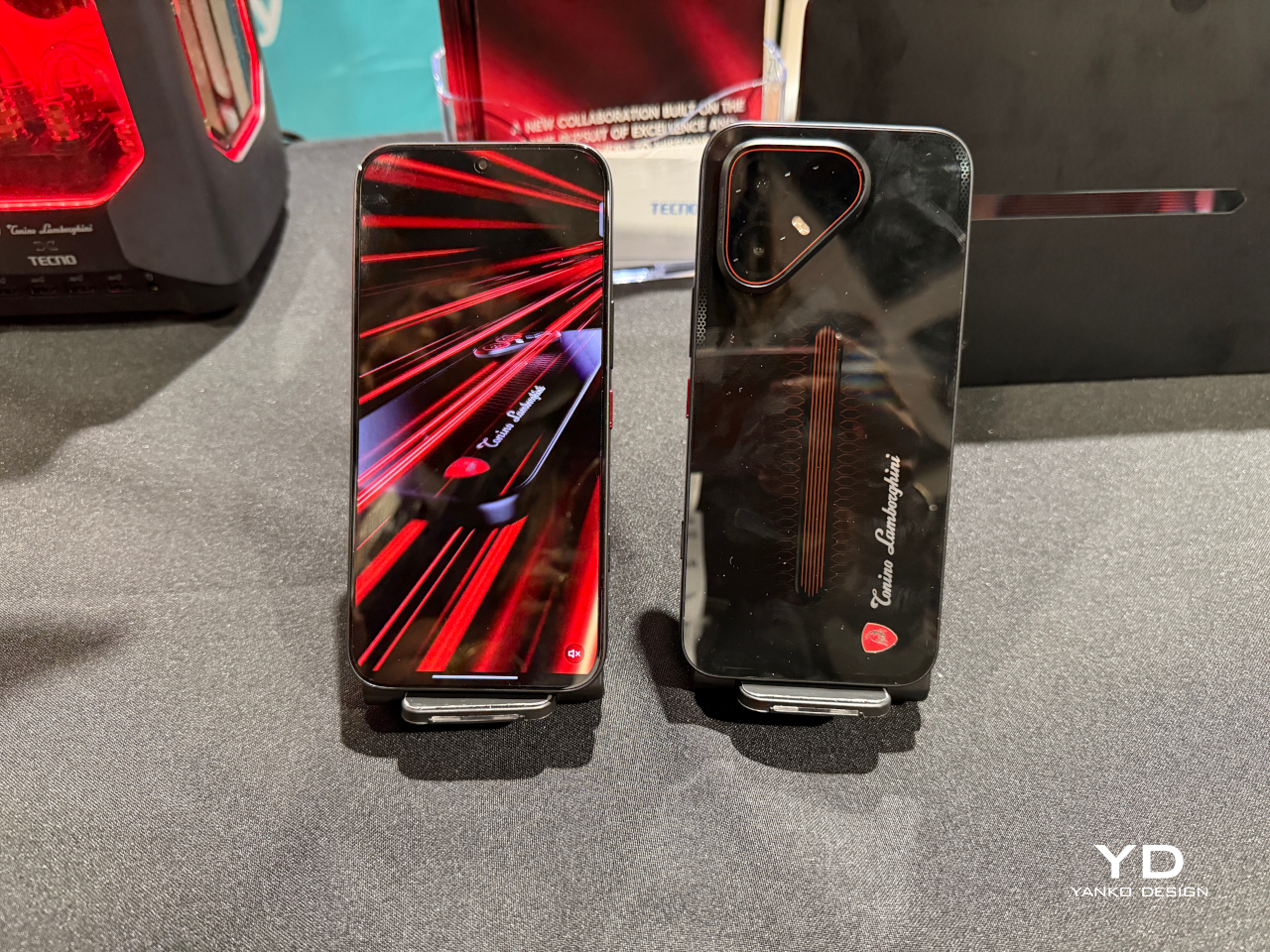
Slapping a famous badge on a phone’s back panel is the easy version of a brand partnership. TECNO and Tonino Lamborghini clearly wanted the harder version instead. The POVA 8 Pro 5G Tonino Lamborghini Limited Edition builds its entire identity around a black-and-red palette and a hexagon pattern lifted straight from Lamborghini’s mechanical heritage, then carries that language past the glass and into the software running underneath.

The rear panel does the heaviest visual lifting. A dual-layer stacking process gives it a reflective quality built from countless internal mirror structures that refract and redirect light, so red accents seem to surface and sink back into shadow as the phone tilts in your hand. A physical height difference between the two layers adds genuine spatial depth, echoing the layered geometry found in actual mechanical engineering rather than faking it with a printed graphic.

Designer: TECNO x Tonino Lamborghini

That commitment doesn’t stop at the hardware. A bespoke interface theme reworks dozens of icons in matching black-and-red tones with glass-like material effects, while a custom boot animation and ringtone carry the same mechanical energy into everyday use. Opening the phone in the morning feels less like waking up a generic Android device and more like starting an engine built around a specific mood.

Underneath the styling sits a dual-chipset setup pairing a MediaTek Dimensity 7400 Ultimate platform with a TECNO-built P1 Graphic Chip, backed by a vapor chamber cooling system spanning over 22,000mm² of dissipation area. That combination pushes supported titles as high as 144FPS, turning a commute or a lunch break into legitimate gaming time instead of a compromise. A dedicated one-tap button on the side keeps favorite apps and gaming shortcuts one press away.

Photography leans on a Sony-engineered LYTIA 700C sensor with a larger light-sensitive area, giving low-light shots and handheld video noticeably steadier results thanks to built-in optical stabilization. A 50MP high-pixel mode and 2x lossless zoom cover the detail-obsessed shots, while an 8MP ultra-wide lens handles group photos and landscapes without anyone needing to step backward to fit everyone in frame.

The 6.78-inch AMOLED display pushes brightness to 4,500 nits and refreshes at 144Hz, numbers that matter most outdoors under direct sun or during fast-paced gaming sessions where lag ruins the moment. A touch layer rated for wet and oily fingers keeps the screen responsive through rain, sweat, or sunscreen-covered hands, useful for anyone who refuses to put their phone down just because the weather did.

Durability rounds out the package rather than acting as an afterthought. Corning Gorilla Glass 7i, IP69-rated water and dust resistance, and SGS 5-Star Drop certification mean the phone can survive a dropped call turning into a literal drop without ending the relationship. A 6,500mAh battery retains over 80% of its health after 2,000 charge cycles, translating to roughly six years of daily use before a real decline sets in.

TECNO and Tonino Lamborghini spent more effort here proving that a licensing deal can produce something with actual mechanical thinking behind it, rather than a badge glued onto commodity hardware. The result reads less like a co-branded accessory and more like a phone that happens to share a bloodline with the cars.

The post TECNO and Tonino Lamborghini Prove You Can’t Fake a Real Collab first appeared on Yanko Design.

Pixel’s New AI Feature Can Now Explain What’s Draining Your Phone

4 septembre 2026 à 07:46

Google is rolling out AI-powered Battery usage summaries to Pixel 10 and Pixel 11 phones to help users understand what may be draining battery life.

The post Pixel’s New AI Feature Can Now Explain What’s Draining Your Phone appeared first on TechRepublic.

Honor Robot Phone Cheat Sheet: Specs, Price and Who Should Buy It

3 septembre 2026 à 18:11

Explore the Honor Robot Phone’s 200MP gimbal camera, flagship specs, China pricing, key trade-offs, and whether this experimental phone is worth buying.

The post Honor Robot Phone Cheat Sheet: Specs, Price and Who Should Buy It appeared first on TechRepublic.

Enough Phone Brings Back the Removable Battery in a Tiny Android Body

3 septembre 2026 à 16:44

The 5.3-inch Enough Phone promises Android 17, a removable battery and microSD storage, but the compact smartphone still faces a difficult path to launch.

The post Enough Phone Brings Back the Removable Battery in a Tiny Android Body appeared first on TechRepublic.

Redmi Note 17 Pro vs Pro Max: Battery, Price and Specs Compared

3 septembre 2026 à 08:56

Redmi Note 17 Pro and Pro Max pricing varies by country, while the Pro Max adds a larger battery, faster charging, storage, and 4K video.

The post Redmi Note 17 Pro vs Pro Max: Battery, Price and Specs Compared appeared first on TechRepublic.

OnePlus 16 Camera Leak Reveals 200MP Main Sensor and New 3x Telephoto

3 septembre 2026 à 08:03

OnePlus 16 camera leaks point to a 200MP main sensor, larger 50MP 3x telephoto and new ultrawide, but global availability remains unclear.

The post OnePlus 16 Camera Leak Reveals 200MP Main Sensor and New 3x Telephoto appeared first on TechRepublic.

  • ✇Yanko Design
  • Acer’s Packard Bell Crashed IFA 2026 Like a Box of Crayons
    Packard Bell spent a century teaching people that new technology doesn’t have to feel intimidating, and its 100th birthday present to itself leans hard into that idea. Under Acer’s ownership, the brand relaunched at IFA 2026 with a philosophy it calls “Tech it easy,” built around a lineup that trades beige plastic and quiet corporate design for colors loud enough to notice from across a room. Four products anchor that comeback, and each one argues that everyday tech gains something when it stop
     

Acer’s Packard Bell Crashed IFA 2026 Like a Box of Crayons

Par : JC Torres
3 septembre 2026 à 06:07

Packard Bell spent a century teaching people that new technology doesn’t have to feel intimidating, and its 100th birthday present to itself leans hard into that idea. Under Acer’s ownership, the brand relaunched at IFA 2026 with a philosophy it calls “Tech it easy,” built around a lineup that trades beige plastic and quiet corporate design for colors loud enough to notice from across a room. Four products anchor that comeback, and each one argues that everyday tech gains something when it stops taking itself so seriously.

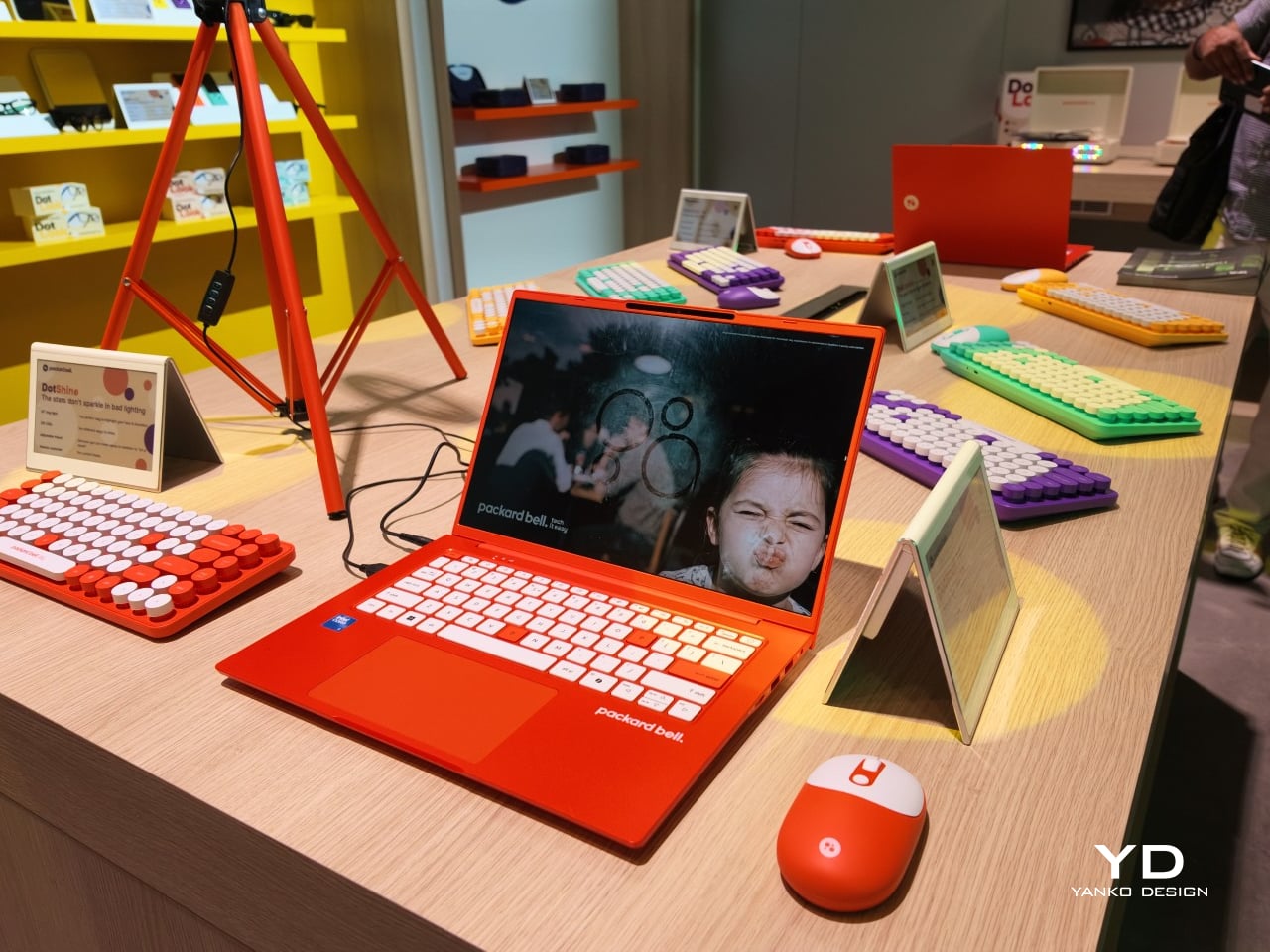
The DotBook carries the heaviest expectations as the collection’s flagship, a 14.5-inch laptop finished in a red-orange shell bright enough to spot on a crowded coffee shop table. Weighing under 1.3 kg and measuring just 17.9mm thin, it’s built for browsing, streaming, and everyday work rather than chasing benchmark scores, backed by up to 512GB of storage and 16GB of memory running quietly under Windows 11. It’s a laptop designed to disappear into a bag, not a spec sheet debate.

Designer: Acer

Where the DotBook plays it relatively straight, the DotLoop commits fully to spectacle. Housed inside an actual briefcase shell with a 1970s silhouette, the turntable pops open to reveal a working tonearm flanked by RGB-lit speaker grilles that glow while a record spins. Two built-in 3W speakers handle sound on their own, though Bluetooth and RCA outputs let the DotLoop hand audio off to a proper stereo system whenever the moment calls for something louder.

That willingness to have fun with format extends into the DotLine, a feature phone built for anyone tired of feeding a smartphone’s constant appetite for attention. A 2.8-inch display and physical keypad keep the experience deliberately simple, while an 1800mAh battery stretches across roughly two weeks between charges, a number that sounds almost mythical next to a modern flagship’s overnight anxiety. Four color options keep it from feeling like a consolation prize.

Rounding out the focus lineup, the DotCombo bundles a keyboard and mouse into a single color-matched purchase, eliminating the usual mismatched beige-on-black desk setup that so many peripherals default to. Both pieces run on rechargeable batteries good for hundreds of charge cycles, connecting over Bluetooth or a 2.4GHz receiver without a single AA battery required. Round keycaps borrowed from typewriter design give the whole thing a tactile, almost toy-like presence on a desk.

Beyond these four, Packard Bell rounds out its centennial collection with a portable speaker (DotTune), audio glasses (DotLook), a ring light for creators (DotShine), matching headphones (DotBass), and even a countertop food steamer (Steasy), all sharing the same saturated color palette and straightforward pricing. None of them ask for much attention individually, but together they paint a lineup unwilling to blend into a beige office shelf.

Pricing stays approachable across the board, with the DotBook starting around €499 (around $578), the DotLoop at €149 (around $173), the DotLine at €69 (around $80), and the DotCombo at just €39 (around $45). Packard Bell’s return proves that a century-old brand can still find something new to say, mostly by refusing to whisper it.

The post Acer’s Packard Bell Crashed IFA 2026 Like a Box of Crayons first appeared on Yanko Design.

❌