❌

Vue normale

  • ✇Yanko Design
  • This $899 golf launch monitor tracks your swing in 3D and tells you how to fix it
    A decent golf lesson can cost anywhere from $80 to $200 an hour, but the bigger issue usually kicks in after the lesson ends. You leave with a fix, spend the next two weeks practicing on your own, and somehow manage to rehearse the exact mistake you were trying to get rid of. Golf has a funny way of doing that. More practice does not always mean better practice. Launch monitors helped by giving everyday golfers access to shot data that used to live in pro fittings, but numbers alone can still
     

This $899 golf launch monitor tracks your swing in 3D and tells you how to fix it

19 septembre 2026 à 21:45

A decent golf lesson can cost anywhere from $80 to $200 an hour, but the bigger issue usually kicks in after the lesson ends. You leave with a fix, spend the next two weeks practicing on your own, and somehow manage to rehearse the exact mistake you were trying to get rid of. Golf has a funny way of doing that. More practice does not always mean better practice. Launch monitors helped by giving everyday golfers access to shot data that used to live in pro fittings, but numbers alone can still feel like homework. NeoPace’s G10 Pro tries to close that gap by pairing launch monitor stats with an AI coaching layer that explains what happened and what to work on next.

NeoPace, based in Irvine, California, built the G10 Pro around a triple-camera system and a 24 GHz Doppler radar. Two cameras capture the impact zone at up to 480 frames per second, while a third records the full swing at 120fps. The setup feeds into what NeoPace calls TrainerIQ™, an AI system that traces a bad shot through a Body to Club to Ball chain, connecting ball flight to club delivery and then back to the body movement that caused it. That matters because most golfers do not need more raw data, they need help turning data into action. The G10 Pro also rebuilds each swing in 3D, so you can replay it from multiple angles instead of squinting at a flat video and pretending you know what your hips are doing.

Designer: Neopace

Click Here to Buy Now: $899 $1499.99 (40% off). Hurry, only 875/1000 left! Raised over $286,000.

The G10 Pro tracks 22 ball and club metrics, plus 27 body-related metrics covering chest rotation, pelvis movement, wrist angles, elbow flexion, knee sway, and more. That is a pretty wild amount of information for a portable unit that costs $899, especially when most devices in this range focus mainly on ball flight and club numbers. NeoPace also made setup refreshingly simple, with auto alignment and support for both face-on and down-the-line placement. So whether you’re practicing at home, on the range, in the backyard, or sneaking in some swing diagnostics before a round, the G10 Pro feels built for golfers who want coaching-grade feedback without hauling around a tour van full of gear.

Every swing gets captured and rebuilt in full 3D, replayable from any angle, at any moment, from face-on, top-down, and down-the-line, all from a single device you placed once before you started. Most launch monitors give you flat video from a single fixed angle. The stereo camera pair locks the ball at 480 frames per second while the third follows the swing at 120fps, double the impact capture rate of most competing devices. Seeing your own swing from directly above mid-follow-through is the kind of analysis angle instructors have always wanted to show students but rarely had a clean portable way to deliver. NeoPace claims the 3D Replay™ is a first in portable consumer launch monitors at any price, and from everything visible in the current market, that claim holds up.

TrainerIQ™ analyzes your swing and body movement, identifies the likely cause of a miss, and suggests a targeted drill to help you improve. It does not just flag that the face was open at impact and leave you to figure out why. The analysis goes deeper: face 2 degrees open, heel contact, smash factor 1.35, and the root cause is that the body stopped rotating so the hands stepped in to carry the load. That kind of layered breakdown is exactly what a teaching pro walks you through after watching your swing, and the G10 Pro compresses it into automated real-time output after each shot. Golfers can also directly ask TrainerIQ™ questions about their swing and receive personalized, actionable guidance on what to work on next, which makes the system feel less like a stat engine and more like an interactive training partner. TrainerIQ™ then prescribes specific drills based on the diagnosis, closing the loop between data, understanding, and actual practice.

Twenty-seven body-related metrics track how your body moves through every swing, turning posture, timing, and rotation into data you can act on. The tracked parameters span the chest and pelvis in five axes each, lead and trail knee sway and flexion, mid-hands sway and lift, head movement, X-Factor and Sway Gap, lead and trail elbow flexion, wrist angle, shaft angle, and kinetic sequencing factors: Core Gain, Shoulder Gain, Wrist Gain, and Release Factor. Any coach reading that list will recognize it as the full biomechanical picture that motion capture setups in pro training facilities chase. Inside TrainerIQ™, it becomes the evidence base connecting a ball that lands 13 yards short and right to a chest that stopped rotating halfway through the downswing. That translation from raw biomechanics to actionable coaching is where the G10 Pro genuinely earns its price.

Getting the G10 Pro into a session takes three steps: set it down, auto align, and take your shot. That might sound like marketing language, but auto-alignment is a genuine quality-of-life upgrade over monitors that require precise manual positioning every single time. The pan-and-tilt gimbal covers a 120-degree pan range and a 40-degree tilt range, so near-correct placement is close enough. The unit itself measures 217.5 × 47.25 × 44.5 mm without the tripod, compact enough to slide into a range bag without reorganizing everything else in it. The 3,300mAh/7.2V battery runs for four hours with a 1.5-hour fast charge at 15W, which covers a full morning session with room to spare. For golfers who want to practice or play indoors, the G10 Pro is compatible with GSPro and Creative Golf, with additional major simulator platforms currently in development.

NeoPace also says there is no unlock fee or subscription required for simulator connectivity itself, though third-party simulator software fees may still apply. The companion app works with iOS (14.0 and above) and Android (10.0 and above) smartphones and tablets. NeoPace also says the core feature set does not require a subscription. D Swing Analysis and TrainerIQ™ Analysis share an allowance of up to 5 AI-analyzed shots per month, while Premium AI increases the shared allowance to up to 1,000 shots per month and adds features such as Ask TrainerIQ™, Performance Insights, Personalized Drills, Practice Goals, and Cloud Storage.

At $899, the G10 Pro goes toe to toe with the Rapsodo MLM2PRO, its most direct camera-based competitor at the same price. The MLM2PRO does solid work on ball flight data and video, but offers no body tracking, no 3D reconstruction, no AI coaching chain, and face-on-only placement. Stepping further up the market, ball/club/body motion analysis at this depth typically lives in systems costing several times more, usually requiring separate wearables or dedicated motion capture rigs. Honestly, the fact that NeoPace has packed 3D reconstruction, 27 body metrics, and an AI coaching brain into a $899 portable device feels like it should be harder to pull off than it apparently is, and that is the most compelling thing about the G10 Pro.

Click Here to Buy Now: $899 $1499.99 (40% off). Hurry, only 875/1000 left! Raised over $286,000.

The post This $899 golf launch monitor tracks your swing in 3D and tells you how to fix it first appeared on Yanko Design.
  • ✇Yanko Design
  • 5 Camping Gear Picks Built for the Last Warm Weekends of the Year
    September camping arrives with a specific quality that July doesn’t have. The mornings carry an edge, the light sits lower, and every good weekend feels like one of the last ones worth using properly. What earns a spot in the car changes. It stops being about what’s most impressive and starts being about what actually works when the temperature drops and the fire needs to stay going longer than planned. This list covers five pieces of gear built for car camping and overlanding weekends: a radio
     

5 Camping Gear Picks Built for the Last Warm Weekends of the Year

19 septembre 2026 à 07:40

September camping arrives with a specific quality that July doesn’t have. The mornings carry an edge, the light sits lower, and every good weekend feels like one of the last ones worth using properly. What earns a spot in the car changes. It stops being about what’s most impressive and starts being about what actually works when the temperature drops and the fire needs to stay going longer than planned.

This list covers five pieces of gear built for car camping and overlanding weekends: a radio, a grill, a shelter, a power source, and a pillow. Each one was chosen for the same reason — not because it leads its category on a spec sheet, but because it solves a specific friction point that camping has quietly accepted for too long as part of the deal.

1. Camp Napper

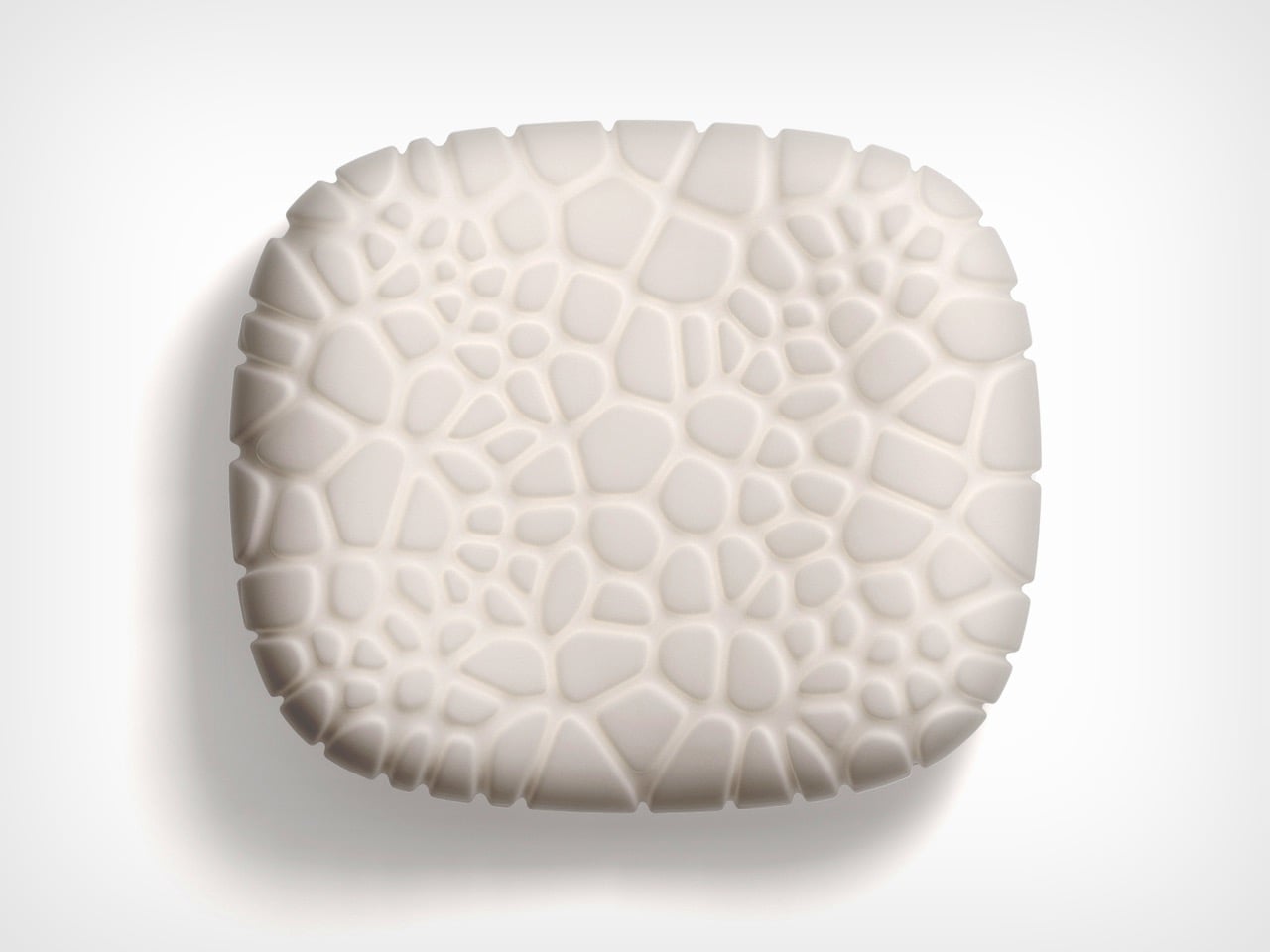
Inflatable camping pillows fail in a consistent pattern: they sound like pool floats each time you shift, lose pressure by 3 a.m., and pack into a shape that takes up more space than it deserves. Designer Chen Xu, working for RestBase, treated the camping pillow as an engineering problem instead. The Camp Napper’s surface geometry is derived from fungal spore texture, mapped through Voronoi polygon modelling across real pressure data from volunteer sleepers. Trypophobia alert: the surface is visually distinctive.

The internal structure mirrors hollow plant stem geometry, shedding mass without losing the ability to hold form under repeated compression. Total weight is 400 grams. Packed size is roughly the dimensions of a water cup. Memory foam conforms to different sleepers without nightly pressure adjustments, and anti-slip rubber particles on the base keep it in place across sleeping pads, camp chairs, and car seats equally. Note: retail price was not confirmed at time of writing — verify before purchasing.

What we like

  • Voronoi-modelled surface and bionic internal structure represent engineering at a level the camping pillow category hasn’t previously applied
  • 400 grams compressed to water-cup dimensions is genuinely packable, not just marketed as such

What we dislike

  • The cellular surface texture warrants a trypophobia alert before gifting or introducing to someone who hasn’t seen it
  • Retail price was unconfirmed at the time of writing; verify availability before purchasing

2. RetroWave 7-in-1 Radio

The RetroWave earns its place not through specifications but through atmosphere. It’s a 7-in-1 radio with solar charging and a hand-crank backup, both of which keep it running off-grid without a charged battery or a Bluetooth pairing screen. It simply works when it’s turned on, which is a lower bar than it sounds and one that a surprising amount of audio gear fails to clear by the second day of a trip.

The solar panel handles afternoon charging on any reasonable day. The hand crank handles everything else. Shortwave reception varies with terrain, so dense forest or mountain valleys will limit broadcast range — worth knowing before the trip rather than during it. For weather, local stations, and background sound that makes a campsite feel inhabited rather than silent, it performs without hesitation.

Click Here to Buy Now: $89.00

What we like

  • Solar and hand-crank charging eliminate any dependency on outlets or other devices’ battery reserves
  • Seven band frequencies in one object requiring no phone, no app, and no pairing sequence to operate

What we dislike

  • Shortwave reception degrades noticeably in heavily forested or mountainous terrain
  • The retro form tends to read as decorative to first-time buyers who haven’t yet used it in the field

3. Puffer Tent

The standard camping shelter setup involves a sequence of separate problems: tent, sleeping pad, sleeping bag, and then the 2 a.m. realignment when everything shifts. The Puffer tent collapses that sequence into a single bag. It’s an inflatable A-frame with the mattress built into the structure — shelter and bed arriving together, packed into 10 × 25 × 10 inches, with firmness adjustable from soft to firm to hard.

Founder Sam Peery spent five years prototyping this, which explains why the details feel intentional rather than approximate: valve placement, pressure labeling, pump connection. At 18.2 pounds, it’s a car camper and overlander’s tent, not a backpacker’s — a distinction the brand makes honestly. Priced at $649.99 with the electric pump included, the more instructive comparison is against a rooftop tent setup, not a $40 nylon shelter from a big box store.

What we like

  • Tent and mattress in a single integrated system removes the multi-piece setup sequence that opens most camping trips
  • Adjustable firmness from soft to hard gives sleepers real control over the sleeping surface

What we dislike

  • At 18.2 pounds, it’s unsuitable for backpacking trips where pack weight is a primary constraint
  • The $649.99 price requires genuine commitment from anyone who already owns a functional shelter

4. All-in-One Grill

Skewers of meat and green onions grilling on a small portable charcoal grill with a metal insert holding a glass bottle.

Bar grates collect residue from the first meal and carry it into every meal that follows. Cleaning them properly requires time and water that aren’t always conveniently available between the fire and the food. The All-in-One Grill’s flat tabletop surface removes that problem entirely — no gaps, no angles, nothing for debris to settle into. On a two-day trip with multiple meals, that difference compounds into something genuinely useful by Sunday morning.

Surface area fits two people cleanly, which covers the most common camping scenario without unnecessary bulk. Cooking for four or more requires staggering meals, adding real time to every camp dinner. There’s also no heat source included — this is a cooking surface that sits above a fire or stove, not a replacement for one. Within those parameters, it does its job at $449 with the kind of simplicity that makes a camp kitchen feel considered.

Click Here to Buy Now: $449

What we like

  • Flat surface cleans in a fraction of the time a traditional bar grate requires, a gain that compounds across a multi-meal trip
  • Tabletop sizing matches the most common two-person camping scenario without adding unnecessary pack weight

What we dislike

  • Cooking for groups larger than two requires staggering meals, adding real time to every camp dinner
  • No integrated heat source means it functions as a companion to a fire or stove, not a standalone cooking solution

5. Blavor PN-W43 Power Station + Camping Lantern

Most power stations are rectangular, featureless, and indifferent to the environment they’re meant to operate in. The Blavor PN-W43 builds a 4W LED lantern directly into the body, producing a 64,000mAh device barely larger than a tall water bottle that covers light and power from a single object. Five charging pathways — solar, AC, car adapter, USB-C, and micro USB — handle both off-grid and in-transit scenarios without adapter juggling.

At $135, it replaces two separate items, a lantern and a power bank, that together would cost more and occupy more space. It pairs naturally with the RetroWave Radio in this list: the radio’s solar charging handles daytime audio independently, while the Blavor manages device charging and nighttime light without overlap. At 236.8Wh, it’s sized for a weekend trip, not an extended off-grid expedition — which is exactly the use case this article is built around.

What we like

  • Integrated 4W lantern eliminates a separate light source without adding meaningful size or weight to the kit
  • Five charging pathways, including solar and AC, cover off-grid and in-transit scenarios without separate adapters

What we dislike

  • 236.8Wh capacity suits two to three night trips; longer off-grid expeditions will need more headroom than this provides
  • The cylindrical form sits awkwardly alongside flat gear in a structured pack and requires deliberate placement

The Trips You Actually Remember Are the Ones You Showed Up For

September has a way of making outdoor trips feel more deliberate than they do in the middle of summer. The season is moving and the weekends are numbered, which concentrates attention on what actually matters about being outdoors. The gear that earns a place in that context isn’t the most technically advanced option in its category. It’s the piece that makes the trip slightly better without making it harder to plan.

Each of these five picks does something specific. The RetroWave sets the tone without needing a phone. The All-in-One Grill removes the cleanup that makes cooking feel like a chore by day two. The Puffer Tent reduces setup to a single bag. The Blavor handles light and power as one object. The Camp Napper delivers actual sleep. None of them require the whole kit to change. Any one of them is enough of a reason to go.

The post 5 Camping Gear Picks Built for the Last Warm Weekends of the Year first appeared on Yanko Design.

❌