Vue normale

Il y a de nouveaux articles disponibles, cliquez pour rafraîchir la page.
À partir d’avant-hierFlux principal

Japan Airlines teste des robots humanoïdes pour charger les bagages

1 mai 2026 à 11:33

Japan Airlines va confier la manutention des bagages à des robots humanoïdes sur les pistes de l'aéroport Haneda. Le test démarre en mai 2026, dure deux ans, et implique pour commencer deux machines posées au milieu des bagagistes humains.

L'opération est pilotée par JAL Ground Service avec GMO AI & Robotics. Les robots viennent de Chine : un Unitree G1 d'environ 1m30 et un Walker E d'UBTECH.

Le programme est découpé en plusieurs étapes (cartographie du site, simulations en environnement reconstitué, puis tarmac réel), avec à terme l'idée de leur faire transporter les containers de fret, manipuler les leviers de verrouillage et même nettoyer les cabines une fois les avions vides. L'autonomie annoncée est de 2 à 3 heures, avant qu'il ne faille recharger la machine.

Sauf que la première démo publique a calmé tout le monde. Le G1 a tapoté un colis sur le tapis roulant et fait coucou à un humain, mais personne ne l'a vu soulever quoi que ce soit.

La presse anglo-saxonne a gentiment moqué la chose : démarche hésitante, gestes cosmétiques, et surtout aucune preuve de capacité à porter une valise standard.

Le Japon n'a pas le choix. Population vieillissante, faible immigration, et tourisme record qui sature les infrastructures : les aéroports japonais galèrent à recruter des bagagistes, et la situation ne va pas s'arranger dans les prochaines années.

Du coup, plutôt que d'investir dans des bras articulés industriels qui demandent de repenser tout le poste de travail, JAL parie sur des humanoïdes capables de s'intégrer dans un poste conçu pour des humains. 

En pratique, on est encore loin du compte. Une valise standard pèse entre 20 et 30 kg. Un humanoïde d'environ 35 kg sur deux jambes qui tient à peine debout, ce n'est pas vraiment l'outil idéal pour balancer du Samsonite à la chaîne pendant huit heures. JAL le sait.

D'où les deux ans de test prévus avant tout déploiement réel, et l'envie d'observer ce qui marche, ce qui casse, et ce qui finira aux oubliettes. Les deux fournisseurs choisis ne sont d'ailleurs pas des inconnus : Unitree et UBTECH se positionnent comme les gros chinois de l'humanoïde, face à un Tesla Optimus encore largement scénarisé.

Vous l'avez compris  on est plus dans la com' que sur de l'efficacité pure. Faire coucou à un bagage, ça ne le met toujours pas en soute.

Source : ARS Technica

Genji Kyoto Is a Hotel You Read Like a 1,000-Year-Old Book

Par : Ida Torres
6 avril 2026 à 23:30

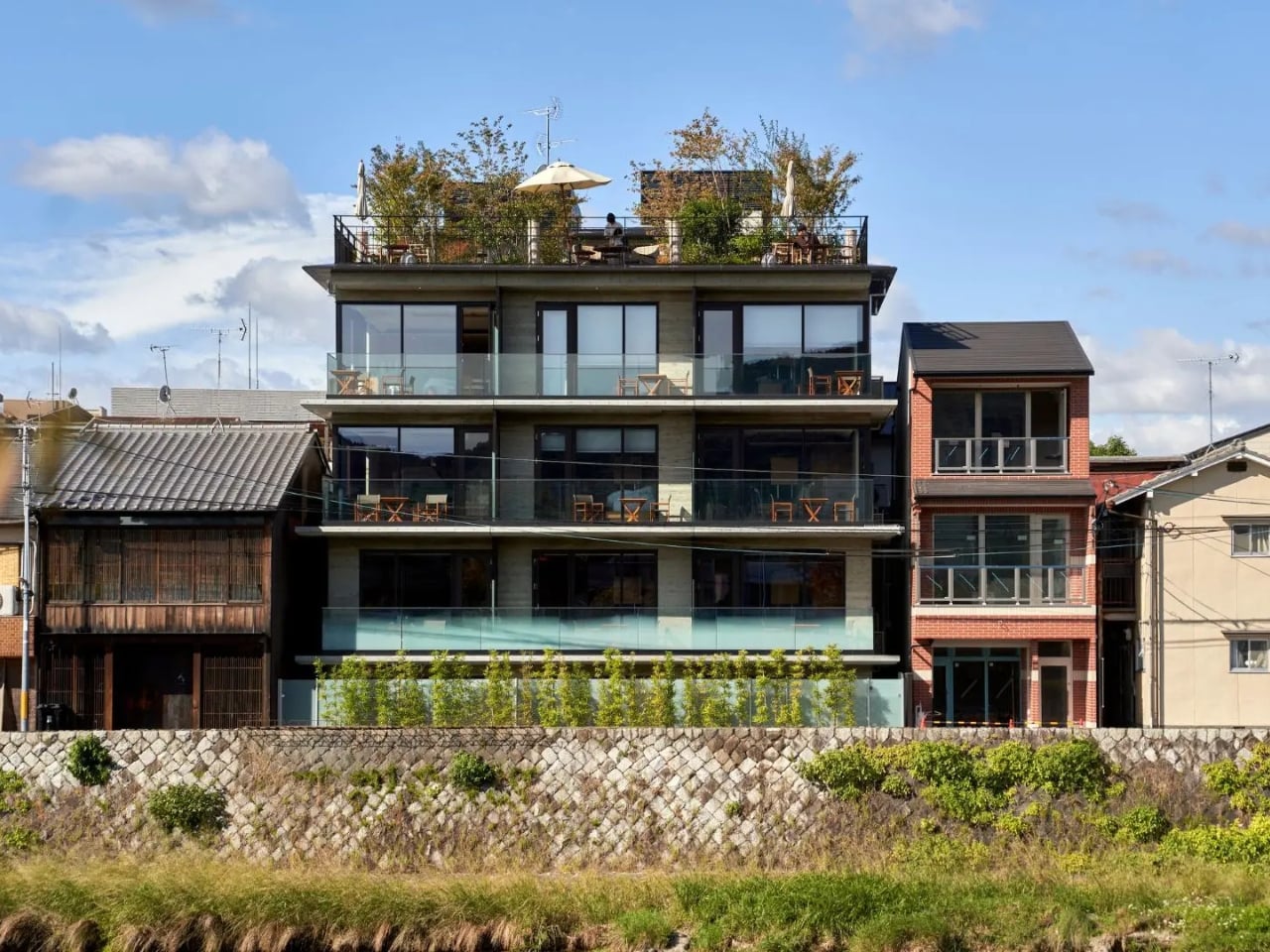
Most hotels ask you to check in. Genji Kyoto asks you to pay attention. Nestled along the Kamo River in Kyoto, Japan, this 19-room boutique hotel is the kind of place that architects talk about in hushed, reverent tones. And for good reason. It was designed by Geoffrey P. Moussas of Design 1st, a New York-born, MIT-trained architect who has called Kyoto home since 1994. That detail matters more than it might seem.

Moussas didn’t fly in with a mood board and a deadline. He has spent over three decades restoring and redesigning more than 40 traditional Japanese structures: machiya townhouses, tearooms, kura storehouses, and even a 400-year-old Buddhist temple. His work has been featured in the Financial Times, CNN, and NHK, and exhibited at Kiyomizu Temple and Nijo Castle. When someone like that builds a hotel, you’re not just booking a room. You’re stepping into a lifetime of accumulated understanding.

Designer: Geoffrey P. Moussas of Design 1st

The concept behind Genji Kyoto traces back to an 11th-century Japanese novel, The Tale of Genji, widely considered one of the world’s first novels. When the design team discovered that the hotel’s site was historically tied to the story’s actual locations in Kyoto, the whole project shifted. The design moved away from a simple machiya prototype and toward the aesthetic world of the Heian period, over a thousand years ago. But Moussas wasn’t interested in imitation. His approach was to distill the spirit of Heian architecture, specifically the Shinden Zukuri style, characterized by pavilions woven through interconnected gardens, rather than recreate its surface. That distinction is everything. It’s the difference between a themed restaurant and a genuinely good one.

The guiding philosophy here is a Japanese concept called Teioku Ichinyo, which translates roughly to “building and garden are one.” Every spatial decision at Genji Kyoto flows from this idea. Gardens aren’t decorative; they’re structural. They guide movement, frame views, and carry what the Japanese call ki, the life force that animates a space. Even the small tsubo pocket gardens tucked around the guest rooms, a tradition dating back to Heian palace residences, do serious work, turning what could be a blank interior wall into a living, breathing view.

The materials are just as considered. Cedar-imprinted concrete shows up throughout the hotel, hard surfaces pressed with the warmth of wood grain, creating a tension that reads as both ancient and completely new. Large-scale washi paper panels function as architectural elements, not just decoration. Guest rooms have solid cherry wood floors, tatami mats made from natural rush, and furniture entirely handmade by Kyoto craftsmen. Jun Tomita, who handled interior design alongside Moussas, drew motifs directly from The Tale of Genji for every custom piece. And then there’s the detail I keep coming back to: during construction, a heritage water basin and a small shrine were discovered on-site. Rather than remove them, the team built the garden around them. That kind of decision tells you everything about where the priorities were.

There are 19 rooms in total, each one different. River views, city views, garden views. No two stays are the same, and that’s by design. Each room also features an original painting by a Kyoto artist, with every piece drawing on a different theme from The Tale of Genji, so even the art tells a chapter of the same story. Moussas has said he wanted guests to have a different experience every time they return, and the hotel is built to make that true. The rooftop garden and bar take it further still, offering panoramic views that make the hotel feel like it belongs to the entire city, not just its footprint.

Genji Kyoto’s real achievement isn’t any single detail. It’s the commitment to depth over spectacle. A lot of contemporary design is about the first impression, the photograph, the wow moment. This hotel asks for more time than that. It reveals itself in layers, the way a good book does. You have to slow down. You have to look twice. That’s a rare ask in hospitality. And it’s a rarer thing to pull off.

The post Genji Kyoto Is a Hotel You Read Like a 1,000-Year-Old Book first appeared on Yanko Design.

8 Best Japanese Spring Home Upgrades That Make Tiny Rooms Feel Like a Wabi-Sabi Sanctuary

17 mars 2026 à 17:20

Spring in Japan is not a season of accumulation. It is a season of editing, of noticing what was already there, of letting a single branch in a ceramic vessel do the work of an entire floral arrangement. The Japanese approach to domestic space has always understood something Western interiors still struggle with: that less does not mean empty, it means deliberate. And in a tiny room, deliberation is everything.

We have rounded up eight products that carry this philosophy without turning it into a marketing exercise. These are not trendy minimalism props or aspirational mood-board fillers. They are functional objects rooted in Japanese craft traditions, seasonal awareness, and the kind of spatial intelligence that makes a 300-square-foot apartment breathe like a room twice its size. Spring is the perfect excuse to start.

1. Fire Capsule Oil Lamp

Most ambient lighting products try too hard. They pile on features, app connectivity, color-changing LEDs, and lose the one thing that makes warm light feel warm: simplicity. The Fire Capsule oil lamp goes the other direction entirely. It is a cylindrical glass-and-metal lamp with an 80ml fuel capacity, good for up to 16 hours of continuous flame.

The precision-engineered lid keeps the glass chimney clean between uses, which is a small detail that solves a persistent annoyance with oil lamps (dust settling on the glass and clouding the glow over time). An included aroma plate lets the flame double as a scent diffuser, and the flat-topped design means multiple units stack for storage. The cylindrical form ships with a drawstring pouch for portability, so it works just as well on a campsite as it does on a bedside shelf. In a small room, a single real flame on a low table changes the entire atmosphere without any electrical infrastructure.

Click Here to Buy Now: $89.00

What we like

  • 16-hour burn time from a single 80ml fill is generous enough for an entire evening gathering or a long weekend of ambient use.
  • Stackable design and included carrying pouch make storage painless in apartments where every drawer counts.

What we dislike

  • Open flame in a tiny apartment with limited ventilation requires careful placement and awareness, especially around curtains and textiles.
  • Paraffin oil refills are not always easy to source locally, and the lamp does not work with standard candle wax or tea lights.

2. Kyoto Yusai Linen Noren

A doorway without a door is just a gap. A doorway with a noren is a conversation between two rooms that never quite ends, a soft boundary that lets light, air, and movement pass through while still giving each space its own identity. This linen noren from Kyoto Yusai, printed with a dogwood motif, does precisely that.

What makes the noren so effective in small apartments is its relationship with ma, the Japanese concept of meaningful negative space. The fabric hangs in split panels with intentional gaps, and those gaps become part of the composition. Light filters through. Silhouettes soften at the edges. In a narrow studio where the sleeping area bleeds into the kitchen, a well-placed noren restructures how the whole room reads without touching the floor plan. Swap it seasonally, and it becomes a rotating design object with zero storage cost.

What we like

  • Splits the room without blocking airflow or natural light, which is rare for any room divider at this price point.
  • Seasonal swapping means the interior changes character four times a year with no permanent commitment.

What we dislike

  • Linen wrinkles easily after washing, so it needs careful steaming to maintain that clean drape.
  • The standard sizing may not fit non-Japanese doorframes without minor alterations or a tension rod swap.

3. Brass Ikebana Kenzan


Ikebana looks effortless. A single stem angled just so, a branch suspended at an improbable tilt, a few leaves arranged with the kind of negative space that makes the whole composition feel like a held breath. The kenzan is the hidden mechanism that makes all of it possible, a heavy brass pin frog that sits at the bottom of a shallow vessel and grips stems in place with rows of sharp, fixed needles.

This particular kenzan comes from Sanjo, Niigata Prefecture, a city with metalworking lineage stretching back to the 17th century. The artisans behind it have over 50 years of experience, and the difference shows in the needle sharpness and base weight. Cheap kenzans tip under a heavy branch. This one stays put. The removable rubber gasket protects the vase from scratches and keeps the unit from sliding, and the brass construction means it will outlast the disposable floral foam it replaces entirely. No chemical waste, no single-use plastic, just a solid chunk of metal that holds flowers upright and keeps the water clean longer.

What we like

  • Brass construction from veteran Sanjo artisans means this will last decades without bending, rusting, or losing needle sharpness.
  • Eliminates floral foam, which is a meaningful environmental upgrade for anyone who arranges flowers regularly.

What we dislike

  • A 3.5-inch round kenzan is suited to small-to-medium arrangements only; larger branches or tall statement pieces need a bigger base.
  • Sharp needles require careful handling and storage, especially in households with children or pets.

4. ClearFrame CD Player

Physical media has a specific gravity that streaming cannot replicate. The act of choosing a disc, sliding it into a tray, and watching it spin is a ritual, not a convenience. The ClearFrame CD player leans into that completely, housing the mechanism inside a crystal-clear polycarbonate shell that frames each album cover like a miniature art exhibit, while the black circuit board sits fully exposed behind it.

Bluetooth 5.1 support and a 7-hour rechargeable battery mean it works wirelessly on a shelf, a desk, or mounted on a wall. Multiple playback modes handle full albums and single-track loops. The square silhouette reads more like a design object than consumer electronics, which is the entire point: in a small room, every object occupies visual real estate, and the ClearFrame earns its shelf space by being something worth looking at even when it is not playing. The exposed circuitry is a deliberate aesthetic choice that shares DNA with the wabi-sabi appreciation of process, of letting the inner workings be part of the beauty rather than hiding them behind a seamless shell.

Click Here to Buy Now: $199.00

What we like

  • Wall-mountable and wireless, so it does not consume any surface area in a room where counter space is precious.
  • Transparent body turns the CD cover into wall art and the circuitry into a visual feature, doubling the object’s function.

What we dislike

  • CD collections are increasingly niche, and anyone without a back catalog will need to start buying physical media to get real value from this.
  • Polycarbonate scratches over time, and a transparent shell means every scuff and fingerprint is visible.

5. Oboro Silver Moon Calendar

Wall calendars are usually the first thing to look dated in a room. They pile up with scribbled appointments, faded ink, and a design sensibility that peaked in the office supply aisle. The Oboro moon calendar, a limited-edition 10th-anniversary piece by Japanese brand Replug, operates on an entirely different register. It tracks the lunar cycle on greige paper with reflective silver foil phases and embossed moon textures that shift with the light.

The name comes from “oboro” (朧), a Japanese word evoking the soft, hazy glow of a partially obscured moon. It is a wall piece that functions more like a meditative object than an organizational tool. The silver foil catches and transforms ambient light throughout the day, so the calendar looks different at dawn than it does at midnight. The embossed texture invites touch, which turns checking the date into something tactile and grounding. In a small room, a single well-chosen wall object can set the tone for the entire space, and the Oboro does that with restraint rather than volume.

Click Here to Buy Now: $69.00

What we like

  • Reflective silver foil creates dynamic light play that changes throughout the day, making it feel alive rather than static.
  • Embossed lunar texture adds a tactile dimension that most wall decor completely ignores.

What we dislike

  • A lunar calendar is not a practical replacement for a standard date calendar, so this supplements rather than replaces existing scheduling tools.
  • Limited-edition status means availability is unpredictable, and replacement for the following year is not guaranteed.

6. Pop-up Book Vase

A vase that is also a book. Open the cover and a three-dimensional paper cutout rises from the page, forming a vessel shaped to hold fresh stems. Three different designs sit on successive pages, so flipping through the book changes the vase silhouette and the entire presentation of the arrangement. Turn the whole thing upside down, and the perspective shifts again.

Made from 100% natural pulp with a water-resistant coating, the construction is more durable than it first appears. The paper engineering behind each pop-up is precise enough to support a real bouquet without collapsing, and the book form factor means it folds flat for storage or travel. In a tiny room, where a traditional ceramic vase competes for shelf space with everything else, a vase that disappears into a closed book when not in use is a spatial gift. The playfulness of the form also cuts against the sometimes austere reputation of Japanese-inspired interiors, a reminder that wabi-sabi is not allergic to delight.

Click Here to Buy Now: $39.00

What we like

  • Three vase designs in a single book mean variety without needing three separate vessels taking up shelf space.
  • Folds completely flat when not in use, which is a storage advantage no ceramic or glass vase can match.

What we dislike

  • Water-resistant coating has limits, and prolonged contact with water will eventually degrade the paper over repeated uses.
  • The whimsical form factor may clash with more austere or serious interior styles that lean heavily into earth tones and raw materials.

7. Tosaryu Hinoki Bath Stool

Japanese bathing is not a quick rinse. It is a seated, deliberate process where the stool is as important as the water. Tosaryu’s hinoki cypress bath stools are made by woodworkers in the mountains of Kochi who have been refining their craft since the 1970s. The wood is dried naturally for three to six months without chemical agents, which preserves the aromatic oils that give hinoki its distinctive calming scent.

Place one of these stools in a bathroom, shower room, or home sauna, and the scent fills the space every time steam or warm water contacts the wood. The antibacterial properties of hinoki resin mean the stool resists mold and bacteria without coatings or treatments. Three sizes are available: the Umezawa (10.5 x 7 x 9 inches), the short sauna stool (10.5 x 9 x 11.75 inches), and the tall stool (13.75 x 9.75 x 15.75 inches). Tosaryu operates as stewards of local forests and lakes, using sustainable harvesting methods. In a small bathroom, the stool replaces the generic plastic shower seat with something that smells like a forest and ages like furniture.

What we like

  • Natural hinoki oils provide antibacterial protection and aromatherapy without any chemical treatments or synthetic fragrances.
  • Sustainable production by Tosaryu’s Kochi-based woodworkers means the stool comes with genuine craft lineage, not just marketing copy about nature.

What we dislike

  • Hinoki requires proper drying between uses to prevent cracking; bathrooms without good ventilation will shorten its lifespan.
  • The high stool incurs a $25 shipping surcharge due to its size and weight, which adds to an already premium price.

8. Kintsugi Repair Kit

Kintsugi is the Japanese practice of mending broken ceramics with lacquer and powdered gold, turning the fracture into a visible seam that becomes part of the object’s history rather than a flaw to hide. Poj Studio’s kit packages this tradition into a hands-on experience, providing the materials and master-class guidance needed to repair a chipped or broken plate at home.

The philosophy behind kintsugi aligns with wabi-sabi at its most literal: the acceptance of imperfection, the beauty of age, and the idea that damage does not diminish value. In practice, the kit turns a broken mug or cracked bowl into something more interesting than it was before the accident. For anyone living in a small space where every dish and vessel matters (both functionally and visually), the ability to restore rather than replace is both economical and aesthetically resonant. The gold seams catch light in a way that flat, unblemished surfaces cannot, adding character to a kitchen shelf that could otherwise feel monotonous.

What we like

  • Transforms breakage into a design feature, which fundamentally changes the relationship with fragile objects in a small household.
  • Master-class guidance makes the repair process accessible to beginners, not just experienced ceramicists.

What we dislike

  • Urushi lacquer requires careful handling and curing time, so this is not a quick afternoon fix; patience is part of the process.
  • The standard kit is designed for chips and clean breaks; items with missing fragments need the separate advanced kit.

Where spring takes us from here

The thread running through all eight of these products is not minimalism as deprivation, but minimalism as attention. A noren does not block a doorway. It choreographs how light and bodies move through it. A kenzan does not just hold flowers. It holds the space around them. A kintsugi kit does not fix a broken cup. It reframes what broken even means.

Spring in a tiny room does not need a renovation, a new furniture set, or a Pinterest board full of aspirational layouts. It needs a few well-chosen objects that understand the difference between filling a space and inhabiting it. These eight do that, each in a way that respects the room, the season, and the craft tradition it comes from. The smallest upgrades, when they come from the right place, tend to change the most.

The post 8 Best Japanese Spring Home Upgrades That Make Tiny Rooms Feel Like a Wabi-Sabi Sanctuary first appeared on Yanko Design.

This Crumbling Kyoto Home Was Rebuilt as a Wabi-Sabi Sanctuary – and Every Detail Is Intentional

15 mars 2026 à 17:20

Kyoto’s preservation codes make renovation a negotiation between what a building was and what its residents need it to become. In the Narutaki district, kooo architects recently completed that negotiation on a traditional Sukiya-style residence, stripping back decades of piecemeal alterations to recover the spatial clarity the original structure once had. The result is not a museum piece or a minimalist showroom. It is a home that treats historical material as a living framework rather than a frozen artifact, and the distinction matters more than it might seem.

Sukiya architecture grew out of the Japanese tea ceremony tradition, where timber construction, open spatial flow, and natural materials created rooms designed for contemplation rather than display. The original home had lost much of that character over the years as its tatami rooms were modified beyond recognition through successive, uncoordinated changes.

Designer: kooo architects

kooo architects responded by reorganizing the interior into three distinct yet connected spaces: an earthen-floored passage linking the main structure’s two wings to a smaller detached annex, a generous reception room, and a dedicated garden room built for nothing more than sitting with the landscape outside. Western Kyoto’s Rakusei area provides long views and mature plantings that shift dramatically with the seasons, and the architects oriented an entire room around the act of watching that change happen. No program, no storage, no secondary function. A room that exists to frame a view is a commitment most residential renovations cannot afford, and its presence here signals that the project’s priorities sit closer to atmosphere than to square-footage optimization.

Material choices reinforce the connection to Sukiya tradition without replicating it literally. Exposed cherry wood beams run through the interiors. Juraku plaster, a finish historically associated with Kyoto’s architectural identity, covers walls and ceilings. Fusuma sliding doors crafted by Noda Hanga Studio separate the spaces, and all of this work was executed by local craftspeople rather than standardized contractors.

The annex, which is entirely new construction, contains the primary living quarters, including three guest rooms, hinoki wood baths, and translucent window screens that soften incoming light into something closer to atmosphere than illumination. Pairing new construction with a restored historical shell is a familiar strategy, but the success here lies in how seamlessly the two registers communicate across the earthen passage connecting them.

The tension in any heritage renovation sits between preservation and livability, and most projects tip too far in one direction. kooo architects avoided both the replica trap and the gut-renovation impulse. Narutaki’s strict historical context demanded sensitivity, but the home’s new layout reads as contemporary in its spatial logic even while its surfaces and materials carry the weight of a much older architectural vocabulary. Whether the balance holds over years of daily use is a question only the residents can answer, but the framework is sound.

The post This Crumbling Kyoto Home Was Rebuilt as a Wabi-Sabi Sanctuary – and Every Detail Is Intentional first appeared on Yanko Design.

❌
❌