
 Connexion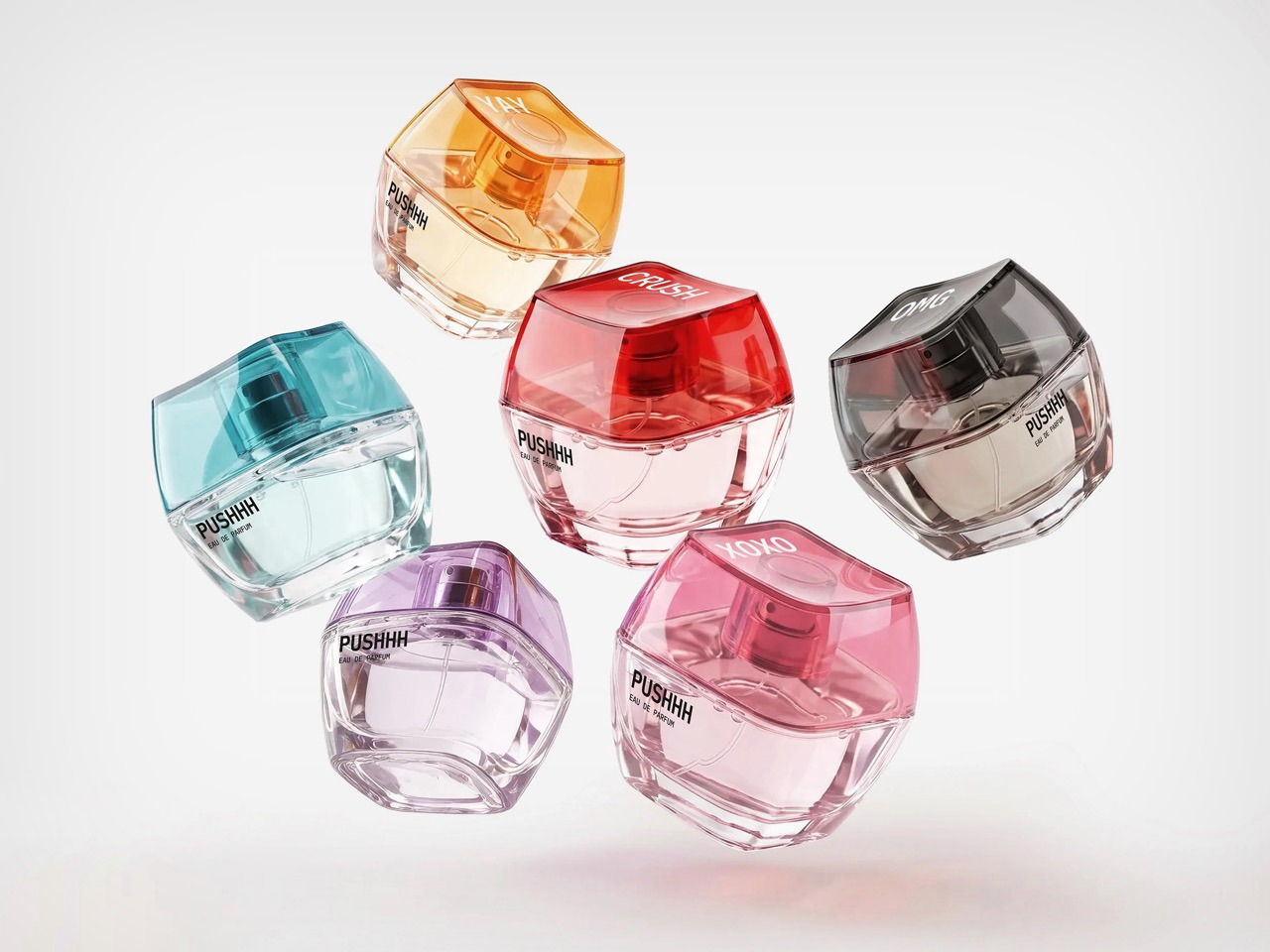

Keycap-shaped Perfume Bottle Bridges Nerd Culture and Fashion Fragrances

Somebody who has strong opinions about Cherry MX switch actuation force is not, statistically speaking, somebody who wears cologne. I say this with love, having been both people at different points. Igor Mitin’s PUSHHH concept ignores that overlap problem entirely and builds a perfume around the keyboard key, putting a chunky square cap on the bottle that doubles as the plunger. Mitin runs with that mismatch instead of avoiding it, treating the cap less like hardware and more like a gesture everyone already knows from their phone. One push, and the bottle behaves like a message you just fired off to someone.
Mitin works out of Melbourne as an art director who has spent his career on fragrance and beauty packaging, picking up a Pentawards Gold in 2024 and a Red Dot Design Concept award in 2022, on top of a Best of the Best Red Dot Design Concept win back in 2011. PUSHHH is his own self initiated project, built without a client breathing over his shoulder, which probably explains why it gets to be this playful. Each scent carries a one word name you would actually type, CRUSH, XOXO, COOL, YAY, and OMG, printed straight across the face of the cap. The glass underneath is a squat rounded square in transparent red, pink, amber, and teal, sized closer to something you would clip onto a bag than something you would park on a dresser.
Designer: Igor Mitin
Keyboard people take their keycaps seriously, hunting down artisan sculpts through drops that sell out before the page finishes loading, and PUSHHH lifts that exact silhouette and plants it on a category that usually behaves nothing like that. Perfume branding loves hushed minimalism, black serif type, a name in French nobody can pronounce right. PUSHHH walks in the opposite direction entirely, leans all the way into the keyboard bit, and somehow the whole thing still reads as a coherent, good looking object rather than a gimmick bolted onto glass.
The system around the bottle keeps the joke going in the best way. Keychain minis, collectible colorways, and personalized gift editions all stretch the one push idea into things you would genuinely want to wear, and campaign lines like “Say it. Spray it. Wear it.” lean into the texting bit with a straight face. Mitin’s own flat lays stage the bottles next to headphones, sunglasses, a Casio, and keyring charms, and that styling choice tells you exactly what PUSHHH thinks it is. Not a fragrance counter object. A bag charm sitting proudly next to your Labubu.
What I like most is how specific the whole thing is. A lot of concept fragrance work chases a vague mood, some smoke and a moodboard and a name that sounds expensive. PUSHHH picked one clean idea, the keyboard key as plunger, and let every other decision follow from it, the colors, the words, the merch, the styling. That kind of discipline is rare even in briefed, paid work, let alone something Mitin built purely because the idea was fun enough to chase. I would buy the CRUSH bottle off a shelf the second it existed, and honestly, that is the whole review.
The post Keycap-shaped Perfume Bottle Bridges Nerd Culture and Fashion Fragrances first appeared on Yanko Design.
